Who was Fraňo Tiso? When I first posted the image of his postcard to Vlado here, back in March of 2013, I was frankly too horrified to consider that he could be any relation to Jozef Tiso, that there were probably lots of people with the last name of Tiso. But considering the political connections that Vlado and Pavel had, that Fraňo was the former Slovak Ambassador to the Soviet Union, and that I also have letters from Fraňo to Pavel concerning his communication with Franz Karmasin (letters from Karmasin posted here), this Fraňo was very likely the cousin of Jozef Tiso; he is mentioned briefly in James Mace Ward’s “Priest, Politician, Collaborator: Jozef Tiso and the Making of Fascist Slovakia” (published 2013, Cornell University Press); from chapter 7, “Sacred Convictions, 1939-44”, page 206:
“Although still pro-German, [Jozef] Tiso also wanted greater independence, a desire that led to a sharp foreign policy turn: détente with the Soviet Union. In addition to general issues of sovereignty, the economics of German domination increasingly troubled him. His idea of the state was for “national” property to come into Slovak hands. Instead, German-held shares in Slovakia’s industry exploded to over half in 1942. The Reich meanwhile consumed around three-quarters of Slovak exports, paying in devalued credits instead of hard cash. Seeking relief from such economic dependence and exploitation, Ďurčanský as foreign minister looked east. Diplomatic ties with the Communist state offered markets, an ally for revising the Vienna Award, and the prestige of Great Power recognition. Despite a lifetime of anti-bolshevism, Tiso supported the strategy. He later claimed to have welcomed the 1939 Hitler-Stalin Pact, expecting it to facilitate the solution of “European questions” on the basis of the ethnic principle. In his first presidential address, he proposed Slovakia as “a mediator…between…the Slavic and German worlds.” Soon, he was courting “extensive economic relations” with the Soviets not only by exchanging ambassadors (sending to Moscow his cousin Fraňo) but even by congratulating Stalin on the anniversary of the October Revolution.”
More about Fraňo and Jozef Tiso is mentioned in David S. Wyman’s book “The World Reacts to the Holocaust” (published 1996, Johns Hopkins University Press):
“The fate of the Jewish population had been given more attention in Slovakia than in the Czech lands, mainly because of the involvement and complicity of the clero-fascist Slovak regime, headed by the Catholic priest-president Dr. Jozef Tiso. The role played by the Catholic clergy in Slovakia during World War II conformed with the antireligious propaganda of the Communist Party.
The initial attempt to review the birth of the Slovak state was made by the pre-war minister of justice Ivan Dérer, in his Slovenský vývoj a ľudácká zrada, fakta, vzpomínky a úvahy (The Slovak state and the treachery of the L’udaks: Facts, memories, and thoughts). The first writer to set a novel against the backdrop of the years of Slovak independence was Dominik Tatarka in his Farská republika (The Parish republic). Tatarka depicted the misguided policy and the corrupt leadership that ultimately led to the wholesale deportation and destruction of the Jewish population. Other authors, such as Hela Volanská and Katerína Lazarová, portrayed the heroic stance of Jewish participants in the Slovak National Uprising. The History of Modern Slovakia, the first in-depth study to disclose the policy of the Nazi puppet regime and to describe at great length the persecution of Slovak Jewry, was published in New York in 1955 by Dr. Jozef Lettrich, a chairman of the Slovak National Council who had fled after the Communist coup. The role of the Hlinka Guard and the Jewish plight were analyzed by Imrich Staňek, himself a survivor, in the 1958 Zrada a pád: hlinkovští separatisté a tak zvaný Slovenský stát (Treachery and downfall: The Hlinka separatists and the so-called Slovak state), written from a strictly Marxist-Leninist viewpoint.
The capture of Adolf Eichmann in May 1960 by the Mossad and his subsequent trial in Jerusalem were widely covered in the national press and media. Eichmann, notorious for engineering the deportation of both Czech and Slovak Jewry, was of major interest to the local population. (He had commuted between Berlin and Prague, where he resided in the elegant, confiscated Rosenthal villa, in the Střešovice district.) The Czech and Slovak press sent special reporters to cover the proceedings of the trial. One of these reporters, the writer Ladislav Mňačko, later published a book portraying Eichmann’s satanic role in the Holocaust. The testimonies given at the trial by survivors appeared frequently in the press and in Věstník ŽNO, the weekly bulletin of the Jewish Religious Communities in Prague. Many of these related to the wholesale deportation of Slovak Jewry orchestrated by the [Jozef] Tiso regime. During one of the sessions of the trial Eichmann’s claim that “the Slovaks gave away their Jews as one spills sour beer,” from Life magazine’s interview with him, was quoted. Widely repeated in the international press, this assertion provoked reactions among leading Slovak figures in exile. The Munich-based Fraňo Tiso, in an effort to whitewash the Slovak wartime leadership, published an article in which he stressed the endeavors of the “moderate parish regime” to save Jews from deportation. In response, Edo Friš took up the topic in the article “In the Background was Heydrich,” published in the Bratislava weekly Kultúrny život. The controversy focused on the visit of SS Obergruppenführer Reinhard Heydrich to Bratislava on April 10, 1942. Friš challenged [Frano] Tiso’s claim that the reason for Heydrich’s visit was to pressure the Slovak government to continue implementing the Final Solution. Citing documents referred to in The Destruction of Slovak Jewry, published some months earlier, Friš stressed the initiative and involvement of the Slovak leaders in the mass deportation of Jews; the aim of Heydrich’s visit, Friš added, was to assist the Slovak government in formulating a fallacious reply to the Vatican’s March 14, 1942, protest against the deportation of Jews. This was the first discussion of this sensitive issue in more than a decade.”
Here is another perspective of Fraňo Tiso, from the article “Slovak Historians In Exile In North America, 1945-1992” (published 1996), written by M. Mark Stolarik, Chair of Slovak History and Culture, University of Ottawa, Canada:
“Finally, another émigré journalist briefly settled in the Dominion and produced a significant work of scholarship. He was Dr. Fraňo Tiso (1894-1974), the former Slovak Ambassador to the Soviet Union between 1939 and 1941. Tiso fled Slovakia in 1945 and settled in Canada in 1950. In spite of his advanced age, he studied at the University of Montreal and in 1956 earned a Ph.D. in history. He published a portion of his dissertation on “The Empire of Samo, 623-658” in 1960. In 1957 he moved to West Germany where he edited the newspaper Slobodné Slovensko until his death.”
Obviously, I am very unsettled that I have these letters, I don’t know what to make of them yet, but I am publishing them here because I want to know the truth about the Fabrys, even if it shatters my whole lovely narrative about them – this is about history and not fiction.
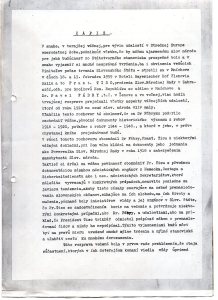

ZÁPIS
V snahe, v terajšej vážnej, pre vývin udalostí v Strednej Europe smerodatnej dobe, podniknúť všetko, čo by nášmu ujarmenému slov národu pre jeho budúcnosť zo štátotvorného stanoviska prospešné bolo a v snahe vyjasniť si mnohé nesprávné tvrdenia, ba i obvinenia vedúcich činiteľov počas trvania Slovenského štátu – stretli sa v Mníchove v dňoch 18. a 19. februára 1959 v Hoteli Bayerischer Hof členovia Exilu a to Frant. TISO, predseda Slov. Národnej Rady v Zahraničí, odb. pre Spolkovú Nem. Republiku so sídlom v Mníchove a Dr. Pavel FABRY, t.č. v Ženeve a vo voľnej, viac hodín trvajúcej rozprave prejednali všetky aspekty vážnejších udalostí, ktoré od roku 1918 na osud slov. národa vliv maly.
Uľahčila tento rozhovor tá okolnosť, že sa Dr Fabrymu podarilo zachrániť vážne, pôvodné dokumenty historického významu z rokov 1918 – 1920, poťažne z rokov 1944 – 1948., a ktoré v jeho, v práve chystanej knihe prejednávané budú.
V rámci tohoto rozhovoru oboznámil Dr Fábry, Frant. Tisu s niektorými vážnými dokladmi, pri čom váhu kládol na dokumenty jeho jednania ako Povereníka Slov. Národnej Rady v roku 1918 o zabezpečenia samobytosti Slov. národa.
Taktiež si držal za vážnu povinnosť oboznámiť Fr. Tisu s pôvodnou dokumentáciou zásahou nácistických orgánov z Nemecka, Gestapa a Sicherheitsdienstu ako i nem. nácistických Sekretariátov, ktoré náležite vyvracajú v konkretných prípadoch, menovite posledne sa javiacu tendenciu, akoby tieto zásahy smerujúce na osbné prenasledovania slovenských občanov, sihajúce na ích slobodu, na ích životy a mučenia, páchané boly iniciatívov vládz a jej orgánov v Slov. štáte, čo Fr. Tiso so zadosťučinením berie na vedomie a potvrdzuje niektorými konkretnými prípadmi, ako Dr. Fábry, a udalostiami, ako na príklad, že Prezident Tiso trikráť odmietol podpísať zákon o prenasledovaní židov a nikdy ho nepodpísal. Týmito vyjasneniami budú môcť byť na pravú mieru uvedené mnohé mýlne trdenia a mýlné stanoviská a uľahčiť cestu ku mnohému dorozumeniu.
Táto rozprava vedená bola v prvom rade prehlásením, že obaja súčastnení, ktorých v ích doterajšom konaní viedla vždy úprimná snaha, za v dobe daných okolností pomôcť svojmu rodu a berú za toto pred Bohom, národom a vlastným svedomím vždy a všade zodpovednosť.
Preto sa rozhodli, na základe v rozprave zistených okolností všetko potrebné podniknúť, aby vytýčený cieľ mohol byť uskutočnený, ktorého podrobností a postup pripravia do stretnutia najbližšej príležitosti.
Do tej doby overia tento záp-is svojím parafom a prosia Všemohúceho aby žehnal ďalšie kroky ích úsilia.
Dané v Mníchove, dňa 19. februára 1959.
Dr. Pavel Fabry parafuje:
Frant. Tiso parafuje:
Napísané v dvoch exemplároch parafom potvrdených.
————————————————————————————————–
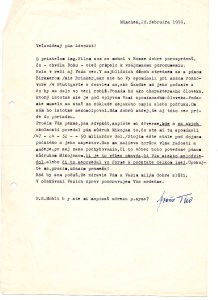
München, 28.februára 1959
Veľavážený pán Advokát!
S priateľom ing.Filom som sa mohol v Bonne dobre porozprávať, čo – chvála Bohu – tiež prispelo k vzájomnému porozumeniu.
Bola v reči aj Vaša vec. V najbližších dňoch stretnem sa s pánom Birknerom / nie Brinker, ako ste ho Vy spomínali pri našom rozhovore / v Stuttgarte a dozviem sa, aké úzadie má jeho podanie a čo by sa dalo vo veci robiť. Poznám ho ako charakterného človeka, ktorý istotne nie je pod vplyvom Vami spomínaného človeka. Podanie muselo sa stať na zaklade nejakéko omylu alebo podfuku. On sám ho istotne nekoncipoval. Mám dobrú nádej, že aj táto vec príde do poriadku.
Prosím Vás pekne, pán Advokát, napíšte mi dôverne, kde a za akých okolností povedal pán súdruh Mikojan to, čo ste mi tu spomínali /47 – 24 – 32 – – 50 miliardov dol. / Stojím ešte stále pod dojmom počutého a jeho aspektov. Raz ma zalieva horúca vlna radosti a nádeje, po nej zasa pochybovania, či to vôbec bolo povedané pánom súdruhom Mikojanom, či je to vôbec pravda, či Vás niekto nepodviedol, alebo či to nepovedal vo forme a podstate celkom inej. Upokojte ma, prosím, udaním prameňa!
Rád by som počuť, že zdravie Vám a Vašim milým dobre slúzi.
V očakávaní Vašich zpráv pozdravujem Vás srdečne.
P.S. Mohli by ste mi napísať adresu p. syna?
Frano Tiso
—————————————————————————————————-

—————————————————————————————————-

München, 29. júna 1959
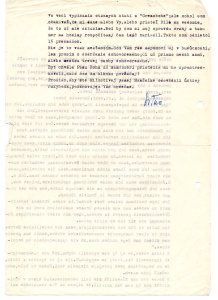
Veľavážený pán Doktor Fábry!
Keďže prem mojim odchodom do Pariza nemohol som sa stretnúť s p. št. sekretárom Karmasinom, aby som s ním pohovoril v zmysle toho, na čom sa dohodli pán Filo a Birkner, napísal som mu list a vysvetlil, že nemôže byť ani v jeho záujme, aby povstal proces a aby sa rozprestierali pred nepritaeľskou verejnosťou veci, ktoré najradšej zabudnúť treba.
Odpoveďou napísal mi p. št. sekr. Karmasin toto:
“Die Beilage in Angelegenheit Dr. Fabry habe ich erhalten. Ich bin an Dr. Fabry weder positiv noch negativ interessiert, ich war es auch nie. Nun hat aber Dr. Fabry behauptet, dass er über meine Veranlassung von der Gestapo verhaftet wurde. Das ist eine glatte Unwahreit und ich kann nun keine Erklärung adgeben, dass ich ihn tatsächlich verhaften liess. Ich habe im ganzen Leben niemenden verhaften lassen, also auch Dr. Fabry nicht, ganz abgesehen davon, dass ich gar nicht die Möglichkeit hatte, jemanden verhaften zu lassen. Es müsste also erst Dr. Fabry seine Behauptung widerrufen, dass er über meine Veranlassung verhaftet wurde, denn ich kann Ihnen nicht zustimmen, wenn Sie schreiben, dass mit einer Zurückziehung niemand zu Schaden kommen kann. Ich z. B. Schon! Denn wenn ich meine Erklärung zurückziehe, heisst das, dass ich Weisungsbefugnis an die Gestapo hatte, was nie und nimmer stimmt, und ich komme in Teufels Küche.
Ich lege bestimmt keinen Wert darauf, in einen Prozess verwickkelt zu werden und aus diesem Grunde zusätzlich noch in die Öffentlichkeit gezerrt zu werden, aber mit einer einseitigen Zustimmung von mir ist es nicht getan.
Ich halte es für das zweckmässigste, wenn die beteiligten Herren sich zu einer Aussprache zusammenfinden würden, damit man gemeinsam Mittel und Wege suchen kann, um die Angelegenheit zu bereinigen.”
Z listu vidno, že aj Vy ste spravili chybu, keď ste p.Karmasinovi imputovali čin, ktorý on nespáchal. Ale aj to vysvitá z listu, že sa neuzatvára pred pokojným riešením veci. Hodno by bolo, uskutočniť jeho návrh.
V Bonne som Vás hľadal! Už ste boli odcestovaný. S týmto v súvislosti rád by som Vás usistiť, že nijako sa Vám nenatískam ani vo veci vypísania otáznych statí z “Grenzbote”; ale mohol som očakávať, že mi dáte alebo Vy, alebo priateľ Filo na vedomie, že to už nie aktuálne. Bol by som si moj opravdu drahý a takmer na hodiny rozpočítaný čas ináč zariadil. Takto som odmietol 15 prednášok.
Nie je to však nešťastím. Som Vám rád napomoci aj v budúcnosti, len prosím o dodržanie dohovoreného; či už priamo medzi nami, alebo cestou tretej osoby dohovoreneho.
Byt chvála Pánu Bohu už mám! Dobrí priatelia mi ho sprostredkovali, začo som im hlboko povďačný!
Prosiac, aby ste Milostivej panej Manželke odovzdali úctivý rukybozk, pozdravujem Vás srdečne.
Tiso
——————————————————————————————-
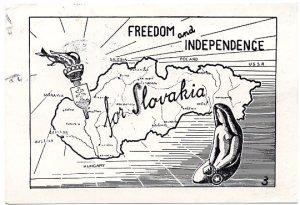



 Vlado
Vlado 