
Here are more letters from General Lev Prchala to Dr. Pavel Fabry (Vlado’s father) from 1958. I have also included duplicates of letters from Pavel. Thank you to Miroslav Kamenik for translating many of the letters here!


From Lev Prchala, 29.3.58
Vážený pane doktore, drahý příteli,
již dlouho jsem Vám nepsal. Byl jsem dosti vážně churav a ještě dnes nejsem ve své kůži. Trpím rheumatickými bolestmi svalstva a rychlým úbytkem váhy. Není vyloučeno, že je to ve spojení se zdejším podnebím, je však také možné, že jde současně o neuralgii způsobenou celkovým stavem mých nervů. Nebylo by divu, povážím-li co jsem za svého života musel unésti. Právě nejnověji mému zdravotnímu stavu a nervovému systému neprospěl dopis Regierungspräsidenta z Köllnu, jehož opis přikládám.
Byl bych Vám velmi povděčen, kdybyste mi laskavě co nejdříve oznámil svůj názor a poradil, co dále dělat. Doufám, vážený pane doktore, že jste alespoň Vy zdráv v lepším švýcarském klimatu a jsem se srdečným pozdravem
Váš oddaný
Prchala
→
Dear Doctor, dear friend,
I have not written to you for a long time. I have been quite seriously ill and am still not myself today (in my senses?). I suffer from rheumatic muscle pains and rapid weight loss. It is not impossible that this is connected with the local climate, but it is also possible that it is at the same time neuralgia caused by the general condition of my nerves. It would not be surprising, considering what I have had to endure in my lifetime. Most recently, my health and nervous system have not benefited from the letter from the Regierungspräsident of Köln (Cologne, Germany), a copy of which I enclose.
I should be very grateful if you would kindly let me know your opinion as soon as possible and advise me what to do next. I hope, dear Doctor, that you at least are well in the better climate of Switzerland, and I am with cordial regards
Your devoted
Prchala
[Translation: Miroslav Kamenik / 17.4.2025]
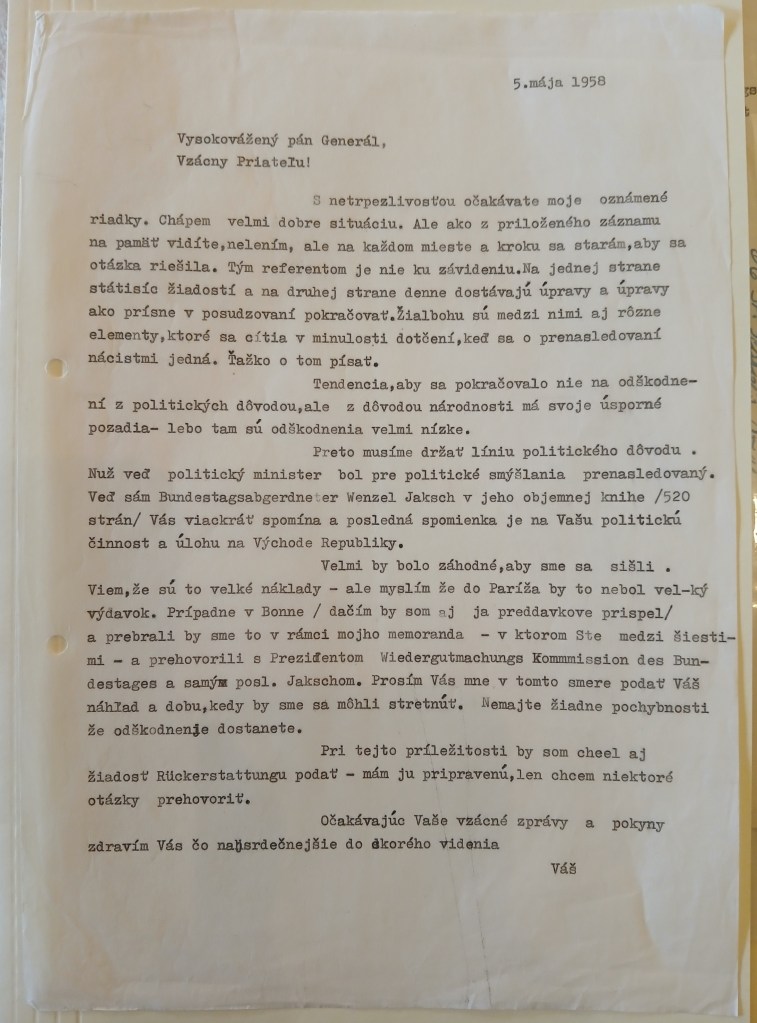
From Pavel Fábry, 5.mája 1958 (5 May)
Typewritten in Slovak language
Vysokovážený pán Generál,
Vzácný Priateľu!
S netrpezlivosťou očakávate moje oznámené riadky. Chápem velmi dobře situáciu. Ale ako z priloženého záznamu napamäť vidíte, nelením, ale na každom mieste a kroku sa starám, aby sa otázka riešila. Tým referentom je nie kuzávidieniu. Na jednej strane státisíc žiadostí a na druhej strane denne dostávajú úpravy a úpravy, ako prísne vposudzovaní pokračovať. Žialbohu sú medzi nimi aj rôzne elementy, ktoré sa cítia v minulosti dotčení, keď sa oprenasledovaní nácistmi jedná. Ťažko o tom písať.
Tendencia, aby sa pokračovalo nie na odškodnění z politických dôvodov, ale z dovodu národnosti má svoje úspornépozadie, lebo tam sú odškodnenia veľmi nízke.
Preto musíme držať líniu politického dovodu. Nuž veď politický minister bol pre politické smýšlania prenásledovaný. Veď Bundestagsabgerdneter Wenzel Jaksch v jeho objemnej knihe /520 strán/ Vás viackráť spomína a posledná spomienka je na Vašu politickú činnost a úlohu na Východe Republiky.
Velmi by bylo záhodné, aby sme sa sišli. Viem, že sú to veľké náklady – ale myslím že do Paríža by to nebol veľký výdavok. Prípadne v Bonne / dačím by som aj ja preddávkove prispel/ a prebrali by sme to v rámci mojho memoranda – v ktorom Ste medzi šiestimi – a prehovorili s Prezidentom Wiedergutmachungs Kommission des Bundestages a samým poslancom Jakschom. Prosím Vás mne v tomto smere podať Váš náhľad a dobu, kedy by sme sa mohli stretnúť. Nemajtežiadne pochybnosti že odškodnenie dostanete.
Pri tejto príležitosti by som chcel aj žiadost Rückerstattungu podať – mám ju pripravenú, len chcem niektoré otázky prehovoriť.
Očekávajúc Vaše vzácné zprávy a pokyny zdravím Vás čo najsrdečnejšie do skorého videnia
Váš (not signed Fábry)
→
Highly Exalted General,
Dear Friend!
You eagerly await my announced lines. I understand the situation very well. But as you can see from the enclosed memoir, I am not lying, but at every place and step I am making sure that the issue is addressed. Those clerks are not to be envied. On the one hand, hundreds of thousands of applications and on the other hand, they receive daily adjustments and modifications as to how strictly to proceed in the assessment. Unfortunately, there are various elements among them who feel aggrieved by the Nazi persecution in the past. Hard to write about it.
The tendency to continue not on reparations on political grounds but on grounds of nationality has its economical background, for there the reparations are very low.
Therefore, we must hold the line on political grounds. Well, after all, a political Minister has been persecuted for his political views. After all, Bundestagsabgeordneter (MK – member of Parliament) Wenzel Jaksch mentions you several times in his voluminous book /520 pages/ and the last memory is of your political activity and role in the East of the Republic.
It would be very convenient for us to get together. I know it’s a big expense – but I don’t think it would be a big expense to go to Paris. Possibly in Bonn / I would also make a contribution in advance / and we would discuss it within the framework of my memorandum – in which you are one of the six – and talk to the President of the Wiedergutmachungs Kommission of the Bundestags and to the Member Jaksch himself. I would ask you to give me your insight in this regard and a time when we could meet. Have no doubt that you will receive compensation.
I would also like to take this opportunity to make a request to the Rückerstattung – I have it ready, but I just want to ask a few questions.
In anticipation of your kind messages and instructions I greet you most cordially until I see you soon
Yours (not signed Fábry)
[Translation: Miroslav Kamenik / 17.4.2025]
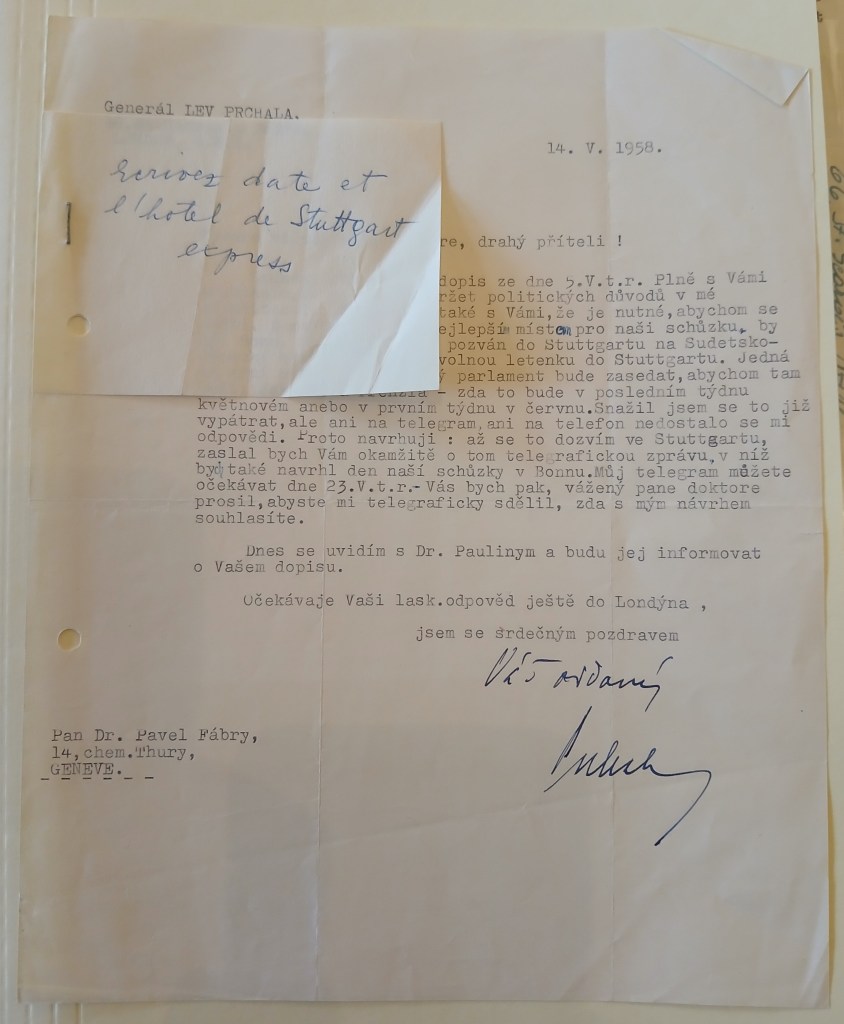
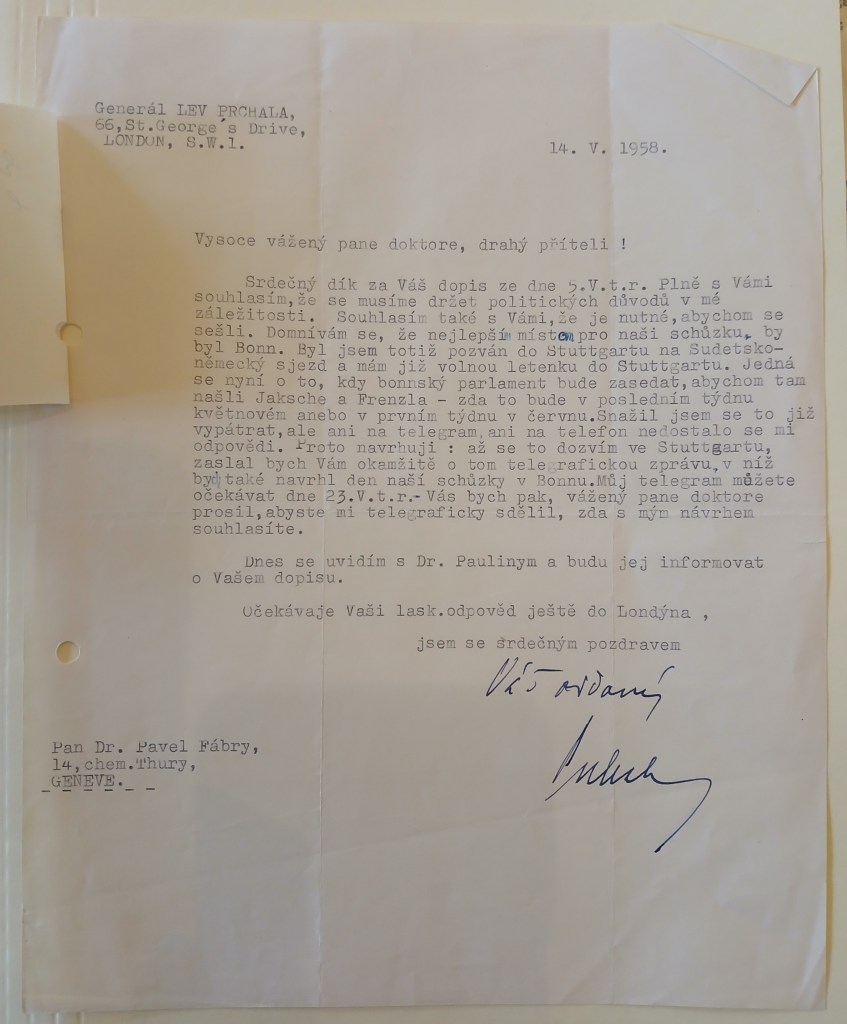
From Lev Prchala, 14.V.1958
66, St. George’s Drive, London SW1
Vysoce vážený pane doktore, drahý příteli!
Srdečný dík za Váš dopis ze dne 5.V. t.r. (MK – 5. května tohoto roku). Plně s Vámi souhlasím, že se musíme držet politických důvodů v mé záležitosti. Souhlasím také s Vámi, že je nutné, abychom se sešli. Domnívám se, že nejlepší místo pro nai schůzku by byl Bonn. Byl jsem totiž pozván do Stuttgartu na Sudetskoněmecký sjezd a mám již volnou letenku do Stuttgartu. Jedná se nyní o to, kdy bonnský parlament bude zasedat, abychom tam našli Jaksche a Frenzla – zda to bude v posledním týdnu květnovém anebo v prvním týdnu v červnu. Snažil jsem se to již vypátrat, ale ani na telegram, ani na telefon nedostalo se mi odpovědi. Proto navrhuji: až se to dozvím ve Stuttgartu, zaslal bych Vám okamžitě o tom telegrafickou zprávu, v níž bych také navrhl den naší schůzky v Bonnu. Můj telegram můžete očekávat dne 23.V. t.r. – Vás bych pak, Vážený pane doktore prosil, abyste mi telegraficky sdělil, zda s mým návrhem souhlasíte.
Dnes se uvidím s Dr. Paulinym a budu jej informovat o Vašem dopisu.
Očekávaje Vaši laskavou odpověď ještě do Londýna,
jsem se srdečným pozdravem
Váš oddaný
Prchala
→
Highly respected doctor, dear friend!
Sincere thanks for your letter of 5.V. this year (MK – 5 May this year). I fully agree with you that we must stick to political considerations in my matter. I also agree with you that it is imperative that we meet. I believe that the best place to meet would be Bonn. I have been invited to Stuttgart for the Sudeten German Congress and I already have a free ticket to Stuttgart. The question now is when the Bonn parliament will meet so that we can find Jaksch and Frenzel there – whether it will be in the last week of May or the first week of June. I have already tried to find out, but neither the telegram nor the telephone has been answered. I therefore suggest that when I hear about this in Stuttgart, I should send you a telegraphic message immediately, in which I would also suggest a date for our meeting in Bonn. You can expect my telegram on the 23rd of May – I would then ask you, Dear Doctor, to tell me by telegraph whether you agree with my proposal.
I shall see Dr. Pauliny today and inform him of your letter.
Expecting your kind reply still to London,
I am your devoted
Prchala
[Translation: Miroslav Kamenik / 17.4.2025]


From Lev Prchala, 19.6.1958
t.č. Rieneck 235 bei Gemünden am Main
Vysoce vážený pane doktore, drahý příteli,
přijměte, prosím, ještě jednou můj srdečný dík za Vaši obětavou a přátelskou pomoc. Můj krátký pobyt v Bonnuve společnosti Vaší milostivé paní choti a Vaší mně zůstane ještě dlouho milou vzpomínkou na vzácné lidi a krásné Slovensko. V příloze dovoluji si zaslati 6 mnou podepsaných formulářů a jsem s ruky políbením a se srdečným pozdravem
Váš
Prchala
PS: 27. t.m. budu již zpět v Londýně, 2 Cleve Rd., NW6
→
(at that time) Rieneck 235 bei Gemünden am Main (Germany)
Dear Doctor, dear friend,
please accept once again my heartfelt thanks for your dedicated and friendly help. My short stay in Bonn in the company of your gracious wife and your [daughter – TB] will remain for a long time a pleasant memory of the precious people and beautiful Slovakia. Enclosed I take the liberty of sending you 6 forms signed by me and with my hand kisses and warm regards
Yours
Prchala
PS: I shall be back in London, 2 Cleve Rd., NW6 on the 27th of this month.
[Translation: Miroslav Kamenik / 17.4.2025]

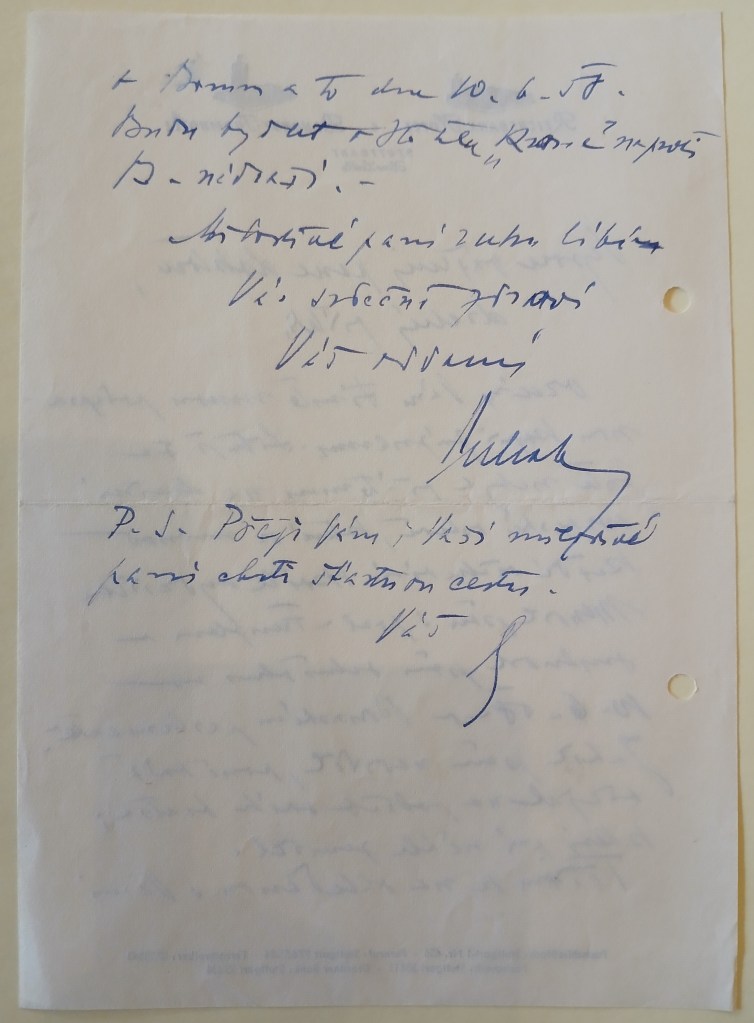
no date – Karlspreis / Sudetendeutscher Tag Stuttgart, 25.5.1958???
(Reichsbahn-Hotel & Bahnhof-Turmhotel Stuttgart, Hans Loeble)
Vysoce vážený pane doktore, drahý příteli,
vracím Vám tímto mnou podepsanou kopii (zázrkami?). Lituji, že jste nebyl přítomen na dnešní evropské oslavě, která se mimo každé očekávání skvěle vydařila. Mluvil jsem s poslancem Frenzelem a smluvil s ním schůzku na 10.6.1958 v Bonnském parlamentě. Jakše jsem nestihl, poněvadž odjel na pohřeb svého bratra, který prý náhle zemřel. Těším se na shledanou s Vámi v Bonnu a to dne 10.6.1958. Budu bydlet v hotelu Krone (?) naproti hlavnímu nádraží.
Milostivé paní ruku líbám, Vás srdečně zdraví Váš oddaný
Prchala
PS: Přeji Vám i Vaší milostivé paní chotišťastnou cestu.
→
Highly respected doctor, dear friend,
I hereby return to you a copy signed by me (by miracles?). I regret that you were not present at today’s European celebration, which, beyond all expectations, was a great success. I have spoken to MEP Frenzel and arranged a meeting with him on 10 June 1958 in the Bonn Parliament. I was unable to meet Jakš because he had gone to attend the funeral of his brother, who is said to have died suddenly. I look forward to seeing you in Bonn on 10.6.1958. I will be staying at the Hotel Krone (?) opposite the main station.
I kiss your gracious lady’s hand and send you my heartfelt greetings from your devoted
Prchala
PS: I wish you and your gracious lady a happy journey
[Translation: Miroslav Kamenik / 17.4.2025]
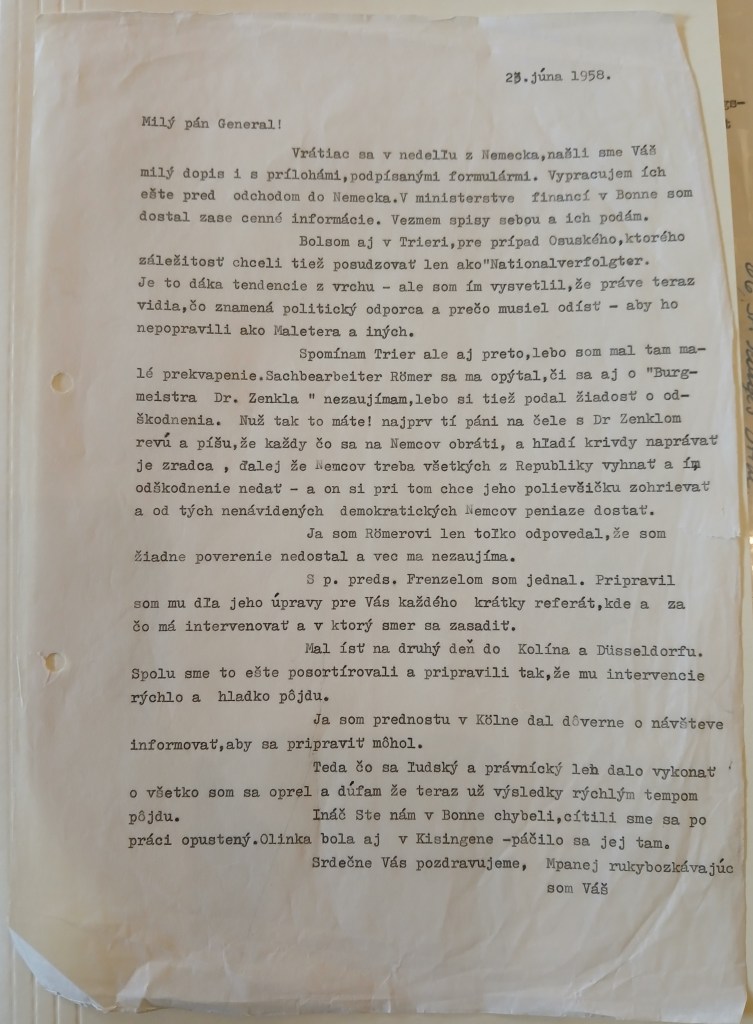


From Lev Prchala, 2.7.1958
Vážený pane doktore, drahý příteli,
srdečný dík za Váš ctěný dopis z 28.6.1958, jakož i za přílohu, kterou Vám přiloženě vracím. Děkuji také za lístek z Gemünden, který mi zaslala Vaše milostivá paní choť do Rienecku. Nyní jsem opět v tom zaplakaném Londýně a marně vzpomínám na krásné chvíle, které jsem v Bonnu prožil va Vaší a Vaší milostivé paní společnosti. Dejž Bože, aby páni v Kölnu moji žádost příznivě posoudili. Pak bych měl po starostech a letěl bych rovnou do Ženevy, abych Vám, vážený pane doktore, osobně poděkoval a milostivé paní složil svou poklonu. V Německu jsem obdržel také dopis od svého přítele Dr. Hönigera, bývalého majora justiční služby v Košicích, v němž mi sděluje, že chce s Vámi navázat spojení a dát své služby k Vaší disposici. Je to velmi čestný chlap, sportovec, který po Mnichově vydržel v armádě až do posledního okamžiku a nechal se pak pensionovat. Rozhodně nepatřil k těm Němcům, kteří v neštěstí ??? opouštěli potápějící se loď.
Milostivé paní ruku líbá, Vás srdečně zdraví, Váš oddaný
Prchala
→
Dear Doctor, dear friend,
my heartfelt thanks for your esteemed letter of 28.6.1958, as well as for the enclosure which I am returning to you. Thank you also for the note from Gemünden, which your kind wife sent me in Rieneck. I am now back in that weepy London and I am vainly recalling the beautiful moments I spent in Bonn in your and your gracious wife’s company. God grant that the gentlemen in Cologne may consider my application favourably. Then my worries would be over, and I would fly straight to Geneva to thank you personally and to pay my respects to your ladyship. In Germany I also received a letter from my friend Dr. Höniger, a former major in the judicial service in Košice, in which he tells me that he wishes to make contact with you and place his services at your disposal. He is a very honest man, a sportsman, who after Munich lasted in the army until the last moment and then retired. He certainly wasn’t one of those Germans who abandoned a sinking ship in a disaster.
I kiss the hand of the gracious lady, I greet you warmly, your devoted
Prchala
[Translation: Miroslav Kamenik / 17.4.2025]
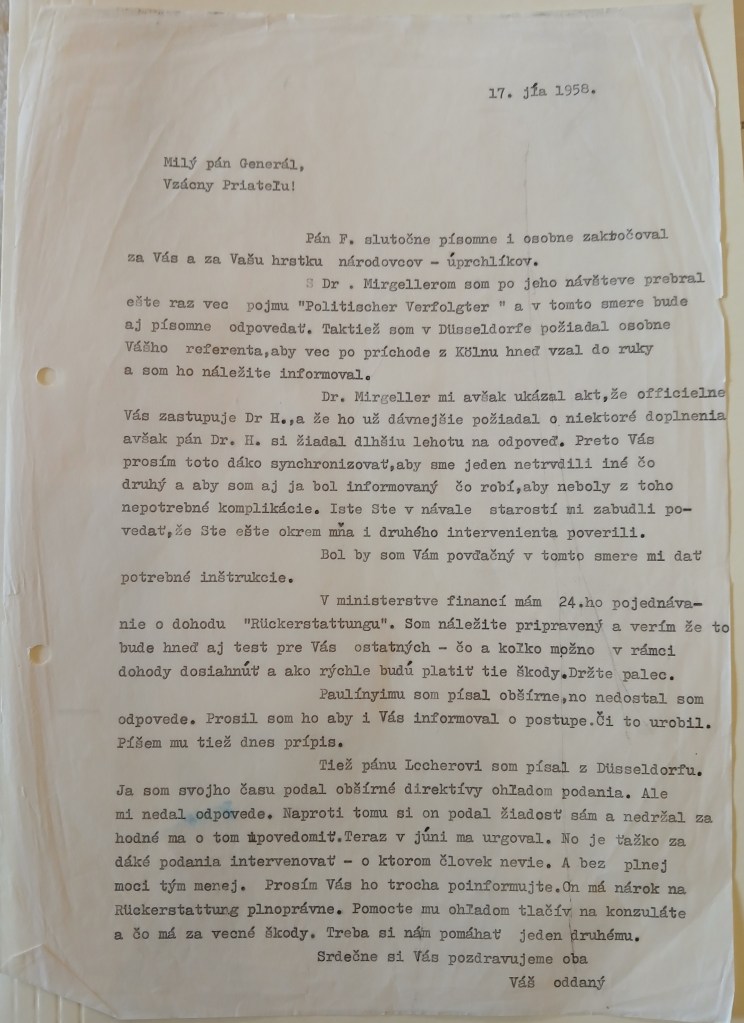


From Lev Prchala, 22.VIII.1958
2, Cleve Rd. London NW6
Vážený pane doktore, drahý příteli!
Srdečný dík za lístek z Bonnu a za Váš ctěný dopis ze dne 17. t.m. ze Ženevy. Je mi opravdu líto, že došlo k nedorozumění ohledně mého zastoupení. Došlo k tomu tak, že po Vašem odjezdu ze Stuttgartu mne navštívil Dr. Höniger, jejž jsem požádal o svědectví ve věci mého pronásledování z politických důvodů. Dr. Höniger byl totiž majorem justiční služby v Košcích a může býti důležitým svědkem v mé věci.
Bohužel Dr. Höniger, který je nyní sám advokátem v Západním Německu (bydlí v blízkosti Stuttgartu), učinil více – ve saze mně prospět. Než jsem od něho žádal. Ukázal jsem mu při osobním setkání odpověď kolínského presidenta a tu Dr. Höniger – ač jsem jej výslovně upozornil, že Vy jste mým právním zástupcem a požádal, aby se s Vámi přími dorozuměl – napsal přímo Regierungspresidentovi dopis z 12.6.1958 o prodloužení lhůty. Při tom – patrně, aby svou intervenci blíže odůvodnil, užil – jak z opisu vidno – rčení, že jsem jej „pověřil péčí o mé zájmy“.
Není pochyby, že tak učinil v nejlepším úmyslu v obavě, aby nebyla promeškána lhůta. Bylo by mně velmi líto, kdybyste se z toho důvodu rozhněval na mne nebo na Dr. Hönigera. Sám Vás prosím, abyste mi laskavě prominul, jestliže jsem snad věc „zbabral“, ale současně, abyste se na Dr. Hönigera nezlobil, že Vám hned nenapsal, jak bylo jeho povinností a oč jsem jej také požádal. Na druhé straně by však bylo opravdu škoda, nepoužít jeho služeb a rozsáhlých styků, které mi nabídl ochotně ze staré známosti. Ostatně si vzpomínám, že po návratu do Londýna jsem se Vám zmínil o Dr. Hönigerovi v dopise, který jsem Vám hned napsal. Nyní napíši Dr. Hönigerovi do Winnenden znovu, aby neopomenul přímo s Vámi se dorozumět o meritu věci. Byl bych opravdu šťasten, kdybyste se dohodli o spolupráci a společném postupu.
Dr. Locherovi jsem vyřídil Vaše vzkazy. Byl však v posledních týdnech opět churav srdeční chorobou, vzniklou z loňského úrazu. Slíbil však, že Vám napíše přímo, jakmile zdravotní stav mu dovolí.
Ještě jednou Vám děkuji za Vaši neúnavnou péči a obětavou činnost za nás všechny a jsem s rukypolíbením milostivé paní
Váš oddaný
Prchala
→
Dear Doctor, dear friend!
My sincere thanks for the note from Bonn and for your esteemed letter of the 17th of this month from Geneva. I am really sorry that there has been a misunderstanding about my representation. It happened that after your departure from Stuttgart I was visited by Dr. Höniger, whom I asked to give evidence on the matter of my persecution for political reasons. Dr. Höniger was a major in the judicial service in Košice and can be an important witness in my case.
Unfortunately, Dr. Höniger, who is now himself a lawyer in West Germany (he lives near Stuttgart), has done more – in an effort to benefit me. than I had asked of him. I showed him in a personal meeting the reply of the President of Cologne, and here Dr. Höniger – although I had expressly informed him that you were my attorney and asked him to communicate with you directly – wrote a letter dated 12.6.1958 directly to the Regierungspresident for an extension of time. In doing so, apparently in order to further justify his intervention, he used – as can be seen from the description – the phrase that I had ‘entrusted him to look after my interests’.
There is no doubt that he did so with the best of intentions, fearing that the deadline would be missed. I should be very sorry if you were angry with me or Dr. Höniger for that reason. I would ask you to forgive me if I have perhaps “botched” the matter, but at the same time not to be angry with Dr. Höniger for not writing to you immediately, as was his duty and as I had asked him to do. On the other hand, however, it would be a real pity not to use his services and the extensive contacts which he has offered me willingly out of old acquaintance. Incidentally, I remember that on my return to London I mentioned Dr. Höniger to you in a letter which I wrote to you at once. I shall now write to Dr. Höniger in Winnenden again, so that he may not fail to communicate directly with you on the merits of the matter. I would be very happy if you could agree on cooperation and joint action.
I have conveyed your messages to Dr. Locher. However, he has been sick again in recent weeks with a heart condition arising from an accident last year. But he has promised to write to you directly as soon as his health permits.
I thank you again for your untiring care and dedication on behalf of us all, and I am hand in hand with the gracious lady
Your devoted
Prchala
[Translation: Miroslav Kamenik / 17.4.2025]
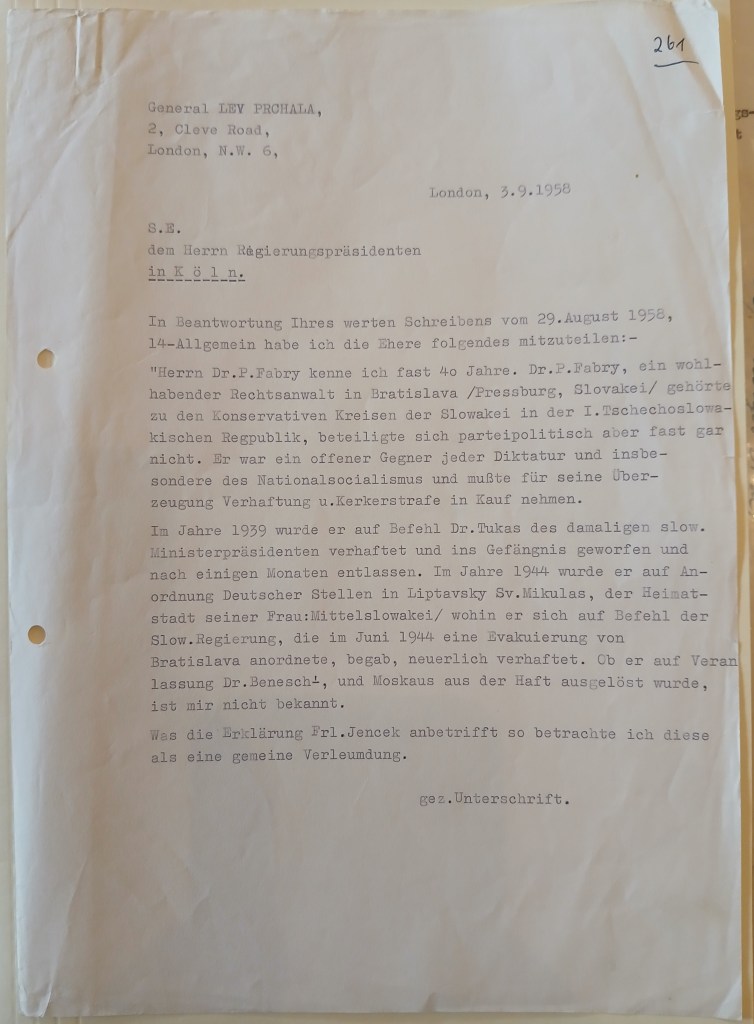


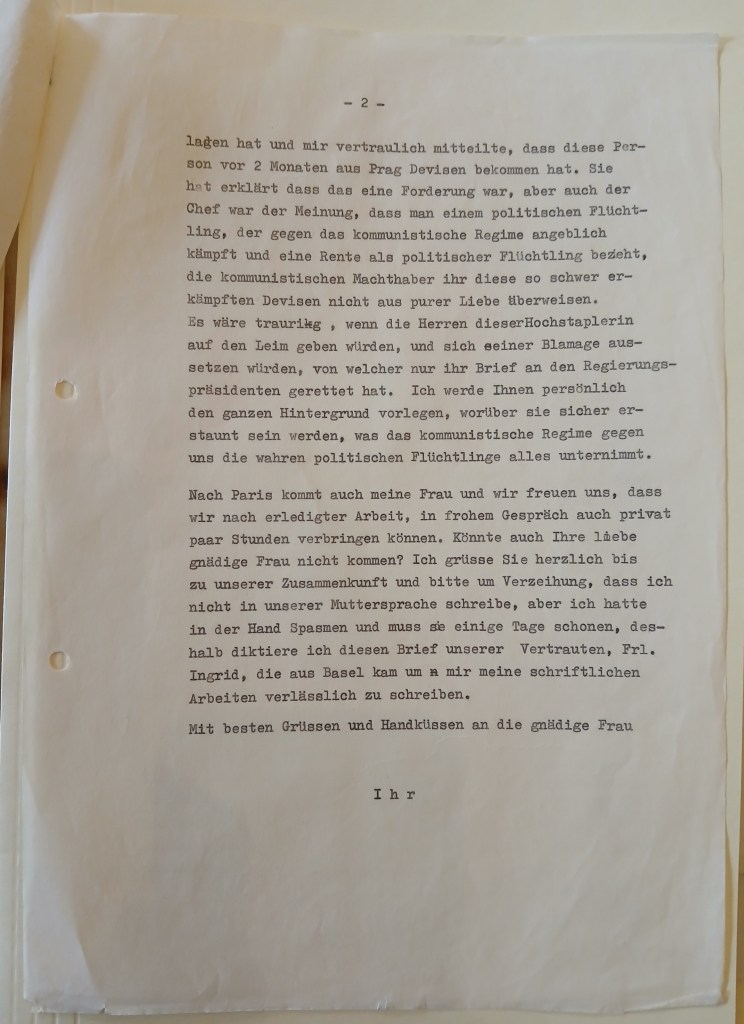

From Lev Prchala, 21.X.1958
Velevážený pane doktore, drahý příteli,
srdečně děkuji za Váš ctěný dopis z 20.X.1958, jakož i letecký lístek, který přiloženě vracím. Velmi lituji, že nemohu vyhovět Vašemu přání a přiletět do Paříže. Jsem opravdu churav a kromě toho zabraňují tomu i jiné překážky. Promiňte!
Milostivé paní uctivě ruku líbá, Vás srdečně zdraví Váš oddaný
Prchala
→
Dear Doctor, dear friend,
I thank you very much for your esteemed letter of 20.X.1958, as well as the air ticket (MK – air ticket), which I enclose. I regret very much that I am unable to comply with your wish and come to Paris. I am really sick and there are other obstacles preventing it. Excuse me!
Gracious ladies respectful hand kisses, I greet you cordially
Your devoted
Prchala
[Translation: Miroslav Kamenik / 17.4.2025]

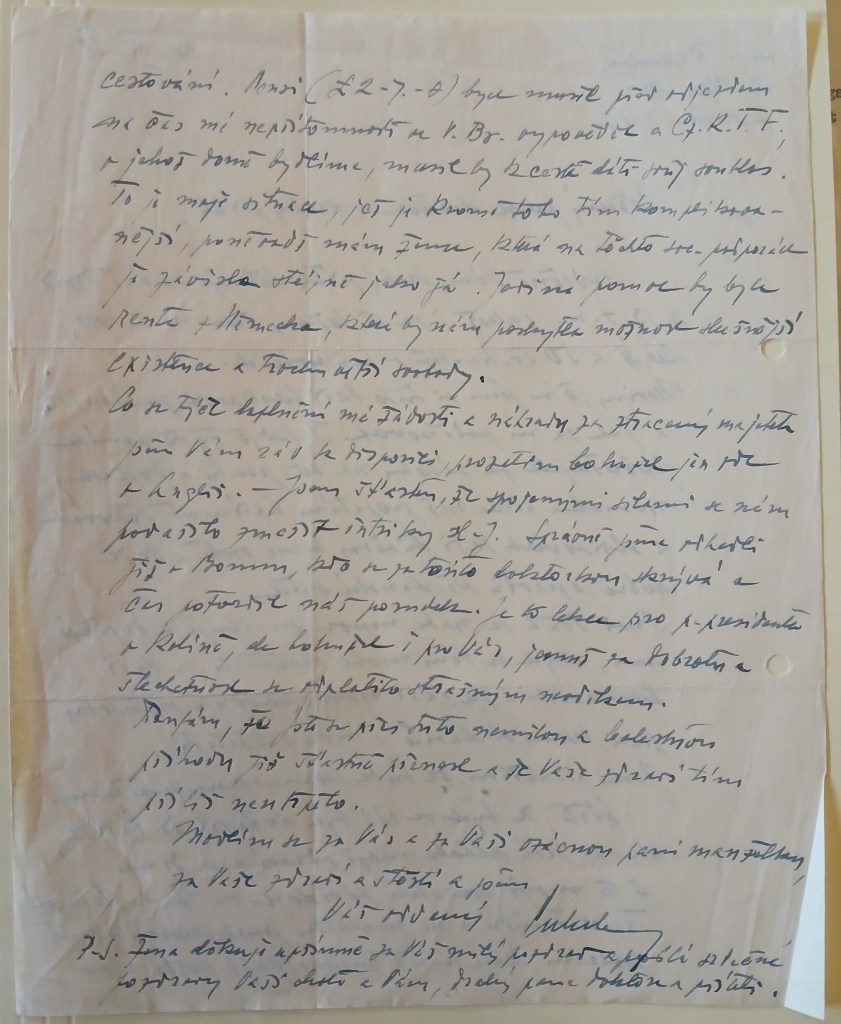
From Lev Prchala, 16.XI.1958 (viditelná změna v rukopisu, těžko čitelný / hard to read handwriting)
L.Prchala
2, Cleve Rd.
London NW6
Vážený pane doktore a drahý příteli,
srdečně Vám, drahý příteli, děkuji za Váš dopis z 13. t.m., jakož i za přiložený šek na Ł100 (GBP), 20 dollarů a 50 swiss francs v bankovkách.
Nevím, čím jsem si tuto Vaši laskavost zasloužil a jak za ni poděkovat. I když tyto peníze považujete za zálohu na eventuální rentu (?) a doplatky, nemohu přece než prozatím upřímně děkovat a obdivovat Vaši důvěru k mé osobě a Vaše dobré opravdu křesťanské srdce.
Snad Bůh se nade mnou smiluje a dopřeje mi, abych se Vám mohl odvděčiti za Vaši laskavost a za Vaši namáhavou a obětavou práci, kterou si dáváte s mou záležitostí. Jsem přesvědčen, že bude korunována úspěchem.
Věřte, že bych se rád byl dostavil do Paříže, ale zaprvé selhalo moje zdraví a zadruhé že to moje sociální závislost na Czech Refugee Trust Fund a na maličké penzi, kterou týdně pobírám, které téměř neumožňují každé moje cestování. Penzi (Ł 2-7-0) bych musel před odjezdem na čas mé nepřítomnosti z V.Br. Vypovědět a Cz.R.T.F., v jehož domě bydlíme, musel by k cestě dáti svůj souhlas. To je moje situace, jež je kromě toho tím komplikovanější, poněvadž mám ženu, která na těchto soc. podporách je závislá stejně jako já. (?) pomoc by byla renta z Německa, která by nám poskytla možnost slušnější existence a trochu větší svobody.
Co se týče doplnění mé žádosti o náhradu za ztracený majetek jsem Vám rád k dispozici, prozatím bohužel jen zde v Anglii. Jsem šťasten, že spojenými silami se nám podařilo zmařit intriky sl. J. (Jenček?). Správně jsme odhadli již v Bonnu, kdo se za (?) touto ….ou skrývá a čas potvrdil náš posudek. Je to lekce pro p. presidenta v Kolíně, ale bohužel i pro Vás, jemuž za dobrotu a šlechetnost se odplatilo strašným nevděkem.
Doufám, že jste se přes tuto nemilou a bolestivou příhodu již šťastně přenesl a že Vaše zdraví tím příliš neutrpělo.
Modlím se za Vás a za Vaši vzácnou pani manželku, za Vaše zdraví a štěstí a jsem
Váš oddaný
Prchala
PS: Žena děkuje a upřímně za Váš milý pozdrav a posílá srdečné pozdravy Vaší choti a Vám, drahý pane doktore a příteli.
→
Dear Doctor and dear friend,
I thank you most heartily for your letter of the 13th instant, and for the enclosed cheque for £100 (GBP), 20 dollars and 50 swiss francs in notes.
I do not know what I have done to deserve this kindness and how to thank you for it. Even if you consider this money as a deposit for the eventual annuity (?) and supplementary payments, I cannot but for the present sincerely thank and admire your confidence in my person and your good truly Christian heart.
May God have mercy on me and grant that I may repay you for your kindness and for the laborious and devoted work you are putting into my cause. I am confident that it will be crowned with success.
Believe me, I would have liked to have come to Paris, but firstly my health has failed and secondly it is my social dependence on the Czech Refugee Trust Fund and the tiny pension I receive weekly that make any travel almost impossible. The pension (£2-7-0) would have to be paid to me before I could leave for the time of my absence from Great Britain. I would have to give notice and Cz.R.T.F., in whose house we live, would have to give his consent to the journey. This is my situation, which is all the more complicated because I have a wife who is as dependent on these social benefits as I am. (?) Help would be an annuity from Germany, which would give us the possibility of a moredecent existence and a little more freedom.
I am happy to be of service to you regarding the completion of my application for compensation for lost property, unfortunately for the time being only here in England. I am happy that by joining forces we have been able to thwart Ms. J. (?) intrigues. We correctly guessed back in Bonn who was behind … (not legible) and time has confirmed our assessment. It is a lesson for Mr. President in Cologne, but unfortunately also for you, whose kindness and generosity have been repaid with terrible ingratitude.
I hope that you have got over this unpleasant and painful episode happily, and that your health has not suffered much.
I pray for you and for your precious wife, for your health and happiness and am
your devoted
Prchala
PS: My wife thanks and sincerely for your kind greetings and sends her heartfelt regards to your wife and to you, dear doctor and friend.
[Translation: Miroslav Kamenik / 17.4.2025]

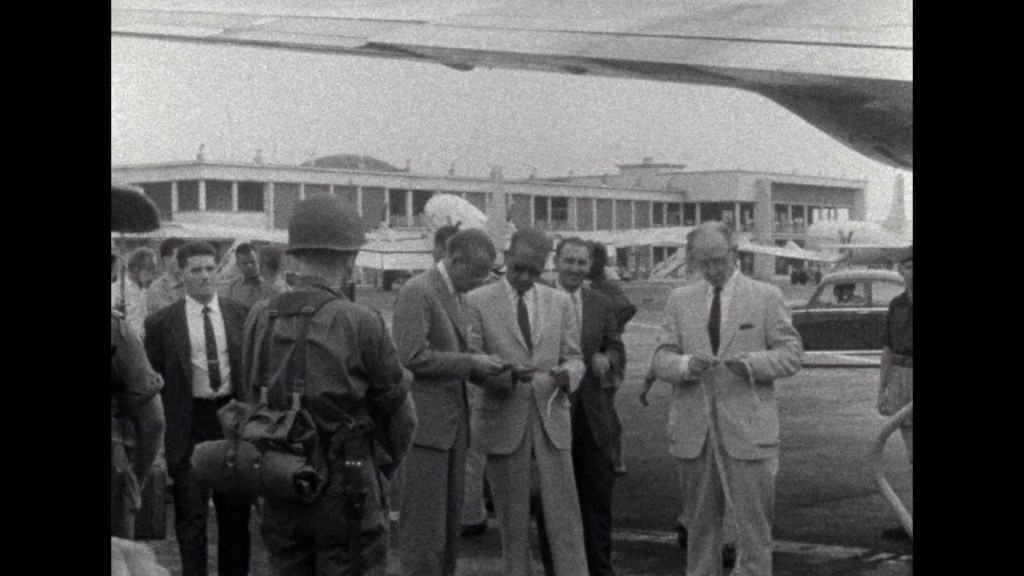

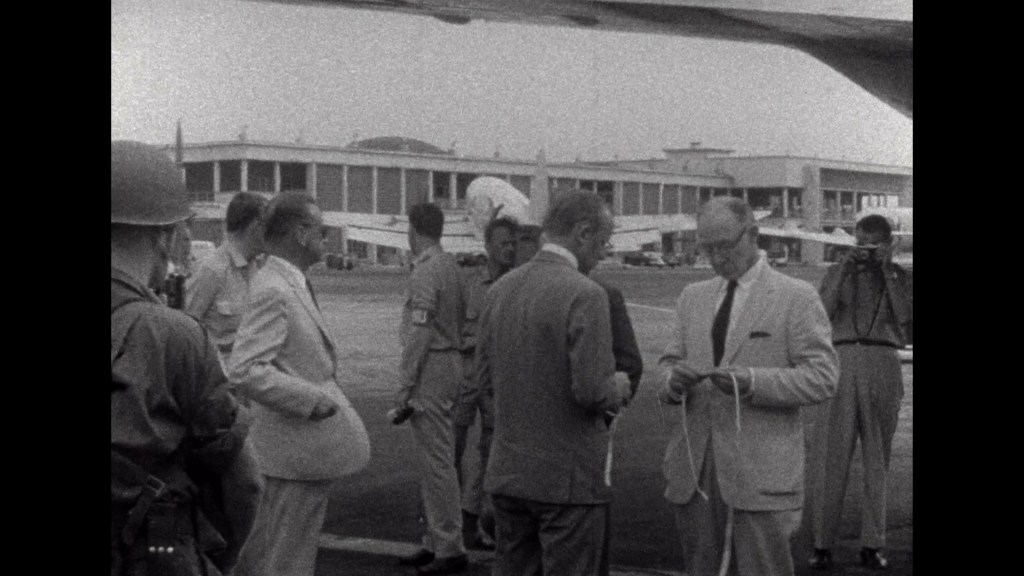


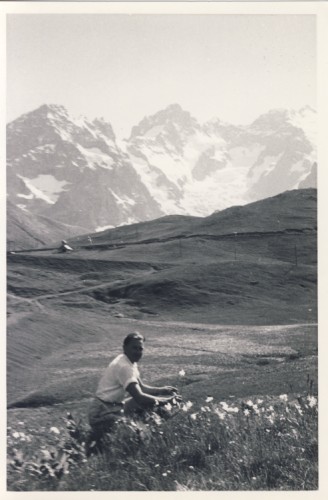
 Vlado
Vlado 