With great respect to Army General Lev Prchala and to our grandfather Dr. Pavel Fabry – Czechoslovakian heroes, defenders of democratic freedom, symbols of resistance against nazis and fascists! These are the last letters between them, from 1960, with related documents included. Translations will be added later. Pavel died of a heart attack in Berlin on 19 December 1960, he was 69. Vlado took over the remaining legal work from his father, somehow finding time for it while also working for the UN in the Congo. Vlado’s letter to the General is sent from Hotel Le Royal, Leopoldville (now Kinshasa), 12 March 1961. It brings tears to my eyes how much love they had for their friends, the personal sacrifices they were willing to make for each other – my cup runs over in their memory.
Thanks to Miroslav Kamenik for transcribing and translating all the handwritten letters here!
17.5.60
Vážený pane doktore, drahý příteli,
byl bych Vám nesmírně vděčen, kdybyste mi alespoň několika slovy naznačil jak stojí záležitosti Vašich Londýnských klientů, resp. klientek, které mě svými dotazy stále bombardují.Také bych rád věděl, zda máte v úmyslu se se mnou v Německu viděti, poněvadž čas utíká a můj odlet do Mnichova se blíží. Počítám, že přiletím pravděpodobně 2 nebo 3 června a že se v Mnichově zdržím až týden. Pak bych Vám byl k dispozici a vše závisí z Vašich plánů, kdy a kde byste mě potřeboval.
Těším se na Vaši laskavou odpověď a jsem s ruky políbením milostivé paní a se srdečnými pozdravy
Váš oddaný
Prchala
Dear Doctor, my friend,
I would be extremely grateful if you could give me at least a few words about the state of cases of your London clients, who are constantly bombarding me with their inquiries. I would also like to know whether you intend to see me in Germany, as time is running out and my departure for Munich is approaching. I expect to arrive probably on the 2nd or 3rd of June and to stay in Munich for up to a week. Then I would be at your disposal, and it all depends on your plans, when and where you would need me.
I look forward to your kind reply and I am with a kiss on the hand of your wife and with warm regards
Faithfully your
Prchala
20.5.60
Velevážený pane doktore, drahý příteli,
dnes jsem obdržel letecký lístek London – Mnichov – London od Česko – Sud. Něm federálního výboru pro let dne 2. června 1960.
Poletím tedy ve čtvrtek dne 2. června do Mnichova a zdržím se tam asi týden. Zároveň jsem byl uvědoměn, že čestné pozvánky budou rozposlány v příštích dnech. Doufám, že pozvánku pro sebe a Vaši milostivou obdržíte co nejdříve.
A nyní mám k Vám, vzázcný příteli, jednu velikou prosbu. Abych zde měl pevný důkaz pro nutnost své jízdy do Německa, zašlete mně, prosím, telegram, v němž mě vyzýváte k schůzce v Německu. Dejž Bůh, aby taková schůzka se stala doopravdy možnou.
S ruky políbením velevážené milostivé paní a se srdečnými pozdravy jsem Váš oddaný,
Prchala
Dear Doctor, my friend,
today I received a London – Munich – London ticket from the Czech – SudetenGerman Federal Committee for the flight on June 2, 1960.
I will fly to Munich on Thursday, June 2, and will stay there for about a week. At the same time, I was informed that the honorary invitations will be sent out in the coming days. I hope that you will receive the invitation for yourself and your ladyship as soon as possible.
And now I have one great request for you, dear friend. So that I may have solid proof of the necessity of my journey to Germany, please send me a telegram in which you invite me to a meeting in Germany. God grant that such a meeting may actually become possible.
I am with a kiss on the hand of your wife and with warm regards
Faithfully your
Prchala
28.5.60
Velevážený pane doktore, drahý příteli,
dovolte, abych Vám srdečně poděkoval za telegram, který jsem právě obdržel. Telegrafoval jsem ihned do Mnichova, aby Vám zaslali čestnou pozvánku, o kterou jsem žádal již před několika týdny. Vysvětluji si tuto chybu jedině tím, že Ing. Simon je zavalen prací a pevně doufám, že tento faux pas okamžitě napraví.
Těším se velice na setkání s Vámi a Vaší milostivou paní, které uctivě líbám ruku.
Srdečně Vás zdraví
Váš oddaný
Prchala
P.S. Tatsachenbericht jsem odevzdal pí. S a pí. M. V Mnichově bydlím v hotelu „Esplanade“ naproti hl. nádraží.
Dear Doctor, my friend,
let me to thank you most cordially for the telegram I have just received. I immediately telegraphed to Munich to have the honorary invitation sent to you, which I had requested several weeks ago. I can only explain this mistake by saying that Ing. Simon is overwhelmed with work and I firmly hope that he will rectify this faux pas immediately.
I am very much looking forward to meeting you and your honorable wife, whose hand I respectfully kiss.
Yours sincerely
Prchala
P.S. I handed over the Tatsachenbericht to Mrs. S and Mrs. M. In Munich I live in the hotel “Esplanade” opposite the main station.
9.6.60, München, Hotel Esplanade
Velevážený pane doktore, drahý příteli,
srdečně děkuji za zavolání z Kolína a ze Ženevy. Zítra odjíždím k sestře do Rieneck bei Gemünden / M a tam budu čekat na další Váš rozkaz. Dovolíte-li, pak navrhuji, abychom jeli přímo do Bonnu kde příští týden zasedá Bundestag a ušetřili si zastávku ve Frankfurtu. Souhlasíte-li s tímto mým návrhem, pak očekávám v Rienecku Váš telegr. vzkaz.
Milostivé paní ruku líbám,
Vás, drahý příteli, srdečně zdravím.
Váš oddaný
Prchala
Dear Doctor, my friend,
thank you very much for your call from Cologne and Geneva. Tomorrow I am leaving for my sister in Rieneck bei Gemünden / M and there I will await your further orders. If you allow me, I suggest that we go directly to Bonn where the Bundestag is in session next week and save ourselves a stopover in Frankfurt. If you agree with this proposal of mine, I am expecting your telegram in Rieneck.
Kind kisses to your honorable wife’s hand,
I greet you warmly, my dear friend.
Yours faithfully
Prchala
17.6.60
Velevážený pane doktore, drahý příteli,
srdečné díky za Vaše telegramy z Berlna, z Kolína a z Frankfurtu a též za Váš ctěný dopis „expres“. Mám silné podezření, že jste můj dopis z Mnichova adresovaný Vám do Ženevy neobdržel a že zde vzniklo nedorozumění, jež z Vašeho telegramu z Frankfurtu vysvitá.
Domluvili jsme se sice telefonicky za mého pobytu v Mnichově, že se sejdeme ve Frankfurtu, ale pak jsem Vám poslal dopis, v němž navrhuji schůzku přímo v Bonnu, a to během tohoto týdne. Zapomněl jsem bohužel, že v tomto týdnu jsou 2 svátky, a to 16 a 17 a 18 je sobota a v Bonnu se neúřaduje.
Prosím Vás proto za prominutí a dovoluji si Vám navrhnouti, abychom se sešli v pondělí dne 20. t.m. večer v Bonnu v Bergischer Hof a nebo 21. t.m. ráno tamtéž.
Zaslal jsem Vám dnes telegr. zprávu a návrh a prosím o Vaše laskavé tel. rozhodnutí. Chci z Rienecku odjeti v poledne dne 20. t.m. Doufám, že bonnský parlament bude příští týden zasedat a těším se na shledání s Vámi.
Milostivé uctivě ruku líbá
Vás srdečně zdraví
Váš oddaný
Prchala
Dear Doctor, my friend,
Heartfelt thanks for your telegrams from Berlin, Cologne and Frankfurt and also for your esteemed “express” letter. I strongly suspect that you did not receive my letter from Munich addressed to you in Geneva and that there was a misunderstanding here, which will become clear from your telegram from Frankfurt.
We agreed by telephone during my stay in Munich that we would meet in Frankfurt, but then I sent you a letter in which I propose a meeting directly in Bonn, during this week. Unfortunately, I forgot that there are 2 holidays this week, namely the 16th and 17th and the 18th are Saturdays and there are no offices in Bonn.
Therefore, I beg your pardon and allow me to suggest that we meet on Monday, the 20th, in the evening in Bonn at the Bergischer Hof or on the 21st, in the morning there.
I sent you a telegram today. report and proposal and I ask for your kind decision. I want to leave Rieneck at noon on the 20th. I hope that the Bonn parliament will be in session next week and I look forward to seeing you.
Kind kisses to your honorable wife’s hand,
I greet you warmly, my dear friend.
Yours faithfully
Prchala
3.7.60 (Rieneck)
Velevážený pane doktore, drahý příteli,
sedím stále v Rienecku a čekám na Vaše zavolání. Mám zde již dlouhou chvíli a rád bych se již zas vrátil do Londýna, kde mě žena netrpělivě očekává. Píše mi zoufalé dopisy, poněvadž je nemocná a potřebuje důkladné lékařské vyšetření a léčení, které je v Londýně dosti drahé, když se tomu podrobujete u privátního lékaře a ne na health service, které je zdlouhavé a dosti povrchní. Chudinka nechápe, že zde nelze věci uspíšit více než to děláme a že je třeba míti velikou trpělivost. Doufám, že jste v Kolíně dobře pořídil a že i s našimi záležitostmi se dostaneme o krok dále a to dříve než pánové půjdou opět na svou dovolenou. Očekávám toužebně Vaši laskavou odpověď a jsem s ruky políbením milostivé paní, mému strážnému anděli, a se srdečnými pozdravy Vám, velevážený,
Váš oddaný
Prchala
Dear Doctor, my friend,
I am still sitting in Rieneck and waiting for your call. I have been here for a long time and I would like to return to London, where my wife is impatiently waiting for me. She writes me desperate letters because she is ill and needs a thorough medical examination and treatment, which is quite expensive in London if you undergo it with a private doctor and not with the health service, which is lengthy and rather superficial. My poor wife does not understand that things cannot be rushed here any more than we do and that great patience is needed. I hope that you have made good arrangements in Cologne and that we will also get a step further with our affairs before the gentlemen go on their vacation again. I eagerly await your kind answer, kind kisses to your honorable wife’s hand, my guardian angel,
I greet you warmly, my dear friend.
Yours faithfully
Prchala
8.7.60
Velevážený pane doktore, drahý příteli,
srdečný dík za Váš ctěný list z Baselu z 6. t.m. s přílohami. Včera jsem Vám odeslal dopis do Ženevy s odůvodněním, proč z Rienecku musím začátkem příštího týdne vypadnout (?) a navrhl jsem schůzku v Bonnu 11 nebo 12 t.m. večer. Domnívám se, že když 12 vyjedu, mohu 13 vyřídit svou věc u min. Seebohma a 14 je již beztak konec týdne, takže schůzka 13 večer s Vámi by byla podle mého skromného názoru nejvhodnějším dnem. Račte mi, prosím, ještě telegr. potvrdit, zda Vám 13 večer vyhovuje a já se podle toho zařídím. Milostivé paní uctivě ruku líbá,
Vás, drahý příteli, srdečně zdraví
Váš oddaný
Prchala
Dear Doctor, my friend,
heartfelt thanks for your esteemed letter from Basel of the 6th with attachments. Yesterday I sent you a letter to Geneva with the justification why I have to leave Rieneck at the beginning of next week (?) and I proposed a meeting in Bonn on the 11th or 12th in the evening. I believe that if I leave on the 12th, I can take care of my business with Minister Seebohm on the 13th and the 14th is already the end of the week anyway, so a meeting with you on the 13th evening would be, in my humble opinion, the most suitable day. Please confirm by telegram whether the 13th evening suits you and I will make arrangements accordingly.
Kind kisses to your honorable wife’s hand,
I greet you warmly, my dear friend.
Yours faithfully
Prchala
2.8.60
Velevážený pane doktore, drahý příteli,
potvrzuji s díky Váš ctěný dopis z 23.7.60 a sice teprve dnes, poněvadž jsem čekal, že se Kolín ozve. Bohužel se tak dosud nestalo. Mezitím jsem obdržel dopis od p. ministra Seebohma, jenž mi sděluje, že i jemu bylo A Amtem potvrzeno, že stanovisko AA bylo příznivé a odesláno Regierungspräsidentovi v Kolíně. Po obdržení této odpovědi A-amt spojil se ministr S. S panem Dr. Mirgelerem a žádal jej, aby moje věc byla uspíšena. M. mu to slíbil, ale podotkl, že Kolín se mne ještě jednou dotáže a požádá potvrzení, cituji: „der Staatenhorigkeit, die früher als 1956 vorhanden sein müsste, aber danach mit einer boldigen Entscheidung gerechnet werden könne“. Teď ale už tomu vůbec nerozumím. Vždyť v mé žádosti o rentu podle § 1 BEG výslovně stojí, kdo jsem a co jsem a také to že jsem od roku 1939 staatenlos.
Zlé je, že se jedná byrokratům v Kolíně o nový (???) mé záležitosti a proto Vás snažně prosím, abyste v Kolíně znovu intervenoval, třeba jen telefonicky. Podotýkám, že i na tento dotaz z Kolína dosud čekám. Jakmile se dozvíte, v čem dělo?, pak mi, prosím, ihned napište. Také Vás velmi prosím o sdělení, jak jste dopadl v Berlíně. Já osobně bych Vás s touto žádostí neobtěžoval, ale mí londýnští přátelé mě stále bombardují svými dotazy a moje žena stojí před úplným duševním zhroucením.
Milostivé paní ruku líbá, Vás srdečně zdraví
Váš oddaný
Prchala
Dear Doctor, my friend,
I confirm with thanks your esteemed letter of 23.7.60, replying today, because I was expecting Cologne to respond. Unfortunately, this has not happened yet. In the meantime, I have received a letter from Mr. Minister Seebohm, who informs me that he too was confirmed by the A-Amt that the AA’s opinion was favorable and sent to the Regierungspräsident in Cologne. After receiving this reply from the A-Amt, Minister S. contacted Dr. Mirgeler and asked him to expedite my case. M. promised him this, but pointed out that Cologne would ask me again and ask for confirmation, I quote: “der Staatenhorigkeit, die früher als 1956 vorhanden sein müsste, aber danach mit einer boldigen Entscheidung gerechnet werden könne”. But now I don’t understand it at all. After all, my application for a pension according to § 1 BEG explicitly states who I am and what I am and also that I have been stateless since 1939.
The bad thing is that this is a new (???) of my affairs for the bureaucrats in Cologne and therefore I strongly ask you to intervene again in Cologne, even if only by phone. I would like to point out that I am still waiting for this inquiry from Cologne. As soon as you find out what happened, please write to me immediately. I also ask you to tell me how you ended up in Berlin. I personally would not bother you with this request, but my London friends are constantly bombarding me with their questions and my wife is on the verge of a complete mental breakdown.
Kind kisses to your honorable wife’s hand,
I greet you warmly, my dear friend.
Yours faithfully
Prchala
26.8.60
Velevážený pane doktore, drahý příteli,
přijměte, prosím, můj srdečný dík za Váš dopis z 24.8.60 s přílohami. Upřímně lituji jménem svým jakož i jménem všech Vašich londýnských klientů, že Vám způsobujeme tolik starostí a škodíme Vašemu zdraví.
Dej Bože, abyste se co nejdříve zbavil těchto starostí o návrat a měl konečně trochu času pro léčení svého tak cenného zdraví.
Dr.Höniger obdržel přípis Regierungspräsidenta teprve 8.8.60 a ihned mi jej zaslal. Zařídil jsem okamžitě vše potřebné a včera dne 25.8. jsem již poslal Hönigerovi potvrzení Home Office, že jsem byl Flüchtling (ode) dne 1.10.53 ve smyslu Ženevské konvence z roku 51 a že moje residence je ve Velké Británii. Byl jsem také na zdejším německém velvyslanectví kvůli lékařské prohlídce. Ale tam mi bylo řečeno, že Köln musí znovu o ní požádat a to jsem také sdělil Hönigerovi s prosbou, aby Köln o tom ihned vyrozuměl. Vrátil jsem mu také přípis Regierungspräsidenta, který měl číslo: 14.II.-6-673-674 28.8.60. Napíšu mu ihned, aby Vám tento přípis poslal do Ženevy.
Přílohy pro paní Locherovou a paní Malíkovou jim co nejdříve odevzdám a s Dr. Paulínym si smluvím schůzku.
Ještě jednou Vám, drahý příteli, srdečně děkuji a vyprošuji si ruky políbení Vaší vzácné manželce.
Se srdečným pozdavem
jsem Váš oddaný
Prchala
Dear Doctor, my friend
please accept my heartfelt thanks for your letter of 24.8.60 with the enclosures. I sincerely regret, on my own behalf and on behalf of all your London clients, that we are causing you so much trouble and harming your health.
May God grant that you may be rid of these worries about returning as soon as possible and finally have some time to treat your precious health.
Dr. Höniger received the Regierungspräsident’s letter only on 8.8.60 and sent it to me immediately. I immediately arranged everything necessary and yesterday, 25.8. I already sent Höniger a confirmation from the Home Office that I was a Flüchtling (from) on 1.10.53 within the meaning of the Geneva Convention of 51 and that my residence is in Great Britain. I also went to the German embassy here for a medical examination. But I was told there that Cologne had to apply for it again and I also told Höniger about this, asking that Cologne understand this immediately. I also returned to him the letter from the Regierungspräsident, which had the number: 14.II.-6-673-674 28.8.60. I will write to him immediately to send this letter to you in Geneva.
I will hand over the enclosures for Mrs. Locherová and Mrs. Malíková to them as soon as possible and I will arrange a meeting with Dr. Paulíny.
Once again, my dear friend, I thank you heartily and with a hand kiss to your honorable wife
Yours faithfully
Prchala
16.9.60
Velevážený pane doktore, drahý příteli,
mám za to, že jste již opět v Ženevě a doufám, že Vás svým dopisem neobtěžuji. Doufám také, že jste si po tak namáhavé práci alespoň trochu odpočinul a že zdravotně se cítíte nyní lépe.
O obsahu Vašeho telegramu a dopisu nás již podrobně informoval přítel Dr. A a nezbývá než Vás obdivovat a Vám za Vaši obětavou práci mnohokráte děkovat. Zdá se, že to teď již dlouho trvat nebude a že vbrzku dojednáte věci definitivně.
Mě osobně velmi znepokojuje mlčení Kolína. Nedostal jsem dosud ani „Erklärung“, který jsem měl podepsat, ani povolání k lékařské prohlídce. Höniger sice slíbil, že po své dovolené, která končila 6.9., zajede do Kolína a o mé věci osobně pohovoří s Reg. Presidentem, ale dosud jsem bez zprávy jak z Kolína tak od Hönigera. A proto Vás prosím, abyste Vy se na to ještě jednou podíval, a to proto, poněvad6 Vám věří a vím, že bez Vaší intervence se nic nevyřídí.
Milostivé paní uctivě ruku líbám, Vás, drahý příteli, srdečně zdravím
a jsem Váš oddaný
Prchala
Dear Doctor, my friend,
I believe you are back in Geneva and I hope I am not bothering you with my letter. I also hope that you have at least rested a little after such strenuous work and that you are now feeling better in health.
We have already been informed in detail about the content of your telegram and letter by our friend Dr. A and there is nothing left but to admire you and thank you many times for your dedicated work. It seems that it will not be long now and that you will soon arrange things definitively.
I am personally very concerned about the silence of Cologne. I have not yet received either the “Erklalung” that I was supposed to sign or the summons for a medical examination. Honiger promised that after his vacation, which ended on September 6, he would go to Cologne and personally discuss my case with the Prime Minister, but I have still not heard from either Cologne or Honiger. And that’s why I’m asking you to take another look at it, because I trust you and I know that nothing will be resolved without your intervention.
Kind kisses to your honorable wife’s hand,
I greet you warmly, my dear friend.
Yours faithfully
Prchala
22.3.61
Vysoce vážená milostivá paní,
promiňte, když na Váš milý dopis ze 7. t.m. odpovídám teprve dnes, ale byl jsem v Německu a vrátil jsem se teprve koncem minulého týdne. Byl jsem v Bonnu, ve Stuttgartu a Mnichově a všude mě doprovázely vzpomínky na milovaného přítele Dr. Fábryho, jenž padl ve službě pro své blízké. Jen jeho genialitě a krajní obětavosti máme co děkovat, že byly dosažena výsledky, o nichž se nikomu z nás, jeho klientů, ani nesnilo. Ale co pak znamenají všechny poklady tohoto světa, které vždy možno nahradit, oproti ztrátě milovaného manžela, otce a přítele?
Stále ještě se nemohu smířit s jeho odchodem a mrzí mne, že jsem mu nemohl osobně poděkovat za jeho vzácnoua opravdu přátelskou službu, kterou prokázal mi a mé rodině.
V sobotu dne 20. t.m. obdržel jsem dopis od pana Dr. Vladimíra z Conga. Upřímně ho lituji a doufám, že se vrátí zdráv a co nejdříve z tohoto afrického pekla. Potvrzuje mi to, co mi před týdnem vyřídila telefonicky Vaše milostivá slečna dcera a paní Tágová, od níž jsem dostal dopis po svém příjezdu z Německa. Doufám, že koncem května budu opět v Bonnu a pak si dovolím zaslat Vám, milostivá, zbytek svého dluhu z druhé částky náhrady, která, jak předpokládám, bude do té doby už určitě v mé bance v Bonnu.
V červnu pak chci opět na léčení do Bad Kissingen. Žena tam chce také, ale teprve v srpnu, poněvadž někdo z nás zde musí zůstat. Takový je předpisCzech Trust Fundu, v jehož domě chceme bydlet i nadále. Do Ženevy se podívám až budu míti britský pas, což bude někdy na podzim.
Srdečně Vás, milostivá paní, oba zdravíme, já uctivě ruku líbám a jsem
Váš oddaný
Prchala
Dear Madam,
I apologize for only replying to your kind letter of the 7th, but I was in Germany and only returned at the end of last week. I was in Bonn, Stuttgart and Munich and everywhere I was accompanied by memories of my beloved friend Dr. Fábry, who fell in the service of his loved ones. It is only to his genius and extreme dedication that we have something to thank for that results were achieved that none of us, his clients, could even dream of. But what are all the treasures of this world, which can always be replaced, compared to the loss of a beloved husband, father and friend?
I still cannot come to terms with his passing and I regret that I was not able to thank him personally for his precious and truly friendly service that he rendered to me and my family.
On Saturday, the 20th, I received a letter from Dr. Vladimír from Congo. I sincerely feel sorry for him and hope that he will return safely and as soon as possible from this African hell. I am confirmed by what your gracious daughter and Mrs. Tágová told me by telephone a week ago, from whom I received a letter after my arrival from Germany. I hope that I will be in Bonn again at the end of May and then I will take the liberty of sending you, my lady, the rest of my debt from the second amount of compensation, which, as I assume, will certainly be in my bank in Bonn by then.
In June I want to go to Bad Kissingen again for treatment. My wife also wants to go there, but not until August, because one of us has to stay here. This is the regulation of the Czech Trust Fund, in whose house we want to continue living. I will travel to Geneva when I have a British passport, which will be sometime in the autumn.
We both warmly greet you, dear Madam, I respectfully kiss your hand and I am
Yours faithfully
Prchala
From Gen. Lev Prchala to Vladimir Fabry, 22 March 1961:
22.3.61
Dear Doctor,
Thank you very much for your esteemed letter of 12.3.61, which I received only on the 20th of this month, just after sending my letter to Mrs. Tagova. She sent me the letter on 7.3.61, while I was in Germany, and asked me only for a short statement that I agreed with the expert’s estimate of 6,425DM. I sent this to her immediately after my return, i.e. on the 20th of this month, with my notarized signature. She did not ask for a power of attorney from me, because she hopes that it will be possible to do without a “Vergleich”. I also promised her a special reward for the work connected with this case, which I will pay her as soon as I am back in Germany at the end of May.
I hope that you will also return soon from this African hell and that we will see each other either here in London or in Germany. Just in case, I would ask you to kindly tell me how much I still owe you, so that I can transfer the money to your gracious mother from my account in Bonn, where I will be during the Whitsun holidays. By then, another order from Berlin will probably be there and I will be given the opportunity to pay my debt.
Excuse me if I do not ask you how you are doing in Congo, because I can imagine what you are going through there.
I wish you much success and good health and send you my warmest regards
Yours faithfully
Prchala
From Prchala to Madam Olga Fabry-Palka, 23 February 1961:
Bonn, Hotel Krone. 23.2.61
Dear Madam,
I am in Bonn. I could be happy, but the memories of my dear friend, Dr. Fabry, do not leave me and sadness returns to my heart.
Thank you very much for your telegram, which I received in London before my departure. Without your kind permission, I took the liberty of sending to your address a small sum as a contribution to the monument to a dear and esteemed friend. I hope you will forgive me and with a hand kiss I am
Here is a unique letter from Dr. Samuel Bellus to Vlado’s sister Olga (Olinka) – he calls her ‘Olichka’ – sent 13 December 1960. At this time, Radio Free Europe became a European-based organization, it had been headquartered in New York.
13. December 1960
Dear Olichka,
Thank you very much for your letter. Don’t be angry that I didn’t get back to you sooner, but I really had a lot of work to do. A very turbulent time has passed us by. Ralph will surely tell you later.
Rudko and Fedor [Hodza] were here and we remembered you. Do you already know exactly when you will come here? Write me an appointment soon so I can relax. I would like to point out that I won’t be able to take even the shortest vacation, because I really can’t move away from Munich.
I will remember you at Christmas and I hope you remember me. Have a good time, Olichka.
Yours
Samuel
Envelopes found from Free Europe Committee, Two Park Avenue, New York 16, NY, sent to Dr. Pavel Fabry, in Geneva, Switzerland. Radio Free Europe was created through the efforts of the National Committee for a Free Europe, later known as Free Europe Committee, formed in New York by Allen Dulles who was head of the CIA. Until 1971, RFE was secretly funded by the CIA.
“Looking back at the FEC as a shelter for prominent émigrés who used its resources and facilities to fight communism from abroad, the Committee can be considered a very unique organization with a specific role in the Cold War history. The number of people involved, the expenses incurred, and the efforts to get the FEC into the U.S. public awareness all serve as evidence of this. The émigrés relied on their “American friends” in the early Cold War years, believing in the possibility of defeating communism in Europe. However, after the failed Hungarian uprising in the fall 1956 that was violently suppressed by Soviet tanks, the mood among East-European exile communities dramatically changed. The émigrés realized that the West would not intervene directly in favor of an opposition group in a country within the Soviet sphere of influence. As a result, their expectations, along with the Free Europe Committee’s importance, gradually diminished.
Nevertheless, the legacy of the organization, sometimes called the “unofficial Department of U.S. propaganda” is not entirely forgotten. More than two decades after the fall of the Iron Curtain, Radio Free Europe still broadcasts in twenty-one countries, and Captive Nations Week—marked every year in July—serves as a reminder of the suffering of many nations still living in undemocratic conditions.”
The next document was first shared here on 30 April 2013, exactly 12 years ago today. From Dr. Samuel Bellus, a sworn statement on behalf of Mrs. OIga Viera Fabry-Palka (Vlado’s mother), 30 September 1956:
I, Samuel Bellus, of 339 East 58th Street, New York 22, New York, hereby state and depose as follows:
That this statement is being prepared by me at the request of Mrs. Olga Viera Fabry, nee Palka, who formerly resided in Bratislava, Czechoslovakia, but since 1948 has become a political refugee and at present resides at 14, Chemin Thury, Geneva, Switzerland;
That I have known personally the said Mrs. Olga Viera Fabry and other members of her family and have maintained a close association with them since the year 1938, and that I had opportunity to observe directly, or obtain first hand information on, the events hereinafter referred to, relating to the persecution which Mrs. Olga Viera Fabry and the members of her family had to suffer at the hands of exponents of the Nazi regime;
That in connection with repeated arrests of her husband, the said Mrs. Fabry has been during the years 1939 – 1944 on several occasions subject to interrogations, examinations and searches, which were carried out in a brutal and inhumane manner by members of the police and of the “Sicherheitsdienst” [SD -TB] with the object of terrorizing and humiliating her;
That on a certain night on or about November 1940 Mrs. Fabry, together with other members of her family, was forcibly expelled and deported under police escort from her residence at 4 Haffner Street, Bratislava, where she was forced to leave behind all her personal belongings except one small suitcase with clothing;
That on or about January 1941 Mrs. Fabry was ordered to proceed to Bratislava and to wait in front of the entrance to her residence for further instructions, which latter order was repeated for several days in succession with the object of exposing Mrs. Fabry to the discomforts of standing long hours without protection from the intense cold weather and subjecting her to the shame of making a public show of her distress; and that during that time humiliating and derisive comments were made about her situation in public broadcasts;
That the constant fear, nervous tension and worry and the recurring shocks caused by the arrests and deportations to unknown destinations of her husband by exponents of the Nazi regime had seriously affected the health and well-being of Mrs. Fabry during the years 1939 – 1944, so that on several such occasions of increased strain she had to be placed under medical care to prevent a complete nervous breakdown; and
That the facts stated herein are true to the best of my knowledge and belief.
Happy birthday to Czechoslovak politician and Army General Lev Prchala, born on 23 March 1892! He sent this handwritten letter and his Curriculum Vitae to Pavel Fabry in 1956 from London, where he was living in exile. I have included the typewritten response from Pavel confirming that he will represent General Prchala for “Compensation for Persecution”.
*Update 14 May 2025: This post has been moved to the top of the page, the previous post was deleted. My sincere appreciation to Miroslav Kamenik, who kindly sent me his translation of Gen. Prchala’s letter and C.V., which I have transcribed here – thank you!
“11 Oct 1956 Dear Doctor, First of all, let me kindly thank you for your warm greetings forwarded to me by our friend Dr. Pauliny-Toth. He also stated you were ready to take care about my case by West-German offices. As you know, it is about a compensation for losses suffered in my property, service pension [MK – soldier], health of myself and my wife and possible some kind of pension. Attached is my CV as well, let me kindly ask you about the estimated costs related with my case. My personal circumstances are not such that I could send you the usual fee and advance payment for expenses. Of course, I am ready to cover your fee and all costs when the result of my case will be positive [MK – i.e. from future profit]. Awaiting your kind reply, Yours faithfully, Prchala”
“C.V.
*23 March 1892 [born] in Polska Ostrava, Frydek area, Silesia [MK – Empire of Austria-Hungary]
Roman Catholic, married with Lucie Seebode *9 August 1901 Kuokkala Finland, resident in St. Petersburg (Russia), evangelical
Children – son Ladislav Vladimir *5 Feb 1920 in Batarejnaja, Siberia (Russia), now resident in Buenos Aires, Argentina; daughter Lucie Marie *29 July 1921, died 9 Oct 1936 in Kosice [MK – Slovakia today]
Education – Gymnazium [MK – classic high school] with exam; 4 semesters of Law in Vienna; Military school in Paris 1921-23
April 1914 – activated in Inf. Regiment 13 in Krakow [MK – Cracovia, Poland today], sergeant.
August 1914 till June 1916 in the field/ eastern front of WWI
Since June 1916 in Russian captivity, in rank of lieutenant
June 1917 till August 1920 in Czechoslovak legion in Russia (or Siberia), then returned to newly established Czechoslovakia in rank of Colonel, as the commander of the III. Czechoslovak division in Russia [MK – in charge of retreating battles, towards to Vladivostok]
Autumn 1923 till autumn 1925 commander of the 1st mountain brigade in Ruzomberok [MK – Slovakia today], since autumn 1924 in rank of Brigade General
1925 till 1931 Commander of the XII. Inf. Division in Uzhorad [MK – or Uzhhorod, in Ruthenia/Subcarpathian Ukraine/Russia in Czechoslovak times, now part of Ukraine], since 1927 in rank of Division General
Autumn 1931 till autumn 1933 Deputy Chief of Staff in Prague
Nov 1933 till 1938 Army Commander in Kosice [MK – Provincial/Land’s military commander in Slovakia +Ruthenia], since January 1935 in rank of Army General [MK – highest rank]
September 1938 Commander of IV. Army in Brno in time of Munich [MK – expected attack from 3rd Reich, Prchala in the area of most expected fights]
Since 5 October 1938 till till 19 January 1939 Commander of Army in Slovakia
19 Jan 1939 appointed minister of the II. Czechoslovak Republic for Subcarpathia [MK – 1 of 3 ministers of this part of CZ]
16 March 1939, after 15th when Czechoslovakia had been occupied by Germans, Lev Prchala turns back to Prague to newly established so-called Protektorat Bohmen und Mahren and has been forced into retirement. It is prohibited to leave the Protektorat, possible only with special approval by German Military office.
25 May 1939 fled secretly to Poland, with wife and son, where he organized the Czechoslovak Legion for the fight against Hitler.
17 September 1939 arrested by Soviets in eatern Galicia [MK – most probably Zalishchyky in todays Ukraine, history was not very kind in/to this area…], then released and passed to Romania.
27 October 1939 till June 1940 in France, in June fled to England – since 26 June 1940 in UK, living in London [MK – next words not fully legible, probably meaning “stateless, on state support”, this corresponds with the date of Prchala’s naturalization officially done by UK in 1961]
Army general had to escape from Protektorat in May 1939 in order to avoid capture/avoid death by execution, because he was the only General of Czechoslovak army strongly against the capitulation to Hitler, well known to the people of Czech lands, and Gestapo as well. Many personal damages and harm are connected to the escape. He left all his belongings which he had acquired and saved in 20 years, and was exposed to persecution and harassment by the Czechoslovak capitulators like Dr. Benes and his followers, even in friendly foreign countries. The result is not only material but also in the matter of the failing health, including his wife. She had to pass two operations and suffers nervous disease [MK-?], he suffers from angina pectoris.
Material losses: Four room flat + kitchen + office equipment: furniture, carpets, clothes, silver, porcelain, glass incl. Crystal glass, piano, paintings, books, 6 Persian carpets – 150,000Kc [MK – Czechoslovak Crowns in 1938 prices] and 40,000Kc in shares and cash.
Losses due to the forced retirement between May 1939 and May 1945 about 600,000Kc [MK – other potential losses unknown, not legible]
Here are more letters from General Lev Prchala to Dr. Pavel Fabry (Vlado’s father) from 1958. I have also included duplicates of letters from Pavel. Thank you to Miroslav Kamenik for translating many of the letters here!
From Lev Prchala, 29.3.58
Vážený pane doktore, drahý příteli,
již dlouho jsem Vám nepsal. Byl jsem dosti vážně churav a ještě dnes nejsem ve své kůži. Trpím rheumatickými bolestmi svalstva a rychlým úbytkem váhy. Není vyloučeno, že je to ve spojení se zdejším podnebím, je však také možné, že jde současně o neuralgii způsobenou celkovým stavem mých nervů. Nebylo by divu, povážím-li co jsem za svého života musel unésti. Právě nejnověji mému zdravotnímu stavu a nervovému systému neprospěl dopis Regierungspräsidenta z Köllnu, jehož opis přikládám.
Byl bych Vám velmi povděčen, kdybyste mi laskavě co nejdříve oznámil svůj názor a poradil, co dále dělat. Doufám, vážený pane doktore, že jste alespoň Vy zdráv v lepším švýcarském klimatu a jsem se srdečným pozdravem
Váš oddaný
Prchala
→
Dear Doctor, dear friend,
I have not written to you for a long time. I have been quite seriously ill and am still not myself today (in my senses?). I suffer from rheumatic muscle pains and rapid weight loss. It is not impossible that this is connected with the local climate, but it is also possible that it is at the same time neuralgia caused by the general condition of my nerves. It would not be surprising, considering what I have had to endure in my lifetime. Most recently, my health and nervous system have not benefited from the letter from the Regierungspräsident of Köln (Cologne, Germany), a copy of which I enclose.
I should be very grateful if you would kindly let me know your opinion as soon as possible and advise me what to do next. I hope, dear Doctor, that you at least are well in the better climate of Switzerland, and I am with cordial regards
Your devoted
Prchala
[Translation: Miroslav Kamenik / 17.4.2025]
From Pavel Fábry, 5.mája 1958 (5 May)
Typewritten in Slovak language
Vysokovážený pán Generál,
Vzácný Priateľu!
S netrpezlivosťou očakávate moje oznámené riadky. Chápem velmi dobře situáciu. Ale ako z priloženého záznamu napamäť vidíte, nelením, ale na každom mieste a kroku sa starám, aby sa otázka riešila. Tým referentom je nie kuzávidieniu. Na jednej strane státisíc žiadostí a na druhej strane denne dostávajú úpravy a úpravy, ako prísne vposudzovaní pokračovať. Žialbohu sú medzi nimi aj rôzne elementy, ktoré sa cítia v minulosti dotčení, keď sa oprenasledovaní nácistmi jedná. Ťažko o tom písať.
Tendencia, aby sa pokračovalo nie na odškodnění z politických dôvodov, ale z dovodu národnosti má svoje úspornépozadie, lebo tam sú odškodnenia veľmi nízke.
Preto musíme držať líniu politického dovodu. Nuž veď politický minister bol pre politické smýšlania prenásledovaný. Veď Bundestagsabgerdneter Wenzel Jaksch v jeho objemnej knihe /520 strán/ Vás viackráť spomína a posledná spomienka je na Vašu politickú činnost a úlohu na Východe Republiky.
Velmi by bylo záhodné, aby sme sa sišli. Viem, že sú to veľké náklady – ale myslím že do Paríža by to nebol veľký výdavok. Prípadne v Bonne / dačím by som aj ja preddávkove prispel/ a prebrali by sme to v rámci mojho memoranda – v ktorom Ste medzi šiestimi – a prehovorili s Prezidentom Wiedergutmachungs Kommission des Bundestages a samým poslancom Jakschom. Prosím Vás mne v tomto smere podať Váš náhľad a dobu, kedy by sme sa mohli stretnúť. Nemajtežiadne pochybnosti že odškodnenie dostanete.
Pri tejto príležitosti by som chcel aj žiadost Rückerstattungu podať – mám ju pripravenú, len chcem niektoré otázky prehovoriť.
Očekávajúc Vaše vzácné zprávy a pokyny zdravím Vás čo najsrdečnejšie do skorého videnia
Váš (not signed Fábry)
→
Highly Exalted General,
Dear Friend!
You eagerly await my announced lines. I understand the situation very well. But as you can see from the enclosed memoir, I am not lying, but at every place and step I am making sure that the issue is addressed. Those clerks are not to be envied. On the one hand, hundreds of thousands of applications and on the other hand, they receive daily adjustments and modifications as to how strictly to proceed in the assessment. Unfortunately, there are various elements among them who feel aggrieved by the Nazi persecution in the past. Hard to write about it.
The tendency to continue not on reparations on political grounds but on grounds of nationality has its economical background, for there the reparations are very low.
Therefore, we must hold the line on political grounds. Well, after all, a political Minister has been persecuted for his political views. After all, Bundestagsabgeordneter (MK – member of Parliament) Wenzel Jaksch mentions you several times in his voluminous book /520 pages/ and the last memory is of your political activity and role in the East of the Republic.
It would be very convenient for us to get together. I know it’s a big expense – but I don’t think it would be a big expense to go to Paris. Possibly in Bonn / I would also make a contribution in advance / and we would discuss it within the framework of my memorandum – in which you are one of the six – and talk to the President of the Wiedergutmachungs Kommission of the Bundestags and to the Member Jaksch himself. I would ask you to give me your insight in this regard and a time when we could meet. Have no doubt that you will receive compensation.
I would also like to take this opportunity to make a request to the Rückerstattung – I have it ready, but I just want to ask a few questions.
In anticipation of your kind messages and instructions I greet you most cordially until I see you soon
Yours (not signed Fábry)
[Translation: Miroslav Kamenik / 17.4.2025]
From Lev Prchala, 14.V.1958
66, St. George’s Drive, London SW1
Vysoce vážený pane doktore, drahý příteli!
Srdečný dík za Váš dopis ze dne 5.V. t.r. (MK – 5. května tohoto roku). Plně s Vámi souhlasím, že se musíme držet politických důvodů v mé záležitosti. Souhlasím také s Vámi, že je nutné, abychom se sešli. Domnívám se, že nejlepší místo pro nai schůzku by byl Bonn. Byl jsem totiž pozván do Stuttgartu na Sudetskoněmecký sjezd a mám již volnou letenku do Stuttgartu. Jedná se nyní o to, kdy bonnský parlament bude zasedat, abychom tam našli Jaksche a Frenzla – zda to bude v posledním týdnu květnovém anebo v prvním týdnu v červnu. Snažil jsem se to již vypátrat, ale ani na telegram, ani na telefon nedostalo se mi odpovědi. Proto navrhuji: až se to dozvím ve Stuttgartu, zaslal bych Vám okamžitě o tom telegrafickou zprávu, v níž bych také navrhl den naší schůzky v Bonnu. Můj telegram můžete očekávat dne 23.V. t.r. – Vás bych pak, Vážený pane doktore prosil, abyste mi telegraficky sdělil, zda s mým návrhem souhlasíte.
Dnes se uvidím s Dr. Paulinym a budu jej informovat o Vašem dopisu.
Očekávaje Vaši laskavou odpověď ještě do Londýna,
jsem se srdečným pozdravem
Váš oddaný
Prchala
→
Highly respected doctor, dear friend!
Sincere thanks for your letter of 5.V. this year (MK – 5 May this year). I fully agree with you that we must stick to political considerations in my matter. I also agree with you that it is imperative that we meet. I believe that the best place to meet would be Bonn. I have been invited to Stuttgart for the Sudeten German Congress and I already have a free ticket to Stuttgart. The question now is when the Bonn parliament will meet so that we can find Jaksch and Frenzel there – whether it will be in the last week of May or the first week of June. I have already tried to find out, but neither the telegram nor the telephone has been answered. I therefore suggest that when I hear about this in Stuttgart, I should send you a telegraphic message immediately, in which I would also suggest a date for our meeting in Bonn. You can expect my telegram on the 23rd of May – I would then ask you, Dear Doctor, to tell me by telegraph whether you agree with my proposal.
I shall see Dr. Pauliny today and inform him of your letter.
Expecting your kind reply still to London,
I am your devoted
Prchala
[Translation: Miroslav Kamenik / 17.4.2025]
From Lev Prchala, 19.6.1958
t.č. Rieneck 235 bei Gemünden am Main
Vysoce vážený pane doktore, drahý příteli,
přijměte, prosím, ještě jednou můj srdečný dík za Vaši obětavou a přátelskou pomoc. Můj krátký pobyt v Bonnuve společnosti Vaší milostivé paní choti a Vaší mně zůstane ještě dlouho milou vzpomínkou na vzácné lidi a krásné Slovensko. V příloze dovoluji si zaslati 6 mnou podepsaných formulářů a jsem s ruky políbením a se srdečným pozdravem
Váš
Prchala
PS: 27. t.m. budu již zpět v Londýně, 2 Cleve Rd., NW6
→
(at that time) Rieneck 235 bei Gemünden am Main (Germany)
Dear Doctor, dear friend,
please accept once again my heartfelt thanks for your dedicated and friendly help. My short stay in Bonn in the company of your gracious wife and your [daughter – TB] will remain for a long time a pleasant memory of the precious people and beautiful Slovakia. Enclosed I take the liberty of sending you 6 forms signed by me and with my hand kisses and warm regards
Yours
Prchala
PS: I shall be back in London, 2 Cleve Rd., NW6 on the 27th of this month.
[Translation: Miroslav Kamenik / 17.4.2025]
no date – Karlspreis / Sudetendeutscher Tag Stuttgart, 25.5.1958???
(Reichsbahn-Hotel & Bahnhof-Turmhotel Stuttgart, Hans Loeble)
Vysoce vážený pane doktore, drahý příteli,
vracím Vám tímto mnou podepsanou kopii (zázrkami?). Lituji, že jste nebyl přítomen na dnešní evropské oslavě, která se mimo každé očekávání skvěle vydařila. Mluvil jsem s poslancem Frenzelem a smluvil s ním schůzku na 10.6.1958 v Bonnském parlamentě. Jakše jsem nestihl, poněvadž odjel na pohřeb svého bratra, který prý náhle zemřel. Těším se na shledanou s Vámi v Bonnu a to dne 10.6.1958. Budu bydlet v hotelu Krone (?) naproti hlavnímu nádraží.
Milostivé paní ruku líbám, Vás srdečně zdraví Váš oddaný
Prchala
PS: Přeji Vám i Vaší milostivé paní chotišťastnou cestu.
→
Highly respected doctor, dear friend,
I hereby return to you a copy signed by me (by miracles?). I regret that you were not present at today’s European celebration, which, beyond all expectations, was a great success. I have spoken to MEP Frenzel and arranged a meeting with him on 10 June 1958 in the Bonn Parliament. I was unable to meet Jakš because he had gone to attend the funeral of his brother, who is said to have died suddenly. I look forward to seeing you in Bonn on 10.6.1958. I will be staying at the Hotel Krone (?) opposite the main station.
I kiss your gracious lady’s hand and send you my heartfelt greetings from your devoted
Prchala
PS: I wish you and your gracious lady a happy journey
[Translation: Miroslav Kamenik / 17.4.2025]
From Lev Prchala, 2.7.1958
Vážený pane doktore, drahý příteli,
srdečný dík za Váš ctěný dopis z 28.6.1958, jakož i za přílohu, kterou Vám přiloženě vracím. Děkuji také za lístek z Gemünden, který mi zaslala Vaše milostivá paní choť do Rienecku. Nyní jsem opět v tom zaplakaném Londýně a marně vzpomínám na krásné chvíle, které jsem v Bonnu prožil va Vaší a Vaší milostivé paní společnosti. Dejž Bože, aby páni v Kölnu moji žádost příznivě posoudili. Pak bych měl po starostech a letěl bych rovnou do Ženevy, abych Vám, vážený pane doktore, osobně poděkoval a milostivé paní složil svou poklonu. V Německu jsem obdržel také dopis od svého přítele Dr. Hönigera, bývalého majora justiční služby v Košicích, v němž mi sděluje, že chce s Vámi navázat spojení a dát své služby k Vaší disposici. Je to velmi čestný chlap, sportovec, který po Mnichově vydržel v armádě až do posledního okamžiku a nechal se pak pensionovat. Rozhodně nepatřil k těm Němcům, kteří v neštěstí ??? opouštěli potápějící se loď.
Milostivé paní ruku líbá, Vás srdečně zdraví, Váš oddaný
Prchala
→
Dear Doctor, dear friend,
my heartfelt thanks for your esteemed letter of 28.6.1958, as well as for the enclosure which I am returning to you. Thank you also for the note from Gemünden, which your kind wife sent me in Rieneck. I am now back in that weepy London and I am vainly recalling the beautiful moments I spent in Bonn in your and your gracious wife’s company. God grant that the gentlemen in Cologne may consider my application favourably. Then my worries would be over, and I would fly straight to Geneva to thank you personally and to pay my respects to your ladyship. In Germany I also received a letter from my friend Dr. Höniger, a former major in the judicial service in Košice, in which he tells me that he wishes to make contact with you and place his services at your disposal. He is a very honest man, a sportsman, who after Munich lasted in the army until the last moment and then retired. He certainly wasn’t one of those Germans who abandoned a sinking ship in a disaster.
I kiss the hand of the gracious lady, I greet you warmly, your devoted
Prchala
[Translation: Miroslav Kamenik / 17.4.2025]
From Lev Prchala, 22.VIII.1958
2, Cleve Rd. London NW6
Vážený pane doktore, drahý příteli!
Srdečný dík za lístek z Bonnu a za Váš ctěný dopis ze dne 17. t.m. ze Ženevy. Je mi opravdu líto, že došlo k nedorozumění ohledně mého zastoupení. Došlo k tomu tak, že po Vašem odjezdu ze Stuttgartu mne navštívil Dr. Höniger, jejž jsem požádal o svědectví ve věci mého pronásledování z politických důvodů. Dr. Höniger byl totiž majorem justiční služby v Košcích a může býti důležitým svědkem v mé věci.
Bohužel Dr. Höniger, který je nyní sám advokátem v Západním Německu (bydlí v blízkosti Stuttgartu), učinil více – ve saze mně prospět. Než jsem od něho žádal. Ukázal jsem mu při osobním setkání odpověď kolínského presidenta a tu Dr. Höniger – ač jsem jej výslovně upozornil, že Vy jste mým právním zástupcem a požádal, aby se s Vámi přími dorozuměl – napsal přímo Regierungspresidentovi dopis z 12.6.1958 o prodloužení lhůty. Při tom – patrně, aby svou intervenci blíže odůvodnil, užil – jak z opisu vidno – rčení, že jsem jej „pověřil péčí o mé zájmy“.
Není pochyby, že tak učinil v nejlepším úmyslu v obavě, aby nebyla promeškána lhůta. Bylo by mně velmi líto, kdybyste se z toho důvodu rozhněval na mne nebo na Dr. Hönigera. Sám Vás prosím, abyste mi laskavě prominul, jestliže jsem snad věc „zbabral“, ale současně, abyste se na Dr. Hönigera nezlobil, že Vám hned nenapsal, jak bylo jeho povinností a oč jsem jej také požádal. Na druhé straně by však bylo opravdu škoda, nepoužít jeho služeb a rozsáhlých styků, které mi nabídl ochotně ze staré známosti. Ostatně si vzpomínám, že po návratu do Londýna jsem se Vám zmínil o Dr. Hönigerovi v dopise, který jsem Vám hned napsal. Nyní napíši Dr. Hönigerovi do Winnenden znovu, aby neopomenul přímo s Vámi se dorozumět o meritu věci. Byl bych opravdu šťasten, kdybyste se dohodli o spolupráci a společném postupu.
Dr. Locherovi jsem vyřídil Vaše vzkazy. Byl však v posledních týdnech opět churav srdeční chorobou, vzniklou z loňského úrazu. Slíbil však, že Vám napíše přímo, jakmile zdravotní stav mu dovolí.
Ještě jednou Vám děkuji za Vaši neúnavnou péči a obětavou činnost za nás všechny a jsem s rukypolíbením milostivé paní
Váš oddaný
Prchala
→
Dear Doctor, dear friend!
My sincere thanks for the note from Bonn and for your esteemed letter of the 17th of this month from Geneva. I am really sorry that there has been a misunderstanding about my representation. It happened that after your departure from Stuttgart I was visited by Dr. Höniger, whom I asked to give evidence on the matter of my persecution for political reasons. Dr. Höniger was a major in the judicial service in Košice and can be an important witness in my case.
Unfortunately, Dr. Höniger, who is now himself a lawyer in West Germany (he lives near Stuttgart), has done more – in an effort to benefit me. than I had asked of him. I showed him in a personal meeting the reply of the President of Cologne, and here Dr. Höniger – although I had expressly informed him that you were my attorney and asked him to communicate with you directly – wrote a letter dated 12.6.1958 directly to the Regierungspresident for an extension of time. In doing so, apparently in order to further justify his intervention, he used – as can be seen from the description – the phrase that I had ‘entrusted him to look after my interests’.
There is no doubt that he did so with the best of intentions, fearing that the deadline would be missed. I should be very sorry if you were angry with me or Dr. Höniger for that reason. I would ask you to forgive me if I have perhaps “botched” the matter, but at the same time not to be angry with Dr. Höniger for not writing to you immediately, as was his duty and as I had asked him to do. On the other hand, however, it would be a real pity not to use his services and the extensive contacts which he has offered me willingly out of old acquaintance. Incidentally, I remember that on my return to London I mentioned Dr. Höniger to you in a letter which I wrote to you at once. I shall now write to Dr. Höniger in Winnenden again, so that he may not fail to communicate directly with you on the merits of the matter. I would be very happy if you could agree on cooperation and joint action.
I have conveyed your messages to Dr. Locher. However, he has been sick again in recent weeks with a heart condition arising from an accident last year. But he has promised to write to you directly as soon as his health permits.
I thank you again for your untiring care and dedication on behalf of us all, and I am hand in hand with the gracious lady
Your devoted
Prchala
[Translation: Miroslav Kamenik / 17.4.2025]
From Lev Prchala, 21.X.1958
Velevážený pane doktore, drahý příteli,
srdečně děkuji za Váš ctěný dopis z 20.X.1958, jakož i letecký lístek, který přiloženě vracím. Velmi lituji, že nemohu vyhovět Vašemu přání a přiletět do Paříže. Jsem opravdu churav a kromě toho zabraňují tomu i jiné překážky. Promiňte!
Milostivé paní uctivě ruku líbá, Vás srdečně zdraví Váš oddaný
Prchala
→
Dear Doctor, dear friend,
I thank you very much for your esteemed letter of 20.X.1958, as well as the air ticket (MK – air ticket), which I enclose. I regret very much that I am unable to comply with your wish and come to Paris. I am really sick and there are other obstacles preventing it. Excuse me!
Gracious ladies respectful hand kisses, I greet you cordially
Your devoted
Prchala
[Translation: Miroslav Kamenik / 17.4.2025]
From Lev Prchala, 16.XI.1958 (viditelná změna v rukopisu, těžko čitelný / hard to read handwriting)
L.Prchala
2, Cleve Rd.
London NW6
Vážený pane doktore a drahý příteli,
srdečně Vám, drahý příteli, děkuji za Váš dopis z 13. t.m., jakož i za přiložený šek na Ł100 (GBP), 20 dollarů a 50 swiss francs v bankovkách.
Nevím, čím jsem si tuto Vaši laskavost zasloužil a jak za ni poděkovat. I když tyto peníze považujete za zálohu na eventuální rentu (?) a doplatky, nemohu přece než prozatím upřímně děkovat a obdivovat Vaši důvěru k mé osobě a Vaše dobré opravdu křesťanské srdce.
Snad Bůh se nade mnou smiluje a dopřeje mi, abych se Vám mohl odvděčiti za Vaši laskavost a za Vaši namáhavou a obětavou práci, kterou si dáváte s mou záležitostí. Jsem přesvědčen, že bude korunována úspěchem.
Věřte, že bych se rád byl dostavil do Paříže, ale zaprvé selhalo moje zdraví a zadruhé že to moje sociální závislost na Czech Refugee Trust Fund a na maličké penzi, kterou týdně pobírám, které téměř neumožňují každé moje cestování. Penzi (Ł 2-7-0) bych musel před odjezdem na čas mé nepřítomnosti z V.Br. Vypovědět a Cz.R.T.F., v jehož domě bydlíme, musel by k cestě dáti svůj souhlas. To je moje situace, jež je kromě toho tím komplikovanější, poněvadž mám ženu, která na těchto soc. podporách je závislá stejně jako já. (?) pomoc by byla renta z Německa, která by nám poskytla možnost slušnější existence a trochu větší svobody.
Co se týče doplnění mé žádosti o náhradu za ztracený majetek jsem Vám rád k dispozici, prozatím bohužel jen zde v Anglii. Jsem šťasten, že spojenými silami se nám podařilo zmařit intriky sl. J. (Jenček?). Správně jsme odhadli již v Bonnu, kdo se za (?) touto ….ou skrývá a čas potvrdil náš posudek. Je to lekce pro p. presidenta v Kolíně, ale bohužel i pro Vás, jemuž za dobrotu a šlechetnost se odplatilo strašným nevděkem.
Doufám, že jste se přes tuto nemilou a bolestivou příhodu již šťastně přenesl a že Vaše zdraví tím příliš neutrpělo.
Modlím se za Vás a za Vaši vzácnou pani manželku, za Vaše zdraví a štěstí a jsem
Váš oddaný
Prchala
PS: Žena děkuje a upřímně za Váš milý pozdrav a posílá srdečné pozdravy Vaší choti a Vám, drahý pane doktore a příteli.
→
Dear Doctor and dear friend,
I thank you most heartily for your letter of the 13th instant, and for the enclosed cheque for £100 (GBP), 20 dollars and 50 swiss francs in notes.
I do not know what I have done to deserve this kindness and how to thank you for it. Even if you consider this money as a deposit for the eventual annuity (?) and supplementary payments, I cannot but for the present sincerely thank and admire your confidence in my person and your good truly Christian heart.
May God have mercy on me and grant that I may repay you for your kindness and for the laborious and devoted work you are putting into my cause. I am confident that it will be crowned with success.
Believe me, I would have liked to have come to Paris, but firstly my health has failed and secondly it is my social dependence on the Czech Refugee Trust Fund and the tiny pension I receive weekly that make any travel almost impossible. The pension (£2-7-0) would have to be paid to me before I could leave for the time of my absence from Great Britain. I would have to give notice and Cz.R.T.F., in whose house we live, would have to give his consent to the journey. This is my situation, which is all the more complicated because I have a wife who is as dependent on these social benefits as I am. (?) Help would be an annuity from Germany, which would give us the possibility of a moredecent existence and a little more freedom.
I am happy to be of service to you regarding the completion of my application for compensation for lost property, unfortunately for the time being only here in England. I am happy that by joining forces we have been able to thwart Ms. J. (?) intrigues. We correctly guessed back in Bonn who was behind … (not legible) and time has confirmed our assessment. It is a lesson for Mr. President in Cologne, but unfortunately also for you, whose kindness and generosity have been repaid with terrible ingratitude.
I hope that you have got over this unpleasant and painful episode happily, and that your health has not suffered much.
I pray for you and for your precious wife, for your health and happiness and am
your devoted
Prchala
PS: My wife thanks and sincerely for your kind greetings and sends her heartfelt regards to your wife and to you, dear doctor and friend.
“The object of life is not to be on the side of the majority, but to escape finding oneself in the ranks of the insane.” – Marcus Aurelius, “Meditations”
A work by Morten Morland for The Times
What we witnessed in the Oval Office on 28 February 2025 was a classic abuse tactic I have experienced on occasions over my life – a narcissist ambush. These usually happen in public, with strangers present, as a tactic to humiliate and control the “strong-willed” target into submission, to make them apologize and give them whatever they want. And no matter how you respond, whether you leave or stay and take the abuse, the abuser is ready to say “See how they act? I told you they were crazy/drunk/ stupid/etcetera” to slander and discredit them, to poison all their relationships and ruin their life. I felt the same disgust as I did in the past, watching them yell at Zelensky and demand respect for their disrespect, and I could see his great restraint and dignity enraged them further – which was both terrifying and amusing, because Trump and Vance are such tiny, tiny men who have to yell to get their way. Zelenskyy is a great man and a hero, he and Ukraine deserve the outpouring of respect and appreciation that has come from this, but what we need is to support Ukraine, take the gloves off and stop Putin. It starts with demanding the removal of Russian agents from the White House now!
The British Pathe video above is incorrectly dated – the communist coup d’etat of Czechoslovakia happened on 25 February 1948, and this resignation speech from Slavik was likely from late February, early March, 1948. Vladimir “Vlado” Klementis was a member of the Czechoslovak Communist Party, and he became Foreign Minister on 14 March 1948 – taking over the position of Jan Masaryk (son of the first President of Czechoslovakia), who was murdered 4 days earlier on 10 March 1948, defenestrated in Prague, in the old tradition.
From NYT, 5 March 1948, “Czech Envoy to U.S. Who Resigned Is Berated Over Phone by Minister; Klementis, Deputy Foreign Chief of New Regime, Says He Is ‘Finished’ With Slavik — Third Diplomat Quits Post Over Coup”:
“WASHINGTON, March 4 — Dr. Juraj Slavik, who has resigned as Czechoslovak Ambassador to the United States rather than serve “a police state,” was denounced over the telephone by Vladimir Klementis, Czechoslovak Deputy Foreign Minister and a member of the Communist party, as soon as word of his resignation had reached Prague.[…]”
Putin murdered Alexei Navalny, and nothing he can say or do now will make us afraid of him. Putin is a coward and he rules Russia like a chess master, treating the Russian people and the whole world like pawns on a chess board, weak and expendable. Putin is a chess master, but Navalny is the Super Grandmaster, seeing through the motives and strategies of Putin and ripping his mask off, and that is why Putin had to kill him – because Navalny was smarter and more powerful than Putin will ever be! Putin is a LOSER and a BULLY! He hates himself, and he projects that hatred onto anyone with a good heart and a free spirit. The illusion that Putin’s power is so great that we are helpless to fight back and stop him is dissolving into mist, crumbling into dust! Putin’s days are numbered – Russia and the whole world will be happy! There are more of us than Putin, and he is very afraid of us! In the words of Alexei Navalny: “If they decide to kill me, it means that we are incredibly strong.”
The assassination of Alexei Navalny is meant to strike fear and terror in our hearts, to silence us and crush our spirit. But we are not just flesh and blood, we are more than our bodies, we are spirit, and our spirit cannot be crushed. They killed Navalny but they cannot kill his spirit! My heart is with Yulia, I stand with her in resistance to those that murdered her husband, that took away the father of her children.
Vlado hugs his father Pavel good-bye, Prague 1946
The following photo is of Vlado, which was taken by an unknown photographer at the crash site in Ndola; it was included in the film “Cold Case Hammarskjold”, and I captured this photo off my television set. This photo, and others in the film, have since disappeared. The Rhodesian autopsy report confirms this is Vlado. He is not as badly burned as the others, I recognized him immediately. It is the very last photo of him that I know of, there may still be other photos that exist of Vlado and the others who died with him. This is not how I will remember him! Like Navalny, he fought back against violent mercenaries and powerful men that wanted him dead, and he paid the price. He is my hero! He died on his own terms, brave and courageous, motivated by love and not fear!
Almost three weeks after the Slovak Foreign Ministry expelled a Russian diplomat and summoned Russian ambassador Igor Bratchikov, the ministry summoned Bratchikov again.
In its statement from October 2, the ministry writes that the reason is the statements made by Director of the Foreign Intelligence Service of Russia Sergey Naryshkin during the 48-hour election moratorium in Slovakia.
On September 28, Russia’s intelligence service published a press release on its website. Naryshkin accused the USA of interfering in the Slovak parliamentary election. The vote took place two days after the press release, on September 30.
“The upcoming elections in Slovakia can hardly be perceived as a democratic expression of the will of the people free from external influence,” the press release reads, claiming that the liberal party Progresívne Slovensko is expected to win and form a government loyal to Washington.
The Slovak election was won by the populist party Smer, led by former three-time PM Robert Fico.
[…]
The Slovak Foreign Ministry slammed the Russian intelligence service for questioning the integrity of free and democratic elections in Slovakia.
“We consider such deliberately disseminated disinformation to be inadmissible interference by the Russian Federation in the electoral process in Slovakia.”
The manipulation of election results is practically impossible in Slovakia. If, for example, a member of the electoral commission wanted to change the results, there are still nominees of other parties sitting in who can prevent them from doing so.
The Russian embassy in Bratislava, a notorious disseminator of disinformation and propaganda in Slovakia, denied the Slovak ministry’s allegation.
Slovakia said on September 14 it was expelling an employee of the Russian Embassy in Bratislava for activities in “direct violation” of the Vienna Convention on Diplomatic Relations. The Foreign Ministry said it summoned Russian Ambassador to Slovakia Igor Bratchikov and informed him that the employee, whose identity was not disclosed, must leave the country within 48 hours. No details were provided.
At least three people have been detained on suspicion of having spied for Russia in Slovakia.
The Denník N daily reported that since Friday, the police have been on an operation unprecedented in Slovakia’s history. The National Criminal Agency (NAKA) detained a lieutenant from the Defence Ministry, a member of the Slovak Information Service (SIS) and a person with ties to the Hlavné Správy disinformation website, which was taken down after the Russian invasion of Ukraine.
At least one of the detained confessed to the crime, the daily wrote. An employee of the Russian Embassy reportedly bribed the detained persons. As a result, the Foreign Ministry has decided to expel three Russian Embassy staffers from Slovakia.
As many as 35 Russian diplomats will have to leave Slovakia, following a decision of the Foreign Affairs Ministry on the reduction of the embassy’s staff.
The Russian Ambassador to Slovakia Igor Bratchikov has already received a diplomatic note about this decision, the TASR newswire reported.
He was summoned to the ministry following the information of Slovakia’s security forces on the actions of another Russian diplomat at odds with the Vienna Convention on Diplomatic Relations.
[…]
“In this regard, we must say regretfully that after the previous expulsions of Russian diplomats in the past two years, the Russian diplomatic mission has not shown interest in proper work on our territory,” the Slovak Foreign Affairs Ministry said, as quoted by TASR.
[…]
Even though the official documents from last year show that officially there were 29 Russian diplomats plus nine partners, the Sme daily reported that there might be nearly 70 of them at the Russian Embassy in Bratislava.
BERLIN (AP) — A Russian accused of killing a Georgian man in broad daylight in downtown Berlin on Moscow’s orders went on trial for murder Wednesday, in a case that has contributed to growing frictions between Germany and Russia.
The defendant Vadim Krasikov, using the alias Vadim Solokov, traveled to the German capital last August on the orders of the Russian government to kill a Georgian citizen of Chechen ethnicity who fought Russian troops in Chechnya, prosecutor Ronald Georg said.
“State agencies of the central government of the Russian Federation gave the defendant the contract to liquidate the Georgian citizen with Chechen roots,” Georg told the court, reading the indictment.
“The defendant took the contract, either for an unknown sum of money or because he shared the motive of those who gave the contract to liquidate the (victim) as a political enemy in revenge for his role in the second Chechen war and participation in other armed conflict against the Russian Federation.”
[…]
After the Aug. 23, 2019 killing, Germany expelled two Russian diplomats last December over the case, prompting Russia to oust two German diplomats in retaliation.
If the allegations against the suspect are proved in court, the case has the potential to exacerbate tensions between Moscow and Berlin, which have also been fueled by allegations of Russian involvement in the 2015 hacking of the German parliament and the theft of documents from Chancellor Angela Merkel’s own office, as well as the poisoning of Russian opposition leader Alexei Navalny.
Navalny fell ill on a flight in Russia on Aug. 20, landing in a Siberian hospital. Two days later, he was transferred on Merkel’s personal invitation to Berlin’s Charite hospital, where doctors concluded he had been poisoned by a Soviet-era nerve agent.
Moscow has dismissed accusations of involvement in the Navalny case and denied ties in the parliamentary hacking, even though Merkel herself said there was “hard evidence” of the latter.
Russian President Vladimir Putin’s spokesman, Dmitry Peskov, has also called the allegations of Russian involvement in the Berlin killing “absolutely groundless.”
After Merkel confronted Putin about the killing at a meeting in Paris in December, the Russian leader called the victim, Zelimkhan “Tornike” Khangoshvili, a “bandit” and a “murderer,” accusing him of killing scores of people during fighting in the Caucasus.
The growing acrimony between the two countries comes at a delicate time, as Germany and Russia work towards the completion of a joint pipeline project to bring Russian gas directly to Germany under the Baltic, and work to try and salvage a nuclear deal with Iran that has been unraveling since President Donald Trump unilaterally pulled the U.S. out of it in 2018.
Khangoshvili, 40, was a Georgian citizen of Chechen ethnicity who fought Russian troops in Chechnya. He had also volunteered to fight for a Georgian unit against the Russians in South Ossetia in 2008, but peace was negotiated before he took part. He had previously survived multiple assassination attempts and continued to receive threats after fleeing in 2016 to Germany, where he had been granted asylum.
I am a bit slow in posting the latest Hammarskjold investigation news, but here is the link to the 2022 UN report from Judge Othman, which was released at the beginning of November. Many thanks to Judge Othman, and to all “individual researchers and non-State entities” who have been responsible for providing “almost all new information generated between 2020 and 2022”. From page 9 of the report: “Despite the decrease in the amount of information identified by Member States, the amount and quality of new information provided by individuals and non-State entities highlights that additional information is highly likely to exist in Key Member States’ records and archives.” As a reminder, those “Key Member States” are South Africa, United Kingdom, and the United States. From page 34 of the report: “…a small number of Member States, which have been identified as being almost certain to hold relevant information, appear to have been the least willing to provide further disclosure.”
From the Fabry archive, I have recently discovered a new stack of international newspapers from the 19th-27th of September 1961. Here are two papers from London, both from the 19th of September:
This paper has a different photo of Alice Lalande I have not seen before.It is interesting to note that “1,800 aircraft men threaten strike” was at the De Havilland factory in Portsmouth, makers of the De Havilland Dove that were supplied to the air force of Katanga, Avikat, in 1961.From George Gale: “And above all [Hammarskjold] had the Congo itself, this vast land filled with ignorant and bewildered tribes untutored in the art of governing themselves, on which to experiment, with which he and his servants could learn the craft of rule.” I find it funny that the Daily Express “OPINION” column is not written by anyone in particular.This article mentions that “…an African[Black] charcoal burner was the first man to find the smouldering wreckage.”
I posted this Google review at the start of the war, but came back to edit it recently. I am sharing screenshots from my phone, which is signed into my Google account, because I realized I am the only one that can see it, other than everyone at the Russian Embassy in Bratislava – they tried to hide it, but I fixed that!
*Edit 1 Nov. 2022: I am including photos of business cards of Russian diplomats that my mother-in-law met while visiting her home in Bratislava in 1992, which she so kindly saved for me to find! The one card that is in Cyrillic I translated this morning, and guess who it is? Sergey Ivanovich Rakitin!!
My husband Victor is the nephew of Vlado Fabry, the only child of Vlado’s sister Olinka. When Olinka passed away in 2009, we discovered a trove of papers and photos stuffed in old suitcases in the house in New York; we packed them up and brought them to Washington state, and since then I have made it my mission to share the family story with the world. The photo above shows one of these suitcases, which was originally owned by Ivan S. Kerno – Slovak lawyer and family friend, who was Assistant to Secretary-General Trygve Lie and was head of the United Nations Legal Department. We have many letters from Ivan Kerno, but here is one from Garden City, Long Island, New York, from 1946, the year Vlado joined the Legal Department of the United Nations; addressed to Vlado’s father, Pavel Fabry, in Bratislava, Czechoslovakia, to our family home that is still illegally occupied by the Russian Federation, since the coup d’etat of 1948.
For the past 6 days, I have been translating the 1956 testimony of Grandma Fabry from German to English, which was not easy since I am not fluent in German. The urgency of war has pushed me to act quickly. I want everyone in Slovakia to know what our Grandmother went through when the Russian communist leaders stole our family home in Bratislava in the coup of 1948. She resisted with all her might against both Nazis and communist oppressors for years, she did not give in.
My husband Victor and I have already donated the family home in Bratislava as a national gift to the people of Slovakia, and I have demanded no more accommodation for Putin and his mafia, but I will repeat myself for the third time. I am calling on the President of Slovakia, Zuzana Caputova, and Slovak Prime Minister, Edvard Heger, to expel all diplomats from the Russian embassy immediately! Take heed of Grandma Fabry’s story, the cruelty she endured, do not delay to stop Putin! Stand united with Ukraine and fight back!!
Affidavit of Olga Fabry nee Palka from Bratislava, Slovakia, currently political refugee in Geneva, 14 Chemin Thury in Switzerland.
Curriculum Vitae I. Before the Persecution
I come from an old industrial family, I was born in Liptovsky Svaty Mikulas, Slovakia on November 18, 1895, so I am 62 years old. All of my ancestors made a major contribution to the economic development of Slovakia, at that time still within the framework of the Austrian monarchy. My Grandfather, Peter Palka, was one of the founders of financial development in Slovakia, organizing the first savings banks and laying the foundations of the largest pre-war Slovak bank. My father, Viktor Palka, continued this tradition and his life’s work includes the development of the Slovak paper industry. My ancestors played an important role in public and church life, and my father’s bequests for charitable purposes were also noteworthy. I was the only child in this family, and therefore my parents tried to place the greatest value on my upbringing.
After completing secondary school, I was sent to one of the best higher institute for girls of the then Austro-Hungarian monarchy in Vienna, in the Graben, for further academic training, and I completed these studies in Vienna. My parents tradition and this first class education gave me the future direction for my C.V.
In 1919, I met the then High Commissioner of Slovakia, Dr. Pavel Fabry, and got married. There are two children from this marriage. The son, Dr. Jur. Vladimir, currently Legal Advisor to the Secretary-General of the United Nations, and the daughter, Olga, currently a librarian at the United Nations in Geneva.
Following the tradition and education described above, I devoted myself to social activities with deep understanding and zeal. In particular, concern for working girls, who had to work outside of their parent’s home, has become my life goal. The World Organization of the Young Women’s Christian Association, the Y.W.C.A., was my example. With the help and advice of this organization, I co-founded the Slovak Y.W.C.A. First I served on the select committee and later as President. Or course, this was an honorary position without salary and without any income. I kept this position until I was expelled from Bratislava by the Nazi rulers. Under my presidency, several dormitories and catering kitchens were built, where the working girls, regardless of faith or nationality, were given accommodation and board or boarding for a very small fee, which did not even cover the management. Several hundred girls were carefully looked after every day. In addition to this activity, I was a board member of several social institutions. My own financial resources at that time allowed me to support these institutions financially. In fulfilling my family duties and the above mentioned social work, I was hit by the surprise attack on Slovakia by the Hitler regime.
II. During the Persecution
My husband, who in his public activities was one of the most zealous advocates of the democratic creed, was of course a thorn in the side of the dictatorial rulers and, as was well known, he was the first Slovak to be arrested by the Nazi regime and, with some interruptions – due to serious illness and damage to health – was held for almost two years in concentration camps, deportations, confinement under police guard, etc. As a faithful wife, I had to bear these persecutions with double concern. With the changing arrests he was always dragged out of sleep at night, and I had to run around for days – even weeks – just to find out which prison or concentration camp he is in, or where he was deported again.
My mental anguish was indescribable and I was repeatedly subjected to hours long interrogations, often at night. The frequent house searches were always intentionally carried out at night. Until my health reserves were available to me, I endured all this nerve-wracking bullying with courage and self-sacrifice – but these constant debilitating shocks meant that I often suffered nervous breakdowns after inhumane interrogations and examinations, and only the self-sacrificing care of the board of the University clinic, of Prof. Dr. Derer and his colleagues, was able to prevent the worst. After the severe attacks I suffered, I had to stay in bed for days – even weeks – and endure the regime’s repeated harassment. In this state, exhausted by mental suffering, I was then struck by the direct personal persecution of the Nazi rulers.
As I stated in the first part of my C.V., I was President of the Y.W.C.A. Institutions that provided housing and board for the working girls. These houses and kitchens were modernly furnished for both accommodation and catering for a capacity of more than a thousand girls a day, and the Nazi rulers wanted to get hold of them for their Nazi “educational center”. As President, I resisted with all my might – supported by the public and the hundreds of working girls who enjoyed the benefits of our institutions – to make these social houses available to the devastating anti-social activity of Nazis. I was, for this reason, subjected to several harsh investigations in the Ministry of the Interior, and even at the institutions night searches were carried out, to unearth any material against the institution, but without any success. I stayed strong.
The accounts were then blocked under impossible charges, whereupon I, together with my husband, provided the necessary financial resources, and the girls also helped with the collection. Naturally I have the resentment of those in power, not just on my husband, but directly concentrated on me. I was threatened with stricter measures, but true to my commitments I made with the working girls, I did not back down. That is why those in power were just waiting for a suitable opportunity to carry out their threats against me.
The Nazi envoy Killinger in Bratislava instructed the government to immediately “rent” our villa on Haffnerova in Bratislava for his personal use. My husband, who was previously transferred from the concentration camp to the clinic just to be cared for at home, but under constant police surveillance (the policemen were in the hall of the villa day and night), let the government know that he will never, under any conditions, rent our villa to Ambassador Killinger – whose deeds he knew well. The police and the Gestapo broke into the villa that same evening.
First they searched the house for hours and, upon presentation of an expulsion order, formally kicked us out of the villa under inhumane conditions. We were only allowed to take one dress and one pair of underwear with us, and when my daughter, who was 11 years old at the time, was crying and demanding her school books and school work, she was pushed away and shouted down. At midnight, in the pouring rain, we were led to the train station like criminals, and my husband and son were taken away to the confinement location with additional police escort and again guarded with police.
I suffered a severe nervous breakdown and was taken to relatives with my daughter. The villa was sealed, but every night a Gestapo detachment came in to inspect the villa – whereby some items of value always disappeared. When I recovered from the nervous breakdown, I was immediately expelled from the city and confined in a village near Piestany, then on to Martin and again to Mikulas, under constant police surveillance. The public was so outraged by this action, that the envoy Killinger did not immediately “rent” the villa. But those in power had achieved their goal regarding the Y.W.C.A. Under the pretext that I was expelled and cannot exercise the office of President, a provisional management was set up with the aim of liquifying the institution. When the institution was liquified as such, the buildings, kitchens, etc., were simply confiscated as unclaimed property, and assigned to the Nazis reformatory with all the valuable furnishings.
However, the persecution measures against me continued to be physical. I was suddenly ordered back to Bratislava from the place of confinement with the instruction to wait in front of the door of the villa, until I received further instructions. I waited there under the supervision of a Gestapo policeman in the bitter cold from morning to night. Tired from the night’s journey, I could not even stand on my feet in my weakened condition, and when our gardener offered me a chair from the garden shed, he was shouted down by the Gestapo police officers. I was ordered back the next day to the front door of the villa, but received no instruction until evening. This was repeated for some days. In the severe December cold, my feet became frostbitten and I contracted muscle and vein inflammation, so that the doctors stepped in energetically and I had to be transferred into medical care.
Then a Gestapo officer appeared and told me that if I rented the villa immediately, I will be given all the things from the villa, except for the furniture, and I can return to Bratislava. But I had to stand by my husband’s decision. I was threatened with more severe “measures” besides confinement. The outrage against the envoy [Killinger] was so great on the part of the population, that he was transferred to Yugoslavia[Romania – T.B.], because his “Femegerichte”[?] were found out in Bratislava. After his departure I was informed that I can return to Bratislava, however, my husband continued to be confined with our son.
How cynically they wanted to increase my mental and physical suffering, I have to mention that the Minister of the Interior, when he left me standing for days in front of the villa, gave a radio speech in which he made the most humiliating spot about me personally, saying, among other things:
“If you want to see a little repeat of the wailing of the Jews at the Wailing Wall of Jerusalem, go to the front of the Fabry villa on Haffnerova, there you will see a woman, one of the most stubborn opponents of the National Socialist Order, leaning against the wall of the villa, crying, lamenting.”
Yes, they even directed mobs in front of the villa who laughed at me!
Of course I did not cry, although the cold during the hours brought tears to my eyes. I could not look forward to returning to the villa.
The repeated arrests of my husband, his inhumane persecution, plus my persecution, the constant humiliation, seizure of assets, the political trials against my husband, fines of Millions, etc., and this with all humiliating accompanying circumstances, my nerves and my whole state of health were so badly damaged by the public scorn, that I was ordered by specialists to the sanatorium in the Tatra mountains. After long weeks there was a temporary improvement.
But the cup of torment was not yet fully exhausted, when I heard the news that my husband was sentenced to death for providing assistance to the people to be deported, and for thwarting the deportation of the residents of the district. In the radio broadcasts, our whole family was subjected to the basest abuse, and finally I had to escape from the threat of arrest and danger to my life, on the coldest night of March 1944, to a remote forest village, spending hours wading in snowdrifts between two moving fronts. It is only thanks to the compassionate care of the villagers that I stayed alive. Perhaps the later news that my husband was freed by the resistance movement during the changing battles for the town of Mikulas, and taken to a safe hiding place, gave me back my life back. I had to learn quite apathetically with the same news that the Gestapo, after the death sentence, confiscated all of our mobile assets onto several trucks and were taken away. All valuables deposited in the bank safes and precious jewelry collected from generations. After the front had been moved, I was again transferred to the sanatorium in the Tatras for weeks of care.
III. After the Persecution
Both our home in Mikulas, as well as the villa, were badly damaged by bombardments and plundered by the retreating troops. The reaction of the four hard years had changed my state of health more and more intensively. I went to Switzerland to be with my daughter who was studying in Lausanne at the time, but already in Zurich I had to be taken care of by Prof. Dr. Frey.
After returning[to Bratislava], I had to watch as the Bolshevik tendency is gaining ground in seven-league boots. The fight against the danger was hopeless because of the incomprehensible attitude of the West. The violent coup organized by [Valerian] Zorin succeeded and the Iron Curtain rolled down. I managed to make another trip for the Y.W.C.A. Headquarters meeting in Geneva, where I met my son. The events in Czechoslovakia had persuaded me not to return, all the more so since my health had deteriorated so much that I had to be taken care of by Prof. Dr. Saloz in Geneva. After weeks, the care had to be extended again, for which the Swiss authorities offered me a helping hand.
So then I got the news that my husband was thrown back into prison by the communist rulers. As we were later told, at the request of the then Secretary-General of the Hungarian Communist Party, the notorious [Matyas] Rakosi. It was revenge for my husband’s actions in 1919, when he fought against communism as High Commissioner, when the Bolshevik detachments broke into Slovakia. After 7 difficult months in prison, my husband managed to escape from the communist prison, in January 1949, and to get to Switzerland. Since then we live in Switzerland.
Since I entered Switzerland with only a small suitcase, and my husband fled in only a dress [Pavel Fabry disguised himself in a nun’s dress to escape. T.B], and everything from our home was confiscated, we have remained completely penniless, and relied only on the help of our son.
Reading old letters from 1961, I learned Vlado’s personal request at his death was for his eyes to be donated, and for his ashes to be scattered over Mont Blanc. He was not able to donate his eyes, but it makes me happy knowing he is high up in the mountains he loved so much. Rest in peace, dear Vlado.
60 years ago today, Vlado, and everyone on board the Albertina with him, were shot out of the sky, hunted down and murdered by white supremacist mercenaries. There were so many people that wanted them dead. Our family demands that all stonewalling nations connected to this crash, the CIA, the NSA, all spy agencies, groups and organizations, including the United Nations, open up their archives and declassify all records NOW. The only way to break the chains of racism, handed down from our ancestors, is to hold our past to the light and examine it without reservations, so we can learn from our mistakes and not keep repeating them, this is true wisdom and maturity!
September 17, 2021, will be the 60th anniversary of the plane crash that killed our uncle Vlado, Dag Hammarskjold, and 14 of their brave colleagues while flying on a peace mission to Ndola, and we continue to wait for justice. For this reason, I am especially grateful to those who have no direct connection to the crash, who have made it their mission to help us uncover the truth with independent research and inquiry.
In July of this year, Joseph (Joe) Majerle III shared his own analysis of the crash with all the relatives, and it is an incredibly thoughtful and moving effort to support us. The points he makes deserve serious examination, and I want everyone to read it, so I am publishing it here in full – it offers a new perspective that was eye-opening for me, and lifted my spirits. Thank you, Joe!
AN ANALYSIS OF THE EVIDENCE CONTAINED IN RHODESIAN REPORT’S ANNEXES II AND III AN D THE U.N. GENERAL ASSEMBLY REPORT A/5069 PERTAINING TO THE CRASH OF DOUGLAS DC-6B SE-BDY S/N 43559 ON SEPTEMBER 17-18, 1961
By Joseph Majerle III
PREFACE I AM NOT a professional aircraft accident investigator. I am writing this account because after reading the reports of the crash, the professional aircraft accident investigators that were tasked with determining the facts of this tragedy, or for that matter, anyone else that has viewed the evidence contained in the above–mentioned files, have not come forward and pointed out the glaring misperceptions, dismissiveness of obvious real evidence, and inappropriate focus on irrelevancies that shaped the conclusions of the reports. In addition, there is at least one aspect that I can only describe as a deliberate inaccuracy that I consider to be of decisive importance. The Annex III and U.N. A/5069 reports, following the original Board report, did not effectively question the basic premises of the Investigating Board report as presumably would have been their purpose; which is why nearly 60 years after the crash this subject is still very unresolved for a surprising number of people.
I AM PRIMARILY, an aircraft mechanic. But, I earned a private pilot’s license and had begun commercial and instrument flight training before earning any of my mechanics ratings. Before I had any ratings at all, I had already built and flown my first airplane out of salvaged, crashed, repaired and new parts. At this point, I was already self-employed in the aircraft maintenance, salvage and rebuild business. I started salvaging airplanes from crash sites in 1974, studying whatever evidence was left at the scene in an effort to understand what and how the accident happened. With the advent of the Internet and the posting of Civil Aeronautics Board (CAB) and National Transportation Safety Board (NTSB) accident reports online, I have been able to read many reports going back to at least to the mid 1930’s because I was interested in learning what was known about particular incidents that I had heard about as a youngster, and for well into adulthood.
I decided to abandon thoughts of becoming a professional pilot because at the time there were probably ten newly qualified commercial and airline transport pilots competing for every available job opening, and operators had their pick of the best. In the maintenance field, however, it was the opposite story; at the flight school there was only one mechanic, recently licensed, and not very confident at all in his abilities. As an experienced, but not yet licensed mechanic, I assisted him in getting the flight school’s grounded aircraft operational again. For all intent and purpose, I have never been without work since.
I do not think it is inappropriate that I should be the person to write this report. What is required here is a broad-based, general knowledge of aviation, aircraft, their operations. I do not think an investigator has to have a DC-6 type rating to know how they are operated; provided one consults pilots with the rating to confirm what published documents like airplane flight manuals and Approved Type Certificate (A.T.C.) specifications say. Here in Alaska, it is very possible that we currently have the largest base of DC-6 experience operating, on a daily basis, in the world. I have known a great many DC-6 type rated pilots in my lifetime, to say nothing of having been related to one by marriage.
Any reader who wants to challenge what I state in this document is urged to consult with their own “expert(s)”. I do not claim to be an expert on any aspect of this; however every DC-6 expert that I consulted throughout this process confirmed readily what I thought to be the case when I presented them with the evidence. So that is why I think that it is time to reexamine what actually happened during the crash, as opposed to what most of the world thinks happened. Because, the two are very different.
It is not within my area of expertise to speculate on the “why” of what caused the precipitating action of this accident. I have read a number of reports and books over recent years that attempt to tackle that subject, but I have nothing to contribute to what other researchers, with apparent objective credibility, have amassed.
I am, however, bothered enough by the acceptance of the original Rhodesian premises by the world at large and former U.N. officials, and the effect these misconceptions have had on the descendants, relatives, and friends of the victims, crew and passengers, that I am submitting this document to whom it may concern.
PREMISES The Annex II report sets a number of premises that have gone unquestioned. They are, and I will attempt to order them in terms of occurring chronology, as follows:
That the aircraft crashed during the course of making a “normal instrument approach”.
That the aircraft was not on fire prior to its collision with the anthill on the ground.
That the crew could be faulted for not having transmitted a declaration of emergency during the approach.
That the crew could be faulted for the wreckage being found with the landing lights in the off position.
That the captain could be faulted for not having broadcast all of his intentions to the destination airport, especially in an area known to be hostile to U.N. personnel. These points, in addition to others, are where I will begin.
THE INSTRUMENT APPROACH Annex II, part 3, par. 12.6 “. . .hit trees and the ground at a shallow angle of 5 degrees or less, at what appears to have been normal approach speed, at an altitude of 4357 feet MER (?) with its undercarriage locked down, flaps partially extended, and with all four engines developing power and all the propellers in the normal pitch range, heading towards the Ndola radio beacon on a landing approach.”
There are four main parts of this statement to be addressed. They are to be considered in light of the aircrafts position in relation to the Ndola airport, which according to Annex II Part 1 par. 1 item 1.1 was “From Ndola aerodrome control tower 8.05 nautical miles on a true bearing 279 degrees.” 8.05 nautical miles is over 9.25 statute miles, from the airport at which it was intending to land.
01. “Normal approach speed” in my experience is based upon the aircraft’s stall speed, landing speed, and minimum control speed in multi-engine aircraft. It varies with combinations of all of the above and is normally calculated in percentages above the stall speed, which itself varies with differing weights, centers of gravity, bank angle, flap/high-lift device deployment, etc. In standard airport traffic area there is also a speed limit of 156 knots (180 mph.) Since the beginning of the age of the jumbo jets and the airports from which they operate, the speed restrictions have been raised because many of that class of aircraft have higher stall speeds than 156 knots (180 mph.), so for them, there is only the 250 knots (288 mph.) below 10,000 feet rule, which I believe applies to all airspace complying with ICAO rules.
Normal approach speed, at that stage of the approach, should have been 160 knots (184 mph.) or even more in this case, with this captain concerned about the possibility of armed, hostile aircraft in the general area. In consultation with a DC-6 captain, he said except in very unusual circumstances the standard instrument approach speed up to the final approach fix, which in this case was the Ndola NDB, 2.5 nautical miles, 2.875 statute miles from the runway end, would be 160 knots (184 mph.) Maximum flap extension speed is 139 knots (160 mph.)
The point that needs to be made here, and clearly with no ambiguity, is that there would have been no reason whatsoever in a normal instrument approach, especially in good weather conditions, to have had the aircraft slowed down to landing configuration while over 9 miles away from the airport. Standard procedure would be to begin deploying landing flaps and landing gear upon reaching the final approach fix, which in this case was the Ndola NDB (non directional beacon), approx. 3 miles from the runway, which is a fairly average distance for an NDB or a VOR (very high frequency omni-directional range) to be situated to a runway. That the aircraft was found configured for landing at the farthest point it was going to reach away from the airport during its instrument approach, means that the pilot would have had to slow-fly it throughout all of the rest of the approach procedure to a landing at the airport. There is absolutely nothing normal about that. This was the very first thing that struck me when I initially read the report. It is indicative, however, OF A LANDING ATTEMPT AT THE LOCATION WHERE IT CAME TO REST.
02. “. . .with its undercarriage locked down, flaps partially extended, . . .” The DC-6 series aircraft have a stall speed of approximately 80 knots (92 mph.), and consequently a lower approach speed than the jet airliners that replaced them beginning in the 1960’s. The closest replacement is the Boeing 737 series, which like the DC-6 have an approximately 30,000 lb. payload and were generally intended to operate from the same runways that the DC-series used. While the Boeing will neither take off or land and stop in as short a distance as a DC-6 due to its higher stall and approach speeds, the differences are not gigantic. For this project I consulted a Boeing 737 captain whose career spanned the 737-200 series thru the 900 series, and was told, again, that landing gear and landing flap settings were deployed upon reaching the final approach fix, which is generally approximately 3 miles from the end of the runway. This, in an aircraft with higher approach and landing speeds.
Wing flaps increase both lift and drag, and were originally developed to enable an aircraft to make steeper approaches to land without increasing speed that would need to be bled off during rollout after touchdown, in other words to shorten the landing to a stop distance. That they would also reduce the takeoff distance and improve the climb performance was a secondary consideration. Annex II part 10 par. 10.3.4.2 states that all indications were that the flaps were in the 30 degree position. I would estimate that this is approximately optimal for lift and slow flight which would be desirable for the lowest approach and landing speed based upon experience with numerous different types of aircraft; I have flown a number of different airplanes with flap deployment angles beyond 35 degrees and noticed that at angles much beyond 35 resulted in much higher drag components than lift components and engineering books generally support that observation based on wind tunnel testing. The higher angles of extension were generally useful only for bleeding off excess altitude quickly in situations where a pilot wanted to get a lot closer to the ground in a hurry. To my experience, 30 degrees was optimal landing flap in many, but not all, types. Again, it is indicative OF A LANDING ATTEMPT AT THE LOCATION WHERE IT CAME TO REST.
03. “. . .with all 4 engines developing power . . .” 10.1.4 states “. . . the four engines were broken from their mountings and severely damaged by impact and subsequent fire . . . .” Examination of photographs in the appendix reveals that engines #1, 2, and 3 had fallen to the ground after the aluminum nacelle structures melted away in the fire subsequent to coming to rest, and the straight steel tube struts of the actual engine mounts are still straight and attached to the engines. Furthermore, the above mentioned engines are all still in the approximate positions they would have occupied on the wing with only the #4 engine having detached in the crash sequence, and it is laying in probably very close proximity to where it was wrenched from the wing during the cartwheel arc.
The second thing that struck me upon first viewing the wreckage plan is that almost the entire aircraft is still in one place.10.2.1 “The main wreckage was contained in an area approximately 60 feet by 90 feet . . . .”
The DC-6 is almost exactly 100 feet long with a 117’6” wingspan, which means after it came to rest and cooled down the whole of the main wreckage would fit within the same rectangle as its original size. The wreckage plan, as surveyed, indicates that the vast majority of its original parts ended up oriented in the approximate positions that they occupied prior to the crash. In other words, throughout the crash sequence, very little of the aircraft was displaced from itself until very close to the end of its movement. This indicates a low energy crash with a very slow speed impact, at least relative to even minimum flying speed, to say nothing of a 160 knot instrument approach speed. 160 knots (184 statute mph.) is a velocity of almost exactly 270 feet per second. The wreckage plan length of 760 ft. from first point of treetop contact to ground strike of the fuselage nose (10.1.1) is approximately one half of what I have observed to occur in unintentional controlled flight into terrain (CFIT) crashes during my time in this business. It is, however, in addition to viewing the appendix photographs of the site that were taken from the ground and from the air, completely consistent with the path of an aircraft with an 80 knot stall speed being intentionally landed.
Aircraft that are only capable of even 120 knots in unintentional CFIT crashes generally never resemble an airplane by the time all of the parts come to a stop, their propellers are almost never still attached to the engines, their landing gear are almost never anywhere near where they were originally attached, and their tail groups when broken off have usually broken the control cables in overload displaying a “broomstraw” effect. In this case, when the tailcone broke off in the cartwheel there wasn’t enough energy left to pull the cables apart. If I had to estimate the minimum speed required to disintegrate the nose section of the fuselage such as is displayed in the wreckage plan and what can be seen of the remains in the photographs, I would say that it would require at most only about 50 to 60 knots to do that kind of damage. It was explained to me in 1986 by a good friend that was a DC-6 captain at that time, that the 4-engine DC-series had a somewhat fragile nose landing gear structure but not unusually so compared to other makes in it’s class; but when they tore out of the fuselage it often did a lot of other damage and could possibly make the incident beyond economic repair. I saw an example of that just last fall (2020) where a DC-4 had its nose landing gear torn out in a ditch at barely more than walking speed; the damage extended through both sides of the factory break joint where the nose (flight deck, cockpit) section attaches to the forward fuselage section and the operator decided that it was beyond economical repair, according to a conversation with his director of maintenance. This should reflect no discredit on the part of the designers; from personal experience repairing nose landing gear damage on many different types of nosewheel type airplanes it is generally a fragile part of all of them.
04. “. . .and all the propellers in the normal pitch range, . . .” This statement stretches ambiguity beyond limits. The Hamilton Standard 43E60/6895A-8 propellers such as were installed on SE-BDY (of which I have owned several sets and still possess a crate full of hub and dome parts) has a normal pitch range of approximately 90 degrees from neutral for feathering and forward thrust and maybe 20 degrees aft of neutral for reverse thrust. 10.3.4.4 states: “Inspection of the propeller stop ring assemblies confirmed that the angular setting of all propellers was in the constant speed range.”
First, the stop rings do not determine the constant speed range; they are only the outer limits of the blade travel, at full feather and full reverse. The constant speed range is a function of the engine driven governor and the distributor valve assembly housed within the hub and dome and is sensed with electrical switches attached to the blades and actuated with an electric motor driven oil pump mounted on the engine reduction gear nose case immediately behind the propeller hub, with a rubber/spring lip seal interfacing the parting surfaces. The only way to determine the angular setting of the blades in this installation is to measure with a propeller protractor against the rotational axis.
Second, the constant speed range is also a function of the engine turning at a high enough RPM for the governor to supply enough boosted oil pressure to operate the distributor valve to keep the blades off of the low pitch stop, which in reversing propellers such as these is again a function of the distributor valve. But for the purposes of this analysis, that is not important.
Third, the photographic evidence, is what is important. The U.N. report appendix contains photographs with 16-digit letter/number codes, of which I saved fifteen to a file, beginning with S-0727-0004-01-00002, and following will be referencing the last two digits. I will reference the individual blades in clock face numbers, as viewed from the rear of the engine looking forward as is standard practice.
It is difficult to differentiate between engine#1 and engine#4 because there were fewer views of #4, but both could be identified by orientation with the wreckage plan. It is readily apparent that both of these had almost identical damage to their blades, except that the third blade on #4 is not visible. Photo 07 shows #4 with the 10 o’clock blade in standard reverse thrust position. The 2 o’clock blade has had its spring pack drives sheared in overload during the ground strike and has rotated on its pivot axis into an approximate reverse feather position, with its trailing edge forward instead of its leading edge when in standard feather mode. This indicates that its leading edge struck the ground hard enough to shear the spring packs while the leading edge of the blade was rotated aft of its plane of rotation, in other words while at a reverse thrust angle. With 2 of the 3 blades coming to rest in a reverse thrust angle, I think it’s safe to assume that the propeller was fully operating in the reverse thrust mode at time of impact.
The #1 engine is well represented in the photographs, with all blades visible. Photo 16 shows the 10 o’clock blade in standard reverse thrust position, spring packs intact. The 2 o’clock blade is in reverse feather position, spring packs sheared as per the same blade on the #4 engine, and the 6 o’clock blade is also in standard reverse thrust position, spring packs intact, but has bent aft throughout its length progressively to the tip which is common when rotation is coming to a stop while the engine and airframe behind it are still moving forward. That the propellers on engines #1 and #4 are far less damaged than the ones on #2 and #3 is partially due to the fact that they were mounted higher on the wings due to wing dihedral, and didn’t penetrate the ground as deeply when they struck.
Photo 07 shows #2 engine with its 2 o’clock blade rotated into a reverse feather position also, spring packs sheared. The broken off shank of what would be the 10 o’clock blade is in standard feather position, spring packs intact. What would be the 6 o’clock blade is not visible in this view, and I haven’t found any other photos showing it, but based on its proximity to the ground I think it’s reasonable to assume that it also was sheared off during its ground strike.
Photo 33 shows #3 engine, which reveals its 2 o’clock blade broken off at what I would estimate at most to be its 25” station, which is measured from the propeller shaft centerline. It is clearly in a standard reverse thrust position, spring packs intact. The 10 o’clock blade is broken off 1.5” to 2” outboard of the hub clamp halves, so close to its round shank section that its angular position is inconclusive. The 6 o’clock blade has broken off inside of the hub clamp halves through the blade bushing bore; it obviously fragmented into a number of pieces. As with all three of the other engine’s propellers, I think it is reasonable to assume that the #3 propeller was fully in the reverse thrust mode when the blades struck the ground. I would deduce from the condition of the #3 propeller that it was positioned to penetrate the ground the deepest and most solidly of the four. The #3 engine also received by far the most fire damage after coming to rest most likely due to its proximity to the most remaining fuel in the right hand wing. I will discuss this in more detail later.
I have thought long and hard about how to estimate how much power the engines were developing at the moment the propellers struck the ground, and it is a difficult question. The propeller blades were group 4, an early post-war development and were the strongest of all the Hamiltons ever built for piston engines, generally used only on the latest and most powerful post-war radial engines. I am not aware of any empirical strike strength tests, which is not to say that Hamilton Standard didn’t conduct any, I just haven’t heard about them. If I had to guess I would estimate that it would require a high-cruise manifold pressure setting to shear them off and break them through the blade bore bushing hole as is evident in the photos. The captain clearly had gotten the throttles well forward and was making a lot of reverse thrust before the nose landing gear collapsed and the nose and propellers hit the ground.
THE WRECKAGE PLAN The Annex II wreckage plan and the photographs of the descent path appear to show a deliberate, controlled descent with directional control maintained all the way to the anthill, as though it was intentional, and I am suggesting that it was.
I had difficulty scaling the exact measurements of where the small parts that were torn from the aircraft came to rest relative to the initial tree contact, and varying figures are given for the height of the anthill from 9 to 12 feet, which I would have thought would be consistent with the whole site having been charted by professional surveyors, but in reality this is not important.
What is important is to realize that only 760 feet from initial treetop contact the aircraft was rolling with all three landing gear on the ground, right side up, travelling in a straight line, directionally under control.
At some point not far from the anthill the left wing bottom skins were breached, presumably by a tree trunk, the top of which would have been broken off by the wing leading edge and spar(s), opening up one or more fuel bays and dumping their contacts to the ground in a concentrated area, which fueled the incinerated area shown at that location in the wreckage plan. As stated earlier, this would contribute to the reason that the #1 and #2 engines on the left side of the aircraft were less heavily fire damaged post-crash than the engines on the right side. However, the overall strength of the main wing box structure remained sufficiently adequate to retain its basic shape to provide the arm about which the entire aircraft would pivot upon striking close to the base of the anthill, leading edge down, and not be sheared off at that point. Obviously, the wing leading edge outboard of the engines is what actually contacted the anthill, and initiated the cartwheel, as both of the left hand engines stayed with the wing and came to rest close to their original positions on the wing.
At some point close to the anthill, (and somebody could probably do a better job of quantifying the actual measurement from the wreckage plan), but it is not marked as such, the nose landing gear structure was overloaded in the undisturbed forest terrain and collapsed. Which is to say that the oleo strut and its retraction/extension linkage was torn from its mounting structure and its broken pieces were spread along the ground from forward movement of the rest of the aircraft behind it. I looked long and hard in the wreckage plan to find the exact point where the nose gear departed, but could only find reference to a “steel shaft” alongside the base of the anthill, and couldn’t find it in the photos. Presumably, the “steel shaft” was the nose strut piston tube, which is a steel tube approximately 5” in diameter, and it was about where I would have expected it to be in this case. Other associated parts of the nose gear system were a little farther along the path, again where I would have expected them to be. I could find no reference to where the nosewheel and tire came to rest, which is important from the standpoint of knowing how long it was on the ground before failing, which was in some measure the fate sealer for the crew and passengers. I did find reference to an unidentified portion of wheel rim on the right hand side of the path and well before the anthill, but whether it was from the nosewheel or one of the dual main wheels may never be known. Photo 19 shows one of the main landing gear assemblies with the remains of both tires and wheels in place and another photo shows the same for the other MLG, so it is certain that all of the main wheel tires stayed in place throughout. While on the subject of the main landing gear, the DC-6 MLG units retract forward into their nacelle bays, and their retraction/extension links for normal operation on the ground loads the links in tension, which for metallic structures allows them to be at their strongest, especially in terms of retaining their shape when loaded. The photos show that the links had failed in compression and had bent, which would be expected to happen upon the main wheels striking the ground while traveling backwards during the cartwheel, and partially retracting back into their nacelle bays. But, effectively, they stayed in place throughout the crash, again indicative of a relatively low speed occurrence.
As stated above, shortly after landing with all three landing gear on the ground, close to the anthill, at probably the worst possible location and time, with all four engines evenly at fairly high power settings in reverse thrust in what would have been a desperate attempt to slow the momentum of the aircraft and get it stopped, (but what is in reality standard operating procedure), the nose landing gear collapsed, instantly dropping the nose section of the belly and fuselage to the ground, pivoting on the main wheel axles. When this happened, the propeller blades began contacting the ground, bending and breaking them off, and the wing leading edge from end to end rotated downwards, drastically lowering in height. As the fuselage nose belly skins, stringers, formers etc. began crushing and tearing away it allowed the wing leading edge to get even closer to the ground, until the left side contacted the anthill nearer the base than the top, which initiated the cartwheel. Had the nose gear remain in place, there is at least a chance that a relatively level wing might have been able to ride up and over it and the aircraft’s momentum to remain linear, and with even a few more seconds of reverse thrust as braking action, the survival odds would have increased dramatically.. The noted fragment of wheel rim found along the glide path, if from the single nosewheel, and if large enough to have allowed the tire to depart from the wheel, I think in this terrain would have guaranteed the failure of the nose gear assembly.
I think a further word here about center of gravity is appropriate. SE-BDY as it departed Leopoldville was handicapped with a forward C.G. (center of gravity), with little or no aft cabin load. The DC-6, as with all large airliners, was designed to carry its nominal 15-ton payload distributed throughout the cabin from end to end and as with most aircraft have the load approximately centered on the wing, since that is what is supporting everything. In this case, with the passengers and their gear in the forward part of the cabin, the C.G. would have been well toward its forward limit, known as nose heavy. This means that the pilot, under any circumstance, would have a harder time holding the nose off the ground with the elevators than if there was weight in the fuselage behind the main wheels assisting him with the balance.
I have flown airplanes with only the pilots in the front seats and nothing in the aft cabin where the nosewheel could not be held off the runway whatsoever upon landing. With power at idle, when the main wheels touched the nosewheel slammed to the runway instantly because the C.G. was well forward of the mains. At least three different DC-6 pilots I have known over the years have told me that they much preferred flying them with a somewhat aft C.G. because of the better balance. In this case however, I think it could be listed as a contributing factor to the deadliness because after getting the main wheels to the ground, with the propellers in reverse and no accelerated air flow over the elevators, the captain was unlikely to have been able to keep the nosewheel from slamming to the ground immediately and beginning the sequence of breakup of the forward fuselage structure.
ABOUT THOSE ALTIMETERS . . . There are numerous references throughout the reports about the barometric altimeters, three each, forming one of the major premises upon which the reports conclusions are based. So many, in fact, that I am not going to bother referencing them here. The Board (Annex II) and the Commission (Annex III) both spared no expense to prove beyond any shadow of doubt that the their Air Traffic Control (ATC) had properly informed the crew of the altimeter setting and that Transair had properly maintained their instruments and aircraft, as well, and that there should be no discredit reflected upon the servants of and the country hosting the visitors. If those visiting aircrews could not pay attention to their altimeters and keep from flying into the ground while executing an otherwise exemplary instrument approach it was not the host’s fault.. There is one very major problem with this.
There were four altimeters installed in this aircraft. The fourth altimeter was an “AVQ-10 Receiver Transmitter (Radar) “, per Annex II Par. 6.2 Page 15, line 3. That, and a reference on the “Enlarged Portion of Wreckage Plan” to a “Radio Altimeter” on the extreme left hand side of the page are the only times throughout all of the original reports that its existence was ever mentioned. And it was decisively important.
Mankind had long awaited a means to know exactly how far the ground was below you and how far away an obstacle was in front of you while making instrument approaches. Barometric pressure gauge instruments were reliable but didn’t give you all the information you really wanted and needed for making truly blind instrument approaches. With the WWII British development of the cavity magnetron, which made radar small enough to be carried aboard aircraft, it was a short step away to build an accurate radar altimeter. The DC-6 was among the very first of the postwar civil aircraft to be fitted with them. By then, airlines couldn’t afford not to have them. And all of the pilots that I have ever known use them when they have them during instrument approaches especially when near the ground. They tell me that they are a very reassuring and confidence-building device.
It is inconceivable that captain Hallonquist was not using the radar altimeter, if he needed an altimeter at all, throughout the portion of the instrument approach that the aircraft completed. Barometric altimeters are fine for flight where there are large safe heights above ground level and sufficiently accurate for keeping airplanes at known levels relative to each other but when you start getting close to the ground in conditions of poor or no visibility the radar altimeter is what is going to tell you where the ground or a solid object is in front of you.
I mentioned above about needing an altimeter at all. In the USA, in order to qualify for a private pilot certificate, a student must accomplish a certain number of landings and fly a certain number of hours at night during official after-sunset periods, (night time). This must be accomplished visually, under official VFR (visual flight rules) conditions. I am fairly certain that the rules to qualify for airman certificates in Sweden or the UK would be pretty similar, and in fact for all ICAO (International Civil Aviation Organization) countries. Without access to his logbooks, it’s a foregone conclusion to assume that with over 7800 flight hours captain Hallonquist was competent and comfortable with night VFR landings. On the night in question, the weather 38 minutes before the crash, per Annex II chap. 5 par.5.3 page 14, the visibility was 5 to 10 miles with slight smoke haze, with ceiling not given, but presumably nil cloud cover from the last prior routine weather observation, 3-1/2 hours before. So there is no reason to assume that the crew couldn’t see where the ground was.
Prior to the advent of aircraft with auto-land capability, which was probably not until at least the mid-1970’s and to my knowledge didn’t come into service until the early 1980’s, all, at least all civilian airplane landings were made visually by the human pilot. Even instrument landings were made visually, even when the approaches were made coupled to an autopilot. If at some minimum height above the ground at some certain distance from the end of the runway, and these numbers varied with different airports and with differently equipped aircraft, the pilot could not see the end of the runway to land the approach was called missed, power was applied and the aircraft climbed away to either try the approach again or proceed to an alternate airport where the weather was hopefully better. But all landings required the pilot, at some point, to see the runway visually. And the pilot was only using the altimeter to know where to not descend below. To this day, the vast majority of airplane landings worldwide are still done this way.
Upon reaching Ndola, the aircraft established communications with the tower informing them that they had the airport in sight. At that point the captain could have made a VFR landing within the airport traffic area (ATA) without following the instrument approach procedure. Transair company policy was that if the crew was unfamiliar with an airport, and captain Hallonquist had never been to Ndola before, an instrument approach was to be made. The captain could have ignored this but he was obviously the type of person that would rather follow the rules and go by the book than ever have to explain in the future why he did not. I fully understand this philosophy, it is how I’ve tried to live my own life. It can be well imagined that for an instant it crossed his mind that he could just set up and land while he was right there, but he knew that an instrument approach was just a few minutes more, no big deal, we can see the ground, no appreciable weather. In other words, he didn’t really need an altimeter to tell him where the ground was. He could see the ground. And the radar altimeter told him exactly how high above the ground he was.
THE PRECIPITATING EVENT To my observation, in the study of aircraft accidents throughout the course of my life, there is almost always a precipitating event that sets off a chain of actions, reactions, counteractions, etc. that results in the crashed aircraft somewhere on the surface of earth. In this case, it is known from Annex II that the captain communicated to Ndola tower that all was well and within minutes the aircraft was being incinerated with its own wing fuel and that fifteen of the sixteen occupants lives had ended, and that the last would succumb in less than a week. That person, Sgt. Harold Julien, was the only eyewitness to the crash.
To my experience, eyewitness testimony is considered evidence in a court of law, at least in this country. I am unfamiliar with Rhodesian law in the 1960’s, but in the USA in the 1960’s Sgt. Julien’s statements would have been considered evidence in a crash investigation. Since there is no other actual evidence to the contrary, and testimony of ground observers about the airport over-flight and entry to the instrument approach procedure are insufficiently conclusive to determine externally what the precipitating event was, it seems logical to me that Sgt. Julien’s statements, as brief as they are, are the only thing that can be considered as evidence in a search for the cause of the chain of events leading to the crash.
In the UN Commission report, par. 129., Senior Inspector Allen testified to the U.N. Commission that he spoke with Sgt. Julien and asked him three questions; 1. “What happened? He said: ‘It blew up’.” 2. “Was this over the runway? And he said ‘Yes’. “ 3. “What happened then? And he replied: ‘There was great speed—great speed’.” “It blew up—” “—over the runway.”
I have read all three of these reports several times and still don’t understand the reluctance of the investigators, including the U.N. and the Swedish observers, to not make those six words the central point, the number one item on the list of where to begin to find the truth about what happened. Especially from the standpoint of determining whether or not there is fault to be assigned to the flight crew.
Assuming Sgt. Julien was belted into any seat in the forward cabin, looking out the side window on whichever side he was sitting on, he may or may not have had a view of the lighted runway and the town of Ndola but it is likely that the captain would have informed the passengers that they had arrived overhead Ndola and would be setting up to land there. It would have been the last thing he could identify location-wise and anywhere in that vicinity for him would be “over the runway”. I don’t know if Inspector Allen was deliberately trying to trip him up or why he asked him if it was over the runway when he knew that the aircraft had overflown the runway and not blown up there, but, it seems to me, it was an unusual question to ask a person in Sgt. Julien’s condition. What I am getting at here is that Sgt. Julien knew where the runway was and that the aircraft had blown up. They sound like lucid answers to me, and not as though he was thinking about horses or submarines, for example.
In my view, in light of all of the data and evidence of all of the pages of all of the reports and the information displayed in all of the images of all of the photographs in the U.N. file, the only thing I can see that qualifies as a precipitating event is Sgt. Julien’s: “It blew up”. And he was the only one left that was there when it happened.
Airplanes have been blowing up for a long time, in fact for almost as long as they’ve been in existence. There is a lot of video of it happening; I can think of footage that I’ve seen going back to the 1920’s. And I’ve been on-scene to ones within seconds to minutes after the explosion. I’ve salvaged wrecks after the fact, and studied the effects of explosions on structures and materials.
To my experience and observation, on metallic structures, if some event ignites the fuel vapors, it is the vapors that explode and the still-liquid fuel then burns, but the explosive event is by then over. During the explosion some weak area in or near a seam will give way and tear open, leaving, in effect, a chimney from which the burning fuel would exhaust. In aluminum stressed-skin wet wing or bladder tank explosions, there is usually a torn section of skin along a rib or a stringer or even a spar, (weakened because of the drilled holes for rivets) that has opened up and from which the the fire burned upward out. I have never seen an example where the fire burned downward; only upward. Presumably, because heat rises.
In viewing video of air combat, of which many hours exist of footage of most of the combatant countries back to at least WWII, when an airplane being shot at catches fire and smoke begins trailing behind, it is subtle but noticeable that the flames are still burning upward and the smoke is trailing slightly upward.
Another thing that struck me when I was standing near a burning airplane at night, while the fire department was trying to extinguish it with water, which was rather ineffective, was how brightly a gasoline fire lit up the sky in the dark.
As stated earlier, aircraft fuel tanks have been blowing up resulting in the destruction of the aircraft for a long time, for a number of reasons. The incendiary (tracer) bullet was developed during WWI to ignite the hydrogen gas in enemy airships and observation balloons, and was very effective, not only for that purpose but also to ignite the fuel in airplane fuel tanks. As TWA 800 proved in 1996, chafing electrical wiring after arcing long enough could blow a hole through an aluminum alloy sheet and ignite fuel vapors that would explode the tank so violently that it initiated an inflight breakup. About two weeks after that, right here in Alaska an engine failure on a DC-6 led to a chain of events that resulted in ignition of one of the wing fuel tanks which was left to burn long enough to result in the wing folding up and an inflight breakup. Electrostatic discharge (ESD)(static electricity) igniting empty or only partially full fuel tanks was known to have damaged or destroyed (I am going by memory here) about 25 civilian turbojet airliners and comparable heavy military aircraft (bombers, tankers, transports) combined since the introduction of the jet age. For that reason, after an airliner lands at an airport and taxis to its gate and shuts down, along with chocking the wheels a ground cable is attached to a fitting in the structure to remove the static charge it has built up while flying through the air. An airline line mechanic colleague tells me that he has measured as much as 50 volts upon making that connection.
But ESD is unlikely to have been the cause of the explosion that SE-BDY experienced. However, the explosion that Sgt. Julien described is most likely to have been the precipitating event that caused captain Hallonquist to make the decision to get the airplane on the ground, now, immediately if not sooner.
FORCED LANDINGS Forced landings have happened throughout history for nearly countless reasons, but several of the reasons account for the vast majority of the occurrences. Topping the list would be engine failure; if your engine fails you have no choice but to put it down wherever you happen to be. That would be in the involuntary forced landing category. In the voluntary forced landing category, and some statistical database could prove me wrong, but to my experience inflight fire would be at the top. I have before me a list of seven airplanes that I had some thread of connection to in some form or other that were force landed by their pilots into whatever terrain was below them at that moment because it was the only chance they had to stay alive. One of the seven, the aforementioned DC-6, technically doesn’t qualify as an attempted forced landing, because of the captain’s indecision, but all of them resulted in aircraft that never flew again, and in five of the seven all survived, but with some minor injuries. In the other two, there were no survivors. The incidents I am referring to here all occurred in Alaska since 1977, and it is likely that there have been others that never came to my attention. All seven of them were due to inflight fires. One of the seven was a new customer of mine, but the aircraft was one I had never and was destined to never work on.
After almost five months of examining these three reports, the conclusion I would draw is that the case of SE-BDY fits into the category of a voluntary attempted forced landing due to an inflight explosion and fire that was successful until its final seconds, and then an unseen and un-seeable solid object ended its chance for a successful termination.
THE LAST ACTIONS I will attempt to re-create the final minutes of the flight of SE-BDY based on the information in the reports, as I would visualize it to have to have occurred. I want to remind the reader that the largest airplane that I have ever steered through the sky was a DC-3, which is for all practical purposes not all that different from a DC-6. The ancillary control systems in the DC-6 were substantially different in being mostly electrical relay controlled, it had two more engines, and there were more systems in general such as anti-detonant injection (water/methanol) for the engines, reversing propellers, BMEP gauges for fine-tuning engine power and fuel mixture, etc.; it is a considerably more complex machine. But for the purposes of understanding what actions were taken and their results, it would have been basically as follows:
01. The aircraft has descended from the east toward Ndola from its reported maximum cruise altitude of 16,000 ft. and establishes communications with the control tower. It has just flown a long trip, far out of its way to avoid aircraft hostile to U.N. personnel and has avoided radio transmissions as much as possible to avoid detection. The captain states his intentions to enter the NDB instrument approach and is told to report reaching 6000 ft. There are no further communications with the tower.
02. It is likely that at last communication with the tower that the aircraft was already at 6000 ft., based on airport personnel statements and the extreme likelihood that the captain already had the Ndola approach plate in front of him, and had based his descent rate into Ndola to arrive near the minimum descent altitude (MDA) for the area.
03. The aircraft turns onto the outbound course leg and airspeed adjusted to at least 160 knots indicated airspeed. The Ndola approach plate in the U.N. report appendix gave times for approaches at 180 and 200 knots in addition; there is no way to ever know what speed was actually used. My best guess is that it would have been 160 knots.
04. At some point approximately but probably more than half way on the outbound leg course the precipitating event occurs. There is a bang, a flash of light, and then a constant partial illumination of the night sky on the left side of the aircraft.
05. The captain looks out the left cabin window and sees a section of the upper wing skin torn open upwards, with bright yellow flames billowing rearward behind that area. It is possible that he can feel some diminished lift component from the spoiler-effect of the damaged wing skin on that side, and may have moved the aileron trim to compensate.
06. Seeing this, the captain realizes quickly that they cannot expect the wing to last long enough for them to make it the three or more minutes it would take to get back to the Ndola runway; that they probably have only some number of seconds to live. He determines that he is going to land the airplane onto the ground in front of him, whatever that looks like, before the airplane breaks up. He is not going to waste the time it takes to inform Ndola tower of the situation; flight crews generally never do. Investigators wish they would.
07. With his right hand he reaches up and pulls the throttles back; with his left he holds some back pressure on the elevators and with his right hand then starts trimming the elevators nose up. Airspeed begins to decrease, heading toward flap extension speed.
08. The captain has already told the first officer and flight engineer his intentions; they are assisting him in the other physical actions necessary to configure the aircraft for slow flight and landing. It’s possible that the first officer is also assisting him in holding pressure on the ailerons to keep the wings level.
09. The aircraft is slowing down into flap extension range, beginning to descend, the captain is trimming the nose up on and off, waiting to get down to landing gear extension speed, for a large drag component to bleed off the excess altitude. The captain is nominally staying on the turn-back arc of the instrument approach.
10. The aircraft has slowed enough for landing flap angle, then landing gear speed is reached and the captain calls for gear down.
11. With the aircraft slowed well down, in an effort to speed the descent and get rid of the excess altitude, the captain pushes the nose down with the elevators. The wind noise increases, and with the nose down attitude the occupants get a sense of “great speed”, but in reality the DC-6’s landing profile is comparatively steeply nose down in normal conditions, opposite that of jet airliners, that land steeply nose up. The large double-slotted wing flaps, and modest wing loading allow for impressively steep descents at comparatively low airspeeds.
12. Seeing and sensing the proximity to the treetops, the captain begins putting back pressure on the control column, judging the round-out with the experience of 1445 hours in DC-6’s, and rolls out of the procedure turn onto the return course to the NDB. He is possibly helped in his depth perception sight picture by some of the small campfires that the local charcoal makers have burning sprinkled around the general area. He probably doesn’t need landing lights; they are useful for illuminating reflective objects and lighter colored areas/objects, but can be only distracting if there is nothing light to reflect.
13. Having leveled off just above the treetops, the captain retards the throttles to idle and holds back pressure on the elevators and adds more nose up trim to relieve the pressure, bleeding off more speed toward the stall. It is possible that the thought occurs to him for a few thousandths of a second that if he makes it through this, in the future he will insist on having some ballast in the tail on these otherwise fairly empty charter trips. Now would be a good time to be a bit tail-heavy.
14. The aircraft is gently settling, the treetops are beginning to brush the belly, the propellers are chopping off twigs, there are probably some unfamiliar sounds resulting from this.
15. The ever-increasingly sized tree branches are clattering off the sides of the fuselage from the propellers now, the sounds of tree trunks snapping off beneath the belly and wings can be heard clearly. A somewhat larger tree trunk contacts the left wing leading edge a little inboard of the tip rib and shears through the light skin, stringers, etc. and the wing tip falls away to the ground. That left wing just can’t be held up quite level, but the aircraft is still traveling straight, into a little darker darkness.
16. The captain throws the propeller switches into the reverse thrust position as a group with his right hand and when the propellers start translating he reaches for the throttles and begins advancing them forward.
17. The aircraft is halfway or more to the ground and the trees are breaking off lower and lower. The manifold pressures are coming well up and the engines are roaring, the propellers are chopping off ever-increasing sizes of limbs and trunks. The reverse thrust in addition to the arresting effect of the bending and breaking trees are having an effect; the aircraft is well below stall speed now. Landing gear doors are being battered and tearing off, as well as pieces of wing skin, wing flap skin, and possibly horizontal stabilizer leading edge skin.
18. The aircraft has made it to the ground; all three landing gear are on the forest floor. The burning left wing has not had enough time to shed molten sections of skin yet, due to the occurrence at pattern height and the captain’s immediate decision to get the airplane on the ground.
19. The left wing pushes over a larger tree, probably just outboard of the main wheels that doesn’t surrender easily and tears a sizeable hole through the bottom wing skins, instantly dumping a significant quantity of already burning fuel onto the ground.
20. Some or all of the flight deck crew could possibly, for some very small fraction of a second, think that this might turn out OK. They are on the ground, upright, still largely in one piece, all still strapped into their seats, uninjured.
21. The aircraft at this time is effectively a 38-ton bulldozer, mowing down trees on a forest floor that has probably been undisturbed for centuries, if not millennia; I don’t know the history of that area. Except that it’s not built like a bulldozer, and I doubt that one has ever been built that would move at whatever speed it was going at this moment on its own. The nose landing gear at this time cannot withstand the combination of ground roughness, imposed weight, speed, possibly flat or even missing tire, and/or other unknown factors, and collapses, tearing out and further weakening the surrounding structure. The forward fuselage and nose section have pushed the nose gear down to its collapse, and relieved of its resistance continue to plunge downward, crushing and tearing the light aluminum structure to pieces as the forward shifting center of gravity exacerbates the situation even further, as it is effectively standing what originally was a 100 ft. long fuselage on its end.
22. Immediately after this, with the nose section disintegrating, the wing leading edges rotated downward, and well powered-up engines and propellers slicing the ground, the left wing leading edge contacts near the base of the anthill, and the 38 ton mass with still considerable momentum rotates around it, side-loading the second fuselage section that attaches presumably to the front spar section of the wing, ultimately severing it.
I don’t think I need to go any farther with this; I assume the reader knows the rest of the story.
For the aircraft to have been found as described and photographed in the reports, it would have had to happen generally as I have described. A type-rated DC-6 captain could certainly provide more and better detail of the specifics of operations and actions, and a mechanic with a lot of DC-6 experience could provide more and better detail of how things worked in this case, and here in Alaska there is and has been a lot of DC-6 experience, but to my knowledge none have researched this case and come forward with their observations. I suspect that most who are currently alive are unaware of it. I don’t think I had heard of it until maybe ten years ago at the most. But, those who were aware of it at the time, even as children, have kept the account of the crash alive, and rightfully so, as it is an injustice to the memory of those whose lives were cut short.
In my view, the flight crew did everything right. I can’t see a single place where I wouldn’t have done the same thing in that situation. I can’t imagine that approach through the trees and the touchdown on the forest floor to have been accomplished more skillfully by anyone I’ve ever heard of, Eric Brown or Bob Hoover, anybody. I can only hope that I would instantly swallow my fear and act decisively in a similar situation, as this captain and crew did. They are as shining an example to all that it can be done, as others I have known and have heard of have done, as there is.
To me, it is really, and I mean really, obvious what happened there.
I have written this for the offspring, the relatives, and friends of the victims, in hopes that the dark cloud of implication that has surrounded this crew, completely unreasonably I believe, for some six decades now, can finally be lifted.
Joseph (Joe) Majerle III Anchorage, Alaska July 2021
No more accommodating dictators – stop letting Putin and Lukashenko get away with torture, kidnapping, murder! No more! Do the right thing, Slovakia – think of Vaclav Havel, and of all the Czech and Slovak heroes that fought for your freedom! Stand up for Alexei Navalny and Roman Protasevich, for the people of Belarus and Russia, for the hundreds of political prisoners who have risked their lives, for you and for me! Let love and integrity be your motivation, not fear!
FREE ALEXEI NAVALNY
Alexei is dying and needs our help! Please come together and protest on Wednesday April 21, for his life, for your life and everyone you love! Putin is a killer, and he will not stop until we all stand up to him – no one is safe until we have the courage of our convictions to resist tyranny in any part of the world!
The following documents and photos are from November 1918 to December 1920, they are in Hungarian and I am not able to translate them – I will return later to transcribe some of these. I hope to give a clearer picture of why Pavel Fabry, and his family, were the target of retaliation and revenge by Hungary and Russia, and why Russia still occupies our home in Bratislava – the house belongs to the city of Bratislava now, my husband and I donated it!
Marked on reverse: “Luhačovice August 1918″. Pavel Fabry sits front and center, Olga Fabry is second woman on the right; the two men standing far left and far right appear to be our relatives, Igor and Miloš Makovický, but I have not identified the others, yet.Unidentified Slovak ladies, with our grandmother Olga Fabry-Palka far right, circa 1918.Tomáš Garrigue Masaryk, 1st President of Czechoslovakia, 1918-1935. Photo plate from “Zlata Knihá Slovenska: 1918-1928” (“Golden Book of Slovakia”)Our copy of “Golden Book of Slovakia”; published 1929.From “Golden Book of Slovakia”, Dr. Pavel Fabry.Document from 15 November 1918.Budapest, 16 November 1918.Letter from Budapest, 17 November 1918.Reverse of letter from Budapest, 17 November 1918; with cancellation stamps, December 6 and 7, 1918.Prague, December 10, 1918Letter from Zilina, 24 December 1918.Letter from Prague, 28 December 1918.Political flyer from Presov, 8 July 1919.This photo is marked in pen on reverse “Saris, Tatuskova, slavnost 11 jan. 1920”. Pavel Fabry(Tatuskova) at center, speaking to the crowd; “slavnost” is Slovak for ‘celebration’.Presov, 8 June 1920.
Letter from Russian Consulate, Bratislava, to my mother-in-law Olga Fabry-Burgett; June 1992.Letter from the Secretary of the Gen. consulate S. Rakitin, admitting that our home was taken in 1948; which corroborates the personal testimony of Pavel Fabry.
“After the Communist coup [February 1948] performed by Russian Deputy Foreign Minister [Valerian] Zorin for the Communists, the time is broken up with invoices to settle for my work against Communism as High Commissioner in 1919. And on the instructions of the insulted Mátyás Rákosi I was first of all relieved of all my functions and representatives, and subjected to all possible harassment, interrogations, etc. When I went to the delegation, as elected President of the Financial and Economic Committee of the General Assembly of the World Council of Churches, in Amsterdam, and was asked for my passport, I was arrested on the pretext of excessive imaginary charges. My whole fortune was taken, all accounts were confiscated and my Villa locked with furnishings, clothes, supplies, and everything, since it was the Consul-General of Russia; and on the same evening I was arrested as a “National Gift”, the nation was taken over, and in the night the Russians transferred the land register.”
My mother-in-law Olinka spent her whole life fighting to get the family home back from the Russians, but I will not be following in her footsteps – I want peace and to be happy! It is the sincere wish of myself and my family, that the Fabry home be donated to the city of Bratislava, as a gift to the people of Slovakia; to be of good use and service for the community, and that the garden be enjoyed by all people, as a memorial to our beloved ancestors.
The time has come for Russia to find a new home in Bratislava for their Consulate, obtained by legal means and not by brute force.
Grandpa Pavel Fabry made a lot of powerful enemies when he was a Governor in Czechoslovakia, he was not afraid to stand up to stark raving mad lunatics in power, and to make himself the target of Nazis and Communists. He also made many friends because he was a man of integrity, he loved and fought for his country, and he cared about the health and well-being of all Czechoslovakians. In his memory, I send my heartfelt appreciation to Washington state Governor Jay Inslee, for his strong and compassionate leadership – thank you!
There is a story connected to Pavel’s escape from the prison hospital in January 1949 I have not written about here, but it comes from his daughter Olinka Fabry; which was recorded by Olinka’s son, Victor(my husband), December 2008, several months before she passed away.
Many years before 1949, she does not recall what year exactly, her father Pavel was out driving in his car, when he saw a young girl lying hurt on the side of the road. He did not know who she was or what was wrong with her, but he picked her up and drove her to his own doctor. He told the doctor to give her anything she needed and he would pay for it. By some twist of fate, the father of this girl was the jailer in charge of the keys of the prison hospital, and he did not forget Pavel and his kindness – he helped him escape, in the words of Olinka, in a “uniform of a nun with an enormous hat”.
To refresh the memory, short excerpts from Pavel Fabry’s Curriculum Vitae, 11 September 1952:
[…]
During World-War-I, Mr. Fabry served as officer in an artillery division as well as in the service of the Army’s Judge Advocate-General. He became the first Secretary of the Provisional National Council established to prepare the liberation of Slovakia and the orderly transfer of its administration to the Czechoslovak Government. After the foundation of the Czechoslovak Republic, he was appointed Prefect (chief Government official) for the Eastern part of Slovakia.
When the Communist armies of the Hungarian Government of Bela Kun attacked Slovakia in 1919, Mr. Fabry was named High Commissioner Plenipotentiary for the defense of Eastern Slovakia. In this function he was entrusted with the co-ordination of the civil administration with the military actions of the Czechoslovak Army and of the Allied Military Command of General Mittelhauser. His determined and successful effort to prevent Eastern Slovakia to fall under the domination of Communist Armies – the victorious results of which contributed to the fall of the Communist regime in Hungary – drew on Mr. Fabry the wrath of the Communist leaders; they declared him the “mortal enemy of the people”, led violent press campaigns against him and attacked him overtly and covertly continually and at every opportunity.
[…]
Among civic functions, Mr. Fabry devoted his services particularly to Church, acting as Inspector (lay-head) of his local parish and as member of the Executive Committee of the Lutheran Church of Czechoslovakia. His appointment as delegate to the World Council of Churches’ meeting in Amsterdam in 1948 prompted his arrest by the Communist Government.
Although Mr. Fabry never stood for political office nor for any political party function, he was well known for his democratic and liberal convictions, and for the defense of these principles whenever his activities gave him the opportunity to do so. He earned himself a reputation in this respect which brought him the enmity of the adversaries of democracy from both the right and the left. He became one of the first Slovaks to be sent to a concentration camp following the establishment of a Pro-German fascist regime in 1939. His release could later be arranged and he was able to take active part in the underground resistance movement against the occupant; for this activity the German secret police (Gestapo) ordered his pursuit and execution in 1945, but he was able to escape the death sentence. In spite of his resistance record (or perhaps because of it), Mr. Fabry was among those arrested by the Russian Army, on the instigation of the Communist Party which could not forget his anti-Communist activities dating back all the way to 1919. Due to pressure of public opinion Mr. Fabry’s imprisonment at that time was very short; but when Communist seized power in Czechoslovakia in 1948, they did not miss the opportunity to settle accounts with him. He was removed from all his offices, his property was confiscated, he was imprisoned and subjected to a third degree cross-examination taking six months. No confessions of an admission which could have served as a basis for the formulation of an accusation could, however, be elicited from Mr. Fabry, and he managed to escape from the prison hospital where he was recovering from injuries inflicted during the examination. He succeeded to reach Switzerland in January 1949, where he has continued in his economic activities as member of the Board of Directors, and later President, of an enterprise for the development of new technologies in the field of bottling and food conservation. He was also active in assisting refugees and was appointed as member of the Czechoslovak National Council-in-exile.
From Pavel Fabry’s CV from 1955, translated from German:
“My parlous state of health has not allowed me to carry my work further. The law firm I have has only a limited representation of associates, and these are only my best performing workers.
After the Communist coup performed by Russian Deputy Foreign Minister [Valerian] Zorin for the Communists, the time is broken up with invoices to settle for my work against Communism as High Commissioner in 1919. And on the instructions of the insulted Mátyás Rákosi I was first of all relieved of all my functions and representatives, and subjected to all possible harassment, interrogations, etc. When I went to the delegation, as elected President of the Financial and Economic Committee of the General Assembly of the World Council of Churches, in Amsterdam, and was asked for my passport, I was arrested on the pretext of excessive imaginary charges. My whole fortune was taken, all accounts were confiscated and my Villa locked with furnishings, clothes, supplies, and everything, since it was the Consul-General of Russia; and on the same evening I was arrested as a “National Gift”, the nation was taken over, and in the night the Russians transferred the land register.
And so, my health still shattered by the persecution these Nazi monsters caused, they transferred me to the locked section of the hospital to make interrogations there. After seven months detention the workers and employees of some companies succeeded to liberate me in the night on January 21-22, 1949, and led me to a kamion near the border. I had foreseen that the police would know about my escape during the night, and that’s why I escaped (uberschreitete ?) to the Hungarian border with Austria, and again by the Austrian border, since I was immediately searched with many dogs.
I managed with the help of my friends to leave the Soviet zone disguised, and made it to Switzerland where I anticipated my wife and daughter.
The Swiss authorities immediately received me as a political refugee and assured me of asylum, and issued all the necessary travel documents.”
When I think about the lives of my relatives, and spend time holding their personal belongings in my hands, there is a feeling of love so real that expands my heart, that reminds me I am connected to everyone and everything. It is like they are speaking in my ear, encouraging me to learn from their lives, to have a positive attitude in times of trouble, to greet the world with love and not with fear. Love is an energy that is open to the new and the unknown, that wants to know and to understand and heal what is broken, that believes in the best in others, and to love courageously is the greatest goal.
I have attempted in the past to translate the following document in German from Pavel Fabry, but it deserves a better translation, and I am posting it here for those fluent in German to help me.
The mention of Valerian Zorin in this testimony is the one thing that has always stood out for me. Valerian Zorin was the Soviet ambassador to Czechoslovakia from 1945-47, and in 1948 he helped organize the Coup d’état in Czechoslovkia; he was Deputy Minister of Foreign Affairs of the Soviet Union from 1947-1955 and 1956-1965, and also the permanent Soviet representative for the United Nations Security Council from 1952-53 and from 1956-1965. Valerian was not a friend to Pavel and Vlado or any Fabry, and because of his high rank he likely gave the order for the seizure of our home in Bratislava in 1948, making it their Russian embassy; and for ordering the arrest, detention, and torture of Pavel Fabry, on false charges, while he was on his way to Amsterdam to a meeting with the World Council of Churches. I am not sure how it felt for Vlado to work at the UN with Valerian – someone who hurt his family and friends – but good and evil has always existed, in high and low places, we have to work with our enemies and stay focused only on what is in our power to change.
Our grandfather Pavel “Tata/Tatusko” Fabry, sharing his love of photography with his son, Vladimir “Vlado” Fabry; circa 1920s.
Baby Vlado held by unidentified person, with “Maminka”, our grandmother Olga Fabry-Palka. Vlado was born on 23 November 1920, in Liptovský svätý mikuláš, Czechoslovakia.
Baby Vlado – those ears!
Vlado having a nap.
Vlado’s only sibling, sister Olga “Olinka”, arrives home; she was born 5 October 1927, in Bratislava, Czechoslovakia. Their mother, Olga Fabry-Palka, on far right, dressed in black; brother Vlado is on the left, wearing knee socks and black buckled shoes. This photo, and the rest that follow, show the home our family built in Bratislava – it was seized by the Communists in the coup d’état of 1948, handed over as a gift to Russia, and has ever since been occupied as their embassy. You can see recent photos of our home by searching for “Russian Embassy Bratislava”.
Olinka and Vlado with a nanny.
Maminka, Vlado and Olinka playing in the garden.
Olinka with Tatusko.
Admiring the long stemmed roses that Maminka planted.
This photo, and the two following, were taken around 1930.
Olinka with a friend, Maminka in background.
Mother and daughter, so happy!
These two photos are undated, but it looks like Vlado got what he wanted for his birthday! I’m so glad that these photos were saved, but some of them have curled from improper storage. The American Library Association(ALA) website has advice here, for those of you wondering how to safely flatten your old photos.
Bambi! This was Vlado and Olinka’s pet deer – Olinka told us the story about their deer, that it jumped the fence and crashed the neighbor’s wedding party, eating all the cake – and then the police were chasing it all over town!
Olinka and friend.
Pavel Fabry very likely colorized these photos with his set of Caran d’Ache pencils, some of which we are still using! Dated July 1927.
Vlado and his sister had pretty much the same haircut for a while, but this is Vlado on the stairs.
Marked on back “rodina Fabry v Bratislava” – Fabry family in Bratislava. I recognize Olga Fabry-Palka and her mother, but I am unable to identify the others at this time. The next few photos, showing guests visiting the house, are unmarked – help with identification is appreciated!
Here is one of Vlado, the hat and beard don’t disguise!
Pavel, Vlado, Olga, and Olinka, and a chocolate cake, in the dining room.
Vlado with unidentified guests, waiting for cake!
The family all together!
There are more photos, but first, here are important documents which tell the story of our family and home in Bratislava:
Drafts of Pavel Fabry’s Curriculum Vitae, 11 September 1952, printed here:
“Pavel Svetozar FABRY, LLD, was born on January 14th, 1891 of an old family of industrialists and businessmen. After graduating in business administration, he studied law, attaining the degree of Doctor of Law; passed the bar examinations; and successfully completed the examinations required to qualify for judgeship.
During World-War-I, Mr. Fabry served as officer in an artillery division as well as in the service of the Army’s Judge Advocate-General. He became the first Secretary of the Provisional National Council established to prepare the liberation of Slovakia and the orderly transfer of its administration to the Czechoslovak Government. After the foundation of the Czechoslovak Republic, he was appointed Prefect (chief Government official) for the Eastern part of Slovakia.
When the Communist armies of the Hungarian Government of Bela Kun attacked Slovakia in 1919, Mr. Fabry was named High Commissioner Plenipotentiary for the defense of Eastern Slovakia. In this function he was entrusted with the co-ordination of the civil administration with the military actions of the Czechoslovak Army and of the Allied Military Command of General Mittelhauser. His determined and successful effort to prevent Eastern Slovakia to fall under the domination of Communist Armies – the victorious results of which contributed to the fall of the Communist regime in Hungary – drew on Mr. Fabry the wrath of the Communist leaders; they declared him the “mortal enemy of the people”, led violent press campaigns against him and attacked him overtly and covertly continually and at every opportunity.
After the consolidation of the administrative and political situation of Slovakia, Mr. Fabry left the Government service and returned to his private practice as barrister. He specialized in corporation law and his assistance was instrumental in the founding and expansion of a number of industrial enterprises. He became Chairman or one of the Directors of Trade Associations of several industrial sectors, particularly those concerned with the production of sugar, alcohol, malt and beer. He was elected Chairman of the Economic Committee of the Federation of Industries, and played the leading role in several other organizations. He also was accredited as Counsel to the International Arbitration Tribunal in Paris.
Among civic functions, Mr. Fabry devoted his services particularly to Church, acting as Inspector (lay-head) of his local parish and as member of the Executive Committee of the Lutheran Church of Czechoslovakia. His appointment as delegate to the World Council of Churches’ meeting in Amsterdam in 1948 prompted his arrest by the Communist Government.
Although Mr. Fabry never stood for political office nor for any political party function, he was well known for his democratic and liberal convictions, and for the defense of these principles whenever his activities gave him the opportunity to do so. He earned himself a reputation in this respect which brought him the enmity of the adversaries of democracy from both the right and the left. He became one of the first Slovaks to be sent to a concentration camp following the establishment of a Pro-German fascist regime in 1939. His release could later be arranged and he was able to take active part in the underground resistance movement against the occupant; for this activity the German secret police (Gestapo) ordered his pursuit and execution in 1945, but he was able to escape the death sentence. In spite of his resistance record (or perhaps because of it), Mr. Fabry was among those arrested by the Russian Army, on the instigation of the Communist Party which could not forget his anti-Communist activities dating back all the way to 1919. Due to pressure of public opinion Mr. Fabry’s imprisonment at that time was very short; but when Communist seized power in Czechoslovakia in 1948, they did not miss the opportunity to settle accounts with him. He was removed from all his offices, his property was confiscated, he was imprisoned and subjected to a third degree cross-examination taking six months. No confessions of an admission which could have served as a basis for the formulation of an accusation could, however, be elicited from Mr. Fabry, and he managed to escape from the prison hospital where he was recovering from injuries inflicted during the examination. He succeeded to reach Switzerland in January 1949, where he has continued in his economic activities as member of the Board of Directors, and later President, of an enterprise for the development of new technologies in the field of bottling and food conservation. He was also active in assisting refugees and was appointed as member of the Czechoslovak National Council-in-exile.”
And this, from the September 25, 1961 Congressional Record: “Extension of Remarks of Hon. William W. Scranton of Pennsylvania in the House of Representatives”:
“Mr. SCRANTON. Mr. Speaker, in the tragic air crash in which the world lost the life of Dag Hammarskjold, we also suffered the loss of the life of Dr. Vladimir Fabry, the legal adviser to the United Nations operations in the Congo.
In the following statement by John C. Sciranka, a prominent American Slovak journalist, many of Dr. Fabry’s and his esteemed father’s attributes and good deeds are described. Dr. Fabry’s death is a great loss not only for all Slovaks, but for the whole free world.
Mr Sciranka’s statement follows:
Governor Fabry (Dr. Fabry’s father) was born in Turciansky sv. Martin, known as the cultural center of Slovakia. The Communists dropped the prefix svaty (saint) and call the city only Martin.
The late assistant to Secretary General Hammarskjold, Dr. Vladimir Fabry, inherited his legal talents from his father who studied law in the law school at Banska Stavnica, Budapest, and Berlin. The old Governor before the creation of Czechoslovakia fought for the rights of the Slovak nation during the Austro-Hungarian regime and was imprisoned on several occasions. His first experience as an agitator for Slovak independence proved costly during his student days when he was arrested for advocating freedom for his nation. Later the military officials arrested him on August 7, 1914, for advocating a higher institute of education for the Slovakian youth in Moravia. This act kept him away from the front and held him back as clerk of the Bratislava court.
He was well equipped to aid the founders of the first Republic of Czechoslovakia, which was created on American soil under the guidance and aid of the late President Woodrow Wilson. After the creation of the new republic he was made Governor (zupan) of the County of Saris, from which came the first Slovak pioneers to this city and county. Here he was confronted with the notorious Communist Bela Kun, who made desperate efforts to get control of Czechoslovakia. This successful career of elder Governor Fabry was followed by elevation as federal commissioner of the city of Kosice in eastern Slovakia.
But soon he resigned this post and opened a law office in Bratislava, with a branch office in Paris and Switzerland. The Governor’s experience at the international court gave a good start to his son Vladimir, who followed in the footsteps of his father. During World War II the elder Fabry was imprisoned by the Nazi regime and young Vladimir was an underground resistance fighter.
Dr. Vladimir Fabry, 40-year-old legal adviser to Secretary Dag Hammarskjold with the United Nations operation in Congo, who perished in the air tragedy, was born in Liptovsky Svaty Mikulas Slovakia. He received his doctor’s degree in law and political science from the Slovak University in Bratislava in 1942 and was admitted to the bar the following year. He was called to the United Nations Secretariat in 1946 by his famous countryman and statesman, Dr. Ivan Kerno, who died last winter in New York City after a successful career as international lawyer and diplomat and who served with the United Nations since its inception. Dr. Vladimir Fabry helped to organize postwar Czechoslovakia. His family left the country after the Communist putsch in February 1948. His sister Olga is also in the service of the United Nations in New York City [as a Librarian.-T]. His father, the former Governor, died during a visit to Berlin before his 70th birthday, which the family was planning to celebrate on January 14, 1961, in Geneva.
Before going to the Congo in February, Dr. Fabry had been for a year and a half the legal and political adviser with the United Nations Emergency Force in the Middle East. In 1948, he was appointed legal officer with the Security Council’s Good Offices Committee on the Indonesian question. He later helped prepare legal studies for a Jordan Valley development proposal. He also participated in the organization of the International Atomic Energy Agency. After serving with the staff that conducted the United Nations Togaland plebiscite in 1956, he was detailed to the Suez Canal clearance operation, winning a commendation for his service.
Dr. Vladimir Fabry became a U.S. citizen 2 years ago. He was proud of his Slovak heritage, considering the fact that his father served his clerkship with such famous Slovak statesmen as Paul Mudron, Andrew Halasa, Jan Vanovic, and Jan Rumann, who played important roles in modern Slovak history.
American Slovaks mourn his tragic death and they find consolation only in the fact that he worked with, and died for the preservation of world peace and democracy with such great a leader as the late Dag Hammarskjold.”
The C.V. of Pavel Fabry from 17 December 1955, which I translated a while back; the letterhead on this first page is from the Consulate General of the Federal Republic of Germany, Geneva.
This is the C.V. of our grandmother Olga Fabry, which I have not yet translated. The following statement was made on her behalf, from 30 November 1956:
“I, Samuel Bellus, of 339 East 58th Street, New York 22, New York, hereby state and depose as follows:
That this statement is being prepared by me at the request of Mrs. Olga Viera Fabry, nee Palka, who formerly resided in Bratislava, Czechoslovakia, but since 1948 has become a political refugee and at present resides at 14, Chemin Thury, Geneva, Switzerland;
That I have known personally the said Mrs. Olga Viera Fabry and other members of her family and have maintained a close association with them since the year 1938, and that I had opportunity to observe directly, or obtain first hand information on, the events hereinafter referred to, relating to the persecution which Mrs. Olga Viera Fabry and the members of her family had to suffer at the hands of exponents of the Nazi regime;
That in connection with repeated arrests of her husband, the said Mrs. Fabry has been during the years 1939 – 1944 on several occasions subject to interrogations, examinations and searches, which were carried out in a brutal and inhumane manner by members of the police and of the “Sicherheitsdienst” with the object of terrorizing and humiliating her;
That on a certain night on or about November 1940 Mrs. Fabry, together with other members of her family, was forcibly expelled and deported under police escort from her residence at 4 Haffner Street, Bratislava, where she was forced to leave behind all her personal belongings except one small suitcase with clothing;
That on or about January 1941 Mrs. Fabry was ordered to proceed to Bratislava and to wait in front of the entrance to her residence for further instructions, which latter order was repeated for several days in succession with the object of exposing Mrs. Fabry to the discomforts of standing long hours without protection from the intense cold weather and subjecting her to the shame of making a public show of her distress; and that during that time humiliating and derisive comments were made about her situation in public broadcasts;
That the constant fear, nervous tension and worry and the recurring shocks caused by the arrests and deportations to unknown destinations of her husband by exponents of the Nazi regime had seriously affected the health and well-being of Mrs. Fabry during the years 1939 – 1944, so that on several such occasions of increased strain she had to be placed under medical care to prevent a complete nervous breakdown; and
That the facts stated herein are true to the best of my knowledge and belief.”
The first page of Pavel’s C.V., 1955.
This is my translation of the last three pages of Pavel’s C.V., pages 11-13, with photos included to compare and help improve the translation:
“After the Persecution Today
“As the so-called Russian Liberation Army in Slovakia – consuming (raubend) more than liberating – invaded our city, I was immediately arrested and led into the basement of the NKVD, where I found quite a few others arrested. The public, especially the workers in awareness that I freed from deportation a few days before, chose to stand up and with the deputation of workers demanded the immediate release from liability. But the commander of the NKVD also had the deputation arrested and had me lead them into the cellar. The workers union had accumulated in front of the Villa and vigorously demanded the release from liability, whereupon the commander turned to the High command in Kosice, whereupon we were released – seven and a few, but the rest were to be deported to Siberia. The NKVD commander later said I was arrested on the basis of the request of the Hungarian Communists, because I, as High Commissioner in 1919, acted so harshly (so schroff) against the troops of Bela Kun. And he said that if I was released now, I would not be spared Siberia.
The public had reacted sharply. I immediately became an honorary citizen of the circle and an honorary member of the National Committee, elected unanimously, and I was given the two highest honors.
The spontaneous demonstrations of the public gave me the strength to forcefully intervene against many attacks, and also to help my fellow Germans and give confirmation that they behaved decently during the Hitler era, and to stifle all individual personal attacks of vengeance in the bud. As I have already mentioned, I was able to help the internees that they not go to the Soviet zone, as was planned, but were sent to West Germany and Austria. I was a daily visitor to collection centers and in prisons, to help where help was justified.”
“My parlous state of health has not allowed me to carry my work further. The law firm I have has only a limited representation of associates, and these are only my best performing workers.
After the Communist coup performed by Russian Deputy Foreign Minister [Valerian] Zorin for the Communists, the time is broken up with invoices to settle for my work against Communism as High Commissioner in 1919. And on the instructions of the insulted Mátyás Rákosi I was first of all relieved of all my functions and representatives, and subjected to all possible harassment, interrogations, etc. When I went to the delegation, as elected President of the Financial and Economic Committee of the General Assembly of the World Council of Churches, in Amsterdam, and was asked for my passport, I was arrested on the pretext of excessive imaginary charges. My whole fortune was taken, all accounts were confiscated and my Villa locked with furnishings, clothes, supplies, and everything, since it was the Consul-General of Russia; and on the same evening I was arrested as a “National Gift”, the nation was taken over, and in the night the Russians transferred the land register.
And so, my health still shattered by the persecution these Nazi monsters caused, they transferred me to the locked section of the hospital to make interrogations there. After seven months detention [In another document it says only 6 months, which I will include here, after this testimony.-T] the workers and employees of some companies succeeded to liberate me in the night on January 21-22, 1949, and led me to a kamion near the border. I had foreseen that the police would know about my escape during the night, and that’s why I escaped (uberschreitete ?) to the Hungarian border with Austria, and again by the Austrian border, since I was immediately searched with many dogs.
I managed with the help of my friends to leave the Soviet zone disguised, and made it to Switzerland where I anticipated my wife and daughter. [I have an audio recording of Olga Fabry, Pavel’s daughter, where she says that her father escaped from the prison hospital dressed as a nun, and made it across the Swiss border by train, hiding inside a beer barrel.-T]
The Swiss authorities immediately received me as a political refugee and assured me of asylum, and issued all the necessary travel documents.”
“To this day I am constantly witness to the most amiable concessions by the Swiss authorities.
In my description of illness, my activity in Switzerland is already cited.
Accustomed to the work of life, and since my health no longer permits regular employment, I have adopted the assistance of refugees. Since Geneva was the center of the most important refugee organizations, I was flooded with requests by the refugees of Western Europe.
I took part on the board of the Refugee Committee in Zurich and Austria, after most refugees came from Slovakia to Austria, and I had to check very carefully if there were any refugees that had been disguised. I was then elected as President of the Refugee Committee, but on the advice of the doctors treating me I had to adjust this activity, because through this work my health did not improve. Nevertheless, I succeeded in helping assist 1200 refugees in the decisive path of new existence.
Otherwise, I remain active in the Church organizations. All this human activity I naturally consider to be honorary work, and for this and for travel I never asked for a centime.
Since I am more than 62 years old, all my attempts to find international employment failed, because regulations prohibit taking on an employee at my age. It was the same case with domestic institutions.
My profession as a lawyer I can exercise nowhere, since at my age nostrification of law diplomas was not permitted. To start a business or involvement I lacked the necessary capital – since I have lost everything after my arrests by the Communists, what had remained from the persecution.
And so I expect at least the compensation for my damages in accordance with the provisions applicable to political refugees.”
Credentials for Pavel Fabry to attend the First Assembly of the World Council of Churches in Amsterdam, as a representative of the Evangelical church in Slovakia, signed by the bishop of the general church, dated 22 March 1948.
This is a photocopy of a photostatic copy, a statement written by the General Secretary and the Assistant General Secretary of the World Council of Churches, Geneva, dated 25 March 1948:
“To whom it may concern: This is to certify that Dr. Pavel FABRY, Czechoslovakian, born 14.1.1891[14 January] at Turčiansky Sv Martin, has been appointed as participant in the First General Assembly of the World Council of Churches, to be held in Amsterdam, Holland, from August 22nd to September 4th 1948.
We shall appreciate any courtesy on the part of Dutch and other consular authorities shown to participants in order to facilitate their coming to Amsterdam.”
From what I am able to translate, these next two documents seem to be asking Pavel to ‘voluntarily’ give up a lot of money or else, dated 1 March and 1 April 1948:
Attacks against Pavel Fabry were made in the communist newspaper PRAVDA, all clippings are from 1948, one is dated by hand 26th of August:
From 4 October 1948, this letter was written to Olinka, who was a student in 1947 at St. George’s School, Clarens, Switzerland:
“[…]We had Czech visitors a few days ago, a Mr. and Mrs. Debnar [sp?] from Bratislava, and we were deeply distressed to hear from him that Mr. Fabry had been taken off to a camp. Very, very much sympathy to you all[…]”
This is a letter from Vlado to Constantin Stavropoulos, written while he was on assignment for the United Nations in Indonesia, dated 10 October 1948. Vlado was asking for help in getting another assignment, so he could be closer to his family who needed him. I am appreciating more and more the emotional strain Vlado was under while writing this. Trygve Lie was the Secretary-General of the United Nations at this time.
“It’s more than a month now, that I received your cable that there is a possibility of an assigment for me in the Palestine commision, and that you will write me more about it – but I didn’t hear about the assignment anything since. The news which here and there trickle through from Paris or Geneva are not too good. They seem to indicate that I am not welcome there, not only as official, but not even as a visitor and that I should wander around or hide myself as a criminal. It looks as if the administration of my department /and from what they say, the administration of the whole organization as well/ would consider me as an outcast, who in addition to his other sins adds a really unforgivable one – that he behaves and expects treatment as if he would not be an outcast /at least that is what I understood from a letter written to my mother, that I should have voluntarily resigned a long time ago/. Excuse my bitterness – but I am simply not able to understand the attitude which is still taken against me – neither from the legal point of view of my rights and obligations under my existing contract, neither from a moral and ethical point of view which an organization representing such high aims to the outside must surely have towards itself. Sometimes I am [wondering], if the best would not be to let it come to a showdown and have it over once and for ever – it really is getting and obsession under which I have to live and to work all the time, specially since the UN employment means not only mine, but also my mothers and sisters /and maybe my fathers/ security and status. But exactly this consideration of my family’s dependence on it make me cautious and give me patience to try to get along without too much push. But, on the other hand, my cautiousness and fear to risk too much put me in the position of a beggar for favour, which is ipso facto a very bad one -/people who don’t care, or at least don’t show that they care, achieve things so much easier/- and which in addition I do not know how to act properly.[…]”
Further evidence comes from Washington state, U.S.A., from the Spokane Daily Chronicle 19 September 1961, “Crash Victim Known in City”:
“Vladimir Fabry, killed in the plane crash that claimed the life of Dag Hammarskjold yesterday in Northern Rhodesia, visited Spokane three years ago.
Fabry, U.S. legal adviser to the United Nations in the Congo is a close friend of Teckla M Carlson, N1727 Atlantic, and he and his sister, Olga, also a UN employee, were her house guests in 1958.
A travel agent, Mrs. Carlson first met Fabry in 1949 at Geneva after he had succeeded in having his father released from a concentration camp. The Spokane woman said they have exchanged letters since that time.”
Vaclav Havel, 17 November 1989, honoring Jan Opletal and others who died in the Prague protests of 1939. This was the start of the Velvet Revolution, which ended on 29 December 1989 with Vaclav Havel elected as President of Czechoslovakia, the end of 41 years of Communist rule.
Before continuing with the next documents and photos from 1990 to 2002, here is a copy of a letter dated 14 April 1948, from Dr. Ivan Kerno, who was Assistant to the Secretary-General Trygve Lie at the United Nations, and head of the legal department, giving his commendation of Vlado’s work. Dr. Kerno was instrumental in Vlado getting his position at the U.N., and was a good friend to the family.
Dr. Kerno’s son, Ivan, who was also a lawyer, would later help Vlado’s sister Olga in 1990, as they were both seeking restitution, and needed someone to investigate the status of their houses in Prague and Bratislava. This fax from Prague is addressed to Mr. Krno, dated 20 November 1990, from lawyer Dr. Jaroslav Sodomka. Dr. Sodomka writes that the Fabry house was “taken in 1951-52[the dates are handwritten over an area that looks whited-out] and later donated to the USSR (1955)[the date and parentheses are also handwritten over a whited-out area].”
“[…]As for Mrs. Burgett I shall also get the remaining extracts; here the problem is clear, be it under the small restitution law or under the rehabilitation law, the house will not be restituted as it became property of the USSR and the Czechoslovak government – probably the Ministry of Foreign Affairs – will have to provide the compensation.”
In response to this fax, Ivan Kerno writes to Sodomka, 7 December 1990:
“[…]please do not take any action with the authorities in connection with her house. She wants a restitution of her house, namely, to receive possession of the house, and is not interested in receiving a monetary compensation.
I have read in the New York Times this morning that the Czechoslovakian government has announced that it will compensate persons who have been politically persecuted or jailed under the former regime. This is a clear indication that the present government considers the actions of the former Communist government to have been illegal. It is also a definite precedent for the restitution of family homes which were illegally taken by the previous government and handed over to a foreign government.[…]”
This map shows our property in Bratislava, outlined in red:
From 3 January 1991, Sodomka once again writes to confirm that the house was confiscated in 1951, and donated to USSR in 1955:
“[…]As for your client Fabry, I think that it would be appropriate to address the demand for the restitution directly to the Chairman of the Slovak Government as it was the Slovak Government which has donated the house in 1955 to the USSR Government. This matter also is not touched by the small Restitution Law, the confiscation took place already in 1951 but I think that it would be appropriate to start to speak already now with the Slovak Government.[…]”
Olga Fabry returned to Czechoslovakia with her husband in June 1992, for the first time since her exile, to see the house. This next letter is dated 27 April 1992, and is addressed to Consul General Mr. Vladimir Michajlovic Polakov, Russian Consulate General, Bratislava:
“Dear Sir,
I would like to request an appointment with you on June 17th or 18th 1992 whichever would be convenient.
I plan to be in Bratislava at that time and would like to discuss with you matters pertaining to the villa that my parents built, where I was born and grew up and which now houses your Consulate.
I would greatly appreciate it if you would be kind enough to let me know in writing when I can see you. Thank you.
Sincerely,
Olga Burgett nee Fabry”
This is an undated letter from the Russian embassy in Bratislava(our house), the postal cancellation is hard to decipher but appears to be from June 5 1992, and there is a written note to “HOLD Away or on Vacation”. This may have arrived while Olga and her husband were already in Czechoslovakia – finding this waiting back home in New York, I can only imagine how she must have felt! This contradicts what Lawyer Sodomka told her, but it confirms Pavel’s testimony: the house was taken in 1948.
“Dear Mrs. Burgett,
With reference to your letter dated 27.04.1992 we inform you that at your request you have the opportunity to survey the villa while your stay in Bratislava. But we attract your attention to the fact that all the matters, pertaining to the right of property for the villa you should discuss with C.S.F.R. Foreign Office. Since 1948 the villa is the property of the Russian Federation and houses now Gen. cosulate[sic] of Russia.
Yours faithfully
Secretary of the Gen. consulate of Russia in Bratislava
S. Rakitin”
These photos were taken in June 1992, during Olga’s visit. The roses Maminka planted were still growing strong.
These two are undated, unmarked.
Lastly, the most recent photos I have, dated 25 July 2002, and the roses were still blooming.
When you search for images of the “Russian Embassy Bratislava”, you see the roses have all been removed now, and there is a new tiered fountain, but if you can ignore the flag of Russia and the gilded emblem of the federation hanging off the balustrade, it still looks like our house!
And now, because love is the reason I tell this story for my family, I leave you with my favorite photos of Pavel and Olga Fabry, who did so much good out of love!
(Pavel Fabry is front and center – click on photo to enlarge)
To understand the character of Vlado Fabry, it’s important to know the character of his father – Dr. Pavel Fabry, who was imprisoned and tortured by Nazis and Communists for his opposition. When Pavel escaped from the Czechoslovak prison hospital, with the help of his friends, they dressed him as a nun and hid him inside a beer barrel on a train headed to Switzerland. In Geneva, Simone Baridon (a close friend of my mother-in-law) was with Olga Fabry the day Pavel arrived, and she remembers her bravery that day, when Olga said “Daddy is crossing the border now.”
This is the C.V. of Dr. Pavel Fabry that was written in English, and the following document was written in German – this was my first attempt at translating German, so it’s a little awkward, but the story of Pavel is still very compelling.
Pavel Svetozar FABRY, LLD, was born on January 14th, 1891 of an old family of industrialists and businessmen. After graduating in business administration, he studied law, attaining the degree of Doctor of Law; passed the bar examinations; and successfully completed the examinations required to qualify for judgeship.
During World-War-I, Mr. Fabry served as officer in an artillery division as well as in the service of the Army’s Judge Advocate-General. He became the first Secretary of the Provisional National Council established to prepare the liberation of Slovakia and the orderly transfer of its administration to the Czechoslovak Government. After the foundation of the Czechoslovak Republic, he was appointed Prefect (chief Government official) for the Eastern part of Slovakia.
When the Communist armies of the Hungarian Government of Bela Kun attacked Slovakia in 1919, Mr. Fabry was named High Commissioner Plenipotentiary for the defense of Eastern Slovakia. In this function he was entrusted with the co-ordination of the civil administration with the military actions of the Czechoslovak Army and of the Allied Military Command of General Mittelhauser. His determined and successful effort to prevent Eastern Slovakia to fall under the domination of Communist Armies – the victorious results of which contributed to the fall of the Communist regime in Hungary – drew on Mr. Fabry the wrath of the Communist leaders; they declared him the “mortal enemy of the people”, led violent press campaigns against him and attacked him overtly and covertly continually and at every opportunity.
After the consolidation of the administrative and political situation of Slovakia, Mr. Fabry left the Government service and returned to his private practice as barrister. He specialized in corporation law and his assistance was instrumental in the founding and expansion of a number of industrial enterprises. He became Chairman or one of the Directors of Trade Associations of several industrial sectors, particularly those concerned with the production of sugar, alcohol, malt and beer. He was elected Chairman of the Economic Committee of the Federation of Industries, and played the leading role in several other organizations. He also was accredited as Counsel to the International Arbitration Tribunal in Paris.
Among civic functions, Mr. Fabry devoted his services particularly to Church, acting as Inspector (lay-head) of his local parish and as member of the Executive Committee of the Lutheran Church of Czechoslovakia. His appointment as delegate to the World Council of Churches’ meeting in Amsterdam in 1948 prompted his arrest by the Communist Government.
Although Mr. Fabry never stood for political office nor for any political party function, he was well known for his democratic and liberal convictions, and for the defense of these principles whenever his activities gave him the opportunity to do so. He earned himself a reputation in this respect which brought him the enmity of the adversaries of democracy from both the right and the left. He became one of the first Slovaks to be sent to a concentration camp following the establishment of a Pro-German fascist regime in 1939. His release could later be arranged and he was able to take active part in the underground resistance movement against the occupant; for this activity the German secret police (Gestapo) ordered his pursuit and execution in 1945, but he was able to escape the death sentence. In spite of his resistance record (or perhaps because of it), Mr. Fabry was among those arrested by the Russian ARmy, on the instigation of the Communist Party which could not forget his anti-Communist activities dating back all the way to 1919. Due to pressure of public opinion Mr. Fabry’s imprisonment at that time was very short; but when Communist seized power in Czechoslovakia in 1948, they did not miss the opportunity to settle accounts with him. He was removed from all his offices, his property was confiscated, he was imprisoned and subjected to a third degree cross-examination taking six months. No confessions of an admission which could have served as a basis for the formulation of an accusation could, however, be elicited from Mr. Fabry, and he managed to escape from the prison hospital where he was recovering from injuries inflicted during the examination. He succeeded to reach Switzerland in January 1949, where he has continued in his economic activities as member of the Board of Directors, and later President, of an enterprise for the development of new technologies in the field of bottling and food conservation. He was also active in assisting refugees and was appointed as member of the Czechoslovak National Council-in-exile.
The following C.V. is addressed to the “Consulate General of the Federal Republic of Germany, Geneva”:
Curriculum Vitae (Lebenslauf)
Before the Persecution
I come from an old industrial family. My ancestors in 1603 – Matheus Fabry – from the Geneva area, Satigny Place Moulin Fabry, after the then Upper Hungary present Slovakia immigrated and in the free royal town of Nemecka Lupca – German Luptschau – in the county Liptov, Circle Liptovsky Svaty Mikulas established a tannery. This industrial tradition has remained in the family, according to the chronicles of General Hradsky.
My father Josef was a prosperous merchant and industrialist. Also Vice-President of the Chamber of Commerce and president of several trade and finance companies. Board member of some industry and financial companies. Maternally I am also descended of Industrial and Estate-owning family.
We were 10 siblings – seven are behind the Iron Curtain still alive, some of them in prison, some of them forcefully resettled.
The parents sought to give us a good education with University studies, but all children had to complete some studies in trade.
I attended Hungarian schools, because we did not have a middle school in their mother tongue.
My parents tradition and my studies gave me the future direction of my C.V.
I have allowed for easier overview and orientation in the supplements a special list of 1. Personal Data, 2. Vocational activities, 3. the International profession – Law practice, 4. The national economy – Professional activity, 5. Of the public, political, religious, social and charitable activities, as well as a line up of assets and income up to the time of the persecution, submitted, which discuss my work and resume enough.
[I don’t include the list in this post.-T]
During the time of Persecution
In order to make aspects of the persecution more understandable, it is necessary to strip some events even before this time:
As evident from the personal data, I had at the end of WWI, as a military lawyer for the military commander in Budapest, opportunity to observe the infiltration of communism and drew all my future consequences therefrom.
As can also be seen from the personnel records, I was appointed as High Commissioner Plenipotentiary for the military command of eastern Slovakia. At that time, the Kremlin gave directives to the members of the Comintern, to create all the conditions you can imagine out of the Ruhr against an eastern power, as potential factor for war. Therefore, the then Hungarian Communist leader Bela Kun was commissioned to warlike attack of Slovakia, since at the same time Poland was to be attacked by Moscow military, the objective was, from Poland as an Industry and Agricultural country, and from Slovakia and Hungary as Agricultural states, to form a political unity under Communist leadership. This should then be as the basis for conquest of East and Central Germany, and then the Ruhr territories served.
These efforts have been, in spite of fierce fighting in Poland and Slovakia, thwarted under great bloodshed. Unfortunately at Yalta was Communism facilitated, by Stalin’s perfidy, clumsy (plumpen) breach of contract, and betrayal to conquer these areas.
In negotiating the boundaries demarcating the then Bratislava, I had a sharp conflict with Bela Kun. The then Secretary of the way, was none other than the present ruler of Hungary, Mathius (Matyas) Rakosi, who could not forget me and my actions against the Communist terror gangs. Since that time, I was attacked during the entire years until WWII, at every opportunity, both in newspapers and at public rallies of the Communist Party. The communist leader Vietor asserts in his “Faklya in 1952” [Not included here.-T] that the failure of the plans of the Communist International was partly due to my vigorous defense activities. The statement that my work was supported by the Communists after the seizure of power in 1948, settled bitterly with my arrest, as will be further mentioned. The second point I would list is represented by the German-friendly setting:
As can be seen from the personnel data, the Slovak Intelligentsia before WWII was eager to visit the great German culture as close neighbors, and study them in the country of origin. Therefore, each family was trying to get their children educated in the German Universities, as well as other German institutions. So I spent the semester of 1910/11 at the University of Berlin. Of course, religion played a significant role with cultural trends, since a third of Slovaks were Augsberg Confession Protestant and wanted nothing more than to visit the land of Luther and his faith.
The great and unique education of that time has influenced my whole future life, and has quite clearly had an impact in my subsequent work in business and public. So I led as President of Industry Associations that all protocols and negotiations were bilingual, though barely 20% of all industrialists in Slovakia were of German language and nationality. The leading representatives of German diplomacy and economy were in my home, and were frequent preferred guests on my extensive hunting grounds.
It is therefore understandable, that the persecution under the Nazi Regime of Germany has hit me doubly hard. I will mention only in passing that I spent many years on my annual holiday in Germany, specifically in Reichenhall, in the Kurhaus Hotel Axelmannstein of the Seethaler family. However, I also observed at that time the undemocratic developement of the Nazis in Munich at Reichenhall, and practiced my objective critique so that I was advised to disappear from Reichenhall. I then had to follow with the establishment of the Slovak state by Hitler, immediately carried out by the exponents of the Nazi Organization.
After these explanatory notes I will venture to list my persecution during the Nazi Regime chronologically:
Even though I with the then Prime Minister Dr. Tiso and his staff maintained very friendly relations in the then state of Slovak autonomy, I was, after the creation (on Hitler’s orders) of the so-called Independent Slovak State, on command (einschreitung ?) of Nazi Franz Karmasin‘s leadership, arrested and taken by the Hlinka Guard (Slovak SS) — locked military barracks (Kasernen eingesperrt). There I was subjected to torture and abuse of the second degree. When this became public knowledge, it upset the leadership of the Slovak State, and after several days I was released.
But a week later, in late March, I was re-arrested again on the orders of Nazi Leadership (Karmasin), and transferred to the prison fortress Illava, to be held prisoner there under menschenwurdigsten (?) circumstances. I was put in the basement of this prison fortress, where the primitive central heating had long been out of operation. Days and nights, we had to spend in indescribable cold, with nothing to protect us but a few ragged horse blankets. In preparation for these inhumanities, specially chosen prisoners, I also among them, were tortured in the infamous “Koks-oder Schreckenskeller” (Coke – Kokshaufen – or Horror Cellar). They threw us in the Kokshaufen (?), covered us with a rug, so you do not see the wounds, and I, along with the Editor-in-Chief of the Newspaper Union Korman, were beaten throughout the night in the most barbarous ways. During this ordeal, my stomach and liver were so much affected that there later became ulcers on the lining of my stomach. On my way to Illava prison the transport had to be stopped, because I was vomiting blood. In spite of terrible pain, the provisional prison doctor denied me his help, with the remark that he would not because of my fall out with authorities. During the visits, however, my fellow prisoners reported of my fate, and it was an energetic intervention. There was an inspection and a physician, Dr. Pikova, took me into the prison hospital. My condition deteriorated, however, living in a dangerous manner, and I had alarmingly high blood pressure and a low temperature of 31-32 degrees celcius.
At last, I was transferred to the surgical ward of the hospital in Bratislava by Professors Carsky and Razus, and taken into treatment. In surgery they did not consider my weakened condition. For weeks I hovered between life and death. Of course, it did not look favorable that during the whole time I was heavily guarded by police inside the hospital, and had not the slightest possibility of speaking with anyone other than the doctors. After many long weeks I was finally allowed to transfer to my Villa again, of course, only under intense surveillance, day and night, in the hall of the Villa, and apart from my wife and my children no one was allowed to come in contact with me.
I had scarcely gained some new strength, when the newly appointed German Ambassador [Manfried Freiherr von] Killinger demanded the immediate surrender of my Villa and the entire facility. Killinger was already notorious when he came to Slovakia, and his crimes were well known. I refused him the provision, never concealing my general convictions, even then, though I was a sick man.
The following day an order was issued by the Nazi leadership to have me expelled from Bratislava in the night, and confiscate the Villa with everything. My one daughter was not even allowed to take her school books. I was expelled to a village in Wagtal with security guards, and I menschenunwudigsten (?) this treatment, I was almost always delivered by drunken guardsmen. After a few months, I was taken to another location, which was repeated several times, because many people had taken note of my unimaginably cruel treatment, and protested every time.
I had lodged an appeal against the expulsion, whereupon Killinger promptly dismissed the appeal and made my deportation into a life sentence. The carrying out was taken on by Presidialchef des Prasidiums (?) Dr. Koso, whereupon I was removed from the bar association and could not practice my profession. At the same time they also pointed out my son from Bratislava, stripping him of the right to University studies (weiterzustudieren). My law firm was confiscated. Together with the decision number 171/1940 a fine of 2 Million Crowns was imposed on me, and my cars and private plane were confiscated to deprive me of any possible movement or escape.
The then representative of the NSDAP (Nazi Party), Harold Steinacker, directed a criminal complaint against me for alleged criticism of Nazi leadership, and attempted to bring an action in the District Court of Trencin.
The President of the District Court, however, Dr. Sebak, was my devoted friend, because I had helped him during the war and supported him, so that he achieved the presidency of the District Court. With great skill, he was therefore able to thwart the arrest on the grounds of my parlous state of health, and to sabotage the sentencing, until my re-arrest and committal to a military prison.
At the outbreak of the uprising in Slovakia, I was together with Councillor Orsag and Colonel Black and was arrested by the Gestapo, brought to a military prison and charged again with accusations. The sustained maltreatment and prison stays, however, had deteriorated my health so that, in spite of the refusal of the prison commander Minari, the doctor summoned me in hospital medical care, also for the reason that the prison was repeatedly bombed.
When the prisoners demanded that they grant us protection in a bomb-proof cellar during the attacks, the commander said the prison had no bomb shelter; but he was willing to build one, when the prisoners would give him money. Since I was the only wealthy one among them, he demanded that sum from me, which my family had to hand over to him. The plans for the shelter had made another political prisoner, who was an architect. The construction, however, was never carried out, and some of the prisoners had to pay with their lives in the next bombing. The commander has simply embezzled the money.
From the hospital, I managed to regain freedom with the help of doctors, and put myself in the care of a private sanatorium in Smokovec in the Tatras, and after that to Mikulas.
At that time, the front was already in Dukla and the evacuation of businesses was ordered in Slovakia. The Slovak government met with the German army leaders on agreement what categories and what quantities of industrial equipment and supplies, as well as food stuffs, must be evacuated, and what proportion of the population must be left for livelihood opportunities.
There were sharp measures arranged against anyone that would violate these proposals (proporzen). Unfortunately, agreed commanders behaved “intrinsically Faust” and took everything that was available. Even the most minimal stocks of sugar, which were reserved for the population, should be “saved” for Switzerland, generally considered, however, to be a “rescue fund” created for known and unknown Nazi-Grossen (Nazi-Greats).
The sugar industry was outraged, and the chief of central supply, Dr. Vondruska, was himself powerless against these groups. With the sugar industry representatives, he intervened even with me, as a long-time lawyer of the sugar industry. There was no other way out, other than by rapid distribution to the consumers, to save this situation. The workers – the railway workers – all day and night helped with zeal, and also to cover that the allotment price of 106 Million measures had been taken.
Also with other inventories, which were reserved for the security of the population, there were similar practices.
I emphasize that only a portion of the distribution determined inventory was saved, the majority was evacuated by unconstitutional agreement – where it happened, no one knows but the participants.
Finally, in the middle of February, they wanted to evacuate the whole population of Liptov Mikulas district, including older people and those who were suspect, i.e. once we were already arrested and released we were to be deported immediately.
I was asked to intervene as delegate for the highest of ecclesiastical dignitaries, because 20 degree (gradige) cold prevailed, and there were large snow drifts, and also the district and the city had been shut down for 3 months from any traffic, without light, because the Front had been here in the country for weeks.
The commander Schuhmacher was inclined to postpone the evacuation, but demanded that in order for the soldiers to buy different things, necessary funds should be provided. But that very night. I had obtained the postponement with considerable financial sacrifice – and for my person, also. After the Front had changed in the following days, the population was rescued. However, I had all the proscribed people brought to safety at once.
For this, defending the Convention and actively deporting the shifted district humanely, I was arrested by the Gestapo in Ruzomberok and sentences to death, and also my son in absentia.
After that night, the Front had to retreat, and I was freed by the underground movement just hours before the execution, and hidden in an abandoned bunker. After reconquest the next day, the whole town was searched for me by several departments. Finally, they emptied out my apartment [His law office, I am sure, since there are other documents giving details of that seizure.-T] of all the things which, up till then, I was able to save in Bratislava, they loaded up seven trucks with it and drove away, not without first breaking open my safe, where I kept money for the guidance of industries and large estates in the amount of 2 1/2 Million Crowns. A directory contains all the stolen values, according to the insert more than 5 Million – officially confirmed. Insert submitted. [Not included here.-T]
At the end of hostilities, in the awareness that these persecutions and abuse to me was not the German people, but a power-hungry clique had done this, I have done everything to love my fellow Germans in Slovakia, to mitigate those innocent who were often subjected to reprisals. The Slovak people would never have handed over his fellow Germans to be expelled, but the higher command out of Potsdam and the pressure of the so-called Russian Liberators could not be avoided. Nevertheless, I managed that the major part of the reported families from Slovakia, from the Paprad camp, not be sent into the Soviet zone, as was already prepared, but were transferred to the Western zones and also to Austria.
In this manner, I managed to at least partially reimburse you for those times in Germany and Berlin University, in which I received the scientific foundations I have always considered to be invaluable.
After the Persecution Today
As the so-called Russian Liberation Army in Slovakia – consuming (raubend) more than liberating – invaded our city, I was immediately arrested and led into the basement of the NKVD, where I found quite a few others arrested. The public, especially the workers in awareness that I freed from deportation a few days before, chose to stand up and with the deputation of workers demanded the immediate release from liability. But the commander of the NKVD also had the deputation arrested and had me lead them into the cellar. The workers union had accumulated in front of the Villa and vigorously demanded the release from liability, whereupon the commander turned to the High command in Kosice, whereupon we were released – seven and a few, but the rest were to be deported to Siberia. The NKVD commander later said I was arrested on the basis of the request of the Hungarian Communists, because I, as High Commissioner in 1919, acted so harshly (so schroff) against the troops of Bela Kun. And he said that if I was released now, I would not be spared Siberia.
The public had reacted sharply. I immediately became an honorary citizen of the circle and an honorary member of the National Committee, elected unanimously, and I was given the two highest honors.
The spontaneous demonstrations of the public gave me the strength to forcefully intervene against many attacks, and also to help my fellow Germans and give confirmation that they behaved decently during the Hitler era, and to stifle all individual personal attacks of vengeance in the bud. As I have already mentioned, I was able to help the internees that they not go to the Soviet zone, as was planned, but were sent to West Germany and Austria. I was a daily visitor to collection centers and in prisons, to help where help was justified.
My parlous state of health has not allowed me to carry my work further. The law firm I have has only a limited representation of associates, and these are only my best performing workers.
After the Communist coup performed by Russian Deputy Foreign Minister [Valerian] Zorin for the Communists, the time is broken up with invoices to settle for my work against Communism as High Commissioner in 1919. And on the instructions of the insulted Rakosi I was first of all relieved of all my functions and representatives, and subjected to all possible harassment, interrogations, etc. When I went to the delegation, as elected President of the Financial and Economic Committee of the General Assembly of the World Council of Churches, in Amsterdam, and was asked for my passport, I was arrested on the pretext of excessive imaginary charges. My whole fortune was taken, all accounts were confiscated and my Villa locked with furnishings, clothes, supplies, and everything, since it was the Consul-General of Russia; and on the same evening I was arrested as a “National Gift”, the nation was taken over, and in the night the Russians transferred the land register.
And so, my health still shattered by the persecution these Nazi monsters caused, they transferred me to the locked section of the hospital to make interrogations there. After seven months detention [In another document it says only 6 months, which I will include here, after this testimony.-T] the workers and employees of some companies succeeded to liberate me in the night on January 21-22, 1949, and led me to a kamion near the border. I had foreseen that the police would know about my escape during the night, and that’s why I escaped (uberschreitete ?) to the Hungarian border with Austria, and again by the Austrian border, since I was immediately searched with many dogs.
I managed with the help of my friends to leave the Soviet zone disguised, and made it to Switzerland where I anticipated my wife and daughter. [I have an audio recording of Olga Fabry, Pavel’s daughter, where she says that her father escaped from the prison hospital dressed as a nun, and made it across the Swiss border by train, hiding inside a beer barrel.-T]
The Swiss authorities immediately received me as a political refugee and assured me of asylum, and issued all the necessary travel documents.
To this day I am constantly witness to the most amiable concessions by the Swiss authorities.
In my description of illness, my activity in Switzerland is already cited.
Accustomed to the work of life, and since my health no longer permits regular employment, I have adopted the assistance of refugees. Since Geneva was the center of the most important refugee organizations, I was flooded with requests by the refugees of Western Europe.
I took part on the board of the Refugee Committee in Zurich and Austria, after most refugees came from Slovakia to Austria, and I had to check very carefully if there were any refugees that had been disguised. I was then elected as President of the Refugee Committee, but on the advice of the doctors treating me I had to adjust this activity, because through this work my health did not improve. Nevertheless, I succeeded in helping assist 1200 refugees in the decisive path of new existence.
Otherwise, I remain active in the Church organizations. All this human activity I naturally consider to be honorary work, and for this and for travel I never asked for a centime.
Since I am more than 62 years old, all my attempts to find international employment failed, because regulations prohibit taking on an employee at my age. It was the same case with domestic institutions.
My profession as a lawyer I can exercise nowhere, since at my age nostrification of law diplomas was not permitted. To start a business or involvement I lacked the necessary capital – since I have lost everything after my arrests by the Communists, what had remained from the persecution.
And so I expect at least the compensation for my damages in accordance with the provisions applicable to political refugees.


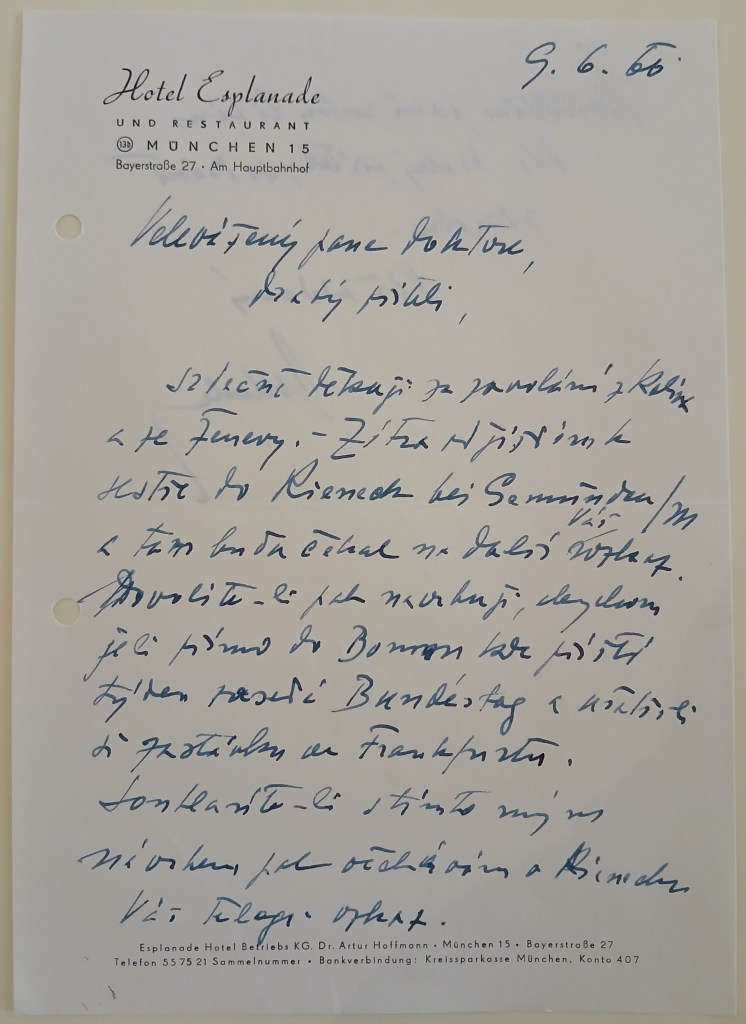
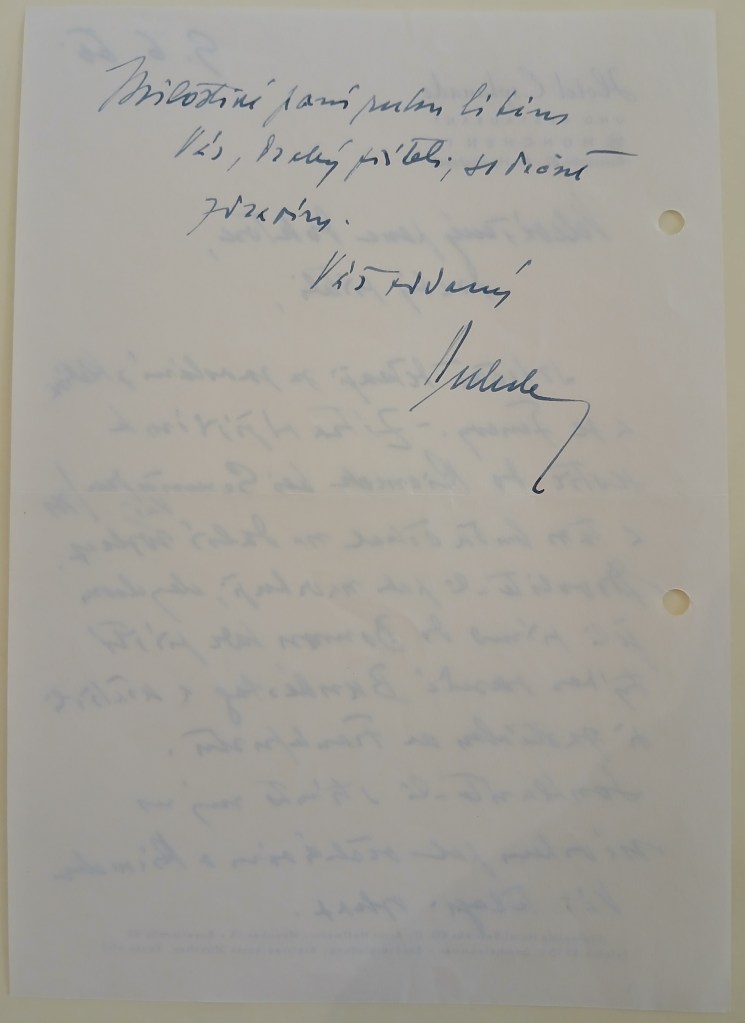

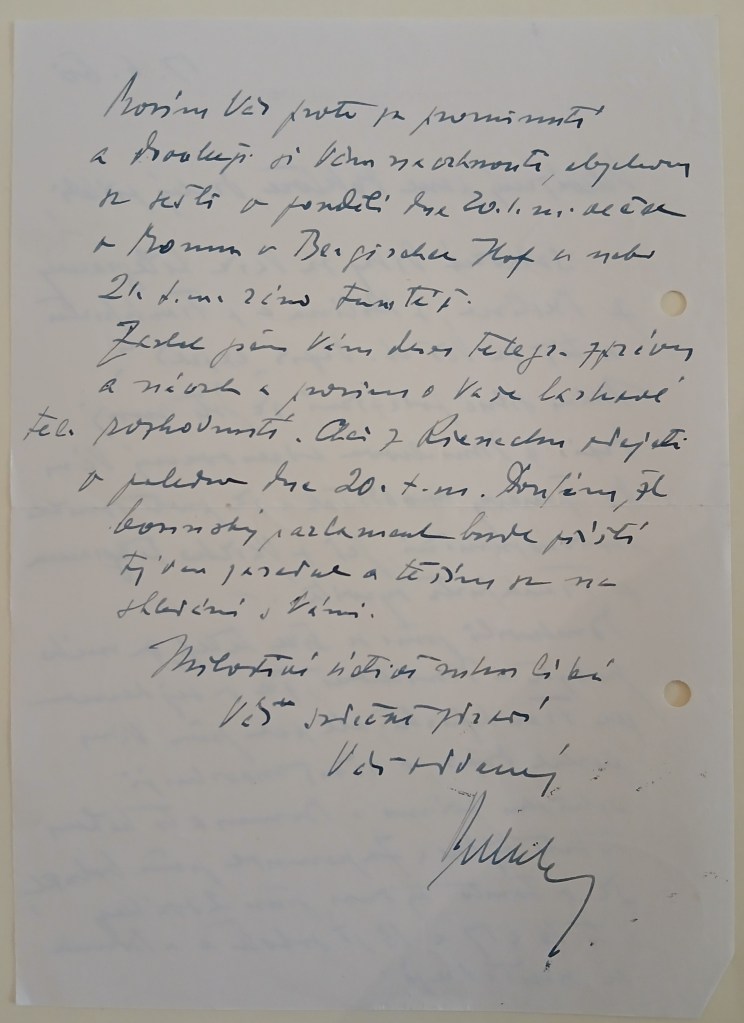
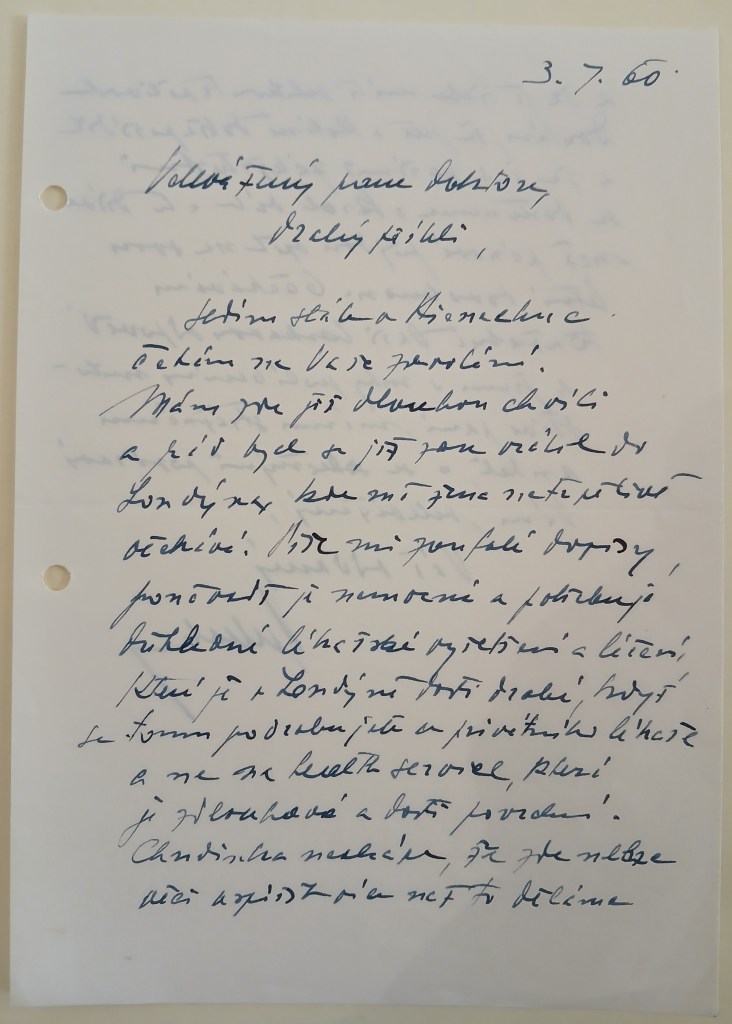

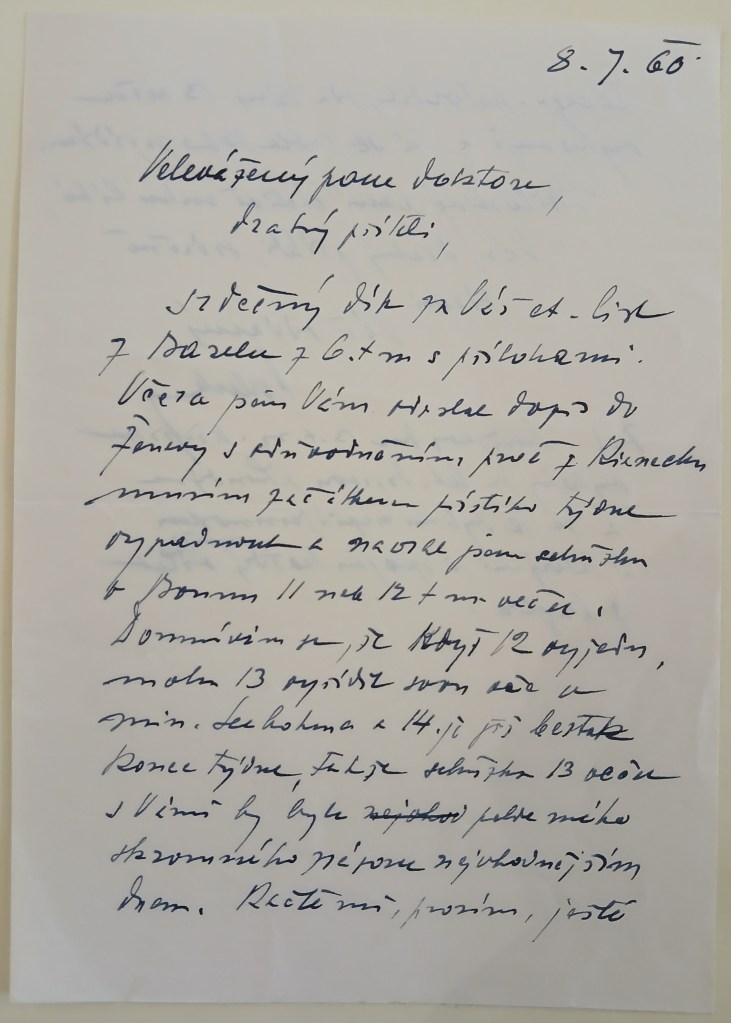


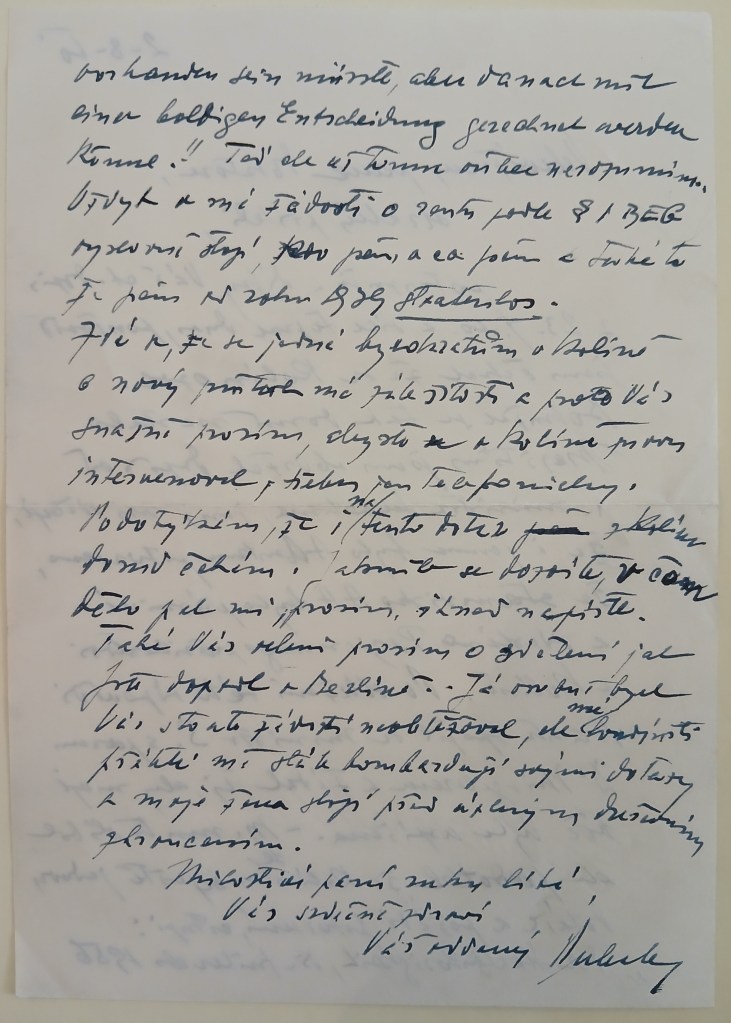

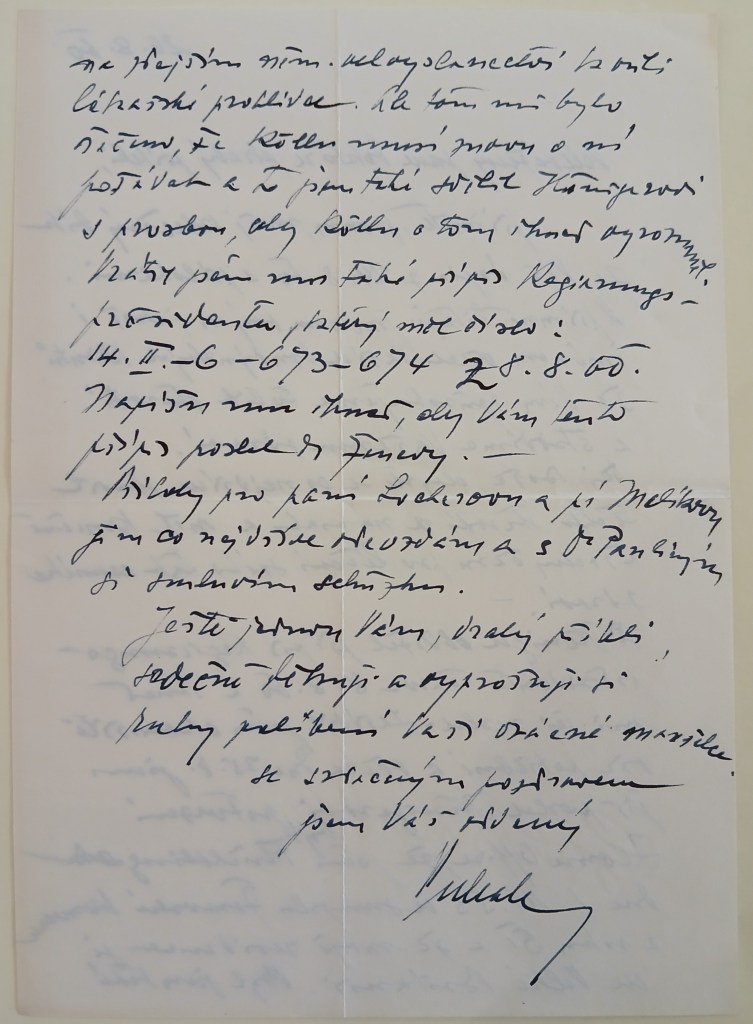


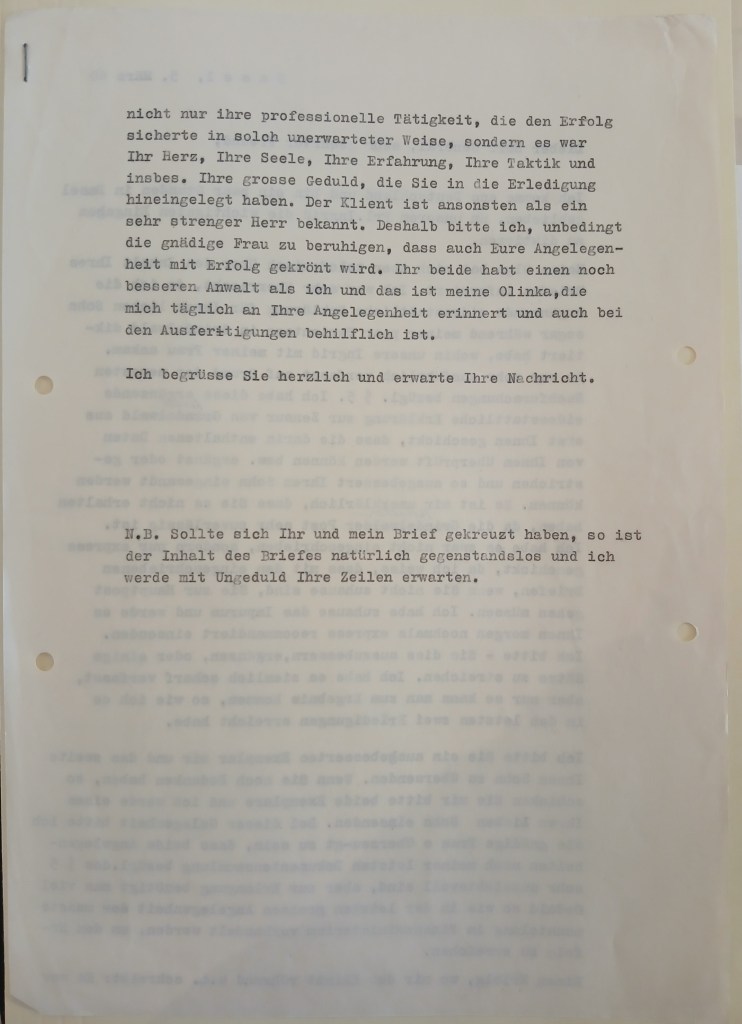

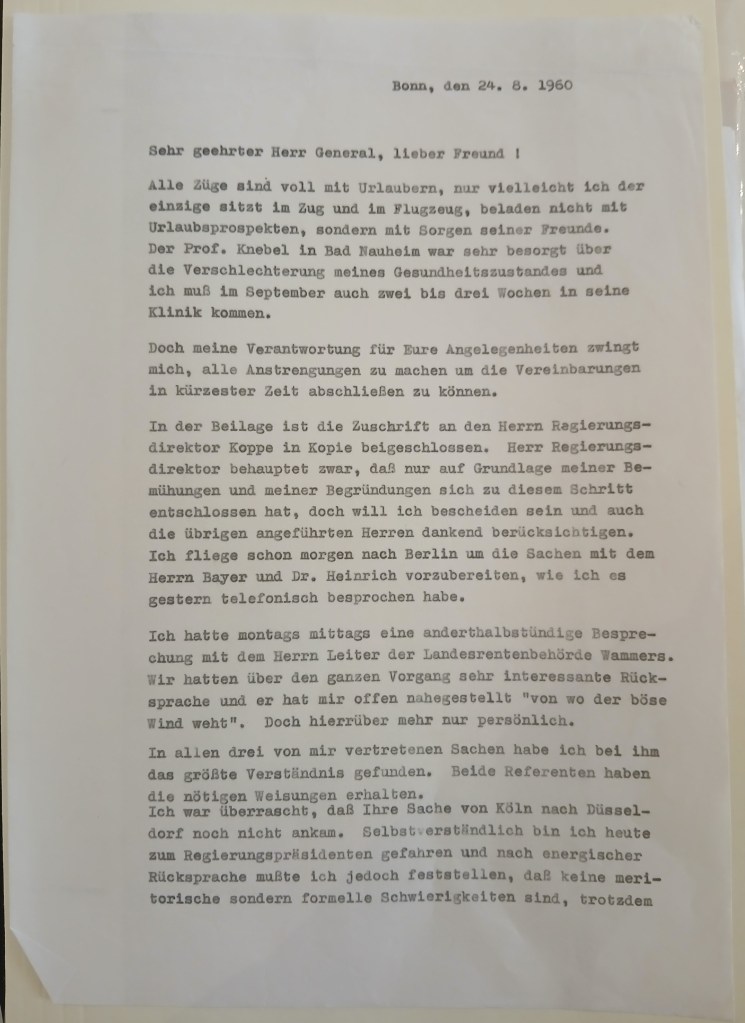


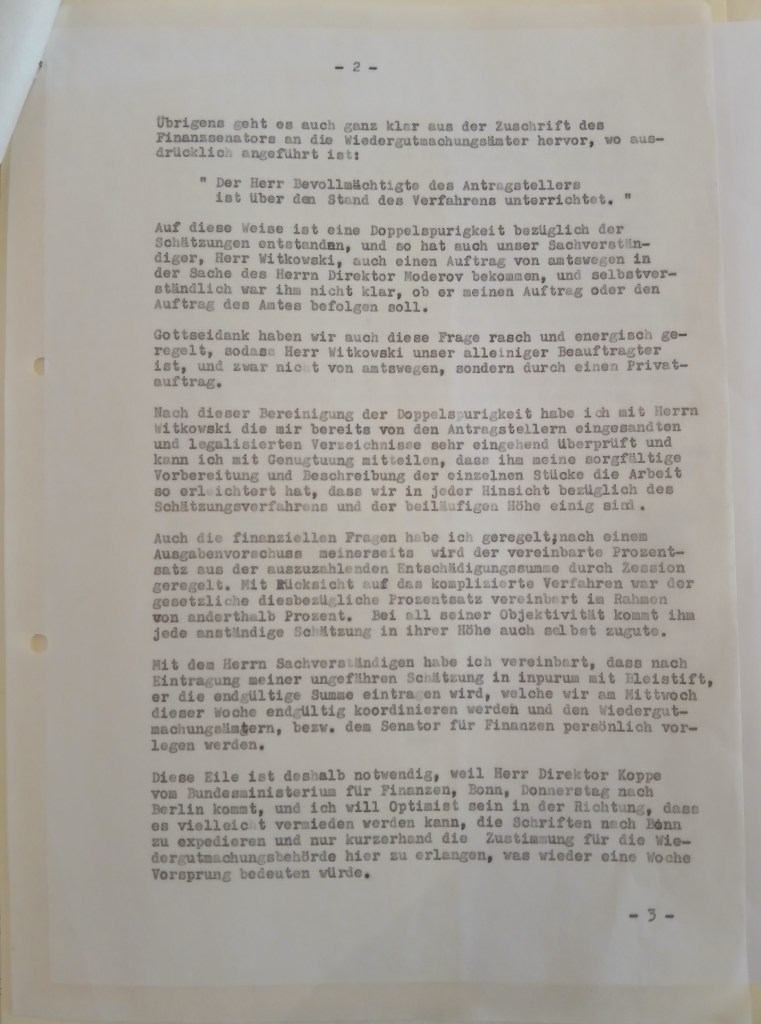
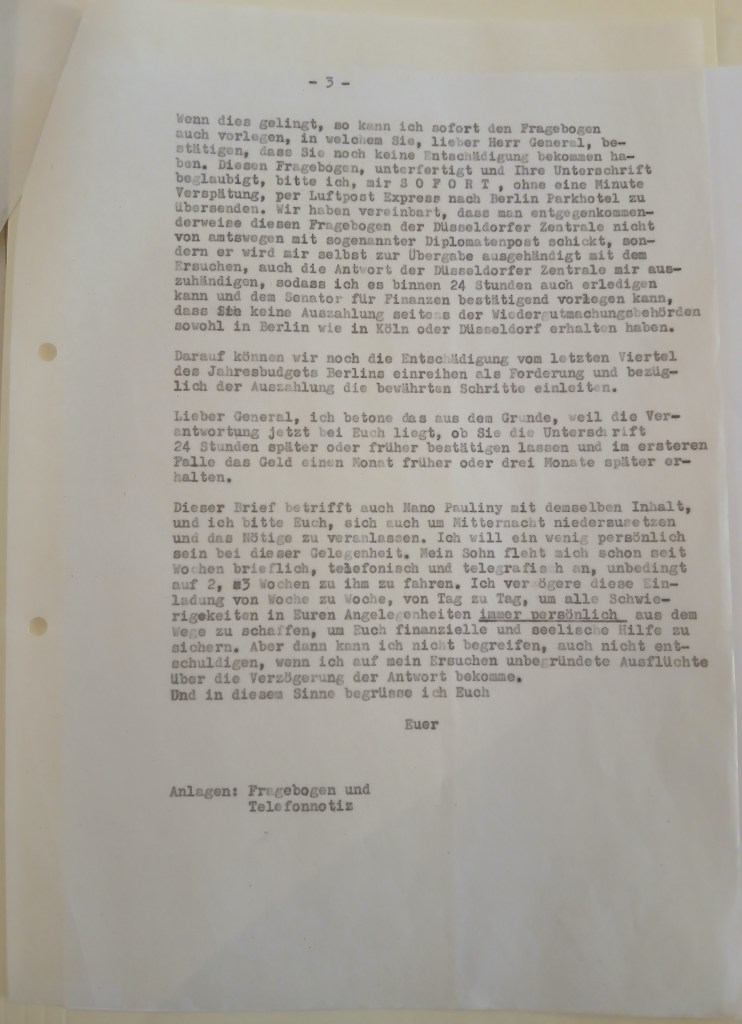
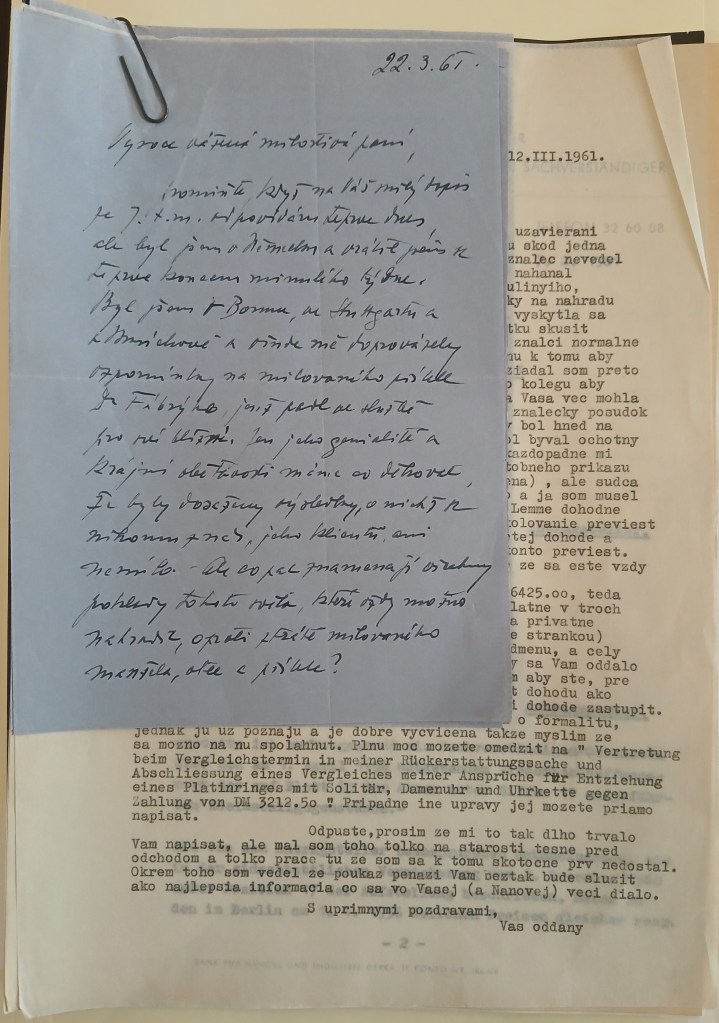
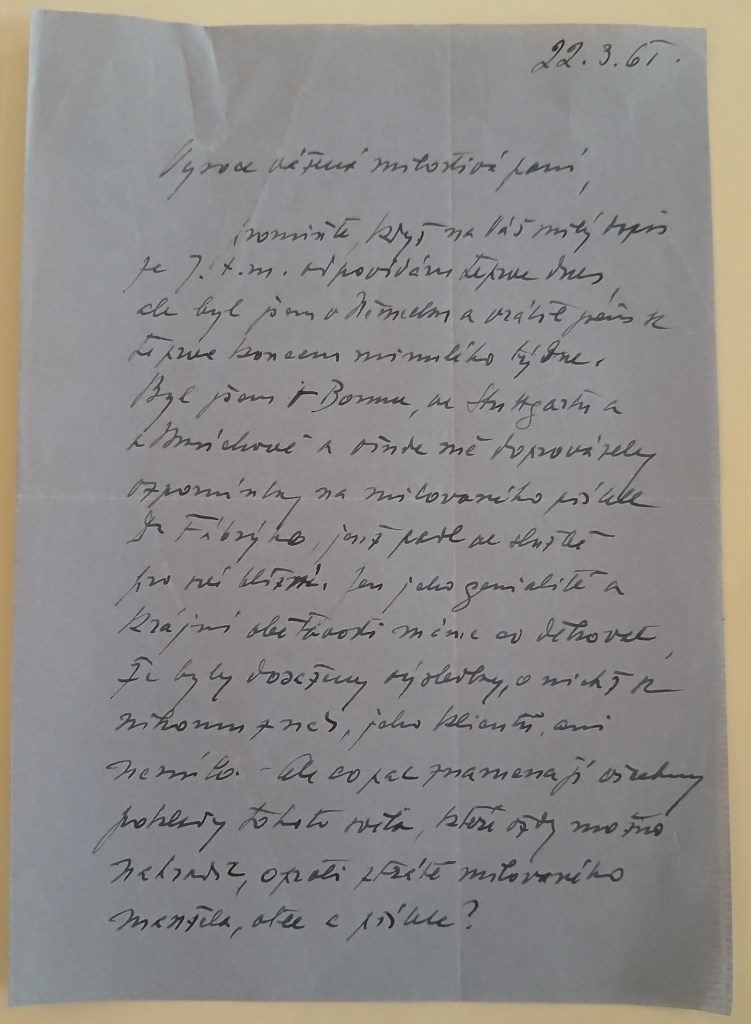


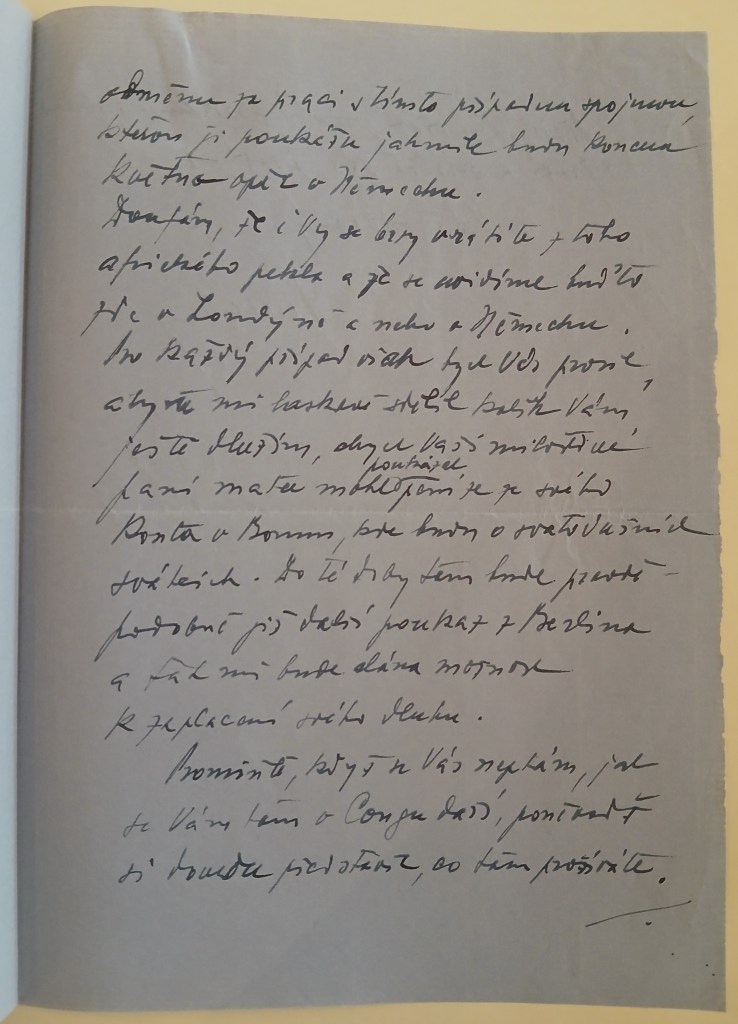

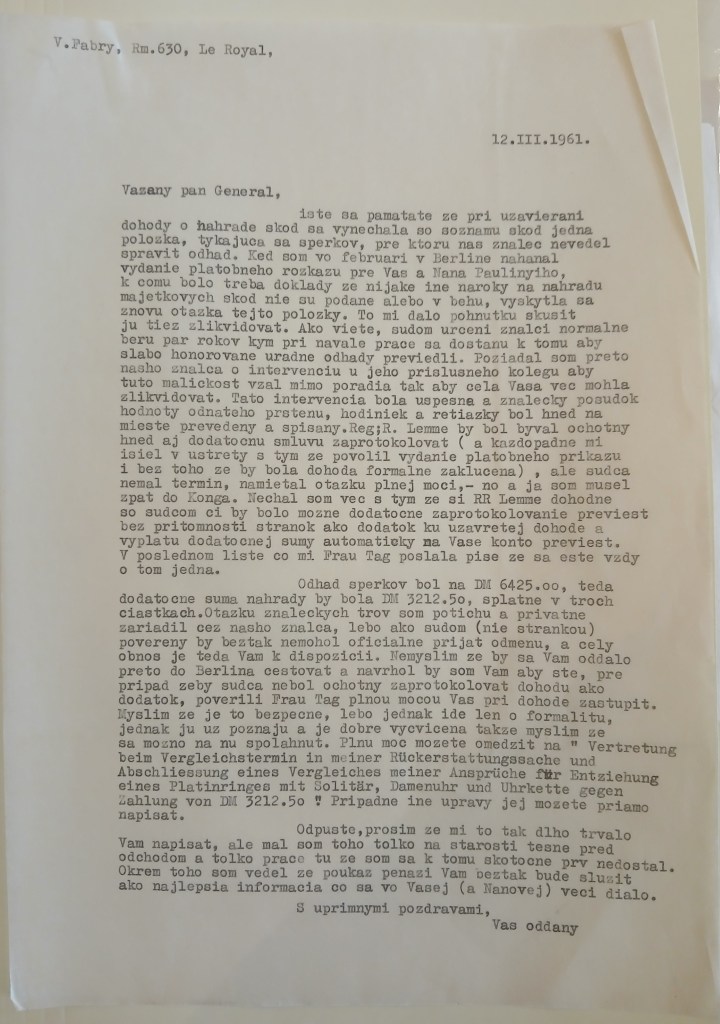
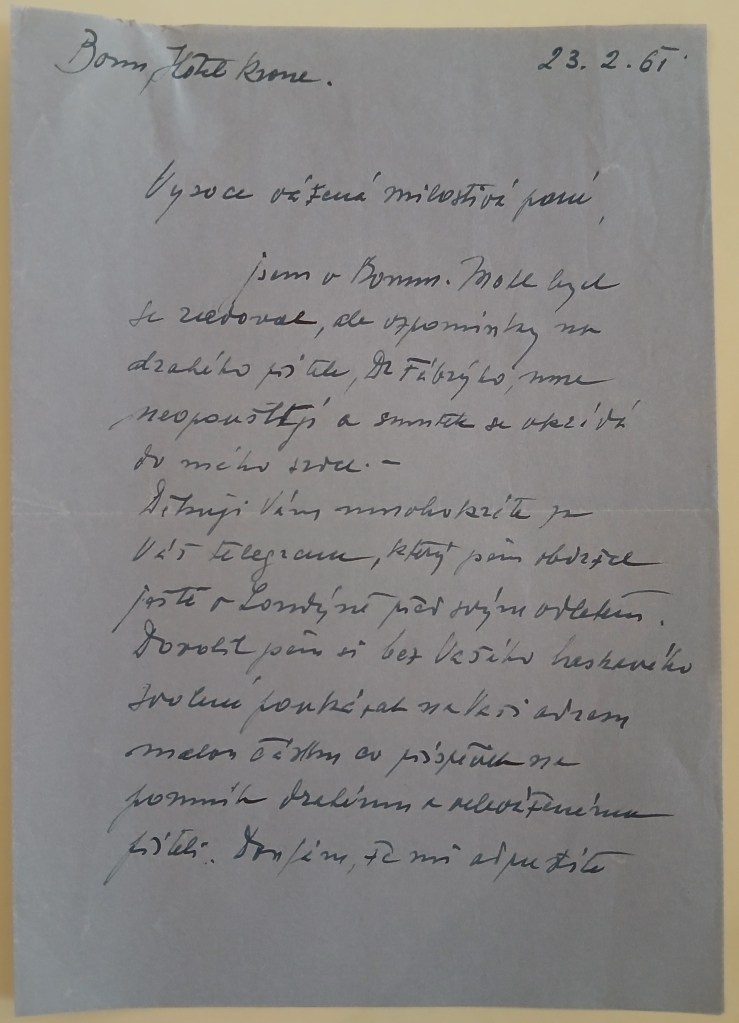


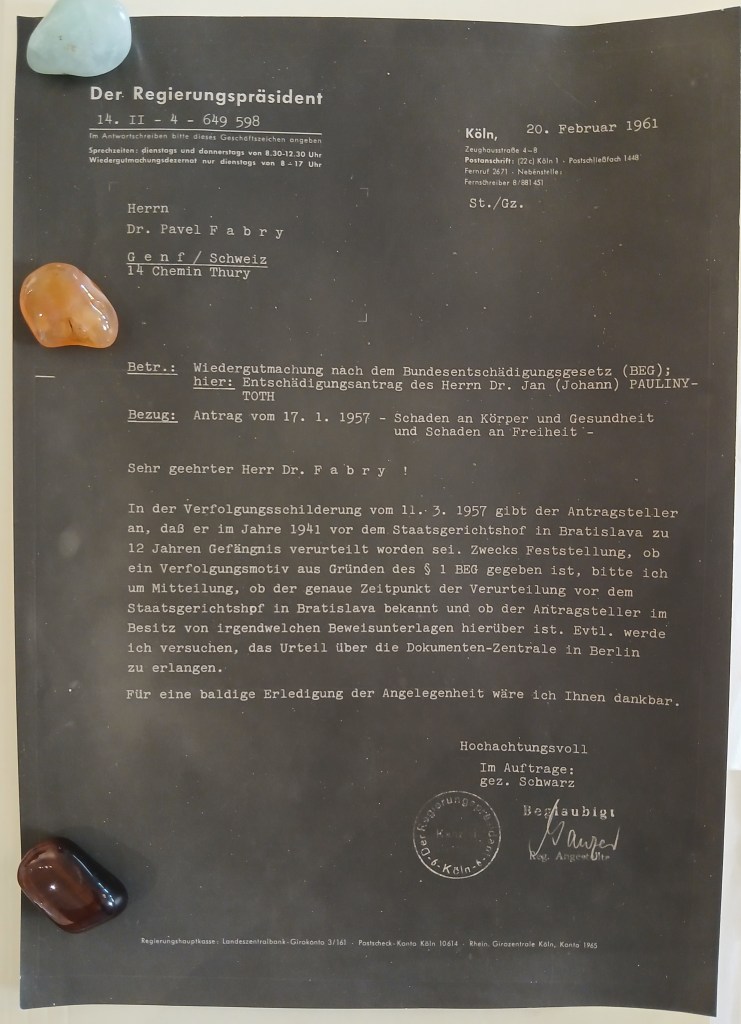

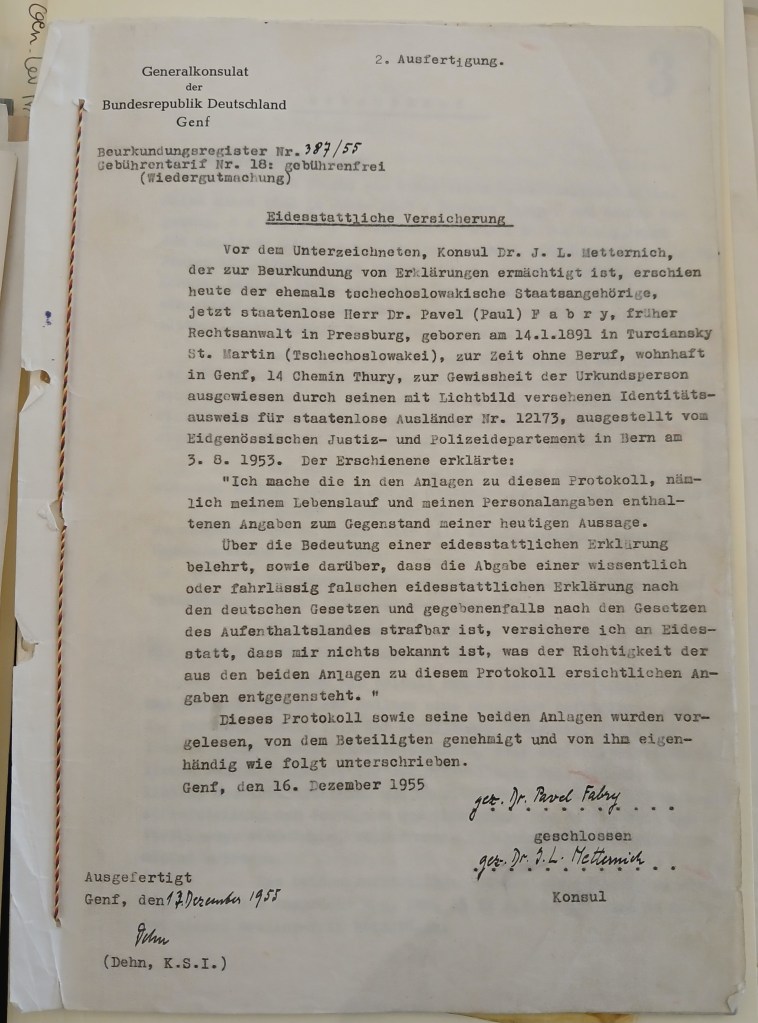
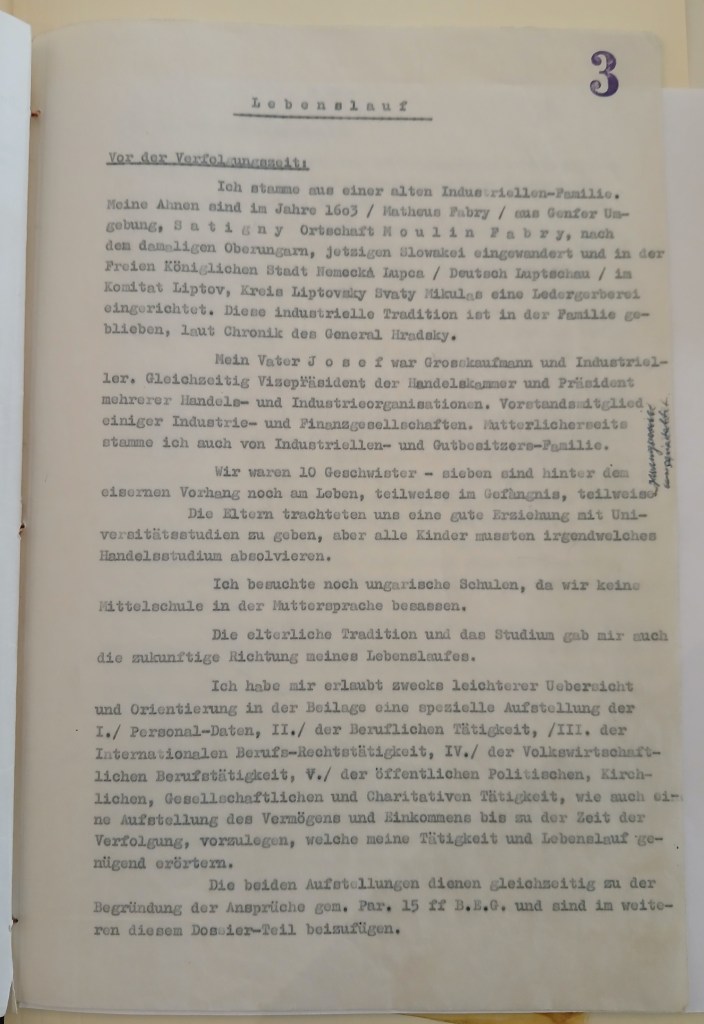

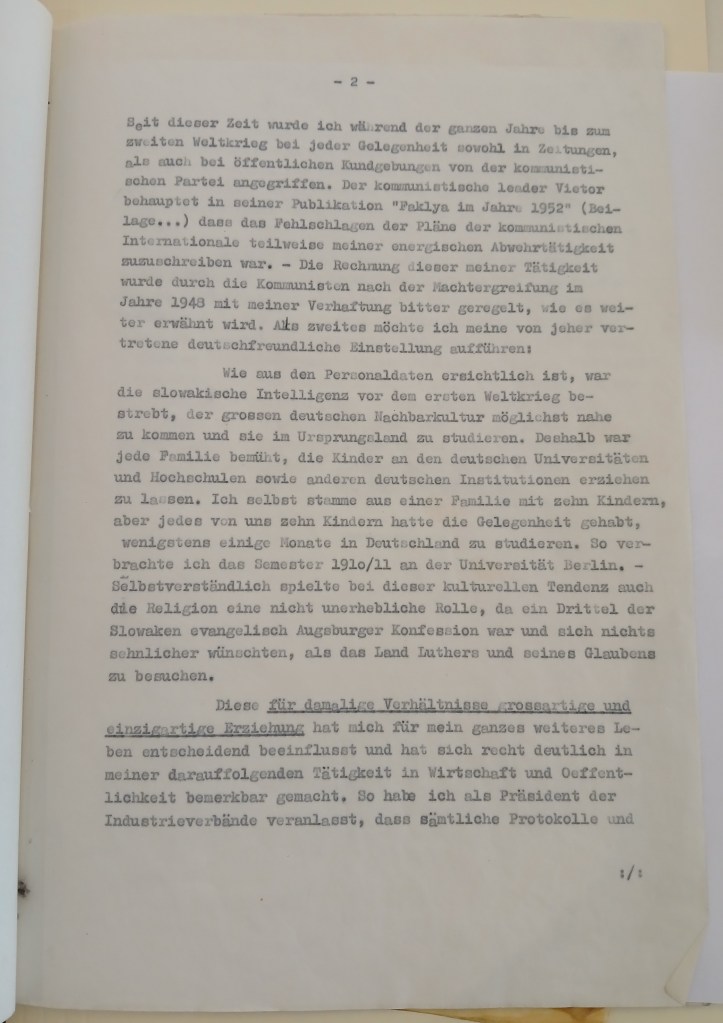

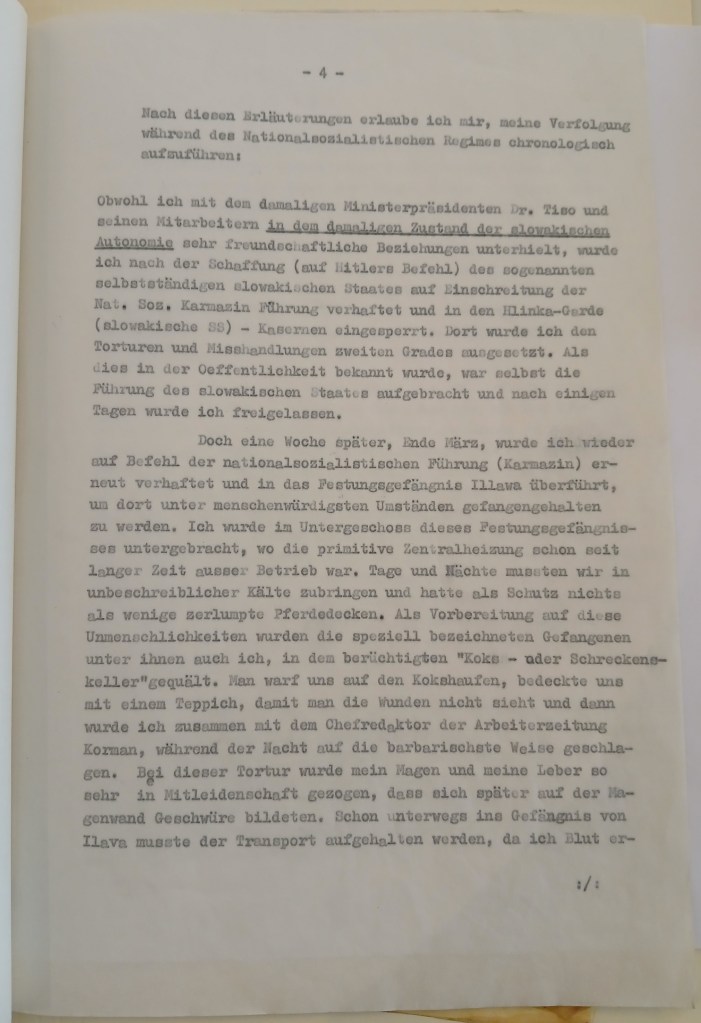
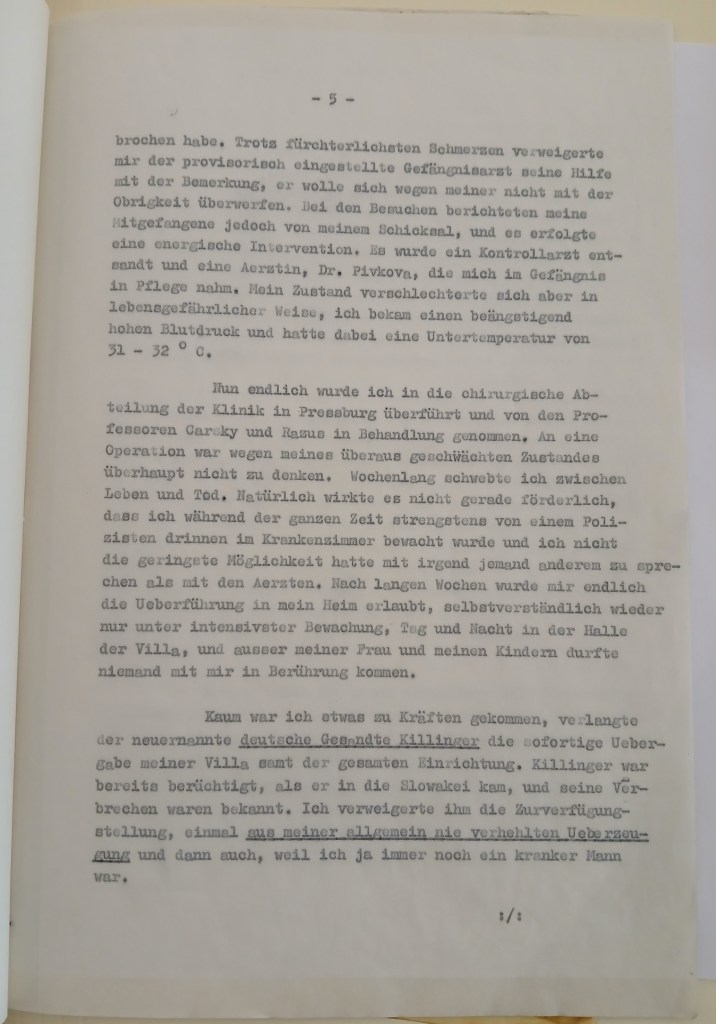

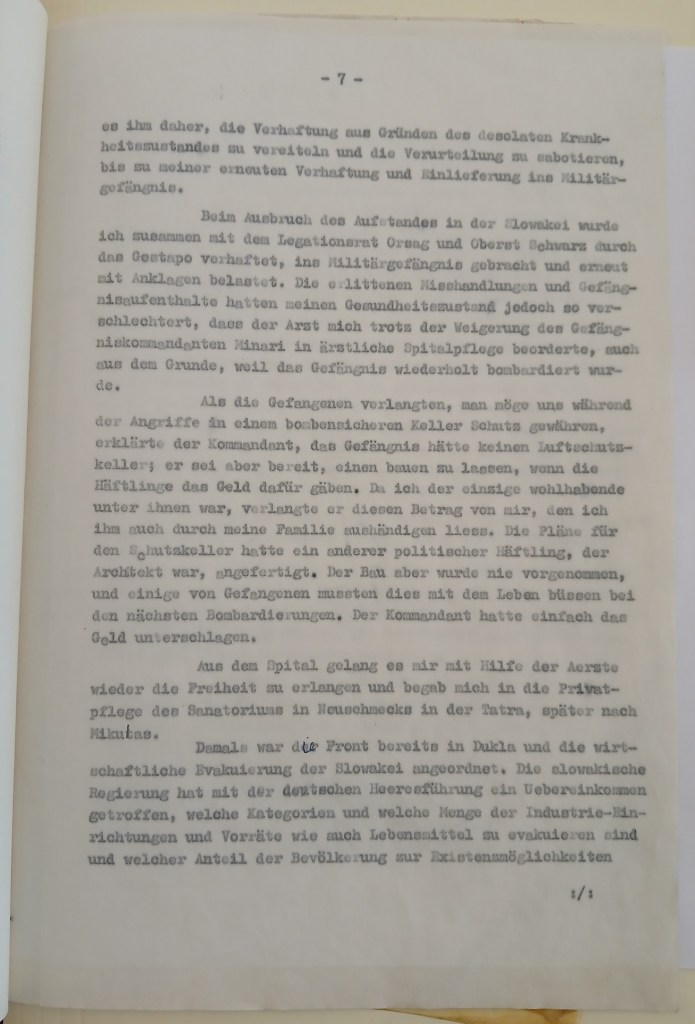
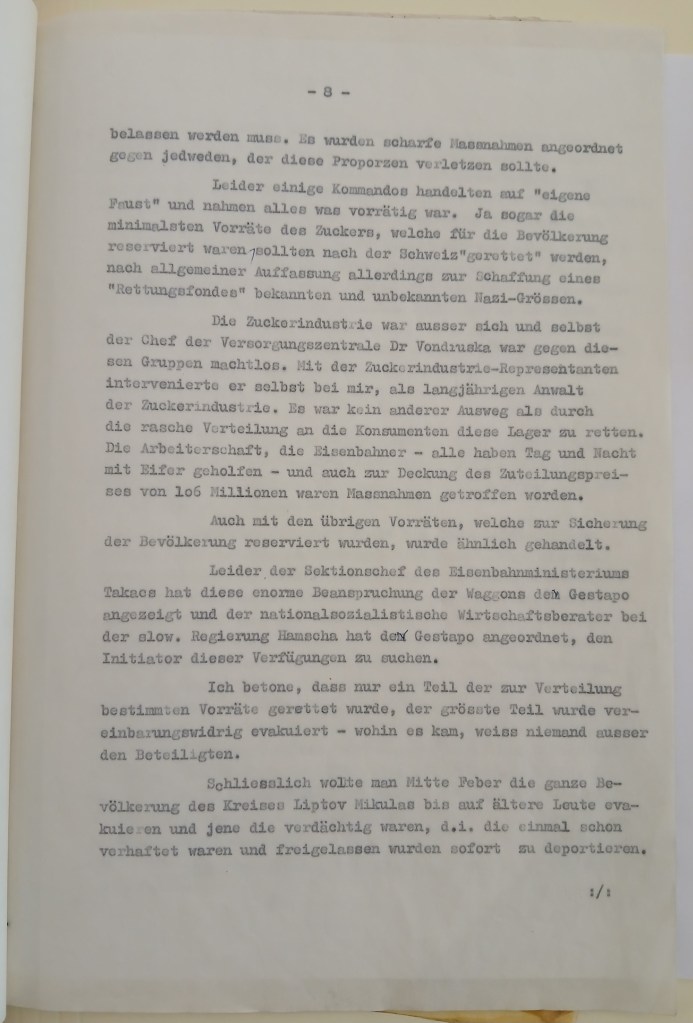
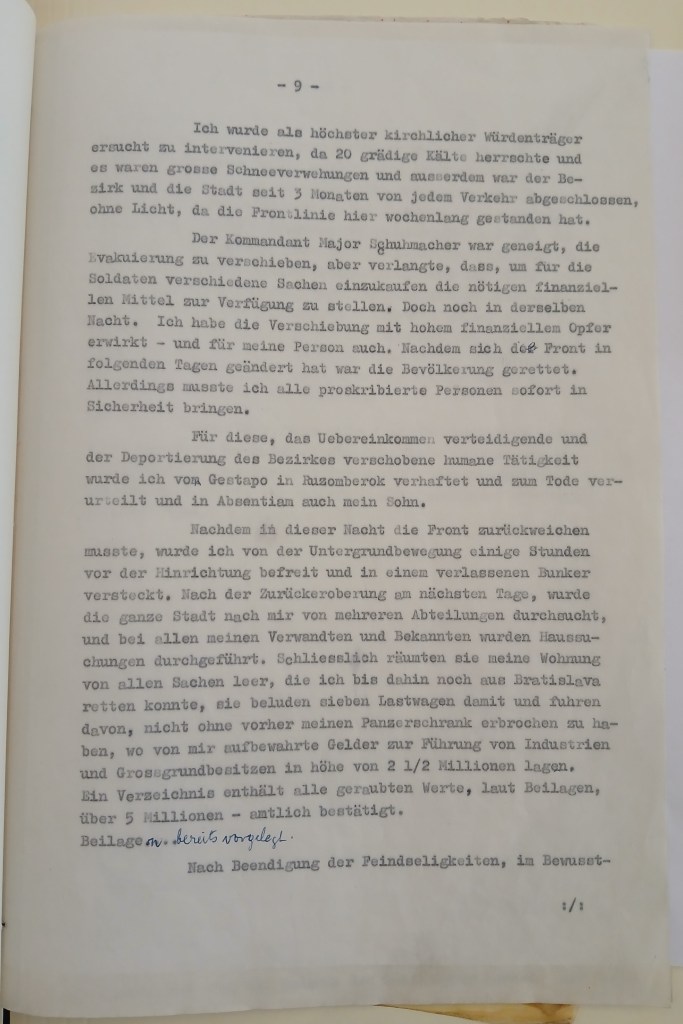

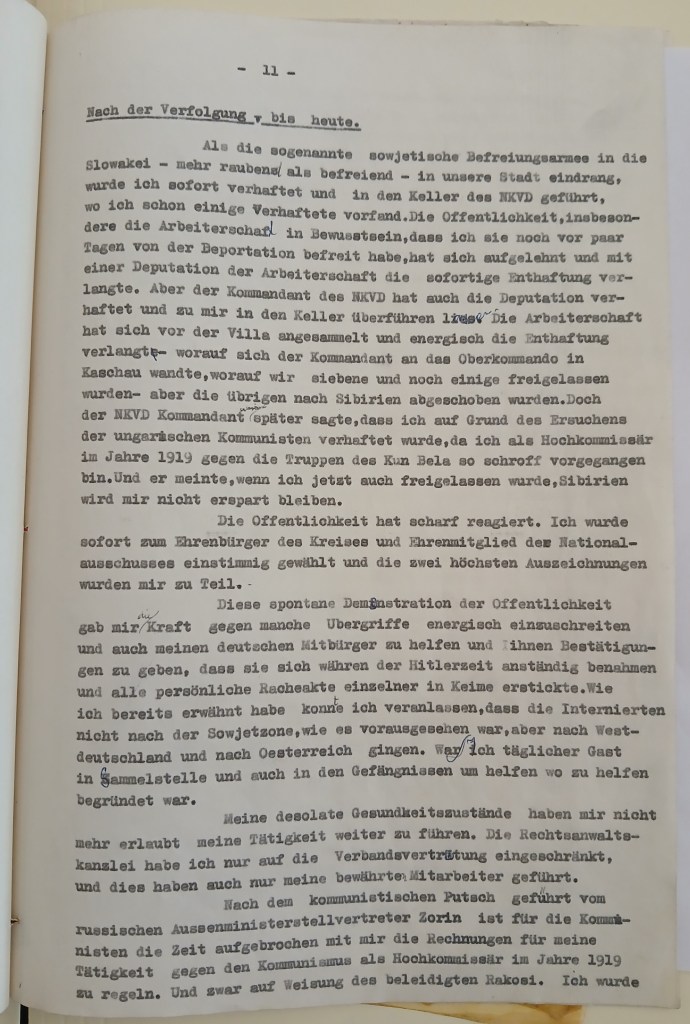


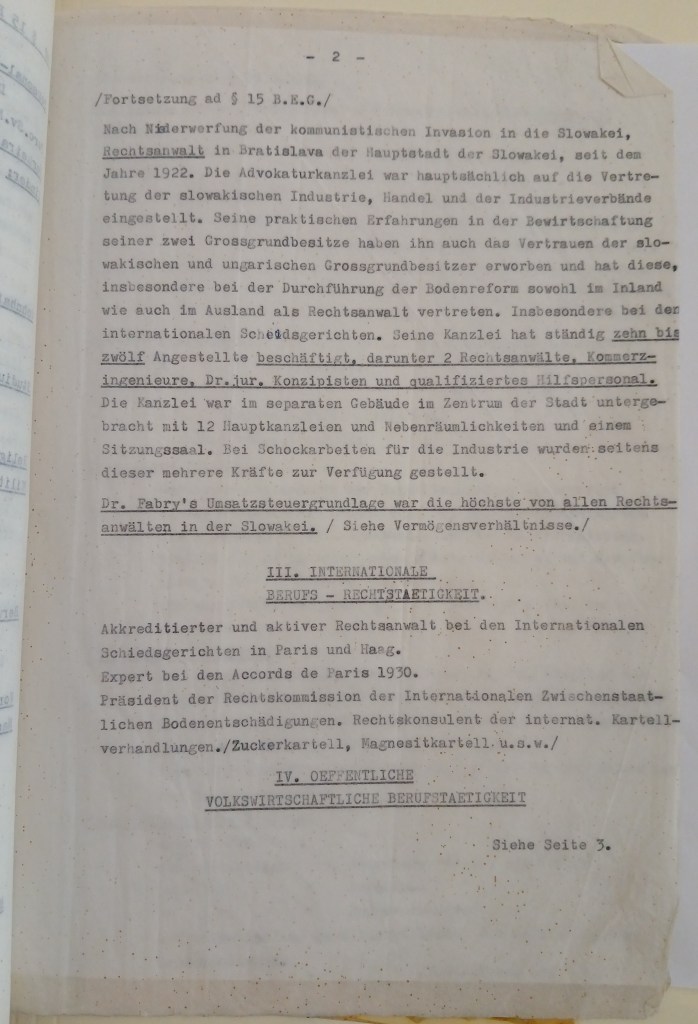

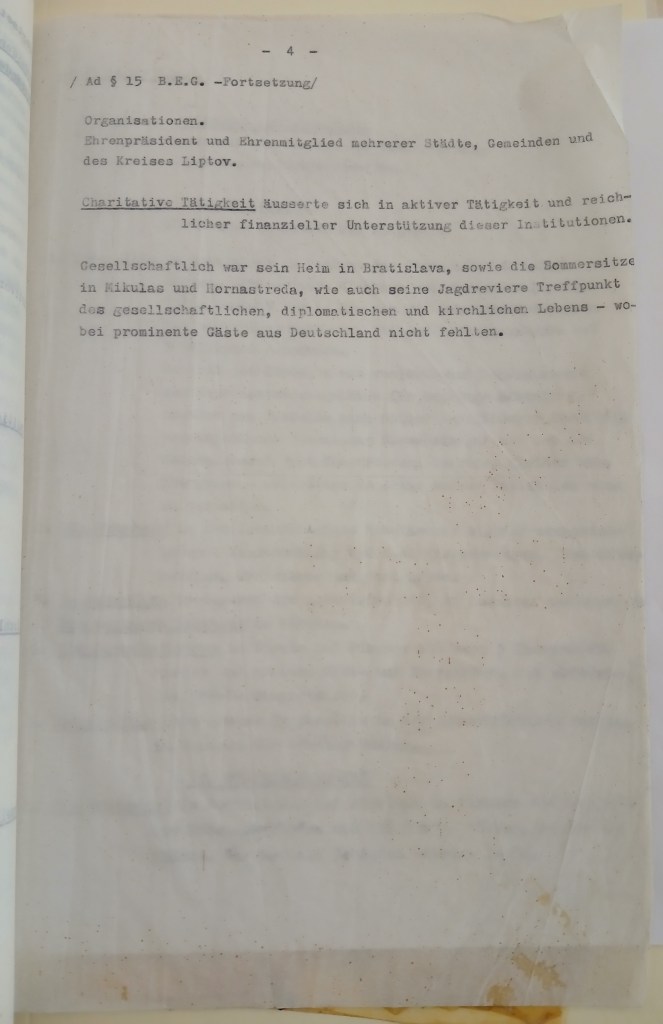
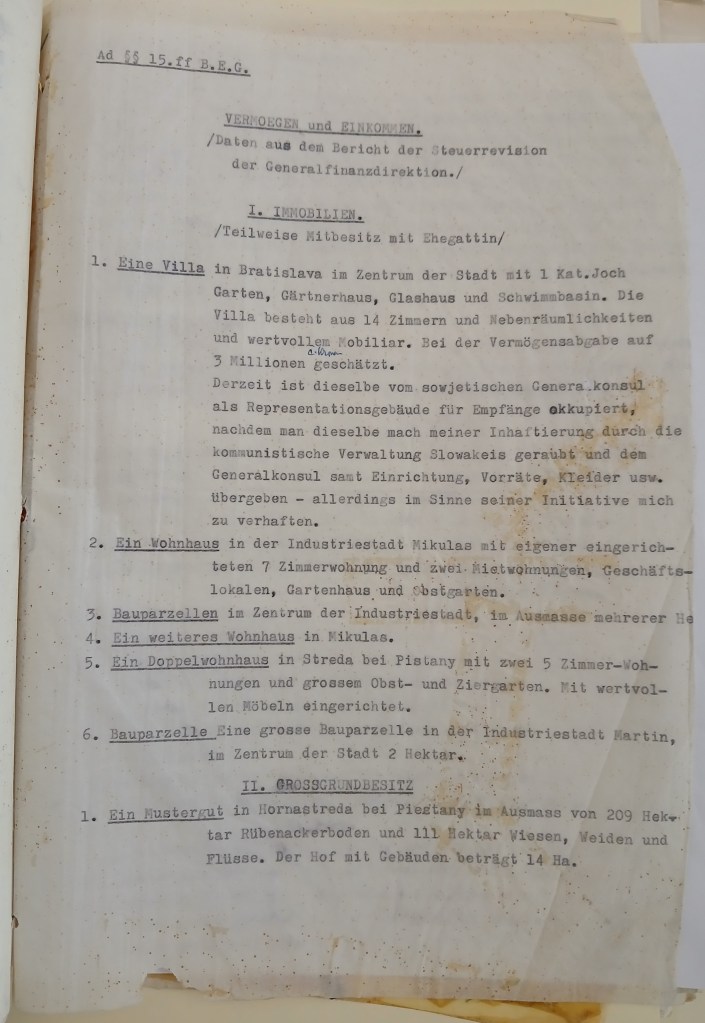
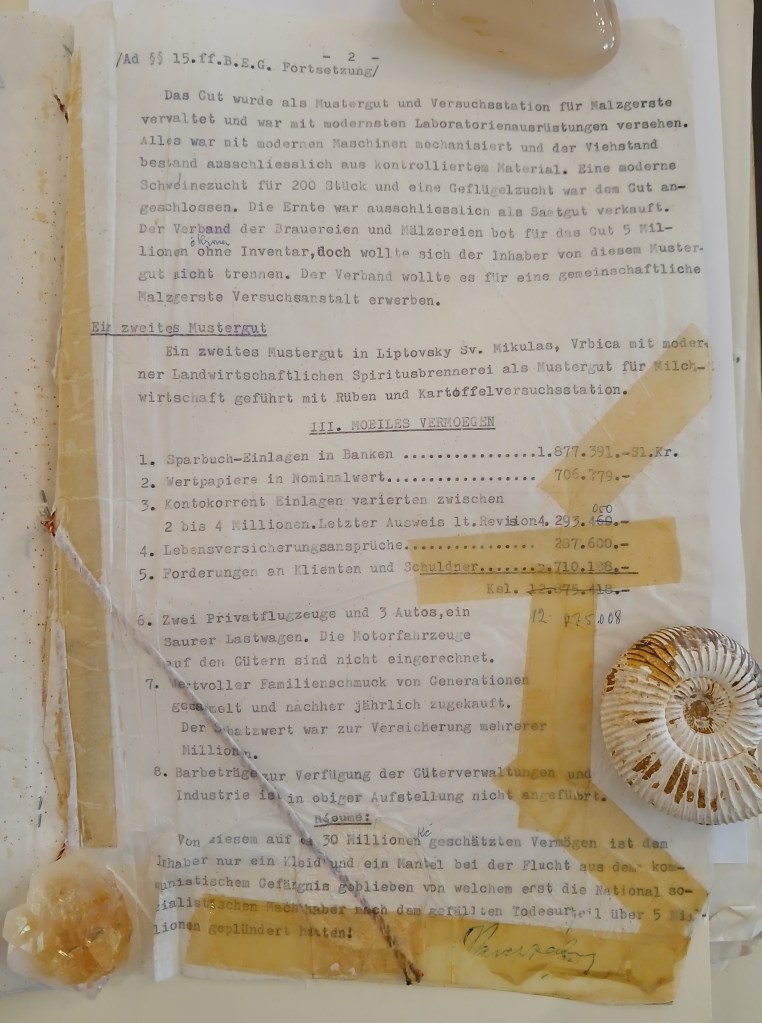


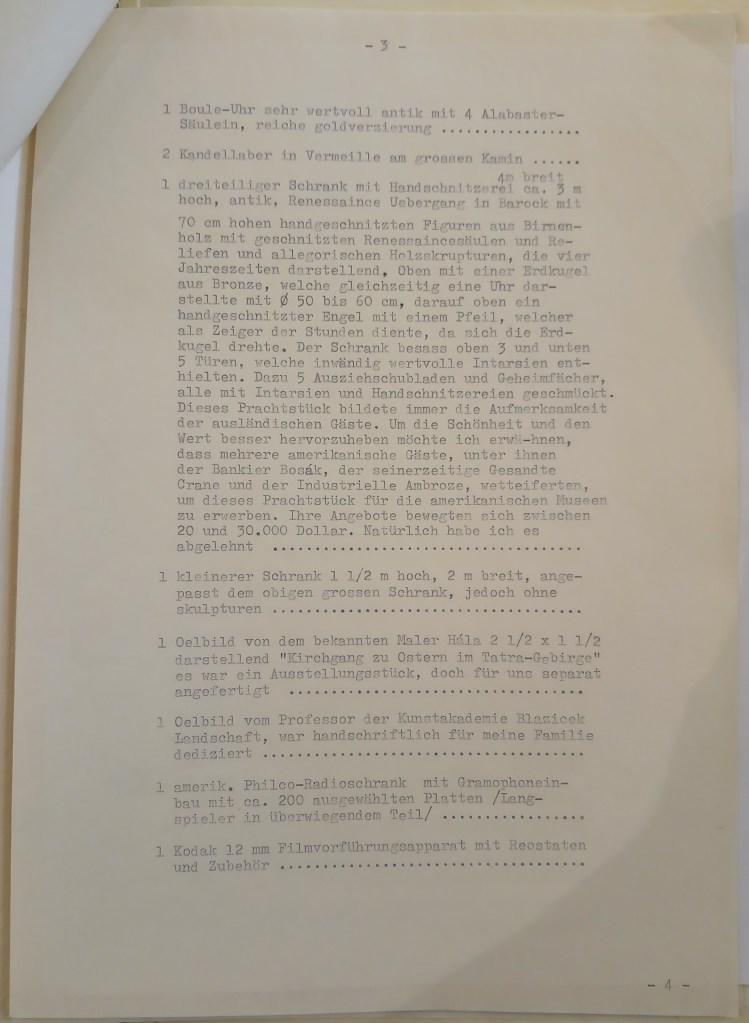
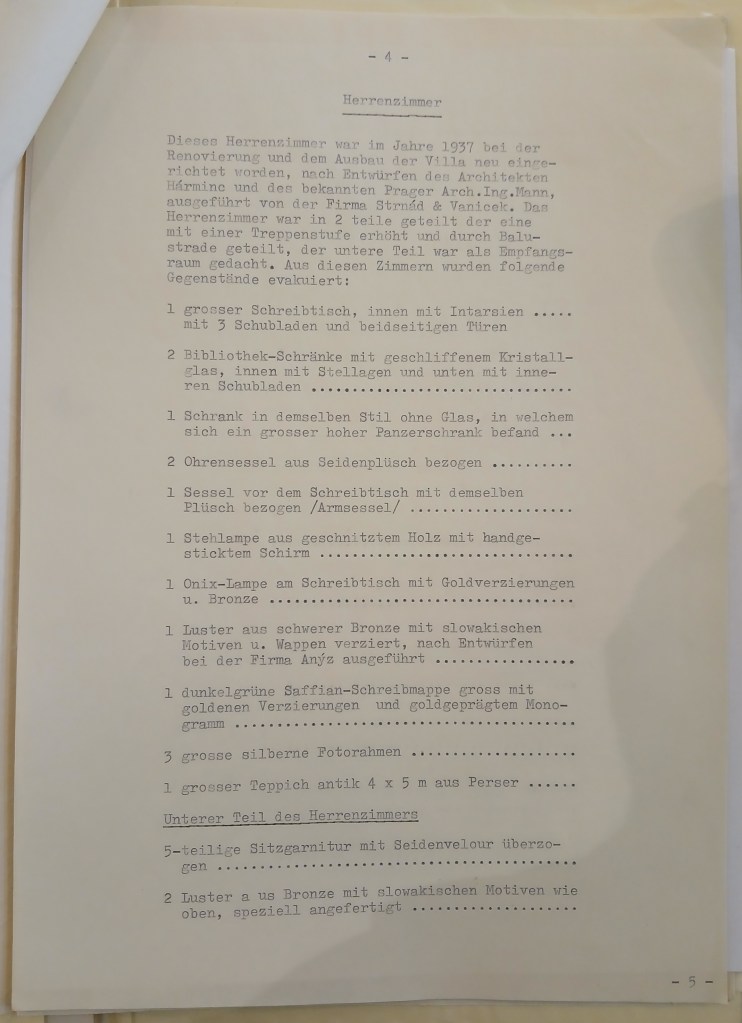


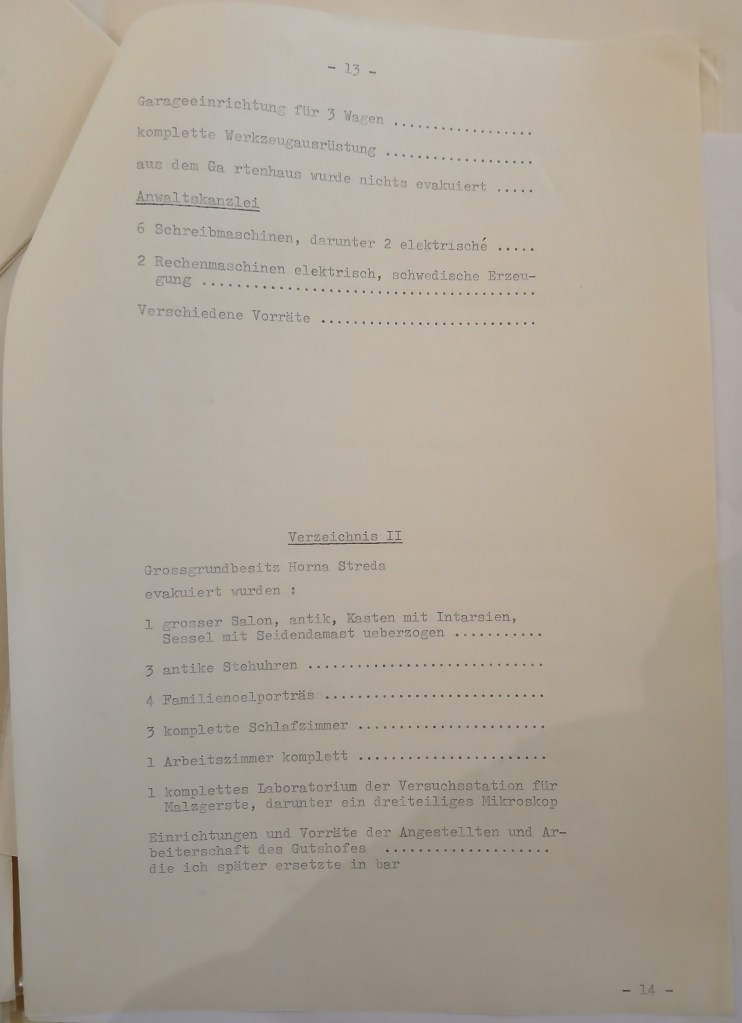


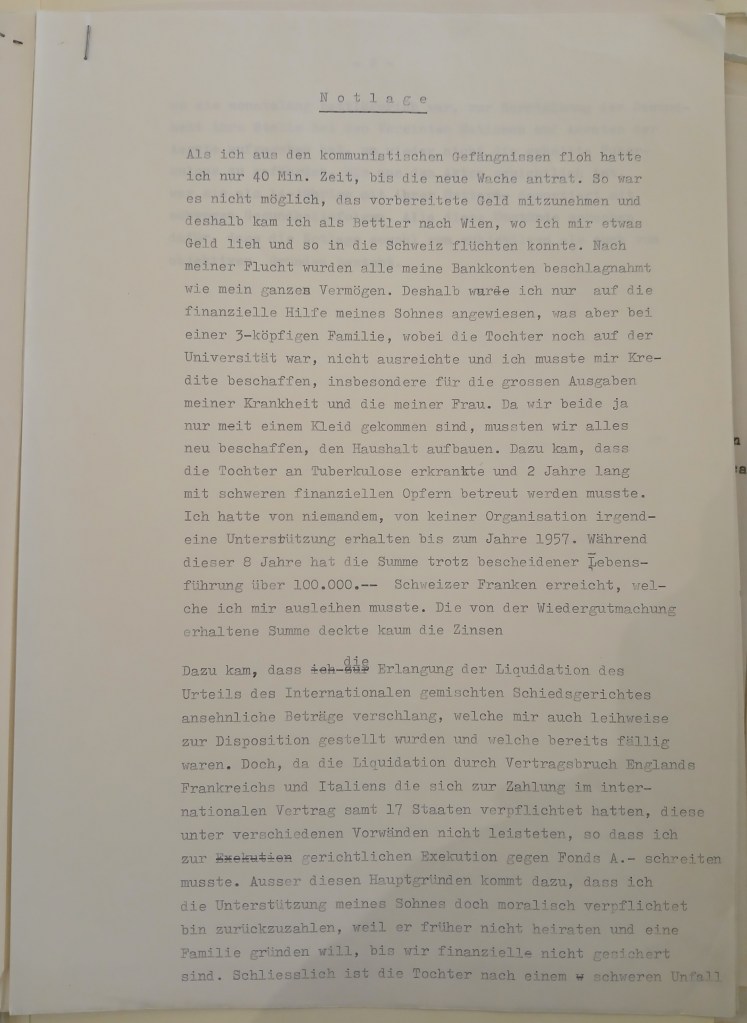


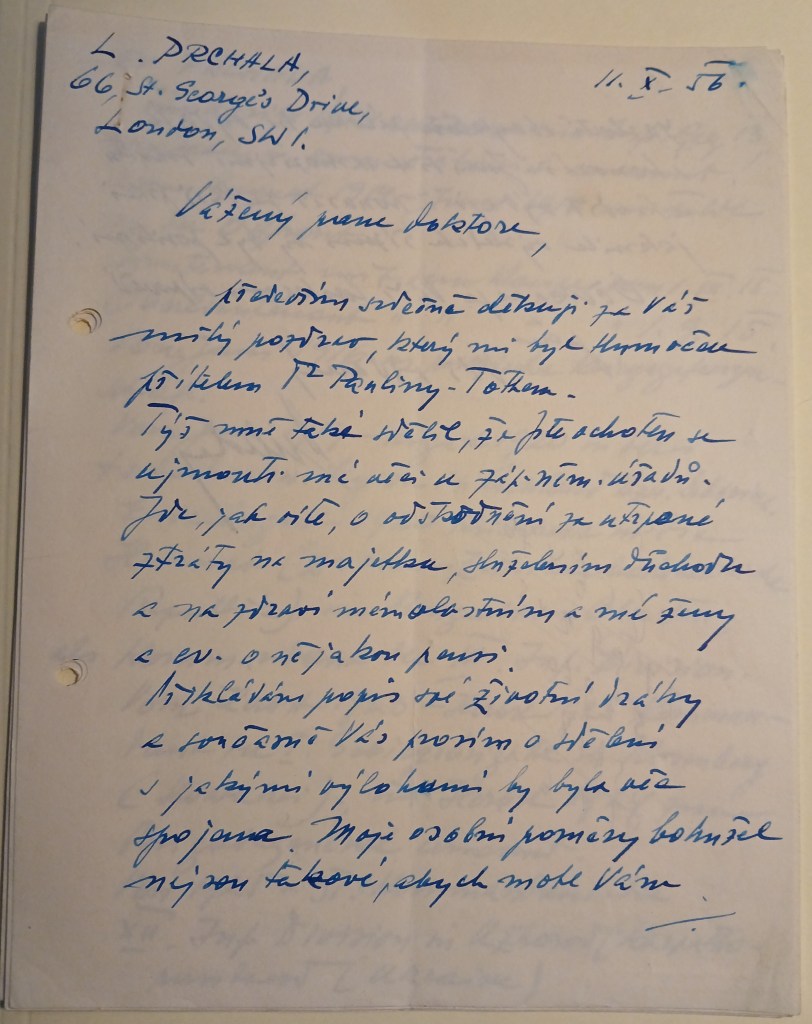


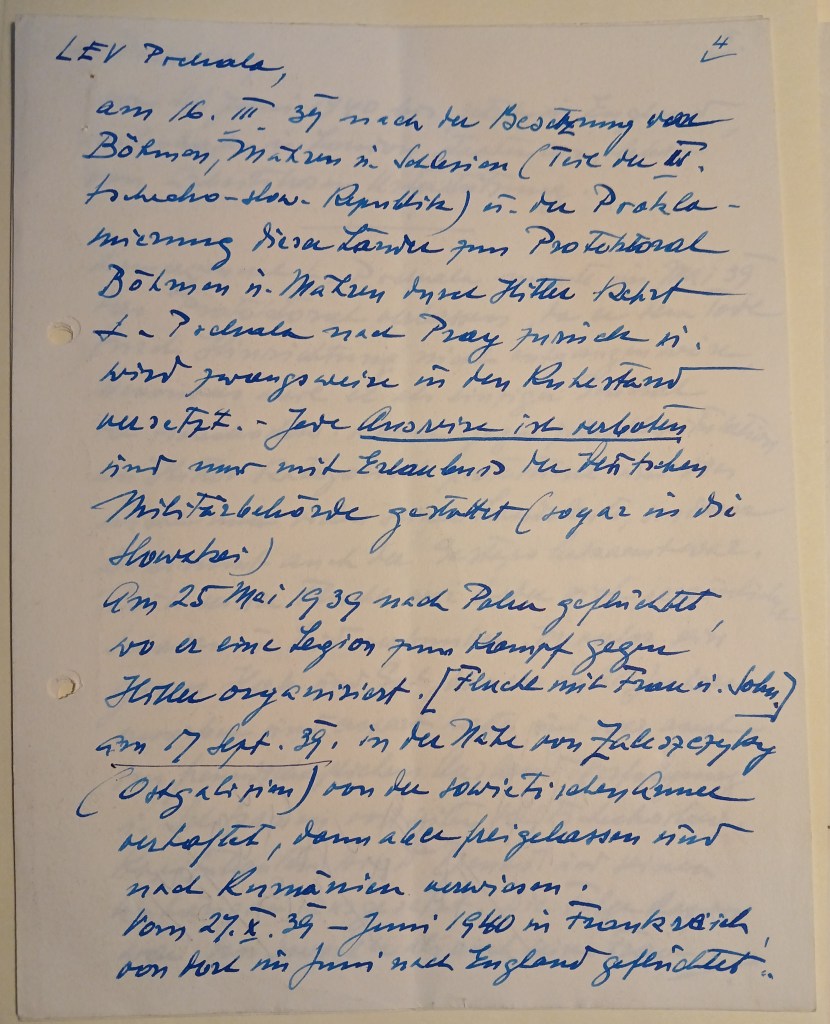
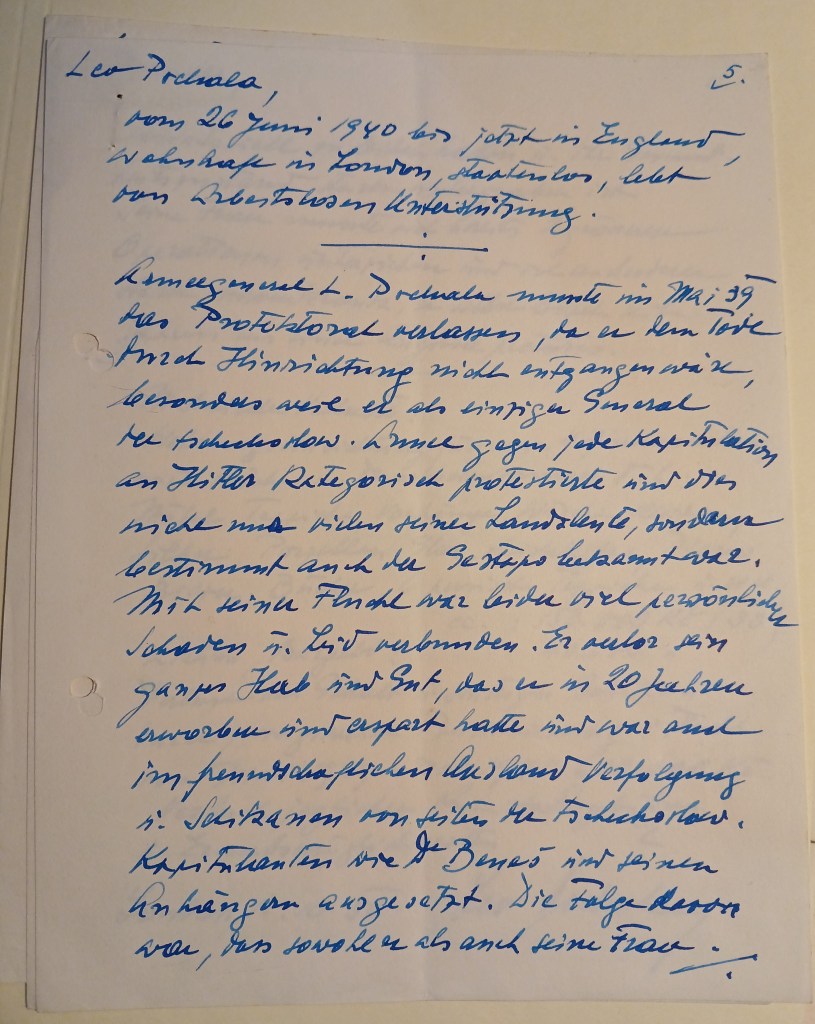

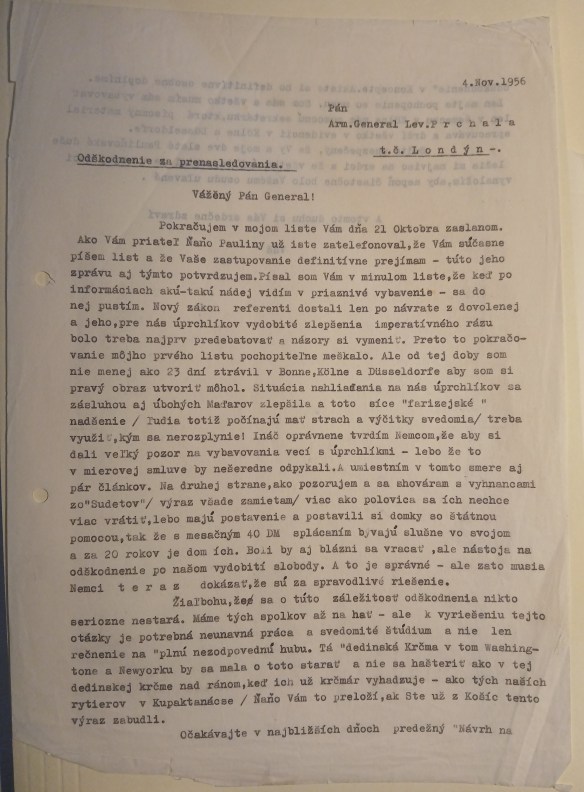
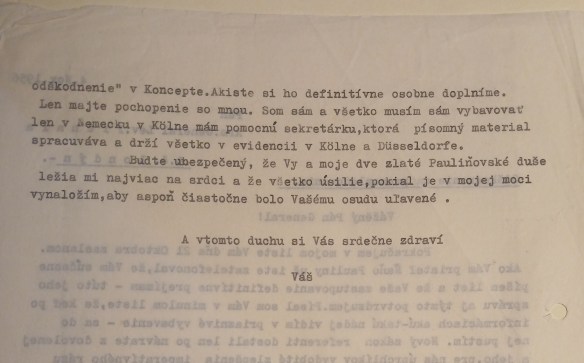


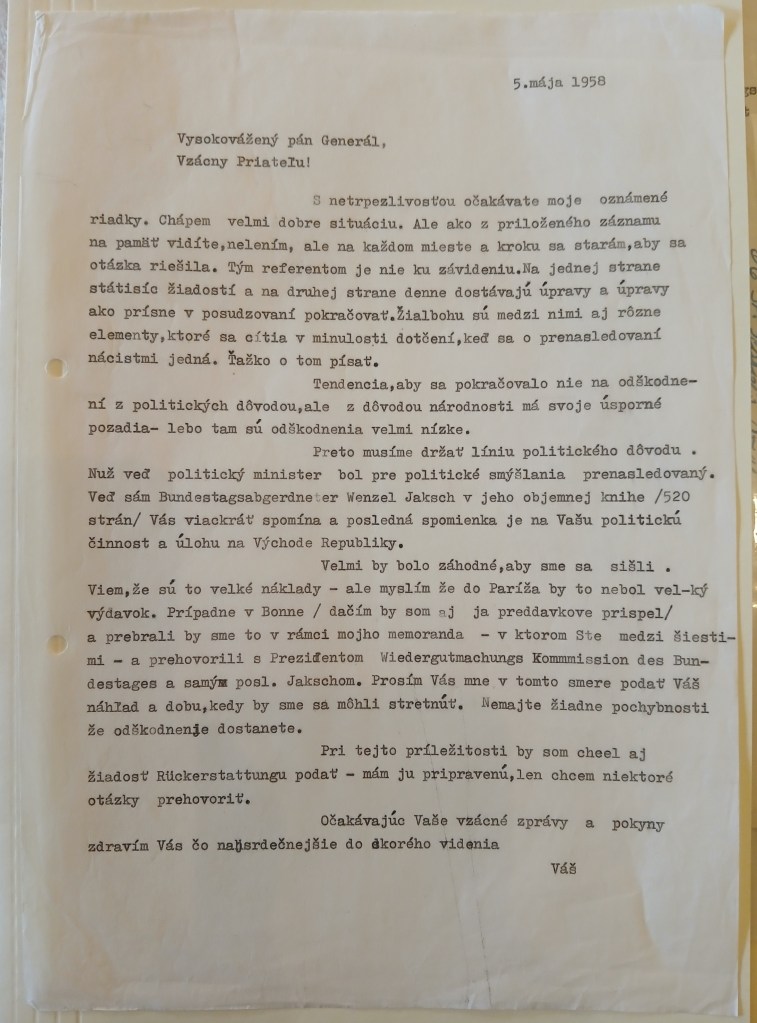
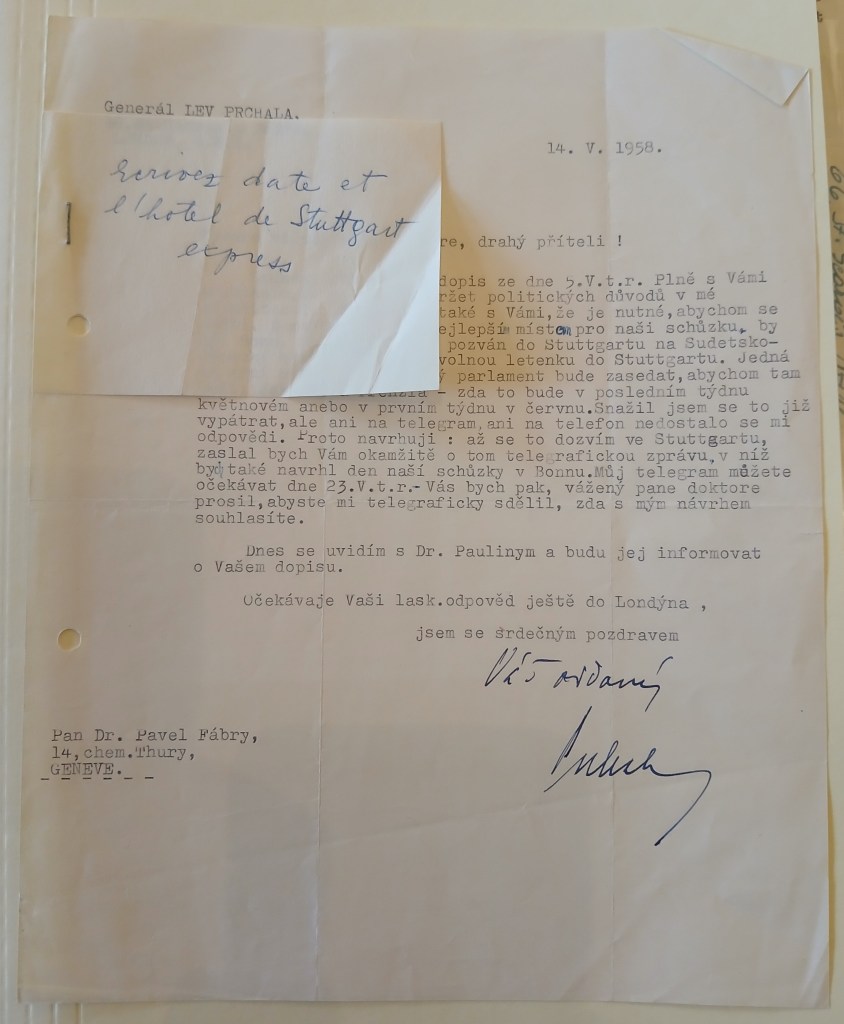
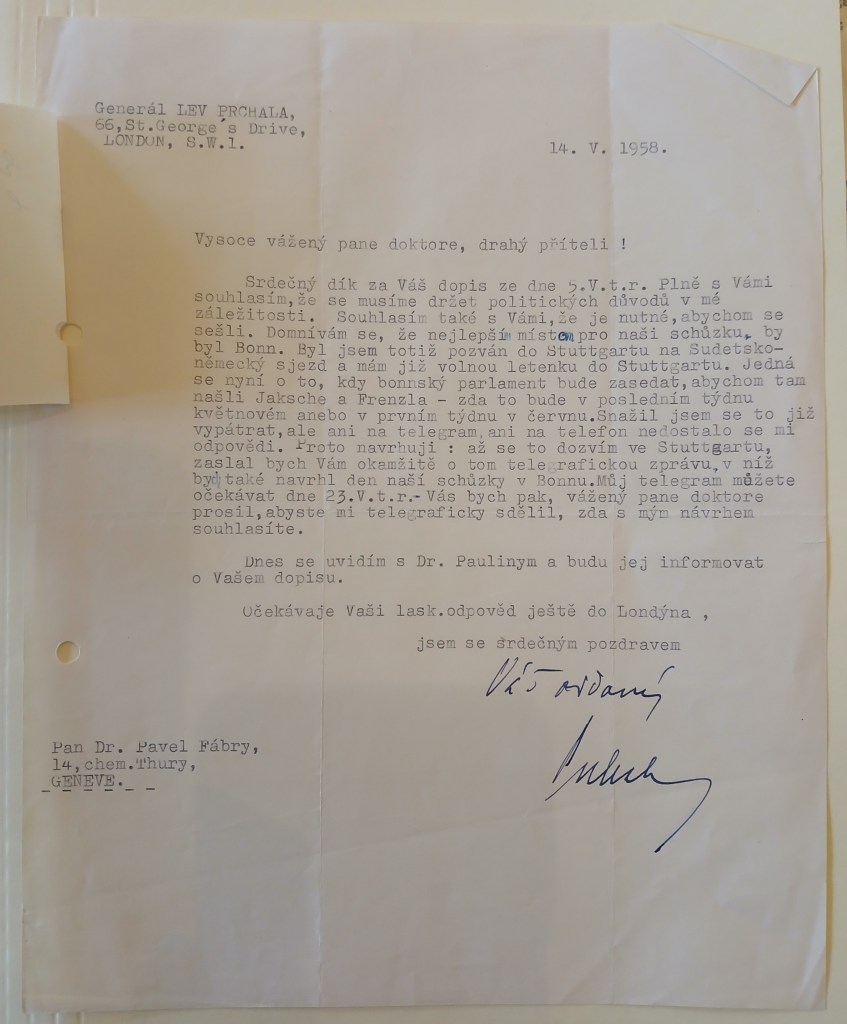


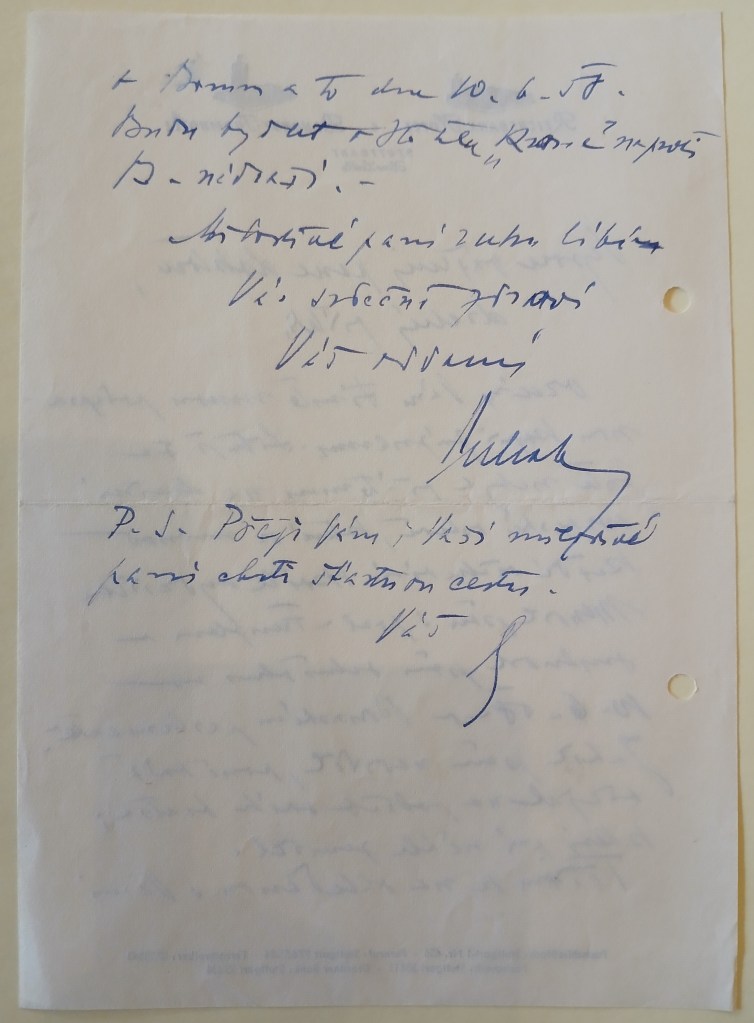


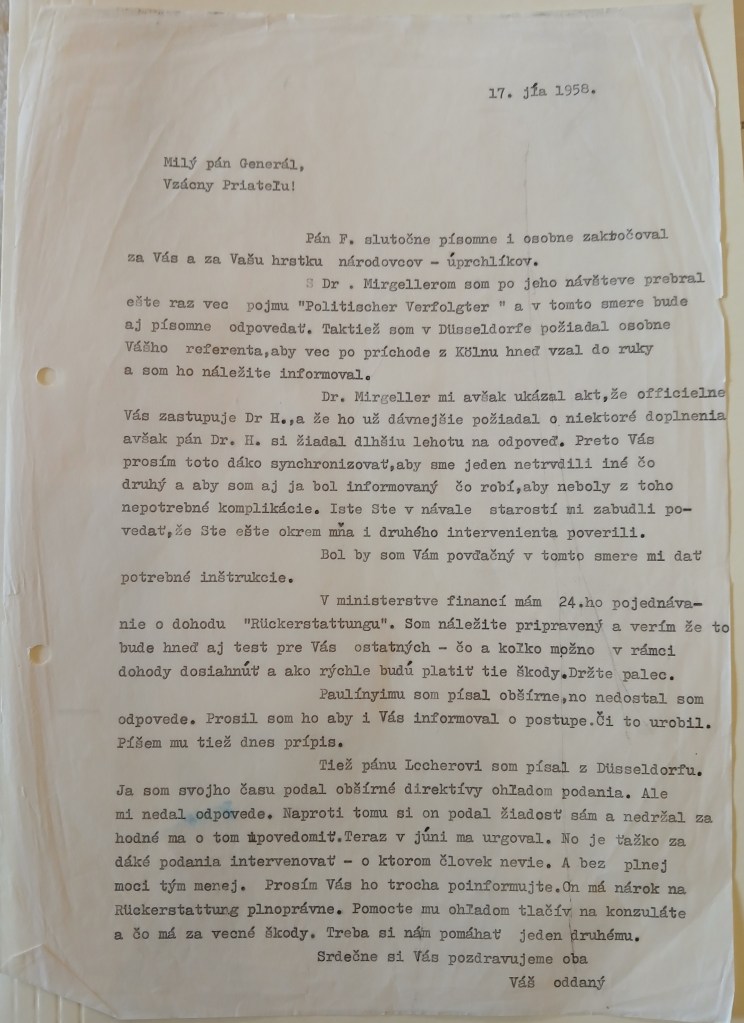


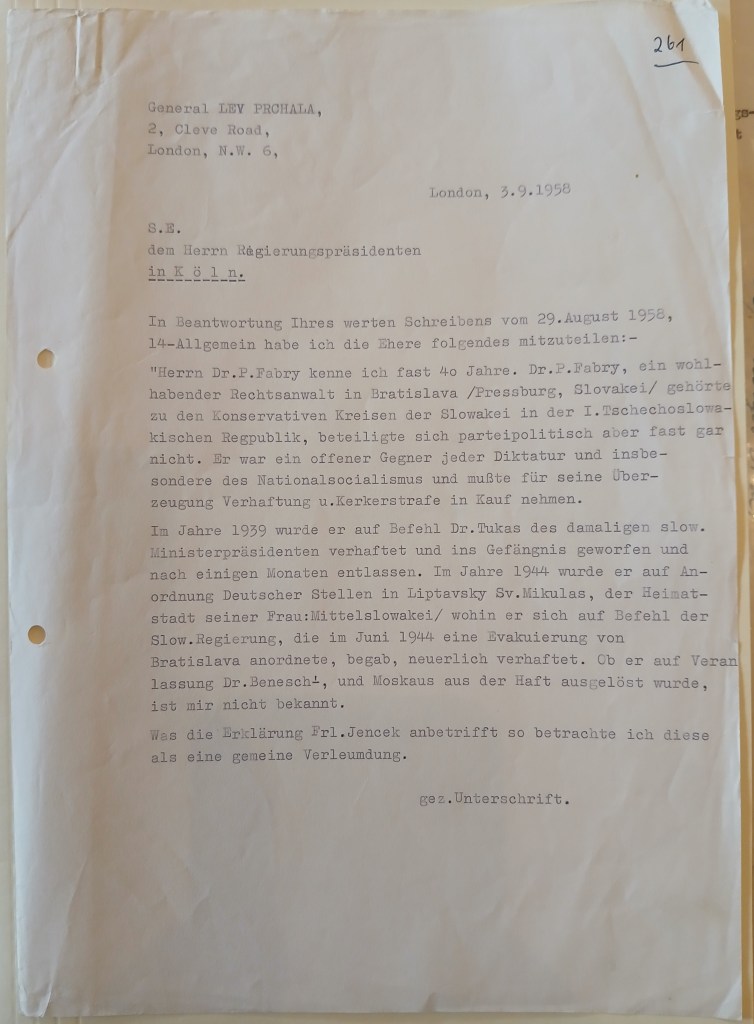


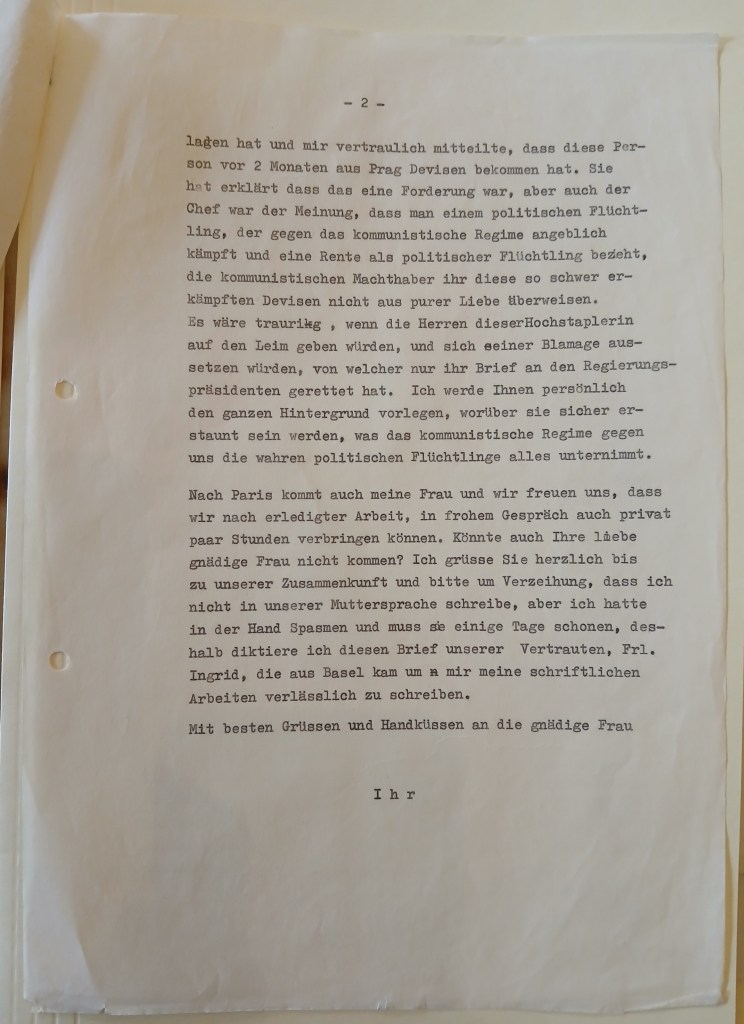


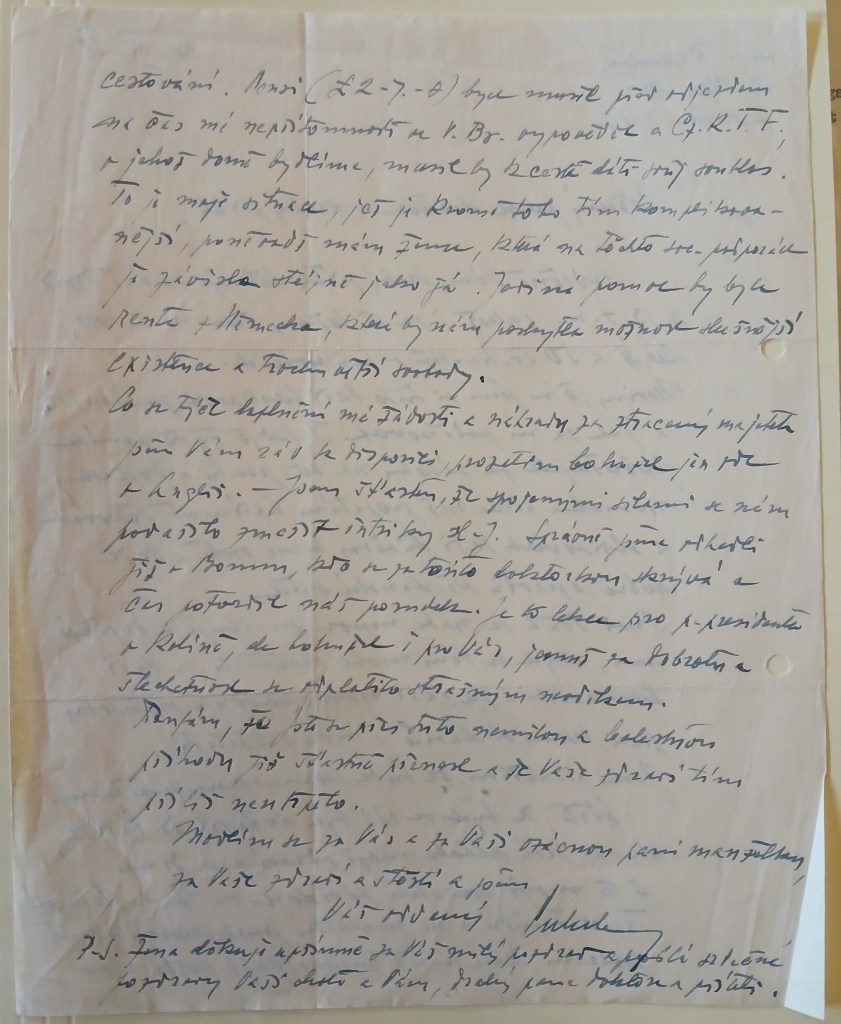


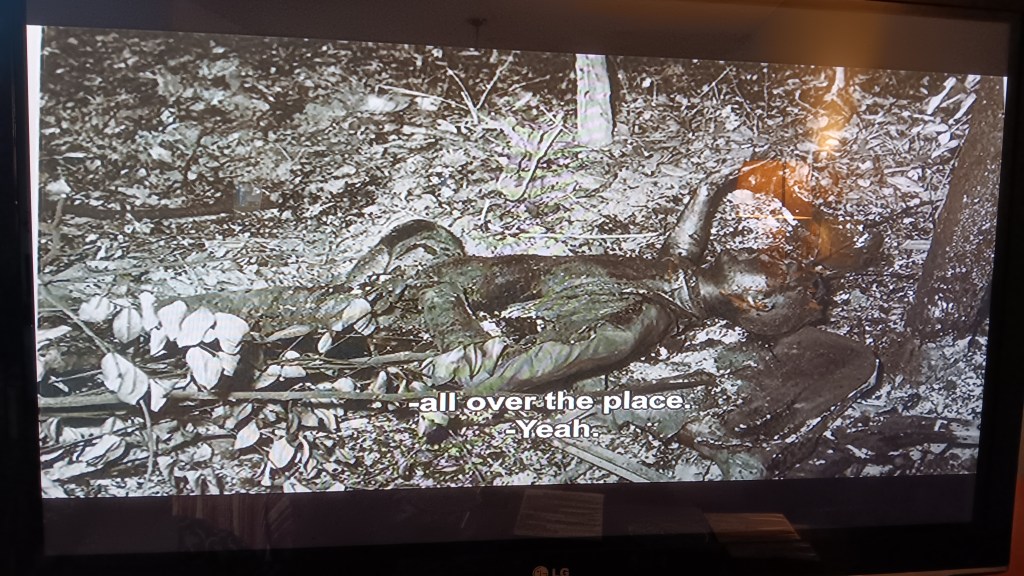

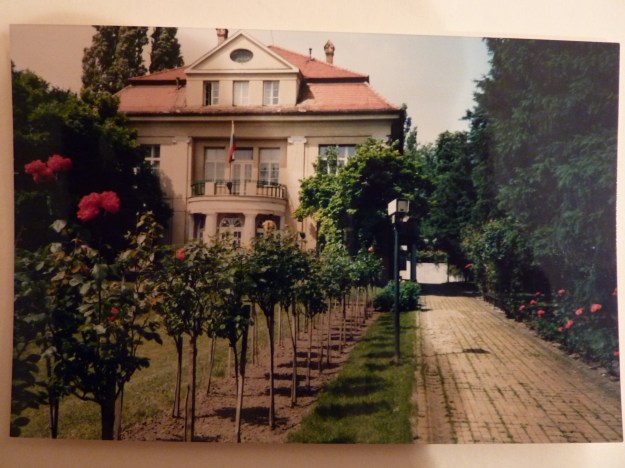
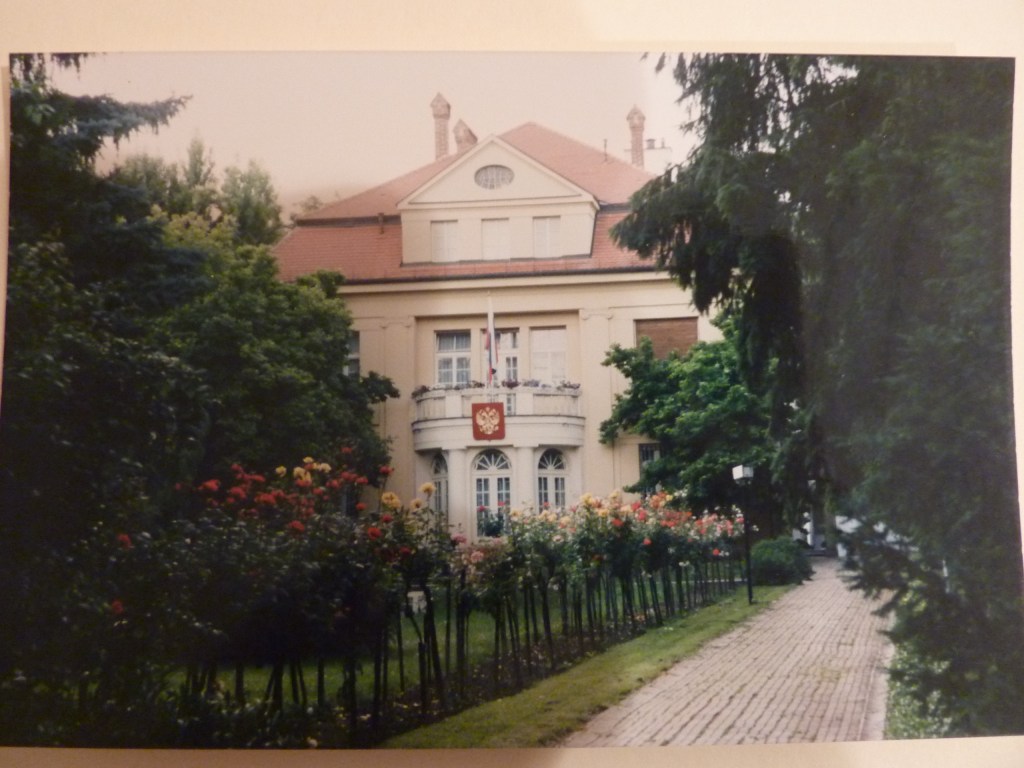
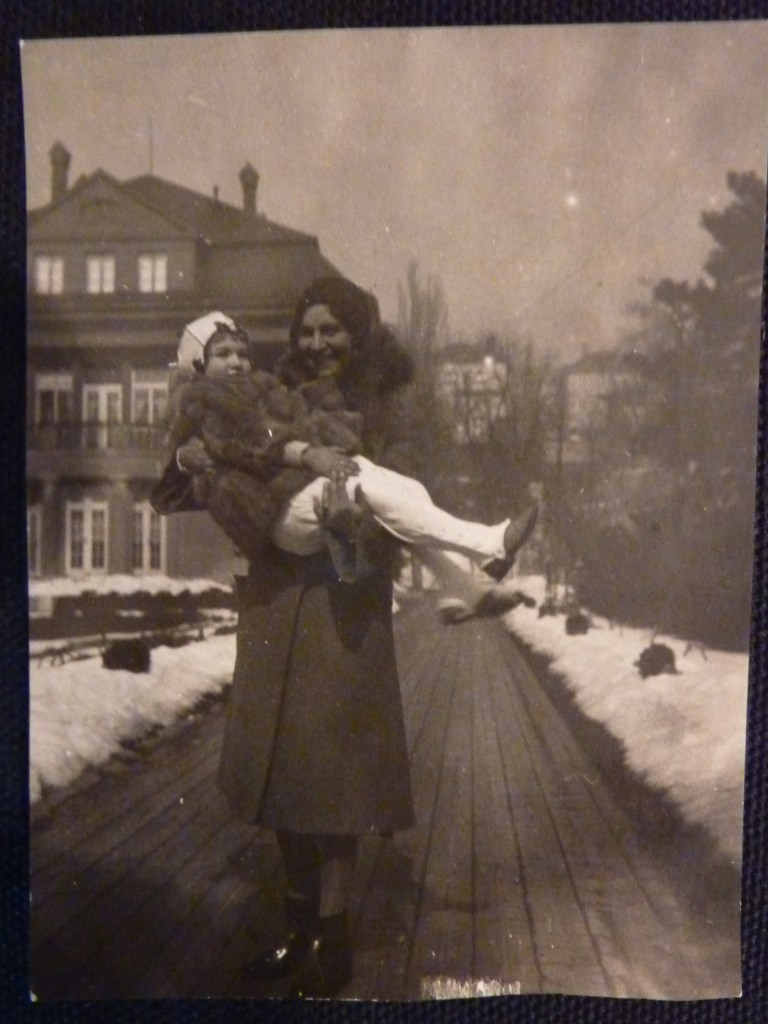

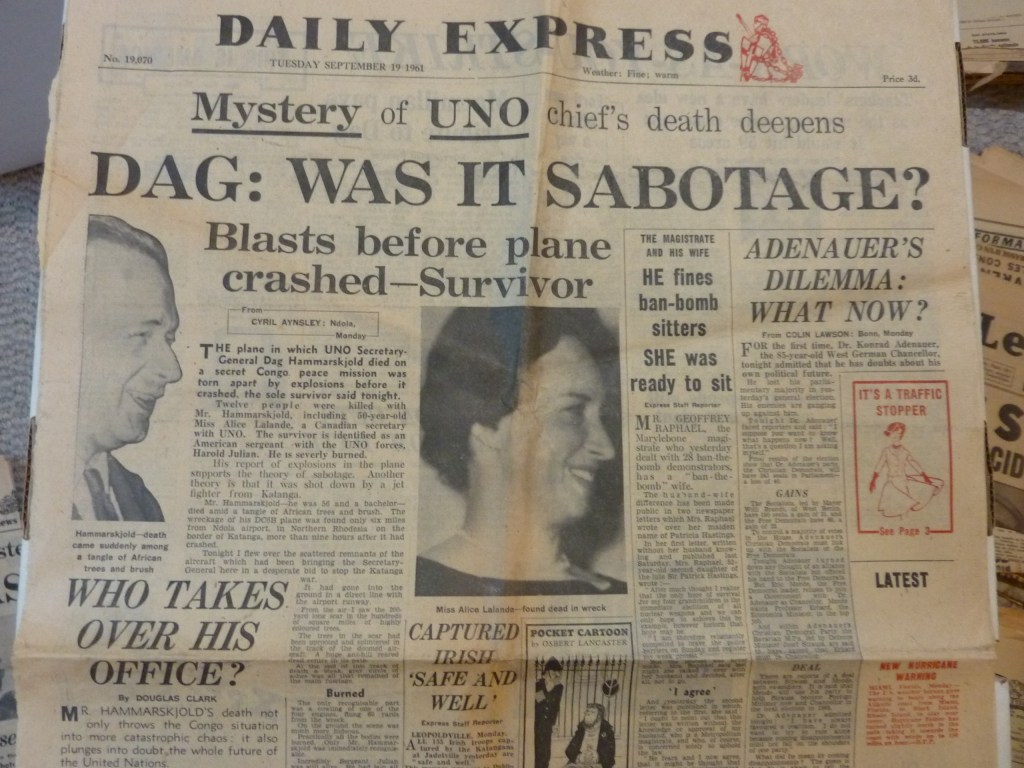
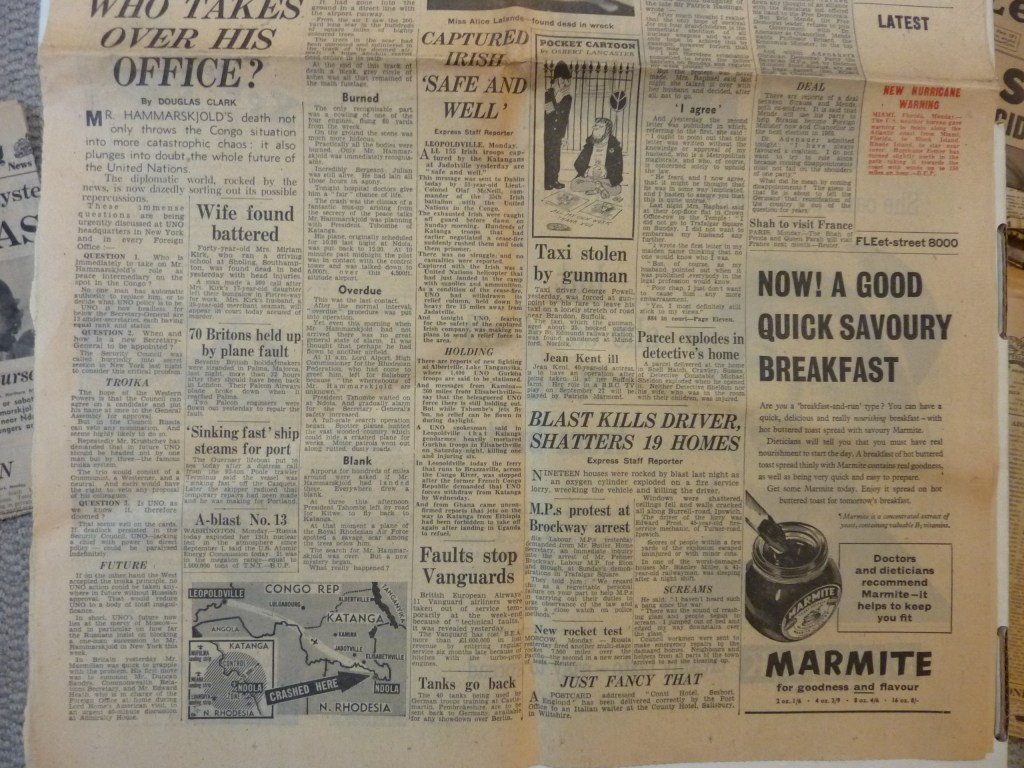
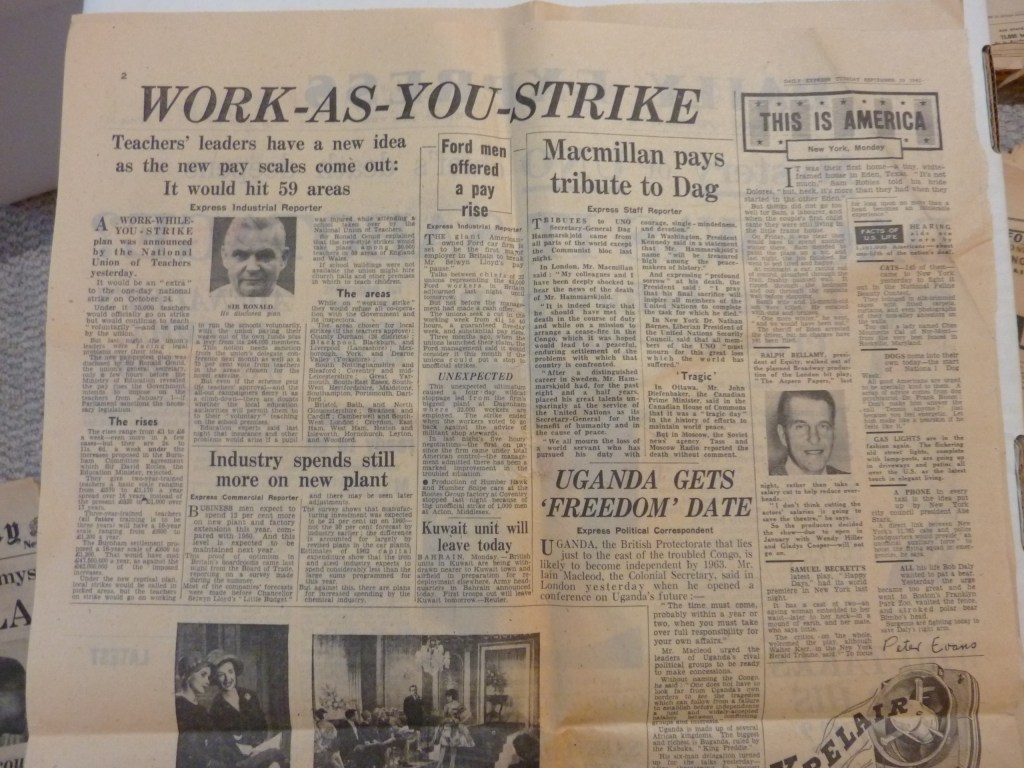
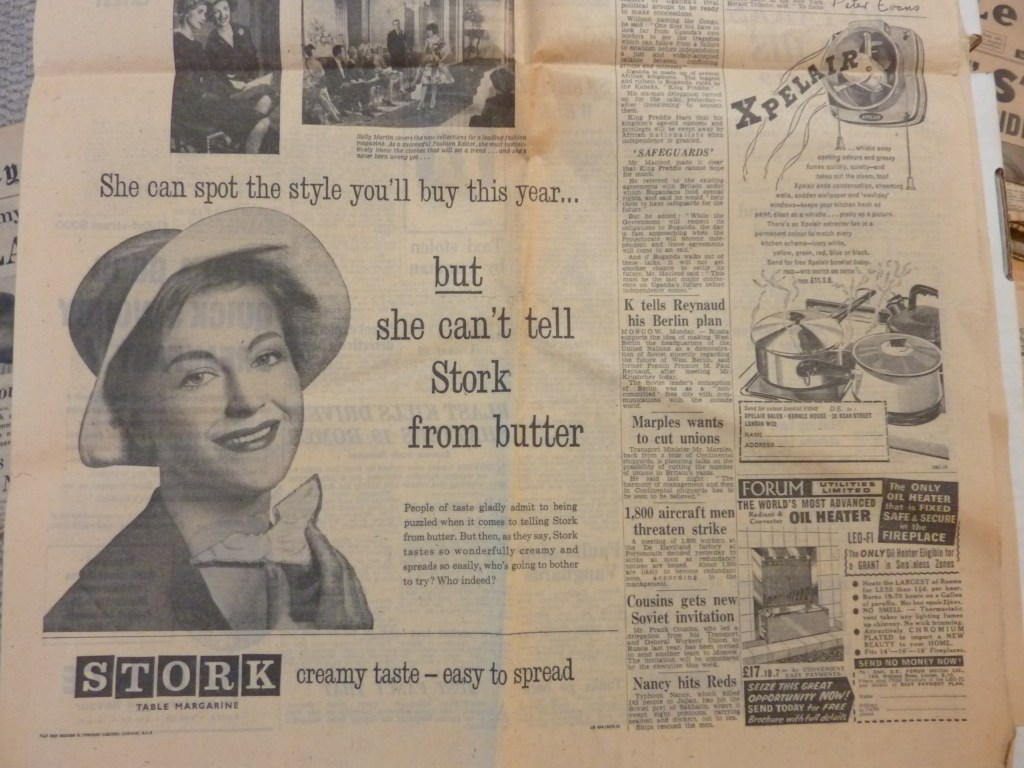


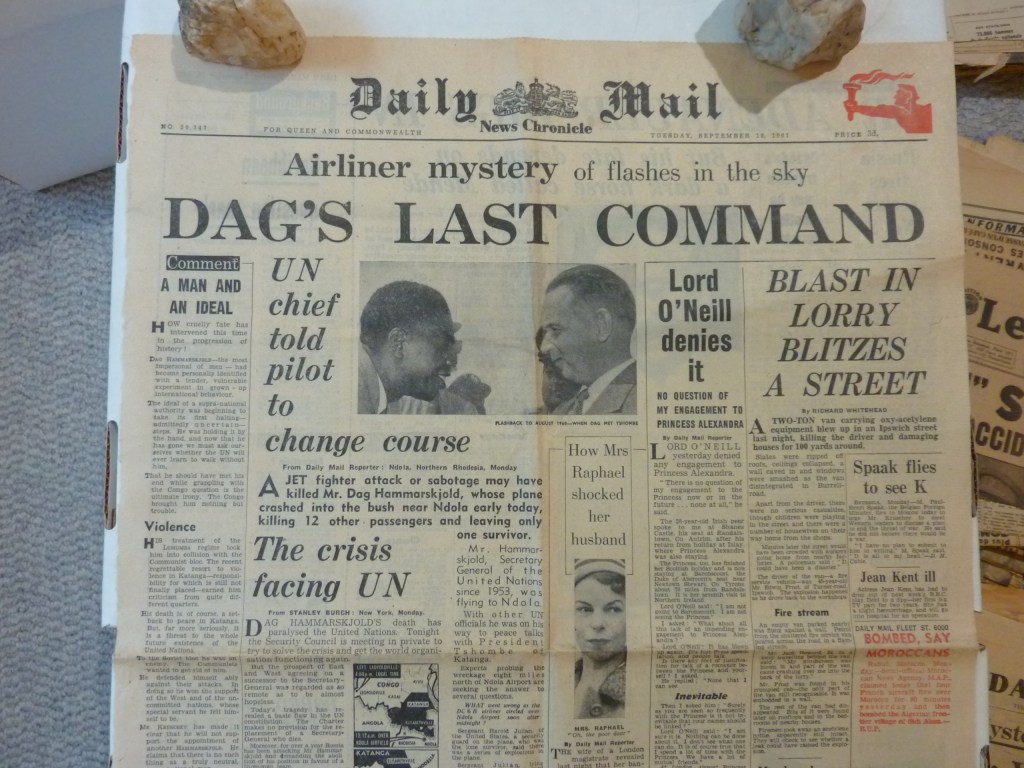
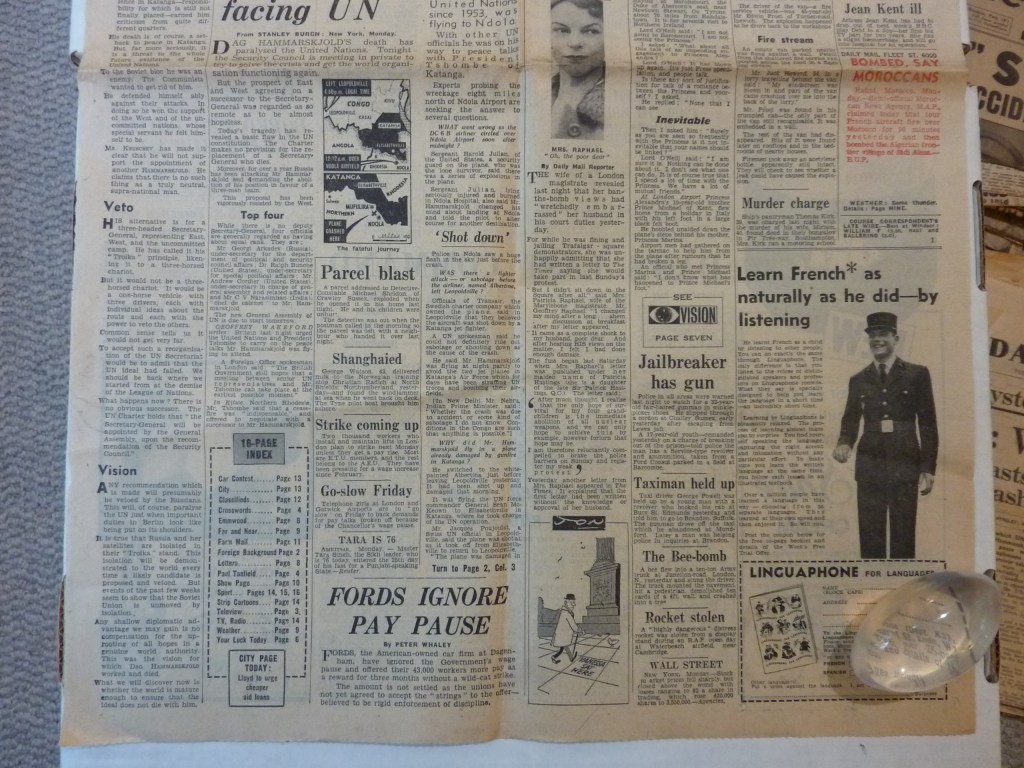

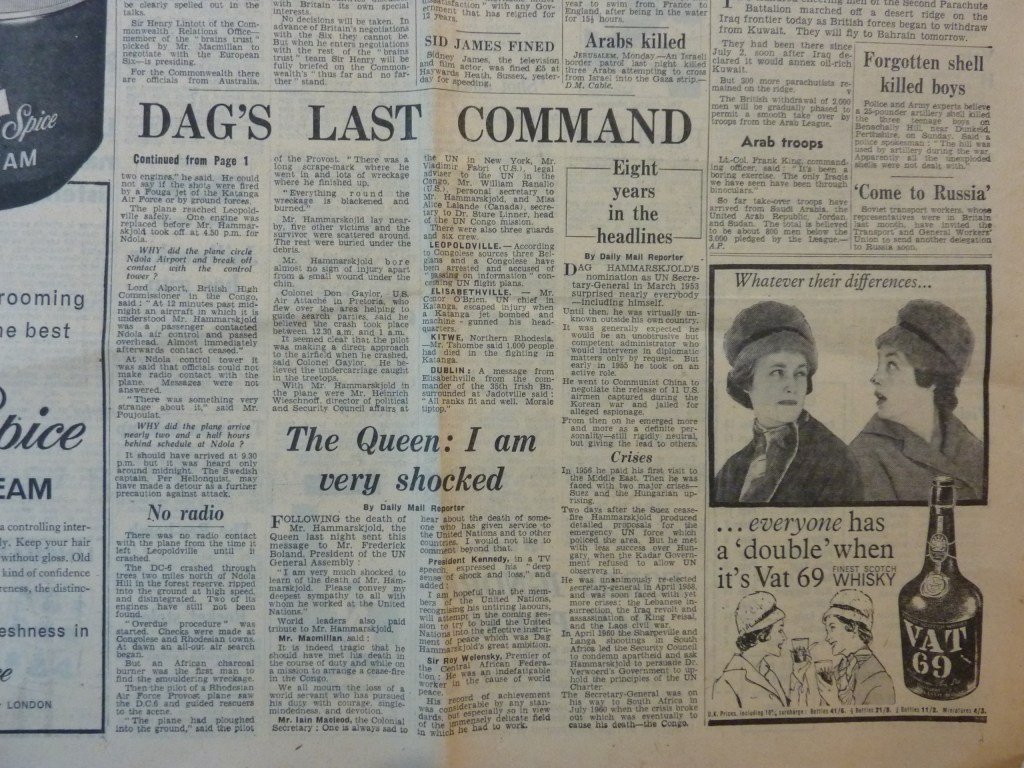


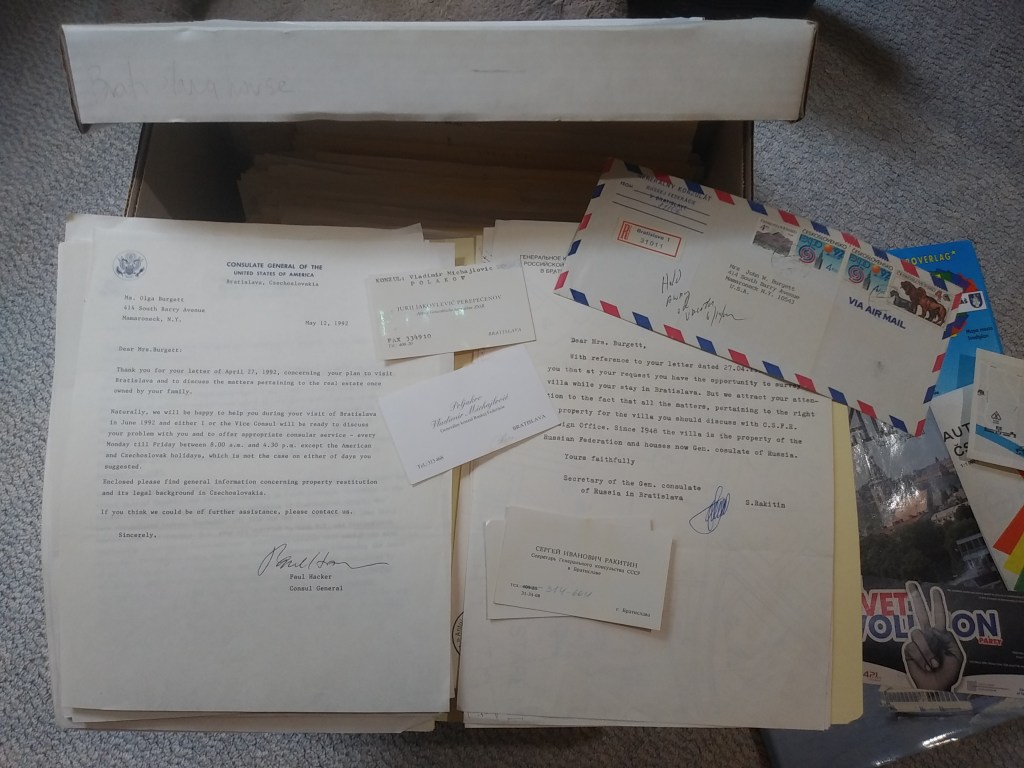
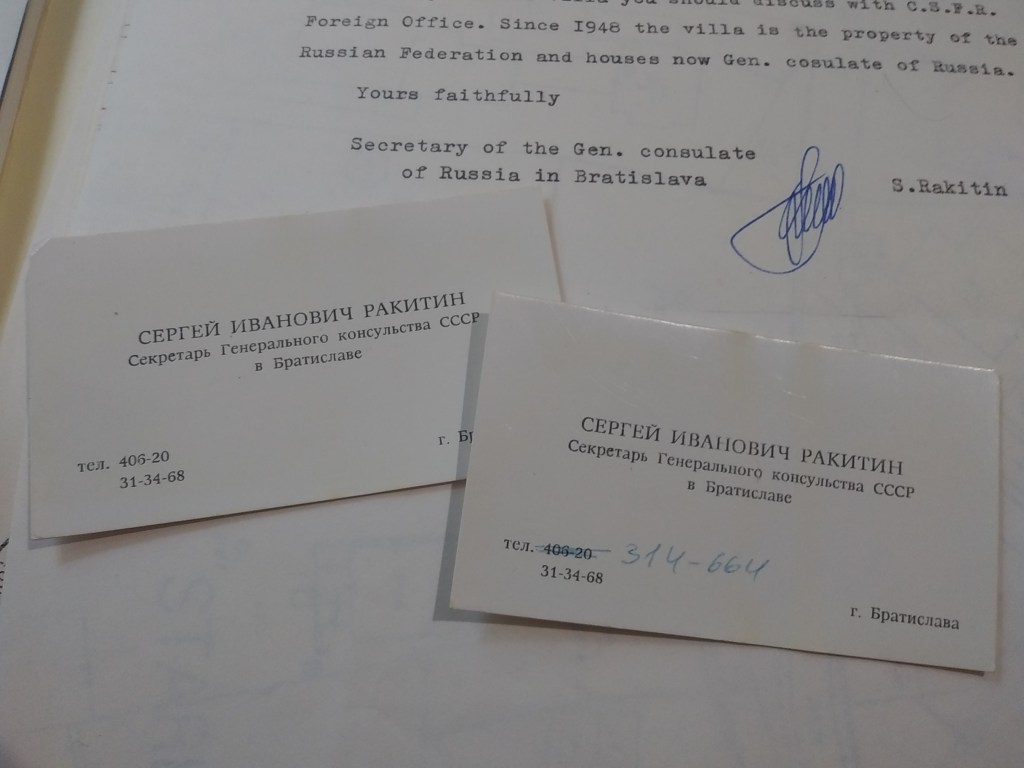
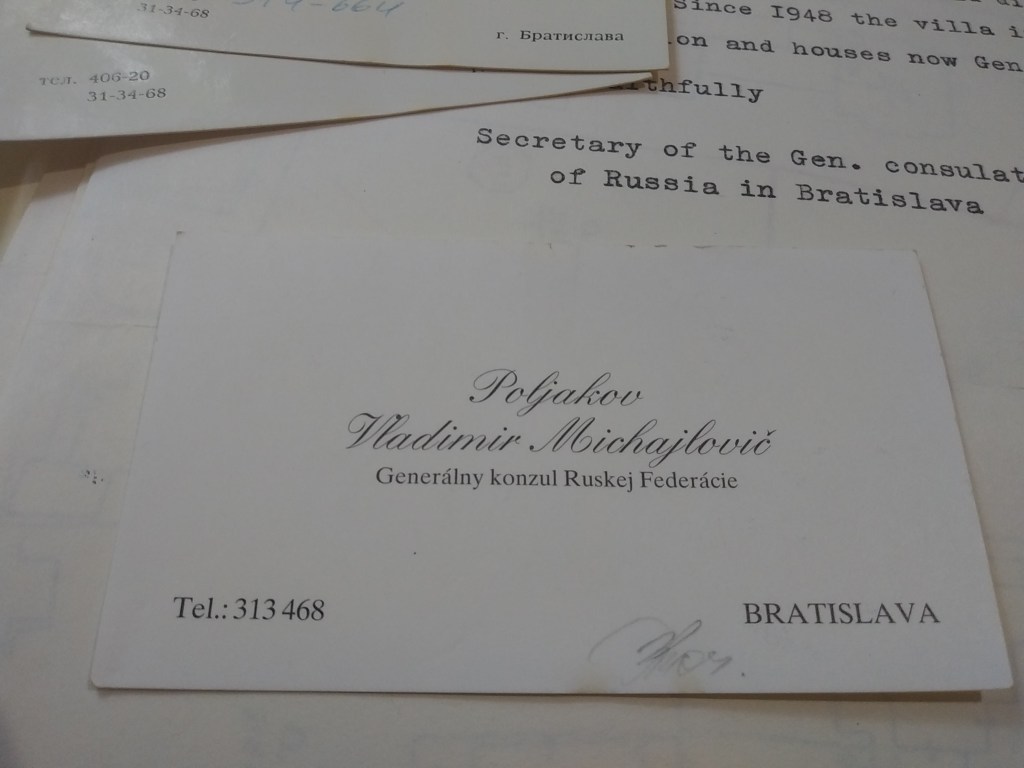


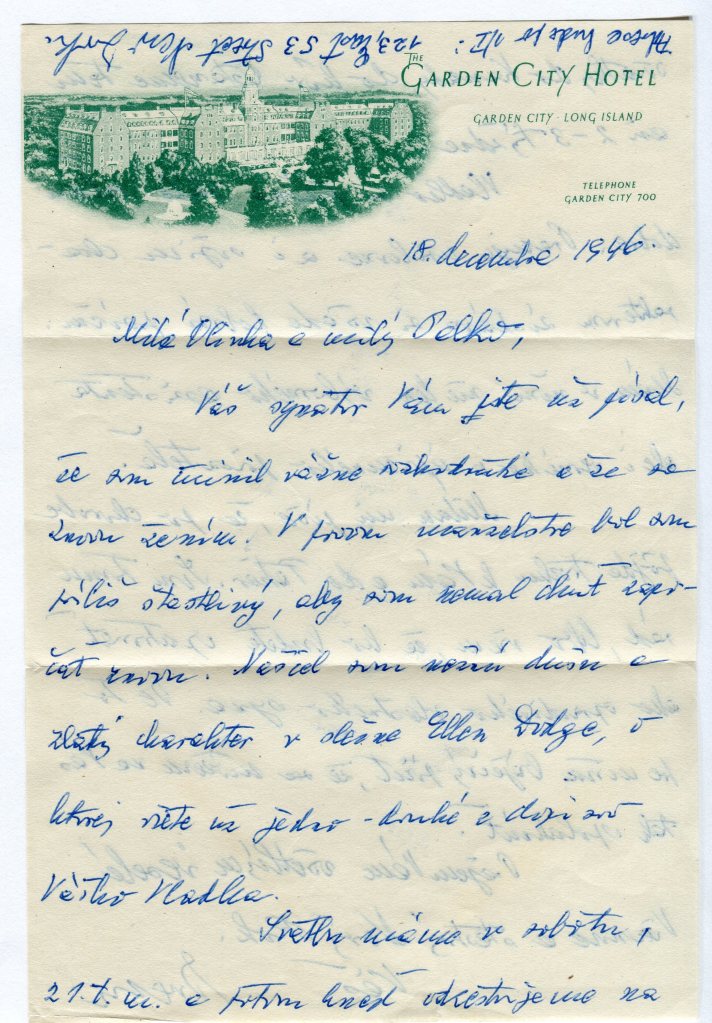
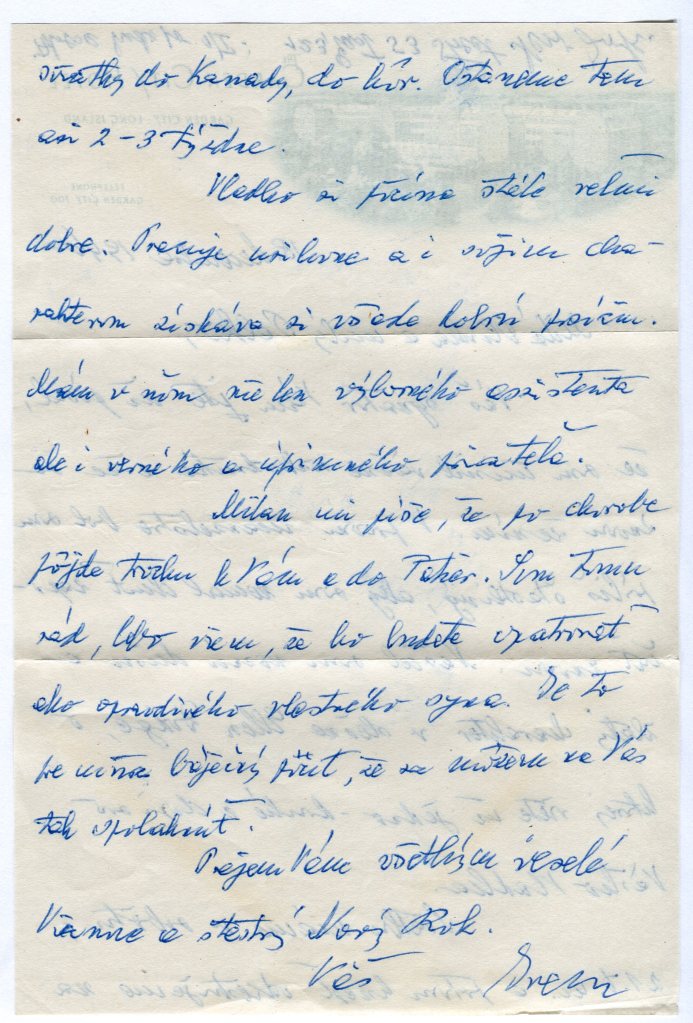

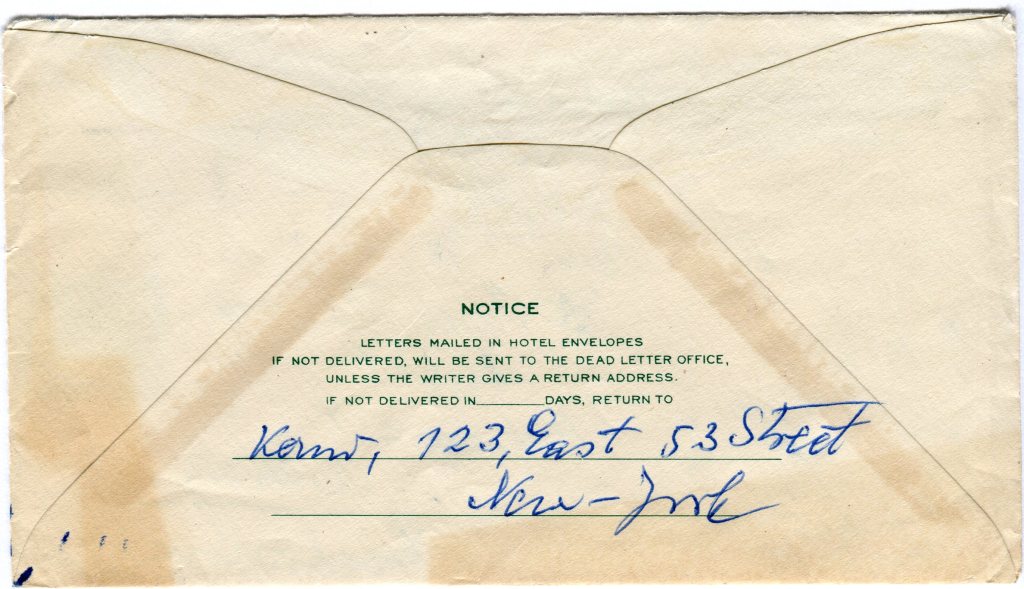
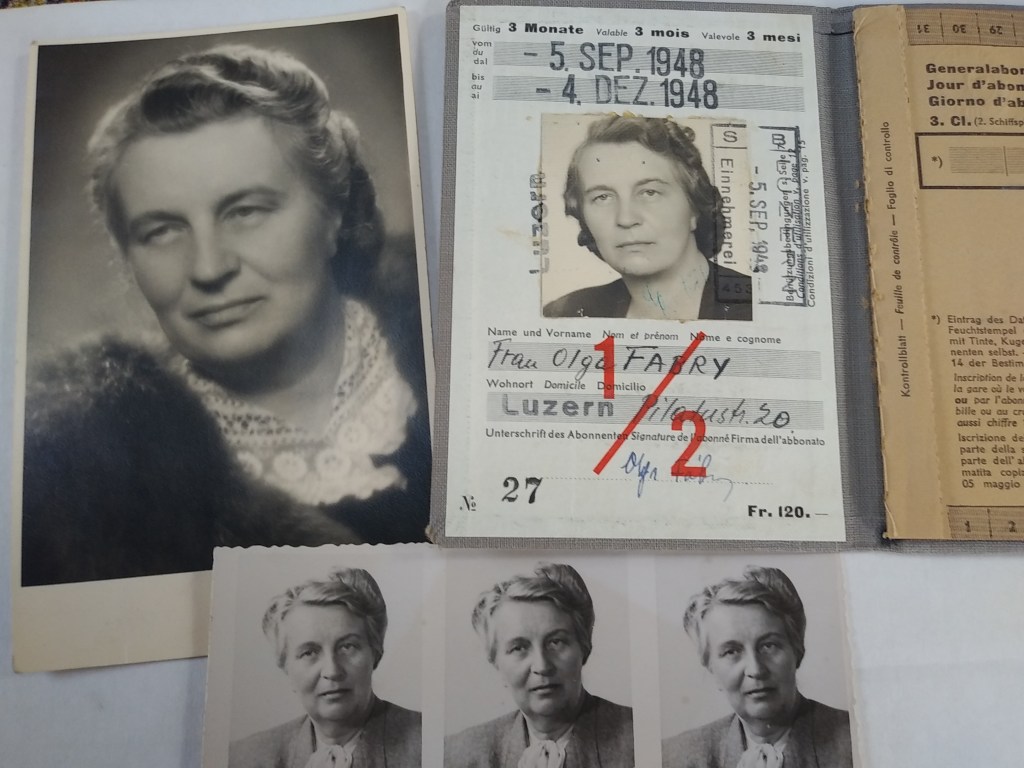
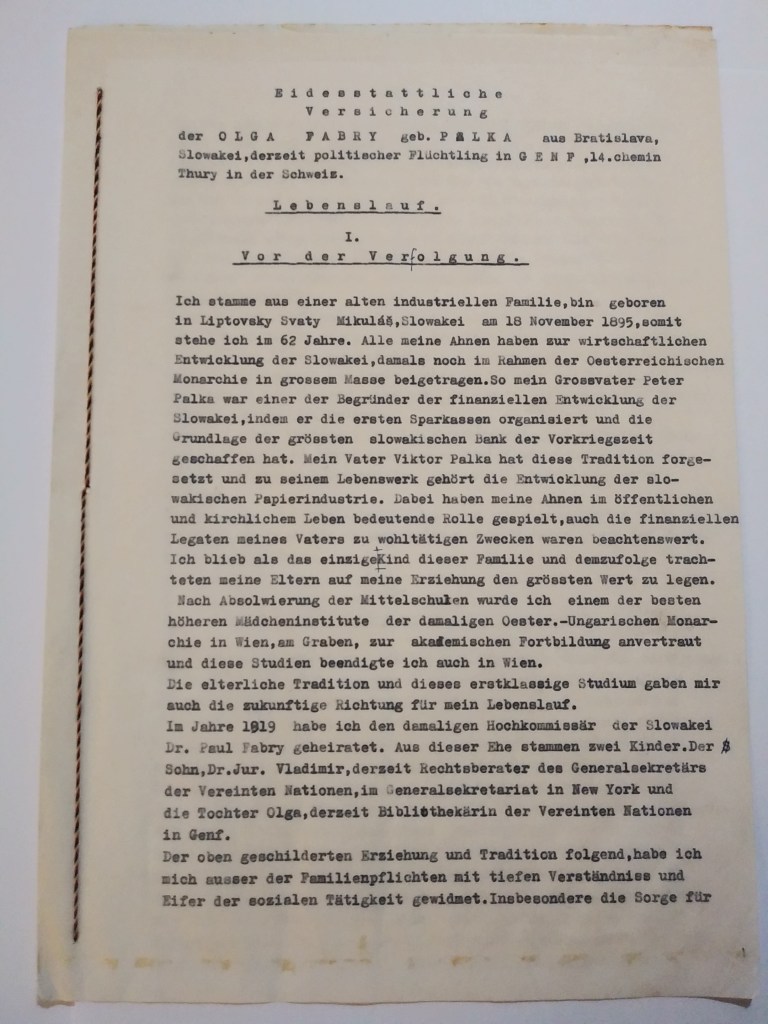


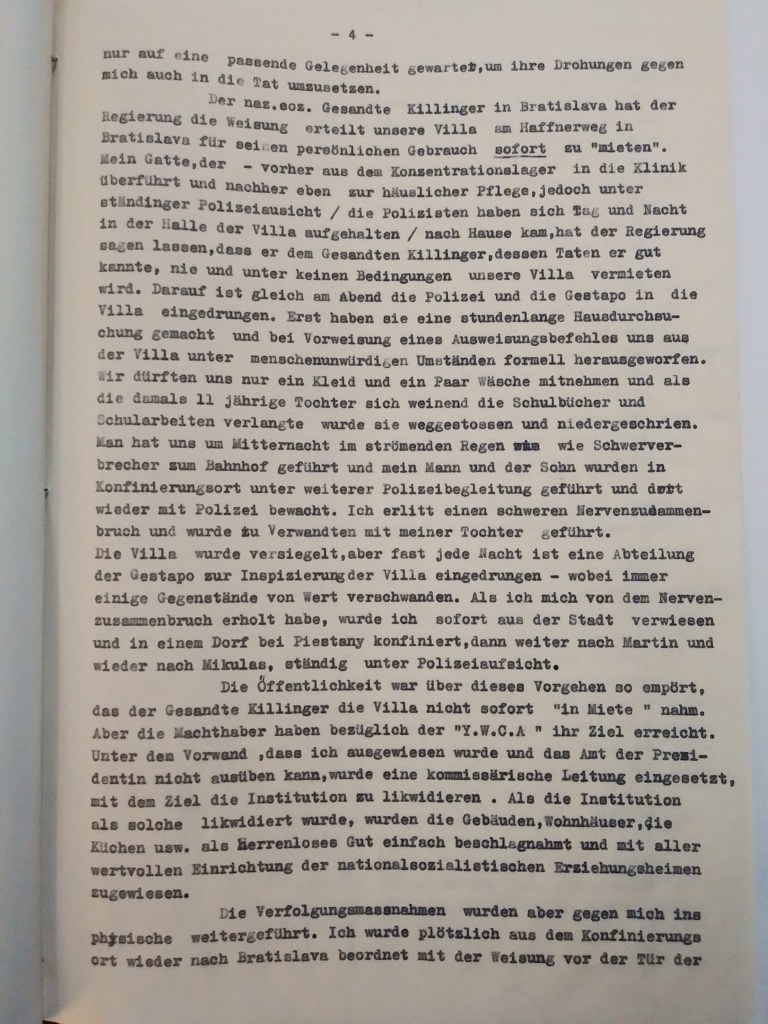


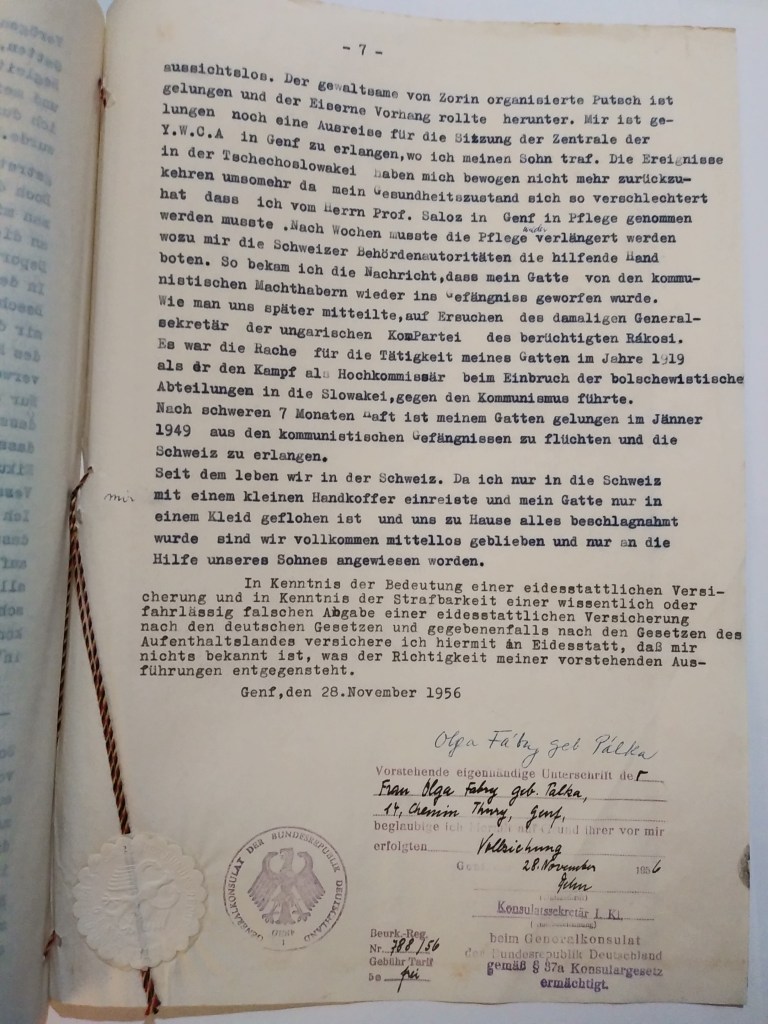


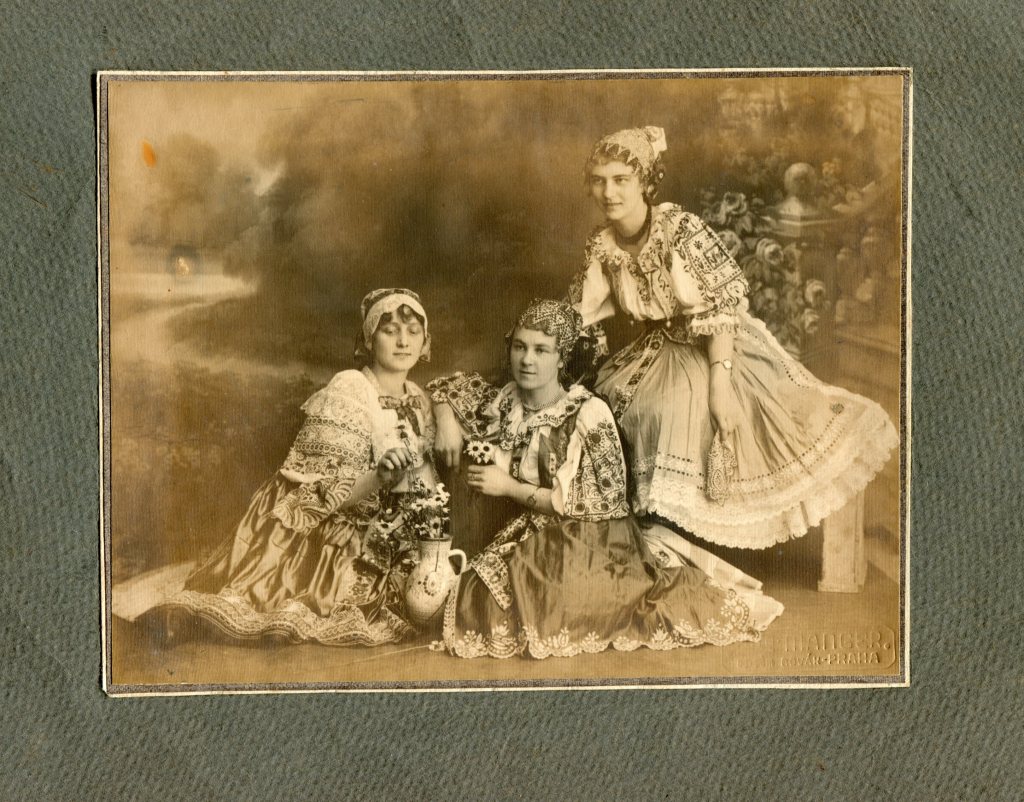
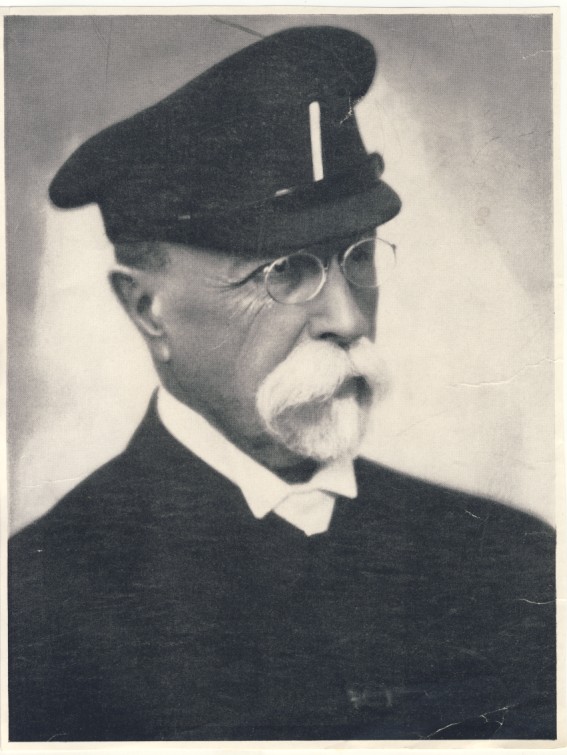


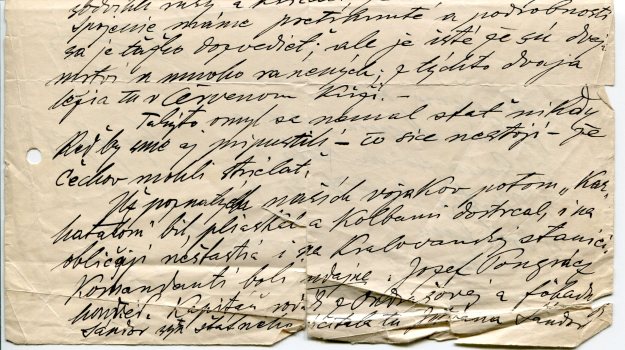


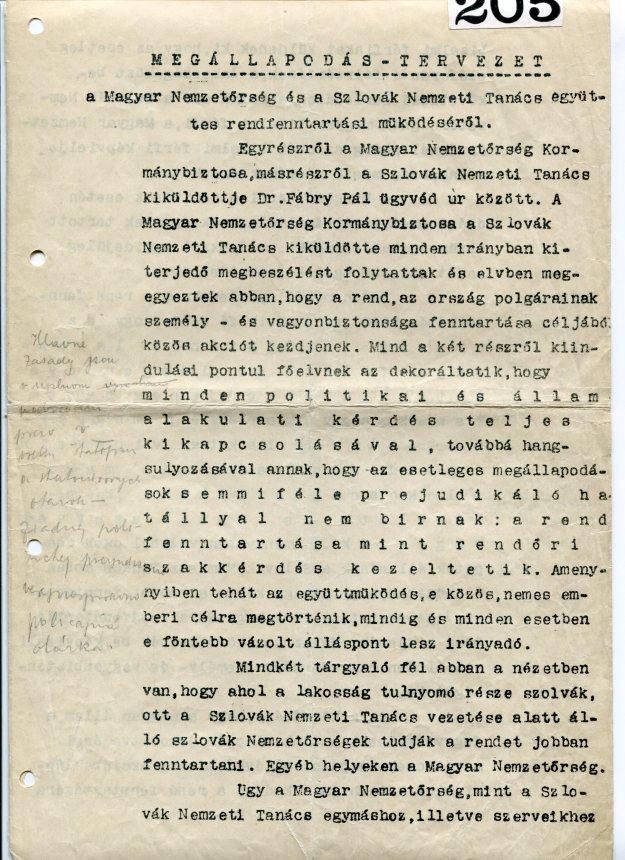
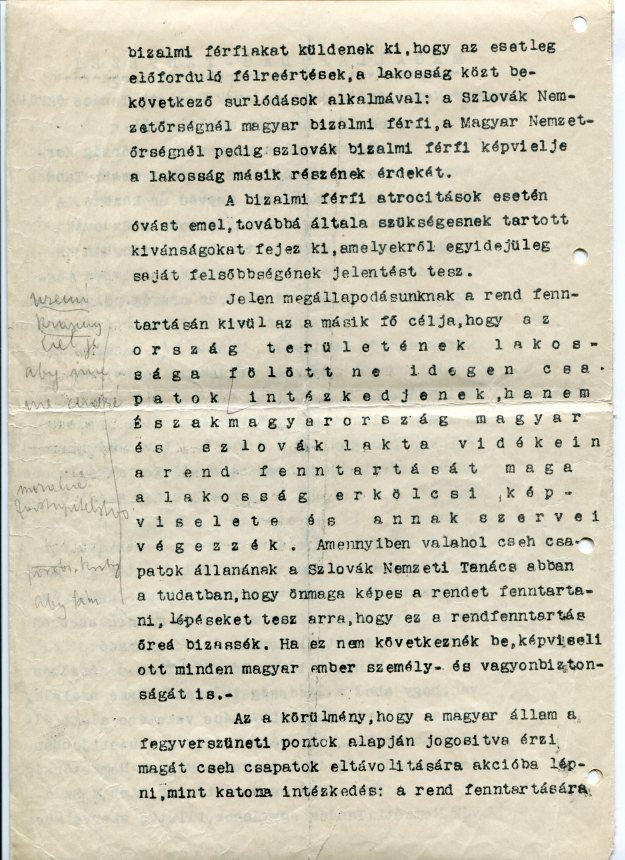


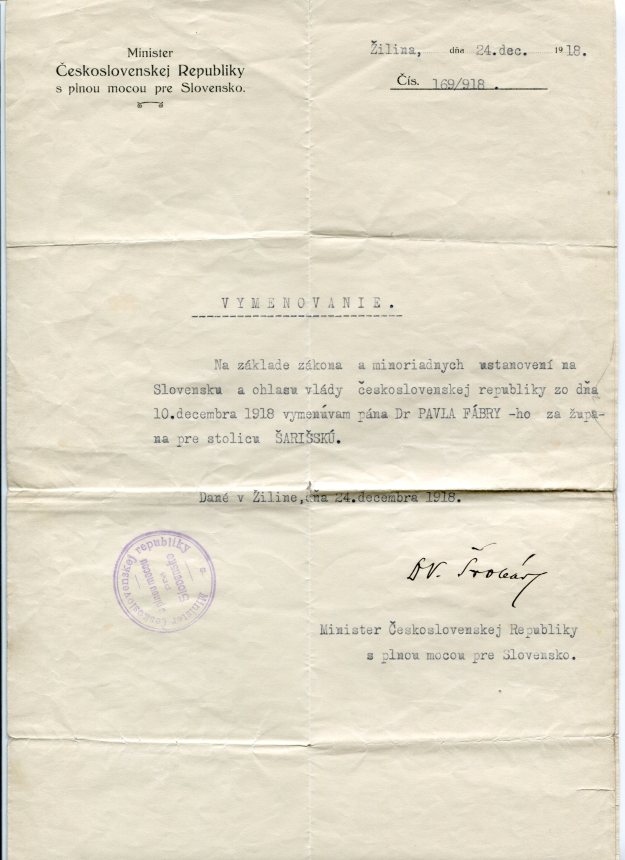
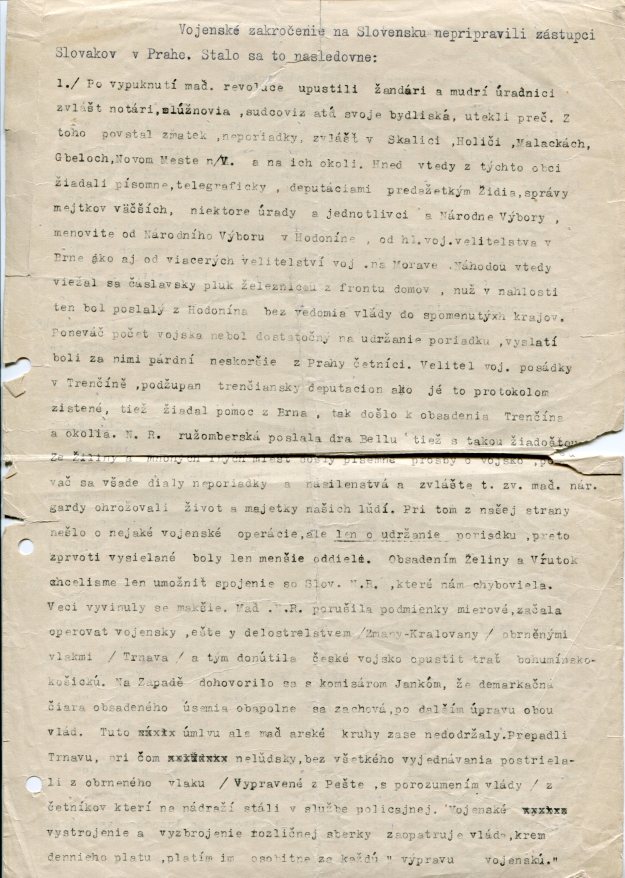
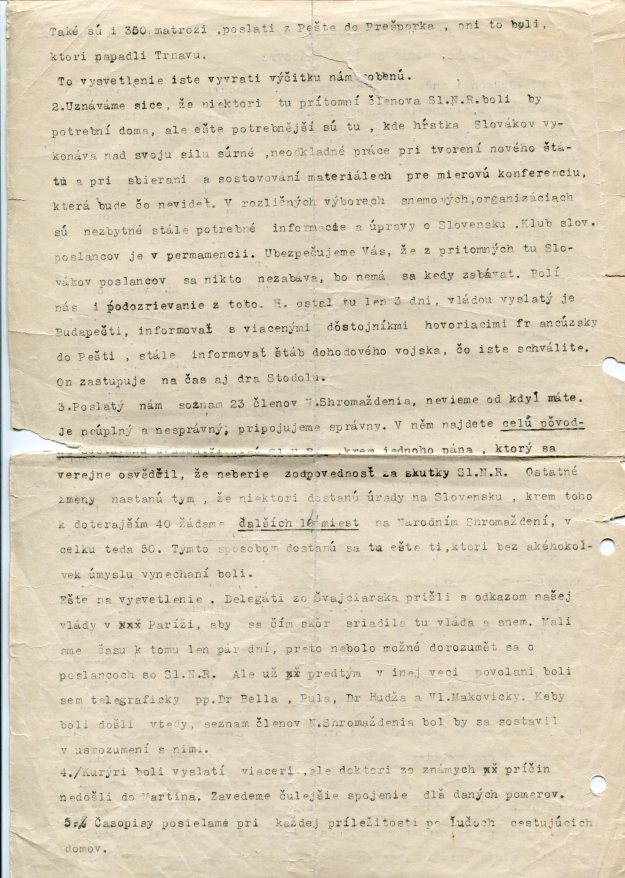

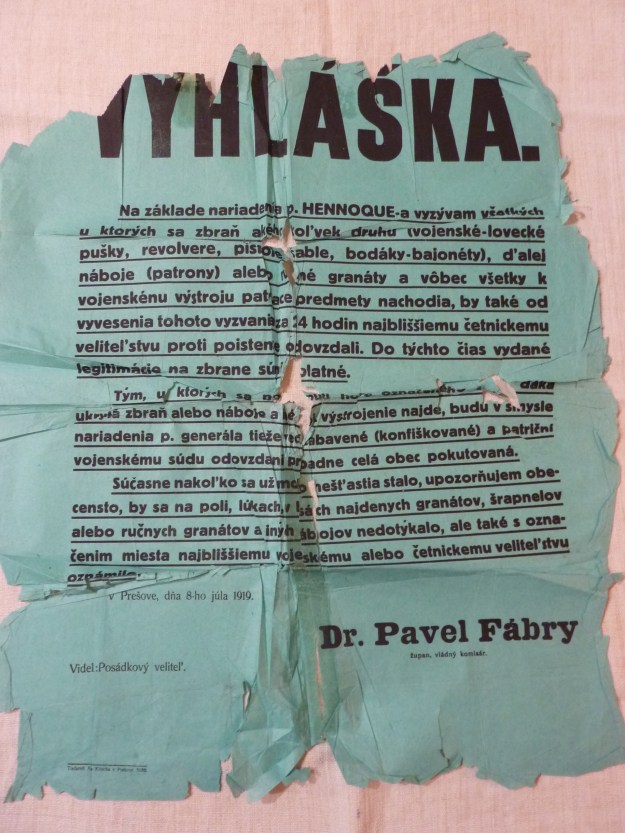
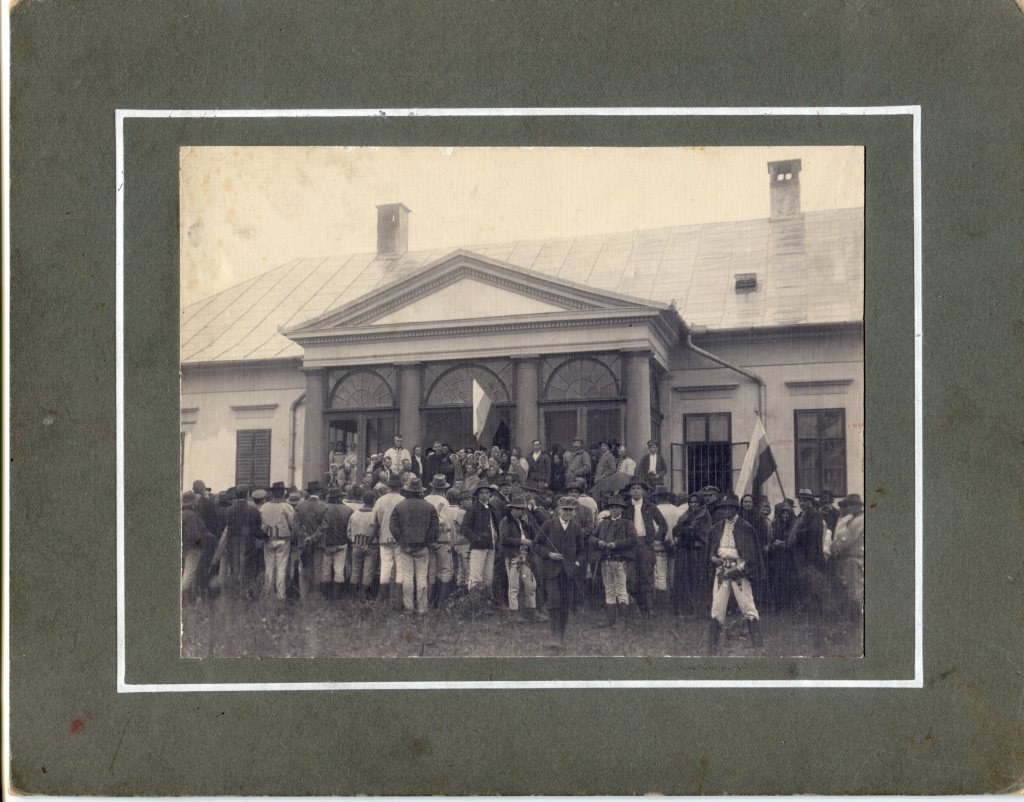

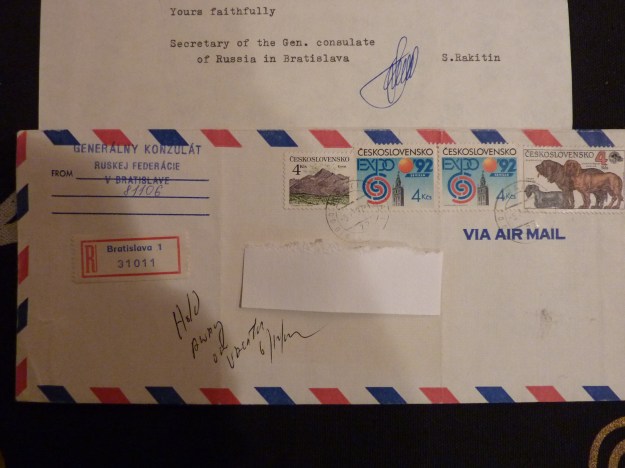
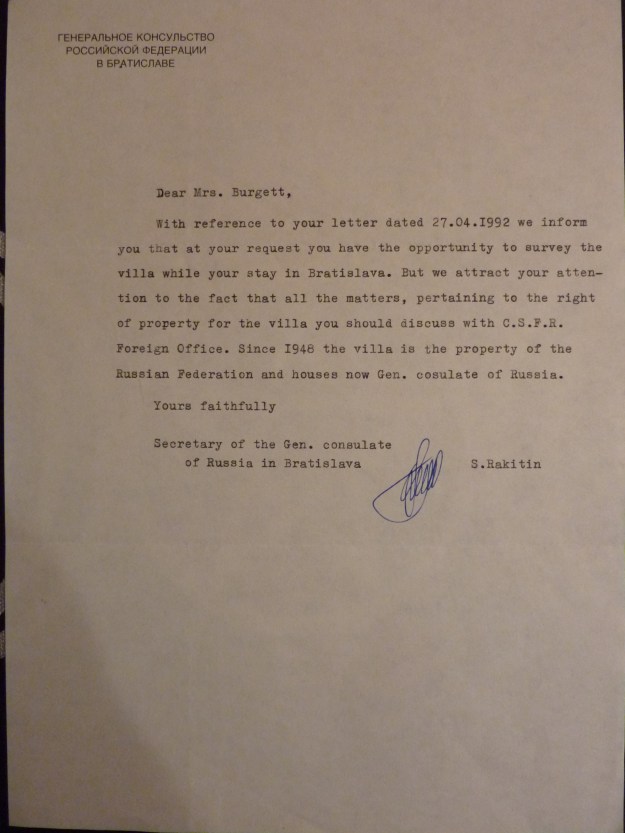


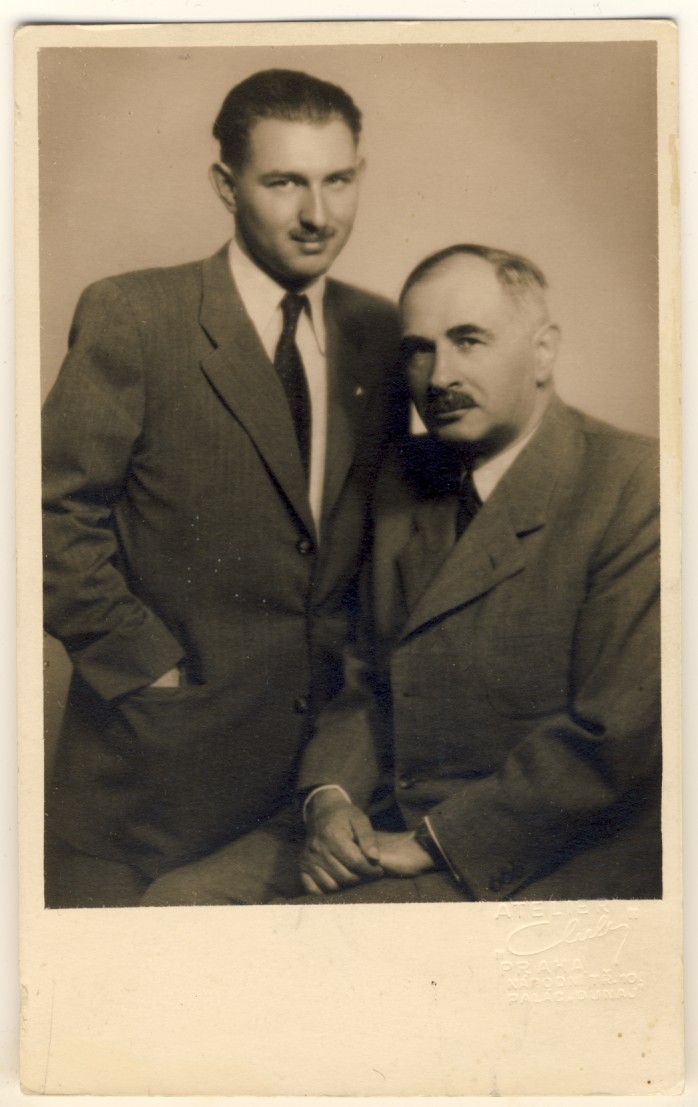


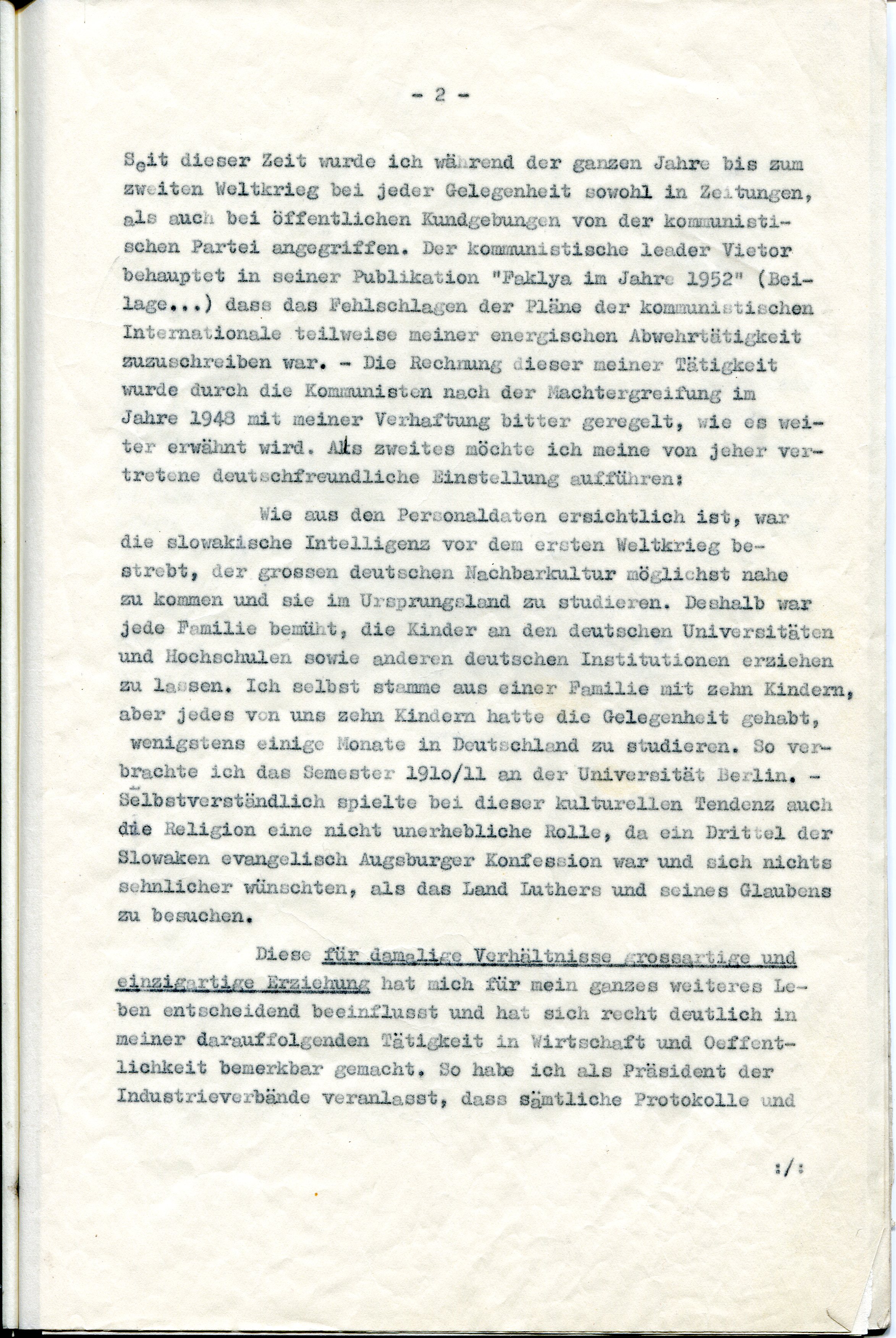
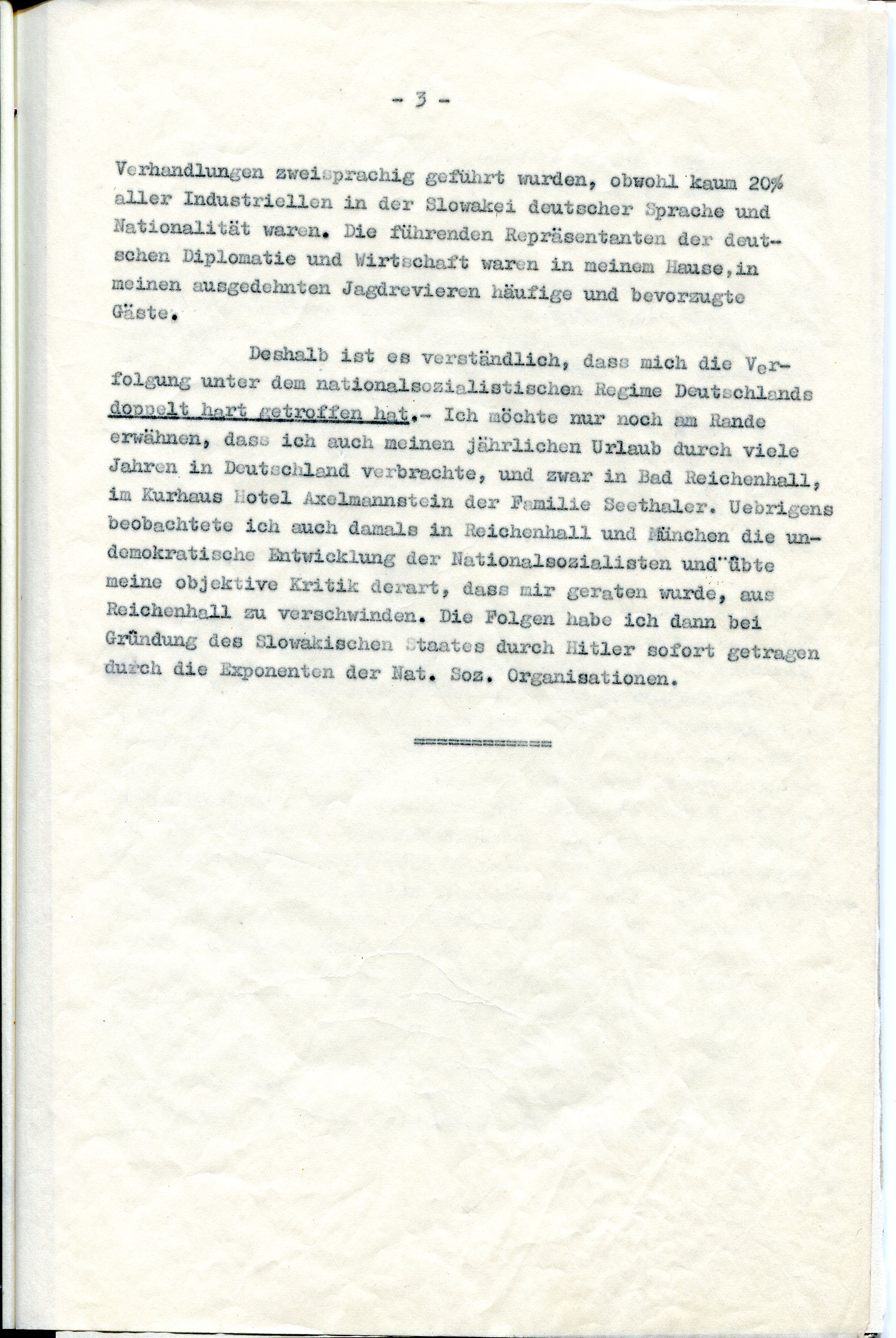


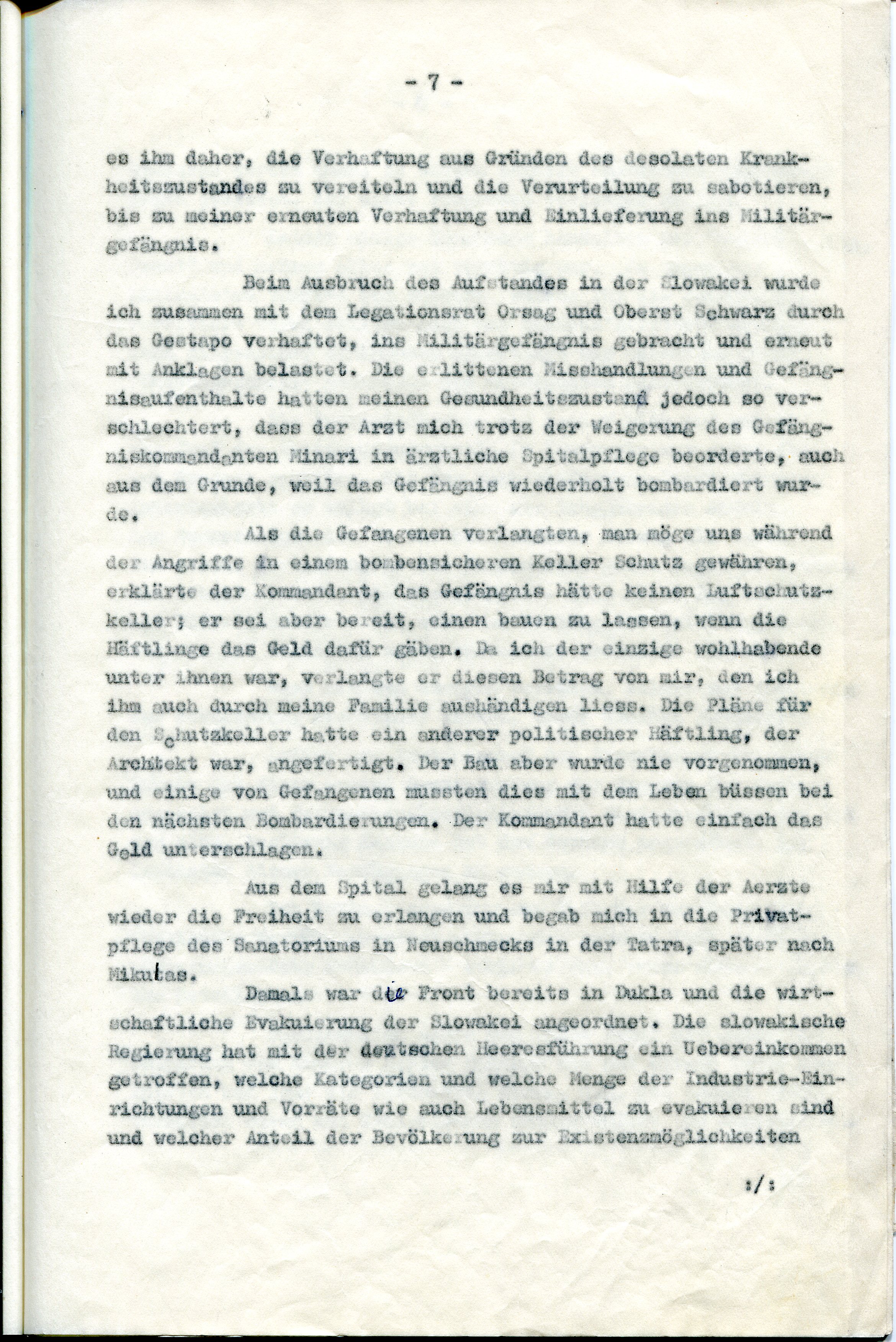
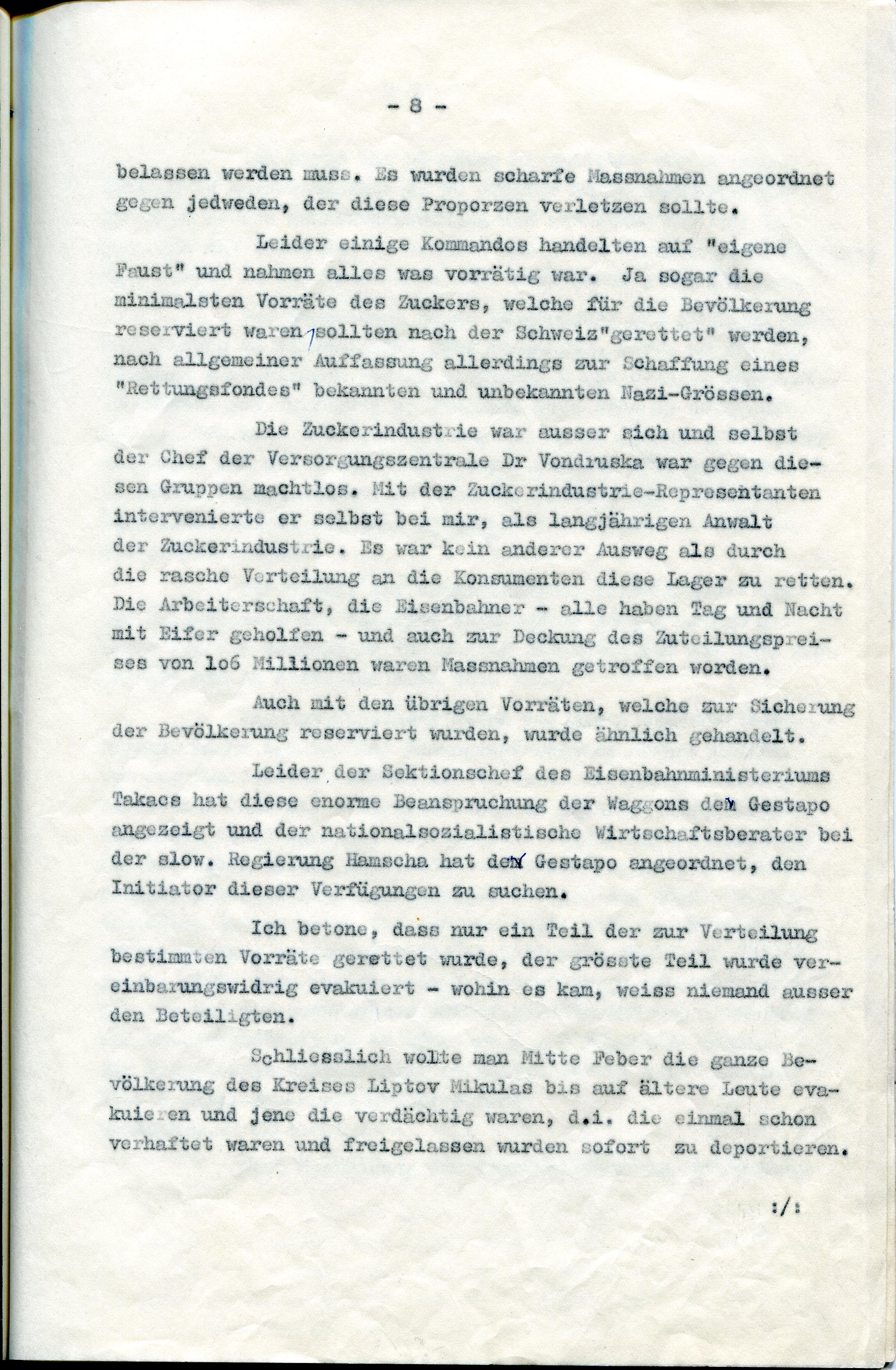
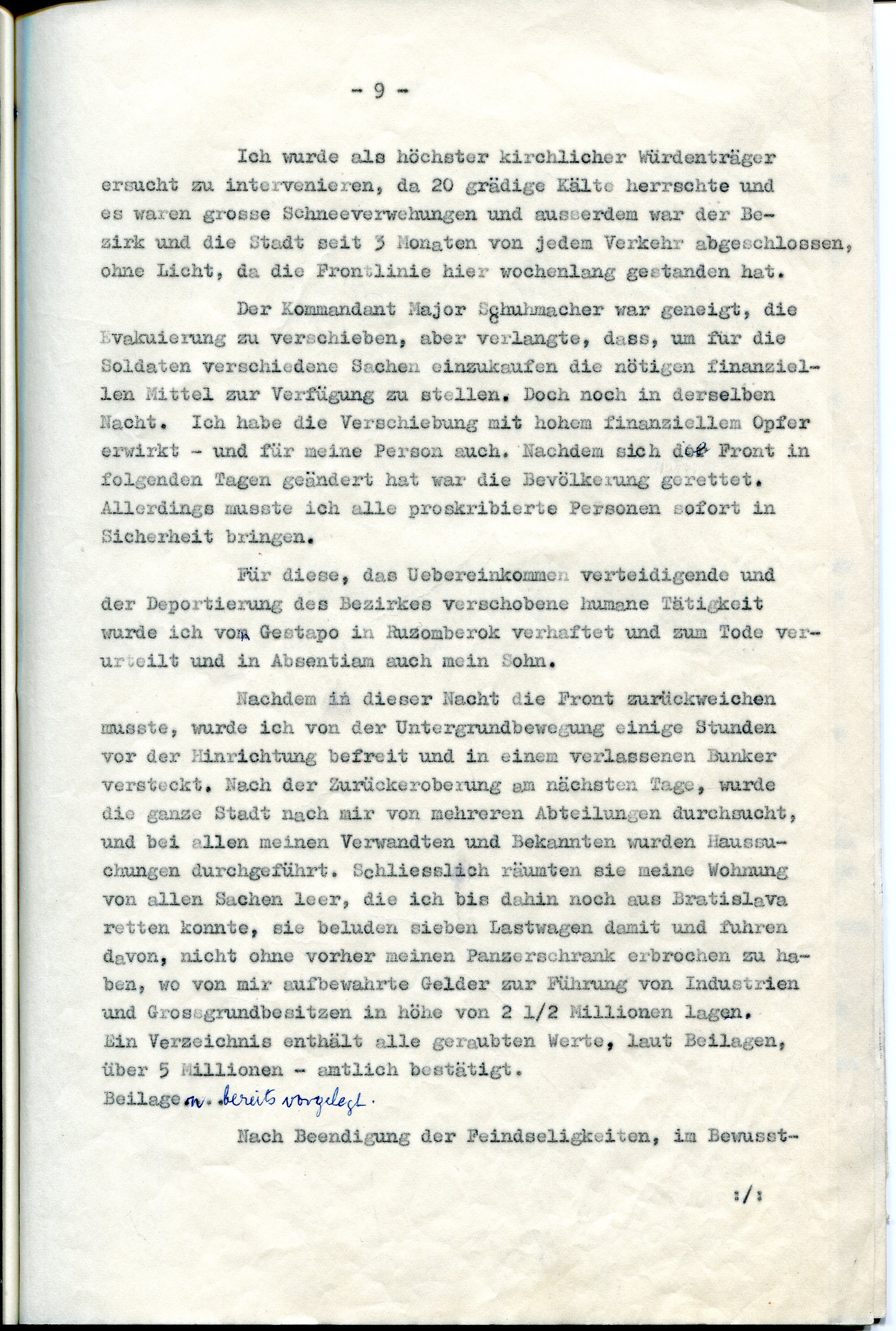
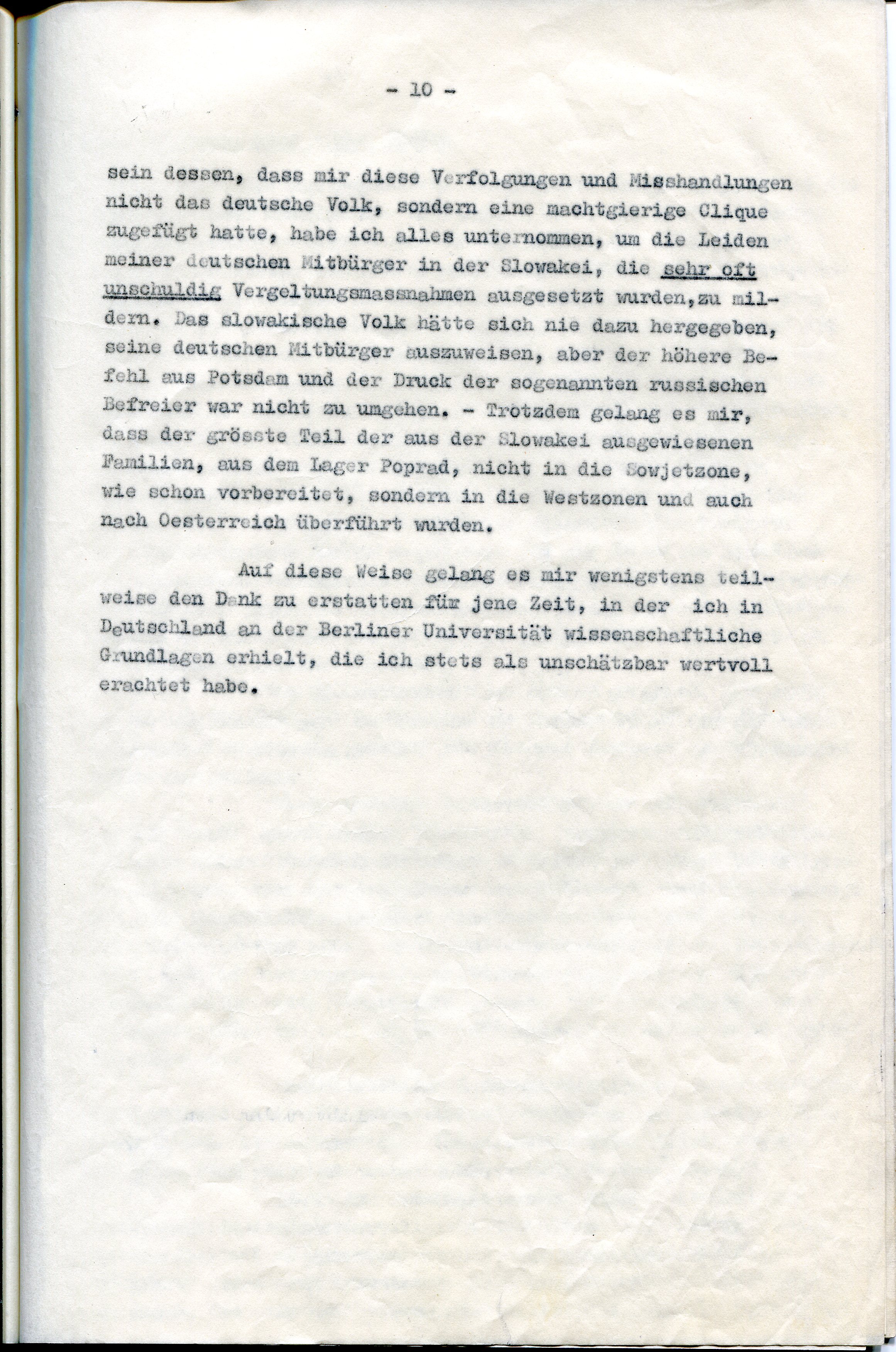


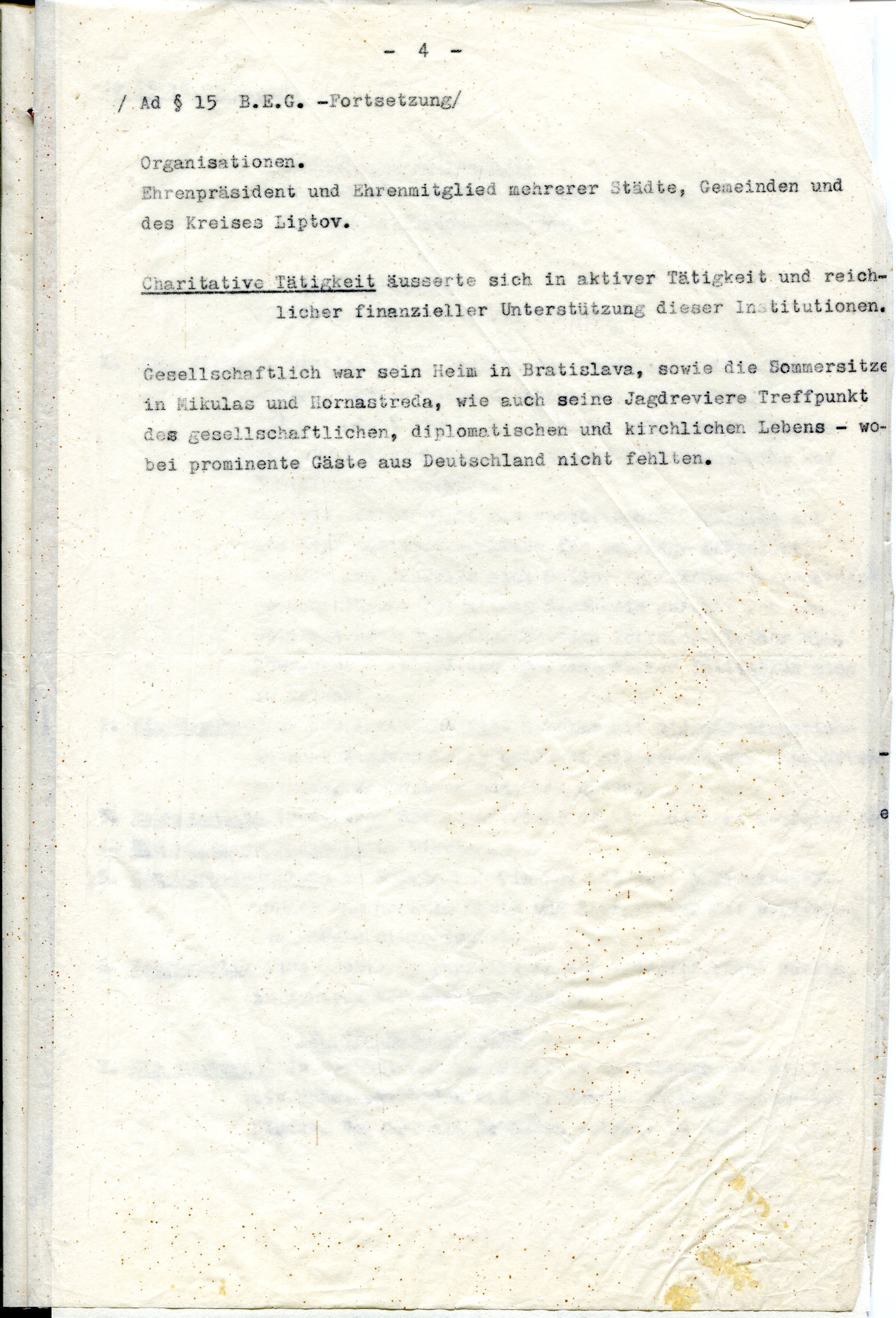

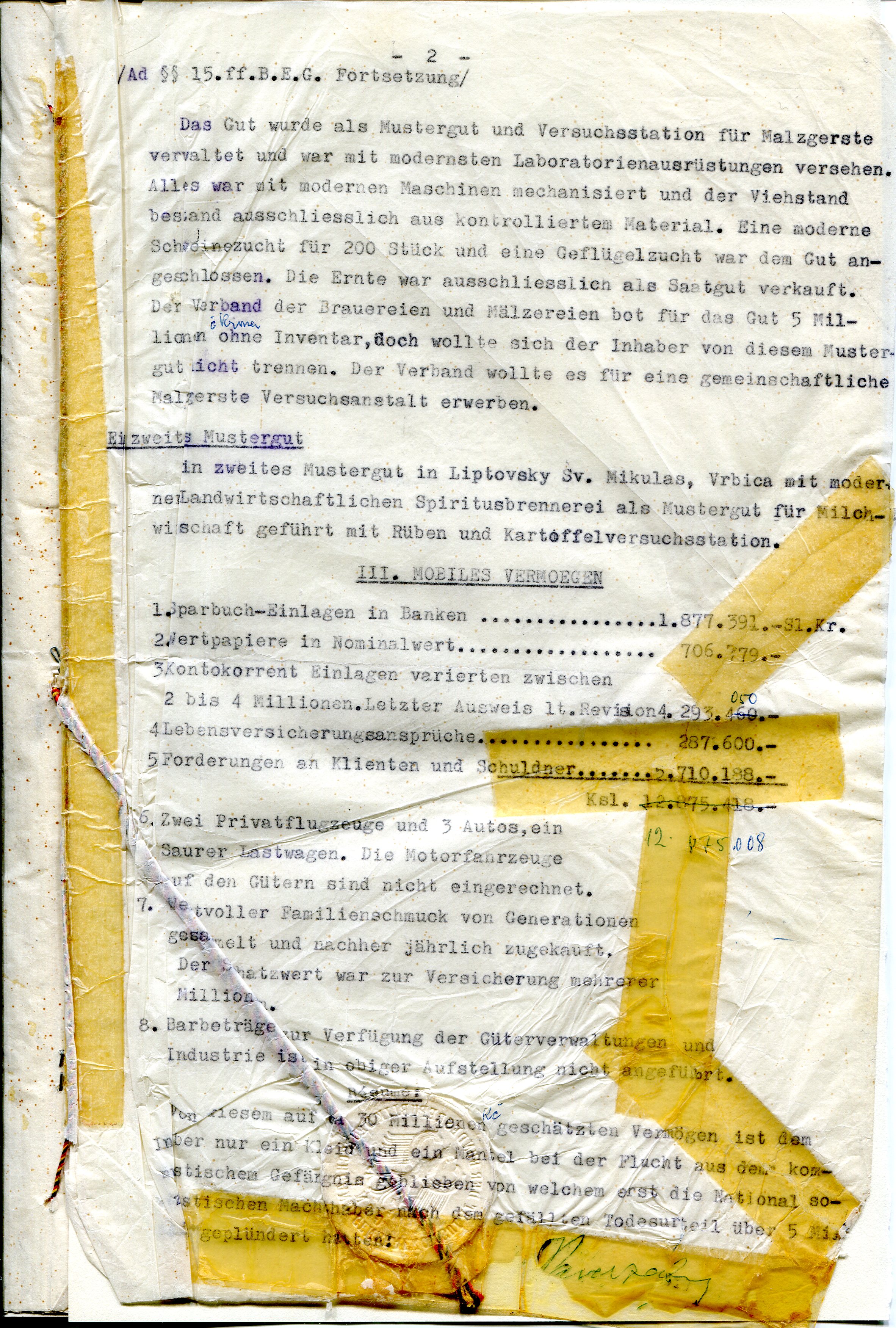





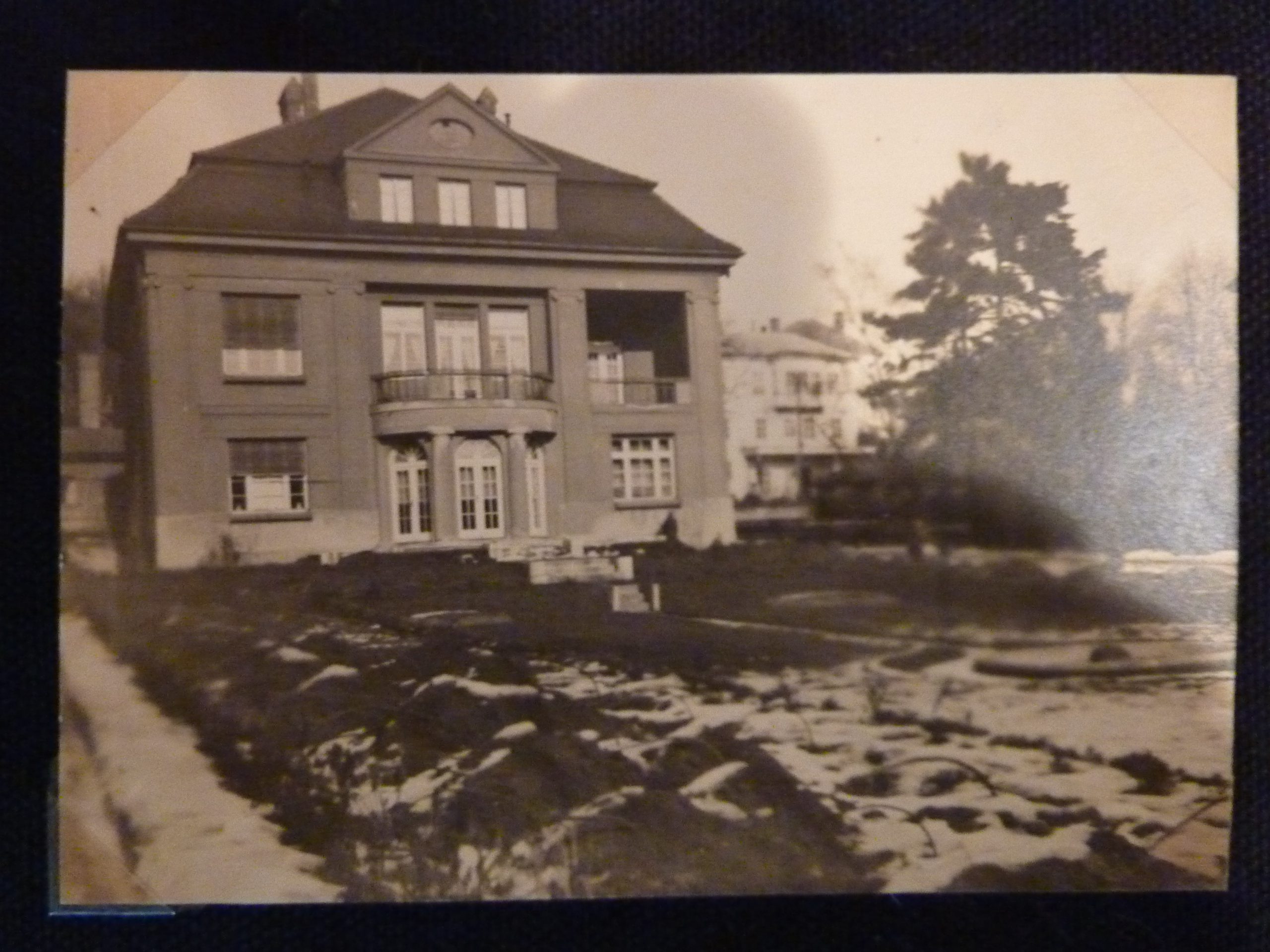
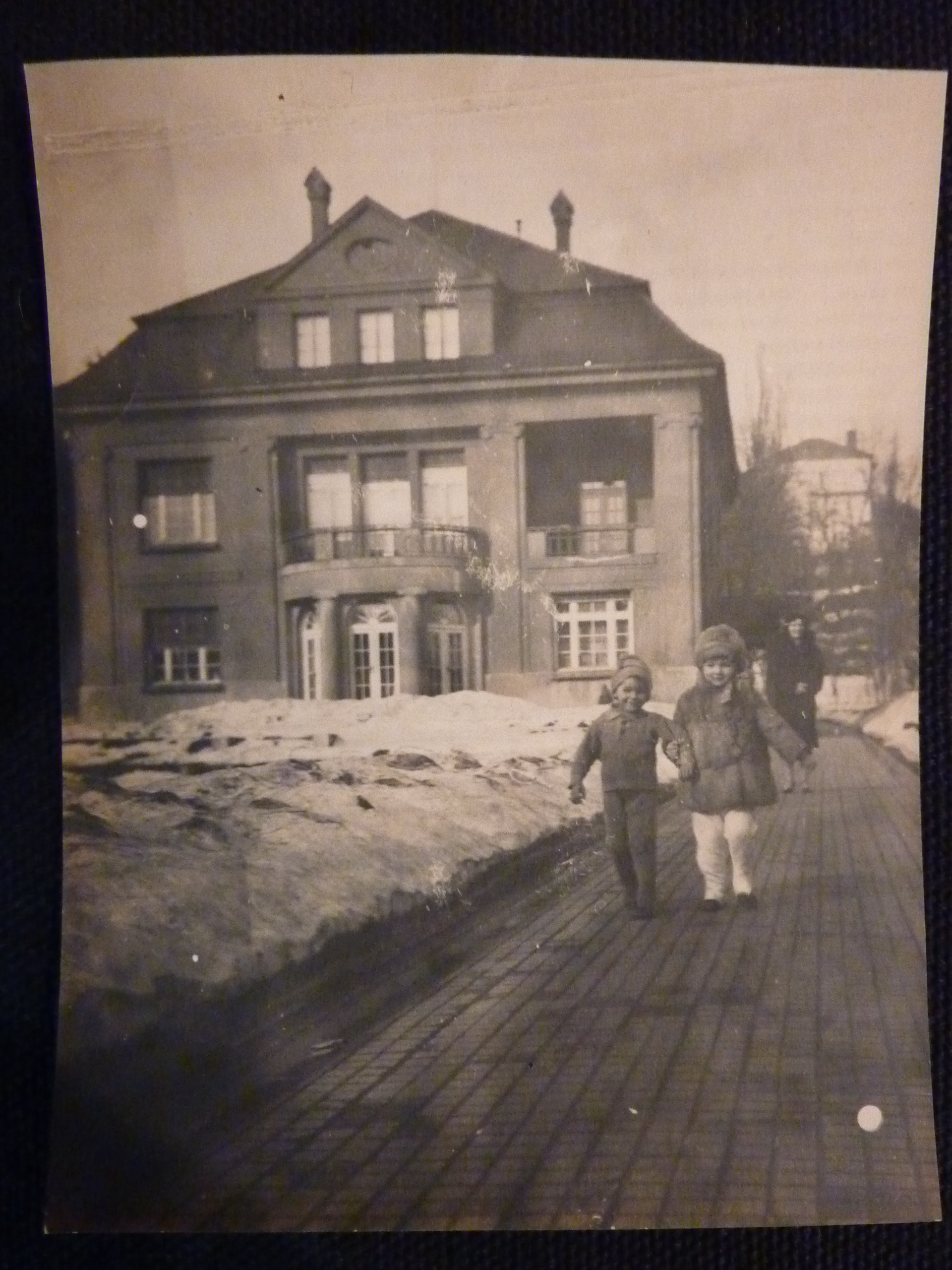



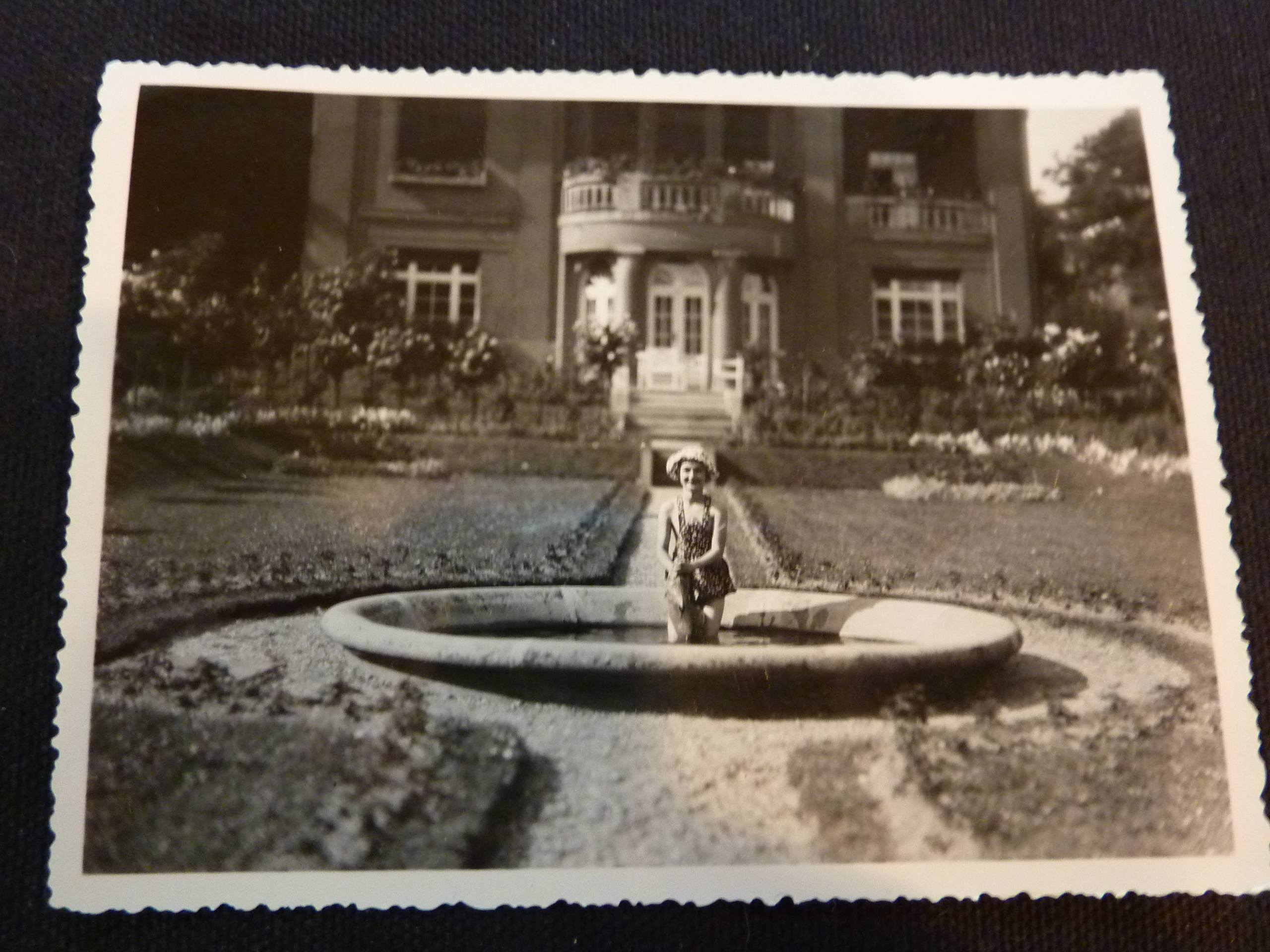

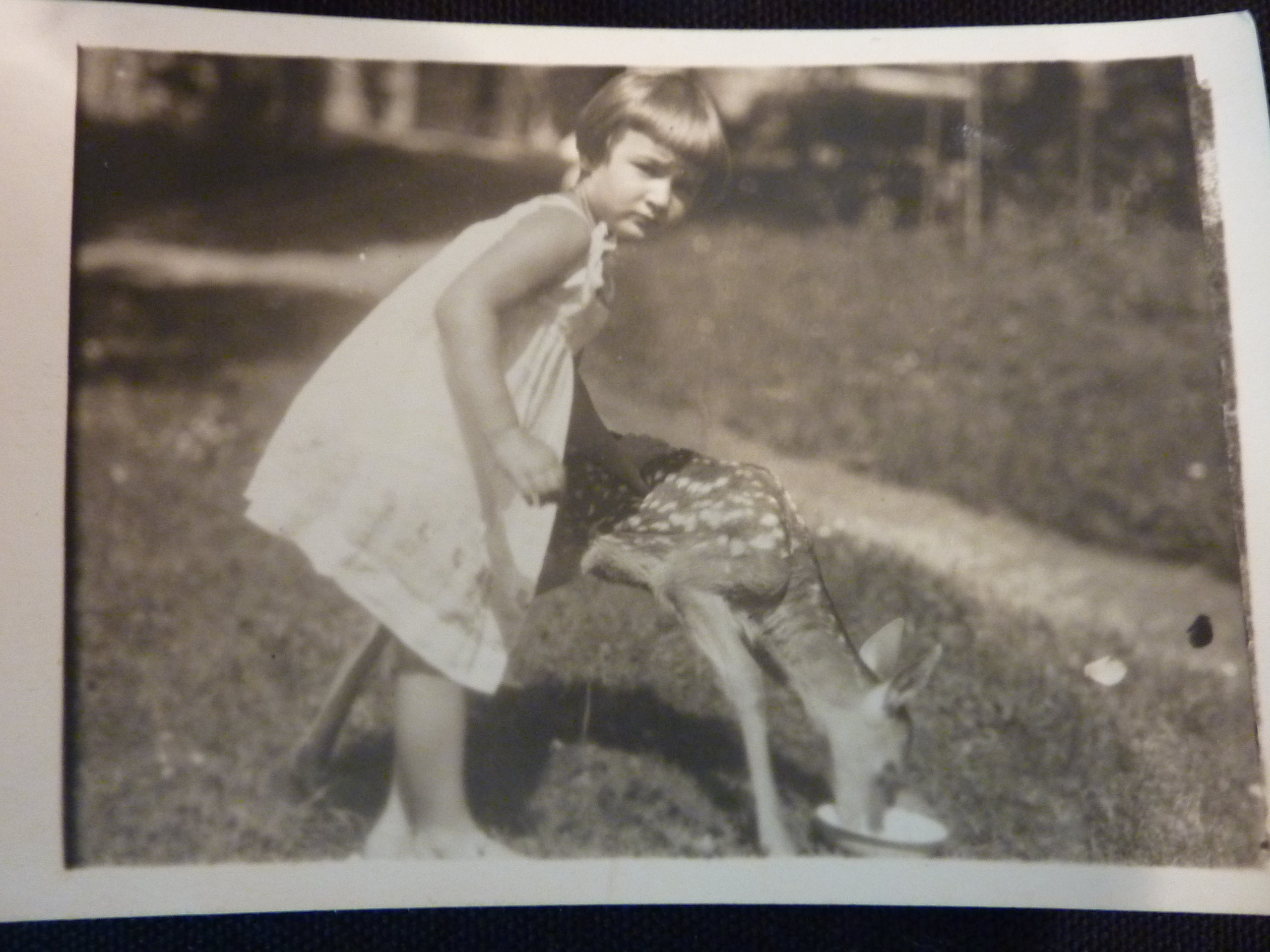



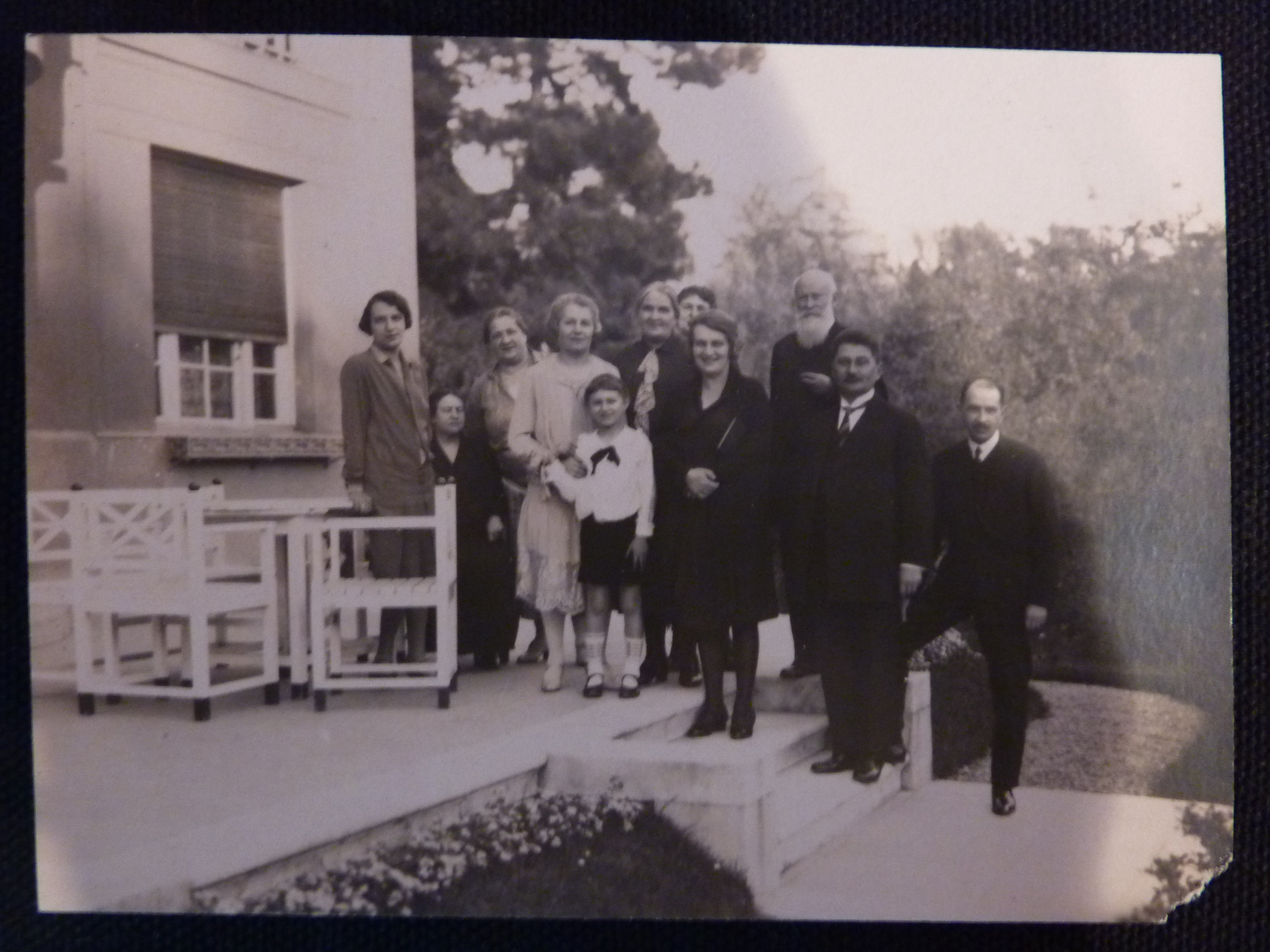

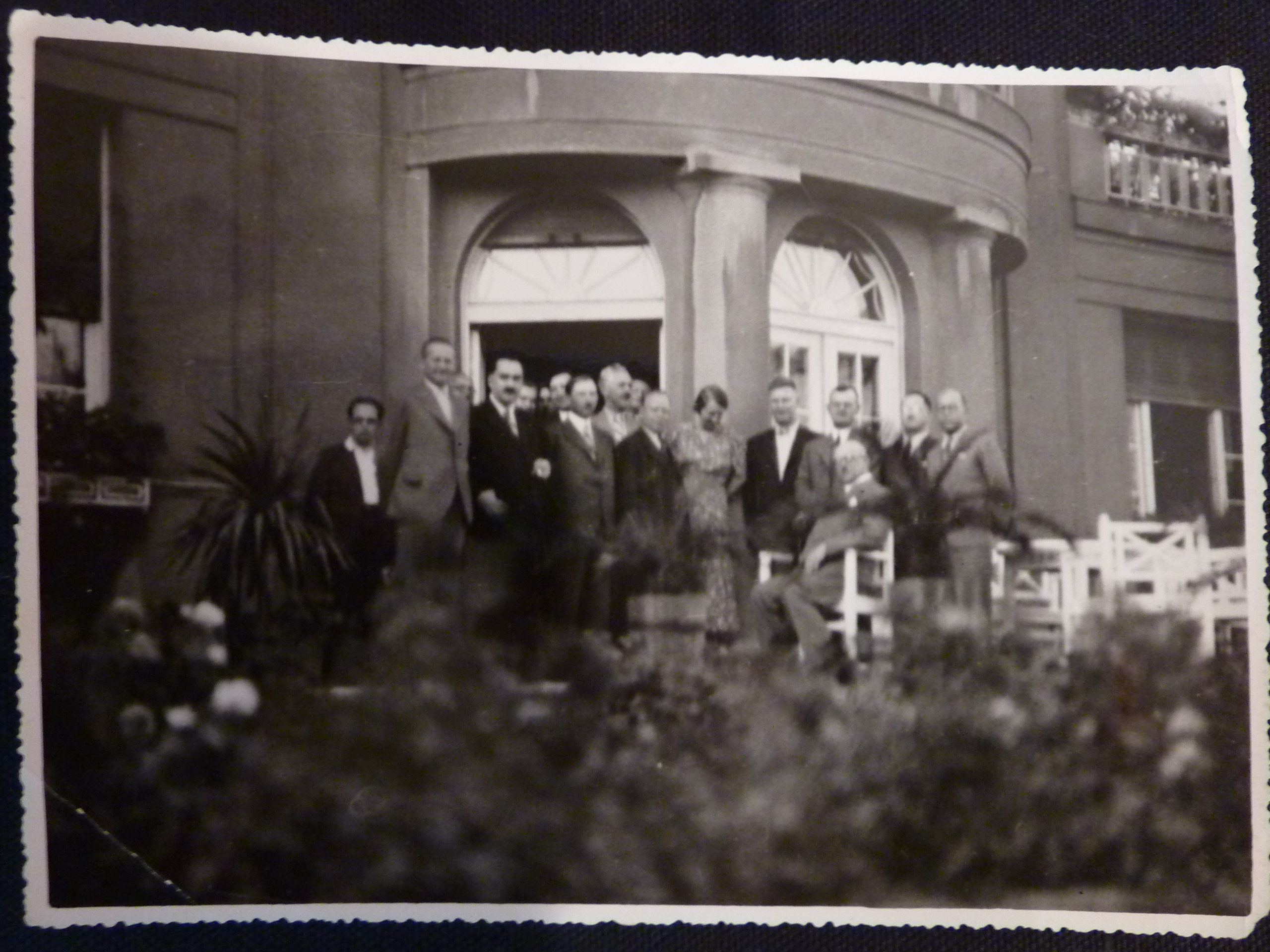
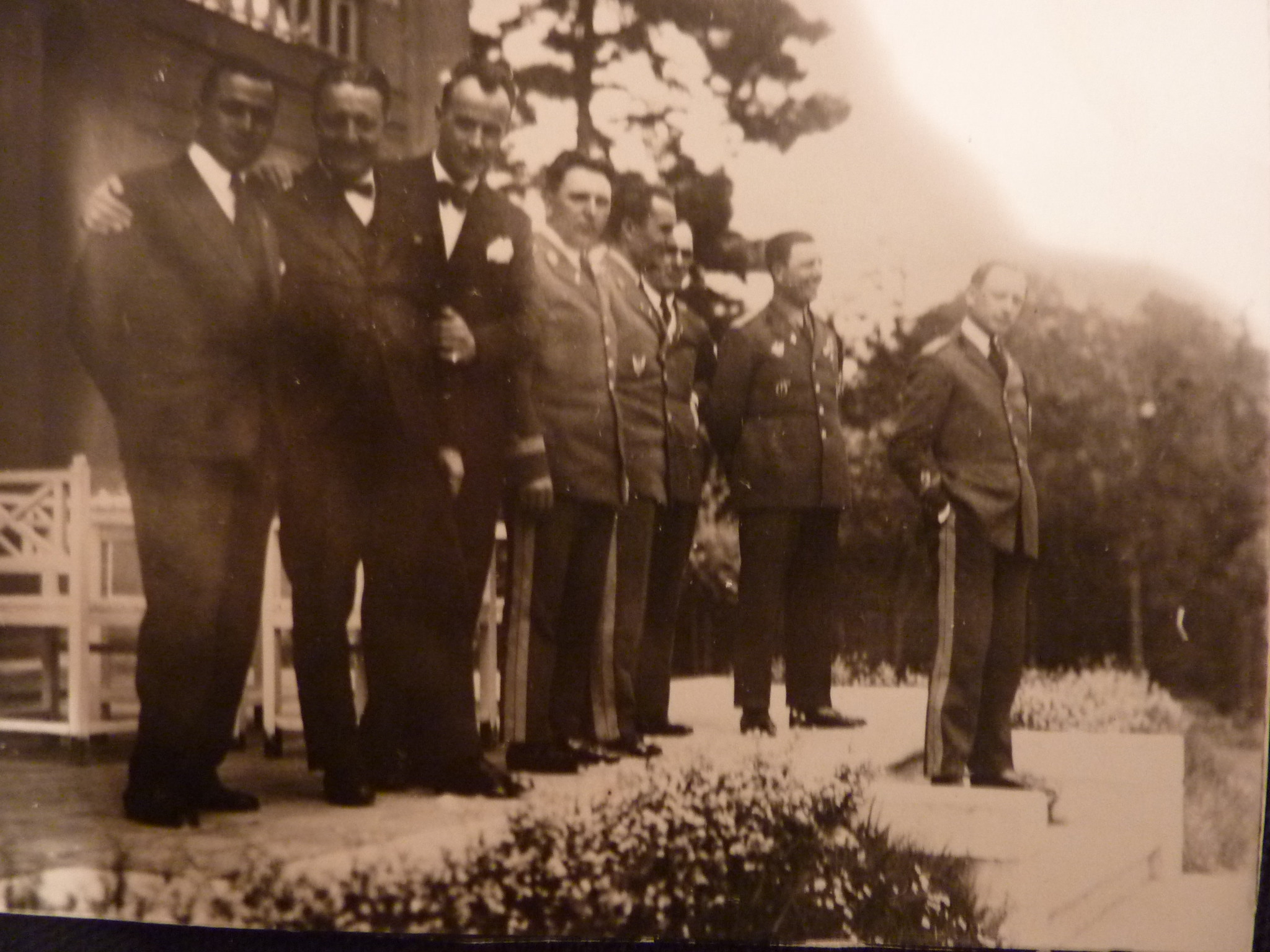
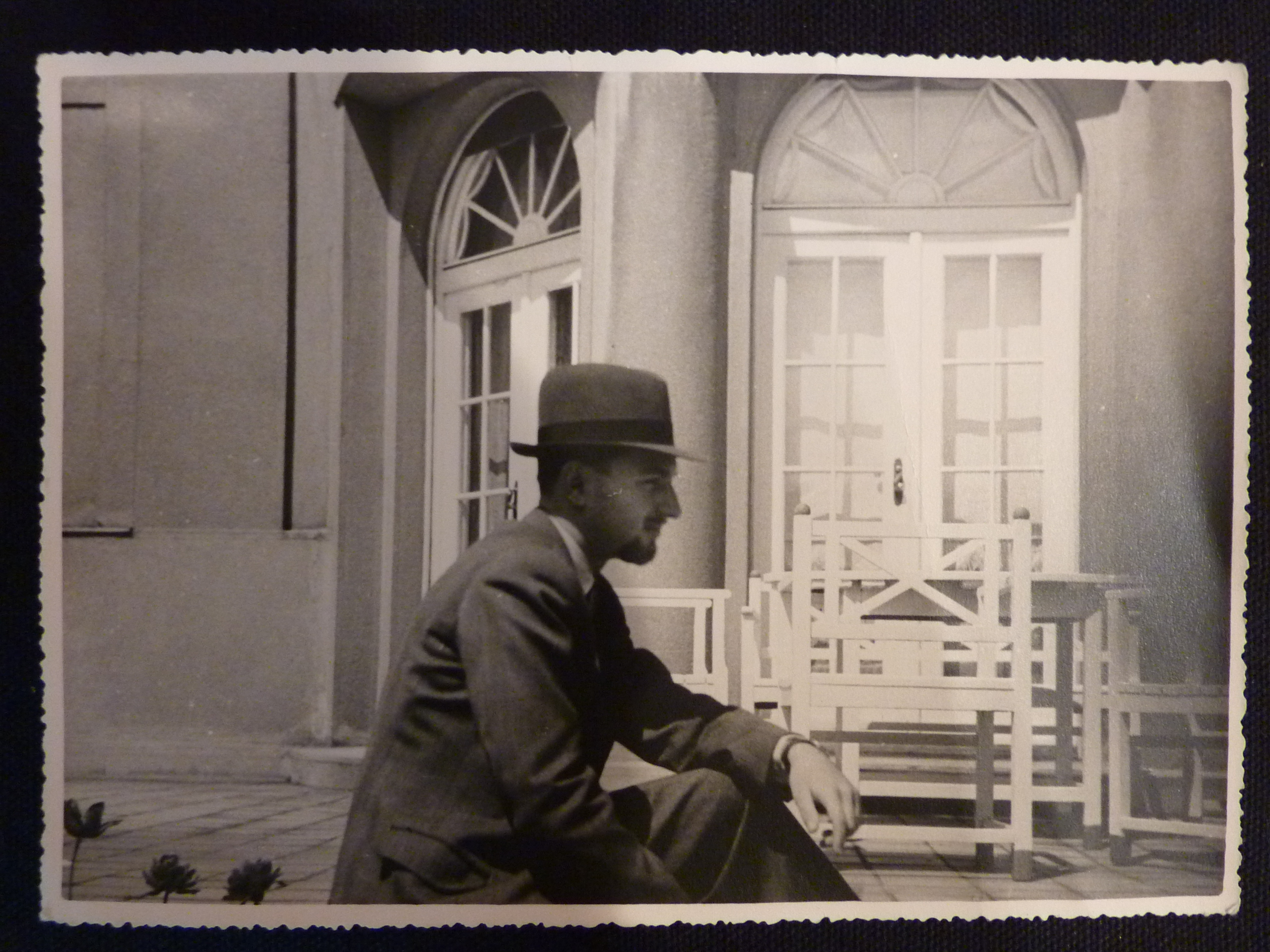

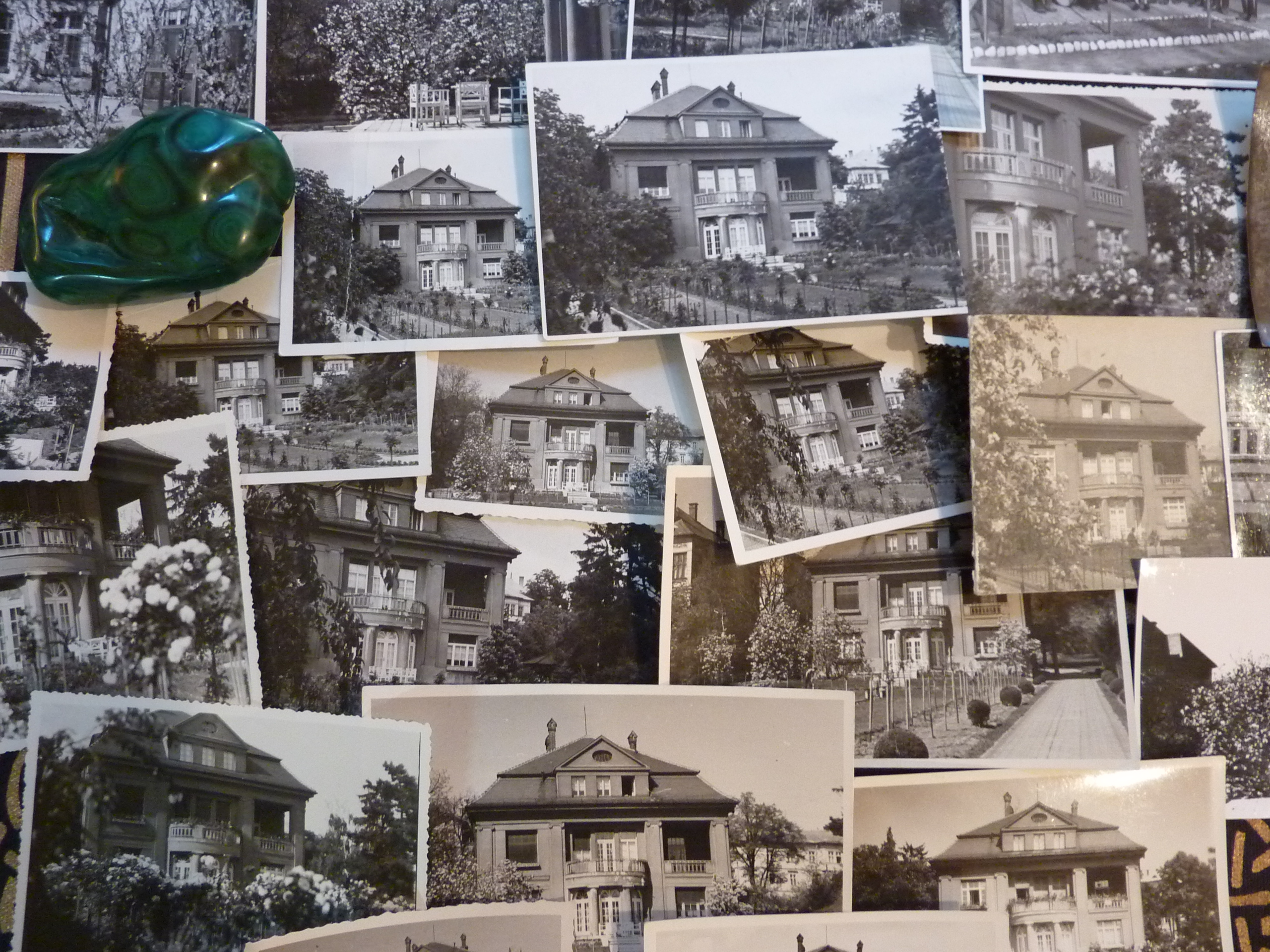


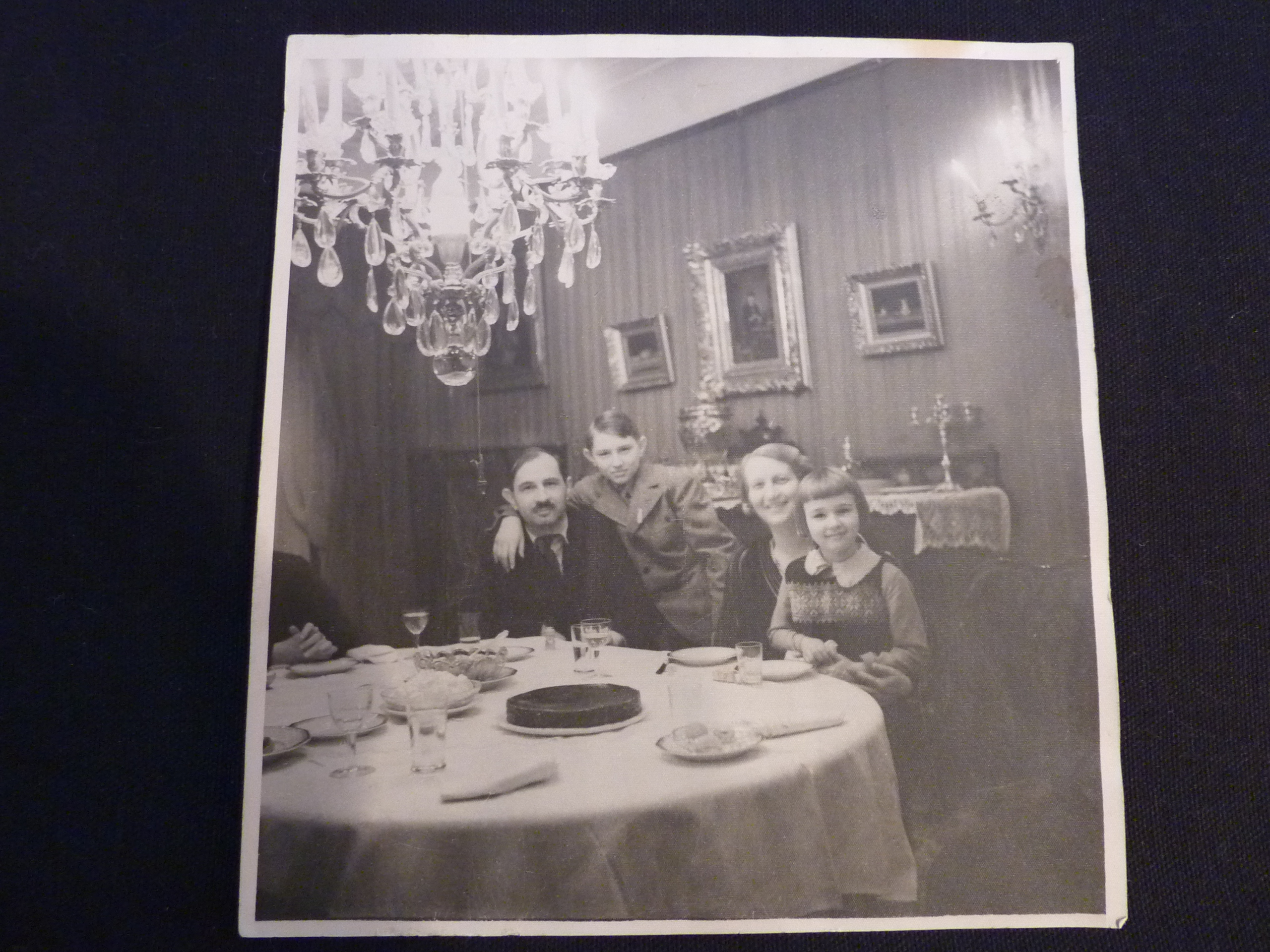


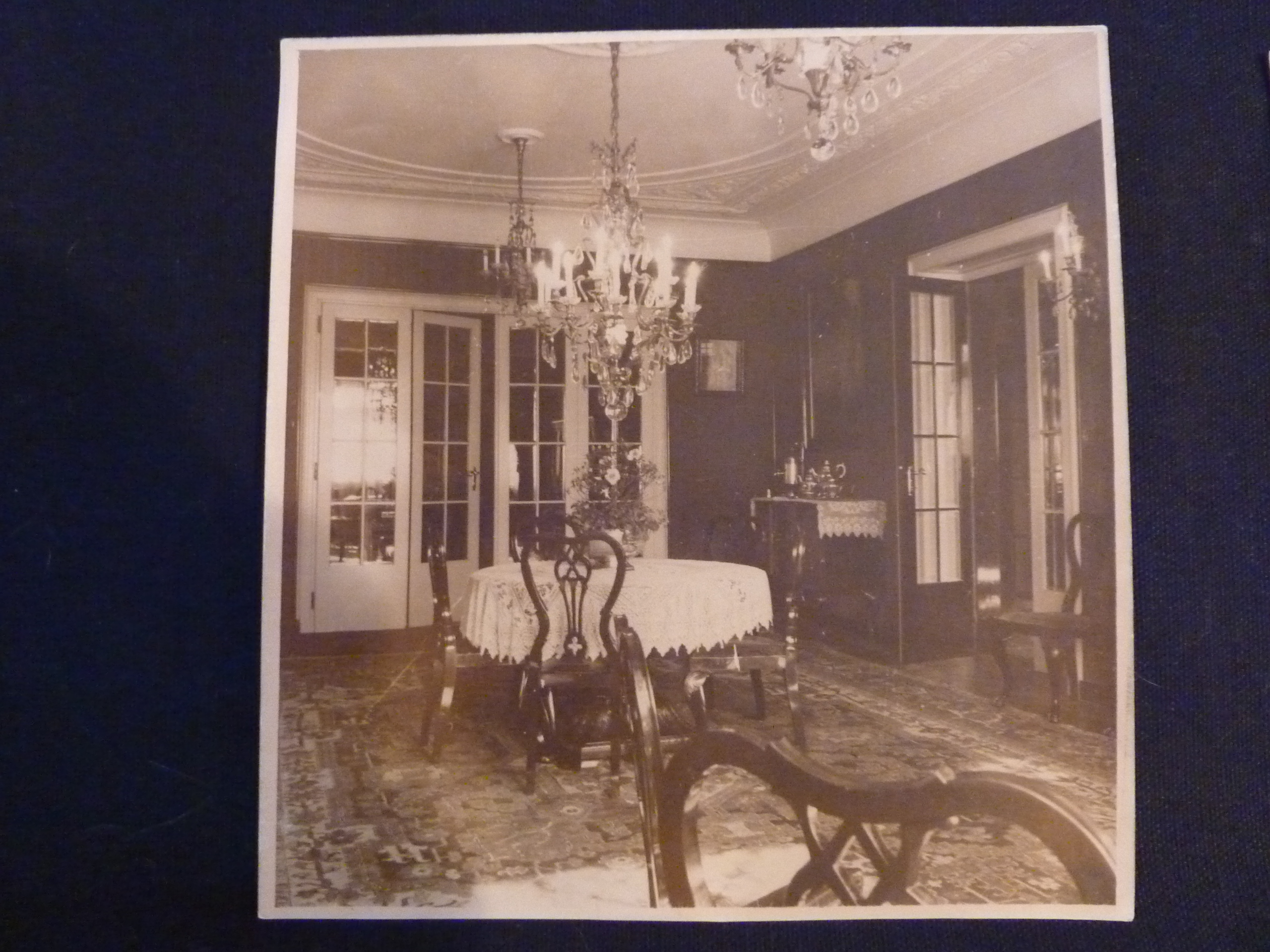


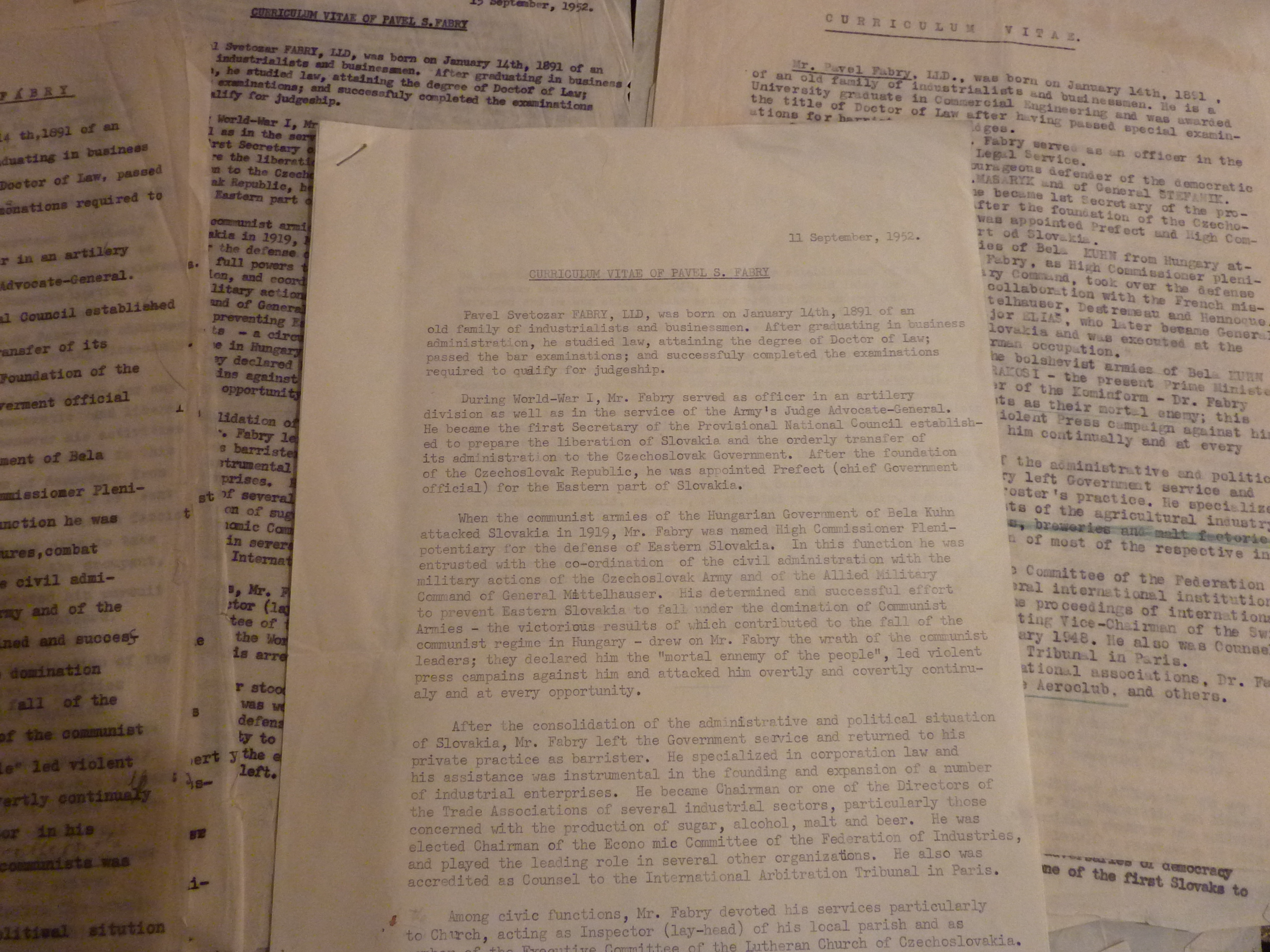
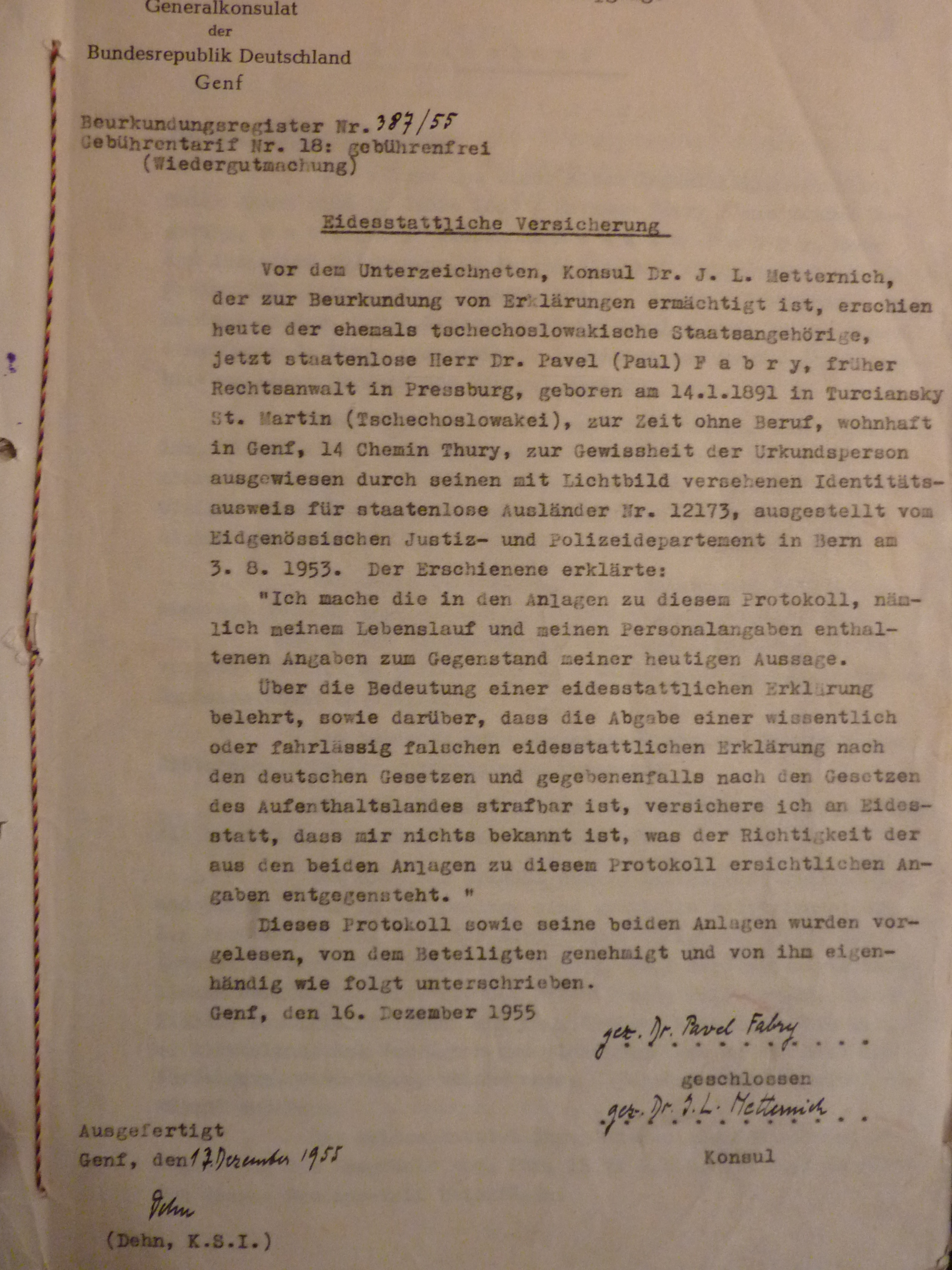
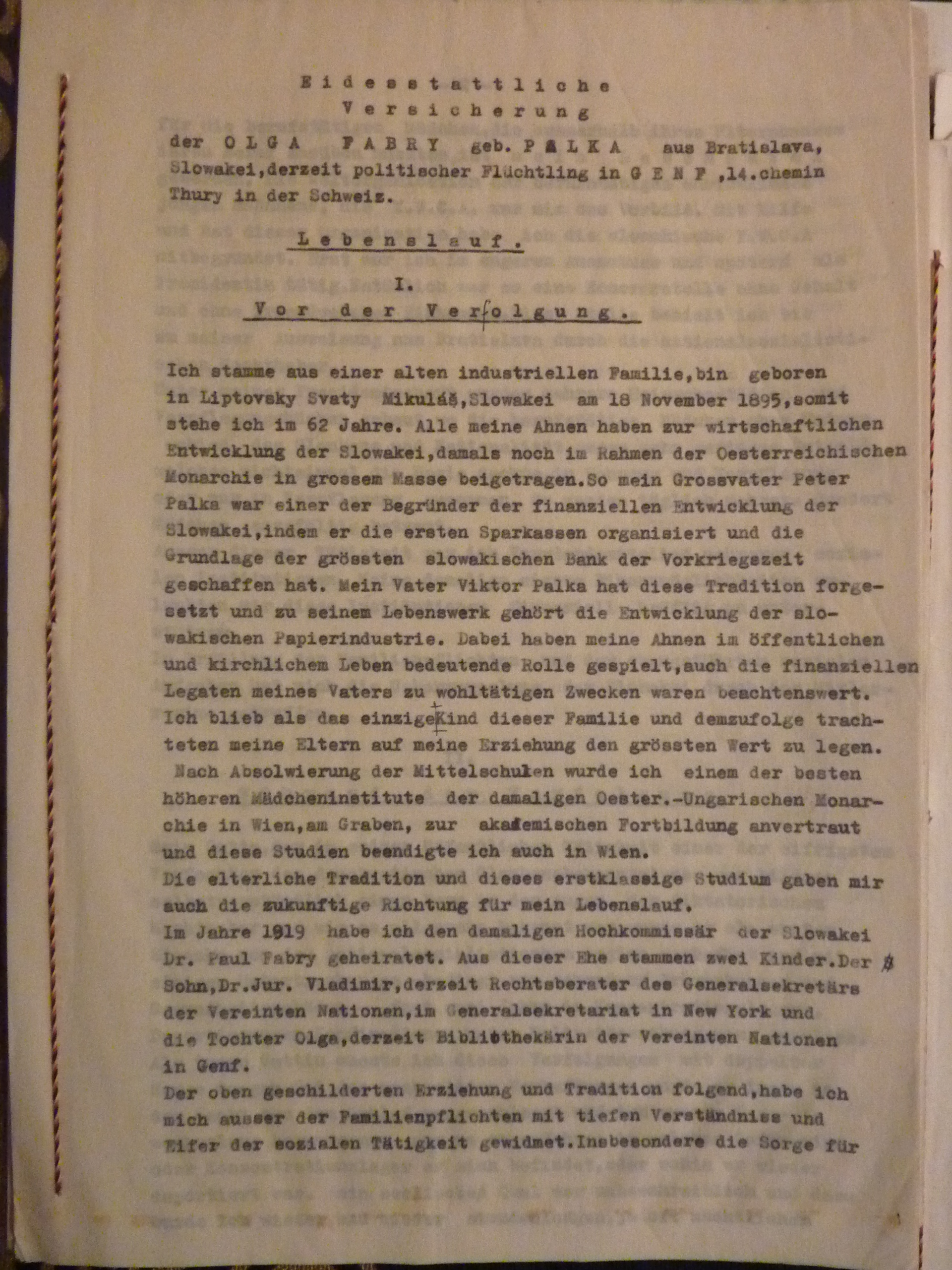
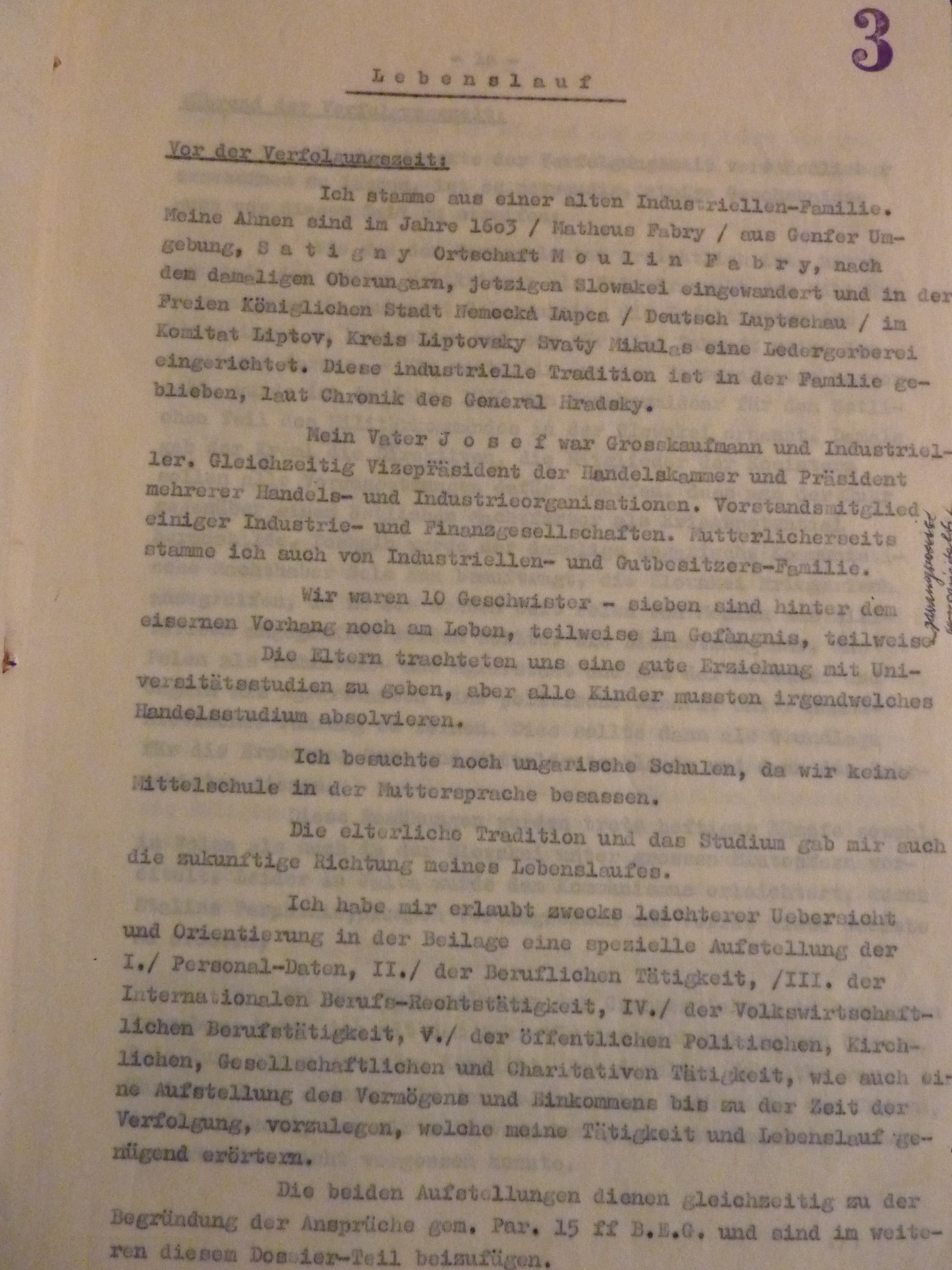
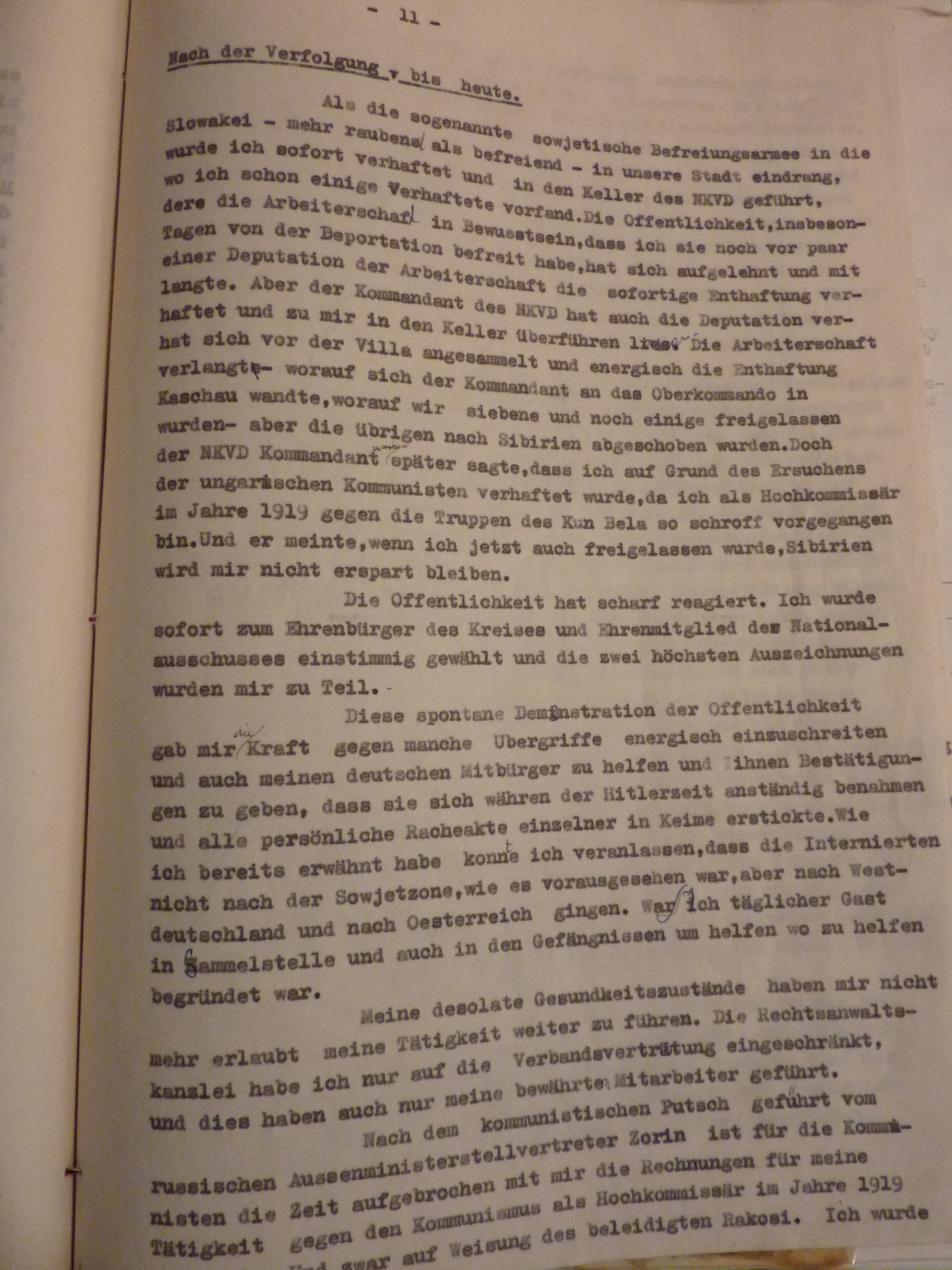

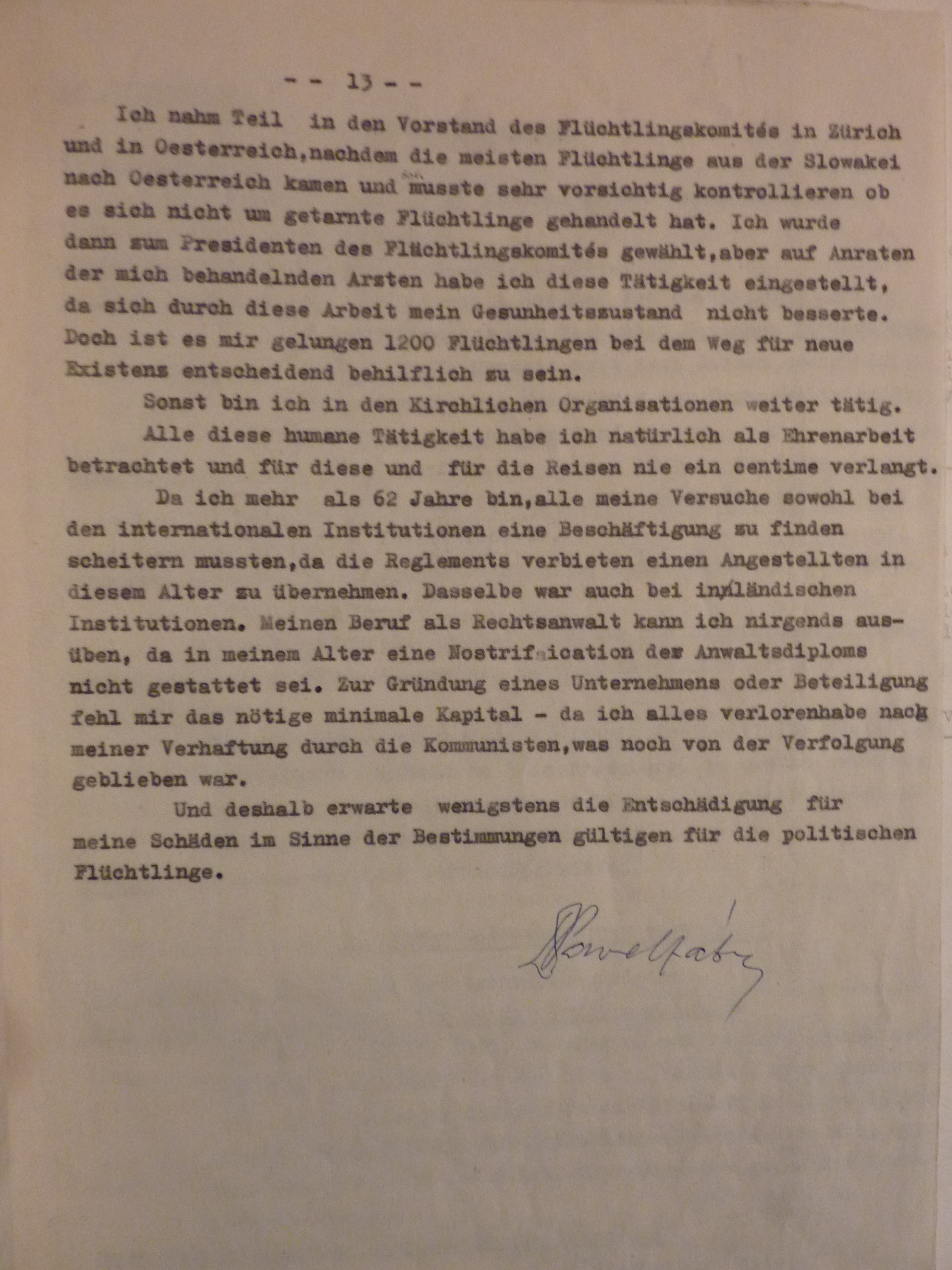

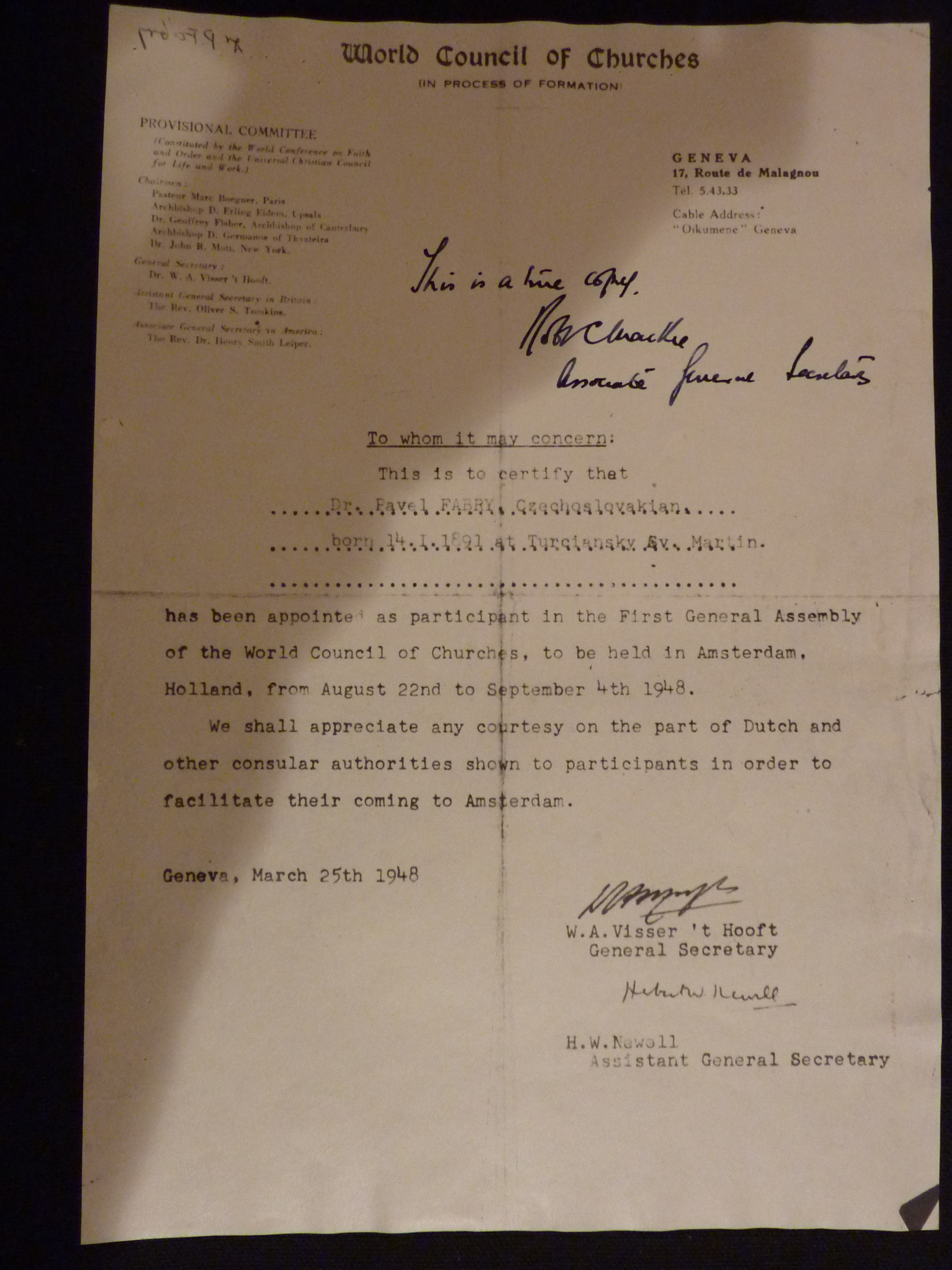
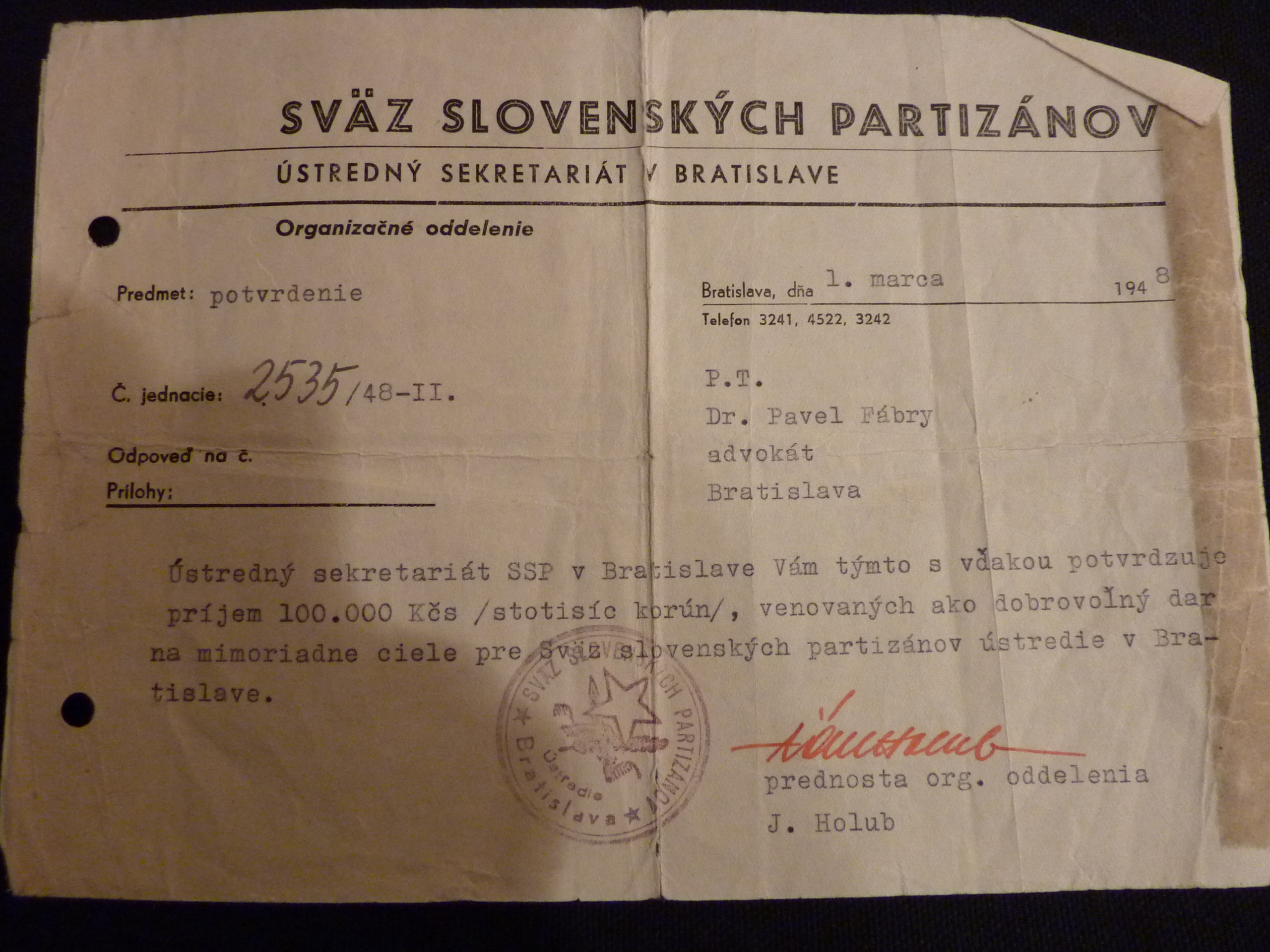
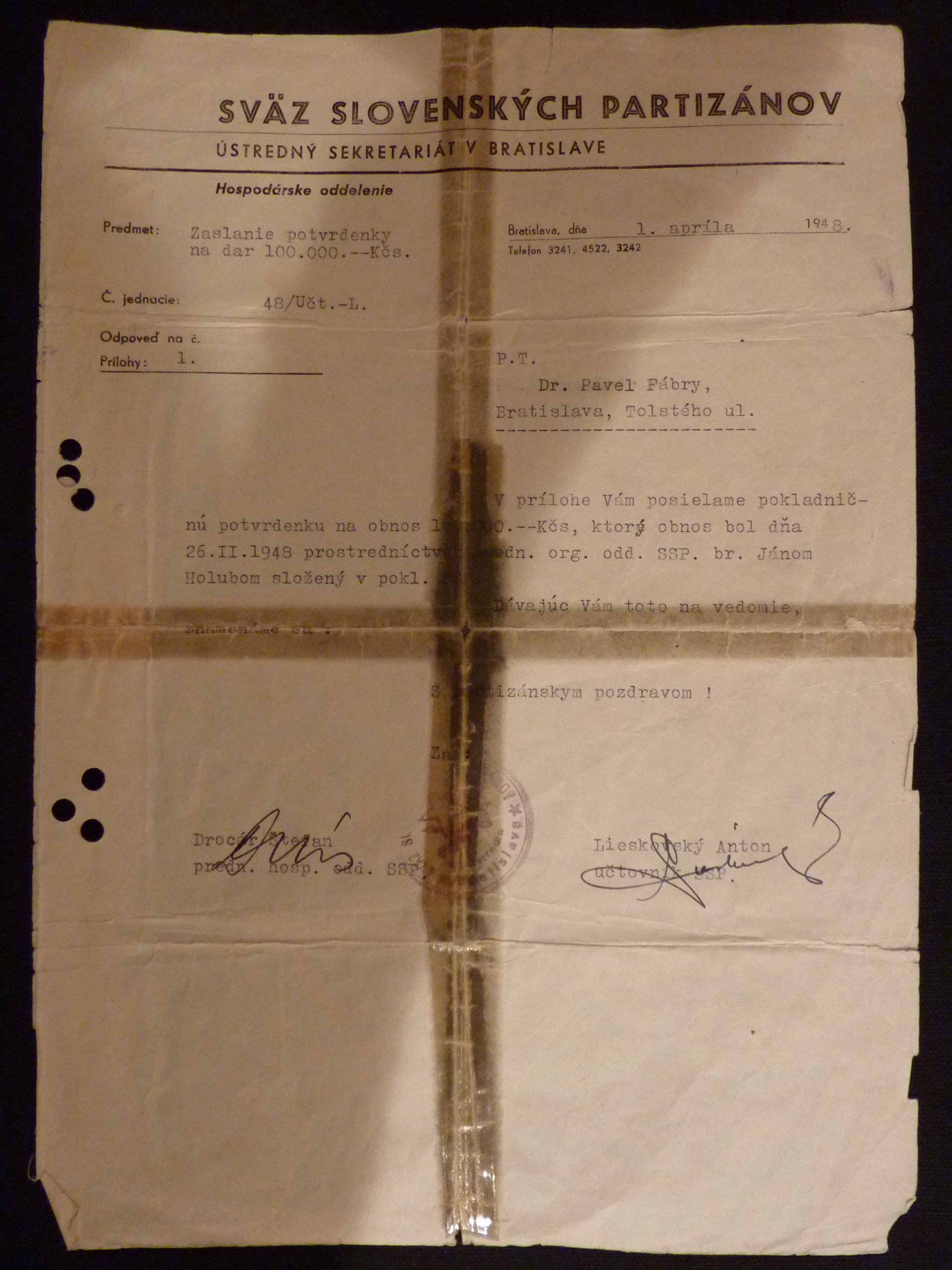
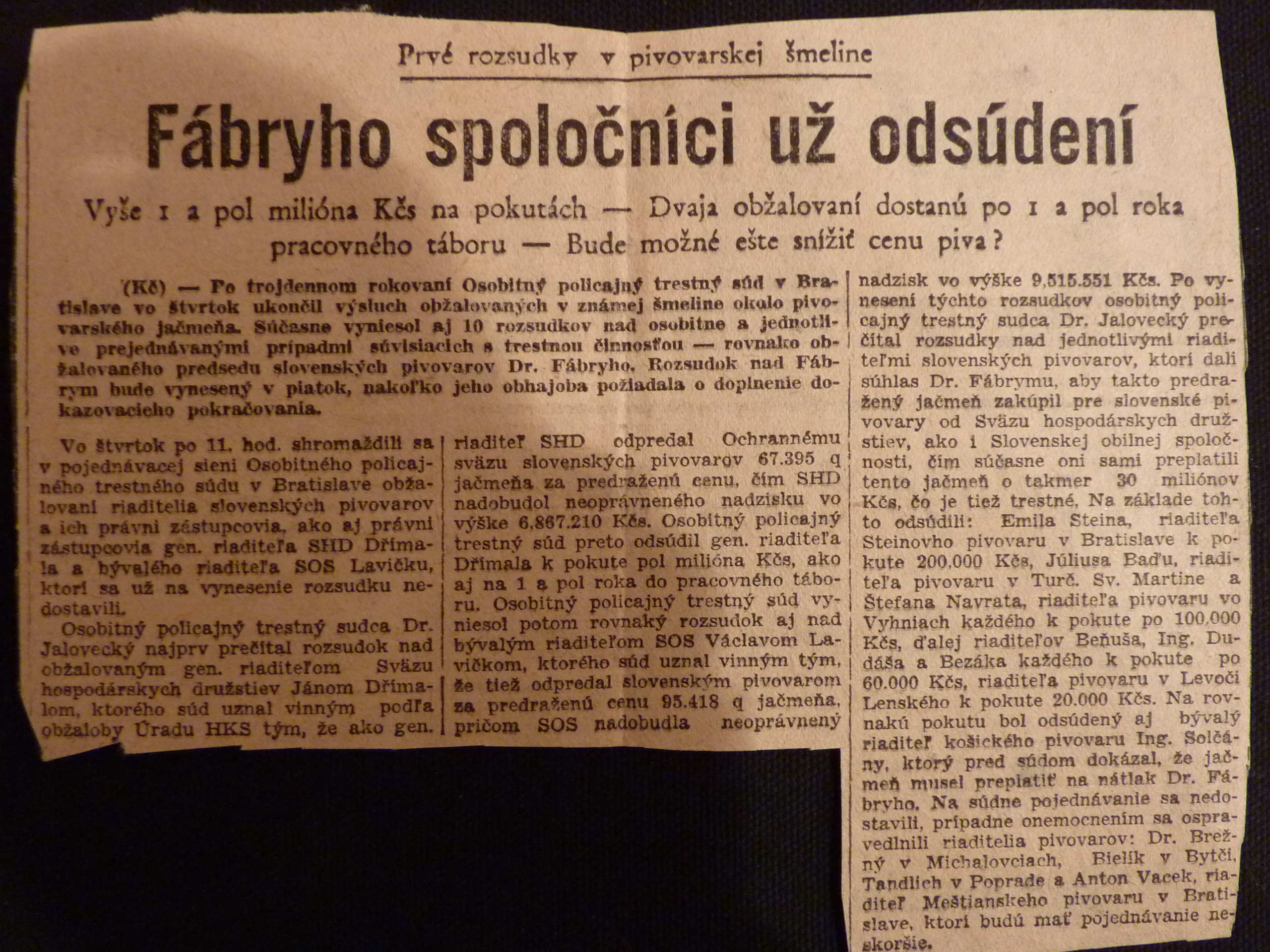
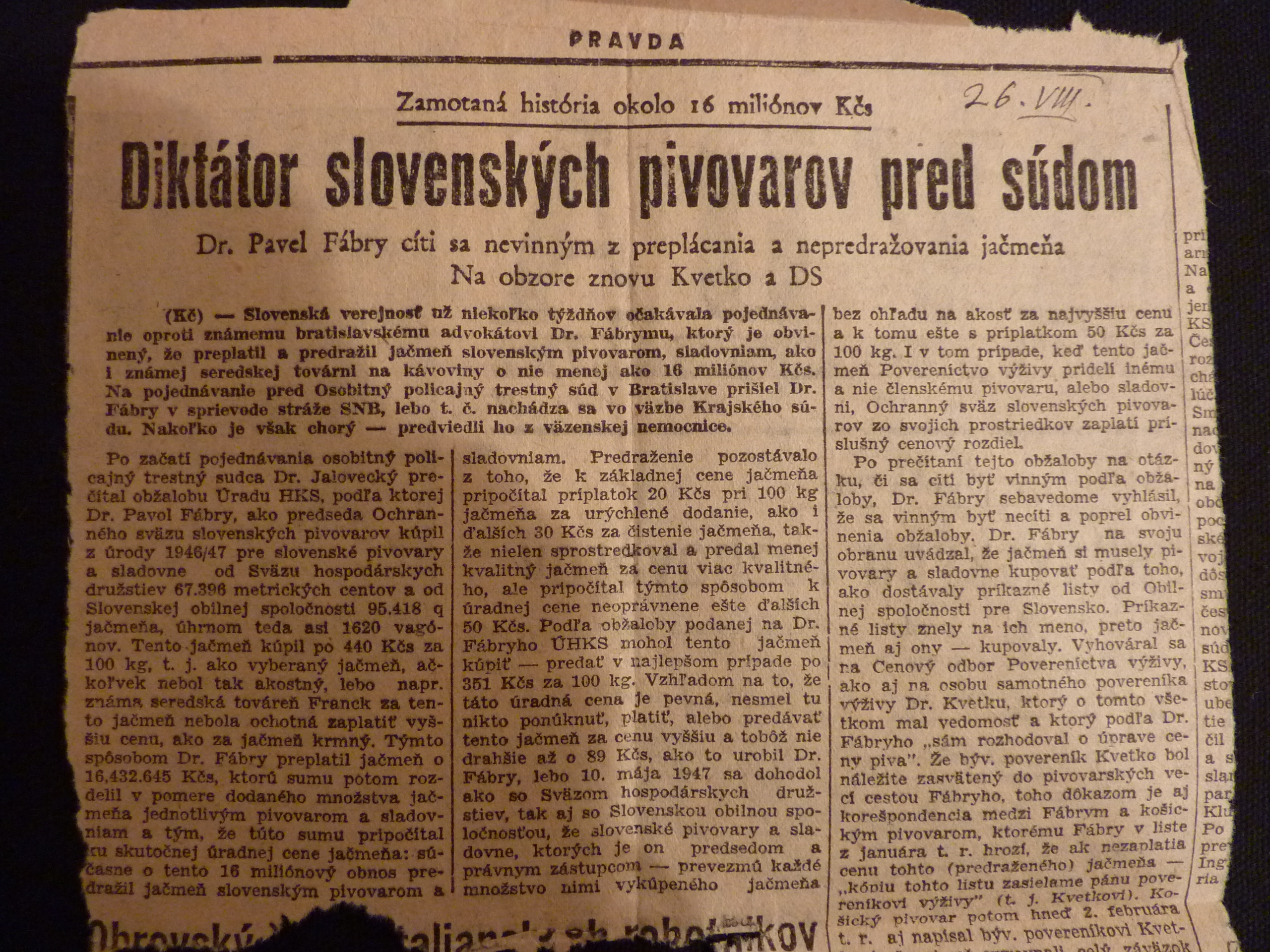
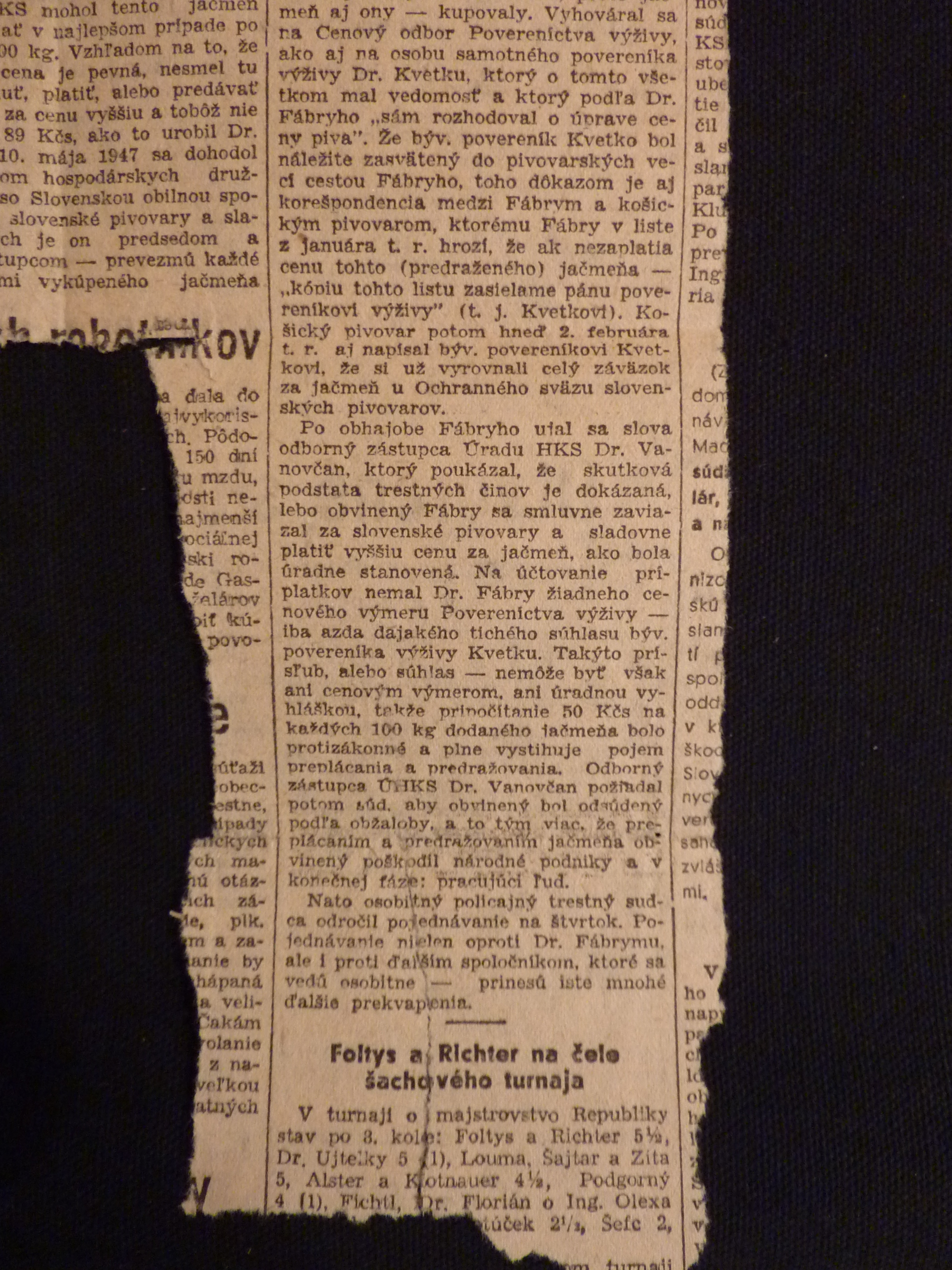


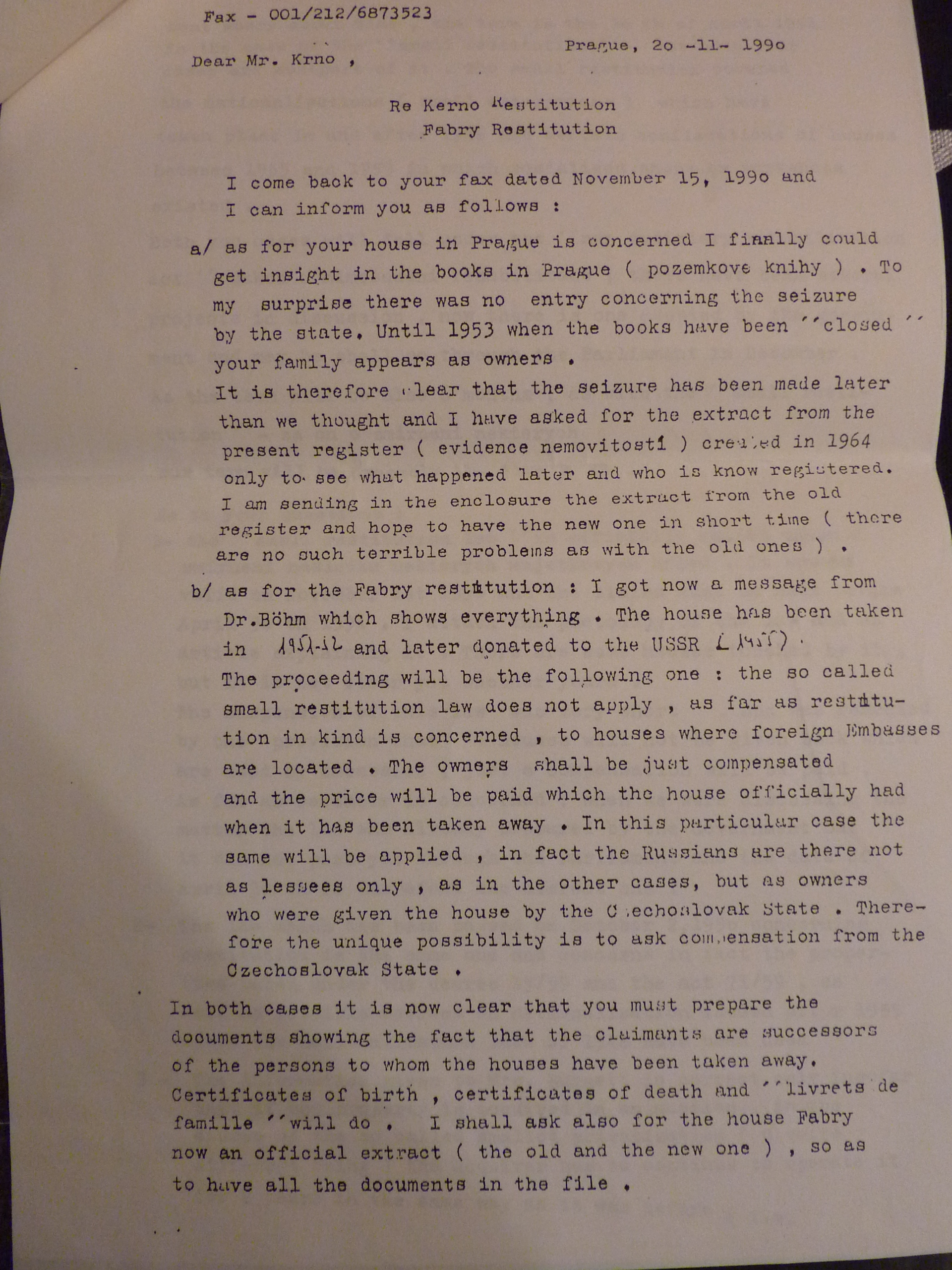

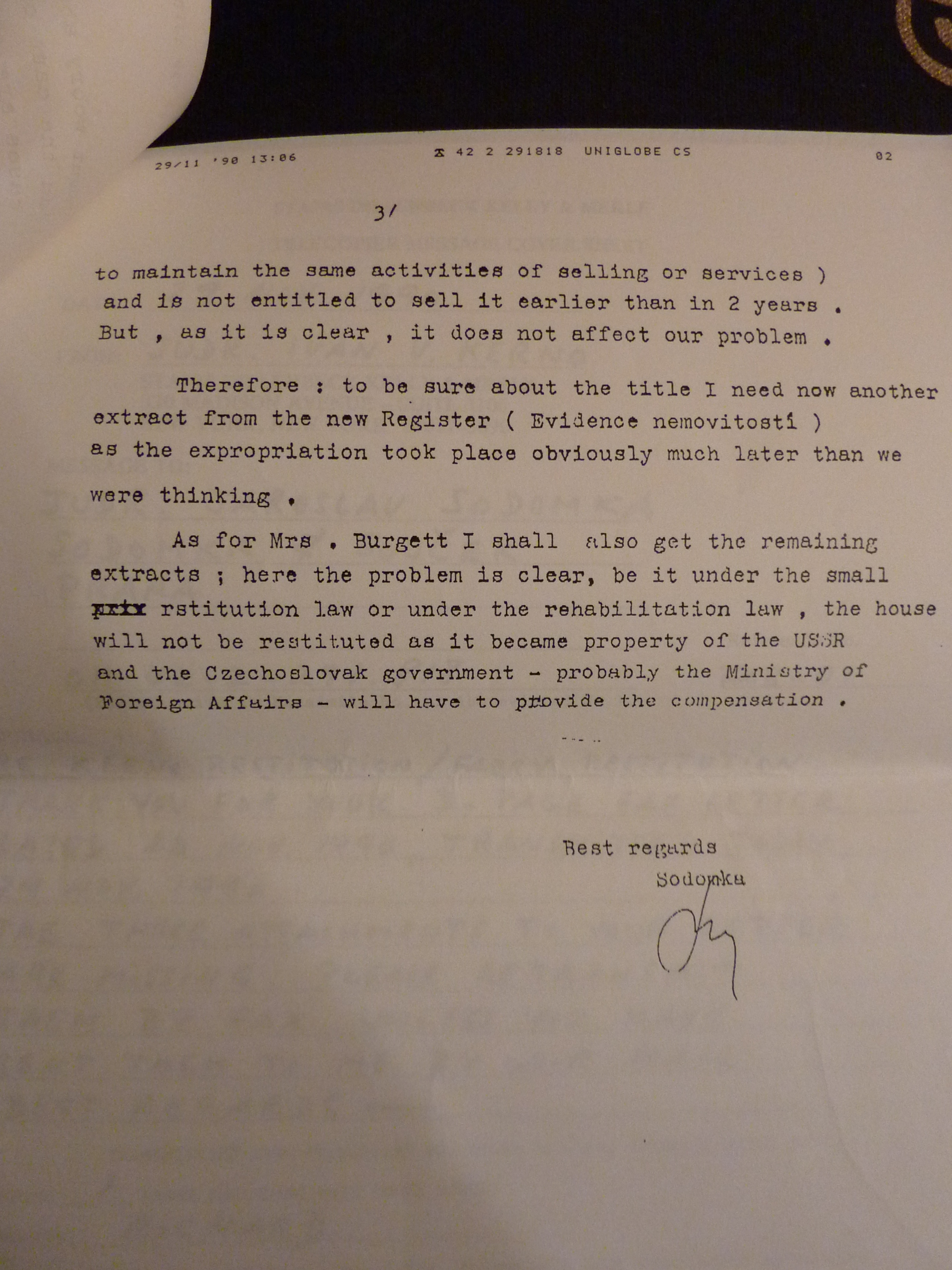


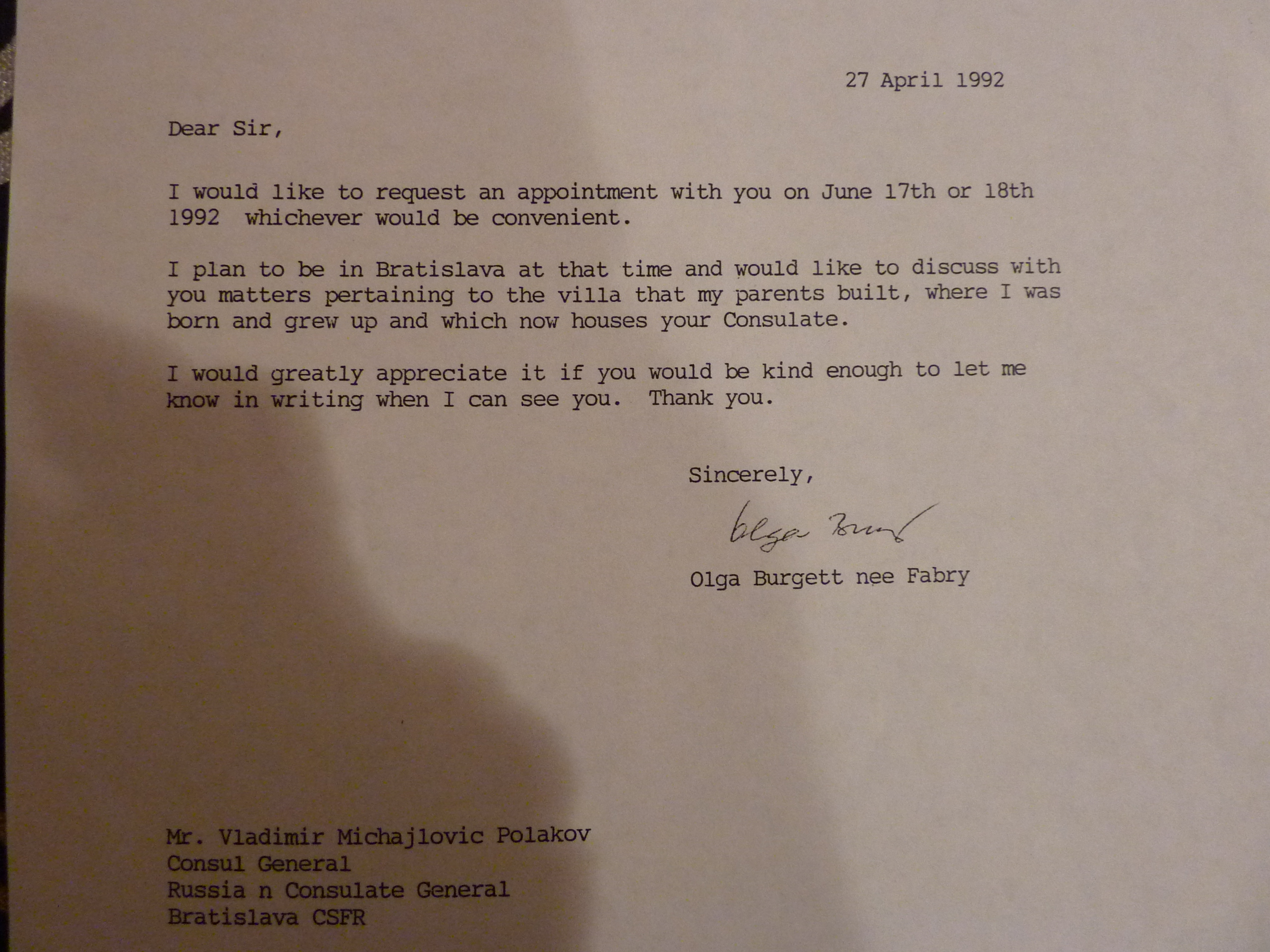
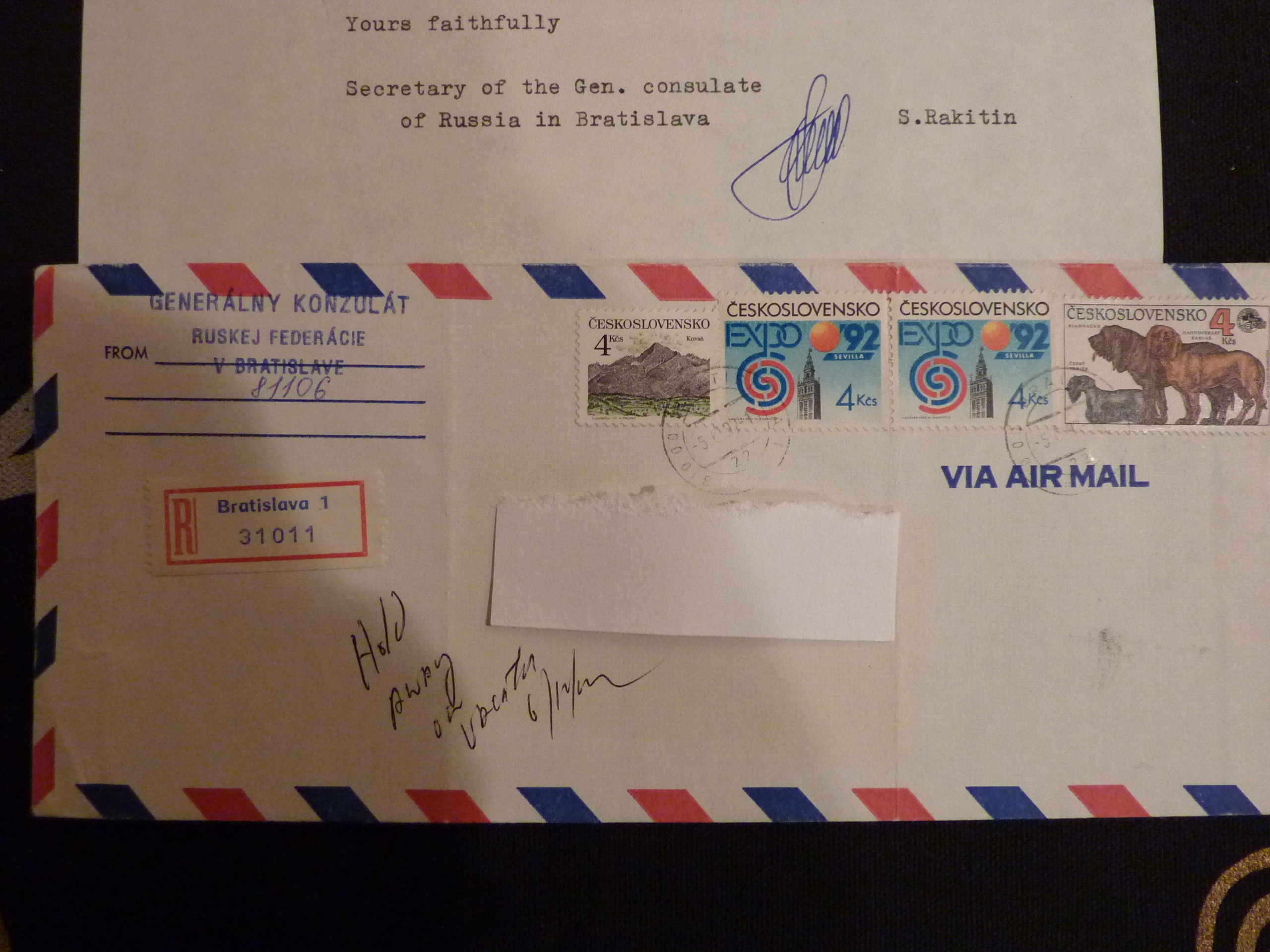
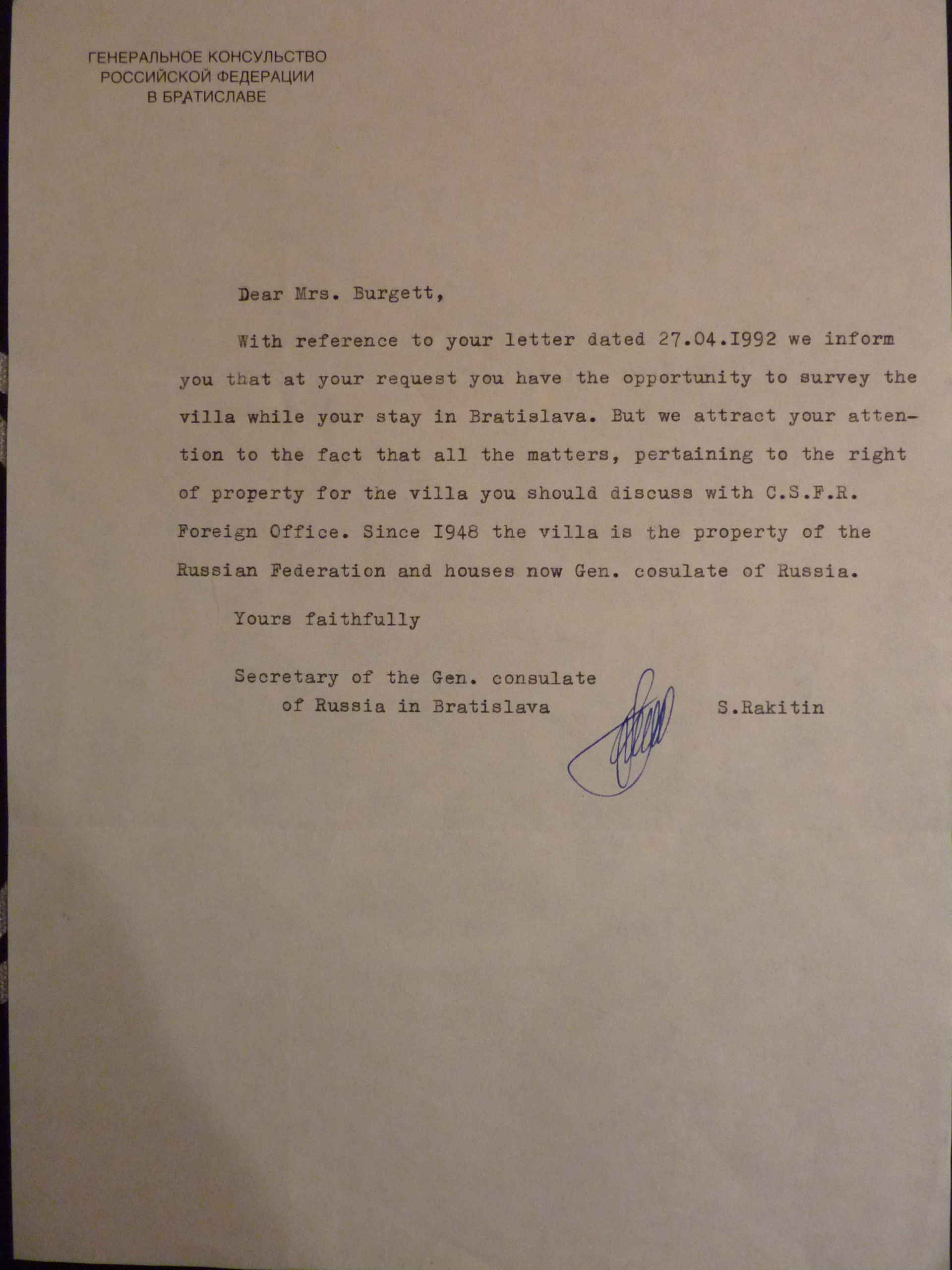
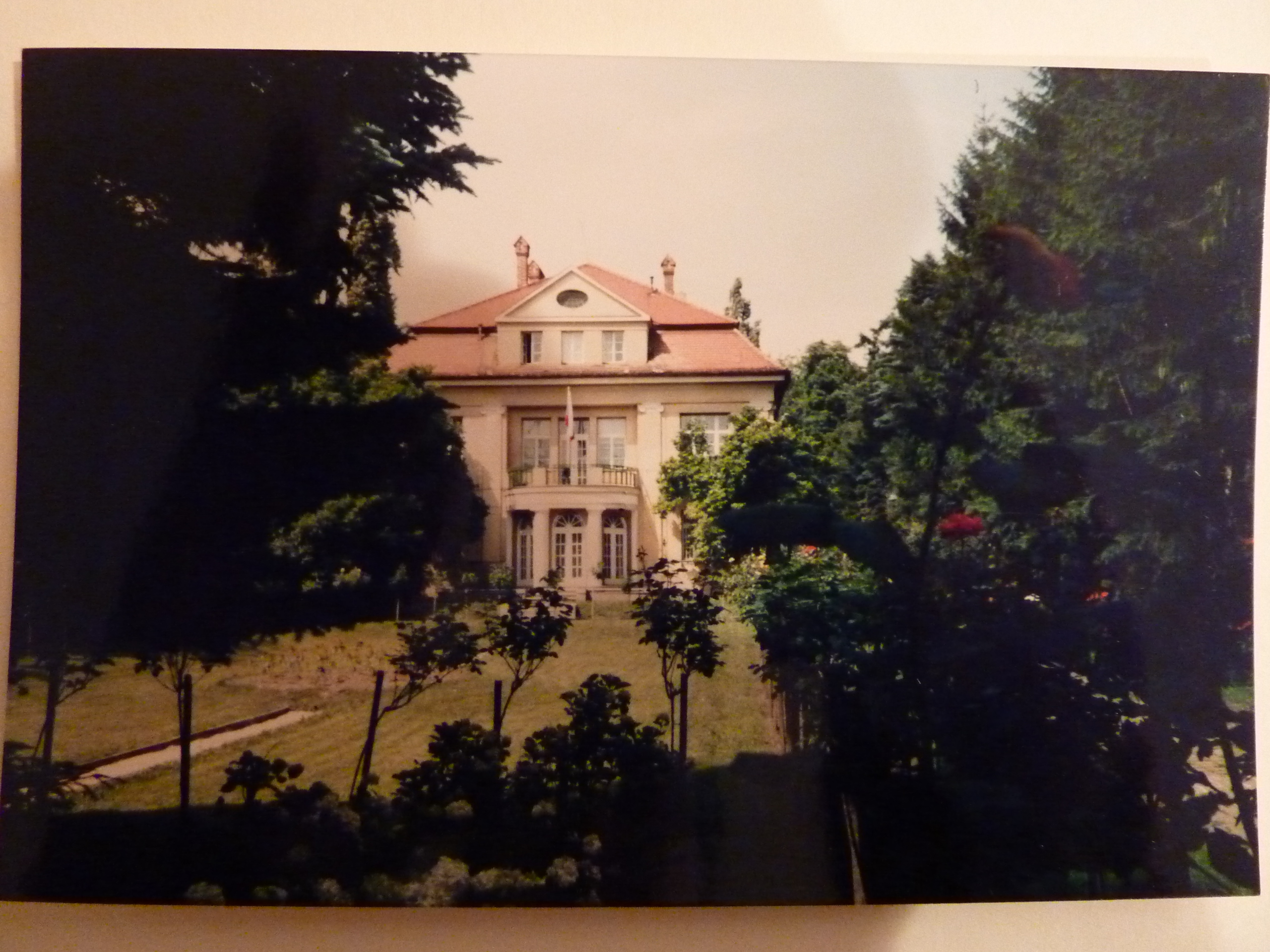
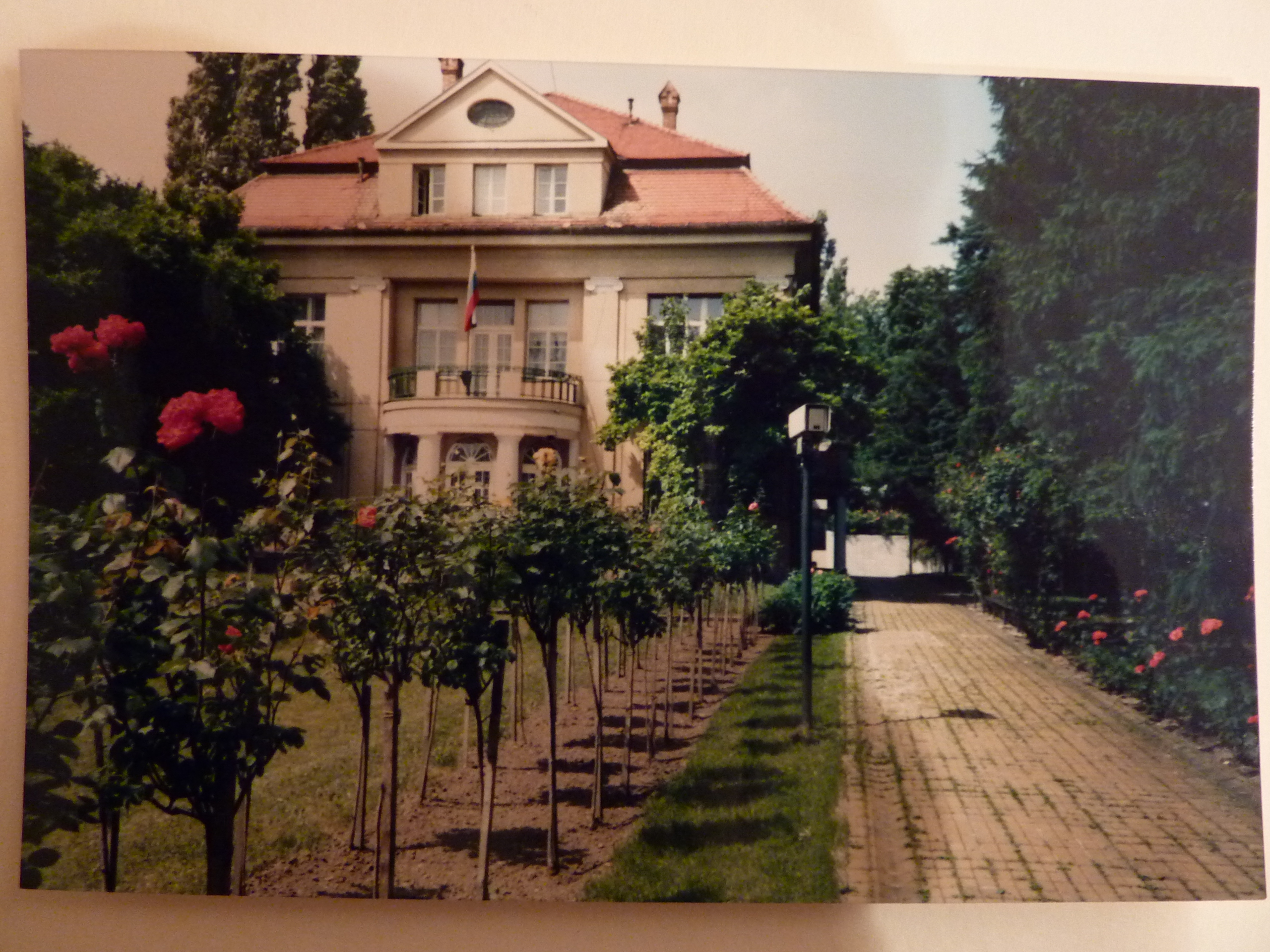


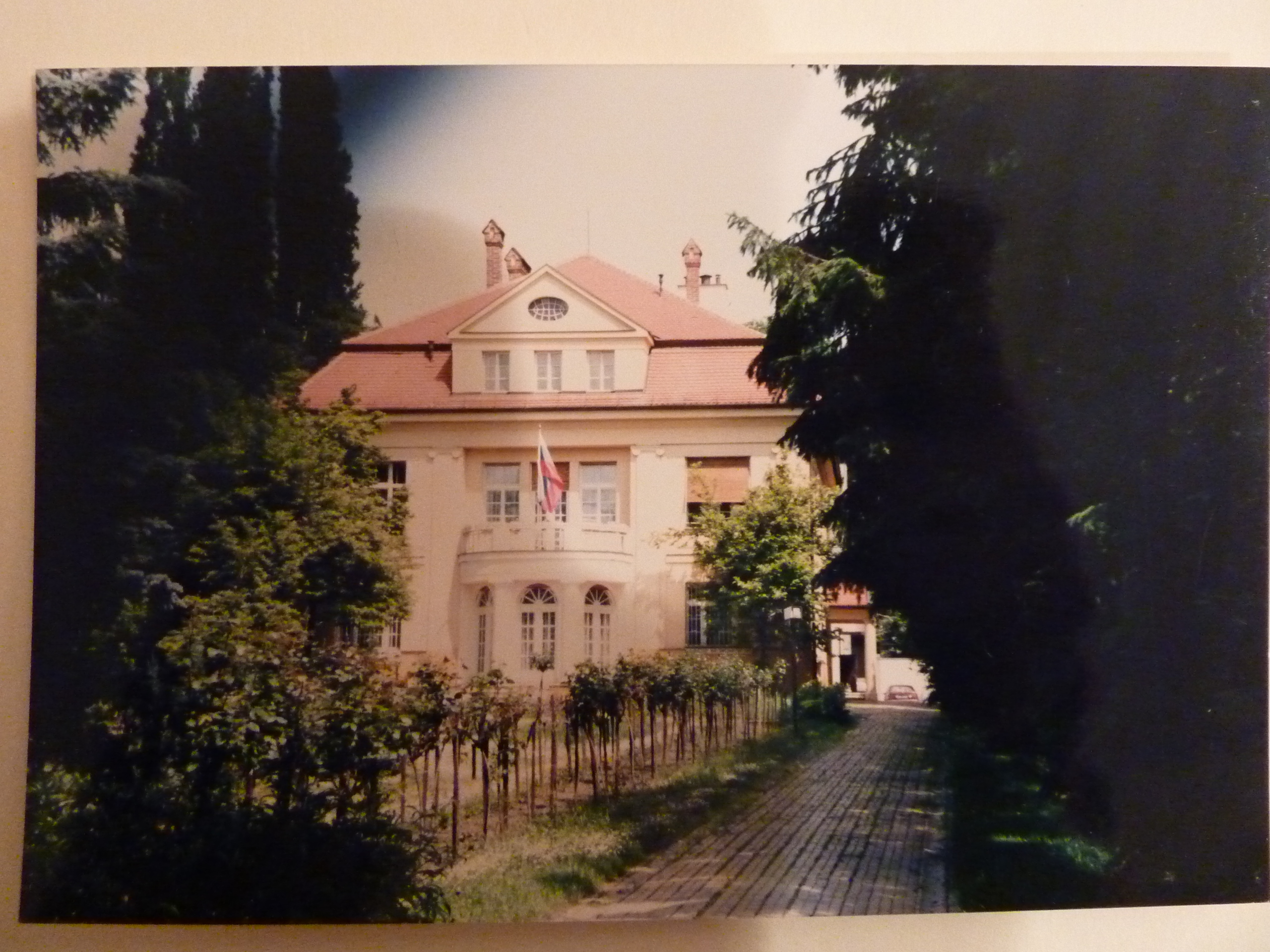

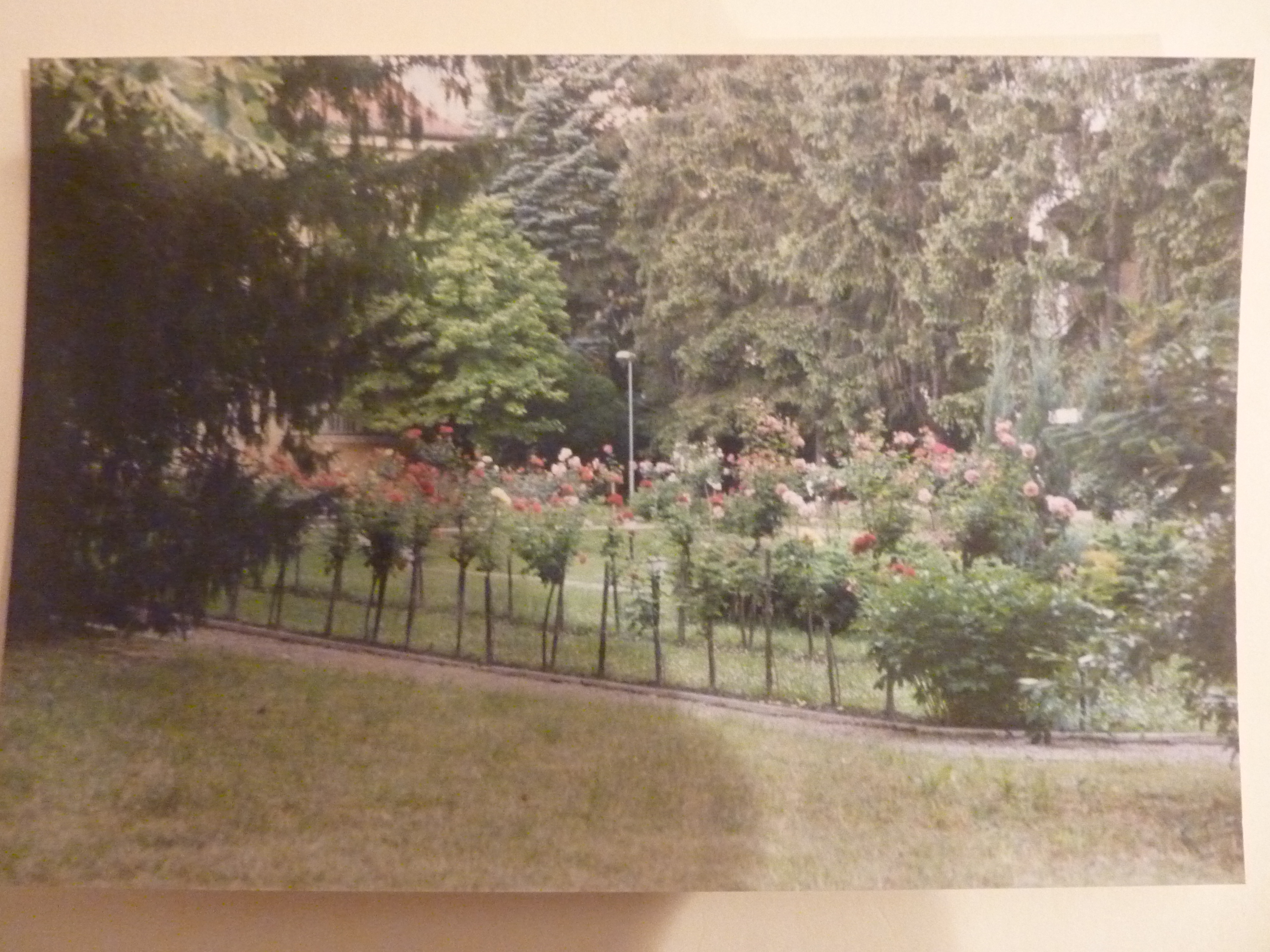


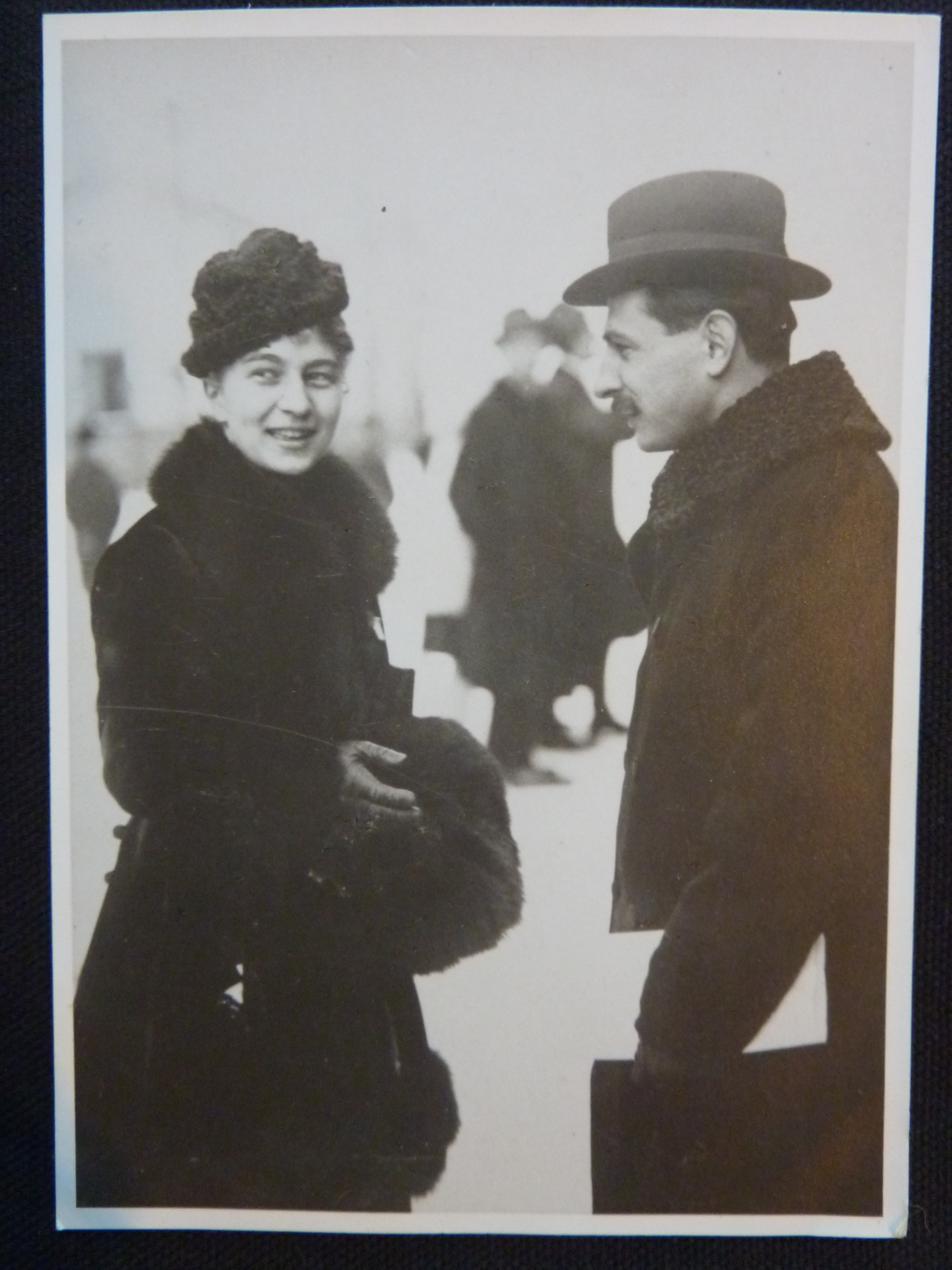
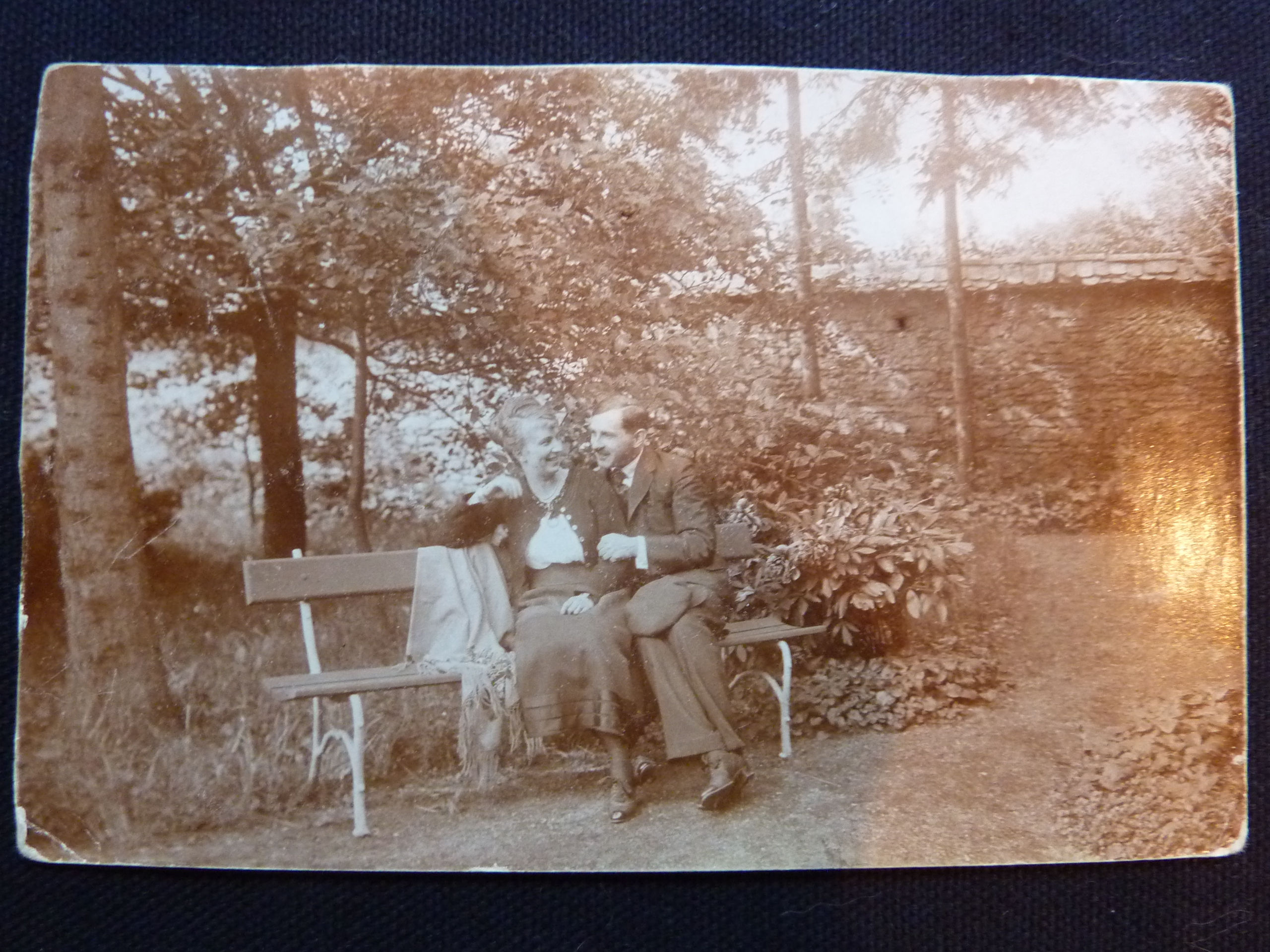
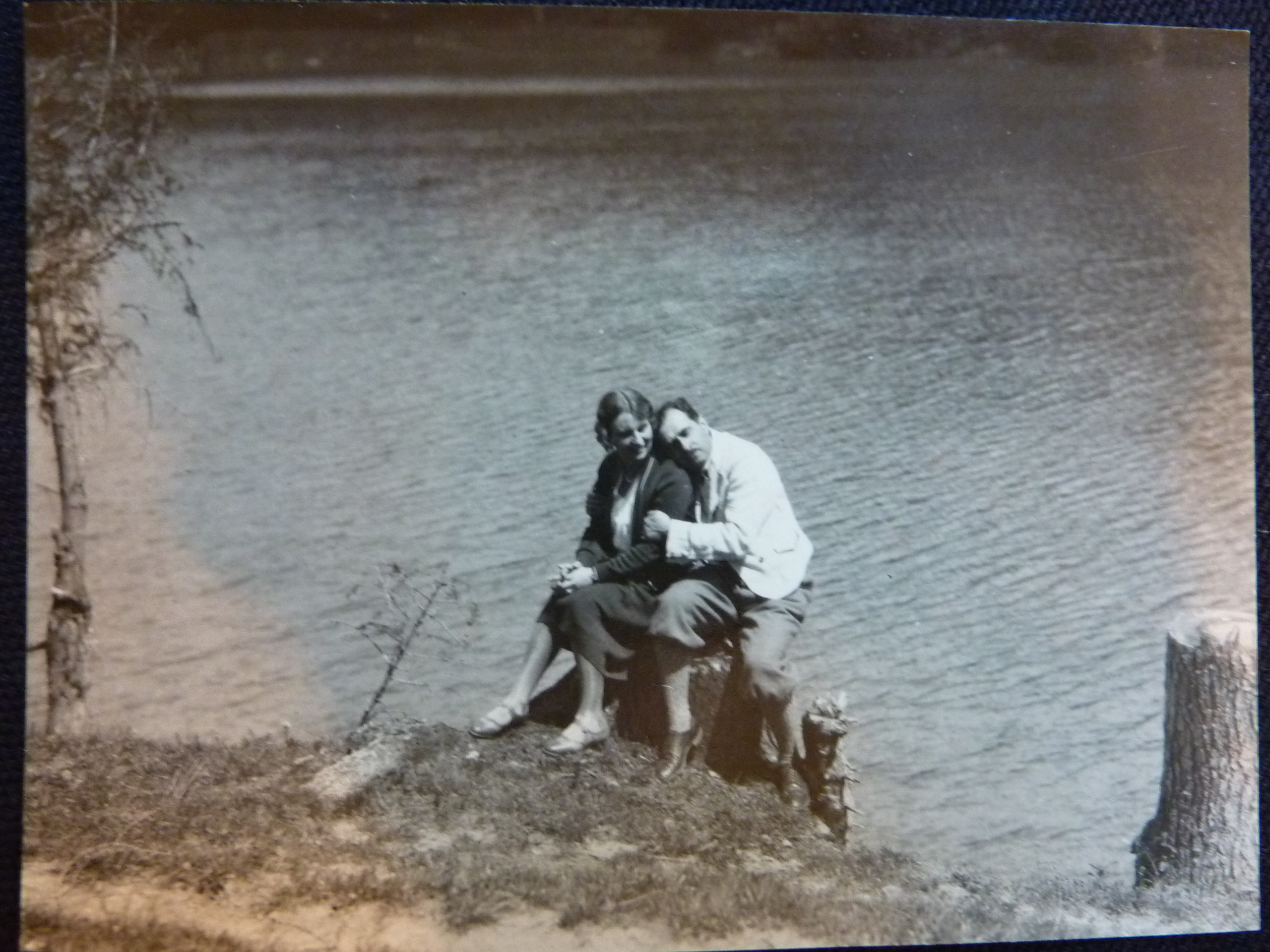


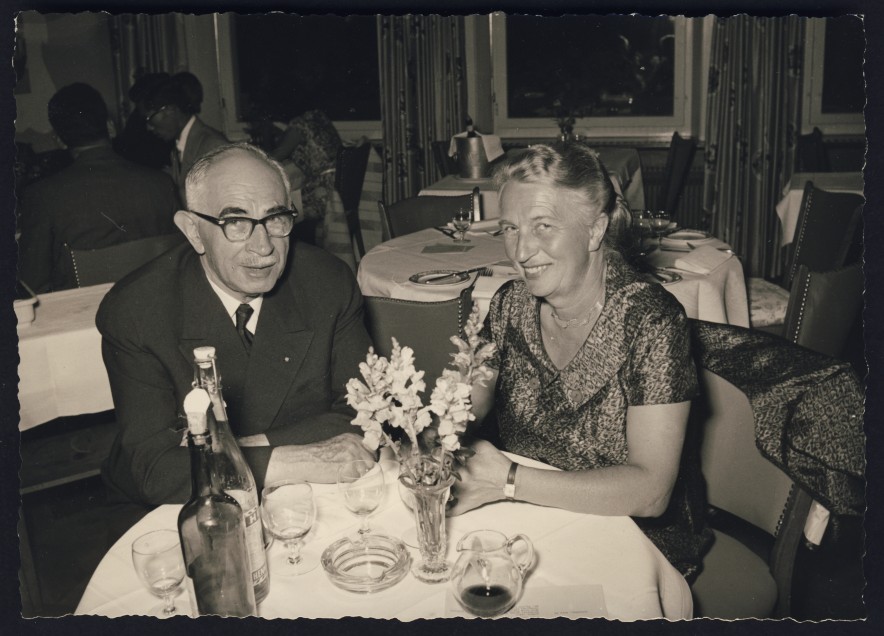

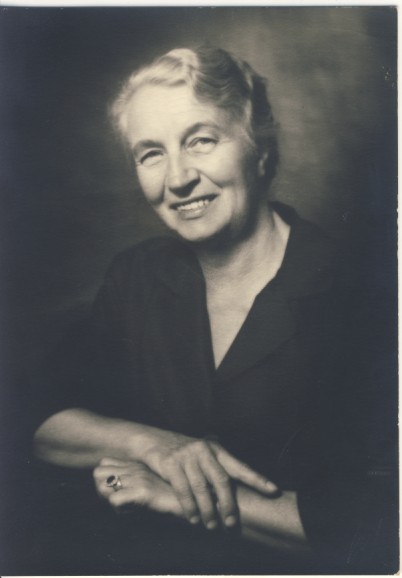
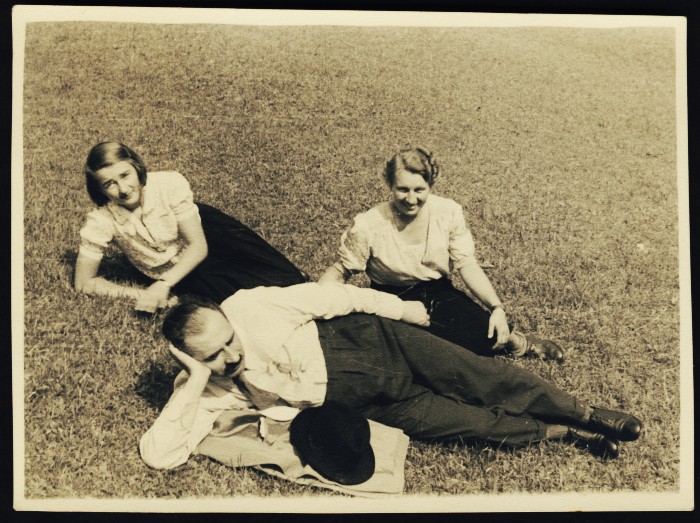
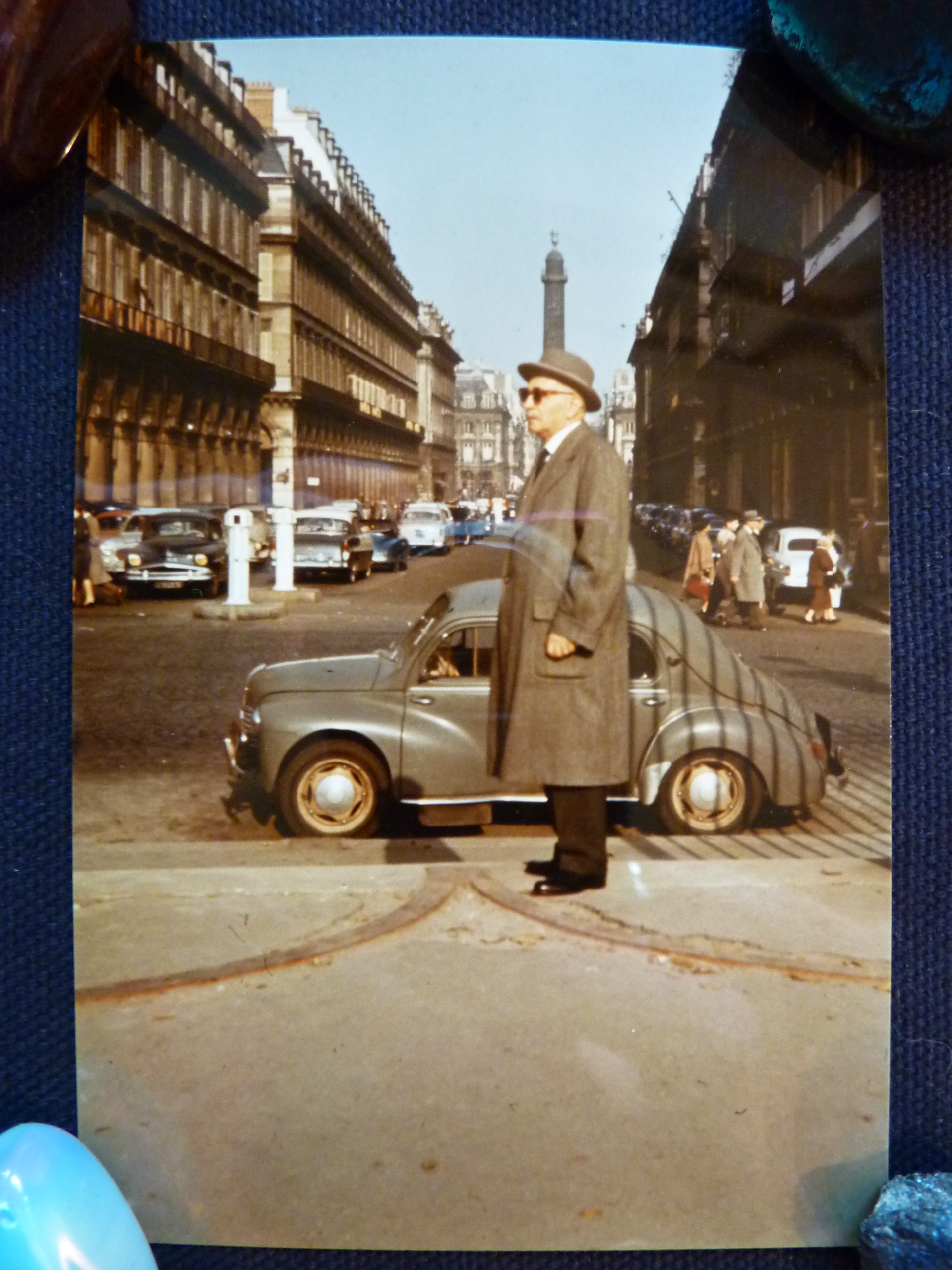

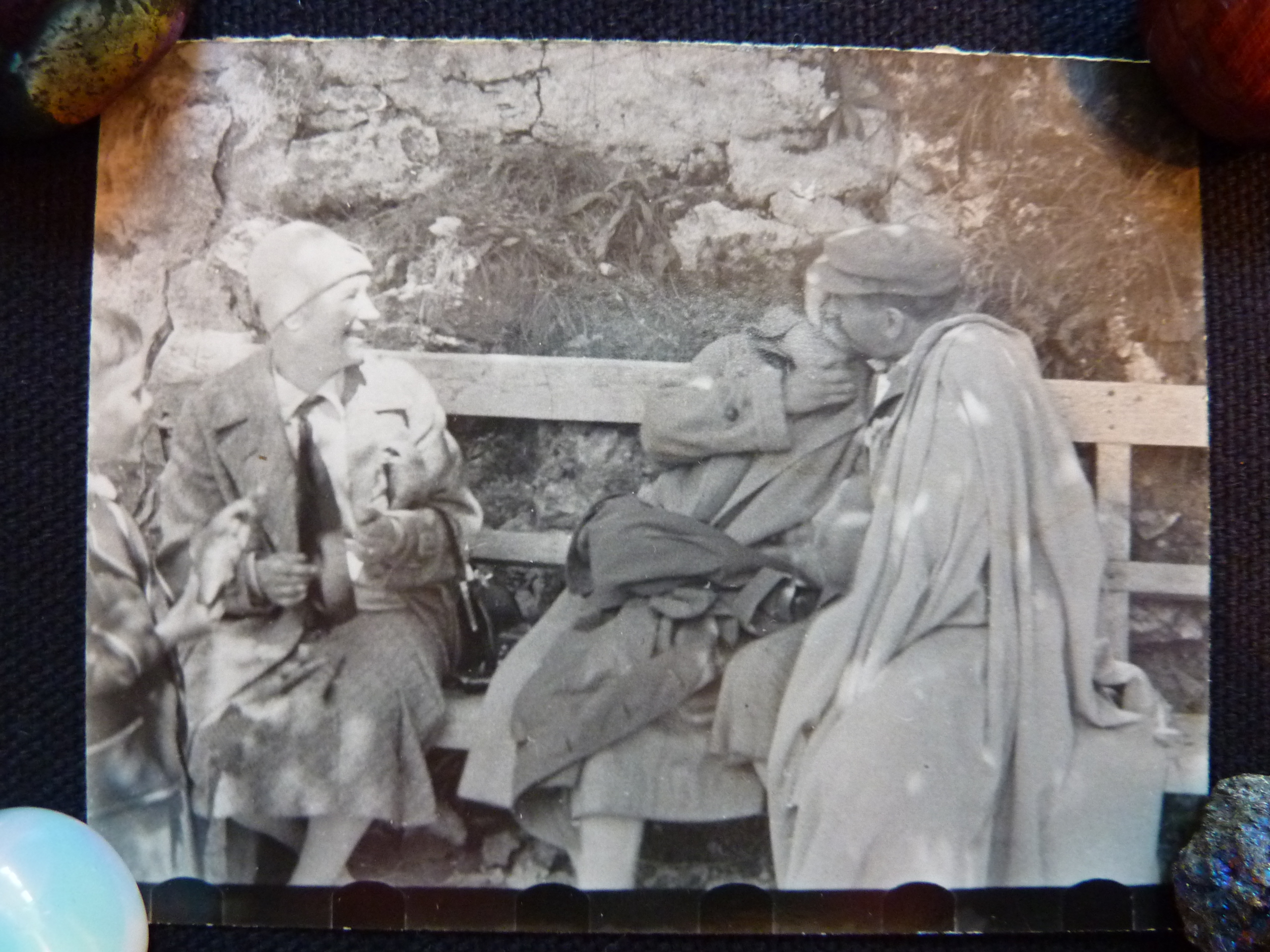

 Vlado
Vlado 