Tag Archives: Slovakia

Letter From General Lev Prchala, 11 October 1956

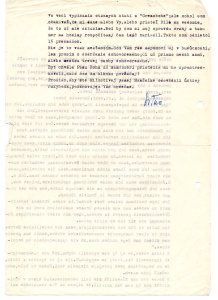
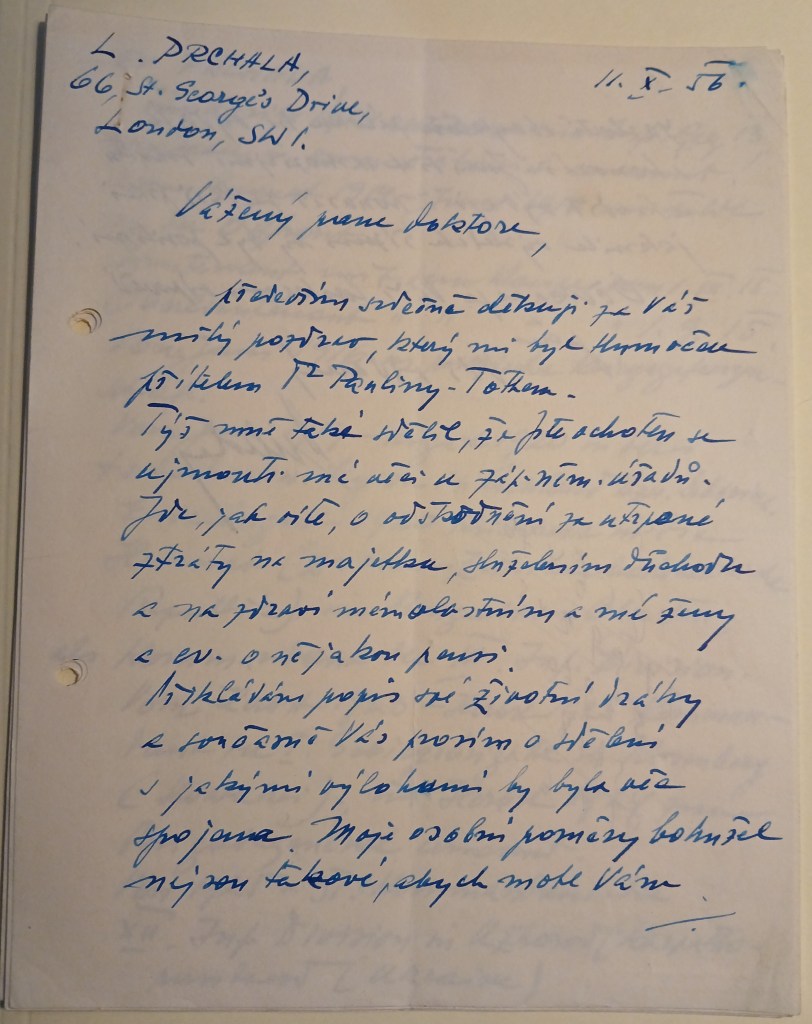
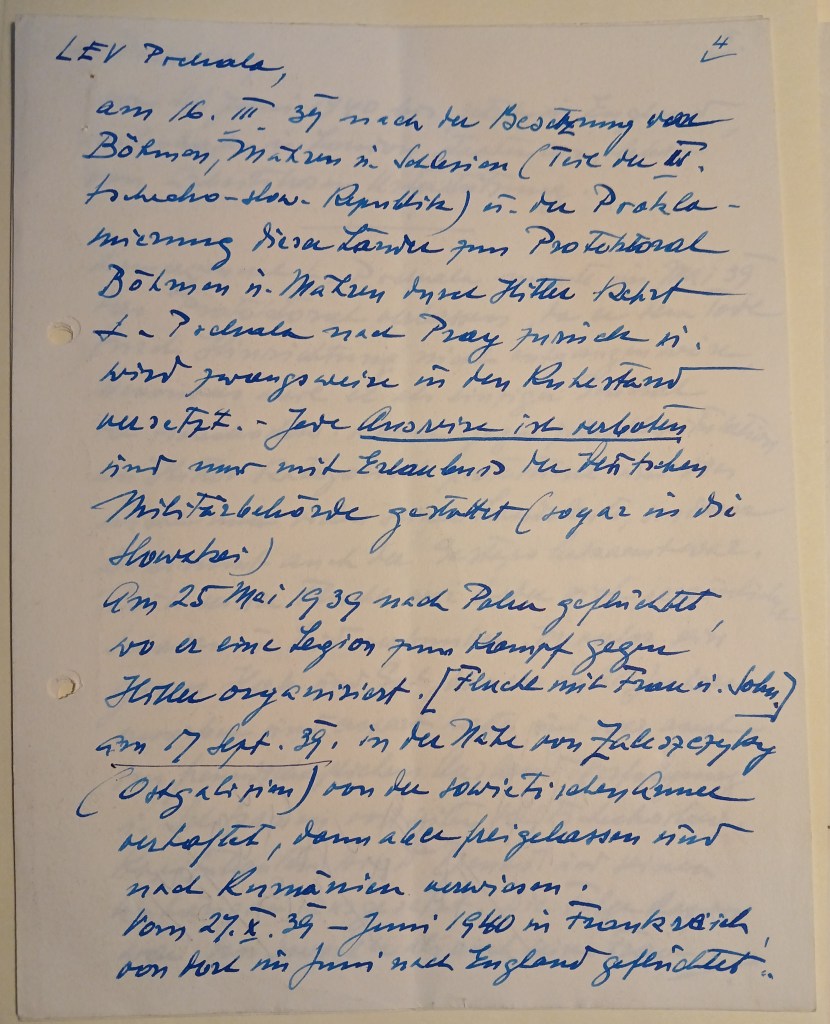
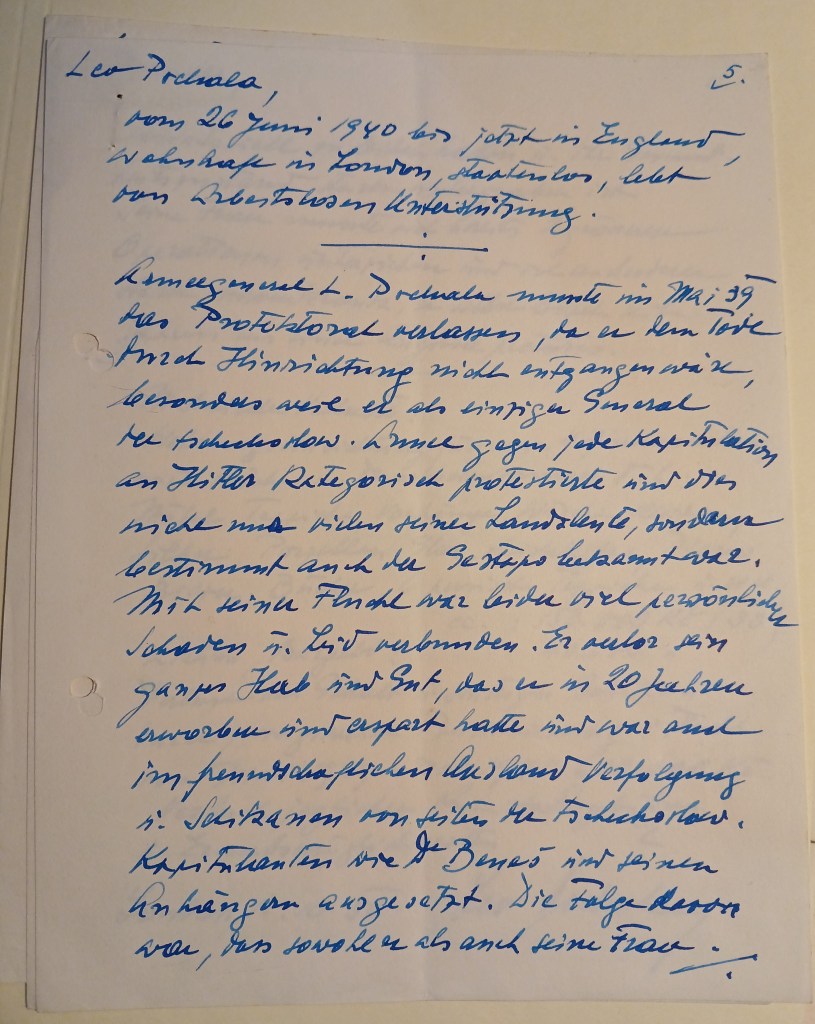
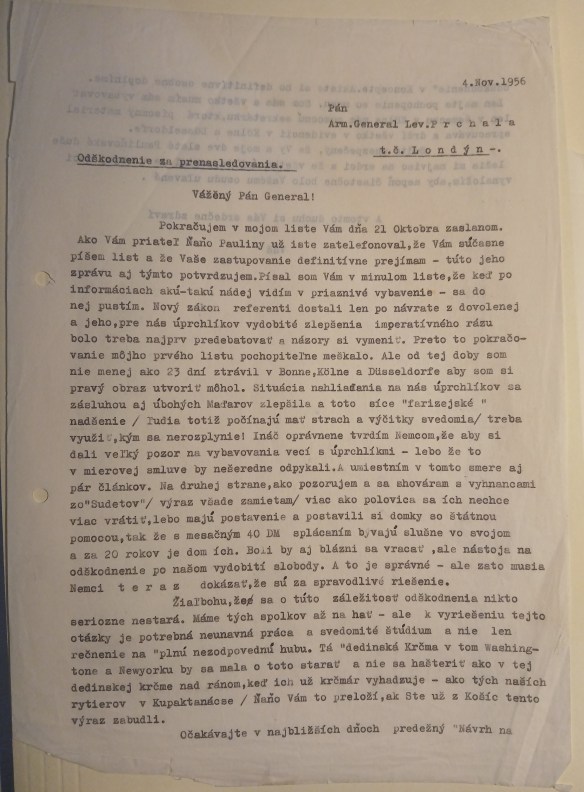
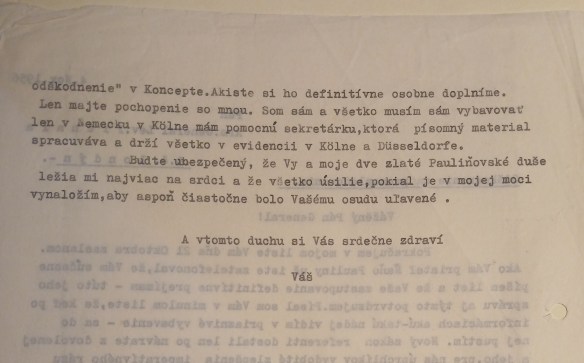
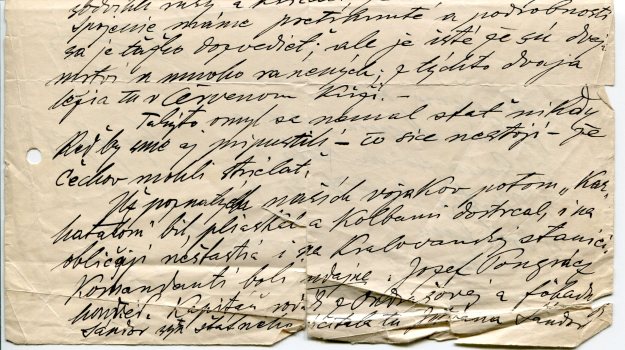
Happy birthday to Czechoslovak politician and Army General Lev Prchala, born on 23 March 1892! He sent this handwritten letter and his Curriculum Vitae to Pavel Fabry in 1956 from London, where he was living in exile. I have included the typewritten response from Pavel confirming that he will represent General Prchala for “Compensation for Persecution”.

*Update 14 May 2025: This post has been moved to the top of the page, the previous post was deleted. My sincere appreciation to Miroslav Kamenik, who kindly sent me his translation of Gen. Prchala’s letter and C.V., which I have transcribed here – thank you!

This image has an empty alt attribute; its file name is 1000003397.jpg

“11 Oct 1956
Dear Doctor,
First of all, let me kindly thank you for your warm greetings forwarded to me by our friend Dr. Pauliny-Toth. He also stated you were ready to take care about my case by West-German offices. As you know, it is about a compensation for losses suffered in my property, service pension [MK – soldier], health of myself and my wife and possible some kind of pension.
Attached is my CV as well, let me kindly ask you about the estimated costs related with my case. My personal circumstances are not such that I could send you the usual fee and advance payment for expenses. Of course, I am ready to cover your fee and all costs when the result of my case will be positive [MK – i.e. from future profit].
Awaiting your kind reply,
Yours faithfully,
Prchala”

This image has an empty alt attribute; its file name is 1000003404.jpg
This image has an empty alt attribute; its file name is 1000003399.jpg
This image has an empty alt attribute; its file name is 1000003400.jpg
This image has an empty alt attribute; its file name is 1000003401.jpg
This image has an empty alt attribute; its file name is 1000003402.jpg
This image has an empty alt attribute; its file name is 1000003403.jpg

“C.V.

*23 March 1892 [born] in Polska Ostrava, Frydek area, Silesia [MK – Empire of Austria-Hungary]

Roman Catholic, married with Lucie Seebode *9 August 1901 Kuokkala Finland, resident in St. Petersburg (Russia), evangelical

Children – son Ladislav Vladimir *5 Feb 1920 in Batarejnaja, Siberia (Russia), now resident in Buenos Aires, Argentina; daughter Lucie Marie *29 July 1921, died 9 Oct 1936 in Kosice [MK – Slovakia today]

Education – Gymnazium [MK – classic high school] with exam; 4 semesters of Law in Vienna; Military school in Paris 1921-23

April 1914 – activated in Inf. Regiment 13 in Krakow [MK – Cracovia, Poland today], sergeant.

August 1914 till June 1916 in the field/ eastern front of WWI

Since June 1916 in Russian captivity, in rank of lieutenant

June 1917 till August 1920 in Czechoslovak legion in Russia (or Siberia), then returned to newly established Czechoslovakia in rank of Colonel, as the commander of the III. Czechoslovak division in Russia [MK – in charge of retreating battles, towards to Vladivostok]

Autumn 1923 till autumn 1925 commander of the 1st mountain brigade in Ruzomberok [MK – Slovakia today], since autumn 1924 in rank of Brigade General

1925 till 1931 Commander of the XII. Inf. Division in Uzhorad [MK – or Uzhhorod, in Ruthenia/Subcarpathian Ukraine/Russia in Czechoslovak times, now part of Ukraine], since 1927 in rank of Division General

Autumn 1931 till autumn 1933 Deputy Chief of Staff in Prague

Nov 1933 till 1938 Army Commander in Kosice [MK – Provincial/Land’s military commander in Slovakia +Ruthenia], since January 1935 in rank of Army General [MK – highest rank]

September 1938 Commander of IV. Army in Brno in time of Munich [MK – expected attack from 3rd Reich, Prchala in the area of most expected fights]

Since 5 October 1938 till till 19 January 1939 Commander of Army in Slovakia

19 Jan 1939 appointed minister of the II. Czechoslovak Republic for Subcarpathia [MK – 1 of 3 ministers of this part of CZ]

16 March 1939, after 15th when Czechoslovakia had been occupied by Germans, Lev Prchala turns back to Prague to newly established so-called Protektorat Bohmen und Mahren and has been forced into retirement. It is prohibited to leave the Protektorat, possible only with special approval by German Military office.

25 May 1939 fled secretly to Poland, with wife and son, where he organized the Czechoslovak Legion for the fight against Hitler.

17 September 1939 arrested by Soviets in eatern Galicia [MK – most probably Zalishchyky in todays Ukraine, history was not very kind in/to this area…], then released and passed to Romania.

27 October 1939 till June 1940 in France, in June fled to England – since 26 June 1940 in UK, living in London [MK – next words not fully legible, probably meaning “stateless, on state support”, this corresponds with the date of Prchala’s naturalization officially done by UK in 1961]

Army general had to escape from Protektorat in May 1939 in order to avoid capture/avoid death by execution, because he was the only General of Czechoslovak army strongly against the capitulation to Hitler, well known to the people of Czech lands, and Gestapo as well. Many personal damages and harm are connected to the escape. He left all his belongings which he had acquired and saved in 20 years, and was exposed to persecution and harassment by the Czechoslovak capitulators like Dr. Benes and his followers, even in friendly foreign countries. The result is not only material but also in the matter of the failing health, including his wife. She had to pass two operations and suffers nervous disease [MK-?], he suffers from angina pectoris.

Material losses: Four room flat + kitchen + office equipment: furniture, carpets, clothes, silver, porcelain, glass incl. Crystal glass, piano, paintings, books, 6 Persian carpets – 150,000Kc [MK – Czechoslovak Crowns in 1938 prices] and 40,000Kc in shares and cash.

Losses due to the forced retirement between May 1939 and May 1945 about 600,000Kc [MK – other potential losses unknown, not legible]

Lev Prchala, London, 11 Oct 1956″

Translation: Miroslav Kamenik/10.4.2025

This image has an empty alt attribute; its file name is 1000003407.jpg
This image has an empty alt attribute; its file name is 1000003410.jpg

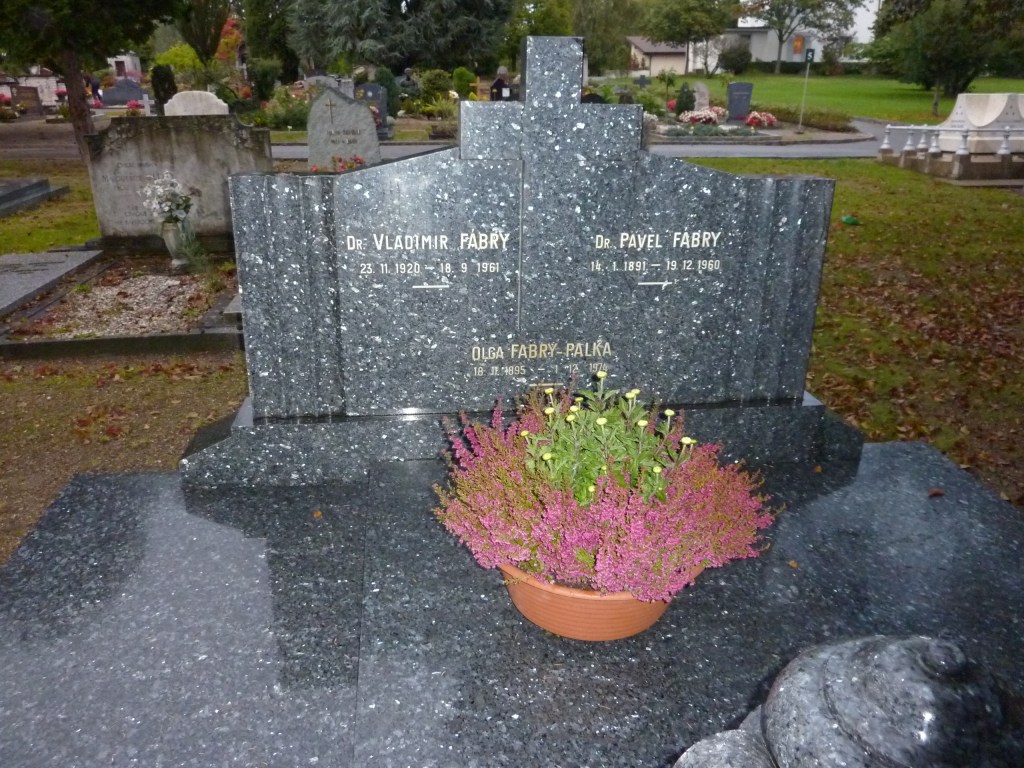
C’est pas vrai? Where is the Fabry family grave?

*This post was updated on 28 February 2025.

I have received some mysterious emails over the years, but none as mysterious as this one, sent November 26th. I have not included the photos that were attached in the message from Mrs. Anna Hrabovska, a Slovak diplomat working at the Slovak Permanent Mission to the UN in Geneva, but, if they are legitimate, it shows that the Fabry family grave has been removed and replaced with two very plain crosses made of wood – I don’t know who those crosses are for, but where are our relatives? Victor and I visited the grave in 2009, and 2013 was the last time I visited (I posted the above photo here in 2013). The grave was in Cimetiere du Petit-Saconnex.

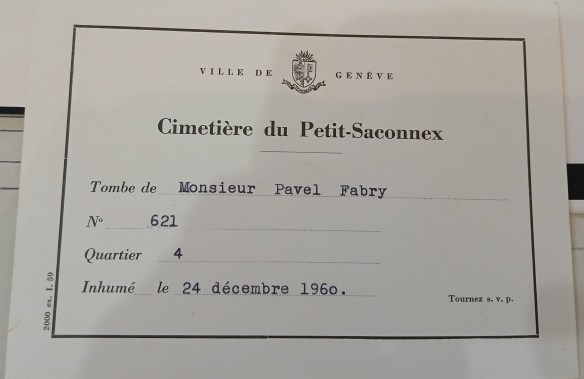
This document for Pavel Fabry, and the document below, confirms that the Fabry grave is in Cimetiere du Petit-Saconnex. There are also 3 documents from the designer of the gravestone, Jacques Colliard.
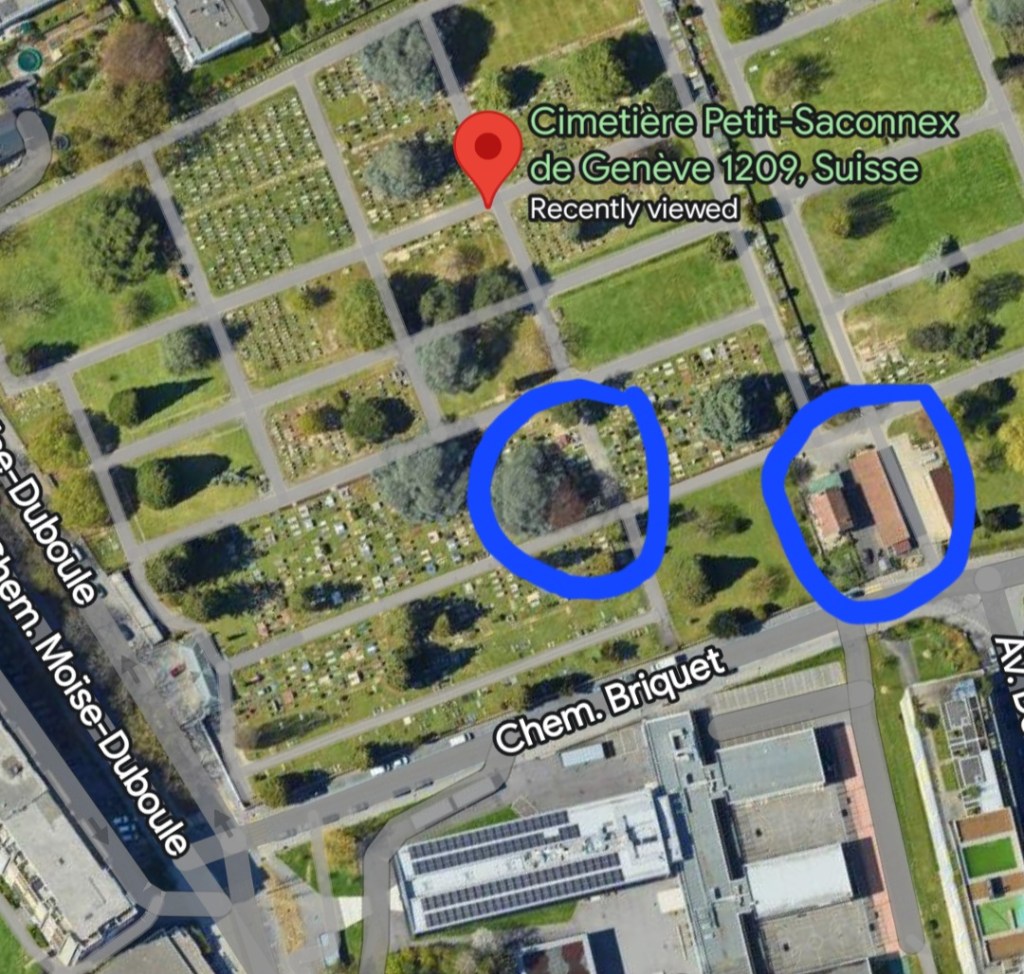
Screenshot of the cemetery. When you zoom on the 2013 photo I took of the grave, you can see a large and distinct grave behind on the right. To the right of the grave and across the one-lane road, there is a sign post with a number “5”, and you can see a building further to right. I have circled the building and the location of the Fabry family grave.
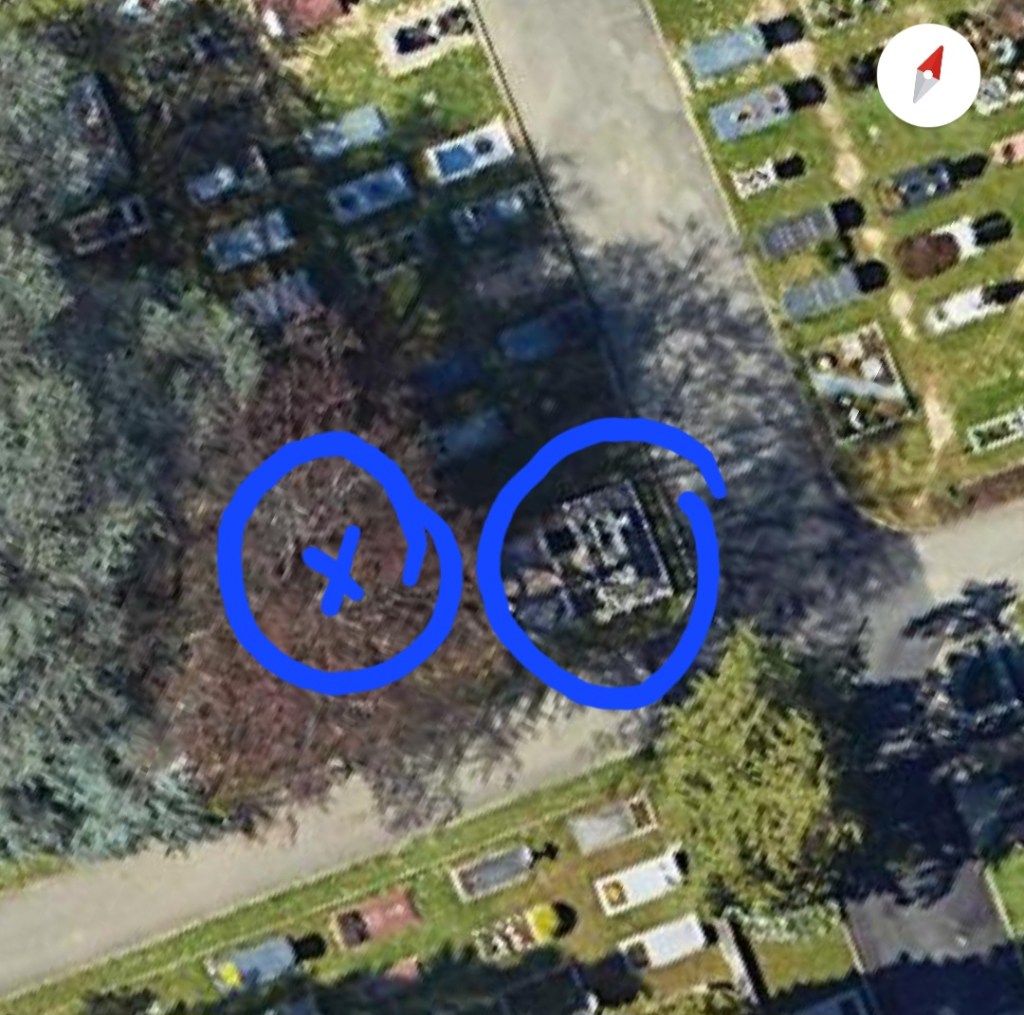
Zoomed in further, the large and distinctive grave seen in my 2013 photo is circled, and the location of the Fabry grave is circled and marked with an “X”.

I am presenting Anna’s message publicly, to ask for help from friends living in Geneva and in the United Nations – would someone please confirm if the Fabry family grave is missing? How can this even happen?

With good wishes and thanks for detective help! – Tara

………………………………………………………………………………..

Dear Tara, 

My name is Anna, and I am a Slovak diplomat currently serving at the Slovak Permanent Mission to the United Nations in Geneva. I want to express my heartfelt gratitude for the remarkable work you’ve done with the blog about Vladimir Fabry. It’s a beautifully crafted tribute that truly honors his memory and legacy.

As you may know, November 23rd would have marked his 104th birthday. To pay my respects to this brave and inspiring man from Slovakia, I decided to visit his grave and light a candle in his honor. I printed a photo from your blog and went to the cemetery in Petit-Saconnex, only to discover, to my surprise, that the Fabry family grave was no longer there. 

The following day, I contacted the Cemetery Administration for guidance. The representative informed me that Vladimir Fabry, listed as being from New York, is buried at the Saint George Cemetery, section 5. However, despite my efforts to locate the grave today, I was unable to find it. Please see in the attachment current photos from both cemeteries.

Since you are close to the family, may I kindly ask if his remains have been relocated or if there is additional information about the exact location of his grave? I couldn’t find any articles or updates regarding this matter.

Thank you so much for your time and assistance. I deeply appreciate any help you can provide.

With warm regards,
Anna

*Update 27 March 2025:

Today I clicked again on the United Nations link for diplomat Mrs. Anna Hrabovska, but her name is no longer listed with other diplomats at the Slovak Permanent Mission to the U.N.

Re: A ‘thank you’ 8 years in the making

Thank you to Fabian Schneider, and to his parents, for permission to share this message, in connection to the letters of Frano Tiso I published back in 2016. It gives me great pleasure that my work has had a positive impact, and that I can meet so many lovely and interesting people from all over the world because of Vlado!

15 August 2024

Dear Tara Burgett,

I’m writing to express my gratitude for your work on the Fabry family history website, particularly for publishing the letters from Fraňo “Franz” Tiso, whom I (*1994) have an interest in.

My interest in Mr. Tiso stems from a family connection – he was a friend of the Schneider family in the latter half of the 20th century and a regular guest at our home [in the Eichstätt Landkreis in Germany]. My father (*1955), spoke highly of him and credited Mr. Tiso with convincing my grandmother (*1929 ✝2019) to send him to a specific type of high school, significantly impacting his education. Tiso and my father would also often discuss (first in person and later in the form of letters) science and technology, which became my father’s calling until his retirement. I too am a software developer these days.

My father stresses Tiso never tried influence him ideology-wise, but to he was always delighted to see him because of his science and technology interests. Tiso would gift him copies of the Stafette magazine, which is like Highlights or National Geographic Kids from a US point of view.

A few years ago, my father brought him up again after many, many years. He mentioned that Tiso was involved in diplomacy before 1945 in Slovakia. I had since learned about Nazi collaborationist regimes and the last name clicked with Jozef Tiso. Looking into him, I soon found a declassified CIA document that looked like an indication of a propaganda operation. While I never found hard proof of that, I have kept doing on-off research into this friend of the family.

I do not want to shoot the messenger, ever, but I must admit that my research, aided by the documents you shared in 2016 and others I’ve encountered, has led to significant personal disappointment. Mr. Tiso had a hawkish military stance and made efforts to whitewash the legacy of Stepan Bandera.

Much like the Vichy French, he hated communism so much that even after the liberation from the Nazis, he would resort to stirring up the Cold War and lionize a man responsible for the murder of Poles and Jews in the tens of thousands. I do not believe that rejecting this sort of stance makes one a communist, either.

I do not know any members of my family who would appreciate this sort of militarism and nationalism. The same grandmother that hosted Franz Tiso protested the deployment of Pershing II ballistic missiles. I remember her being opposed to the Second Gulf War, though she was somewhat past protesting in the streets mobility-wise. My dad says when they discussed politics over coffee, it was limited to economic policy of the day. I would have loved to talk to her about Tiso, but by the time I started my research, my grandmother was unable to speak for neurological reasons.

It’s a stark reminder of the often troubling nature of post-war politics and personal relationships. These revelations have deeply shaped my understanding of denazification, the challenges of post-war reconciliation and the need for anti-fascism.

Despite my personal disappointment, I’m grateful for the access to these primary sources. They provide an unvarnished look at history, allowing us to confront uncomfortable truths and develop a more nuanced understanding of this period. In a sense, I am even grateful for the disappointment, because I would rather know than not know.

Thank you again for your dedication to historical preservation and for making these documents easily accessible. Maybe you do not always immediately see the effect, but efforts like yours make all the difference in our ability to critically examine history.

Sincerely,

Fabian Schneider

Czechoslovak Ambassador Juraj Slavik Resigns In Protest of “Police State”, 1948

The British Pathe video above is incorrectly dated – the communist coup d’etat of Czechoslovakia happened on 25 February 1948, and this resignation speech from Slavik was likely from late February, early March, 1948. Vladimir “Vlado” Klementis was a member of the Czechoslovak Communist Party, and he became Foreign Minister on 14 March 1948 – taking over the position of Jan Masaryk (son of the first President of Czechoslovakia), who was murdered 4 days earlier on 10 March 1948, defenestrated in Prague, in the old tradition.

From NYT, 5 March 1948, “Czech Envoy to U.S. Who Resigned Is Berated Over Phone by Minister; Klementis, Deputy Foreign Chief of New Regime, Says He Is ‘Finished’ With Slavik — Third Diplomat Quits Post Over Coup”:

“WASHINGTON, March 4 — Dr. Juraj Slavik, who has resigned as Czechoslovak Ambassador to the United States rather than serve “a police state,” was denounced over the telephone by Vladimir Klementis, Czechoslovak Deputy Foreign Minister and a member of the Communist party, as soon as word of his resignation had reached Prague.[…]”

“The Russian Embassy in Bratislava, a notorious disseminator of disinformation and propaganda in Slovakia”

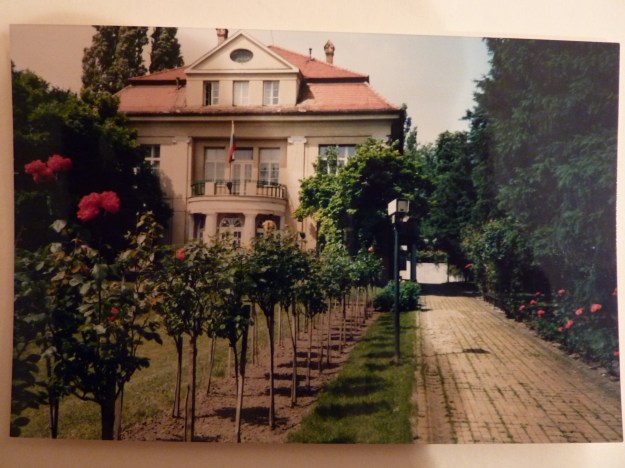
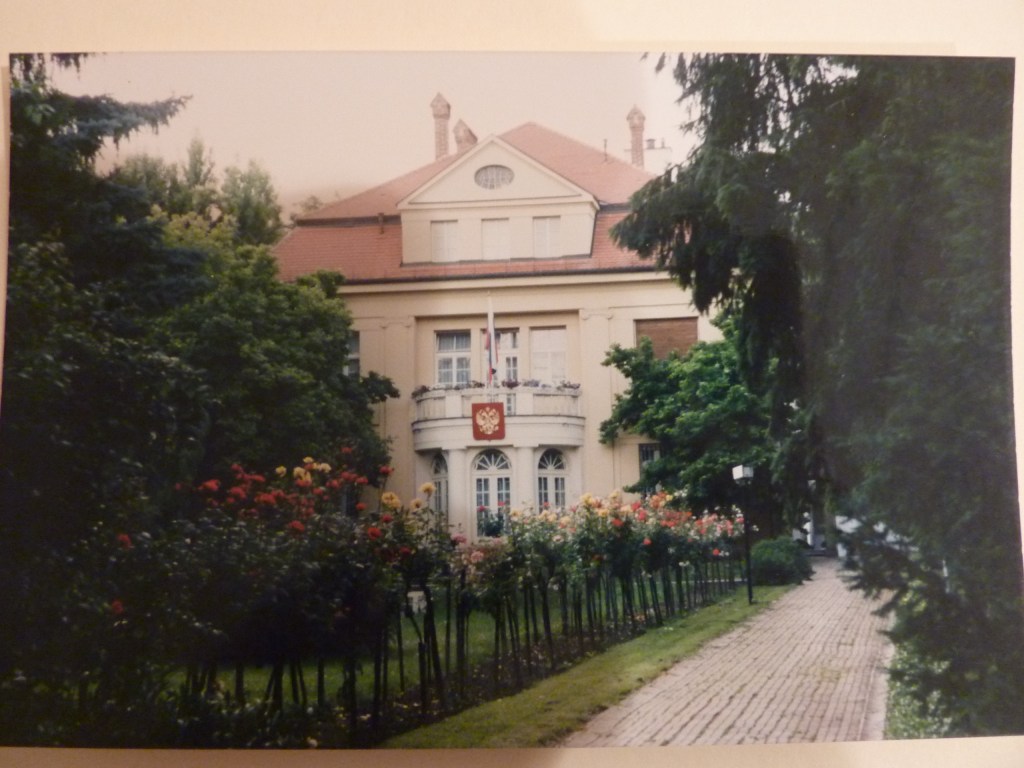
Our Family home in Bratislava.

With love to Alexei Navalny! Never give up!

From The Slovak Spectator, 3 October 2023: FOREIGN MINISTRY SUMMONS RUSSIAN AMBASSADOR OVER RUSSIA’S INTERFERENCE IN SLOVAK ELECTION:

Almost three weeks after the Slovak Foreign Ministry expelled a Russian diplomat and summoned Russian ambassador Igor Bratchikov, the ministry summoned Bratchikov again.

In its statement from October 2, the ministry writes that the reason is the statements made by Director of the Foreign Intelligence Service of Russia Sergey Naryshkin during the 48-hour election moratorium in Slovakia.

On September 28, Russia’s intelligence service published a press release on its website. Naryshkin accused the USA of interfering in the Slovak parliamentary election. The vote took place two days after the press release, on September 30.

“The upcoming elections in Slovakia can hardly be perceived as a democratic expression of the will of the people free from external influence,” the press release reads, claiming that the liberal party Progresívne Slovensko is expected to win and form a government loyal to Washington.

The Slovak election was won by the populist party Smer, led by former three-time PM Robert Fico.

[…]

The Slovak Foreign Ministry slammed the Russian intelligence service for questioning the integrity of free and democratic elections in Slovakia.

“We consider such deliberately disseminated disinformation to be inadmissible interference by the Russian Federation in the electoral process in Slovakia.”

The manipulation of election results is practically impossible in Slovakia. If, for example, a member of the electoral commission wanted to change the results, there are still nominees of other parties sitting in who can prevent them from doing so.

The Russian embassy in Bratislava, a notorious disseminator of disinformation and propaganda in Slovakia, denied the Slovak ministry’s allegation.

From Radio Free Europe Radio Liberty(RFERL), 14 September 2023: SLOVAKIA EXPELS RUSSIAN EMBASSY EMPLOYEE:

Slovakia said on September 14 it was expelling an employee of the Russian Embassy in Bratislava for activities in “direct violation” of the Vienna Convention on Diplomatic Relations. The Foreign Ministry said it summoned Russian Ambassador to Slovakia Igor Bratchikov and informed him that the employee, whose identity was not disclosed, must leave the country within 48 hours. No details were provided.

From The Slovak Spectator, 14 March 2022, SLOVAKIA EXPELS THREE RUSSIAN EMBASSY STAFFERS:

At least three people have been detained on suspicion of having spied for Russia in Slovakia.

The Denník N daily reported that since Friday, the police have been on an operation unprecedented in Slovakia’s history. The National Criminal Agency (NAKA) detained a lieutenant from the Defence Ministry, a member of the Slovak Information Service (SIS) and a person with ties to the Hlavné Správy disinformation website, which was taken down after the Russian invasion of Ukraine.

At least one of the detained confessed to the crime, the daily wrote. An employee of the Russian Embassy reportedly bribed the detained persons. As a result, the Foreign Ministry has decided to expel three Russian Embassy staffers from Slovakia.

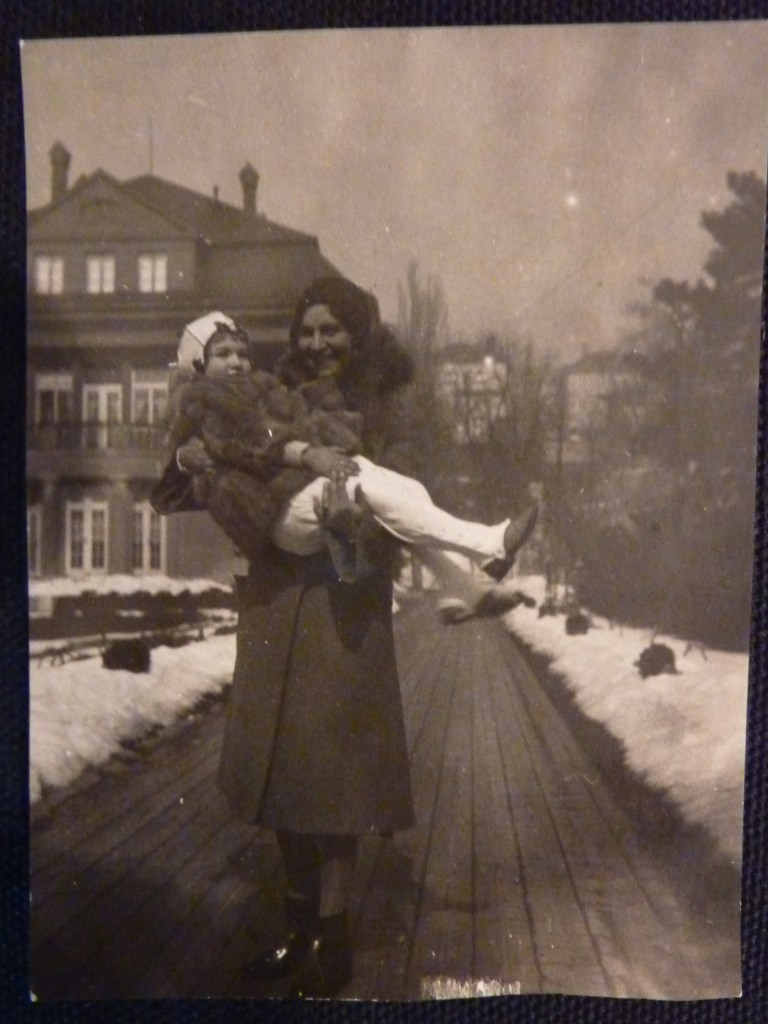
Olga “Maminka” Fabry and Olinka Fabry

From The Slovak Spectator, 30 March 2022, SLOVAKIA WILL REDUCE STAFF AT THE RUSSIAN EMBASSY:

As many as 35 Russian diplomats will have to leave Slovakia, following a decision of the Foreign Affairs Ministry on the reduction of the embassy’s staff.

The Russian Ambassador to Slovakia Igor Bratchikov has already received a diplomatic note about this decision, the TASR newswire reported.

He was summoned to the ministry following the information of Slovakia’s security forces on the actions of another Russian diplomat at odds with the Vienna Convention on Diplomatic Relations.

[…]

“In this regard, we must say regretfully that after the previous expulsions of Russian diplomats in the past two years, the Russian diplomatic mission has not shown interest in proper work on our territory,” the Slovak Foreign Affairs Ministry said, as quoted by TASR.

[…]

Even though the official documents from last year show that officially there were 29 Russian diplomats plus nine partners, the Sme daily reported that there might be nearly 70 of them at the Russian Embassy in Bratislava.

From the Associated Press(AP), 7 October 2020, RUSSIAN ON TRIAL ACCUSED OF STATE-ORDERED BERLIN EXECUTION:

BERLIN (AP) — A Russian accused of killing a Georgian man in broad daylight in downtown Berlin on Moscow’s orders went on trial for murder Wednesday, in a case that has contributed to growing frictions between Germany and Russia.

The defendant Vadim Krasikov, using the alias Vadim Solokov, traveled to the German capital last August on the orders of the Russian government to kill a Georgian citizen of Chechen ethnicity who fought Russian troops in Chechnya, prosecutor Ronald Georg said.

“State agencies of the central government of the Russian Federation gave the defendant the contract to liquidate the Georgian citizen with Chechen roots,” Georg told the court, reading the indictment.

“The defendant took the contract, either for an unknown sum of money or because he shared the motive of those who gave the contract to liquidate the (victim) as a political enemy in revenge for his role in the second Chechen war and participation in other armed conflict against the Russian Federation.”

[…]

After the Aug. 23, 2019 killing, Germany expelled two Russian diplomats last December over the case, prompting Russia to oust two German diplomats in retaliation.

If the allegations against the suspect are proved in court, the case has the potential to exacerbate tensions between Moscow and Berlin, which have also been fueled by allegations of Russian involvement in the 2015 hacking of the German parliament and the theft of documents from Chancellor Angela Merkel’s own office, as well as the poisoning of Russian opposition leader Alexei Navalny.

Navalny fell ill on a flight in Russia on Aug. 20, landing in a Siberian hospital. Two days later, he was transferred on Merkel’s personal invitation to Berlin’s Charite hospital, where doctors concluded he had been poisoned by a Soviet-era nerve agent.

Moscow has dismissed accusations of involvement in the Navalny case and denied ties in the parliamentary hacking, even though Merkel herself said there was “hard evidence” of the latter.

Russian President Vladimir Putin’s spokesman, Dmitry Peskov, has also called the allegations of Russian involvement in the Berlin killing “absolutely groundless.”

After Merkel confronted Putin about the killing at a meeting in Paris in December, the Russian leader called the victim, Zelimkhan “Tornike” Khangoshvili, a “bandit” and a “murderer,” accusing him of killing scores of people during fighting in the Caucasus.

The growing acrimony between the two countries comes at a delicate time, as Germany and Russia work towards the completion of a joint pipeline project to bring Russian gas directly to Germany under the Baltic, and work to try and salvage a nuclear deal with Iran that has been unraveling since President Donald Trump unilaterally pulled the U.S. out of it in 2018.

Khangoshvili, 40, was a Georgian citizen of Chechen ethnicity who fought Russian troops in Chechnya. He had also volunteered to fight for a Georgian unit against the Russians in South Ossetia in 2008, but peace was negotiated before he took part. He had previously survived multiple assassination attempts and continued to receive threats after fleeing in 2016 to Germany, where he had been granted asylum.

My Google review of the Russian Embassy

I posted this Google review at the start of the war, but came back to edit it recently. I am sharing screenshots from my phone, which is signed into my Google account, because I realized I am the only one that can see it, other than everyone at the Russian Embassy in Bratislava – they tried to hide it, but I fixed that!

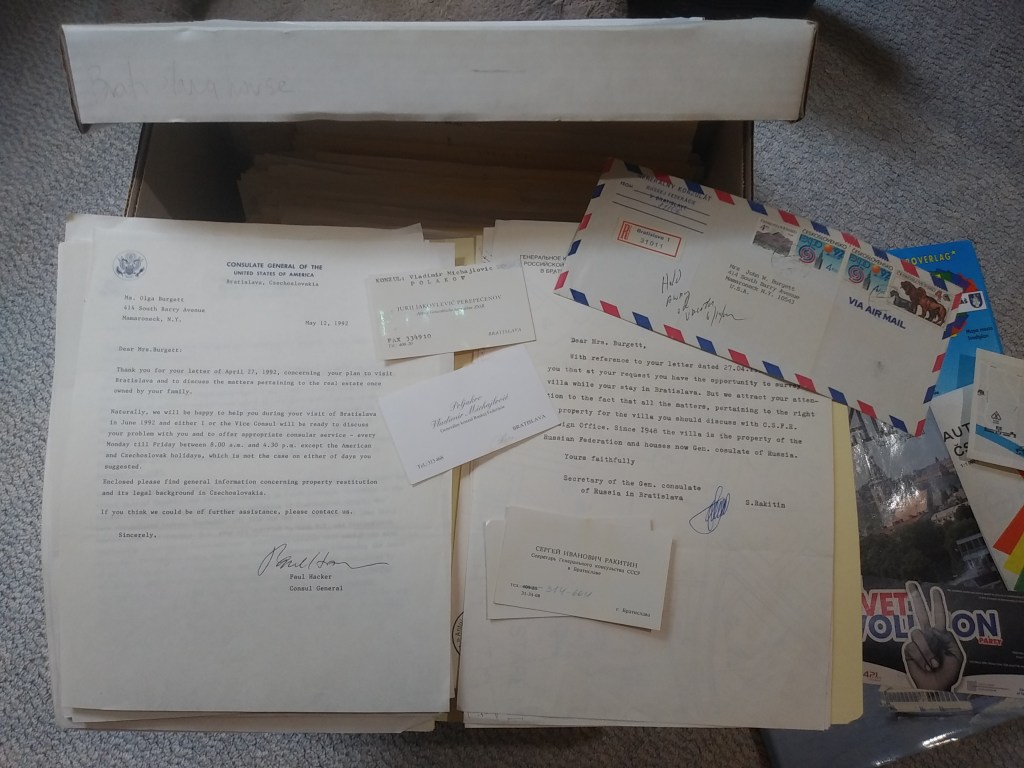
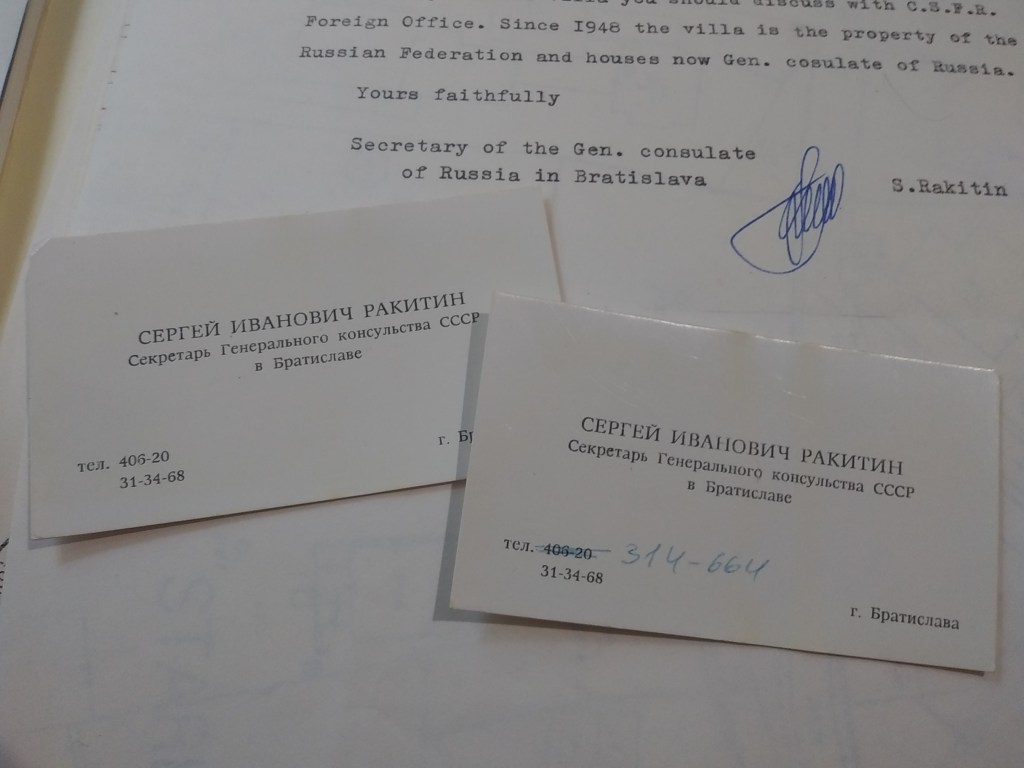
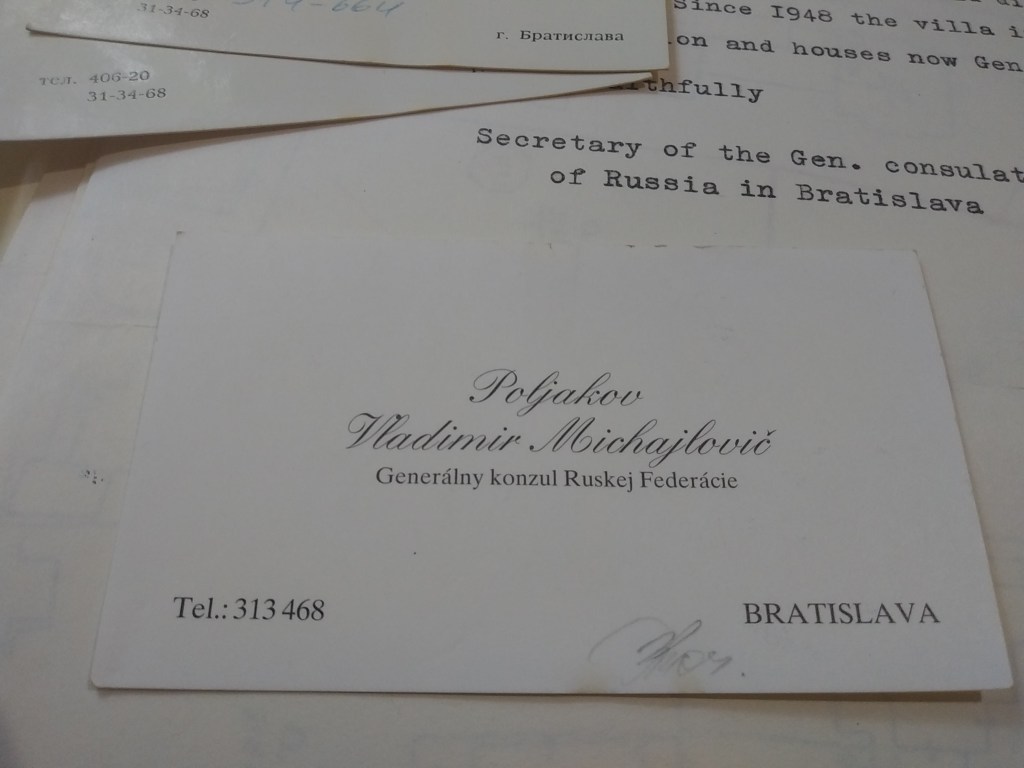
*Edit 1 Nov. 2022: I am including photos of business cards of Russian diplomats that my mother-in-law met while visiting her home in Bratislava in 1992, which she so kindly saved for me to find! The one card that is in Cyrillic I translated this morning, and guess who it is? Sergey Ivanovich Rakitin!!

Happy Halloween and Slava Ukraini!

First Czechoslovak Republic: Fabry archive,1918-1920

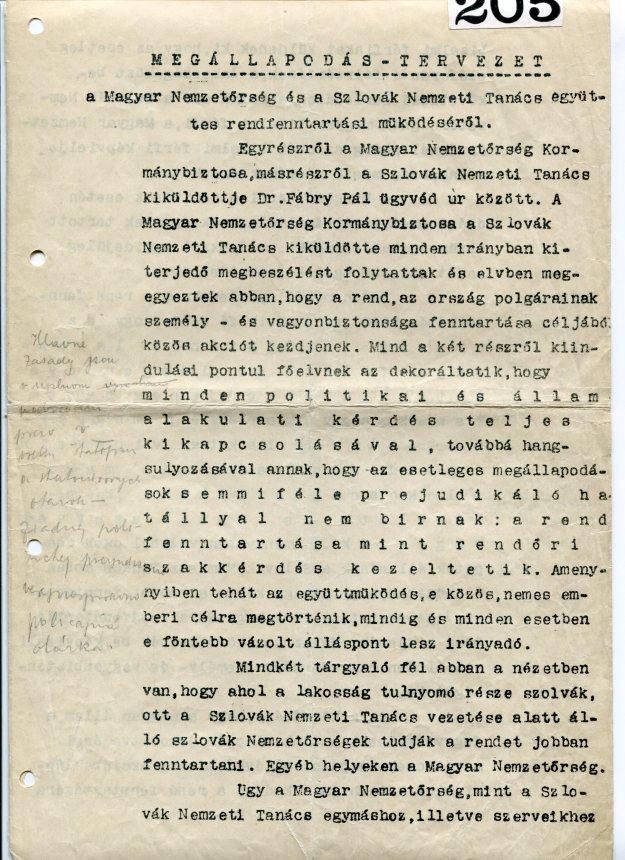
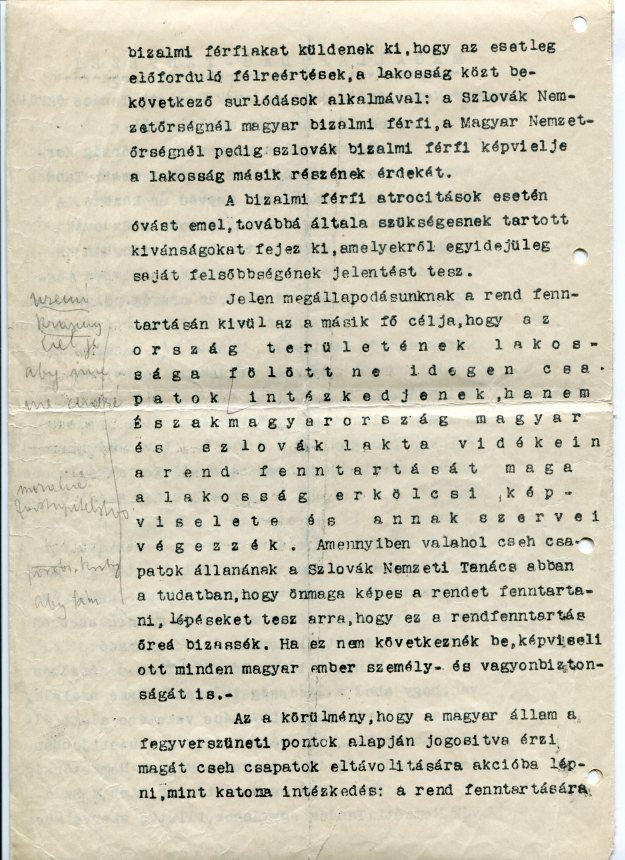
The following documents and photos are from November 1918 to December 1920, they are in Hungarian and I am not able to translate them – I will return later to transcribe some of these. I hope to give a clearer picture of why Pavel Fabry, and his family, were the target of retaliation and revenge by Hungary and Russia, and why Russia still occupies our home in Bratislava – the house belongs to the city of Bratislava now, my husband and I donated it!

For historical context, the First Czechoslovak Republic began on 28 October 1918, and the boundaries and government were established with the Czechoslovak Constitution of 29 February 1920. The Treaty of Trianon was signed on 4 June 1920, and Saris County became part of newly formed Czechoslovakia; Saris was formerly known as Saros, a County of the Kingdom of Hungary, and had been since the 13th century – Pavel was Governor of Presov and prefect of Saris at its very beginning! In connection, this pdf text from the University of Presov was sent to me by a very helpful family relative last year(thank you!!): “Eastern Slovakia in 19th and 20th centuries in relation of the centre and periphery“; she wrote that “it describes the installation and the very beginning of [Pavel’s] governance in Presov.”

1918 Czechoslovakia
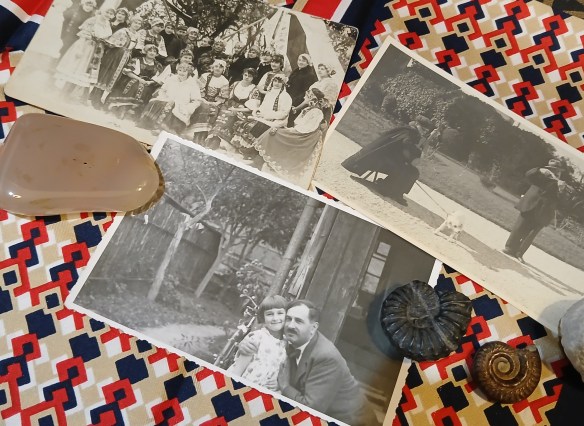
Marked on reverse: “Luhačovice August 1918″. Pavel Fabry sits front and center, Olga Fabry is second woman on the right; the two men standing far left and far right appear to be our relatives, Igor and Miloš Makovický, but I have not identified the others, yet.
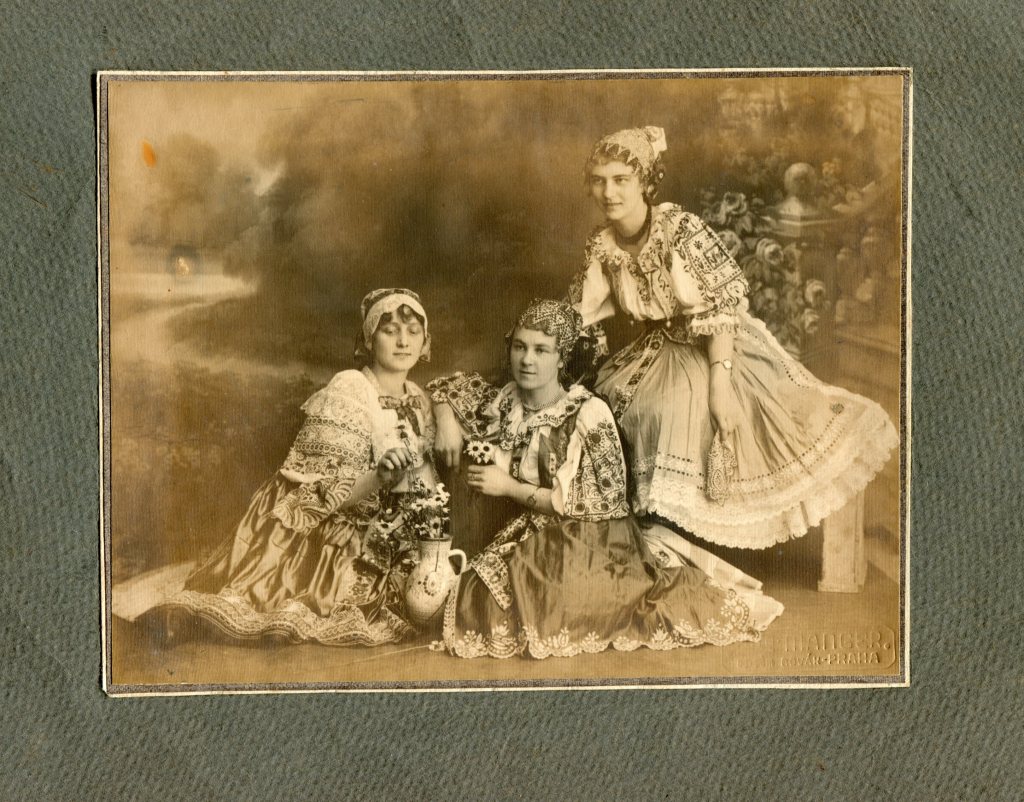
Unidentified Slovak ladies, with our grandmother Olga Fabry-Palka far right, circa 1918.
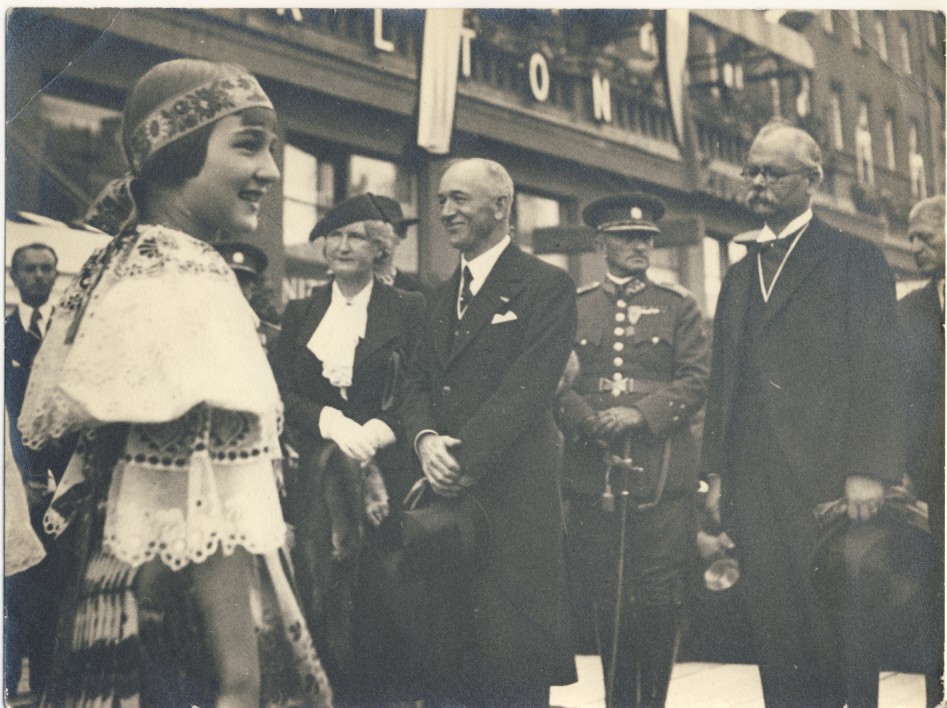
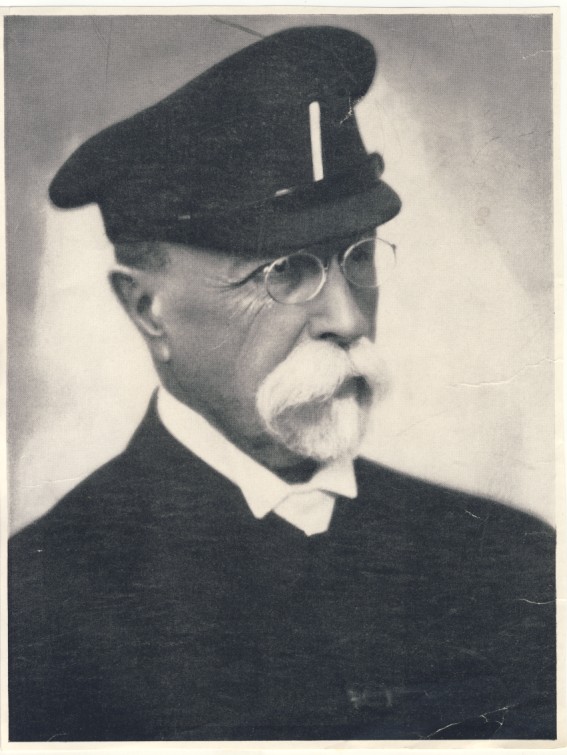
President Masaryk
Tomáš Garrigue Masaryk, 1st President of Czechoslovakia, 1918-1935. Photo plate from “Zlata Knihá Slovenska: 1918-1928” (“Golden Book of Slovakia”)
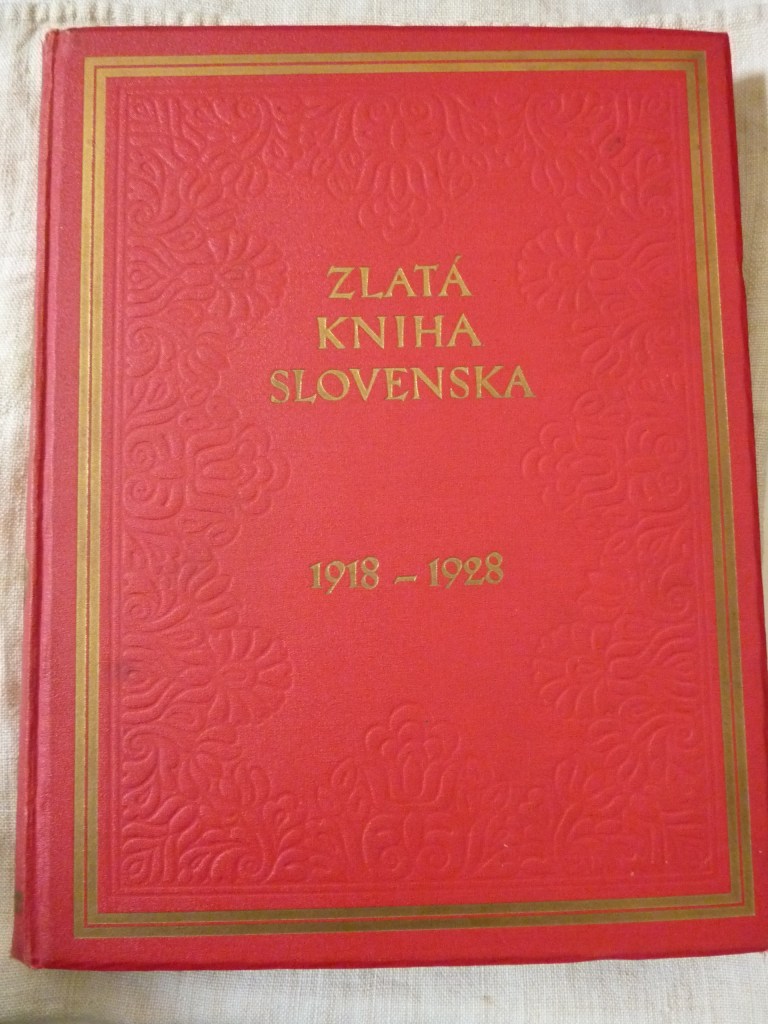
Our copy of “Golden Book of Slovakia”; published 1929.
From “Golden Book of Slovakia”, Dr. Pavel Fabry.
Document from 15 November 1918.
Budapest, 16 November 1918.
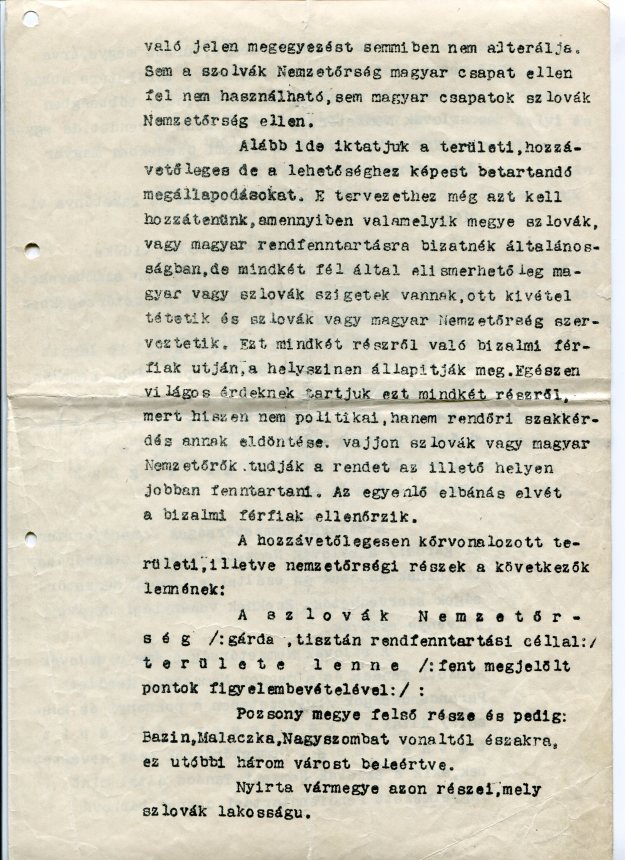
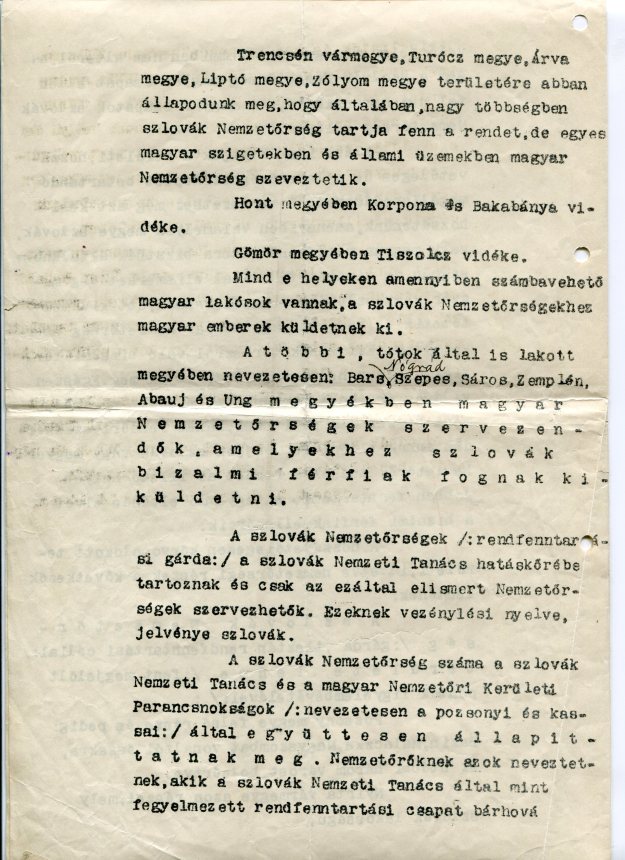
Letter from Budapest, 17 November 1918.
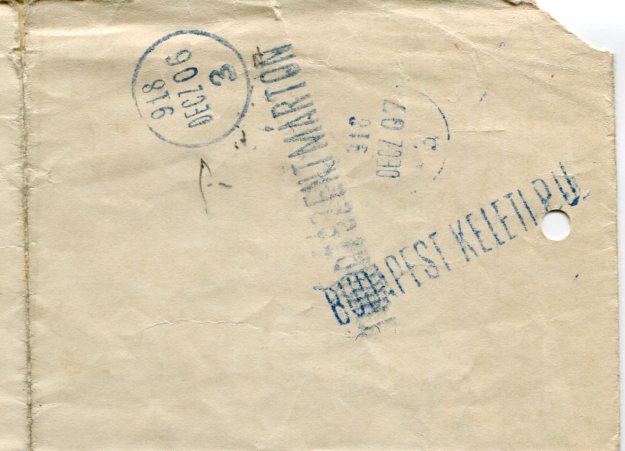
Reverse of letter from Budapest, 17 November 1918; with cancellation stamps, December 6 and 7, 1918.
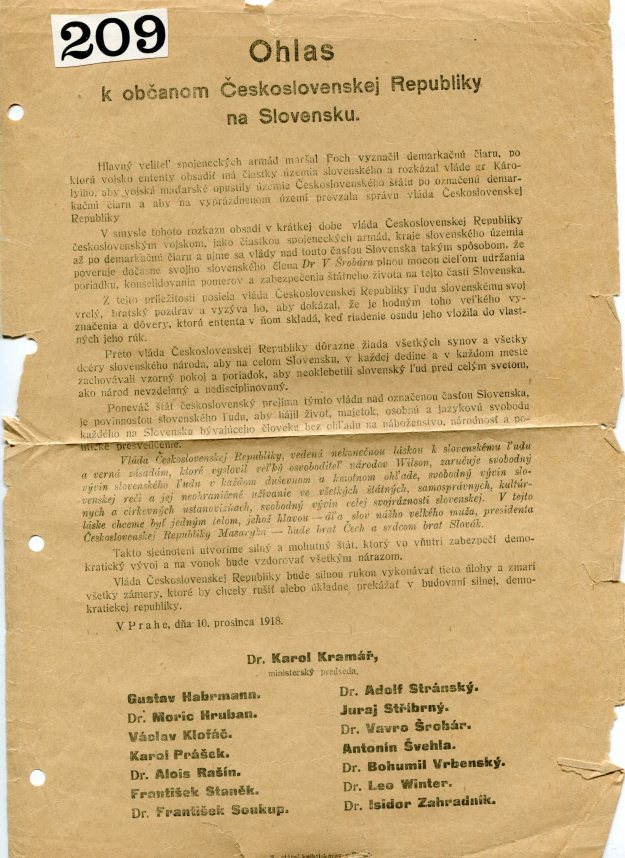
Prague, December 10, 1918
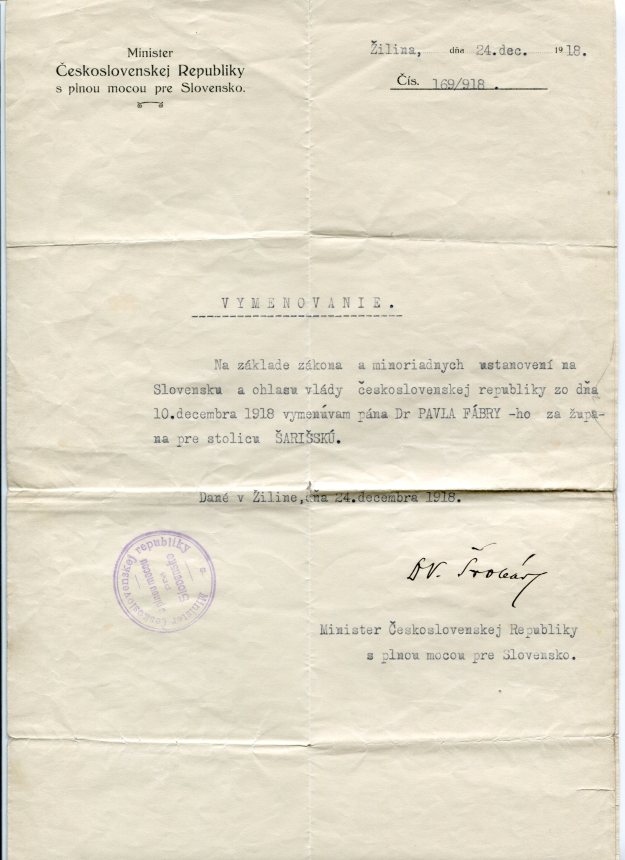
Letter from Zilina, 24 December 1918.
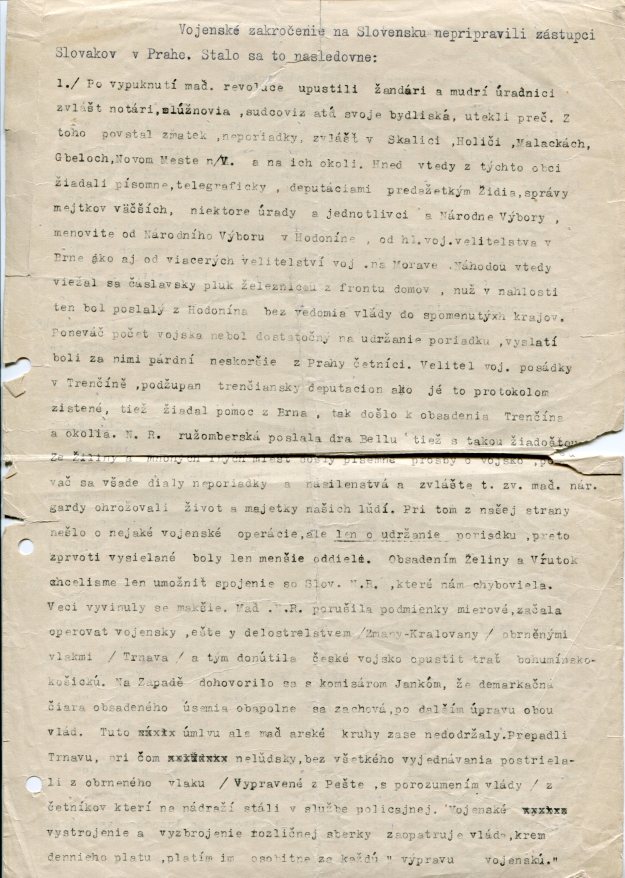
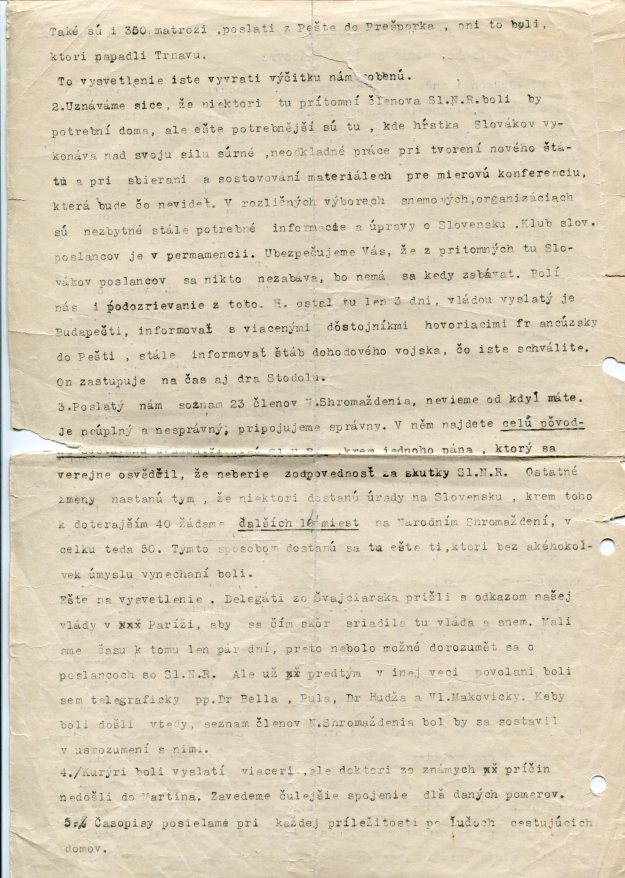
Letter from Prague, 28 December 1918.
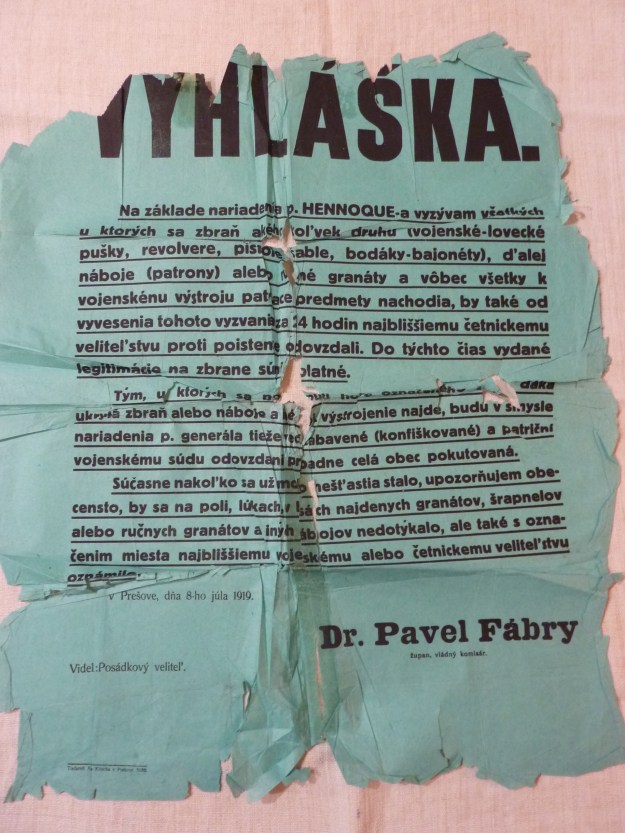
Political flyer from Presov, 8 July 1919.
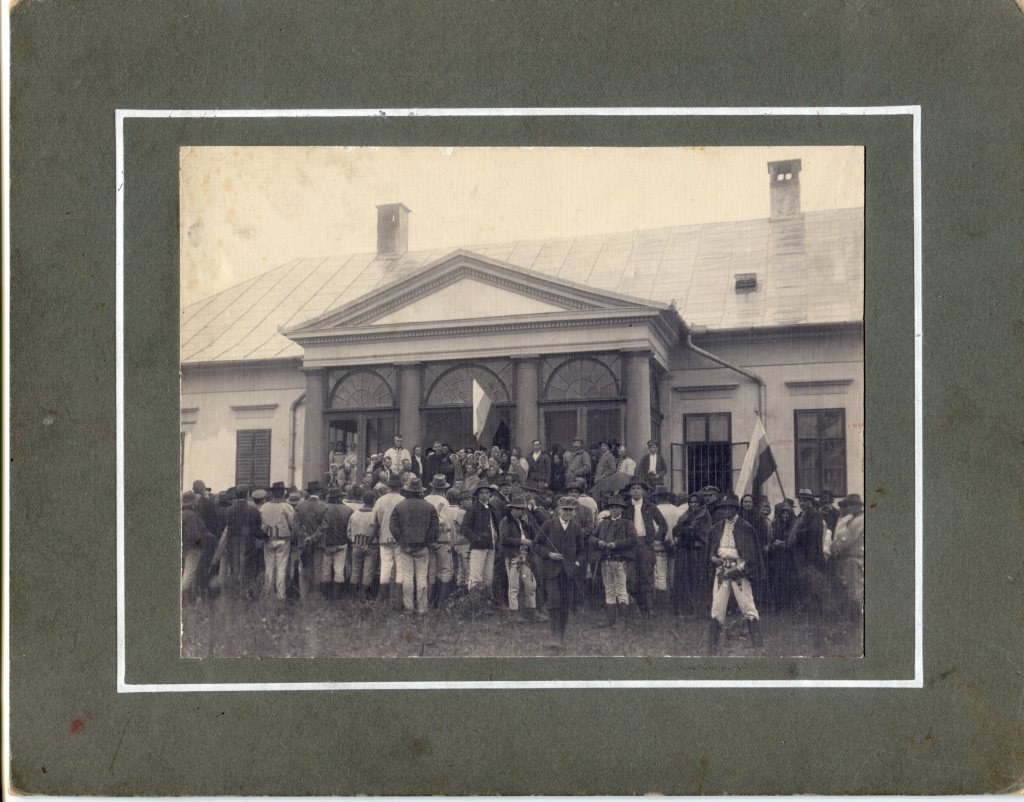
This photo is marked in pen on reverse “Saris, Tatuskova, slavnost 11 jan. 1920”. Pavel Fabry(Tatuskova) at center, speaking to the crowd; “slavnost” is Slovak for ‘celebration’.
Presov, 8 June 1920.

A National Gift to the People of Slovakia

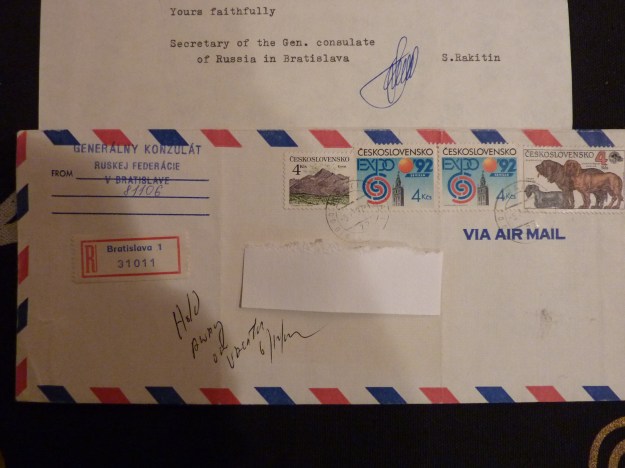
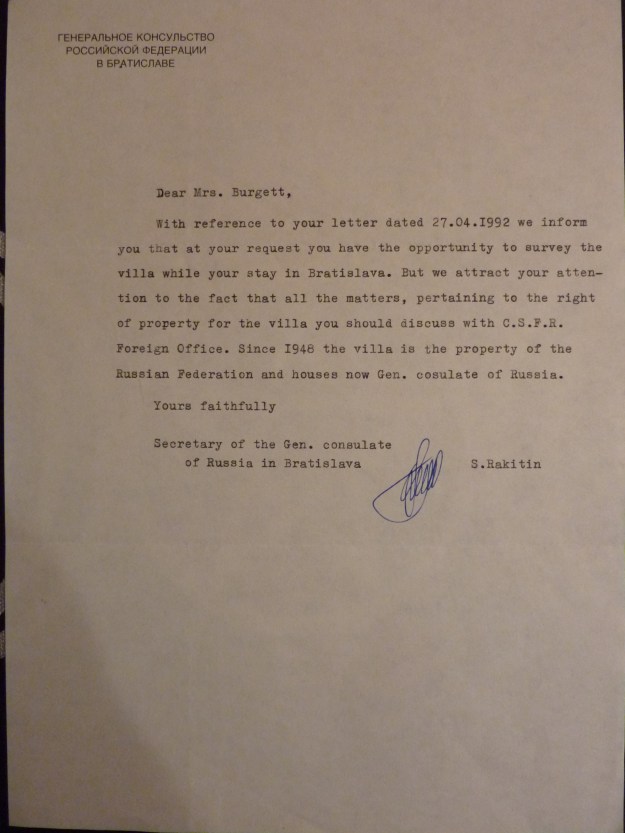
Letter from Russian Consulate, Bratislava, to my mother-in-law Olga Fabry-Burgett; June 1992.
Letter from the Secretary of the Gen. consulate S. Rakitin, admitting that our home was taken in 1948; which corroborates the personal testimony of Pavel Fabry.

Excerpt from C.V. of Pavel Fabry, 1955:

“After the Communist coup [February 1948] performed by Russian Deputy Foreign Minister [Valerian] Zorin for the Communists, the time is broken up with invoices to settle for my work against Communism as High Commissioner in 1919. And on the instructions of the insulted Mátyás Rákosi I was first of all relieved of all my functions and representatives, and subjected to all possible harassment, interrogations, etc. When I went to the delegation, as elected President of the Financial and Economic Committee of the General Assembly of the World Council of Churches, in Amsterdam, and was asked for my passport, I was arrested on the pretext of excessive imaginary charges. My whole fortune was taken, all accounts were confiscated and my Villa locked with furnishings, clothes, supplies, and everything, since it was the Consul-General of Russia; and on the same evening I was arrested as a “National Gift”, the nation was taken over, and in the night the Russians transferred the land register.”

My mother-in-law Olinka spent her whole life fighting to get the family home back from the Russians, but I will not be following in her footsteps – I want peace and to be happy! It is the sincere wish of myself and my family, that the Fabry home be donated to the city of Bratislava, as a gift to the people of Slovakia; to be of good use and service for the community, and that the garden be enjoyed by all people, as a memorial to our beloved ancestors.

The time has come for Russia to find a new home in Bratislava for their Consulate, obtained by legal means and not by brute force.

FREE ALEXEI NAVALNY!

Governor Fabry of Czechoslovakia

Grandpa Pavel Fabry made a lot of powerful enemies when he was a Governor in Czechoslovakia, he was not afraid to stand up to stark raving mad lunatics in power, and to make himself the target of Nazis and Communists. He also made many friends because he was a man of integrity, he loved and fought for his country, and he cared about the health and well-being of all Czechoslovakians. In his memory, I send my heartfelt appreciation to Washington state Governor Jay Inslee, for his strong and compassionate leadership – thank you!

There is a story connected to Pavel’s escape from the prison hospital in January 1949 I have not written about here, but it comes from his daughter Olinka Fabry; which was recorded by Olinka’s son, Victor(my husband), December 2008, several months before she passed away.

Many years before 1949, she does not recall what year exactly, her father Pavel was out driving in his car, when he saw a young girl lying hurt on the side of the road. He did not know who she was or what was wrong with her, but he picked her up and drove her to his own doctor. He told the doctor to give her anything she needed and he would pay for it. By some twist of fate, the father of this girl was the jailer in charge of the keys of the prison hospital, and he did not forget Pavel and his kindness – he helped him escape, in the words of Olinka, in a “uniform of a nun with an enormous hat”.

To refresh the memory, short excerpts from Pavel Fabry’s Curriculum Vitae, 11 September 1952:
 

[…]
During World-War-I, Mr. Fabry served as officer in an artillery division as well as in the service of the Army’s Judge Advocate-General. He became the first Secretary of the Provisional National Council established to prepare the liberation of Slovakia and the orderly transfer of its administration to the Czechoslovak Government. After the foundation of the Czechoslovak Republic, he was appointed Prefect (chief Government official) for the Eastern part of Slovakia.
When the Communist armies of the Hungarian Government of Bela Kun attacked Slovakia in 1919, Mr. Fabry was named High Commissioner Plenipotentiary for the defense of Eastern Slovakia. In this function he was entrusted with the co-ordination of the civil administration with the military actions of the Czechoslovak Army and of the Allied Military Command of General Mittelhauser. His determined and successful effort to prevent Eastern Slovakia to fall under the domination of Communist Armies – the victorious results of which contributed to the fall of the Communist regime in Hungary – drew on Mr. Fabry the wrath of the Communist leaders; they declared him the “mortal enemy of the people”, led violent press campaigns against him and attacked him overtly and covertly continually and at every opportunity.
[…]
Among civic functions, Mr. Fabry devoted his services particularly to Church, acting as Inspector (lay-head) of his local parish and as member of the Executive Committee of the Lutheran Church of Czechoslovakia. His appointment as delegate to the World Council of Churches’ meeting in Amsterdam in 1948 prompted his arrest by the Communist Government.
Although Mr. Fabry never stood for political office nor for any political party function, he was well known for his democratic and liberal convictions, and for the defense of these principles whenever his activities gave him the opportunity to do so. He earned himself a reputation in this respect which brought him the enmity of the adversaries of democracy from both the right and the left. He became one of the first Slovaks to be sent to a concentration camp following the establishment of a Pro-German fascist regime in 1939. His release could later be arranged and he was able to take active part in the underground resistance movement against the occupant; for this activity the German secret police (Gestapo) ordered his pursuit and execution in 1945, but he was able to escape the death sentence. In spite of his resistance record (or perhaps because of it), Mr. Fabry was among those arrested by the Russian Army, on the instigation of the Communist Party which could not forget his anti-Communist activities dating back all the way to 1919. Due to pressure of public opinion Mr. Fabry’s imprisonment at that time was very short; but when Communist seized power in Czechoslovakia in 1948, they did not miss the opportunity to settle accounts with him. He was removed from all his offices, his property was confiscated, he was imprisoned and subjected to a third degree cross-examination taking six months. No confessions of an admission which could have served as a basis for the formulation of an accusation could, however, be elicited from Mr. Fabry, and he managed to escape from the prison hospital where he was recovering from injuries inflicted during the examination. He succeeded to reach Switzerland in January 1949, where he has continued in his economic activities as member of the Board of Directors, and later President, of an enterprise for the development of new technologies in the field of bottling and food conservation. He was also active in assisting refugees and was appointed as member of the Czechoslovak National Council-in-exile.

From Pavel Fabry’s CV from 1955, translated from German:

“My parlous state of health has not allowed me to carry my work further. The law firm I have has only a limited representation of associates, and these are only my best performing workers.
After the Communist coup performed by Russian Deputy Foreign Minister [Valerian] Zorin for the Communists, the time is broken up with invoices to settle for my work against Communism as High Commissioner in 1919. And on the instructions of the insulted Mátyás Rákosi I was first of all relieved of all my functions and representatives, and subjected to all possible harassment, interrogations, etc. When I went to the delegation, as elected President of the Financial and Economic Committee of the General Assembly of the World Council of Churches, in Amsterdam, and was asked for my passport, I was arrested on the pretext of excessive imaginary charges. My whole fortune was taken, all accounts were confiscated and my Villa locked with furnishings, clothes, supplies, and everything, since it was the Consul-General of Russia; and on the same evening I was arrested as a “National Gift”, the nation was taken over, and in the night the Russians transferred the land register.
And so, my health still shattered by the persecution these Nazi monsters caused, they transferred me to the locked section of the hospital to make interrogations there. After seven months detention the workers and employees of some companies succeeded to liberate me in the night on January 21-22, 1949, and led me to a kamion near the border. I had foreseen that the police would know about my escape during the night, and that’s why I escaped (uberschreitete ?) to the Hungarian border with Austria, and again by the Austrian border, since I was immediately searched with many dogs.
I managed with the help of my friends to leave the Soviet zone disguised, and made it to Switzerland where I anticipated my wife and daughter.
The Swiss authorities immediately received me as a political refugee and assured me of asylum, and issued all the necessary travel documents.”

Letters from Fraňo Tiso

Who was Fraňo Tiso? When I first posted the image of his postcard to Vlado here, back in March of 2013, I was frankly too horrified to consider that he could be any relation to Jozef Tiso, that there were probably lots of people with the last name of Tiso. But considering the political connections that Vlado and Pavel had, that Fraňo was the former Slovak Ambassador to the Soviet Union, and that I also have letters from Fraňo to Pavel concerning his communication with Franz Karmasin (letters from Karmasin posted here), this Fraňo was very likely the cousin of Jozef Tiso; he is mentioned briefly in James Mace Ward’s “Priest, Politician, Collaborator: Jozef Tiso and the Making of Fascist Slovakia” (published 2013, Cornell University Press); from chapter 7, “Sacred Convictions, 1939-44”, page 206:

“Although still pro-German, [Jozef] Tiso also wanted greater independence, a desire that led to a sharp foreign policy turn: détente with the Soviet Union. In addition to general issues of sovereignty, the economics of German domination increasingly troubled him. His idea of the state was for “national” property to come into Slovak hands. Instead, German-held shares in Slovakia’s industry exploded to over half in 1942. The Reich meanwhile consumed around three-quarters of Slovak exports, paying in devalued credits instead of hard cash. Seeking relief from such economic dependence and exploitation, Ďurčanský as foreign minister looked east. Diplomatic ties with the Communist state offered markets, an ally for revising the Vienna Award, and the prestige of Great Power recognition. Despite a lifetime of anti-bolshevism, Tiso supported the strategy. He later claimed to have welcomed the 1939 Hitler-Stalin Pact, expecting it to facilitate the solution of “European questions” on the basis of the ethnic principle. In his first presidential address, he proposed Slovakia as “a mediator…between…the Slavic and German worlds.” Soon, he was courting “extensive economic relations” with the Soviets not only by exchanging ambassadors (sending to Moscow his cousin Fraňo) but even by congratulating Stalin on the anniversary of the October Revolution.”

More about Fraňo and Jozef Tiso is mentioned in David S. Wyman’s book “The World Reacts to the Holocaust” (published 1996, Johns Hopkins University Press):

“The fate of the Jewish population had been given more attention in Slovakia than in the Czech lands, mainly because of the involvement and complicity of the clero-fascist Slovak regime, headed by the Catholic priest-president Dr. Jozef Tiso. The role played by the Catholic clergy in Slovakia during World War II conformed with the antireligious propaganda of the Communist Party.

The initial attempt to review the birth of the Slovak state was made by the pre-war minister of justice Ivan Dérer, in his Slovenský vývoj a ľudácká zrada, fakta, vzpomínky a úvahy (The Slovak state and the treachery of the L’udaks: Facts, memories, and thoughts). The first writer to set a novel against the backdrop of the years of Slovak independence was Dominik Tatarka in his Farská republika (The Parish republic). Tatarka depicted the misguided policy and the corrupt leadership that ultimately led to the wholesale deportation and destruction of the Jewish population. Other authors, such as Hela Volanská and Katerína Lazarová, portrayed the heroic stance of Jewish participants in the Slovak National Uprising. The History of Modern Slovakia, the first in-depth study to disclose the policy of the Nazi puppet regime and to describe at great length the persecution of Slovak Jewry, was published in New York in 1955 by Dr. Jozef Lettrich, a chairman of the Slovak National Council who had fled after the Communist coup. The role of the Hlinka Guard and the Jewish plight were analyzed by Imrich Staňek, himself a survivor, in the 1958 Zrada a pád: hlinkovští separatisté a tak zvaný Slovenský stát (Treachery and downfall: The Hlinka separatists and the so-called Slovak state), written from a strictly Marxist-Leninist viewpoint.

The capture of Adolf Eichmann in May 1960 by the Mossad and his subsequent trial in Jerusalem were widely covered in the national press and media. Eichmann, notorious for engineering the deportation of both Czech and Slovak Jewry, was of major interest to the local population. (He had commuted between Berlin and Prague, where he resided in the elegant, confiscated Rosenthal villa, in the Střešovice district.) The Czech and Slovak press sent special reporters to cover the proceedings of the trial. One of these reporters, the writer Ladislav Mňačko, later published a book portraying Eichmann’s satanic role in the Holocaust. The testimonies given at the trial by survivors appeared frequently in the press and in Věstník ŽNO, the weekly bulletin of the Jewish Religious Communities in Prague. Many of these related to the wholesale deportation of Slovak Jewry orchestrated by the [Jozef] Tiso regime. During one of the sessions of the trial Eichmann’s claim that “the Slovaks gave away their Jews as one spills sour beer,” from Life magazine’s interview with him, was quoted. Widely repeated in the international press, this assertion provoked reactions among leading Slovak figures in exile. The Munich-based Fraňo Tiso, in an effort to whitewash the Slovak wartime leadership, published an article in which he stressed the endeavors of the “moderate parish regime” to save Jews from deportation. In response, Edo Friš took up the topic in the article “In the Background was Heydrich,” published in the Bratislava weekly Kultúrny život. The controversy focused on the visit of SS Obergruppenführer Reinhard Heydrich to Bratislava on April 10, 1942. Friš challenged [Frano] Tiso’s claim that the reason for Heydrich’s visit was to pressure the Slovak government to continue implementing the Final Solution. Citing documents referred to in The Destruction of Slovak Jewry, published some months earlier, Friš stressed the initiative and involvement of the Slovak leaders in the mass deportation of Jews; the aim of Heydrich’s visit, Friš added, was to assist the Slovak government in formulating a fallacious reply to the Vatican’s March 14, 1942, protest against the deportation of Jews. This was the first discussion of this sensitive issue in more than a decade.”

Here is another perspective of Fraňo Tiso, from the article “Slovak Historians In Exile In North America, 1945-1992” (published 1996), written by M. Mark Stolarik, Chair of Slovak History and Culture, University of Ottawa, Canada:

“Finally, another émigré journalist briefly settled in the Dominion and produced a significant work of scholarship. He was Dr. Fraňo Tiso (1894-1974), the former Slovak Ambassador to the Soviet Union between 1939 and 1941. Tiso fled Slovakia in 1945 and settled in Canada in 1950. In spite of his advanced age, he studied at the University of Montreal and in 1956 earned a Ph.D. in history. He published a portion of his dissertation on “The Empire of Samo, 623-658” in 1960. In 1957 he moved to West Germany where he edited the newspaper Slobodné Slovensko until his death.”

Obviously, I am very unsettled that I have these letters, I don’t know what to make of them yet, but I am publishing them here because I want to know the truth about the Fabrys, even if it shatters my whole lovely narrative about them – this is about history and not fiction.
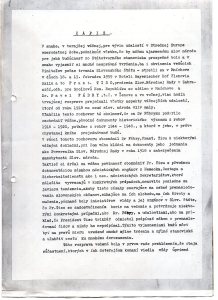
Frano Tiso-P.Fabry doc. 2-19-59 1
Frano Tiso-P.Fabry doc. 2-19-59 2

ZÁPIS

V snahe, v terajšej vážnej, pre vývin udalostí v Strednej Europe smerodatnej dobe, podniknúť všetko, čo by nášmu ujarmenému slov národu pre jeho budúcnosť zo štátotvorného stanoviska prospešné bolo a v snahe vyjasniť si mnohé nesprávné tvrdenia, ba i obvinenia vedúcich činiteľov počas trvania Slovenského štátu – stretli sa v Mníchove v dňoch 18. a 19. februára 1959 v Hoteli Bayerischer Hof členovia Exilu a to Frant. TISO, predseda Slov. Národnej Rady v Zahraničí, odb. pre Spolkovú Nem. Republiku so sídlom v Mníchove a Dr. Pavel FABRY, t.č. v Ženeve a vo voľnej, viac hodín trvajúcej rozprave prejednali všetky aspekty vážnejších udalostí, ktoré od roku 1918 na osud slov. národa vliv maly.
Uľahčila tento rozhovor tá okolnosť, že sa Dr Fabrymu podarilo zachrániť vážne, pôvodné dokumenty historického významu z rokov 1918 – 1920, poťažne z rokov 1944 – 1948., a ktoré v jeho, v práve chystanej knihe prejednávané budú.
V rámci tohoto rozhovoru oboznámil Dr Fábry, Frant. Tisu s niektorými vážnými dokladmi, pri čom váhu kládol na dokumenty jeho jednania ako Povereníka Slov. Národnej Rady v roku 1918 o zabezpečenia samobytosti Slov. národa.
Taktiež si držal za vážnu povinnosť oboznámiť Fr. Tisu s pôvodnou dokumentáciou zásahou nácistických orgánov z Nemecka, Gestapa a Sicherheitsdienstu ako i nem. nácistických Sekretariátov, ktoré náležite vyvracajú v konkretných prípadoch, menovite posledne sa javiacu tendenciu, akoby tieto zásahy smerujúce na osbné prenasledovania slovenských občanov, sihajúce na ích slobodu, na ích životy a mučenia, páchané boly iniciatívov vládz a jej orgánov v Slov. štáte, čo Fr. Tiso so zadosťučinením berie na vedomie a potvrdzuje niektorými konkretnými prípadmi, ako Dr. Fábry, a udalostiami, ako na príklad, že Prezident Tiso trikráť odmietol podpísať zákon o prenasledovaní židov a nikdy ho nepodpísal. Týmito vyjasneniami budú môcť byť na pravú mieru uvedené mnohé mýlne trdenia a mýlné stanoviská a uľahčiť cestu ku mnohému dorozumeniu.
Táto rozprava vedená bola v prvom rade prehlásením, že obaja súčastnení, ktorých v ích doterajšom konaní viedla vždy úprimná snaha, za v dobe daných okolností pomôcť svojmu rodu a berú za toto pred Bohom, národom a vlastným svedomím vždy a všade zodpovednosť.
Preto sa rozhodli, na základe v rozprave zistených okolností všetko potrebné podniknúť, aby vytýčený cieľ mohol byť uskutočnený, ktorého podrobností a postup pripravia do stretnutia najbližšej príležitosti.
Do tej doby overia tento záp-is svojím parafom a prosia Všemohúceho aby žehnal ďalšie kroky ích úsilia.

Dané v Mníchove, dňa 19. februára 1959.

Dr. Pavel Fabry parafuje:
Frant. Tiso parafuje:

Napísané v dvoch exemplároch parafom potvrdených.
————————————————————————————————–
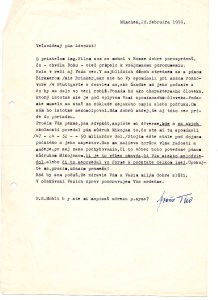
Frano Tiso letter 2-28-59

München, 28.februára 1959

Veľavážený pán Advokát!

S priateľom ing.Filom som sa mohol v Bonne dobre porozprávať, čo – chvála Bohu – tiež prispelo k vzájomnému porozumeniu.
Bola v reči aj Vaša vec. V najbližších dňoch stretnem sa s pánom Birknerom / nie Brinker, ako ste ho Vy spomínali pri našom rozhovore / v Stuttgarte a dozviem sa, aké úzadie má jeho podanie a čo by sa dalo vo veci robiť. Poznám ho ako charakterného človeka, ktorý istotne nie je pod vplyvom Vami spomínaného človeka. Podanie muselo sa stať na zaklade nejakéko omylu alebo podfuku. On sám ho istotne nekoncipoval. Mám dobrú nádej, že aj táto vec príde do poriadku.
Prosím Vás pekne, pán Advokát, napíšte mi dôverne, kde a za akých okolností povedal pán súdruh Mikojan to, čo ste mi tu spomínali /47 – 24 – 32 – – 50 miliardov dol. / Stojím ešte stále pod dojmom počutého a jeho aspektov. Raz ma zalieva horúca vlna radosti a nádeje, po nej zasa pochybovania, či to vôbec bolo povedané pánom súdruhom Mikojanom, či je to vôbec pravda, či Vás niekto nepodviedol, alebo či to nepovedal vo forme a podstate celkom inej. Upokojte ma, prosím, udaním prameňa!
Rád by som počuť, že zdravie Vám a Vašim milým dobre slúzi.
V očakávaní Vašich zpráv pozdravujem Vás srdečne.

P.S. Mohli by ste mi napísať adresu p. syna?

Frano Tiso

—————————————————————————————————-
Frano Tiso telegram 4-7-59
—————————————————————————————————-

Frano Tiso letter 6-29-59 1
München, 29. júna 1959

Frano Tiso letter 6-29-59 2

Veľavážený pán Doktor Fábry!

Keďže prem mojim odchodom do Pariza nemohol som sa stretnúť s p. št. sekretárom Karmasinom, aby som s ním pohovoril v zmysle toho, na čom sa dohodli pán Filo a Birkner, napísal som mu list a vysvetlil, že nemôže byť ani v jeho záujme, aby povstal proces a aby sa rozprestierali pred nepritaeľskou verejnosťou veci, ktoré najradšej zabudnúť treba.
Odpoveďou napísal mi p. št. sekr. Karmasin toto:
“Die Beilage in Angelegenheit Dr. Fabry habe ich erhalten. Ich bin an Dr. Fabry weder positiv noch negativ interessiert, ich war es auch nie. Nun hat aber Dr. Fabry behauptet, dass er über meine Veranlassung von der Gestapo verhaftet wurde. Das ist eine glatte Unwahreit und ich kann nun keine Erklärung adgeben, dass ich ihn tatsächlich verhaften liess. Ich habe im ganzen Leben niemenden verhaften lassen, also auch Dr. Fabry nicht, ganz abgesehen davon, dass ich gar nicht die Möglichkeit hatte, jemanden verhaften zu lassen. Es müsste also erst Dr. Fabry seine Behauptung widerrufen, dass er über meine Veranlassung verhaftet wurde, denn ich kann Ihnen nicht zustimmen, wenn Sie schreiben, dass mit einer Zurückziehung niemand zu Schaden kommen kann. Ich z. B. Schon! Denn wenn ich meine Erklärung zurückziehe, heisst das, dass ich Weisungsbefugnis an die Gestapo hatte, was nie und nimmer stimmt, und ich komme in Teufels Küche.
Ich lege bestimmt keinen Wert darauf, in einen Prozess verwickkelt zu werden und aus diesem Grunde zusätzlich noch in die Öffentlichkeit gezerrt zu werden, aber mit einer einseitigen Zustimmung von mir ist es nicht getan.
Ich halte es für das zweckmässigste, wenn die beteiligten Herren sich zu einer Aussprache zusammenfinden würden, damit man gemeinsam Mittel und Wege suchen kann, um die Angelegenheit zu bereinigen.”
Z listu vidno, že aj Vy ste spravili chybu, keď ste p.Karmasinovi imputovali čin, ktorý on nespáchal. Ale aj to vysvitá z listu, že sa neuzatvára pred pokojným riešením veci. Hodno by bolo, uskutočniť jeho návrh.
V Bonne som Vás hľadal! Už ste boli odcestovaný. S týmto v súvislosti rád by som Vás usistiť, že nijako sa Vám nenatískam ani vo veci vypísania otáznych statí z “Grenzbote”; ale mohol som očakávať, že mi dáte alebo Vy, alebo priateľ Filo na vedomie, že to už nie aktuálne. Bol by som si moj opravdu drahý a takmer na hodiny rozpočítaný čas ináč zariadil. Takto som odmietol 15 prednášok.
Nie je to však nešťastím. Som Vám rád napomoci aj v budúcnosti, len prosím o dodržanie dohovoreného; či už priamo medzi nami, alebo cestou tretej osoby dohovoreneho.
Byt chvála Pánu Bohu už mám! Dobrí priatelia mi ho sprostredkovali, začo som im hlboko povďačný!
Prosiac, aby ste Milostivej panej Manželke odovzdali úctivý rukybozk, pozdravujem Vás srdečne.

Tiso

——————————————————————————————-
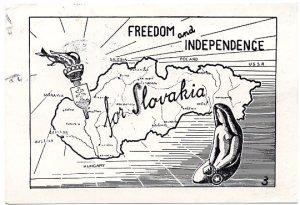
Frano Tiso postcard to Vlado 4-12-60

Frano Tiso postcard to Vlado 4-12-60 reverse

It begins with a book…

Last August, I took another look through the family collection of books about Czechoslovakia. What I found was a copy of “HISTORY OF MODERN SLOVAKIA” by Jozef Lettrich, which had, sadly, been overlooked in a damp corner of the house.
034
But in spite of mold damage, I put it in a mylar sleeve and kept it nearby, because the book mentioned Pavel Fabry (Vladimir Fabry’s father) as one of the first to be imprisoned in a concentration camp on March 30, 1939, in the state prison of Ilava.
036
I recognized the book immediately, since I had seen at least a half dozen photostatic copies in my archive from page 144, underlined in the same places, which Pavel must have referred to in his case for reparations in Germany.
037
038
From Chapter Two, “Under the Swastika”, pages 143-144:

“When prisons were no longer adequate, the Slovak Government issued an order on March 24, 1939, “concerning the imprisonment of the enemies of the Slovak State.” […] This order authorized the Minister of Interior to “arrange for the jailing of persons whose past and present activities give reason to fear that they would continue to obstruct the building of the Slovak State.” The Minister of the Interior was further authorized to create “a camp for the detention of such persons in which prisoners would be compelled to perform physical labor.” Vojtech Tuka lost no time in transforming the old state prison in Ilava into a “security camp,” the first concentration camp in Slovak history. The Ilava prison thus became the home of Slovak democrats–of authors, priests, teachers, newspapermen and statesmen, as well as of simple farmers, workmen and students. The first inmates of this camp, brought there on March 30, 1939, were: Anton Štefánek, Ján Ursíny, František Zimák, Ján Pocisk, Ferdinand Benda, Karol Hušek, Ján Paulíny-Toth, Jozef Rudinský, Pavel Fábry, Andrej Djuračka, František Třešnák, Hana Styková, Vinco Mihalus and Jozef Lettrich, three Members of Parliament, two Senators, three journalists, the Chairman of the Slovak National Party, and an actress from the Slovak National Theater. Others soon followed. In the few years of existence of the Slovak State more than 3,000 persons were to pass through the gates of the Ilava concentration camp. Some remained a few days, some for months, and others for several years. They were all sent to Ilava without trial , without judgement, without indictment, merely upon a denunciation and by administrative order of the Ministry of Interior. Tuka, on April 15, 1939, made the following characteristic statement, “Those who spread alarming rumors and false reports are obstructing our way. We have made arrangements to handle all of them in Ilava. Many of them are there now and many others will follow them there. It is your duty to denounce these instigators to the police and the Hlinka Guards, and the Slovak Government will take care of them.”

030
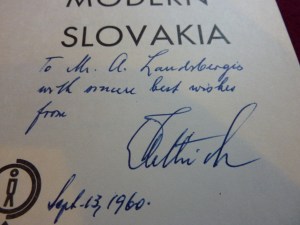
I now have another copy of this book, in very good condition, signed and inscribed by Jozef Lettrich on the title page. It was only after this that I looked at the title page of the copy I found, and it was also inscribed.
028
Title page from second copy.
040
From the copy that belonged to Pavel Fabry.

When I finally started to read it, it dawned on me that this book was written by the same Jozef Lettrich that was in prison with Pavel, and that I had letters from Lettrich – Chairman of the Slovak National Council in Czechoslovakia, who was an exile living in the United States. So I went back to the boxes. I was amazed by how this one book began to illuminate what I had missed before: letters to and from Milan Hodza – Prime Minister of Czechoslovakia; Jan Pauliny-Toth – lawyer and politician; Peter Pridavok – Chairman of the Slovak National Council in London; Juraj Slavik – Czechoslovak Ambassador to the United States; General Lev Prchala; Emil Stodola, and Kornel Filo. Pavel Fabry was seeking reparations for many of these people and others in Berlin, as their lawyer, so I have some of their testimonies, in Slovak, German and French.

But then I found two letters from Franz Karmasin, one of them signed. Franz Karmasin was state secretary for the German Minority, under President of Slovakia and Catholic Priest Jozef Tiso: an anti-semite who collaborated with Hitler and was key in making the Slovak State the first Nazi ally in the Final Solution, deporting tens of thousands of Jewish people to their extermination – he was hanged after WWII; Karmasin was also senticed to death but escaped prosecution and was living in exile in Munich. From what I was able to translate, Karmasin seems to be arguing against something Pavel said about him – and he begins his first letter in praising Pavel on his son Vlado – The Hague and Nuremberg are also mentioned. There were no letters from Pavel to Karmasin. I’ve transcribed the letters here for others to translate.

Page056

Page055

Dipl. Ing. Franz Karmasin
München 8
Trogerstaße 32

München, den 8-7. 1959

Herrn
Dr. Paul Fabry

14 Chemin Thury
Geneve

Sehr geehrter Herr Dr. Fabry!

Unsere gestrige Aussprache hat mich sehr stark an Aussprachen in der Heimat erinnert. Ich glaube, diese angenehme Atmosphäre gibt es nur jenseits der Karpaten. Ich bitte, es nicht als Anmassung zu betrachten, wenn ich Sie zu Ihrem prächtigen Sohn beglückwünsche. Er hat großen Eindruck auf mich gemacht und ich freue mich wirklich von ganzem Herzen, dass die slowakische Sache so einen hervorragenden Vertreter ihrer Interessen besitzt.
In der Kanzlei habe ich mir dann den sehr dicken Akt “Dr. Fabry” vorgenommen. Ich war froh, dass ich dies erst nachher getan habe, ich wäre sonst kaum zu der Besprechung gekommen. Ich habe sehr stark den Eindruck, dass Sie in der Darstellung und Beurteilung der Situation der Deutschen Volksgruppe in der Slowakei sich weniger von Tatsachen, als vielmehr von Gefühlen leiten liessen. Ich kann es verstehen, umsomehr, als die Grenzen zwischen Reichsdeutschen und Volksdeutschen von Aussen her nicht immer sichtbar waren und vor allem die Situation der Volksgruppe und der Volksgruppenführung nicht für eine öffentliche Diskussion geeignet war. Aber in Ihren Ausführungen sind Sie doch etwas hart, ich darf Ihnen das in aller fahrens mit Ihnen und Ihrem Herrn Sohn über diese Dinge diskutieren, jetzt ist nicht der geeignete Zeitpunkt dazu. Ich will Ihren nur zu bedenken geben, dass der deutsche evangelische Bischof Scherer, für dessen Ernennung ich mich übrigens sehr stark eingesetzt habe und fast alle evangelischen u. katholischen Pfarrer Mitglieder der Deutschen Partei waren und dass die Deutsche Partei bei den Nürnberger Verfahren ausgeklammert wurde, obwohl man den Aliierten bestimmt nicht Unkenntnis der Lage vorwerfen konnte. Auch das Dokumentenmaterial, wenn man es vollinhaltlich zur Kenntnis nimmt, spricht eine andere Sprache als Ihre Darstellungen. Die Offenheit, mit der wir gestern gesprochen haben, verpflichtet mich, Ihnen das zu schreiben.
Die Zusatzerklärung habe ich lt. Durchschlag an das Regierungspräsidium, an Dr. Virgano, Herrn Minister Dr. Tiso und Herrn Birkner geschickt. Ich bin gespannt, wie sich die Angelegenheit weiter entwickeln wird.

Hochachtungsvoll!

(Karmasin)

Page057

Copy

Dipl. Ing. Franz Karmasin
München 8
Trogerstaße 32

München, den. 8.7.1959

An das
Regierungspräsidium
Köln
Zeughausstr. 2-4

Sehr geehrte Herren!

Betr.: Dr. Paul Fabry

Ich habe die verschiedenen Schriftstücke im Falle Dr. Paul Fabry, soweit sie mir zur Verfügung stehen, nochmals durchgesehen und darf meine seinerzeitige Darstellung wie folgt ergänzen:

Ich habe dargelegt, dass die Behauptung, Dr. Fabry sei durch die Gestapo verhaften worden, falsch sei, da sich auf dem Gebiete der Slowakei keine Gestapo befunden hat. Dagegen hatten z.Zt. der Besetzung des slowakischen Staatsgebietes rechts der Waag während der Tschechenkrise durch deutsche Truppen Organe des Sicherheitsdienst Dienst gemacht. Ich glaube mich erinnern zu können – ohne es allerdings beschwören zu können -, dass durch die deutschen militärischen Kommandostellen Angehörige der Hlinkagarde (HG) und der Freiwilligen Schutzstaffel (FS) diesen Organen als Hilfskräfte zugeteilt wurden. Inwieweit sich diese im Zuge der revolutionären Ereignisse Übergriffe zuschulden kommen ließen, entzieht sich meiner Kenntnis, vor allem aber meiner und meiner Mitarbeiter Verantwortung. Sie unterstanden, falls sie sich in die Dienst der Deutschen Wehrmacht oder des SD begeben hatten, nicht mehr der Befehlsgewalt der Volksgruppe.

Zu dieser Ergänzung fühle ich mich verpflichtet einerseits, weil Aussenstehende die Unterschiede zwischen SD und Gestapo nicht ganz klar waren, andererseits weil mir im Interesse meiner ehemaligen Mitarbeiter selbst sehr viel an der Klärung dieser Angelegenheit liegt. Ich bitte, die Ergänzung in diesem sinne zur Kenntnis zu nehmen.

Hochachtungsvoll!

(Karmasin)

Postcards

Many of the postcards in the Fabry collection are of typical images from Switzerland, but there are a few that stand out in contrast.
(click images to enlarge)
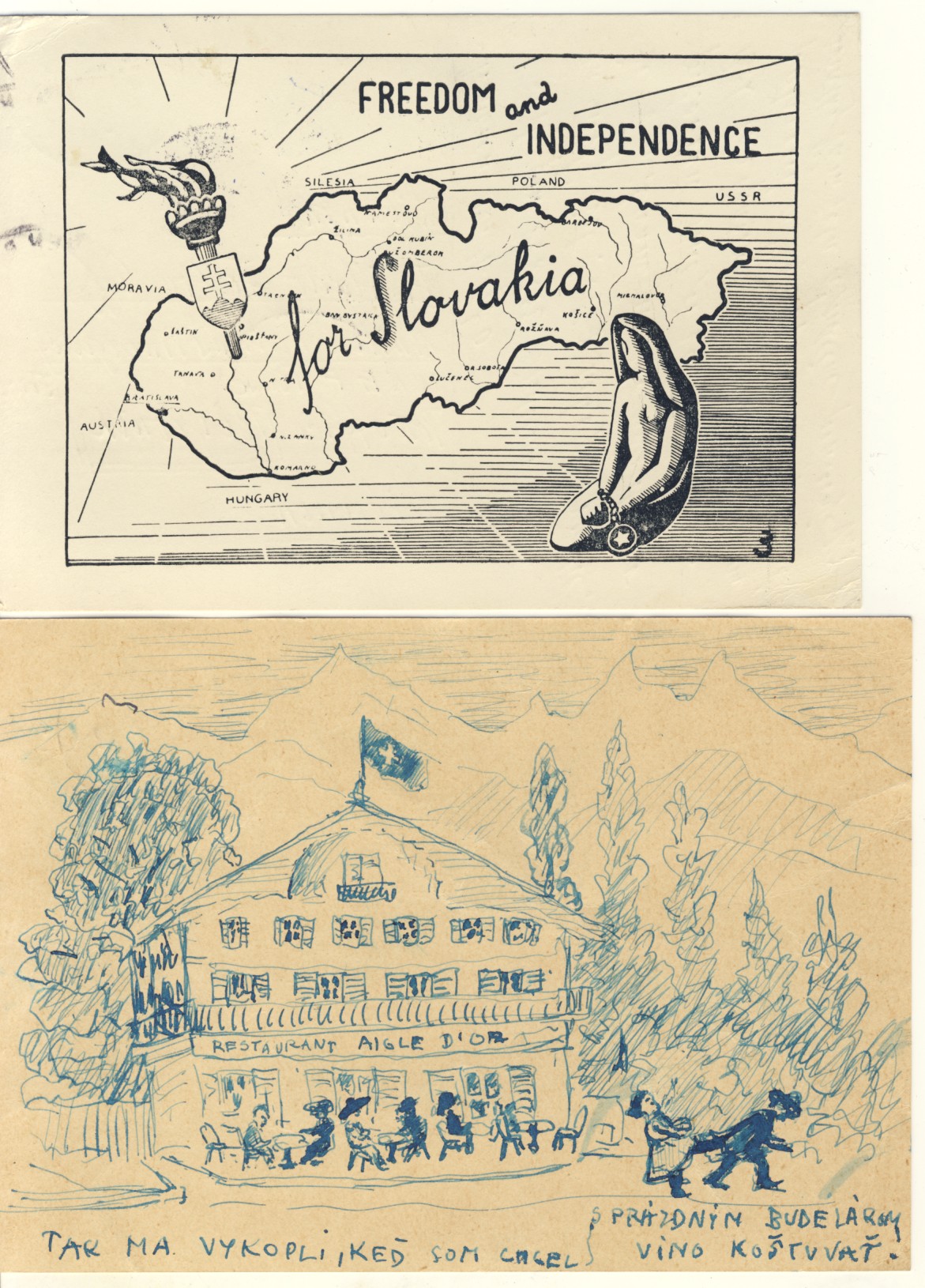
Unusual Postcards
“Freedom and Independence for Slovakia” was sent from Munich on April 12, 1960, and signed by someone named “Tiso”, but not Jozef Tiso.
The second card, drawn by Dr. Pavel Fabry and written in Slovak, was sent from Aigle, in the Swiss canton of Vaud (a place I am very fond of) on May 1, 1949. I tried to translate this, but was not successful – something about being kicked out of place (a woman appears to be kicking the backside of a man in the drawing, too).
I recognized this image immediately – Lenin’s Tomb and the Kremlin:
Lenins Tomb Postcard
The postcard is written in German and dated January 1, 1949, with stamps and cancels from both Denmark and Czechoslovakia – what makes this one even more interesting is that the card is from the Soviet Union, written in Cyrillic.
Lenins Tomb Postcard Reverse
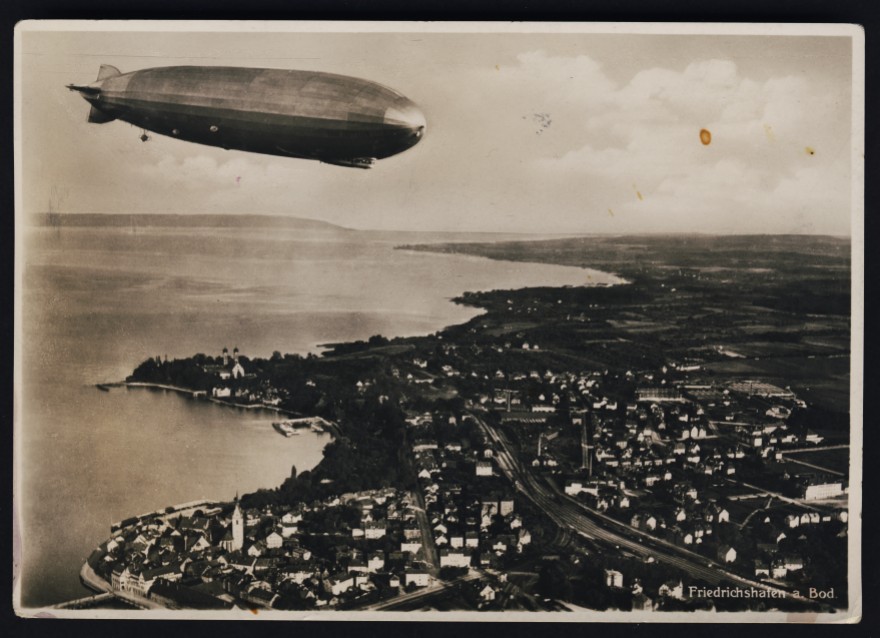
I couldn’t believe my eyes when I found this – a postcard of the Graf Zeppelin sent from the Graf Zeppelin.
Fabry Archive - Selected Photographs (61)
Fabry Archive - Selected Photographs (62)
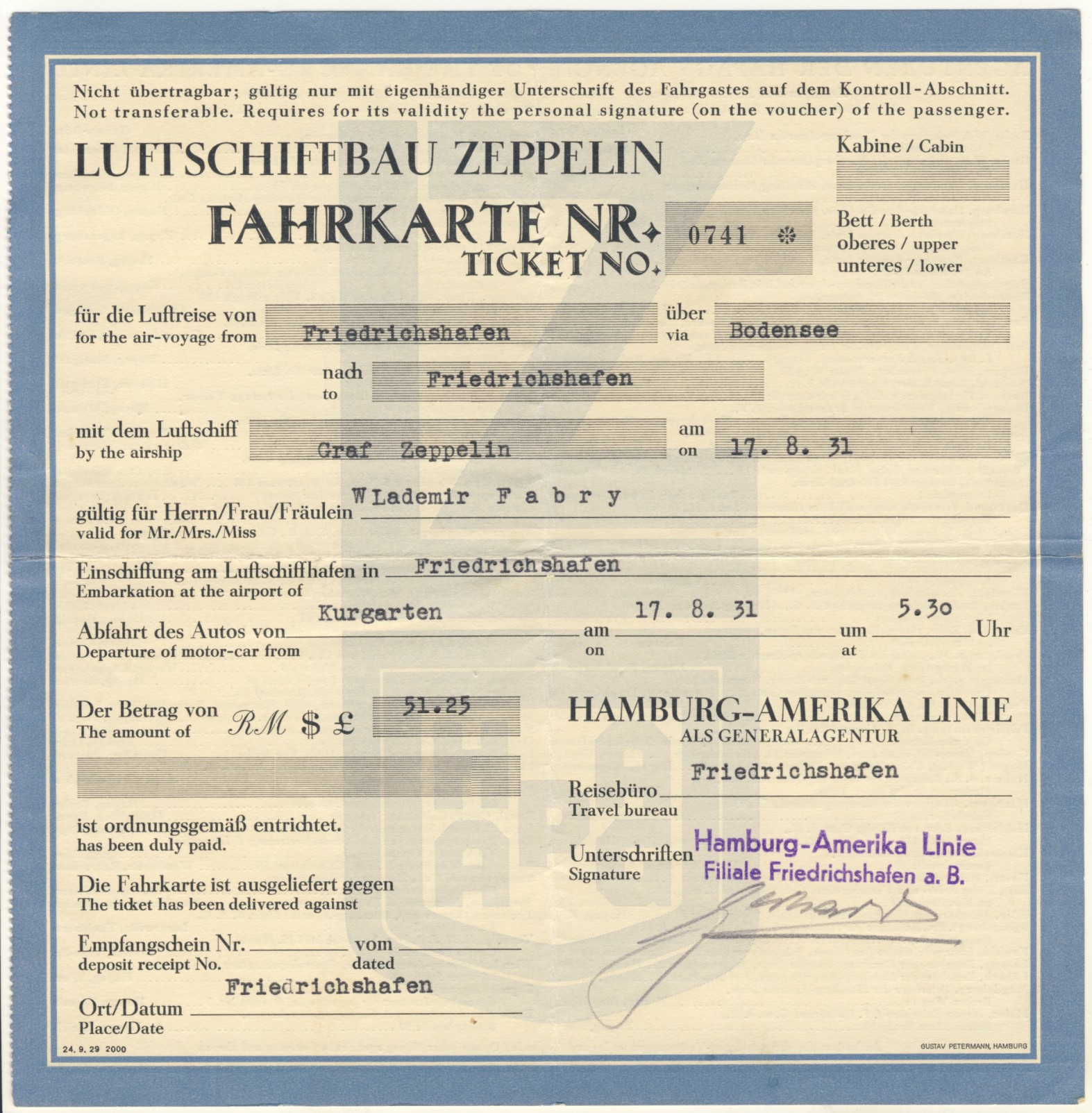
In an entirely different box of papers I found the original ticket for the Zeppelin ride, dated August 17, 1931, with the name “Wladimir Fabry”.
Graf Zeppelin Ticket
Graf Zeppelin Ticket Reverse
Lucky for him it wasn’t a ticket on the Hindenburg.

Congressional Record September 25, 1961

Since I’m not finished translating a document in German, I will give you a document written in English, from the Monday, September 25, 1961 Congressional Record: “Extension of Remarks of Hon. William W. Scranton of Pennsylvania in the House of Representatives”

Mr. SCRANTON. Mr. Speaker, in the tragic air crash in which the world lost the life of Dag Hammarskjold, we also suffered the loss of the life of Dr. Vladimir Fabry, the legal adviser to the United Nations operations in the Congo.
In the following statement by John C. Sciranka, a prominent American Slovak journalist, many of Dr. Fabry’s and his esteemed father’s attributes and good deeds are described. Dr. Fabry’s death is a great loss not only for all Slovaks, but for the whole free world.
Mr Sciranka’s statement follows:

Governor Fabry (Dr. Fabry’s father) was born in Turciansky sv. Martin, known as the cultural center of Slovakia. The Communists dropped the prefix svaty (saint) and call the city only Martin.
The late assistant to Secretary General Hammarskjold, Dr. Vladimir Fabry, inherited his legal talents from his father who studied law in the law school at Banska Stavnica, Budapest, and Berlin. The old Governor before the creation of Czechoslovakia fought for the rights of the Slovak nation during the Austro-Hungarian regime and was imprisoned on several occasions. His first experience as an agitator for Slovak independence proved costly during his student days when he was arrested for advocating freedom for his nation. Later the military officials arrested him on August 7, 1914, for advocating a higher institute of education for the Slovakian youth in Moravia. This act kept him away from the front and held him back as clerk of the Bratislava court.
He was well equipped to aid the founders of the first Republic of Czechoslovakia, which was created on American soil under the guidance and aid of the late President Woodrow Wilson. After the creation of the new republic he was made Governor (zupan) of the County of Saris, from which came the first Slovak pioneers to this city and county. Here he was confronted with the notorious Communist Bela Kun, who made desperate efforts to get control of Czechoslovakia. This successful career of elder Governor Fabry was followed by elevation as federal commissioner of the city of Kosice in eastern Slovakia.
But soon he resigned this post and opened a law office in Bratislava, with a branch office in Paris and Switzerland. The Governor’s experience at the international court gave a good start to his son Vladimir, who followed in the footsteps of his father. During World War II the elder Fabry was imprisoned by the Nazi regime and young Vladimir was an underground resistance fighter.
Dr. Vladimir Fabry, 40-year-old legal adviser to Secretary Dag Hammarskjold with the United Nations operation in Congo, who perished in the air tragedy, was born in Liptovsky Svaty Mikulas Slovakia. He received his doctor’s degree in law and political science from the Slovak University in Bratislava in 1942 and was admitted to the bar the following year. He was called to the United Nations Secretariat in 1946 by his famous countryman and statesman, Dr. Ivan Kerno, who died last winter in New York City after a successful career as international lawyer and diplomat and who served with the United Nations since its inception. Dr. Vladimir Fabry helped to organize postwar Czechoslovakia. His family left the country after the Communist putsch in February 1948. His sister Olga is also in the service of the United Nations in New York City [as a Librarian.-T]. His father, the former Governor, died during a visit to Berlin before his 70th birthday, which the family was planning to celebrate on January 14, 1961, in Geneva.
Before going to the Congo in February, Dr. Fabry had been for a year and a half the legal and political adviser with the United Nations Emergency Force in the Middle East. In 1948, he was appointed legal officer with the Security Council’s Good Offices Committee on the Indonesian question. He later helped prepare legal studies for a Jordan Valley development proposal. He also participated in the organization of the International Atomic Energy Agency. After serving with the staff that conducted the United Nations Togaland plebiscite in 1956, he was detailed to the Suez Canal clearance operation, winning a commendation for his service.
Dr. Vladimir Fabry became a U.S. citizen 2 years ago. He was proud of his Slovak heritage, considering the fact that his father served his clerkship with such famous Slovak statesmen as Paul Mudron, Andrew Halasa, Jan Vanovic, and Jan Rumann, who played important roles in modern Slovak history.
American Slovaks mourn his tragic death and they find consolation only in the fact that he worked with, and died for the preservation of world peace and democracy with such great a leader as the late Dag Hammarskjold.