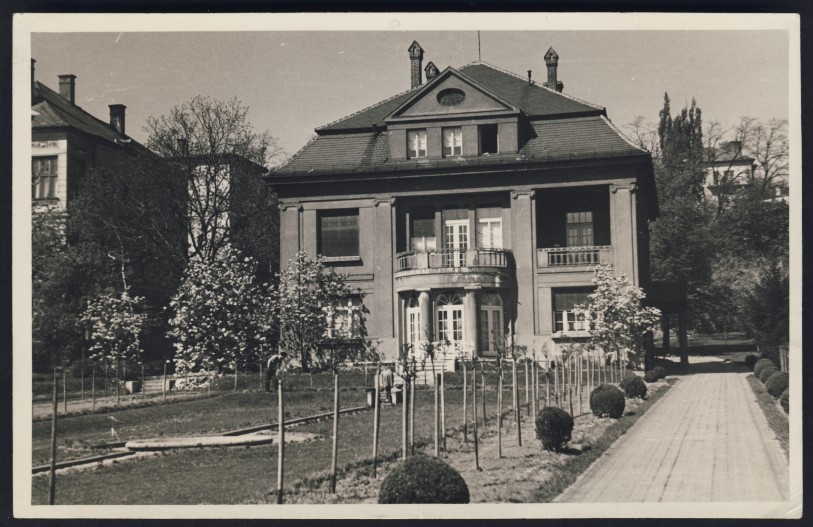
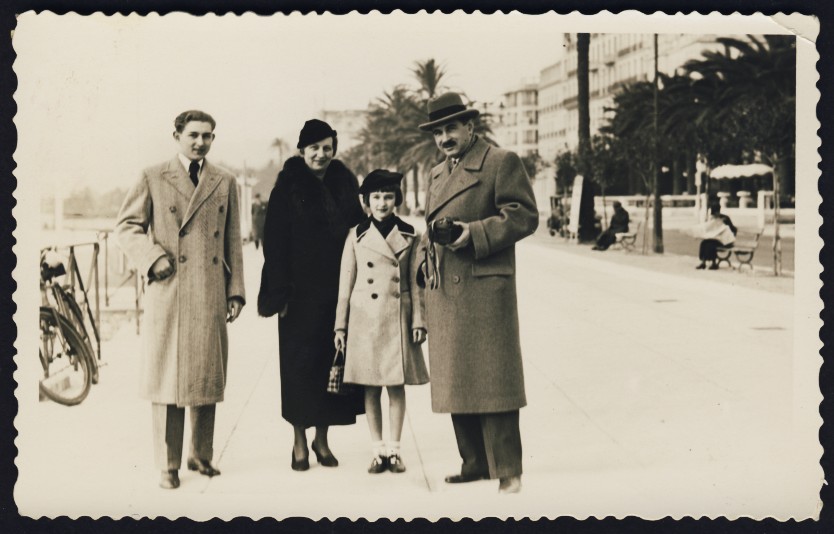
Tag Archives: translating

Letters from General Lev Prchala, 1958

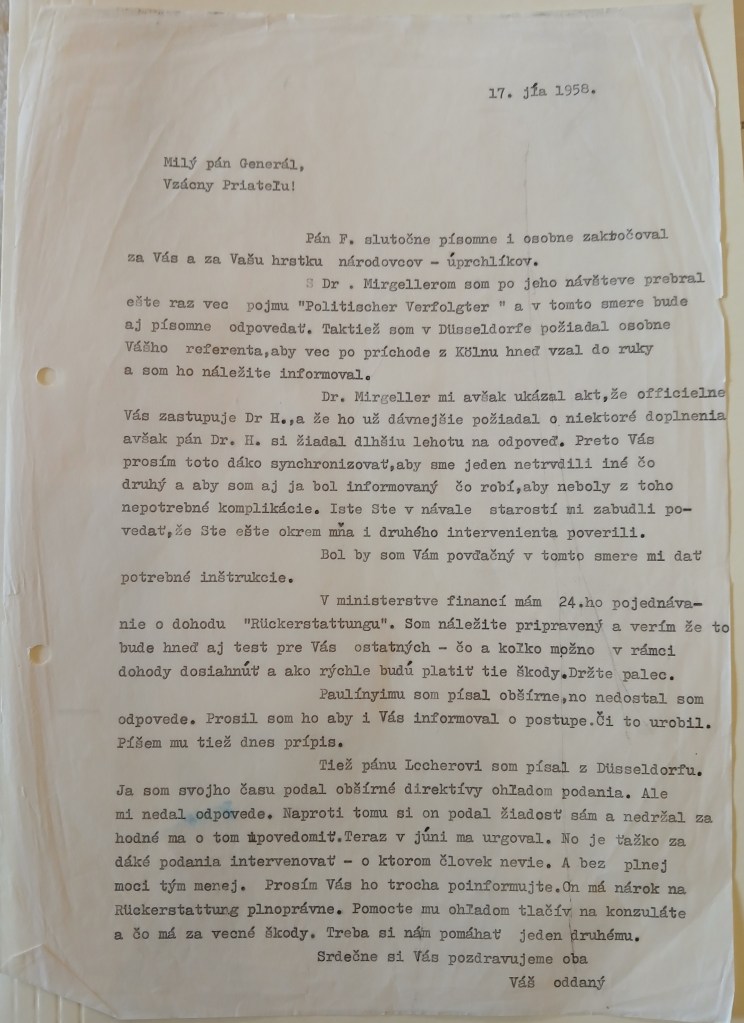
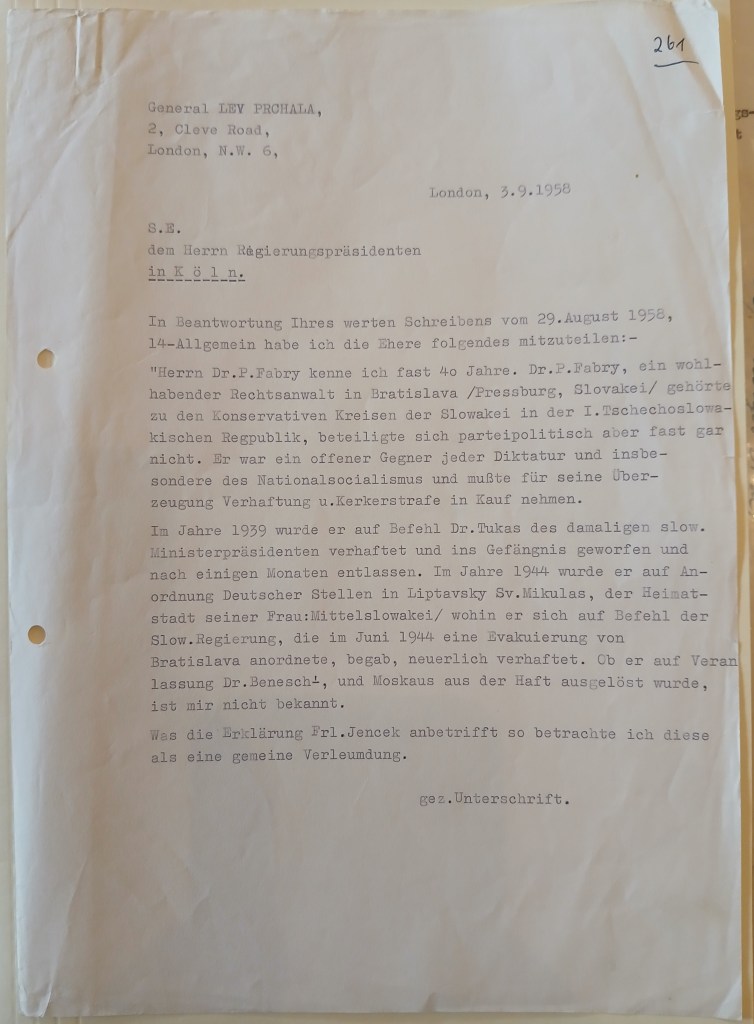
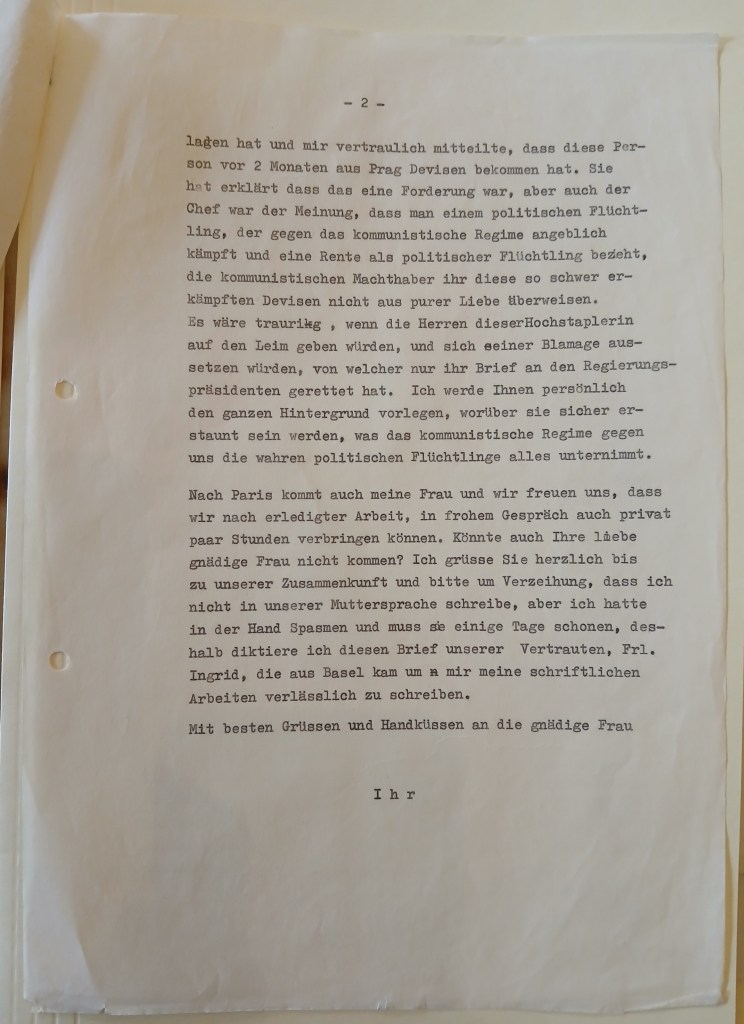
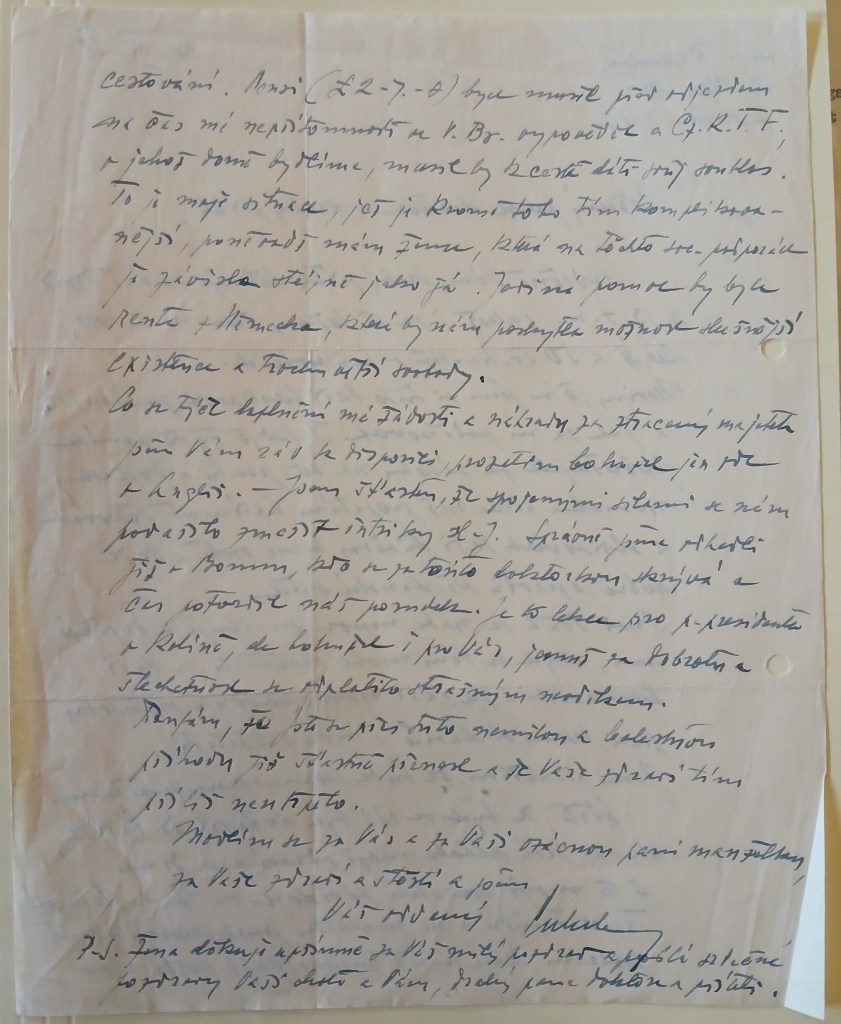
Here are more letters from General Lev Prchala to Dr. Pavel Fabry (Vlado’s father) from 1958. I have also included duplicates of letters from Pavel. Thank you to Miroslav Kamenik for translating many of the letters here!

From Lev Prchala, 29.3.58

Vážený pane doktore, drahý příteli,

již dlouho jsem Vám nepsal. Byl jsem dosti vážně churav a ještě dnes nejsem ve své kůži. Trpím rheumatickými bolestmi svalstva a rychlým úbytkem váhy. Není vyloučeno, že je to ve spojení se zdejším podnebím, je však také možné, že jde současně o neuralgii způsobenou celkovým stavem mých nervů. Nebylo by divu, povážím-li co jsem za svého života musel unésti. Právě nejnověji mému zdravotnímu stavu a nervovému systému neprospěl dopis Regierungspräsidenta z Köllnu, jehož opis přikládám.

Byl bych Vám velmi povděčen, kdybyste mi laskavě co nejdříve oznámil svůj názor a poradil, co dále dělat. Doufám, vážený pane doktore, že jste alespoň Vy zdráv v lepším švýcarském klimatu a jsem se srdečným pozdravem

Váš oddaný

Prchala

Dear Doctor, dear friend,

I have not written to you for a long time. I have been quite seriously ill and am still not myself today (in my senses?). I suffer from rheumatic muscle pains and rapid weight loss. It is not impossible that this is connected with the local climate, but it is also possible that it is at the same time neuralgia caused by the general condition of my nerves. It would not be surprising, considering what I have had to endure in my lifetime. Most recently, my health and nervous system have not benefited from the letter from the Regierungspräsident of Köln (Cologne, Germany), a copy of which I enclose.

I should be very grateful if you would kindly let me know your opinion as soon as possible and advise me what to do next. I hope, dear Doctor, that you at least are well in the better climate of Switzerland, and I am with cordial regards

Your devoted

Prchala

[Translation: Miroslav Kamenik / 17.4.2025]
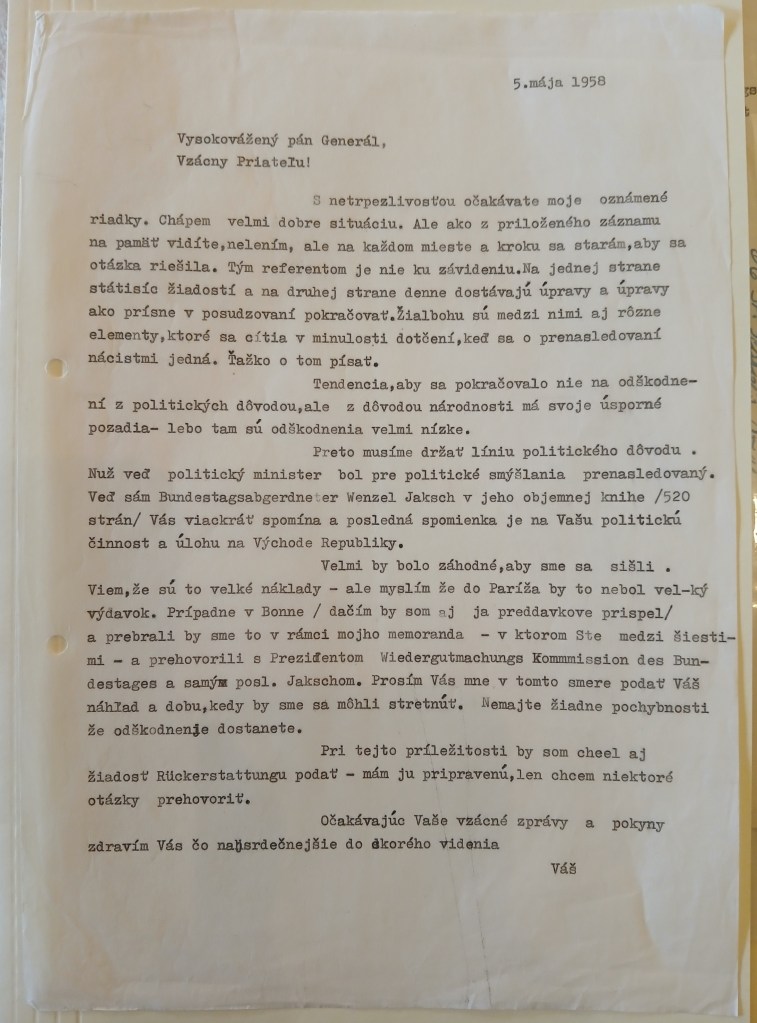
From Pavel Fábry, 5.mája 1958 (5 May)

Typewritten in Slovak language

Vysokovážený pán Generál,

Vzácný Priateľu!

S netrpezlivosťou očakávate moje oznámené riadky. Chápem velmi dobře situáciu. Ale ako z priloženého záznamu napamäť vidíte, nelením, ale na každom mieste a kroku sa starám, aby sa otázka riešila. Tým referentom je nie kuzávidieniu. Na jednej strane státisíc žiadostí a na druhej strane denne dostávajú úpravy a úpravy, ako prísne vposudzovaní pokračovať. Žialbohu sú medzi nimi aj rôzne elementy, ktoré sa cítia v minulosti dotčení, keď sa oprenasledovaní nácistmi jedná. Ťažko o tom písať.

Tendencia, aby sa pokračovalo nie na odškodnění z politických dôvodov, ale z dovodu národnosti má svoje úspornépozadie, lebo tam sú odškodnenia veľmi nízke.

Preto musíme držať líniu politického dovodu. Nuž veď politický minister bol pre politické smýšlania prenásledovaný. Veď Bundestagsabgerdneter Wenzel Jaksch v jeho objemnej knihe /520 strán/ Vás viackráť spomína a posledná spomienka je na Vašu politickú činnost a úlohu na Východe Republiky.

Velmi by bylo záhodné, aby sme sa sišli. Viem, že sú to veľké náklady – ale myslím že do Paríža by to nebol veľký výdavok. Prípadne v Bonne / dačím by som aj ja preddávkove prispel/ a prebrali by sme to v rámci mojho memoranda – v ktorom Ste medzi šiestimi – a prehovorili s Prezidentom Wiedergutmachungs Kommission des Bundestages a samým poslancom Jakschom. Prosím Vás mne v tomto smere podať Váš náhľad a dobu, kedy by sme sa mohli stretnúť. Nemajtežiadne pochybnosti že odškodnenie dostanete.

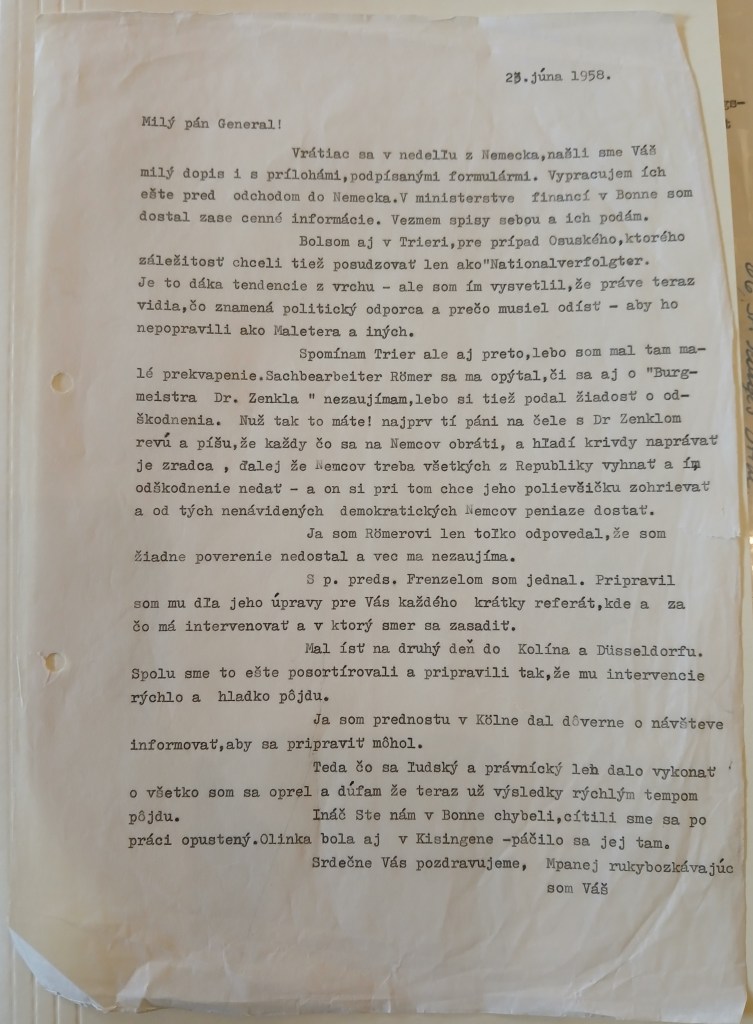
Pri tejto príležitosti by som chcel aj žiadost Rückerstattungu podať – mám ju pripravenú, len chcem niektoré otázky prehovoriť.

Očekávajúc Vaše vzácné zprávy a pokyny zdravím Vás čo najsrdečnejšie do skorého videnia

Váš (not signed Fábry)

Highly Exalted General,

Dear Friend!

You eagerly await my announced lines. I understand the situation very well. But as you can see from the enclosed memoir, I am not lying, but at every place and step I am making sure that the issue is addressed. Those clerks are not to be envied. On the one hand, hundreds of thousands of applications and on the other hand, they receive daily adjustments and modifications as to how strictly to proceed in the assessment. Unfortunately, there are various elements among them who feel aggrieved by the Nazi persecution in the past. Hard to write about it.

The tendency to continue not on reparations on political grounds but on grounds of nationality has its economical background, for there the reparations are very low.

Therefore, we must hold the line on political grounds. Well, after all, a political Minister has been persecuted for his political views. After all, Bundestagsabgeordneter (MK – member of Parliament) Wenzel Jaksch mentions you several times in his voluminous book /520 pages/ and the last memory is of your political activity and role in the East of the Republic.

It would be very convenient for us to get together. I know it’s a big expense – but I don’t think it would be a big expense to go to Paris. Possibly in Bonn / I would also make a contribution in advance / and we would discuss it within the framework of my memorandum – in which you are one of the six – and talk to the President of the Wiedergutmachungs Kommission of the Bundestags and to the Member Jaksch himself. I would ask you to give me your insight in this regard and a time when we could meet. Have no doubt that you will receive compensation.

I would also like to take this opportunity to make a request to the Rückerstattung – I have it ready, but I just want to ask a few questions.

In anticipation of your kind messages and instructions I greet you most cordially until I see you soon

Yours (not signed Fábry)

[Translation: Miroslav Kamenik / 17.4.2025]
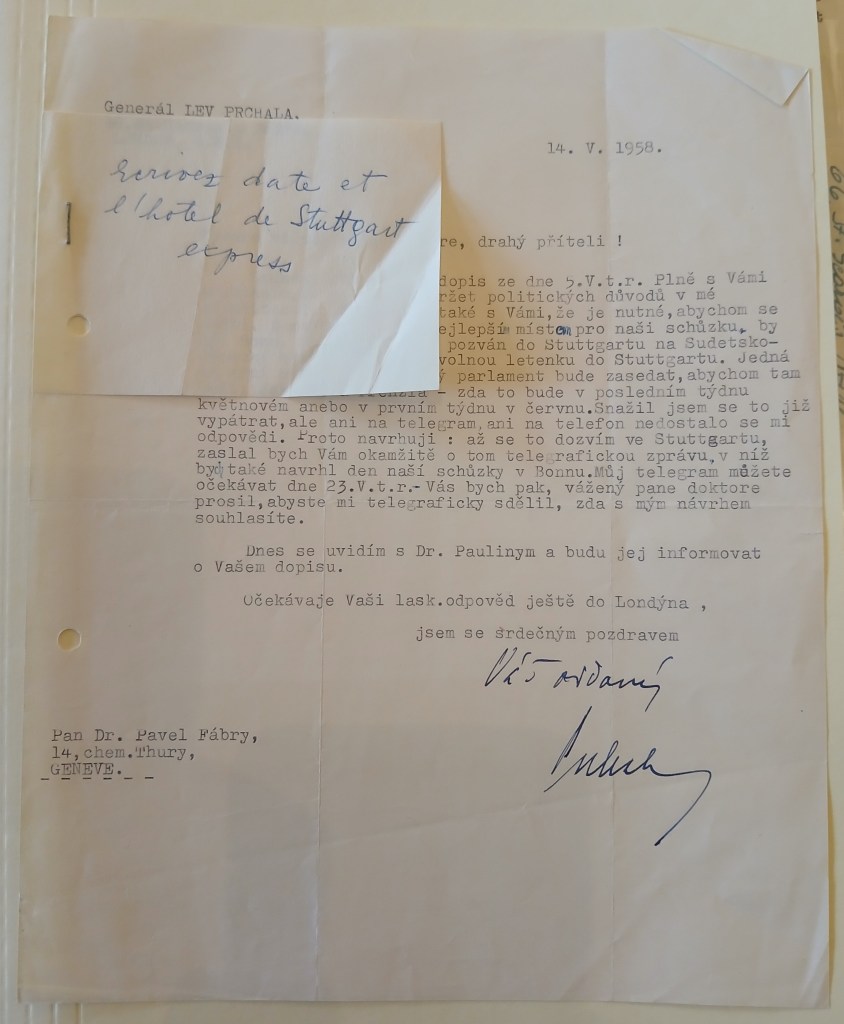
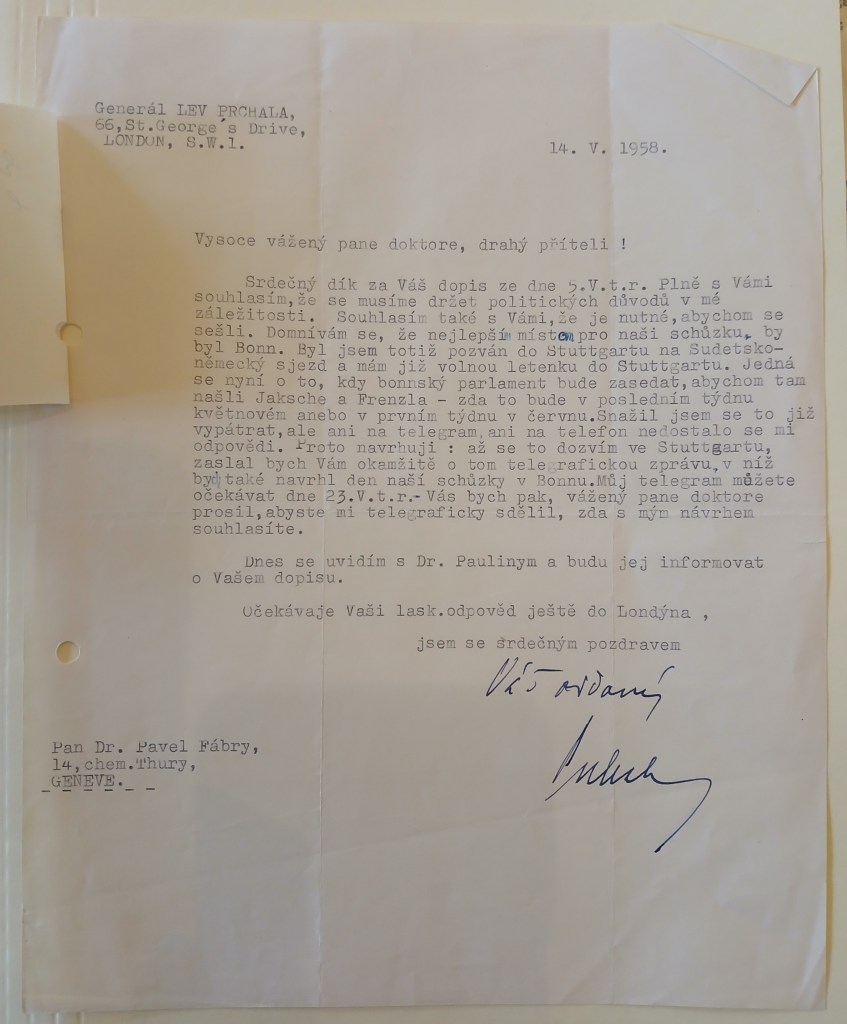
From Lev Prchala, 14.V.1958

66, St. George’s Drive, London SW1

Vysoce vážený pane doktore, drahý příteli!

Srdečný dík za Váš dopis ze dne 5.V. t.r. (MK – 5. května tohoto roku). Plně s Vámi souhlasím, že se musíme držet politických důvodů v mé záležitosti. Souhlasím také s Vámi, že je nutné, abychom se sešli. Domnívám se, že nejlepší místo pro nai schůzku by byl Bonn. Byl jsem totiž pozván do Stuttgartu na Sudetskoněmecký sjezd a mám již volnou letenku do Stuttgartu. Jedná se nyní o to, kdy bonnský parlament bude zasedat, abychom tam našli Jaksche a Frenzla – zda to bude v posledním týdnu květnovém anebo v prvním týdnu v červnu. Snažil jsem se to již vypátrat, ale ani na telegram, ani na telefon nedostalo se mi odpovědi. Proto navrhuji: až se to dozvím ve Stuttgartu, zaslal bych Vám okamžitě o tom telegrafickou zprávu, v níž bych také navrhl den naší schůzky v Bonnu. Můj telegram můžete očekávat dne 23.V. t.r. – Vás bych pak, Vážený pane doktore prosil, abyste mi telegraficky sdělil, zda s mým návrhem souhlasíte.

Dnes se uvidím s Dr. Paulinym a budu jej informovat o Vašem dopisu.

Očekávaje Vaši laskavou odpověď ještě do Londýna,

jsem se srdečným pozdravem

Váš oddaný

Prchala

Highly respected doctor, dear friend!

Sincere thanks for your letter of 5.V. this year (MK – 5 May this year). I fully agree with you that we must stick to political considerations in my matter. I also agree with you that it is imperative that we meet. I believe that the best place to meet would be Bonn. I have been invited to Stuttgart for the Sudeten German Congress and I already have a free ticket to Stuttgart. The question now is when the Bonn parliament will meet so that we can find Jaksch and Frenzel there – whether it will be in the last week of May or the first week of June. I have already tried to find out, but neither the telegram nor the telephone has been answered. I therefore suggest that when I hear about this in Stuttgart, I should send you a telegraphic message immediately, in which I would also suggest a date for our meeting in Bonn. You can expect my telegram on the 23rd of May – I would then ask you, Dear Doctor, to tell me by telegraph whether you agree with my proposal.

I shall see Dr. Pauliny today and inform him of your letter.

Expecting your kind reply still to London,

I am your devoted

Prchala

[Translation: Miroslav Kamenik / 17.4.2025]
From Lev Prchala, 19.6.1958

t.č. Rieneck 235 bei Gemünden am Main

Vysoce vážený pane doktore, drahý příteli,

přijměte, prosím, ještě jednou můj srdečný dík za Vaši obětavou a přátelskou pomoc. Můj krátký pobyt v Bonnuve společnosti Vaší milostivé paní choti a Vaší mně zůstane ještě dlouho milou vzpomínkou na vzácné lidi a krásné Slovensko. V příloze dovoluji si zaslati 6 mnou podepsaných formulářů a jsem s ruky políbením a se srdečným pozdravem

Váš

Prchala

PS: 27. t.m. budu již zpět v Londýně, 2 Cleve Rd., NW6

(at that time) Rieneck 235 bei Gemünden am Main (Germany)

Dear Doctor, dear friend,

please accept once again my heartfelt thanks for your dedicated and friendly help. My short stay in Bonn in the company of your gracious wife and your [daughter – TB] will remain for a long time a pleasant memory of the precious people and beautiful Slovakia. Enclosed I take the liberty of sending you 6 forms signed by me and with my hand kisses and warm regards

Yours

Prchala

PS: I shall be back in London, 2 Cleve Rd., NW6 on the 27th of this month.

[Translation: Miroslav Kamenik / 17.4.2025]

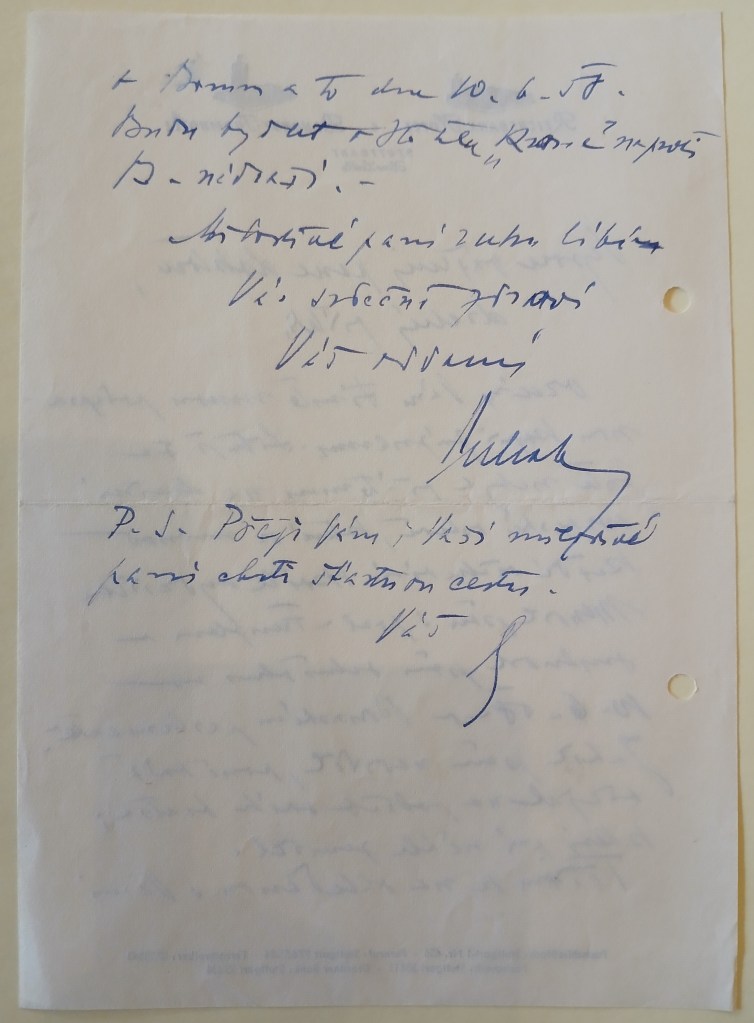
no date – Karlspreis / Sudetendeutscher Tag Stuttgart, 25.5.1958???

(Reichsbahn-Hotel & Bahnhof-Turmhotel Stuttgart, Hans Loeble)

Vysoce vážený pane doktore, drahý příteli,

vracím Vám tímto mnou podepsanou kopii (zázrkami?). Lituji, že jste nebyl přítomen na dnešní evropské oslavě, která se mimo každé očekávání skvěle vydařila. Mluvil jsem s poslancem Frenzelem a smluvil s ním schůzku na 10.6.1958 v Bonnském parlamentě. Jakše jsem nestihl, poněvadž odjel na pohřeb svého bratra, který prý náhle zemřel. Těším se na shledanou s Vámi v Bonnu a to dne 10.6.1958. Budu bydlet v hotelu Krone (?) naproti hlavnímu nádraží.

Milostivé paní ruku líbám, Vás srdečně zdraví Váš oddaný

Prchala

PS: Přeji Vám i Vaší milostivé paní chotišťastnou cestu.

Highly respected doctor, dear friend,

I hereby return to you a copy signed by me (by miracles?). I regret that you were not present at today’s European celebration, which, beyond all expectations, was a great success. I have spoken to MEP Frenzel and arranged a meeting with him on 10 June 1958 in the Bonn Parliament. I was unable to meet Jakš because he had gone to attend the funeral of his brother, who is said to have died suddenly. I look forward to seeing you in Bonn on 10.6.1958. I will be staying at the Hotel Krone (?) opposite the main station.

I kiss your gracious lady’s hand and send you my heartfelt greetings from your devoted

Prchala

PS: I wish you and your gracious lady a happy journey

[Translation: Miroslav Kamenik / 17.4.2025]

From Lev Prchala, 2.7.1958

Vážený pane doktore, drahý příteli,

srdečný dík za Váš ctěný dopis z 28.6.1958, jakož i za přílohu, kterou Vám přiloženě vracím. Děkuji také za lístek z Gemünden, který mi zaslala Vaše milostivá paní choť do Rienecku. Nyní jsem opět v tom zaplakaném Londýně a marně vzpomínám na krásné chvíle, které jsem v Bonnu prožil va Vaší a Vaší milostivé paní společnosti. Dejž Bože, aby páni v Kölnu moji žádost příznivě posoudili. Pak bych měl po starostech a letěl bych rovnou do Ženevy, abych Vám, vážený pane doktore, osobně poděkoval a milostivé paní složil svou poklonu. V Německu jsem obdržel také dopis od svého přítele Dr. Hönigera, bývalého majora justiční služby v Košicích, v němž mi sděluje, že chce s Vámi navázat spojení a dát své služby k Vaší disposici. Je to velmi čestný chlap, sportovec, který po Mnichově vydržel v armádě až do posledního okamžiku a nechal se pak pensionovat. Rozhodně nepatřil k těm Němcům, kteří v neštěstí ??? opouštěli potápějící se loď.

Milostivé paní ruku líbá, Vás srdečně zdraví, Váš oddaný

Prchala

Dear Doctor, dear friend,

my heartfelt thanks for your esteemed letter of 28.6.1958, as well as for the enclosure which I am returning to you. Thank you also for the note from Gemünden, which your kind wife sent me in Rieneck. I am now back in that weepy London and I am vainly recalling the beautiful moments I spent in Bonn in your and your gracious wife’s company. God grant that the gentlemen in Cologne may consider my application favourably. Then my worries would be over, and I would fly straight to Geneva to thank you personally and to pay my respects to your ladyship. In Germany I also received a letter from my friend Dr. Höniger, a former major in the judicial service in Košice, in which he tells me that he wishes to make contact with you and place his services at your disposal. He is a very honest man, a sportsman, who after Munich lasted in the army until the last moment and then retired. He certainly wasn’t one of those Germans who abandoned a sinking ship in a disaster.

I kiss the hand of the gracious lady, I greet you warmly, your devoted

Prchala

[Translation: Miroslav Kamenik / 17.4.2025]

From Lev Prchala, 22.VIII.1958

2, Cleve Rd. London NW6

Vážený pane doktore, drahý příteli!

Srdečný dík za lístek z Bonnu a za Váš ctěný dopis ze dne 17. t.m. ze Ženevy. Je mi opravdu líto, že došlo k nedorozumění ohledně mého zastoupení. Došlo k tomu tak, že po Vašem odjezdu ze Stuttgartu mne navštívil Dr. Höniger, jejž jsem požádal o svědectví ve věci mého pronásledování z politických důvodů. Dr. Höniger byl totiž majorem justiční služby v Košcích a může býti důležitým svědkem v mé věci.

Bohužel Dr. Höniger, který je nyní sám advokátem v Západním Německu (bydlí v blízkosti Stuttgartu), učinil více – ve saze mně prospět. Než jsem od něho žádal. Ukázal jsem mu při osobním setkání odpověď kolínského presidenta a tu Dr. Höniger – ač jsem jej výslovně upozornil, že Vy jste mým právním zástupcem a požádal, aby se s Vámi přími dorozuměl – napsal přímo Regierungspresidentovi dopis z 12.6.1958 o prodloužení lhůty. Při tom – patrně, aby svou intervenci blíže odůvodnil, užil – jak z opisu vidno – rčení, že jsem jej „pověřil péčí o mé zájmy“.

Není pochyby, že tak učinil v nejlepším úmyslu v obavě, aby nebyla promeškána lhůta. Bylo by mně velmi líto, kdybyste se z toho důvodu rozhněval na mne nebo na Dr. Hönigera. Sám Vás prosím, abyste mi laskavě prominul, jestliže jsem snad věc „zbabral“, ale současně, abyste se na Dr. Hönigera nezlobil, že Vám hned nenapsal, jak bylo jeho povinností a oč jsem jej také požádal. Na druhé straně by však bylo opravdu škoda, nepoužít jeho služeb a rozsáhlých styků, které mi nabídl ochotně ze staré známosti. Ostatně si vzpomínám, že po návratu do Londýna jsem se Vám zmínil o Dr. Hönigerovi v dopise, který jsem Vám hned napsal. Nyní napíši Dr. Hönigerovi do Winnenden znovu, aby neopomenul přímo s Vámi se dorozumět o meritu věci. Byl bych opravdu šťasten, kdybyste se dohodli o spolupráci a společném postupu.

Dr. Locherovi jsem vyřídil Vaše vzkazy. Byl však v posledních týdnech opět churav srdeční chorobou, vzniklou z loňského úrazu. Slíbil však, že Vám napíše přímo, jakmile zdravotní stav mu dovolí.

Ještě jednou Vám děkuji za Vaši neúnavnou péči a obětavou činnost za nás všechny a jsem s rukypolíbením milostivé paní

Váš oddaný

Prchala

Dear Doctor, dear friend!

My sincere thanks for the note from Bonn and for your esteemed letter of the 17th of this month from Geneva. I am really sorry that there has been a misunderstanding about my representation. It happened that after your departure from Stuttgart I was visited by Dr. Höniger, whom I asked to give evidence on the matter of my persecution for political reasons. Dr. Höniger was a major in the judicial service in Košice and can be an important witness in my case.

Unfortunately, Dr. Höniger, who is now himself a lawyer in West Germany (he lives near Stuttgart), has done more – in an effort to benefit me. than I had asked of him. I showed him in a personal meeting the reply of the President of Cologne, and here Dr. Höniger – although I had expressly informed him that you were my attorney and asked him to communicate with you directly – wrote a letter dated 12.6.1958 directly to the Regierungspresident for an extension of time. In doing so, apparently in order to further justify his intervention, he used – as can be seen from the description – the phrase that I had ‘entrusted him to look after my interests’.

There is no doubt that he did so with the best of intentions, fearing that the deadline would be missed. I should be very sorry if you were angry with me or Dr. Höniger for that reason. I would ask you to forgive me if I have perhaps “botched” the matter, but at the same time not to be angry with Dr. Höniger for not writing to you immediately, as was his duty and as I had asked him to do. On the other hand, however, it would be a real pity not to use his services and the extensive contacts which he has offered me willingly out of old acquaintance. Incidentally, I remember that on my return to London I mentioned Dr. Höniger to you in a letter which I wrote to you at once. I shall now write to Dr. Höniger in Winnenden again, so that he may not fail to communicate directly with you on the merits of the matter. I would be very happy if you could agree on cooperation and joint action.

I have conveyed your messages to Dr. Locher. However, he has been sick again in recent weeks with a heart condition arising from an accident last year. But he has promised to write to you directly as soon as his health permits.

I thank you again for your untiring care and dedication on behalf of us all, and I am hand in hand with the gracious lady

Your devoted

Prchala

[Translation: Miroslav Kamenik / 17.4.2025]
From Lev Prchala, 21.X.1958

Velevážený pane doktore, drahý příteli,

srdečně děkuji za Váš ctěný dopis z 20.X.1958, jakož i letecký lístek, který přiloženě vracím. Velmi lituji, že nemohu vyhovět Vašemu přání a přiletět do Paříže. Jsem opravdu churav a kromě toho zabraňují tomu i jiné překážky. Promiňte!

Milostivé paní uctivě ruku líbá, Vás srdečně zdraví Váš oddaný

Prchala

Dear Doctor, dear friend,

I thank you very much for your esteemed letter of 20.X.1958, as well as the air ticket (MK – air ticket), which I enclose. I regret very much that I am unable to comply with your wish and come to Paris. I am really sick and there are other obstacles preventing it. Excuse me!

Gracious ladies respectful hand kisses, I greet you cordially

Your devoted

Prchala

[Translation: Miroslav Kamenik / 17.4.2025]
From Lev Prchala, 16.XI.1958 (viditelná změna v rukopisu, těžko čitelný / hard to read handwriting)

L.Prchala

2, Cleve Rd.

London NW6

Vážený pane doktore a drahý příteli,

srdečně Vám, drahý příteli, děkuji za Váš dopis z 13. t.m., jakož i za přiložený šek na Ł100 (GBP), 20 dollarů a 50 swiss francs v bankovkách.

Nevím, čím jsem si tuto Vaši laskavost zasloužil a jak za ni poděkovat. I když tyto peníze považujete za zálohu na eventuální rentu (?) a doplatky, nemohu přece než prozatím upřímně děkovat a obdivovat Vaši důvěru k mé osobě a Vaše dobré opravdu křesťanské srdce.

Snad Bůh se nade mnou smiluje a dopřeje mi, abych se Vám mohl odvděčiti za Vaši laskavost a za Vaši namáhavou a obětavou práci, kterou si dáváte s mou záležitostí. Jsem přesvědčen, že bude korunována úspěchem.

Věřte, že bych se rád byl dostavil do Paříže, ale zaprvé selhalo moje zdraví a zadruhé že to moje sociální závislost na Czech Refugee Trust Fund a na maličké penzi, kterou týdně pobírám, které téměř neumožňují každé moje cestování. Penzi (Ł 2-7-0) bych musel před odjezdem na čas mé nepřítomnosti z V.Br. Vypovědět a Cz.R.T.F., v jehož domě bydlíme, musel by k cestě dáti svůj souhlas. To je moje situace, jež je kromě toho tím komplikovanější, poněvadž mám ženu, která na těchto soc. podporách je závislá stejně jako já. (?) pomoc by byla renta z Německa, která by nám poskytla možnost slušnější existence a trochu větší svobody.

Co se týče doplnění mé žádosti o náhradu za ztracený majetek jsem Vám rád k dispozici, prozatím bohužel jen zde v Anglii. Jsem šťasten, že spojenými silami se nám podařilo zmařit intriky sl. J. (Jenček?). Správně jsme odhadli již v Bonnu, kdo se za (?) touto ….ou skrývá a čas potvrdil náš posudek. Je to lekce pro p. presidenta v Kolíně, ale bohužel i pro Vás, jemuž za dobrotu a šlechetnost se odplatilo strašným nevděkem.

Doufám, že jste se přes tuto nemilou a bolestivou příhodu již šťastně přenesl a že Vaše zdraví tím příliš neutrpělo.

Modlím se za Vás a za Vaši vzácnou pani manželku, za Vaše zdraví a štěstí a jsem

Váš oddaný

Prchala

PS: Žena děkuje a upřímně za Váš milý pozdrav a posílá srdečné pozdravy Vaší choti a Vám, drahý pane doktore a příteli.

Dear Doctor and dear friend,

I thank you most heartily for your letter of the 13th instant, and for the enclosed cheque for £100 (GBP), 20 dollars and 50 swiss francs in notes.

I do not know what I have done to deserve this kindness and how to thank you for it. Even if you consider this money as a deposit for the eventual annuity (?) and supplementary payments, I cannot but for the present sincerely thank and admire your confidence in my person and your good truly Christian heart.

May God have mercy on me and grant that I may repay you for your kindness and for the laborious and devoted work you are putting into my cause. I am confident that it will be crowned with success.

Believe me, I would have liked to have come to Paris, but firstly my health has failed and secondly it is my social dependence on the Czech Refugee Trust Fund and the tiny pension I receive weekly that make any travel almost impossible. The pension (£2-7-0) would have to be paid to me before I could leave for the time of my absence from Great Britain. I would have to give notice and Cz.R.T.F., in whose house we live, would have to give his consent to the journey. This is my situation, which is all the more complicated because I have a wife who is as dependent on these social benefits as I am. (?) Help would be an annuity from Germany, which would give us the possibility of a moredecent existence and a little more freedom.

I am happy to be of service to you regarding the completion of my application for compensation for lost property, unfortunately for the time being only here in England. I am happy that by joining forces we have been able to thwart Ms. J. (?) intrigues. We correctly guessed back in Bonn who was behind … (not legible) and time has confirmed our assessment. It is a lesson for Mr. President in Cologne, but unfortunately also for you, whose kindness and generosity have been repaid with terrible ingratitude.

I hope that you have got over this unpleasant and painful episode happily, and that your health has not suffered much.

I pray for you and for your precious wife, for your health and happiness and am

your devoted

Prchala

PS: My wife thanks and sincerely for your kind greetings and sends her heartfelt regards to your wife and to you, dear doctor and friend.

[Translation: Miroslav Kamenik / 17.4.2025]

A Legacy of Love and Hope


Uncle Vladimir and Grandpa Pavel Fabry.

When I think about the lives of my relatives, and spend time holding their personal belongings in my hands, there is a feeling of love so real that expands my heart, that reminds me I am connected to everyone and everything. It is like they are speaking in my ear, encouraging me to learn from their lives, to have a positive attitude in times of trouble, to greet the world with love and not with fear. Love is an energy that is open to the new and the unknown, that wants to know and to understand and heal what is broken, that believes in the best in others, and to love courageously is the greatest goal.

I have attempted in the past to translate the following document in German from Pavel Fabry, but it deserves a better translation, and I am posting it here for those fluent in German to help me.

The mention of Valerian Zorin in this testimony is the one thing that has always stood out for me. Valerian Zorin was the Soviet ambassador to Czechoslovakia from 1945-47, and in 1948 he helped organize the Coup d’état in Czechoslovkia; he was Deputy Minister of Foreign Affairs of the Soviet Union from 1947-1955 and 1956-1965, and also the permanent Soviet representative for the United Nations Security Council from 1952-53 and from 1956-1965. Valerian was not a friend to Pavel and Vlado or any Fabry, and because of his high rank he likely gave the order for the seizure of our home in Bratislava in 1948, making it their Russian embassy; and for ordering the arrest, detention, and torture of Pavel Fabry, on false charges, while he was on his way to Amsterdam to a meeting with the World Council of Churches. I am not sure how it felt for Vlado to work at the UN with Valerian – someone who hurt his family and friends – but good and evil has always existed, in high and low places, we have to work with our enemies and stay focused only on what is in our power to change.


It begins with a book…

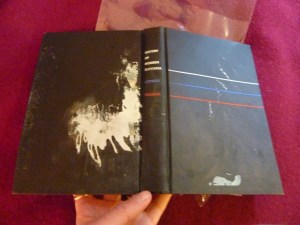
Last August, I took another look through the family collection of books about Czechoslovakia. What I found was a copy of “HISTORY OF MODERN SLOVAKIA” by Jozef Lettrich, which had, sadly, been overlooked in a damp corner of the house.
034
But in spite of mold damage, I put it in a mylar sleeve and kept it nearby, because the book mentioned Pavel Fabry (Vladimir Fabry’s father) as one of the first to be imprisoned in a concentration camp on March 30, 1939, in the state prison of Ilava.
036
I recognized the book immediately, since I had seen at least a half dozen photostatic copies in my archive from page 144, underlined in the same places, which Pavel must have referred to in his case for reparations in Germany.
037
038
From Chapter Two, “Under the Swastika”, pages 143-144:

“When prisons were no longer adequate, the Slovak Government issued an order on March 24, 1939, “concerning the imprisonment of the enemies of the Slovak State.” […] This order authorized the Minister of Interior to “arrange for the jailing of persons whose past and present activities give reason to fear that they would continue to obstruct the building of the Slovak State.” The Minister of the Interior was further authorized to create “a camp for the detention of such persons in which prisoners would be compelled to perform physical labor.” Vojtech Tuka lost no time in transforming the old state prison in Ilava into a “security camp,” the first concentration camp in Slovak history. The Ilava prison thus became the home of Slovak democrats–of authors, priests, teachers, newspapermen and statesmen, as well as of simple farmers, workmen and students. The first inmates of this camp, brought there on March 30, 1939, were: Anton Štefánek, Ján Ursíny, František Zimák, Ján Pocisk, Ferdinand Benda, Karol Hušek, Ján Paulíny-Toth, Jozef Rudinský, Pavel Fábry, Andrej Djuračka, František Třešnák, Hana Styková, Vinco Mihalus and Jozef Lettrich, three Members of Parliament, two Senators, three journalists, the Chairman of the Slovak National Party, and an actress from the Slovak National Theater. Others soon followed. In the few years of existence of the Slovak State more than 3,000 persons were to pass through the gates of the Ilava concentration camp. Some remained a few days, some for months, and others for several years. They were all sent to Ilava without trial , without judgement, without indictment, merely upon a denunciation and by administrative order of the Ministry of Interior. Tuka, on April 15, 1939, made the following characteristic statement, “Those who spread alarming rumors and false reports are obstructing our way. We have made arrangements to handle all of them in Ilava. Many of them are there now and many others will follow them there. It is your duty to denounce these instigators to the police and the Hlinka Guards, and the Slovak Government will take care of them.”

030
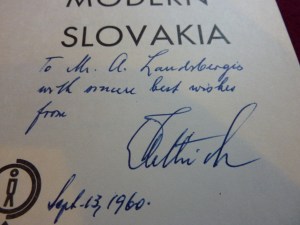
I now have another copy of this book, in very good condition, signed and inscribed by Jozef Lettrich on the title page. It was only after this that I looked at the title page of the copy I found, and it was also inscribed.
028
Title page from second copy.
040
From the copy that belonged to Pavel Fabry.

When I finally started to read it, it dawned on me that this book was written by the same Jozef Lettrich that was in prison with Pavel, and that I had letters from Lettrich – Chairman of the Slovak National Council in Czechoslovakia, who was an exile living in the United States. So I went back to the boxes. I was amazed by how this one book began to illuminate what I had missed before: letters to and from Milan Hodza – Prime Minister of Czechoslovakia; Jan Pauliny-Toth – lawyer and politician; Peter Pridavok – Chairman of the Slovak National Council in London; Juraj Slavik – Czechoslovak Ambassador to the United States; General Lev Prchala; Emil Stodola, and Kornel Filo. Pavel Fabry was seeking reparations for many of these people and others in Berlin, as their lawyer, so I have some of their testimonies, in Slovak, German and French.

But then I found two letters from Franz Karmasin, one of them signed. Franz Karmasin was state secretary for the German Minority, under President of Slovakia and Catholic Priest Jozef Tiso: an anti-semite who collaborated with Hitler and was key in making the Slovak State the first Nazi ally in the Final Solution, deporting tens of thousands of Jewish people to their extermination – he was hanged after WWII; Karmasin was also senticed to death but escaped prosecution and was living in exile in Munich. From what I was able to translate, Karmasin seems to be arguing against something Pavel said about him – and he begins his first letter in praising Pavel on his son Vlado – The Hague and Nuremberg are also mentioned. There were no letters from Pavel to Karmasin. I’ve transcribed the letters here for others to translate.

Page056

Page055

Dipl. Ing. Franz Karmasin
München 8
Trogerstaße 32

München, den 8-7. 1959

Herrn
Dr. Paul Fabry

14 Chemin Thury
Geneve

Sehr geehrter Herr Dr. Fabry!

Unsere gestrige Aussprache hat mich sehr stark an Aussprachen in der Heimat erinnert. Ich glaube, diese angenehme Atmosphäre gibt es nur jenseits der Karpaten. Ich bitte, es nicht als Anmassung zu betrachten, wenn ich Sie zu Ihrem prächtigen Sohn beglückwünsche. Er hat großen Eindruck auf mich gemacht und ich freue mich wirklich von ganzem Herzen, dass die slowakische Sache so einen hervorragenden Vertreter ihrer Interessen besitzt.
In der Kanzlei habe ich mir dann den sehr dicken Akt “Dr. Fabry” vorgenommen. Ich war froh, dass ich dies erst nachher getan habe, ich wäre sonst kaum zu der Besprechung gekommen. Ich habe sehr stark den Eindruck, dass Sie in der Darstellung und Beurteilung der Situation der Deutschen Volksgruppe in der Slowakei sich weniger von Tatsachen, als vielmehr von Gefühlen leiten liessen. Ich kann es verstehen, umsomehr, als die Grenzen zwischen Reichsdeutschen und Volksdeutschen von Aussen her nicht immer sichtbar waren und vor allem die Situation der Volksgruppe und der Volksgruppenführung nicht für eine öffentliche Diskussion geeignet war. Aber in Ihren Ausführungen sind Sie doch etwas hart, ich darf Ihnen das in aller fahrens mit Ihnen und Ihrem Herrn Sohn über diese Dinge diskutieren, jetzt ist nicht der geeignete Zeitpunkt dazu. Ich will Ihren nur zu bedenken geben, dass der deutsche evangelische Bischof Scherer, für dessen Ernennung ich mich übrigens sehr stark eingesetzt habe und fast alle evangelischen u. katholischen Pfarrer Mitglieder der Deutschen Partei waren und dass die Deutsche Partei bei den Nürnberger Verfahren ausgeklammert wurde, obwohl man den Aliierten bestimmt nicht Unkenntnis der Lage vorwerfen konnte. Auch das Dokumentenmaterial, wenn man es vollinhaltlich zur Kenntnis nimmt, spricht eine andere Sprache als Ihre Darstellungen. Die Offenheit, mit der wir gestern gesprochen haben, verpflichtet mich, Ihnen das zu schreiben.
Die Zusatzerklärung habe ich lt. Durchschlag an das Regierungspräsidium, an Dr. Virgano, Herrn Minister Dr. Tiso und Herrn Birkner geschickt. Ich bin gespannt, wie sich die Angelegenheit weiter entwickeln wird.

Hochachtungsvoll!

(Karmasin)

Page057

Copy

Dipl. Ing. Franz Karmasin
München 8
Trogerstaße 32

München, den. 8.7.1959

An das
Regierungspräsidium
Köln
Zeughausstr. 2-4

Sehr geehrte Herren!

Betr.: Dr. Paul Fabry

Ich habe die verschiedenen Schriftstücke im Falle Dr. Paul Fabry, soweit sie mir zur Verfügung stehen, nochmals durchgesehen und darf meine seinerzeitige Darstellung wie folgt ergänzen:

Ich habe dargelegt, dass die Behauptung, Dr. Fabry sei durch die Gestapo verhaften worden, falsch sei, da sich auf dem Gebiete der Slowakei keine Gestapo befunden hat. Dagegen hatten z.Zt. der Besetzung des slowakischen Staatsgebietes rechts der Waag während der Tschechenkrise durch deutsche Truppen Organe des Sicherheitsdienst Dienst gemacht. Ich glaube mich erinnern zu können – ohne es allerdings beschwören zu können -, dass durch die deutschen militärischen Kommandostellen Angehörige der Hlinkagarde (HG) und der Freiwilligen Schutzstaffel (FS) diesen Organen als Hilfskräfte zugeteilt wurden. Inwieweit sich diese im Zuge der revolutionären Ereignisse Übergriffe zuschulden kommen ließen, entzieht sich meiner Kenntnis, vor allem aber meiner und meiner Mitarbeiter Verantwortung. Sie unterstanden, falls sie sich in die Dienst der Deutschen Wehrmacht oder des SD begeben hatten, nicht mehr der Befehlsgewalt der Volksgruppe.

Zu dieser Ergänzung fühle ich mich verpflichtet einerseits, weil Aussenstehende die Unterschiede zwischen SD und Gestapo nicht ganz klar waren, andererseits weil mir im Interesse meiner ehemaligen Mitarbeiter selbst sehr viel an der Klärung dieser Angelegenheit liegt. Ich bitte, die Ergänzung in diesem sinne zur Kenntnis zu nehmen.

Hochachtungsvoll!

(Karmasin)

Vlado at work with the United Nations

A special thanks to Anna Bergman (Justice for Dag Hammarskjold on Facebook), who has been helping me identify the people in the photos of Vlado at work, which has been a challenge. Though many are still untitled, it’s made me realize just how much information I haven’t included, so I have added what I have to this collection of photos today. Click on images to enlarge.

Vlado inoculation Indonesia
Beginning with his mission to Indonesia (1948-1951), here is the bearded Vlado, grinning as he waits his turn for inoculations.

Vlado inoculation reverse
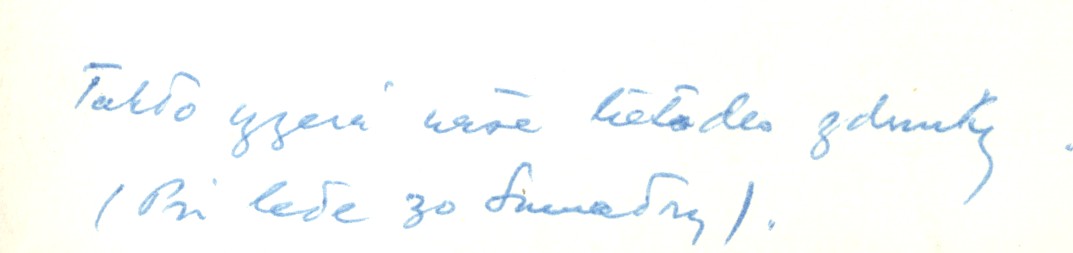
Here is the reverse of the photo, with a Slovak note written in Vlado’s script.

Vlado Round Table Conference ID 1949
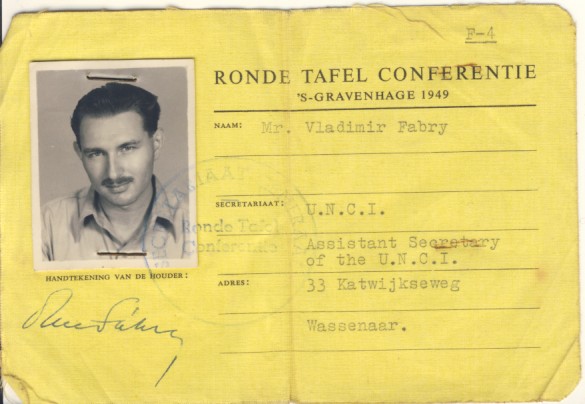
Vlado’s identification card for the 1949 Round Table Conference on Indonesia.

King Throstle Beard Indonesia
The only notes on this photo is “Fabry” and a photo copyright that says “Indonesia”.

Vlado and Jan Van Wyck British Togoland April 56
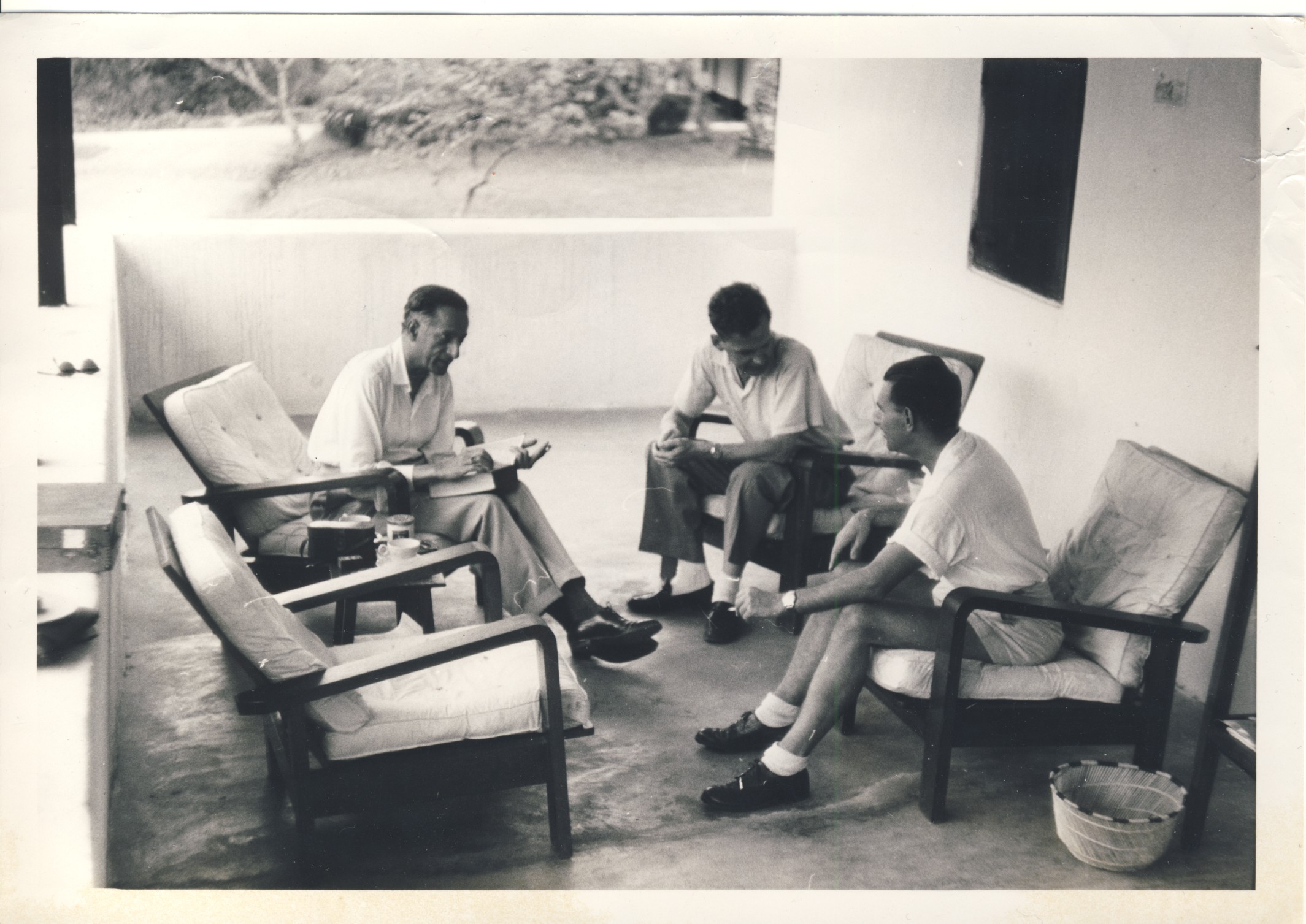
The next set of photos are from his time in British Togoland (January-August 1956), as U.N. Observer – he was there to help when the people voted to join the Gold Coast. This is a titled U.N. photo from the personal collection, which says:
“PLEBISCITE FOR BRITISH TOGOLAND, British Togoland, April 1956.
Headed by the United Nations Plebiscite Commissioner, a team of U.N. observers is in British Togoland in preparation for the plebiscite to be held on May 9, in the Trust Territory.
Here, at work with hurricane lamps on the terrace of their quarters in Jasikan, Buem-Krachi district, are U.N. observers Vladimir FABRY [incorrectly identified as on the left.TB] and Jan Van WYCK, both of whom are U.N. staff members.”

Vlado British Togoland April 56
Another titled U.N. photo, which says:
“PLEBISCITE FOR BRITISH TOGOLAND, British Togoland, April 1956.
Headed by the United Nations Plebiscite Commissioner, a team of U.N. observers is in British Togoland in preparation for the plebiscite to be held on May 9, in the Trust Territory. Here, led by an interpreter, U.N. observer Vladimir FABRY is crossing the Wawa river on his way from Papase to Manida with registration assistant N.S.K. JAWUZOH.”

Vlado and R West Skinn British Togoland May 56
Titled U.N. photo, which says:
“PLEBISCITE IN BRITISH TOGOLAND, HO, British Togoland, May 1956.
The plebiscite held in British Togoland on 9 May resulted in a vote of 93,365 in favor of uniting the U.N. Trust Territory with the neighboring Gold Coast. 67,442 voters, including majorities in two southern districts, supported the alternative continuation under U.N. trusteeship pending final determination of the territory’s status.
Observer [incorrectly labled W. Fabry.TB] and U.K. Registrations Officer R. WEST-SKINN walking thru [sic] bush and cocoa plantations on their way to village of Dumevi (Akan district).”

Vlado, Bokhari, Van Wyck Jasikan
Vlado wrote a note on the back of this in Slovak, which says: “The terrace in Jasikan, with Van Wyck and Bokhari.” Bokhari is at left, Vlado is forward right, with a cigarette in his hand – he smoked about two packs a day, but I’m not judging, I love the horrid things, too – but not quite as much as he did.

Patras Bokhari was a very important person in the UN, who was also a fantastic speech writer. Here is a link to his first press conference as Under-Secretary of the United Nations – he calls himself “the poor man’s Hammarskjold”, but he tells a great story about their January 1955 trip to Peking to convince Chou En-lai to release American fliers held prisoner; who had been shot down and were being held for investigation for “violation of Chinese territorial air”. When those airmen were eventually released, it was because of the devoted diplomacy of Hammarskjold, no thanks to meddlers like John Foster Dulles – Hammarskjold said of him “the special characteristics of Mr. Dulles have made it extremely difficult for me to maintain even in the most modest way the contact which I need with Washington on the Peking issue.”

Vlado British Togoland
This is a titled U.N. photo, which says:
“PLEBISCITE FOR BRITISH TOGOLAND, British Togoland, April 1956.
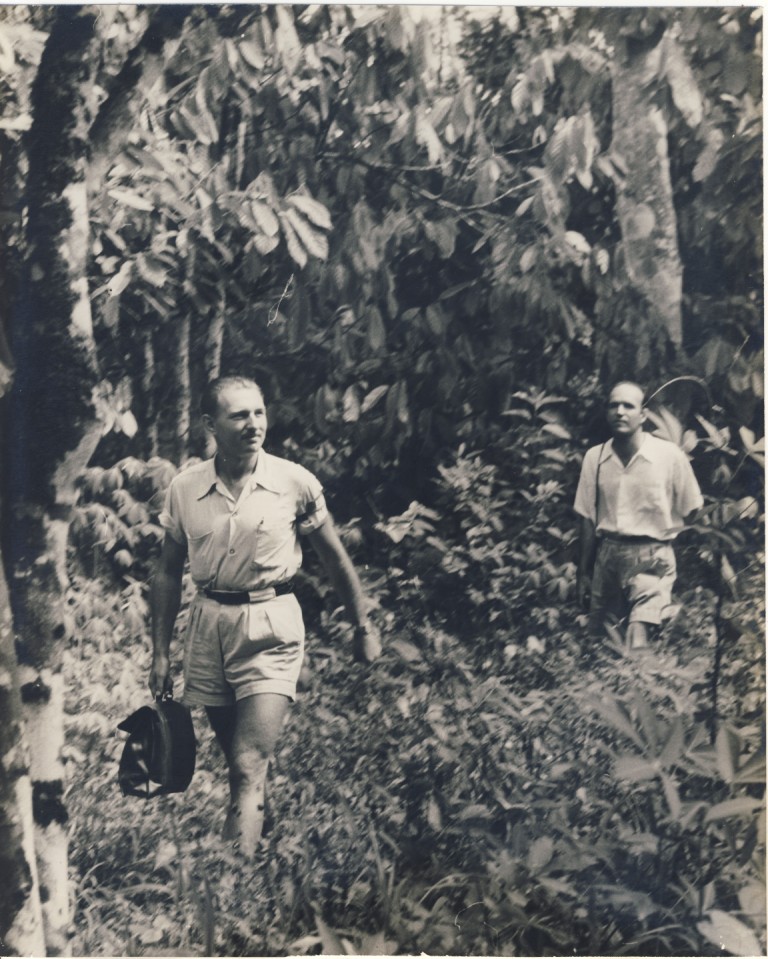
Headed by the United Nations Plebiscite Commissioner, a team of U.N. observers is in British Togoland in preparation for the plebiscite to be held on May 9, in the Trust Territory.
This picture shows U.N. observer Vladimir FABRY making his way through a kapok forest neat Dumevi, in the Akan district.”

Vlado British Togoland II
One last titled U.N. photo, which says:
“PLEBISCITE FOR BRITISH TOGOLAND, April 1956.
In preparation for the plebiscite to be held in this Trust Territory on May 9, registers of voters have been on display for a period to permit claims and objections. In the town of Ahamansu in the Jessikan district the British registration officer, Mr. R. WEST-SKINN, hears a man who allegedly could not establish residence in the township. Mr. West-Skinn’s assistant, Mr. LARTEY, stands behind him, and at the left is United Nations observer Vladimir FABRY.”

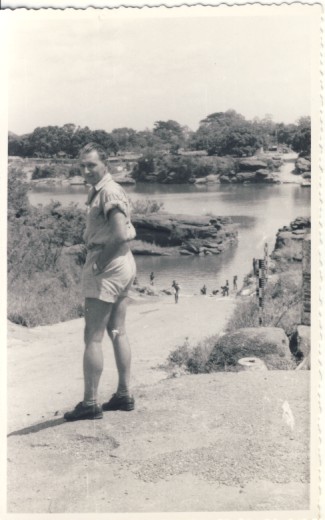
Vlado on the Volta
This photo is titled “Volta” – obviously, the Volta river.

Vlado British Togoland 3
Titled in Slovak “…Togoland…15/2 [1956]”.

Vlado British Togoland 2
Untitled, found in the British Togoland collection. Those are his “quarters” behind him.

Vlado British Togoland
When you have no running water, and only a limited supply of it every day, you take advantage of a good rain shower – what a happy guy! Titled “Jasikan”.

Togoland Congress Office
Untitled, a U.N. observer gathers people together outside the Togoland Congress Office for a photo.

Jasikan
Jasikan registration
Another from Jasikan, British Togoland, February 1, 1956. I’ve included the Slovak notes from the reverse of one, which suggests the photos have something to do with registration for the election.

British Togoland - Gold Coast 1956
Untitled, in the British Togoland collection. Could this be election day?

Fabry Archive - Selected Photographs (43)
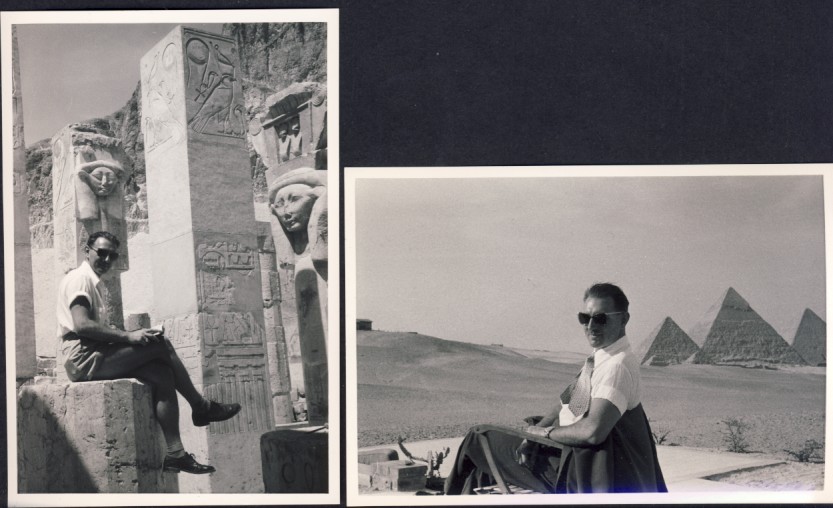
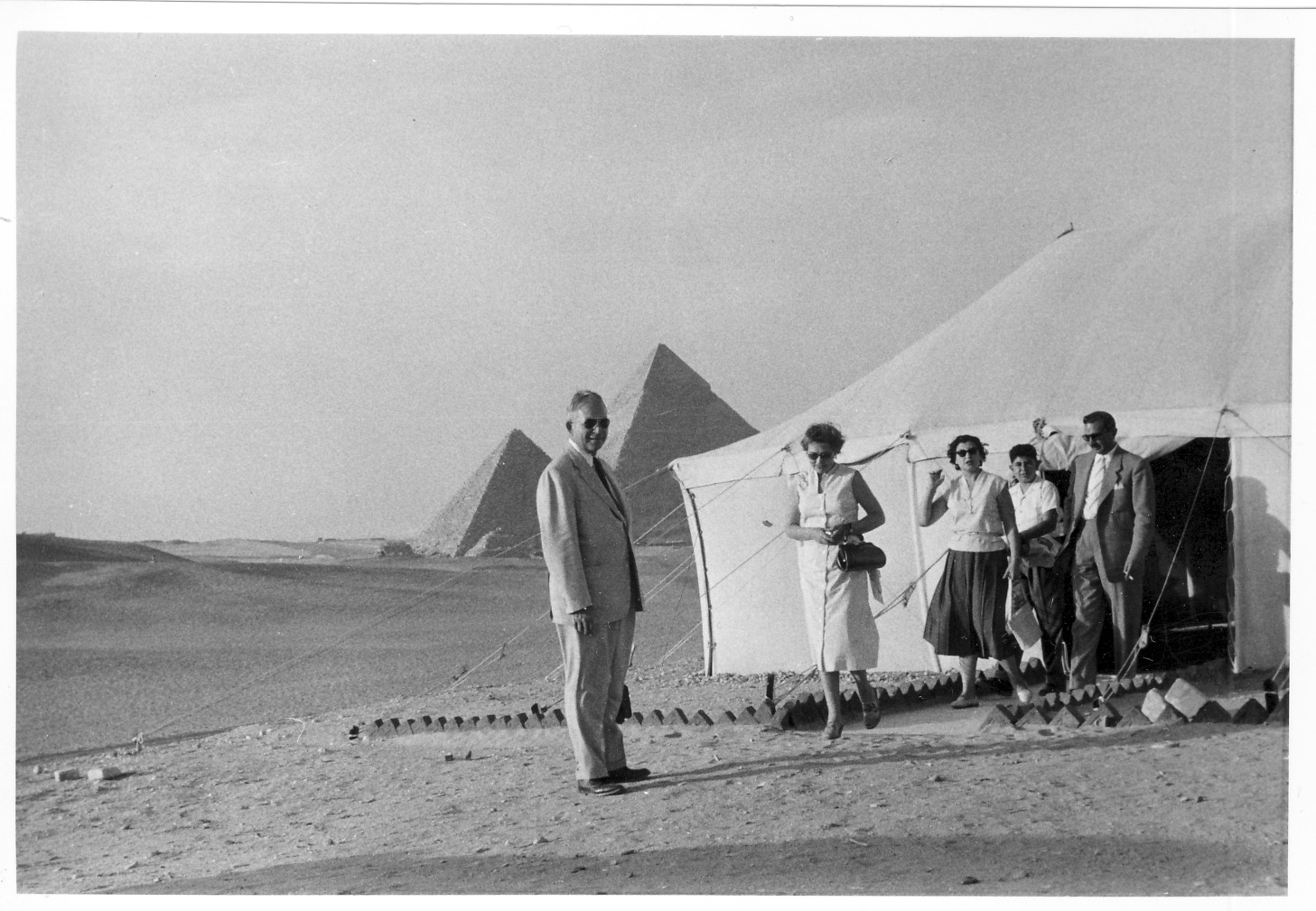
Untitled, Egypt.

Vlado in Egypt
Untitled, Egypt.

Vlado UNEF VI
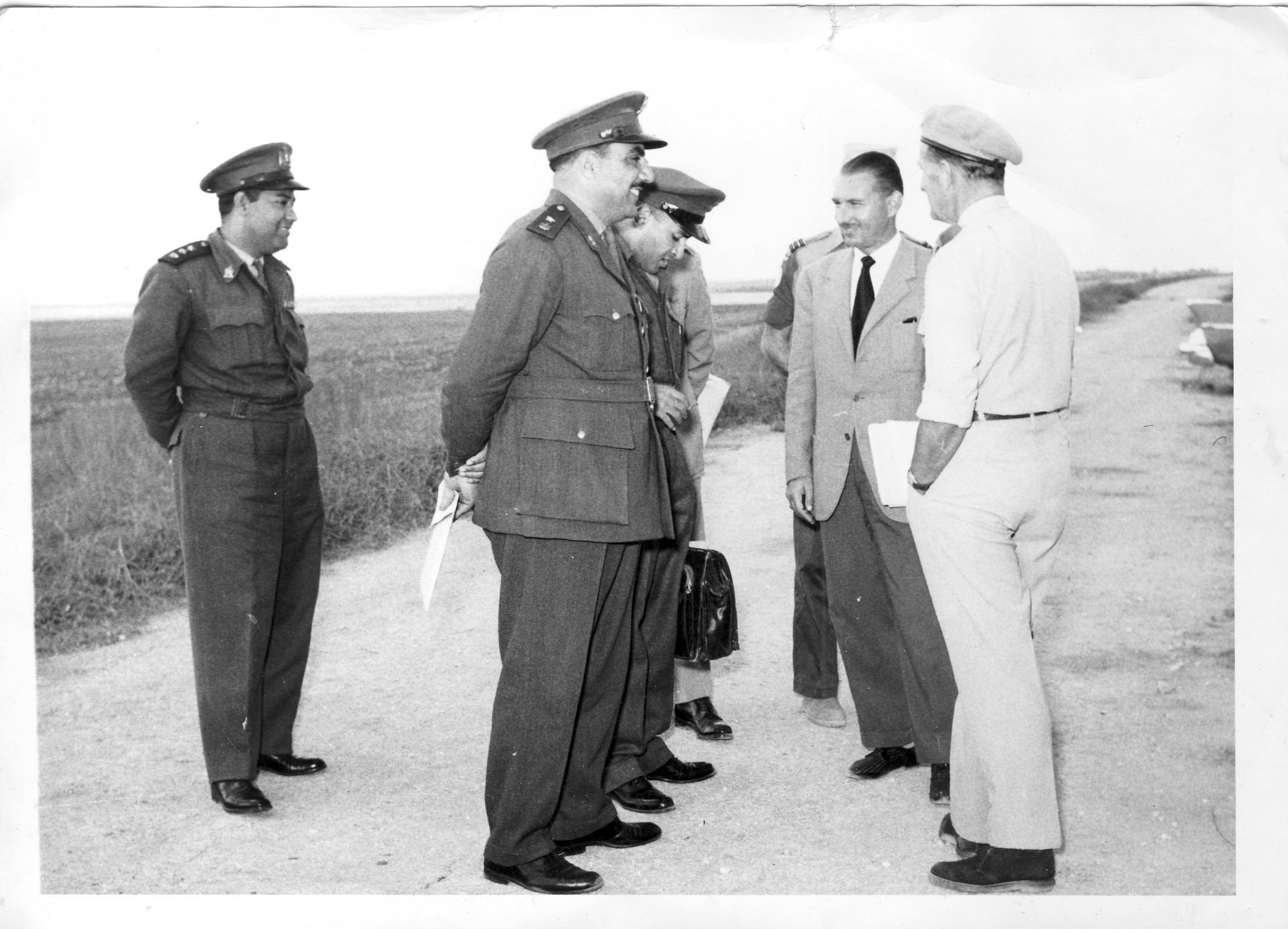
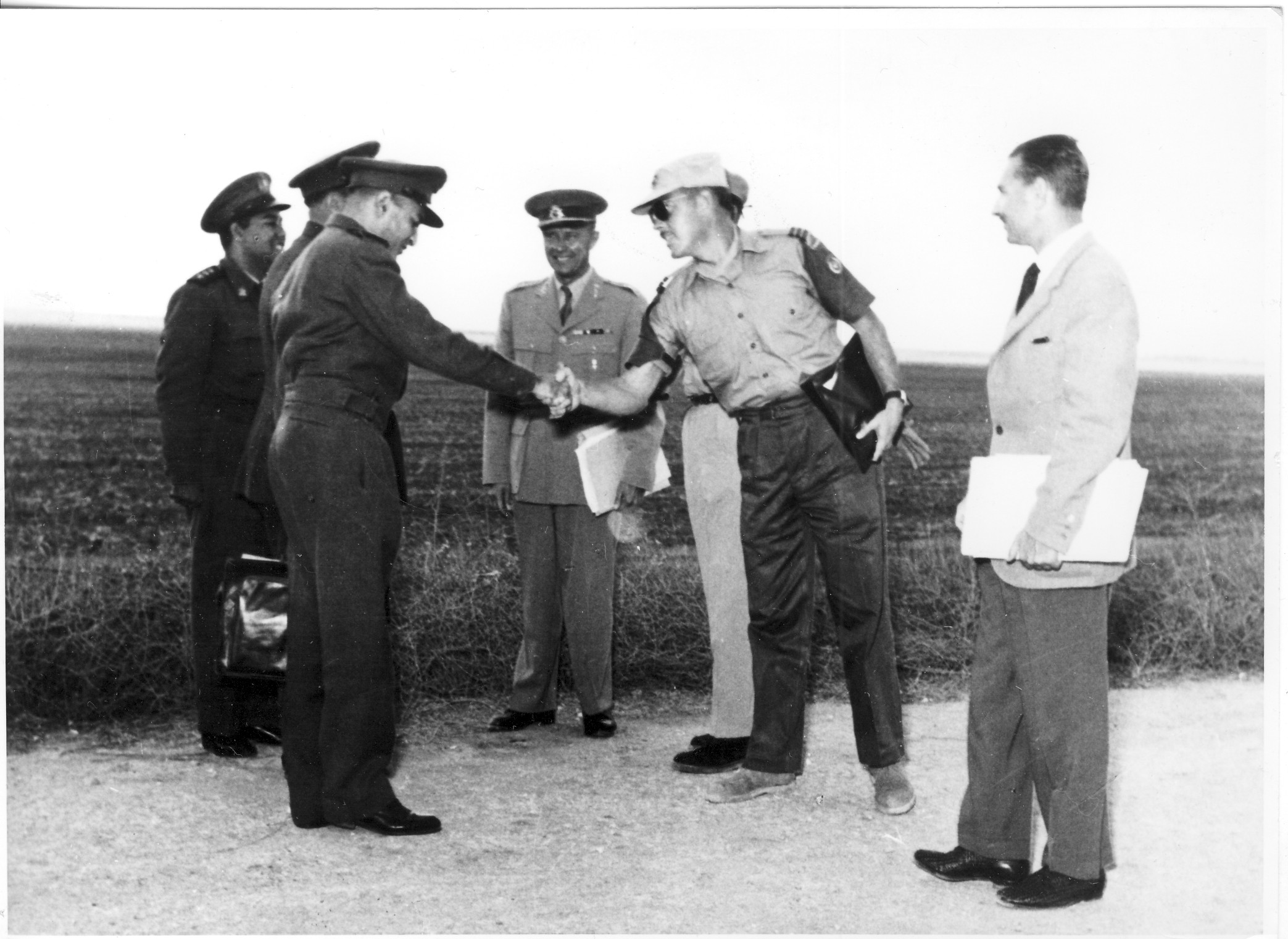
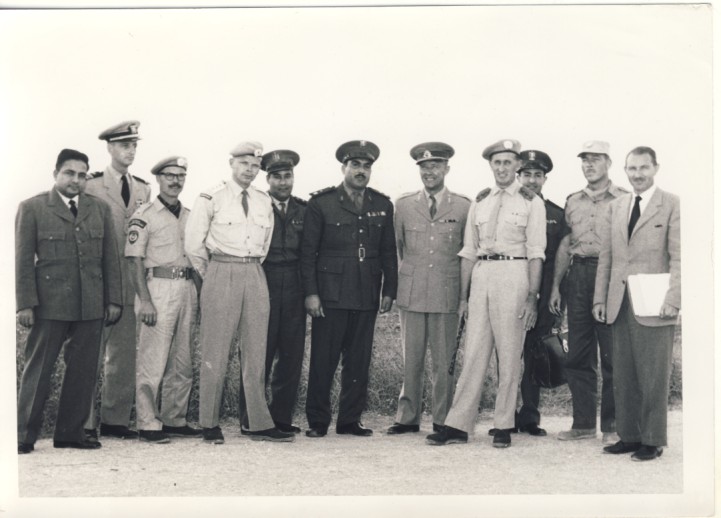
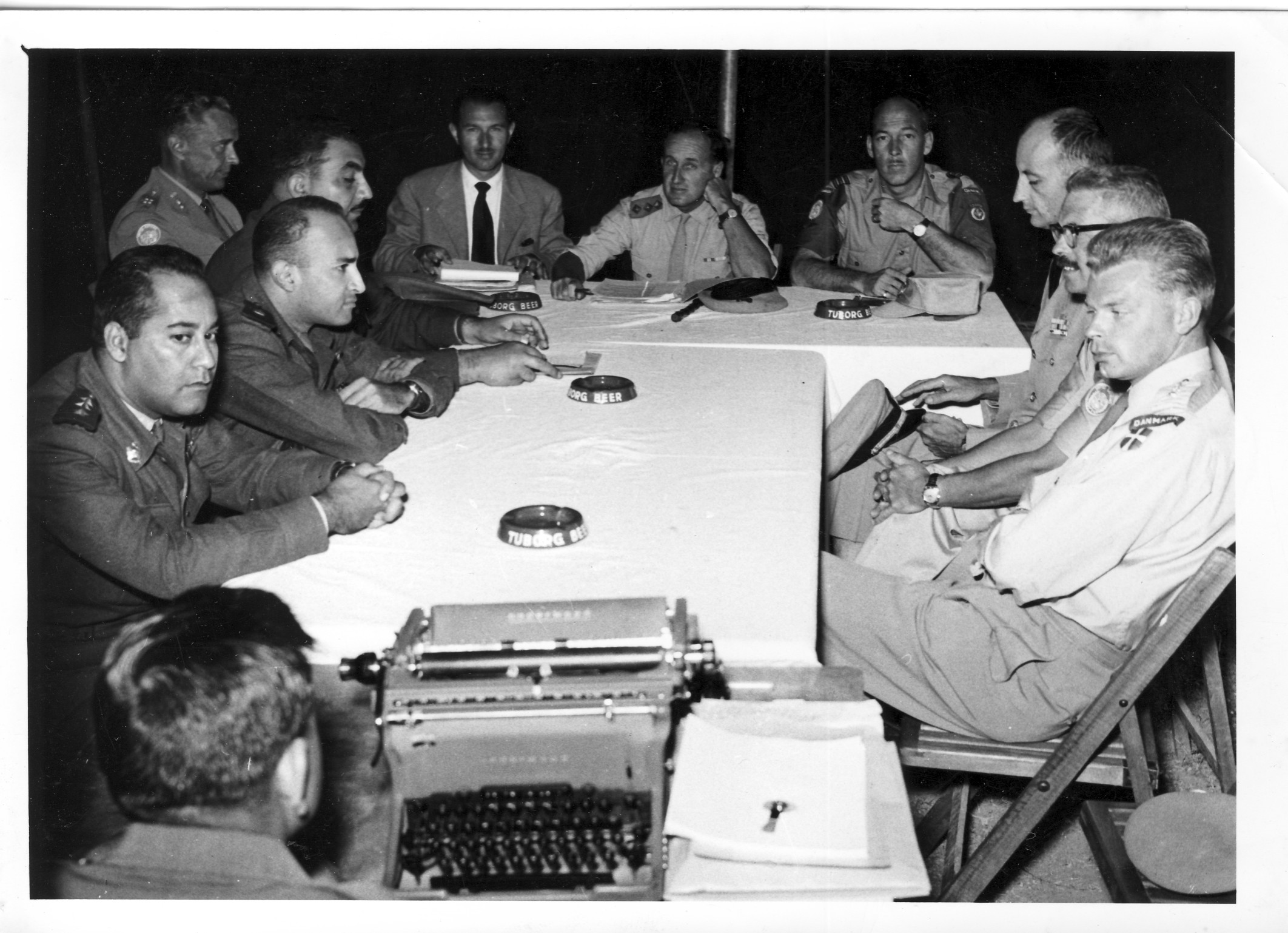
This photo – and the six others that follow it – are all untitled, but it’s a possibilty that this was one of the meetings between the UNEF and the UAR.

Vlado UNEF V

Vlado UN 5

Vlado UN 7

Vlado UNEF IV

Vlado UNEF III

Vlado UNEF II

Vlado UNEF
Untitled, Egypt. Vlado is exiting the tent, far right.

Vlado in Egypt III
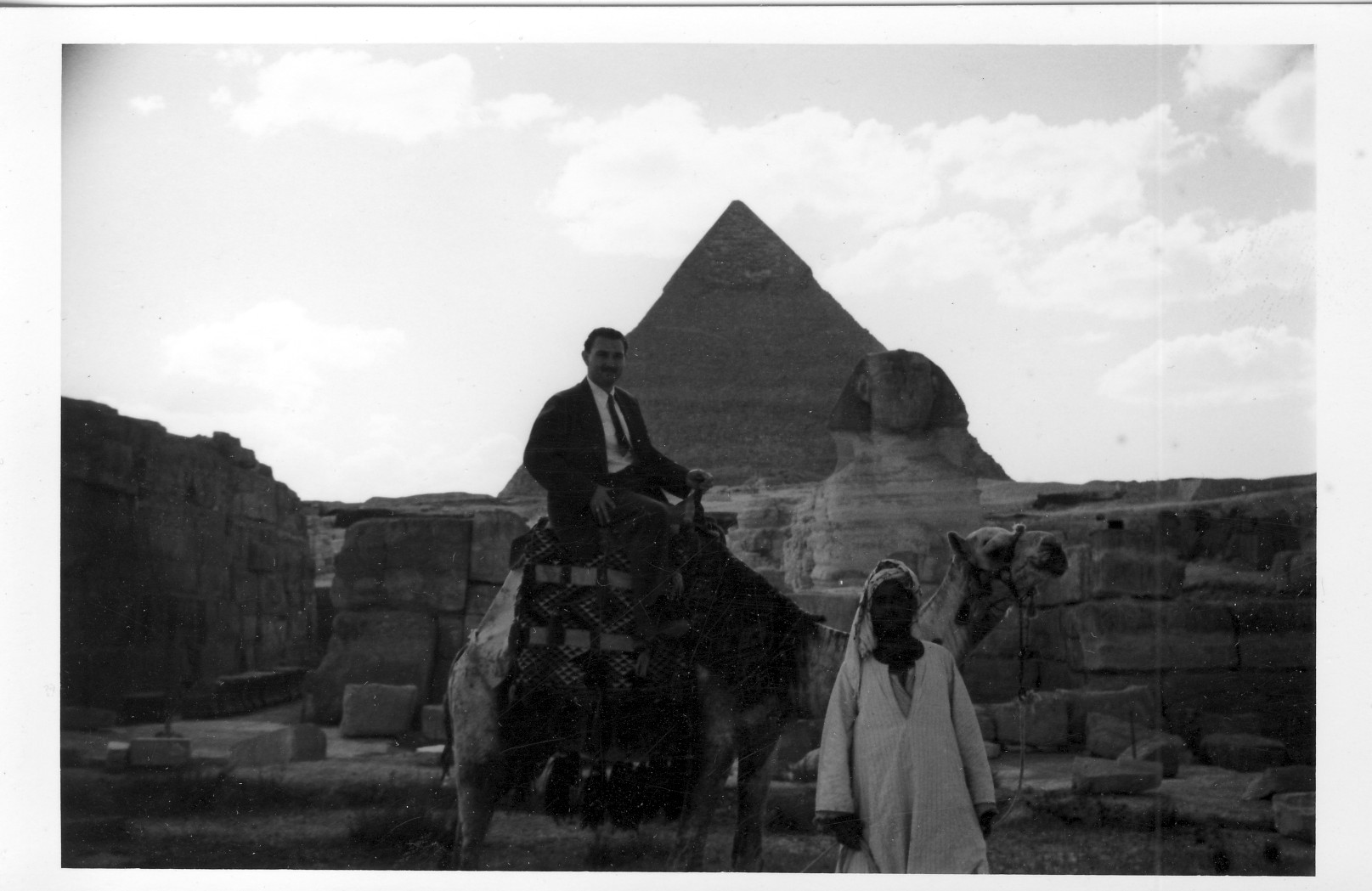
The two sphinxes – untitled.

Vlado in Africa untitled
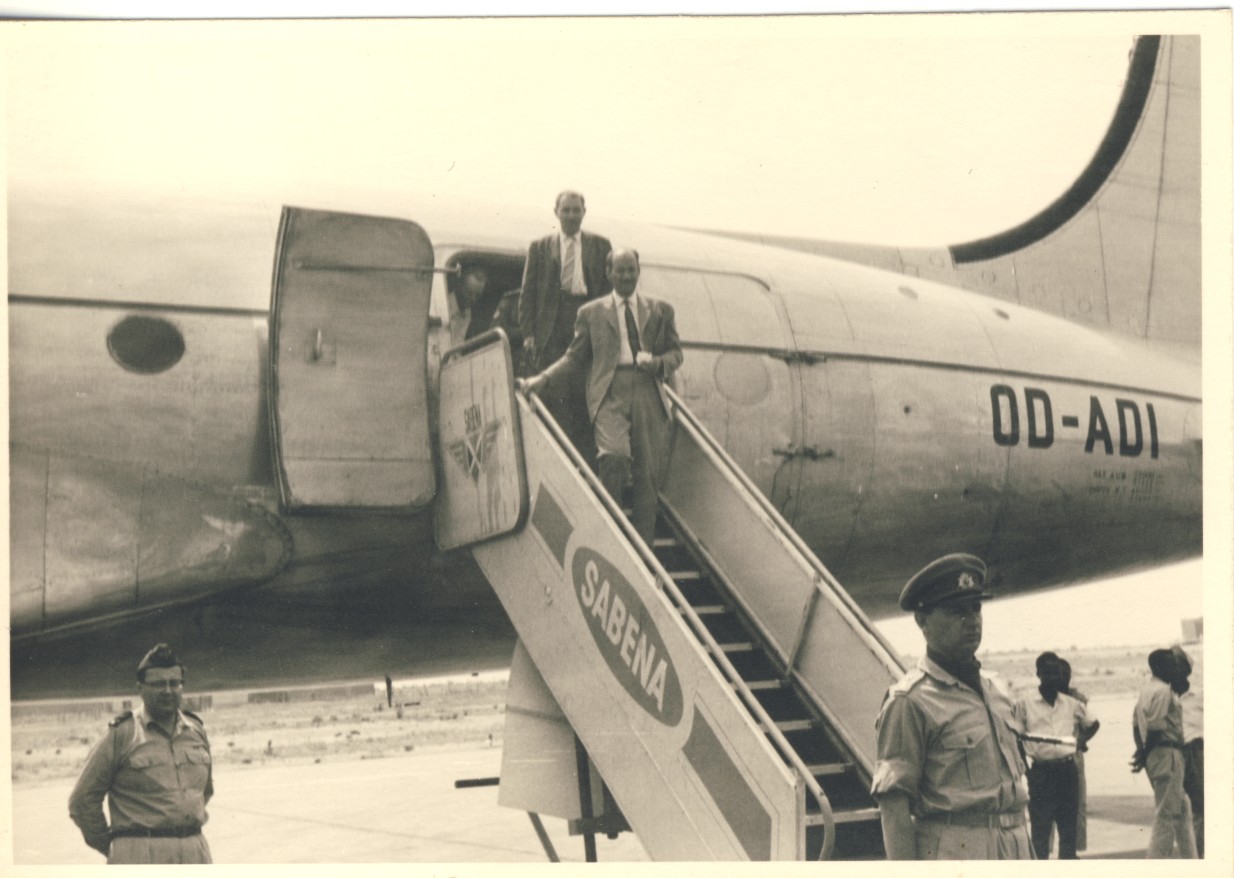
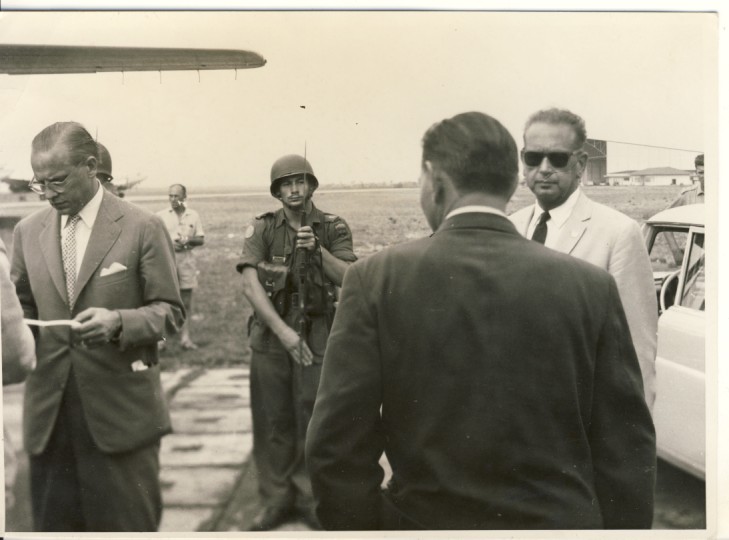
Really, there are no photos from Vlado’s time in the Congo but a few. Here is an untitled photo, possibly Congo, with him arriving on a Sabena plane.

Vlado and Dag Hammarskjold Last Picture
This photo, and the following photo, were sent to Vlado’s sister Olinka by Sheila Dean Marshall in her condolence letter; which Sheila collected from the DAILY EXPRESS in London, and are stamped on the back with the copyright. This is one of the last photos taken of Hammarskjold and Vlado before they boarded the DC-6 on September 17, 1961, headed to Ndola on what would become their final peace mission. This was the first version of the photo I found.

Vlado and Hammarskjold full image
Here is the full expanded photo, which includes Sture Linner at left, reading. Found this much later. On the back, Sheila writes “Vlado before they took off in the aeroplane.”

Vlado untitled
Untitled photo, possibly from his time with UNEF.

Unknown flight
Unknown flight reverse
Photo of unknown flight – I’ve included the Slovak notes from the reverse. Help with Slovak translation is always appreciated.

Vlado UN 4
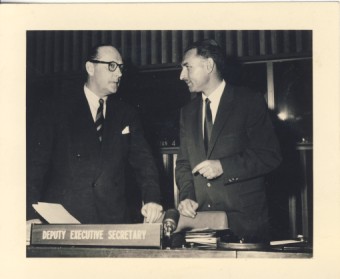
This photo and the next are both untitled, taken at United Nations Headquarters in New York.

Vlado UN 3

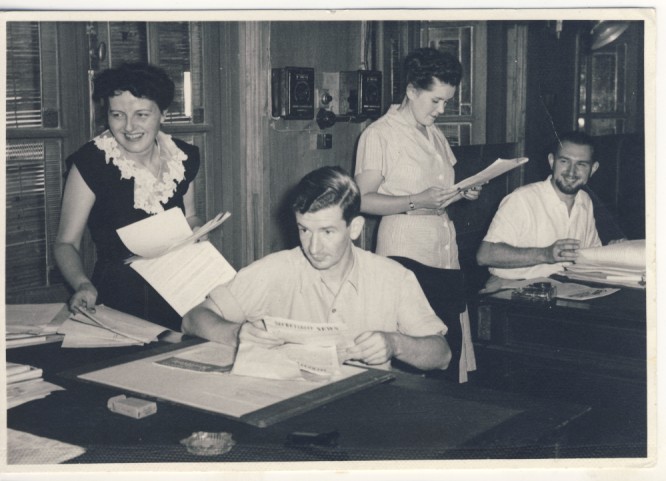
Vlado at work
This last photo is untitled as well. I wonder why Vlado’s secretary is typing on top of a duvet? The old typewriters were so loud, maybe it muffled all the noise. I like the photo of Vlado at his desk – I have his copy of the Petit Larousse by my own desk.

Help with Slovak Translation

“Sometimes the key arrives long before the lock. Sometimes a story falls in your lap.”

–Rebecca Solnit “The Faraway Nearby”

Olinka at Christmas

Though it is clear that I love the Fabry family very much, what might be difficult to believe is that I was not accepted by my mother-in-law, Olinka, and that I only met her once before she died. As much as I wanted to know her, there just wasn’t enough time, and I was very sad about that. So, you can understand how these papers have been a gift to me, to be able to get to know who Olinka was, to understand why she was difficult and the hell she had been through – I think of her with compassion and forgiveness.

Besides being a great cook(see photo above), one of the qualities I admire most about her was her skill at many languages – she was as gifted as her brother Vlado.

Here are a few pieces of ephemera from Olinka’s career:
Olinka ephemera

It would have been easy for her to translate this document from the Prison de Saint Antione in Geneva(which is now the Palais de Justice), dated 1949, but it is not so easy for me. Who was in the prison? And why? Was it her father, Pavel? I am posting this here in hopes that Slovak readers will want to contribute a translation, if only to ease my curiosity. Please help!
(click image to enlarge)
Prison de Saint Antione

Curriculum Vitae of Dr. Pavel Fabry, December 17, 1955, Geneva

Fabry Archive - Selected Photographs (28)
(Pavel Fabry is front and center – click on photo to enlarge)

To understand the character of Vlado Fabry, it’s important to know the character of his father – Dr. Pavel Fabry, who was imprisoned and tortured by Nazis and Communists for his opposition. When Pavel escaped from the Czechoslovak prison hospital, with the help of his friends, they dressed him as a nun and hid him inside a beer barrel on a train headed to Switzerland. In Geneva, Simone Baridon (a close friend of my mother-in-law) was with Olga Fabry the day Pavel arrived, and she remembers her bravery that day, when Olga said “Daddy is crossing the border now.”

This is the C.V. of Dr. Pavel Fabry that was written in English, and the following document was written in German – this was my first attempt at translating German, so it’s a little awkward, but the story of Pavel is still very compelling.

Pavel Svetozar FABRY, LLD, was born on January 14th, 1891 of an old family of industrialists and businessmen. After graduating in business administration, he studied law, attaining the degree of Doctor of Law; passed the bar examinations; and successfully completed the examinations required to qualify for judgeship.
During World-War-I, Mr. Fabry served as officer in an artillery division as well as in the service of the Army’s Judge Advocate-General. He became the first Secretary of the Provisional National Council established to prepare the liberation of Slovakia and the orderly transfer of its administration to the Czechoslovak Government. After the foundation of the Czechoslovak Republic, he was appointed Prefect (chief Government official) for the Eastern part of Slovakia.
When the Communist armies of the Hungarian Government of Bela Kun attacked Slovakia in 1919, Mr. Fabry was named High Commissioner Plenipotentiary for the defense of Eastern Slovakia. In this function he was entrusted with the co-ordination of the civil administration with the military actions of the Czechoslovak Army and of the Allied Military Command of General Mittelhauser. His determined and successful effort to prevent Eastern Slovakia to fall under the domination of Communist Armies – the victorious results of which contributed to the fall of the Communist regime in Hungary – drew on Mr. Fabry the wrath of the Communist leaders; they declared him the “mortal enemy of the people”, led violent press campaigns against him and attacked him overtly and covertly continually and at every opportunity.
After the consolidation of the administrative and political situation of Slovakia, Mr. Fabry left the Government service and returned to his private practice as barrister. He specialized in corporation law and his assistance was instrumental in the founding and expansion of a number of industrial enterprises. He became Chairman or one of the Directors of Trade Associations of several industrial sectors, particularly those concerned with the production of sugar, alcohol, malt and beer. He was elected Chairman of the Economic Committee of the Federation of Industries, and played the leading role in several other organizations. He also was accredited as Counsel to the International Arbitration Tribunal in Paris.
Among civic functions, Mr. Fabry devoted his services particularly to Church, acting as Inspector (lay-head) of his local parish and as member of the Executive Committee of the Lutheran Church of Czechoslovakia. His appointment as delegate to the World Council of Churches’ meeting in Amsterdam in 1948 prompted his arrest by the Communist Government.
Although Mr. Fabry never stood for political office nor for any political party function, he was well known for his democratic and liberal convictions, and for the defense of these principles whenever his activities gave him the opportunity to do so. He earned himself a reputation in this respect which brought him the enmity of the adversaries of democracy from both the right and the left. He became one of the first Slovaks to be sent to a concentration camp following the establishment of a Pro-German fascist regime in 1939. His release could later be arranged and he was able to take active part in the underground resistance movement against the occupant; for this activity the German secret police (Gestapo) ordered his pursuit and execution in 1945, but he was able to escape the death sentence. In spite of his resistance record (or perhaps because of it), Mr. Fabry was among those arrested by the Russian ARmy, on the instigation of the Communist Party which could not forget his anti-Communist activities dating back all the way to 1919. Due to pressure of public opinion Mr. Fabry’s imprisonment at that time was very short; but when Communist seized power in Czechoslovakia in 1948, they did not miss the opportunity to settle accounts with him. He was removed from all his offices, his property was confiscated, he was imprisoned and subjected to a third degree cross-examination taking six months. No confessions of an admission which could have served as a basis for the formulation of an accusation could, however, be elicited from Mr. Fabry, and he managed to escape from the prison hospital where he was recovering from injuries inflicted during the examination. He succeeded to reach Switzerland in January 1949, where he has continued in his economic activities as member of the Board of Directors, and later President, of an enterprise for the development of new technologies in the field of bottling and food conservation. He was also active in assisting refugees and was appointed as member of the Czechoslovak National Council-in-exile.

The following C.V. is addressed to the “Consulate General of the Federal Republic of Germany, Geneva”:

Curriculum Vitae (Lebenslauf)

Before the Persecution

I come from an old industrial family. My ancestors in 1603 – Matheus Fabry – from the Geneva area, Satigny Place Moulin Fabry, after the then Upper Hungary present Slovakia immigrated and in the free royal town of Nemecka Lupca – German Luptschau – in the county Liptov, Circle Liptovsky Svaty Mikulas established a tannery. This industrial tradition has remained in the family, according to the chronicles of General Hradsky.
My father Josef was a prosperous merchant and industrialist. Also Vice-President of the Chamber of Commerce and president of several trade and finance companies. Board member of some industry and financial companies. Maternally I am also descended of Industrial and Estate-owning family.
We were 10 siblings – seven are behind the Iron Curtain still alive, some of them in prison, some of them forcefully resettled.
The parents sought to give us a good education with University studies, but all children had to complete some studies in trade.
I attended Hungarian schools, because we did not have a middle school in their mother tongue.
My parents tradition and my studies gave me the future direction of my C.V.
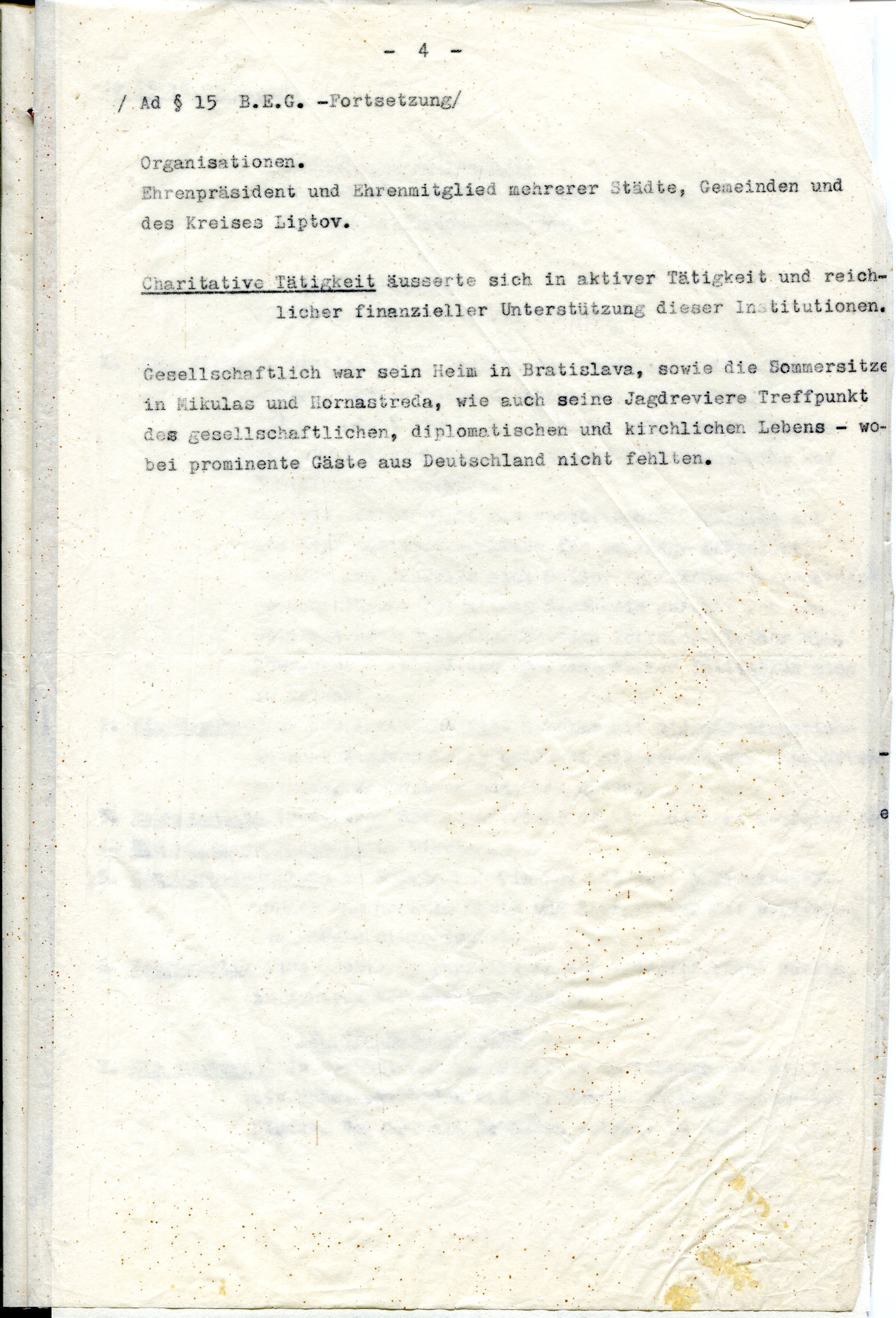
I have allowed for easier overview and orientation in the supplements a special list of 1. Personal Data, 2. Vocational activities, 3. the International profession – Law practice, 4. The national economy – Professional activity, 5. Of the public, political, religious, social and charitable activities, as well as a line up of assets and income up to the time of the persecution, submitted, which discuss my work and resume enough.
[I don’t include the list in this post.-T]

During the time of Persecution

In order to make aspects of the persecution more understandable, it is necessary to strip some events even before this time:
As evident from the personal data, I had at the end of WWI, as a military lawyer for the military commander in Budapest, opportunity to observe the infiltration of communism and drew all my future consequences therefrom.
As can also be seen from the personnel records, I was appointed as High Commissioner Plenipotentiary for the military command of eastern Slovakia. At that time, the Kremlin gave directives to the members of the Comintern, to create all the conditions you can imagine out of the Ruhr against an eastern power, as potential factor for war. Therefore, the then Hungarian Communist leader Bela Kun was commissioned to warlike attack of Slovakia, since at the same time Poland was to be attacked by Moscow military, the objective was, from Poland as an Industry and Agricultural country, and from Slovakia and Hungary as Agricultural states, to form a political unity under Communist leadership. This should then be as the basis for conquest of East and Central Germany, and then the Ruhr territories served.
These efforts have been, in spite of fierce fighting in Poland and Slovakia, thwarted under great bloodshed. Unfortunately at Yalta was Communism facilitated, by Stalin’s perfidy, clumsy (plumpen) breach of contract, and betrayal to conquer these areas.
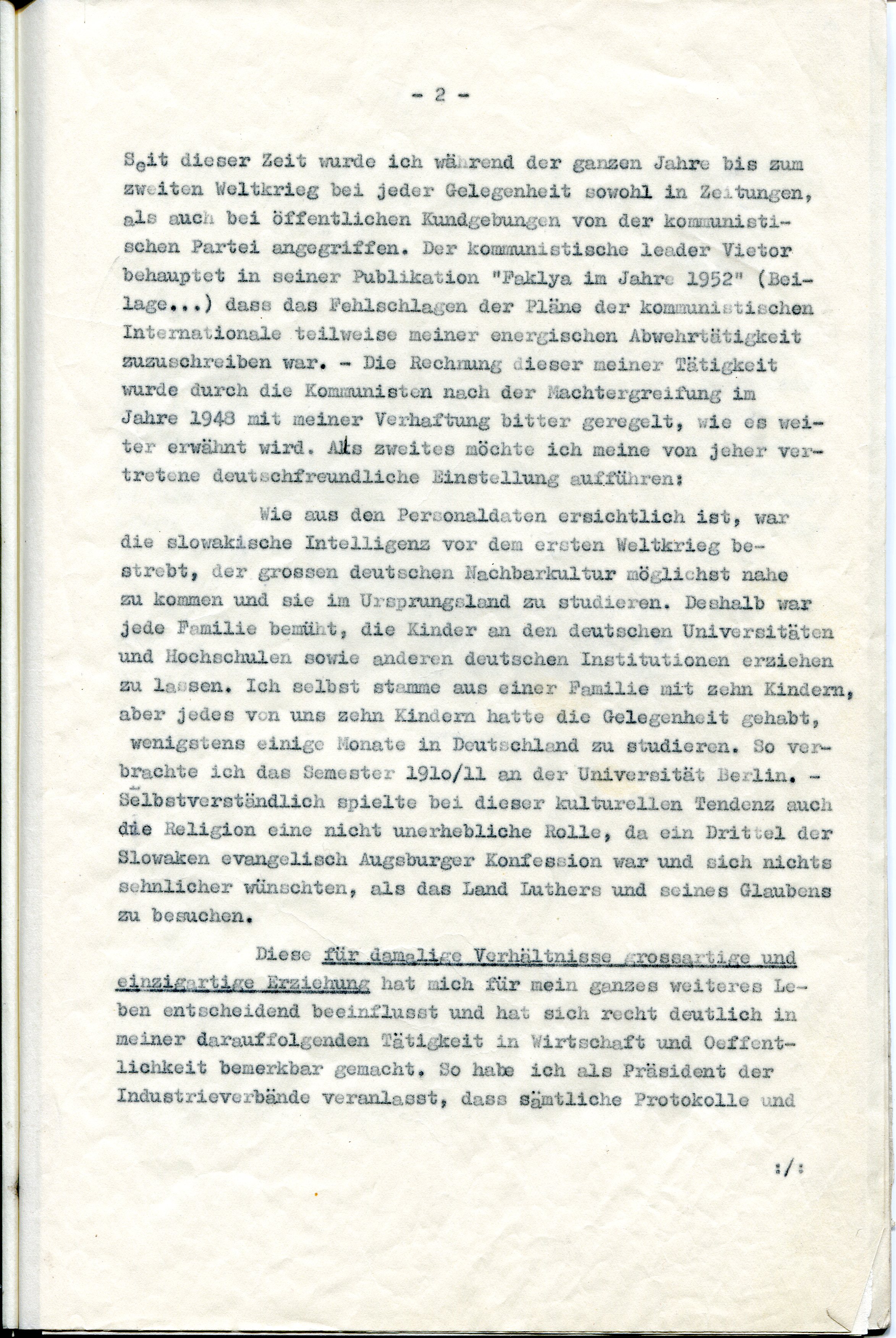
In negotiating the boundaries demarcating the then Bratislava, I had a sharp conflict with Bela Kun. The then Secretary of the way, was none other than the present ruler of Hungary, Mathius (Matyas) Rakosi, who could not forget me and my actions against the Communist terror gangs. Since that time, I was attacked during the entire years until WWII, at every opportunity, both in newspapers and at public rallies of the Communist Party. The communist leader Vietor asserts in his “Faklya in 1952” [Not included here.-T] that the failure of the plans of the Communist International was partly due to my vigorous defense activities. The statement that my work was supported by the Communists after the seizure of power in 1948, settled bitterly with my arrest, as will be further mentioned. The second point I would list is represented by the German-friendly setting:
As can be seen from the personnel data, the Slovak Intelligentsia before WWII was eager to visit the great German culture as close neighbors, and study them in the country of origin. Therefore, each family was trying to get their children educated in the German Universities, as well as other German institutions. So I spent the semester of 1910/11 at the University of Berlin. Of course, religion played a significant role with cultural trends, since a third of Slovaks were Augsberg Confession Protestant and wanted nothing more than to visit the land of Luther and his faith.
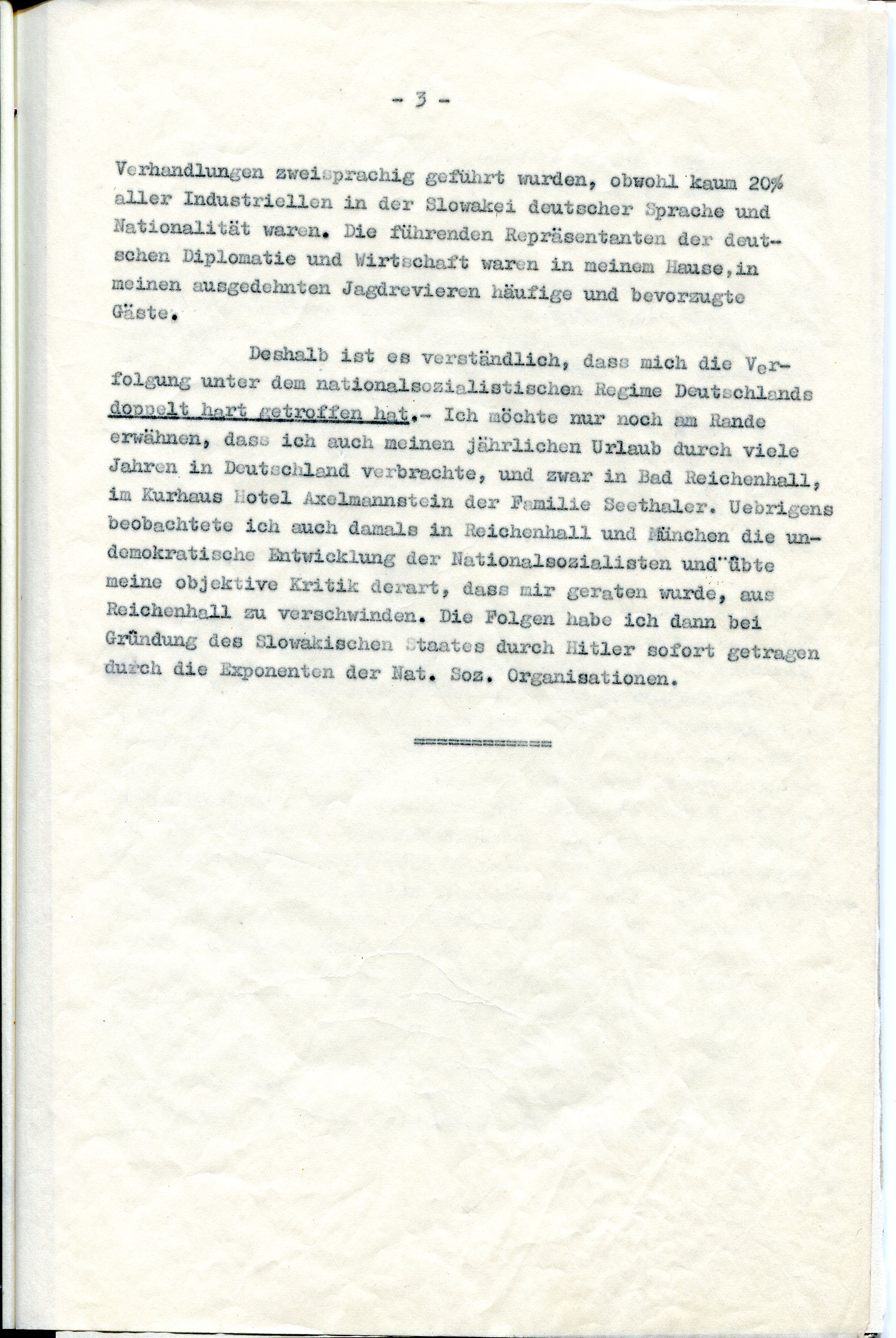
The great and unique education of that time has influenced my whole future life, and has quite clearly had an impact in my subsequent work in business and public. So I led as President of Industry Associations that all protocols and negotiations were bilingual, though barely 20% of all industrialists in Slovakia were of German language and nationality. The leading representatives of German diplomacy and economy were in my home, and were frequent preferred guests on my extensive hunting grounds.
It is therefore understandable, that the persecution under the Nazi Regime of Germany has hit me doubly hard. I will mention only in passing that I spent many years on my annual holiday in Germany, specifically in Reichenhall, in the Kurhaus Hotel Axelmannstein of the Seethaler family. However, I also observed at that time the undemocratic developement of the Nazis in Munich at Reichenhall, and practiced my objective critique so that I was advised to disappear from Reichenhall. I then had to follow with the establishment of the Slovak state by Hitler, immediately carried out by the exponents of the Nazi Organization.
After these explanatory notes I will venture to list my persecution during the Nazi Regime chronologically:
Even though I with the then Prime Minister Dr. Tiso and his staff maintained very friendly relations in the then state of Slovak autonomy, I was, after the creation (on Hitler’s orders) of the so-called Independent Slovak State, on command (einschreitung ?) of Nazi Franz Karmasin‘s leadership, arrested and taken by the Hlinka Guard (Slovak SS) — locked military barracks (Kasernen eingesperrt). There I was subjected to torture and abuse of the second degree. When this became public knowledge, it upset the leadership of the Slovak State, and after several days I was released.
But a week later, in late March, I was re-arrested again on the orders of Nazi Leadership (Karmasin), and transferred to the prison fortress Illava, to be held prisoner there under menschenwurdigsten (?) circumstances. I was put in the basement of this prison fortress, where the primitive central heating had long been out of operation. Days and nights, we had to spend in indescribable cold, with nothing to protect us but a few ragged horse blankets. In preparation for these inhumanities, specially chosen prisoners, I also among them, were tortured in the infamous “Koks-oder Schreckenskeller” (Coke – Kokshaufen – or Horror Cellar). They threw us in the Kokshaufen (?), covered us with a rug, so you do not see the wounds, and I, along with the Editor-in-Chief of the Newspaper Union Korman, were beaten throughout the night in the most barbarous ways. During this ordeal, my stomach and liver were so much affected that there later became ulcers on the lining of my stomach. On my way to Illava prison the transport had to be stopped, because I was vomiting blood. In spite of terrible pain, the provisional prison doctor denied me his help, with the remark that he would not because of my fall out with authorities. During the visits, however, my fellow prisoners reported of my fate, and it was an energetic intervention. There was an inspection and a physician, Dr. Pikova, took me into the prison hospital. My condition deteriorated, however, living in a dangerous manner, and I had alarmingly high blood pressure and a low temperature of 31-32 degrees celcius.
At last, I was transferred to the surgical ward of the hospital in Bratislava by Professors Carsky and Razus, and taken into treatment. In surgery they did not consider my weakened condition. For weeks I hovered between life and death. Of course, it did not look favorable that during the whole time I was heavily guarded by police inside the hospital, and had not the slightest possibility of speaking with anyone other than the doctors. After many long weeks I was finally allowed to transfer to my Villa again, of course, only under intense surveillance, day and night, in the hall of the Villa, and apart from my wife and my children no one was allowed to come in contact with me.
I had scarcely gained some new strength, when the newly appointed German Ambassador [Manfried Freiherr von] Killinger demanded the immediate surrender of my Villa and the entire facility. Killinger was already notorious when he came to Slovakia, and his crimes were well known. I refused him the provision, never concealing my general convictions, even then, though I was a sick man.
The following day an order was issued by the Nazi leadership to have me expelled from Bratislava in the night, and confiscate the Villa with everything. My one daughter was not even allowed to take her school books. I was expelled to a village in Wagtal with security guards, and I menschenunwudigsten (?) this treatment, I was almost always delivered by drunken guardsmen. After a few months, I was taken to another location, which was repeated several times, because many people had taken note of my unimaginably cruel treatment, and protested every time.
I had lodged an appeal against the expulsion, whereupon Killinger promptly dismissed the appeal and made my deportation into a life sentence. The carrying out was taken on by Presidialchef des Prasidiums (?) Dr. Koso, whereupon I was removed from the bar association and could not practice my profession. At the same time they also pointed out my son from Bratislava, stripping him of the right to University studies (weiterzustudieren). My law firm was confiscated. Together with the decision number 171/1940 a fine of 2 Million Crowns was imposed on me, and my cars and private plane were confiscated to deprive me of any possible movement or escape.
The then representative of the NSDAP (Nazi Party), Harold Steinacker, directed a criminal complaint against me for alleged criticism of Nazi leadership, and attempted to bring an action in the District Court of Trencin.
The President of the District Court, however, Dr. Sebak, was my devoted friend, because I had helped him during the war and supported him, so that he achieved the presidency of the District Court. With great skill, he was therefore able to thwart the arrest on the grounds of my parlous state of health, and to sabotage the sentencing, until my re-arrest and committal to a military prison.
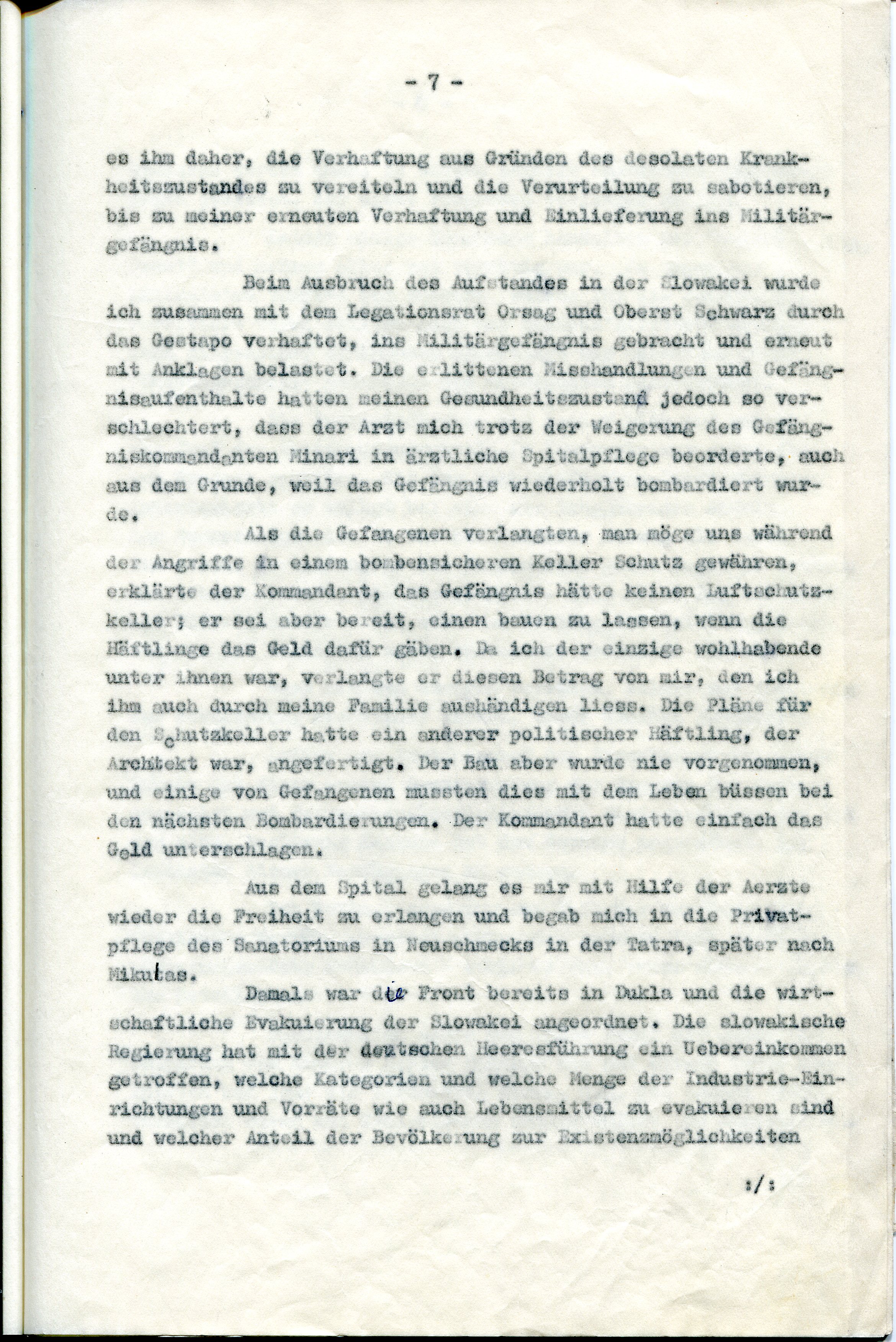
At the outbreak of the uprising in Slovakia, I was together with Councillor Orsag and Colonel Black and was arrested by the Gestapo, brought to a military prison and charged again with accusations. The sustained maltreatment and prison stays, however, had deteriorated my health so that, in spite of the refusal of the prison commander Minari, the doctor summoned me in hospital medical care, also for the reason that the prison was repeatedly bombed.
When the prisoners demanded that they grant us protection in a bomb-proof cellar during the attacks, the commander said the prison had no bomb shelter; but he was willing to build one, when the prisoners would give him money. Since I was the only wealthy one among them, he demanded that sum from me, which my family had to hand over to him. The plans for the shelter had made another political prisoner, who was an architect. The construction, however, was never carried out, and some of the prisoners had to pay with their lives in the next bombing. The commander has simply embezzled the money.
From the hospital, I managed to regain freedom with the help of doctors, and put myself in the care of a private sanatorium in Smokovec in the Tatras, and after that to Mikulas.
At that time, the front was already in Dukla and the evacuation of businesses was ordered in Slovakia. The Slovak government met with the German army leaders on agreement what categories and what quantities of industrial equipment and supplies, as well as food stuffs, must be evacuated, and what proportion of the population must be left for livelihood opportunities.
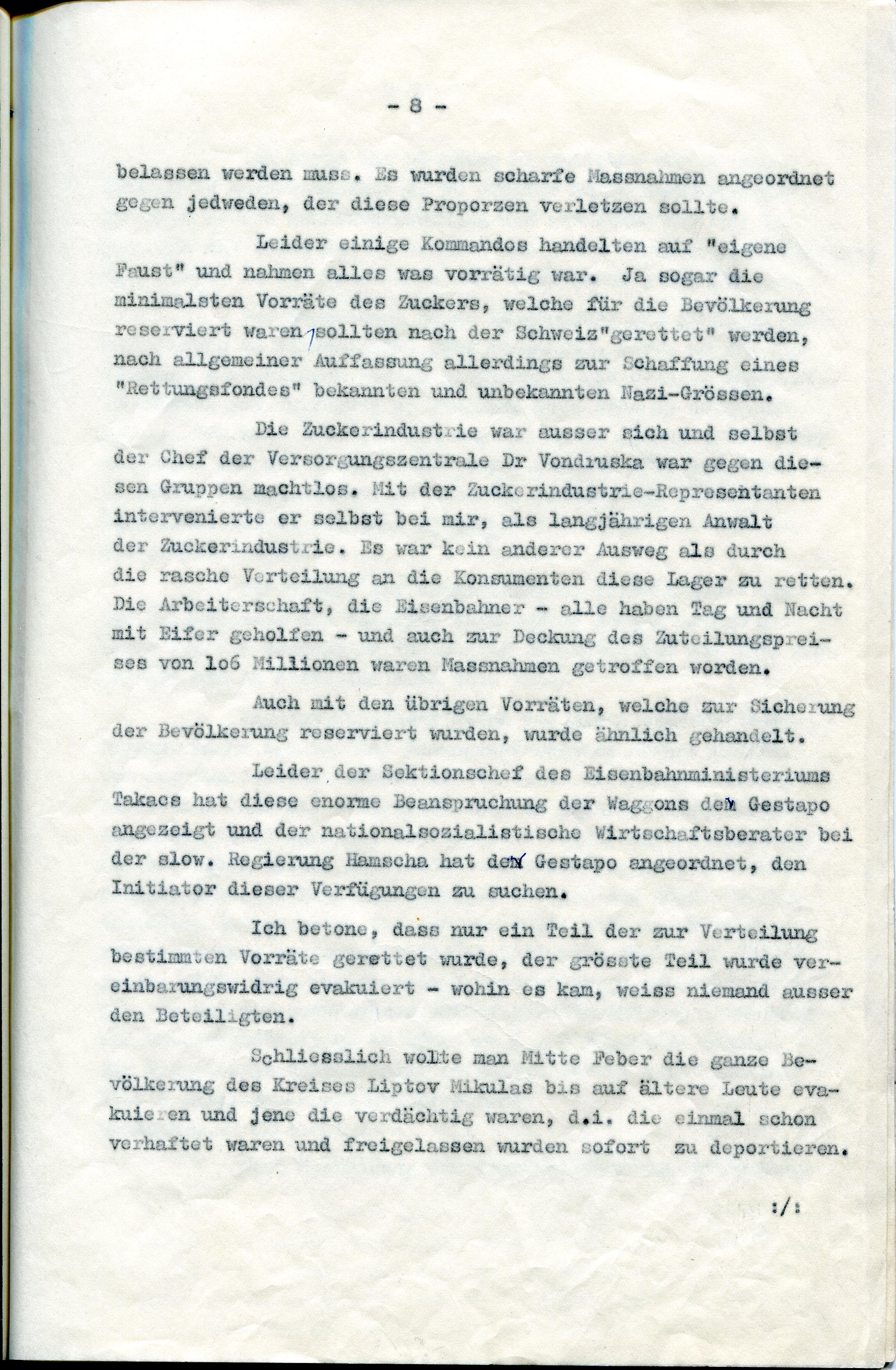
There were sharp measures arranged against anyone that would violate these proposals (proporzen). Unfortunately, agreed commanders behaved “intrinsically Faust” and took everything that was available. Even the most minimal stocks of sugar, which were reserved for the population, should be “saved” for Switzerland, generally considered, however, to be a “rescue fund” created for known and unknown Nazi-Grossen (Nazi-Greats).
The sugar industry was outraged, and the chief of central supply, Dr. Vondruska, was himself powerless against these groups. With the sugar industry representatives, he intervened even with me, as a long-time lawyer of the sugar industry. There was no other way out, other than by rapid distribution to the consumers, to save this situation. The workers – the railway workers – all day and night helped with zeal, and also to cover that the allotment price of 106 Million measures had been taken.
Also with other inventories, which were reserved for the security of the population, there were similar practices.
I emphasize that only a portion of the distribution determined inventory was saved, the majority was evacuated by unconstitutional agreement – where it happened, no one knows but the participants.
Finally, in the middle of February, they wanted to evacuate the whole population of Liptov Mikulas district, including older people and those who were suspect, i.e. once we were already arrested and released we were to be deported immediately.
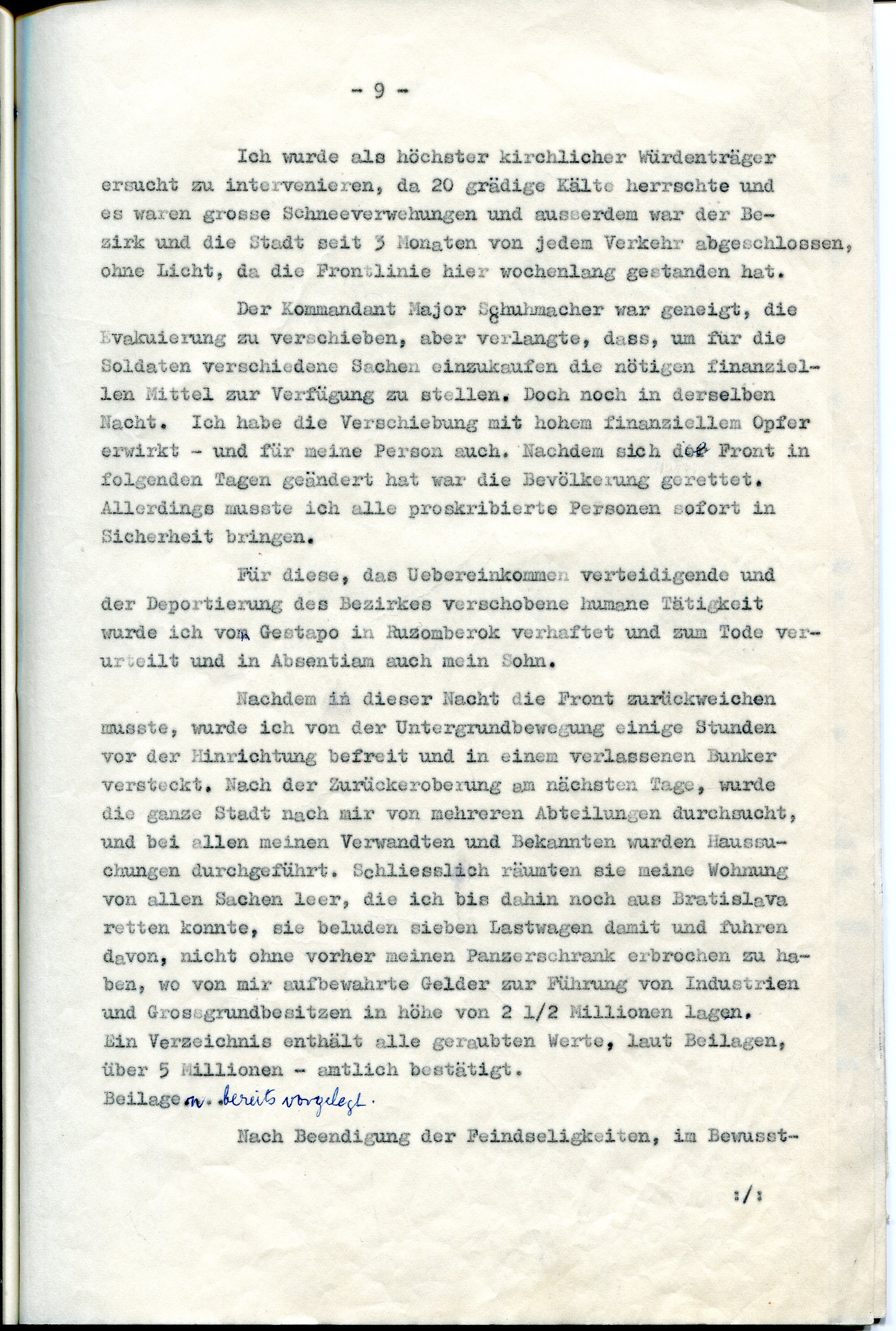
I was asked to intervene as delegate for the highest of ecclesiastical dignitaries, because 20 degree (gradige) cold prevailed, and there were large snow drifts, and also the district and the city had been shut down for 3 months from any traffic, without light, because the Front had been here in the country for weeks.
The commander Schuhmacher was inclined to postpone the evacuation, but demanded that in order for the soldiers to buy different things, necessary funds should be provided. But that very night. I had obtained the postponement with considerable financial sacrifice – and for my person, also. After the Front had changed in the following days, the population was rescued. However, I had all the proscribed people brought to safety at once.
For this, defending the Convention and actively deporting the shifted district humanely, I was arrested by the Gestapo in Ruzomberok and sentences to death, and also my son in absentia.
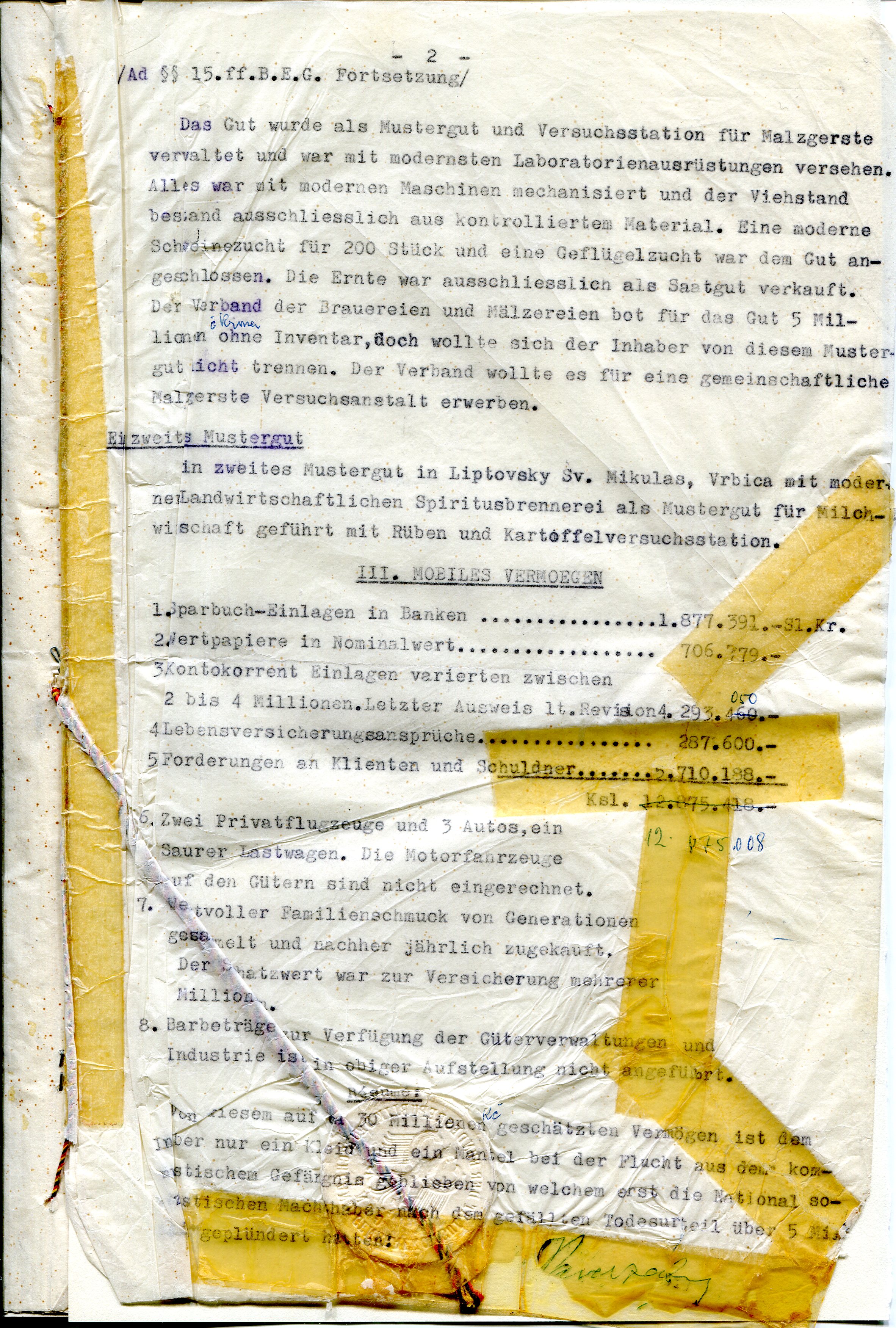
After that night, the Front had to retreat, and I was freed by the underground movement just hours before the execution, and hidden in an abandoned bunker. After reconquest the next day, the whole town was searched for me by several departments. Finally, they emptied out my apartment [His law office, I am sure, since there are other documents giving details of that seizure.-T] of all the things which, up till then, I was able to save in Bratislava, they loaded up seven trucks with it and drove away, not without first breaking open my safe, where I kept money for the guidance of industries and large estates in the amount of 2 1/2 Million Crowns. A directory contains all the stolen values, according to the insert more than 5 Million – officially confirmed. Insert submitted. [Not included here.-T]
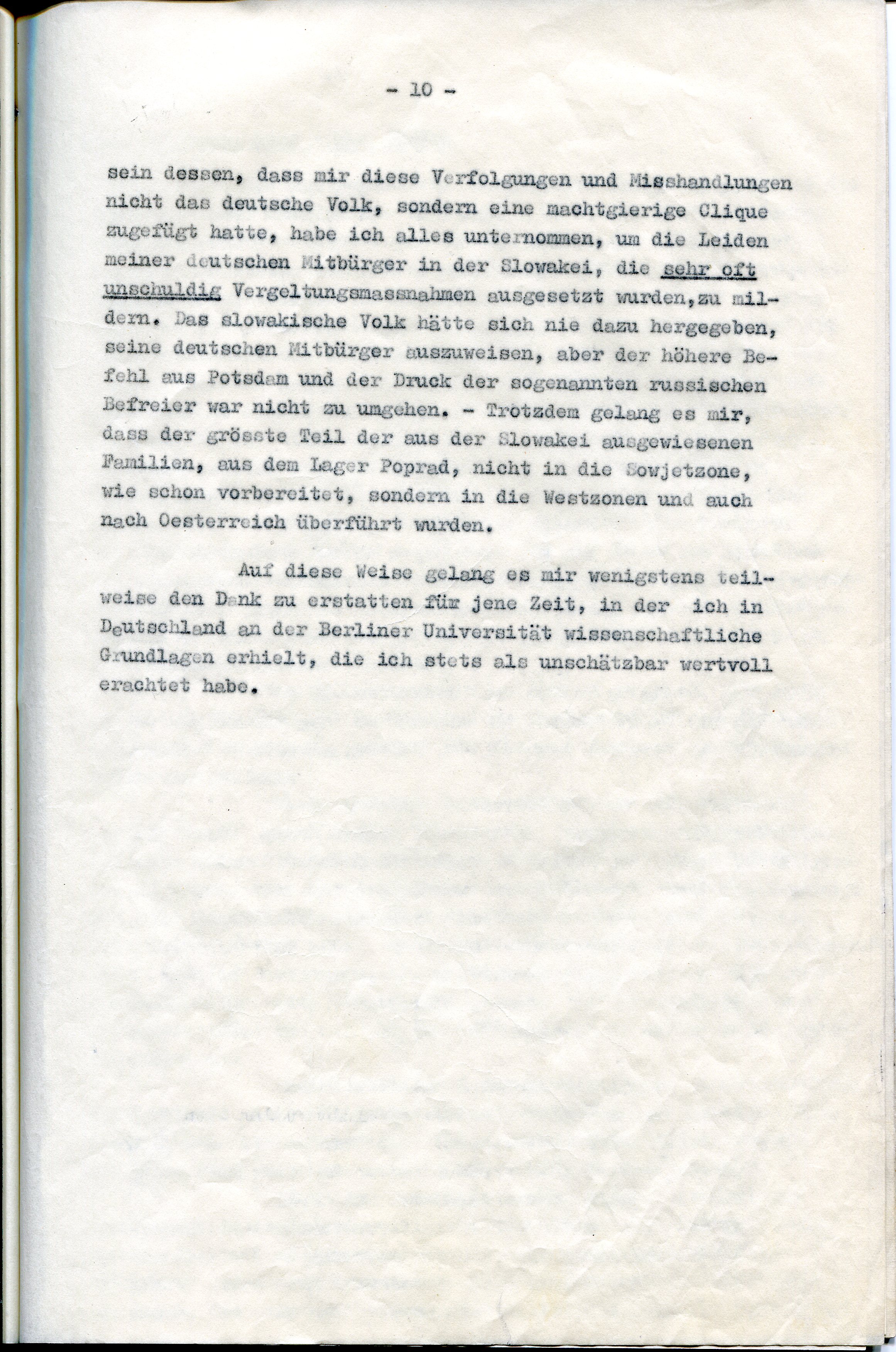
At the end of hostilities, in the awareness that these persecutions and abuse to me was not the German people, but a power-hungry clique had done this, I have done everything to love my fellow Germans in Slovakia, to mitigate those innocent who were often subjected to reprisals. The Slovak people would never have handed over his fellow Germans to be expelled, but the higher command out of Potsdam and the pressure of the so-called Russian Liberators could not be avoided. Nevertheless, I managed that the major part of the reported families from Slovakia, from the Paprad camp, not be sent into the Soviet zone, as was already prepared, but were transferred to the Western zones and also to Austria.
In this manner, I managed to at least partially reimburse you for those times in Germany and Berlin University, in which I received the scientific foundations I have always considered to be invaluable.

After the Persecution Today

As the so-called Russian Liberation Army in Slovakia – consuming (raubend) more than liberating – invaded our city, I was immediately arrested and led into the basement of the NKVD, where I found quite a few others arrested. The public, especially the workers in awareness that I freed from deportation a few days before, chose to stand up and with the deputation of workers demanded the immediate release from liability. But the commander of the NKVD also had the deputation arrested and had me lead them into the cellar. The workers union had accumulated in front of the Villa and vigorously demanded the release from liability, whereupon the commander turned to the High command in Kosice, whereupon we were released – seven and a few, but the rest were to be deported to Siberia. The NKVD commander later said I was arrested on the basis of the request of the Hungarian Communists, because I, as High Commissioner in 1919, acted so harshly (so schroff) against the troops of Bela Kun. And he said that if I was released now, I would not be spared Siberia.
The public had reacted sharply. I immediately became an honorary citizen of the circle and an honorary member of the National Committee, elected unanimously, and I was given the two highest honors.
The spontaneous demonstrations of the public gave me the strength to forcefully intervene against many attacks, and also to help my fellow Germans and give confirmation that they behaved decently during the Hitler era, and to stifle all individual personal attacks of vengeance in the bud. As I have already mentioned, I was able to help the internees that they not go to the Soviet zone, as was planned, but were sent to West Germany and Austria. I was a daily visitor to collection centers and in prisons, to help where help was justified.
My parlous state of health has not allowed me to carry my work further. The law firm I have has only a limited representation of associates, and these are only my best performing workers.
After the Communist coup performed by Russian Deputy Foreign Minister [Valerian] Zorin for the Communists, the time is broken up with invoices to settle for my work against Communism as High Commissioner in 1919. And on the instructions of the insulted Rakosi I was first of all relieved of all my functions and representatives, and subjected to all possible harassment, interrogations, etc. When I went to the delegation, as elected President of the Financial and Economic Committee of the General Assembly of the World Council of Churches, in Amsterdam, and was asked for my passport, I was arrested on the pretext of excessive imaginary charges. My whole fortune was taken, all accounts were confiscated and my Villa locked with furnishings, clothes, supplies, and everything, since it was the Consul-General of Russia; and on the same evening I was arrested as a “National Gift”, the nation was taken over, and in the night the Russians transferred the land register.
And so, my health still shattered by the persecution these Nazi monsters caused, they transferred me to the locked section of the hospital to make interrogations there. After seven months detention [In another document it says only 6 months, which I will include here, after this testimony.-T] the workers and employees of some companies succeeded to liberate me in the night on January 21-22, 1949, and led me to a kamion near the border. I had foreseen that the police would know about my escape during the night, and that’s why I escaped (uberschreitete ?) to the Hungarian border with Austria, and again by the Austrian border, since I was immediately searched with many dogs.
I managed with the help of my friends to leave the Soviet zone disguised, and made it to Switzerland where I anticipated my wife and daughter. [I have an audio recording of Olga Fabry, Pavel’s daughter, where she says that her father escaped from the prison hospital dressed as a nun, and made it across the Swiss border by train, hiding inside a beer barrel.-T]
The Swiss authorities immediately received me as a political refugee and assured me of asylum, and issued all the necessary travel documents.
To this day I am constantly witness to the most amiable concessions by the Swiss authorities.
In my description of illness, my activity in Switzerland is already cited.
Accustomed to the work of life, and since my health no longer permits regular employment, I have adopted the assistance of refugees. Since Geneva was the center of the most important refugee organizations, I was flooded with requests by the refugees of Western Europe.
I took part on the board of the Refugee Committee in Zurich and Austria, after most refugees came from Slovakia to Austria, and I had to check very carefully if there were any refugees that had been disguised. I was then elected as President of the Refugee Committee, but on the advice of the doctors treating me I had to adjust this activity, because through this work my health did not improve. Nevertheless, I succeeded in helping assist 1200 refugees in the decisive path of new existence.
Otherwise, I remain active in the Church organizations. All this human activity I naturally consider to be honorary work, and for this and for travel I never asked for a centime.
Since I am more than 62 years old, all my attempts to find international employment failed, because regulations prohibit taking on an employee at my age. It was the same case with domestic institutions.
My profession as a lawyer I can exercise nowhere, since at my age nostrification of law diplomas was not permitted. To start a business or involvement I lacked the necessary capital – since I have lost everything after my arrests by the Communists, what had remained from the persecution.
And so I expect at least the compensation for my damages in accordance with the provisions applicable to political refugees.

Translating the Fabry Family

Vlado and Pavel Fabry
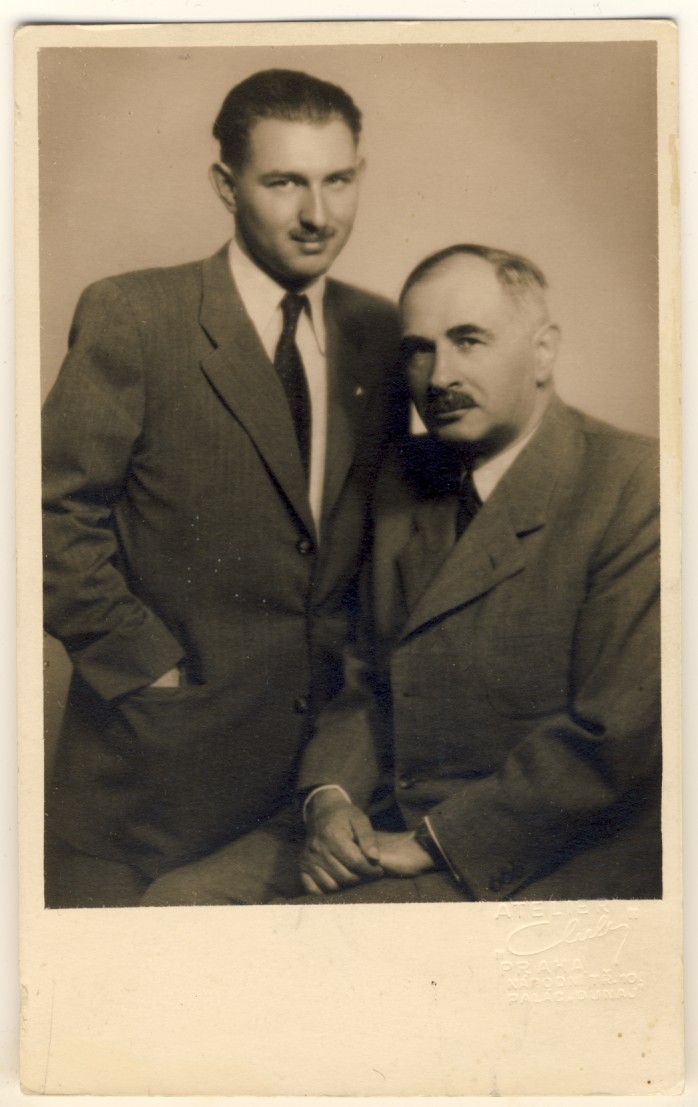
When my Slovak mother-in-law passed away, she left behind a trove of family documents dating back before the creation of Czechoslovakia in 1918. This blog is where I piece together the clues of her family – the Fabry family: Vlado, her only brother – member of the United Nations from 1946 until 1961, when he died in a plane crash on a peace mission with U.N. Secretary General Dag Hammarskjold; Pavel, her father – a lawyer, politician, and son of wealthy industrialists, and one of the first to be imprisoned and tortured in the concentration camp llava, in Czechoslovakia; Olga, her mother – daughter of land-owning aristocrats, who watched as her home was seized from her, and eventually turned into the Russian Consulate, in Bratislava, where it remains today still. My mother-in-law, whose name is also Olga, never gave up trying to get back her home – she even put it in the will, she was adamant that it be returned to the family.
Fabry Archive - Selected Photographs (114)
All of them were prolific letter writers. I am in the process of making order of nearly 25 archival boxes, translating the most intriguing documents as I go. Google Translate isn’t perfect, but I am using it to help make sense of the letters in German, French, and Slovak – not much written in English, but I am hoping to learn these languages better in time.
So far in my research, I am learning about Bela Kun, Franz Karmazin, the Comintern, Lenin Boys, Count Mihaly Karolyi, the Hlinka Gaurd, and Jozef Tiso. Czechoslovakia had both Nazis and Communists invading them, just one horror after another.
Fabry Archive - Selected Photographs (45)