


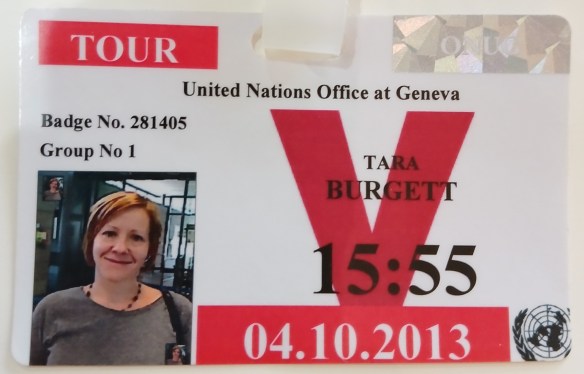


My name is Tara Burgett, I am an independent researcher and archivist, and the author of this blog dedicated to Vladimir “Vlado” Fabry. My husband, Victor, is the nephew of Vlado, the only child of Vlado’s sister, Olinka. When Olinka passed away in 2009, we discovered a trove of papers and photos stuffed in old suitcases in the house in New York; recognizing their importance, we packed them up and brought them to Washington state, and since then I have made it my mission to share the family story with the world.


When I first began my blog in 2013, the only information I could find on the internet about Vlado, other than the details of the plane crash in Ndola with Dag Hammarskjold, was a memoriam to one of Vlado’s girlfriends, Mary Sheila Dean Marshall; written by her son Chris Marshall. Here is the paragraph mentioning Vlado that made me laugh out loud:
“Sheila considered her time in New York to be some of the happiest days of her life. She roomed with her dearest friend, a gorgeous Czechoslovakian socialite named Desa Pavlu. The two of them must have left a trail of broken hearts throughout Manhattan. Sheila had a proposal of marriage from a young man named Arthur Gilkey. She declined, and shortly thereafter, he perished while ascending K2. Sheila was also courted by a chap named Vladimir “Vlado” Fabry. Vlado died with Dag Hammerskjold[sic] in The Congo[sic]. It seems that Vlado may have been connected with the CIA. Sheila said she could never see herself marrying Vlado because of his “very round bottom”.”
I was only a little annoyed that someone was using the words of one dead person to slag off another dead person, because it was just too funny to read about Vlado’s “very round bottom” on the internet. What did bother me though, was the statement from Mr. Marshall, that “Vlado may have been connected with the CIA”; which was just his opinion, when in fact, his father, Sheila’s husband Mike Marshall, was a CIA operative from 1952-1967.
The more time I spent reading and translating the letters and documents, the more I realized how important it was that I speak up for Vlado and his family. The Fabry family were the targets of intentional and malicious slander, in revenge for their fierce resistance to both Nazi and communist invasions of Czechoslovakia, and sharing their archive has been my way of setting the record straight.

Vlado studied Law and Political Science at Comenius University in Bratislava, following in the footsteps of his father, Pavel Fabry, who was also a lawyer. Before joining the United Nations Legal Department in 1946, Vlado served as Personal Secretary to the Minister of Commerce in Prague. Vlado and his father were both very romantic and unconventional characters, who loved music, poetry, travel, and all kinds of adventure; they were not afraid to stand up for their beliefs, even in the face of danger and threats of death.


After the communist coup d’etat in 1948, the whole family were forced to flee Czechoslovakia, and lived as political refugees in Switzerland. Vlado was often on the move, working for the UN in many countries, including New Zealand, Indonesia, Ghana, Egypt, and Congo, but he would stay with his parents in Geneva whenever he was on leave, at 14 Chemin Thury.

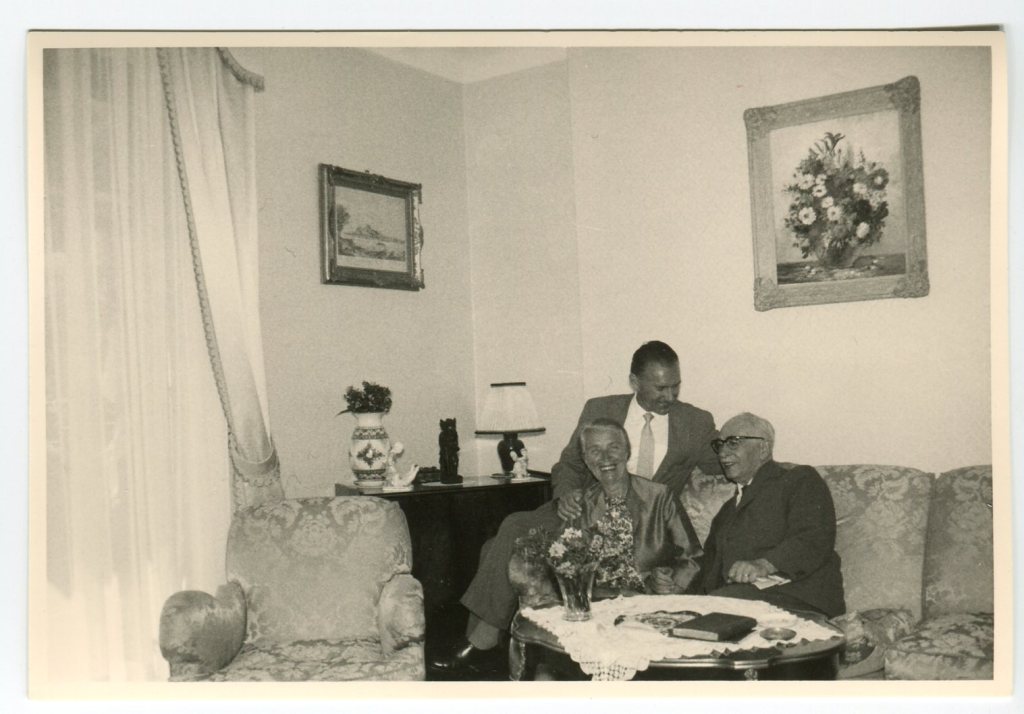
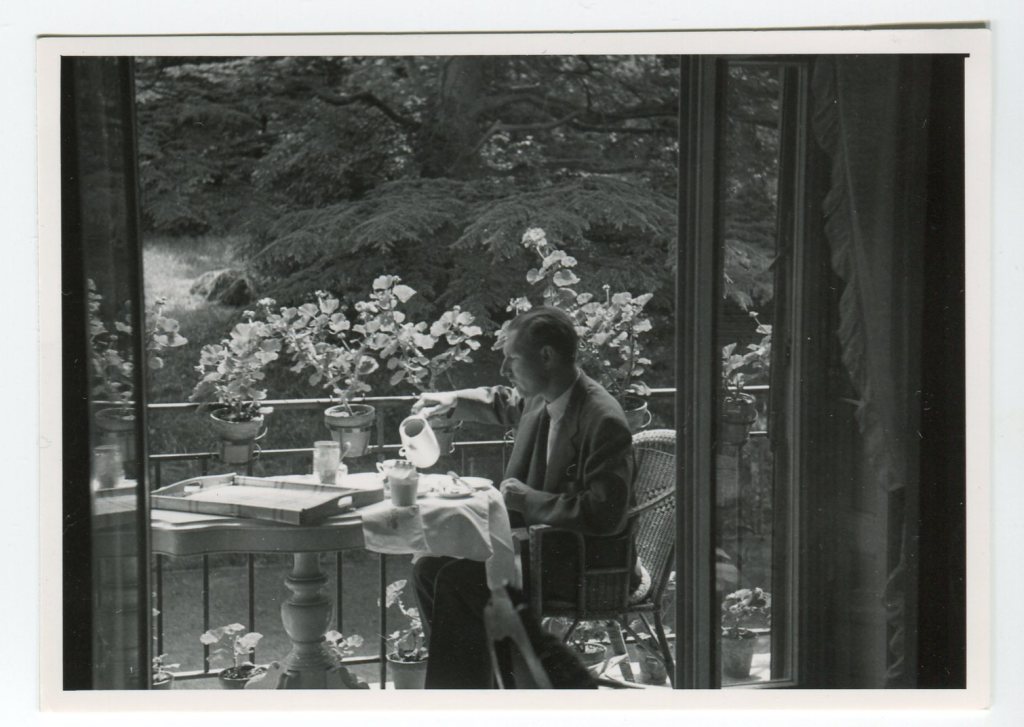
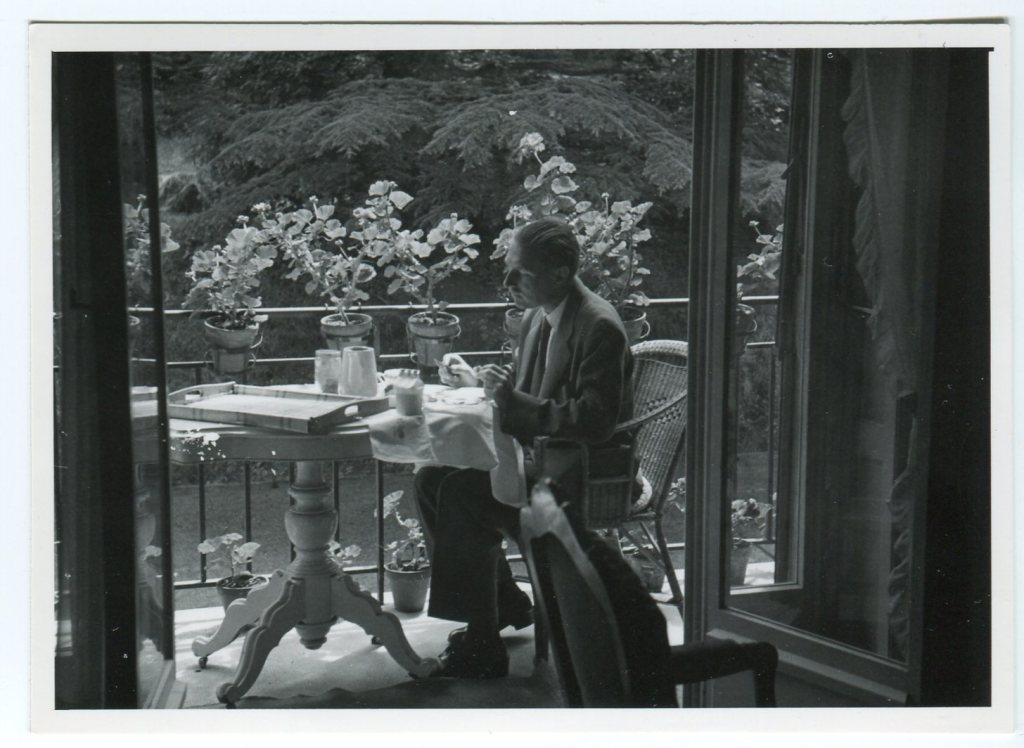

Vlado was loved by many of his colleagues at the UN, for his kindness and hospitality, and for his enthusiasm for skiing, mountain climbing, as well as his intellect and charm.


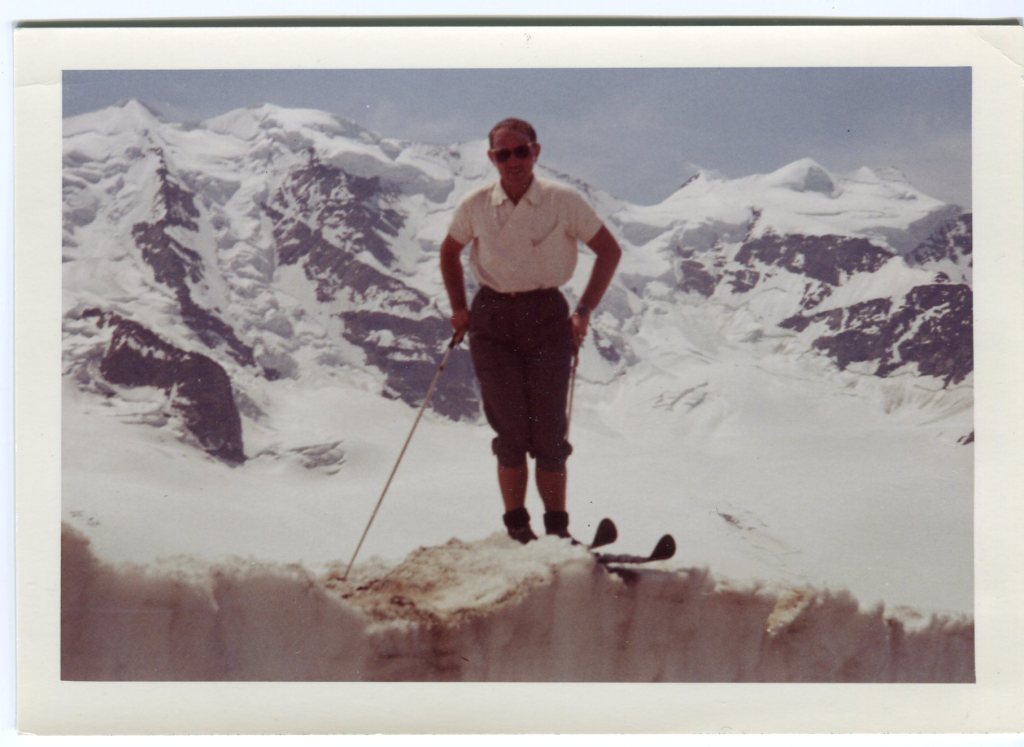
I could say more about his personality, but I feel the letters Vlado left behind, and the letters of his friends and family who knew him, say it best. He was an example of courage that anyone who knew him tried to follow, and is an inspiration to me, personally.











Born 23 November 1920, a toast to Vlado from the S-G – and me! Thank you to everyone who has contacted me with your fond memories of Vlado, I appreciate them all.


From New York to Gaza, 22 November 1960, birthday wishes from Vlado’s sister Olinka.

Not a birthday telegram, just a “confidential” message from Vlado’s mother to write home more often!

A birthday message and pep talk from big brother Vlado to his sister, sent late September 1960:
“However it may be, there’s no use fighting it or grumbling about what could be – just try to enjoy life as it comes and make every year of it – or every day, or every minute, – a memorable experience and adventure. Carpe diem! -“
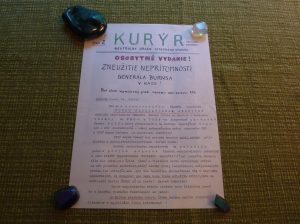
On November 4, 1959, while Vlado was working in Beirut as Legal and Political Adviser to the UNEF in the Middle East, there was a fight between four Egyptian and six Israeli jets at the border of the two countries. Here is a letter from Vlado’s father, Pavel, written the following day, which has a news clipping in German referencing this event. I can’t properly translate the Slovak, but it shows Pavel’s usual sense of humor, in the format of a mock newspaper front page – especially the magazine image he altered to look like Vlado, with his nose in a book at the beach, surrounded by women trying to get his attention, ha! He was so funny. I’ve included a couple photos of Pavel, showing what he looked like around this time.
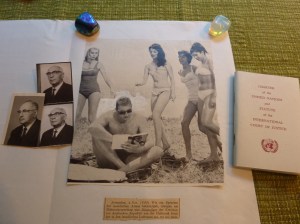
A special thanks to Anna Bergman (Justice for Dag Hammarskjold on Facebook), who has been helping me identify the people in the photos of Vlado at work, which has been a challenge. Though many are still untitled, it’s made me realize just how much information I haven’t included, so I have added what I have to this collection of photos today. Click on images to enlarge.

Beginning with his mission to Indonesia (1948-1951), here is the bearded Vlado, grinning as he waits his turn for inoculations.

Here is the reverse of the photo, with a Slovak note written in Vlado’s script.
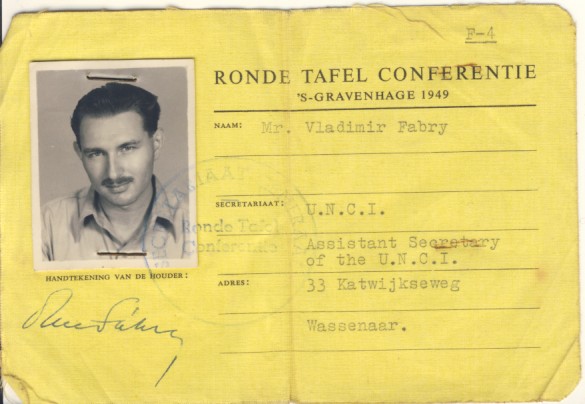
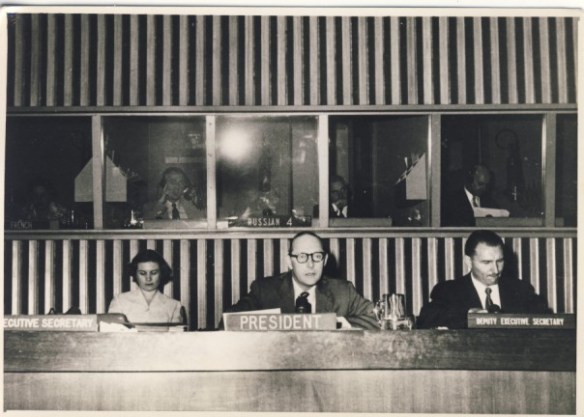
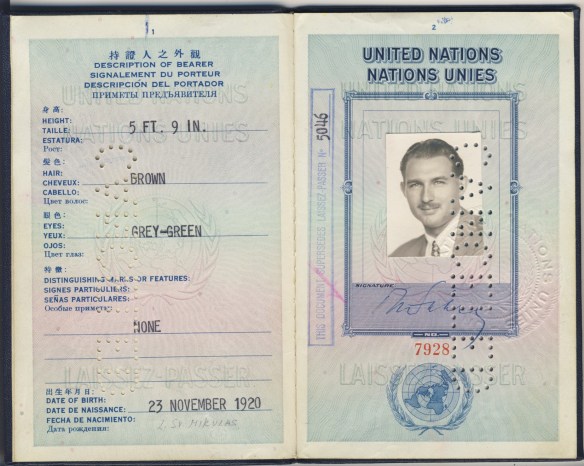
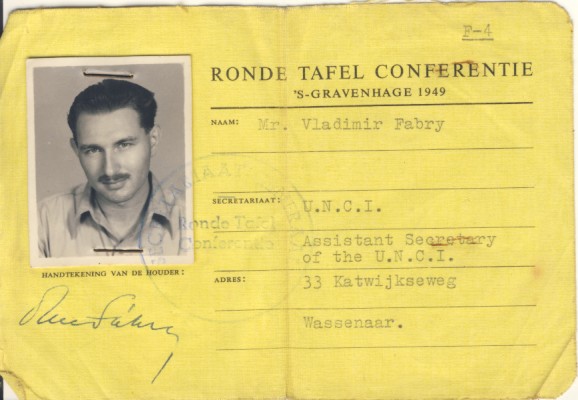
Vlado’s identification card for the 1949 Round Table Conference on Indonesia.
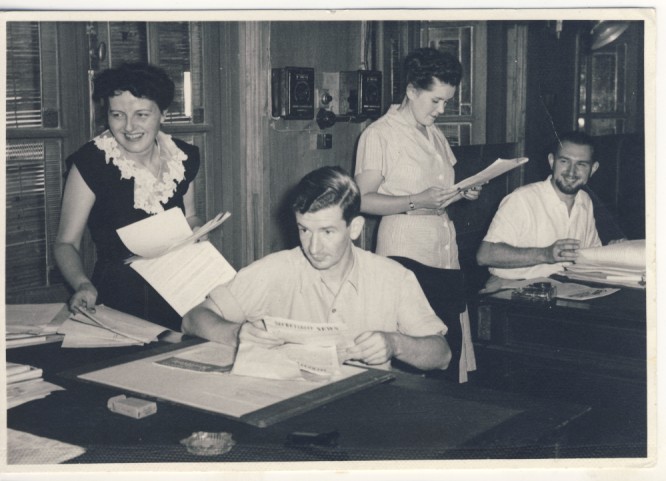
The only notes on this photo is “Fabry” and a photo copyright that says “Indonesia”.

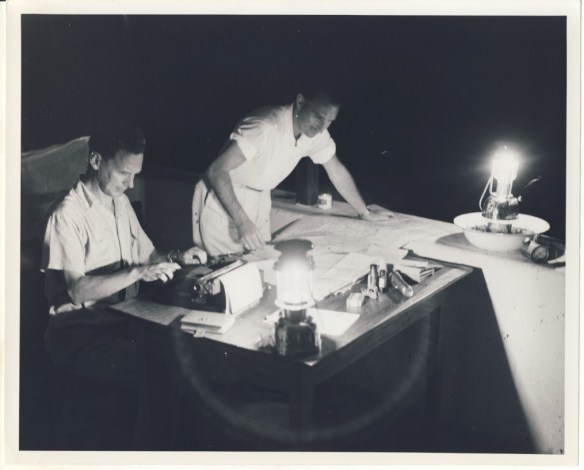
The next set of photos are from his time in British Togoland (January-August 1956), as U.N. Observer – he was there to help when the people voted to join the Gold Coast. This is a titled U.N. photo from the personal collection, which says:
“PLEBISCITE FOR BRITISH TOGOLAND, British Togoland, April 1956.
Headed by the United Nations Plebiscite Commissioner, a team of U.N. observers is in British Togoland in preparation for the plebiscite to be held on May 9, in the Trust Territory.
Here, at work with hurricane lamps on the terrace of their quarters in Jasikan, Buem-Krachi district, are U.N. observers Vladimir FABRY [incorrectly identified as on the left.TB] and Jan Van WYCK, both of whom are U.N. staff members.”

Another titled U.N. photo, which says:
“PLEBISCITE FOR BRITISH TOGOLAND, British Togoland, April 1956.
Headed by the United Nations Plebiscite Commissioner, a team of U.N. observers is in British Togoland in preparation for the plebiscite to be held on May 9, in the Trust Territory. Here, led by an interpreter, U.N. observer Vladimir FABRY is crossing the Wawa river on his way from Papase to Manida with registration assistant N.S.K. JAWUZOH.”
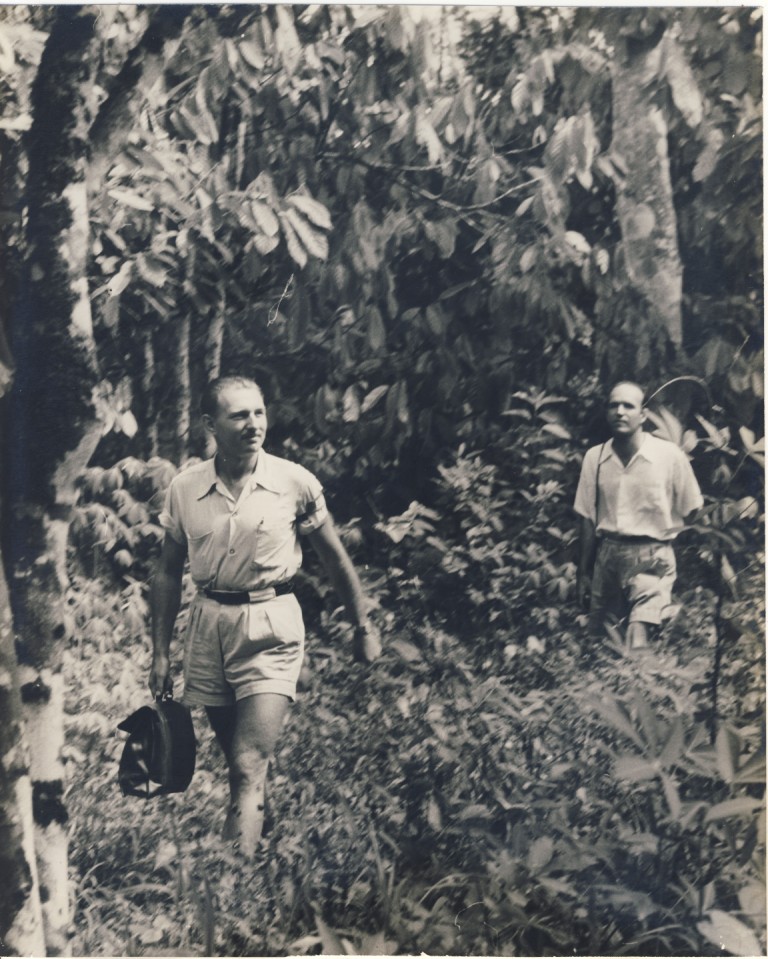
Titled U.N. photo, which says:
“PLEBISCITE IN BRITISH TOGOLAND, HO, British Togoland, May 1956.
The plebiscite held in British Togoland on 9 May resulted in a vote of 93,365 in favor of uniting the U.N. Trust Territory with the neighboring Gold Coast. 67,442 voters, including majorities in two southern districts, supported the alternative continuation under U.N. trusteeship pending final determination of the territory’s status.
Observer [incorrectly labled W. Fabry.TB] and U.K. Registrations Officer R. WEST-SKINN walking thru [sic] bush and cocoa plantations on their way to village of Dumevi (Akan district).”
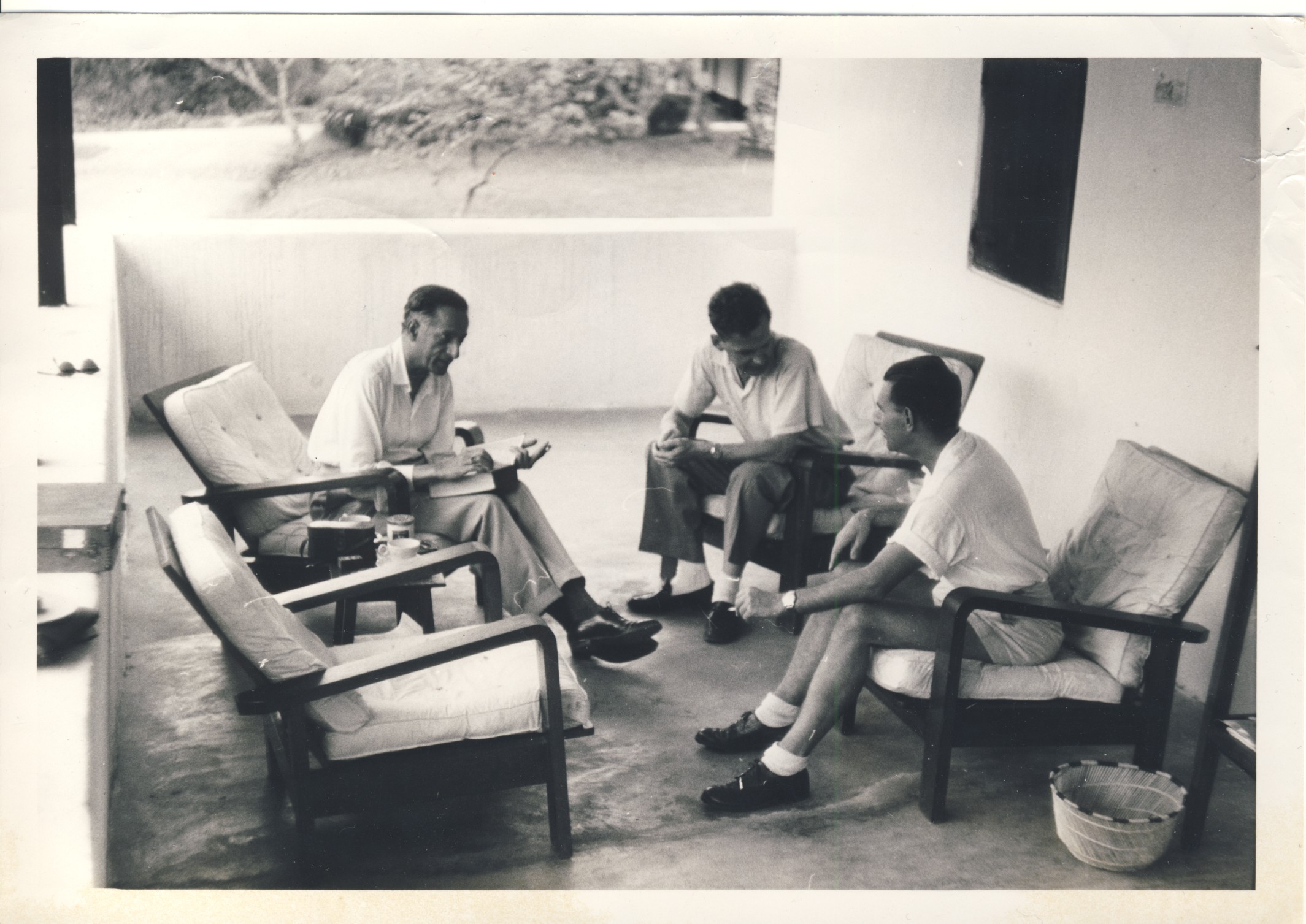
Vlado wrote a note on the back of this in Slovak, which says: “The terrace in Jasikan, with Van Wyck and Bokhari.” Bokhari is at left, Vlado is forward right, with a cigarette in his hand – he smoked about two packs a day, but I’m not judging, I love the horrid things, too – but not quite as much as he did.
Patras Bokhari was a very important person in the UN, who was also a fantastic speech writer. Here is a link to his first press conference as Under-Secretary of the United Nations – he calls himself “the poor man’s Hammarskjold”, but he tells a great story about their January 1955 trip to Peking to convince Chou En-lai to release American fliers held prisoner; who had been shot down and were being held for investigation for “violation of Chinese territorial air”. When those airmen were eventually released, it was because of the devoted diplomacy of Hammarskjold, no thanks to meddlers like John Foster Dulles – Hammarskjold said of him “the special characteristics of Mr. Dulles have made it extremely difficult for me to maintain even in the most modest way the contact which I need with Washington on the Peking issue.”

This is a titled U.N. photo, which says:
“PLEBISCITE FOR BRITISH TOGOLAND, British Togoland, April 1956.
Headed by the United Nations Plebiscite Commissioner, a team of U.N. observers is in British Togoland in preparation for the plebiscite to be held on May 9, in the Trust Territory.
This picture shows U.N. observer Vladimir FABRY making his way through a kapok forest neat Dumevi, in the Akan district.”

One last titled U.N. photo, which says:
“PLEBISCITE FOR BRITISH TOGOLAND, April 1956.
In preparation for the plebiscite to be held in this Trust Territory on May 9, registers of voters have been on display for a period to permit claims and objections. In the town of Ahamansu in the Jessikan district the British registration officer, Mr. R. WEST-SKINN, hears a man who allegedly could not establish residence in the township. Mr. West-Skinn’s assistant, Mr. LARTEY, stands behind him, and at the left is United Nations observer Vladimir FABRY.”
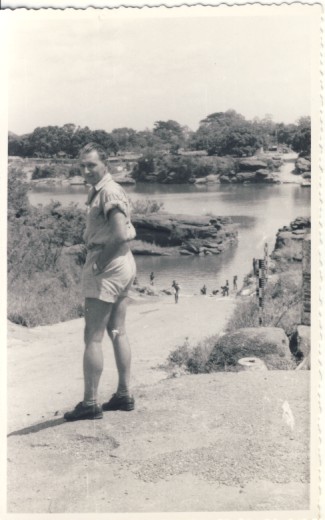
This photo is titled “Volta” – obviously, the Volta river.

Titled in Slovak “…Togoland…15/2 [1956]”.

Untitled, found in the British Togoland collection. Those are his “quarters” behind him.

When you have no running water, and only a limited supply of it every day, you take advantage of a good rain shower – what a happy guy! Titled “Jasikan”.

Untitled, a U.N. observer gathers people together outside the Togoland Congress Office for a photo.


Another from Jasikan, British Togoland, February 1, 1956. I’ve included the Slovak notes from the reverse of one, which suggests the photos have something to do with registration for the election.

Untitled, in the British Togoland collection. Could this be election day?

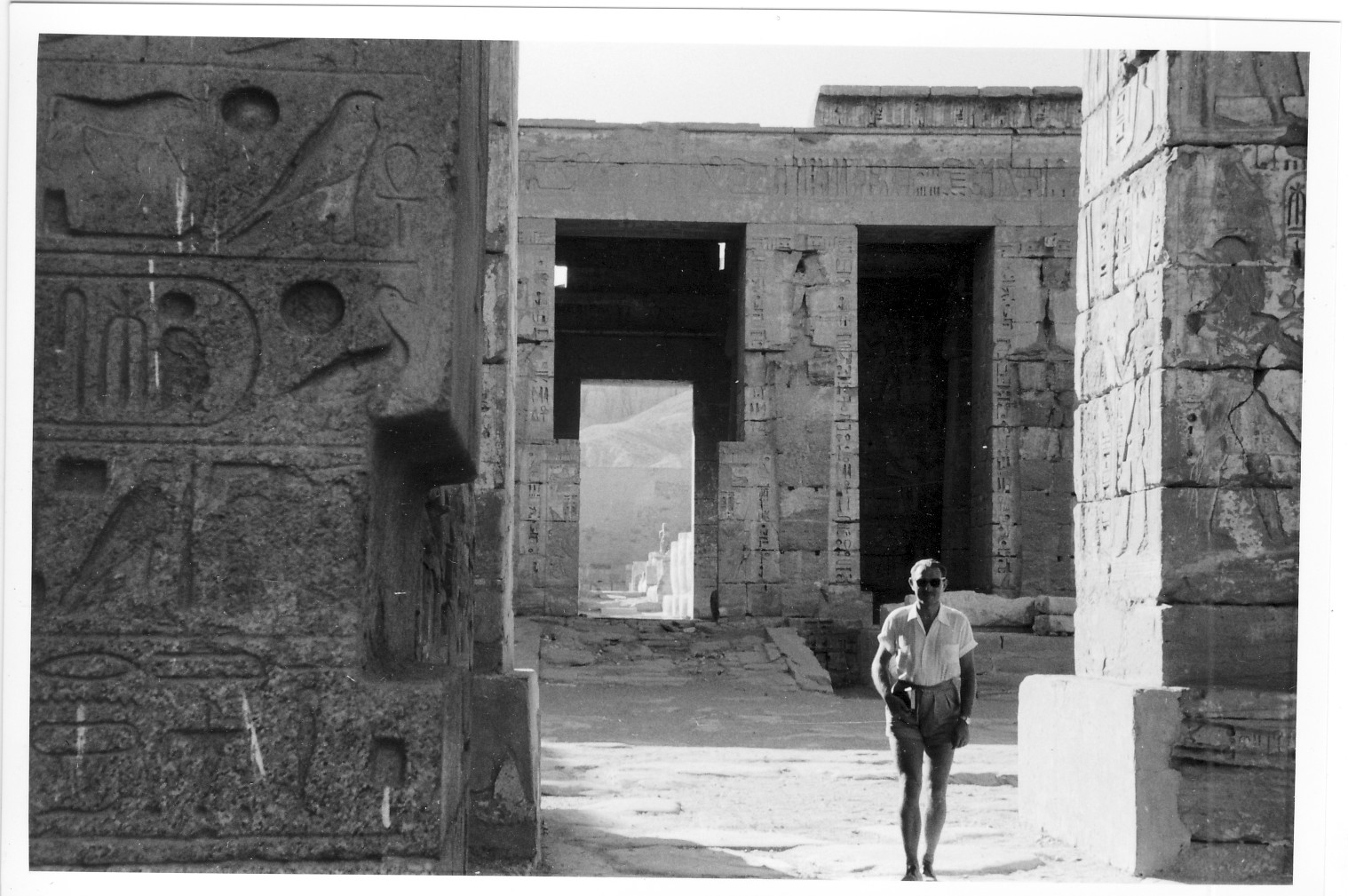
Untitled, Egypt.
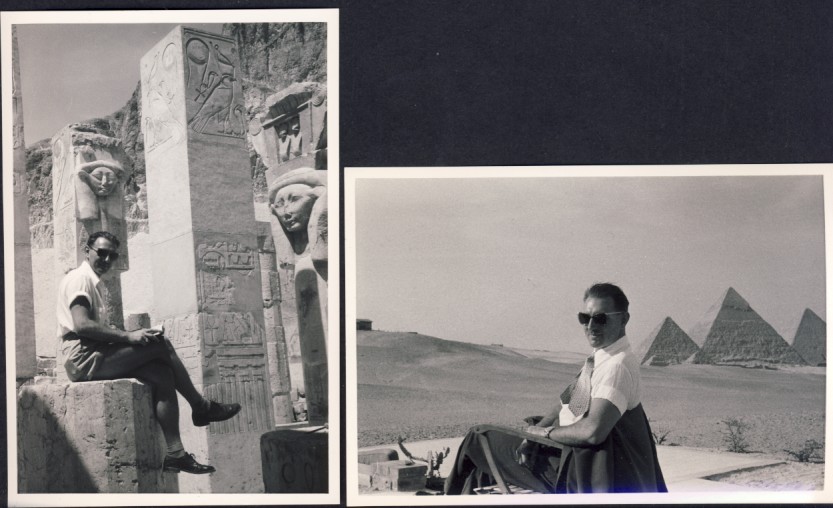
Untitled, Egypt.
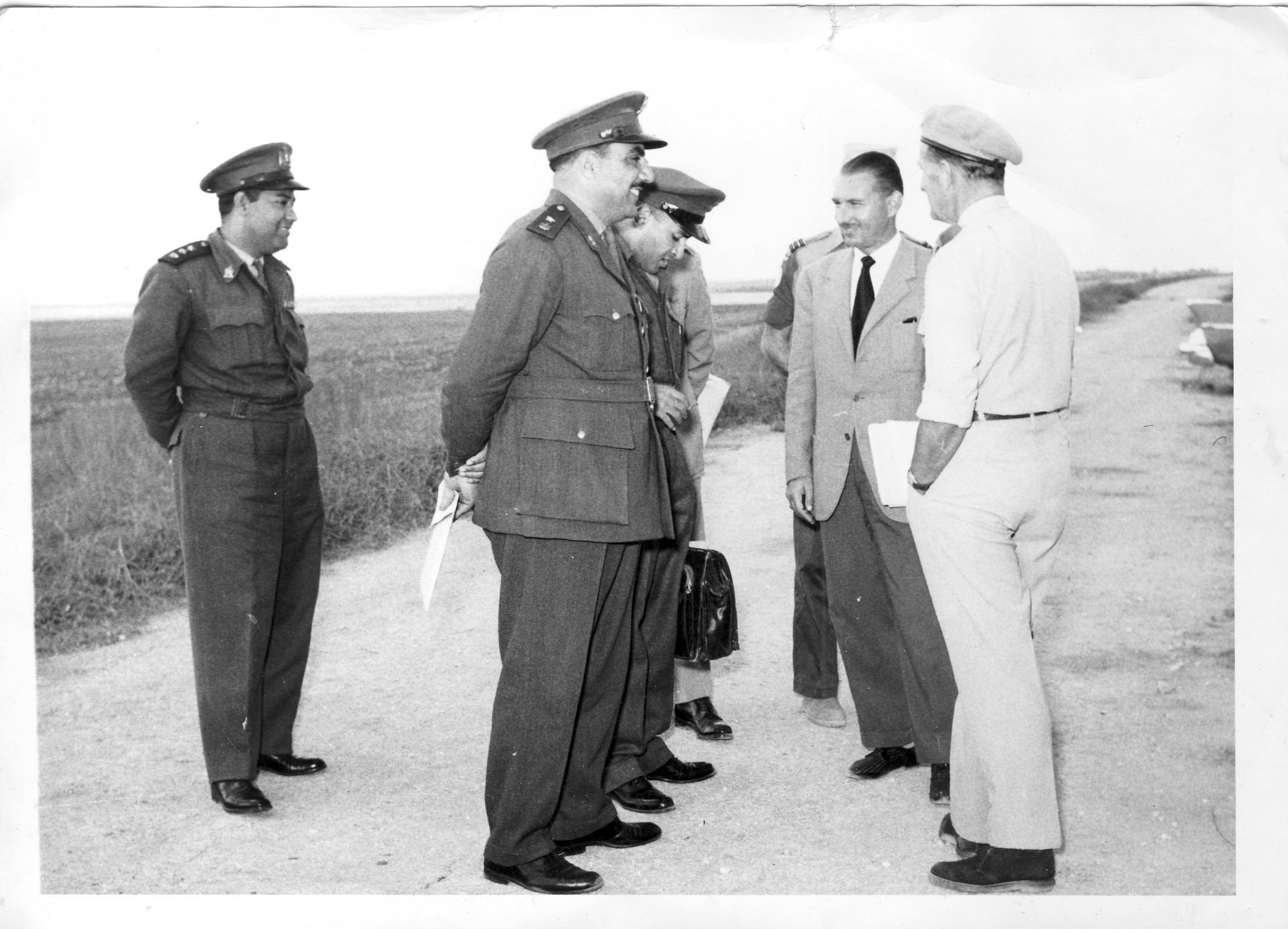
This photo – and the six others that follow it – are all untitled, but it’s a possibilty that this was one of the meetings between the UNEF and the UAR.
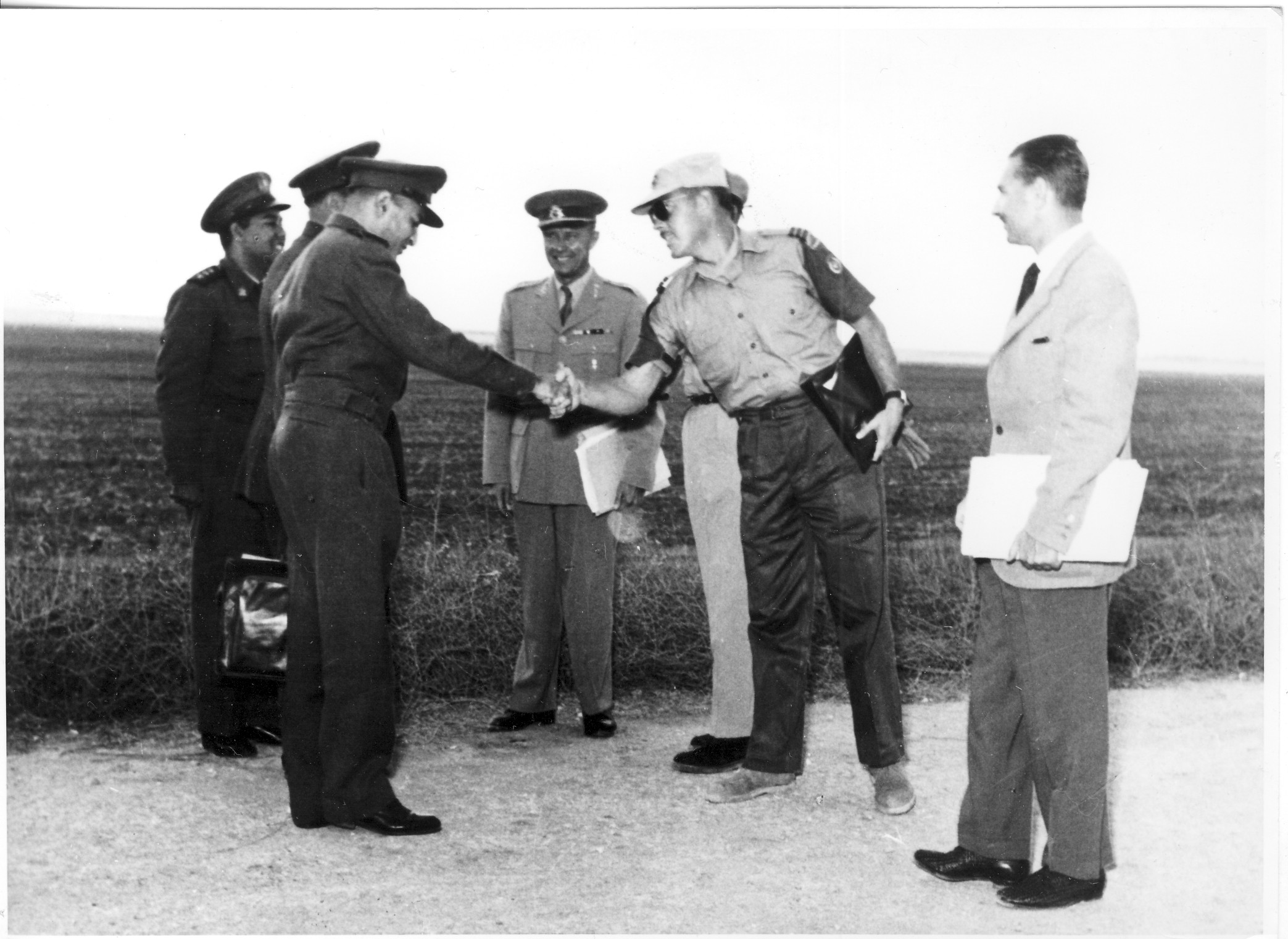
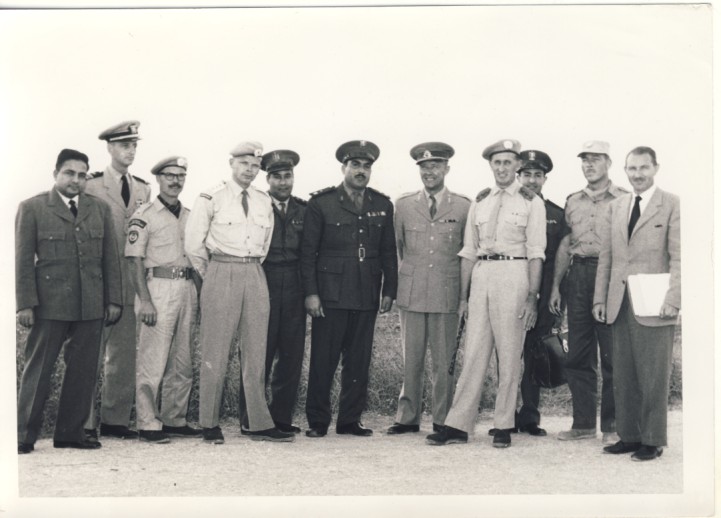


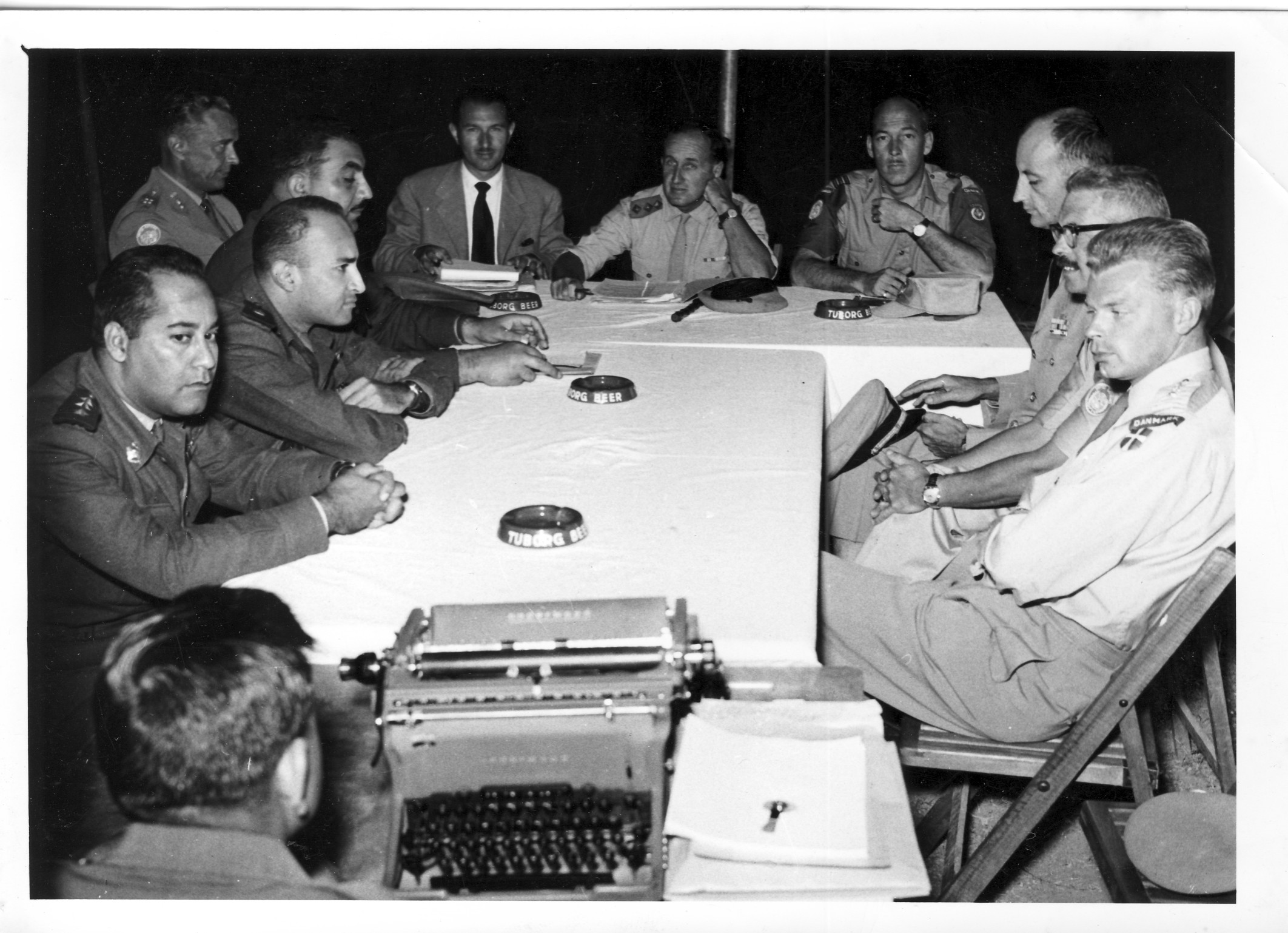

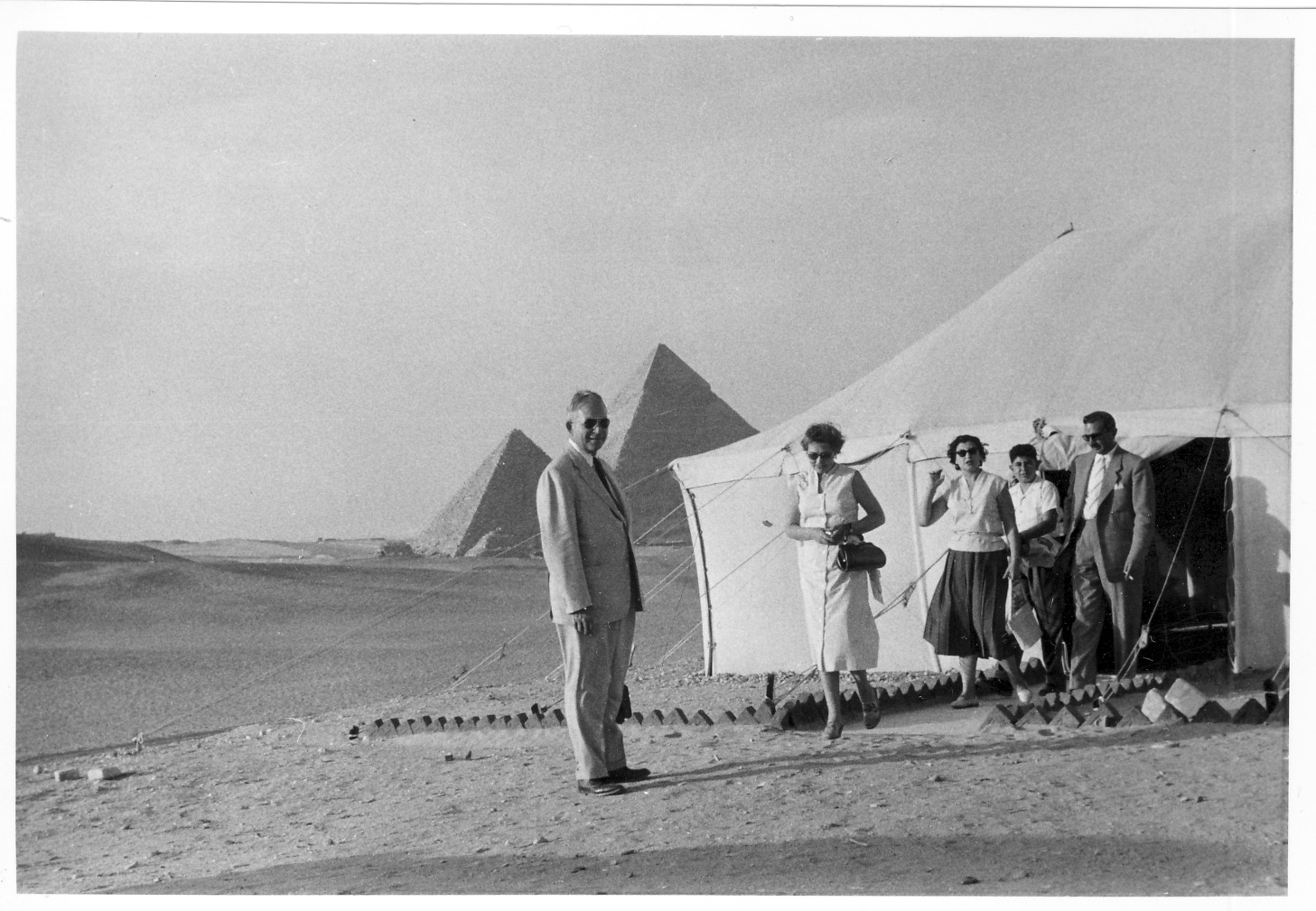
Untitled, Egypt. Vlado is exiting the tent, far right.
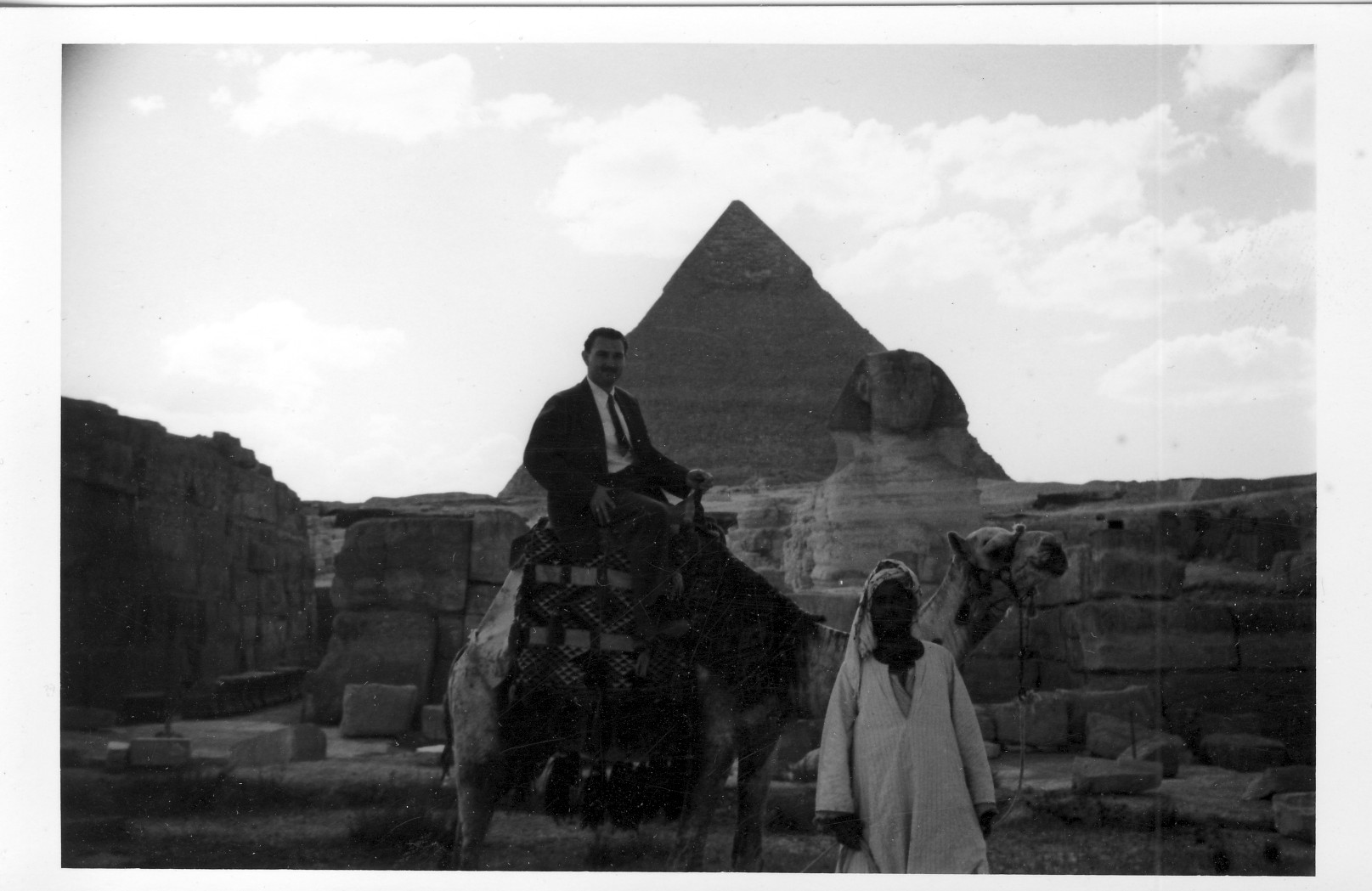
The two sphinxes – untitled.
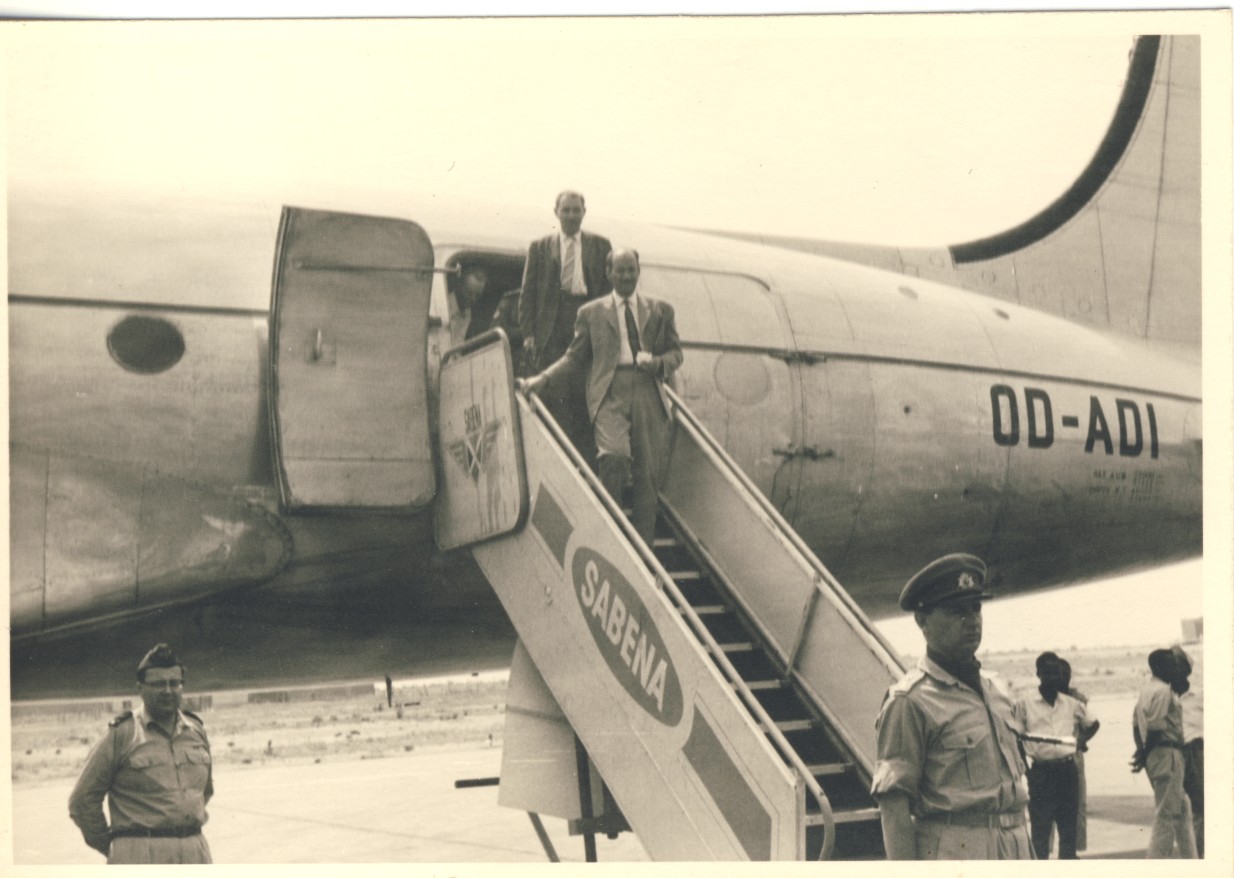
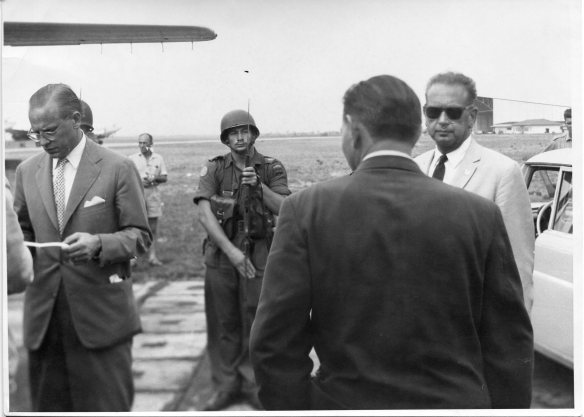
Really, there are no photos from Vlado’s time in the Congo but a few. Here is an untitled photo, possibly Congo, with him arriving on a Sabena plane.

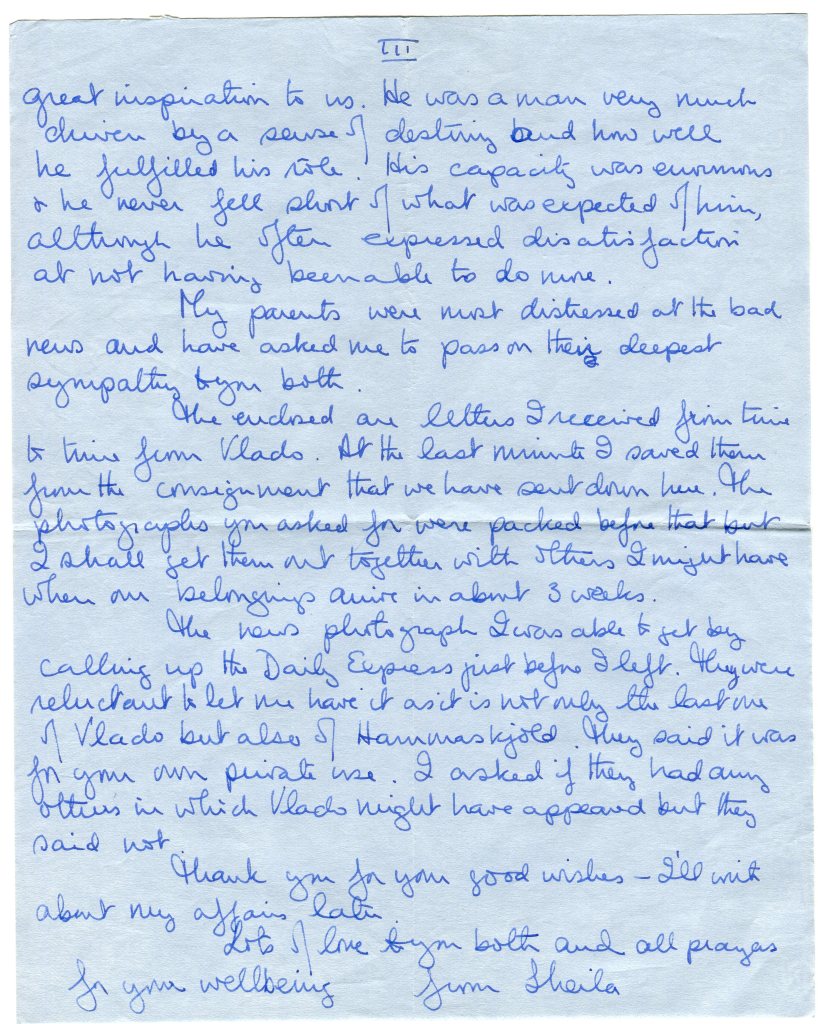
This photo, and the following photo, were sent to Vlado’s sister Olinka by Sheila Dean Marshall in her condolence letter; which Sheila collected from the DAILY EXPRESS in London, and are stamped on the back with the copyright. This is one of the last photos taken of Hammarskjold and Vlado before they boarded the DC-6 on September 17, 1961, headed to Ndola on what would become their final peace mission. This was the first version of the photo I found.
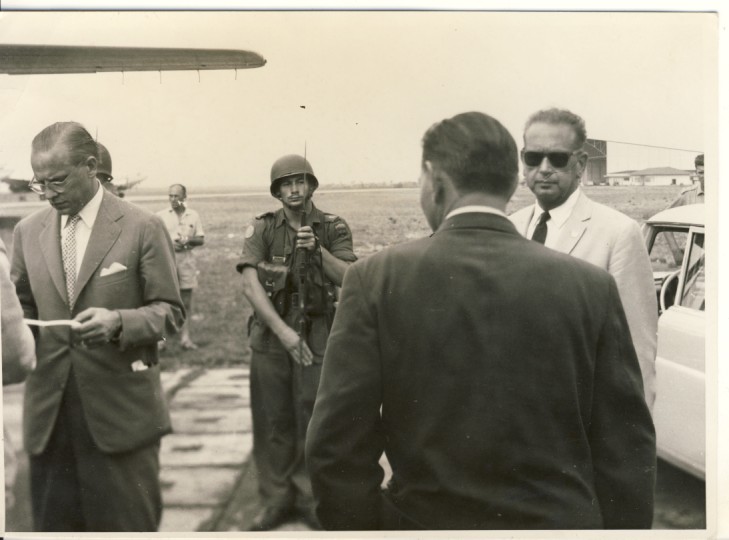
Here is the full expanded photo, which includes Sture Linner at left, reading. Found this much later. On the back, Sheila writes “Vlado before they took off in the aeroplane.”
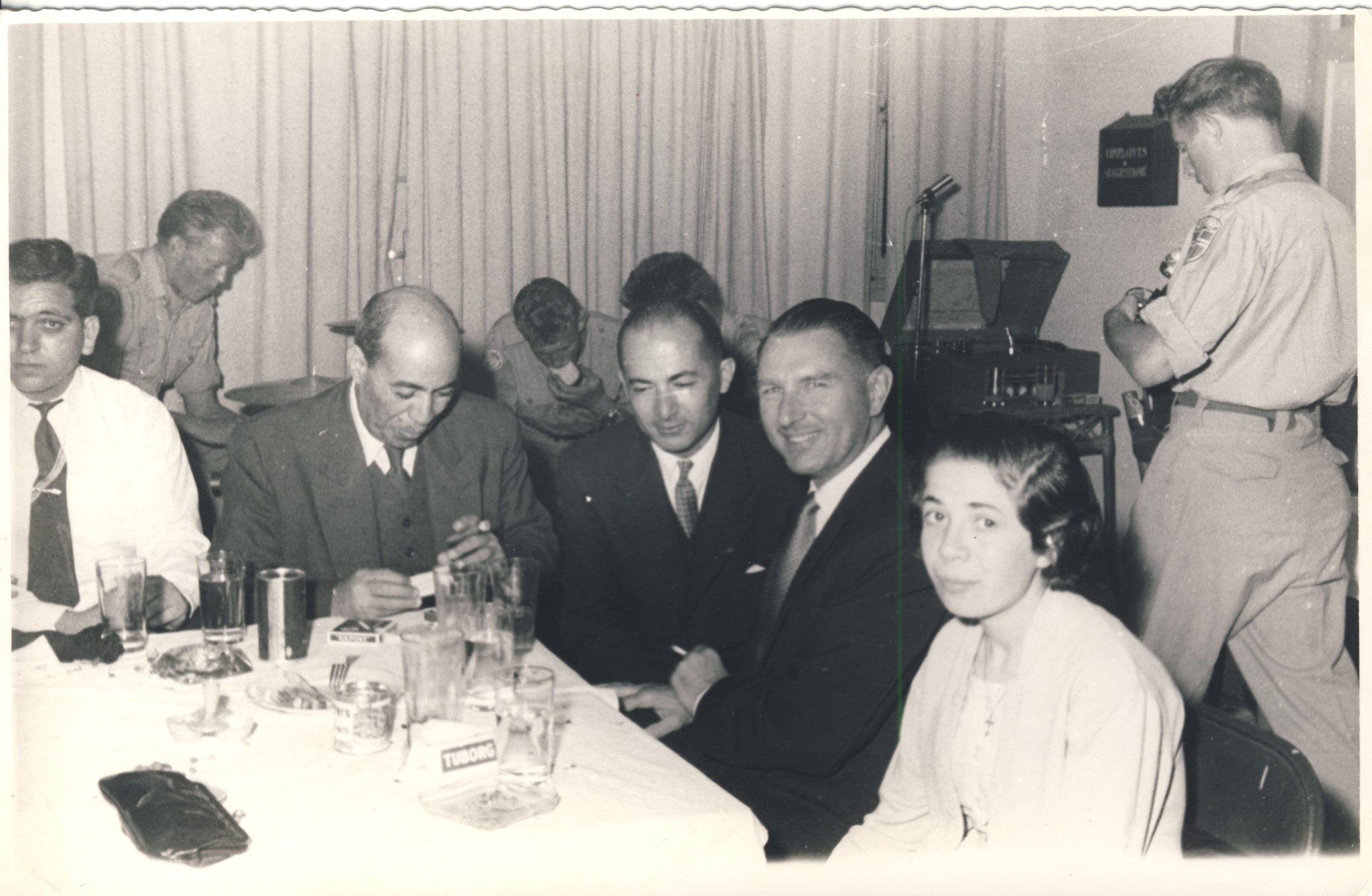
Untitled photo, possibly from his time with UNEF.

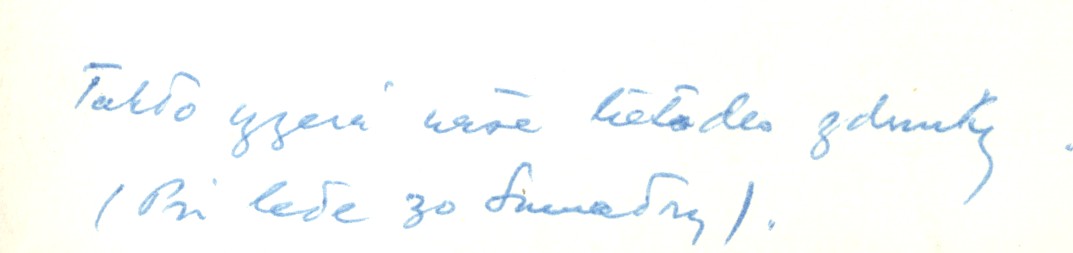
Photo of unknown flight – I’ve included the Slovak notes from the reverse. Help with Slovak translation is always appreciated.

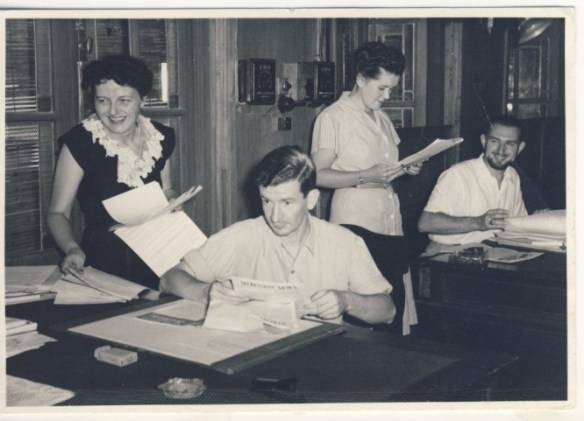
This photo and the next are both untitled, taken at United Nations Headquarters in New York.
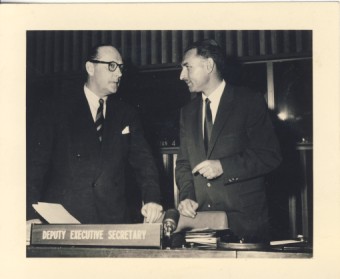

This last photo is untitled as well. I wonder why Vlado’s secretary is typing on top of a duvet? The old typewriters were so loud, maybe it muffled all the noise. I like the photo of Vlado at his desk – I have his copy of the Petit Larousse by my own desk.
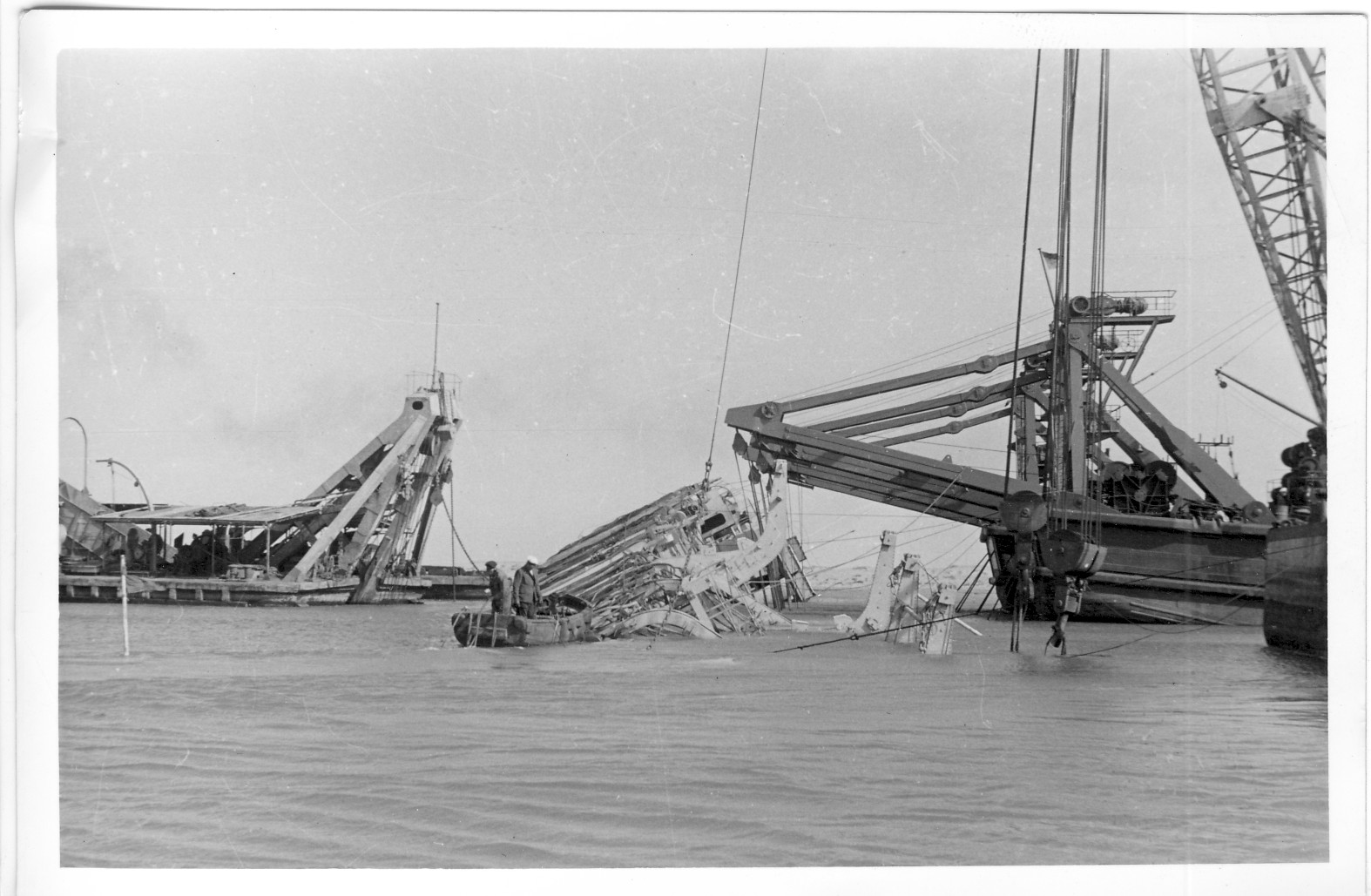
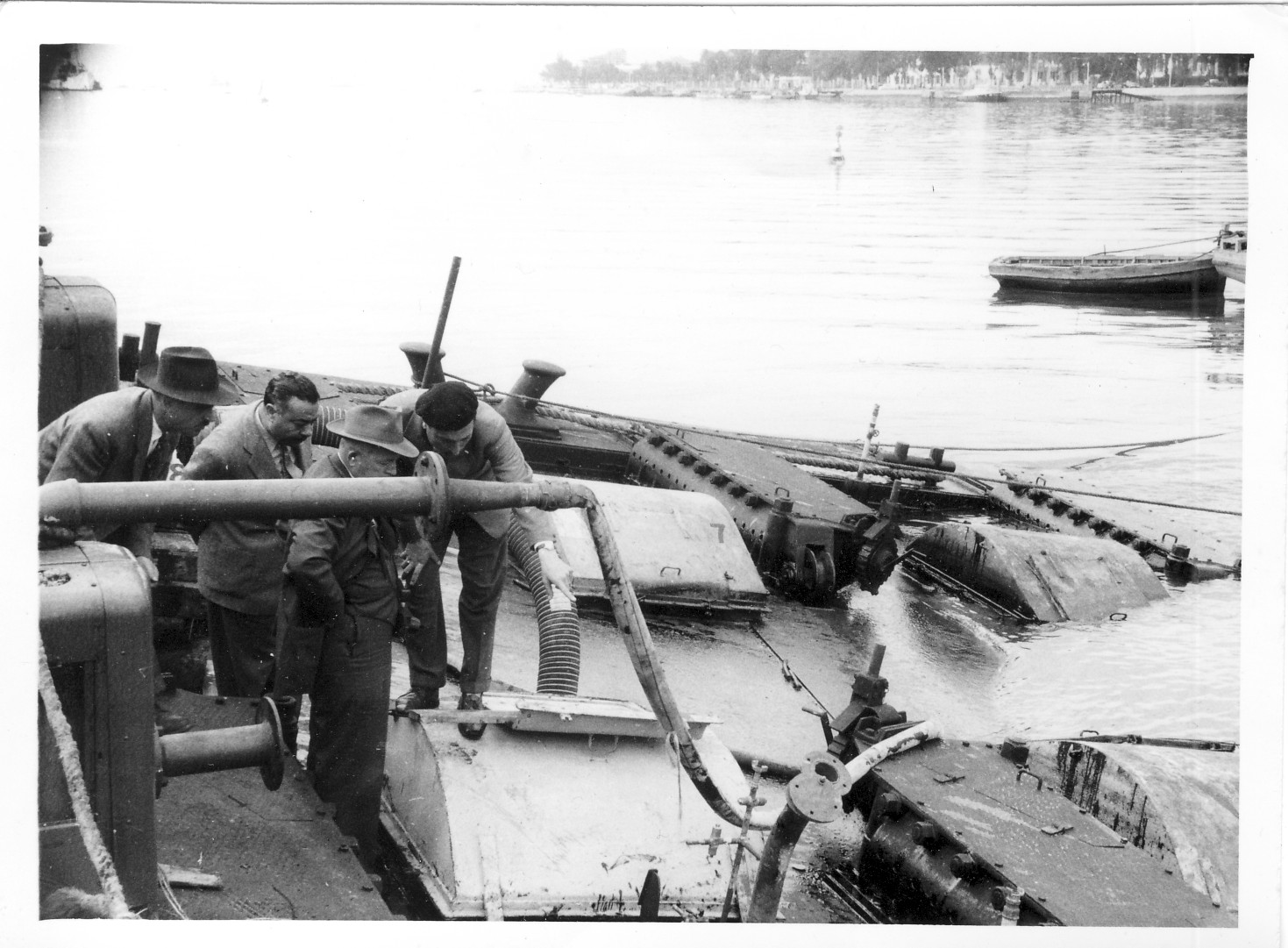
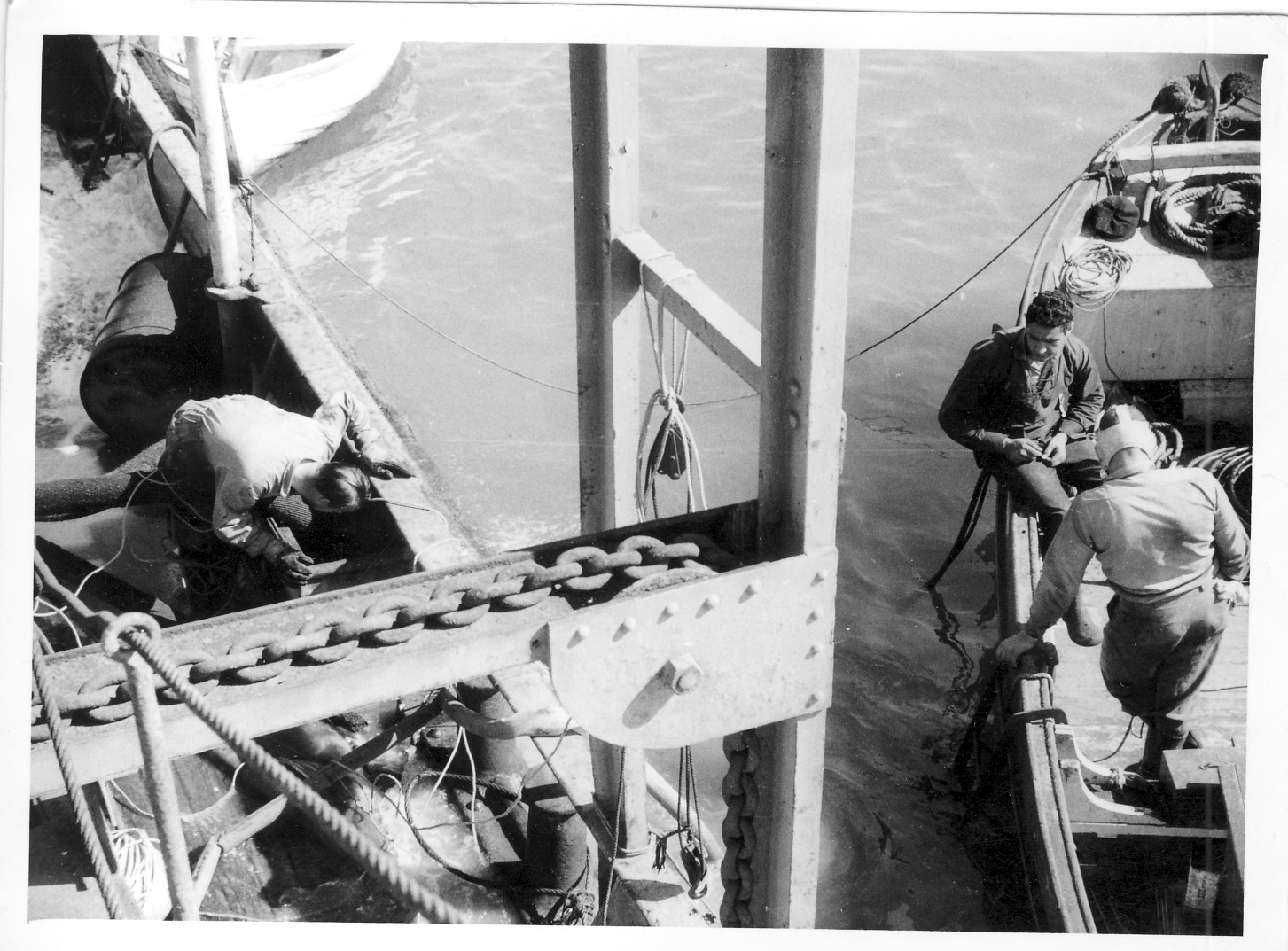
From the personal collection, here are just a few more photos from two of Vlado’s most important missions: UNEF and the Suez Canal Clearance Project. I am not able to identify the people Vlado is with, but I am hoping that will change when I make my first visit to the United Nations Archive in New York in a few months, to do further research. I have a lot of hard work to do before I even get there, but I am happy for the challenge. Thanks to all the good friends who encouraged me to take this step, I’m looking forward to sharing some of my discoveries here.



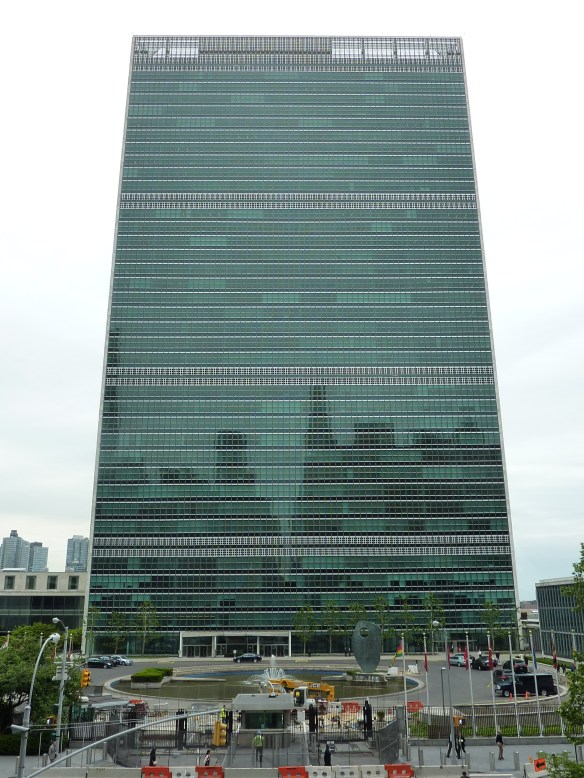
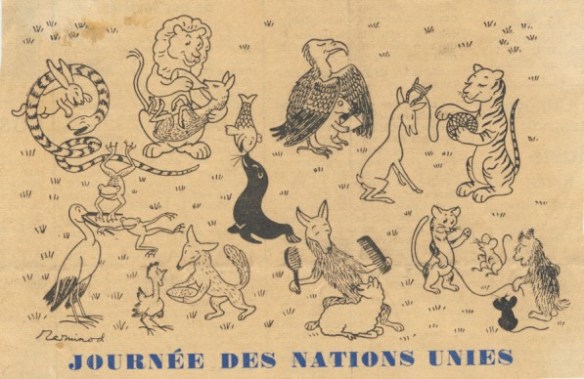
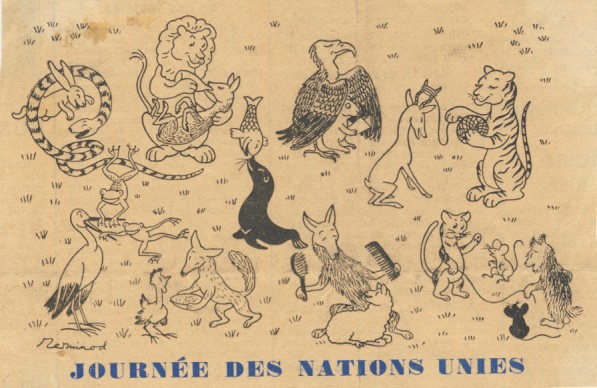
This is my early birthday gift to Vlado, who was born 23 November 1920. Above is a special birthday drawing from Vlado’s father, one of my favorites, showing the United Nations building rising above the clouds.
Much of my impression of Vlado comes from looking at photos, so I thought I should publish more of them, to show how much he loved life. Enjoy!

Vlado the Hero, circa 1942

Mountain climbing is a nice diversion from studying law – get this poor kid in a suit some proper climbing gear!

Vlado is serene in the Tatra mountains.

Bearded in the mountains of New Zealand.
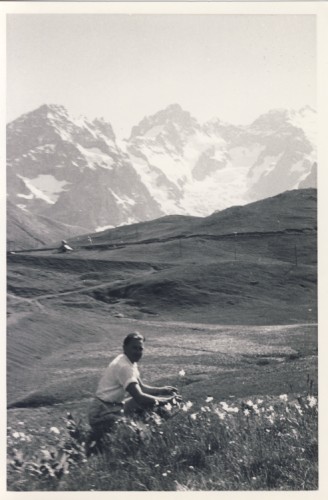
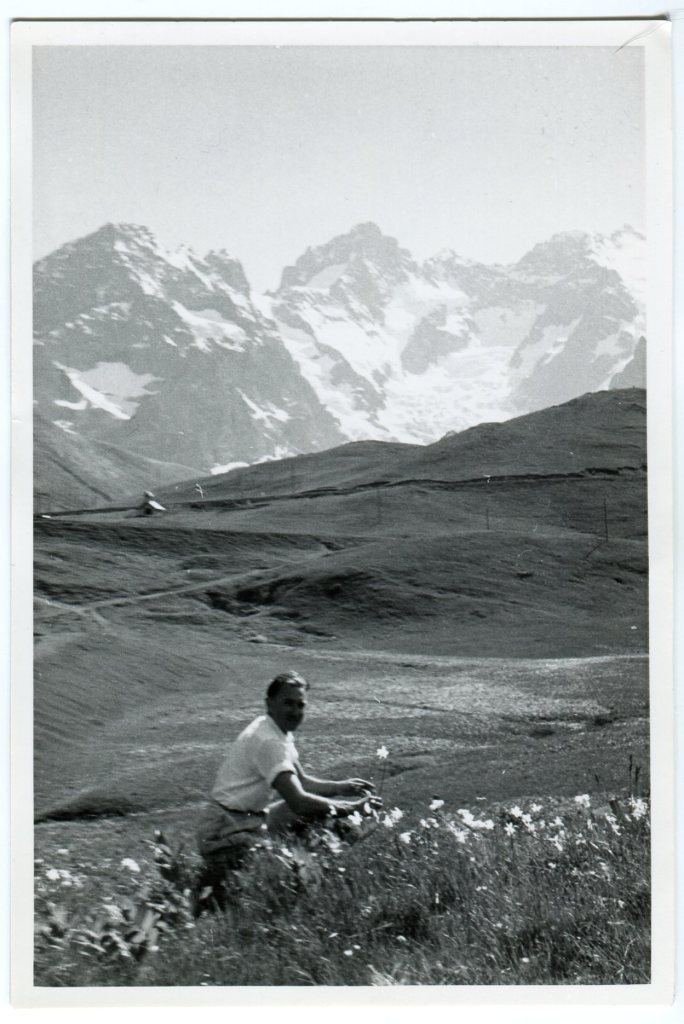
Picking Narcissus is the Swiss Alps.
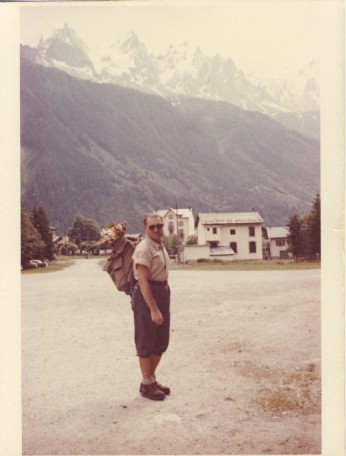
On a hike with a bouquet of flowers!

Dans la plage avec un livre.
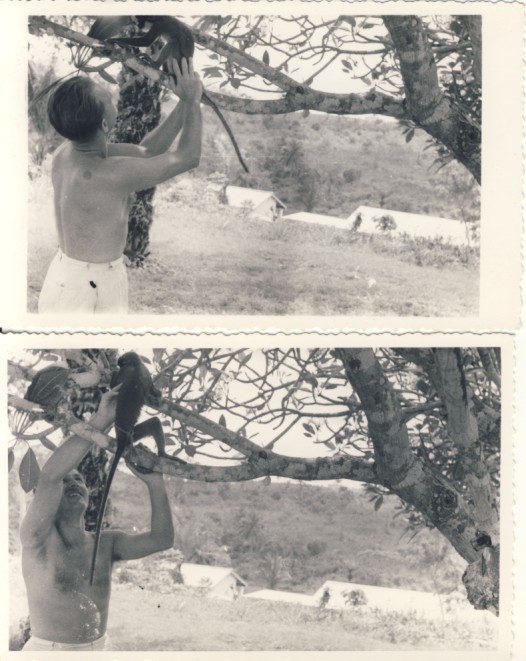
Making friends with monkeys in Ghana.

On a cruise with Tatulo.


In the mountains with Maminka.
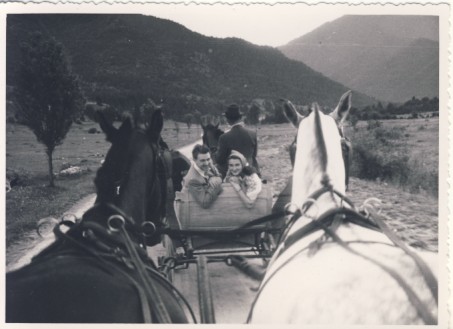
Taking a horse-drawn carriage ride with Olinka in the Czechoslovakian countryside.
Vlado loved his work with the United Nations. Is this Major General Amin Hilmey II with Vlado?

I am still trying to figure out who the people are in these photos, but Vlado looks pretty happy to be there. This may have been in Gaza, having something to do with the UNEF.
At work at the United Nations in New York.
Steamy in Indonesia.
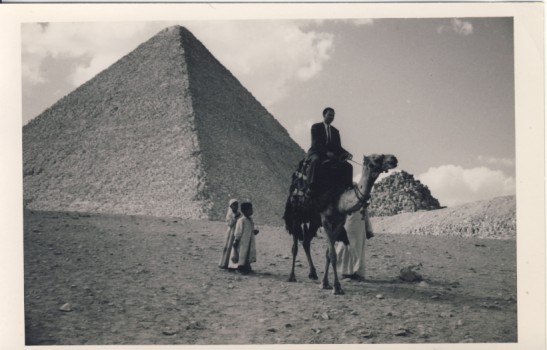
Taking the ‘bus’ in Egypt.

Food was another great pleasure in life – here is Vlado enjoying a typically elegant Swiss breakfast in Geneva…

…et pret a manger dans les montagnes.
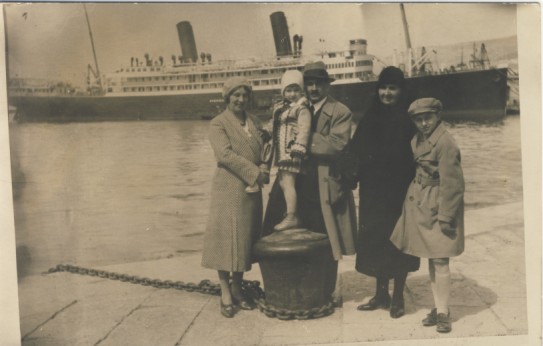
He came from a family that enjoyed life, and enjoyed spending time together. The woman dressed in black is Vlado’s beloved grandmother.
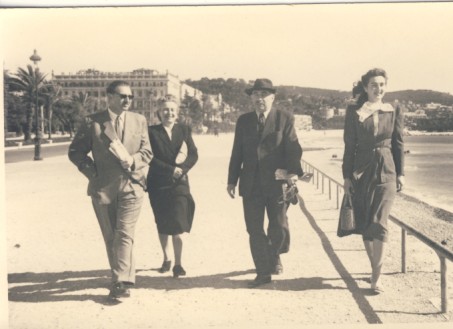
Here are the Fabrys looking fabulous on the promenade – is this Cannes?

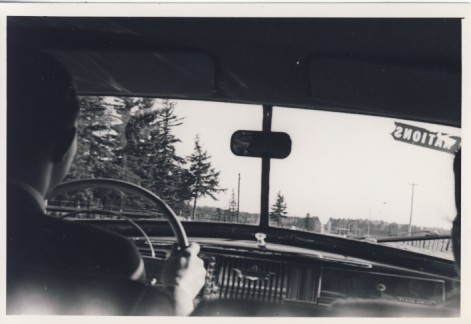
And last of all, a collection of photos featuring Vlado’s Buick, which he loaned out to all his friends whenever they were in Geneva – causing a few disagreements over who used it more than others!

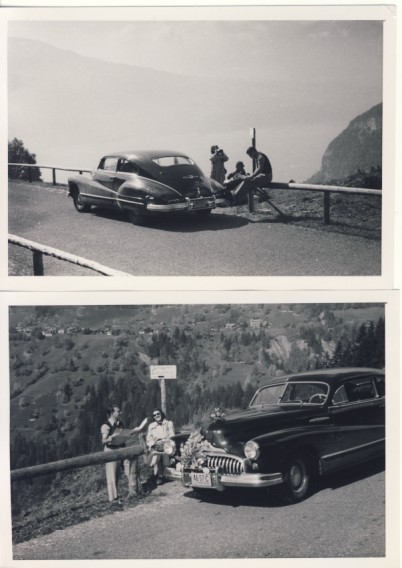
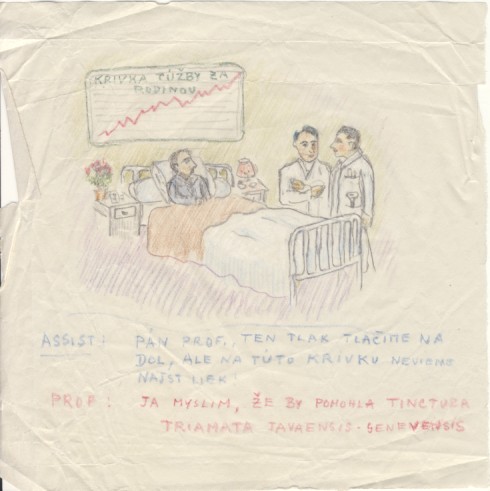
One thing I really admire about Pavel Fabry, is how affectionate he was in the letters he wrote to his family. Here is a little sketch of Pavel’s, with him in a hospital bed, a graph behind him that says in Slovak “Curve of Longing For Family”. The doctors are saying they have no cure for this “curve”, and Professor Fabry says he thinks a “Javaensis-Genevensis” tincture is what he needs. This was likely drawn during the late 40’s – early 50’s – when Vlado was working for Independence in Indonesia, Olinka and Maminka were refugees in Switzerland, and Pavel was in a hospital recovering from torture in a concentration camp, in the now former Czechoslovakia. Pavel’s sense of humor here shows he was living life on his terms, that he followed his convictions, and that he was willing to endure suffering for a just cause – a true romantic.

Then there are times when I am a little annoyed with him, like with this undated letter, sent to Vlado around the time he was working on the Suez Canal Clearance project in 1957, most likely before the project was finished. Pavel is telling him that he has to lose weight in two weeks, before their family vacation together (which would end with Vlado coming down with Hepatitis, and the weight loss that came with his illness). Then he says with all the tempting food of the Norwegians, Swedes, Canadians and Indians in the desert, that he would have to ride a horse at full gallop all day just to keep fit. He gives Vlado the advice to fall in love to lose weight, but not too happily, so he doesn’t fall apart at the end of it. Really, as if Vlado didn’t have enough to worry about, he has his father telling him he is too fat and needs to go on a diet! He is right though, that falling in love is great for weight loss, but he must have thought Vlado had some kind of superpowers to find a girl to fall in love with on the spot!
If Vlado was a romantic, it was because Pavel set quite an example for him. Romance was never far from Pavel’s mind, as can be seen in this little boudoir sketch (click to enlarge):
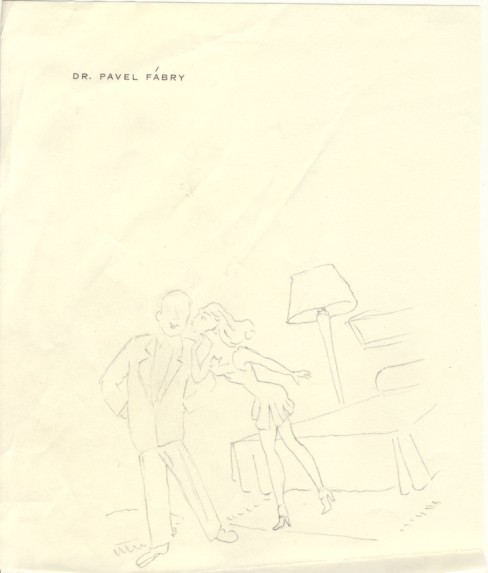
What is she whispering in his ear, I wonder?
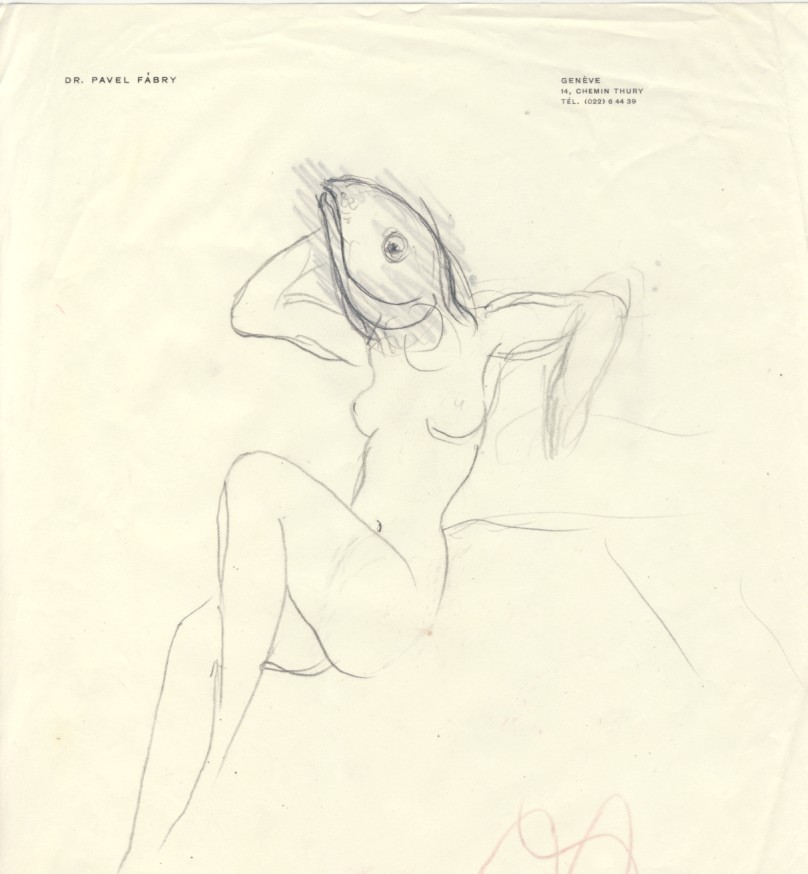
Sometimes, thoughts of love and food were in competition, like in his surreal sketch of a fish woman:
Keeping to the subject of romance, in another post, we read the love letters of Vlado and Mary Liz, with the last letter written in September 1957. There are no more love letters written by Vlado after that, but I found a portion of a Mr. America magazine, from January 1958, with a cover banner that reads “USE YOUR SEX URGE FOR BUILDING A HANDSOME BODY”:
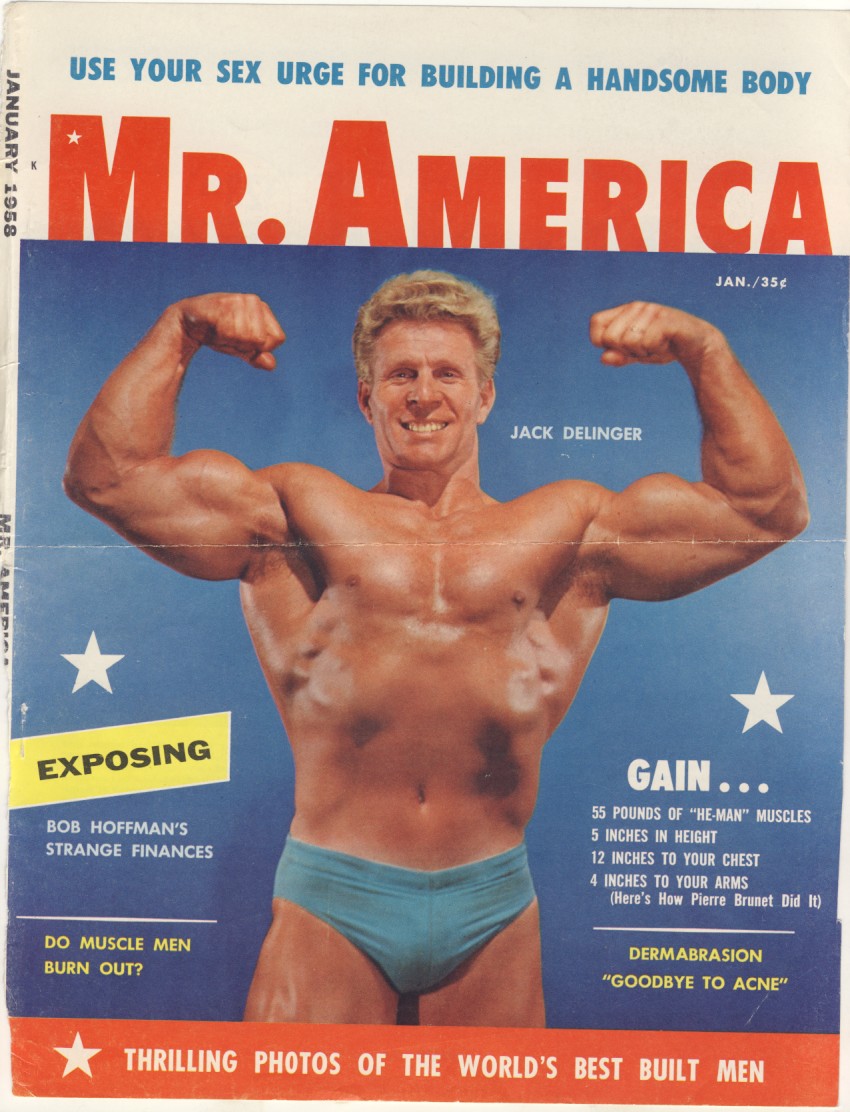
Who knows if Vlado was trying to control his “urge”, or what, but romance may have been distracting him from larger goals in his life. I think Pavel was not much different than Maminka, in that he wanted Vlado to find a nice girl to marry – but I also think he took vicarious pleasure in hearing about Vlado’s carefree romantic life as a bachelor.
Vlado left some heart-sick women in his wake, as is shown in this last letter from 1959, written by a woman who wasn’t over Vlado at all, and whose impending marriage brought to mind funerals and drowning. This letter is more a distress call than anything else, which makes it a very funny read!
March 4, 1959
Dear Vlado,
Now it looks as if I may be in NY at last, but for the most unexpected of reasons – on a honeymoon! Probably, April 12-25.
I’ve been so interested to notice in how many ways marriage is like death! First, probably the only reason so barbarous a rite as a wedding has lasted so long in our streamlined society is probably the same reason the funeral has – i.e. sociologists say that all the transactions involved in planning a funeral take the bereaved’s mind out of the depths & the same goes for the bride, bereaved of her freedom!
Marrying is also like drowning in that you suddenly relive your past – at least your past loves & all my former boyfriends have come parading their images across my minds eye – & I must say, Vlado, that as I go through my card file, choosing addresses to send announcements to, each card brings up a little doubt, but the most difficult card to process was yours! Isn’t that funny, because I had dated other boys a lot more than you & I was just as inflamed over them.
It’s just that when I think of me settling down to air force protocol (he’s in for 10 more years!) I think of your verve; & when I think of those forever churning conversation on the base about TDY’s, PFR’s, ER reports etc., I dream of the day you, Otto & I went to the woods and captured those flagstones in such a unique way!
When I ask my 3 F’s (friends, family, fiance) what they would think of my sort of going to NY to get my trousseau & choose my silver pattern & all, they retort “and get that Czech at the U.N. out of your system? You’d never come back.” I shall always wonder if I couldn’t have made you come crawling & writhing out of your shell (if there’d been time) like a tortoise does when the Indians tie him above the fire so he will squirm into the soup pot! But my fiance says I’d better marry him without travelling to NY, because regrets are better than despair….
This stationary is a memento from our bi-family conclave to plan the bash (it will be April 11 at the ——City Community Christian Church – I dare you to come & stand up when the preacher asks “If there be anyone who denies that they should be married…”). His family is from Texarkana, long time friends of my folks, but we conclaved on neutral ground – in Fayetteville!
I do hope some sort of wife won’t open this letter, although I’m sure she would be understanding; otherwise she couldn’t have married you! But just in case I wish there was something I could say which would make me sure you’d know who sent the letter, so I wouldn’t have to sign my name, but I have a strong suspicion that you’ve taken many a girl hiking in the rain, driven her to help her pack on Bank Street – & even many admirers have sent you wooden pigs & sustenance pills when you were in Africa! So I’ll just have to say,
so long,
———–
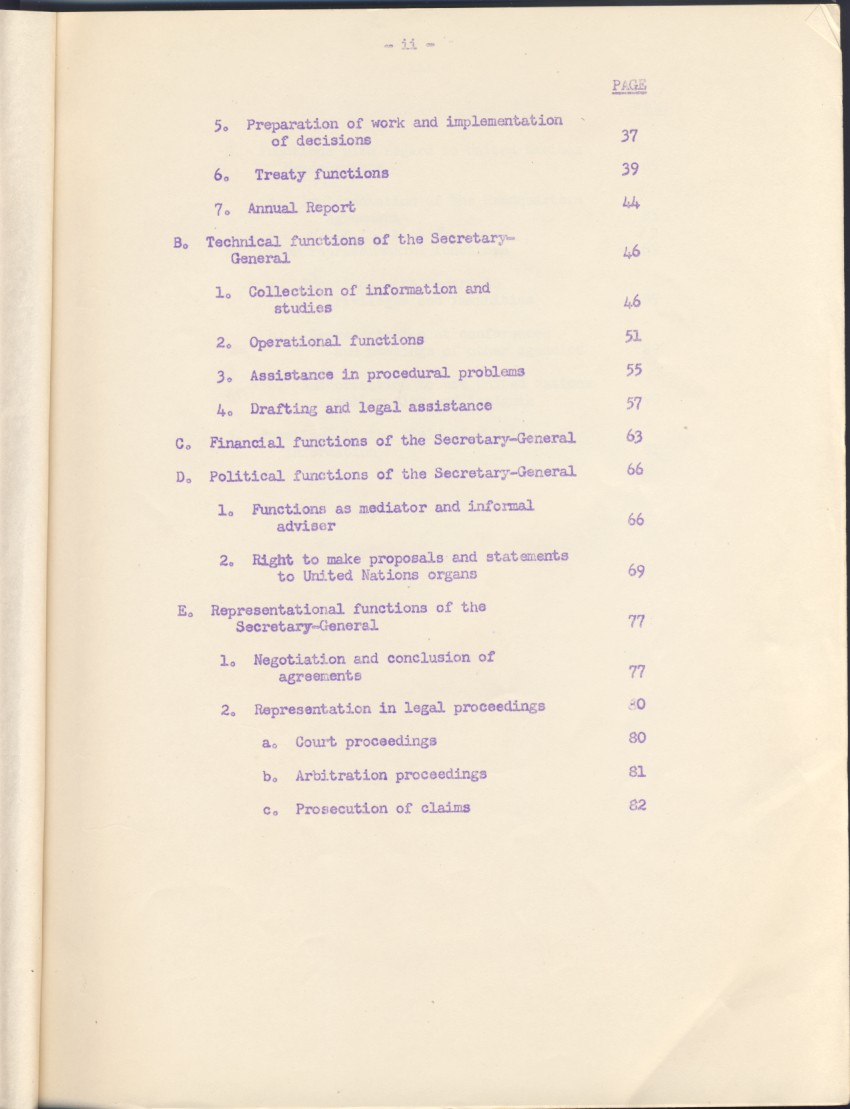
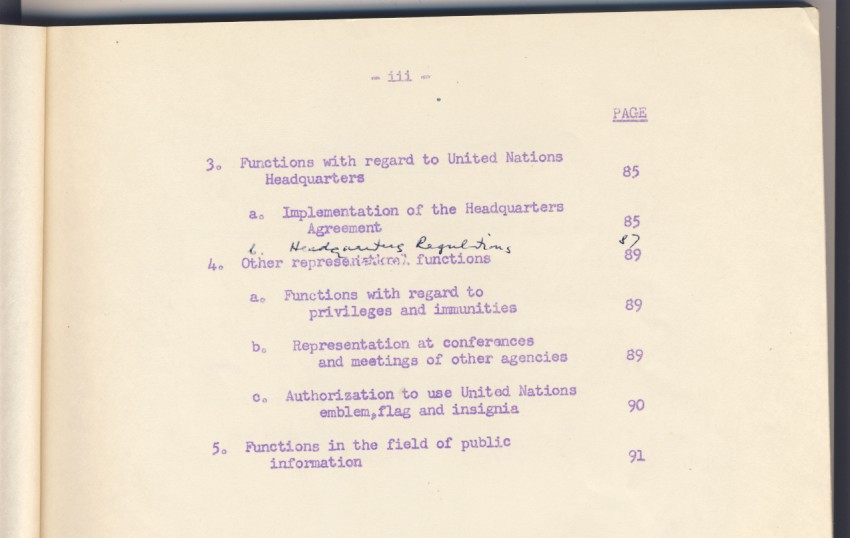
Here is what appears to be the first draft of Article 98 of the UN Charter, labelled with the initials “VF” for Vladimir Fabry. All the notations are in Vlado’s script. It was a little confusing to see “first draft”, because according to the UN Librarians (Thank you, Ask DAG!), Article 98 was adopted at the same time as the rest on 25 June 1945. Perhaps this was a first draft of a revision?
What makes Article 98 so significant, is that it gave Dag Hammarskjold the authority to go on his final peace mission to Ndola. Holding this document in my hands for the first time, recognizing its role in the destiny of Vlado and his colleagues, I recalled this quote from Hammarskjold:
“Destiny is something not to be desired and not to be avoided – a mystery not contrary to reason, for it implies that the world, and the course of human history, have meaning.”


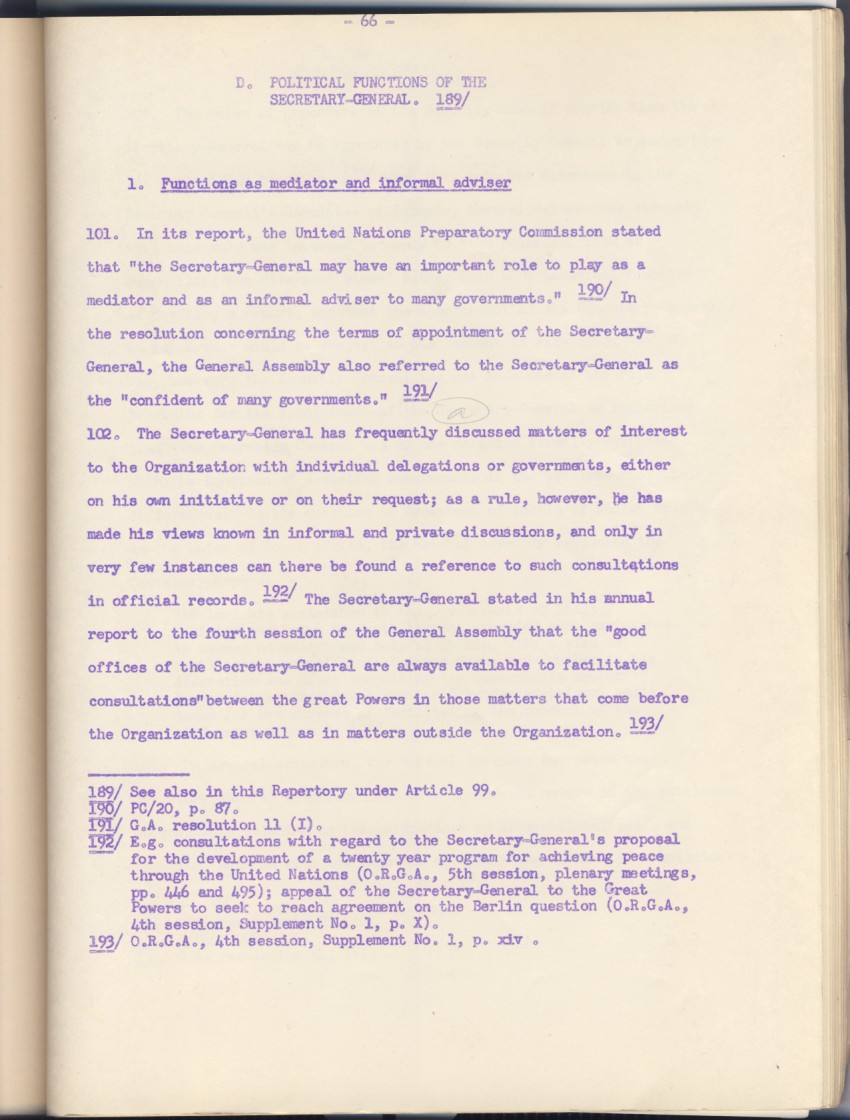
In regards to Article 98, here are a few excerpts from Dag Hammarskjold’s address to Oxford University, 30 May 1961, “The International Civil Servant in Law and in Fact”:
“To sum up, the Charter laid down these essential legal principles for an international civil service:
» It was to be an international body, recruited primarily for efficiency, competence and integrity, but on as wide a geographical basis as possible;
» It was to be headed by a Secretary-General who carried constitutionally the responsibility to the other principal organs for the Secretariat’s work;
» And finally, Article 98 entitled the General Assembly and the Security Council to entrust the Secretary-General with tasks going beyond the verba formalia of Article 97 – with its emphasis on the administrative function – thus opening the door to a measure of political responsibility which is distinct from the authority explicitly accorded to the Secretary-General under Article 99 but in keeping with the spirit of that Article.
This last-mentioned development concerning the Secretary-General, with its obvious consequences for the Secretariat as such, takes us beyond the concept of a non-political civil service into an area where the official, in the exercise of his functions, may be forced to take stands of a politically controversial nature.”
[…]
“In Article 98 it is, thus, provided not only that the Secretary-General “shall act in that capacity” in meetings of the organs, but that he “shall perform such other functions as are entrusted to him by these organs.” This latter provision was not in the Covenant of the League. It has substantial significance in the Charter, for it entitles the General Assembly and the Security Council to entrust the Secretary-General with tasks involving the execution of political decisions, even when this would bring him – and with him the Secretariat and its members – into the arena of possible political conflict. The organs are, of course, not required to delegate such tasks to the Secretary-General but it is clear that they may do so. Moreover, it may be said that in doing so the General Assembly and the Security Council are in no way in conflict with the spirit of the Charter – even if some might like to give the word “chief administrative officer” in Article 97 a normative and limitative significance – since the Charter itself gives to the Secretary-General an explicit political role.”
[…]
“A simple solution for the dilemmas thus posed for the Secretary-General might seem to be for him to refer the problem to the political organ for it to resolve the question. Under a national parliamentary regime, this would often be the obvious course of action for the executive to take. Indeed, this is what the Secretary-General must also do whenever it is feasible. But the serious problems arise precisely because it is so often not possible for the organs themselves to resolve the controversial issue faced by the Secretary-General. When brought down to specific cases involving a clash of interests and positions, the required majority in the Security Council or General Assembly may not be available for any particular solution. This will frequently be evident in advance of a meeting and the Member States will conclude that it would be futile for the organs to attempt to reach a decision and consequently that the problem has to be left to the Secretary-General to solve on one basis or another, on his own risk but with as faithful an interpretation of the instructions, rights and obligations of the Organization as possible in view of international law and the decisions already taken.
It might be said that in this situation the Secretary-General should refuse to implement the resolution, since implementation would offend one or another group of Member States and open him up to the charge that he had abandoned the political neutrality and impartiality essential to his office. The only way to avoid such criticism, it is said, is for the Secretary-General to refrain from execution of the original resolution until the organs have decided the issue by the required majority (and, in the case of the Security Council, with the unanimous concurrence of the permanent members) or, maybe, has found another way to pass responsibility over onto governments.
For the Secretary-General this course of action – or more precisely, non-action – may be tempting; it enables him to avoid criticism by refusing to act until other political organs resolve the dilemma. An easy refuge may thus appear to be available. But would such a refuge be compatible with the responsibility placed upon the Secretary-General by the Charter? Is he entitled to refuse to carry out the decision properly reached by the organs, on the ground that the specific implementation would be opposed to positions some Member States might wish to take, as indicated, perhaps, by an earlier minority vote? Of course the political organs may always instruct him to discontinue the implementation of a resolution, but when they do not so instruct him and the resolution remains in effect, is the Secretary-General legally and morally free to take no action, particularly in a matter considered to affect international peace and security? Should he, for example, have abandoned the operation in the Congo because almost any decision he made as to the composition of the Force or their role would have been contrary to the attitudes of some Members as reflected in debates, and maybe even in votes, although not in decisions.
The answers seem clear enough in law; the responsibilities of the Secretary-General under the Charter cannot be laid aside merely because the execution of decisions by him is likely to be politically controversial. The Secretary-General remains under the obligation to carry out the policies as adopted by the organs; the essential requirement is that he does this on the basis of his exclusively international responsibility and not in the interest of any particular State or groups of States.
This presents us with this crucial issue: is it possible for the Secretary-General to resolve controversial issues on a truly international basis without obtaining the formal decision of the organs? In my opinion and on the basis of my experience, the answer is in the affirmative; it is possible for the Secretary-General to carry out his tasks in controversial political situations with full regard to his exclusively international obligation under the Charter and without subservience to a particular national or ideological attitude. This is not to say that the Secretary-General is a kind of Delphic oracle who alone speaks for the international community. He has available for his task, varied means and resources.
Of primary importance in this respect are the principles and purposes of the Charter, which are the fundamental law accepted by and binding on all States.”
In a previous post, “A Desperate Personal Demand For Help”, I posted correspondence written by Vlado’s mother to UN legal counselors Oscar Schachter and Constantin Stavropoulos, where she asks them to reconsider Vlado’s assignment to the Congo. Her need for Vlado was understandable – the stress of losing her husband suddenly, inheriting the legal cases he was unable to finish, and her own poor health, seemed too much to bear alone. What is also understandable, was Vlado’s need for adventure, and to be useful to the United Nations, and to the world. Even the death of his beloved father could not slow down his work, he was devoted to the peaceful goals of the Organization.
Here is the response to Madame Fabry’s letter from Constantin “Costi” Stavropoulos:
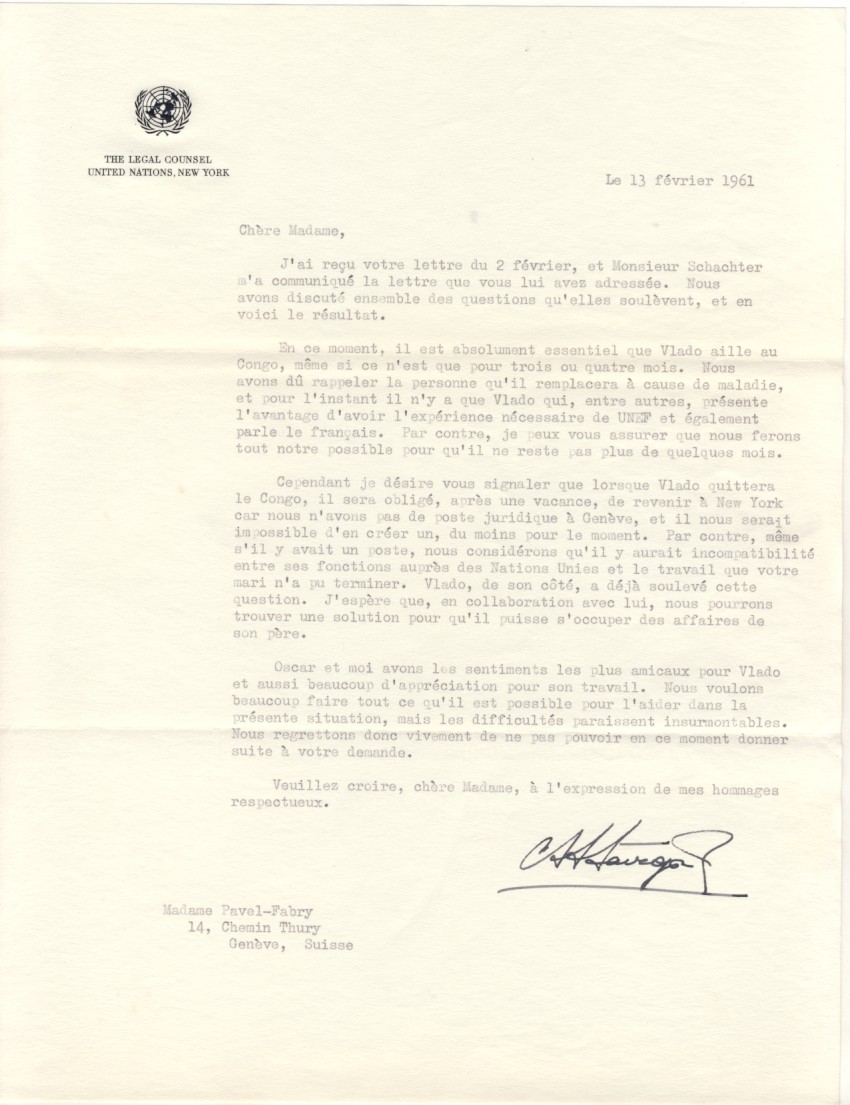
THE LEGAL COUNSEL
UNITED NATIONS, NEW YORK13 February 1961
Dear Madame,
I have received your letter of 2 February, and Mr. Schachter has communicated to me the letter you sent to him. We discussed all the questions that have been raised, and here are the results.
At the moment, it is absolutely essential that Vlado go to the Congo, even if it is only for three or four months. We had to recall the replacement person due to illness, and at the moment there is only Vlado who, among others, has the advantage of having the necessary experience of UNEF and also speaks French. Conversely, I can assure you that we will do everything possible so that he does not stay more than a few months.
However, I wish to point out that when Vlado leaves the Congo, he will be obliged, after a vacation, back in New York because we have no legal position in Geneva, and it would be impossible to create one, at least for the time being. Besides, even if there was a position, we consider that there would be incompatibility between his duties with the United Nations and the work that your husband could not finish. Vlado, for his part, has already raised this issue. I hope that, in collaboration with him, we can find a solution for him to deal with his father’s business.
Oscar and I have the friendliest of feelings for Vlado and also a lot of appreciation for his work. We want very much to do whatever we can to help in this situation, but the difficulties appear insurmountable. We deeply regret not being able to respond to your request at this time.
Please accept, dear Madame, the expression of our respectful regards.
Constantin Stavropoulos

Vlado – L’apparition
This next series of letters is dedicated to my dear friend in Geneva, Simone, who was close friends with my mother-in-law Olinka. She was surprised when I told her that Vlado had left behind love letters, because she never heard anything about him having girlfriends. She rarely saw Vlado – he was like an apparition – but she has told me how much Olinka adored her brother, and worshiped him like a god. Simone is my favorite person, and I miss her, so these letters are my birthday gift to her.
The only thing that is disappointing here is that Vlado didn’t keep copies of all the letters he wrote to Mary Liz, his romantic interest of 1957 (and beyond?), but I can imagine Mary Liz must have treasured them. Perhaps they have been lost, but I hope they have been inherited by an appreciative family member, like myself.
(For further context of the events of 1957, I recommend reading Vlado and the Suez Canal.)
7 February 1957
Vlado
When you will receive this, I have no idea, but I wish you could have it in time for St. Valentine’s Day. Because even tho you know it now, I want to tell you again how much I love you. Of course, I want you to realize this every day – but especially on Valentine’s Day.
And Vlado, I don’t expect anything. All I hope for is your happiness and the chance to love you – & please let me. What comes back is not important to me. I am eternally grateful to Him for the mere fact of meeting you. It’s joy to know someone like you.
I say I want to please you because I know that your happiness does not lie in my power alone – I can only add to it, if possible. And you are the only human being whose happiness is of such concern to me.
Mary Liz
Don’t feel as tho you should answer this, please.
Ismailia
22/II/1957My Dear One,
your letter did not quite make Valentine’s Day (which I eventually discovered to be 14/II) but whatever day it did arrive was proclaimed to be Valentine’s Day irrespective of any conventional date it may be feted by other people. Thank you, my darling, – I am not trying to answer the letter because that cannot be done – I am only trying to tell you that I do not recall ever having been so touched and made so mellow – and at the same time a bit ashamed – deep inside as I was when I read through your lines.
It made me very happy and at the same time a bit sad over my inadequacy to give as much in return as you offer to me. But I do love you – and you know it – as much as my queer warped nature permits me to, and I too and full of tender desire to protect you and make you happy and fill your life with excitement and joy. And I do miss you.
I scribbled a quick note to you on my arrival – it may have reached you just about Valentine’s day if it was not delayed on its way, although if I had realized the approach of that occasion I would have surely tried to add a line or two. There is very little that I can write about myself – the working hours here are 8 a.m. to 10 p.m. Monday through Sunday, and that leaves very little time for any private adventures. I miss my weekend exercise, but got into the habit of making a two hour walk, changing into trot and run as soon as I am out of the city, each night, and for lunch I take two hours off for a sunbath and quick dip into the Timsah Lake (it’s still rather cold and I nearly [ran] into a minefield the first time, but it’s getting warmer and I know my way around now). But every two or three days I spend on the road or “on the Canal”, I should say, making inspection trips, straightening out problems, and holding palavers with the salvors or with Egyptian authorities, or else giving a hand to the UNEF staff on legal problems. As soon as I catch up enough with my work to be able to extricate myself for a few days, I plan to visit the front lines in the north and south and have a look at St. Catherine’s Monastery, and maybe spend a couple of days at Luxor and Thebes. But that will have to wait for a while. In the meanwhile there is the fascination of learning a new trade which more than compensates the lack of free time and exercise and the occasional fleas and bedbugs. Although there was a time at the beginning when I felt rather asea (or acanal) trying to weigh the respective merits of doing a parbuckling job by using sheerlegs or by blowing up camels (which, by the way, does not refer to a zoologic digestion process but means pumping air into oversized barrels attached underwater to a wreck).
Love, Vlado
28 February 1957
Dear Vlado,
It was so good to receive your letter – and I must say it came as a real surprise! I’m afraid I took you at your word when you said not to expect much in the way of letters. However, it didn’t arrive till last Tuesday (more than a week since you mailed it).
Peggy took off on a vacation for three weeks and left me to take her place. It’s fun – writing my own letters and running the show (not completely tho – Mr. S [Stavropoulos] is still here). But it means that I’ve got more on my mind these days and that’s why I didn’t write before this. I can’t honestly say that the work is hard but I just have to use my brain more. Enough of Volunteer Services…
The Ski Club misses you so much. Gary Karmilloff filled in for a while but now he has a London assignment so that the post of Liaison Officer (& V.P) is still vacant. They are planning a weekend in the middle of March to Manchester, Vt. and then I guess the season will be over – too short. Have you had a chance to ski in the Cedars of Lebanon?
Ran into Peter Kempton the other day. You probably know he’s working with Hungarian Relief. Seems like one big happy family! And he is really enjoying the work, I think.
When I read the last part of your letter (about your walk down by the lake) I wished I could fly right to you. But then I remembered what you once said about being close to someone even tho he was far away physically. I feel very near to you Vlado – maybe because you’re in my thoughts constantly.
I love you
Mary Liz
P.S. Let me know if I can send you anything e.g. books or food.
Sunday, 10 March
Darling,
Thank you for your beautiful letter and for making me so happy. And I am so overcome that it is difficult to put into mere words how I feel. When you come back I’ll really be able to tell you.
Don’t be sad if it seems that you cannot give as much in return because that doesn’t concern me. Believe me when I say that it is not so much what comes back that is my happiness as it is the chance to give my love to you – freely. And your “good” nature makes me love you, so don’t accuse yourself that way again. I love you so much now, I can’t see any flaws.
Last night I saw a play by James Joyce, “The Exiles” (incidentally I went with an Irish girlfriend of mine). The main theme had to do with fidelity although there were all sorts of undercurrents, as usual. But he said so much (my program is covered with lines scribbled with lipstick) and one line really struck me. It was a scene with the central figure explaining to his little son what it is to give something & he said – “When you have something it can be taken away from you but when you are given something, it is yours forever.”
As far as form in letters goes I’m afraid I don’t pay much attention to it (as you can see from my letters). Content is more important to me and not only in letters but in literature too. Characterization & plot means more to me than language or style of writing – although I do appreciate the letter.
You are working hard over there – by this time you must have weeks of compensatory time coming to you. When you mentioned in your letter about taking a trip to St. Catherine’s Monastery I recalled the first & only time I visited one. A girl from school was being “clothed” i.e. she received part of the nun’s regular habit thus marking passage from postulant to novice stage. Anyway – this was in a Carmelite Monastery which meant that this was to be the last time family & friends could see her – thereafter she would live a strict cloistered existence. So we could see her but only through an iron grille. Well one of her friends had brought along her four year old son, who appeared quite bright. However, at one point the nun had to leave the room for something and this little boy turned to his mother & said “Mommy, when is the lion coming back?” You can understand him in a way – it looked just like a cage. But I think he’s a little comedian.
You mention doing a parbuckling job by using sheerlegs or a camel. Why don’t they use a parbuckle? But I get the impression that you are there for more than just the clearance operation. Do you have to have to stay there until the problem of administration of the canal is solved?
More questions – is your secretary from Hdqs.? By the way, I must compliment you on your typing – so neat & hardly any errors. What can’t you do?
Called Karol and asked about your apartment. He said David was having a fine time living there and, if it was Mr. Crandall you were wondering about, everything is all right with him. He asked about you, naturally, and I gave him all the news. And he said he was just as well pleased that you didn’t write to him since he then didn’t have to write back since, he said, he was not one for writing letters.
…
Saw Dr. Kraus and he wants to see the x-rays before starting the exercises. But I don’t think it is necessary (exercises). I’m wearing high heels and can even run for the bus in the morning. Anyway I do have an appointment with him for next week. My doctor knows him – I don’t think very well – but then I guess most doctors know of him.
I think I’m going to call it a day and go to bed; so tired. — Don’t run into any more minefields, it can be dangerous. —
All my love,
Mary Liz
And now, one last letter from Mary Liz…
7 April 1957
Vlado darling,
It was such a beautiful day today! About 50, not a cloud in the sky, and just a slight breeze blowing, The crocuses are starting to come up in the backyard and already you can hear crickets. Next spring, we must be together–
Was just listening to the news and it said that by Tuesday the Canal would be open to all traffic. I know you’re hearing this from all sides but really you and the other people working on the Canal are to be congratulated (hope that doesn’t sound glib because I mean it). The World Telegram had a article some weeks ago about the General [R. A. Wheeler] and it said at the beginning there was some people who thought the clearance might take close to a year. So you must have a tremendous sense of accomplishment. Yesterday I ran into a girl I worked with at Shell Oil and she said their stock is almost up to what it was but that it had gone down $12 a share in the beginning — and Shell doesn’t even have holdings over there (Royal Dutch does, of course).
Do you still manage to go swimming at lunch time? Karol told me to tell you not to anymore – because of the sharks – “we don’t want Vlado soup”, he said. Sometimes I see him in the hall – and the other day he had a wonderful opportunity to meet Helse. She and I were coming down the stairs from the fifth floor and he was walking toward the elevator. He walked past us first but then stopped to say hello but Helse had kept on walking since she was not coming with me anyway. But maybe he’s lost interest or something.
The Ski Club had its party last Friday nite. At the home of a Mr. Caprario – friend of Dianea’s and not a member. He let us have the complete run of his six-room apt. – very kind and warm-hearted person. You know, even tho I keep meeting such good people you’re the best — of all –. Vlado, I love you so very much and I wish you were coming back soon. At the party I especially missed you and Bill Vaughn only made it worse by saying every time he bumped past me “Tell Vlado to come back – or When is Vlado coming back”.
Mike Shaw was there and was nice enough to take me home. We left sort of early (12:30) because I had to get up at 8:00 the next morning and anyway he hasn’t been feeling well these days. He’s a good kid – a little affected sometimes but a good kid! The party went off pretty well — everyone cooperated wonderfully with the food and we had a film on Norway. The projectionist was telling me about the raw films they’ve received from Egypt and said I could come down and see some of them.
While we’re on the subject of Egypt again — our Travel Counselor is now featuring the Land of the Pharaohs as the ideal place to spend your vacation. I’d like to know who’s kidding who – anyway I don’t believe there’s been much of a response. Still I’m wondering why the thought occurred to her.
Dr. Kraus (saw him a 2nd time to show him the x-rays) sends his best regards and so does Christine and–I send you all my love.
Mary Liz
Respect for the word is the first commandment in the discipline by which a man can be educated to maturity — intellectual, emotional, and moral.
Respect for the word — to employ it with scrupulous care and in incorruptible heartfelt love of truth — is essential if there is to be any growth in a society or in the human race.
To misuse the word is to show contempt for man. It undermines the bridges and poisons the wells. It causes Man to regress down the long path of his evolution.
“But I say unto you, that every idle word that men speak…”
~ Dag Hammarskjold “Markings”
This Christmas, I bought myself a copy of Conor Cruise O’Brien’s TO KATANGA AND BACK, and the first thing I did was look for Vladimir Fabry in the index. This is what I found on pages 70-71:
Another important figure on the 6th floor at this time was Vladimir Fabry, an American citizen of Croat origin and ONUC’s legal adviser (‘Special Councelor’). Fabry was a thin-faced young man with a frequent but unamused smile and a stoop brought on by unremitting work. Even in an organization where all the key people worked excessively hard (surrounded, for no apparent reason, by large numbers of non-key officials who seemed to do no work at all) Fabry’s industry stood out. He slept little, he read nothing for pleasure, he had no vices or other hobbies, he simply worked – fourteen to eighteen hours a day. Dealing with paper he was accurate, penetrating and happy; with people he seemed on edge, as if he found them distressingly large and imprecise; and this was especially true of his relations with M Poujoulat. At this time, on first meeting Fabry, I was taken aback, mistaking his uneasy, abstracted air for personal hostility. Later, I came to respect his clarity of mind and to appreciate, and even admire, his lonely integrity. ‘I am an anti-social person’, he told me once, with melancholy pride. It was not true, but what was social in him – his fierce drive to bring some tidiness and predictability into the activities of man – took the impersonal form of a shy, jealous, exclusive loyalty to the abstract and developing idea of the United Nations. It is not unfitting that he should have met his death as he did, on the flight towards Ndola, working for Hammarskjold.
While I agree with a few things he said about Vlado, so much of this is just O’Brien’s opinion, and he doesn’t bother to fact check. Vlado is not “of Croat origin”, he was born in Liptovský Svätý Mikuláš, in the former Czechoslovakia. There is no doubt Vlado was working hard and sleeping little when O’Brien met him – considering the pressure of the situation in the Congo, Vlado was compelled to sacrifice his social life for a greater cause – but O’Brien really didn’t know Vlado as well as he thought he did.
Here are two photos of Vlado at work:
Here he is in Egypt, taking in the sights:
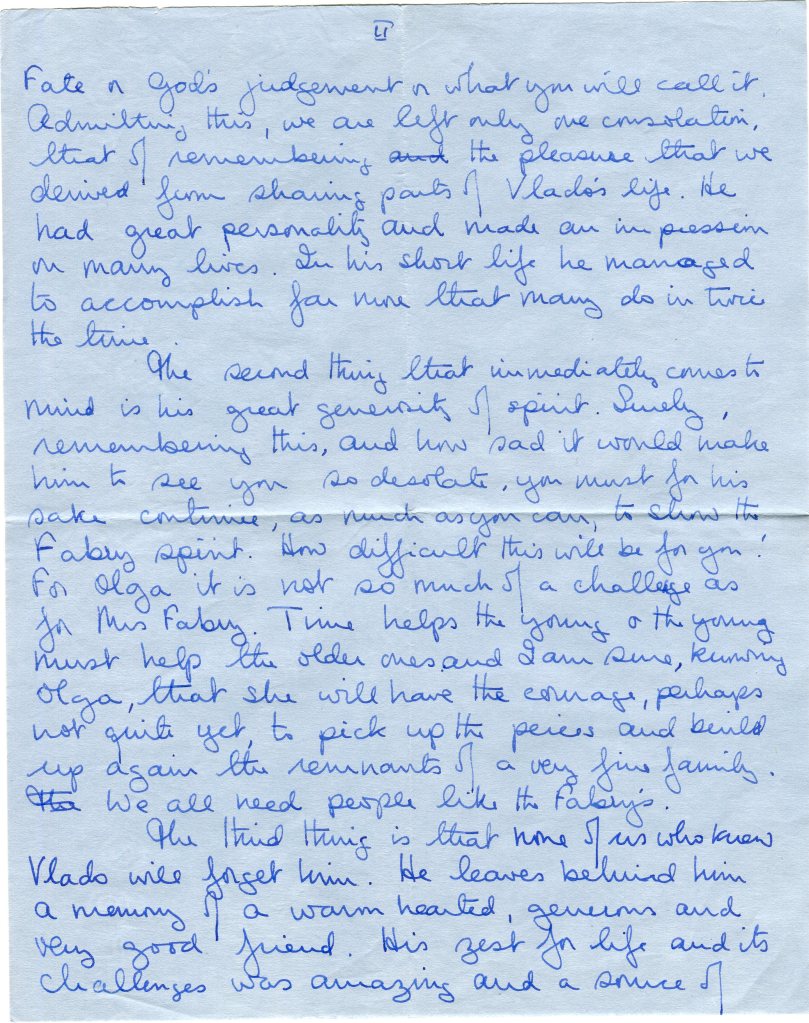
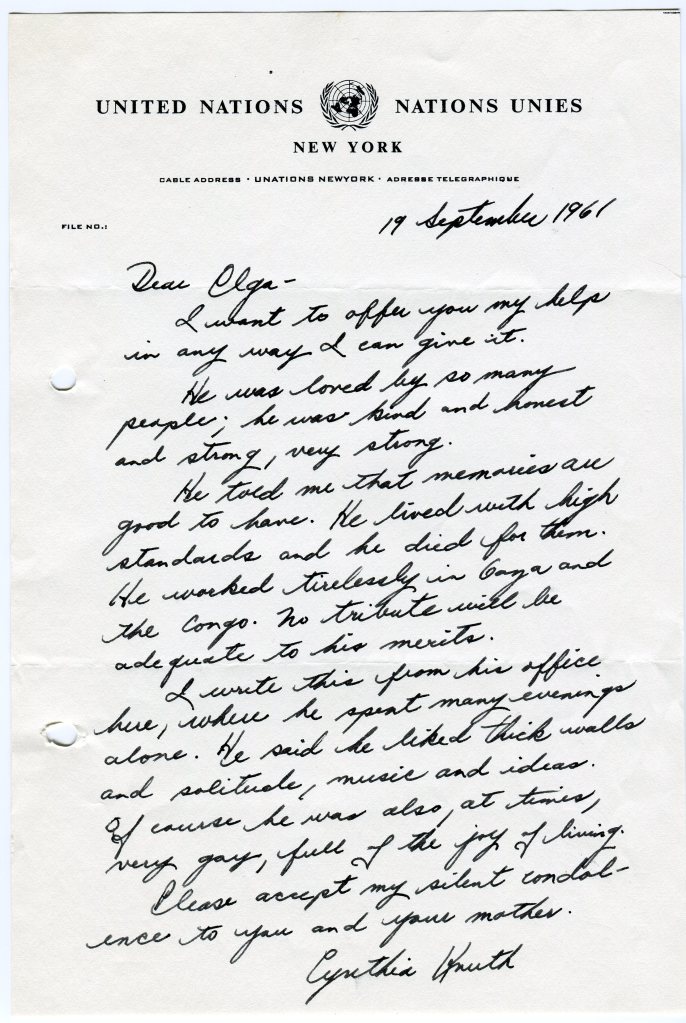
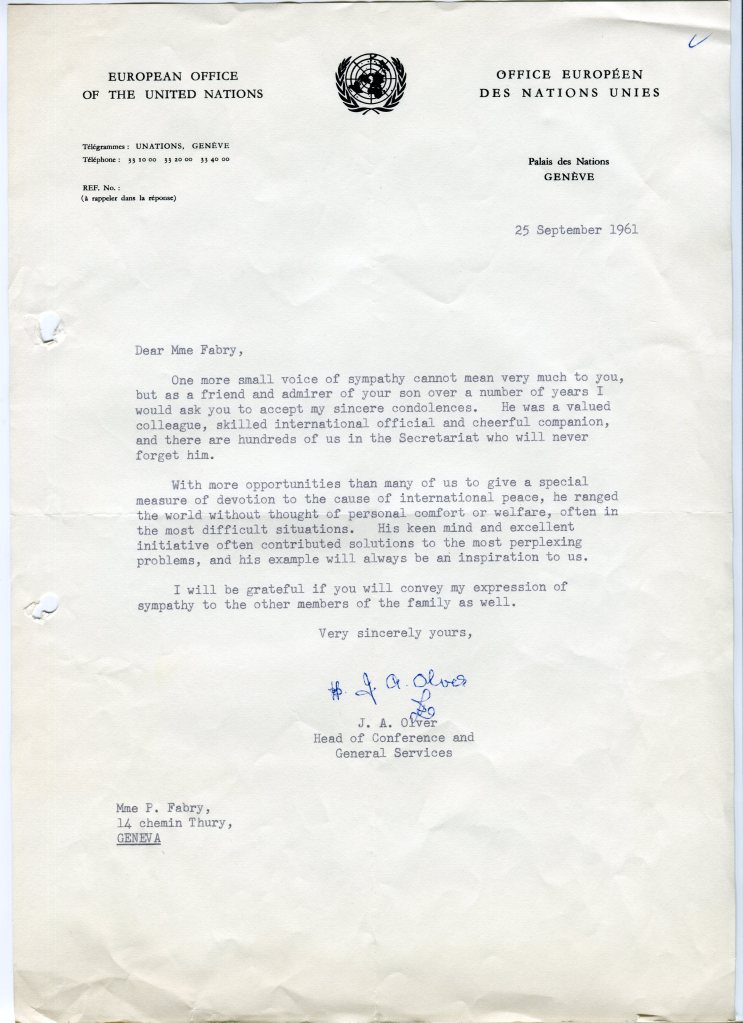
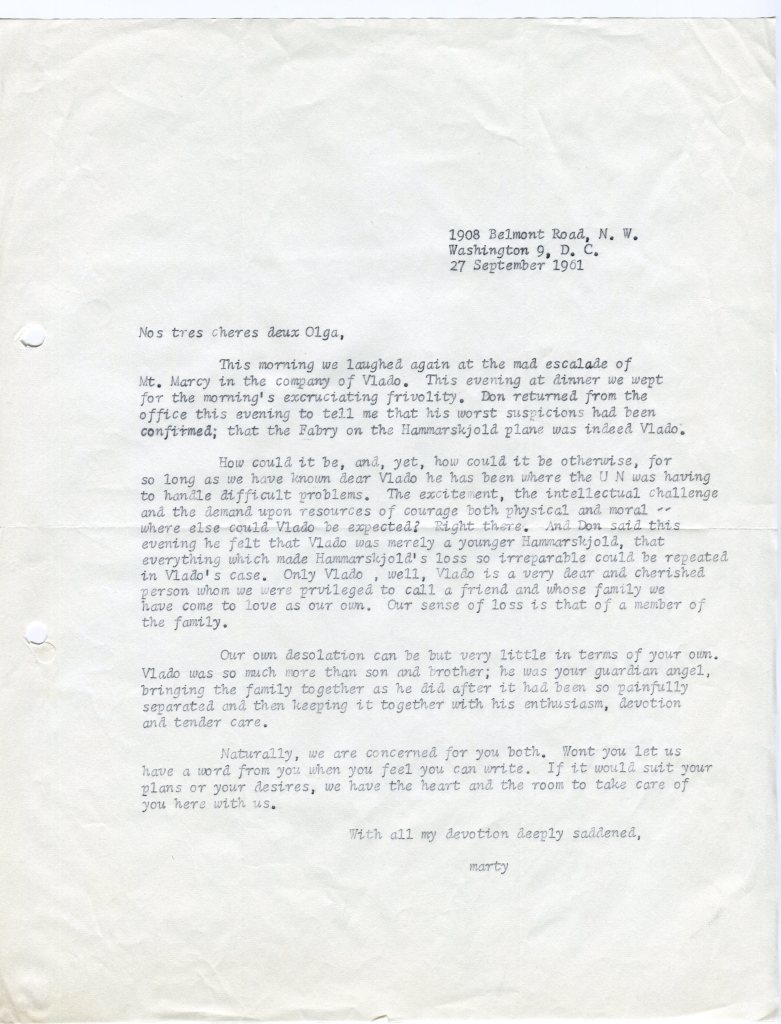
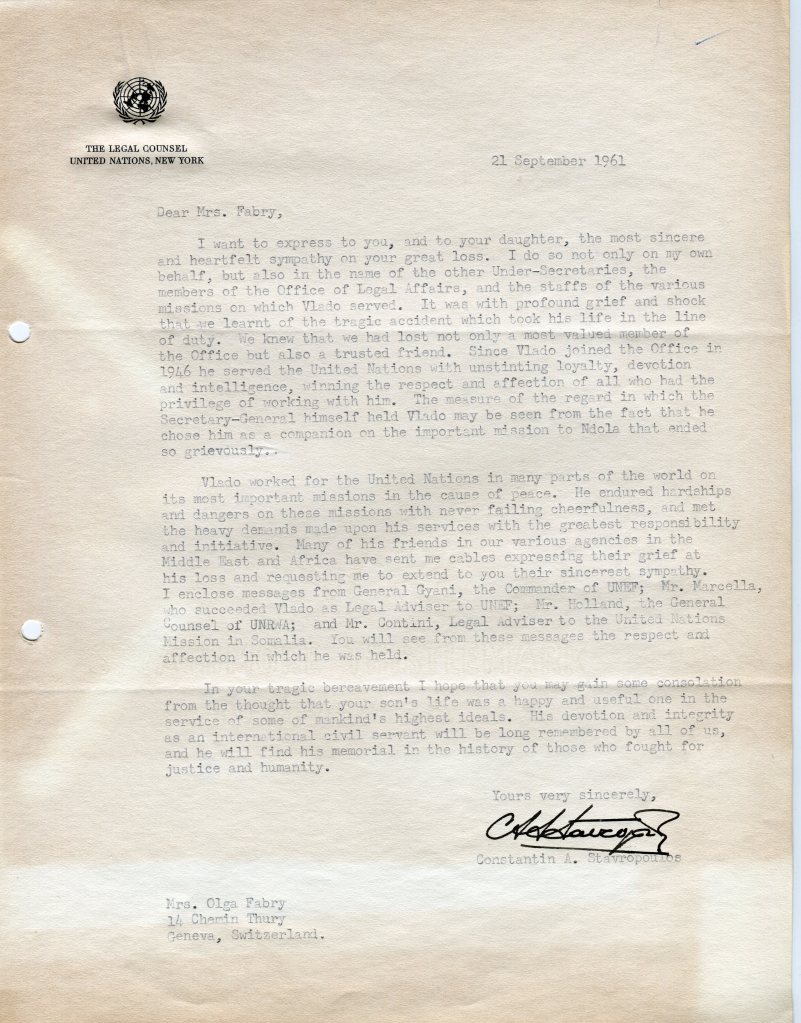
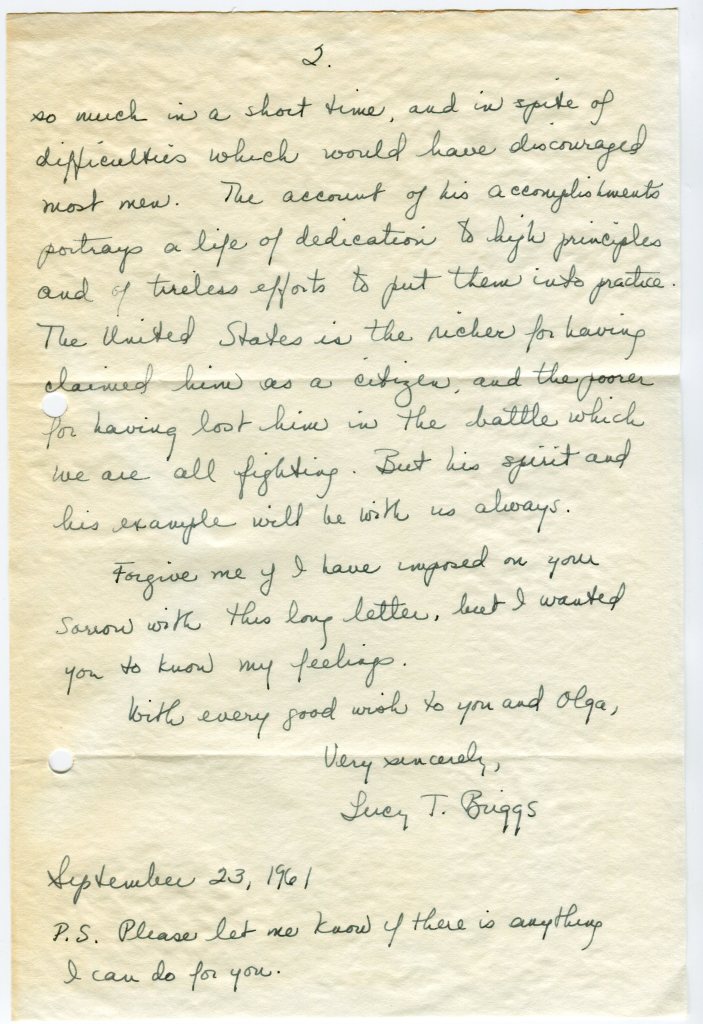
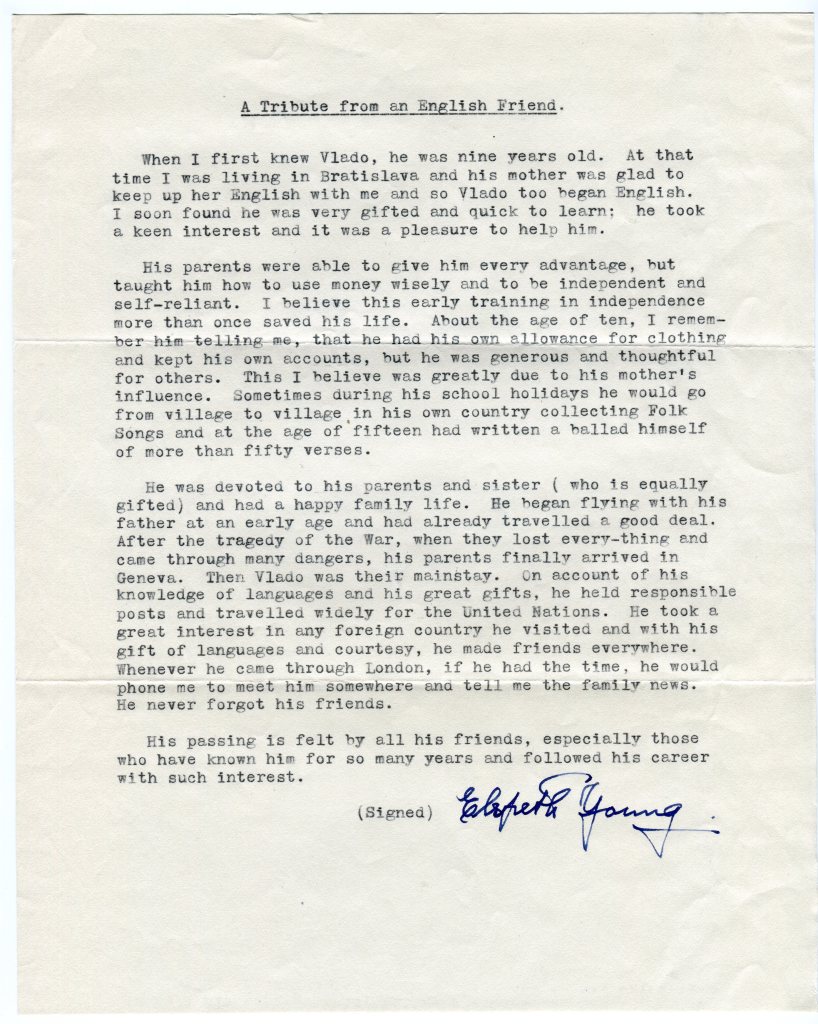
Here are two letters of condolence from September 1961, from friends who knew and loved Vlado:
52 Champs Elysees
ParisMy Dear Friends,
Although it may seem selfish, I think the best way I can express my condolence and my sympathy to you is to tell you what Vlado meant to me.
I won’t tell you how much admiration or respect or affection I felt for him. I will tell you only that I think I can honestly say I considered him my best friend – and I was proud of knowing him: and I can say that all the more validly because I knew his faults as well as his virtues. I am very well acquainted with loneliness – but the thought of losing Vlado makes me feel even lonelier.
Please believe that just as I share your grief and sorrow at losing him, so also, since you can be very proud of him, I feel privileged to be able to share, even a little bit, your pride.
With very deep sorrow,
Peter Kenton
United Nations
New York, NYDear Olga,
I want to offer you my help in any way I can give it.
He was loved by so many people; he was kind and honest and strong, very strong.
He told me that memories are good to have. He lived with high standards and he died for them. He worked tirelessly in Gaza and the Congo. No tribute will be adequate to his merits.
I write this from his office here, where he spent many evenings alone. He said he liked thick walls and solitude, music and ideas. Of course he was also, at times, very gay, full of the joy of living.
Please accept my silent condolence to you and your mother.
Cynthia Knuth
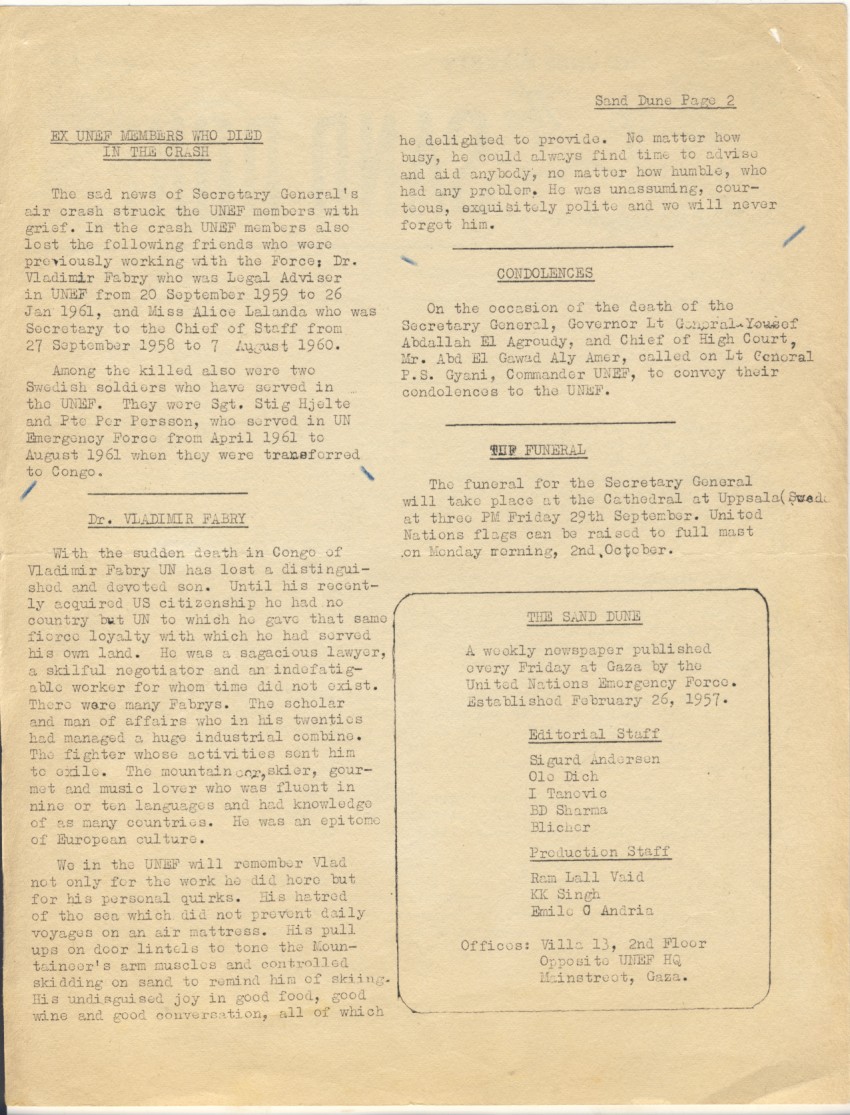
And from the UNEF weekly, THE SAND DUNE, September 22, 1961, here is a tribute to Vlado from friends who understood his devotion to the UN:
With the sudden death in Congo of Vladimir Fabry UN has lost a distinguished and devoted son. Until his recently acquired US citizenship he had no country but UN to which he gave that same fierce loyalty with which he had served his own land. He was a sagacious lawyer, a skillful negotiator and a indefatigable worker for whom time did not exist. There were many Fabrys. The scholar and man of affairs who in his twenties had managed a huge industrial combine. The fighter whose activities sent him to exile. The mountaineer, skier, gourmet and music lover who was fluent in nine or ten languages and had knowledge of as many countries. He was an epitome of European culture.
We in the UNEF will remember Vlad not only for the work he did here but for his personal quirks. His hatred of the sea which did not prevent daily voyages on an air mattress. His pull ups on door lintels to tone the Mountaineer’s arm muscles and controlled skidding on sand to remind him of skiing. His undisguised joy in good food, good wine and good conversation, all of which he delighted to provide. No matter how busy, he could always find time to advise and aid anybody, no matter how humble, who had any problem. He was unassuming, courteous, exquisitely polite and we will never forget him.

So much of my time is spent sorting through a lot of dusty old papers, but what amazing things I find. Here is a telegram from the first African-American Nobel Peace Prize winner, Ralph Bunche – political scientist, academic and diplomat – with a message from the King of Sweden (Bunche’s work includes the creation and adoption of the UN Declaration of Human Rights):
(click photos to enlarge)

And this letter – I’m not sure who Major General Amin Hilmey II is, but perhaps someone reading this will give me a clue:

Since I’m not finished translating a document in German, I will give you a document written in English, from the Monday, September 25, 1961 Congressional Record: “Extension of Remarks of Hon. William W. Scranton of Pennsylvania in the House of Representatives”
Mr. SCRANTON. Mr. Speaker, in the tragic air crash in which the world lost the life of Dag Hammarskjold, we also suffered the loss of the life of Dr. Vladimir Fabry, the legal adviser to the United Nations operations in the Congo.
In the following statement by John C. Sciranka, a prominent American Slovak journalist, many of Dr. Fabry’s and his esteemed father’s attributes and good deeds are described. Dr. Fabry’s death is a great loss not only for all Slovaks, but for the whole free world.
Mr Sciranka’s statement follows:Governor Fabry (Dr. Fabry’s father) was born in Turciansky sv. Martin, known as the cultural center of Slovakia. The Communists dropped the prefix svaty (saint) and call the city only Martin.
The late assistant to Secretary General Hammarskjold, Dr. Vladimir Fabry, inherited his legal talents from his father who studied law in the law school at Banska Stavnica, Budapest, and Berlin. The old Governor before the creation of Czechoslovakia fought for the rights of the Slovak nation during the Austro-Hungarian regime and was imprisoned on several occasions. His first experience as an agitator for Slovak independence proved costly during his student days when he was arrested for advocating freedom for his nation. Later the military officials arrested him on August 7, 1914, for advocating a higher institute of education for the Slovakian youth in Moravia. This act kept him away from the front and held him back as clerk of the Bratislava court.
He was well equipped to aid the founders of the first Republic of Czechoslovakia, which was created on American soil under the guidance and aid of the late President Woodrow Wilson. After the creation of the new republic he was made Governor (zupan) of the County of Saris, from which came the first Slovak pioneers to this city and county. Here he was confronted with the notorious Communist Bela Kun, who made desperate efforts to get control of Czechoslovakia. This successful career of elder Governor Fabry was followed by elevation as federal commissioner of the city of Kosice in eastern Slovakia.
But soon he resigned this post and opened a law office in Bratislava, with a branch office in Paris and Switzerland. The Governor’s experience at the international court gave a good start to his son Vladimir, who followed in the footsteps of his father. During World War II the elder Fabry was imprisoned by the Nazi regime and young Vladimir was an underground resistance fighter.
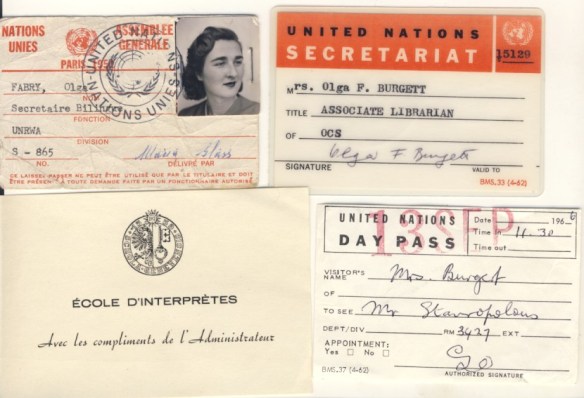
Dr. Vladimir Fabry, 40-year-old legal adviser to Secretary Dag Hammarskjold with the United Nations operation in Congo, who perished in the air tragedy, was born in Liptovsky Svaty Mikulas Slovakia. He received his doctor’s degree in law and political science from the Slovak University in Bratislava in 1942 and was admitted to the bar the following year. He was called to the United Nations Secretariat in 1946 by his famous countryman and statesman, Dr. Ivan Kerno, who died last winter in New York City after a successful career as international lawyer and diplomat and who served with the United Nations since its inception. Dr. Vladimir Fabry helped to organize postwar Czechoslovakia. His family left the country after the Communist putsch in February 1948. His sister Olga is also in the service of the United Nations in New York City [as a Librarian.-T]. His father, the former Governor, died during a visit to Berlin before his 70th birthday, which the family was planning to celebrate on January 14, 1961, in Geneva.
Before going to the Congo in February, Dr. Fabry had been for a year and a half the legal and political adviser with the United Nations Emergency Force in the Middle East. In 1948, he was appointed legal officer with the Security Council’s Good Offices Committee on the Indonesian question. He later helped prepare legal studies for a Jordan Valley development proposal. He also participated in the organization of the International Atomic Energy Agency. After serving with the staff that conducted the United Nations Togaland plebiscite in 1956, he was detailed to the Suez Canal clearance operation, winning a commendation for his service.
Dr. Vladimir Fabry became a U.S. citizen 2 years ago. He was proud of his Slovak heritage, considering the fact that his father served his clerkship with such famous Slovak statesmen as Paul Mudron, Andrew Halasa, Jan Vanovic, and Jan Rumann, who played important roles in modern Slovak history.
American Slovaks mourn his tragic death and they find consolation only in the fact that he worked with, and died for the preservation of world peace and democracy with such great a leader as the late Dag Hammarskjold.
 Vlado
Vlado 