You don’t have to be psychic to see the future of America, you only need to study the history of Czechoslovakia to see that the same fascist playbook is being employed by the Republican party. The spirit of the Fabry family and their friends in exile have been helping me all these years, preparing me for the rise of fascism and giving me courage to share their stories of resistance here, as an education and warning to all. It is more important than ever that we speak the truth boldly and with heartfelt conviction, because it is the communication of truth that dictators fear the most. We need to support independent newspapers and journalists who are risking everything to report the truth.
The next document comes from the Director of Verbandsdruckerei A.G. (Association Printing Company), Bern, Switzerland, dated 26 February 1958, a declaration on behalf of Dr. Pavel Fabry – “a good patriot and friend of Switzerland”.
Declaration
I have known Dr. Pavel Fabry from Bratislava, Slovakia, since 1946, when he came to me through the mediation of WIFAG (Winkler, Fallert & Co. AG Bern) to buy our rotary press, which we were about to replace. The purchase was urgent because he wanted to use this machine in Slovakia, as the already advanced communist power had also spread to the printing works. This was done with the aim of preventing the democratic parties (Democratic and Social Democratic Parties) from printing election propaganda for the upcoming elections. For this reason, Dr. Fabry wanted a machine so that he could continue the election propaganda with printed matter in a close circle with his democratic party friends.
The purchase came about partly through our cooperation and because we knew the machine would serve anti-communist purposes. The machine was also exported, and it was thanks to this circumstance that the elections against communism in Slovakia were so successful, as I was told. The price totaled 80,000 Swiss francs, which Dr. Fabry paid in cash from his own resources. During the negotiations, I got to know Dr. Fabry as a good patriot and friend of Switzerland.
“Rudolf Frastacky – chief representative of the Union of Small Farmers’ Mutual Savings Banks and one of the significant figures in the Agrarian Movement from the end of the thirties and first half of the forties, was one of the personalities from Slovak economic and political life, who spent the rest of his life in exile, because of the changed political conditions after February 1948.”
[…]
“His position in companies representing Slovak sugar abroad enabled him to make regular business trips abroad, especially to Switzerland. As one of the representatives of the civil wing of the anti-fascist struggle during the Second World War, he used his legal trips abroad to establish courier contacts with foreign resistance elements. Together with Jaromir Kopecky, a member of the Czechoslovak legation to the League of Nations in Geneva, he built on Swiss soil one of the most intensive and widest links between the leadership of the domestic resistance on one side and the Czechoslovak government in exile in London on the other.”
The undersigned Rudolf Frastacky, elected Vice President of the the Slovak National Council and the National Government, and President of the Official Slovak-Swiss Society, currently exiled in Toronto, where he is President of the Council of Free Slovakia in Canada, willingly declares:
I have known Dr. Pavel Fabry through his public activities since my younger years. His self-sacrificing contribution to the consolidation of the situation after World War 1, especially in the eastern part of Slovakia, was widely recognized, and this fact is also highlighted in books from this era. The Slovak encyclopedia (page 37) also commends this activity.
In particular, in the suppression of the Hungarian-Communist invasion under the leadership of Bela Kun and the notorious Rakosi, Dr. Fabry rendered great service as plenipotentiary commissioner of the government at the Eastern High Command of Slovakia, and since that time he has been considered an eminent enemy of communism.
After leaving government service, he devoted himself to his legal career, particularly representing industry, especially the agricultural sector. As Vice-President of the Foreign Affairs Committee of the Industrial Federation, he endeavored to comply with the wishes of the Swiss delegation in the trade agreements, particularly with regard to quotas for industrial agricultural products.
For the industry under his leadership as President of the association, he always imported the machinery, refrigeration systems, boilers, etc., from Switzerland.
When I founded the Slovak-Swiss Society, my ambition was to win Dr. Pavel Fabry’s cooperation, not only for the reasons mentioned above regarding his economic activities, but mainly because it was generally known that he was actually of Swiss descent, as his ancestors immigrated to what was then Upper Hungary – now Slovakia – and they themselves, as well as their descendants, played a considerable role in economic life, as well as spiritual and ecclesiastical life.
Dr. Fabry naturally took on this role with enthusiasm and self-sacrifice and was spontaneously elected as active vice president of this society – again for the reasons stated above. He hosted the society free of charge in his own premises in Tolstojgasse [Tolstoy Lane, Vienna, Austria], and the society’s written agenda was maintained by him or one of his employees. He contributed large sums (tens of thousands) to the budget. During visits by prominent Swiss personalities from the economic and scientific world, he made his house and his property available to the guests in Slovakia in order to fully achieve the goals of their trips, as these personalities always acknowledged with gratitude.
He placed particular emphasis on economic relations and supported them with all his might. I will give one example among others. When a shortage of malt arose in Switzerland in 1946/47, he ensured that the Slovak breweries provided large quantities of malt and malted barley from their own reserves in order to supplement the quotas for Switzerland.
Even if I cannot cite all his deeds, which he carried out in the context of his above-mentioned activity, I can declare with a clear conscience that Switzerland can be proud of this loyalty to the homeland of his ancestors.
Thanks to Miroslav Kamenik for translating this letter from Milan Fabry to his godparents Pavel and Olga/Maminka Fabry, and for research assistance, narrowing down the date of this letter to “8-12/1948.” Milan is giving explicit instructions to Maminka to help “Sveto” escape Czechoslovakia, using the same route as General Frantisek Moravec – famous for his role in the assassination of Nazi architect Reinhard Heydrich in Prague. Another new discovery, with Miroslav’s help, is that “Sveto” is another name for Pavel – likely a code name!
Dear Godmother!
After a quarter of a week in bed – I had some kind of angina, which I treated with cibazol so badly that I ended up feeling sick from it – I return to my letter from Friday, to which I have not received an answer to today.
1/ On Sunday or Monday, a gentleman will arrive from Frankfurt to Switzerland, whom you will surely know at least from his story and by name. He is General Mirko Vesel. I will briefly describe his background, if you do not know him. He comes from the Vesel family in Zvolen. His father was a lawyer and chairman of the board of directors of the former Slovak National Bank /before Pauliny/. My mother used to stay with them, when she was still single, while she worked in the aforementioned bank in Zvolen. General Vesel is the one who, as a lieutenant colonel under the Slovak State, prepared the uprising and led it. Then he flew to London. From there he returned and for Czechoslovakia held the position of Chief of the General Staff of Artillery at the Ministry of National Defense in Prague. He has now been retired and fled here to Germany about four months ago. He is a 100 percent man, both in terms of his past and character, but also in terms of his performance and courage. A soldier-general in his place, who has his own organization and his own people. He has several urgent matters in Switzerland, but he promised me with certainty that he would get in touch with you to discuss the matter of the Sveto with you. I had to at least briefly describe to him what was going on and roughly make a deal with him. The matter would look something like this: The general’s agent would visit a trustworthy and close person to Sveto in Bratislava /I was thinking of Mária Vorlová – if you have someone better and more discreet, tell the general/. The agent would give this person a password from you /e.g. Sveto is referred to by Viera… or something else/ and ask that this intermediary person agree with Sveto when he would like to and could go /early evening/. Mária would give Sveto’s message to the agent, who would call Sveto at the appointed hour, put him in a car and drive him to a certain place near Morava (MK: river Morava). Near Morava, you have to walk about 150m on our side. There will be a person with a boat ready to take both of them to the other side. On the Austrian side, it is necessary to walk 1.5 km to a village and from there, by taxi with a fake kenkarta (MK: ID card), which the agent will have ready, he will get to Linz via Vienna. From Linz, it would then be very easy to go to the US zone in Germany and to Frankfurt, where he could wait with us until the necessary documents for Switzerland are processed. It would be necessary to instruct the godfather (MK: he talks about Sveto, but not sure about “krstný” as godfather of Milan) to take a passport with him, perhaps even an invalid one, or an old one from the former Czechoslovakia. The financial cost of the trip is 30,000 CZK to be paid in Bratislava to the agent for the maintenance of the organization, which otherwise has no funds, and 25,000 CZK to be paid to the ferryman across Moravia on the Austrian side.
2/ I do not consider the possibility that I described to you in Friday’s letter to be so certain – but still a good one. This would involve our Czechoslovak organization being affiliated with an American intelligence organization. The liaison between these organizations and the head of the Czechoslovakbranch is made by MP Dr. Michal Zibrín, a former Bratislava lawyer. This organization does not want to give a description of the route for reasons of its own security and revealing the route. They only guarantee that it is a route through Austria /Vienna/ to Linz and from there a transfer to Frankfurt. They further guarantee that they will take Sveto along the best route, which they reserve only for eminent persons. The following have so far traveled this route: General of the Intelligence Service Moravec and Zibrín’s wife with their children. This is a journey of about three hours on foot. They demand that a password be given to Sveto and that USD150 be paid in advance. The company is trustworthy and as far as payment is concerned, they agree that the money (one hundred and fifty dollars) should be deposited by Wednesday with Rudek in Switzerland, or Dr. Pal Glaser – also Rudek’s address with the indication that it is for Dr. Zibrin. By Friday morning (ten o’clock) there must be a telegram in Frankfurt to my address with the following text: I agree stop money deposited stop signature. Their people are leaving for Slovakia from Frankfurt on Friday and by then I would have to show them such a telegram.
Godmother, I did everything I could, it’s up to you to decide. It’s certainly hard to make a decision in such cases. You probably don’t have anyone there to consult with either, and I can understand how hard it must be for you to stifle everything inside yourself, unable to talk, when even the closest person is so far away. For my part, I advise you once again to seek out Rudek, who knows both people well, and to make a decision with him. However, I consider it my duty to warn you that if nothing is done, you can’t count on something coming by itself – you need to act. And decide – no matter how difficult it is.
Yesterday I received a package or voucher from you. Thank you very much for it, you don’t even know how good something better sometimes feels. Otherwise, life goes on as usual – we have enough work, if only there was as much bread! But we can’t complain because we still have a beautiful life as refugees.
Hand kisses Your Milan
P.S. I gave to general the phone number to Genéve 2-91-92. Please wait for his call.
With great respect to Army General Lev Prchala and to our grandfather Dr. Pavel Fabry – Czechoslovakian heroes, defenders of democratic freedom, symbols of resistance against nazis and fascists! These are the last letters between them, from 1960, with related documents included. Translations will be added later. Pavel died of a heart attack in Berlin on 19 December 1960, he was 69. Vlado took over the remaining legal work from his father, somehow finding time for it while also working for the UN in the Congo. Vlado’s letter to the General is sent from Hotel Le Royal, Leopoldville (now Kinshasa), 12 March 1961. It brings tears to my eyes how much love they had for their friends, the personal sacrifices they were willing to make for each other – my cup runs over in their memory.
Thanks to Miroslav Kamenik for transcribing and translating all the handwritten letters here!
17.5.60
Vážený pane doktore, drahý příteli,
byl bych Vám nesmírně vděčen, kdybyste mi alespoň několika slovy naznačil jak stojí záležitosti Vašich Londýnských klientů, resp. klientek, které mě svými dotazy stále bombardují.Také bych rád věděl, zda máte v úmyslu se se mnou v Německu viděti, poněvadž čas utíká a můj odlet do Mnichova se blíží. Počítám, že přiletím pravděpodobně 2 nebo 3 června a že se v Mnichově zdržím až týden. Pak bych Vám byl k dispozici a vše závisí z Vašich plánů, kdy a kde byste mě potřeboval.
Těším se na Vaši laskavou odpověď a jsem s ruky políbením milostivé paní a se srdečnými pozdravy
Váš oddaný
Prchala
Dear Doctor, my friend,
I would be extremely grateful if you could give me at least a few words about the state of cases of your London clients, who are constantly bombarding me with their inquiries. I would also like to know whether you intend to see me in Germany, as time is running out and my departure for Munich is approaching. I expect to arrive probably on the 2nd or 3rd of June and to stay in Munich for up to a week. Then I would be at your disposal, and it all depends on your plans, when and where you would need me.
I look forward to your kind reply and I am with a kiss on the hand of your wife and with warm regards
Faithfully your
Prchala
20.5.60
Velevážený pane doktore, drahý příteli,
dnes jsem obdržel letecký lístek London – Mnichov – London od Česko – Sud. Něm federálního výboru pro let dne 2. června 1960.
Poletím tedy ve čtvrtek dne 2. června do Mnichova a zdržím se tam asi týden. Zároveň jsem byl uvědoměn, že čestné pozvánky budou rozposlány v příštích dnech. Doufám, že pozvánku pro sebe a Vaši milostivou obdržíte co nejdříve.
A nyní mám k Vám, vzázcný příteli, jednu velikou prosbu. Abych zde měl pevný důkaz pro nutnost své jízdy do Německa, zašlete mně, prosím, telegram, v němž mě vyzýváte k schůzce v Německu. Dejž Bůh, aby taková schůzka se stala doopravdy možnou.
S ruky políbením velevážené milostivé paní a se srdečnými pozdravy jsem Váš oddaný,
Prchala
Dear Doctor, my friend,
today I received a London – Munich – London ticket from the Czech – SudetenGerman Federal Committee for the flight on June 2, 1960.
I will fly to Munich on Thursday, June 2, and will stay there for about a week. At the same time, I was informed that the honorary invitations will be sent out in the coming days. I hope that you will receive the invitation for yourself and your ladyship as soon as possible.
And now I have one great request for you, dear friend. So that I may have solid proof of the necessity of my journey to Germany, please send me a telegram in which you invite me to a meeting in Germany. God grant that such a meeting may actually become possible.
I am with a kiss on the hand of your wife and with warm regards
Faithfully your
Prchala
28.5.60
Velevážený pane doktore, drahý příteli,
dovolte, abych Vám srdečně poděkoval za telegram, který jsem právě obdržel. Telegrafoval jsem ihned do Mnichova, aby Vám zaslali čestnou pozvánku, o kterou jsem žádal již před několika týdny. Vysvětluji si tuto chybu jedině tím, že Ing. Simon je zavalen prací a pevně doufám, že tento faux pas okamžitě napraví.
Těším se velice na setkání s Vámi a Vaší milostivou paní, které uctivě líbám ruku.
Srdečně Vás zdraví
Váš oddaný
Prchala
P.S. Tatsachenbericht jsem odevzdal pí. S a pí. M. V Mnichově bydlím v hotelu „Esplanade“ naproti hl. nádraží.
Dear Doctor, my friend,
let me to thank you most cordially for the telegram I have just received. I immediately telegraphed to Munich to have the honorary invitation sent to you, which I had requested several weeks ago. I can only explain this mistake by saying that Ing. Simon is overwhelmed with work and I firmly hope that he will rectify this faux pas immediately.
I am very much looking forward to meeting you and your honorable wife, whose hand I respectfully kiss.
Yours sincerely
Prchala
P.S. I handed over the Tatsachenbericht to Mrs. S and Mrs. M. In Munich I live in the hotel “Esplanade” opposite the main station.
9.6.60, München, Hotel Esplanade
Velevážený pane doktore, drahý příteli,
srdečně děkuji za zavolání z Kolína a ze Ženevy. Zítra odjíždím k sestře do Rieneck bei Gemünden / M a tam budu čekat na další Váš rozkaz. Dovolíte-li, pak navrhuji, abychom jeli přímo do Bonnu kde příští týden zasedá Bundestag a ušetřili si zastávku ve Frankfurtu. Souhlasíte-li s tímto mým návrhem, pak očekávám v Rienecku Váš telegr. vzkaz.
Milostivé paní ruku líbám,
Vás, drahý příteli, srdečně zdravím.
Váš oddaný
Prchala
Dear Doctor, my friend,
thank you very much for your call from Cologne and Geneva. Tomorrow I am leaving for my sister in Rieneck bei Gemünden / M and there I will await your further orders. If you allow me, I suggest that we go directly to Bonn where the Bundestag is in session next week and save ourselves a stopover in Frankfurt. If you agree with this proposal of mine, I am expecting your telegram in Rieneck.
Kind kisses to your honorable wife’s hand,
I greet you warmly, my dear friend.
Yours faithfully
Prchala
17.6.60
Velevážený pane doktore, drahý příteli,
srdečné díky za Vaše telegramy z Berlna, z Kolína a z Frankfurtu a též za Váš ctěný dopis „expres“. Mám silné podezření, že jste můj dopis z Mnichova adresovaný Vám do Ženevy neobdržel a že zde vzniklo nedorozumění, jež z Vašeho telegramu z Frankfurtu vysvitá.
Domluvili jsme se sice telefonicky za mého pobytu v Mnichově, že se sejdeme ve Frankfurtu, ale pak jsem Vám poslal dopis, v němž navrhuji schůzku přímo v Bonnu, a to během tohoto týdne. Zapomněl jsem bohužel, že v tomto týdnu jsou 2 svátky, a to 16 a 17 a 18 je sobota a v Bonnu se neúřaduje.
Prosím Vás proto za prominutí a dovoluji si Vám navrhnouti, abychom se sešli v pondělí dne 20. t.m. večer v Bonnu v Bergischer Hof a nebo 21. t.m. ráno tamtéž.
Zaslal jsem Vám dnes telegr. zprávu a návrh a prosím o Vaše laskavé tel. rozhodnutí. Chci z Rienecku odjeti v poledne dne 20. t.m. Doufám, že bonnský parlament bude příští týden zasedat a těším se na shledání s Vámi.
Milostivé uctivě ruku líbá
Vás srdečně zdraví
Váš oddaný
Prchala
Dear Doctor, my friend,
Heartfelt thanks for your telegrams from Berlin, Cologne and Frankfurt and also for your esteemed “express” letter. I strongly suspect that you did not receive my letter from Munich addressed to you in Geneva and that there was a misunderstanding here, which will become clear from your telegram from Frankfurt.
We agreed by telephone during my stay in Munich that we would meet in Frankfurt, but then I sent you a letter in which I propose a meeting directly in Bonn, during this week. Unfortunately, I forgot that there are 2 holidays this week, namely the 16th and 17th and the 18th are Saturdays and there are no offices in Bonn.
Therefore, I beg your pardon and allow me to suggest that we meet on Monday, the 20th, in the evening in Bonn at the Bergischer Hof or on the 21st, in the morning there.
I sent you a telegram today. report and proposal and I ask for your kind decision. I want to leave Rieneck at noon on the 20th. I hope that the Bonn parliament will be in session next week and I look forward to seeing you.
Kind kisses to your honorable wife’s hand,
I greet you warmly, my dear friend.
Yours faithfully
Prchala
3.7.60 (Rieneck)
Velevážený pane doktore, drahý příteli,
sedím stále v Rienecku a čekám na Vaše zavolání. Mám zde již dlouhou chvíli a rád bych se již zas vrátil do Londýna, kde mě žena netrpělivě očekává. Píše mi zoufalé dopisy, poněvadž je nemocná a potřebuje důkladné lékařské vyšetření a léčení, které je v Londýně dosti drahé, když se tomu podrobujete u privátního lékaře a ne na health service, které je zdlouhavé a dosti povrchní. Chudinka nechápe, že zde nelze věci uspíšit více než to děláme a že je třeba míti velikou trpělivost. Doufám, že jste v Kolíně dobře pořídil a že i s našimi záležitostmi se dostaneme o krok dále a to dříve než pánové půjdou opět na svou dovolenou. Očekávám toužebně Vaši laskavou odpověď a jsem s ruky políbením milostivé paní, mému strážnému anděli, a se srdečnými pozdravy Vám, velevážený,
Váš oddaný
Prchala
Dear Doctor, my friend,
I am still sitting in Rieneck and waiting for your call. I have been here for a long time and I would like to return to London, where my wife is impatiently waiting for me. She writes me desperate letters because she is ill and needs a thorough medical examination and treatment, which is quite expensive in London if you undergo it with a private doctor and not with the health service, which is lengthy and rather superficial. My poor wife does not understand that things cannot be rushed here any more than we do and that great patience is needed. I hope that you have made good arrangements in Cologne and that we will also get a step further with our affairs before the gentlemen go on their vacation again. I eagerly await your kind answer, kind kisses to your honorable wife’s hand, my guardian angel,
I greet you warmly, my dear friend.
Yours faithfully
Prchala
8.7.60
Velevážený pane doktore, drahý příteli,
srdečný dík za Váš ctěný list z Baselu z 6. t.m. s přílohami. Včera jsem Vám odeslal dopis do Ženevy s odůvodněním, proč z Rienecku musím začátkem příštího týdne vypadnout (?) a navrhl jsem schůzku v Bonnu 11 nebo 12 t.m. večer. Domnívám se, že když 12 vyjedu, mohu 13 vyřídit svou věc u min. Seebohma a 14 je již beztak konec týdne, takže schůzka 13 večer s Vámi by byla podle mého skromného názoru nejvhodnějším dnem. Račte mi, prosím, ještě telegr. potvrdit, zda Vám 13 večer vyhovuje a já se podle toho zařídím. Milostivé paní uctivě ruku líbá,
Vás, drahý příteli, srdečně zdraví
Váš oddaný
Prchala
Dear Doctor, my friend,
heartfelt thanks for your esteemed letter from Basel of the 6th with attachments. Yesterday I sent you a letter to Geneva with the justification why I have to leave Rieneck at the beginning of next week (?) and I proposed a meeting in Bonn on the 11th or 12th in the evening. I believe that if I leave on the 12th, I can take care of my business with Minister Seebohm on the 13th and the 14th is already the end of the week anyway, so a meeting with you on the 13th evening would be, in my humble opinion, the most suitable day. Please confirm by telegram whether the 13th evening suits you and I will make arrangements accordingly.
Kind kisses to your honorable wife’s hand,
I greet you warmly, my dear friend.
Yours faithfully
Prchala
2.8.60
Velevážený pane doktore, drahý příteli,
potvrzuji s díky Váš ctěný dopis z 23.7.60 a sice teprve dnes, poněvadž jsem čekal, že se Kolín ozve. Bohužel se tak dosud nestalo. Mezitím jsem obdržel dopis od p. ministra Seebohma, jenž mi sděluje, že i jemu bylo A Amtem potvrzeno, že stanovisko AA bylo příznivé a odesláno Regierungspräsidentovi v Kolíně. Po obdržení této odpovědi A-amt spojil se ministr S. S panem Dr. Mirgelerem a žádal jej, aby moje věc byla uspíšena. M. mu to slíbil, ale podotkl, že Kolín se mne ještě jednou dotáže a požádá potvrzení, cituji: „der Staatenhorigkeit, die früher als 1956 vorhanden sein müsste, aber danach mit einer boldigen Entscheidung gerechnet werden könne“. Teď ale už tomu vůbec nerozumím. Vždyť v mé žádosti o rentu podle § 1 BEG výslovně stojí, kdo jsem a co jsem a také to že jsem od roku 1939 staatenlos.
Zlé je, že se jedná byrokratům v Kolíně o nový (???) mé záležitosti a proto Vás snažně prosím, abyste v Kolíně znovu intervenoval, třeba jen telefonicky. Podotýkám, že i na tento dotaz z Kolína dosud čekám. Jakmile se dozvíte, v čem dělo?, pak mi, prosím, ihned napište. Také Vás velmi prosím o sdělení, jak jste dopadl v Berlíně. Já osobně bych Vás s touto žádostí neobtěžoval, ale mí londýnští přátelé mě stále bombardují svými dotazy a moje žena stojí před úplným duševním zhroucením.
Milostivé paní ruku líbá, Vás srdečně zdraví
Váš oddaný
Prchala
Dear Doctor, my friend,
I confirm with thanks your esteemed letter of 23.7.60, replying today, because I was expecting Cologne to respond. Unfortunately, this has not happened yet. In the meantime, I have received a letter from Mr. Minister Seebohm, who informs me that he too was confirmed by the A-Amt that the AA’s opinion was favorable and sent to the Regierungspräsident in Cologne. After receiving this reply from the A-Amt, Minister S. contacted Dr. Mirgeler and asked him to expedite my case. M. promised him this, but pointed out that Cologne would ask me again and ask for confirmation, I quote: “der Staatenhorigkeit, die früher als 1956 vorhanden sein müsste, aber danach mit einer boldigen Entscheidung gerechnet werden könne”. But now I don’t understand it at all. After all, my application for a pension according to § 1 BEG explicitly states who I am and what I am and also that I have been stateless since 1939.
The bad thing is that this is a new (???) of my affairs for the bureaucrats in Cologne and therefore I strongly ask you to intervene again in Cologne, even if only by phone. I would like to point out that I am still waiting for this inquiry from Cologne. As soon as you find out what happened, please write to me immediately. I also ask you to tell me how you ended up in Berlin. I personally would not bother you with this request, but my London friends are constantly bombarding me with their questions and my wife is on the verge of a complete mental breakdown.
Kind kisses to your honorable wife’s hand,
I greet you warmly, my dear friend.
Yours faithfully
Prchala
26.8.60
Velevážený pane doktore, drahý příteli,
přijměte, prosím, můj srdečný dík za Váš dopis z 24.8.60 s přílohami. Upřímně lituji jménem svým jakož i jménem všech Vašich londýnských klientů, že Vám způsobujeme tolik starostí a škodíme Vašemu zdraví.
Dej Bože, abyste se co nejdříve zbavil těchto starostí o návrat a měl konečně trochu času pro léčení svého tak cenného zdraví.
Dr.Höniger obdržel přípis Regierungspräsidenta teprve 8.8.60 a ihned mi jej zaslal. Zařídil jsem okamžitě vše potřebné a včera dne 25.8. jsem již poslal Hönigerovi potvrzení Home Office, že jsem byl Flüchtling (ode) dne 1.10.53 ve smyslu Ženevské konvence z roku 51 a že moje residence je ve Velké Británii. Byl jsem také na zdejším německém velvyslanectví kvůli lékařské prohlídce. Ale tam mi bylo řečeno, že Köln musí znovu o ní požádat a to jsem také sdělil Hönigerovi s prosbou, aby Köln o tom ihned vyrozuměl. Vrátil jsem mu také přípis Regierungspräsidenta, který měl číslo: 14.II.-6-673-674 28.8.60. Napíšu mu ihned, aby Vám tento přípis poslal do Ženevy.
Přílohy pro paní Locherovou a paní Malíkovou jim co nejdříve odevzdám a s Dr. Paulínym si smluvím schůzku.
Ještě jednou Vám, drahý příteli, srdečně děkuji a vyprošuji si ruky políbení Vaší vzácné manželce.
Se srdečným pozdavem
jsem Váš oddaný
Prchala
Dear Doctor, my friend
please accept my heartfelt thanks for your letter of 24.8.60 with the enclosures. I sincerely regret, on my own behalf and on behalf of all your London clients, that we are causing you so much trouble and harming your health.
May God grant that you may be rid of these worries about returning as soon as possible and finally have some time to treat your precious health.
Dr. Höniger received the Regierungspräsident’s letter only on 8.8.60 and sent it to me immediately. I immediately arranged everything necessary and yesterday, 25.8. I already sent Höniger a confirmation from the Home Office that I was a Flüchtling (from) on 1.10.53 within the meaning of the Geneva Convention of 51 and that my residence is in Great Britain. I also went to the German embassy here for a medical examination. But I was told there that Cologne had to apply for it again and I also told Höniger about this, asking that Cologne understand this immediately. I also returned to him the letter from the Regierungspräsident, which had the number: 14.II.-6-673-674 28.8.60. I will write to him immediately to send this letter to you in Geneva.
I will hand over the enclosures for Mrs. Locherová and Mrs. Malíková to them as soon as possible and I will arrange a meeting with Dr. Paulíny.
Once again, my dear friend, I thank you heartily and with a hand kiss to your honorable wife
Yours faithfully
Prchala
16.9.60
Velevážený pane doktore, drahý příteli,
mám za to, že jste již opět v Ženevě a doufám, že Vás svým dopisem neobtěžuji. Doufám také, že jste si po tak namáhavé práci alespoň trochu odpočinul a že zdravotně se cítíte nyní lépe.
O obsahu Vašeho telegramu a dopisu nás již podrobně informoval přítel Dr. A a nezbývá než Vás obdivovat a Vám za Vaši obětavou práci mnohokráte děkovat. Zdá se, že to teď již dlouho trvat nebude a že vbrzku dojednáte věci definitivně.
Mě osobně velmi znepokojuje mlčení Kolína. Nedostal jsem dosud ani „Erklärung“, který jsem měl podepsat, ani povolání k lékařské prohlídce. Höniger sice slíbil, že po své dovolené, která končila 6.9., zajede do Kolína a o mé věci osobně pohovoří s Reg. Presidentem, ale dosud jsem bez zprávy jak z Kolína tak od Hönigera. A proto Vás prosím, abyste Vy se na to ještě jednou podíval, a to proto, poněvad6 Vám věří a vím, že bez Vaší intervence se nic nevyřídí.
Milostivé paní uctivě ruku líbám, Vás, drahý příteli, srdečně zdravím
a jsem Váš oddaný
Prchala
Dear Doctor, my friend,
I believe you are back in Geneva and I hope I am not bothering you with my letter. I also hope that you have at least rested a little after such strenuous work and that you are now feeling better in health.
We have already been informed in detail about the content of your telegram and letter by our friend Dr. A and there is nothing left but to admire you and thank you many times for your dedicated work. It seems that it will not be long now and that you will soon arrange things definitively.
I am personally very concerned about the silence of Cologne. I have not yet received either the “Erklalung” that I was supposed to sign or the summons for a medical examination. Honiger promised that after his vacation, which ended on September 6, he would go to Cologne and personally discuss my case with the Prime Minister, but I have still not heard from either Cologne or Honiger. And that’s why I’m asking you to take another look at it, because I trust you and I know that nothing will be resolved without your intervention.
Kind kisses to your honorable wife’s hand,
I greet you warmly, my dear friend.
Yours faithfully
Prchala
22.3.61
Vysoce vážená milostivá paní,
promiňte, když na Váš milý dopis ze 7. t.m. odpovídám teprve dnes, ale byl jsem v Německu a vrátil jsem se teprve koncem minulého týdne. Byl jsem v Bonnu, ve Stuttgartu a Mnichově a všude mě doprovázely vzpomínky na milovaného přítele Dr. Fábryho, jenž padl ve službě pro své blízké. Jen jeho genialitě a krajní obětavosti máme co děkovat, že byly dosažena výsledky, o nichž se nikomu z nás, jeho klientů, ani nesnilo. Ale co pak znamenají všechny poklady tohoto světa, které vždy možno nahradit, oproti ztrátě milovaného manžela, otce a přítele?
Stále ještě se nemohu smířit s jeho odchodem a mrzí mne, že jsem mu nemohl osobně poděkovat za jeho vzácnoua opravdu přátelskou službu, kterou prokázal mi a mé rodině.
V sobotu dne 20. t.m. obdržel jsem dopis od pana Dr. Vladimíra z Conga. Upřímně ho lituji a doufám, že se vrátí zdráv a co nejdříve z tohoto afrického pekla. Potvrzuje mi to, co mi před týdnem vyřídila telefonicky Vaše milostivá slečna dcera a paní Tágová, od níž jsem dostal dopis po svém příjezdu z Německa. Doufám, že koncem května budu opět v Bonnu a pak si dovolím zaslat Vám, milostivá, zbytek svého dluhu z druhé částky náhrady, která, jak předpokládám, bude do té doby už určitě v mé bance v Bonnu.
V červnu pak chci opět na léčení do Bad Kissingen. Žena tam chce také, ale teprve v srpnu, poněvadž někdo z nás zde musí zůstat. Takový je předpisCzech Trust Fundu, v jehož domě chceme bydlet i nadále. Do Ženevy se podívám až budu míti britský pas, což bude někdy na podzim.
Srdečně Vás, milostivá paní, oba zdravíme, já uctivě ruku líbám a jsem
Váš oddaný
Prchala
Dear Madam,
I apologize for only replying to your kind letter of the 7th, but I was in Germany and only returned at the end of last week. I was in Bonn, Stuttgart and Munich and everywhere I was accompanied by memories of my beloved friend Dr. Fábry, who fell in the service of his loved ones. It is only to his genius and extreme dedication that we have something to thank for that results were achieved that none of us, his clients, could even dream of. But what are all the treasures of this world, which can always be replaced, compared to the loss of a beloved husband, father and friend?
I still cannot come to terms with his passing and I regret that I was not able to thank him personally for his precious and truly friendly service that he rendered to me and my family.
On Saturday, the 20th, I received a letter from Dr. Vladimír from Congo. I sincerely feel sorry for him and hope that he will return safely and as soon as possible from this African hell. I am confirmed by what your gracious daughter and Mrs. Tágová told me by telephone a week ago, from whom I received a letter after my arrival from Germany. I hope that I will be in Bonn again at the end of May and then I will take the liberty of sending you, my lady, the rest of my debt from the second amount of compensation, which, as I assume, will certainly be in my bank in Bonn by then.
In June I want to go to Bad Kissingen again for treatment. My wife also wants to go there, but not until August, because one of us has to stay here. This is the regulation of the Czech Trust Fund, in whose house we want to continue living. I will travel to Geneva when I have a British passport, which will be sometime in the autumn.
We both warmly greet you, dear Madam, I respectfully kiss your hand and I am
Yours faithfully
Prchala
From Gen. Lev Prchala to Vladimir Fabry, 22 March 1961:
22.3.61
Dear Doctor,
Thank you very much for your esteemed letter of 12.3.61, which I received only on the 20th of this month, just after sending my letter to Mrs. Tagova. She sent me the letter on 7.3.61, while I was in Germany, and asked me only for a short statement that I agreed with the expert’s estimate of 6,425DM. I sent this to her immediately after my return, i.e. on the 20th of this month, with my notarized signature. She did not ask for a power of attorney from me, because she hopes that it will be possible to do without a “Vergleich”. I also promised her a special reward for the work connected with this case, which I will pay her as soon as I am back in Germany at the end of May.
I hope that you will also return soon from this African hell and that we will see each other either here in London or in Germany. Just in case, I would ask you to kindly tell me how much I still owe you, so that I can transfer the money to your gracious mother from my account in Bonn, where I will be during the Whitsun holidays. By then, another order from Berlin will probably be there and I will be given the opportunity to pay my debt.
Excuse me if I do not ask you how you are doing in Congo, because I can imagine what you are going through there.
I wish you much success and good health and send you my warmest regards
Yours faithfully
Prchala
From Prchala to Madam Olga Fabry-Palka, 23 February 1961:
Bonn, Hotel Krone. 23.2.61
Dear Madam,
I am in Bonn. I could be happy, but the memories of my dear friend, Dr. Fabry, do not leave me and sadness returns to my heart.
Thank you very much for your telegram, which I received in London before my departure. Without your kind permission, I took the liberty of sending to your address a small sum as a contribution to the monument to a dear and esteemed friend. I hope you will forgive me and with a hand kiss I am
Here is a unique letter from Dr. Samuel Bellus to Vlado’s sister Olga (Olinka) – he calls her ‘Olichka’ – sent 13 December 1960. At this time, Radio Free Europe became a European-based organization, it had been headquartered in New York.
13. December 1960
Dear Olichka,
Thank you very much for your letter. Don’t be angry that I didn’t get back to you sooner, but I really had a lot of work to do. A very turbulent time has passed us by. Ralph will surely tell you later.
Rudko and Fedor [Hodza] were here and we remembered you. Do you already know exactly when you will come here? Write me an appointment soon so I can relax. I would like to point out that I won’t be able to take even the shortest vacation, because I really can’t move away from Munich.
I will remember you at Christmas and I hope you remember me. Have a good time, Olichka.
Yours
Samuel
Envelopes found from Free Europe Committee, Two Park Avenue, New York 16, NY, sent to Dr. Pavel Fabry, in Geneva, Switzerland. Radio Free Europe was created through the efforts of the National Committee for a Free Europe, later known as Free Europe Committee, formed in New York by Allen Dulles who was head of the CIA. Until 1971, RFE was secretly funded by the CIA.
“Looking back at the FEC as a shelter for prominent émigrés who used its resources and facilities to fight communism from abroad, the Committee can be considered a very unique organization with a specific role in the Cold War history. The number of people involved, the expenses incurred, and the efforts to get the FEC into the U.S. public awareness all serve as evidence of this. The émigrés relied on their “American friends” in the early Cold War years, believing in the possibility of defeating communism in Europe. However, after the failed Hungarian uprising in the fall 1956 that was violently suppressed by Soviet tanks, the mood among East-European exile communities dramatically changed. The émigrés realized that the West would not intervene directly in favor of an opposition group in a country within the Soviet sphere of influence. As a result, their expectations, along with the Free Europe Committee’s importance, gradually diminished.
Nevertheless, the legacy of the organization, sometimes called the “unofficial Department of U.S. propaganda” is not entirely forgotten. More than two decades after the fall of the Iron Curtain, Radio Free Europe still broadcasts in twenty-one countries, and Captive Nations Week—marked every year in July—serves as a reminder of the suffering of many nations still living in undemocratic conditions.”
The next document was first shared here on 30 April 2013, exactly 12 years ago today. From Dr. Samuel Bellus, a sworn statement on behalf of Mrs. OIga Viera Fabry-Palka (Vlado’s mother), 30 September 1956:
I, Samuel Bellus, of 339 East 58th Street, New York 22, New York, hereby state and depose as follows:
That this statement is being prepared by me at the request of Mrs. Olga Viera Fabry, nee Palka, who formerly resided in Bratislava, Czechoslovakia, but since 1948 has become a political refugee and at present resides at 14, Chemin Thury, Geneva, Switzerland;
That I have known personally the said Mrs. Olga Viera Fabry and other members of her family and have maintained a close association with them since the year 1938, and that I had opportunity to observe directly, or obtain first hand information on, the events hereinafter referred to, relating to the persecution which Mrs. Olga Viera Fabry and the members of her family had to suffer at the hands of exponents of the Nazi regime;
That in connection with repeated arrests of her husband, the said Mrs. Fabry has been during the years 1939 – 1944 on several occasions subject to interrogations, examinations and searches, which were carried out in a brutal and inhumane manner by members of the police and of the “Sicherheitsdienst” [SD -TB] with the object of terrorizing and humiliating her;
That on a certain night on or about November 1940 Mrs. Fabry, together with other members of her family, was forcibly expelled and deported under police escort from her residence at 4 Haffner Street, Bratislava, where she was forced to leave behind all her personal belongings except one small suitcase with clothing;
That on or about January 1941 Mrs. Fabry was ordered to proceed to Bratislava and to wait in front of the entrance to her residence for further instructions, which latter order was repeated for several days in succession with the object of exposing Mrs. Fabry to the discomforts of standing long hours without protection from the intense cold weather and subjecting her to the shame of making a public show of her distress; and that during that time humiliating and derisive comments were made about her situation in public broadcasts;
That the constant fear, nervous tension and worry and the recurring shocks caused by the arrests and deportations to unknown destinations of her husband by exponents of the Nazi regime had seriously affected the health and well-being of Mrs. Fabry during the years 1939 – 1944, so that on several such occasions of increased strain she had to be placed under medical care to prevent a complete nervous breakdown; and
That the facts stated herein are true to the best of my knowledge and belief.
Happy birthday to Czechoslovak politician and Army General Lev Prchala, born on 23 March 1892! He sent this handwritten letter and his Curriculum Vitae to Pavel Fabry in 1956 from London, where he was living in exile. I have included the typewritten response from Pavel confirming that he will represent General Prchala for “Compensation for Persecution”.
*Update 14 May 2025: This post has been moved to the top of the page, the previous post was deleted. My sincere appreciation to Miroslav Kamenik, who kindly sent me his translation of Gen. Prchala’s letter and C.V., which I have transcribed here – thank you!
“11 Oct 1956 Dear Doctor, First of all, let me kindly thank you for your warm greetings forwarded to me by our friend Dr. Pauliny-Toth. He also stated you were ready to take care about my case by West-German offices. As you know, it is about a compensation for losses suffered in my property, service pension [MK – soldier], health of myself and my wife and possible some kind of pension. Attached is my CV as well, let me kindly ask you about the estimated costs related with my case. My personal circumstances are not such that I could send you the usual fee and advance payment for expenses. Of course, I am ready to cover your fee and all costs when the result of my case will be positive [MK – i.e. from future profit]. Awaiting your kind reply, Yours faithfully, Prchala”
“C.V.
*23 March 1892 [born] in Polska Ostrava, Frydek area, Silesia [MK – Empire of Austria-Hungary]
Roman Catholic, married with Lucie Seebode *9 August 1901 Kuokkala Finland, resident in St. Petersburg (Russia), evangelical
Children – son Ladislav Vladimir *5 Feb 1920 in Batarejnaja, Siberia (Russia), now resident in Buenos Aires, Argentina; daughter Lucie Marie *29 July 1921, died 9 Oct 1936 in Kosice [MK – Slovakia today]
Education – Gymnazium [MK – classic high school] with exam; 4 semesters of Law in Vienna; Military school in Paris 1921-23
April 1914 – activated in Inf. Regiment 13 in Krakow [MK – Cracovia, Poland today], sergeant.
August 1914 till June 1916 in the field/ eastern front of WWI
Since June 1916 in Russian captivity, in rank of lieutenant
June 1917 till August 1920 in Czechoslovak legion in Russia (or Siberia), then returned to newly established Czechoslovakia in rank of Colonel, as the commander of the III. Czechoslovak division in Russia [MK – in charge of retreating battles, towards to Vladivostok]
Autumn 1923 till autumn 1925 commander of the 1st mountain brigade in Ruzomberok [MK – Slovakia today], since autumn 1924 in rank of Brigade General
1925 till 1931 Commander of the XII. Inf. Division in Uzhorad [MK – or Uzhhorod, in Ruthenia/Subcarpathian Ukraine/Russia in Czechoslovak times, now part of Ukraine], since 1927 in rank of Division General
Autumn 1931 till autumn 1933 Deputy Chief of Staff in Prague
Nov 1933 till 1938 Army Commander in Kosice [MK – Provincial/Land’s military commander in Slovakia +Ruthenia], since January 1935 in rank of Army General [MK – highest rank]
September 1938 Commander of IV. Army in Brno in time of Munich [MK – expected attack from 3rd Reich, Prchala in the area of most expected fights]
Since 5 October 1938 till till 19 January 1939 Commander of Army in Slovakia
19 Jan 1939 appointed minister of the II. Czechoslovak Republic for Subcarpathia [MK – 1 of 3 ministers of this part of CZ]
16 March 1939, after 15th when Czechoslovakia had been occupied by Germans, Lev Prchala turns back to Prague to newly established so-called Protektorat Bohmen und Mahren and has been forced into retirement. It is prohibited to leave the Protektorat, possible only with special approval by German Military office.
25 May 1939 fled secretly to Poland, with wife and son, where he organized the Czechoslovak Legion for the fight against Hitler.
17 September 1939 arrested by Soviets in eatern Galicia [MK – most probably Zalishchyky in todays Ukraine, history was not very kind in/to this area…], then released and passed to Romania.
27 October 1939 till June 1940 in France, in June fled to England – since 26 June 1940 in UK, living in London [MK – next words not fully legible, probably meaning “stateless, on state support”, this corresponds with the date of Prchala’s naturalization officially done by UK in 1961]
Army general had to escape from Protektorat in May 1939 in order to avoid capture/avoid death by execution, because he was the only General of Czechoslovak army strongly against the capitulation to Hitler, well known to the people of Czech lands, and Gestapo as well. Many personal damages and harm are connected to the escape. He left all his belongings which he had acquired and saved in 20 years, and was exposed to persecution and harassment by the Czechoslovak capitulators like Dr. Benes and his followers, even in friendly foreign countries. The result is not only material but also in the matter of the failing health, including his wife. She had to pass two operations and suffers nervous disease [MK-?], he suffers from angina pectoris.
Material losses: Four room flat + kitchen + office equipment: furniture, carpets, clothes, silver, porcelain, glass incl. Crystal glass, piano, paintings, books, 6 Persian carpets – 150,000Kc [MK – Czechoslovak Crowns in 1938 prices] and 40,000Kc in shares and cash.
Losses due to the forced retirement between May 1939 and May 1945 about 600,000Kc [MK – other potential losses unknown, not legible]
Real photo postcard from Dr. Ivan Krno, 22 Feb. 1935, sent from Wengen, Switzerland, to “Mr. and Mrs. Dr. Pavel Fabry, advokat, Bratislava, Hafnerova, Czechoslovakia”. Ivan Krno stands at center, with his wife and three sons. Translation of letter from Dr. Ivan Krno in New York to Dr. Pavel Fabry in Geneva, certified in Geneva on 12 May 1958. Ivan lived in exile from 1948 until his death in 1961.
“New York, 7 May 1958
Dear Friend,
In accordance with your request, I confirm that you have always financially helped my mother, Mrs. Emilia Krno nee Fajnor, when communications between her and me was interrupted. You supported her until her death. Due to my severe nervous illness from which I suffered as a result of Nazi persecution, I only learned of her death a few weeks after her funeral.
You took care of her as a loyal friend and as godfather to my sons.
Vlado with his “Maminka” Olga Fabry, Geneva, circa 1948, after she had fled Czechoslovakia.Letter from World’s YWCA Associate General Secretary Jacq van Stoetwegen, confirming the testimony of Olga Fabry.
“To Whom It May Concern
This is to certify that Mrs. Olga Fabry, of Bratislava, Haffnerweg 4, who is at present a refugee in Geneva, was formerly President of the Y.W.C.A. in Bratislava, Slovakia. Before and during the war, she carried faithfully and efficiently this important office in the Y.W.C.A. in Czechoslovakia. During the German occupation and Nazi domination, she was threatened and was sent away from Bratislava. In spite of protests made by Mrs. Fabry and others, no educational activities were permitted in the Y.W.C.A after the occupation, and although certain other services continued for a short time, the buildings were then confiscated, and the Association dissolved by the Nazis.”
I have received some mysterious emails over the years, but none as mysterious as this one, sent November 26th. I have not included the photos that were attached in the message from Mrs. Anna Hrabovska, a Slovak diplomat working at the Slovak Permanent Mission to the UN in Geneva, but, if they are legitimate, it shows that the Fabry family grave has been removed and replaced with two very plain crosses made of wood – I don’t know who those crosses are for, but where are our relatives? Victor and I visited the grave in 2009, and 2013 was the last time I visited (I posted the above photo here in 2013). The grave was in Cimetiere du Petit-Saconnex.
This document for Pavel Fabry, and the document below, confirms that the Fabry grave is in Cimetiere du Petit-Saconnex. There are also 3 documents from the designer of the gravestone, Jacques Colliard.Screenshot of the cemetery. When you zoom on the 2013 photo I took of the grave, you can see a large and distinct grave behind on the right. To the right of the grave and across the one-lane road, there is a sign post with a number “5”, and you can see a building further to right. I have circled the building and the location of the Fabry family grave.Zoomed in further, the large and distinctive grave seen in my 2013 photo is circled, and the location of the Fabry grave is circled and marked with an “X”.
I am presenting Anna’s message publicly, to ask for help from friends living in Geneva and in the United Nations – would someone please confirm if the Fabry family grave is missing? How can this even happen?
With good wishes and thanks for detective help! – Tara
………………………………………………………………………………..
Dear Tara,
My name is Anna, and I am a Slovak diplomat currently serving at the Slovak Permanent Mission to the United Nations in Geneva. I want to express my heartfelt gratitude for the remarkable work you’ve done with the blog about Vladimir Fabry. It’s a beautifully crafted tribute that truly honors his memory and legacy.
As you may know, November 23rd would have marked his 104th birthday. To pay my respects to this brave and inspiring man from Slovakia, I decided to visit his grave and light a candle in his honor. I printed a photo from your blog and went to the cemetery in Petit-Saconnex, only to discover, to my surprise, that the Fabry family grave was no longer there.
The following day, I contacted the Cemetery Administration for guidance. The representative informed me that Vladimir Fabry, listed as being from New York, is buried at the Saint George Cemetery, section 5. However, despite my efforts to locate the grave today, I was unable to find it. Please see in the attachment current photos from both cemeteries.
Since you are close to the family, may I kindly ask if his remains have been relocated or if there is additional information about the exact location of his grave? I couldn’t find any articles or updates regarding this matter.
Thank you so much for your time and assistance. I deeply appreciate any help you can provide.
With thanks to journalist and author Maurin Picard for passing on a recent interview with Madame Monique Rime, who was Vlado’s personal secretary in the Congo in 1961; published in La Liberte (Switzerland), written by Kessava Packiry. Maurin has just published a new book called “Katanga! The forgotten war of Francafrique against the UN”, I look forward to read it! Thanks to Hynrich Wieschhoff for passing on an English translation of Madame Rime’s interview, and for sharing the latest Hammarskjold investigation news that “Chief Justice Othman has delivered his report to Secretary-General Guterres. It will be made available to the public on October 18.” We continue to urge the US and UK to cooperate fully with the investigation.
Does it still hurt to talk about Africa again? The year 1961 was intense with many dramas. When I left ONUC in December 1961, I didn’t want to hear about Africa anymore, it was like that for decades. I think I was too young, ill-prepared for all that and even now, these painful memories are deeply embedded in my memory. The UN was intent on continuing with its Secretary-General’s mission. A few days after his death, Monique Rime found herself in a delegation flying to Ndola. “I had been assigned to this mission because I knew all the files. As we approached the airport, we flew over the wreck of the Albertina (the nickname of the Swedish DC-6 chartered by the UN, editor’s note), which had crashed in the forest. That image is still in my head.
*Update: 18 October 2024, Eminent Person’s report A/78/1006
Here are more newspapers from New York, from September 19, 1961 to May 3, 1962, which support the evidence of the only survivor of the Albertina, Sgt. Harry Julien. For context of these events, please read Susan Williams’ most recent essay, published in The Yale Review, “Revisiting Dag Hammarskjold’s Mysterious Death”. Part one of this series can be found here.
The NYT, 19 September 1961. From article “Hostile Jet Cited in Crash”: “Jacques Poujoulat, personal assistant to Dr. Sture C. Linner, chief of the United Nations mission in the Congo, described the circumstances off the ill-fated flight. He said he “could not answer” when he was asked whether the possibilty that the plane might have been shot down could be ruled out. He declared, however, that the United Nations had been “unable to make daylight flights” because of constant attacks by enemy jet aircraft. He said that the timing of the Secretary General’s night flight to Northern Rhodesia was “at least partly” because of the attacks by enemy aircraft.”The NYT, 19 September 1961. “[Poujoulat] said that seven hours after the plane took off from Leopoldville yesterday an “unidentified aircraft” flew over Ndola airport and that at about the same time the police reported a “flash in the sky.”The NYT, 19 September 1961. “The jet fighter has been the greatest single threat to the United Nations troops in Katanga, the pilot, who flies two planes alternately, has been strafing and bombing United Nations forces in Elisabethville, Kamina and Jadotville every day. United Nations officials believe that one of the two planes is being reloaded and refueled while the other is in action. The United Nations announced yesterday that three Ethiopian jet fighters were “on their way” to Katanga to oppose enemy fighter planes. Today it was learned from qualified sources that the planes had not arrived because British authorities in Uganda had refused to let them make a refueling stop.”New York Herald Tribune, 19 September 1961. From article “Survivor Says Blasts Shook Plane”: “The wreck was reported first spotted by a Negro charcoal burner, then by a Royal Rhodesian Air Force crew. It was still smouldering when a ground search party arrived in mid-afternoon.”New York Mirror, 19 September 1961New York Mirror, 19 September 1961. Col. Don Taylor is a typo for Col. Don Gaylor, who was sent to Ndola by the Pentagon on September 15. “Col. Don Taylor[sic], U.S. air attache in Pretoria, South Africa, who circled the wreck area until ground parties arrived, said it seemed obvious the plane was making an approach to Ndola Airport when it crashed about six miles away. Taylor said it looked to him as though the pilot misjudged the height and that the plane’s undercarriage caught in tree tops.”
From Susan Williams’ essay: “One other aspect of Gaylor’s involvement is worth noting. After the Albertina failed to land, a team of Norwegian U.N. soldiers flew to Ndola to assist in the search. Their aircraft was parked near Gaylor’s DC-3. Because of white Rhodesians’ hostility to U.N. personnel, they were not allowed to enter the airport terminal. So Gaylor’s crew invited them on board to get some food. To the surprise of U.N. soldiers, they discovered that the American plane was packed with highly sophisticated radio equipment.
“We know from other testimony that the U.S. Embassy in Leopoldville was communicating with Ndola via a U.S. aircraft, which presumably was Gaylor’s DC-3. And that may explain an intriguing aspect of the story, namely that Edmund A. Gullion, the U.S. ambassador in the Congo, sent a cable to Washington on the morning of September 18 that explicity referred to the possibility that the plane was shot down. “Hammarskjold’s plane believed lost in vicinity Rhodesian border near Ndola,” the cable read. “There is possibility he was shot down by single pilot who has harassed U.N. operations and who has been identified by one usually reliable source as van Riesseghel, Belgian, who accepted training lessons with so-called Katangan Air Force.” (The ambassador’s communique included an error — the name of the pilot in question was Jan van Risseghem.)”
New York Mirror, 19 September 1961New York Mirror, 19 September 1961The NYT, 20 January 1962. “NDOLA, Northern Rhodesia, Jan. 19 (Reuters) — Two planes passed over Ndola shortly before Mr. Hammarskjold and fifteen other persons died in the air crash near here, a witness told an inquiry here today. T. J. Kankasa, an African municipal official, told the Rhodesian federal inquiry that one of the planes had its lights on and appeared to be a transport while the other was a “smaller aircraft without lights.” “It seemed as if the smaller plane was beaming lights on the large aircraft,” he said.”
From Susan Williams’ book, “Who Killed Hammarskjold?”, pages 107 and 109: “The UN Commission supplemented its findings by employing a consultant named Hugo Blandori to carry out some background research in Ndola.” […] “Blandori included in his memorandum some observations on the appearance of Bo Virving at the Commission hearings. Virving, he reported, had put forward the theory that the Albertina had been shot down or forced down by a plane above it. He based his theory primarily on the statements of African witnesses and told Blandori that he believed the Rhodesian authorities had suppressed their evidence.
“It was Blandori’s view that the Africans giving testimony had no experience of aircraft, so didn’t know what they were talking about. But this was not the case. For one thing, the witnesses lived very near the airport and had daily experience of the comings and goings of planes; and for another, some of them, such as Timothy Kankasa, had worked with planes during the Second World War[as a signalman].”
Who was Hugo Blandori? According to this article by Jerry Dumas, “Hugo Blandori [was an] F.B.I. agent and also a YMCA regular, who died beside me on the Y handball court”. And according to this article about Anne Cioffi, who was his former secretary, Blandori was an F.B.I. agent who later became a private investigator, but I don’t know when exactly that change happened. From the article:
“I used to babysit his kids,” she said.
One day Blandori told her he needed a secretary and she took the job.
“He taught me every angle of his business,” she said, adding that was unusual in those days because women weren’t often afforded such opportunities.
Cioffi said Blandori was affiliated with former FBI agents who did private investigating all over the world and, with her as his secretary, specialized in pre-employment screenings.
“Years ago you could do that,” she said.
The company also conducted insurance and fraud investigations, and occasionally cheating-spouse cases.
“I didn’t like those very much,” said Cioffi.
She said the two worked together until the day Blandori went to play handball in Greenwich and died of a heart attack.
“He was only 50,” she said.
Cioffi said Blandori’s widow knew nothing about the business so Cioffi ran the business herself until another former FBI agent bought it.
[…]
She said her husband, Carmine, and all her connections from her time with Blandori encouraged her to get her own private investigator’s license, so that’s what she did.
“I had my own office in Norwalk,” she said saying she did a lot of work for former FBI agents and even worked on a case or two for Interpol.
“It worked out very well.”
The NYT, 3 May 1962, “Cause of Hammarskjold Crash Still a Mystery as Inquiry Ends”: “[…] Dr. M. Frei-Sulzer, a Swiss police official, who was appointed by the commission to examine the wreckage of the Secretary General’s plane, which crashed near Ndola, Northern Rhodesia, attributed the disaster to the plane’s low altitude as it approached the airfield at Ndola after it had been cleared by the tower for landing.” [note: The Albertina was equipped with radar!] […] “Dr. Frei-Sulzer reported that “the only abnormal fact was the dangerously low altitude of the aircraft in relation to the airport elevation, probably due to human failure.” Dr. Frei-Sulzer is chief of the scientific department of the Zurich police and professor of science at the University of Zurich.” […] “The commission, which was appointed by the General Assembly last October, completed its report in Geneva March 8, three weeks before Dr. Frei-Sulzer submitted his findings to it.” […] “The [UN] commission criticized Rhodesian authorities for the fact that the wreckage was not found until fifteen hours after the crash. It said that Harold Julien, a United Nations guard who died several days after the crash, would have had a better chance for survival if the Rhodesians had shown more diligence. A report by the Royal Medical Board of Sweden said that a post-mortem indicated that, contrary to reports at the time, the Secretary General “lived for a certain period of time after the crash.” It said that he was the only person aboard the plane who had completely escaped burns.” […] “The Rhodesian and Swedish doctors agreed that bullets found in bodies of Mr. Hammarskjold’s guards had been exploded by the fire that consumed the wreckage and had not been fired from a weapon. Their finding were supplemented by Dr. Frei-Sulzer, who reported that there were no bullet holes in the plane and no evidence of explosives that would have been needed for a time bomb or other means of sabotaging the plane. However, the United Nations Commission examined at length the question whether a Fouga Magister fighter plane of the Katanga forces, “which had been operating against the United Nations in Katanga,” or some other plane [note: De Havilland Dove], had shot down the United Nations craft. It noted the reports of the Rhodesian inquiry board that the plane did not have sufficient range to fly from its base at Kolwezi and that the pilot had stated that it was on the ground on the night of the tragedy.”
New York Herald Tribune, 3 May 1962, This article continues the narrative of down-playing and discounting the testimony of Sgt. Harry Julien, “Dag’s Death Probe: Still a Whodunit”: “Sgt. Harold Julien, Mr. Hammarskjold’s chief security officer, was the single survivor found when the search party reached the area. He lay tortured in the hot tropical sun for twelve hours of daylight. Badly injured and under heavy sedation, he gave some sketchy and inconclusive information before he died three days later. With his death disappeared any apparent chance of solving the mystery of the crash.” New York Herald Tribune, 3 May 1961. From the same article, “Dag’s Death Probe”: […]In the last glimmering of first-hand information on what happened in the final moments of the accident, this conversation was reported between a Northern Rhodesian police inspector, A. V. Allen, and Sgt. Harold Julien who was semi-coherent at best. Allen: “The last we heard from you, you were over Ndola runway. What happened?” Julien: “It blew up.” Allen: “Was this over the runway?” Julien: “Yes.” Allen: “What happened then?” Julien: “There was great speed. Great speed.” Allen: “What happened then?” Julien: “There were lots of little explosions all around.” Allen: “How did you get out?” Julien: “I pulled the emergency tab and I ran out.” Allen: “What about the others?” Julien: “They were just trapped.”
Many thanks to Madame Rime, and to Maurin Picard for this interview and supporting the Hammarskjold investigation, and to David Glaser for promoting this blog and the life of Vlado Fabry – merci beaucoup to all who have contributed to this site!
Interview with Monique Rime Cégel
3 May 2020
Switzerland
Summary
– Monique Cégel, 83, was Vladimir Fabry’s secretary in Leopoldville in 1961
– She worked at the Hotel Le Royal between December 1960 and January 1962
– She knew Alice Lalande and Harold Julien very well
– She was working extra hours on 17 September 1961
– She typed Dag Hammarskjöld’s last message to Paul Henri Spaak, requesting Belgium to stop « van Riessenghem »
– She remembers there were serious doubts about UN communications being intercepted
– Vladimir Fabry did most of the research regarding Katanga mercenaries during the summer of 1961
– She remembers Dag Hammarskjöld’s collaborators tried to deter him from flying unescorted
– She does not think Sture Linnér was intended to fly along, as he had to stay in Leopoldville to liaise and work proper transmissions
– She flew to Ndola with Mahmoud Khiary on 19 September 1961 to type the ceasefire agreement with Moise Tshombe
– She saw the crash site right above her plane window prior to landing and was horrified
– She recalls smoldering debris and the « long line » of burnt forest
– She found a very hostile atmosphere in Northern Rhodesia
– She met a very disdainful Lord Alport
– She was not allowed to join Mahmoud Khiary at the hospital to visit Harold Julien
* * *
I was Vladimir Fabry’s secretary, at the Hotel Le Royal, Leopoldville (Congo).
I worked there for the UN mission in Congo from December 1960 to January 1962, as secretary detached from the Atomic Agency (IAEA) in Vienna.
I kept working for the UN in Geneva until 1976, mostly through freelancing contracts. Then my husband and I moved to the city of Bulle.
I met my husband in 1961 in Congo!
He was a representative for major Swiss companies of the time, including Schindler and Vega, and was selling chemical products to the university of Lovanium.
I became a Swiss citizen, after getting married with him.
I was French (and I still am), and was born in Paris.
* Sunday 17 September 1961
At the Hotel Le Royal, we had an office adjacent to the one occupied by Sture Linnér.
On the day Dag Hammarskjöld took off from Leopoldville, that Sunday, I was not supposed to work.
But, as Fabry’s secretary, and since he only worked with me, they sent some military staff in a Jeep to pick me up and bring me back to Le Royal.
They found me sitting at a cafe terrace, since I believe they always kept an eye on us for safety.
I went back to my office and worked all afternoon, until the plane departed.
* Vladimir Fabry
That day, when I arrived at my office, Vladimir Fabry immediately requested to dictate some telegrams. I spent the whole afternoon doing that: typing messages, then bringing them to the « Chiffre » for them to be coded accordingly with the recipient’s identity.
By the time I was finished, they were getting ready to leave for the airport.
Before leaving, Vladimir Fabry was so thrilled.
Happy as a kid who was just offered a new toy.
Albeit a very reserved character, he was practically jumping on his feet.
He came into my office and said excitingly:
« Monique, I am leaving with the Secretary-General! I am trusting you with my car keys! »
He had to be very happy, for he would never have done such a thing otherwise.
His car was an official UN vehicle.
He told me I could use all the time during his absence.
God knows Leopoldville is a very large town, with great distances between the various locations.
I used the car until, of course, I handed it back to the UN, since Fabry never returned.
I remember seeing their cars leaving Le Royal in convoy.
I went through these events with an innocent mind as I could only partially grasp what was going.
I would mostly type messages dictated by Fabry, messages that were generally meant for New York.
The last message I typed from them was dictated by M. Hammarskjöld himself. The recipient was Paul-Henri Spaak.
(nota: the Belgian Foreign Minister)
But I cannot remember its content (nota: requesting Belgian assistance to put an end to the criminal deeds of a mercenary pilot named « van Riessenghem »).
I was so intimidated that I must have skipped two or three words he dictated.
I had never met Hammarskjöld and I was so young then (nota : she was 24).
I saw Dag Hammarskjöld every day between 13 and 17 September 1961, since he occupied Sture Linnér’s office.
* Can you recall Hammarskjöld’s state of mind?
I remember he was not very agreeable. He seemed really sad, not at all in a communicative mood. « You do this, this has to be done ». We were in the midst of a serious crisis with Katanga, obviously.
* Were there long sleepless nights at Le Royal?
I did not spend those ones with them, but I had a similar experience during the previous months. When you are assigned to someone high ranking, you did not count your days and your nights. With all the crises we went through, there were many sleepless nights at Le Royal.
* Harold Julien
I knew Harold Julien very well, as he was the Chief Security Officer in Leopoldville. Being M. Fabry’s secretary, I was granted the use of a car.
This in turn created some serious trouble, because we were taken hostage with a Swiss colleague of mine by Mobutu’s troops for 24 hours. The time was around end January or early February 1961.
They had spotted my car, I believe, due to the UN flags on it, and surrounded our house with two small armoured cars. There were rumors that the UN was bent on disarming the Congolese National Army. And we had been poorly inspired to move in a house across the street from Mobutu’s barracks along the river – a magnificent location, it was indeed.
Then the witchhunt began against all UN staff.
This is the only time in my life I was really scared.
I called the French embassy asking for their help, as I was a French citizen. Their answer was very … kind: « you work for the UN, hence you are no longer considered as a French citizen for us. There is nothing we can do for you ».
Since my colleague was Swiss, she called the Swiss embassy and they immediately answered. « Yes of course, we will come and rescue you ».
They arranged for a motorized convoy of Swiss people, with friends and colleagues of my future husband, led by the Red Cross delegate M. Olivet, who was killed another day.
(nota: Georges Olivet, 34, was killed in an ambulance on 12 December 1961, amidst heavy fighting in Elisabethville, Katanga)
They parlayed with Mobutu’s soldiers, who pretty quickly removed their blockade and let us go free.
* Saturday 16 September, Lord Lansdowne meets Dag Hammarskjöld. Did you get word of a stormy exchange?
No, I do not remember that gentleman.
I did not hear anything, although I was there that day and was working in the nearby room. If there had been loud voices, a shouting match,
I would have heard something.
But it does not mean it did not take place, as my memory could be failing me.
There were indeed many high ranking visitors in Sture Linnér’s office, and I did not always necessarily get a look at them.
* Did Dag Hammarskjöld’s collaborators try to deter him from flying unescorted?
That is true, since I remember I heard about it.
They did try to deter him.
There were rumors that they were « waiting » for him in Katanga. There were Tshombe’s two Fougas.
(nota: in September 1961, the UN still believed two remaining Fouga were operational, as there was actually only one left, « 93 », the other one bing grounded awaiting spare parts)
When we heard about the crash, we immediately thought: « Tshombe’s Fougas did it ».
Personnally, I just could not imagine such a thing: who would want to shoot down the UN Secretary General?
I really thought this was just an accident, at least until after I left Congo early 1962.
If I had known … I was so scared in the air. I could never have boarded a plane.
But since I had no clue of what happened, I departed very easily when told to, without any further stress.
* Was Sture Linnér supposed to join the mission and fly along with Dag Hammarskjöld, as he later commented?
I was not at Ndjili airport but I would be surprised if he was intending to fly with them. It was logical for him to stay in Leo and liaise. That would be surprising if true.
Alice Lalande, she had to be part of the travelling party, since she was in charge of sensitive equipments, these Enigma machines. Besides, the Secretary-General needed an assistant like her. In her daily job, Alice was handing over paperwork to all the secretaries. She was a perfectly bilingual Canadian.
* Did Dag Hammarskjöld know that UN communications were intercepted?
I do not know, but it was a serious question for everyone in Leopoldville.
I had worked for weeks with Vladimir Fabry on the issue of the « frightfuls », these mercenaries.
I made dozens of photocopies from these documents that had been somehow collected and that had to do with these mercenaries. Vladimir Fabry worked a great deal on this issue. We did an extensive research on these documents. I am sorry that I did not have enough political awareness, to show an interest in the content of these documents.
* Monday 18 September 1961
Personnally, I did not get word of the crash when I arrived at the office on the next day. The other secretaries were doing a funny face, which was a bit intriguing. I made it late to the office due my long working hours on Sunday. I thought there was a dreadful atmosphere, but nobody told me anything. They did not dare tell me what had happened, probably because I was working so closely with M. Fabry. I only found out the same evening when I came home and my future husband told me: « did you hear what happened to Hammarskjöld ? »
* The crash site
When Mahmoud Khiary took off for Ndola, I came along.
(nota: on Tuesday 19 September 1961, in order to negotiate a ceasefire with Moïse Tshombé, as it was theoretically the case for Dag Hammarskjöld two days earlier)
I boarded the plane with him. If I had known the crash was foul play, I would never have come along with Khiary. This was so sudden, that I did not have the time to bring any equipment, not even a typing machine, as Alice Lalande had done.
We departed for Ndola. Prior to landing, while flying low over the forest, we managed to see the crash site from up close
(nota: the whole area was forested back then)
This memory will stay with me forever.
We spotted the wreckage, these scattered debris of an aircraft, what was left of it. This long line of burnt forest. It was terrible. I am still emotional about it, as I speak. I happened to realize the people I knew so well were only charred remains by now.
Alice Lalande, to begin with, who was basically my boss.
The security officers, such as Harold Julien.
I remember Alice’s dress with the flowery design. It sent cold shivers down my spine when I realized the plane had crashed and burnt that way. I though My God, she must have burnt so quickly. It was terrifying.
* Ndola, 19 September 1961
When we arrived in Ndola, there was this man, Lord Alport, welcoming us – so to say – at the airport. He was very cold. An extremely disagreeable character, very full of himself and every inch a British aristocrat. Still he invited our delegation for lunch in his home. I was just a secretary sitting at the end of the table with the security officers, but I found him disdainful towards us .
(nota : Khiary was not particularly welcome, since Tshombe had notified Linnér he agreed to negotiate a ceasefire with anyone but Khiary, whom he deemed responsible for launching Operation Morthor on 13 September 1961 – which is at least partially true)
Our mission was not very welcome.
Then we headed for the actual ceasefire negotiations with Moïse Tshombe, but I did not directly take part in the negotiations. The British mission there lent me a typing machine, whose keyboards had none of the French accents, which made my task very dfficult. I did however type all the ceasefire documents.
We stayed two or three days in Ndola.
Mahmoud Khiary and the delegation visited Harold Julien in the hospital. I was not allowed to join them.
1961 was a terrible year in my life. Annus horribilis, as the Queen Mother would say.
There was my being taken hostage, then Hammarskjöld’s crash, then the murder of 13 Italian air crew.
(nota: massacred by the crowd who mistook them with Belgian paratroopers in Kindu on 11 or 12 November 1961)
One of them was 25 and a very good friend of mine.
He had been at my wedding two weeks before, on 28 October 1961, along with Sture Linnér’s wife, whom I called Madame Linnér, of course, and also Jacques Poujoulat.
This day of September 1961, this Sunday the 17th. In my old age, I still cannot fathom what unfolded that day. It is still with me. It will stay with me until my last breath.
My name is Tara Burgett, I am an independent researcher and archivist, and the author of this blog dedicated to Vladimir “Vlado” Fabry. My husband, Victor, is the nephew of Vlado, the only child of Vlado’s sister, Olinka. When Olinka passed away in 2009, we discovered a trove of papers and photos stuffed in old suitcases in the house in New York; recognizing their importance, we packed them up and brought them to Washington state, and since then I have made it my mission to share the family story with the world.
Vlado and sister Olinka with his Buick and Bambi hood ornamentVlado and Olinka in Switzerland
“Sheila considered her time in New York to be some of the happiest days of her life. She roomed with her dearest friend, a gorgeous Czechoslovakian socialite named Desa Pavlu. The two of them must have left a trail of broken hearts throughout Manhattan. Sheila had a proposal of marriage from a young man named Arthur Gilkey. She declined, and shortly thereafter, he perished while ascending K2. Sheila was also courted by a chap named Vladimir “Vlado” Fabry. Vlado died with Dag Hammerskjold[sic] in The Congo[sic]. It seems that Vlado may have been connected with the CIA. Sheila said she could never see herself marrying Vlado because of his “very round bottom”.”
The more time I spent reading and translating the letters and documents, the more I realized how important it was that I speak up for Vlado and his family. The Fabry family were the targets of intentional and malicious slander, in revenge for their fierce resistance to both Nazi and communist invasions of Czechoslovakia, and sharing their archive has been my way of setting the record straight.
Vlado and his mother Olga Fabry – Maminka – Geneva, 17 April 1948
Vlado studied Law and Political Science at Comenius University in Bratislava, following in the footsteps of his father, Pavel Fabry, who was also a lawyer. Before joining the United Nations Legal Department in 1946, Vlado served as Personal Secretary to the Minister of Commerce in Prague. Vlado and his father were both very romantic and unconventional characters, who loved music, poetry, travel, and all kinds of adventure; they were not afraid to stand up for their beliefs, even in the face of danger and threats of death.
Vlado hugging his father good-bye at Prague airport, June 1946Vlado and Pavel in Switzerland
After the communist coup d’etat in 1948, the whole family were forced to flee Czechoslovakia, and lived as political refugees in Switzerland. Vlado was often on the move, working for the UN in many countries, including New Zealand, Indonesia, Ghana, Egypt, and Congo, but he would stay with his parents in Geneva whenever he was on leave, at 14 Chemin Thury.
Vlado and Maminka in SwitzerlandVlado with his parents, Geneva, Switzerland, 14 Chemin ThuryBreakfast in Geneva, 14 Chemin ThuryVlado at work, Geneva, Switzerland, 14 Chemin Thury
Vlado was loved by many of his colleagues at the UN, for his kindness and hospitality, and for his enthusiasm for skiing, mountain climbing, as well as his intellect and charm.
Vlado in Geneva
I could say more about his personality, but I feel the letters Vlado left behind, and the letters of his friends and family who knew him, say it best. He was an example of courage that anyone who knew him tried to follow, and is an inspiration to me, personally.
Condolence letter from Mary Sheila Dean MarshallLast photo of Vlado and Dag Hammarskjold, from Daily Express, included in letter from Mary Sheila Dean MarshallCondolence letter from Cynthia KnuthCondolence letter from Zeno F. MarcellaCondolence letter from John A. OlverCondolence letter from Bernard T. TwightCondolence letter from Marty and Don DaviesFriends of Vlado, in Geneva, Marty and Don DaviesCondolence letter from Constantin A. StavropoulosCondolence letter from “Dody”Condolence letter from Lucy T. Briggs, daughter of Ambassador Ellis O. Briggs, who served in the Foreign Service – she is the friend that gave Vlado “Bambi” – which you can see Vlado attaching to the hood ornament of his Buick, in the header photo of this blog.Condolence letter from Monique Cegel (now Madame Rime), Vlado’s personal secretary in former Leopoldville, now Kinshasa, room 632 Le RoyalTribute to Vlado from Elspeth Young
My husband Victor is the nephew of Vlado Fabry, the only child of Vlado’s sister Olinka. When Olinka passed away in 2009, we discovered a trove of papers and photos stuffed in old suitcases in the house in New York; we packed them up and brought them to Washington state, and since then I have made it my mission to share the family story with the world. The photo above shows one of these suitcases, which was originally owned by Ivan S. Kerno – Slovak lawyer and family friend, who was Assistant to Secretary-General Trygve Lie and was head of the United Nations Legal Department. We have many letters from Ivan Kerno, but here is one from Garden City, Long Island, New York, from 1946, the year Vlado joined the Legal Department of the United Nations; addressed to Vlado’s father, Pavel Fabry, in Bratislava, Czechoslovakia, to our family home that is still illegally occupied by the Russian Federation, since the coup d’etat of 1948.
Here are two letters in Slovak from Vlado in New York, written in July and August of 1946, shortly after his arrival in the States. At this time, the United Nations Headquarters were located in Lake Success, NY, in the Sperry Gyroscope Company factory. The first letter, written to his sister Olinka in Lausanne, Switzerland, is on onion skin paper and is not getting any younger; it is hard to decipher because Vlado wrote on both sides of the paper, but, for those determined to know what he was up to and wrote, it is not impossible to translate! Ďakujem for the help!
Vlado at Rockefeller Center Rooftop, NYC, 18 July 1946
In June 1946, Vlado Fabry left his position as Personal Secretary to the Minister of the Interior in Prague, to join the Secretariat of the United Nations in New York. He packed his bags, said farewell to his friends and family, and said good bye forever to Czechoslovakia. The following photos are from Prague, showing Vlado at an undated political gathering, and his departure in June at the airport on a Swissair flight to Zurich.
For the past 6 days, I have been translating the 1956 testimony of Grandma Fabry from German to English, which was not easy since I am not fluent in German. The urgency of war has pushed me to act quickly. I want everyone in Slovakia to know what our Grandmother went through when the Russian communist leaders stole our family home in Bratislava in the coup of 1948. She resisted with all her might against both Nazis and communist oppressors for years, she did not give in.
My husband Victor and I have already donated the family home in Bratislava as a national gift to the people of Slovakia, and I have demanded no more accommodation for Putin and his mafia, but I will repeat myself for the third time. I am calling on the President of Slovakia, Zuzana Caputova, and Slovak Prime Minister, Edvard Heger, to expel all diplomats from the Russian embassy immediately! Take heed of Grandma Fabry’s story, the cruelty she endured, do not delay to stop Putin! Stand united with Ukraine and fight back!!
Affidavit of Olga Fabry nee Palka from Bratislava, Slovakia, currently political refugee in Geneva, 14 Chemin Thury in Switzerland.
Curriculum Vitae I. Before the Persecution
I come from an old industrial family, I was born in Liptovsky Svaty Mikulas, Slovakia on November 18, 1895, so I am 62 years old. All of my ancestors made a major contribution to the economic development of Slovakia, at that time still within the framework of the Austrian monarchy. My Grandfather, Peter Palka, was one of the founders of financial development in Slovakia, organizing the first savings banks and laying the foundations of the largest pre-war Slovak bank. My father, Viktor Palka, continued this tradition and his life’s work includes the development of the Slovak paper industry. My ancestors played an important role in public and church life, and my father’s bequests for charitable purposes were also noteworthy. I was the only child in this family, and therefore my parents tried to place the greatest value on my upbringing.
After completing secondary school, I was sent to one of the best higher institute for girls of the then Austro-Hungarian monarchy in Vienna, in the Graben, for further academic training, and I completed these studies in Vienna. My parents tradition and this first class education gave me the future direction for my C.V.
In 1919, I met the then High Commissioner of Slovakia, Dr. Pavel Fabry, and got married. There are two children from this marriage. The son, Dr. Jur. Vladimir, currently Legal Advisor to the Secretary-General of the United Nations, and the daughter, Olga, currently a librarian at the United Nations in Geneva.
Following the tradition and education described above, I devoted myself to social activities with deep understanding and zeal. In particular, concern for working girls, who had to work outside of their parent’s home, has become my life goal. The World Organization of the Young Women’s Christian Association, the Y.W.C.A., was my example. With the help and advice of this organization, I co-founded the Slovak Y.W.C.A. First I served on the select committee and later as President. Or course, this was an honorary position without salary and without any income. I kept this position until I was expelled from Bratislava by the Nazi rulers. Under my presidency, several dormitories and catering kitchens were built, where the working girls, regardless of faith or nationality, were given accommodation and board or boarding for a very small fee, which did not even cover the management. Several hundred girls were carefully looked after every day. In addition to this activity, I was a board member of several social institutions. My own financial resources at that time allowed me to support these institutions financially. In fulfilling my family duties and the above mentioned social work, I was hit by the surprise attack on Slovakia by the Hitler regime.
II. During the Persecution
My husband, who in his public activities was one of the most zealous advocates of the democratic creed, was of course a thorn in the side of the dictatorial rulers and, as was well known, he was the first Slovak to be arrested by the Nazi regime and, with some interruptions – due to serious illness and damage to health – was held for almost two years in concentration camps, deportations, confinement under police guard, etc. As a faithful wife, I had to bear these persecutions with double concern. With the changing arrests he was always dragged out of sleep at night, and I had to run around for days – even weeks – just to find out which prison or concentration camp he is in, or where he was deported again.
My mental anguish was indescribable and I was repeatedly subjected to hours long interrogations, often at night. The frequent house searches were always intentionally carried out at night. Until my health reserves were available to me, I endured all this nerve-wracking bullying with courage and self-sacrifice – but these constant debilitating shocks meant that I often suffered nervous breakdowns after inhumane interrogations and examinations, and only the self-sacrificing care of the board of the University clinic, of Prof. Dr. Derer and his colleagues, was able to prevent the worst. After the severe attacks I suffered, I had to stay in bed for days – even weeks – and endure the regime’s repeated harassment. In this state, exhausted by mental suffering, I was then struck by the direct personal persecution of the Nazi rulers.
As I stated in the first part of my C.V., I was President of the Y.W.C.A. Institutions that provided housing and board for the working girls. These houses and kitchens were modernly furnished for both accommodation and catering for a capacity of more than a thousand girls a day, and the Nazi rulers wanted to get hold of them for their Nazi “educational center”. As President, I resisted with all my might – supported by the public and the hundreds of working girls who enjoyed the benefits of our institutions – to make these social houses available to the devastating anti-social activity of Nazis. I was, for this reason, subjected to several harsh investigations in the Ministry of the Interior, and even at the institutions night searches were carried out, to unearth any material against the institution, but without any success. I stayed strong.
The accounts were then blocked under impossible charges, whereupon I, together with my husband, provided the necessary financial resources, and the girls also helped with the collection. Naturally I have the resentment of those in power, not just on my husband, but directly concentrated on me. I was threatened with stricter measures, but true to my commitments I made with the working girls, I did not back down. That is why those in power were just waiting for a suitable opportunity to carry out their threats against me.
The Nazi envoy Killinger in Bratislava instructed the government to immediately “rent” our villa on Haffnerova in Bratislava for his personal use. My husband, who was previously transferred from the concentration camp to the clinic just to be cared for at home, but under constant police surveillance (the policemen were in the hall of the villa day and night), let the government know that he will never, under any conditions, rent our villa to Ambassador Killinger – whose deeds he knew well. The police and the Gestapo broke into the villa that same evening.
First they searched the house for hours and, upon presentation of an expulsion order, formally kicked us out of the villa under inhumane conditions. We were only allowed to take one dress and one pair of underwear with us, and when my daughter, who was 11 years old at the time, was crying and demanding her school books and school work, she was pushed away and shouted down. At midnight, in the pouring rain, we were led to the train station like criminals, and my husband and son were taken away to the confinement location with additional police escort and again guarded with police.
I suffered a severe nervous breakdown and was taken to relatives with my daughter. The villa was sealed, but every night a Gestapo detachment came in to inspect the villa – whereby some items of value always disappeared. When I recovered from the nervous breakdown, I was immediately expelled from the city and confined in a village near Piestany, then on to Martin and again to Mikulas, under constant police surveillance. The public was so outraged by this action, that the envoy Killinger did not immediately “rent” the villa. But those in power had achieved their goal regarding the Y.W.C.A. Under the pretext that I was expelled and cannot exercise the office of President, a provisional management was set up with the aim of liquifying the institution. When the institution was liquified as such, the buildings, kitchens, etc., were simply confiscated as unclaimed property, and assigned to the Nazis reformatory with all the valuable furnishings.
However, the persecution measures against me continued to be physical. I was suddenly ordered back to Bratislava from the place of confinement with the instruction to wait in front of the door of the villa, until I received further instructions. I waited there under the supervision of a Gestapo policeman in the bitter cold from morning to night. Tired from the night’s journey, I could not even stand on my feet in my weakened condition, and when our gardener offered me a chair from the garden shed, he was shouted down by the Gestapo police officers. I was ordered back the next day to the front door of the villa, but received no instruction until evening. This was repeated for some days. In the severe December cold, my feet became frostbitten and I contracted muscle and vein inflammation, so that the doctors stepped in energetically and I had to be transferred into medical care.
Then a Gestapo officer appeared and told me that if I rented the villa immediately, I will be given all the things from the villa, except for the furniture, and I can return to Bratislava. But I had to stand by my husband’s decision. I was threatened with more severe “measures” besides confinement. The outrage against the envoy [Killinger] was so great on the part of the population, that he was transferred to Yugoslavia[Romania – T.B.], because his “Femegerichte”[?] were found out in Bratislava. After his departure I was informed that I can return to Bratislava, however, my husband continued to be confined with our son.
How cynically they wanted to increase my mental and physical suffering, I have to mention that the Minister of the Interior, when he left me standing for days in front of the villa, gave a radio speech in which he made the most humiliating spot about me personally, saying, among other things:
“If you want to see a little repeat of the wailing of the Jews at the Wailing Wall of Jerusalem, go to the front of the Fabry villa on Haffnerova, there you will see a woman, one of the most stubborn opponents of the National Socialist Order, leaning against the wall of the villa, crying, lamenting.”
Yes, they even directed mobs in front of the villa who laughed at me!
Of course I did not cry, although the cold during the hours brought tears to my eyes. I could not look forward to returning to the villa.
The repeated arrests of my husband, his inhumane persecution, plus my persecution, the constant humiliation, seizure of assets, the political trials against my husband, fines of Millions, etc., and this with all humiliating accompanying circumstances, my nerves and my whole state of health were so badly damaged by the public scorn, that I was ordered by specialists to the sanatorium in the Tatra mountains. After long weeks there was a temporary improvement.
But the cup of torment was not yet fully exhausted, when I heard the news that my husband was sentenced to death for providing assistance to the people to be deported, and for thwarting the deportation of the residents of the district. In the radio broadcasts, our whole family was subjected to the basest abuse, and finally I had to escape from the threat of arrest and danger to my life, on the coldest night of March 1944, to a remote forest village, spending hours wading in snowdrifts between two moving fronts. It is only thanks to the compassionate care of the villagers that I stayed alive. Perhaps the later news that my husband was freed by the resistance movement during the changing battles for the town of Mikulas, and taken to a safe hiding place, gave me back my life back. I had to learn quite apathetically with the same news that the Gestapo, after the death sentence, confiscated all of our mobile assets onto several trucks and were taken away. All valuables deposited in the bank safes and precious jewelry collected from generations. After the front had been moved, I was again transferred to the sanatorium in the Tatras for weeks of care.
III. After the Persecution
Both our home in Mikulas, as well as the villa, were badly damaged by bombardments and plundered by the retreating troops. The reaction of the four hard years had changed my state of health more and more intensively. I went to Switzerland to be with my daughter who was studying in Lausanne at the time, but already in Zurich I had to be taken care of by Prof. Dr. Frey.
After returning[to Bratislava], I had to watch as the Bolshevik tendency is gaining ground in seven-league boots. The fight against the danger was hopeless because of the incomprehensible attitude of the West. The violent coup organized by [Valerian] Zorin succeeded and the Iron Curtain rolled down. I managed to make another trip for the Y.W.C.A. Headquarters meeting in Geneva, where I met my son. The events in Czechoslovakia had persuaded me not to return, all the more so since my health had deteriorated so much that I had to be taken care of by Prof. Dr. Saloz in Geneva. After weeks, the care had to be extended again, for which the Swiss authorities offered me a helping hand.
So then I got the news that my husband was thrown back into prison by the communist rulers. As we were later told, at the request of the then Secretary-General of the Hungarian Communist Party, the notorious [Matyas] Rakosi. It was revenge for my husband’s actions in 1919, when he fought against communism as High Commissioner, when the Bolshevik detachments broke into Slovakia. After 7 difficult months in prison, my husband managed to escape from the communist prison, in January 1949, and to get to Switzerland. Since then we live in Switzerland.
Since I entered Switzerland with only a small suitcase, and my husband fled in only a dress [Pavel Fabry disguised himself in a nun’s dress to escape. T.B], and everything from our home was confiscated, we have remained completely penniless, and relied only on the help of our son.
Reading old letters from 1961, I learned Vlado’s personal request at his death was for his eyes to be donated, and for his ashes to be scattered over Mont Blanc. He was not able to donate his eyes, but it makes me happy knowing he is high up in the mountains he loved so much. Rest in peace, dear Vlado.
60 years ago today, Vlado, and everyone on board the Albertina with him, were shot out of the sky, hunted down and murdered by white supremacist mercenaries. There were so many people that wanted them dead. Our family demands that all stonewalling nations connected to this crash, the CIA, the NSA, all spy agencies, groups and organizations, including the United Nations, open up their archives and declassify all records NOW. The only way to break the chains of racism, handed down from our ancestors, is to hold our past to the light and examine it without reservations, so we can learn from our mistakes and not keep repeating them, this is true wisdom and maturity!
Grandpa Pavel Fabry made a lot of powerful enemies when he was a Governor in Czechoslovakia, he was not afraid to stand up to stark raving mad lunatics in power, and to make himself the target of Nazis and Communists. He also made many friends because he was a man of integrity, he loved and fought for his country, and he cared about the health and well-being of all Czechoslovakians. In his memory, I send my heartfelt appreciation to Washington state Governor Jay Inslee, for his strong and compassionate leadership – thank you!
There is a story connected to Pavel’s escape from the prison hospital in January 1949 I have not written about here, but it comes from his daughter Olinka Fabry; which was recorded by Olinka’s son, Victor(my husband), December 2008, several months before she passed away.
Many years before 1949, she does not recall what year exactly, her father Pavel was out driving in his car, when he saw a young girl lying hurt on the side of the road. He did not know who she was or what was wrong with her, but he picked her up and drove her to his own doctor. He told the doctor to give her anything she needed and he would pay for it. By some twist of fate, the father of this girl was the jailer in charge of the keys of the prison hospital, and he did not forget Pavel and his kindness – he helped him escape, in the words of Olinka, in a “uniform of a nun with an enormous hat”.
To refresh the memory, short excerpts from Pavel Fabry’s Curriculum Vitae, 11 September 1952:
[…]
During World-War-I, Mr. Fabry served as officer in an artillery division as well as in the service of the Army’s Judge Advocate-General. He became the first Secretary of the Provisional National Council established to prepare the liberation of Slovakia and the orderly transfer of its administration to the Czechoslovak Government. After the foundation of the Czechoslovak Republic, he was appointed Prefect (chief Government official) for the Eastern part of Slovakia.
When the Communist armies of the Hungarian Government of Bela Kun attacked Slovakia in 1919, Mr. Fabry was named High Commissioner Plenipotentiary for the defense of Eastern Slovakia. In this function he was entrusted with the co-ordination of the civil administration with the military actions of the Czechoslovak Army and of the Allied Military Command of General Mittelhauser. His determined and successful effort to prevent Eastern Slovakia to fall under the domination of Communist Armies – the victorious results of which contributed to the fall of the Communist regime in Hungary – drew on Mr. Fabry the wrath of the Communist leaders; they declared him the “mortal enemy of the people”, led violent press campaigns against him and attacked him overtly and covertly continually and at every opportunity.
[…]
Among civic functions, Mr. Fabry devoted his services particularly to Church, acting as Inspector (lay-head) of his local parish and as member of the Executive Committee of the Lutheran Church of Czechoslovakia. His appointment as delegate to the World Council of Churches’ meeting in Amsterdam in 1948 prompted his arrest by the Communist Government.
Although Mr. Fabry never stood for political office nor for any political party function, he was well known for his democratic and liberal convictions, and for the defense of these principles whenever his activities gave him the opportunity to do so. He earned himself a reputation in this respect which brought him the enmity of the adversaries of democracy from both the right and the left. He became one of the first Slovaks to be sent to a concentration camp following the establishment of a Pro-German fascist regime in 1939. His release could later be arranged and he was able to take active part in the underground resistance movement against the occupant; for this activity the German secret police (Gestapo) ordered his pursuit and execution in 1945, but he was able to escape the death sentence. In spite of his resistance record (or perhaps because of it), Mr. Fabry was among those arrested by the Russian Army, on the instigation of the Communist Party which could not forget his anti-Communist activities dating back all the way to 1919. Due to pressure of public opinion Mr. Fabry’s imprisonment at that time was very short; but when Communist seized power in Czechoslovakia in 1948, they did not miss the opportunity to settle accounts with him. He was removed from all his offices, his property was confiscated, he was imprisoned and subjected to a third degree cross-examination taking six months. No confessions of an admission which could have served as a basis for the formulation of an accusation could, however, be elicited from Mr. Fabry, and he managed to escape from the prison hospital where he was recovering from injuries inflicted during the examination. He succeeded to reach Switzerland in January 1949, where he has continued in his economic activities as member of the Board of Directors, and later President, of an enterprise for the development of new technologies in the field of bottling and food conservation. He was also active in assisting refugees and was appointed as member of the Czechoslovak National Council-in-exile.
From Pavel Fabry’s CV from 1955, translated from German:
“My parlous state of health has not allowed me to carry my work further. The law firm I have has only a limited representation of associates, and these are only my best performing workers.
After the Communist coup performed by Russian Deputy Foreign Minister [Valerian] Zorin for the Communists, the time is broken up with invoices to settle for my work against Communism as High Commissioner in 1919. And on the instructions of the insulted Mátyás Rákosi I was first of all relieved of all my functions and representatives, and subjected to all possible harassment, interrogations, etc. When I went to the delegation, as elected President of the Financial and Economic Committee of the General Assembly of the World Council of Churches, in Amsterdam, and was asked for my passport, I was arrested on the pretext of excessive imaginary charges. My whole fortune was taken, all accounts were confiscated and my Villa locked with furnishings, clothes, supplies, and everything, since it was the Consul-General of Russia; and on the same evening I was arrested as a “National Gift”, the nation was taken over, and in the night the Russians transferred the land register.
And so, my health still shattered by the persecution these Nazi monsters caused, they transferred me to the locked section of the hospital to make interrogations there. After seven months detention the workers and employees of some companies succeeded to liberate me in the night on January 21-22, 1949, and led me to a kamion near the border. I had foreseen that the police would know about my escape during the night, and that’s why I escaped (uberschreitete ?) to the Hungarian border with Austria, and again by the Austrian border, since I was immediately searched with many dogs.
I managed with the help of my friends to leave the Soviet zone disguised, and made it to Switzerland where I anticipated my wife and daughter.
The Swiss authorities immediately received me as a political refugee and assured me of asylum, and issued all the necessary travel documents.”
Our grandfather Pavel “Tata/Tatusko” Fabry, sharing his love of photography with his son, Vladimir “Vlado” Fabry; circa 1920s.
Baby Vlado held by unidentified person, with “Maminka”, our grandmother Olga Fabry-Palka. Vlado was born on 23 November 1920, in Liptovský svätý mikuláš, Czechoslovakia.
Baby Vlado – those ears!
Vlado having a nap.
Vlado’s only sibling, sister Olga “Olinka”, arrives home; she was born 5 October 1927, in Bratislava, Czechoslovakia. Their mother, Olga Fabry-Palka, on far right, dressed in black; brother Vlado is on the left, wearing knee socks and black buckled shoes. This photo, and the rest that follow, show the home our family built in Bratislava – it was seized by the Communists in the coup d’état of 1948, handed over as a gift to Russia, and has ever since been occupied as their embassy. You can see recent photos of our home by searching for “Russian Embassy Bratislava”.
Olinka and Vlado with a nanny.
Maminka, Vlado and Olinka playing in the garden.
Olinka with Tatusko.
Admiring the long stemmed roses that Maminka planted.
This photo, and the two following, were taken around 1930.
Olinka with a friend, Maminka in background.
Mother and daughter, so happy!
These two photos are undated, but it looks like Vlado got what he wanted for his birthday! I’m so glad that these photos were saved, but some of them have curled from improper storage. The American Library Association(ALA) website has advice here, for those of you wondering how to safely flatten your old photos.
Bambi! This was Vlado and Olinka’s pet deer – Olinka told us the story about their deer, that it jumped the fence and crashed the neighbor’s wedding party, eating all the cake – and then the police were chasing it all over town!
Olinka and friend.
Pavel Fabry very likely colorized these photos with his set of Caran d’Ache pencils, some of which we are still using! Dated July 1927.
Vlado and his sister had pretty much the same haircut for a while, but this is Vlado on the stairs.
Marked on back “rodina Fabry v Bratislava” – Fabry family in Bratislava. I recognize Olga Fabry-Palka and her mother, but I am unable to identify the others at this time. The next few photos, showing guests visiting the house, are unmarked – help with identification is appreciated!
Here is one of Vlado, the hat and beard don’t disguise!
Pavel, Vlado, Olga, and Olinka, and a chocolate cake, in the dining room.
Vlado with unidentified guests, waiting for cake!
The family all together!
There are more photos, but first, here are important documents which tell the story of our family and home in Bratislava:
Drafts of Pavel Fabry’s Curriculum Vitae, 11 September 1952, printed here:
“Pavel Svetozar FABRY, LLD, was born on January 14th, 1891 of an old family of industrialists and businessmen. After graduating in business administration, he studied law, attaining the degree of Doctor of Law; passed the bar examinations; and successfully completed the examinations required to qualify for judgeship.
During World-War-I, Mr. Fabry served as officer in an artillery division as well as in the service of the Army’s Judge Advocate-General. He became the first Secretary of the Provisional National Council established to prepare the liberation of Slovakia and the orderly transfer of its administration to the Czechoslovak Government. After the foundation of the Czechoslovak Republic, he was appointed Prefect (chief Government official) for the Eastern part of Slovakia.
When the Communist armies of the Hungarian Government of Bela Kun attacked Slovakia in 1919, Mr. Fabry was named High Commissioner Plenipotentiary for the defense of Eastern Slovakia. In this function he was entrusted with the co-ordination of the civil administration with the military actions of the Czechoslovak Army and of the Allied Military Command of General Mittelhauser. His determined and successful effort to prevent Eastern Slovakia to fall under the domination of Communist Armies – the victorious results of which contributed to the fall of the Communist regime in Hungary – drew on Mr. Fabry the wrath of the Communist leaders; they declared him the “mortal enemy of the people”, led violent press campaigns against him and attacked him overtly and covertly continually and at every opportunity.
After the consolidation of the administrative and political situation of Slovakia, Mr. Fabry left the Government service and returned to his private practice as barrister. He specialized in corporation law and his assistance was instrumental in the founding and expansion of a number of industrial enterprises. He became Chairman or one of the Directors of Trade Associations of several industrial sectors, particularly those concerned with the production of sugar, alcohol, malt and beer. He was elected Chairman of the Economic Committee of the Federation of Industries, and played the leading role in several other organizations. He also was accredited as Counsel to the International Arbitration Tribunal in Paris.
Among civic functions, Mr. Fabry devoted his services particularly to Church, acting as Inspector (lay-head) of his local parish and as member of the Executive Committee of the Lutheran Church of Czechoslovakia. His appointment as delegate to the World Council of Churches’ meeting in Amsterdam in 1948 prompted his arrest by the Communist Government.
Although Mr. Fabry never stood for political office nor for any political party function, he was well known for his democratic and liberal convictions, and for the defense of these principles whenever his activities gave him the opportunity to do so. He earned himself a reputation in this respect which brought him the enmity of the adversaries of democracy from both the right and the left. He became one of the first Slovaks to be sent to a concentration camp following the establishment of a Pro-German fascist regime in 1939. His release could later be arranged and he was able to take active part in the underground resistance movement against the occupant; for this activity the German secret police (Gestapo) ordered his pursuit and execution in 1945, but he was able to escape the death sentence. In spite of his resistance record (or perhaps because of it), Mr. Fabry was among those arrested by the Russian Army, on the instigation of the Communist Party which could not forget his anti-Communist activities dating back all the way to 1919. Due to pressure of public opinion Mr. Fabry’s imprisonment at that time was very short; but when Communist seized power in Czechoslovakia in 1948, they did not miss the opportunity to settle accounts with him. He was removed from all his offices, his property was confiscated, he was imprisoned and subjected to a third degree cross-examination taking six months. No confessions of an admission which could have served as a basis for the formulation of an accusation could, however, be elicited from Mr. Fabry, and he managed to escape from the prison hospital where he was recovering from injuries inflicted during the examination. He succeeded to reach Switzerland in January 1949, where he has continued in his economic activities as member of the Board of Directors, and later President, of an enterprise for the development of new technologies in the field of bottling and food conservation. He was also active in assisting refugees and was appointed as member of the Czechoslovak National Council-in-exile.”
And this, from the September 25, 1961 Congressional Record: “Extension of Remarks of Hon. William W. Scranton of Pennsylvania in the House of Representatives”:
“Mr. SCRANTON. Mr. Speaker, in the tragic air crash in which the world lost the life of Dag Hammarskjold, we also suffered the loss of the life of Dr. Vladimir Fabry, the legal adviser to the United Nations operations in the Congo.
In the following statement by John C. Sciranka, a prominent American Slovak journalist, many of Dr. Fabry’s and his esteemed father’s attributes and good deeds are described. Dr. Fabry’s death is a great loss not only for all Slovaks, but for the whole free world.
Mr Sciranka’s statement follows:
Governor Fabry (Dr. Fabry’s father) was born in Turciansky sv. Martin, known as the cultural center of Slovakia. The Communists dropped the prefix svaty (saint) and call the city only Martin.
The late assistant to Secretary General Hammarskjold, Dr. Vladimir Fabry, inherited his legal talents from his father who studied law in the law school at Banska Stavnica, Budapest, and Berlin. The old Governor before the creation of Czechoslovakia fought for the rights of the Slovak nation during the Austro-Hungarian regime and was imprisoned on several occasions. His first experience as an agitator for Slovak independence proved costly during his student days when he was arrested for advocating freedom for his nation. Later the military officials arrested him on August 7, 1914, for advocating a higher institute of education for the Slovakian youth in Moravia. This act kept him away from the front and held him back as clerk of the Bratislava court.
He was well equipped to aid the founders of the first Republic of Czechoslovakia, which was created on American soil under the guidance and aid of the late President Woodrow Wilson. After the creation of the new republic he was made Governor (zupan) of the County of Saris, from which came the first Slovak pioneers to this city and county. Here he was confronted with the notorious Communist Bela Kun, who made desperate efforts to get control of Czechoslovakia. This successful career of elder Governor Fabry was followed by elevation as federal commissioner of the city of Kosice in eastern Slovakia.
But soon he resigned this post and opened a law office in Bratislava, with a branch office in Paris and Switzerland. The Governor’s experience at the international court gave a good start to his son Vladimir, who followed in the footsteps of his father. During World War II the elder Fabry was imprisoned by the Nazi regime and young Vladimir was an underground resistance fighter.
Dr. Vladimir Fabry, 40-year-old legal adviser to Secretary Dag Hammarskjold with the United Nations operation in Congo, who perished in the air tragedy, was born in Liptovsky Svaty Mikulas Slovakia. He received his doctor’s degree in law and political science from the Slovak University in Bratislava in 1942 and was admitted to the bar the following year. He was called to the United Nations Secretariat in 1946 by his famous countryman and statesman, Dr. Ivan Kerno, who died last winter in New York City after a successful career as international lawyer and diplomat and who served with the United Nations since its inception. Dr. Vladimir Fabry helped to organize postwar Czechoslovakia. His family left the country after the Communist putsch in February 1948. His sister Olga is also in the service of the United Nations in New York City [as a Librarian.-T]. His father, the former Governor, died during a visit to Berlin before his 70th birthday, which the family was planning to celebrate on January 14, 1961, in Geneva.
Before going to the Congo in February, Dr. Fabry had been for a year and a half the legal and political adviser with the United Nations Emergency Force in the Middle East. In 1948, he was appointed legal officer with the Security Council’s Good Offices Committee on the Indonesian question. He later helped prepare legal studies for a Jordan Valley development proposal. He also participated in the organization of the International Atomic Energy Agency. After serving with the staff that conducted the United Nations Togaland plebiscite in 1956, he was detailed to the Suez Canal clearance operation, winning a commendation for his service.
Dr. Vladimir Fabry became a U.S. citizen 2 years ago. He was proud of his Slovak heritage, considering the fact that his father served his clerkship with such famous Slovak statesmen as Paul Mudron, Andrew Halasa, Jan Vanovic, and Jan Rumann, who played important roles in modern Slovak history.
American Slovaks mourn his tragic death and they find consolation only in the fact that he worked with, and died for the preservation of world peace and democracy with such great a leader as the late Dag Hammarskjold.”
The C.V. of Pavel Fabry from 17 December 1955, which I translated a while back; the letterhead on this first page is from the Consulate General of the Federal Republic of Germany, Geneva.
This is the C.V. of our grandmother Olga Fabry, which I have not yet translated. The following statement was made on her behalf, from 30 November 1956:
“I, Samuel Bellus, of 339 East 58th Street, New York 22, New York, hereby state and depose as follows:
That this statement is being prepared by me at the request of Mrs. Olga Viera Fabry, nee Palka, who formerly resided in Bratislava, Czechoslovakia, but since 1948 has become a political refugee and at present resides at 14, Chemin Thury, Geneva, Switzerland;
That I have known personally the said Mrs. Olga Viera Fabry and other members of her family and have maintained a close association with them since the year 1938, and that I had opportunity to observe directly, or obtain first hand information on, the events hereinafter referred to, relating to the persecution which Mrs. Olga Viera Fabry and the members of her family had to suffer at the hands of exponents of the Nazi regime;
That in connection with repeated arrests of her husband, the said Mrs. Fabry has been during the years 1939 – 1944 on several occasions subject to interrogations, examinations and searches, which were carried out in a brutal and inhumane manner by members of the police and of the “Sicherheitsdienst” with the object of terrorizing and humiliating her;
That on a certain night on or about November 1940 Mrs. Fabry, together with other members of her family, was forcibly expelled and deported under police escort from her residence at 4 Haffner Street, Bratislava, where she was forced to leave behind all her personal belongings except one small suitcase with clothing;
That on or about January 1941 Mrs. Fabry was ordered to proceed to Bratislava and to wait in front of the entrance to her residence for further instructions, which latter order was repeated for several days in succession with the object of exposing Mrs. Fabry to the discomforts of standing long hours without protection from the intense cold weather and subjecting her to the shame of making a public show of her distress; and that during that time humiliating and derisive comments were made about her situation in public broadcasts;
That the constant fear, nervous tension and worry and the recurring shocks caused by the arrests and deportations to unknown destinations of her husband by exponents of the Nazi regime had seriously affected the health and well-being of Mrs. Fabry during the years 1939 – 1944, so that on several such occasions of increased strain she had to be placed under medical care to prevent a complete nervous breakdown; and
That the facts stated herein are true to the best of my knowledge and belief.”
The first page of Pavel’s C.V., 1955.
This is my translation of the last three pages of Pavel’s C.V., pages 11-13, with photos included to compare and help improve the translation:
“After the Persecution Today
“As the so-called Russian Liberation Army in Slovakia – consuming (raubend) more than liberating – invaded our city, I was immediately arrested and led into the basement of the NKVD, where I found quite a few others arrested. The public, especially the workers in awareness that I freed from deportation a few days before, chose to stand up and with the deputation of workers demanded the immediate release from liability. But the commander of the NKVD also had the deputation arrested and had me lead them into the cellar. The workers union had accumulated in front of the Villa and vigorously demanded the release from liability, whereupon the commander turned to the High command in Kosice, whereupon we were released – seven and a few, but the rest were to be deported to Siberia. The NKVD commander later said I was arrested on the basis of the request of the Hungarian Communists, because I, as High Commissioner in 1919, acted so harshly (so schroff) against the troops of Bela Kun. And he said that if I was released now, I would not be spared Siberia.
The public had reacted sharply. I immediately became an honorary citizen of the circle and an honorary member of the National Committee, elected unanimously, and I was given the two highest honors.
The spontaneous demonstrations of the public gave me the strength to forcefully intervene against many attacks, and also to help my fellow Germans and give confirmation that they behaved decently during the Hitler era, and to stifle all individual personal attacks of vengeance in the bud. As I have already mentioned, I was able to help the internees that they not go to the Soviet zone, as was planned, but were sent to West Germany and Austria. I was a daily visitor to collection centers and in prisons, to help where help was justified.”
“My parlous state of health has not allowed me to carry my work further. The law firm I have has only a limited representation of associates, and these are only my best performing workers.
After the Communist coup performed by Russian Deputy Foreign Minister [Valerian] Zorin for the Communists, the time is broken up with invoices to settle for my work against Communism as High Commissioner in 1919. And on the instructions of the insulted Mátyás Rákosi I was first of all relieved of all my functions and representatives, and subjected to all possible harassment, interrogations, etc. When I went to the delegation, as elected President of the Financial and Economic Committee of the General Assembly of the World Council of Churches, in Amsterdam, and was asked for my passport, I was arrested on the pretext of excessive imaginary charges. My whole fortune was taken, all accounts were confiscated and my Villa locked with furnishings, clothes, supplies, and everything, since it was the Consul-General of Russia; and on the same evening I was arrested as a “National Gift”, the nation was taken over, and in the night the Russians transferred the land register.
And so, my health still shattered by the persecution these Nazi monsters caused, they transferred me to the locked section of the hospital to make interrogations there. After seven months detention [In another document it says only 6 months, which I will include here, after this testimony.-T] the workers and employees of some companies succeeded to liberate me in the night on January 21-22, 1949, and led me to a kamion near the border. I had foreseen that the police would know about my escape during the night, and that’s why I escaped (uberschreitete ?) to the Hungarian border with Austria, and again by the Austrian border, since I was immediately searched with many dogs.
I managed with the help of my friends to leave the Soviet zone disguised, and made it to Switzerland where I anticipated my wife and daughter. [I have an audio recording of Olga Fabry, Pavel’s daughter, where she says that her father escaped from the prison hospital dressed as a nun, and made it across the Swiss border by train, hiding inside a beer barrel.-T]
The Swiss authorities immediately received me as a political refugee and assured me of asylum, and issued all the necessary travel documents.”
“To this day I am constantly witness to the most amiable concessions by the Swiss authorities.
In my description of illness, my activity in Switzerland is already cited.
Accustomed to the work of life, and since my health no longer permits regular employment, I have adopted the assistance of refugees. Since Geneva was the center of the most important refugee organizations, I was flooded with requests by the refugees of Western Europe.
I took part on the board of the Refugee Committee in Zurich and Austria, after most refugees came from Slovakia to Austria, and I had to check very carefully if there were any refugees that had been disguised. I was then elected as President of the Refugee Committee, but on the advice of the doctors treating me I had to adjust this activity, because through this work my health did not improve. Nevertheless, I succeeded in helping assist 1200 refugees in the decisive path of new existence.
Otherwise, I remain active in the Church organizations. All this human activity I naturally consider to be honorary work, and for this and for travel I never asked for a centime.
Since I am more than 62 years old, all my attempts to find international employment failed, because regulations prohibit taking on an employee at my age. It was the same case with domestic institutions.
My profession as a lawyer I can exercise nowhere, since at my age nostrification of law diplomas was not permitted. To start a business or involvement I lacked the necessary capital – since I have lost everything after my arrests by the Communists, what had remained from the persecution.
And so I expect at least the compensation for my damages in accordance with the provisions applicable to political refugees.”
Credentials for Pavel Fabry to attend the First Assembly of the World Council of Churches in Amsterdam, as a representative of the Evangelical church in Slovakia, signed by the bishop of the general church, dated 22 March 1948.
This is a photocopy of a photostatic copy, a statement written by the General Secretary and the Assistant General Secretary of the World Council of Churches, Geneva, dated 25 March 1948:
“To whom it may concern: This is to certify that Dr. Pavel FABRY, Czechoslovakian, born 14.1.1891[14 January] at Turčiansky Sv Martin, has been appointed as participant in the First General Assembly of the World Council of Churches, to be held in Amsterdam, Holland, from August 22nd to September 4th 1948.
We shall appreciate any courtesy on the part of Dutch and other consular authorities shown to participants in order to facilitate their coming to Amsterdam.”
From what I am able to translate, these next two documents seem to be asking Pavel to ‘voluntarily’ give up a lot of money or else, dated 1 March and 1 April 1948:
Attacks against Pavel Fabry were made in the communist newspaper PRAVDA, all clippings are from 1948, one is dated by hand 26th of August:
From 4 October 1948, this letter was written to Olinka, who was a student in 1947 at St. George’s School, Clarens, Switzerland:
“[…]We had Czech visitors a few days ago, a Mr. and Mrs. Debnar [sp?] from Bratislava, and we were deeply distressed to hear from him that Mr. Fabry had been taken off to a camp. Very, very much sympathy to you all[…]”
This is a letter from Vlado to Constantin Stavropoulos, written while he was on assignment for the United Nations in Indonesia, dated 10 October 1948. Vlado was asking for help in getting another assignment, so he could be closer to his family who needed him. I am appreciating more and more the emotional strain Vlado was under while writing this. Trygve Lie was the Secretary-General of the United Nations at this time.
“It’s more than a month now, that I received your cable that there is a possibility of an assigment for me in the Palestine commision, and that you will write me more about it – but I didn’t hear about the assignment anything since. The news which here and there trickle through from Paris or Geneva are not too good. They seem to indicate that I am not welcome there, not only as official, but not even as a visitor and that I should wander around or hide myself as a criminal. It looks as if the administration of my department /and from what they say, the administration of the whole organization as well/ would consider me as an outcast, who in addition to his other sins adds a really unforgivable one – that he behaves and expects treatment as if he would not be an outcast /at least that is what I understood from a letter written to my mother, that I should have voluntarily resigned a long time ago/. Excuse my bitterness – but I am simply not able to understand the attitude which is still taken against me – neither from the legal point of view of my rights and obligations under my existing contract, neither from a moral and ethical point of view which an organization representing such high aims to the outside must surely have towards itself. Sometimes I am [wondering], if the best would not be to let it come to a showdown and have it over once and for ever – it really is getting and obsession under which I have to live and to work all the time, specially since the UN employment means not only mine, but also my mothers and sisters /and maybe my fathers/ security and status. But exactly this consideration of my family’s dependence on it make me cautious and give me patience to try to get along without too much push. But, on the other hand, my cautiousness and fear to risk too much put me in the position of a beggar for favour, which is ipso facto a very bad one -/people who don’t care, or at least don’t show that they care, achieve things so much easier/- and which in addition I do not know how to act properly.[…]”
Further evidence comes from Washington state, U.S.A., from the Spokane Daily Chronicle 19 September 1961, “Crash Victim Known in City”:
“Vladimir Fabry, killed in the plane crash that claimed the life of Dag Hammarskjold yesterday in Northern Rhodesia, visited Spokane three years ago.
Fabry, U.S. legal adviser to the United Nations in the Congo is a close friend of Teckla M Carlson, N1727 Atlantic, and he and his sister, Olga, also a UN employee, were her house guests in 1958.
A travel agent, Mrs. Carlson first met Fabry in 1949 at Geneva after he had succeeded in having his father released from a concentration camp. The Spokane woman said they have exchanged letters since that time.”
Vaclav Havel, 17 November 1989, honoring Jan Opletal and others who died in the Prague protests of 1939. This was the start of the Velvet Revolution, which ended on 29 December 1989 with Vaclav Havel elected as President of Czechoslovakia, the end of 41 years of Communist rule.
Before continuing with the next documents and photos from 1990 to 2002, here is a copy of a letter dated 14 April 1948, from Dr. Ivan Kerno, who was Assistant to the Secretary-General Trygve Lie at the United Nations, and head of the legal department, giving his commendation of Vlado’s work. Dr. Kerno was instrumental in Vlado getting his position at the U.N., and was a good friend to the family.
Dr. Kerno’s son, Ivan, who was also a lawyer, would later help Vlado’s sister Olga in 1990, as they were both seeking restitution, and needed someone to investigate the status of their houses in Prague and Bratislava. This fax from Prague is addressed to Mr. Krno, dated 20 November 1990, from lawyer Dr. Jaroslav Sodomka. Dr. Sodomka writes that the Fabry house was “taken in 1951-52[the dates are handwritten over an area that looks whited-out] and later donated to the USSR (1955)[the date and parentheses are also handwritten over a whited-out area].”
“[…]As for Mrs. Burgett I shall also get the remaining extracts; here the problem is clear, be it under the small restitution law or under the rehabilitation law, the house will not be restituted as it became property of the USSR and the Czechoslovak government – probably the Ministry of Foreign Affairs – will have to provide the compensation.”
In response to this fax, Ivan Kerno writes to Sodomka, 7 December 1990:
“[…]please do not take any action with the authorities in connection with her house. She wants a restitution of her house, namely, to receive possession of the house, and is not interested in receiving a monetary compensation.
I have read in the New York Times this morning that the Czechoslovakian government has announced that it will compensate persons who have been politically persecuted or jailed under the former regime. This is a clear indication that the present government considers the actions of the former Communist government to have been illegal. It is also a definite precedent for the restitution of family homes which were illegally taken by the previous government and handed over to a foreign government.[…]”
This map shows our property in Bratislava, outlined in red:
From 3 January 1991, Sodomka once again writes to confirm that the house was confiscated in 1951, and donated to USSR in 1955:
“[…]As for your client Fabry, I think that it would be appropriate to address the demand for the restitution directly to the Chairman of the Slovak Government as it was the Slovak Government which has donated the house in 1955 to the USSR Government. This matter also is not touched by the small Restitution Law, the confiscation took place already in 1951 but I think that it would be appropriate to start to speak already now with the Slovak Government.[…]”
Olga Fabry returned to Czechoslovakia with her husband in June 1992, for the first time since her exile, to see the house. This next letter is dated 27 April 1992, and is addressed to Consul General Mr. Vladimir Michajlovic Polakov, Russian Consulate General, Bratislava:
“Dear Sir,
I would like to request an appointment with you on June 17th or 18th 1992 whichever would be convenient.
I plan to be in Bratislava at that time and would like to discuss with you matters pertaining to the villa that my parents built, where I was born and grew up and which now houses your Consulate.
I would greatly appreciate it if you would be kind enough to let me know in writing when I can see you. Thank you.
Sincerely,
Olga Burgett nee Fabry”
This is an undated letter from the Russian embassy in Bratislava(our house), the postal cancellation is hard to decipher but appears to be from June 5 1992, and there is a written note to “HOLD Away or on Vacation”. This may have arrived while Olga and her husband were already in Czechoslovakia – finding this waiting back home in New York, I can only imagine how she must have felt! This contradicts what Lawyer Sodomka told her, but it confirms Pavel’s testimony: the house was taken in 1948.
“Dear Mrs. Burgett,
With reference to your letter dated 27.04.1992 we inform you that at your request you have the opportunity to survey the villa while your stay in Bratislava. But we attract your attention to the fact that all the matters, pertaining to the right of property for the villa you should discuss with C.S.F.R. Foreign Office. Since 1948 the villa is the property of the Russian Federation and houses now Gen. cosulate[sic] of Russia.
Yours faithfully
Secretary of the Gen. consulate of Russia in Bratislava
S. Rakitin”
These photos were taken in June 1992, during Olga’s visit. The roses Maminka planted were still growing strong.
These two are undated, unmarked.
Lastly, the most recent photos I have, dated 25 July 2002, and the roses were still blooming.
When you search for images of the “Russian Embassy Bratislava”, you see the roses have all been removed now, and there is a new tiered fountain, but if you can ignore the flag of Russia and the gilded emblem of the federation hanging off the balustrade, it still looks like our house!
And now, because love is the reason I tell this story for my family, I leave you with my favorite photos of Pavel and Olga Fabry, who did so much good out of love!
In memory of the 16 who died in Ndola, here is some of the collection from my mother-in-law, Olga Fabry, who carefully saved all the documents and mementos I share here. Vlado was only 40 years old when he died, a man who was very much loved by his family and friends, and my thoughts are with all the relatives around the world who remember their family on this day. The struggle against racism and white supremacy continues for us, let us not forget their example of courage to resist, and to fight for justice.
Program from the first wreath laying ceremony at UN Headquarters, one year after the crash, 17 September 1962:
Invitation from Acting Secretary-General, U Thant, to Madame Fabry:
Letter and commemorative UN stamps from U Thant to Olga Fabry:
Signatures from UN staff were collected from all over the world to fill this two-volume set of books in memory of Vladimir Fabry:
Signatures from UN Headquarters in New York include Ralph Bunche, and his wife Ruth:
Signatures from Geneva Headquarters and a message from John A. Olver:
Telegrams from friends in every country:
Among them, a message of sympathy from the King of Sweden relayed through Ralph Bunche:
And a cable from Jozef Lettrich:
UN cables express the loss of a dear friend and highly valued colleague:
Newspaper clippings from 1961 and 1962, the first one with a photo of Olga Fabry and her mother at the funeral in Geneva, Switzerland:
The investigation will coming up for review in the General Assembly, and for those who think we should give up and be quiet about it already after all these years, Dag Hammarskjold said it best: “Never, “for the sake of peace and quiet,” deny your own experience or convictions.”
Couldn’t wait to share the treasure I found this summer, film footage of Vlado with his family in Switzerland. It may not be the best home movie ever made, but it gives me a lot of happiness to see these charming people all come to life, and to see Vlado skiing.
From 1949 to 1951, Vlado was working for the United Nations in Indonesia, during the time of independence from the Dutch. Due to the complications of being a political exile from Czechoslovakia, Vlado had only a temporary passport – until October 1952, when he finally received his UN Laissez-Passer. Here is one alternative ID, a ‘Tourist Introduction Card’ from the Government of India: Sumitro Djojohadikusumo (not to be confused with General Sumitro)was the only Indonesian with a doctorate in economics after independence in 1949, and had been Deputy Head of the Indonesian delegation to the UN Security Council, so he and Vlado were colleagues. While going through the 1951 box of papers again, I found two letters – one for Vlado’s sister and one for his mother, with Indonesian letterhead, handwritten and signed by Sumitro. It shouldn’t surprise me that Sumitro came to be friends with Vlado and his family, and that their example of kindness moved him to open his heart to others, but I had no idea how fond he was of Vlado’s sister!
Stockholm, June 15, 1951
Merea Guerida,
Enfant-terrible? Non, – enfant cherie with eyes as lovely as ever to remember and a voice as sweet as ever can be: sweet, soft and gentle –
You asked me (“a penny?”), when I wrote those words in my brochure what I referred to: a general truth, people in Indonesia or personal reflections? I think it was a combination of all three. You see, I have long learned to see situations of Indonesia always as an integral part of a general trend, the strive for betterment, the urge of mankind for improvement and progress, although many times specimens of mankind itself seem to turn the clock back more or less deliberately. Nonetheless, all of us individually have our responsibility as to the fate of others —
Then, general truth has particular significance only if one can attach to it, personal reflections. I told you that evening (la ultima noche) alongside the lake looking towards Geneva, against the background of mountains and twinkling stars, the lesson I learned from you and your parents. I do not exaggerate – your brother I think can tell you how much under control, reserved and reticent I usually am when meeting people – but how strikingly touched I was, when I met with such generous welcome and kindheartedness from all of you. And I compared my own attitude in the recent past, shying away from gatherings and from people (- though many of them were out for quick profits and complaints, maybe you remember I told you.) My time in Geneve taught me that only through kindness and understanding can you make people understand. Needless to say that my time in Geneva is inextricably connected with the shining, lovely personality of Olga Irene. (remember again, I do not exaggerate, wherever you are concerned.) Now, Carisima[sp?], till next time, for I hope you will continue writing me from time to time, for never shall I forget….
Ever Yours,
Sumitro
Here is the letter he wrote to Mrs. Fabry, with an apology regarding Vlado’s sister:
Dear Mrs Fabry,
Having arrived in Stockholm yesterday I hasten to send you and the other members of your family, my greetings and best wishes. By this time Dr Vladimir, your son must already be with you and I do hope that all of you will have a lovely time together. I think back of my sojourn in Geneva with more than a great deal of pleasure and gratitude towards you all.
Also, I would like to take this opportunity to extend to you my profound apologies for the fact that Olga came home so late that Monday-evening. I have no justifiable excuse really and should have been wiser at my age — With kindest personal regards and all my best wishes for you, Dr Pavel Fabry, Vladimir and Olga,
Sincerely yours,
Sumitro
I wonder if Sumitro got a scolding at the door from Maminka? He didn’t sound very sorry about coming home late in his letter to Olga!
“Sometimes the key arrives long before the lock. Sometimes a story falls in your lap.”
–Rebecca Solnit “The Faraway Nearby”
Though it is clear that I love the Fabry family very much, what might be difficult to believe is that I was not accepted by my mother-in-law, Olinka, and that I only met her once before she died. As much as I wanted to know her, there just wasn’t enough time, and I was very sad about that. So, you can understand how these papers have been a gift to me, to be able to get to know who Olinka was, to understand why she was difficult and the hell she had been through – I think of her with compassion and forgiveness.
Besides being a great cook(see photo above), one of the qualities I admire most about her was her skill at many languages – she was as gifted as her brother Vlado.
Here are a few pieces of ephemera from Olinka’s career:
It would have been easy for her to translate this document from the Prison de Saint Antione in Geneva(which is now the Palais de Justice), dated 1949, but it is not so easy for me. Who was in the prison? And why? Was it her father, Pavel? I am posting this here in hopes that Slovak readers will want to contribute a translation, if only to ease my curiosity. Please help!
(click image to enlarge)
It’s been a while since we’ve heard Vlado’s “voice”, so here are a few letters between him and his friends, Don and Marty Davies, from 1955. Their fondness for Vlado is obvious, but it was Marty who wrote these wonderful letters. We don’t get to learn exactly what happened to the Davies car, but there was an accident on the road to La Berarde; and Vlado was being a know-it-all about the altitude of Col d’Izoard with Don, which prompted a “scolding” from Marty. Vlado refers in one letter to a dispute with a Czech Ambassador in Washington about his passport renewal, and I have included scans of the documents in regards to that. Also included are the condolence letters from Don and Marty to Vlado’s mother and sister, from September 1961.
But first, a few photos of the Davies in Geneva – at the UN Palais and Parc de Eaux Vives – and one with Maminka.
21/II/1955
Dear Don and Marty,
you might remember the little Indian chappie called Radhakrishnan who was precis-writer for the GOC and UNCI (if you still remember what that stood for!) – he used his savings from various currency operations etc to make a trip to New York and was taken by Foster to see the Empire State Building. Asked for his impression, he said simply: “It reminds me of sex.” Poor Foster speculated for a while about the symbolic implications of that comment and finally asked point blank for an explanation – which was “but everything reminds me of sex.” Mutatis mutandis (and there’s quite a bit of mutatis, I hasten to add) I’m in the same predicament – everything seems to remind me of the Davieses. To start with – a year ago was the momentous date when I tried to introduce you to the noble sport of skiing and found a response enthusiastic beyond all my expectations; also, last weekend I spend at Mrs Cornwall’s Lodge in North Creek,- although this time both days were perfectly sunny and there was no need to have recourse to crossword-puzzles; going up I was caught speeding practically at the same spot as when we drove up to make our concerted attack on Mt. Marcy:- happily I was able to talk myself out of it; and so on ad infinitum. In other words, I miss you.
I started the New Year with a rather successful party, featuring the traditional roasted pig without the corresponding (also traditional) stinked-in apartment,- but things started going wrong thereafter. I tried to cold-shoulder an infected throat, hoping that the infection will get disgusted and leave if I don’t pay any attention to it, and ended up with a bad bronchitis which kept me at home for two weeks. It may have lasted longer but for the fact that at the end of two weeks came the weekend when I was assigned by the Appalachian Mountain Club to lead a 15-mile crosscountry excursion, my first leading assignment and so I decided to do my duty, fever or no fever. It turned out to be a blizzard day, and breaking tracks through two feet of new snow with a fifty pound rucksack on my back proved to be just the right medicine for my bug,- they took flight in absolute panick even before we finished the trip. I hope I discouraged them permanently from trying to return.
Your postcard from Garmisch had the foreseeable effect, it made me turn a proper green with envy and spoiled my working efficiency for the rest of the day while I was mulling over in my mind the more pleasant alternatives to my enforced location behind a steel grey desk in a steel grey room under a steel grey sky. Would also be interested to know how you made out in Vienna – bit of home territory for me, you know-, whether it was able to shower on you a sample of its old-time Gemuetlichkeit. Don’t take all your vacation time now – I am still hoping that I may get some assignment to Europe this year, and this time I would like to spend a bit more time with you than last year.
My office activities got somewhat expanded into related channels. I was elected representative on the staff committee, i.e. made a shop steward in our trade union,- I have the smallest unit in terms of number of staff but the only one who represents three Under-Secretaries; and I got stuck with the chairmanship of the UN Ski-Club..- Lonely Hearts Club would probably be really a better name, we have 97 girls and 14 men as members (not to speak of some married couples),-some of the girls quite charming little things [but] I still have a lot of troubles chasing after my bachelor-friends and trying them to induce to come as guests on our weekend excursions. I am probably getting to be known as a hopeless lecher, arriving every weekend to a ski-lodge with a carfull (up to six) of different girls. Good thing I have my visa in the bag, I would never have gotten through the investigation after this.
Remember me to your father, please,- you don’t know how wonderfully comforting it felt to know there are kind and thoughtfull people who not only are willing to help us, but will go out of there way in doing so and in taking the initiative themselves. In your words of the understatement of the year: Nice guy, really. God bless him.
Don’t you suppose you could take Mr. Hammarskjold aside and explain that a very important mission takes you to Europe practically immediately, it is a mission in the best interests of the UN, peace and the fellowship of mankind. You know, the usual sort of stuff. You will be happy to report to him personally of your findings and recommendations. This is by way of telling you our time is up, almost. Plans of this moment are for our departure the twenty-second of June for –guess?? Algiers. Don is going to be something called Public Affairs Officer, much better than visa-stamping, but Algiers is not Paris. Since the French insist the problem there is an internal one which does not concern the UN I fear we can’t expect to see you there. I’m so sad. Paris is heavenly even if it is gray and rainy all the time. It is a divine, divine city and I don’t want to leave.
My only hope of getting you over here before we leave is to tell you we’re making the grand tour south to Marseille, to make you so envious you can’t bear the thought of our doing the Route d’Ete via the Col d’Isere, Col du Galibier, Col Izoard so we can see Briancon and Barcelonnette and you’ll come over to drive south with us. Oh, I know, I know, this isn’t by any means the route to Marseille. We’re going to Vienne for dinner and theatre in the amphi—-. What else can you do in an amphitheatre except theatre? And then we do the mountains. Suddenly, unexpectedly inexplicably Don has taken a fancy to mountains. He like them. Does this sound reasonable to you? Me, neither. I’ve just wound up ten pages to the family which sort of explains the typing, I’m typed out but I’m hoping that with sufficient warning of what is in the wind you will take a plane this way. Not only has Don taken a fancy to mountains, he is also fancying sightseeing. This is not to be believed. He drags ME sightseeing. For an entire year I’ve been apologizing at the same time I’ve been insisting on seeing things. Don used to go wash the car while I did churches or chateaux. Now he has the bug and it has bitten him badly. Won’t you come? Can’t you come? Don’t you think your family would like to see you?
We had such a nice visit with your family one evening ages ages back. I was then going to write you immediately to tell you how well he looked and how full of beans and plans he seemed. Goodness he is such a cutey. We’ve both got pretty sweet fathers. I’d be willing to bet he is all hot and bothered about the possibilities in Czechoslovakia now that Austria has been released. My poor darling of a Pop, though, just when he was getting all set to come to Europe for a long holiday, had a stroke. The news cut my heart in shreds simply because I couldn’t visualize Daddy as a cripple. I didn’t count on the incredible spirit which moves the old boy. Nothing is impossible. At his age, with his heart he has stunned the doctors. Instead of spending the entire summer in California as they has thought necessary, they leave for home the middle of June with Pop back on his feet, navigating, weakly, true, but determined that this will not stop him. The subject of a trip to Europe has been brought up again….He belongs to a tougher breed than any of his children.
Italy was great fun. Another time I’ll forget the existence of Rome which is a dull and singularly unattractive city and just concentrate all travel in the north of Italy. Those wondrous hill towns, each more delightful than the next….The news of the move to Algiers was here on our return. Fine thing to come home to.
Don has had his scolding; it is now your turn. The two of you were acting like a couple of children. This has absolutely nothing to do with the incident on the road to La Berarde. It was an “accident” in the real sense of the word, unexpected, unavoidable, unpremeditated. Pfft, we forget about it.
But, Vlado, what earthly difference does the precise altitude of the Col d’Izoard make? What great importance does St. Andre’s location on or not on a lake make? There are times when exactitude is frightfully important and insistence upon upmost precision may mean the difference between life and death. But, when Don reads from a travel folder that the Col d’Izoard is blank number of meters high and you flatly contradict him, he can only think that you think he is a stupid oaf because you know the Col is at least blank plus X. I know your reaction because it is one I’ve had to discipline myself to overcome. Fourteen years of discipline because I don’t want to contradict Don and be rude or hurt his feelings. I’ve had to learn that if I disagree or know Don’s position is not right, I must find a way around answering him that will not be contradicting him. Often it means keeping my own counsel if the matter has no great significance; at other times the subject has to be tossed around indirectly until Don sees by himself. Flattery works much better than insult and contradiction often sounds like insult. Contradiction makes conversation impossible….I could watch Don hedging his ideas to protect himself from being pounced upon, hedging them in such a way as to be completely meaningless and thus making himself look exactly the way you made him feel……..Therefore the sullen clouds.
I know now why three squabbling children used to get on Mother’s nerves — yes it is, no it isn’t, it is too, it isn’t either, you’re crazy, I am not, you are too and on and on ad nauseum. And that’s the end of the scolding. Let’s forget it too.
I’ve been told no mountain-climbing here before October, so, unless you can be persuaded to postpone your next summer holiday until Fall, we probably wont see you again till we get home on leave….Thank you for Moustiers Ste. Marie and the very thoughtful call to Marseille. Without you we would have known neither.
Love, marty
time flies,- it just knocks my breath out when I stop to think that it is three months since I waved you good-bye at the Roches Blanches in Cassis,- it still seems like last week. I better start recapitulating what I did since to realize how much time I let go by before writing you.
I had a lovely week with mother, Olga and a friend of hers in the Dolomites – each early morning I popped off for a climb while the ladies were resting and picking wild-flowers, and by the time the clouds started gathering in the afternoon, I was back and off we went to the next place. I stopped for a few days of skiing in Cervinia,- went up the Breithorn /4200m/ on skis in shorts, and was roasting through my seventh skin with a tan which even now is still around. Was joined by some friends, fellow-climbers from the Appalachian Mountain Club, in Chamonix for a week’s climbing in the Aiguilles, interspersed with afternoon picknicks in the valley in which Olga and another girl joined up. And then the vacation was over with a blow and back through an empty Paris bereft of your presence and on to New York. Stops in Iceland and Gander, with temperatures near freezing and icy gales, a cold /non-pressurized/ plane, and the shock of landing in New York on the hottest day of the year, and being left standing in our warm clothing and weighted down by assorted luggage on the blazing hot concrete apron in the middle of the relentless afternoon sun. Struggling with heat and humidity through a rather erraticly[sic] unpleasant summer, to be relieved only by the blow and deluge of hurricanes. Apartment hunting /my South-African landlords decided not to have any babies for a while and gave up their “maternity ward” apartment, forcing me to look for a new one/ – but found a very nice place /apt.14-D, 2, Beekman Place, N.Y.22/ a stone’s throw from the office, high up, with unencumbered view over the East River, with the green of the UN garden right under me, bookcases lining not only the living-room and study, but also the bedroom up to the ceiling, and plenty of air,- and I managed to push the price down to 125 a month which is still within my means. A couple of weekends at the shore and one in the White Mountains, and then I took up rock-climbing again and am now hard on it, climbing every weekend. Am spending most of the evenings getting acquainted with the book supply,- see very few people.
Soon after my arrival in New York I was called by my former neighbour from Riverdale, who has taken over /together with three other associates/ the controlling interest in the Muldrow Aerial Survey Corp., a well-established company producing geological maps, surveys, etc. He offered me a job as the manager of their subsidiary company in Calgary /a Canadian corporation/, at a salary of $1.000 monthly, 2% of the sales /another $1.000 monthly/ and expense account including car, club memberships, etc. It was a very tempting offer – it would have meant considerably higher earnings /some 500 $ more monthly after taxes, taking into account that some of my present expenses e.g. car would have been borne by the company/, and a chance to get into private business a few stories about the ground-floor level. However, after a lot of thinking, I refused the offer. Immigration told me that as an employee of a Canadian corporation, I could not maintain my american residence for purposes of acquiring citizenship; the higher earnings seemed more than outbalanced by the lesser security of the job /I had my permanent contract here confirmed, and I have a promotion “in the works”/; the prospect of spending my working day in selling was rather dismal when compared with the pleasure and stimulation that my present job gives me; and last but not least, the prospect of exchanging my independent private life for one where I would have to keep up with the Joneses, backslap prospective customers and be a gregarious “regular” fellow seemed gloomy indeed. So I guess I shall remain an international civil servant for some time to come – offers like that are not falling from heaven each day.
To end this long egotistic tirade – I just had received a registered letter from the Czech Ambassador in Washington asking me to set a date at which it would be convenient to discuss with him personally the question of renewal of my passport /a similar letter was also sent to other emigrees in UN employ/. This is one of the occasions where I wish I was not an international civil servant bound by the rules of diplomatic curtesy[sic] towards an official of one of the Member-governments, so that I could answer the letter in a language appropriate to the occassion!
Before I close, there are two things I want to do. First, to apologize for my behaviour at the Route des Alpes,- I am sincerely sorry to have so stupidly spoiled such a nice trip, and my only and true excuse is that I did not realize what I was doing. My thanks to Marty for opening my eyes. Secondly, to inquire after the health of Mlle. Fregate and about the status of her doctor’s bills – did the insurance company pay up?- Because if not, my offer to cover them still stands, and I will feel much better with a slimmer bank account and a quieter conscience than the other way around. So please let me know.
These four documents were paper-clipped together. Click to enlarge.
Here is the letter from Czech Ambassador Dr. Karel Petrzelka:
A copy of Vlado’s reply to the Ambassador:
Here is a letter to Administrative Officer of the UN Bureau of Personnel, Miss Mary McKenna, asking if there are any objections before he sends his reply.
11 October
Miss Mary McKenna, Administrative Officer
Bureau of Personnel
V. Fabry
1. As I have informed you by telephone, I have received a letter from the Czech Ambassador in Washington suggesting that “in the matter of your passport it may be necessary to hold person to person negotiations on this question”, and offering three alternative dates on which I may visit his office.
2. I consider myself stateless and I am at present residing in the United States on an immigration visa obtained in accordance with provisions made for immigration of displaced persons; after fulfilling the required period of permanent residence in this country, I intend to apply for United States citizenship. For reasons which I trust are known to the Bureau of Personnel, I cannot in good conscience comply with the suggestion made by the Czech Ambassador.
3. On the other hand, I realize that the staff regulations, while not requiring me to give up my national sentiments or political and religious convictions, impose on me the duty to exercise the reserve and tact incumbent upon me by reason of my international status. Consequently, after consultation with my superiors, I decided to send a polite reply to the letter of the Czech Ambassador. The English translation of my reply would read as follows:
“Sir,
In acknowledging the receipt of your letter of 17 September 1955, I should like to inform you courteously that I do not intend to avail myself of your offer to hold person to person negotiations with regard to the granting of a passport, as this issue has become irrelevant(literal translation: as this question has lost its object)”.
I intend to send this reply on Friday, October 14th, unless directed otherwise by the Bureau of Personnel.
And a message to Vlado from Mary McKenna: “The Office of Personnel has no objections to your letter to the Czech Ambassador but we do not, of course, accept the responsibility of approving it.”
*******************************************************************
And now, the letters of condolence from Marty and Don:
1908 Belmont Road, N.W.
Washington 9, D.C.
27 September 1961
Nos tres cheres deux Olga,
This morning we laughed again at the mad escalade of Mt. Marcy in the company of Vlado. This evening at dinner we wept for the morning’s excruciating frivolity. Don returned from the office this evening to tell me that his worst suspicions had been confirmed; that the Fabry on the Hammarskjold plane was indeed Vlado.
How could it be, and, yet, how could it be otherwise, for so long as we have known dear Vlado he has been where the UN was having to handle difficult problems. The excitement, the intellectual challenge and the demand upon resources of courage both physical and moral — where else could Vlado be expected? Right there. And Don said this evening he felt that Vlado was merely a younger Hammarskjold, that everything which made Hammarskjold’s loss so irreparable could be repeated in Vlado’s case. Only Vlado, well, Vlado is a very dear and cherished person whom we were privileged to call a friend and whose family we have come to love as our own. Our sense of loss is that of a member of the family.
Our own desolation can be but very little in terms of your own. Vlado was so much more than son or brother; he was your guardian angel, bringing the family together as he did after it had been so painfully separated and then keeping it together with his enthusiasm, devotion and tender care.
Naturally, we are concerned for you both. Wont you let us have a word from you when you feel you can write. If it would suit your plans or your desires, we have heart and the room to take care of you here with us.
It was not until today that I heard about the other members in Mr. Hammarskjold’s plane, and received confirmation of the identities. My first thought was for you. Where are you and what can we do to help?
I found late today that you both are in Geneva – or at least the telegram said “the family” is there.
We grieve for you and our hearts are with you in this difficult time. You must know, of course, that you have our affectionate sympathy.
Please let us know if we can be of assistance. If you plan to return to the United States perhaps we can be of some help in that way.
We would like to be with you now but since I am on post in Washington and will be assigned here for two more years, we cannot see you at least for a while if you are in Europe. But please let us know if there is anything we can do to ease your problems.
This is my early birthday gift to Vlado, who was born 23 November 1920. Above is a special birthday drawing from Vlado’s father, one of my favorites, showing the United Nations building rising above the clouds.
Much of my impression of Vlado comes from looking at photos, so I thought I should publish more of them, to show how much he loved life. Enjoy!
Vlado the Hero, circa 1942
Mountain climbing is a nice diversion from studying law – get this poor kid in a suit some proper climbing gear!
Vlado is serene in the Tatra mountains.
Bearded in the mountains of New Zealand.
Picking Narcissus is the Swiss Alps.
On a hike with a bouquet of flowers!
Dans la plage avec un livre.
Making friends with monkeys in Ghana.
On a cruise with Tatulo.
In the mountains with Maminka.
Taking a horse-drawn carriage ride with Olinka in the Czechoslovakian countryside.
Vlado loved his work with the United Nations. Is this Major General Amin Hilmey II with Vlado?
I am still trying to figure out who the people are in these photos, but Vlado looks pretty happy to be there. This may have been in Gaza, having something to do with the UNEF.
At work at the United Nations in New York.
Steamy in Indonesia.
Taking the ‘bus’ in Egypt.
Food was another great pleasure in life – here is Vlado enjoying a typically elegant Swiss breakfast in Geneva…
…et pret a manger dans les montagnes.
He came from a family that enjoyed life, and enjoyed spending time together. The woman dressed in black is Vlado’s beloved grandmother.
Here are the Fabrys looking fabulous on the promenade – is this Cannes?
And last of all, a collection of photos featuring Vlado’s Buick, which he loaned out to all his friends whenever they were in Geneva – causing a few disagreements over who used it more than others!
One thing I really admire about Pavel Fabry, is how affectionate he was in the letters he wrote to his family. Here is a little sketch of Pavel’s, with him in a hospital bed, a graph behind him that says in Slovak “Curve of Longing For Family”. The doctors are saying they have no cure for this “curve”, and Professor Fabry says he thinks a “Javaensis-Genevensis” tincture is what he needs. This was likely drawn during the late 40’s – early 50’s – when Vlado was working for Independence in Indonesia, Olinka and Maminka were refugees in Switzerland, and Pavel was in a hospital recovering from torture in a concentration camp, in the now former Czechoslovakia. Pavel’s sense of humor here shows he was living life on his terms, that he followed his convictions, and that he was willing to endure suffering for a just cause – a true romantic.
Then there are times when I am a little annoyed with him, like with this undated letter, sent to Vlado around the time he was working on the Suez Canal Clearance project in 1957, most likely before the project was finished. Pavel is telling him that he has to lose weight in two weeks, before their family vacation together (which would end with Vlado coming down with Hepatitis, and the weight loss that came with his illness). Then he says with all the tempting food of the Norwegians, Swedes, Canadians and Indians in the desert, that he would have to ride a horse at full gallop all day just to keep fit. He gives Vlado the advice to fall in love to lose weight, but not too happily, so he doesn’t fall apart at the end of it. Really, as if Vlado didn’t have enough to worry about, he has his father telling him he is too fat and needs to go on a diet! He is right though, that falling in love is great for weight loss, but he must have thought Vlado had some kind of superpowers to find a girl to fall in love with on the spot!
If Vlado was a romantic, it was because Pavel set quite an example for him. Romance was never far from Pavel’s mind, as can be seen in this little boudoir sketch (click to enlarge): What is she whispering in his ear, I wonder?
Sometimes, thoughts of love and food were in competition, like in his surreal sketch of a fish woman:
Keeping to the subject of romance, in another post, we read the love letters of Vlado and Mary Liz, with the last letter written in September 1957. There are no more love letters written by Vlado after that, but I found a portion of a Mr. America magazine, from January 1958, with a cover banner that reads “USE YOUR SEX URGE FOR BUILDING A HANDSOME BODY”:
Who knows if Vlado was trying to control his “urge”, or what, but romance may have been distracting him from larger goals in his life. I think Pavel was not much different than Maminka, in that he wanted Vlado to find a nice girl to marry – but I also think he took vicarious pleasure in hearing about Vlado’s carefree romantic life as a bachelor.
Vlado left some heart-sick women in his wake, as is shown in this last letter from 1959, written by a woman who wasn’t over Vlado at all, and whose impending marriage brought to mind funerals and drowning. This letter is more a distress call than anything else, which makes it a very funny read!
March 4, 1959
Dear Vlado,
Now it looks as if I may be in NY at last, but for the most unexpected of reasons – on a honeymoon! Probably, April 12-25.
I’ve been so interested to notice in how many ways marriage is like death! First, probably the only reason so barbarous a rite as a wedding has lasted so long in our streamlined society is probably the same reason the funeral has – i.e. sociologists say that all the transactions involved in planning a funeral take the bereaved’s mind out of the depths & the same goes for the bride, bereaved of her freedom!
Marrying is also like drowning in that you suddenly relive your past – at least your past loves & all my former boyfriends have come parading their images across my minds eye – & I must say, Vlado, that as I go through my card file, choosing addresses to send announcements to, each card brings up a little doubt, but the most difficult card to process was yours! Isn’t that funny, because I had dated other boys a lot more than you & I was just as inflamed over them.
It’s just that when I think of me settling down to air force protocol (he’s in for 10 more years!) I think of your verve; & when I think of those forever churning conversation on the base about TDY’s, PFR’s, ER reports etc., I dream of the day you, Otto & I went to the woods and captured those flagstones in such a unique way!
When I ask my 3 F’s (friends, family, fiance) what they would think of my sort of going to NY to get my trousseau & choose my silver pattern & all, they retort “and get that Czech at the U.N. out of your system? You’d never come back.” I shall always wonder if I couldn’t have made you come crawling & writhing out of your shell (if there’d been time) like a tortoise does when the Indians tie him above the fire so he will squirm into the soup pot! But my fiance says I’d better marry him without travelling to NY, because regrets are better than despair….
This stationary is a memento from our bi-family conclave to plan the bash (it will be April 11 at the ——City Community Christian Church – I dare you to come & stand up when the preacher asks “If there be anyone who denies that they should be married…”). His family is from Texarkana, long time friends of my folks, but we conclaved on neutral ground – in Fayetteville!
I do hope some sort of wife won’t open this letter, although I’m sure she would be understanding; otherwise she couldn’t have married you! But just in case I wish there was something I could say which would make me sure you’d know who sent the letter, so I wouldn’t have to sign my name, but I have a strong suspicion that you’ve taken many a girl hiking in the rain, driven her to help her pack on Bank Street – & even many admirers have sent you wooden pigs & sustenance pills when you were in Africa! So I’ll just have to say,
With deep respect for Dag Hammarskjold, and all those who died with him, here are the photos from Vladimir Fabry’s funeral in Geneva, 28 September 1961. I’ve also included a postcard photo of the Evangelical Lutheran Church in Geneva, the location of Vlado’s memorial service.
John A. Olver, who had been Chief Administrative Officer for the UNOC, and was asked to accompany his fallen friends on the the Pan-Am flight around the world (The first stop was Leopoldville, then Geneva, Malmo, Stockholm, Dublin, Montreal, and last, New York), gives his reflections of this day in his memoir “Under Fire With Dag Hammarskjold”; which is part of “Dag Hammarskjold Remembered: A Collection of Personal Memories”, edited by Mary-Lynn Hanley and Henning Melber:
“As morning light started to appear we arrived at the Mediterranean, and then flashed across that same sea I had crossed in the other direction so recently. By early morning the high mountains began to appear, and suddenly, or so it seemed, the great white tower of Mont Blanc speared upward below us. The view was unusually sharp and clear, and it occurred to me that Dag Hammarskjold, passionate mountain lover, would have enjoyed this moment. I glanced over at Knut [Hammarskjold].
“Yes,” he nodded, “Dag would have liked this.”
Now began the descent for Geneva, down the length of the long, blue lake with the tidy Swiss city waiting for us at the far end. The familiar bump of landing was felt again, and my watch confirmed that the leap from the heart of Africa to the heart of Europe had been accomplished with split-second timing: it was precisely eleven in the morning.
The plane was towed to a large hangar at one end of the airport, and we disembarked into a glorious Geneva day, to join the silent ranks of thousands of mourners. We were home again, yet somehow we felt lost and far away.
In the hangar, the authorities of the city and canton, long accustomed to important ceremonies yet personally affected by the loss of a world leader whom they had come to know well, had set up a small chapel where last respects could be paid to the Secretary-General and his companions. There was a catafalque upon which the Hammarskjold casket would rest, accompanied by a book in which mourners could inscribe their names. In a few minutes, the casket was in place, and a long procession, stretching far out along the side of the airfield, began to form and move slowly into the hangar and out again. We saw in the endless line the faces of family members, friends, and persons from all walks of life and from offices of the United Nations, and the many other international organizations, plus the diplomatic corps and representatives of the Swiss Government.”
One of the most touching tokens of respect to the memory of Vlado, is a large, two-volume book set, embossed with the UN emblem, containing the collected signatures from every UN staff member around the world. Among the signatures of the European Office of the United Nations in Geneva, is this brief homage from John A. Olver:
“He perhaps came as close as humanly possible to being the ideal international civil servant. Certainly his example will endure lastingly in the Secretariat as an inspiration to us all.”
And from another Geneva staff member, whose signature I cannot decipher, there is this:
“I knew him to be a man of courage and of tenderness. It was a fine combination born of a fine mind and of an instinctive respect for his fellow man. When you see a young man growing in stature with the years and being consistently true to the things in which he believes, it leaves an impression that stays with you. Vladimir was just such a man. I shall remember him and be thankful in that memory.”
“Target shooting at the Congo” (DIE WELT clipping from Fabry archive)
Back in January, I posted one of three letters that were sent to me from the Archive of Sir Roy Welensky, the last Prime Minister of the Federation of Rhodesia and Nyasaland; written by High Commissioner of South Africa, H.L.T. Taswell, and marked “TOP SECRET”. Since they don’t appear to be available anywhere else, I decided to publish the other two letters here today, in full (emphasis mine).
12th October, 1961
TOP SECRET
SECRETARY FOR EXTERNAL AFFAIRS.
PRETORIA
The Federation and the Katanga
At Sir Roy’s request, I had an interview with him this morning.
He told me that there were certain things he would like to have brought to the notice of our Prime Minister. One of them was that he had had a talk about ten days ago with Tshombe. The interview took place at Sir Roy’s request and Tshombe was flown to the airport at Salisbury with two Katanga Ministers. They spoke for about five hours in secrecy.
While he did not always think too much of the black man as a statesman, Sir Roy said, he was greatly impressed with Tshombe’s ability and sincerity. Sir Roy told Tshombe he had arranged the meeting because he felt there were certain points he wished to stress and hoped he would take his advice.
Sir Roy told him that it was impossible for him to try to fight the whole Afro-Asian bloc on his own and that it was essential to avoid a further clash with the U.N. which could be disastrous particularly with Nehru, his greatest enemy, doing everything he could to crush the Katanga completely.
The Katanga was the first setback the Afro-Asian bloc had suffered in Africa and it was therefore essential that he, Tshombe, should do all he could to capitalize on it. He must play his cards extremely well. As a start, it was most desirable that he should have talks with Adoula and reach a Congo settlement. He suggested that he should insist that all outsiders, including the United Nations, be excluded from the talks. Furthermore, any agreement reached with Adoula should be on a phased basis. No irrevocable step should be taken and each successive phase of a settlement should only be put into operation when each previous step had been carried out in an entirely satisfactory manner. Sir Roy hoped too that Tshombe would move in the direction of a federation in which a certain degree of autonomy would be retained by the Katanga.
Tshombe accepted this advice with much gratitude and since his return it appears that he has been working in this direction.
In so far as the United Kingdom and the Katanga were concerned, Sir Roy said his tactics all along had been to keep the United Kingdom fully informed on how he viewed developments. He had given them advance warning all along of trouble and had forecast developments with accuracy.
The United Kingdom, however, had preferred to close their eyes to all this and to let the United Nations go ahead unchecked.
When the Indians moved into the Elisabethville Post Office last month and the fighting started, Sir Roy delivered an ultimatum to the United Kingdom. He said that regardless of what the Federation’s legal position might be he was going to aid Tshombe. The Federal Air Force was at the alert and unless the United Kingdom took steps at once to the check the United Nations he was ordering the RRAF into action.
“While Tshombe and I could not have taken on the world we could have cleared up that U.N. bunch in no time. And that, ‘he smiled’ would really have started something.”
This ultimatum infuriated the United Kingdom and Sir Roy’s public statement that the British were going back on assurances they had given regarding the Katanga so incensed Mr. Sandys that he said he would have no further dealings with Sir Roy.
Driven into a corner, however, and fearful of the consequences for themselves of any federal armed intervention, the United Kingdom brought pressure to bear on the United Nations and the United States for a cease fire.
Since then Sir Roy has been pressing a reluctant U.K. to take further action by supplying them with information on the U.N. violations of the ceasefire and their military build up. He has been asking the United Kingdom what justification there is for example for the bringing in of Canberra bombers and jet fighters when the Katanga has only one Fouga jet trainer. The United Kingdom are now finally reacting favourably to all this and their influence on the Americans and U.N. is discernible.
In this connection, he mentioned that a further U.N. attack on Tshombe was expected this past week-end but it had not materialized. The danger of such an attack, incidentally, was the motive behind the issue of Sir Roy’s statement last Saturday. The text was telegraphed to you.
We believe that O’Brien’s recall for consultation is imminent and that he is unlikely to return to the Congo.
While Tshombe and his regime are by no means out of the woods, Sir Roy believes that they now have a reasonable chance of survival.
Touching on the Indians, Sir Roy said that one of the main reasons for their use was that other troops, particularly the Tunisians, had shown themselves to be extremely faint hearted. When the action started in the Katanga, the Tunisians had refused to leave Leopoldville.
Sir Roy, however, does not underestimate Indian motives. Referring to the report of an agreement between Lumumba and [Rajeshwar] Dayal for the settlement of two million Indians in the Congo, he stated that he had heard that documentary proof of this was available but he had not yet been able to lay his hands on it.
Referring to the Indian military build-up, he said he hoped we fully appreciated the grave danger it presented to us as far as S.W.A. was concerned.
His security people had information that a further contingent of Indian troops had arrived at Dar-es Salaam on October 8th on an American transport ship. The name of the vessel was something like “Blatchford”.
Touching on the question of foreign mercenaries, Sir Roy mentioned that the Federation had taken a man by the name of Browne off one of the two Dove aircraft that came up from South Africa recently on their way to the Katanga.
Sir Roy said they have proof that Browne was working for both sides – the U.N. and the Katanga. This is the man Col. Zinn spoke to the Commandant-General about when he visited South Africa recently.
After the interview I asked Federal security what they knew against him specifically. They replied that the white Katanga security people had long suspected Browne of double dealings. Also, when he was taken prisoner of the U.N., along with other mercenaries, earlier this year he was released “almost in a matter of minutes” while the others were detained. As a personality too federal security have no time for him and do not trust him in the least. His British passport was impounded by the United Kingdom High Commissioner here and he has been declared a prohibited immigrant by the Federal Government. He may since have made his way into the Katanga.
On the subject of Dag Hammarskjoeld’s [sic] death, Sir Roy said that he was preparing to have an enquiry take place under the chairmanship of the Chief Justice of the Federation, Sweden and I.C.A.O. would be invited to attend and he hoped to obtain another judge from a neutral country such as Switzerland. He would insist that the enquiry be a public one as there were certain things he felt should come out in the open and not be hushed up.
Hammarskjoeld’s plane left Leopoldville in such secrecy that even the United Nations Commander there did not have details of the flight. The plane had sufficient petrol on board when it started out for 13 hours flight. When it was over Ndola it still had sufficient fuel for another 8 hours. The plane had taken a round about route to avoid Katanga. There were 7 guards on board and a large quantity of ammunition. The general impression gained was that all were greatly afraid of an attack by the Katanga jet. The plane circled Ndola but did not ask for permission to land. There is reason to believe that the pilot may even had made a mistake in the altitude of Ndola and confused it with that of a place with a similar name in Angola.
Hammarskjoeld’s bag of documents was intact and could not be opened as it had a special locking device. Various parties tried their best to gain control of the bag. It was finally handed to the U.N. Representative. The Swedish Minister in South Africa was one of those who made strong endeavours to secure it. The Minister, Sir Roy said, gave the impression here of being an unpleasant character who required watching.
Turning to the Federation’s own present position, Sir Roy seemed very heartened by the removal of McLeod as Colonial Secretary and by the increasing feeling among Conservatives that the British Government should go more slowly in its African policy and that the interests of the white man should be protected.
The situation in Northern Rhodesia was also improving. Kaunda was being more and more discredited and his campaign of violence had backfired on him considerably. The Northern Rhodesia Government was distributing posters showing the damage done to schools and this was having a telling effect on the the Chiefs. The United Federal Party was now actively backing Katilungu of the A.N.C. with funds and helping him in his campaign. He was following closely behind Kaunda on his tour through parts of Northern Rhodesia and meeting with considerable success.
Although Heinriche and the Campbell, Booker Carter group were also backing Katilungu Anglo-American’s position was not very clear. Rhodesia’s Selection Trust, it seemed, did not approve of the idea at all. They had backed Kaunda very strongly, Sir Roy added, and Kaunda was also McLeod’s choice as leader of Northern Rhodesia.
He remarked incidentally that neither Anglo-American nor RST contributed financially to the United Federal Party any longer. (In a recent report I commented that I had heard these companies had recently restored their support. The information was given to me by an opposition M.P.)
Sir Roy did not touch on Dr. Banda directly. He just nodded his head and smiled when I commented that Banda would find himself very isolated if Katilungu were to come to terms with the United Federal Party. Sir Roy just did not seem to worry what happened to Banda.
During my interview I referred to our desire to overfly Federal territory in order to map our border. Sir Roy’s reaction was “Of course you can. Go ahead”. At the request of the Secretary for External Affairs here I have, however, put the request in writing and hope to have a formal reply shortly.
On defence generally Sir Roy did not say anything special but he gave me to understand that he would like to see Mr. Caldicott visit South Africa shortly.
Sir Roy said that he thought our Minister’s statement at the U.N. was a very sound one indeed and that Afro Asian reaction showed that body up in its true light. I gave Sir Roy a full copy of the Minister’s statement.
While one has gained the impression all along here that the Federal Prime Minister has been Tshombe’s main champion, the additional information Sir Roy gave me today shows just what lengths he was prepared to go to help the Katanga. But for the great pressure he brought to bear on the United Kingdom I think Katanga would have collapsed by now – and the U.N. and the Indians would no doubt have had more time to devote to S.W.A.
We can be extremely thankful that our Federal buffer to the north has as capable and resolute a Prime Minister as Sir Roy. We can be glad too that he has as skilled and well informed a Secretary for External Affairs as Mr. F.N.N. Parry. Both, moreover, show an exceptional amount of goodwill towards our country.
H.L.T. Taswell
High Commissioner
——————————————————————————————————-
2nd December, 1961
TOP SECRET
SECRETARY FOR FOREIGN AFFAIRS
PRETORIA
The Federation and the Dangers Ahead.
“The wind of change speech which Macmillan made in Cape Town was originally to have been made by Butler but it was postponed because of Strijdom’s death.”
That is what Sir Roy told me in the strictest confidence when I had an interview with him this morning. He asked too that the information be passed only to the Prime Minister, our Minister of Foreign Affairs and yourself.
He revealed this piece of information while talking about the great dangers facing Southern Africa.
Sir Roy, as you know, has just recently returned from London and Lisbon. Salazar, he said, is a worried, disillusioned and perturbed man who finds it extremely difficult to understand why his friends have turned against him.
“I am not disillusioned by Britain’s attitude” Sir Roy went on “I have known the British too long. If they tell you one thing now you can be almost certain that they mean exactly the opposite.
“A few weeks before McLeod was switched to another cabinet post I was assured” Sir Roy continued “that no such change was contemplated. Now I am assured that Macmillan will fight the next election. That just about convinces me that he will shortly resign in favour of Butler.”
Macmillan, Sir Roy added, has aged about five years mentally since he last saw him and will accordingly not be able to hold the reins of government much longer.
The present British trend to get out of Africa as quickly as possible is nothing new, he continued, it has been part of a plan for several years. Men like Lennox-Boyd and Home who developed such close and sound personal relations with people in British territories in Africa have been deliberately pushed aside. The British Government do not want people in top positions who have given firm assurances abroad which it would now be embarrassing for them to withdraw. The British want their hands free.
It was at this stage of the conversation that Sir Roy mentioned the wind of change speech in Cape Town.
Shortly before this he had said that “we in this country are on our own. I fully realize that.” He added that there was a tremendous danger of Southern Africa being cut off altogether of arms. The United Kingdom, he said, were selling fighter aircraft to the Federation at top prices. America on the other hand was supplying Yugo Slavia [sic] with aircraft at a nominal price of $10,000 each. Russia was now giving Migs to African states free of charge in order to help them in their struggle for freedom.
In the face of all this he went on, he was disgusted to see that Denmark had just refused to supply any further arms to Portugal. He deplored Israel’s action in voting for sanctions against us and added “I hope your Prime Minister is bending every possible effort to produce an atomic bomb in South Africa.”
Sir Roy stated that during he recent visit to London he had accused the British Government of deliberately going against the white man in Africa and of letting the Federation down at every turn. He told them too that he knew from information he had received in London that they were trying to put obstacles in the way of supplying arms to South Africa and, in turn, to stop the Federation from obtaining anything from the South.
The British Government hotly denied all this.
At present, Sir Roy went on, he could draw all he wanted from Kenya and Aden. Those bases would, however, one day close down and the only British base left in Africa would be the Federation.
It is interesting to speculate at this point whether Sir Roy’s strong remarks in London could not have had some bearing on the favourable negotiations which our Commandant-General and our Secretary for Defence were able to conduct in London recently.
Turning to the Indians in the Katanga, Sir Roy said that he had someone sitting in Dar-es-Salaam and watching troop movements. It was quite clear that more Indians were going into the Katanga than were coming out. Apart from the question of build up of U.N. strength it seemed probable that many Indians were being moved into the Congo as settlers. He confirmed that Indians were making an economic survey and taking an intense interest in mines.
“There is a great deal on the military side which I would like our Minister of Defence to discuss with your people urgently” Sir Roy went on “and I hope he can get down to see you very shortly. I don’t think this matter should be delayed too long.”
Turning to the Federation’s internal affairs Sir Roy remarked that economically the situation was much better than it had been expected to be at this time. Politically too the position looked hopeful.
A month or two ago Sir Roy declared that provided agreement could be reached internally with the constituent territories there would be little need for a review of the Federal Constitution. The British Government would be presented with a fait accompli and have to accept it as such.
I asked Sir Roy what progress he was making in this direction. He replied that Banda had already indicated his willingness to meet him after Maudlin’s present visit was over.
In so far as Northern Rhodesia was concerned Kaunda had already had a talk with Roberts, the leader of the United Federal Party there. Sir Roy has little time for Kaunda personally, however, he has reason to believe that Kaunda was at one time in an asylum and is mentally unstable. He doubts if he has full control of UNIP.
Barotseland, Sir Roy feels, is very much on his side and adamantly opposed to falling under a black nationalist government in Northern Rhodesia. The Federal authorities have provided the territory with a legal adviser to keep it fully informed and advise it on tactics when talking to the British Government.
Expressing confidence that it would eventually be possible to reach an agreement Sir Roy concluded “we will have no Congo here and if Britain tries to force one on us we will defend ourselves at gunpoint.”
This interview was one I had asked for prior to going on leave. As I entered his room, however, Sir Roy remarked that he presumed I had come in response to his request. When I explained that I had not, he said “but I told my people I wanted to see you. How is it these things go wrong?”
Looking back on my talk with him, I would say that Sir Roy is much more worried about the current dangers to the Federation than he cared to admit.
If the Katanga collapses, the Federation will be on its own. If attacked from outside it is very doubtful how long the Federation will be able to hold out on its own. Every effort will no doubt be made to hold the line of rail Northern Rhodesia and the Copperbelt and Southern Rhodesia.
With internal unrest fomented by the UNIP in Northern Rhodesia and by the NDP in Southern Rhodesia, to say nothing of trouble from Banda and from the dissident white elements, the position could be extremely difficult. Our buffer in the North could easily disappear leaving the path open for an attack on South West Africa and ourselves.
I should accordingly not be surprised to find that Mr. Caldicott’s proposed visit to South Africa, is to learn what our attitude is likely to be in the event of an attack on the Federation.
The following is the latest information available on the make up of the Federation’s population—
Whites: S.R. 220,610/ N.R. 74,600/ Nys. 8,730/ Total 303,940
Asians: S.R. 6,990/ N.R. 7,740/ Nys. 10,580/ Total 25,310
Others: S.R. 10,540/ N.R. 1,910/ Nys. 1,500/ Total 13,950
Blacks: S.R. 2,920,000/ N.R. 2,410,000/ Nys. 2,880,000/ Total 8,210,000
———————————————————————–
Total: S.R. 3,158,140/ N.R. 2,494,250/ Nys. 2,900,810/ Total 8,553,200
In assessing the problems which face the Federation one must not underestimate the drive, determination and dynamic personality of Sir Roy who stand head and shoulders about all other politicians in this country.
Desperate times call for desperate measures, and here is a letter of great desperation written by Vlado’s sister, Olga Fabry – who was still a stateless political refugee at the time of his death – asking Constantin Stavropoulos to help her obtain a professional position at the U. N. Library in Geneva. With both her father and her brother gone, she suddenly had to financially support her mother and herself, and that meant being bold and asking every important person she knew for help. This letter was translated from French:
Oct. 10, 1961
Cher Costi,
Allow me to thank you again for your presence at Vlado’s funeral and for your lovely speech to the church. Your presence was a great comfort to my mother so painfully struck by the cruel loss of her beloved son.
Maman has been admirable until now, but the much dreaded reaction unfortunately has already started to manifest itself. It’s a bit too much for her and for me, especially since Christmas, when Papa died, we had only Vladko for our support. Vladko was our support, notre soutient, our everything, in this world in which we are already deprived of homeland and family. Now we have also lost Vladko, so tragically, so brutally and it seems the ravine of misery and despair appears to engulf us slowly…. Mother is even more saddened and upset since she was always so opposed to his mission in Congo, especially so soon after the death of my father.
Even in New York in the Spring, you were out, I think, she asked M. Schachter could Vladko return as soon as possible. She has been very worried and unhappy ever since Vladko has been in Congo, as if she had a presentiment… She showed me now the copies of letters she wrote to you and Mr. Schachter when Vladko was sent to Congo; he knew nothing of these letter, but she had felt something, and she wanted to do everything for him to return… alas, he left his life there.
Now we have, in our present so heavy, such desperation to take care of our future.
After talks with the Head of Naturalization in Geneva, I obtained a promise of Swiss naturalization on the condition of having employment at the United Nations in Geneva.
I went to see the director of the Library of the United Nations in Geneva, Dr. Breycha Vauthier, who told me of a professional vacancy in the library. He told me he would like very much that I take this position, because I have already worked in the Library of the United Nations in Geneva, I know the languages and that New York always sends someone who is not proficient, who does not know the languages and of which one wants to get rid of.
As I have already worked temporarily on several occasion in the Library, I have already a good experience and thorough knowledge of the functioning of the U.N. Library in Geneva. I’ve even done my diploma work. In addition, my experience in the United States where I am “Head Librarian”, my development from below can only speak in favor of my professional competence. In New York I hold a professional position and my salary is equivalent to that of P II in the United Nations.
Mr. Breycha told me he would write to Mr. Palthey in New York to recommend me from the professional point of view; the professional positions, as you know perhaps, are decided in New York. Mr. Marx told me that he would write to New York to recommend me, so to speak from a point of view of moral obligation of the United Nations to my mother and to Vlado.
If difficulties arise, if there are problems to vanquish, it must be overcome. It must make an exception this time, even if the United Nations have never done it before. Vlado, as you said yourself in your speeches, has rendered outstanding service to the United Nations, and everyone knows how and how much he worked, all that he has so generously given: his brilliant intellect, his intelligence of the heart, his multiple talents, his devotion, and ultimately the sacrifice of his life so young, all to the United Nations.
My mother may have only a few years left to live and I would like to make her life easier as much as possible and make it impossible for her not to suffer any more injustice or human wickedness. She would like to see me continue in some way not so nobly traced by her son and I would like to work in the institution and for its ideals for which Vladko sacrificed his young life.
Decisions for professional positions are taken in New York. Dear Costi, I pray you especially to do EVERYTHING for me to get this professional position in the Library of the U. N. in Geneva, I ask you on behalf of my poor mother so painfully affected and on behalf of our beloved Vladko of which you were a friend. I beg you to continue your friendship with Vladko and also for my mother and me and not abandon us in our hours so difficult to endure.
My thanks go out to you with all my heart for all your help and I ask you to receive, from my mother and me, our best wishes and memories.
Olga Fabry
Here is Olga’s diploma from the Ecole de Bibliothécaires, signed 8 March 1957.
I have not found the letter that Olga sent to Sture Linner, Head of UN Civilian Operations in the Congo, but he found the time to respond her request – even asking Ralph Bunch for his assistance!
UNITED NATIONS ORGANIZATION IN THE CONGO
19 October 1961
Dear Miss Fabry,
You and your Mother have been in my thoughts very much indeed all this dreadful time. I was so sorry not to be able to find you again on the eve of my departure, but I trust there will sooner or later be an opportunity for me to pass through Geneva and I shall then certainly be very happy to look you up.
I do wish with all my heart that you and your Mother may find strength to endure all the strain from which you must be suffering. Already from our brief encounter, I am convinced that you have the fortitude of character that will carry through even this ordeal.
As to your request for me to help you to obtain an assignment as a Librarian with the UN in Geneva, I took it up with Ambassador Spinelli during our trip from Geneva to Stockholm after you had first mentioned to me your wishes in this respect. Mr. Spinelli promised to do everything he could to obtain some such post for you, and I got the impression that the prospects were quite bright. On receipt of your letter, I have cabled Dr. Bunche in New York, quoting what you say and also reporting on my conversation with Mr. Spinelli. I am sure you realize that a decision on this matter is beyond my competence, but I trust that with a double approach thus having been made, to Mr. Spinelli and to Headquarters in New York, the matter will be settled to your satisfaction.
Please give your Mother my warmest regards.
Sincerely,
Sture Linner
Here also is the response from Stavropoulos, which I did not translate, but he offers some of the same encouragement as Linner:
Because of Olga’s intelligence and determination to survive, she was able to find work and take care of herself and her mother, and would eventually spend many years as Librarian at the U.N. Foundation Library in New York, as a citizen of the United States.
In a previous post, “A Desperate Personal Demand For Help”, I posted correspondence written by Vlado’s mother to UN legal counselors Oscar Schachter and Constantin Stavropoulos, where she asks them to reconsider Vlado’s assignment to the Congo. Her need for Vlado was understandable – the stress of losing her husband suddenly, inheriting the legal cases he was unable to finish, and her own poor health, seemed too much to bear alone. What is also understandable, was Vlado’s need for adventure, and to be useful to the United Nations, and to the world. Even the death of his beloved father could not slow down his work, he was devoted to the peaceful goals of the Organization.
Here is the response to Madame Fabry’s letter from Constantin “Costi” Stavropoulos:
THE LEGAL COUNSEL
UNITED NATIONS, NEW YORK
13 February 1961
Dear Madame,
I have received your letter of 2 February, and Mr. Schachter has communicated to me the letter you sent to him. We discussed all the questions that have been raised, and here are the results.
At the moment, it is absolutely essential that Vlado go to the Congo, even if it is only for three or four months. We had to recall the replacement person due to illness, and at the moment there is only Vlado who, among others, has the advantage of having the necessary experience of UNEF and also speaks French. Conversely, I can assure you that we will do everything possible so that he does not stay more than a few months.
However, I wish to point out that when Vlado leaves the Congo, he will be obliged, after a vacation, back in New York because we have no legal position in Geneva, and it would be impossible to create one, at least for the time being. Besides, even if there was a position, we consider that there would be incompatibility between his duties with the United Nations and the work that your husband could not finish. Vlado, for his part, has already raised this issue. I hope that, in collaboration with him, we can find a solution for him to deal with his father’s business.
Oscar and I have the friendliest of feelings for Vlado and also a lot of appreciation for his work. We want very much to do whatever we can to help in this situation, but the difficulties appear insurmountable. We deeply regret not being able to respond to your request at this time.
Please accept, dear Madame, the expression of our respectful regards.
Here are just a few photos of Vlado’s “Tatusko”, Pavel Fabry, and some more of his charming illustrations. He didn’t seem to lose his enjoyment for living, or his sense of humor, even after all he had been through in Czechoslovakia. I have re-posted the C.V. of Pavel at the end of this, for those of you unfamiliar with this heroic human. I recommend you click on the drawings to enlarge – they are hilarious.
Pavel Svetozar FABRY, LLD, was born on January 14th, 1891 of an old family of industrialists and businessmen. After graduating in business administration, he studied law, attaining the degree of Doctor of Law; passed the bar examinations; and successfully completed the examinations required to qualify for judgeship.
During World-War-I, Mr. Fabry served as officer in an artillery division as well as in the service of the Army’s Judge Advocate-General. He became the first Secretary of the Provisional National Council established to prepare the liberation of Slovakia and the orderly transfer of its administration to the Czechoslovak Government. After the foundation of the Czechoslovak Republic, he was appointed Prefect (chief Government official) for the Eastern part of Slovakia.
When the Communist armies of the Hungarian Government of Bela Kun attacked Slovakia in 1919, Mr. Fabry was named High Commissioner Plenipotentiary for the defense of Eastern Slovakia. In this function he was entrusted with the co-ordination of the civil administration with the military actions of the Czechoslovak Army and of the Allied Military Command of General Mittelhauser. His determined and successful effort to prevent Eastern Slovakia to fall under the domination of Communist Armies – the victorious results of which contributed to the fall of the Communist regime in Hungary – drew on Mr. Fabry the wrath of the Communist leaders; they declared him the “mortal enemy of the people”, led violent press campaigns against him and attacked him overtly and covertly continually and at every opportunity.
After the consolidation of the administrative and political situation of Slovakia, Mr. Fabry left the Government service and returned to his private practice as barrister. He specialized in corporation law and his assistance was instrumental in the founding and expansion of a number of industrial enterprises. He became Chairman or one of the Directors of Trade Associations of several industrial sectors, particularly those concerned with the production of sugar, alcohol, malt and beer. He was elected Chairman of the Economic Committee of the Federation of Industries, and played the leading role in several other organizations. He also was accredited as Counsel to the International Arbitration Tribunal in Paris.
Among civic functions, Mr. Fabry devoted his services particularly to Church, acting as Inspector (lay-head) of his local parish and as member of the Executive Committee of the Lutheran Church of Czechoslovakia. His appointment as delegate to the World Council of Churches’ meeting in Amsterdam in 1948 prompted his arrest by the Communist Government.
Although Mr. Fabry never stood for political office nor for any political party function, he was well known for his democratic and liberal convictions, and for the defense of these principles whenever his activities gave him the opportunity to do so. He earned himself a reputation in this respect which brought him the enmity of the adversaries of democracy from both the right and the left. He became one of the first Slovaks to be sent to a concentration camp following the establishment of a Pro-German fascist regime in 1939. His release could later be arranged and he was able to take active part in the underground resistance movement against the occupant; for this activity the German secret police (Gestapo) ordered his pursuit and execution in 1945, but he was able to escape the death sentence. In spite of his resistance record (or perhaps because of it), Mr. Fabry was among those arrested by the Russian Army, on the instigation of the Communist Party which could not forget his anti-Communist activities dating back all the way to 1919. Due to pressure of public opinion Mr. Fabry’s imprisonment at that time was very short; but when Communist seized power in Czechoslovakia in 1948, they did not miss the opportunity to settle accounts with him. He was removed from all his offices, his property was confiscated, he was imprisoned and subjected to a third degree cross-examination taking six months. No confessions of an admission which could have served as a basis for the formulation of an accusation could, however, be elicited from Mr. Fabry, and he managed to escape from the prison hospital where he was recovering from injuries inflicted during the examination. He succeeded to reach Switzerland in January 1949, where he has continued in his economic activities as member of the Board of Directors, and later President, of an enterprise for the development of new technologies in the field of bottling and food conservation. He was also active in assisting refugees and was appointed as member of the Czechoslovak National Council-in-exile.
What a year 1957 was for Vlado – from late January until the end of May, he worked night and day on the Suez Canal Clearance Operation, and then he was stricken with Hepatitis; which he had contracted in Egypt, and it took months to recover from that. In all this, there was the consolation of letters from Mary Liz, who remained optimistic in spite of the challenges that kept them apart. Her letters end in September, sometime before Vlado returned to New York, at the end of his convalescence in Switzerland.
It was also a challenging year health-wise for Vlado’s sister, who had suffered a brain concussion – and for their father, who had serious heart troubles. Fortunately, for the ailing Fabry members there was Maminka, who nursed and cared for them all. It was a rare thing for all four of them to be together for an extended period of time, and I imagine she must been happy to give them all her attention.
7 July 1957
Congratulations!!!
and thank you for letting me know how you are. It’s such a relief to picture you sitting up and starting to enjoy life again. Yet every time I remember what you’ve been through I literally shudder. But you sure are made of stern stuff Vlado, that steak & 4 eggs for breakfast routine of yours must have helped too.
I hope you’re convalescing well. It seems as though with this illness the convalescent period can be trying since you feel like you’re “raring to go” whereas you’re actually not completely healed. And especially with Vlado who is so enthusiastic.
Karol read me parts of your letter to him – his came before mine & he knew how anxious I was – and you’re already thinking of the U.N. I know you have to but “take it slow”.
Now about my Trans-Atlantic phone call. I realized that you would be upset when you heard about it. But as I mentioned in my subsequent letter to your sister, I was sure they would not tell you until there wasn’t any chance of it aggravating your condition. As it happened, I had just heard from Karol that you were sick with some liver ailment but he didn’t know how serious it was. And when I tried to find out from Miss Cerna whether you were in the hospital and what your condition was, (it’s either good, fair or critical over here) all she said was that you were sick for a couple of weeks, that you would be for a while yet, and didn’t say whether you were in the hospital. So I hope you understand why I couldn’t tolerate it & had to call. It is fortunate that your sister speaks English – otherwise I’d have been completely frustrated (incidentally I’ve been promoted to French IV, but I was in no mood to try speaking that). It must have been difficult for her since she didn’t know who in the world I was. Actually, I knew I probably wouldn’t speak with you, if only due to the lateness of the hour. I just wanted to know how sick you were.
It’s wonderful though, to be able to speak with someone on the the other side of an ocean. Sometimes I think we can do anything if we try hard enough. I mean the scientists can.
But since you seem to be getting along alright I can wait until September to speak with you. I’m dying to see you again (have I said that before?) but realize that, after the attack you had, you need two months at least to rest up. Anyway, you’re in good hands so there’s no need to worry.
Love,
Mary Liz
P.S. My father keeps asking me how you’re coming along.
P.P.S. My letters end abruptly but that’s me. I’m trying to improve on it.
Geneve, 9.VII.1957.
Dear General,
Please forgive me for the delay in answering your letters, but it was only this morning that I got the permission to get up a bit,- and besides, even if I had been allowed to write earlier, I would have hardly been able to. For three weeks my fever never dropped under 104 – it was apparently all my fault, my body fighting against the illness instead of letting itself go – and even now I am still quite shaky. But I was really glad that I managed to finish the report before the virus started its dirty work – the first symptoms showed up on my last day in Holland – and I must have had a presentiment of the things to come that made me so eager to do the job before embarking on a vacation. Luckily the incubation period for the infection is 6-12 weeks, and that gave me ample time to clear the decks.
I am very grateful for your letters which cheered me up a lot, and I want to thank you sincerely for your kind words as well as for the thoughtfulness and effort of writing to me so often. I admit frankly that up to now I am still in a stage where I cannot bring myself to think with too much interest of any future work projects, but I am sure that I shall return to them with eagerness as soon as I recover. I will have a hard time to live up to the flattering words that you used about me in your letter to Mr. Stavropoulos.
Central Europe has the most marvelous summer-weather it had since decades – up to now I was in no position to appreciate it one way or another, but as I am recuperating interest in my surroundings I begin to realize what perfect mountain-climbing conditions I would have had if I had not let myself so stupidly be involved into an illness. For this season I will of course have to forget about mountain climbing and restrict myself – at best – to tame little walks along comfortable paths in some health resort.
My sister has unfortunately still not quite recovered from her accident, she still suffers occasional loss of balance and of memory, and so her wedding plans were again postponed until later. I am a bit sorry for mother with her two patients – she wouldn’t hear about my going to a hospital and insisted on nursing me all along – but she seems to take it well and claims that at least she was able to have a real long visit of mine this way. She remembers you and talks of you very often, you seem to have made quite a lightning contest and left a deep impression during the few minutes she was able to enjoy your company. My father also asks to convey his regards.
Thank you again for everything, and “au revoir”. Please give my best to Mr. Connors.
Respectfully yours
Vlado
Geneve, 10. VII. 1957.
Dear Oscar,
The doctor allowed me since yesterday to get up for a couple of hours each afternoon, and I am taking the opportunity to write to you and to thank you for your interest and for the very kind words you wrote to me and to Olga. I am feeling much better now, my temperatures are near normal (although for three weeks they never dropped under 104) and I am starting to feel interested in my surroundings again. But I still feel very shaky and tired, and spend most of the time asleep – after all, the kind and quantities of food that I am allowed to take in could hardly provide enough energy for a sparrow to keep alive. I don’t think I have even been so limp and listless before – I have literally to force myself to get out of bed, although normally I can’t stand it to be bedridden. But I hope that this sorry state of affairs will improve now that I am over the hump.
The weather during the past three weeks was about the best that Europe had in many a decade – hot but dry, with unblemished blue skies and radiant sunshine. Not that it made any difference to me at the time, but now that I am beginning to take more interest in life I feel a little pang of regret thinking of the perfect climbing conditions that I could have enjoyed if I did not let myself get stupidly involved into my illness. Well, it doesn’t look that I would be fit during the rest of this year to do any more than a few tame walks along the promenade of some health resort, so it seem to matter how the rest of the summer will shape up. I am glad though that I managed to finish my work on the UNSCO report before I got knocked out of circulation – I must have had some sort of a presentiment about it which made me rush the job. At this point I should also apologize for any trouble that I may have caused to you and Costi by my letter to Gen. Wheeler complaining about Sullivan’s position. I was already feeling unwell at the time and rather sorry for myself, and Sullivan had been a very sore chapter in the life of UNSCO, so I just blew up. Thanks for the reassuring words.
My doctor still refuses to commit himself in any way as to the time it will take until I am fit to travel back to New York and to resume my duties. I shall let you know about it as soon as I am told myself.
I hope you manage to enjoy some nice holiday with Molly and your daughters this year, and that you will have a pleasant summer. Please give my best regards to them.
With my best wishes,
sincerely yours,
Vlado
Geneve, 20. VII. 1957.
My Dear One,
thanks for your two letters (30.VI and 7.VII) and for all your love and thoughtfulness that showed and shone through them – it made me feel like packing up and flying to you right away. But on second thought I rejected the idea again – I don’t think I could bear it to have you around in the grumpy, messy and lazy state of mind in which I am now, it wouldn’t be fair in any case. I do look a bit less Oriental now (except for my eyes) but otherways[sic] I still seem to be in a sort of physical and mental doldrums. No wonder, with the amount and kind of food that I am allowed to eat even a kolibri-bird would have troubles keeping alive[Vlado means the family Colibri of Hummingbirds.-TB] (seems providential that I had gotten so fat in Egypt and could burn away the stored-up mass like a camel its hump), but even the few crumbs that I swallow seem to have troubles getting through my stomach and knock me out for a couple of hours after each meal. I would have never believed it if anybody had told me that there will be a time when I shall voluntarily (sic!) betake myself to bed and actually enjoy staying there. I don’t remember ever having been so limp and listless before, just as shaky and ready to drop as an aspen leaf in October. Somehow it doesn’t even bother me just to float along – at first I fought the doctor trying to get him to let me get up and out, but by the time he allowed me to do so I lost interest and the energy to make use of my new freedom, and now I have literally to force myself out of bed. It took me four days before I gathered enough determination to write this letter. Not much to be congratulated upon!
Apart from giving you my latest medical bulletin, there is hardly anything else that I could write. My mental activities are limited to reading news magazines and extra-lightweight literature a la Forester, Chesterton, and Hemingway, with occasional Huxley or Anouilh thrown in, not to speak of Francoise Sagan and a ghastly Nevil Shute. I certainly don’t let the international situation worry me, far from it; although they[sic] are a few things to worry me nearer-by – my sister is still in a very bad shape from her accident and my father had three attacks during last month – and all this has of course further ramifications that will have to be thought out and decided upon soon, for my sis regarding her planned marriage and for father whether to let him continue working, but all this is still too complicated for me to bother right now. My apartment situation in NY is in a mess too, I may have to call on your help for storing awhile the things I have there if I decide to give it up – it would be a three-cornered project with Karol supplying the key and packing, Harry my car for driving and you the expert and dependable management and, if you can, a bit of an attic or closet space. I shall send you an emergency signal with instructions if it comes so far – although, on second thought, I remember now that you are off to Cape Cod, so it shall have to be somebody else. Anyhow, I don’t think it will really be necessary. By the way, how long are you going to be on the Cape – better let me know your address so I can drop you a line there in case I come back before you.
You can see my muddled and wobbly mental state from the way this letter reads – but between the lines I hope you can see the real message which is lots of love.
Vlado
P.S. Father sends his best, and decided to brighten up the envelope a bit to make up for the poor letter. Thanks to your Dad for his interest.
Here is just one example of Pavel’s cheery envelopes:
29 July 1957
Well I finally got off to the Cape – arrived here at Chatham 8:00 Saturday morning after an all-night train trip. This has convinced me I should learn to drive – but definitely. It really wasn’t so bad – had a fascinating conversation on electroencephalography with a doctor we met. While I was at the hospital I saw it practiced on a Puerto Rican woman – but she was so scared of everything that the result wasn’t too enlightening -. Still it does prove a lot.
Chatham is a quiet little town and we’ve seen all there is to see so far. Yesterday we bicycled around and today we had some fun with a motor boat. However the water was sort of rough and we had quite a time leaving a certain island that we had stopped at. Especially since there were lots of rocks that you could be dashed against.
On Wednesday we plan to go to Provincetown.
It was was so good to get your letter. It came just before I left and quite unexpectedly since I know you’re feeling so lousy. Still I had wished I’d hear from you.
What I meant by “Congratulations” was that I was so glad your fever had gone down and that the worst was over. Even tho maybe it’s not so apt an expression, I couldn’t think of anything better at the moment. But it’s quite natural that you should feel so weak and it’s just as well that you float along sometimes.
I’m so sorry to hear about your sister & your father – Karol had told me about Olga’s accident when he told me about you; but at that time he thought she was getting along all right. And she sounds so sweet in her letters. -It never rains but it pours I guess.
Your father’s envelope was just the cutest thing. Hope he’s feeling better and tell him thanks for his greeting.
However, no letter of yours needs brightening. And if you knew what it means to me just to read that you do care, you wouldn’t think so either.
As far as your apartment – even tho I won’t be back till sometime August 17th, you could get in touch with H.S. (my father, that is) since the space is there for any of your things. He’d be only too happy to do something.
Really don’t know where I’ll be for a couple of weeks – probably be moving around. But from 10 August to 17th I’ll be in the Berkshires – address is: Chanterwood, Lee, Massachusetts. It’s supposed to be mid-way between Tanglewood and Jacob’s Pillow Dance Festival. Only don’t tell me your coming back till you’re actually getting on the plane (a post card would do). And please don’t feel you have to write otherwise, because I understand.
All my love,
Mary Liz
7 August 1957
TO: Mr. V. Fabry
FROM: A.G. Katzin, Deputy Under-Secretary
SUBJECT: Commemorative Medallion
United Nations Suez Canal Clearance Operation
A medallion commemorative of the Suez Canal Clearance Operation has been struck by the Smit-Svitzer consortium for their own distribution among personnel, salvage officers and crews associated with them in the operation.
They have requested that one of the medallions should be presented to you on their behalf and it is suggested that you might like to acknowledge this gesture direct to Mr. Murk Lels, Chairman and Managing Director, L. Smit & Co.’s International Sleepdienst, Westplein 5, Rotterdam, Netherlands.
This medallion is one of thirty-two which the salvage consortium have distributed as a token to certain members of General Wheeler’s staff who participated in the field operation and to representative members of echelons of the Secretariat and others who assisted generally in the operation.
Geneve, 23.VIII.1957.
My Dear One,
I hoped to be with you by now – but it still isn’t quite that far yet. I am going to be released from sick-leave status by the end of the month, though, unless some new trouble shows by then. Seems I really managed to make a mess of myself. Then they want me to take a convalescing cure for two or three weeks – which I wouldn’t mind too much as I shall be allowed to go on walks and to spend the time in the mountains (or rather, unfortunately, under them). I’m still weak, listless and irritable, but I’m sure that will pass when I’m able to live more normally. I can eat a bit more now – an absolute starvation diet by my usual standards but quite an improvement – although I still get cramps whenever I exceed the slightest bit the norm in amount or kind, and nothing will do but the most carefully supervised home cooking. And that is supposed to last for another three months – how cheerful!
My future dietary problems caused me also to change my mind about my apartment. I don’t know whether you heard, but my landlord had some troubles with the house owners (who want to make a cooperative and force old tenants out) about subletting the place, and as a result my sub-sub-tenant, David Sisson, had to move out in May a few weeks earlier than his agreed date (which was to coincide with my planned return). The situation was apparently smoothed out, but the threat that the sub-tenant may have to leave the apartment at short notice persisted, and so I wrote to my landlord that I did not consider further bound by my lease as of May. There was some correspondence in which he asked me to remove my belongings and I claimed difficulties. But after learning that I shall have to rely on home cooking because my diet will still be too restricted to allow me relying on restaurants I decided that I may be best off keeping the place (where I can go home for lunch) even if it will be only for a short time. Two days ago I wrote to Mr. Crandall that if he did not yet find another tenant, I am willing to keep the apartment. At the same time I wrote to him that if he has rented the apartment and still insists on moving my stuff out, he should get in touch with you. I hope it won’t be necessary but if it comes to the worst, would you be kind enough to see to it that my things are properly packed and put away – maybe Harry LeBien could help you taking the stuff away, and of course if you can keep it for a while in some attic it would save the need to crate the loose items that do not fit into the two empty suitcases I have there. There are two packed suitcases, a rucksack and a lot of loose stuff in the two closets (bedroom and hall) that I used; if I remember well, I left there also some small bags, some packed and some empty. You will, I hope, recognize my radio, embroideries and dishes and glassware – if not, a commission consisting of you, Karol, David Sisson and Mr. Crandall should be able to decide on the ownership of each item found in the bedroom, living room and kitchen. My books were on the lower shelf on the right of the bed. The biggest problem will be the kitchenware which I left out so that David can use it, but where some items belong also to Mr. C.. I hope you don’t mind this nuisance but it is a great comfort to me to know that somebody will take good care of my interests if it comes to it, and I know I can rely on you!!!
Au revoir soon – and all my love –
Vlado
8 September 1957
I sure was disappointed when I read that it would be later still. But it’s much wiser and, of course, only fair since you didn’t have any vacation. You must be having a wonderful time; wish I was there.
Thanks for the pictures. You certainly have made good progress. Being able to sit up for your meals really means a lot, doesn’t it. What really hit me in the other picture (besides your horizontal position) though was the look on your face and the way your hand lay so limply. Don’t ever do that again! – get sick, I mean.
And the beard is interesting. I guess it was hard to shave in bed. But wasn’t it uncomfortable during those hot days?
I look kinda different too – got my hair cut. But since I haven’t a decent picture you’ll have to use your imagination. Hope you like it too, because I do – lots.
So far I’ve heard nothing from Mr. Crandall. I’m glad you recognize my dependability. My mother told me it would come in handy. I just like doing things for people like you, though. So don’t worry about it being a possible nuisance.
When reading biographies, I’m always disappointed when letters are quoted in part and not printed in full, because I’m interested in even the mundane details of a life. Vlado’s life was anything but mundane in 1957, and his letters tell a great story – Mary Liz was just one part of it. I’ve also included here correspondence from General R. A. Wheeler (a.k.a. “Speck”), Oscar Schachter, Vlado’s sister Olga (Olinka – who we learn has had a head injury that postpones a wedding to man she later decides not to marry); and Don Sullivan, who sent a poorly phrased letter that pushed an exhausted Vlado too far, showing that even someone as intelligent and respected as Vlado had his bouts of insecurity. And though I have not included the letters of Vlado’s Maminka and Tatulo, they make an appearance here in their own charming way.
—————————————————————————————————
9 May 1957
Dear Vlado,
Thank you for your letter of 29 April. We had been wondering why we had not heard from you for so long a time, but I am glad to learn at long last that you had a particularly enjoyable assignment and that you found General Wheeler and the rest of the group so congenial. You may recall my discounting the story which you got about possible difficulties in working with the General. I am glad that your relations turned out to be as I anticipated. Stavropoulos told me that you had requested about five weeks’ leave and I am certainly agreeable to your taking it. I am terribly sorry to learn of Olga’s accident but I hope that by this time she has entirely recovered. We had heard somewhat indirectly about the forthcoming wedding but we were not quite sure of the date. I hope you found your parents well and in good spirits. Please give all of the family our warm regards. We look forward to seeing you on June 20th.
Sincerely,
Oscar
Oscar Schachter
Dr. Vladimir Fabry
14 Chemin Thury
Geneva
—————————————————————————————————-
UNITED NATIONS SUEZ CANAL CLEARANCE GROUP
ISMAILIA
15 April 1957
Dear Mr. Fabry:
Mr. and Mrs. Connors and I cordially invite you to buffet supper at our residence at 6:00 p.m. Sunday, 21 April.
As we near the end of our Mission here, we wish to express our sincerest appreciation for your loyal and efficient assistance throughout our strenuous task. It will be a great pleasure for us if you are able to come to our farewell party.
Will you kindly let Miss Picard know if you can come.
With best wishes,
Yours sincerely,
R. A. Wheeler
Special Representative of the
Secretary-General
United Nations
Mr. Vladimir Fabry,
UNSCO
Ismailia.
——————————————————————————————————
16 April 1957
Vlado darling –
Just wanted to wish you a Happy Easter! And tell you that a package is on its way to you. However, I had it planned so that you would get it on the 20th and now I see in your last letter that you’ll be leaving Egypt on just that date. Honestly, I could scream! Aside from that, I think it’s wonderful that you[‘re] leaving – finally.
– Have a good vacation –
Love
Mary Liz
—————————————————————————————————-
CABLE
6 MAY 1957
PEREZGUERRERO UNTAB CAIRO
FOR FABRY FROM GENERAL WHEELER
QUOTE MOST ENJOYABLE VISIT WITH YOUR PARENTS AT AIRPORT ALSO WITH SECGEN AND DOCTOR BUNCHE WHO LEARNED MY ARRIVAL THROUGH TELEPHONE CALL TO UNATIONS HEADQUARTERS BY YOUR MOTHER STOP DISCUSSED OUR OPERATIONS FOR TWO HOURS WITH SECGEN AT AIRPORT STOP INFORMED HIM MANY THINGS WE DISCUSSED BUT STILL PLENTY FOR YOU TO DISCUSS BUT DON’T BELIEVE HE WILL REMAIN LONGER THAN ONE WEEK HOWEVER NOT URGENT SINCE CAN WAIT UNTIL YOUR RETURN STOP THANKS YOUR HELP ON MY DEPARTURE STOP BEST WISHES FOR HAPPY HOLIDAY UNQUOTE
PANOMNIPRESS
——————————————————————————————————
6 May 1957
Dear General,
I hope you had a good trip, arrived safely and found everything just as you expected. Your poor little left-over here is quite busy and rather sad; Egypt and life in general without you just isn’t quite the same.
Nothing in particular happened since your departure except that two packages arrived with some workshop instruments. Basil just came from Ismaïlia; everybody there remembers you and of course they all miss UNSCO and you in particular. I reviewed and revised the Syllabus and it is being typed now. If we can finish typing it before the pouch closes, you will find it enclosed, if not it will have to wait until the next pouch. Yesterday and today I worked on Chapter XV – Administration and Finance and tonight I plan to tackle the concluding chapter. I will send you a copy of both separately with Friday’s pouch to complete your set of the provisional draft of the report.
I am enclosing the clippings of two articles from local papers which I think might be of interest to you. I spoke this morning with Aly Khalil and he will send to you an English summary of any interesting articles that appeared in the Egyptian press at the occasion of your departure. I am also enclosing the apportionment of cost of hire of salvage vessels to the individual wrecks, but unless you cable me and instruct me so, I shall not append this information to the report. Whoever wants to take the trouble can prepare a table for himself from the operational chart of work done on the wrecks. Your two albums received from Col Younes were given to the Information Centre for pouching whenever their weight permits.
I think that’s about all, except for my best wishes for a very pleasant vacation.
Yours respectfully,
Vlado
P.S. I sent a little thank you note and a few flowers to Mrs. Idriss also in the name of all the others who were invited on Friday afternoon; I am mentioning this only so that you are not surprised if you hear about it.
—————————————————————————————————–
10 May 1957
Dear General,
Please find enclosed two copies of the revised draft of the Syllabus, as well as two copies of the first draft of Chapters XV XVI of the report. The only gap in the report now is the description of the “extraordinary feats” of our salvage crews in Chapter XVI, paragraph 5, which as you may remember, Jack Connors undertook to provide; I might try my hand on it when preparing the final draft. If you have any comments to make on what I said in these two chapters, please cable me.
I worked quite hard since you left and spent all my days and evenings in the office. But my work is progressing very slowly and I am still only about halfway through the report. There are so many things that give rise to second thoughts or flash danger signals when re-read, that making a second draft is nearly like writing the report anew. I am also trying to work out the language so that it would require minimum changes when the draft is finalized at Headquarters. I expect and hope to be able to send you the complete revised draft by next Friday’s pouch. As agreed, I will send a copy to you directly to Washington; three copies to you at Headquarters in a sealed envelope to be held until your arrival; and one copy to be held at the UN for Mr. Connors.
Thank you for your kind cable from Paris. I also got a letter from my mother who of course is enthusiastic about you but felt very sorry for you that you were deprived of your nap during the Geneva stopover.
You have probably read about the Secretary-General’s visit to the Middle East. I have asked Shastri to bring to the Secretary-General’s attention my presence here and my availability to report to him on UNSCO if he so wished, and also obtained the necessary visa so as to be ready to travel to Beirut or Jerusalem at a moment’s notice. But there was no reaction to my message so far and I assume that he has probably too many other things on his mind right now. In any event, by your meeting with him in Geneva the need for an immediate oral report has, I believe, been largely obviated.
I hope you don’t mind my bombarding you with papers during your vacation. After all, you don’t have to read them.
Respectfully yours,
Vlado
—————————————————————————————————-
14 May 1957
Vlado darling,
You’re probably thinking that I’m very silly for bringing this up, but I can’t help thinking it’s important — polio vaccination. Everyone here is getting vaccinated (that is, everyone under 40) so I think if you can, you should. The germs have to go somewhere & they’re going to be a lot more virile too. Of course you’re healthy and never catch anything but since everyone else is doing it…..(that’s what the doctors say).
It’s going to be so good to see you again Vlado — I can hardly believe it’s only a few more weeks. We’ve got so much lost time to make up.
Wish I had time for more but I’m on my way to work now and have to dash.
Take it easy on those Swiss mountains.
Love from Mary Liz
——————————————————————————————————
COPY (CABLE)
16 May 1957
DRACO 253 FOR FABRY FROM WHEELER
GRATEFUL YOUR LETTER TEN MAY STOP EVEN BACK HOME WITH ALL ITS PLEASURES I STILL FIND MY PRIORITY INTEREST IS YOUR WORK IN CAIRO STOP YOUR DRAFTS ARE MOST EXCELLENT AND YOUR PROGRESS PHENOMENAL STOP WILL BE PLEASED TO RECEIVE COMPLETE REVISED DRAFT STOP SECGEN HAS APPROVED MY LEAVE TILL JUNE FIRST WHEN I WILL RETURN NEWYORK STOP HOPE VERY MUCH YOU CAN SOON BEGIN YOUR LEAVE WHICH YOU HAVE SO WELL EARNED BEST WISHES
KATZIN NEWYORK
—————————————————————————————————–
23 May 1957
Dear Mr. Fabry:
Since I have returned to New York I have been doing some of the completion work required here in the Suez Canal Office. Unfortunately, the question has arisen here by others on the date you were supposed to depart from Cairo. My only reply was that according to the best of my knowledge you were due to depart from Cairo approximately 10 May or the latest 12 May and had planned to spend just a couple of days visiting Luxor. I was advised today that on 20 May you were still in Cairo and were planning to leave there on 22 May. This was quite a surprise to me, but my only reply can be that any arrangements about your delay must be due to a special arrangement with General Wheeler in connection with the report. However, you know that it is rather difficult for us to visualize what type situation developed which required your stay in Cairo as late as 22 May.
In a letter received today by Mr. Frerker it was noted that you planned to arrive Monday or Tuesday in Rotterdam. Therefore I am writing this letter to you via the Information Officer in order that it may reach you on Monday. I have been instructed to inform you that you are to finish your work within two days in Rotterdam and mail all papers in your possession to me here at Headquarters. As a result we will assume you are on annual leave beginning Wednesday, 29 May. Furthermore, relative to your extended stay in Cairo from 10 or 12 May to 22 May, I think, for per diem purposes, you should submit a report on your requirements for your continued stay in Cairo. Pending the receipt of this report I have no alternative but to consider your stay in Cairo from 12 May to 22 May as on personal annual leave.
I am sorry to have to write you this type of letter, but when we discussed this matter in Cairo I told you at that time that the officials at Headquarters take a rather serious view of mission personnel staying in the area beyond the agreed departure time, unless there is adequate and full justification.
Regards.
Don Sullivan
——————————————————————————————————
26 May 1957
Vlado darling,
You’re post-card arrived on Friday as a big surprise. Here I was thinking you were enjoying yourself in Europe when all the time you were slaving away in Egypt. I would have written if I knew you were still there but I figured that, since you were on vacation and with your family etc., you wouldn’t miss not getting a letter from me. Thank you for that particular card, too.
Also I feel that anything I may write seems so trite, especially compared with what you would tell me. I mean, there you are making history and really tidying up this world of ours and here I am telling you about the latest movie I’ve seen. Which reminds me that Karol took me out a while ago and we saw the “Bachelor Party” – very good, people were so real. But before we left each other (to go home) he asked me to try & arrange something with Helse – just the three of us. And I did – about 3 weeks ago we went out & had a very good time. First to the Beekman Towers for a drink, then to Gay Vienna, & we had dessert at the Cafe Geiger. It’s fun playing cupid.
Actually, the last movie I saw was “The Mountain” and thought it good from the climbing point of view and the photography but the main character was a little too good to be true. I just couldn’t believe it was Spencer Tracy either.
But I do other things besides go to the movies, I assure you. Just finished Greene’s “The Quiet American” & was very amused, although I realize he must have been feeling sort of bitter when he wrote it. Yet I can’t help feeling that he does like us after all. (Maybe I say that because I’m just like a lot of Americans who can’t see why they should have any enemies.) But there was one part I liked & that reminded me of someone I know. He is describing the girl he’s in love with (she is Vietnamese) & how “…she is wonderfully ignorant. If you were speaking of General Thế [leader of Vietnamese forces] in a conversation, she’d interrupt to ask who he was.”
It had a happy ending, which was nice. Some people say he’s pessimistic – I don’t know as all I ever read by him was some short stories and the “End of the Affair.” I must read The Heart of the Matter, tho.
Hope you come home early in July since I’ll be going away the 29th to Cape Cod but not with the family (they were so vague about when they would go, I went ahead & made plans with a girlfriend). We’ve got to go hiking together!
I’ve been waiting to wear your skirt till you return but I’ve shown it to all my friends & they all agree that it’s just beautiful. I don’t know who actually purchased it and whether you mentioned whom it was for but you may tell the person who bought it that I appreciate and enjoy it so much. Thank you again, you’re a prince.
All my love,
Mary Liz
Remember what you said before you left about keeping to myself. You know, I am (in the way I think you meant) but not just because you said so, but because I want to.
——————————————————————————————————
V. Fabry.
Rotterdam, 6 June 1957
Dear General,
I trust you have received my letter from Athens and I hope you were able to decipher it. It took me nearly a week to shake off my flu – I would probably not have had the patience to stay in bed that long, but my mother was with me and I had to obey higher authority. She also convinced me that it would not make sense to fly off to Rotterdam on a Friday and we spent three wonderful days in Rhodos, basking in the sun and enjoying the sea and sights. As it turned out, there was no need for me to have a guilty conscience about delaying the Salvor’s operational report: it is still in preparation, and only today was I able to see the draft of its third section. I was pleased to note that our information is more accurate in many respects that that available to Salvors, and the comparison of our draft reports was decidedly not a one-sided affair. I am writing to you under separate cover on the results of my inquiries here.
I had a very disagreeable surprise upon my arrival here: a letter from Mr. Sullivan informing me “that it is rather difficult to visualize what type situation developed which required your stay in Cairo as last as 22 May” and that he has no alternative “but to consider your stay in Cairo from 12 to 22 May as on personal annual leave”. Mr. S. instructed me to finish my work in Rotterdam within two days and to mail all papers in my possession to him. He told me that officials at HQ take “a serious view” of mission personnel extending their stay without adequate justification; the whole tenor of the letter clearly indicates that I am very much in the dog-house.
I feel quite certain that Mr. S’s letter was not written on your instructions. In any case, I can’t believe that you would have such a low opinion of my honesty and loyalty to my duties to have authorized a letter questioning my integrity and placing a black mark on my record. I have swallowed quietly and without complaint many an undeserved slight and insult caused to me, and I always tried to assuage the feelings of other mission personnel when they were incensed by Mr. Sullivan’s tactlessness or arbitrary manners. But this time I was too deeply hurt to let things pass without comment. It is not for me to say whether I managed to do an useful job, but I certainly worked hard and long hours up to exhaustion. Since you left Cairo, there was only one evening when I quit my desk before 2 a.m.; I did not even take the time to have a look at the museum or a haircut. I have of course no witness for the solitary evenings spent in the office, but Mr. Perez-Guerrero dropped in occasionally and can testify that I was never idle and quite worn out by the time I left Egypt. Excuse my getting so emotional about it, but I resent very much Mr. S’s implication – and his placing it on the record – that I was goldbricking and trying to swindle the UN out of per-diem or leave. Maybe he cannot visualize how anyone can work hard when his superior’s back is turned, but I happen to be one of those queer characters who take a pride in completing their jobs for the sake [of] achievement and who feel unhappy as long as something is left undone.
I still consider myself bound by your instructions to send all my communications concerning the report in a sealed envelope addressed to you, and I am therefore disregarding Mr. Sullivan’s directive to send my papers to him. On the other hand, I cannot but obey his injunction not to spend more than two days in Rotterdam; I am therefore regretfully sending on some of the Appendices in an uncompleted form, not having had the time to prepare a clean copy or (as in the case of Appendix O) to select and annotate the relevant material. I assume it will have to be done in New York.
It was a wonderful mission, and having met you and worked for you was one of the nicest things that ever happened to me. I am glad and proud to have been assigned to UNSCO and will always look back with pleasure at the time spent on this assignment (even though my sincere efforts will apparently end up with a blot on my record). I only hope that my work was not quite useless and that you found my services to be of some advantage. I am looking forward to see you and Mr. Connors at Headquarters by the end of this month.
Respectfully yours,
Vlado
—————————————————————————————————-
11 June 1957
Dear Vladimir,
Thank you for your letter of 6 May from Cairo, of 27 May from Athens and of 6 June and 7 June from Rotterdam. There is no need for me to tell you again how very much I appreciate the fine work that you have done in completing our report. It is a most excellent job that I am very proud to sign. I am sure that its thoroughness, accuracy and completeness will impress the Secretary-General.
I am informed here that a short report is desired from us by 15 June. We have, therefore, decided to submit under date of 13 June the syllabus that you prepared and which we are forwarding as you wrote it except for the following changes in paragraph 2, Survey of Obstructions:
“44” obstructions changed to “43”.
“five” to a dumping ground changed to “six”.
Last sentence changed to read, “Thus, the total number of wrecks which were removed by the United Nations Clearance Operation was 30, although two additional wrecks which had been worked by the Anglo-French salvage fleet were re-worked by the United Nations forces, one of which was re-floated”.
I will, therefore, write a letter to the Secretary-General saying that our report on field operations of UNSCO will be completed and submitted to him before the end of the month; that enclosed is copy of the index of its contents and also copy of the list of appendices; that the report, exclusive of the appendices, will contain about 200 typewritten pages; that there is herewith also submitted a syllabus of our report which, it is suggested, could serve as the desired brief report on our field operations.
I don’t know how this letter and our syllabus will be handled by the Secretary-General. Colonel Katzin mentioned that he will be writing a few pages for his report to the S.G., but I don’t know whether it will be a separate one or will become a part of ours.
Our complete report will be forwarded to the S.G. about 20 June. We want to submit it as soon as we can complete our careful review and can finish assembling the appendices. Colonel Katzin is going to Rotterdam late in June and, of course, would like to have our report before he departs.
Regarding your letter of 6 June in which you referred to a letter from Sullivan, I knew nothing about it until I received your letter. Needless to say, I am very unhappy about any possibility of your receiving any black mark against your record by having done your duty in accordance with my instructions, and I assure you that I have taken the precaution of informing all those involved that you were working under my orders.
I had a talk with Oscar Schachter, and I am sure he understands the situation. He asked me my views about extension of your leave until 5 July, and I replied that it had my full approval as you have completed the report most satisfactorily in every respect.
I suggest that, if there are any administrative problems in your case, they can await your return for discussion. Naturally, I would be available for any reference that is needed, but I am sure that there is nothing serious for you to worry about.
I propose to return to Washington and my old job at the World Bank at the end of June. If necessary for me to return to New York thereafter, I will look forward with great pleasure to reunion with you.
With my warmest good wishes
Most sincerely,
R. A. Wheeler
—————————————————————————————————-
12 June
Dear Vladimir:
Copy for you.
Have a happy vacation.
As ever,
Speck
SUEZ CANAL CLEARANCE OPERATION
12 June 1957
Dear Mr. Stavropoulos,
Now that Mr. V. Fabry has completed his assignment with the Suez Canal Clearance Operation, I wish to thank you most sincerely for making his services available to us. In writing the report of our field operations, he has performed a valuable and important service to our Mission, for which I shall always feel grateful to him.
I wish to commend him highly for his intense application to our work and for his quick grasp of the technical side. He showed unusual ability in clearly and accurately preparing reports of complicated technical operations.
I admire Mr. Fabry not only for his high intelligence and professional competence but also for his fine personal character, honesty and integrity.
With best wishes,
Most sincerely,
R. A. Wheeler
Special Representative of the
Secretary-General
United Nations
The Legal Counsel
United Nations
New York
—————————————————————————————————-
12 June 1957
Vlado darling,
This is just a note. Because I think you might misinterpret a silence. But all I want to do now is wait until I see you. You do understand.
All my love
Mary Liz
P.S. Your package did not arrive yet. But thank you anyway for remembering.
—————————————————————————————————-
14 Chemin Thury
Geneve
20 June 1957
Dear Mr. Schachter,
As it will take some time before Vladimir can write himself, I thought I better give you the bad news: Vlado came from Holland all drawn out and only a shade of himself, complaining of indigestion. He thought that perhaps the intestinal ‘flu which he caught upon leaving Egypt was coming back. But his fever was getting worse and worse, hovering around 104, with peaks up to 105, and finally last Saturday his doctor conceded that it looks like an infectious hepatitis. You just cannot imagine in what state the rest of the family was…We were all very worried about Vladko, especially the high fever, and until the diagnosis could be stated, we were all in a panic. The doctor said that his body fought the outbreak of the disease very strongly, and it was not until yesterday that it could be proved that Vladko has in fact jaundice of the tough virus type, contracted sometimes between 6-12 weeks ago. It is too early to say yet how long it would take to cure him, but it is usually the matter of 2-3 months. The doctor also said that the ‘flu he had when leaving Cairo was apparently part of it. I am very sorry for Vladko, he was so much looking forward to spent his leave with us, and now he is suffering in bed. My poor parents had just too much this year, first my accident, and now this bad illness and all the worry and anxiety it brings with it. Well, let’s hope that there will be no further complications and that about 2-3 months he will be feeling well again.
I was, and all the family was sorry to hear that you are not coming this year to Geneva. It would have been lovely to see you again. How is Molly? And how are the young ladies? I hope all goes well for you.
Please excuse this letter, which is rather shaky. I am still not quite well, it seems that my head is still not in a right place, and now it will be 3 months since the accident happened.
Kindest regards from my parents and Vladimir, all our best wishes for you, Molly and the young ladies.
Affectionately yours,
Olga
—————————————————————————————————–
25 June 1957
Dear Vlad:
Last night I met Stavropoulos at a party and he said that he had received a letter from your sister telling of your illness. I am greatly distressed because I feel certain that it was brought on mostly by your devoted attention to our report, working intensively and for long hours at a time without sleep.
I just wanted to send you a note of good wishes for your speedy recovery. Please write me the good news that you are feeling fine again.
I am returning to Washington tomorrow. Jack will meet Katzin in Rotterdam on July 1st to negotiate certain items of cost and expects to be back home by July 10th. The World Bank will continue to be my employer as I will be back at work on the old problems that are not as susceptible of definite solution as is canal clearance.
My residence address is 2022 Columbia Road, N.W., Washington 9, D.C., telephone Executive 3-6360, extension 3931.
Please remember me kindly to your Mother and Father.
With best regards,
Sincerely,
Speck
—————————————————————————————————-
SUEZ CANAL CLEARING OPERATION
26 June 1957
PERSONAL AND CONFIDENTIAL
Dear Vlad:
Just a note to tell you that during a farewell talk last night with Andy Cordier, he decided that he would ask you to prepare the report that the Secretary-General will submit to the General Assembly, or, at least that part of the report pertaining to our field operations. He said that I would be requested to come up to New York for reviewing this report before its submission.
Andy also said that decision has not yet been made concerning how our report will be handled but he suggested, and I agreed, that perhaps it should be printed by U.N. as a basic document because so many governments are interested in having copies of our detailed report. In fact, several representatives have already spoken to me about it and of course I always refer them to the Secretary-General.
I hope you are improving rapidly. I will be glad to see you again. I am leaving here in a few minutes to return to Washington.
With best regards,
Yours sincerely,
Speck
R. A. Wheeler
Special Representative of the
Secretary-General
Untied Nations
——————————————————————————————————
26 June 1957
Dear Olga,
I was greatly distressed to receive your letter of 20 June telling of Vlado’s illness. I can only tell you how much we hope that he will speedily recover and that he will have the vacation to which he has been looking forward and which he has so well deserved. His work in Suez has received the highest possible praise from General Wheeler who, in addition, has told me of the great respect and warm affection which he has for Vlado. Vlado has undoubtedly been too modest to tell you of this, but I am sure your parents will be happy to hear of the high regard in which he is held by those who have worked with him.
We are sorry to hear that you too had not yet gotten over the effects of your accident, but I hope that by the time this letter reaches you you will be completely well. Perhaps you will be able to come with Vlado when he returns to New York.
Molly joins me in sending our love and best wishes to all of you. Please let me hear from you as to how Vlado is getting on.
Sincerely,
Oscar
Oscar Schachter
—————————————————————————————————-
30 June 1957
Darling –
Although I couldn’t believe it when Karol told me, it’s really no wonder after the super-human feat you accomplished. I only hope you haven’t suffered too much. I know it has been awful for you and not only physically. But Vlado, the only way you’re going to lick this thing is with Rest & Diet. And complete rest – you must force yourself not to think of international affairs for now. And you can force yourself if you really want to.
A friend of mine, who is a doctor, came down with it last spring and had to stop seeing her patients for a length of time. It was hell – she has a real vocation, she feels – but she did it. And now she’s cured.
You’re so healthy anyway that you should recover easily & quickly. Don’t forget I took care of people with Hepatitis, so I know what I’m talking about.
You know I miss you terribly, especially now it is hard. But I have beautiful memories. Like the night we went to the concert at the U.N. You kept looking at me from time to time and I was torn between listening to the music and wanting to look back at you – which I did. It’s so good to have the records of the music – that is your Overture to Egmont, & my Beethoven #7 & Scherzo from Midsummer Night’s Dream. I wonder why we love music – is it just because of the collection of harmonious sounds or does music contain something intangible. To continue through with my remembrance – Afterwards we went for a drink to Bemelman’s Cafe & talked about how stupid conformity was. And I knew right then that I more than liked you.
I’ll never have to ask myself why I love you Vlado.
You said that night that you felt comfortable with me. I hope this is always true because even though we haven’t had time to talk about everything, I think we feel the same about a lot of things.
It’s time for bed now so I’ll say good-night and please be good to yourself, darling.
Vlado, a.k.a. “King Throstle Beard”, at work in Indonesia
Before I begin with the letters of 1952, there is one letter from January of 1951 that needs to be included here first – from Madeline – who met Vlado when he spent 3 weeks in New Zealand in 1950, and she was a big fan of his beard. She writes to him again, one last time in January of 1952. Also included in the romantic cast of 1952 are “Sweet Little Darling”, a.k.a “The Little One”, and “Guapa mia carinosa”, a.k.a. “My sweet tenderheart”. There is also one letter to Boka, Vlado’s Secretary at the UN. I almost need a chart to keep track of their names! Vlado must have had a hard time getting to know a girl, never being in one place very long, and he must have felt lonely.
New Zealand Government Tourist Bureau
The Hermitage Mount Cook, New Zealand
January 1951
Dearest King Throstle Beard,
It was the nicest Christmas surprise receiving your letter and the pictures. The pictures, I think, are very good, and I’ve just now been having a peep at them. I received your letter on Christmas Eve, so you can see how good Santa is to some of his favourites. I really was beginning to think that brilliant young diplomat ex. room 17 P/B had forgotten all about poor little insignificant Madeline Long, frequenter of room 17, but not of the bath. because King Thros. does like a little privacy/ Though Madeline found it very hard to leave room 17, and King Thros. helped her not one little bit. I don’t know that I can do much about that job of Inspector-General of the New Zealand Tourist Trade, but you could be a little old hermit at the Hermitage, and I could clean out your cave, and steal you a bone when you get hungry. You don’t like the sound of that? You should have been here Xmas Eve. We looked under all the tables and beds for a man with a beard, but nary a whisker could be found.
Everything has been very gay, and the weather just perfect. Last night the most beautiful moon was looking so lonely, with no one to sit under her, and I did think that Vladimir Fabry might have popped in for just a half hour or so, but then he probably would have found it rather hard to get away, because there is a transport strike on just now, and he would not have caught that 1.p.m. bus to Queenstown. My, I wish that strike had happened a couple of months ago. I do feel unhappy for you having to spend Christmas in that Mad house that you call it. Seems so far removed from anything of that nature here, except of course, when everybody goes a little mad with gaiety especially Madeline Long. Know her? I don’t think you should. I’ve been playing lots of tennis lately and doing a good deal of climbing, but somehow or other, somewhere along the way something happens to my wind, and I look a great sad sack. I’m going away to stay in one of the huts for a couple of nights soon, feel that it would be just grand to be way up in the mountains on these balmy nights. Could you ask Vladimir if he would like to join me? Or maybe he’s just too busy telling all those madhouse inhabitants how to get out of one sticky bit into another. It’s so hot today I could sit here with just nothing on and be quite happy, or maybe a blade of grass to keep the locals happy. I thought I had better use my speedy typewriter, because you probably would find it rather difficult to read the things I write down. I was going to send you a cable and wish you a very happy New Year, but when I looked up the little book of words and saw the exorbitant charges, I quickly shut it again, and thought I had best settle for a letter. When a girl is saving her all to travel and see something of this wide wicked world before she is too old and senile to care anymore, that’s when she begins to think that money is money, and a little more is better that a little less. Afternoon tea is on and as we have a regular circus in the office every day now for that little event, I can’t concentrate on what I’m saying to Vladimir, and that would never do. I do hope you find a wee moment to write me again, and tell me what is happening to your present and your future. I too have thought of you so, often, but I never dreamt you would be doing so of me. And even if we should never see each other again that you should write and let me have your feelings is something very precious to always have with me.
Much Love,
Madeline
Great Neck 4/1/1952
Milá Boka,
Above all, thank you for your two letters,- really, I would have never dreamed to hope that you would write me so much, the ratio used to be normally 3 to 1 in my favour,- but I do appreciate it, and I was very pleased and happy. I hope that by now you have recovered from the strains of family-life and that no permanent damage was inflicted on you. My mother wrote me that she liked you very, very much / which does not surprise me/, and the next line was that she wishes me for the new year a fine bride /and a grandchild/ and that she hopes that I will make the best possible choice. I wonder how much the second line was a reflection of the sentiments expressed in the first! I was very glad to hear your voice on Christmas, it was a very nice present, but it made me a little bit sad to think how perfect it would have been to be for the Holidays in Geneva, and having around me EVERYBODY I like. I was a bit scared of Christmas first, in Indonesia I was all the time looking forward to this one when I would be back from the “exile” and in surroundings where I could really feel in a holiday mood. Then I suffered the invasion of Milan and his friends during Thanksgiving,/it was really awful/, and looked with great apprehension at the arrival of Ivan. But he is the real opposite of his brother as far as consideration for others is concerned. We got quite friendly together always consulted each other on our moves and tried to respect each others wishes, and as a whole had a good time. I liked his friends, and of course their age and interests were more in line with mine than in Milan’s case. So it was quite nice. For Christmas Eve I had your father and Tana, Tana Makovická, Milan Ondruš and Karol, – we made up the Christmas tree together, had a Slovak dinner, gave each other presents, and has Slovak music from the records, as well as something less than music from our throats /meaning that we were singing/. Also a nice roaring fire and the scent of pine – and smoke all over the house. Also for New Year’s Eve I was with Tana, we had dinner with Milan O. at your place, and then went together to a terribly stuffy party where we saw the New Year come to the accompanying of Bible- reading, and kept singing “Drink of my eyes and you will not need any wine” – and there was no wine. So we decided that to welcome the New Year with a glass of milk could bring its wrath, postponed its arrival officially for one hour, left the party at 12.40 and dived for the next bar, where we properly wetted our thirsty throats with champagne, and drank our homage to it in this more appropriate liquid. After that we went to a party of Tana’s Airlines-friends, and had a good time,- finishing in New York, and with a hamburger and coffee at Prexy’s /the radio was admonishing us the whole evening that “death has no holidays, and if you have to have one for the road, make it coffee”, so I obeyed/. We became quite good friends with Tana, and I like her quite a bit now. Well, to come back to your letters and to answer your questions therein:- the green light refers to The One an Only One /what did he do in London, by the way, and why did he not come to expect the New Year in your company/, green of course being the “go ahead” sign, and “no turns allowed while the light is green” is a common traffic sign on boulevards, which I adapted to your case as meaning that you cannot enter any Lovers Lanes on the side while you still drive full speed on the main road of your desires, with The One giving you the “go ahead” sign, but only as far as he is concerned and not for turning towards others. A bit complicated as I wrote now, but I guess you will understand now what I meant. I gave a present to Shine, but not Virginia, – and I received nothing from either. Also I gave my present for the grab-bag at the Office party. As far as the župan [trans.: bathrobe or dressing gown.-TB] is concerned – I have my own intelligence service, but not Olga. I am glad you liked it, I hope my mother bought what I wanted. How did you get on with my papa – I hope he didn’t throw any tantrums while you were there, he gets so easily excited. Why did they not take you out on a car trip to the mountains – is Uncle Bucko ill, or what? As far as my job is concerned, the following developments took place: 1./ I saw Szeming-Sze, and the Geneva job is definitely out of the question. 2./ Marshall Williams told me that they intend to fill the Trusteeship post by internal promotion,- but nothing has been decide so far. 3./ They do have a post in Narcotics, – in Rey’s Section, they considered me and asked for my file just before Christmas. As far as I learned form Lande, I would be satisfactory except that Rey would like to have somebody English-born, as all of his Section are non-Englishmen and he has difficulties in drafting reports, etc. He told me, however, that if they would not find anybody else, or if I had enough push, my chances would be good. 4./ I saw Martinez-Cabanas and Barbosa, the Personnel Officer of TAA on several occasions. They have now two posts in my grade – and area officer for Bolivia /where I can hardly qualify because of lack of Spanish/, and one for Eastern Europe and the Near East. I would be very keen on the second job, it would be ideal from many points of view, and I think I could make a success out of it. But apparently they want to have somebody from the area, and are now in touch with the Yugoslav Government to get them a candidate. I could not speak with M-C about the job / I learned about it from Barbosa only the day before his departure/, and B. was rather reluctant about the whole thing. I had the impression, however, that it would not be impossible to get the job if M-C would agree, and if Hausner /who is Barbosa’s Superior/ would state that job-less staff members have to be given priority consideration before outsiders are recruited. I will ask Olga to take it up with M-C, and perhaps you could find a way of getting Hausner interested – unless, of course, you think that I should not overdo it and push myself too hard for this particular job. I aslo received and assurance that there may be further jobs in their new budget, but it is not expected that they would be approved before February,- so I would have to remain on my present post until March at least. Well, I think that’s all – I heard nothing more about Human Rights – did you? And please, do continue to be a sweet girl and keep me posted on what is happening at your end of the world!
All the very best in the New Year and lots of love,
Vlado
Suva, Fiji
15th Jan 52
Good Morning King T.
I was entirely delighted and surprised to receive your card, but as you see from the above it had to leave the Hermitage and come across to Fiji. I have been going the usual round of living here since May last year, and loving it. Such an entirely different life – much more romantic than that dull unimaginative New Zealand. It had its moments of course, when the King Throstlebeards of this world decided to hop around the mountains for a few days. Just imagine you living in great big New York! I think it a good thing that you have left that horrid Indonesia, because from what I have heard and gathered from running my little eyes over newspapers from time to time there seems to be a lot of stray bullets and even worse things popping round over there. It would be just terrible to think of bullets sneaking around that nice beard. (You are still wearing it I presume.) Have been extremely lucky here with accommodation – in common with the rest of the world today there seems to be a perpetual moan over the housing situation.. However, your friend Mad Long has got herself all set up in one of the prettiest little houses around. It has been built about two years only, and is nice and clean and modern and – everything. Living with another girl of course, and we have a Fijian girl to do all chores. I have often thought about you and wondered what you are doing, so you can just imagine how nice it was to receive your card. As you have probably guessed I am working with Tasman Empire Airways, and using their writing paper and time for my letter writing. The office is undergoing extensive renovations, and by this time next week I shall be sitting in one of the most swept up business places in Suva. In fact, we’re trying to persuade our Manager to put us into sarong type of frocks with hibiscus flowers tucked in odd places on our persons, just to have a tropical effect you know. You can just imagine how this conservative British atmosphere would react. I guess you have much more interesting and necessary things to do than read letters from me to you. Many thanks again for remembering me at Christmas, and lots of nice things to you for the New Year. I am enclosing a small picture of me taken at the back of the house looking ever so tropical.
Mad Long
Great Neck
10/3/52
My dear Little One,
It’s ages since I wrote you last / you see, I admit it freely/, but I have not forgotten you nor stopped to feel towards you the sweet, soft and warm longing that I had ever since we parted last summer. It’s just that I didn’t feel like writing, or that I had a lotsfull of other things to do, or that I was much too tired to write, or some other thing happened. And also, I did not get so much to hear from you to be coaxed into a real effort of writing – to wit, I received only one picture-postcard the last two months. I believe that you will be probably back from your skiing holiday by now,- and I hope that you managed to have lots of fun without getting any parts of your anatomy into a loose-flapping state. Also, that you got some sun after all. Also that you do not think any more of skiing as something difficult, but that you ski by now as easily as you think /or rather that you came to that blissful stage of skiing where it is enough to think of a movement,- and lo and behold, your skis and body do it all by themselves!/ I sincerely hope that I may have a chance to see you perform before this years snow melts completely away, although I still have no concrete clues as to whether and when that may be. I did quite a bit of skiing this year myself, practically every weekend since New Year. That also partially accounts for my backlog in correspondence – and sleep. The winter was rather mild around NY, so I had always to drive at least 700 miles each weekend to get to and from the snow – and that’s nearly as much as from Holland to Switzerland. I didn’t get any chance so far to get away for longer than from Friday 6 p.m. to Monday 9 a.m., and consequently had to spend practically every Friday and Sunday night, or at least the greater part of it, behind the steering wheel. My former skiing partner from the Tatras is now in New York also, so we usually went together, and it was a bit like old times again. Unfortunately, he does not drive, and anyhow, he usually slept the whole journey through. Occasionally we took along some company, but usually I had only Little Carrot Nibbler /remember the little fellow?/ and memories of you to keep me company. I tried also to keep up my horseback riding, and occasionally manage to squeeze in an hour or so before going to the office. But mostly I am just too tired and sleepy to get up at six, and besides it is not such a pleasure to ride now on soft ground and in the usually cold and wet and dark mornings. So I seldom ride more than two days each week. Helenka’s Slovak cooking and my sedentary life ganged up on me, and I have gained 15 lb. since I came back. I’m a real fatty again. It is true that after each weekend’s exertions I manage to lose three or four pounds, but that only increases my appetite, and before Tuesday is over, the weight is back again, usually with interest. I guess I better become reconciled with the idea of a nice potbelly. My social life continues very active. I had invitations to some of the plushiest events of the Mardi-Gras season, and the moths didn’t get much chance to get into my tails and dinner-jacket this year. I am getting quite cynical about those things which worries me a bit,- the other evening I caught myself calculating the real-estate and property value of each girl with whom I went to dance and felt quite ashamed. But I made a few friends among the Wall-Streeters, and I am now following closely the Big Board, share-value analyses and earning-prospects, and hope to use the stray bits of information which I am getting from here and there to improve a bit my financial situation by putting my savings to work for me on the Market. With nearly half of my salary going to Geneva, and life in New York being expensive as it is, I sorely need some additional source of income. If only one would have more time for those things – but the UN is such an old fashioned type of Organization which demands its employees to work for the money it pays them, so I have to steal the time from where I can, mostly sleep and correspondence and reading. Besides, I started to learn Spanish, and that takes some of my time too. I still do not know what my future assignment in the UN will be – ce n’est que le provisoire qui dure seems to be a very true saying, and my temporary assignment to the Legal Department still continues. But I already have my eyes cast on something – the post of legal adviser to the Technical Assistance Administration, it’s a new, important outfit, where I might have chances to advance, an interesting and central job, and a chance to learn a lot. The post is still in doubt, the Legal Department doesn’t want to give up its prerogatives and let another outfit create a legal post, but I think that it will be set up eventually, and then I will have to go really to work to beat the competition which probably will start for the post. But at least I know now what I want. Well, I think I wrote you about all what there is new about me. Still two questions to answer from your 1/1 letter: I spent Christmas in my house, having invited a dozen homeless Slovaks and made a real Slovak Christmas Dinner, with Slovak songs, traditional dances under the Christmas Tree, gifts, and so on. I enjoyed it a lot. For New Year I had four invitations into private homes, and I took them in turn,- the stuffiest first, and the gayest at the end. And what did you do?
The letter ends here, with the last page missing. We learn soon enough why Vlado is learning Spanish. But first, the most amusing letter of 1952 is the last letter from “The Little One”:
The Hague
17th April 1952.
My dear Vlado,
Here at long last is a letter from me. I am so sorry that it took so long, but lately I have been very busy. The reason for this is, now please hold tight to your chair or whatever you are sitting on, that I am going to be married. It is all rather quick and I would have written before had I known it myself, but as my husband to be has to be back in Indonesia in the beginning of May we decided to get married before he is going. I have no idea what you will think of this, but as you suggested in another letter that I had better look out for a husband, I don’t think you will mind too much. I am awfully sorry in a way, as it will be ages before I will see you and there will be no more holidays with you, but one can’t have ones cake and eat it too. I sent you an announcement of my marriage in the hope that you can read enough Dutch to make sense out of it. But before you got it I wanted to write to you myself. I hope you will wish me luck as I am sure that I will be very happy. I’ll write to you at a later date and a bit longer, if you want me to, but at the moment I have not got much time. I hope that you will write to me.
Love,
“The Little One”
Room 3478 NY, 20.11. 1952.
My sweet tenderheart,
I am going to write to you in English – it will be good for your practice, and besides I am too tired and involved in other thinking to make out anything comprehensible in Spanish. It’s nearly eleven at night, but I am still in my office waiting for my secretary to finish typing some drafts which I have to correct and get out to the night-shift for documentation. I am retroactively paying for my vacation, and have to make up the lost time. My trip here was pleasantly eventful,- while waiting in London for my plane-connections I had the chance to see the Lord Mayors Show, a big medieval pageant with all the trimmings of tradition, glitter, costume and showmanship that the English can still so well produce /the Spaniards also, I don’t doubt that, but I never had the opportunity to see and compare/. Then, after a very rugged flight with icing conditions up to 8000 feet and 250km/h headwinds above, our plane was forced to change course and land in Iceland for refueling. After persuading the authorities that I was not carrying mouth-and-hoof-disease, and an assorted waiving with Laissez-Passer and other documents, I was permitted to leave the international airport, hopped in a taxi, and went exploring the countryside. I could not see much in the darkness, but still managed to get some good views of one of the geysers in the car’s headlights, and get an impression of the force of the waterfalls from their thunderous ramblings, their spray and the darkness of the abyss in which the river disappeared./I sent you a picture of them how they look in day-time, hope you had received it./ New York greeted me with sunshine and a summery breeze so warm that I felt silly even in my light coat. I can’t imagine Geneva in snow. Most of my time I spent apartment hunting, a rather difficult predicament in view of my expensive tastes and thinning bank-account. I finally had to make a compromise /slanted quite heavily in favour of the bank-account/ and settled yesterday for a place on 37 East 83rd Street in Manhattan /which, incidentally, is my new address if you should care to write me/. It’s what they call here a three-and-half room apartment, consisting of a small bedroom, a fairly large living room, a kitchen in a wall closet, and entrance hall in which, if one is thin, it is even possible to turn around, and a good-sized bathroom with a three-way shower compartment nearly as big as the bedroom. That part is the only luxurious one, and I am looking forward to some pleasurable loafing in combined water streams coming from above, below, and the three sides. The address is a good one /which is very important here/, but in spite of the fact that the apartment is on the top floor I don’t have any penthouse-like view, because the houses all around me are even higher. I also don’t have any terrace nor fireplace,- but then, I am paying some 150 $ a month less than in any of the places which had such frills, and that is also something. So as a whole I hope I did not make a mistake, and shall be able to stay there for a few months until I get tired of it. By the way, I did not have time to write all this to my family /nor will I presumably have time to do so in the near future/, so if you should Olga please relay to her the information. I am moving in this weekend. I am thinking back with little tinges of sorrow of my wonderful Geneva days – and I am experiencing something I never felt before, a feeling of loneliness and emptiness. I got so accustomed to look forward to your company in the evenings and over weekends, that somehow my subconscious came to expect it as a rightful due and not as a godsend which does not belong to the undeserving, and feels cheated and unhappy now that it does not have it. On the other hand I lost the interest in my other friends that I had here, and as a matter of fact I did not look up any of them so far. There is a vague feeling of longing and of missing in me, and the work I have is a not so unwelcome escape from it. Well, I see that I wrote more than I ever have to anybody except my family and that I am letting myself be carried away by my feelings even here in the atmosphere of stark reality and competitive fight for survival. What an “unamerican activity”! If somebody should read this I might get involved into an investigation as a “bad security risk” or one who “puts loyalty to a particular person or persons above that to the Cause”. I better stop putting things on paper. But you might by now know, even without my writing it, what goes on in my heart. Hasta la vista, guapa mia cariñosa – and I hope I can make it soon.
Love,
Vlado
New York 25.12.1952.
Guapa mia cariñosa,
It’s Christmas day and I am remembering those with whom I would have liked to be on these Holy Days. I wrote to my family yesterday, and today it is first and foremost to you that I am sending my greetings, my best wishes, and my love. I am in a slightly melancholic mood thinking of you all and regretting of not being able to be with you. And this year in particular I could have had around me all those I like, as you were at our home for Christmas dinner. However, I should not grumble, as my friends took care to make my own holidays as nice as they can be for a lonely bachelor. As a matter of fact, I had two Christmas celebrations: last weekend I was invited to a family which celebrated earlier because one of its members is expecting a baby just about now, and yesterday I had dinner under the Christmas tree with my Slovak /and some Czech/ friends, and then a party which lasted until 8 a.m. Today I had the traditional x-mas lunch of choucroute-soup with spare ribs and sausages, and another party is coming up tonight. So I could not exactly claim to be deserted, although it still does not help me from feeling lonely – nothing can replace the presence of those one loves and misses. I received your letter yesterday morning. From its feel I could guess that it contains a gift, so I did not open it until evening, when we were discovering our gifts under the tree. But then of course I was subject to all sorts of jealous questions, especially from Karol Krcmery and had great difficulty to hide away your letter. The handkerchief joined your menu guide in a place of honour on my dresser, it will be used only on exceptional occasions deserving such high esteem. I hope that my letter arrived in time and that the needle of the barometer did not move during the transport. If it did, put it back in the place where you know best it belongs. By the way, you know now what L K means, don’t you? With best wishes for the New Year, and a special wish for both of us: that we can spend a lot of it together!
Lovingly,
Vlado
When I read this last letter for the first time, I was really frustrated, because the initials “LK” are engraved on a few things, and I still don’t know what that means! After 1952, there is not much romance to be found, until 1957, when Vlado meets Mary Liz. Those letters will be posted next, in a series.
To give balance to the glowing eulogies of Vlado, I offer two charming letters that he wrote from 1953.
The first is written from New York, 3 March:
Guapa mia,
I think it’s something like two months since I wrote you a decent full letter, and you would have the undeniable right to be quite angry if I hadn’t warned you about my extremely bad writing habits. Even so, please divide your anger equitably between me and my office, for we are both solidarly and undivisibly[sic] guilty for the long delay in my letter-writing. My Committee met from January 5 to February 22, and it was more of a mad-house than ever. I enjoyed the work very much, and so I did probably more than would have really be required of me, with the end result of spending and average of 70 hours a week in my office. Add to this the time one has to spend on various official parties and other quasi-mandatory occasions, the time for dressing, eating, household chores and – unfortunately – a bit of time that one unavoidably spends sleeping, and there remains just enough left to do the minimum of reading to keep in touch with financial events and other news that one cannot afford to miss. Apart from the lack of time, my mind was too preoccupied and too tired out to write a decent letter anyhow. You are not the only one who had to bear up with me during these last two months – my own parents didn’t hear much from me either, and I had to refuse nearly all private social engagements and pleasures. At one point I got so tired, after having worked until 3 or 4 in the morning for several days in a row, that I bumped with my face right against the steel edge of my car’s roof – and then was so preoccupied that I did not notice that I had hurt myself until the blood covered my left eye and I suddenly realized that something is wrong with my driving. But don’t worry, my beauty – sic! – is not affected – at the emergency ward of a hospital where I stopped I was given a thorough stitching, and they did such a nice job that there is practically no scar left.
The last two weekends I was catching up a bit on my body’s craving for exercise – I had worked all weekends since Christmas and so had not been out on the fresh air except for the 10 or 20 meters from the door to the car – and went skiing. Of course, to go skiing here is not so easy as in Geneva – Stowe, which is the nearest place with good trails and good snow, is 600 km away, so one has to spend most of Friday night and Sunday night driving. There are no wide open slopes either, just trails through woods where one has swing it around like in a slalom. The trails are of course of varying steepness and difficulty, from easy softly sloping ones for beginners to steep twisters, and towards the evening when they get iced up from the hundreds of skiers who hurtle through them. some of these trails can be a real challenge even for experts. Both weekends I had a carful of friends with me, to save on transportation expenses, and last weekend we rented an entire floor of a house, complete with a large living room with a big fireplace, and with kitchen, and the girls cooked our breakfast and dinner so that we did not spend too much money.
To correct the impression that all of my life was only work I must add that I also managed to go to two balls, one Latin American affair given by the Brazilian government and the Pan-American Union, with two orchestras flown in from Rio, and an excellent gay atmosphere, and one extremely fashionable “high class” American ball, which was much more stuffy but very interesting because it was “the” exclusive ball of society. Last week I resumed accepting dinner invitations – which I had to refuse while the Committee was meeting because I would have never found the time to go, and yesterday I gave myself a little bachelor-dinner party for fourteen guests. It was a bit of a problem to fit in everything in my small apartment, and I didn’t start shopping and preparing for the party until five in the afternoon because I was tied up in the office, so that when my first guests came I was still out getting ice and they had to wait for a few minutes before I came back and let them into the apartment. I couldn’t of course give them anything as fancy as your little Chinamen-eggs, but while they were having drinks and in-between keeping up conversation I managed to prepare some hors-d’oeuvres salad with tongue, ham and salmon, and while they were eating that I cooked my lobster-dish, something like a langouste cardinal, which I had learned how to do while visiting some friends near Boston last year, and then we all swarmed over the fondue pot and everybody dunked into it right in the kitchen-cupboard and was delighted at the extravagant delicacy. So you see, it’s much easier to satisfy guests here, you don’t have to go into so much trouble and formality. Around two in the morning I called for volunteers for dishwashing, and in less than half-hour all the hundreds of dishes, glasses and silverware – which I had rented for the occasion – were stacked away and I could compliment my guests out and go to bed.
Well, I think that’s about all the news for now. I am looking forward to a bit more varied life now, want to see some plays and do more skiing – and in reverting to the nice things I will be thinking more of you.
Love,
Vlado
This second letter was written from Geneva, 26 December:
My dear one,
You must excuse my rather disorganized(and probably hardly legible)first letter – I wrote it between appointments in an effort to give you news of me as soon as possible. But this purpose was thwarted when I discovered that in addition to the airfield strike, also postal employees were on strike in France, so that sending the letter from Paris would have simply meant its getting lost in the piles of amassing mail which was being left uncollected. Really, France managed to get itself in a mess again – no president, no air traffic, no mail – and everything so expensive that I didn’t dare to buy anything. The theaters also were rather disappointing – a general air of decadence and negativity pervades the selection of plays, their direction and production, and to some extent also the performances of the players. If I didn’t have business to take care of, I would have probably left disgustedly the first night – as it was, I left disgustedly the third night.
The trains for Geneva were sold out, so I left through Basel and Lausanne, leaving Father behind for another day. In Lausanne, I had a big surprise – my mother walked suddenly through the carriage looking for a place to sit – she was at a wedding there, and neither of us knew that the other will be using the same train.
I had a very nice Christmas Eve, just the four of us, mother prepared a big Slovak Christmas dinner, and it was all very sentimental and mellow, each of us had shining eyes and tears ready at the slightest provocation. We all went together to church, and I even joined then in Confession and Partaking of the Cene, which I had not done for quite a few years. Yesterday I made another concession – visiting relatives and friends – but I managed to be carried away by the spirit enough to enjoy all of it. On Christmas Eve, we had phone calls from all over Europe, – Madrid, Stockholm, Munich, Zurich – friends wishing us Merry Christmas and welcoming me here, – it was all very sweet and comforting to know that there are still friends around who will go into so much trouble to make us feel good. I was also surprised at the number of people who sent us gifts and cards, many of whom I could hardly recall.
There is practically no snow anywhere, and skiing prospects look very gloomy. All the major roads across the Alps are still open – something nobody can ever recall having happened at Christmas. Even if there should be snow now, it would not have enough base to permit mountain-crossings, and so I will have to postpone skiing until at least the second week of January. In the meanwhile, I shall probably leave for the Cote d’Azur next Monday or Tuesday, and stay there for a week or so. I shall let you know what next.
I haven’t thanked you yet properly for your Christmas wishes (or rather, for Mona Lisa’s) – I had not seen the card when I was phoning you from the air-terminal, having eyes only for your picture, and there was no more room on my letter from Paris. How is dear ML, does she behave (and do you)???
I thought of you at Christmas time, and I shall be thinking of you when the New Year arrives (and quite often in-between, before and thereafter). I am wishing to you and to your mother all the very best for the coming year, and as a special little wish for myself I add that of being with you very, very often.
Love,
Vlado
After taking a little break to study and travel, I decided to return to share more about Vlado. I’ll be posting more letters and translations here soon, and I hope you’ll enjoy them with me.
Here are two statements made at the service of Vladimir Fabry, at the Evangelical Lutheran Church, in Place du Bourg-de-Four, Geneva, on Thursday 28 September 1961.
The first is given by Mr. Constantin Stavropoulos, Under-Secretary General for Legal Affairs of the United Nations:
We are gathered here to pay our last respects to a man who devoted his life to the pursuit of freedom, peace and justice. He gave unsparingly of his great intellectual and physical powers to these ideals, undeterred by dangers, hardship or even death itself.
Vladimir Fabry’s early manhood was spent in fighting for the liberation of his country and for its re-construction after the Second World War. With peace again established, he turned to the United Nations.
In 1946, at the age of 25, Vladimir joined the Secretariat of the United Nations, having already gained a Doctorate in Law and Political Science from the Slovak University, and having completed graduate studies in Economics at the University of Bratislava. He was to have a devoted, useful and successful career. His adaptability, sound judgement and capacity for hard work soon established how invaluable he was on missions requiring such qualities. His assignments were many, and of ever increasing responsibility. In 1948 and 1949 he served as Legal Affairs Officer with the Security Council’s Committee of Good Offices in the Indonesian Question. Thereafter he saw service with the United Nations Plebiscite in Togoland under United Kingdom Administration and with the Suez Canal Clearance Operations. His service as Legal and Political Adviser to the United Nations Emergency Force in the Middle East was, early this year, cut short by his being sent to Leopoldville as Legal Adviser to the United Nations Operation in the Congo. Throughout all these missions he won universal commendation, respect and affection. The measure of regard in which the Secretary-General himself held Vladimir may be seen from the fact that he chose him as a companion on the important mission to Ndola that ended in the tragedy which has occasioned universal grief.
Vladimir Fabry was also throughout his life an enthusiastic sportsman, expert skier, horseman and mountaineer. Here, as in his professional career, he was always ready to extend a hand to those less talented and skilled as himself. It is my sad duty today to convey, on behalf of the United Nations, to his family, and in particular his mother and his sister, the most sincere and heartfelt sympathy. I want them to know that I, and all the others who worked with him and counted him as a friend, join in their grief. I want to extend to them the thanks of the United Nations, and of all who believe in it, for the devoted and talented service which Vladimir gave to the Organization. I want to repeat, too, what I have already conveyed to Mrs. Fabry – namely my hope that she may gain some consolation from the thought that her son’s life was a happy and useful one in the service of some of mankind’s highest ideals. His devotion and integrity as an international civil servant will long be remembered by all of us, and he will find his memorial in the history of those who fought for justice and humanity.
The second statement is given by Mr. Gurdon W. Wattles, a fellow Legal Adviser at the United Nations:
I wish to express to you all the profound sorrow felt at the death of Vladimir Fabry by his friends in New York, both inside and outside the United Nations. Vlado lived in New York from 1946 onward, whenever his duties did not take him elsewhere. He became a New Yorker not only by reason of the many bonds of friendship which he had there, both inside and outside the United Nations, and inside and outside the legal profession. He was a man who made friends easily, and who kept the friends he had made.
The first impression one had on meeting Vlado was one of human warmth, charm, and lively intelligence. He was interested in people in all their variety, and they in turn were drawn to him by his qualities of imaginative sympathy and sensitive considerateness. But as one got to know him better, one realized that here was a man who had not only great charm and great intelligence, but a remarkable strength of character.
It is evident that the wholeness and strength of his personality were largely the result of an unusally happy life with his family from his earliest childhood. From his conversation it could be realized how deep was the love that linked him to his mother, his father and his sister, and what security he derived from closeness of his family relationships. Thus any friend of Vlado’s must esteem the family he loved so well, and who by loving him so well, and so wisely, contributed so much to the formation of a distinguished man. His friends, themselves feeling the loss of a man of great value, are also in a position to realize in some measure, and to sympathize with the especially poignant sense of loss which his family must feel.
The principle qualities in Vlado which made his friends esteem and honor him were his sense of duty, his courage, and his integrity. He whole-heartedly devoted his career to the United Nations, and his sense of duty made him seek out the posts of the greatest difficulty and danger. He was not content to sit in his office in New York, dealing with matters in relative tranquility and comfort; he sought out the forward posts of the United Nations, the advanced echelons where difficult and crucial decisions have to be made sometimes in a matter of minutes, with little opportunity for the calm reflection which a lawyer often needs. He had the ability to serve in these most difficult positions, and, having the ability, he felt an obligation to undertake them.
Whether he was in the field or in New York, Vlado’s sense of duty led him to devote his energies unstintingly to the task in hand. He was never satisfied with an easy or stop-gap solution; he got to the bottom of things, and his thoroughness and breadth of view have left a legacy of solid work and an example to all who follow in his footsteps.
Vlado’s quiet and un-self-conscious courage was that of mountaineering, a sport which he sometimes practiced in his leisure. He was simply unperturbed by dangers and difficulties, and worked his way calmly and methodically from one safe point to the next. He had in this life greater changes of circumstances and greater challenges than come to almost any of us, but he met them with a graceful gallantry which in making them seem smaller made him seem a bigger man. He triumphed over adversity by turning it into opportunity, and found a broader field of usefulness when his original one was denied to him. His courage left an example which must be particularly precious to his family in their present sorrow.
Finally, I should like to mention his invincible integrity, which no stress of circumstance or pressure of the passions of others could subdue. He judged events for himself, according to his own rigorous standards, and acted on his conclusions, without fear or favor. He showed in a pre-eminent degree the integrity, with its concomitants of independence and impartiality, which is the first requirement for his chosen career.
Vlado’s life is now a part of history, and his spirit is with God. For us remains the duty – and the privilege – of carrying on our lives in a world which is the better for his having lived, and where his example can strengthen us who knew him to bear the burdens laid on us.
Just recently, I purchased the book WHO KILLED HAMMARSKJOLD?: THE UN, THE COLD WAR AND WHITE SUPREMACY IN AFRICA, written by Susan Williams, a senior research fellow at the Institute of Commonwealth Studies, University of London, and reading it has left me disturbed. It was a shock to open the book to the back page and see, for the very first time, the drawing of the wreckage plan of the Albertina. There was Vlado’s body, indicated by a circled “B 7”, not far from Dag Hammarskjold (“B 8”) and Sgt. Harold Julien (“B 16” – the only survivor of the crash, who died six days later). This book is an incredible help for my research, and I want to thank Williams for writing it. I hope the U.N. does not ignore the evidence she has presented in her book – Dag Hammarskjold’s death was not an accident, and there should be a new inquiry. Like so many good men that dared to live out their philosophy on this planet, he had to pay for it with his life.
From the family photo archive, here is Vlado’s body being delivered to Geneva on the Pan Am DC8 that carried the body of Hammarskjold and the other 14 victims, the first stop of many around the world. The UN flag that drapes his coffin was later given to Madame Fabry-Palka and her daughter Olga, and is now in our home. (click images to enlarge)
In this photo, Madame Fabry-Palka is consoled by a UN staff member as Olga Fabry (Vlado’s only sibling) stands nearby. I wish I knew who the other people in the photograph were – especially the man with the reflective glasses and the baton at the foot of the stairs.
Vlado is buried in the Cimetière du Petit-Saconnex in Geneva, next to his father – they died within 9 months of each other. Madame Olga Fabry-Palka died in 1974, and is buried there with them, also. Whenever I am in Geneva, I pay my respects to this good family, and thank them for their example of courage.
In previous posts (here and here), I learned that Lucy T. Briggs gave the gift of “Bambi” to Vlado, and that she followed in the footsteps of her father, Career Ambassador Ellis O. Briggs, as a Foreign Service Officer. I wasn’t quite sure how they met, until I found this condolence letter recently, written to Mrs. Fabry, dated September 23, 1961:
Dear Mrs Fabry,
I was deeply shocked and saddened to learn of Vlado’s tragic loss. There are no words to express if fully, but I want you to understand that I am truly sorry, and pray that God is helping you to bear this heaviest of burdens.
I did not know Vlado very well, but I think we were friends. We met, of course, through Olga in Geneva, where I studied in 1950-51. Vlado took me skiing in Vermont the following year, one weekend, and I remember how patient he was with my slowness as a somewhat permanent beginner! Then, he and Olga came to Washington, about two or three years ago, and came to see me in Virginia where I was then living. At that time, Vlado was already moving up rapidly at the United Nations. You must indeed be very proud of him for having achieved so much in a short time, and in spite of difficulties which would have discouraged most men. The account of his accomplishments portrays a life of dedication to high principles and of tireless efforts to put them into practice. The United States is the richer for having claimed him as a citizen, and the poorer for having lost him in the battle which we are all fighting. But his spirit and his example will be with us always.
Forgive me if I have imposed on your sorrow with this long letter, but I wanted you to know my feelings.
With every good wish to you and Olga,
Very Sincerely,
Lucy T. Briggs
P.S. Please let me know if there is anything I can do for you.
Elspeth Young had the pleasure of teaching English to Vlado Fabry in Bratislava, and here she offers her finest memories of him in tribute:
“A Tribute from an English Friend”
When I first knew Vlado, he was nine years old. At that time I was living in Bratislava and his mother was glad to keep up her English with me and so Vlado too began English. I soon found he was very gifted and quick to learn; he took a keen interest and it was a pleasure to help him.
His parents were able to give him every advantage, but taught him how to use money wisely and to be independent and self-reliant. I believe this early training in independence more than once saved his life. About the age of ten, I remember him telling me, that he had his own allowance for clothing and kept his own accounts, but he was generous and thoughtful for others. This I believe was greatly due to his mother’s influence. Sometimes during his school holidays he would go from village to village in his own country collecting Folk Songs and at the age of fifteen had written a ballad himself of more than fifty verses.
He was devoted to his parents and sister (who is equally gifted) and had a happy life. He began flying with his father at an early age and had already travelled a good deal. After the tragedy of the War, when they lost every-thing and came though many dangers, his parents finally arrived in Geneva. Then Vlado was their mainstay. On account of his knowledge of languages and his great gifts, he held responsible posts and travelled widely for the United Nations. He took a great interest in any foreign country he visited and with his gift of languages and courtesy, he made friends everywhere. Whenever he came through London, if he had the time, he would phone me to meet him somewhere and tell me the family news. He never forgot his friends.
His passing is felt by all his friends, especially those who have known him for so many years and followed his career with such interest.
(Signed) Elspeth Young
Here is one of the many letters from Elspeth to the family, sent from London on December 16, 1956:
(click images to enlarge)
Many of the postcards in the Fabry collection are of typical images from Switzerland, but there are a few that stand out in contrast.
(click images to enlarge)
“Freedom and Independence for Slovakia” was sent from Munich on April 12, 1960, and signed by someone named “Tiso”, but not Jozef Tiso.
The second card, drawn by Dr. Pavel Fabry and written in Slovak, was sent from Aigle, in the Swiss canton of Vaud (a place I am very fond of) on May 1, 1949. I tried to translate this, but was not successful – something about being kicked out of place (a woman appears to be kicking the backside of a man in the drawing, too).
I recognized this image immediately – Lenin’s Tomb and the Kremlin:
The postcard is written in German and dated January 1, 1949, with stamps and cancels from both Denmark and Czechoslovakia – what makes this one even more interesting is that the card is from the Soviet Union, written in Cyrillic.
I couldn’t believe my eyes when I found this – a postcard of the Graf Zeppelin sent from the Graf Zeppelin.
In an entirely different box of papers I found the original ticket for the Zeppelin ride, dated August 17, 1931, with the name “Wladimir Fabry”.
Lucky for him it wasn’t a ticket on the Hindenburg.
After I posted yesterday, I learned that Lucy T. Briggs was the daughter of Ellis O. Briggs; an Ambassador for 37 years to many countries, including Czechoslovakia; and sister to Everett Briggs. Lucy became the third member of her family to join the career Foreign Service in August 1957, and her brother, Everett, joined the year before. Vlado most likely knew Ellis Briggs, and that’s why Lucy sent him chocolates and the stuffed Bambi before she’d even met him. From the other letters I found from Lucy, the relationship doesn’t appear to be anything but friendly. I suppose when your work takes you all over the world, it’s good to have friends in many places.
Here is a letter from the UN in Indonesia, asking Vlado to meet with Miss Wiendriati Ernestina Soehadi, who was working at the Indonesian Delegation to the United Nations(click images to read):
This letter comes from a place closer to my home, from Spokane, Washington, written by owner and manager of Broberg Travel Agency Teckla M. Carlson:
And here is a letter from Vlado to Teckla, dated December 19, 1951, describing his experience of arriving at the Tibetan border the very day the Chinese Communists came to take it:
Dear Mrs. Carlson,
It was so sweet of you to remember me when you went again to Europe, and to send me a letter from your trip. I hope you had a lovely time, and brought back with you many pleasant memories. I regret only that I did not know of your trip, I would have liked to give you the address of my parents and sister in Geneva and suggest that you use my car while you were in Switzerland,- you can see so much more while travelling independently on the road. Please let me know next time!
I left the Indonesian mission in May – I was quite glad to leave the country after having spent three and a half years there. I should not be ungrateful really, it was a very valuable experience, and I had many thrilling moments and adventures, but three and a half years is a long time to spend without friends, accustomed amenities, and access to culture and professional education sources. To make it worse, the tropical climate disagreed with my constitution, I had a number of annoying local diseases, and came back 56 lb lighter than I departed. On the way back, I visited Indochina, Macao, Thailand and Burma, and spent some time in India. I made a trek to the Himalayas from Darjeeling, and luck had it that I arrived at the Tibetan frontier post on the day when the Chinese Communist officers arrived to take it over following the surrender of Tibet to the new Chinese rulers. I had planned to sneak at least for a short look-around into the Land of Monasteries, but the sight of the Red Stars rather damped my enthusiasm, and I limited myself to cross symbolically with one foot – and even that I did rather cowardly at a place screened from the sight of the frontier guards by a big rock.
In Europe, accompanied by my family, I toured by car Skandinavia beyond the Polar Circle, the Low Countries, and France and Italy. I arrived in New York late in August, and returned to my regular duties in the UN Legal Department. My home and office addresses are on top of this letter. There is not too much to be written about my life here – after the excitements of my mission assignments and of my travels it is a mere routine. I rented a house in the suburbs, recaptured my cook-housekeeper from the people to whom I had “sublet” her during my absence, renewed my relationships with former acquaintances, and in general live the well ordered life of the Suburban Commuter. When you pass through New York next time, please stop and see for yourself.
I am wishing you a Merry Christmas and all the best in the New Year, and hope to see you or at least hear of you soon.
Sincerely yours,
Vladimir Fabry
Vladimir Fabry, killed in the plane crash that claimed the life of Dag Hammarskjold yesterday in Northern Rhodesia, visited Spokane three years ago.
Fabry, U.S. legal adviser to the United Nations in the Congo is a close friend of Teckla M Carlson, N1727 Atlantic, and he and his sister, Olga, also a UN employee, were her house guests in 1958.
A travel agent, Mrs. Carlson first met Fabry in 1949 at Geneva after he had succeeded in having his father released from a concentration camp. The Spokane woman said they have exchanged letters since that time.
Here is letter from two Slovak Opera singers – Dusan Djordjevic and Maria Mattei-Djordjevic – refugees living in Geneva with four young children, seeking financial assistance to learn English and French and German for work. The letter was written in August of 1952, and the concert program, from Victoria Hall in Geneva, is from April 1953. Looks like they got the help they needed!
(click image to enlarge)
Here’s a photo of Victoria Hall in Geneva, Switzerland:
Since I’m not finished translating a document in German, I will give you a document written in English, from the Monday, September 25, 1961 Congressional Record: “Extension of Remarks of Hon. William W. Scranton of Pennsylvania in the House of Representatives”
Mr. SCRANTON. Mr. Speaker, in the tragic air crash in which the world lost the life of Dag Hammarskjold, we also suffered the loss of the life of Dr. Vladimir Fabry, the legal adviser to the United Nations operations in the Congo.
In the following statement by John C. Sciranka, a prominent American Slovak journalist, many of Dr. Fabry’s and his esteemed father’s attributes and good deeds are described. Dr. Fabry’s death is a great loss not only for all Slovaks, but for the whole free world.
Mr Sciranka’s statement follows:
Governor Fabry (Dr. Fabry’s father) was born in Turciansky sv. Martin, known as the cultural center of Slovakia. The Communists dropped the prefix svaty (saint) and call the city only Martin.
The late assistant to Secretary General Hammarskjold, Dr. Vladimir Fabry, inherited his legal talents from his father who studied law in the law school at Banska Stavnica, Budapest, and Berlin. The old Governor before the creation of Czechoslovakia fought for the rights of the Slovak nation during the Austro-Hungarian regime and was imprisoned on several occasions. His first experience as an agitator for Slovak independence proved costly during his student days when he was arrested for advocating freedom for his nation. Later the military officials arrested him on August 7, 1914, for advocating a higher institute of education for the Slovakian youth in Moravia. This act kept him away from the front and held him back as clerk of the Bratislava court.
He was well equipped to aid the founders of the first Republic of Czechoslovakia, which was created on American soil under the guidance and aid of the late President Woodrow Wilson. After the creation of the new republic he was made Governor (zupan) of the County of Saris, from which came the first Slovak pioneers to this city and county. Here he was confronted with the notorious Communist Bela Kun, who made desperate efforts to get control of Czechoslovakia. This successful career of elder Governor Fabry was followed by elevation as federal commissioner of the city of Kosice in eastern Slovakia.
But soon he resigned this post and opened a law office in Bratislava, with a branch office in Paris and Switzerland. The Governor’s experience at the international court gave a good start to his son Vladimir, who followed in the footsteps of his father. During World War II the elder Fabry was imprisoned by the Nazi regime and young Vladimir was an underground resistance fighter.
Dr. Vladimir Fabry, 40-year-old legal adviser to Secretary Dag Hammarskjold with the United Nations operation in Congo, who perished in the air tragedy, was born in Liptovsky Svaty Mikulas Slovakia. He received his doctor’s degree in law and political science from the Slovak University in Bratislava in 1942 and was admitted to the bar the following year. He was called to the United Nations Secretariat in 1946 by his famous countryman and statesman, Dr. Ivan Kerno, who died last winter in New York City after a successful career as international lawyer and diplomat and who served with the United Nations since its inception. Dr. Vladimir Fabry helped to organize postwar Czechoslovakia. His family left the country after the Communist putsch in February 1948. His sister Olga is also in the service of the United Nations in New York City [as a Librarian.-T]. His father, the former Governor, died during a visit to Berlin before his 70th birthday, which the family was planning to celebrate on January 14, 1961, in Geneva.
Before going to the Congo in February, Dr. Fabry had been for a year and a half the legal and political adviser with the United Nations Emergency Force in the Middle East. In 1948, he was appointed legal officer with the Security Council’s Good Offices Committee on the Indonesian question. He later helped prepare legal studies for a Jordan Valley development proposal. He also participated in the organization of the International Atomic Energy Agency. After serving with the staff that conducted the United Nations Togaland plebiscite in 1956, he was detailed to the Suez Canal clearance operation, winning a commendation for his service.
Dr. Vladimir Fabry became a U.S. citizen 2 years ago. He was proud of his Slovak heritage, considering the fact that his father served his clerkship with such famous Slovak statesmen as Paul Mudron, Andrew Halasa, Jan Vanovic, and Jan Rumann, who played important roles in modern Slovak history.
American Slovaks mourn his tragic death and they find consolation only in the fact that he worked with, and died for the preservation of world peace and democracy with such great a leader as the late Dag Hammarskjold.

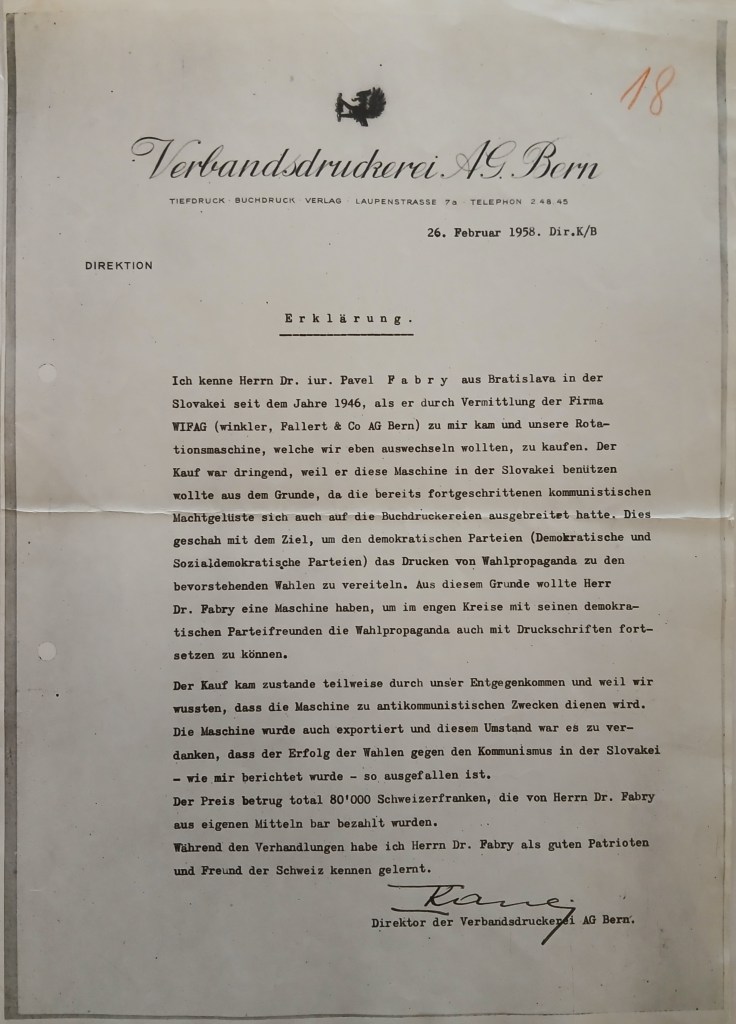
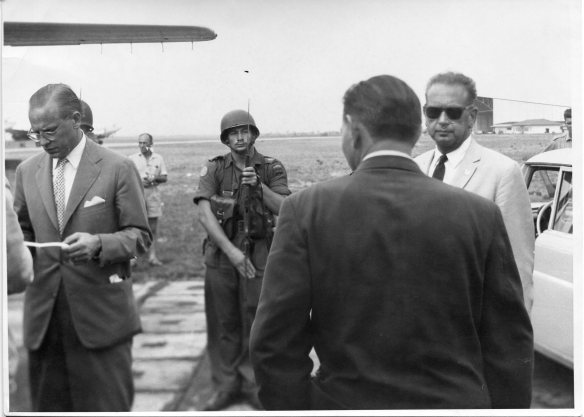


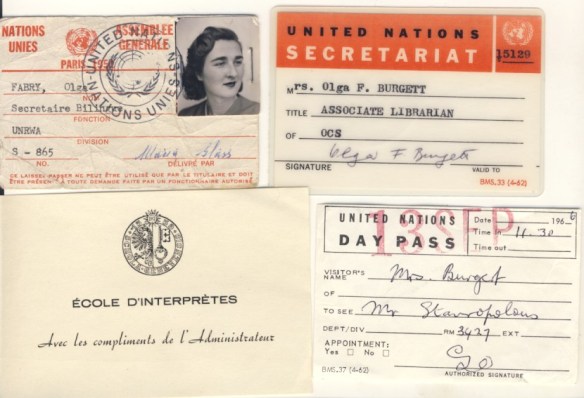

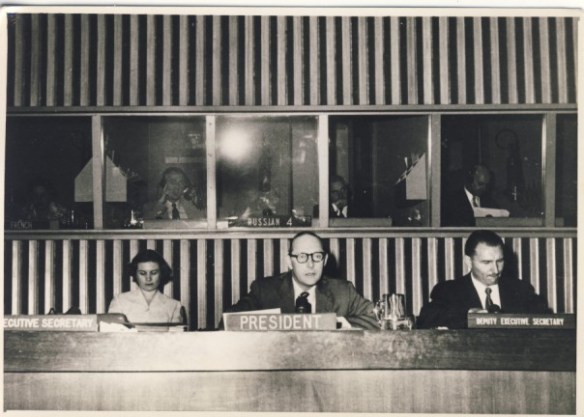
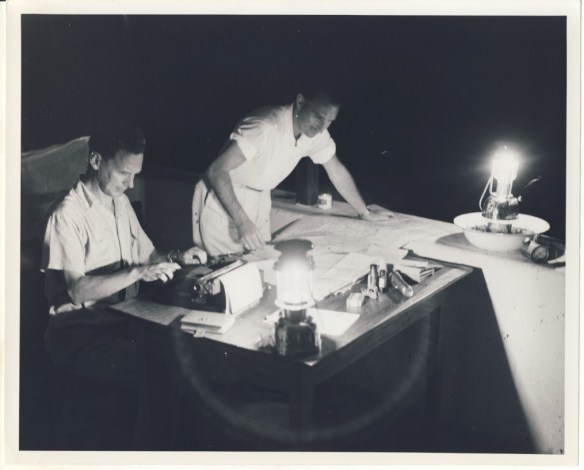
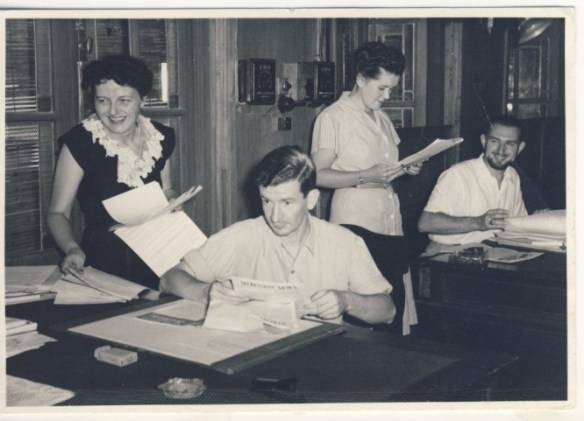
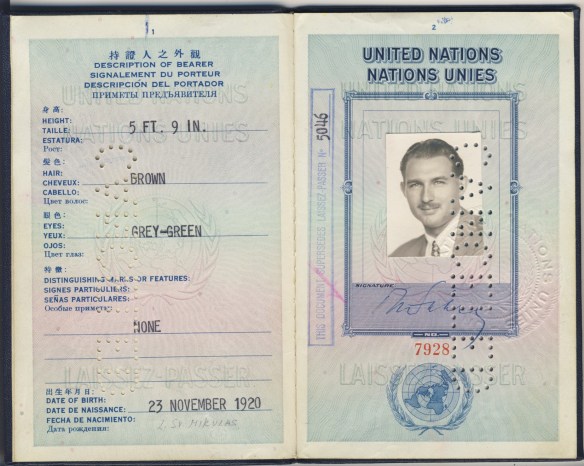
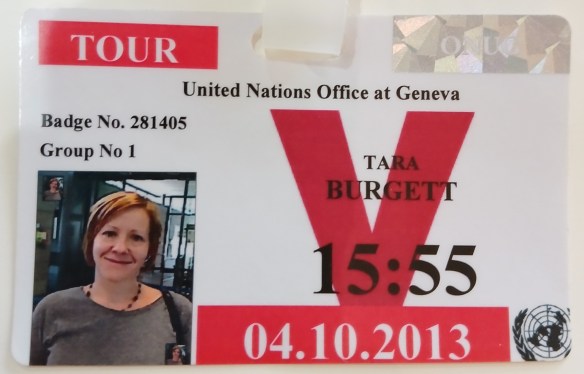


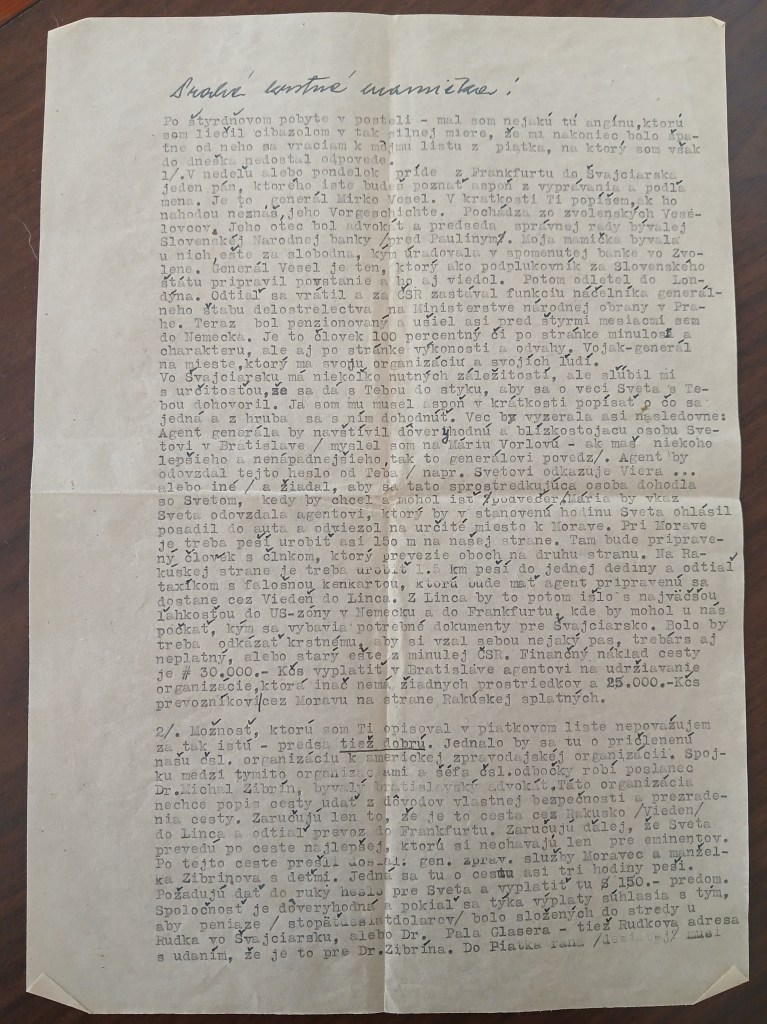
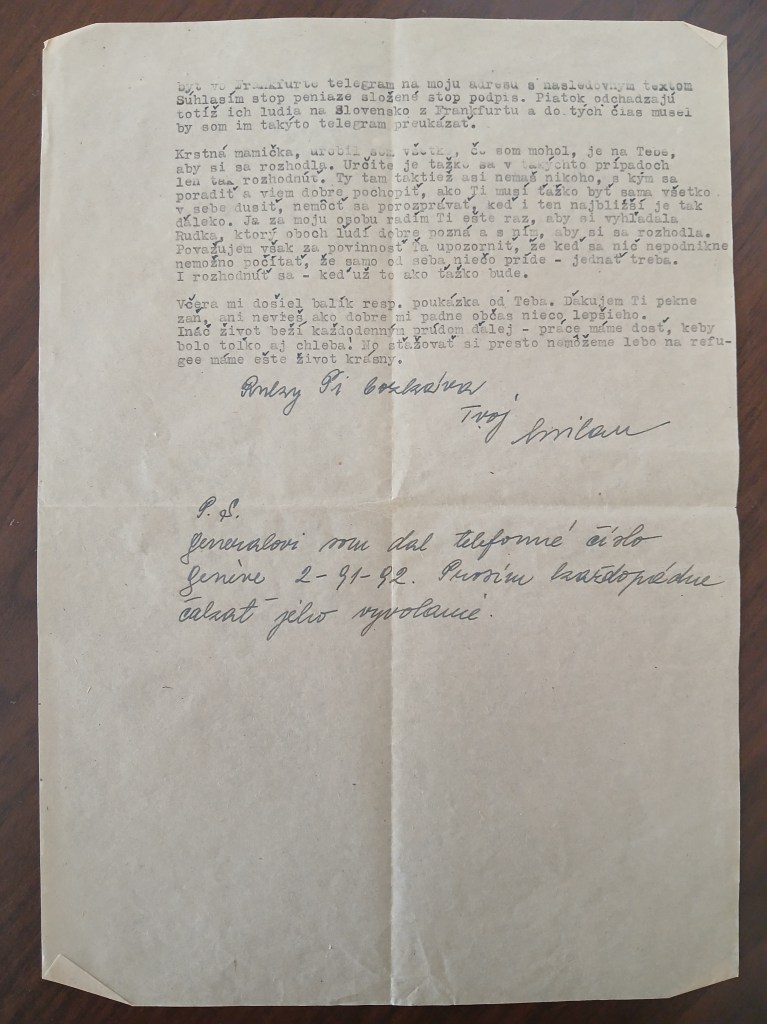


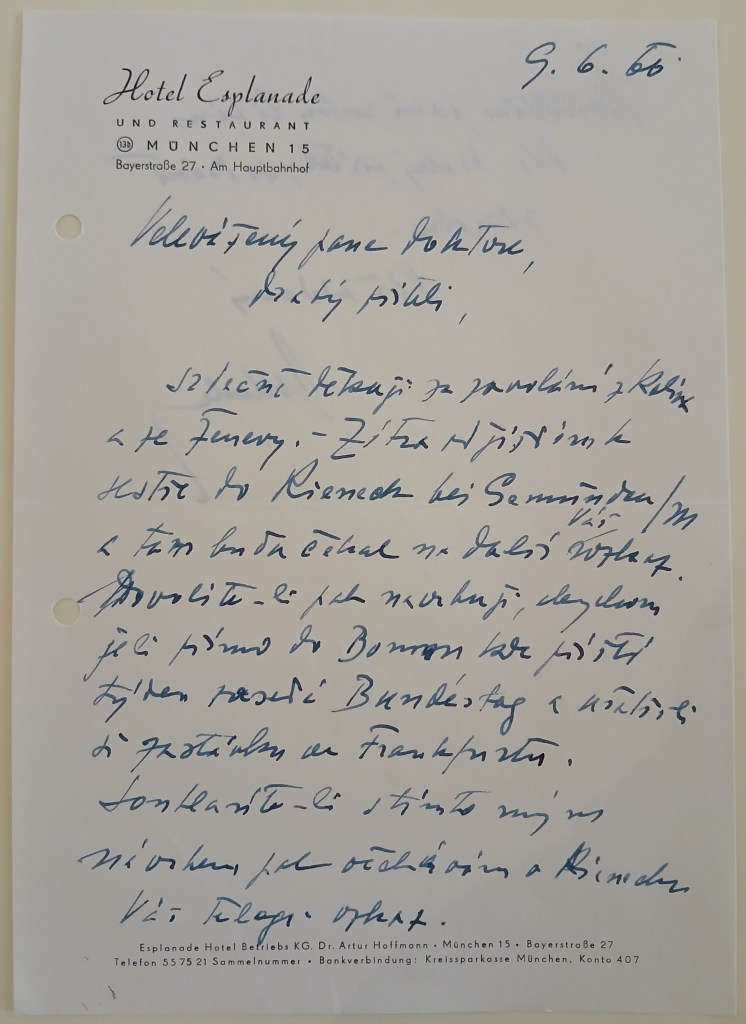
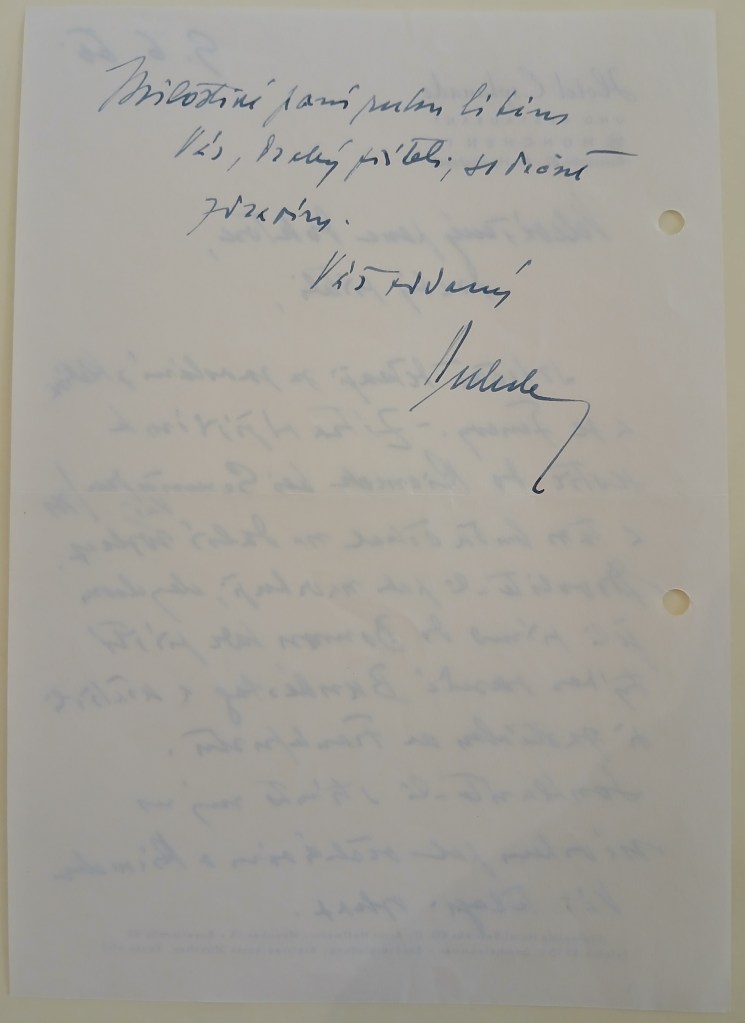

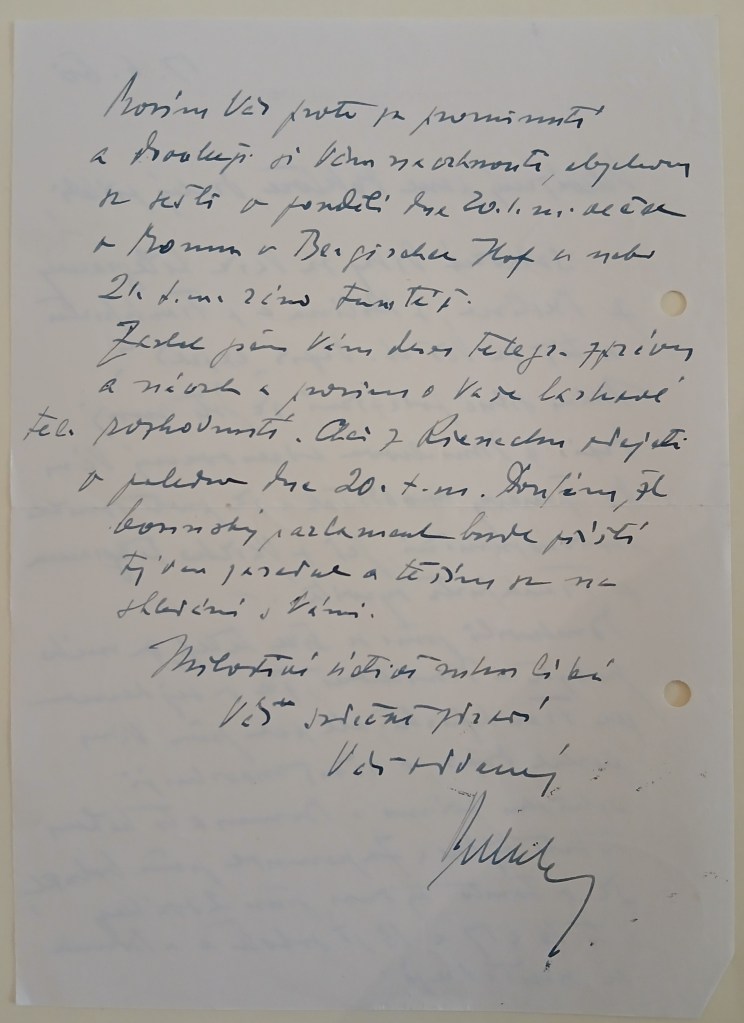
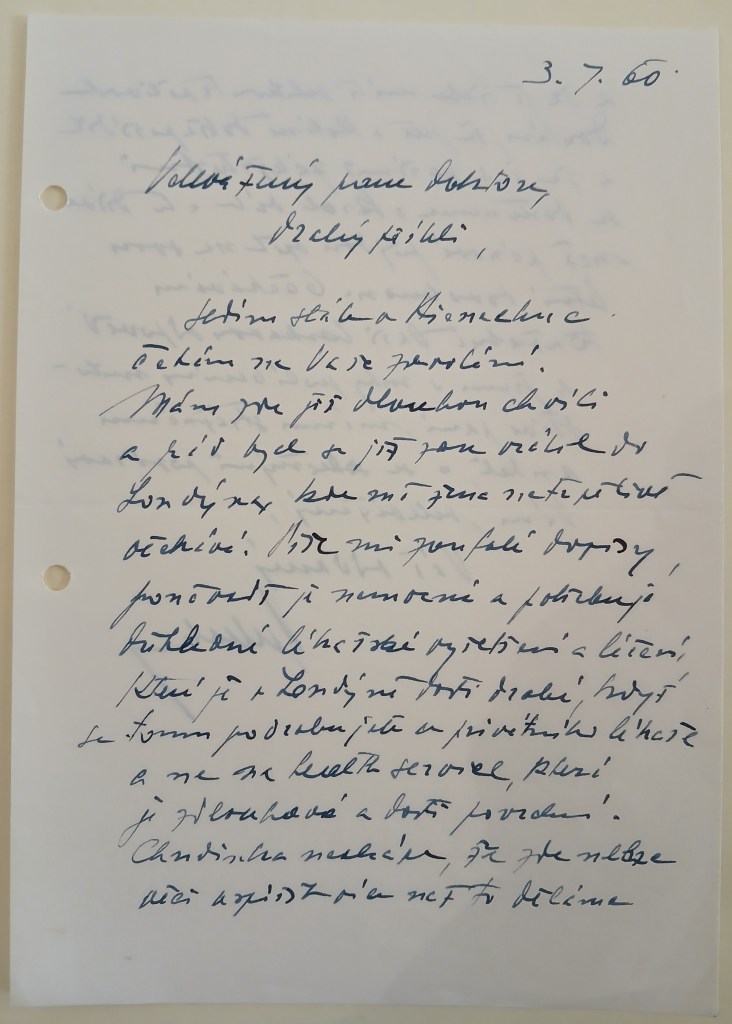

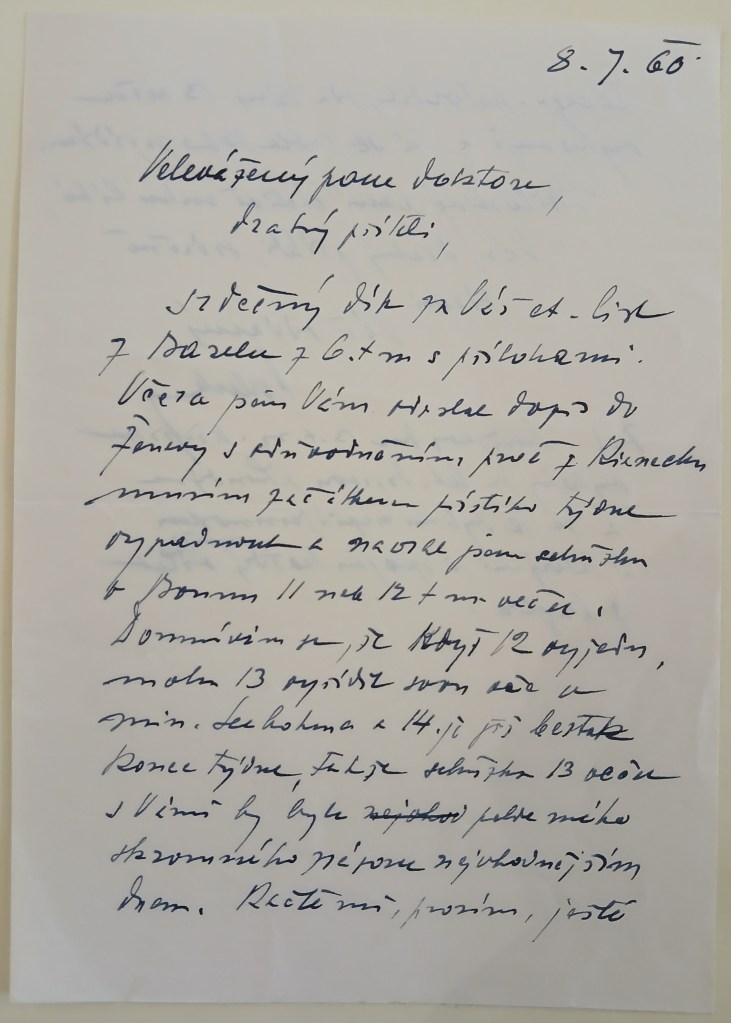


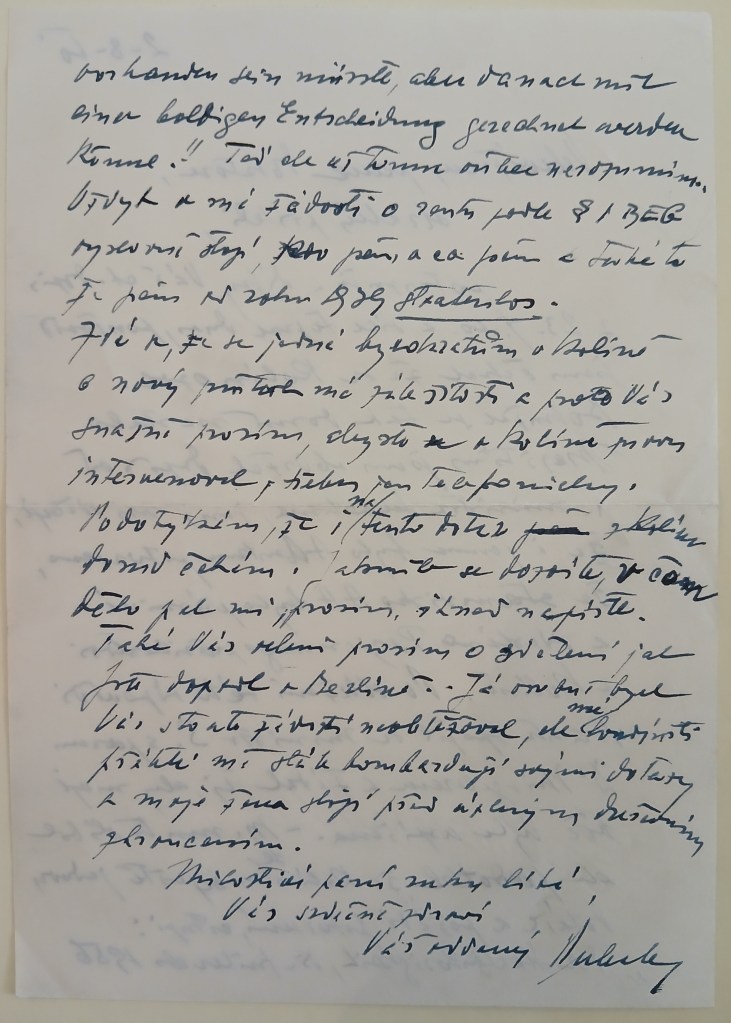

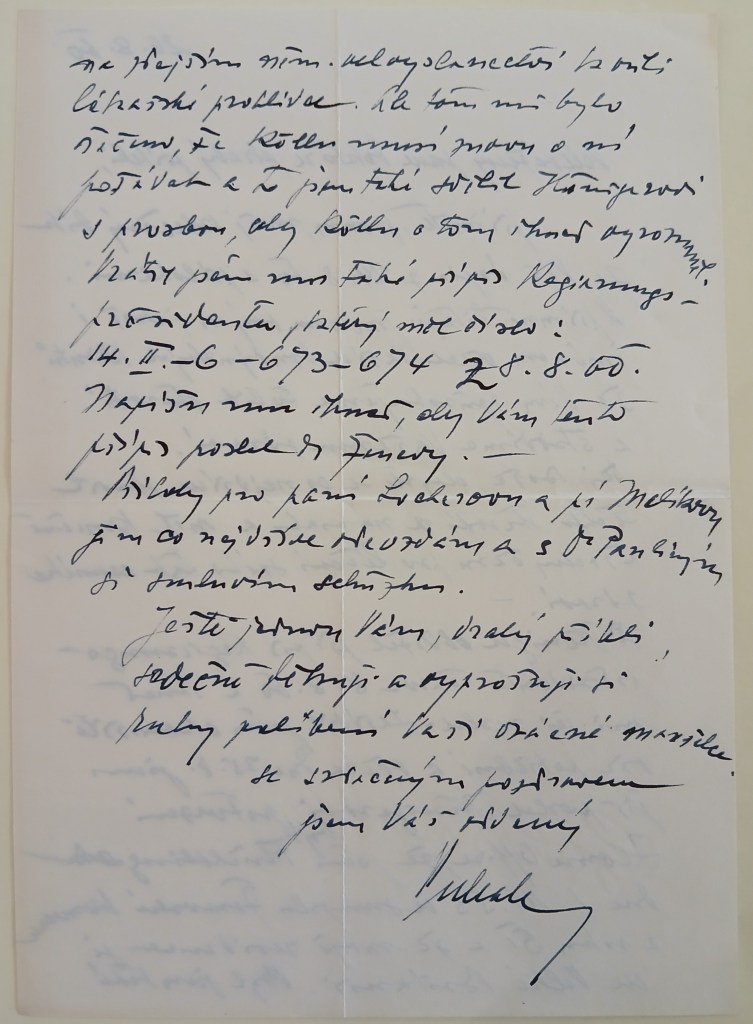


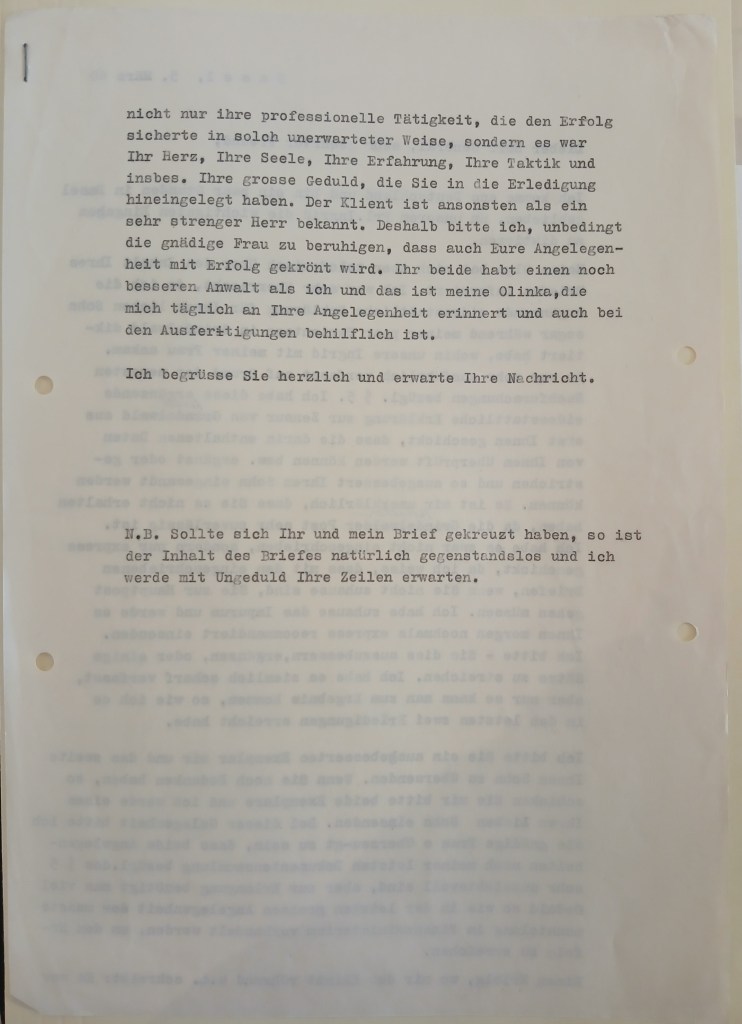

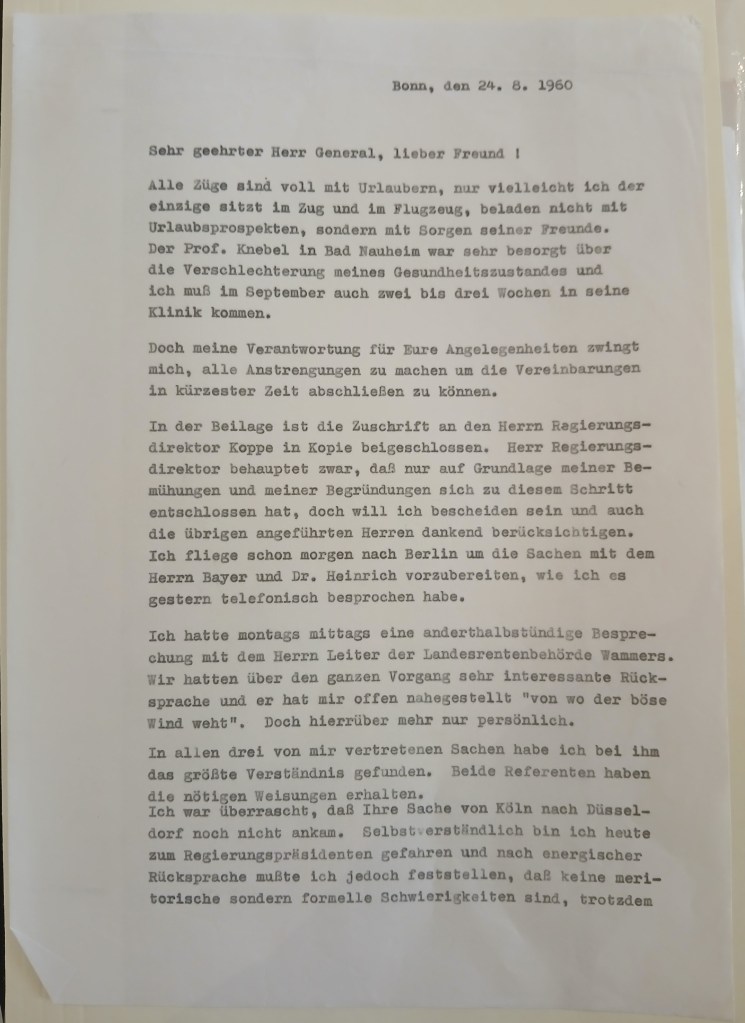


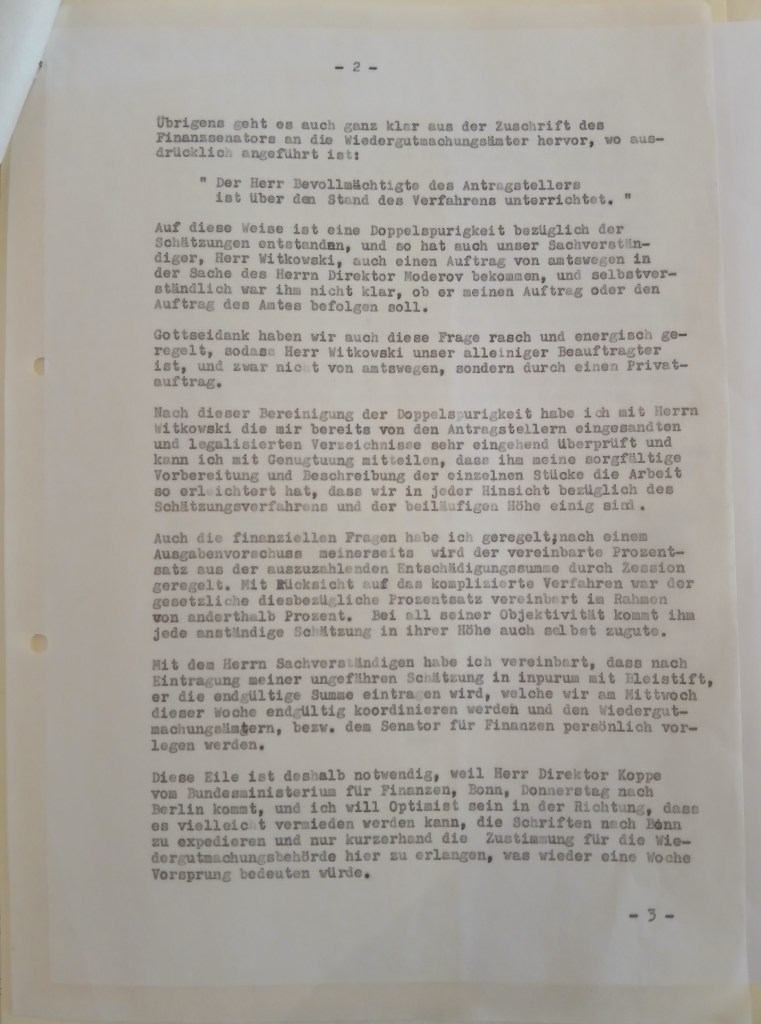
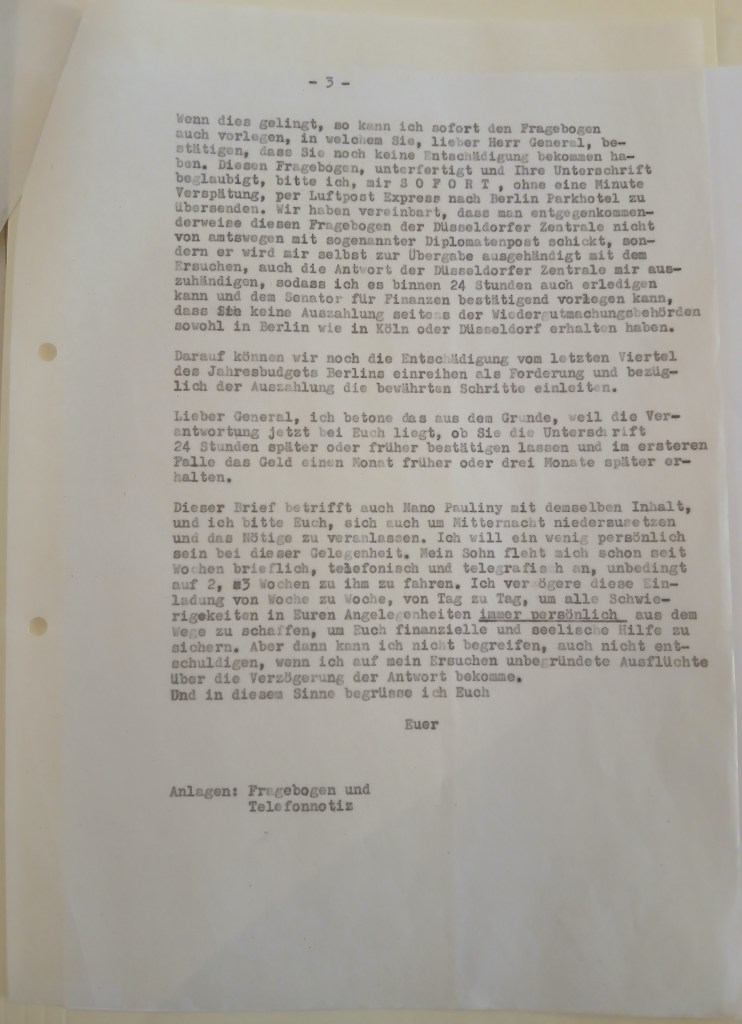
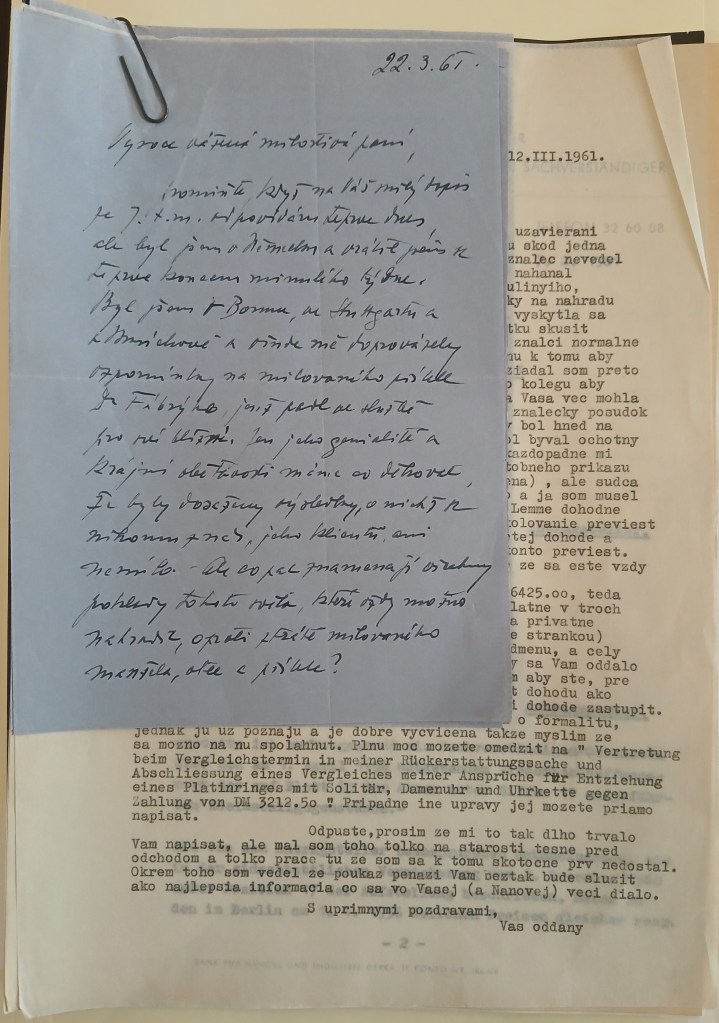
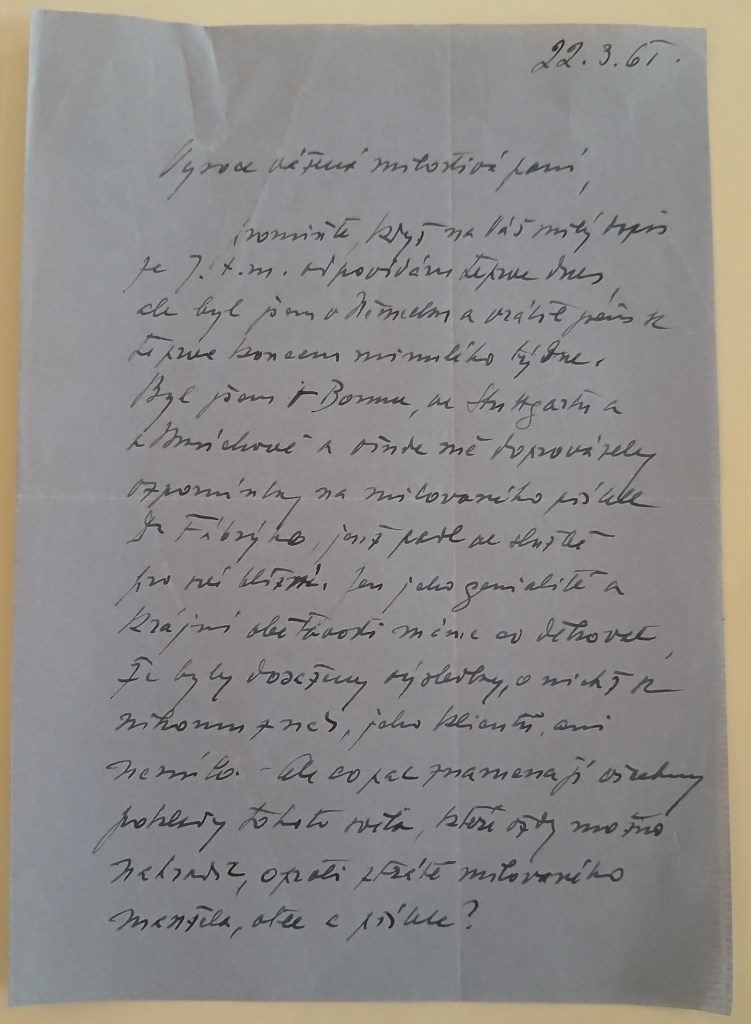


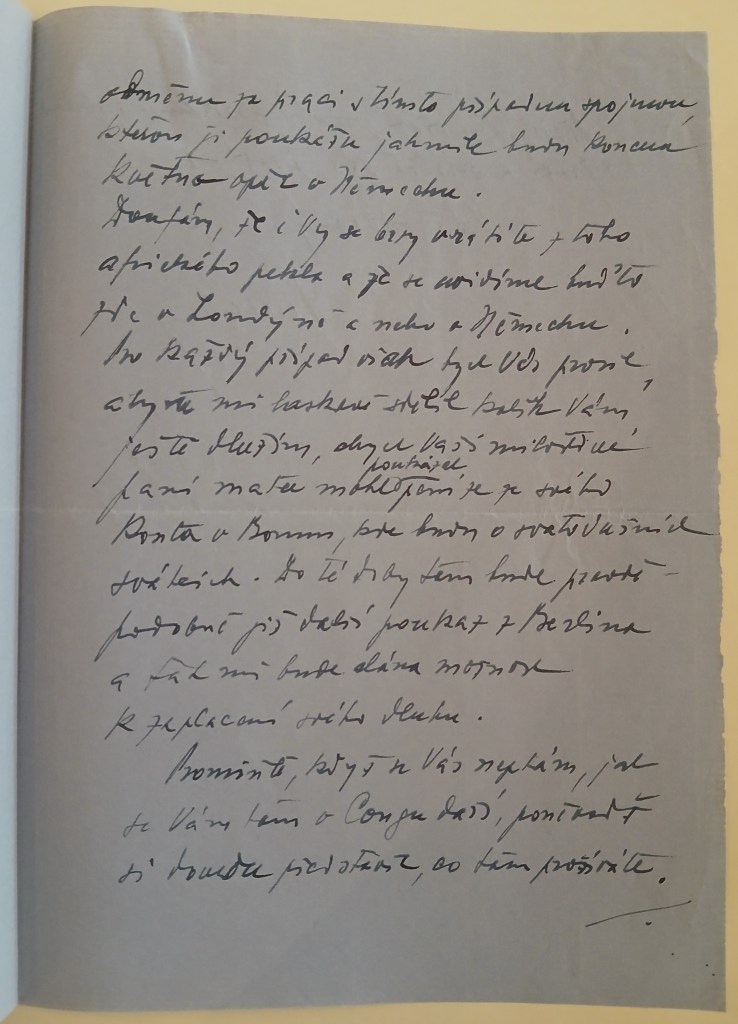

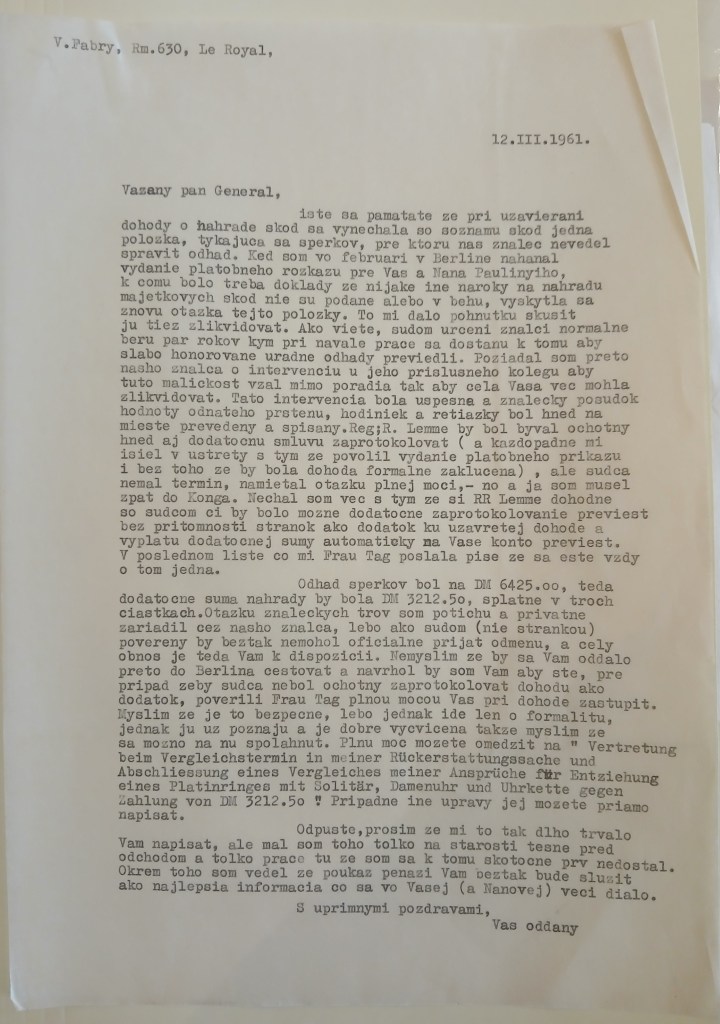
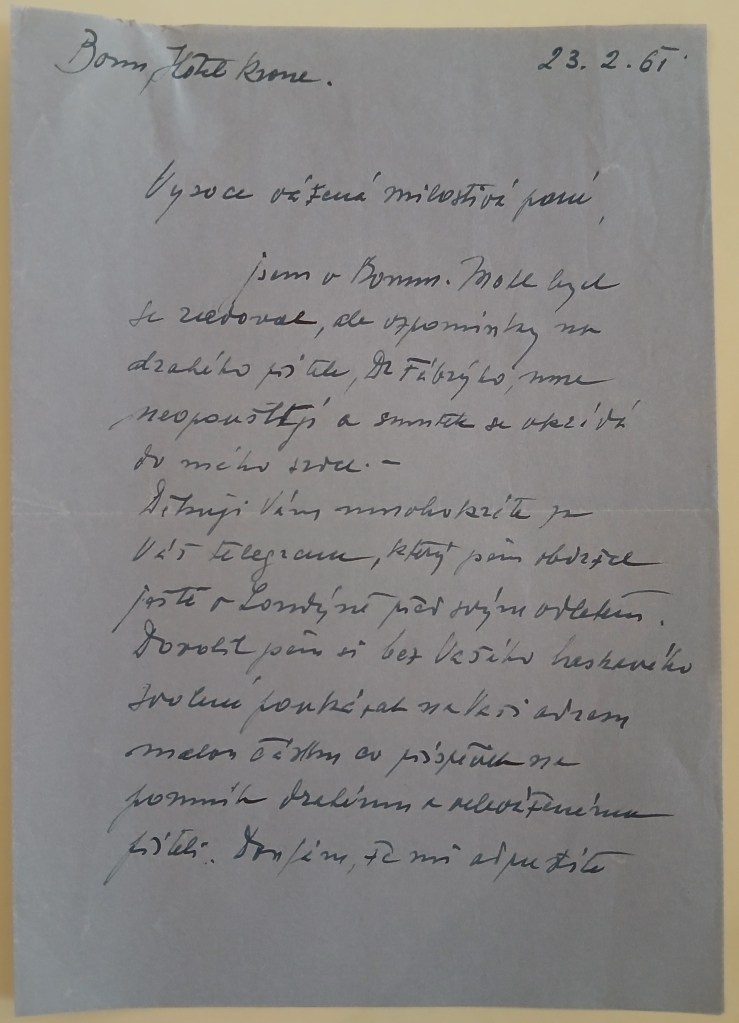


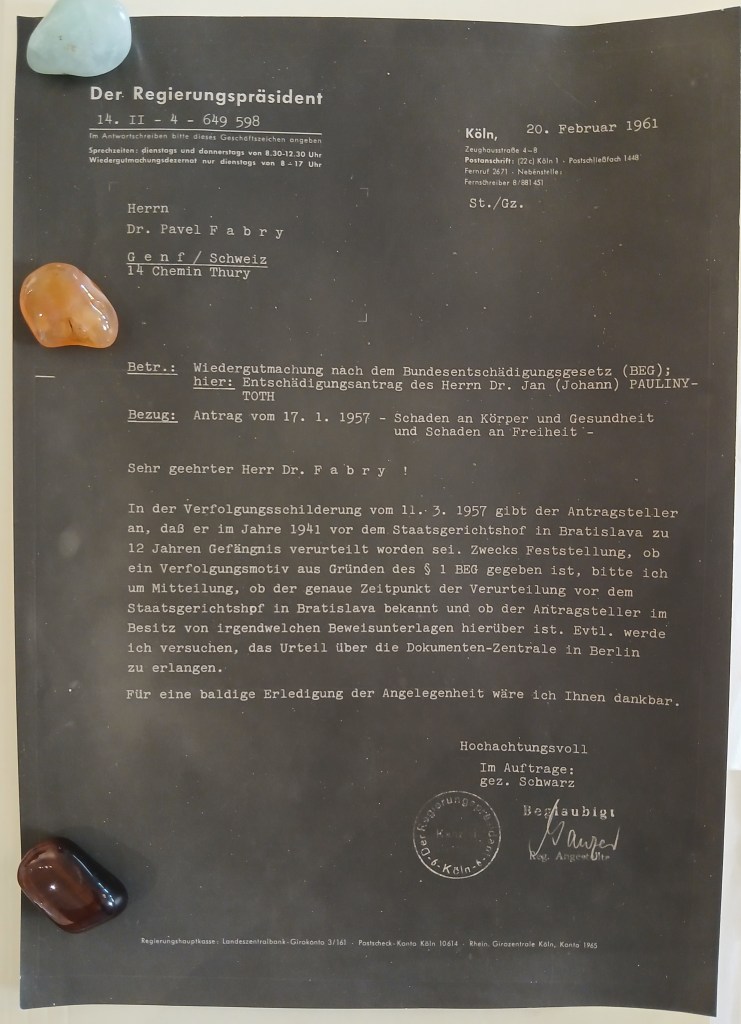

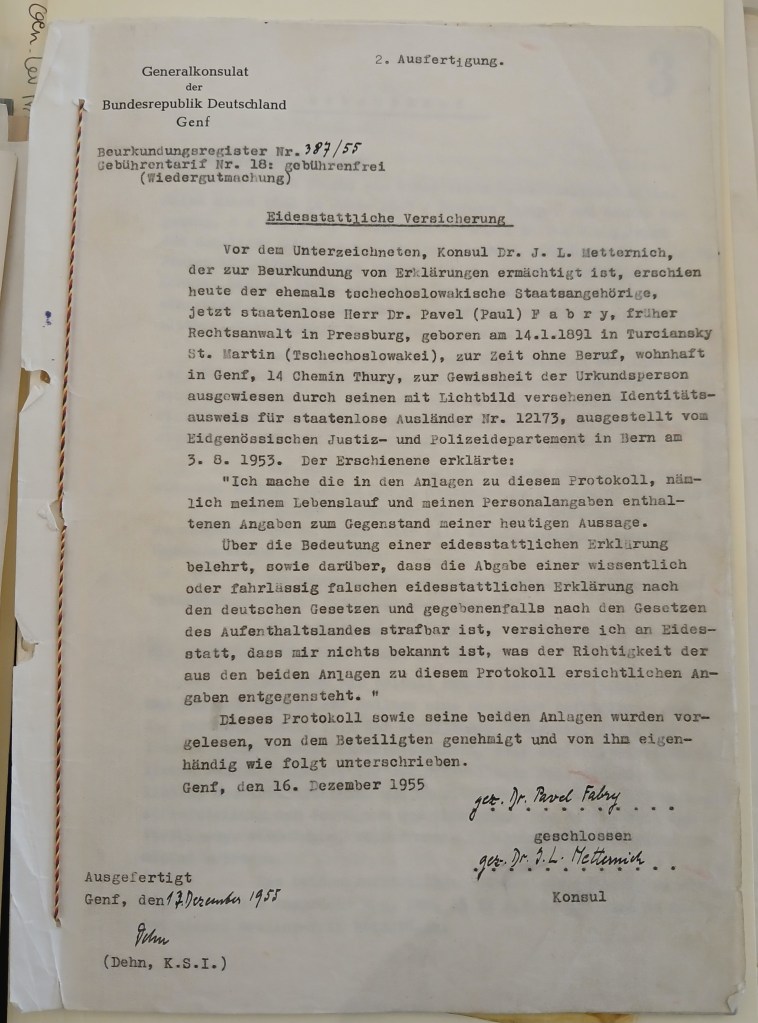
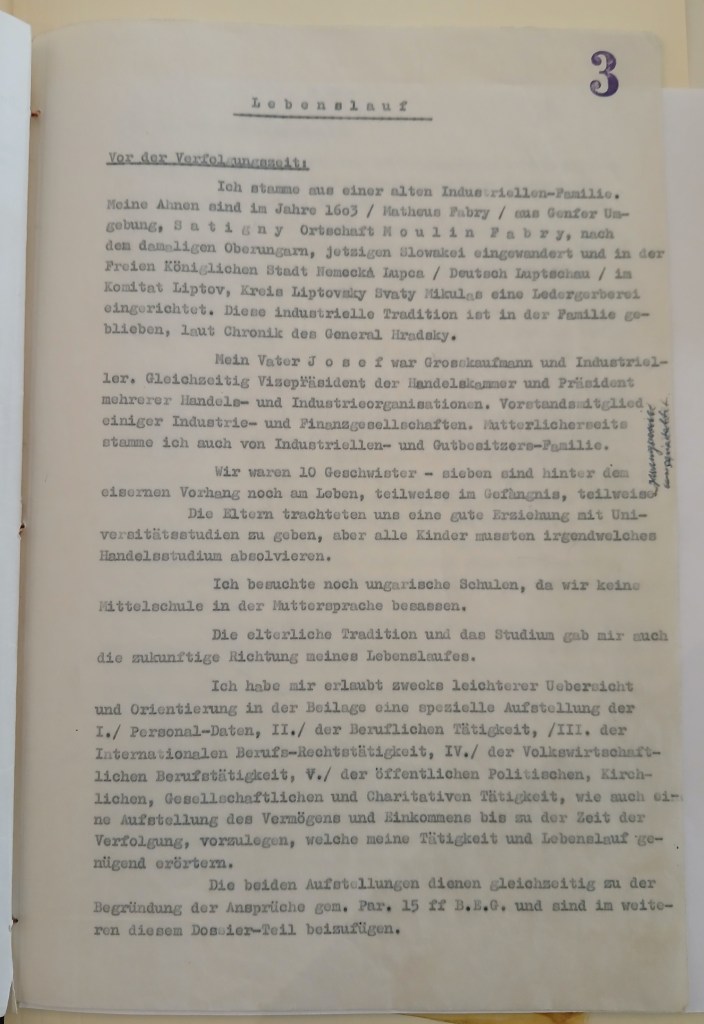

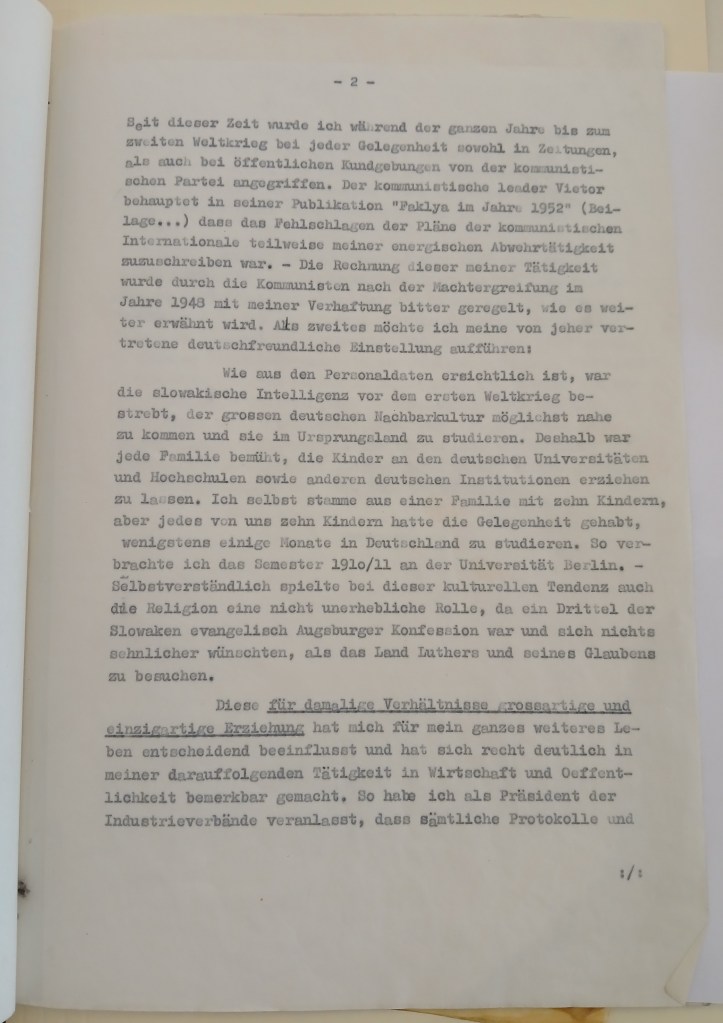

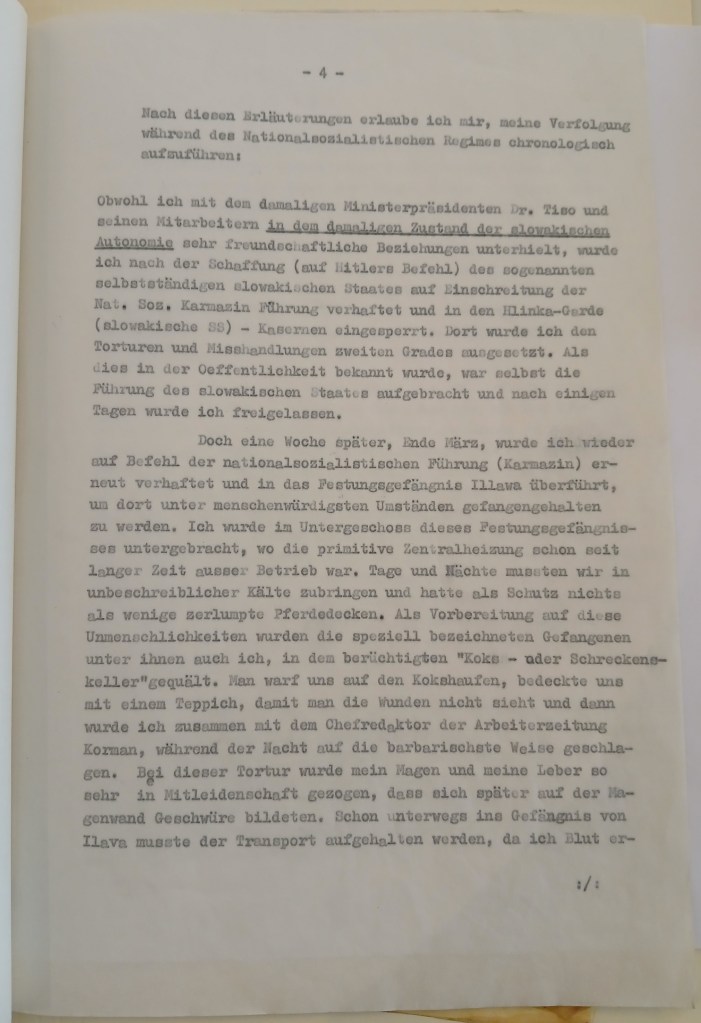
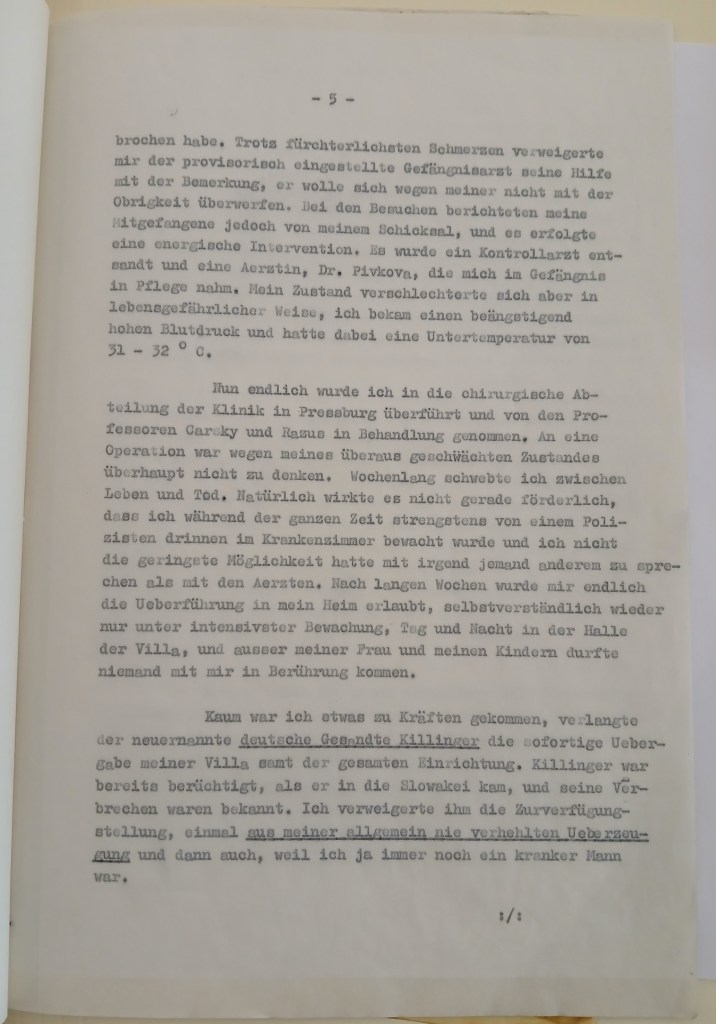

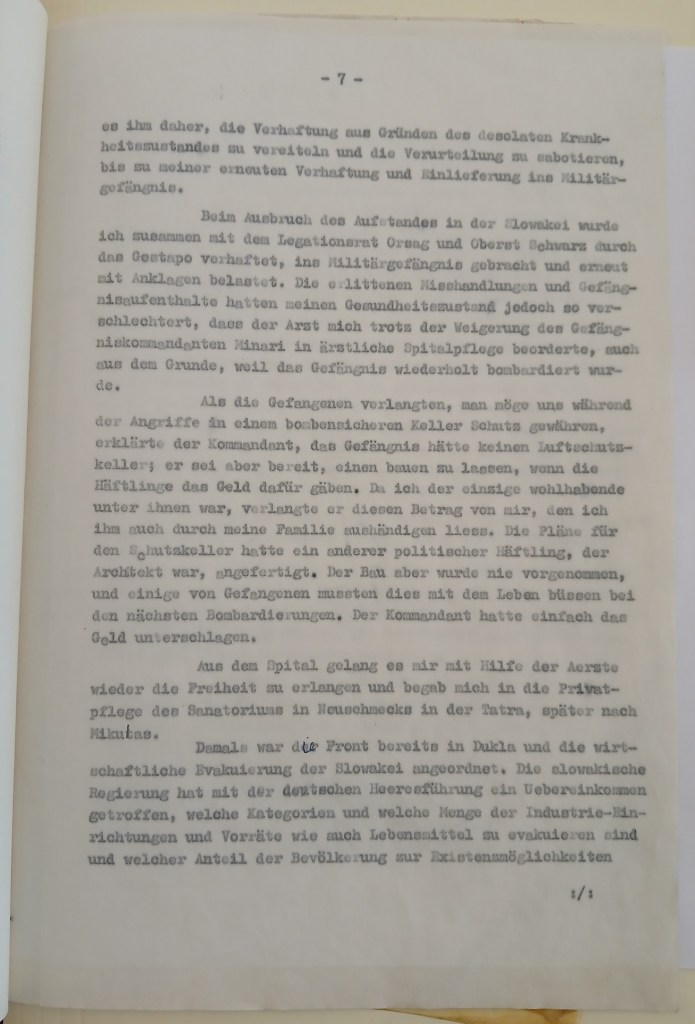
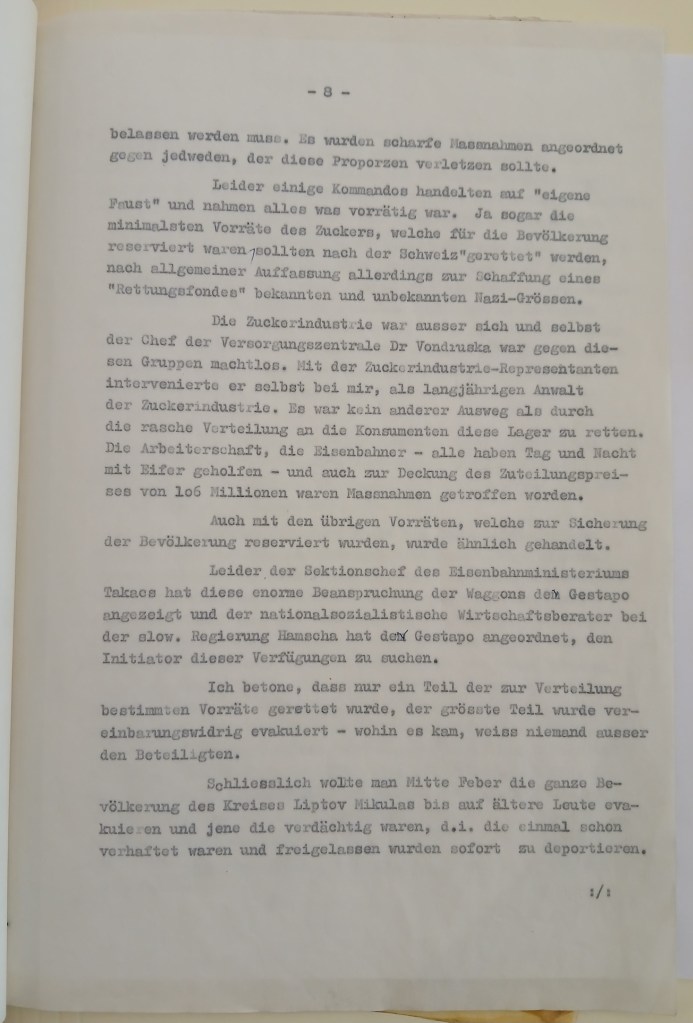
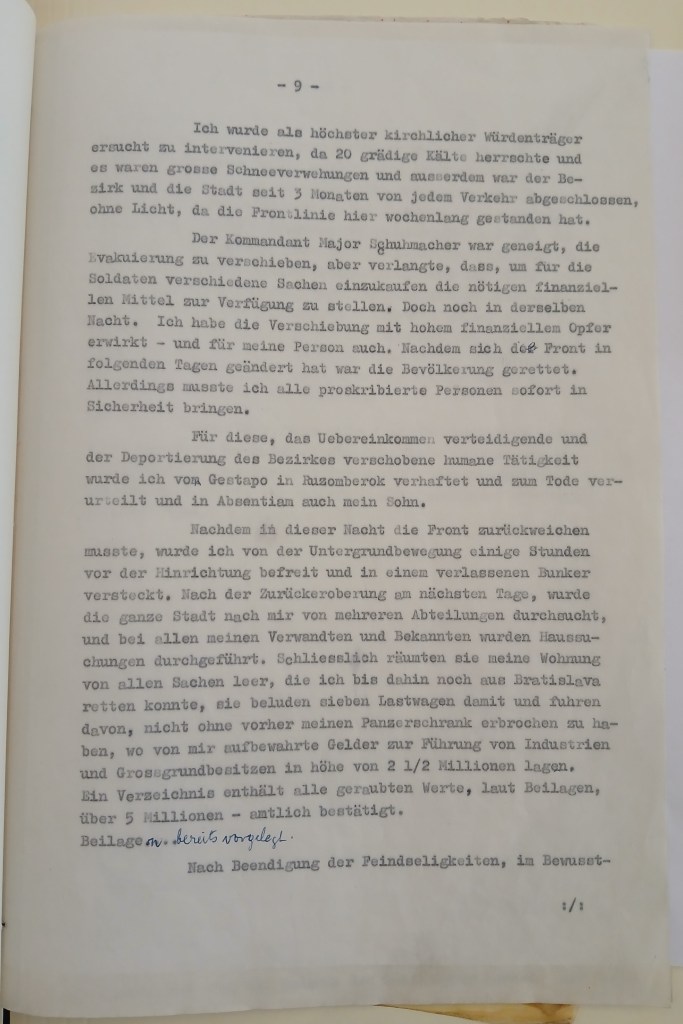

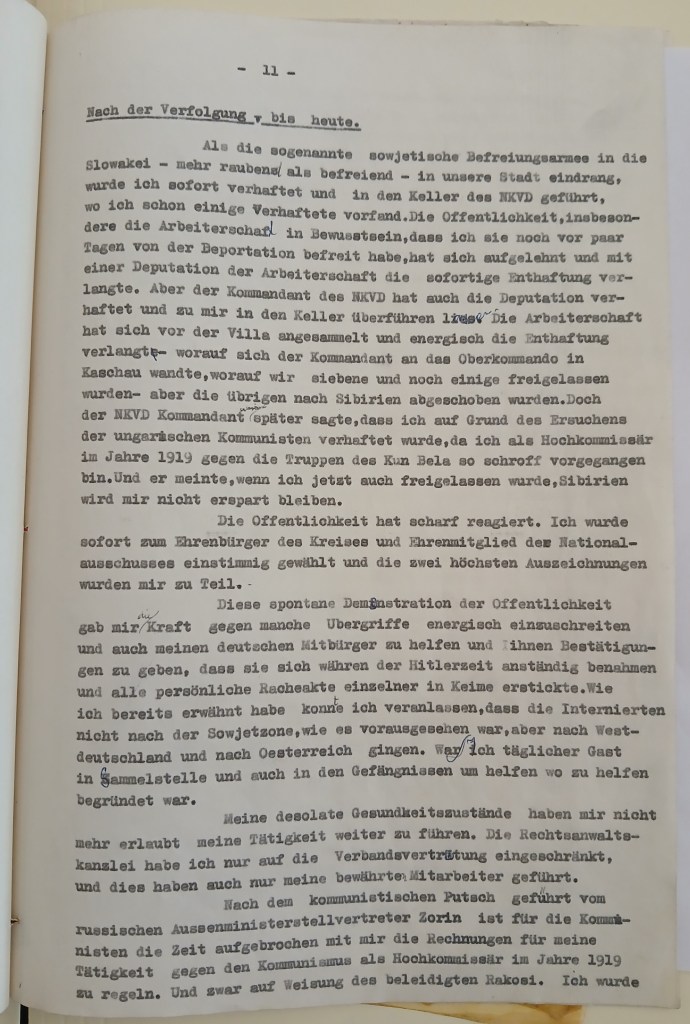


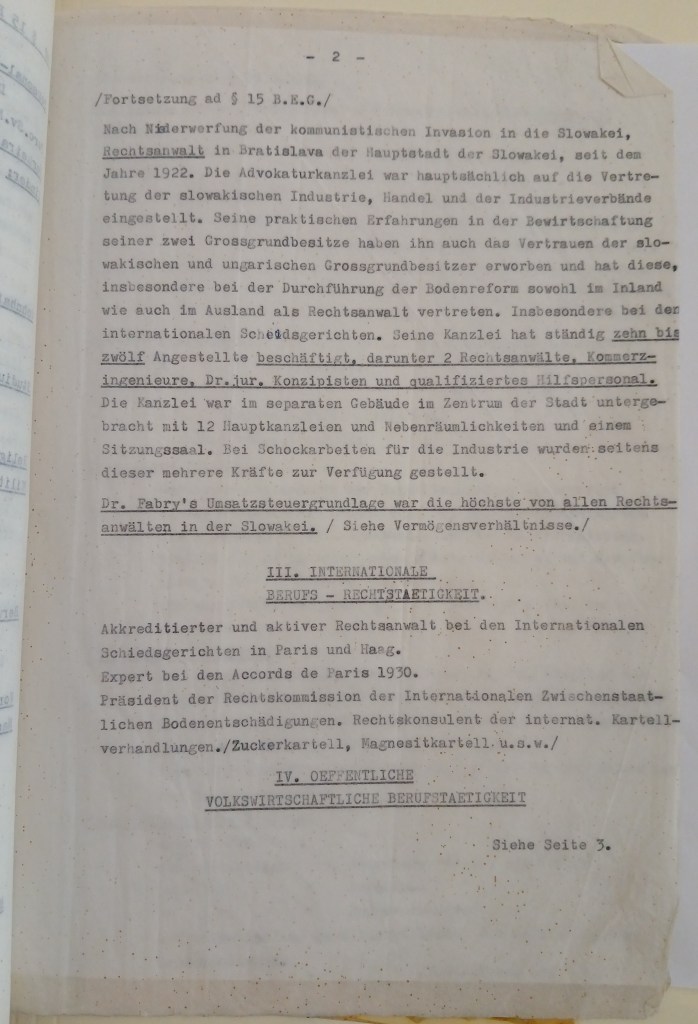

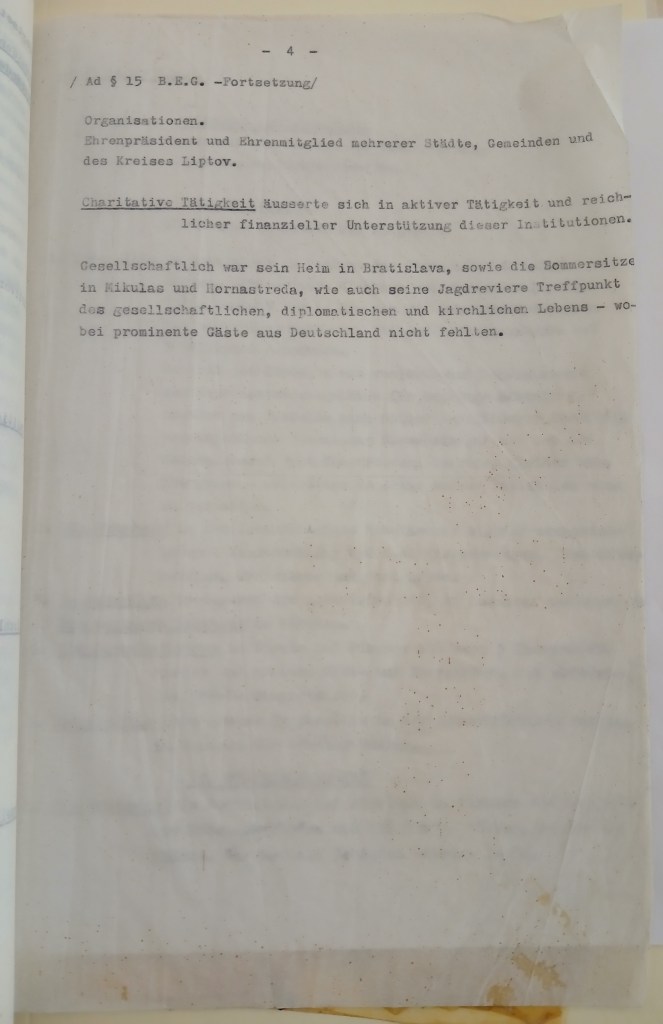
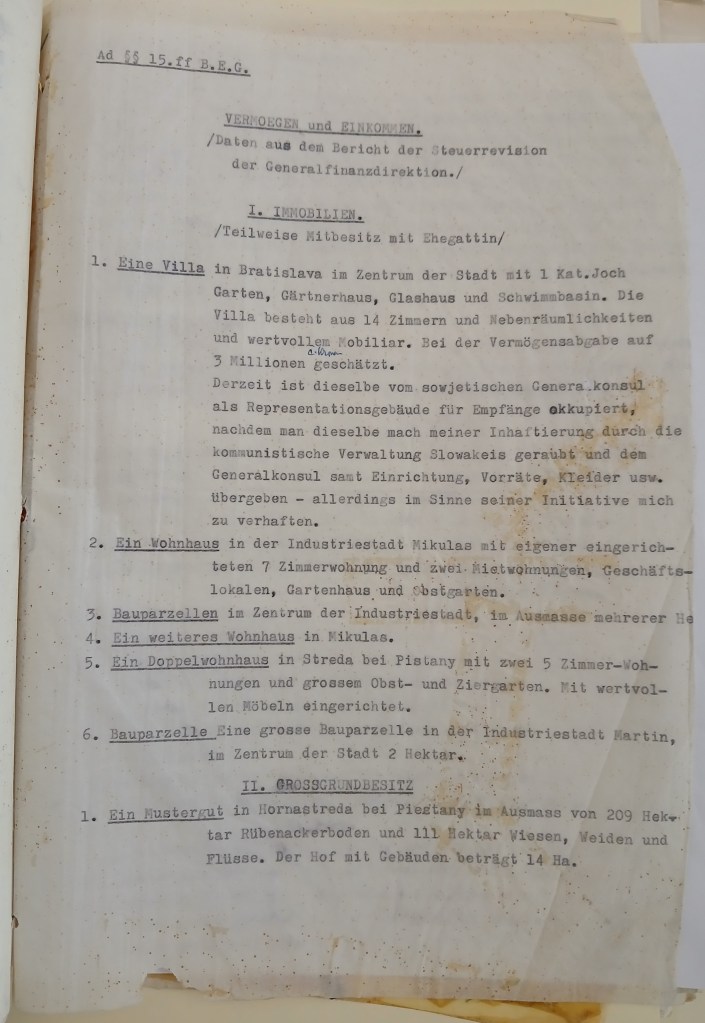
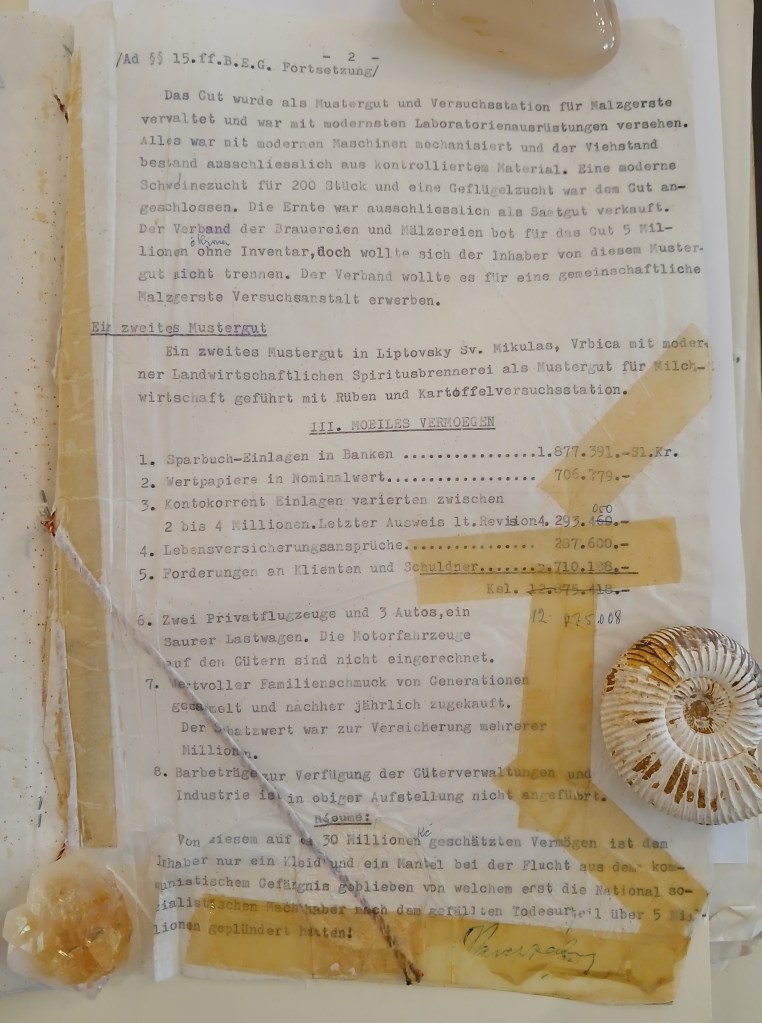


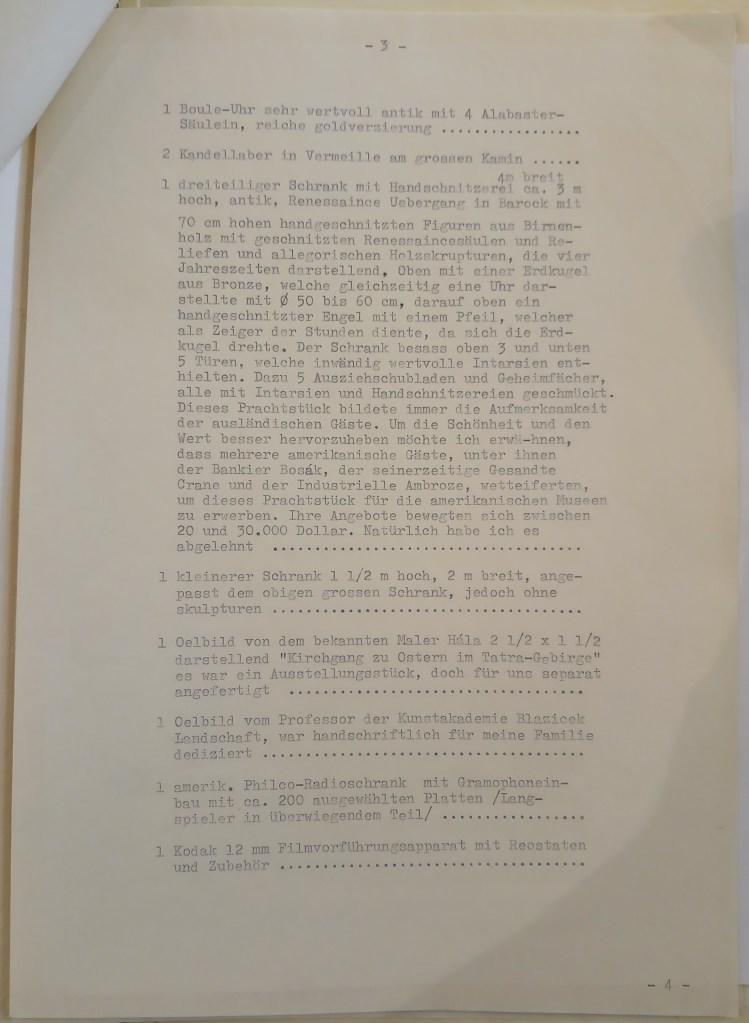
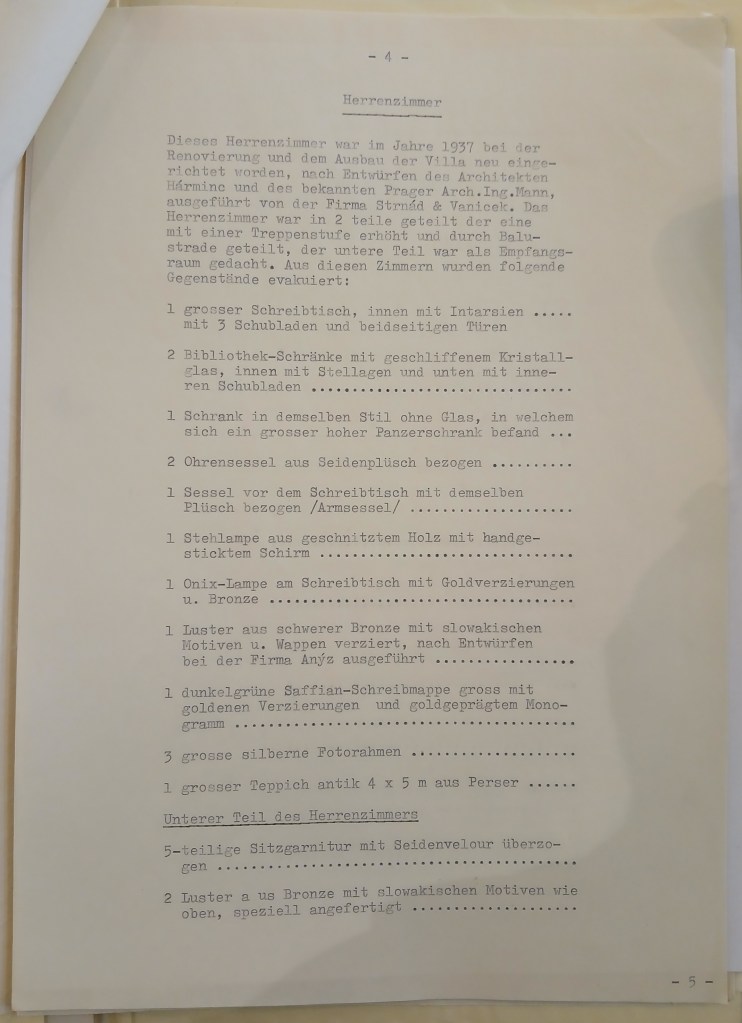


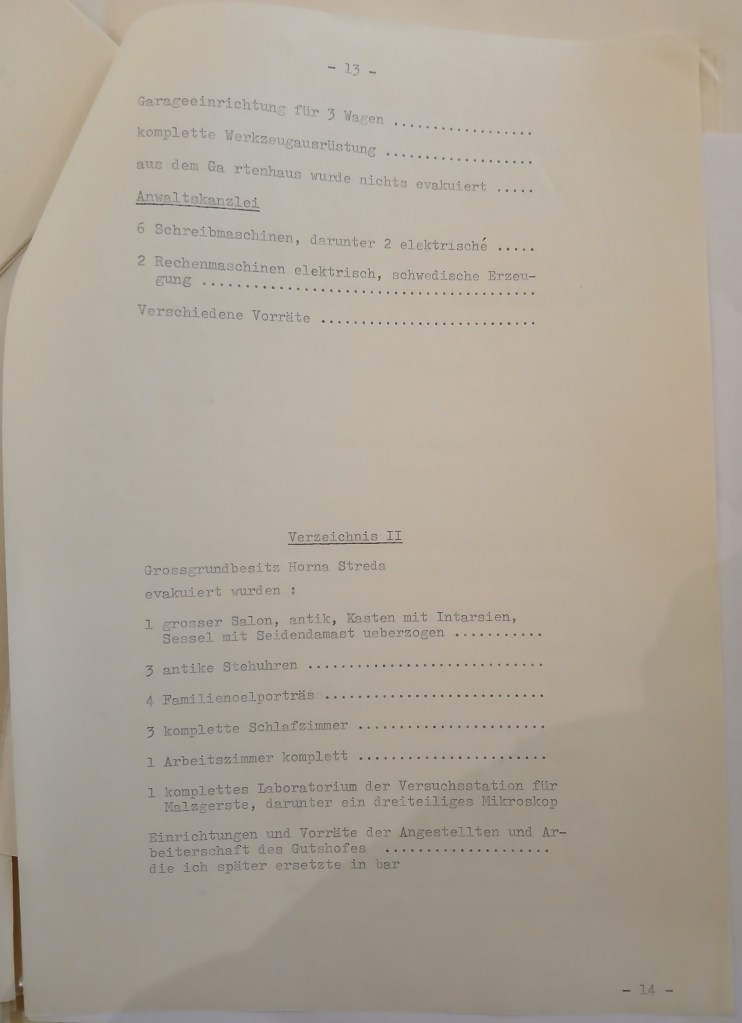


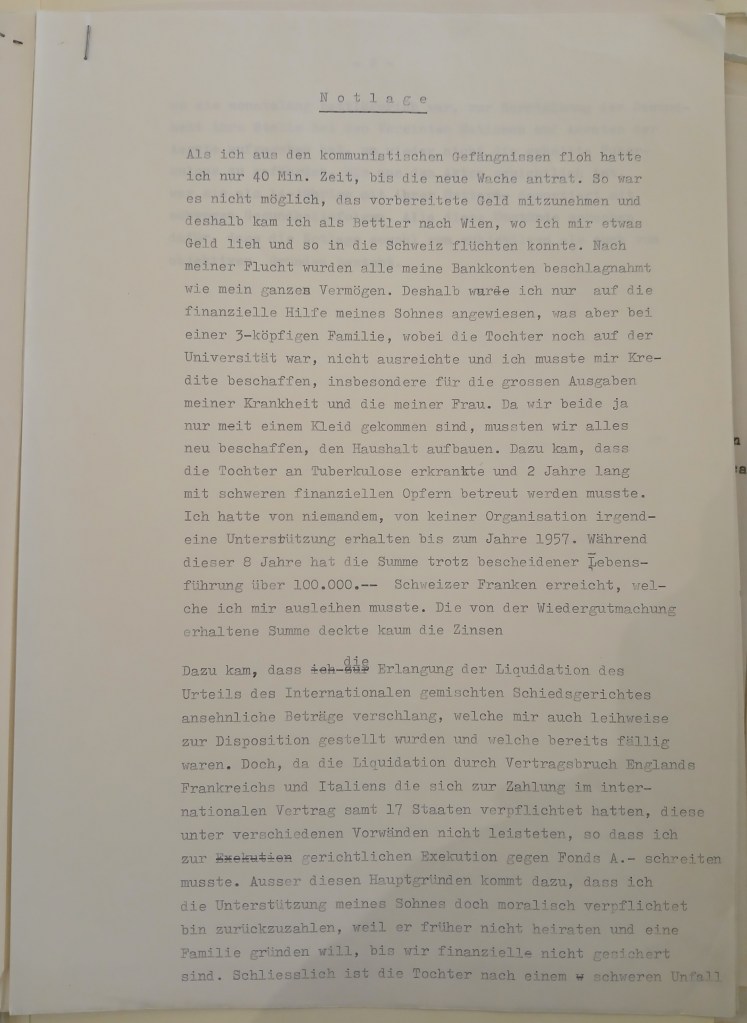


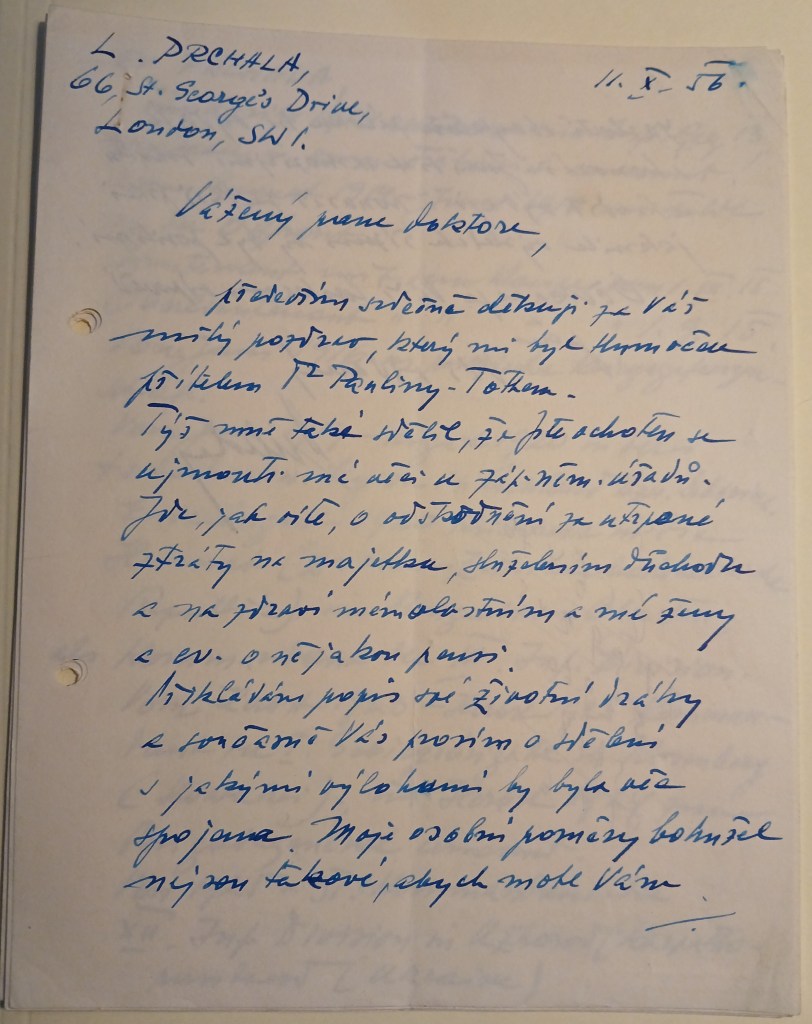


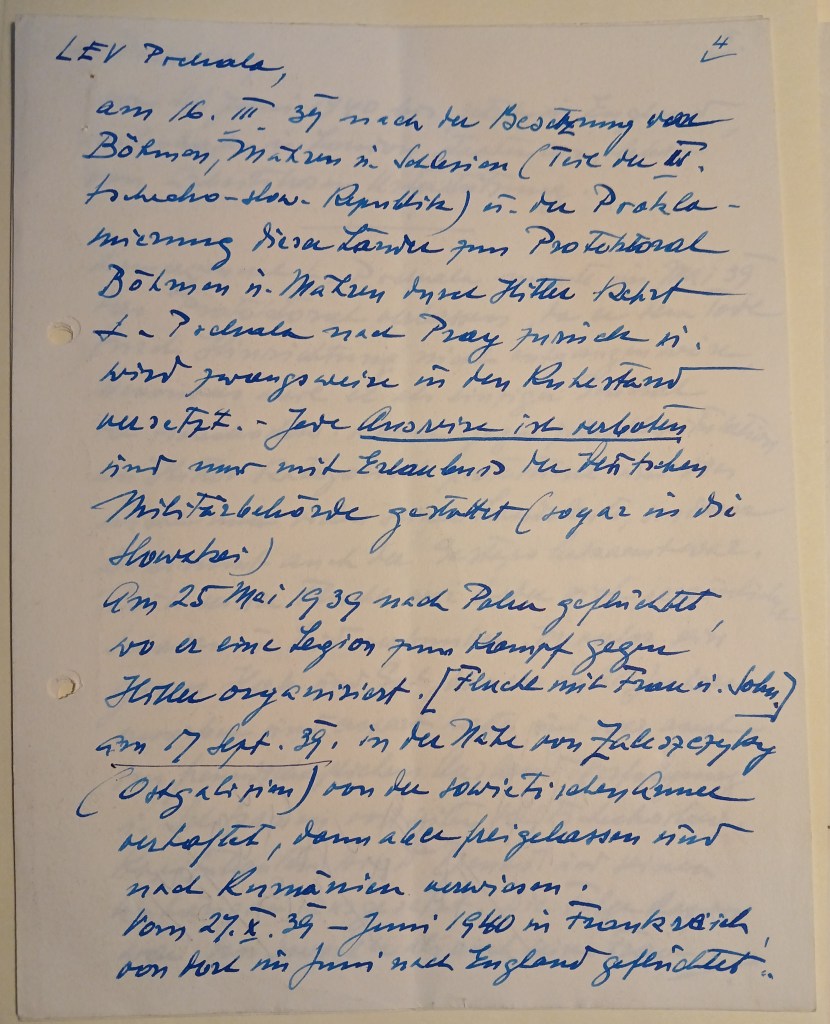
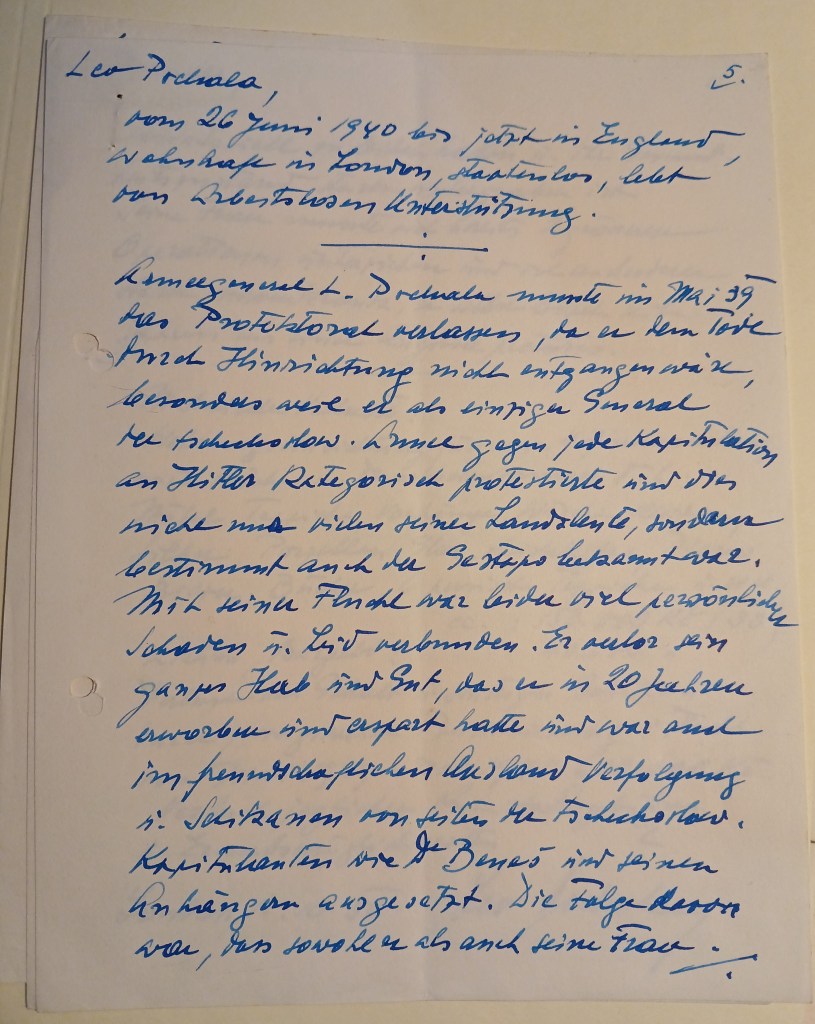

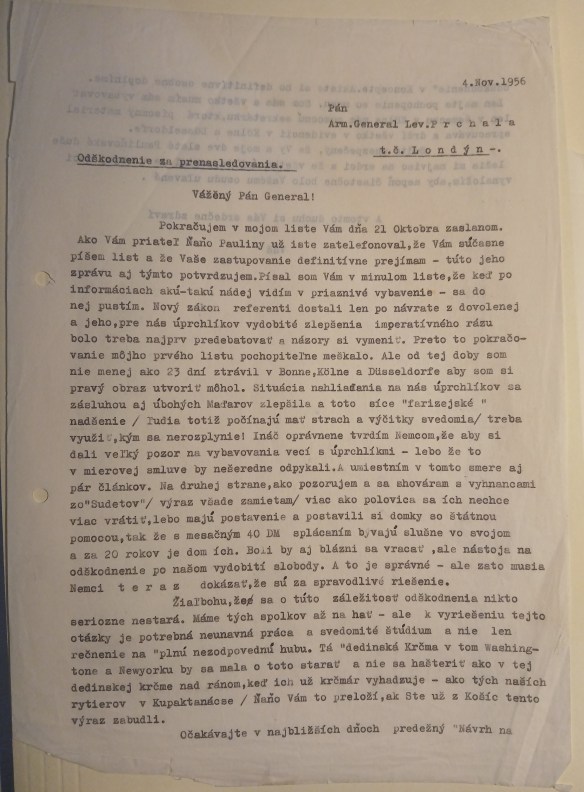
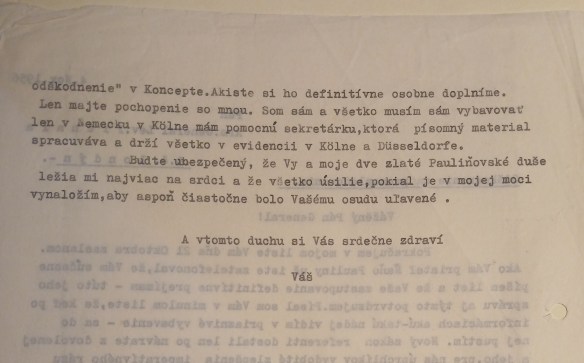
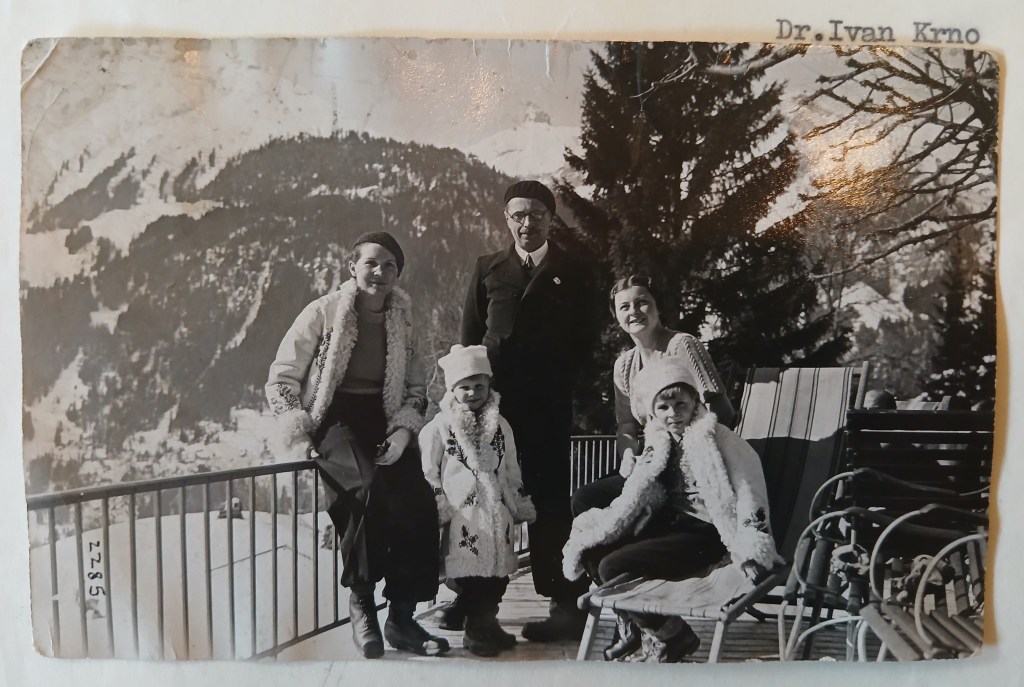
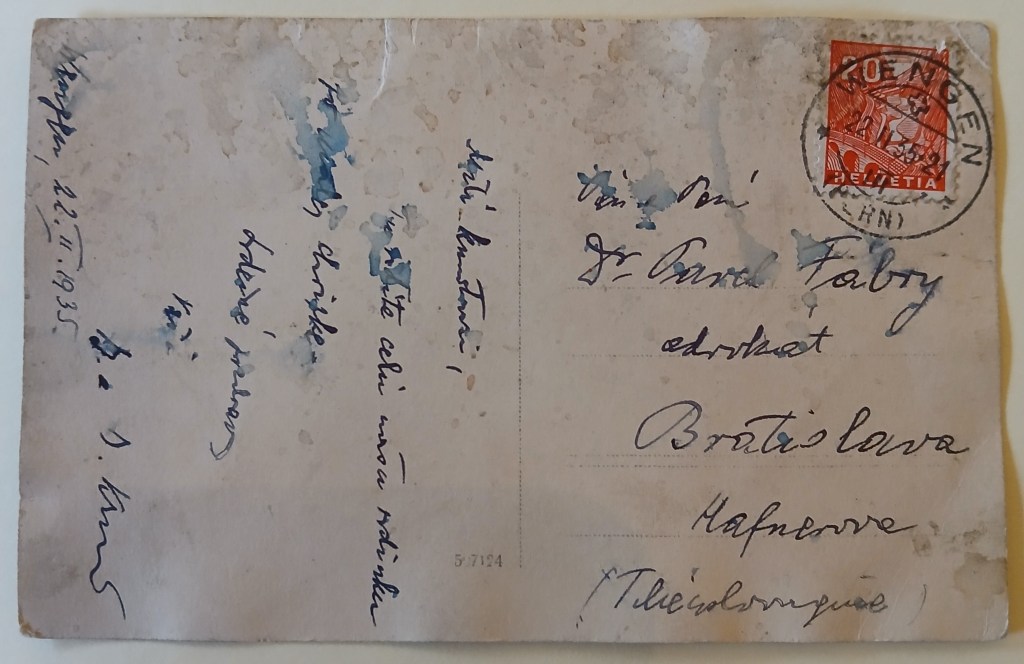
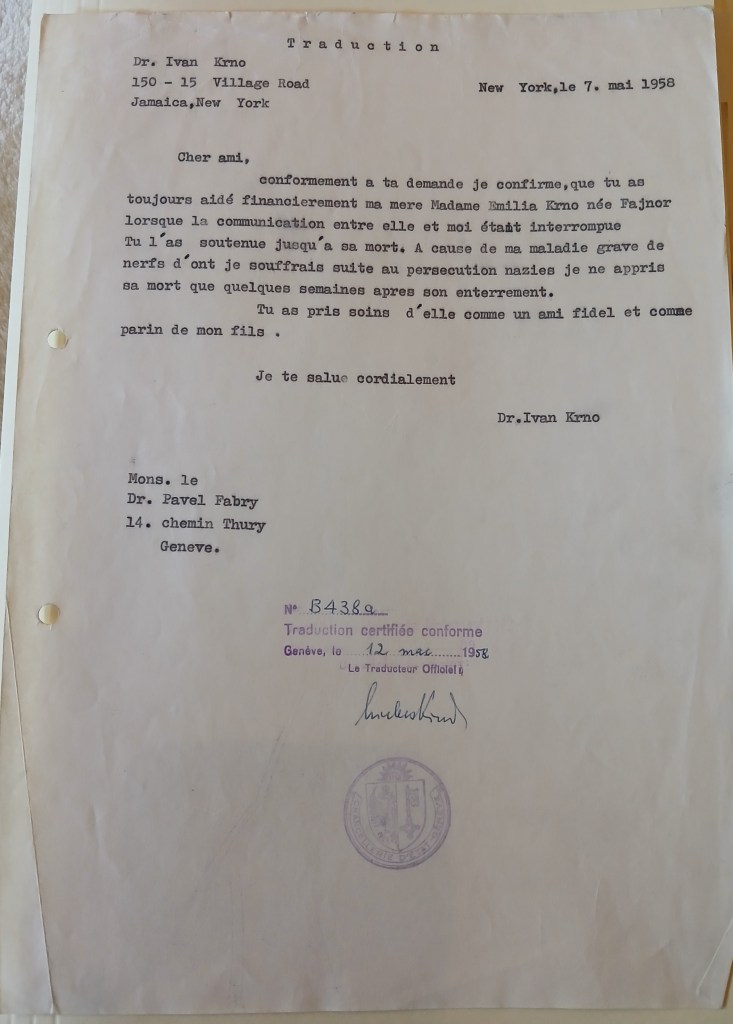
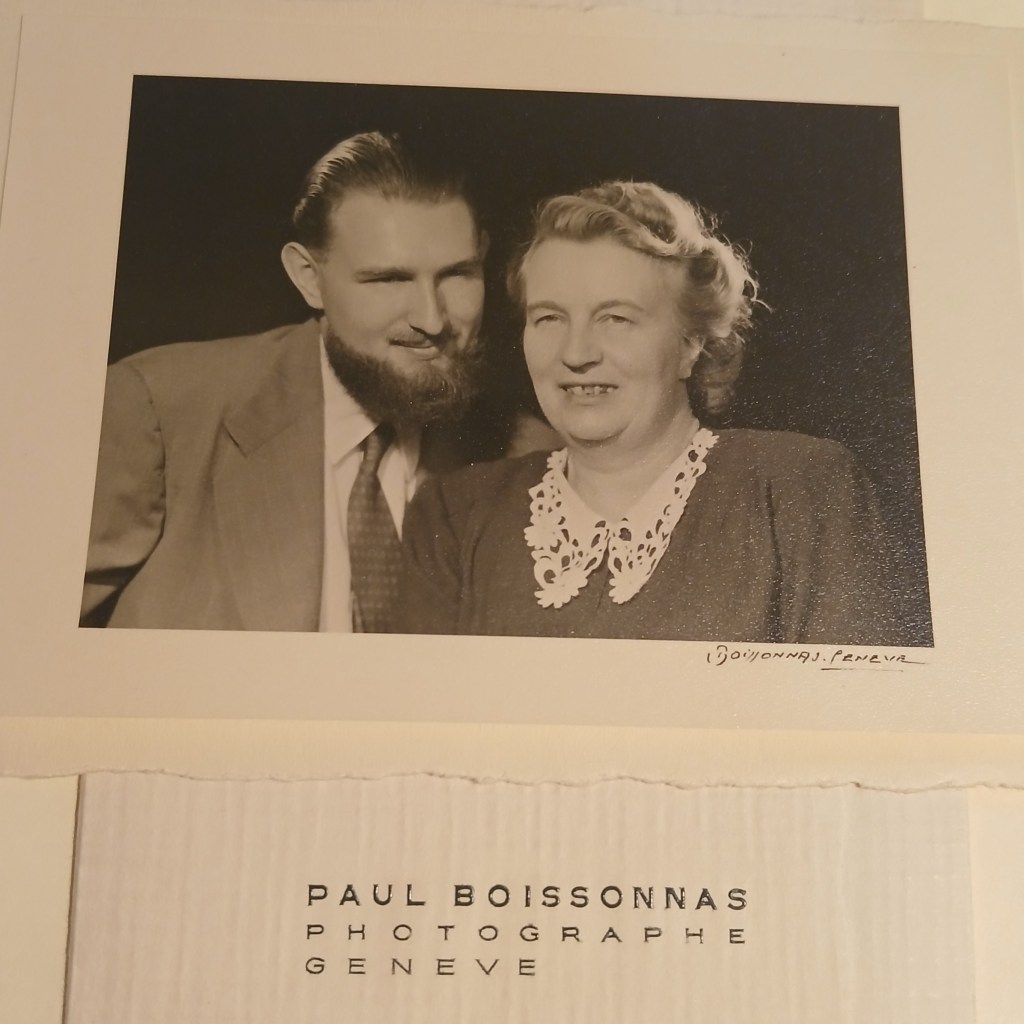
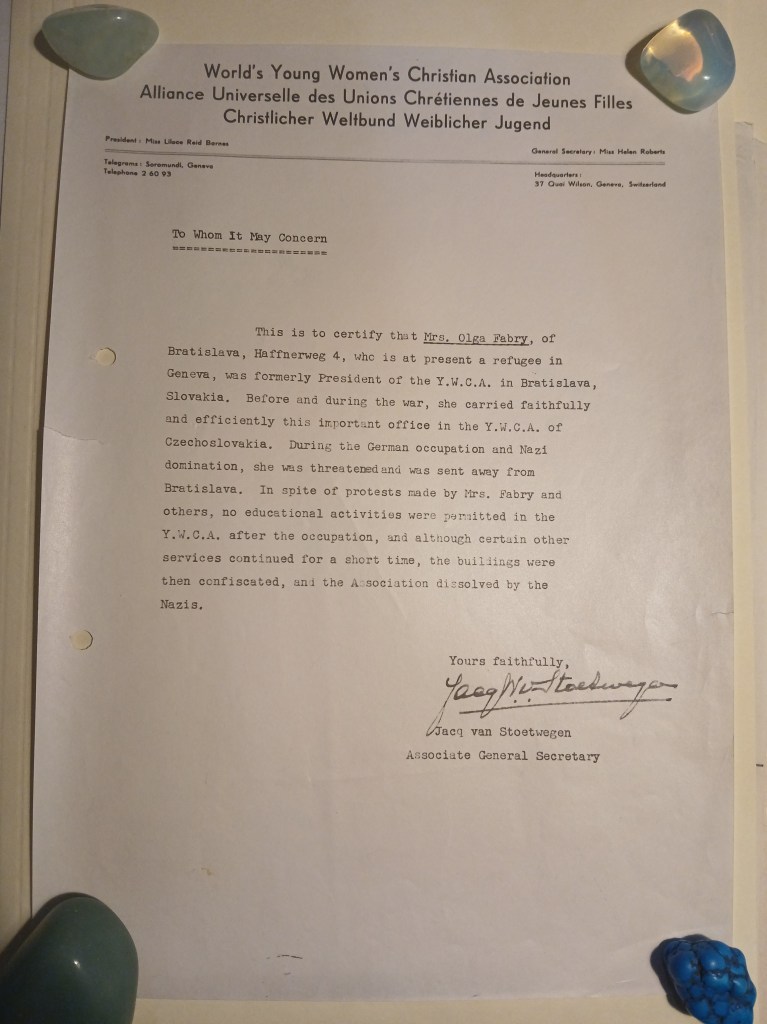
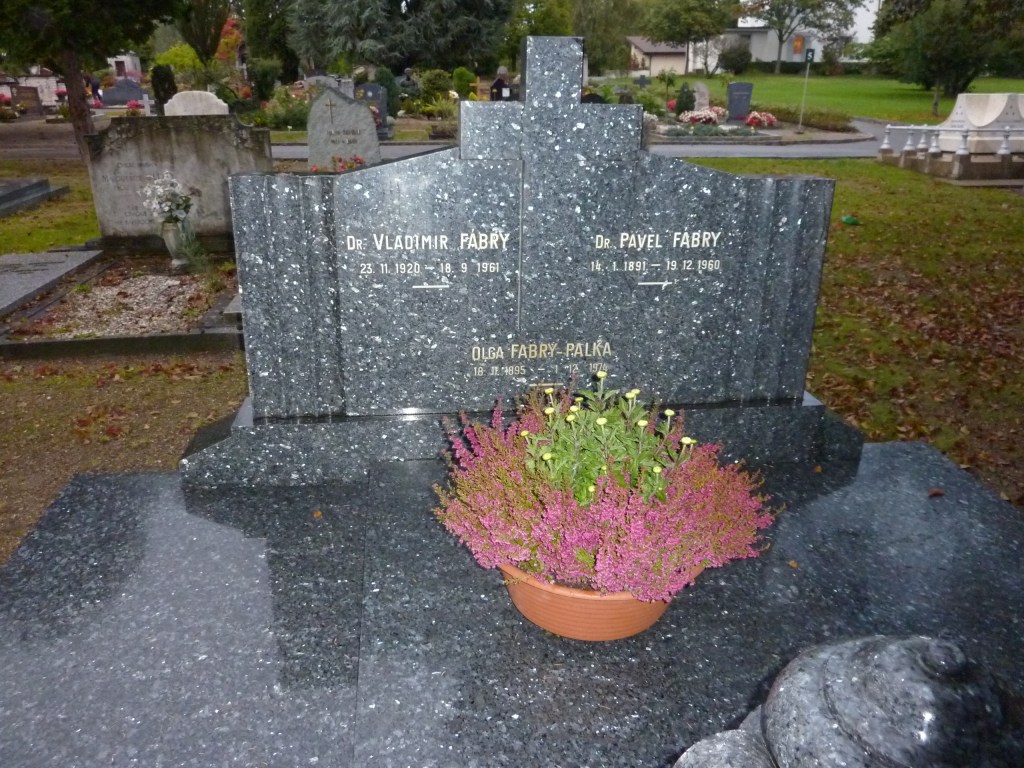
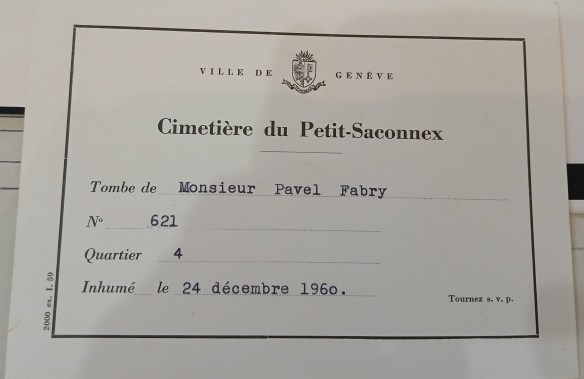

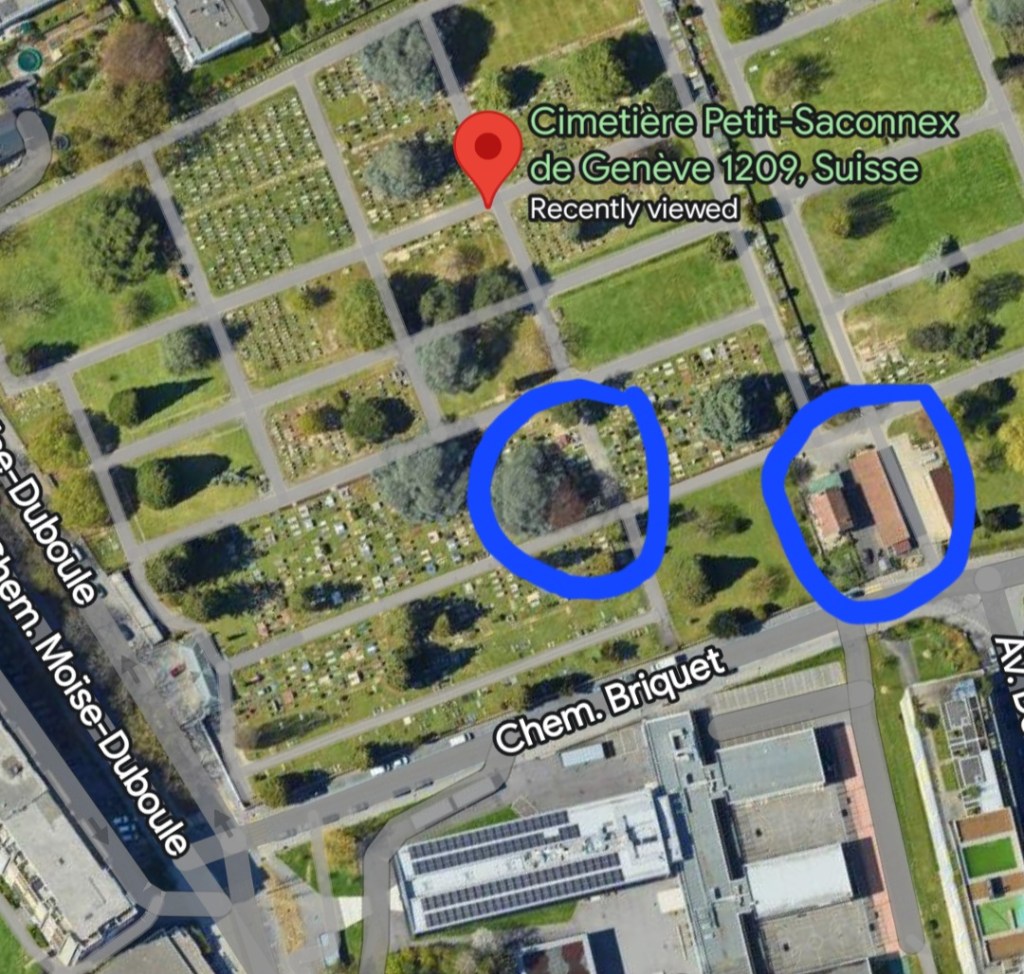
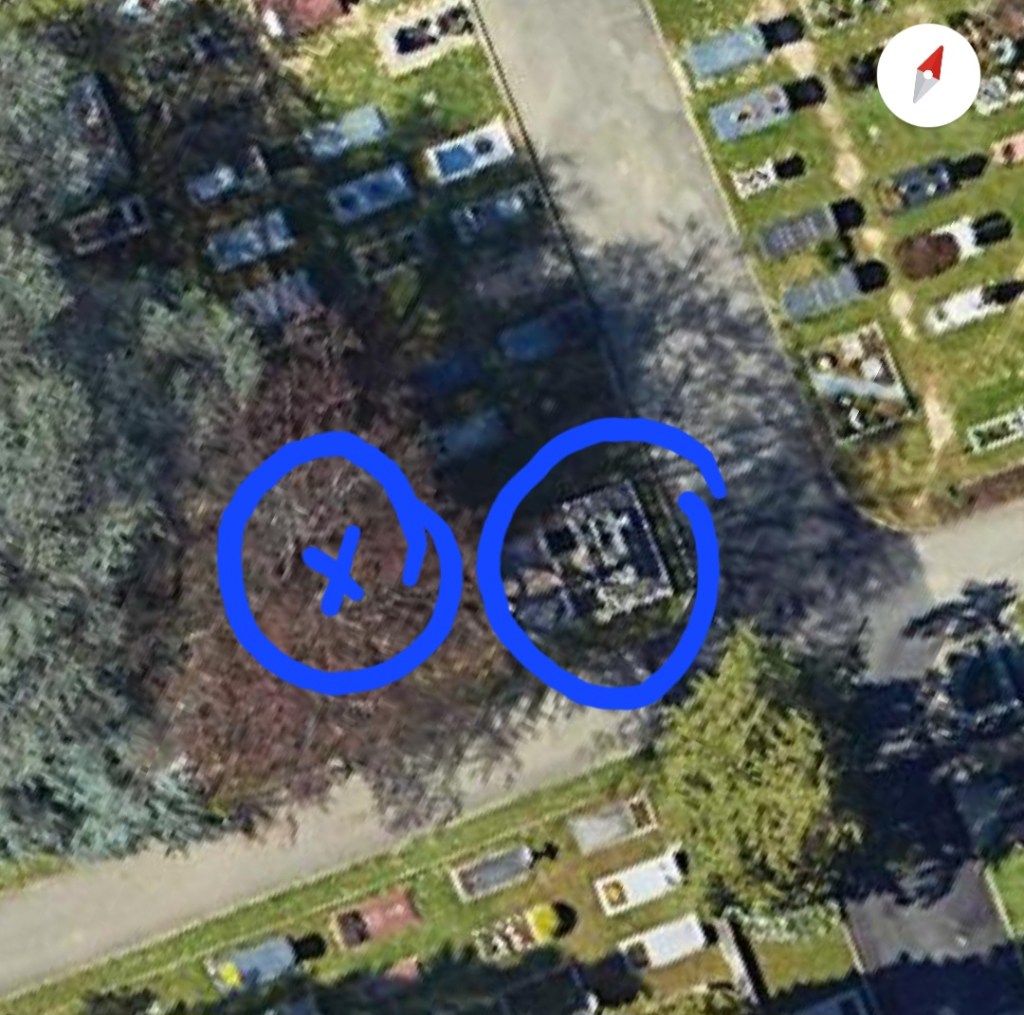


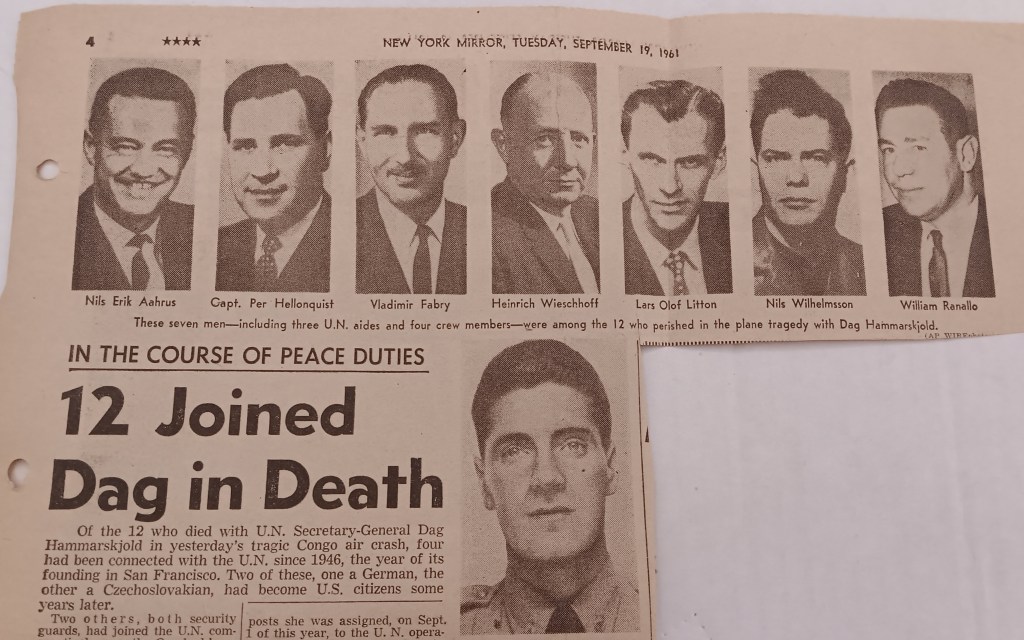
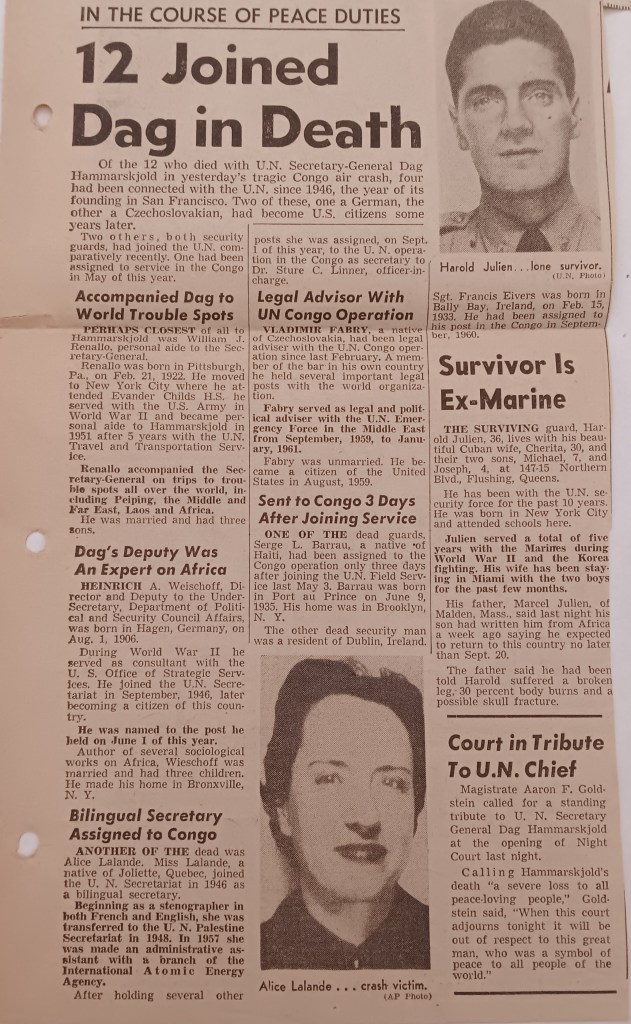


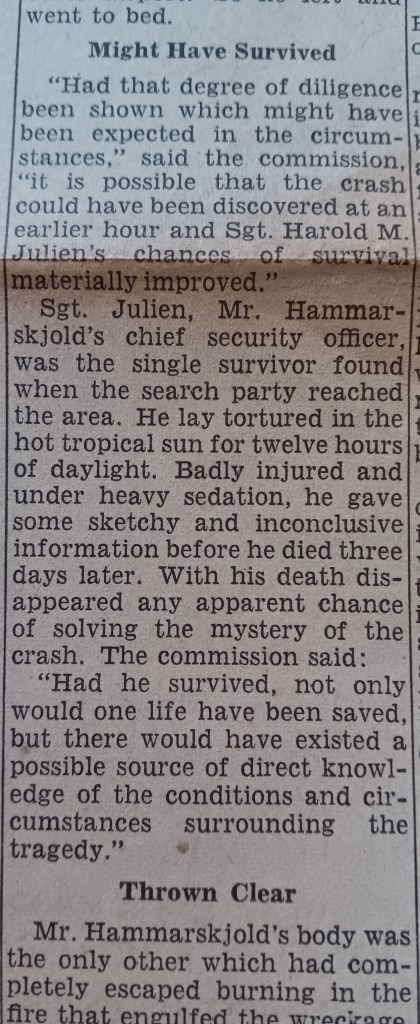
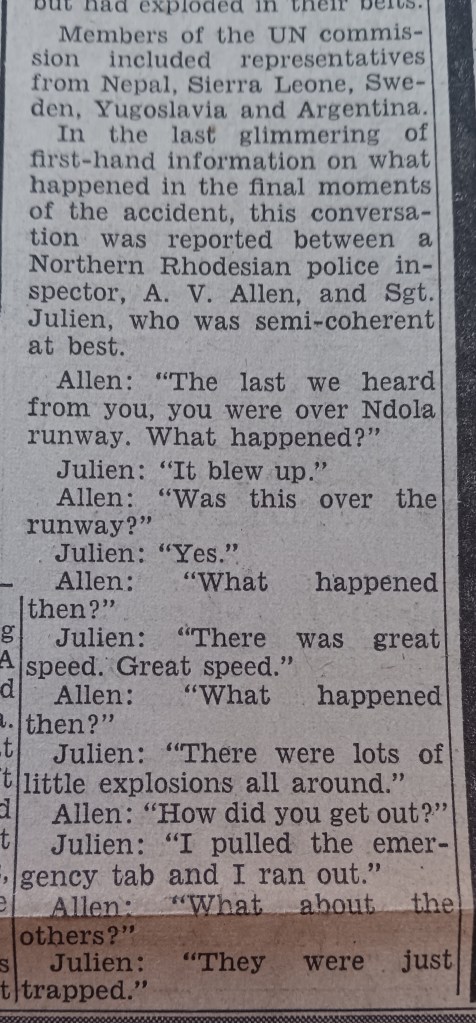
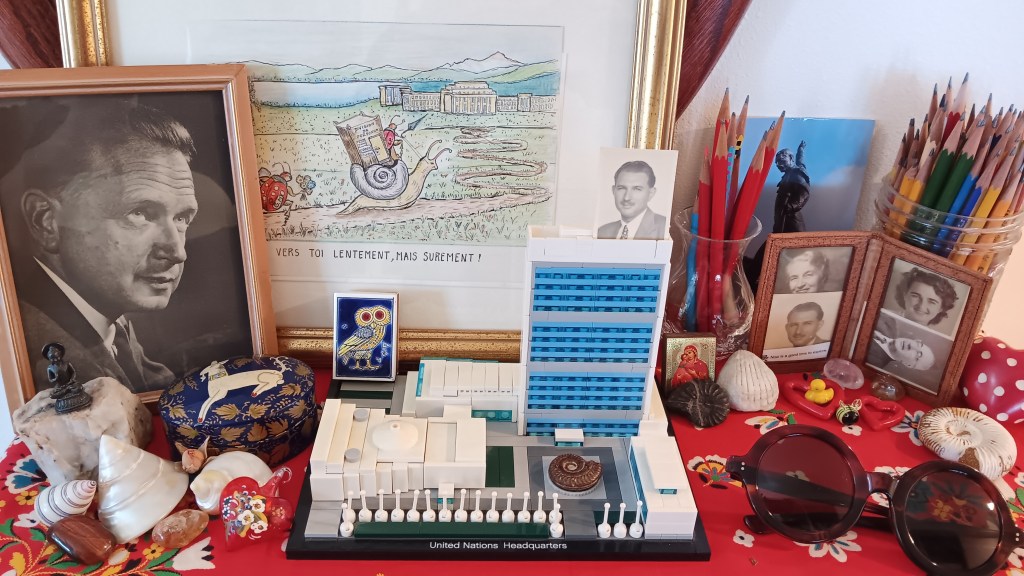


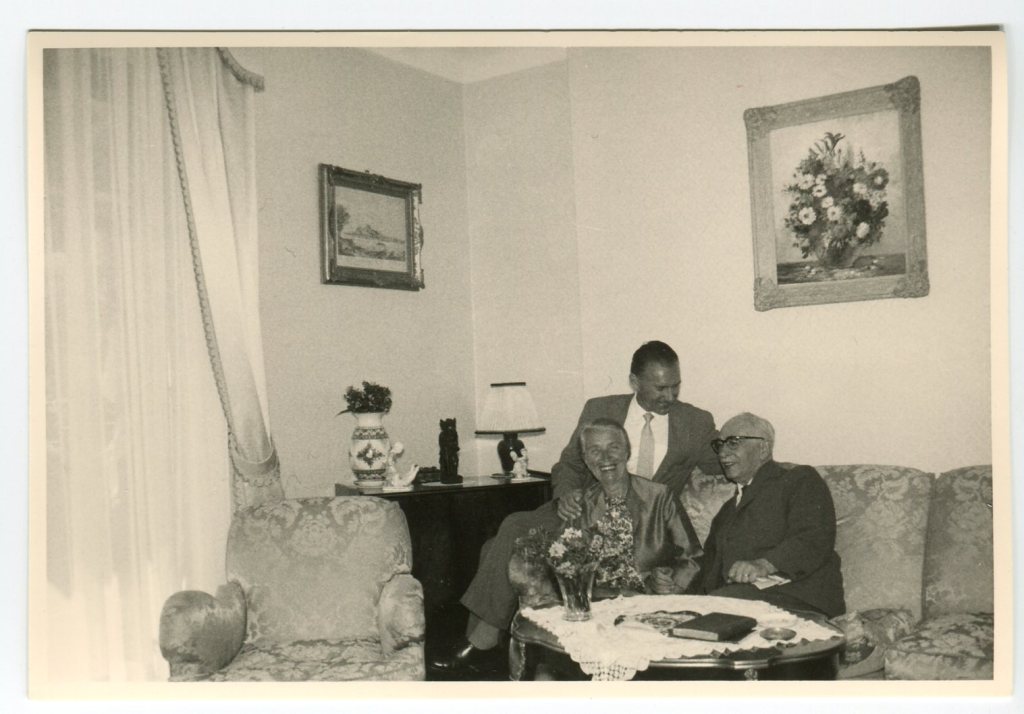
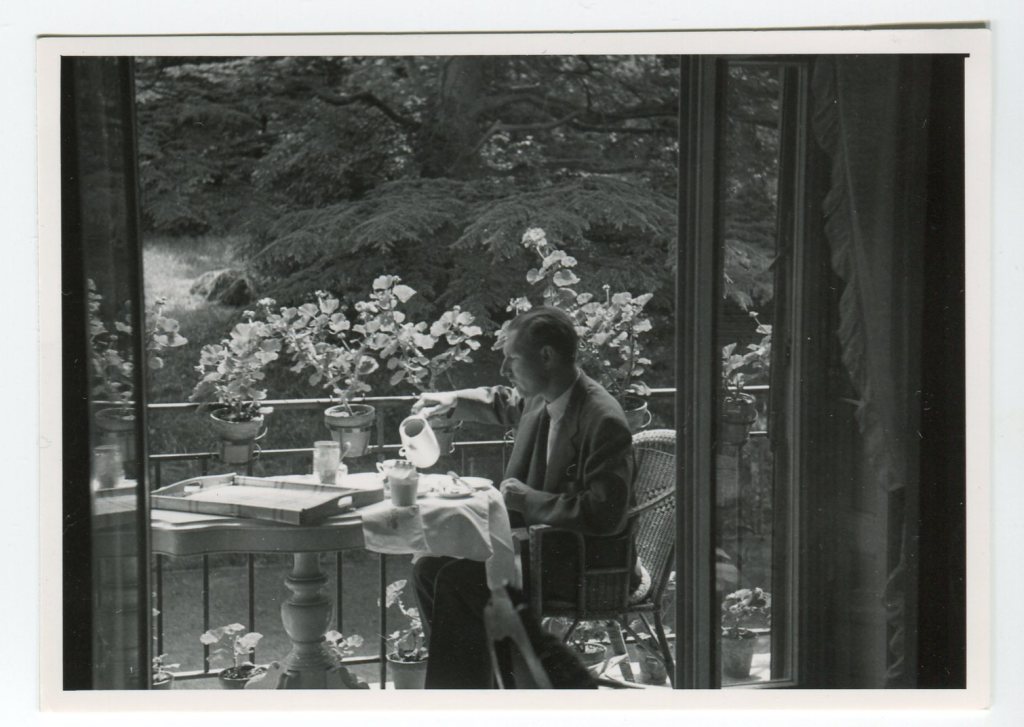
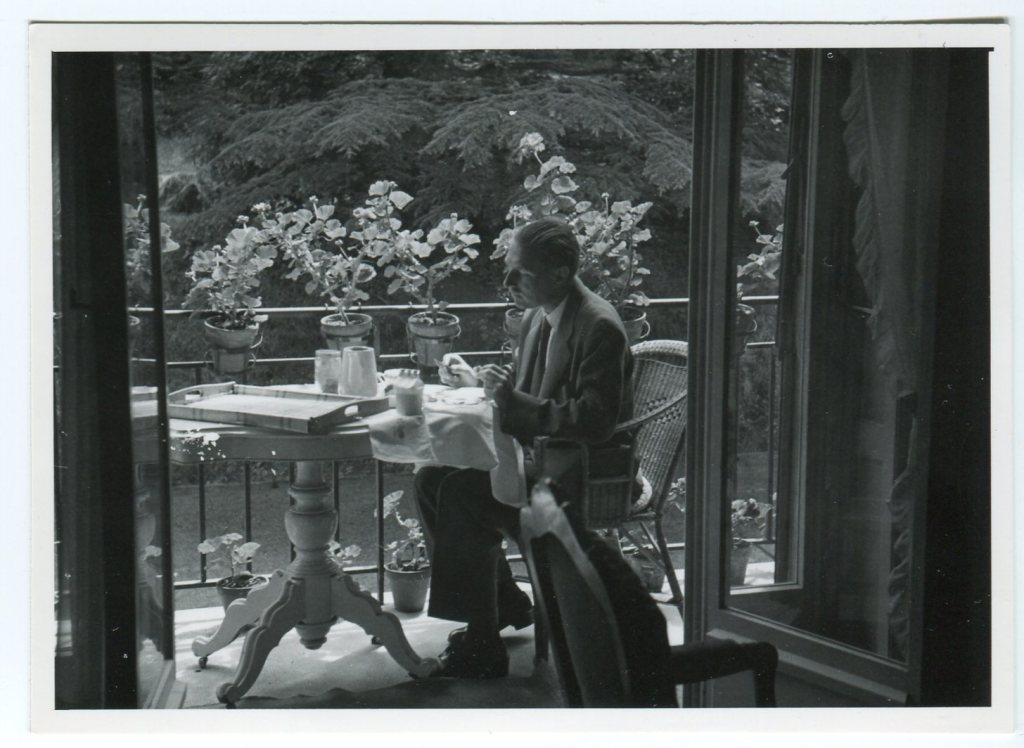


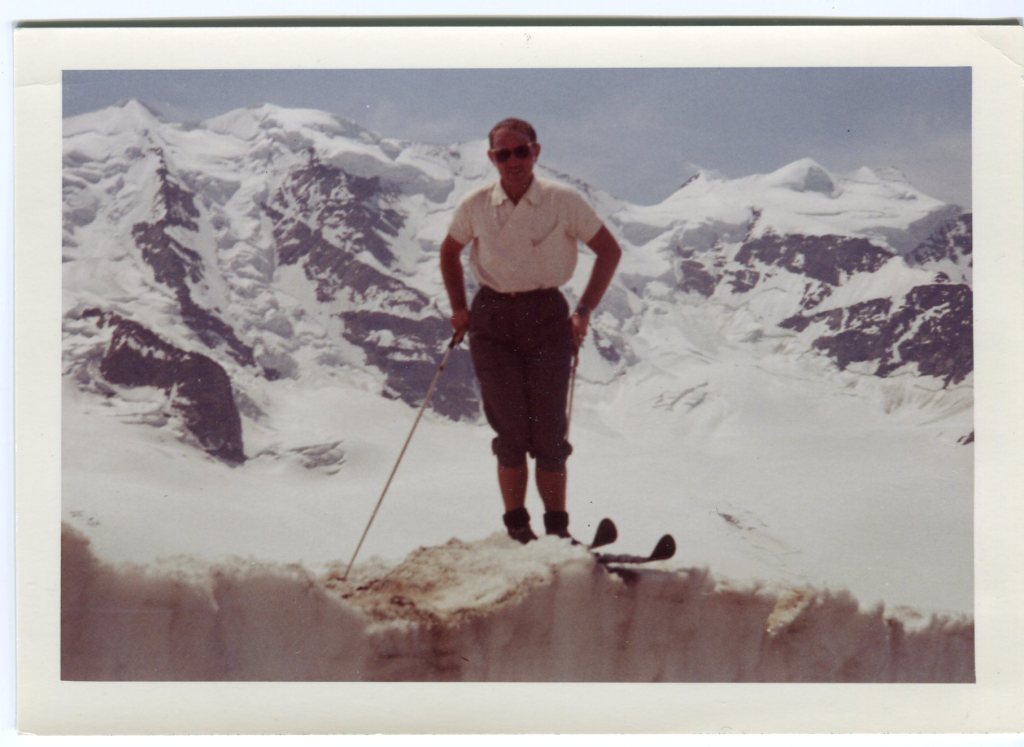
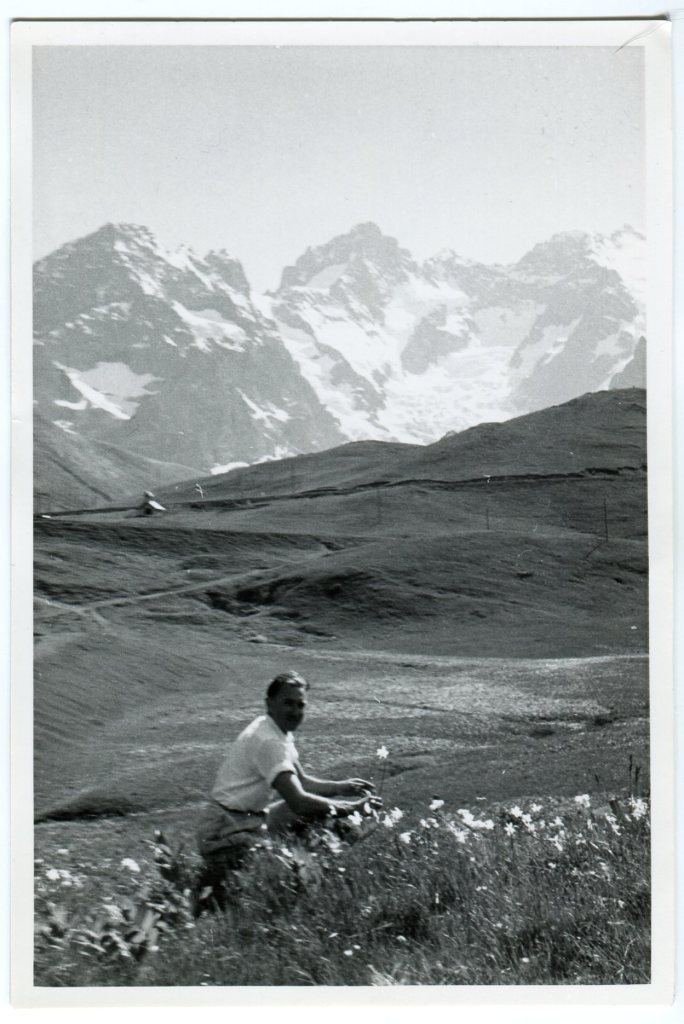

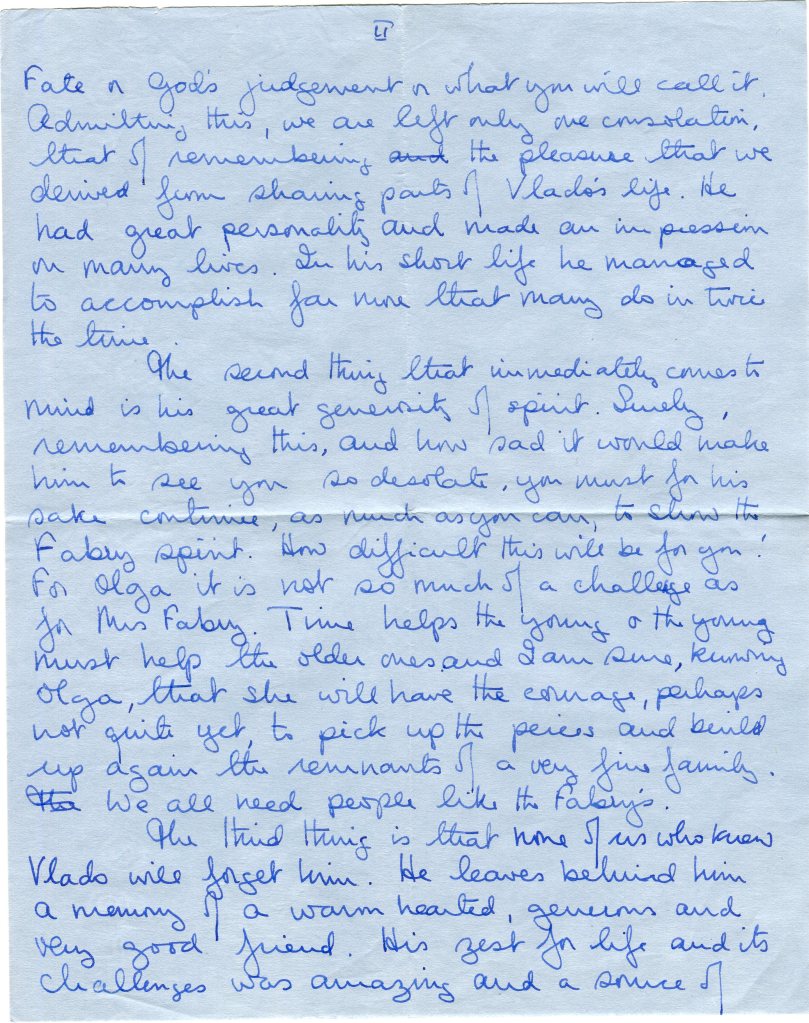
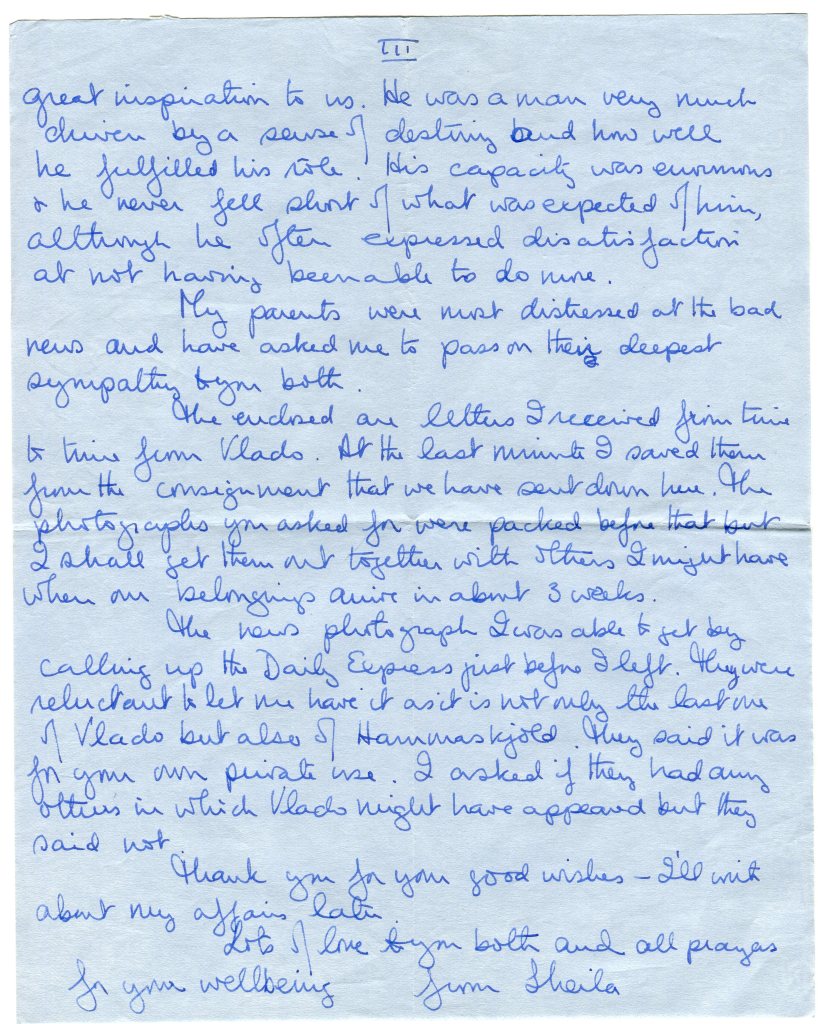

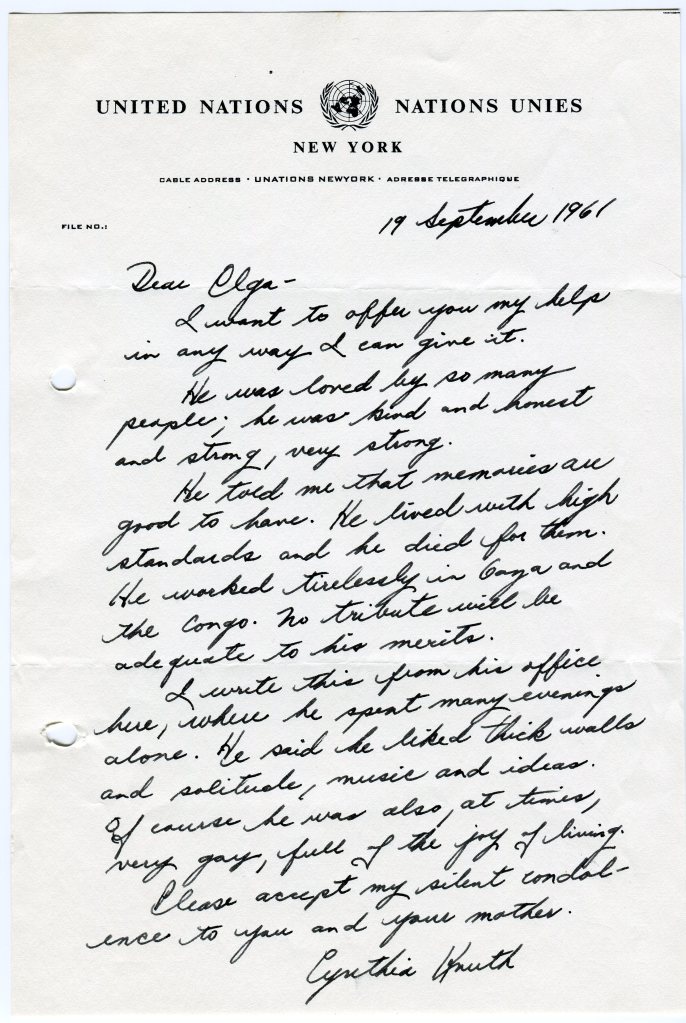


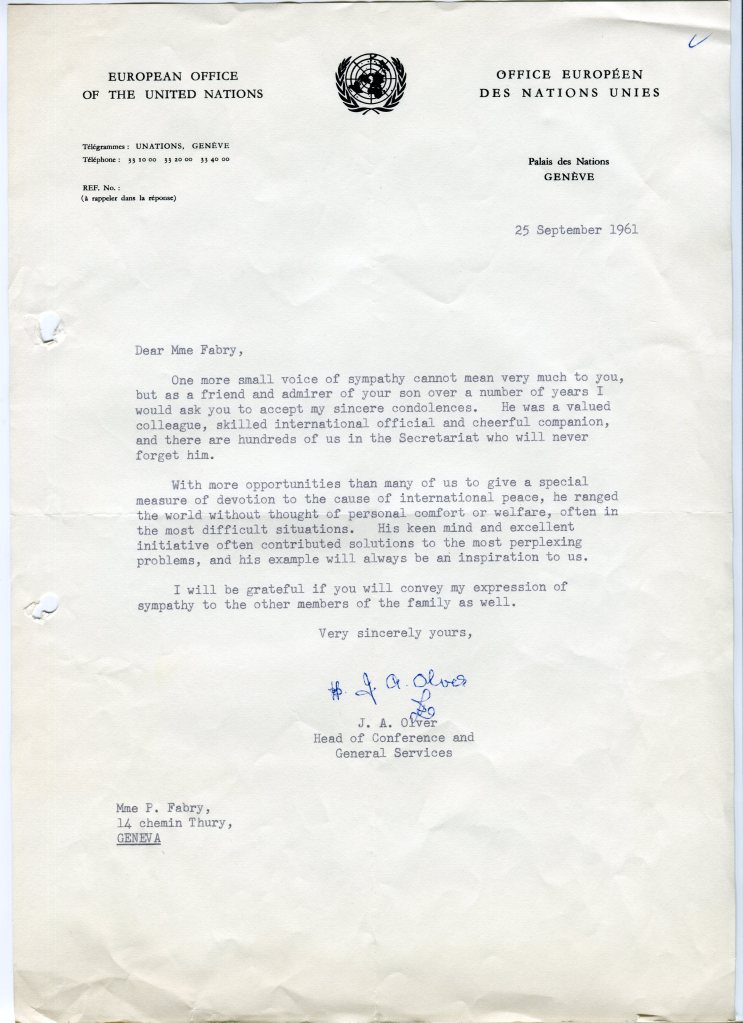


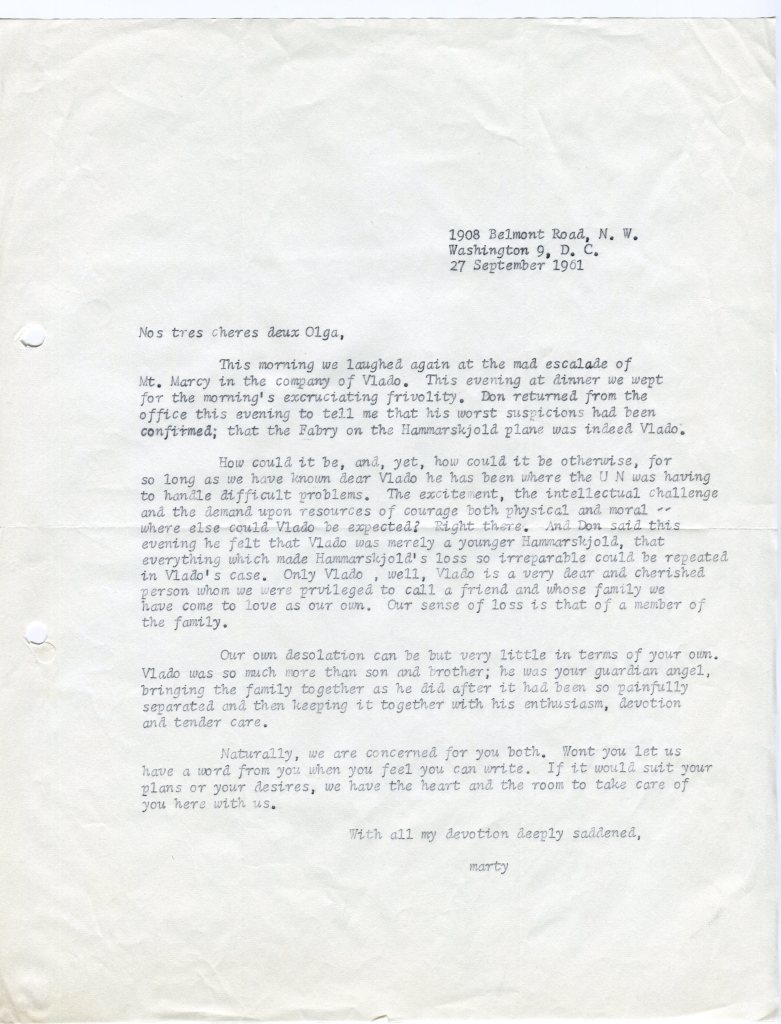

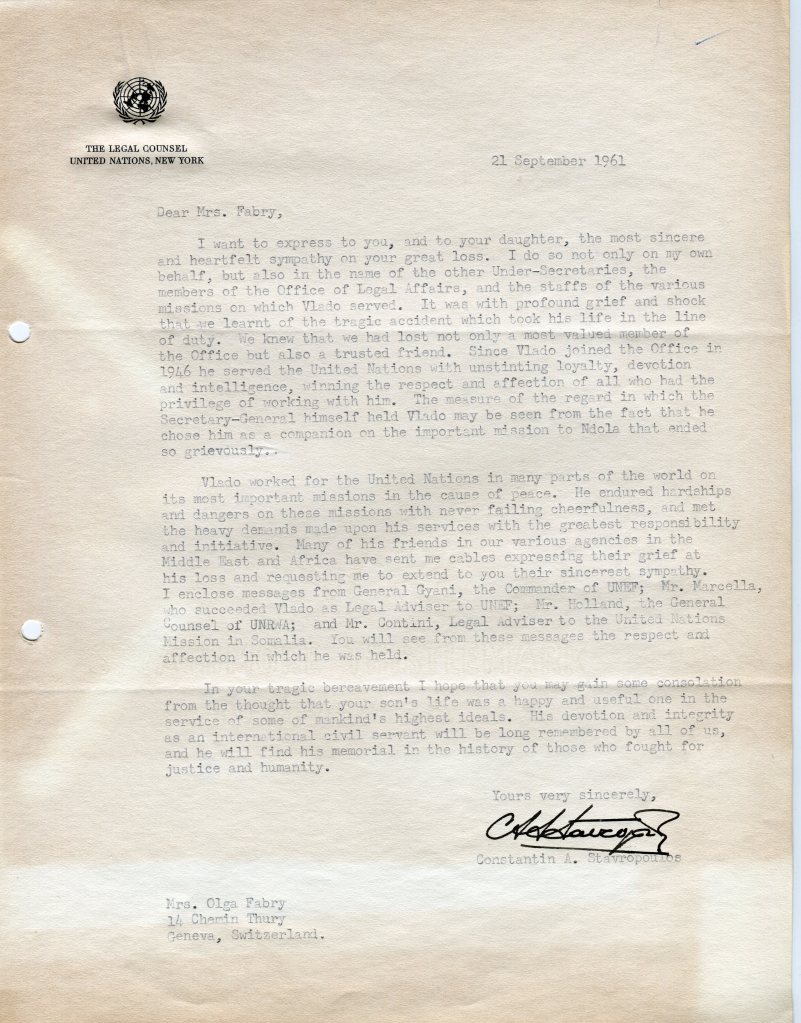


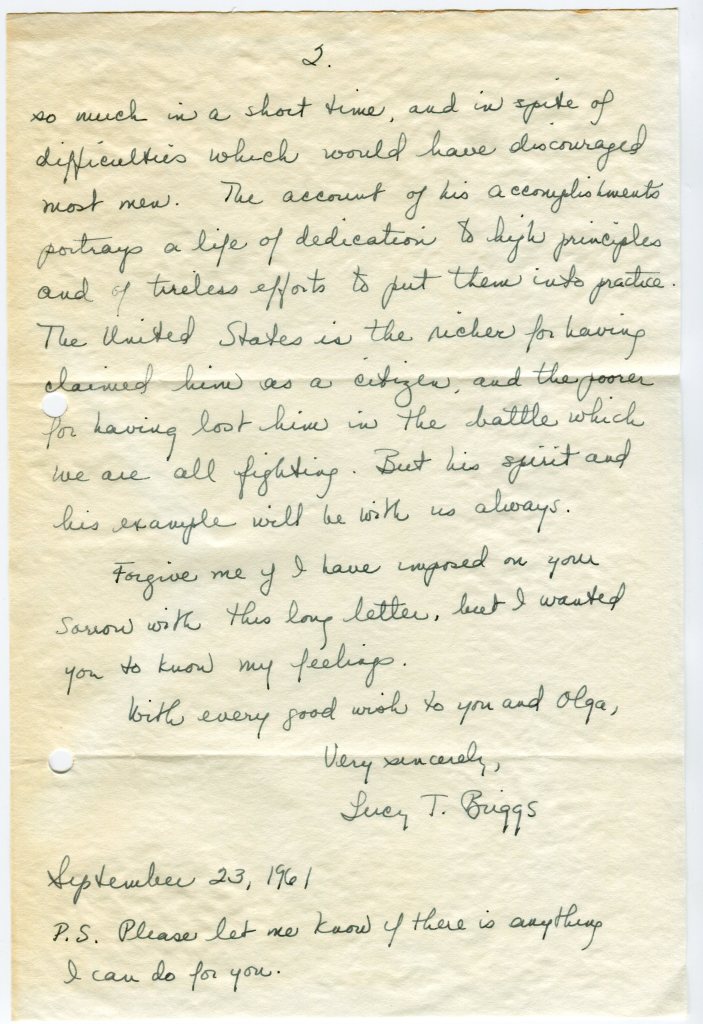


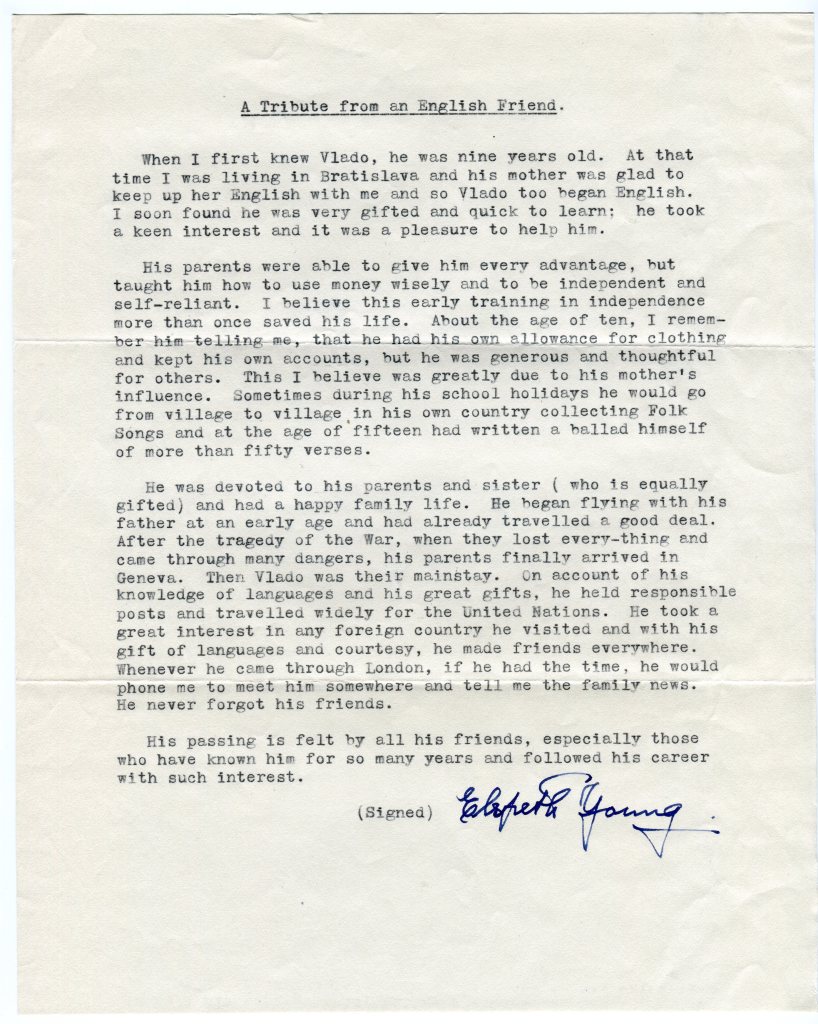

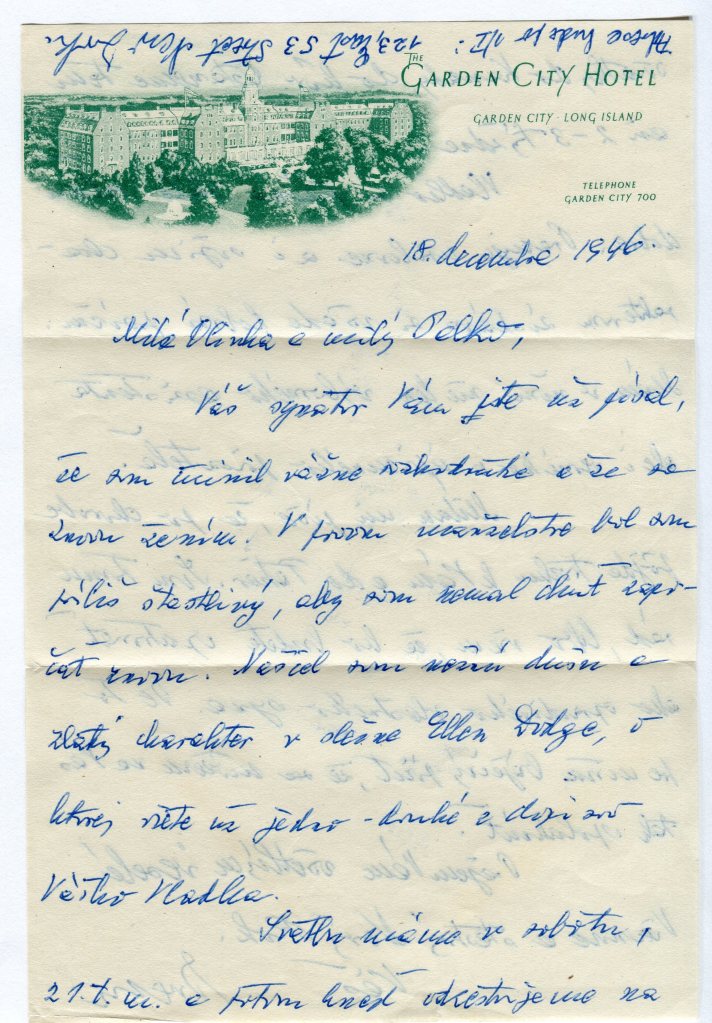
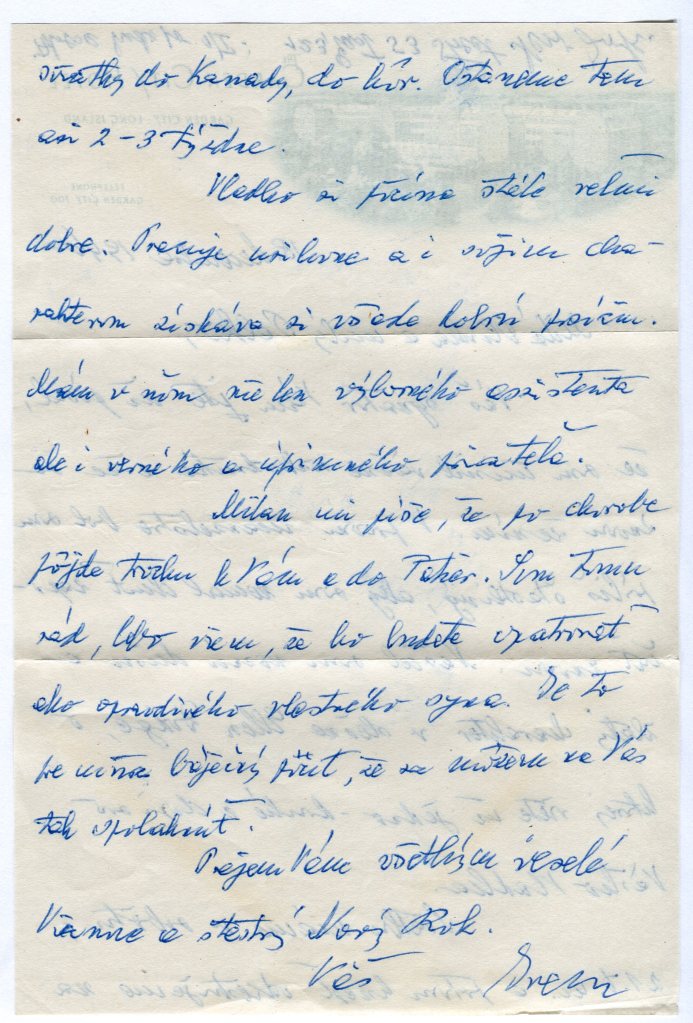

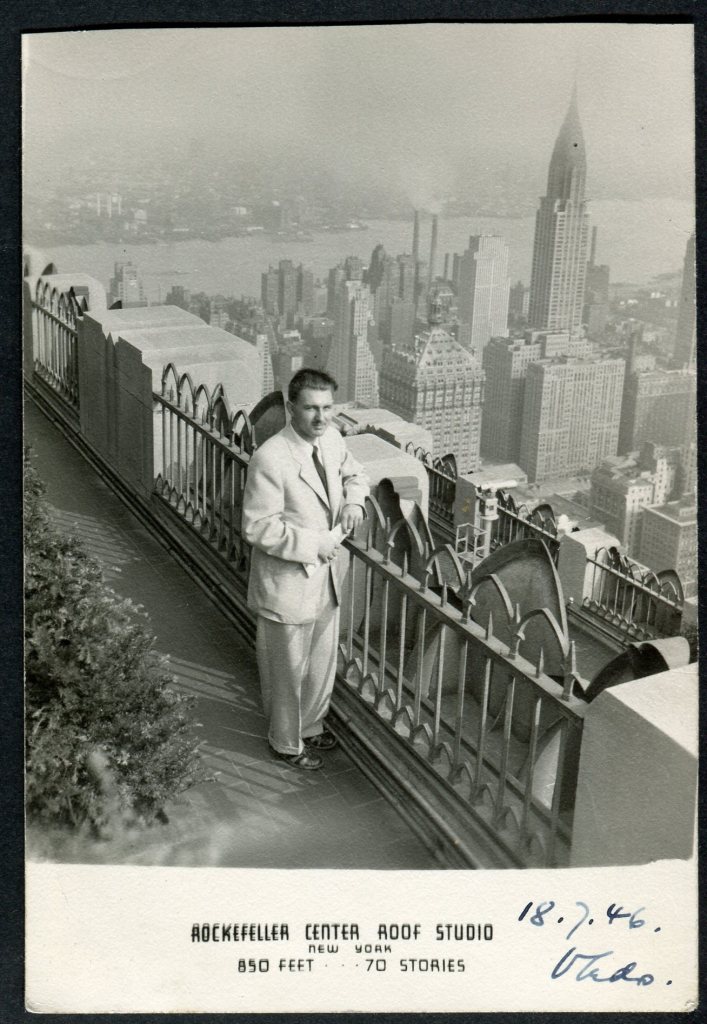
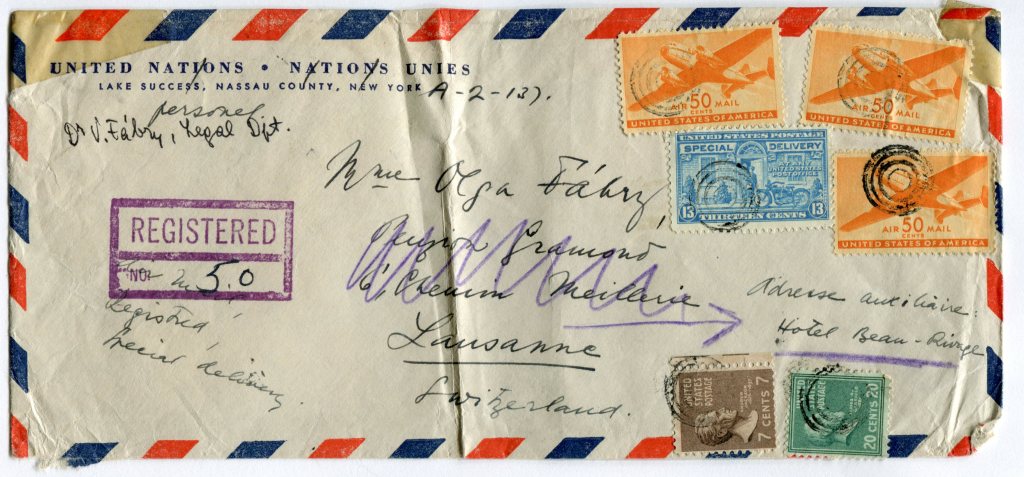
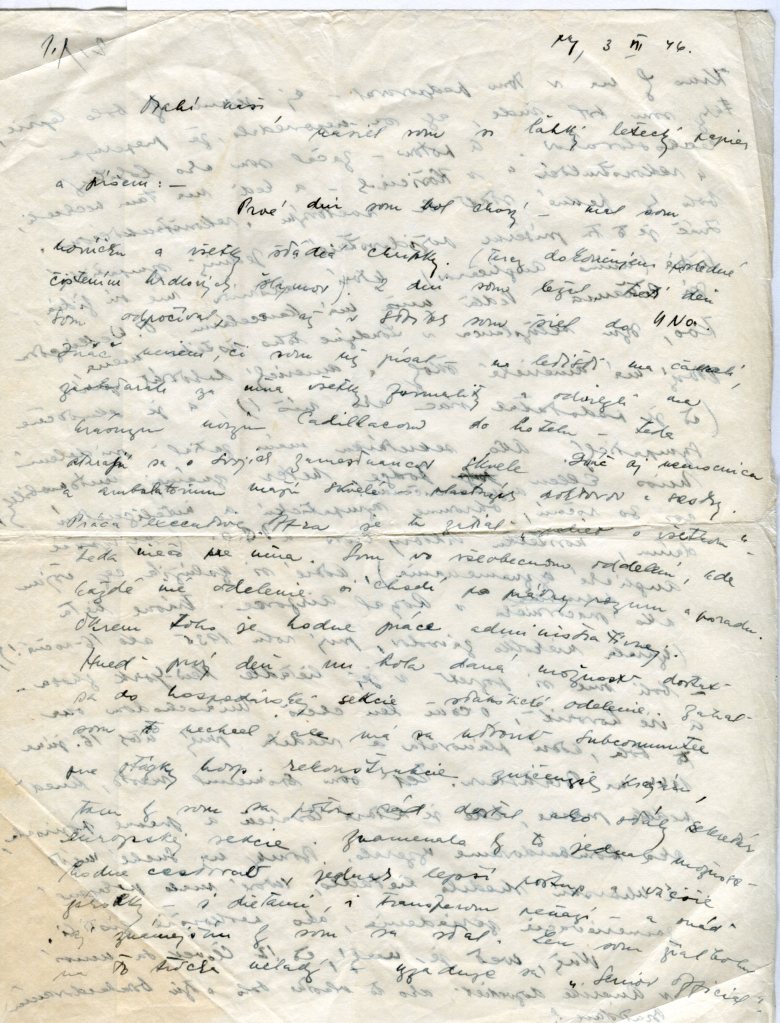
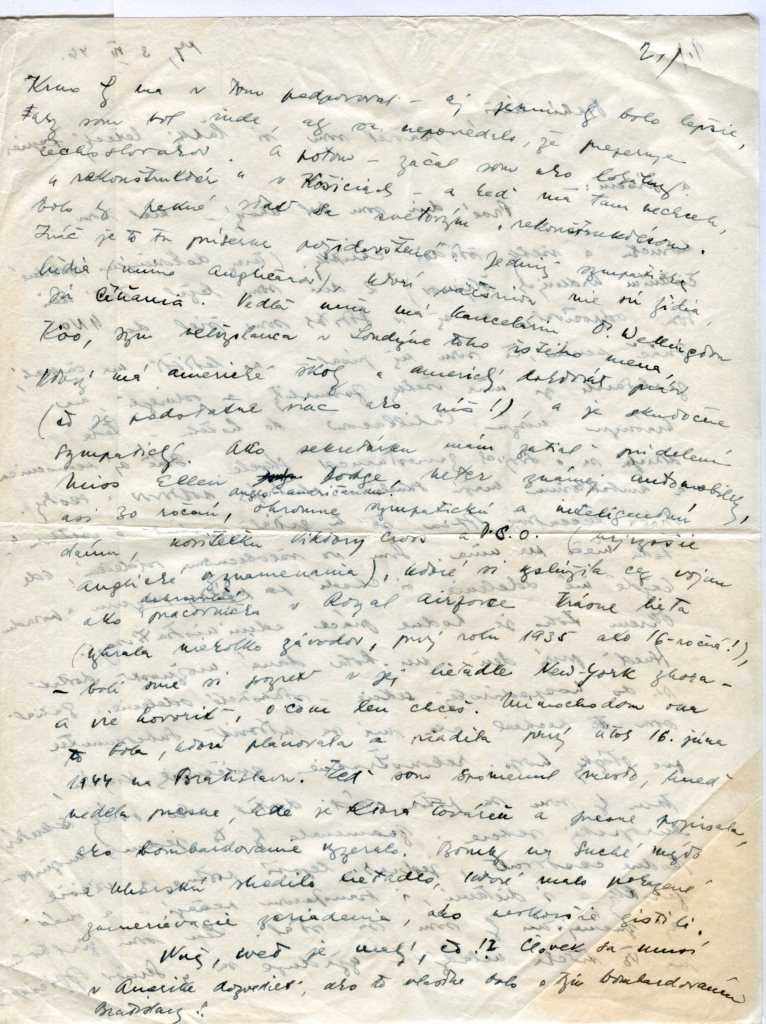


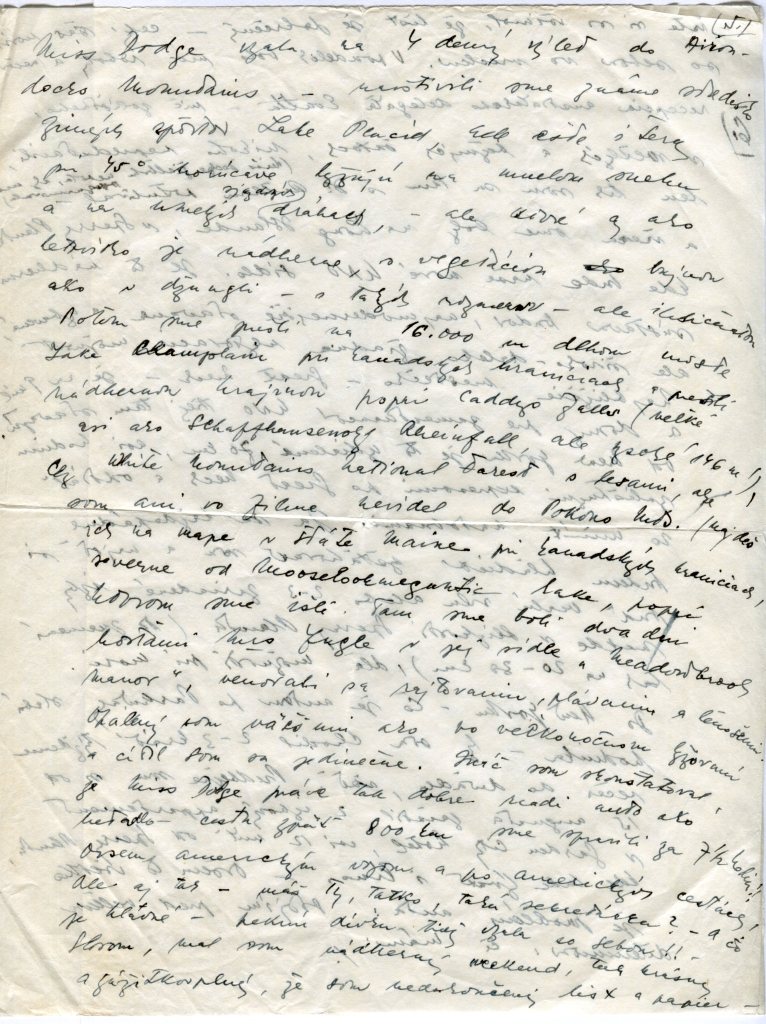

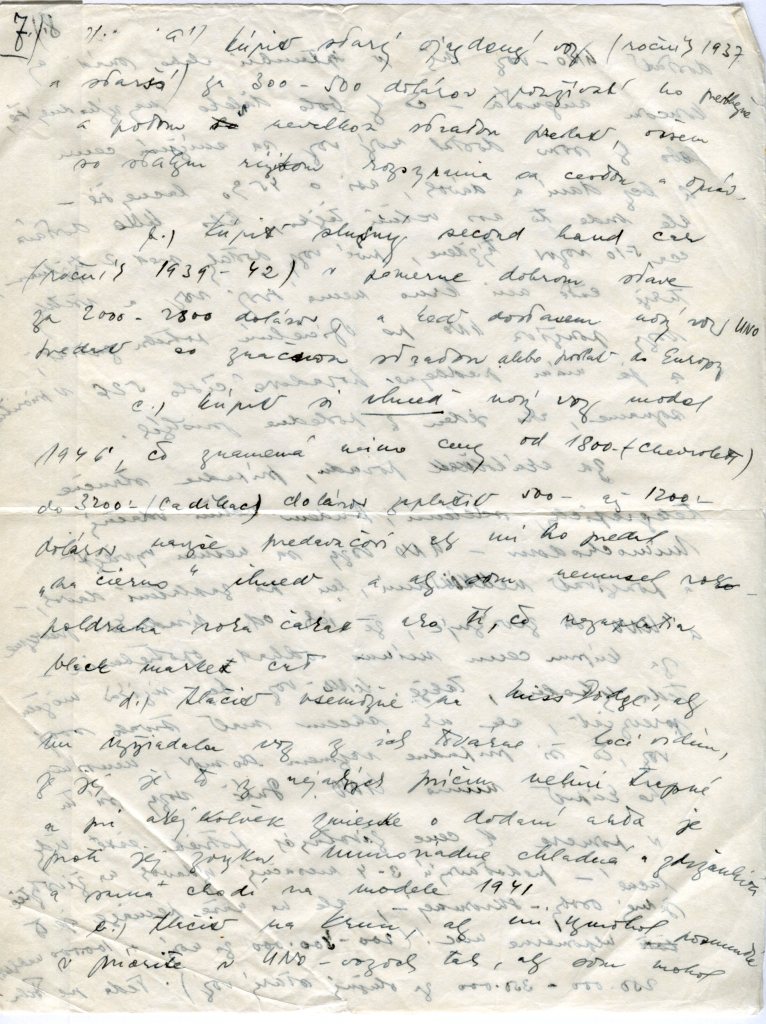


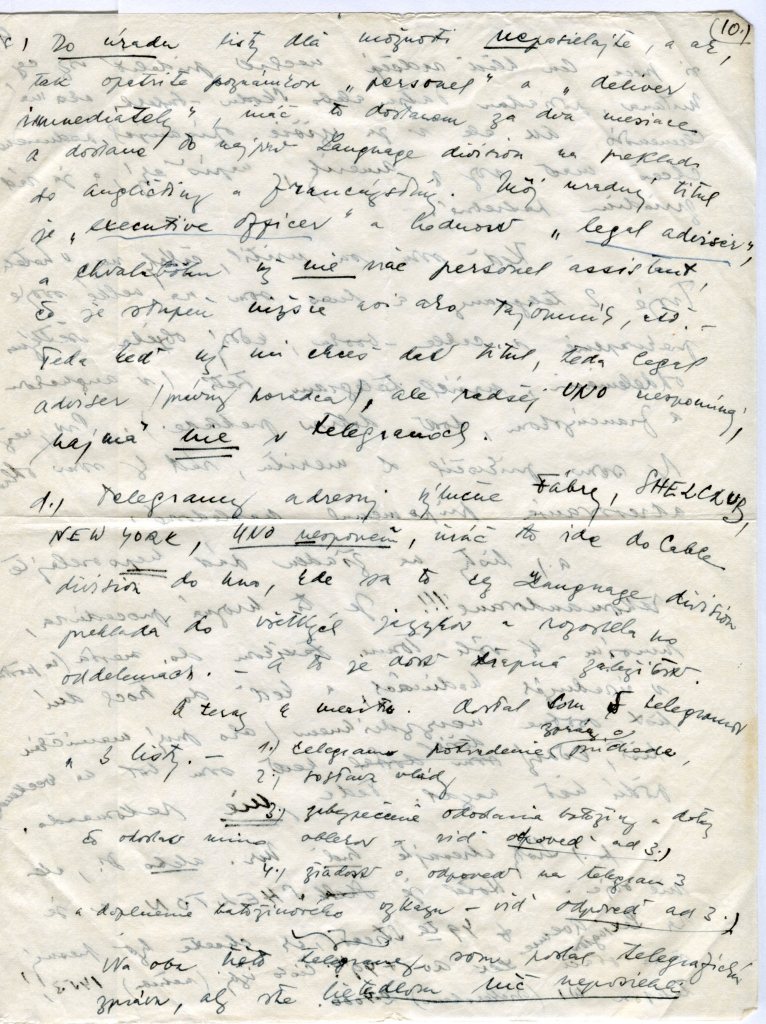
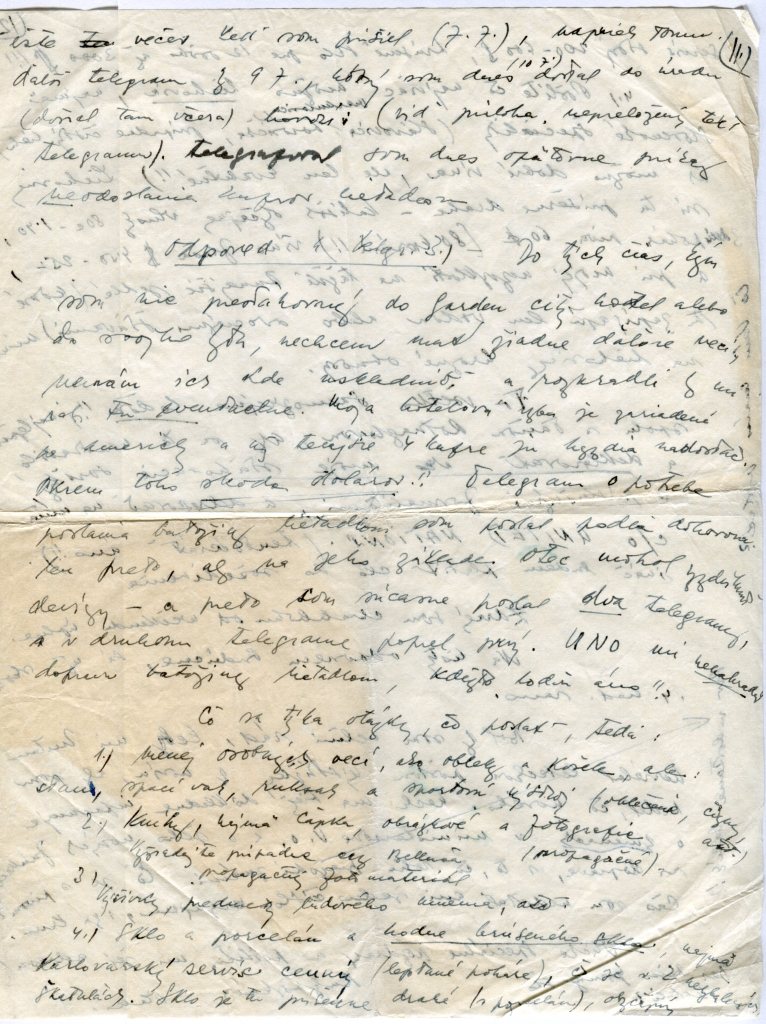

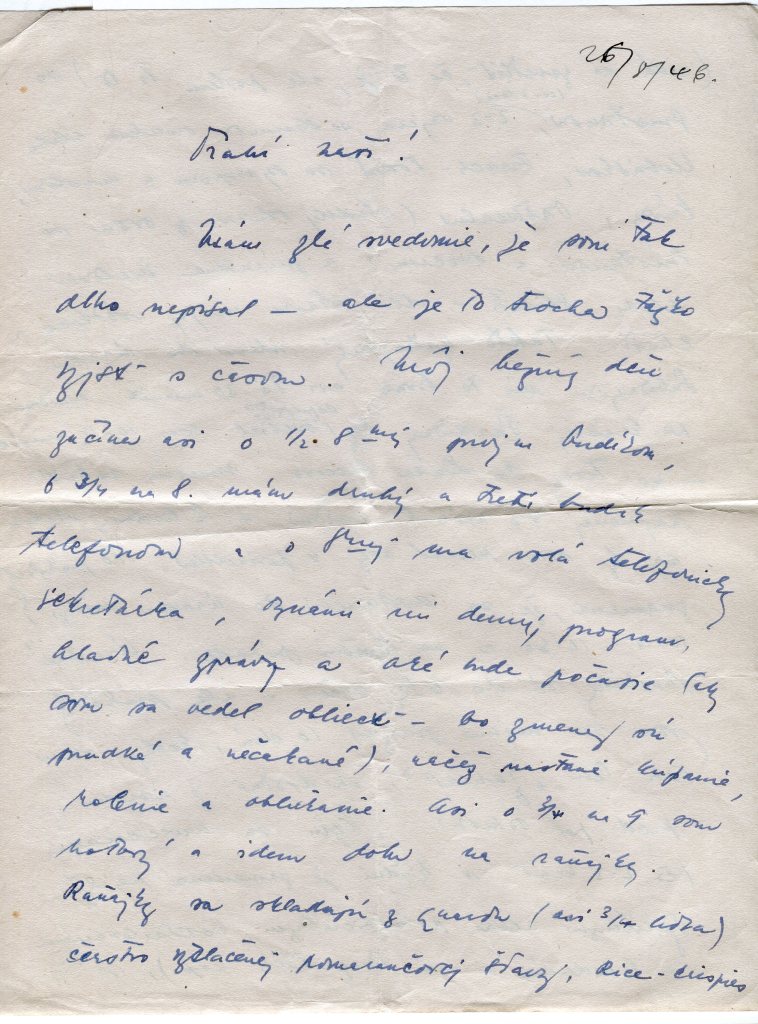
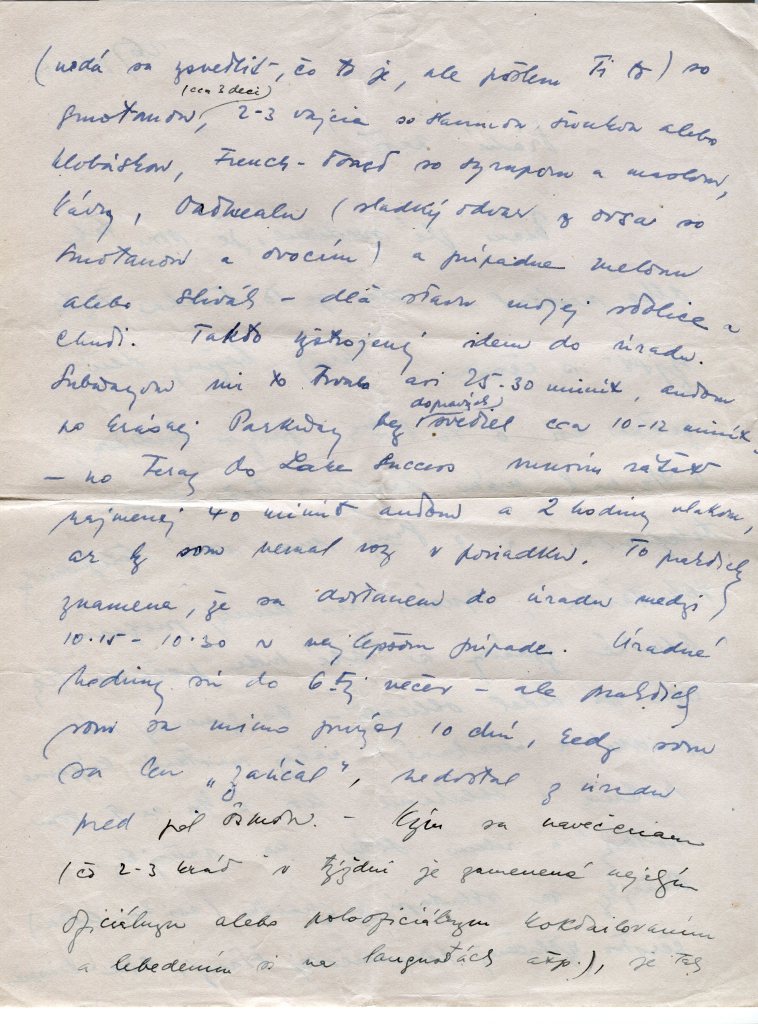


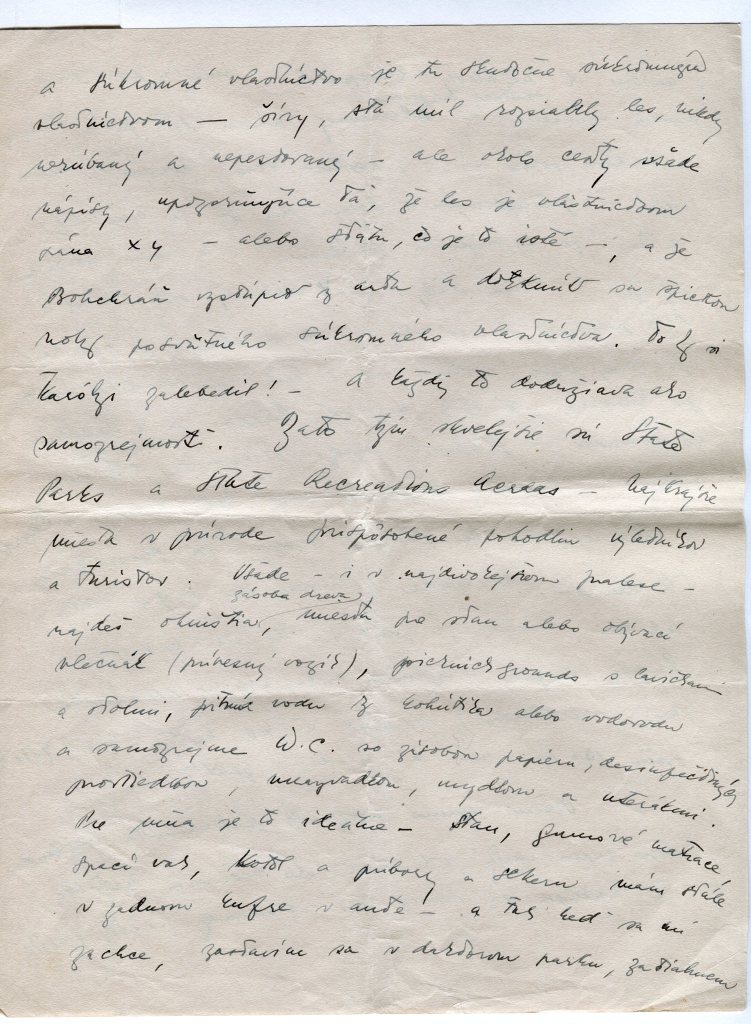
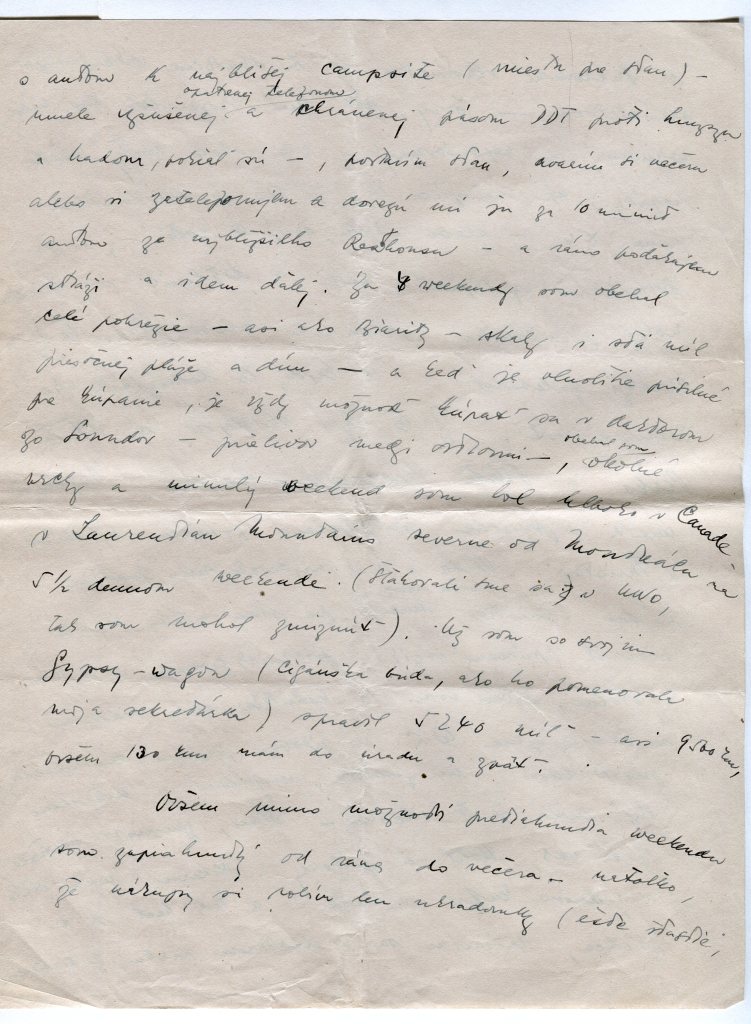

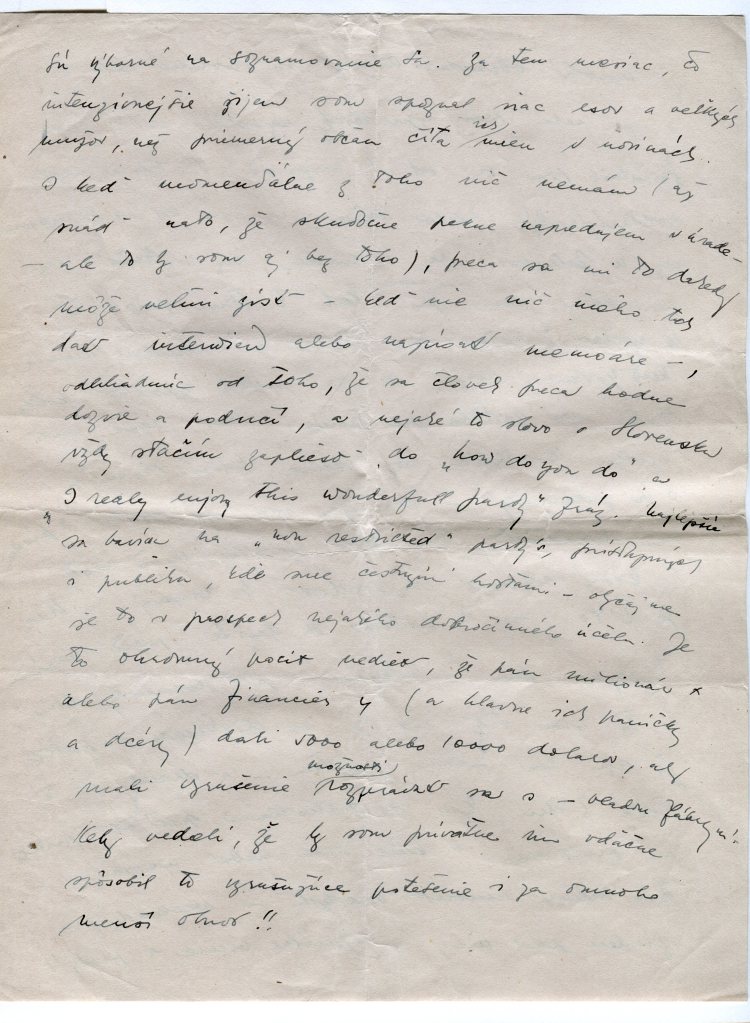
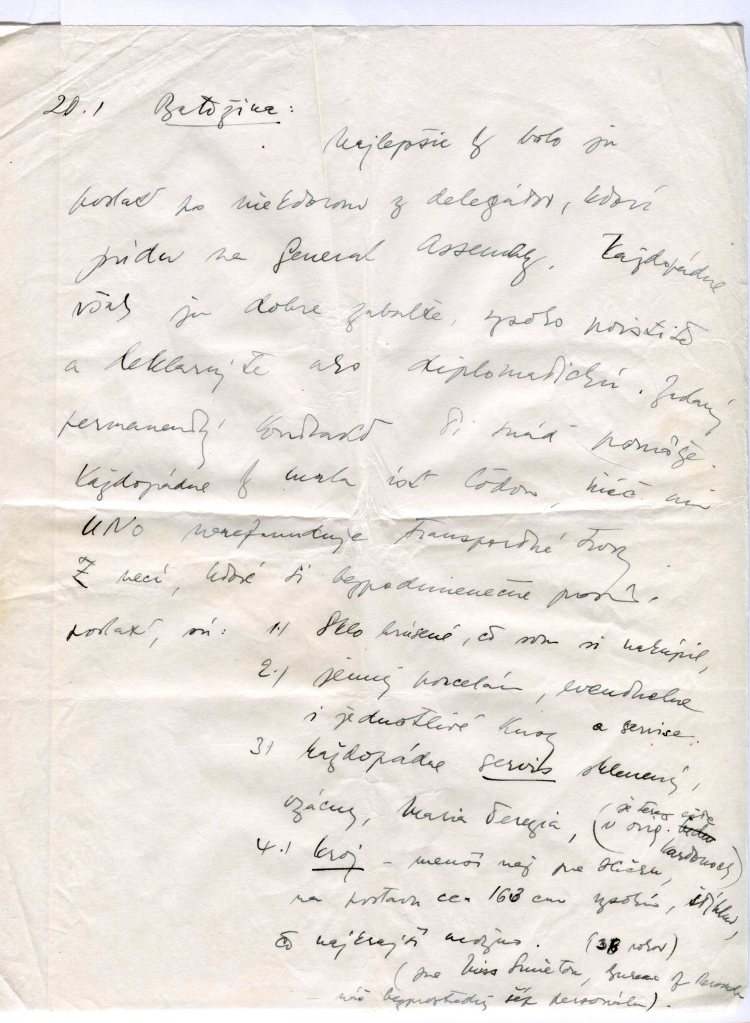
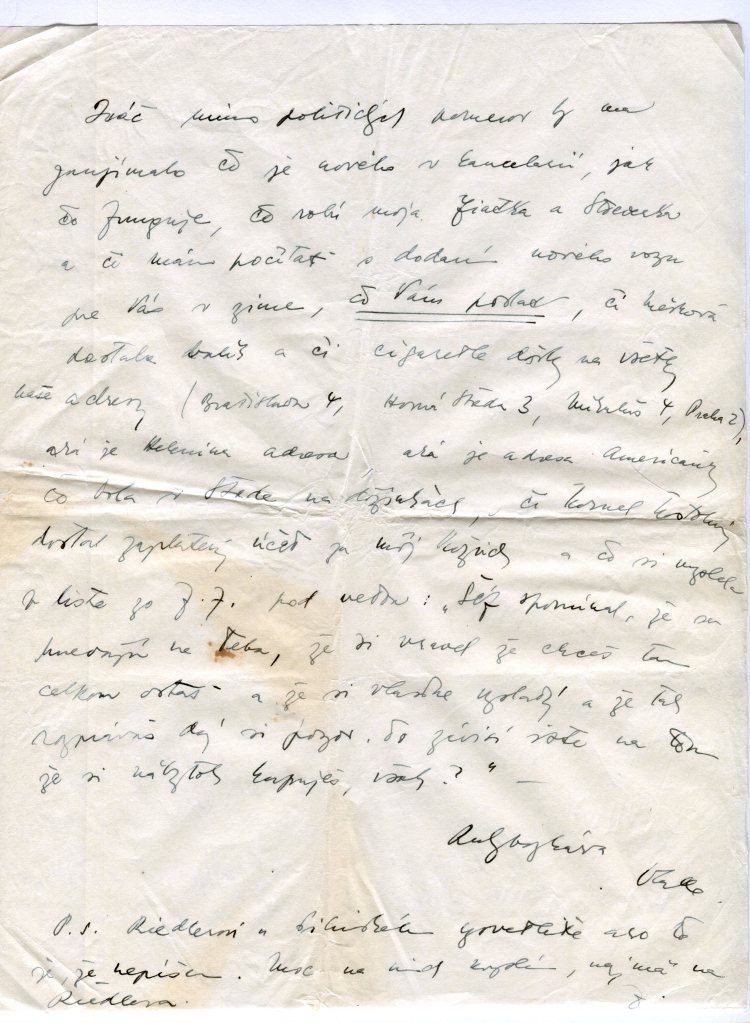

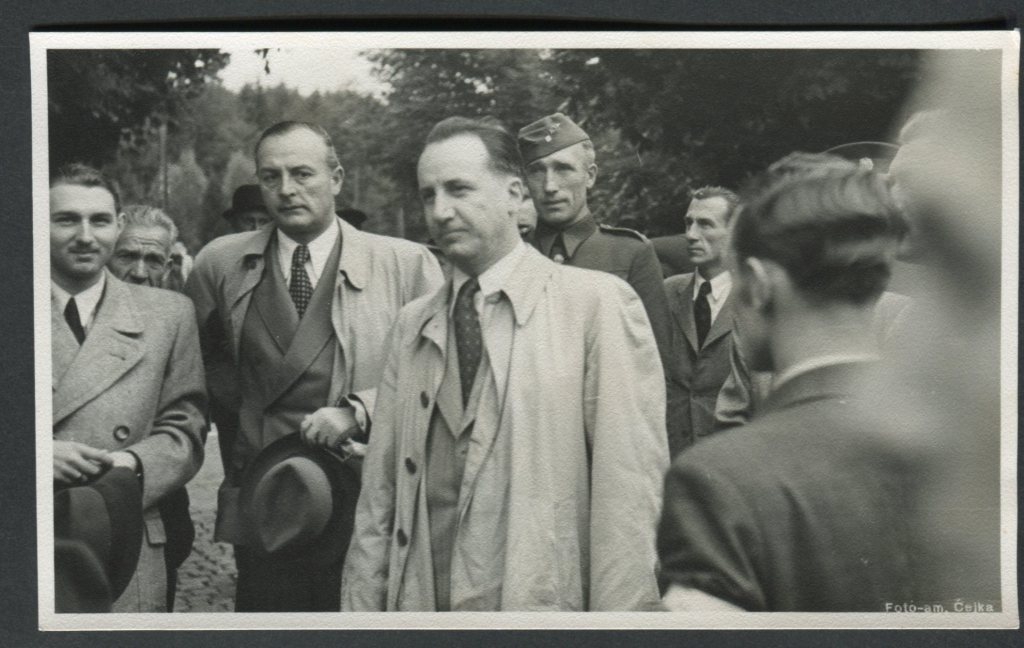

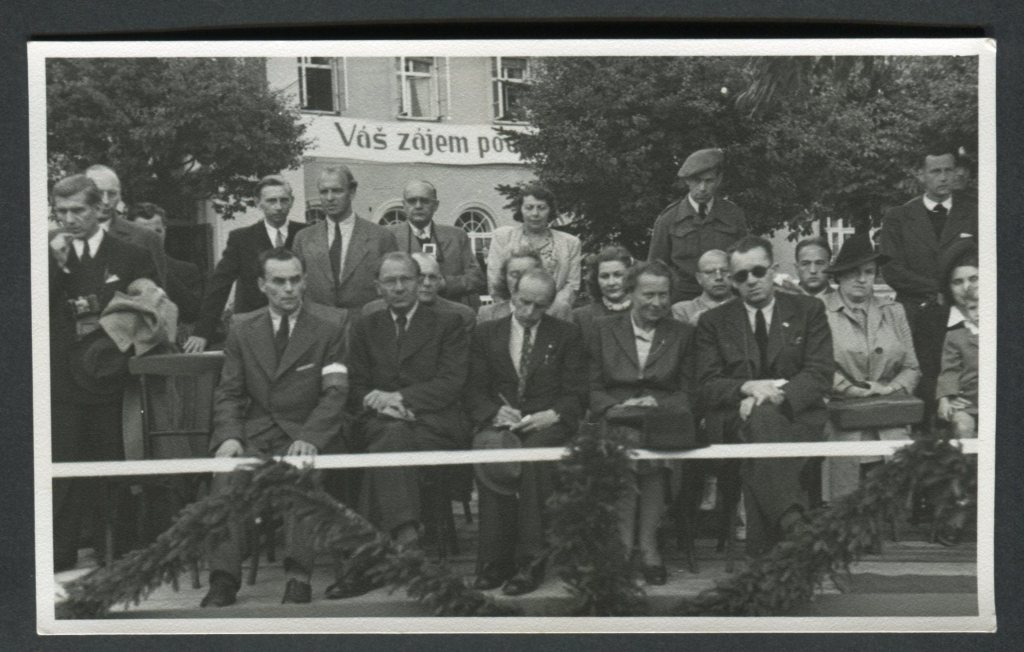


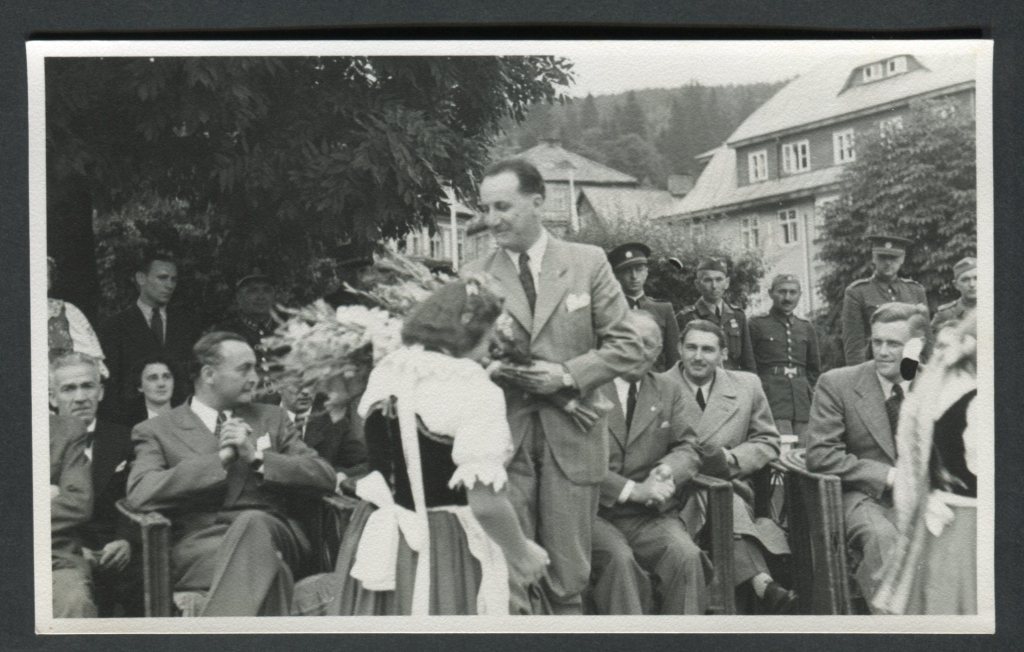
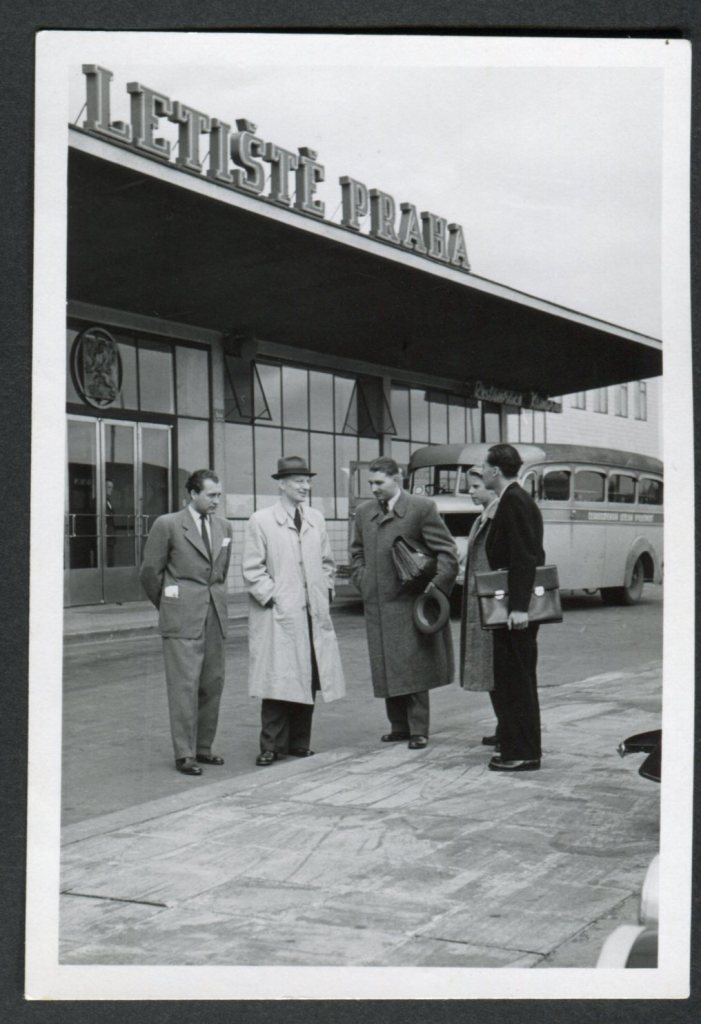
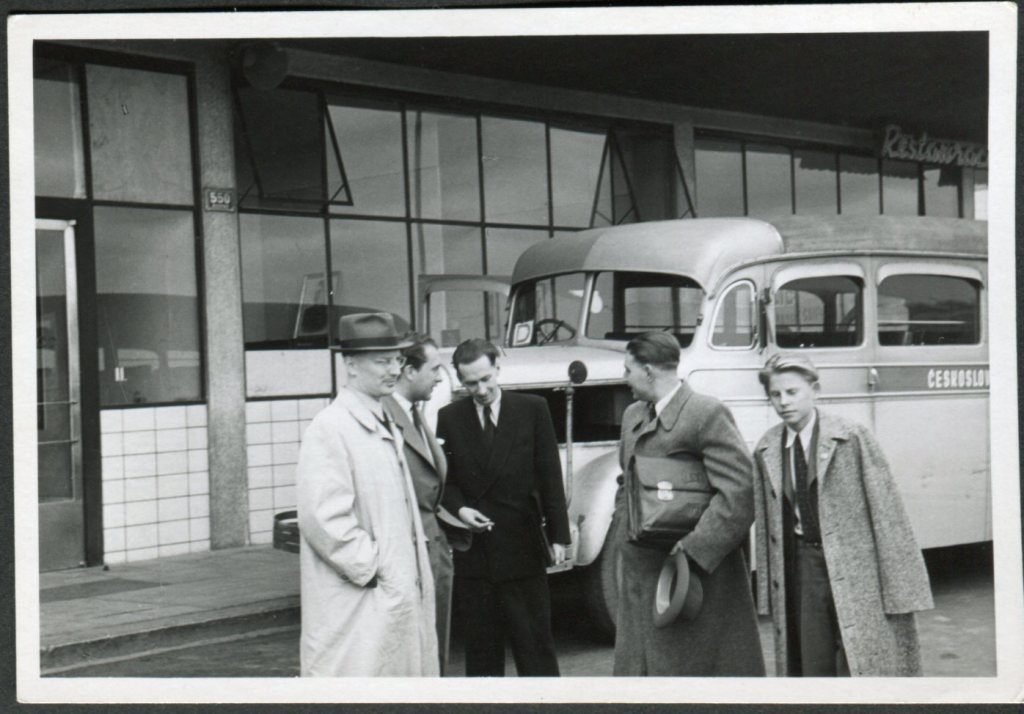
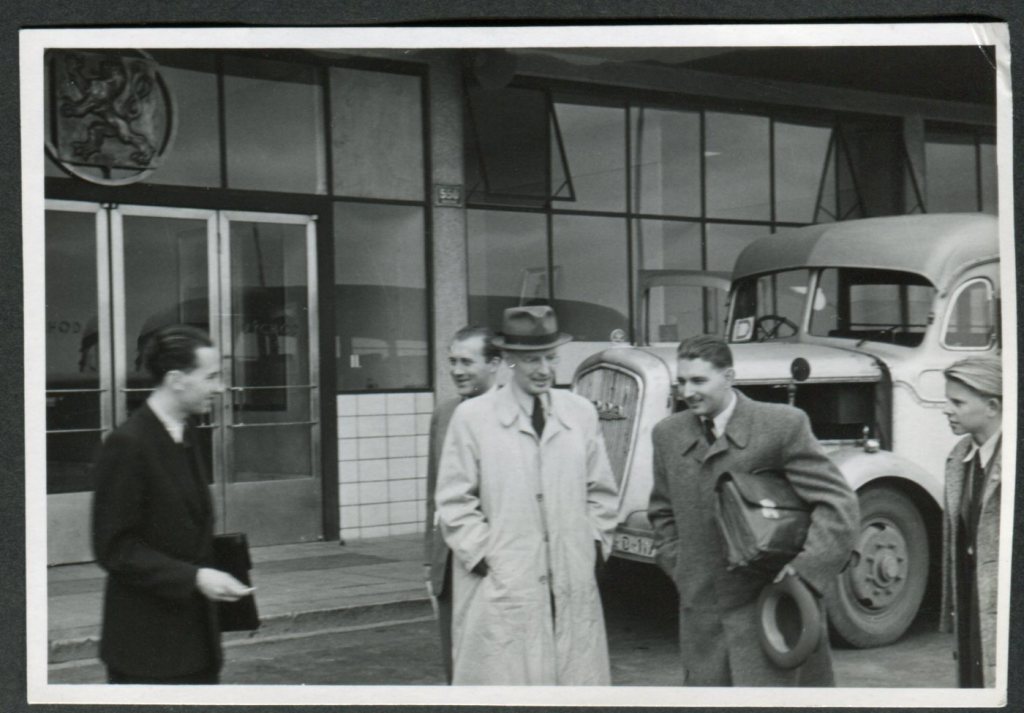
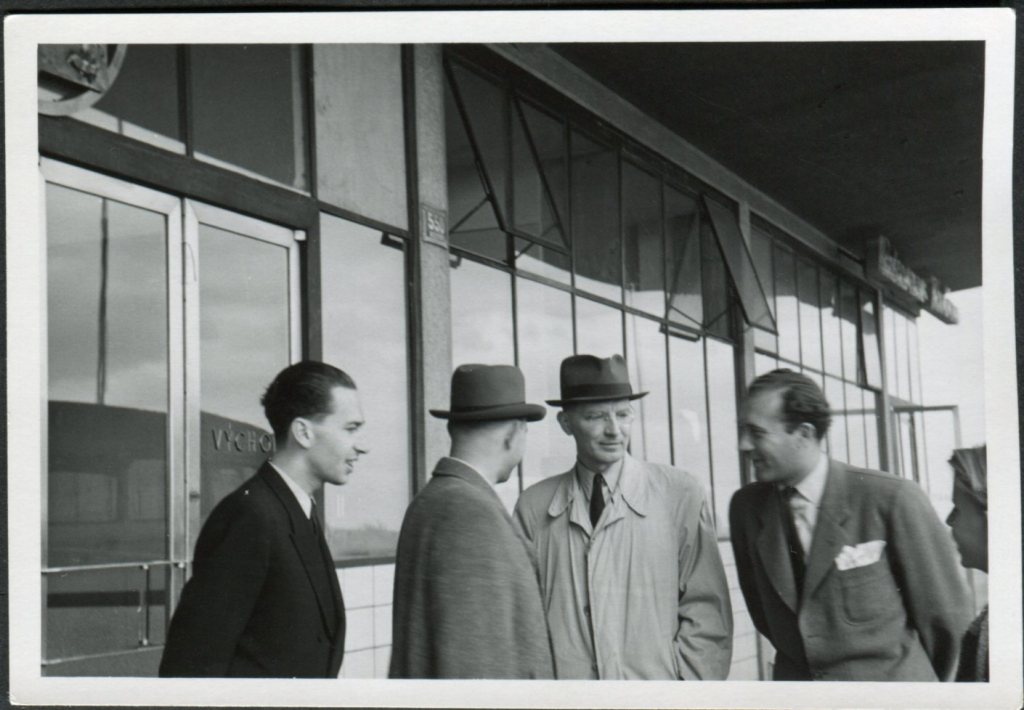
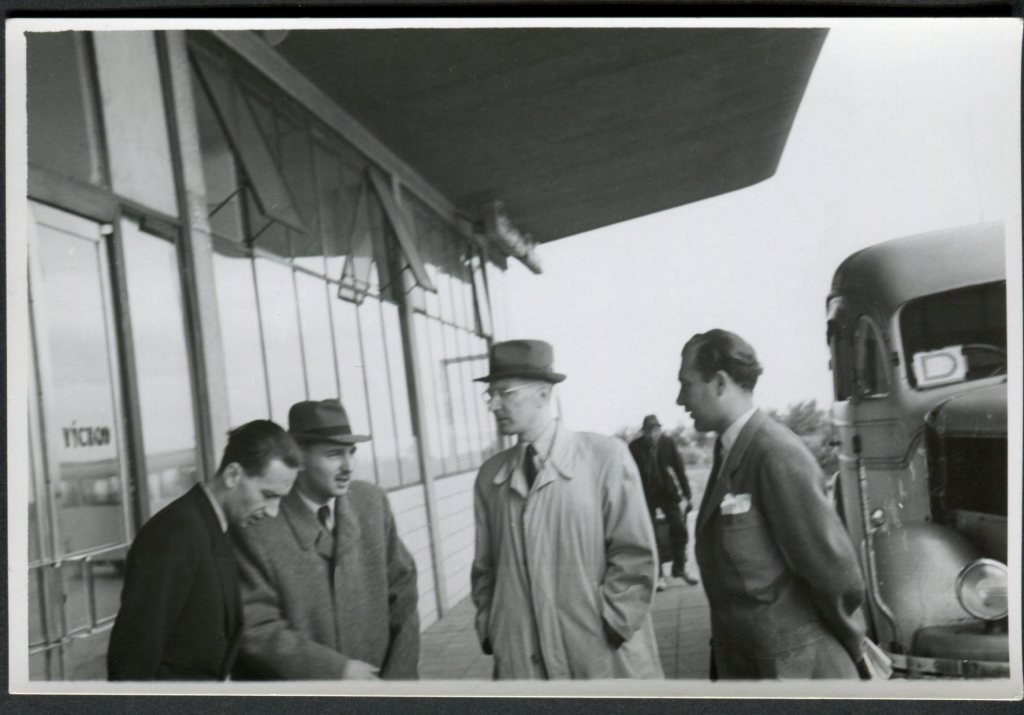
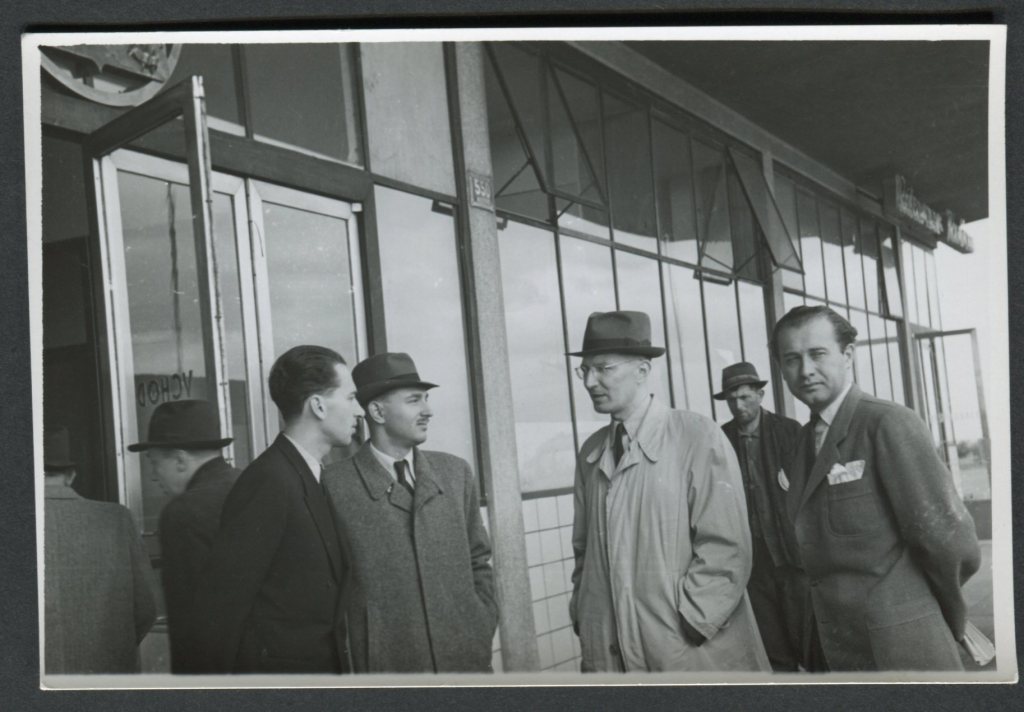


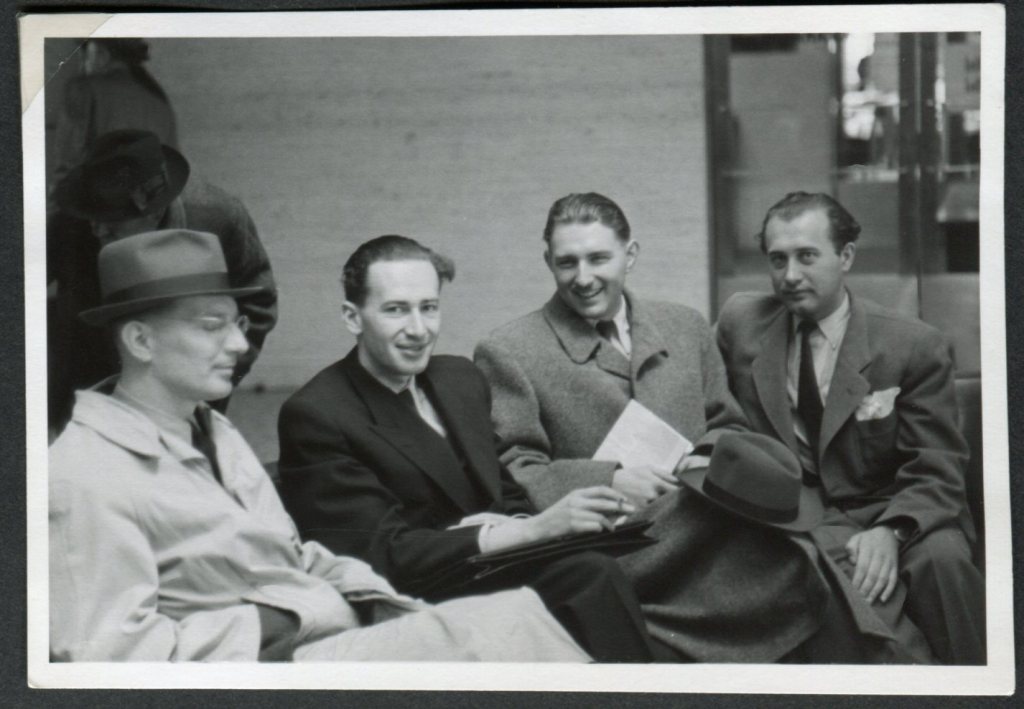
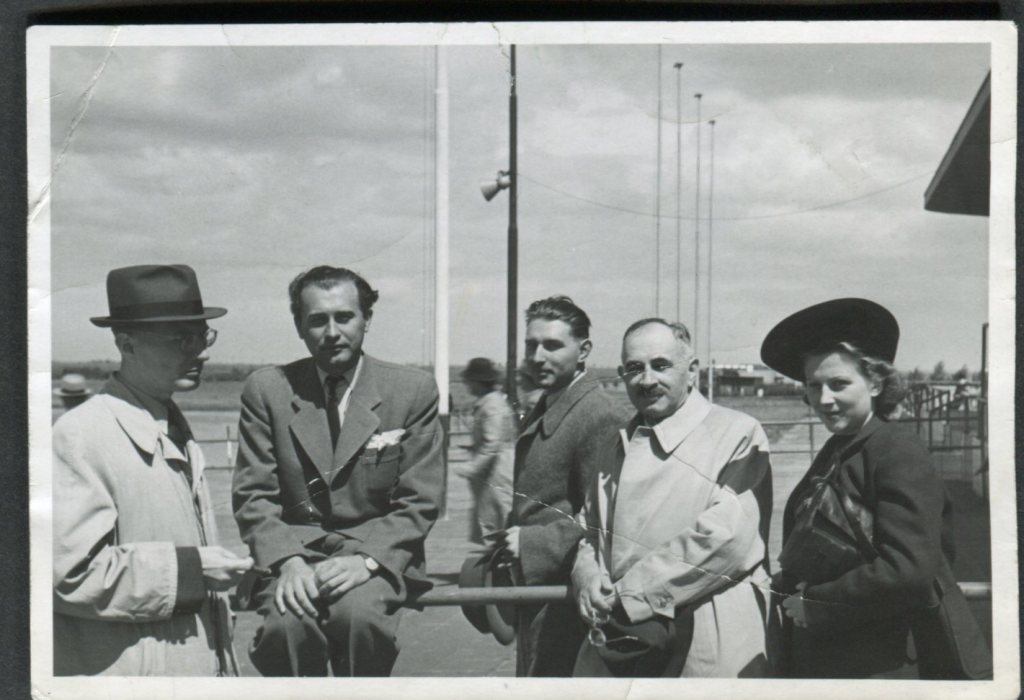

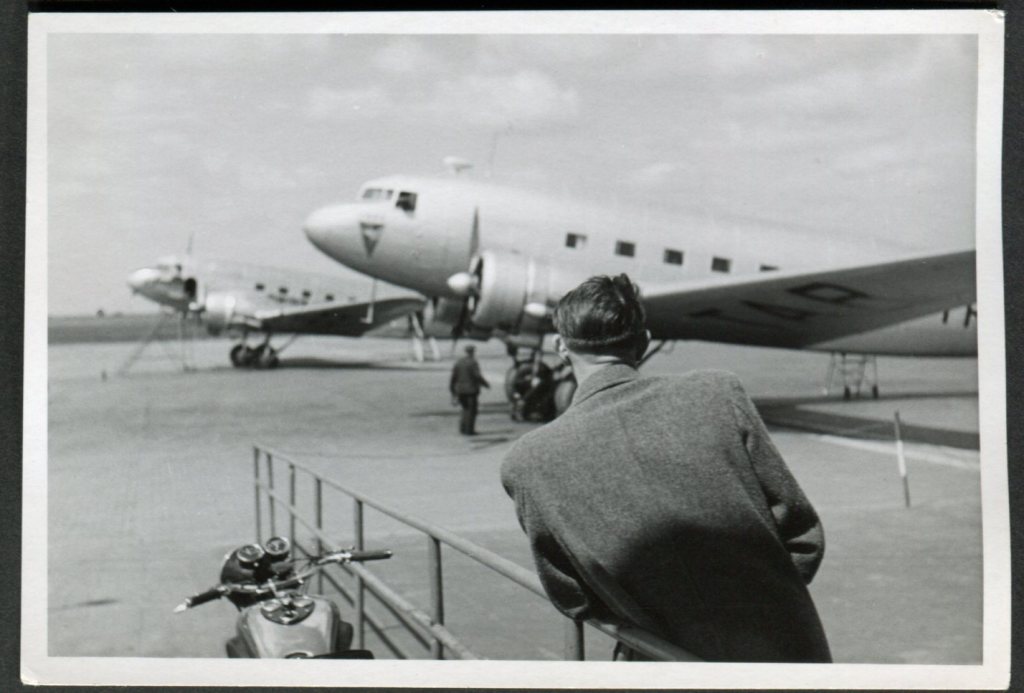
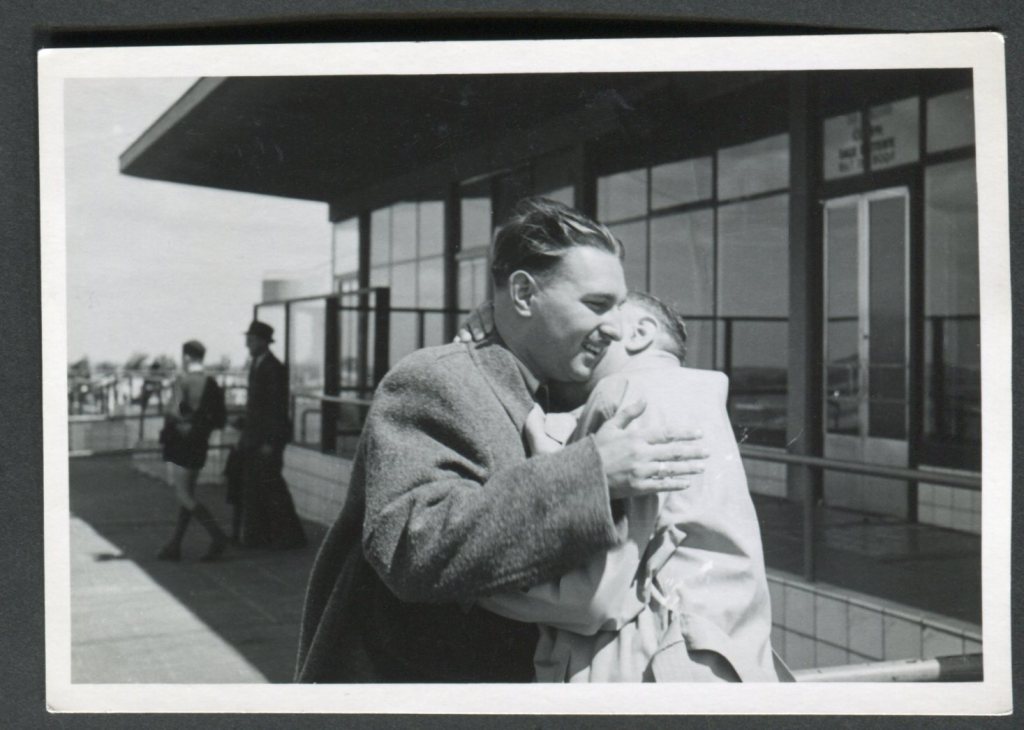


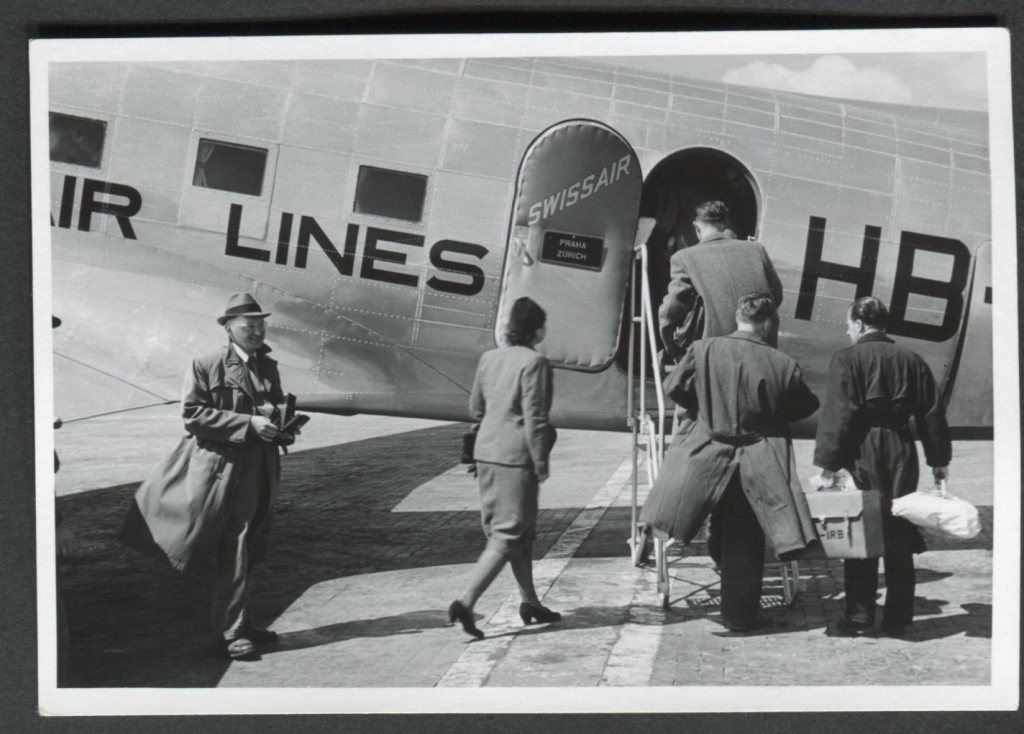


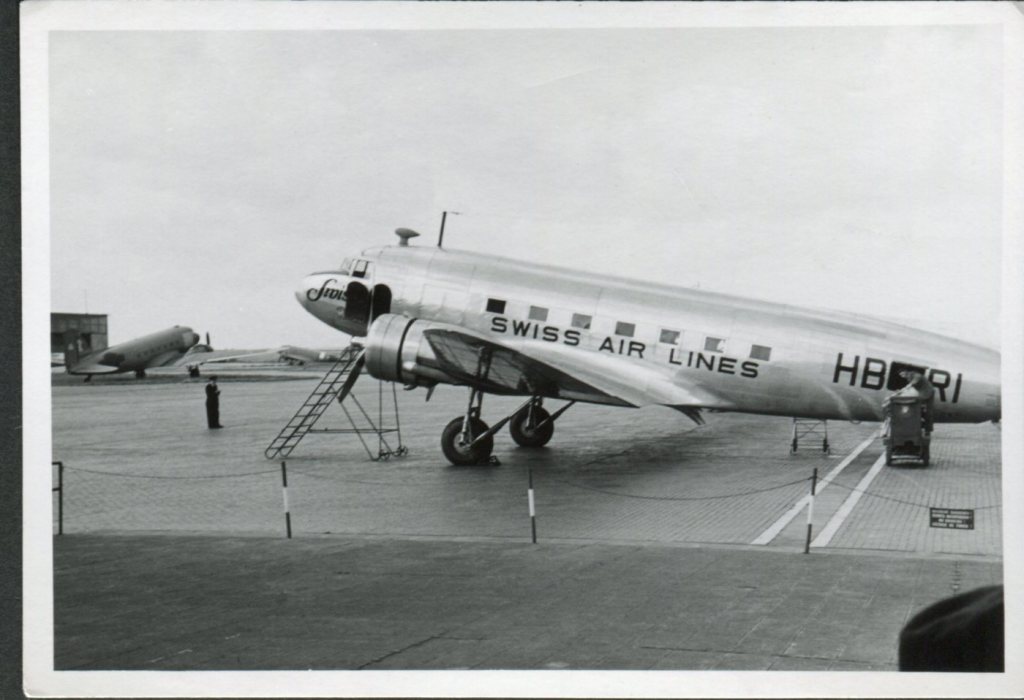
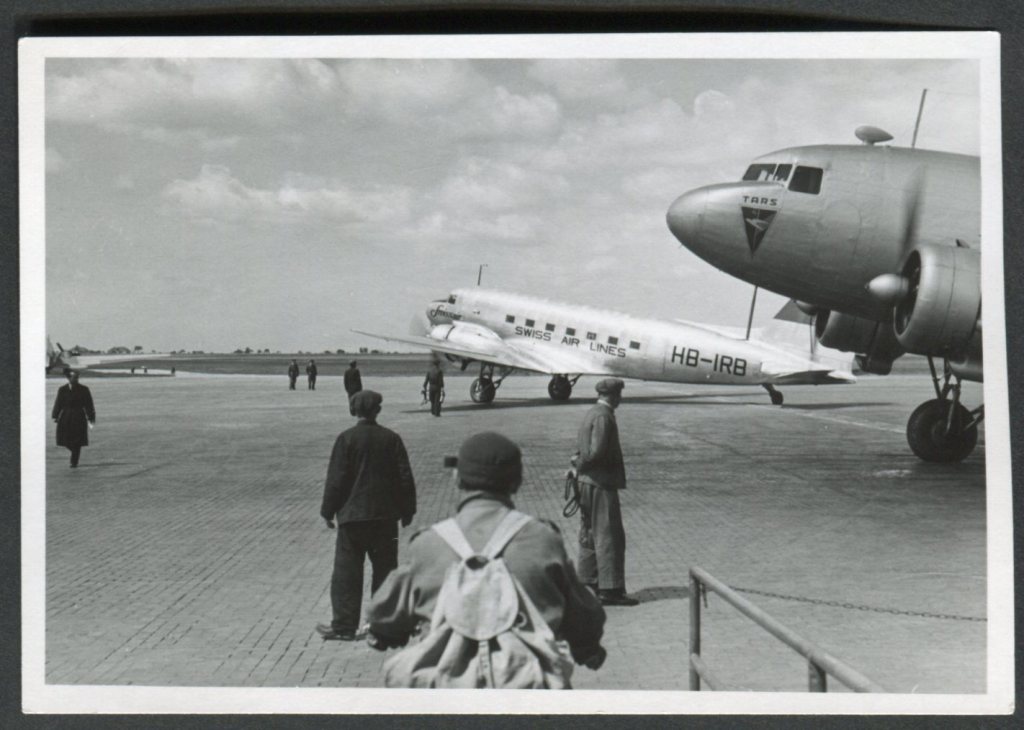
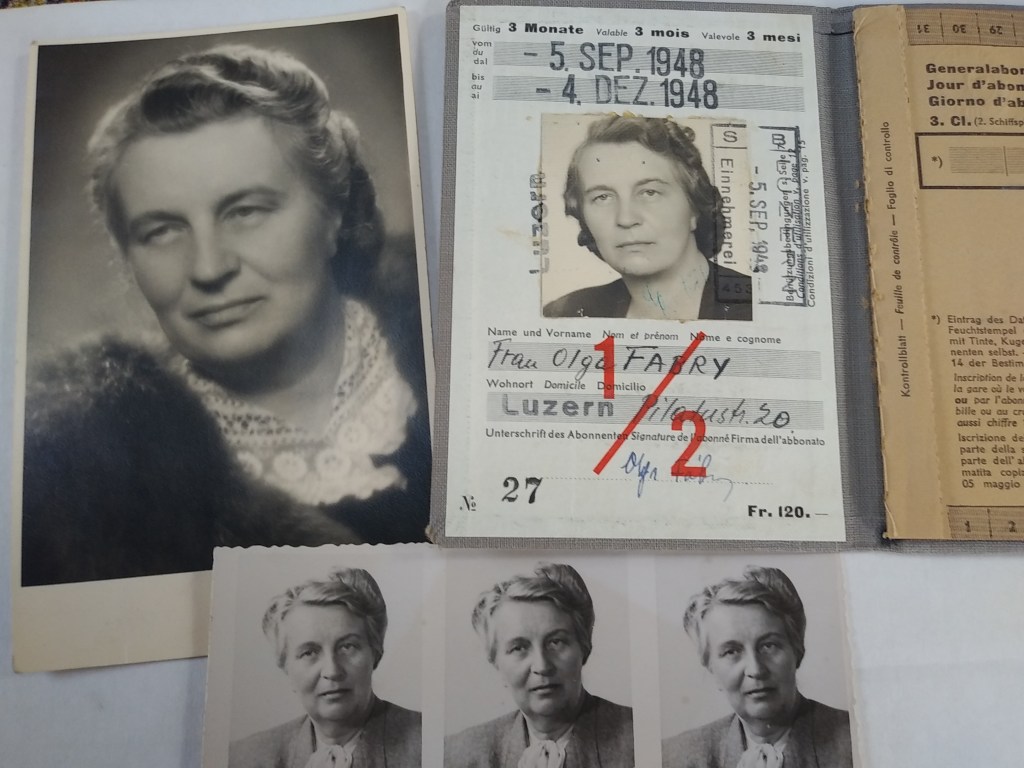

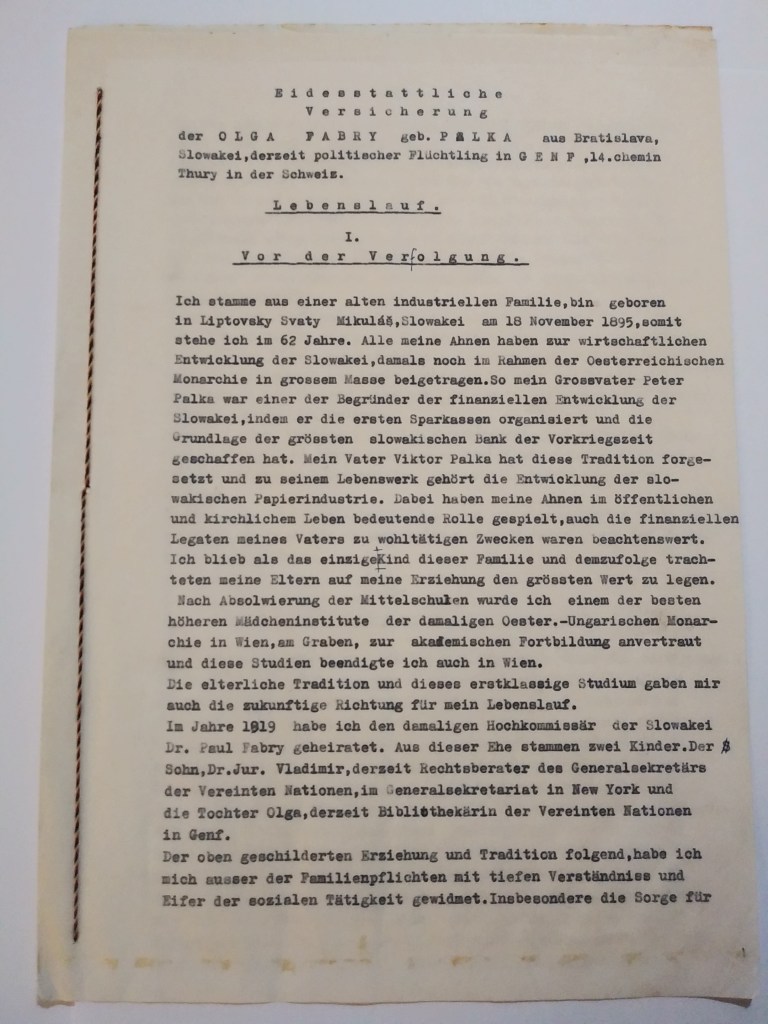


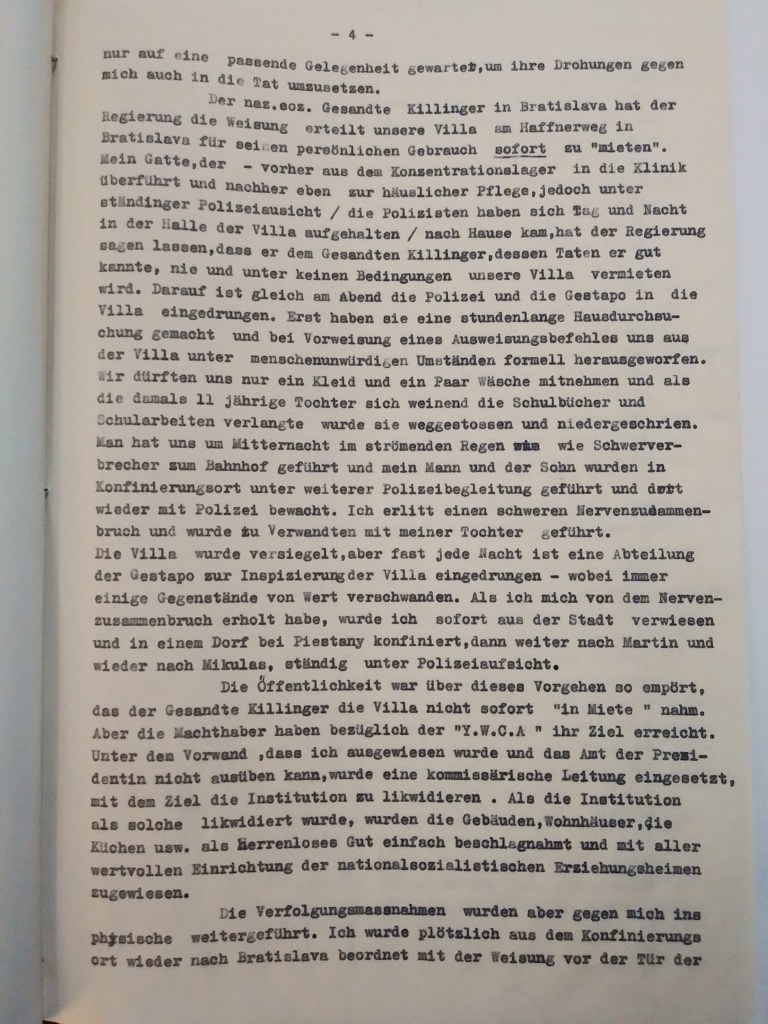


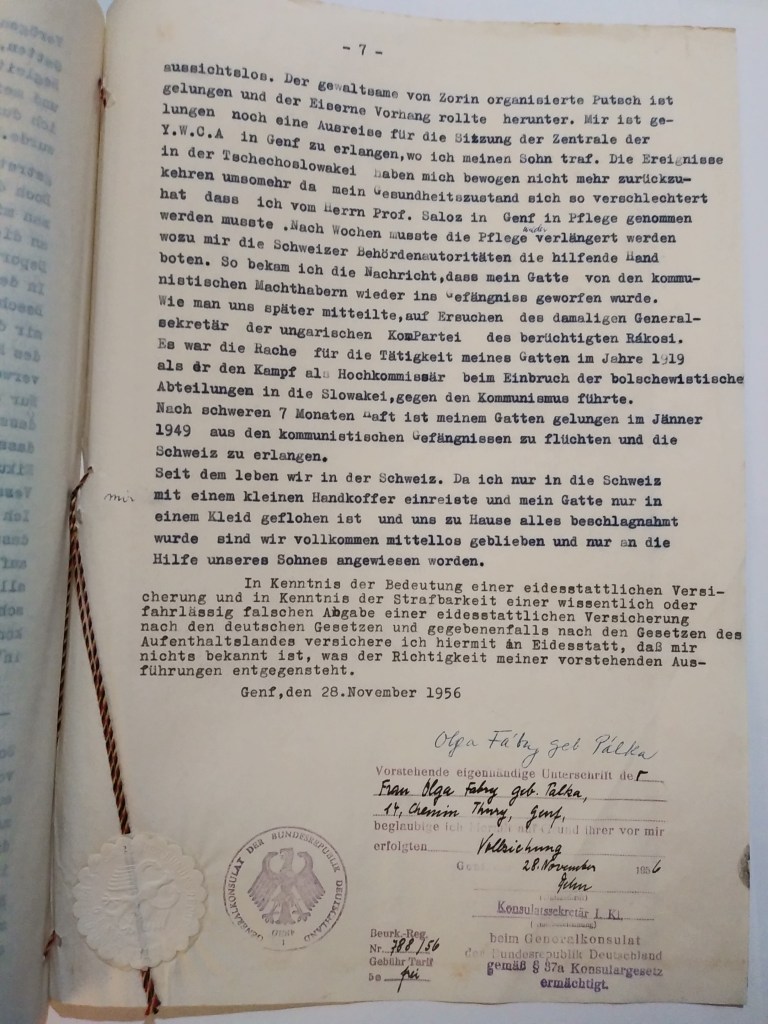
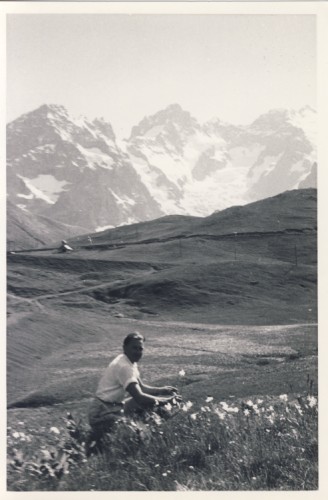


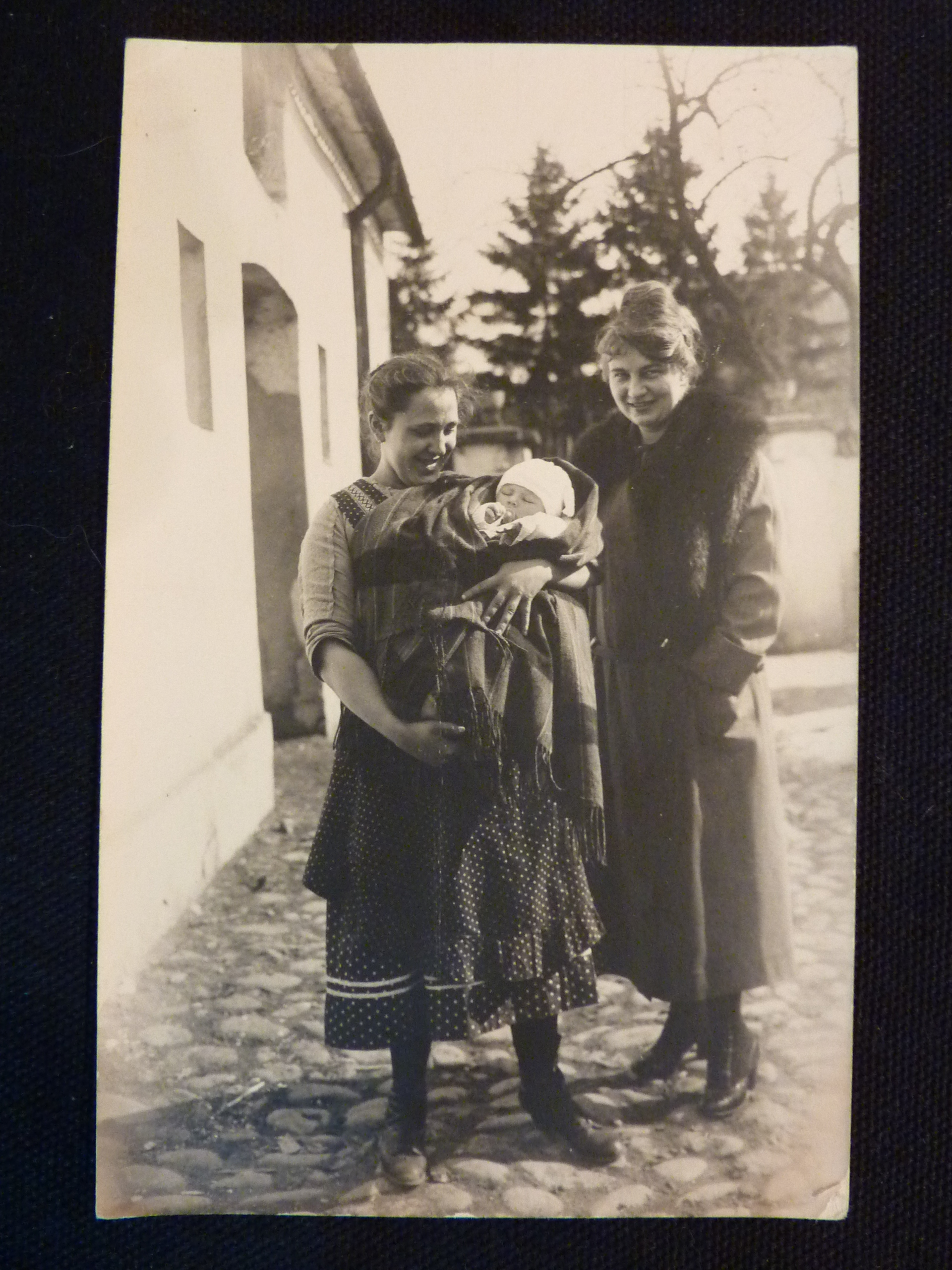
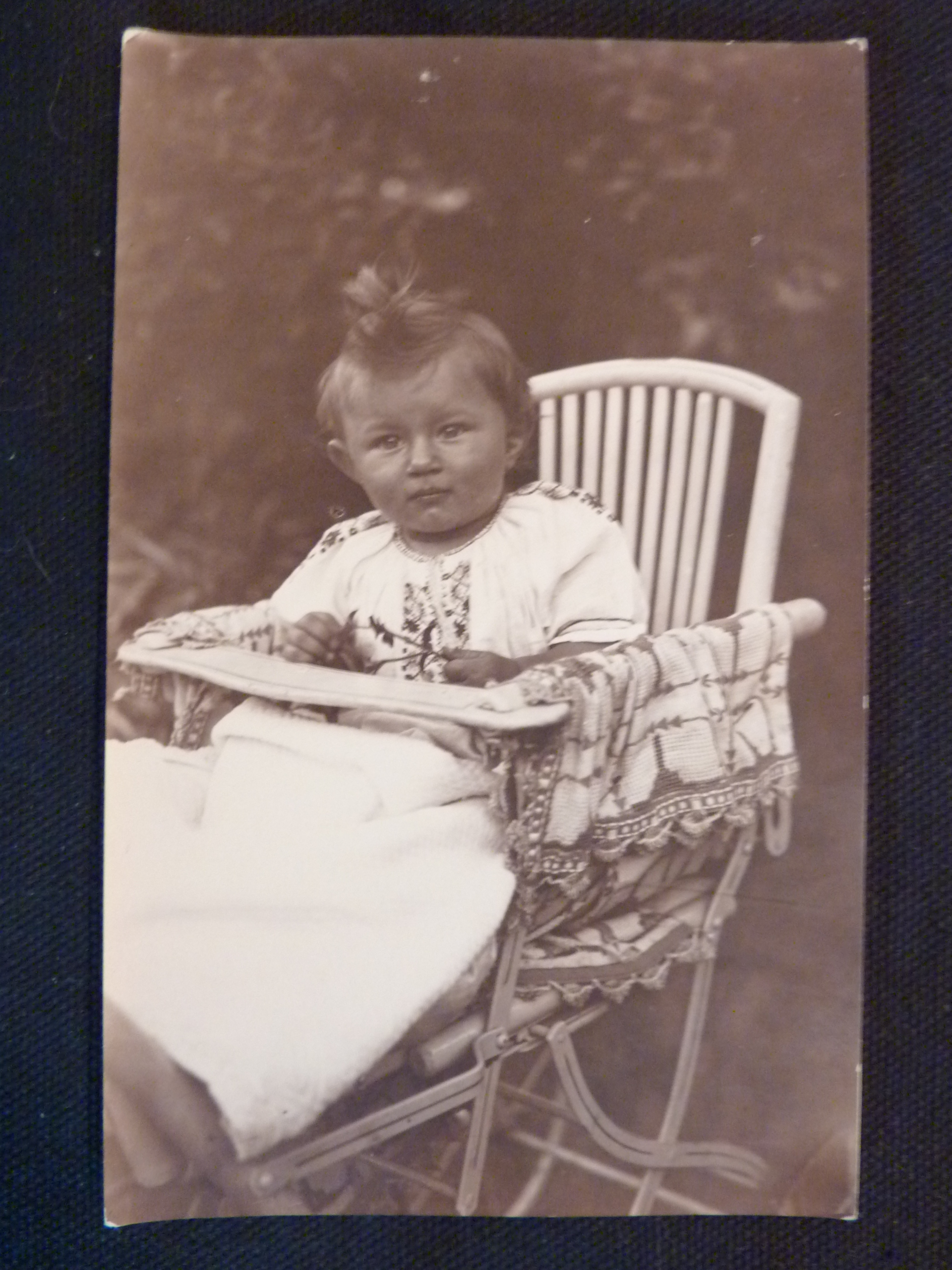

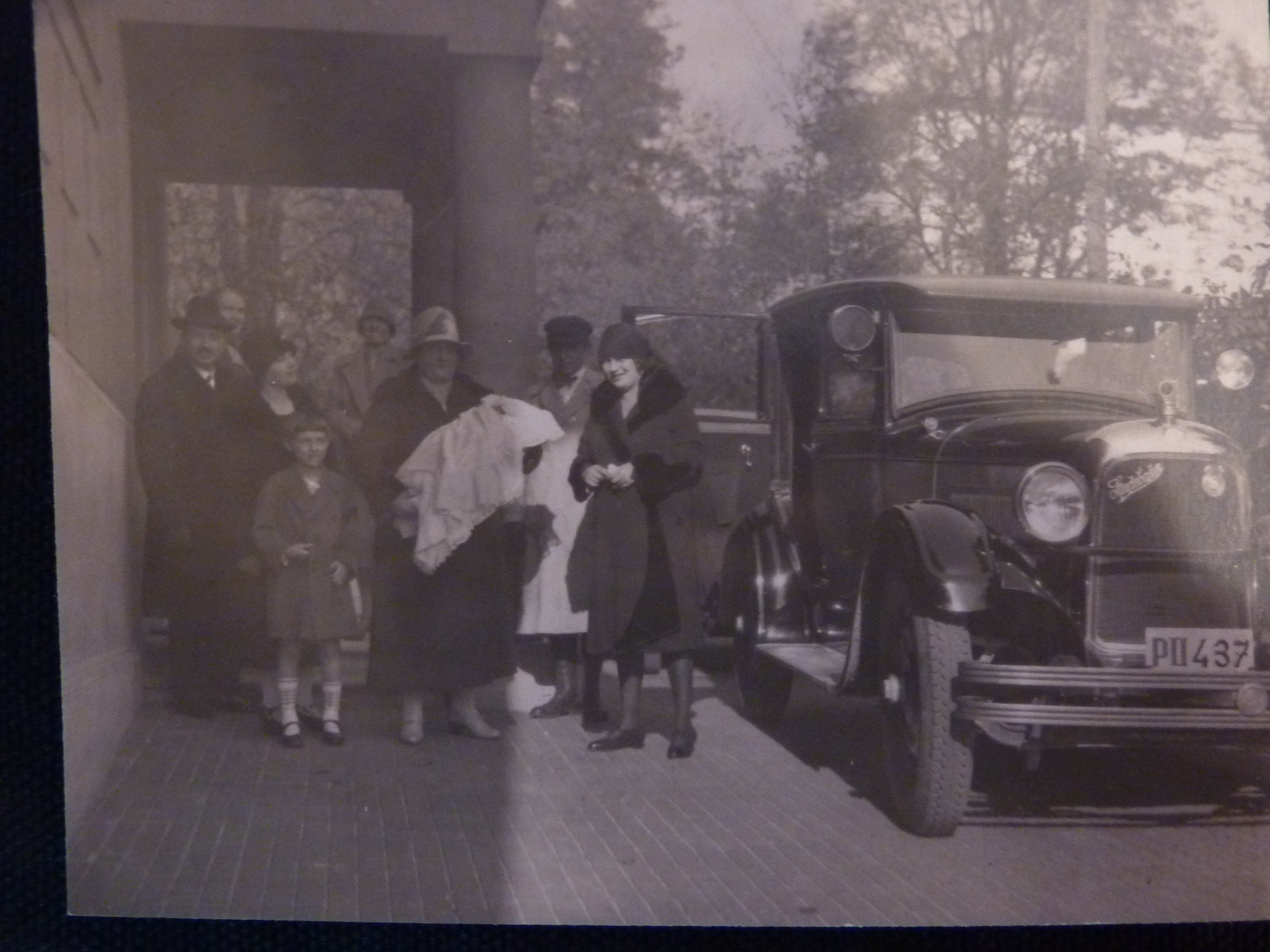
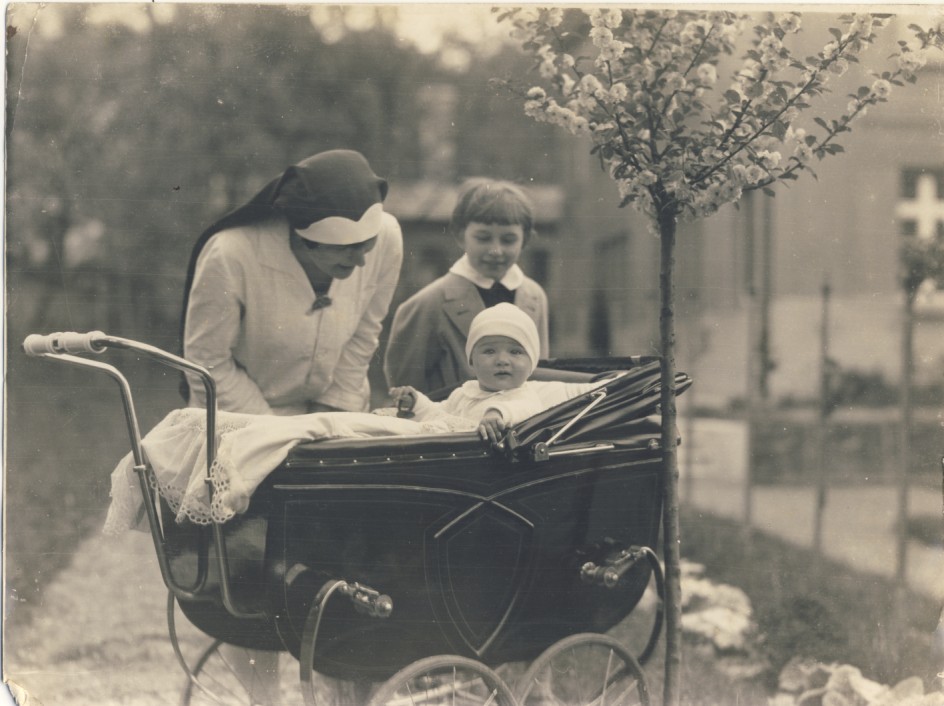


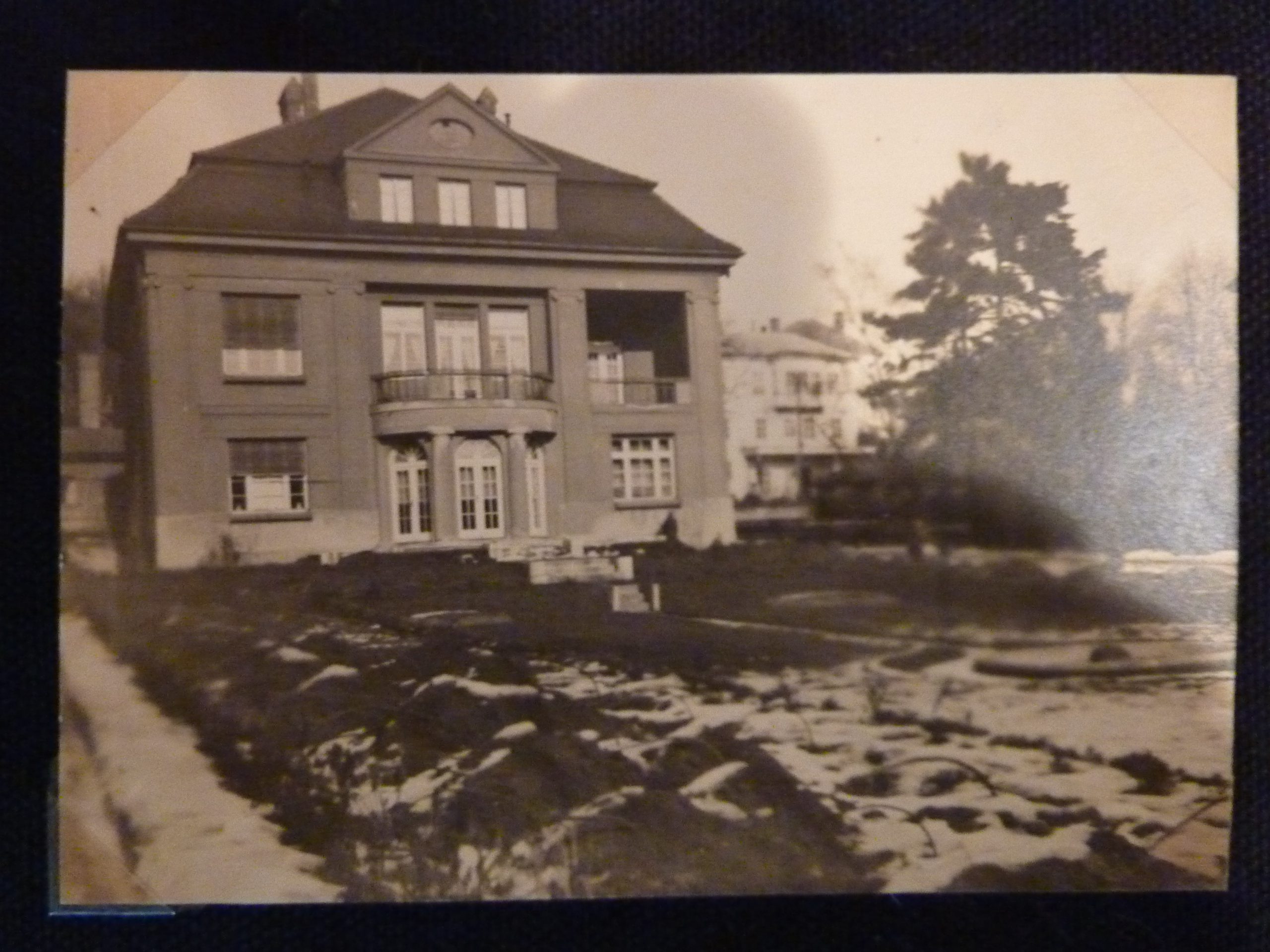
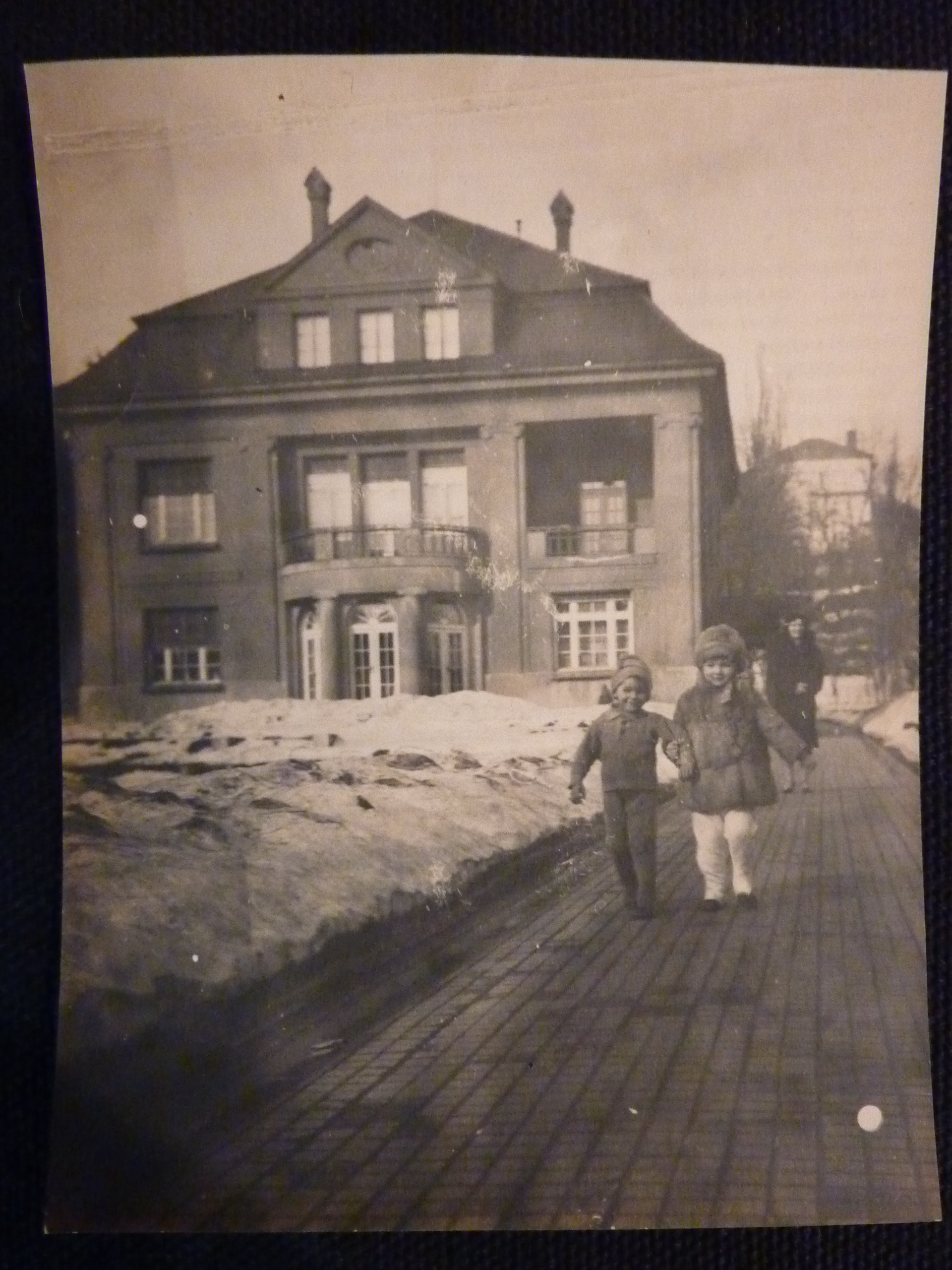

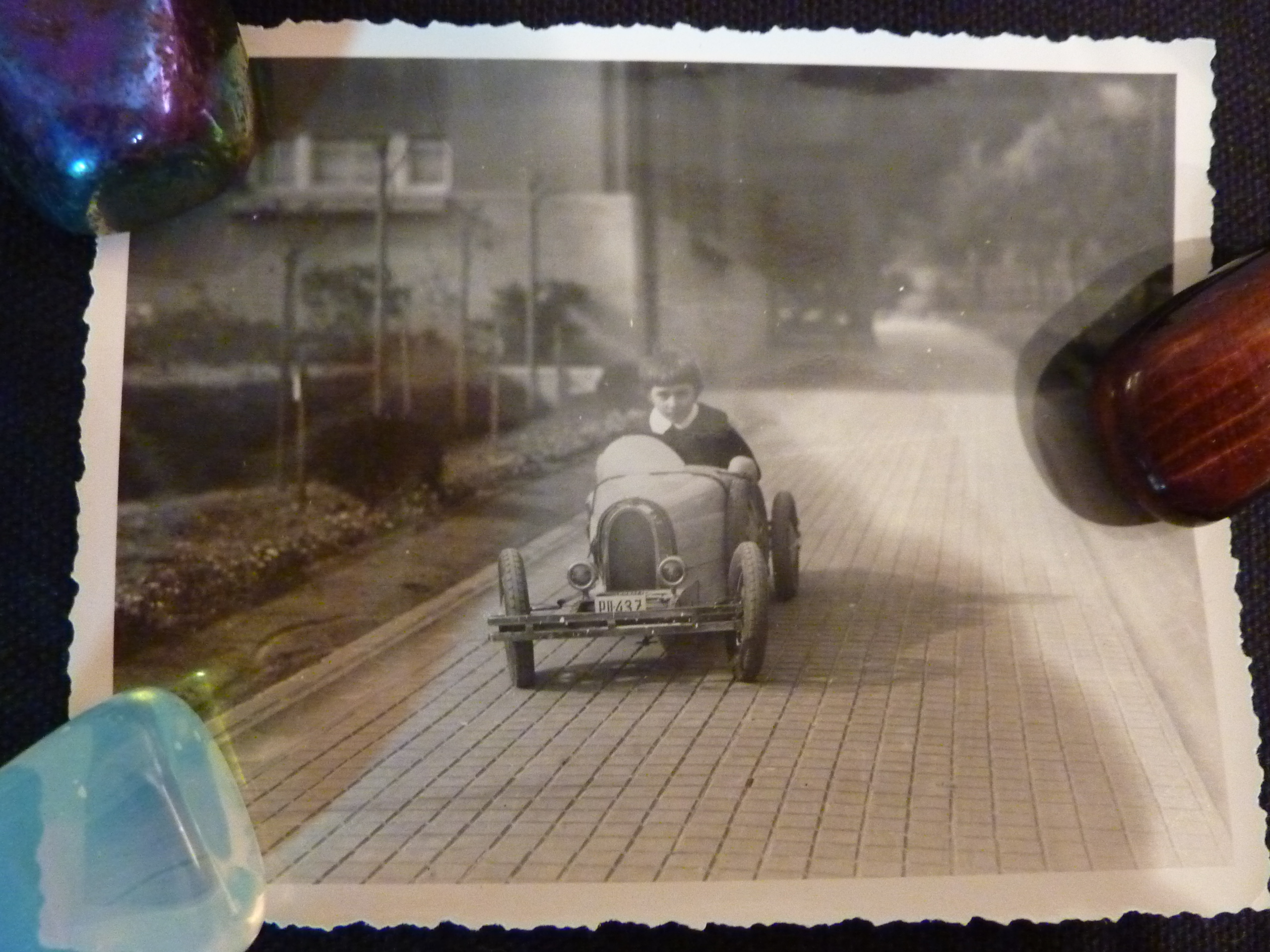


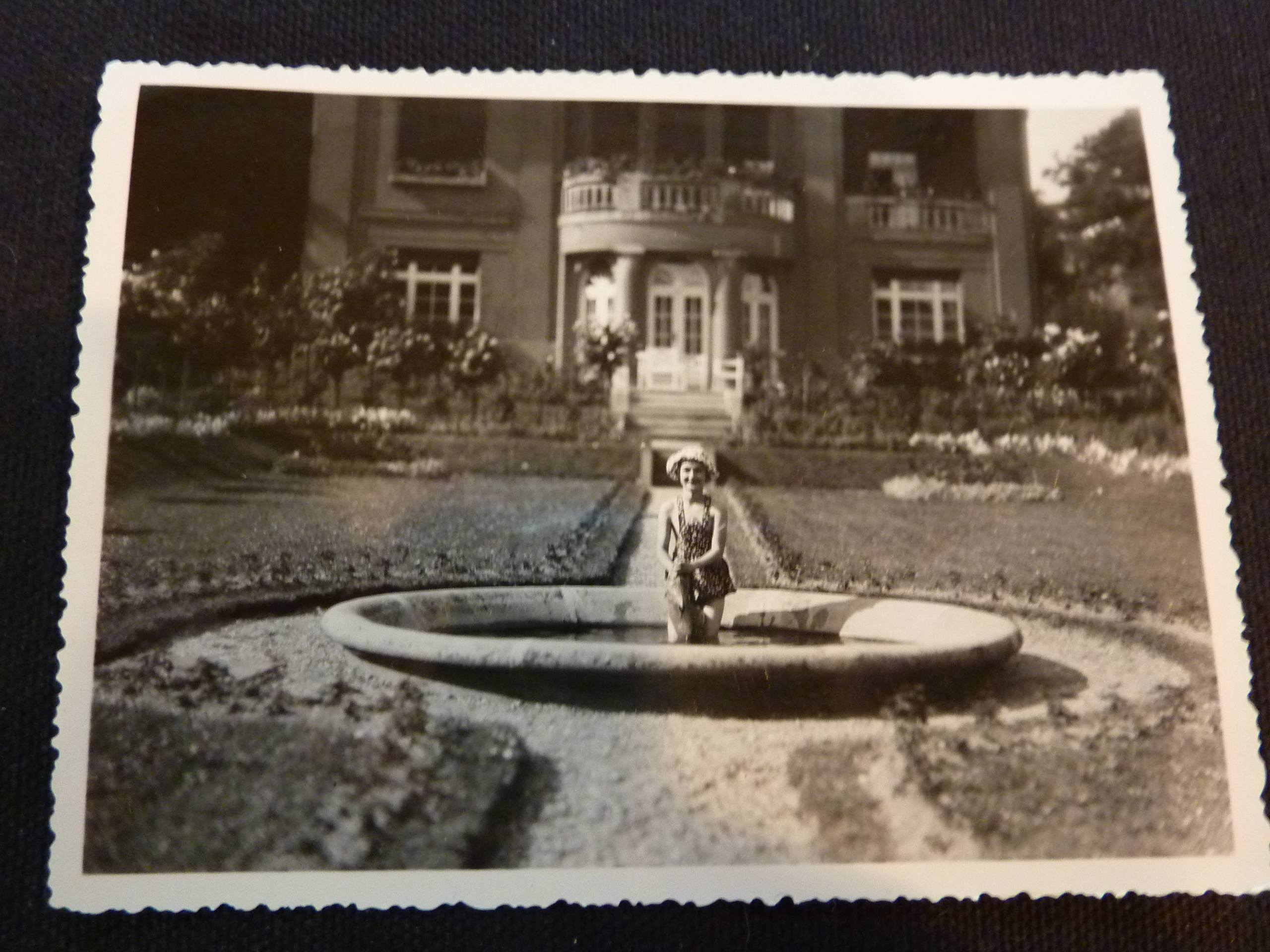

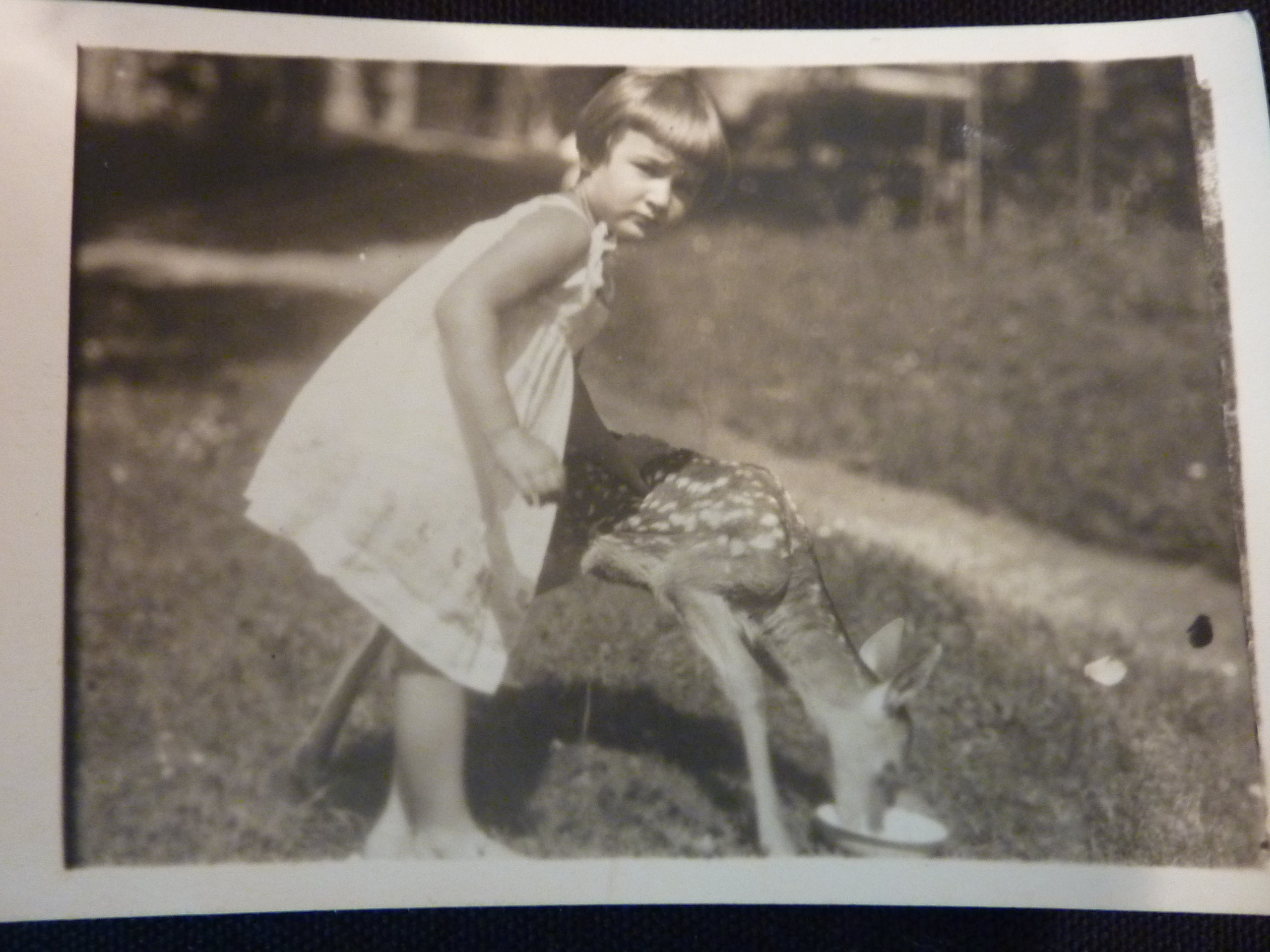



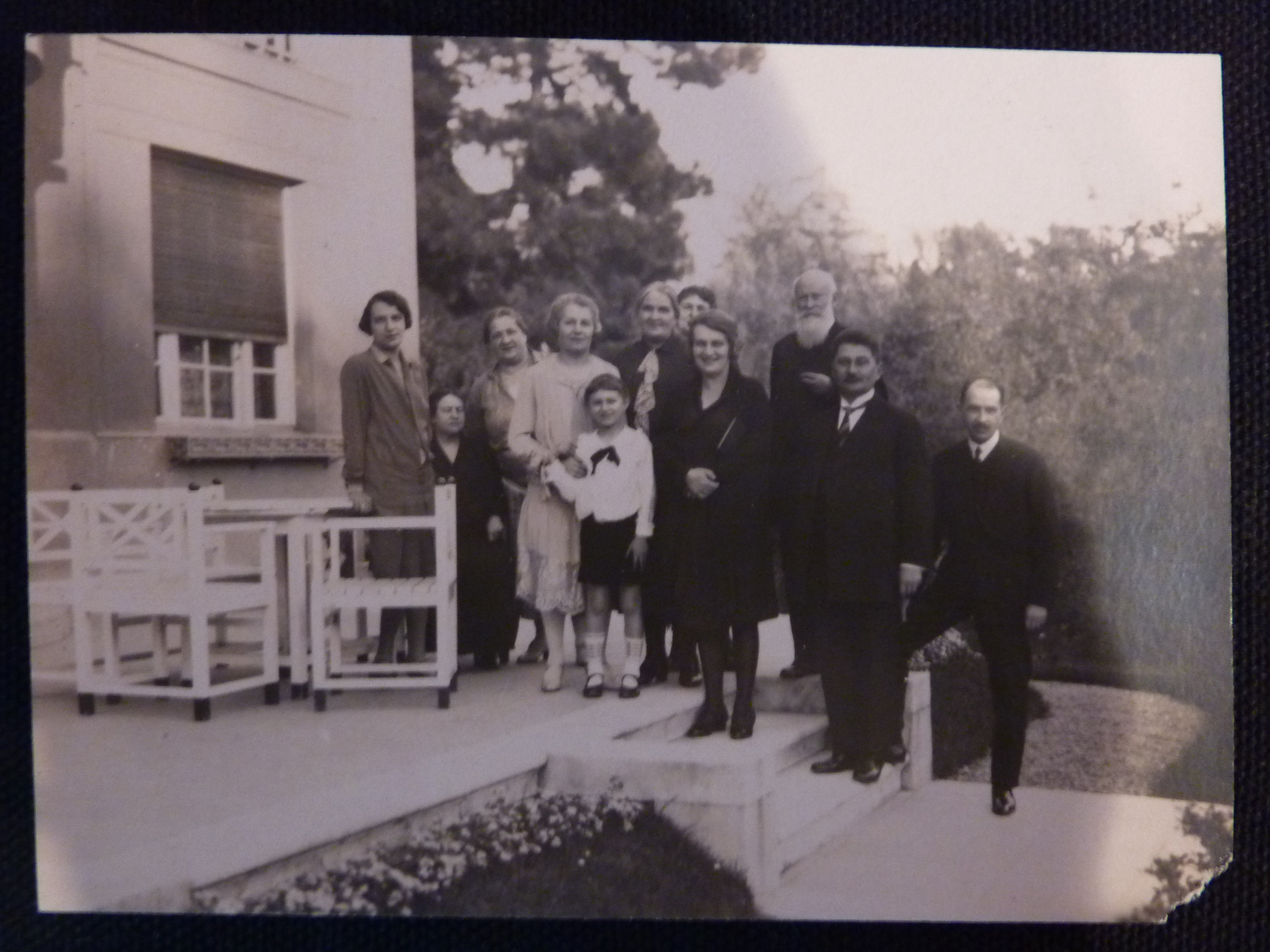

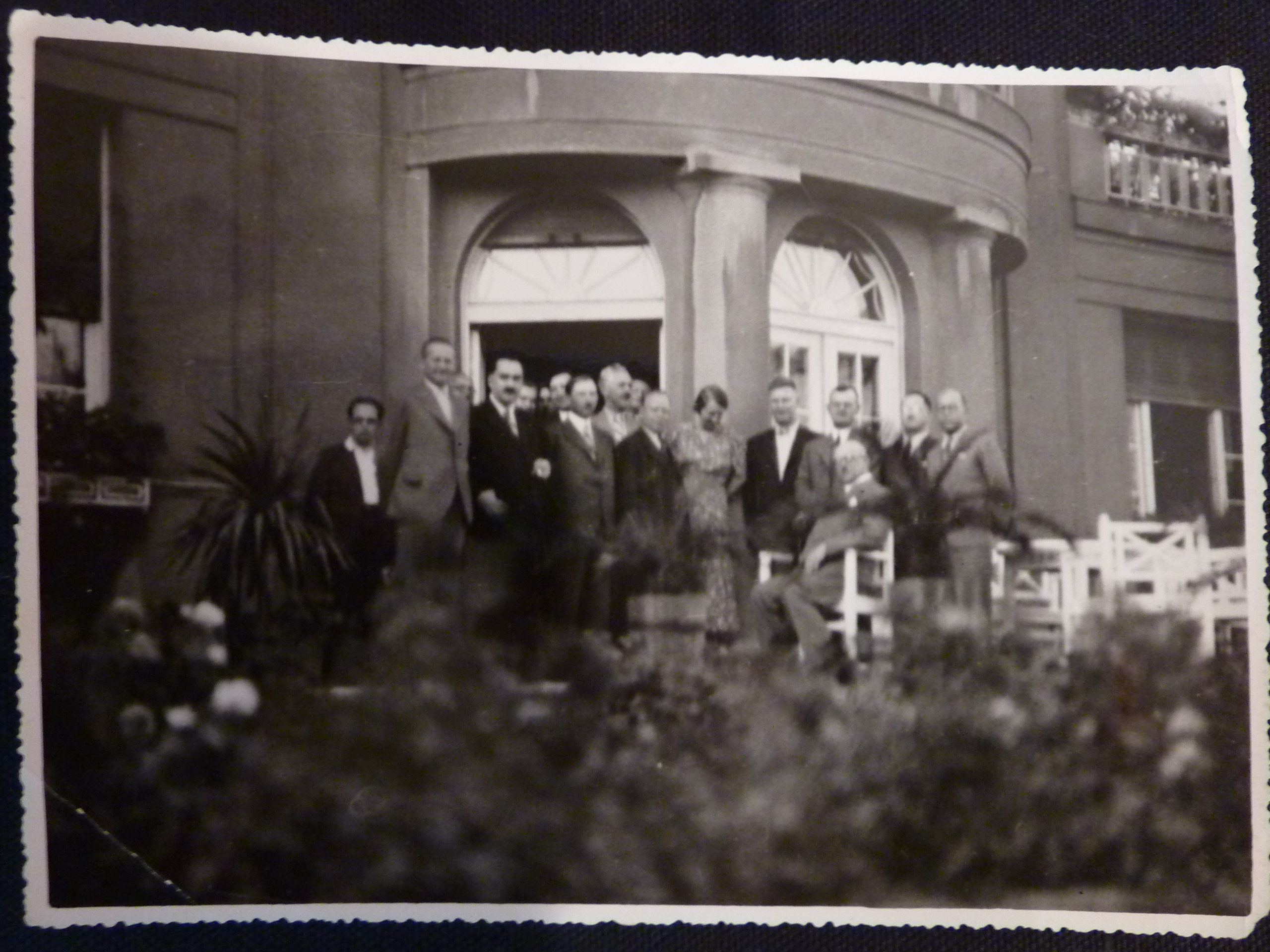
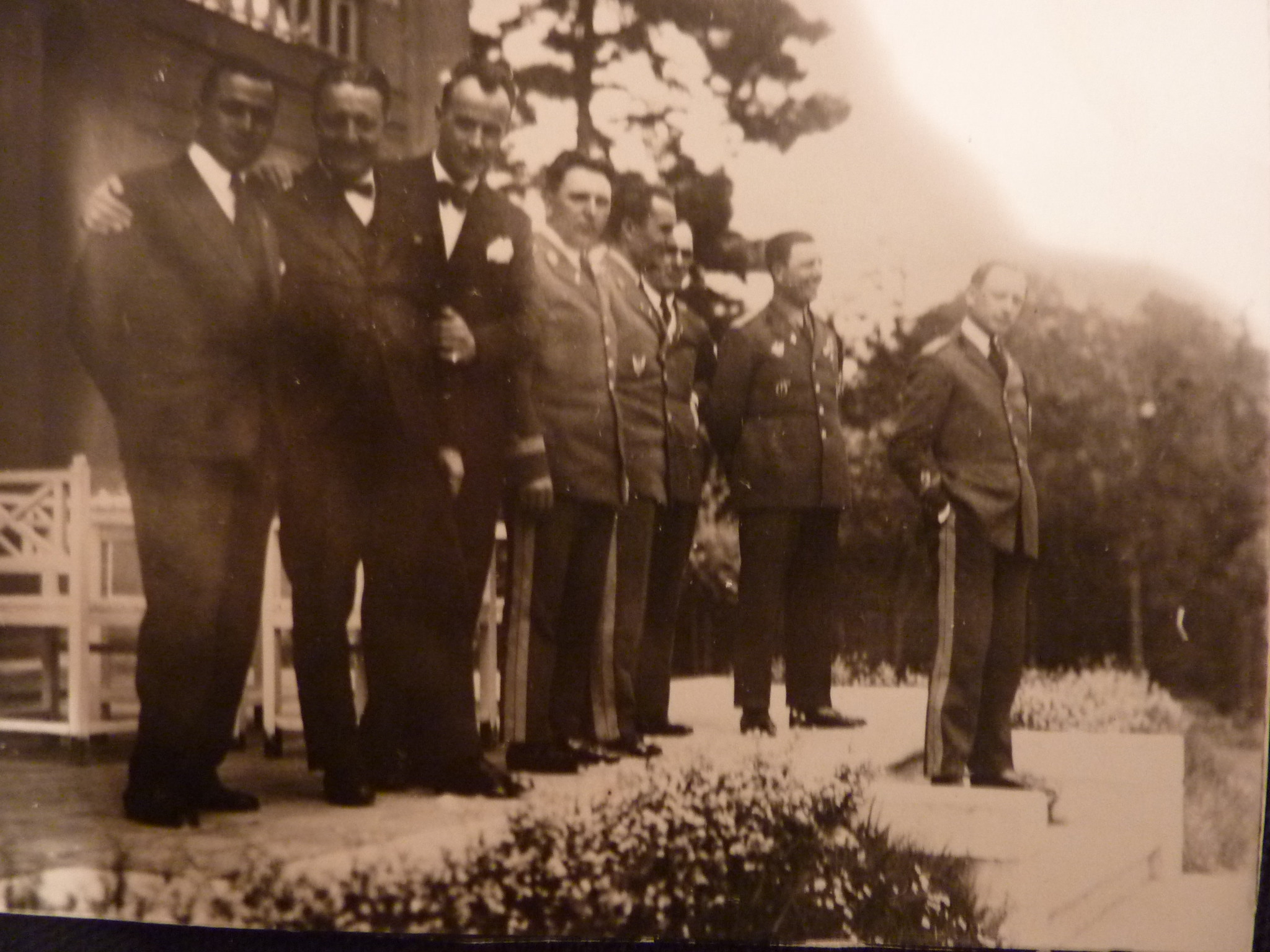
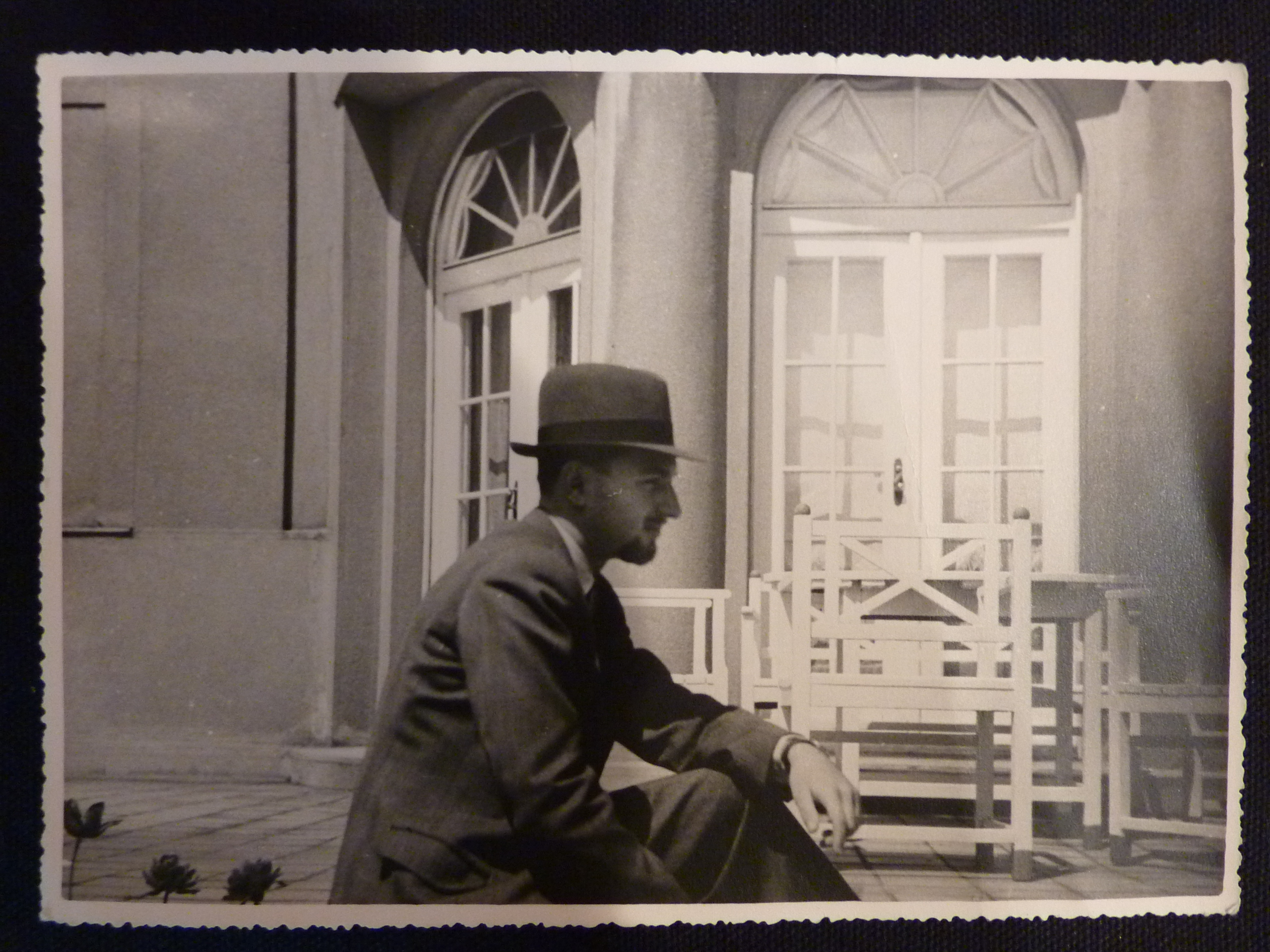

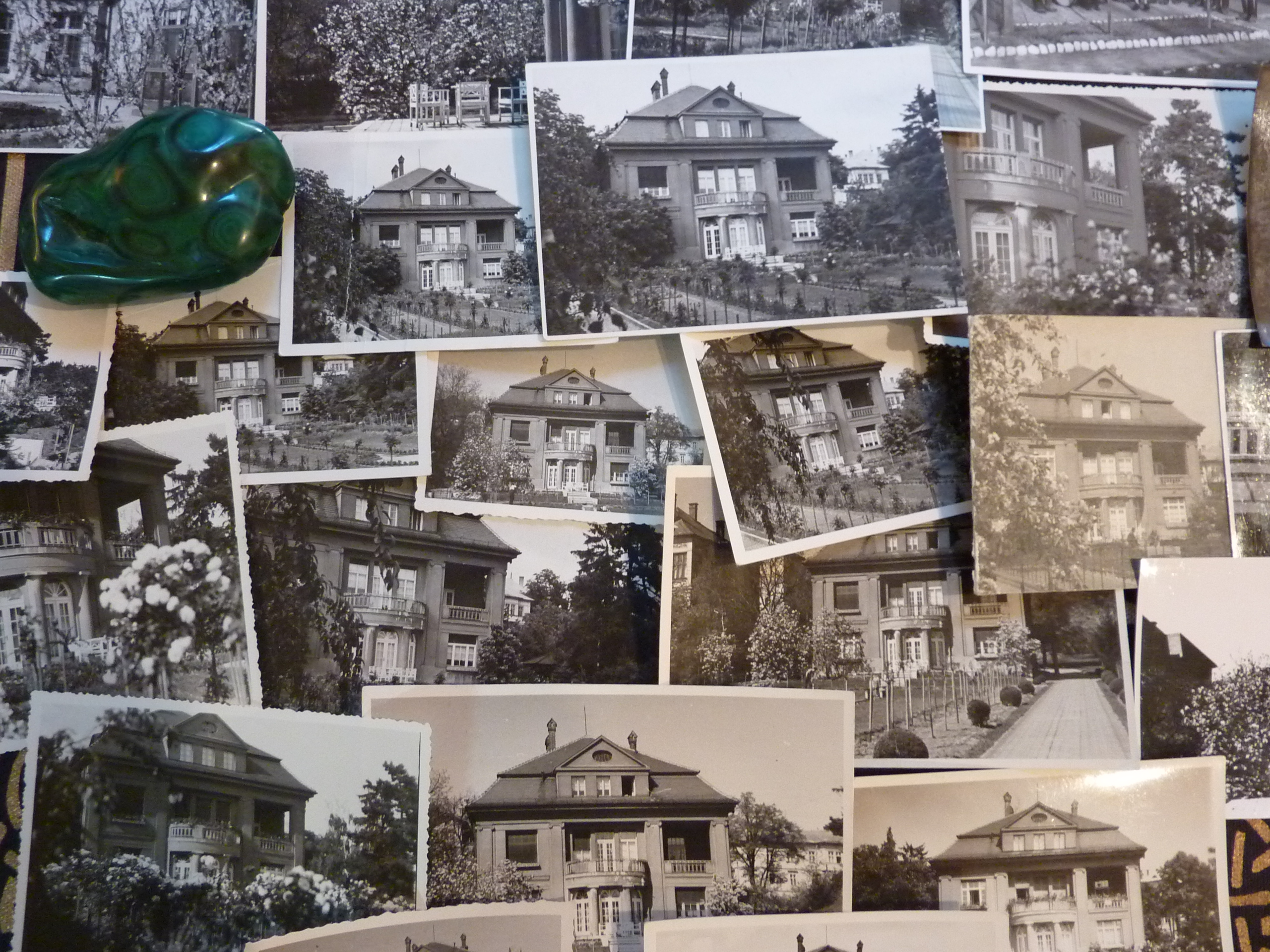


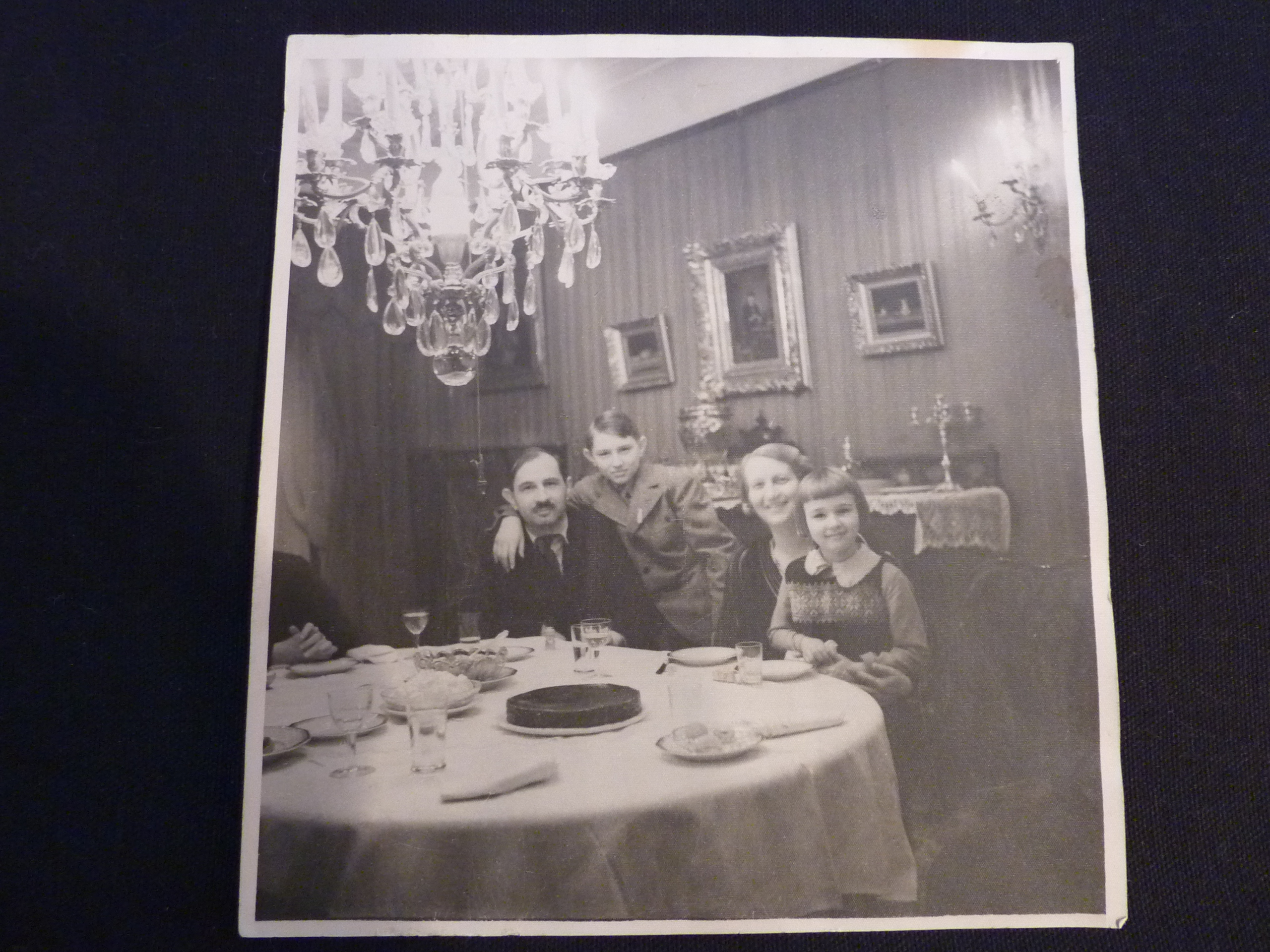


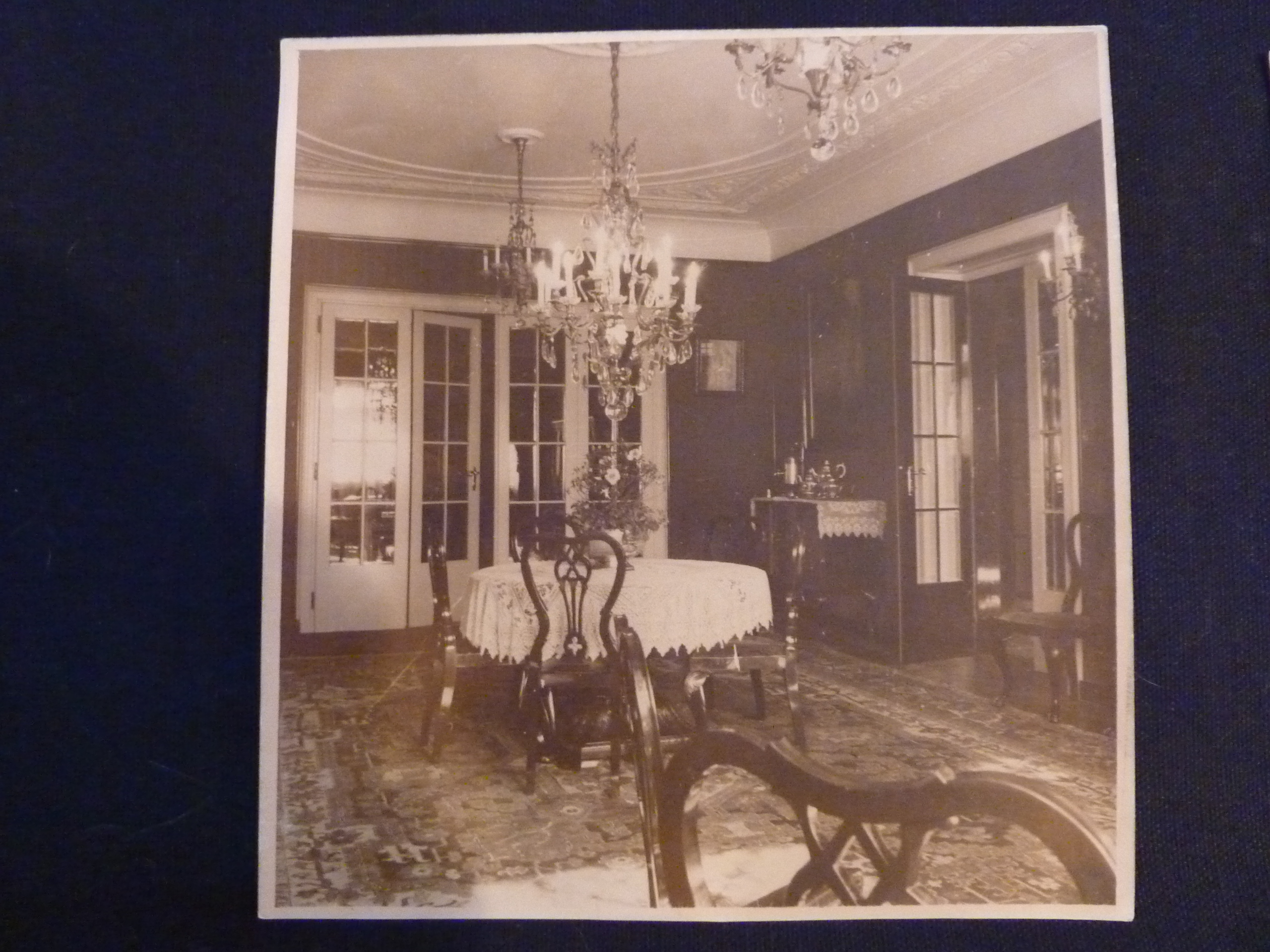


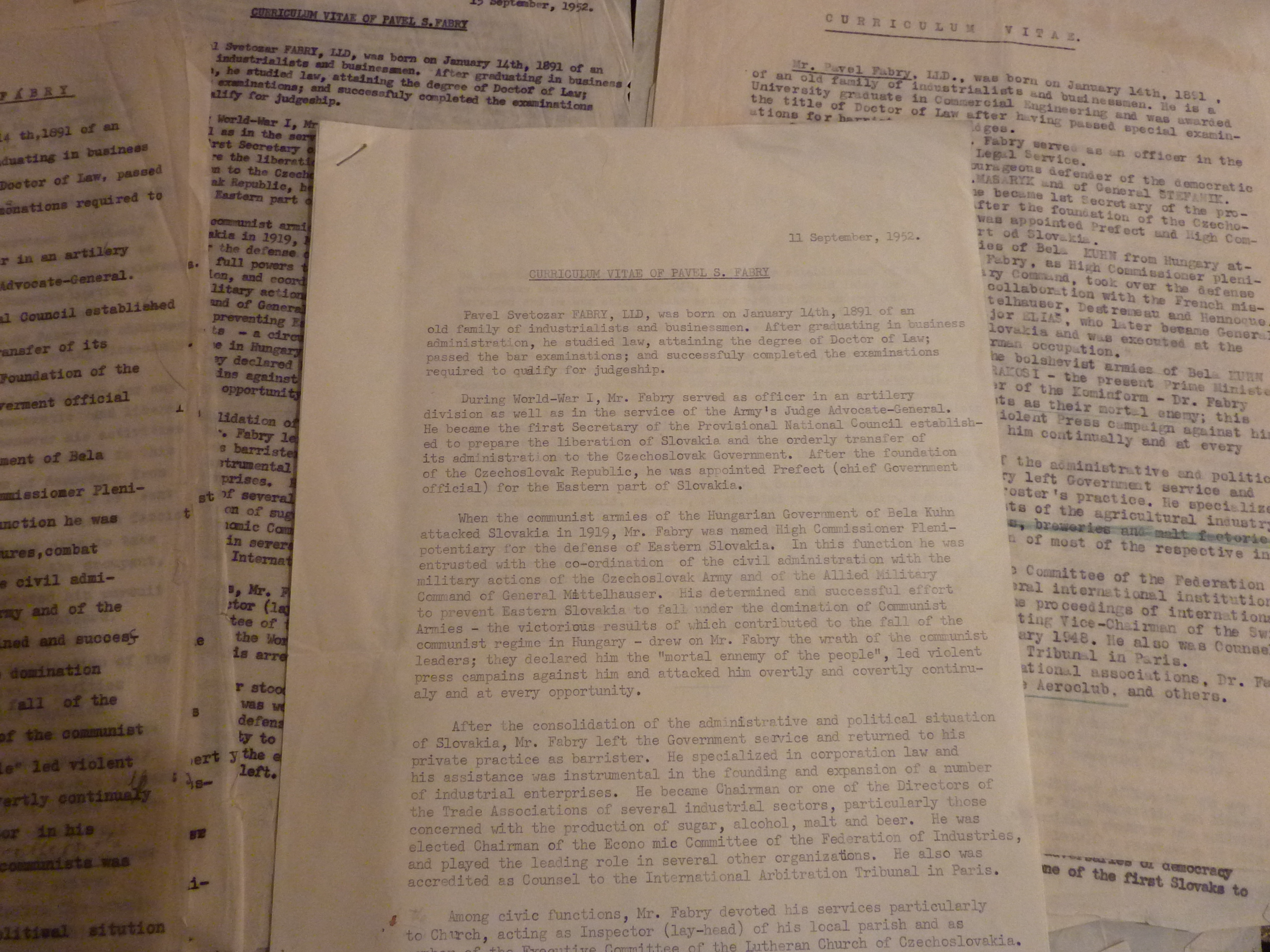
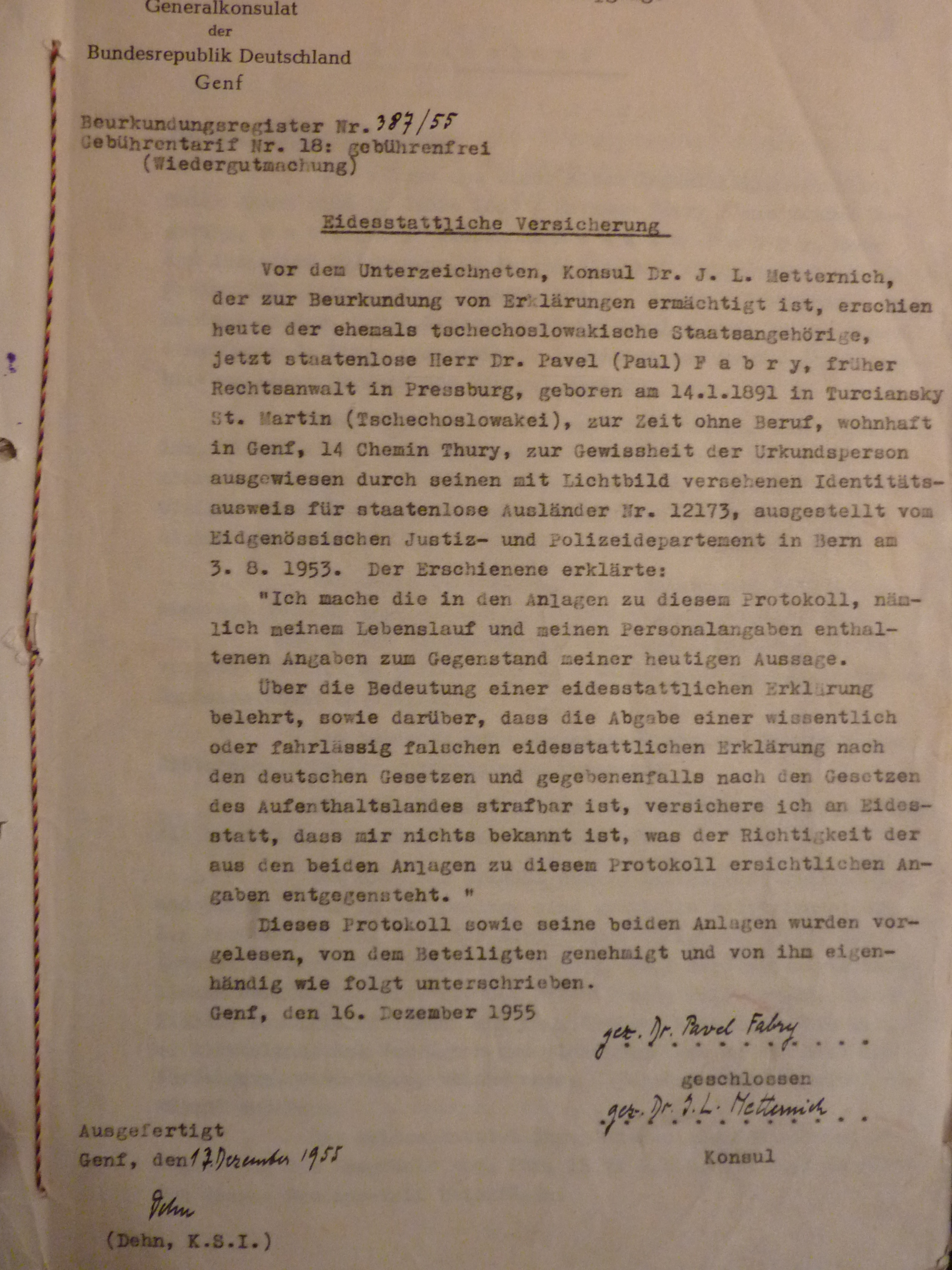
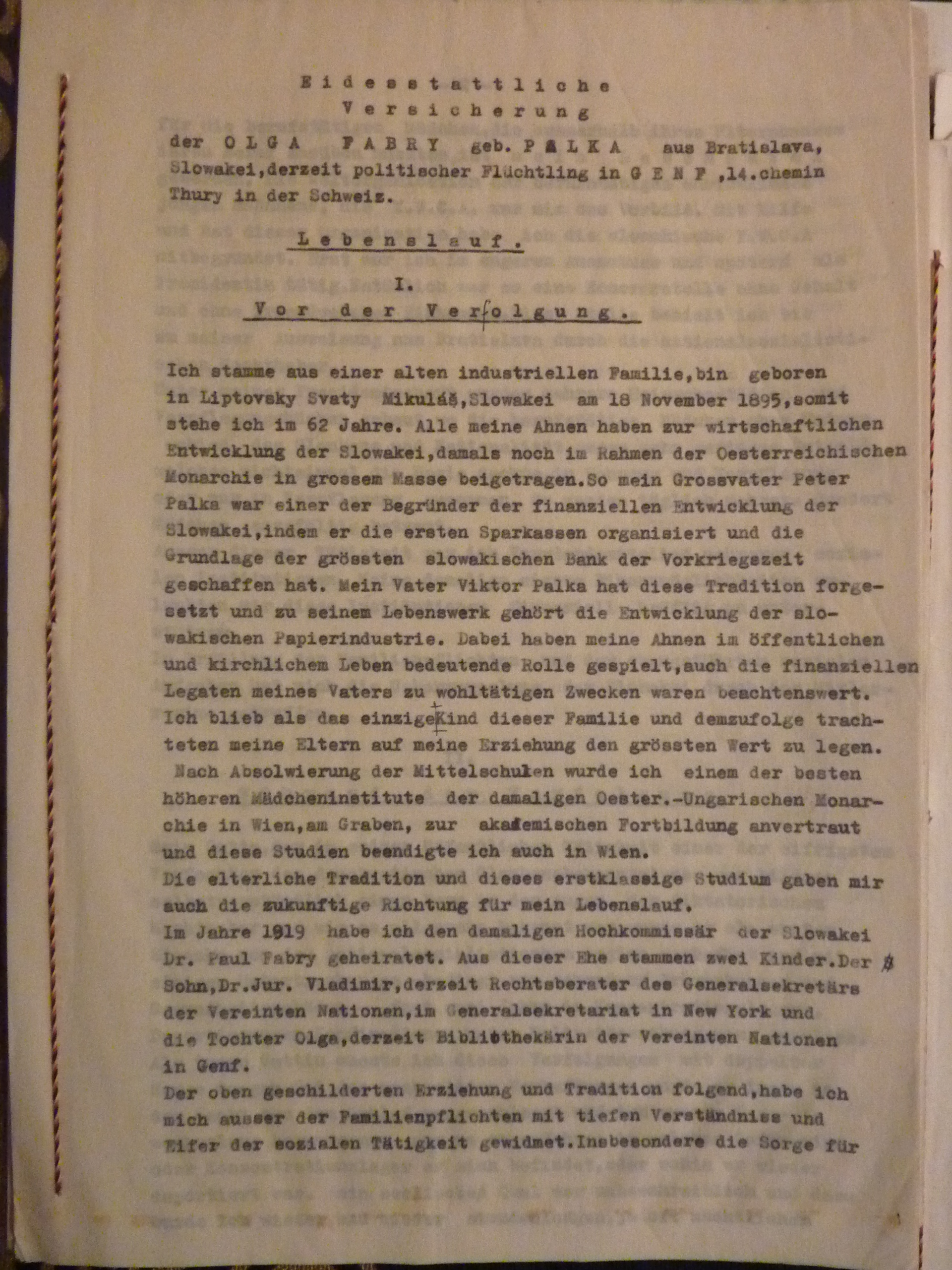
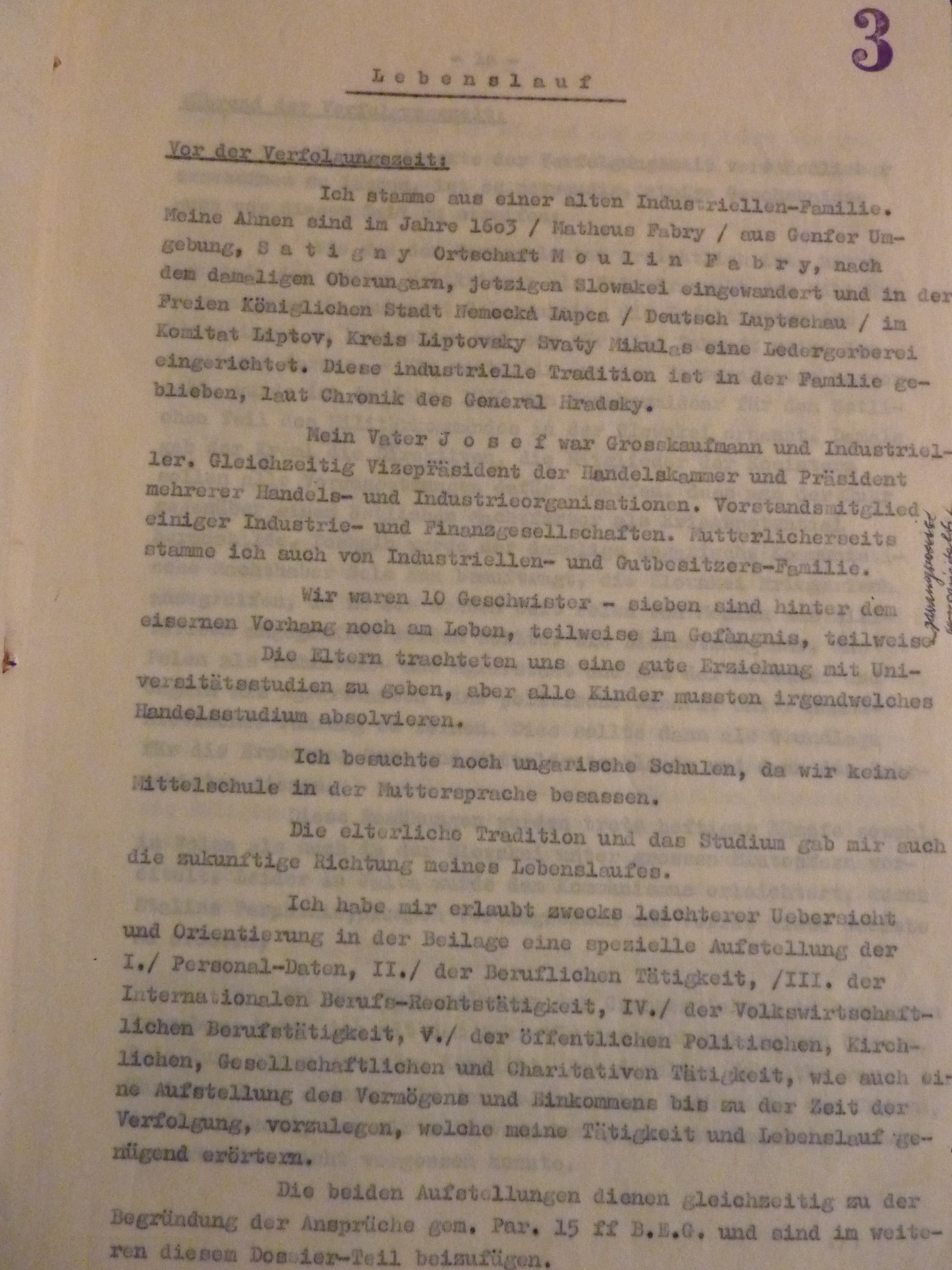
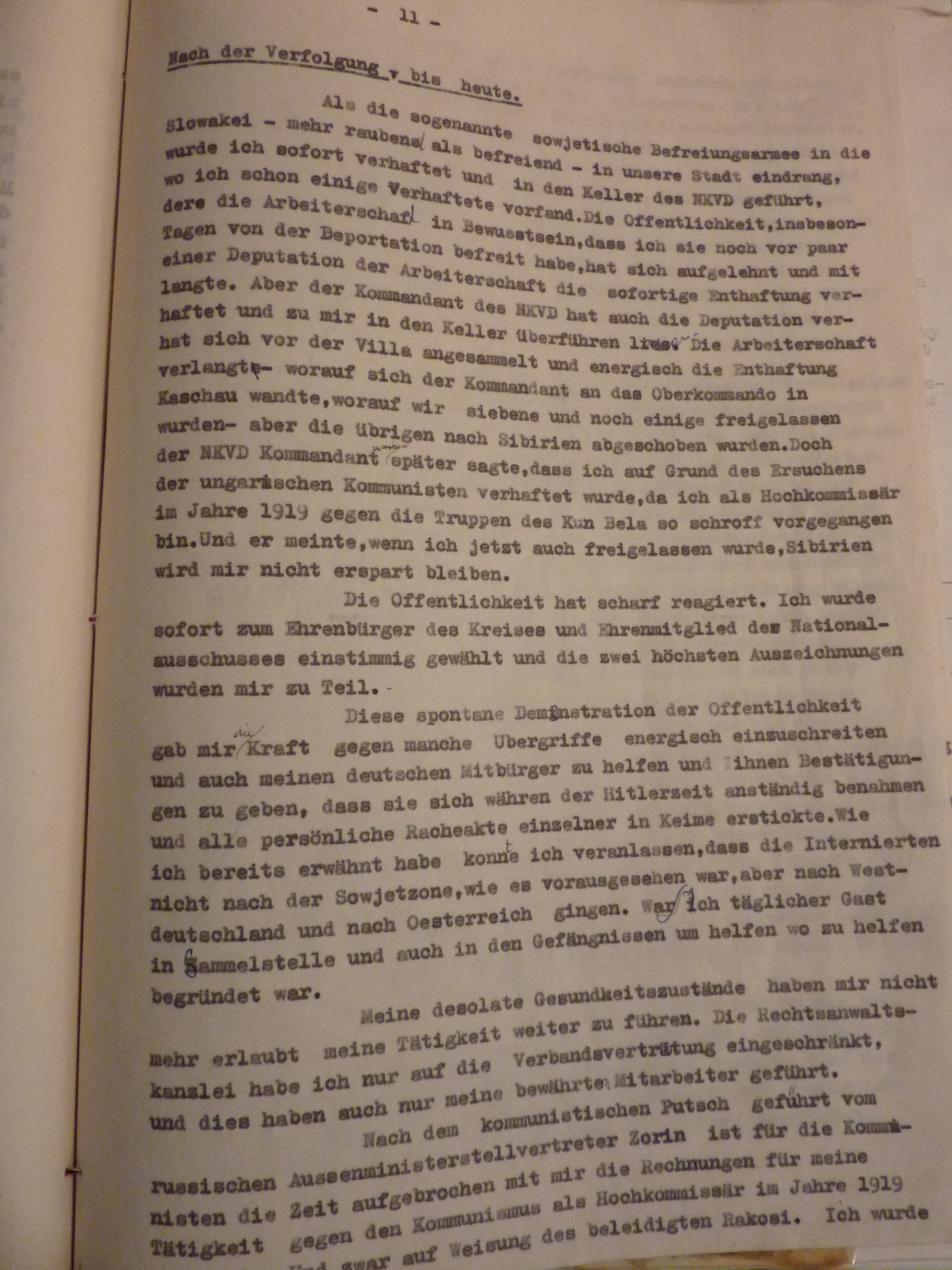

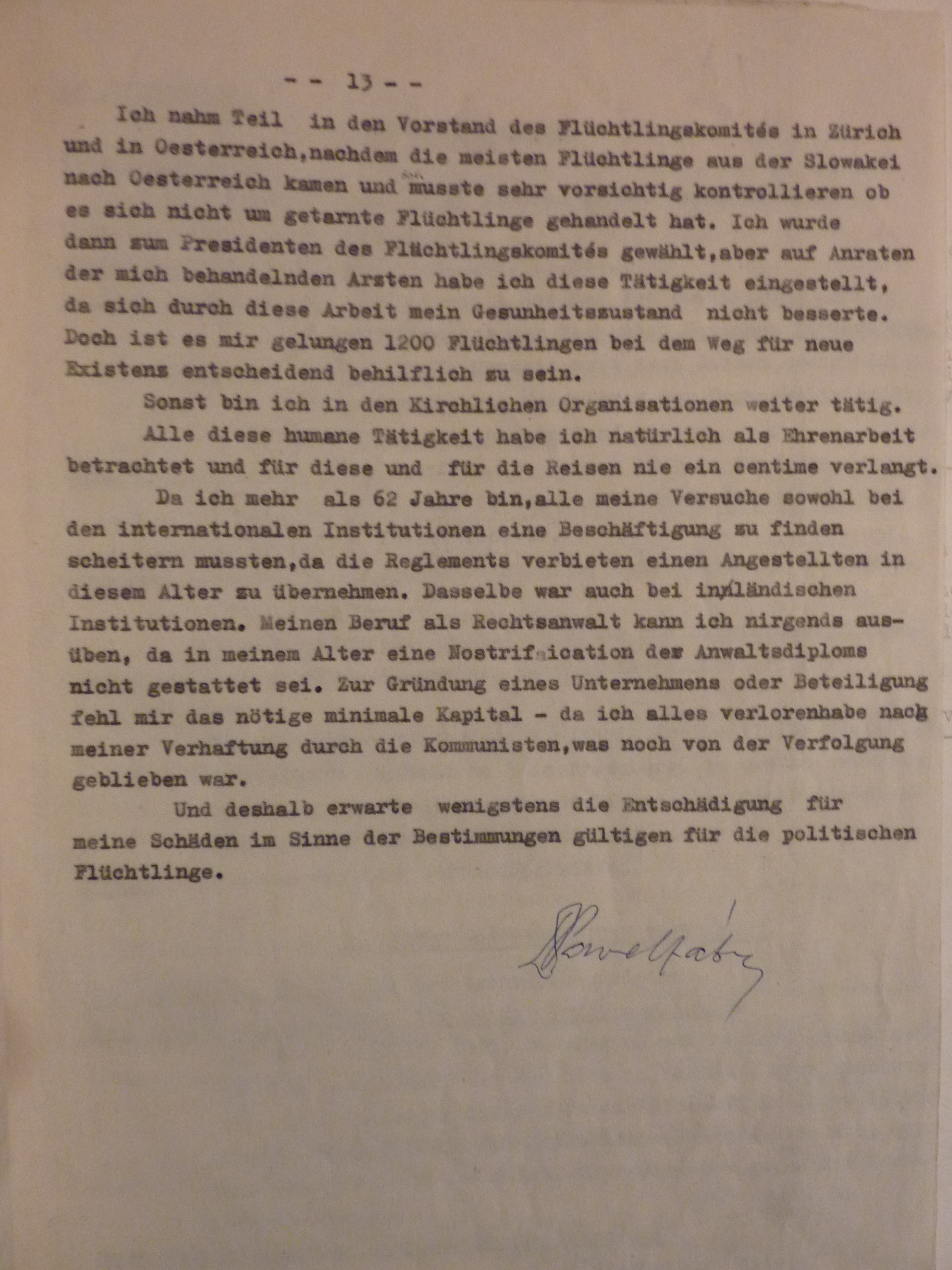

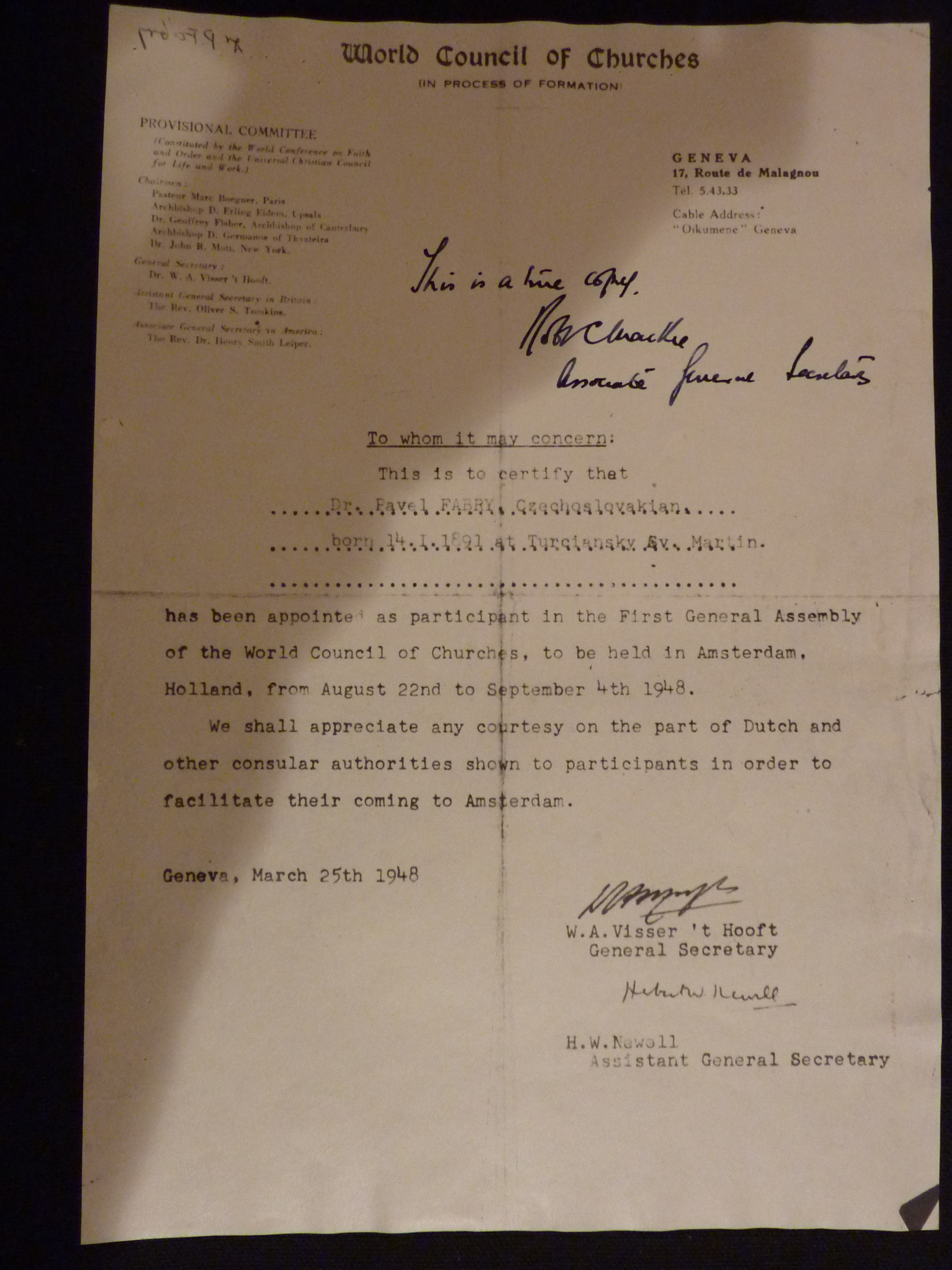
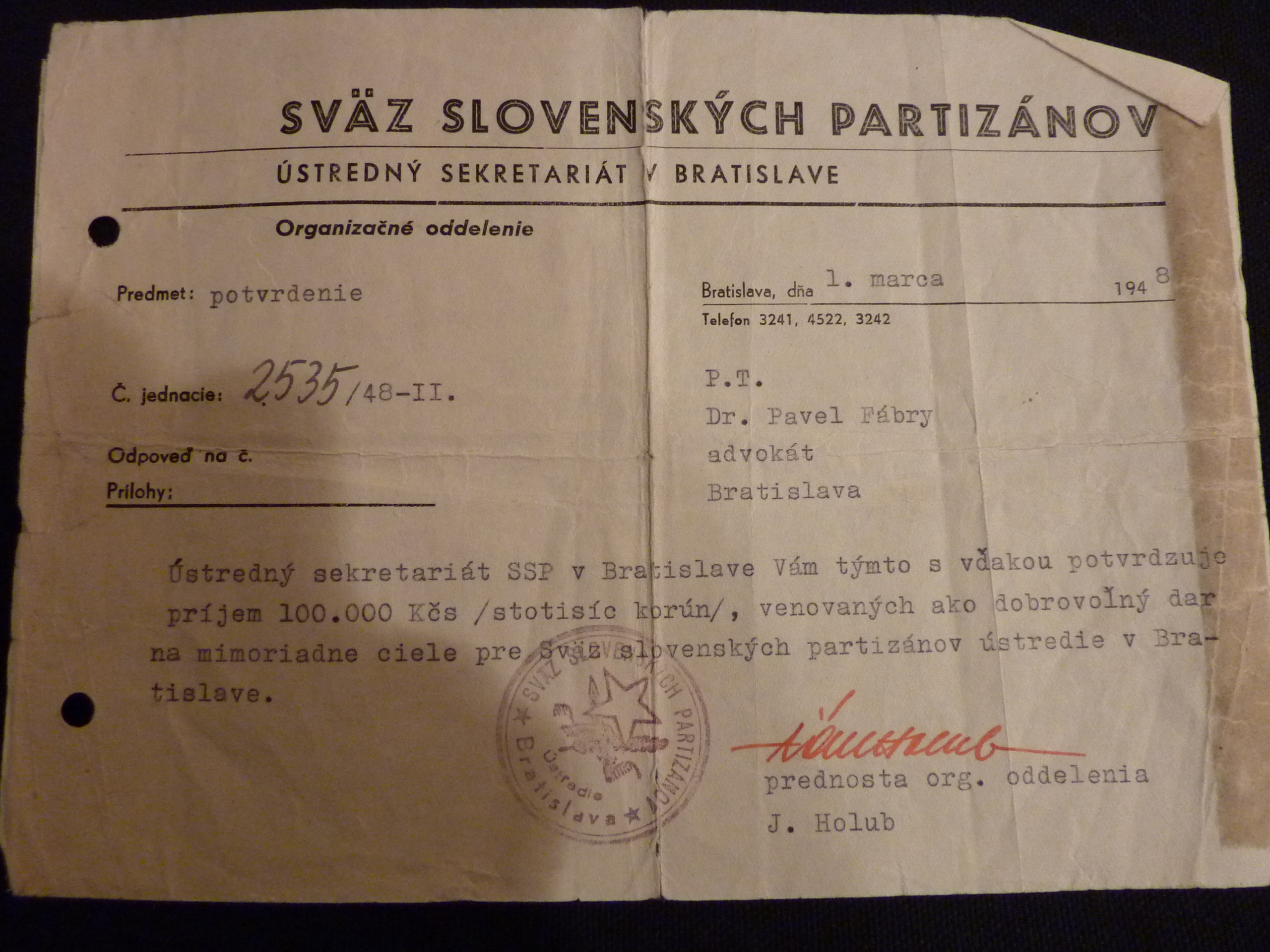
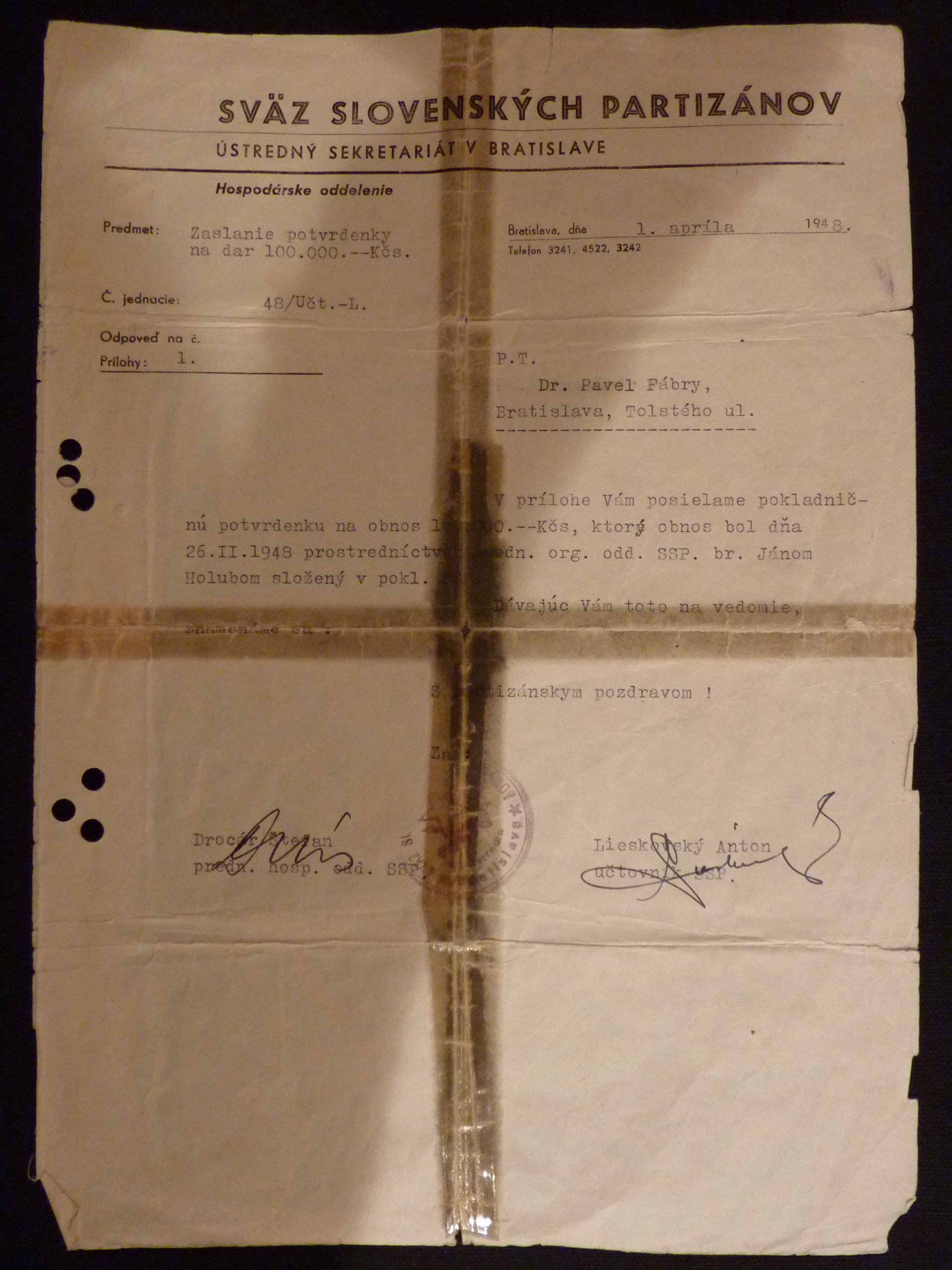
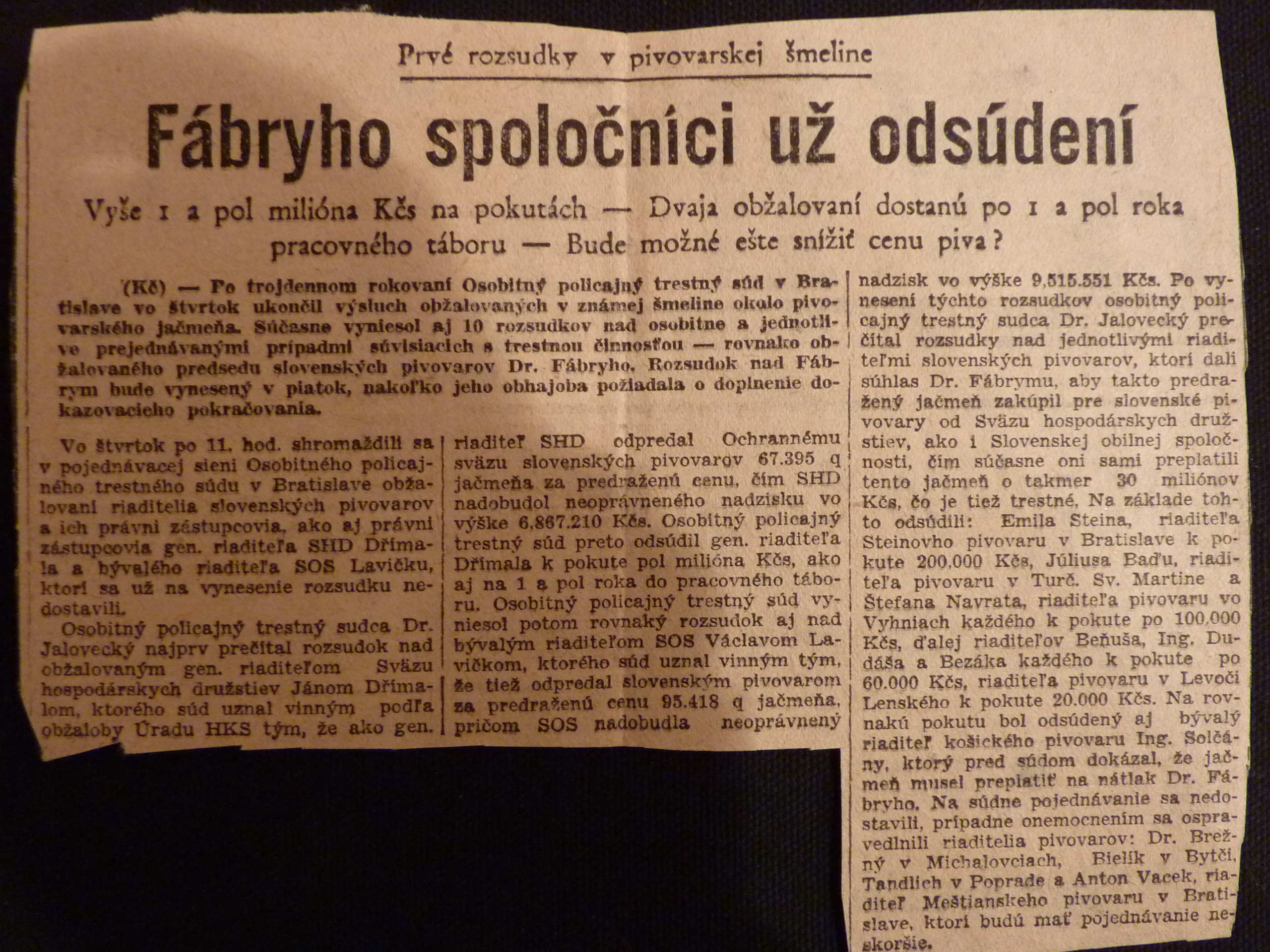
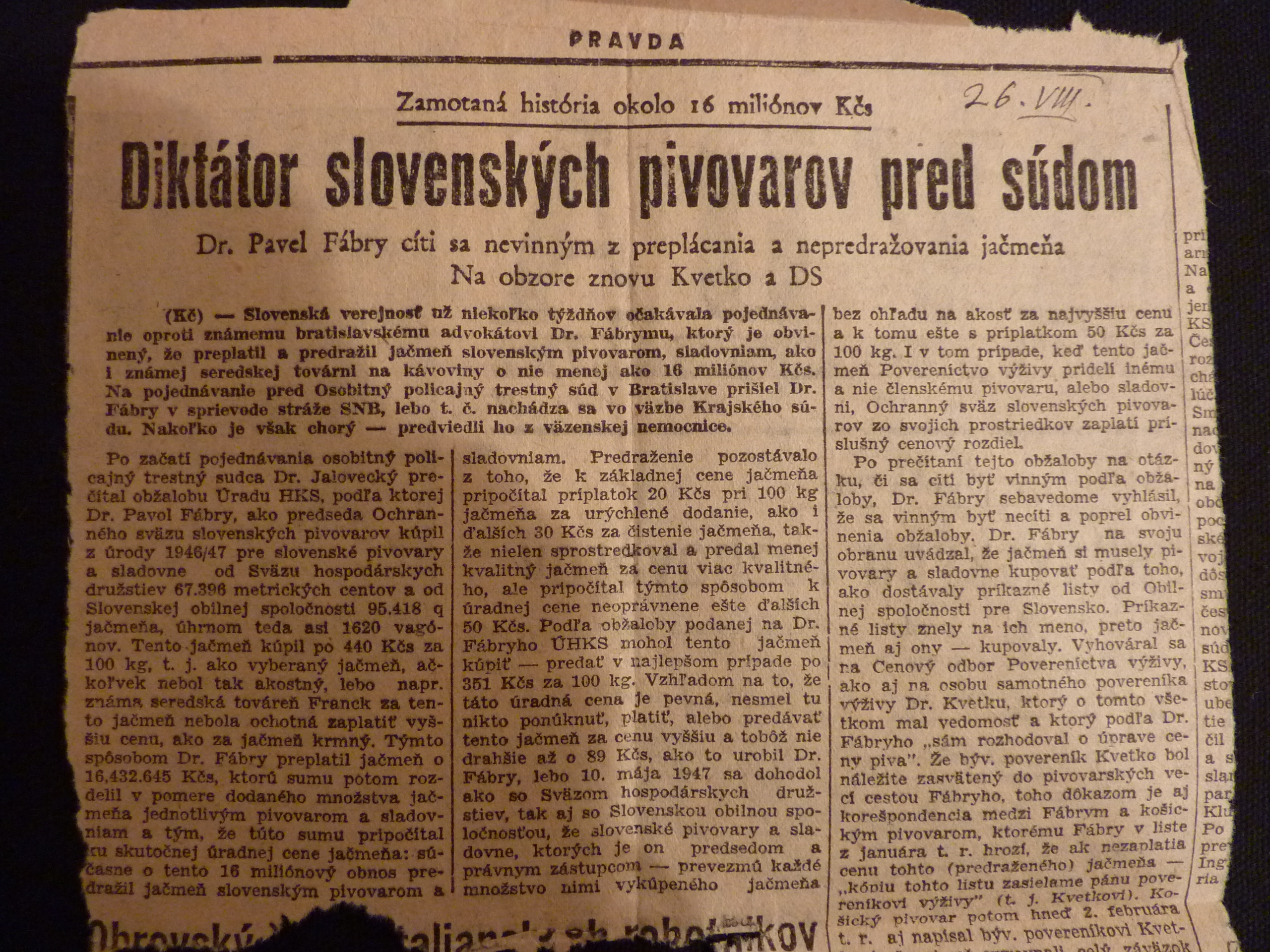
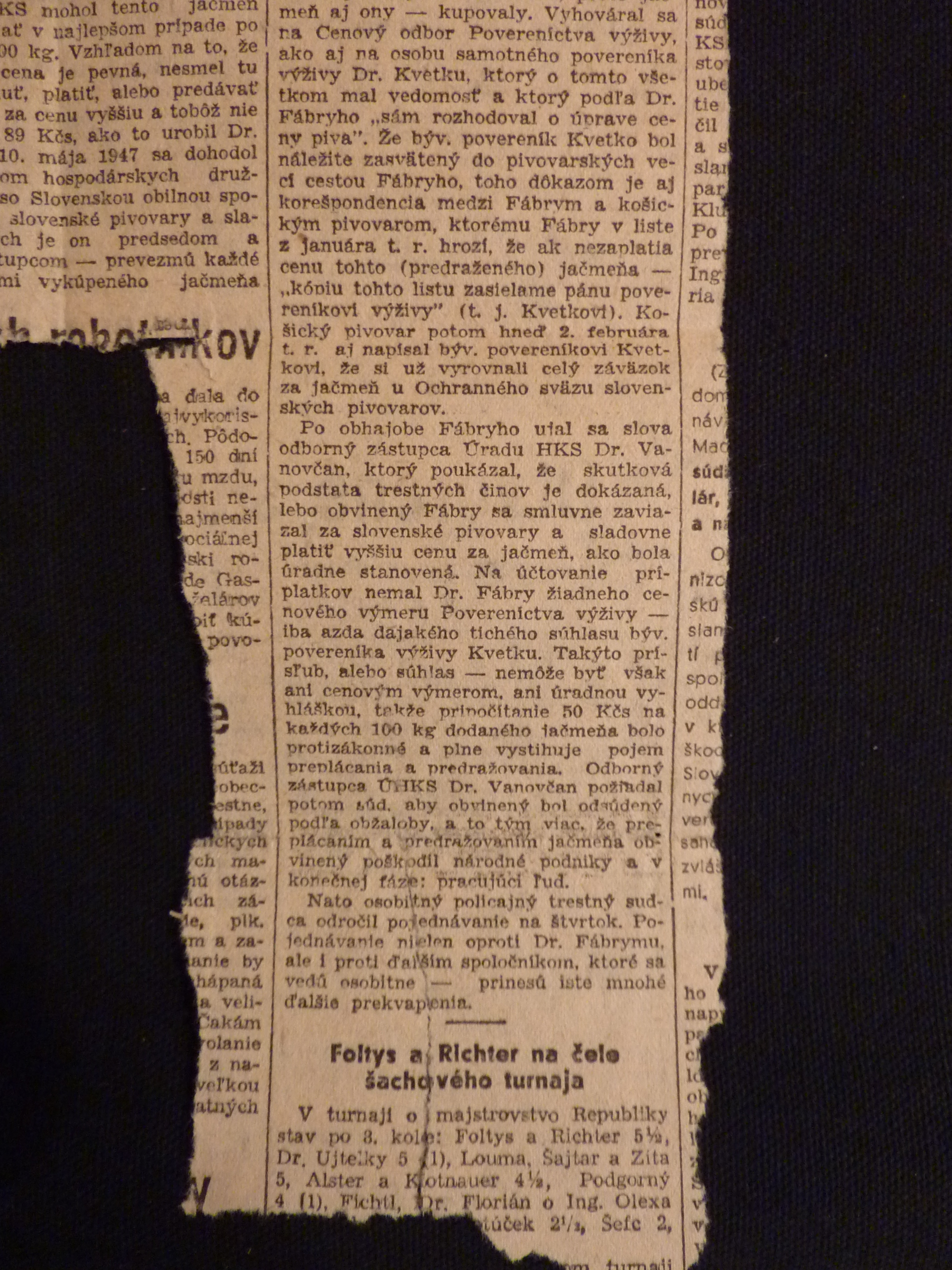


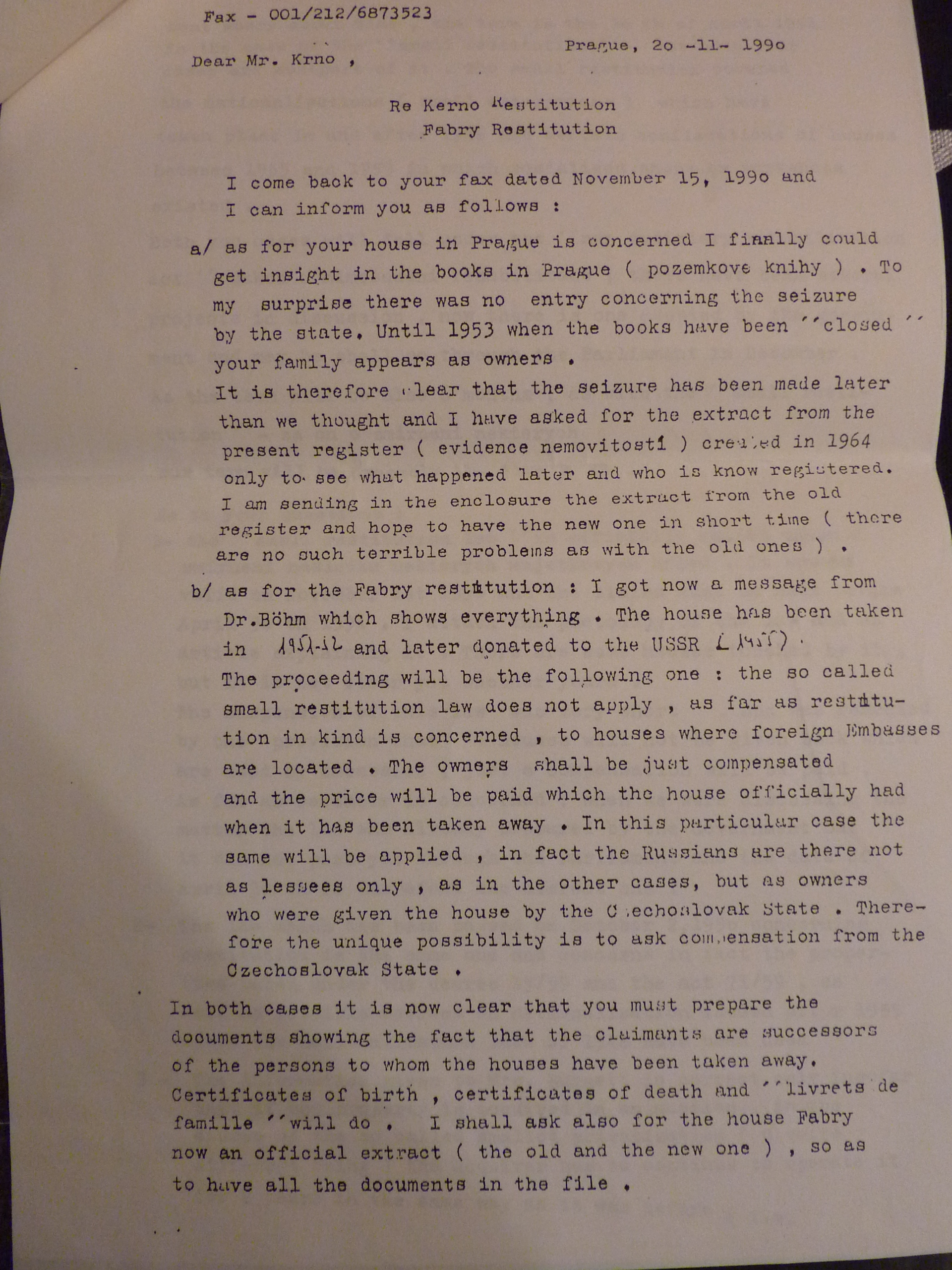

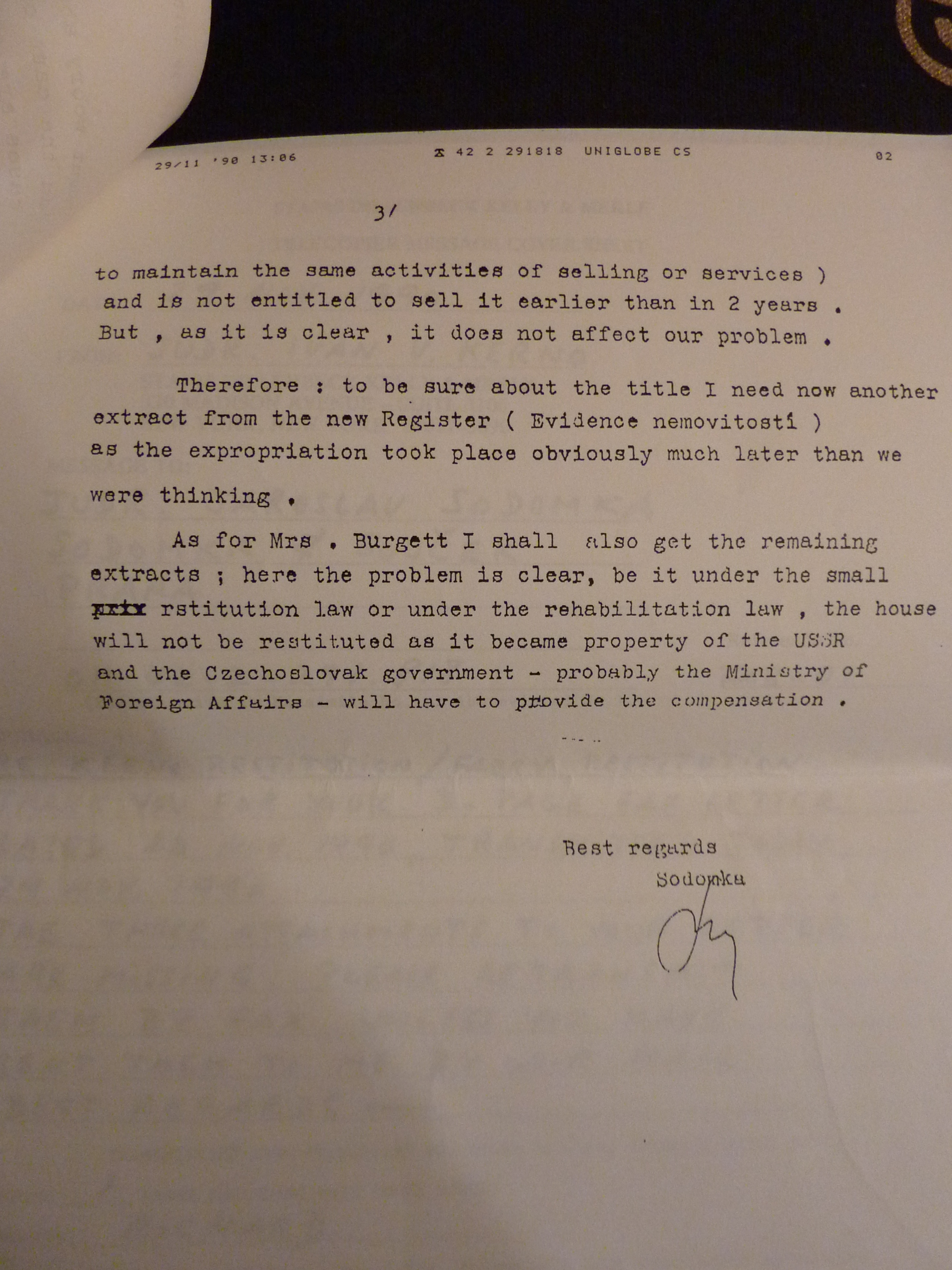


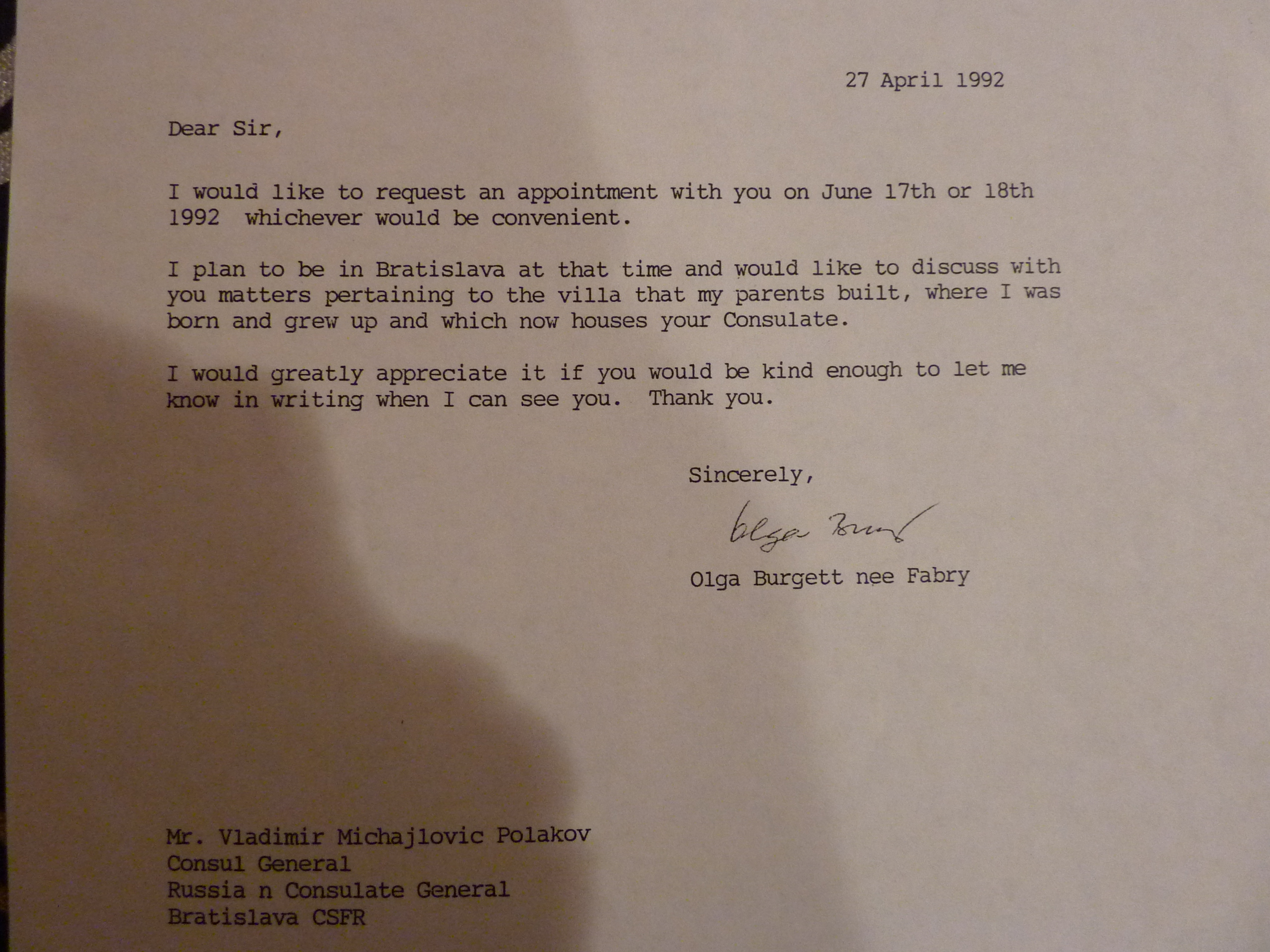
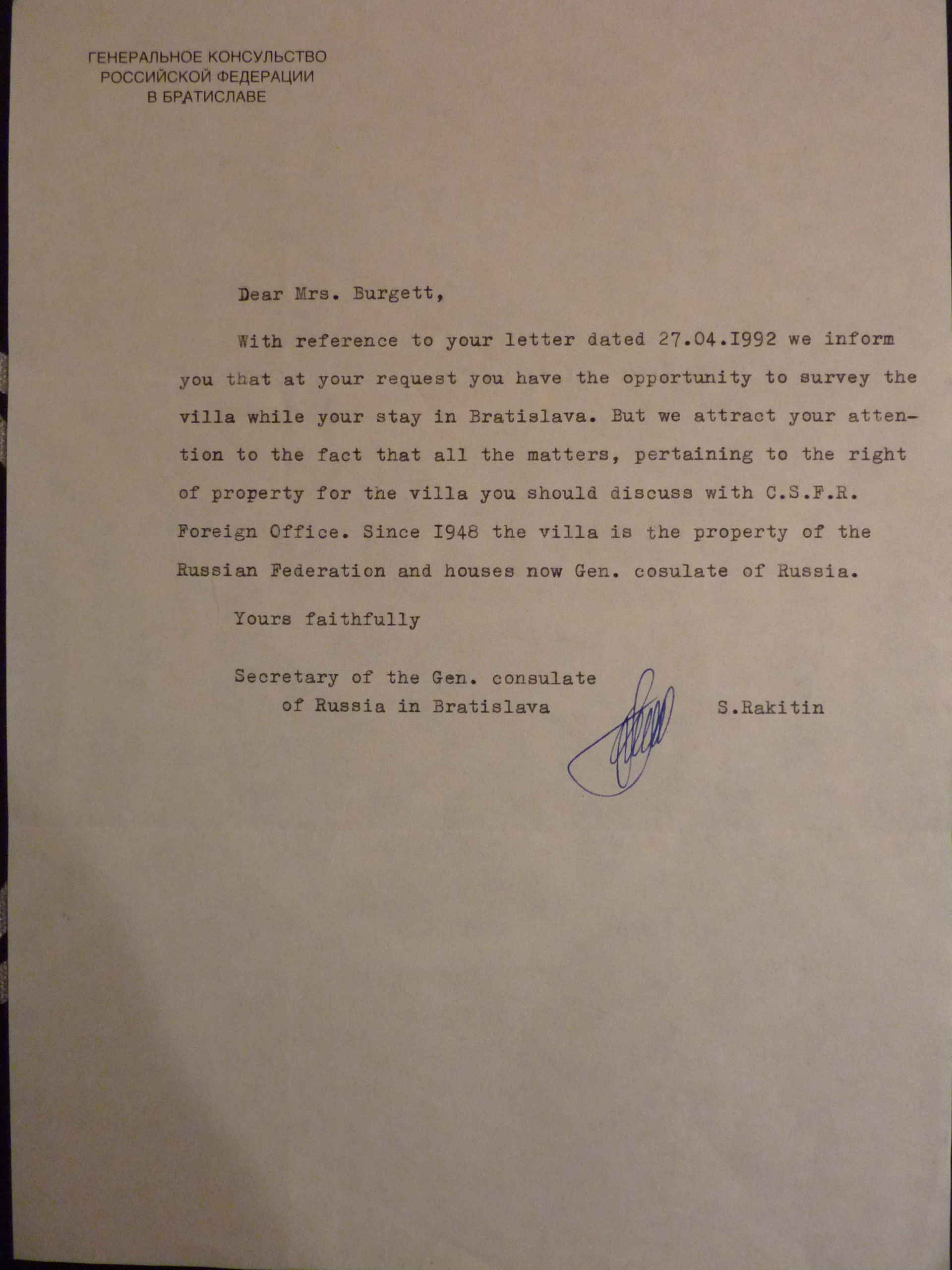
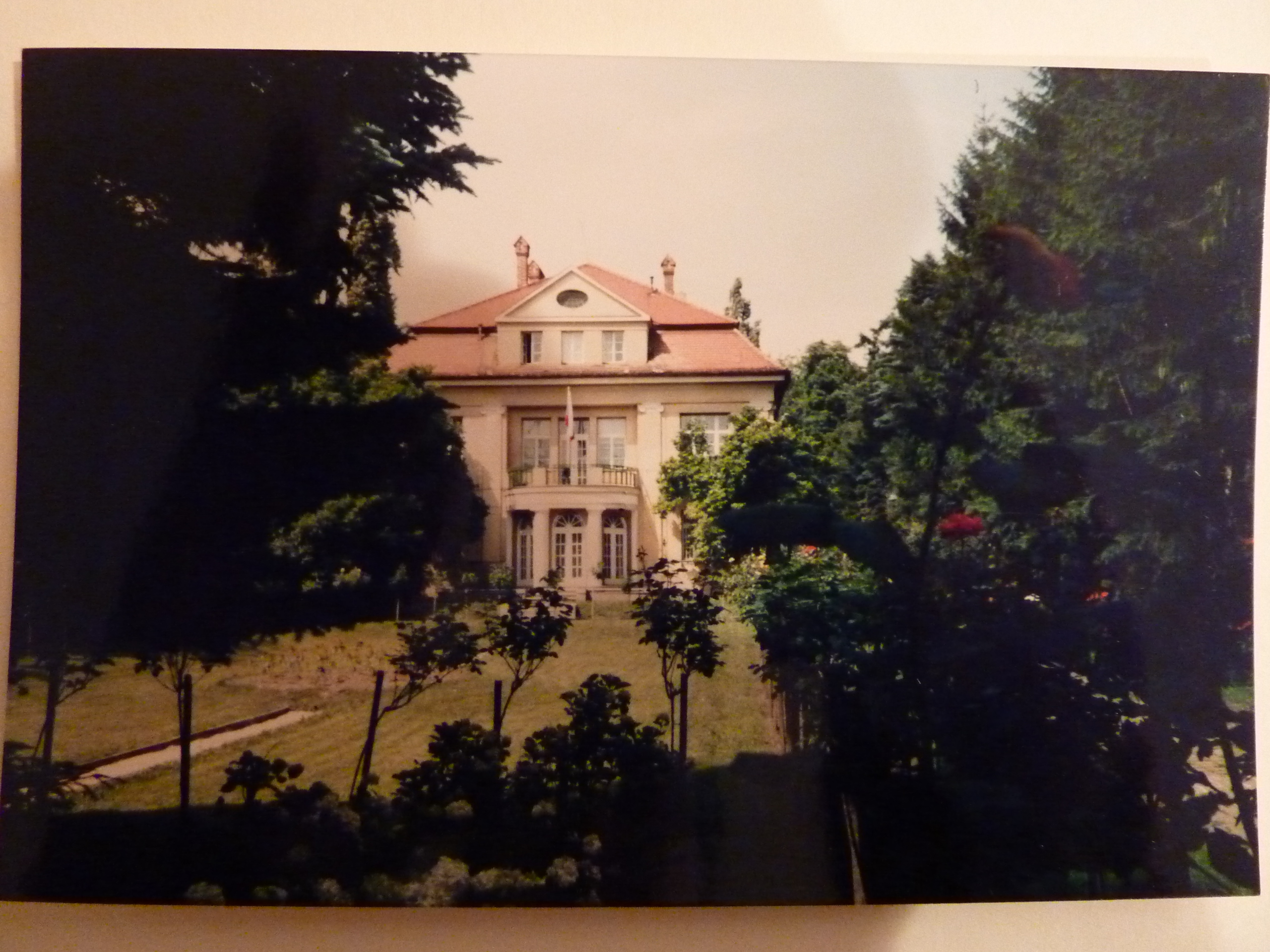
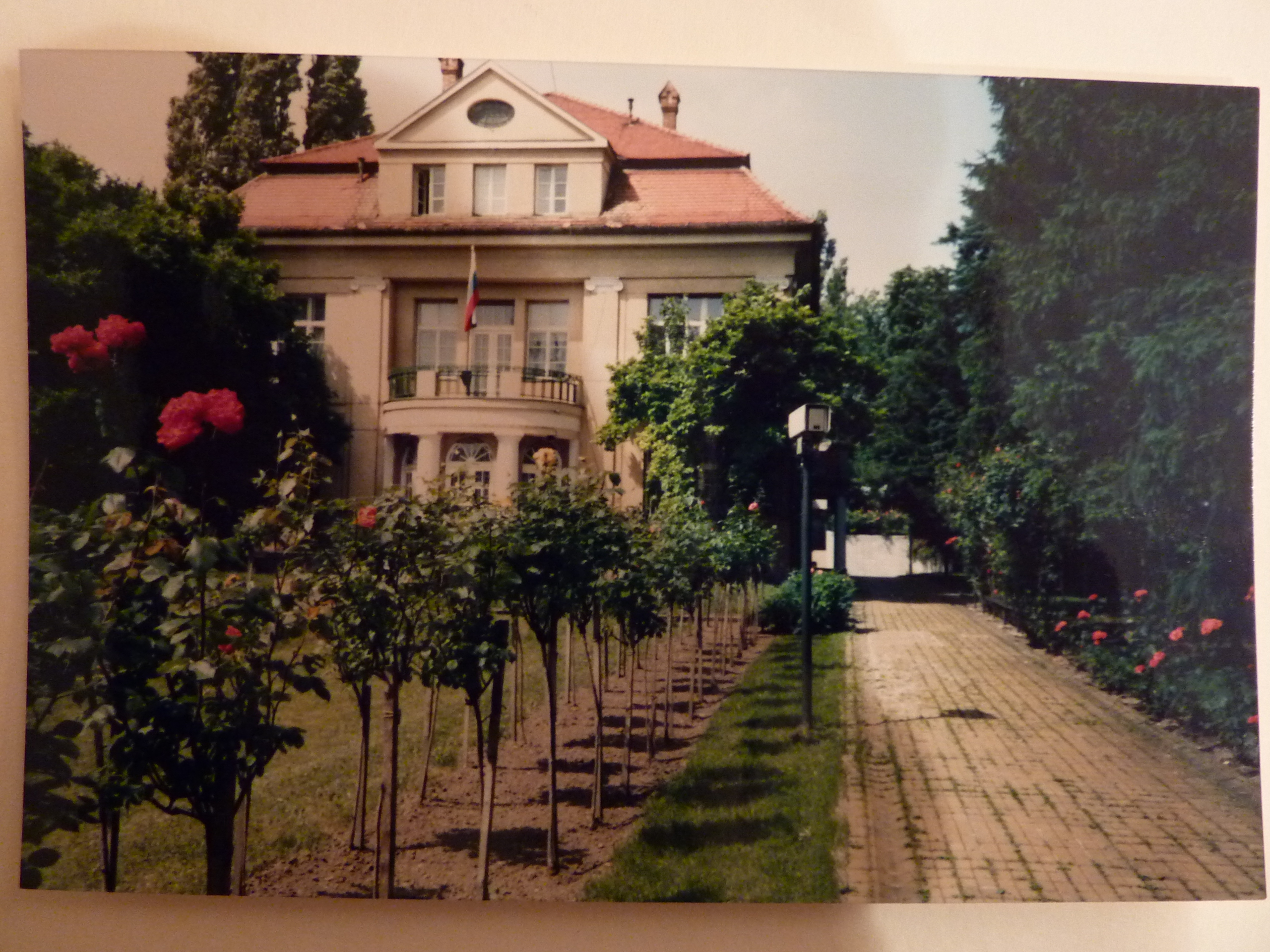


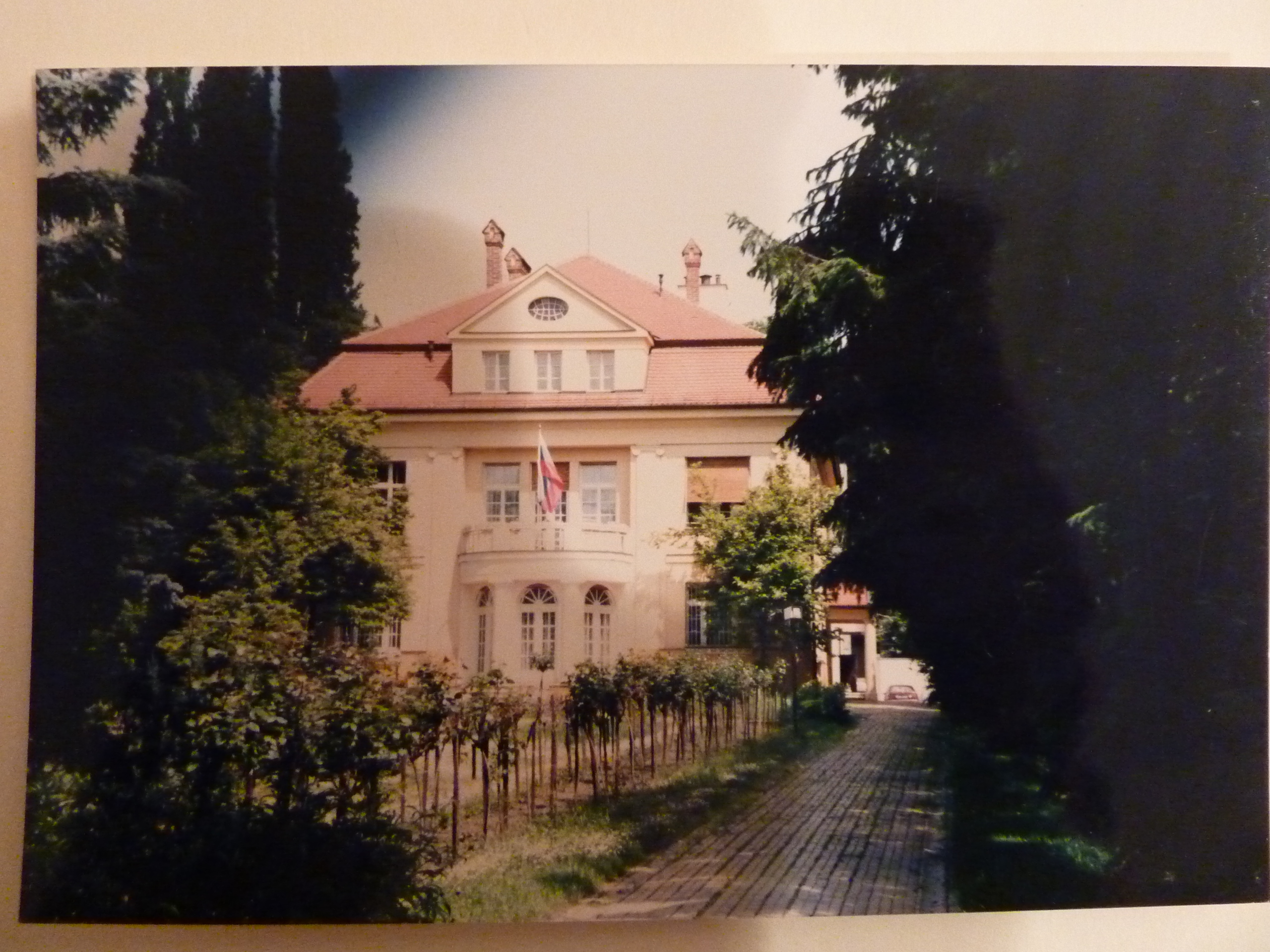



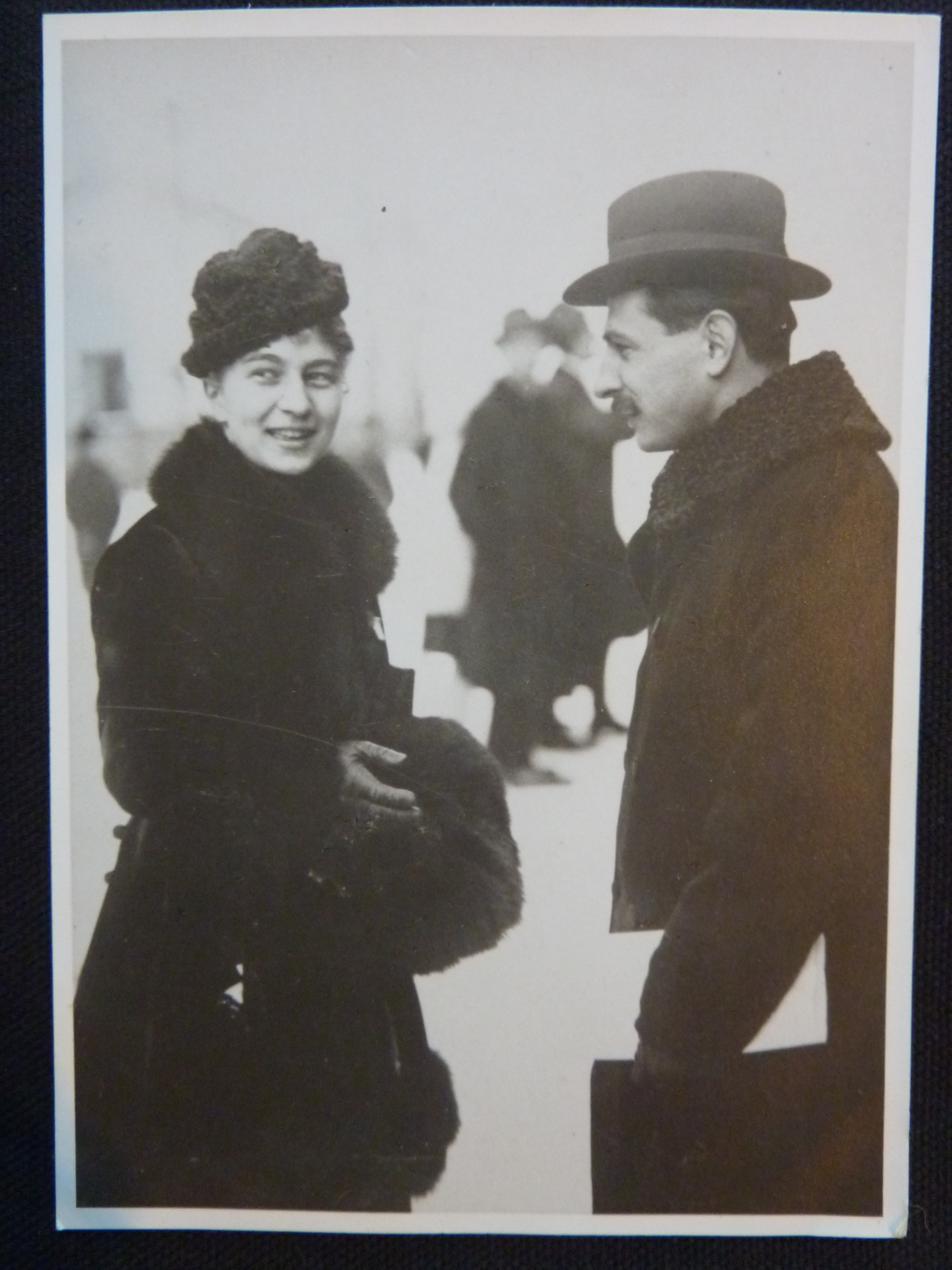
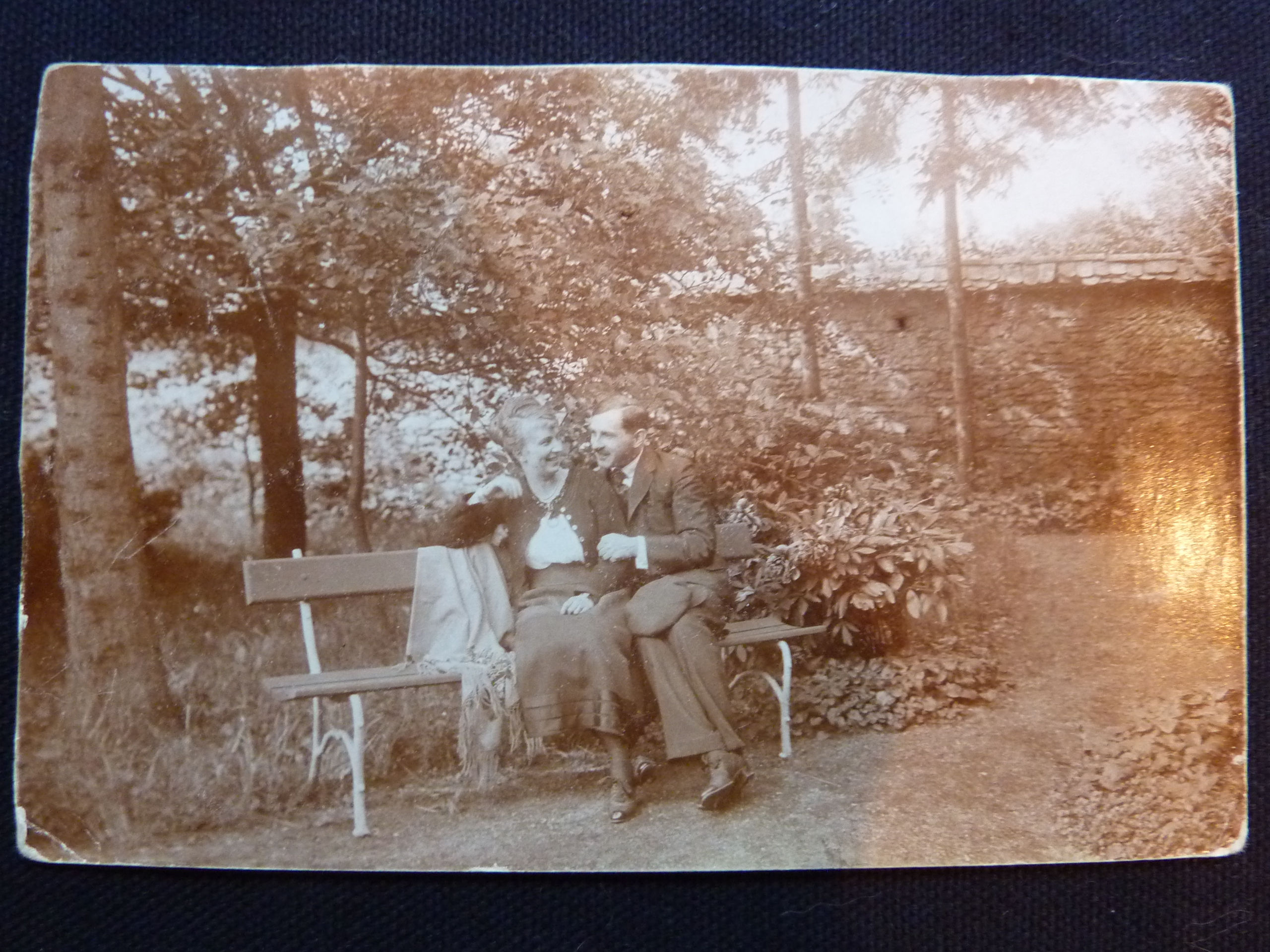
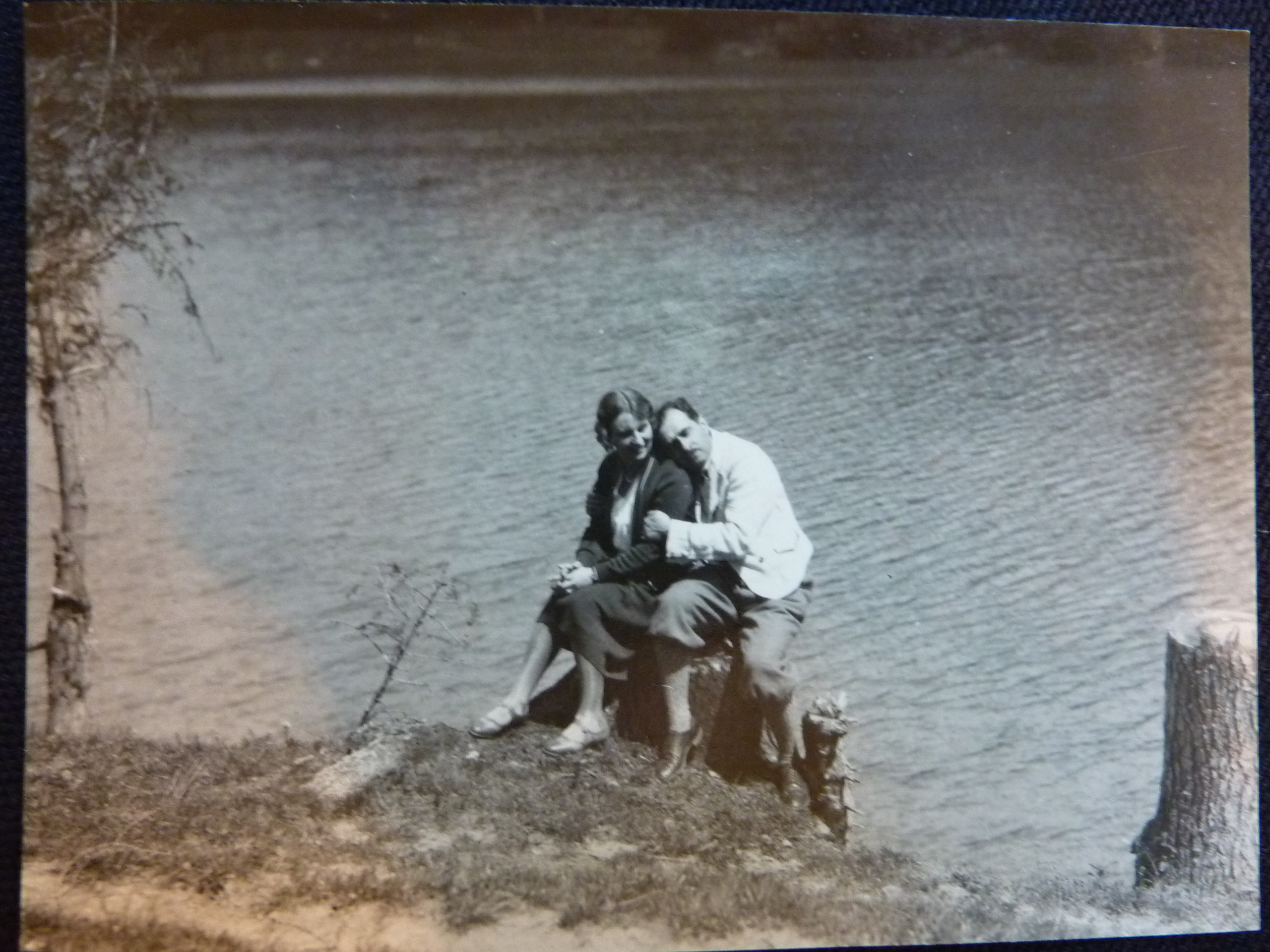


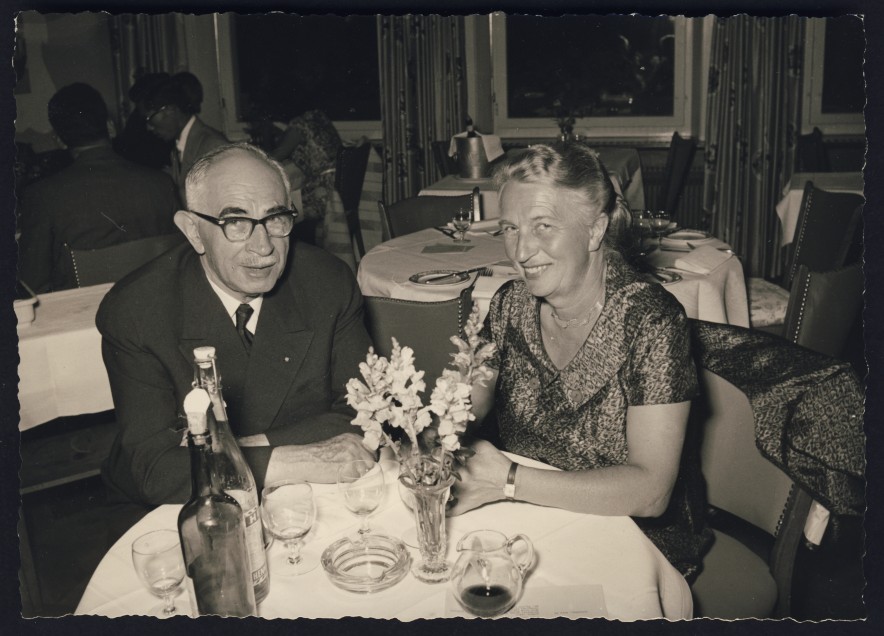

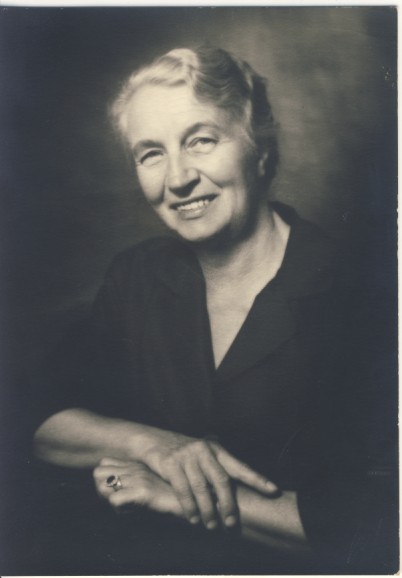
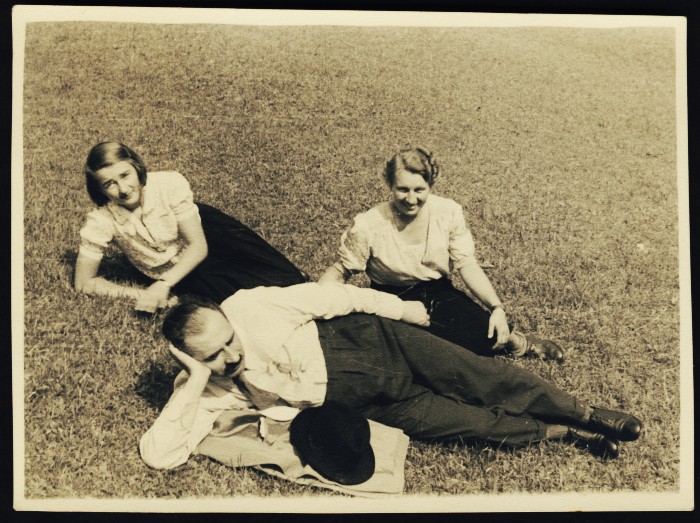
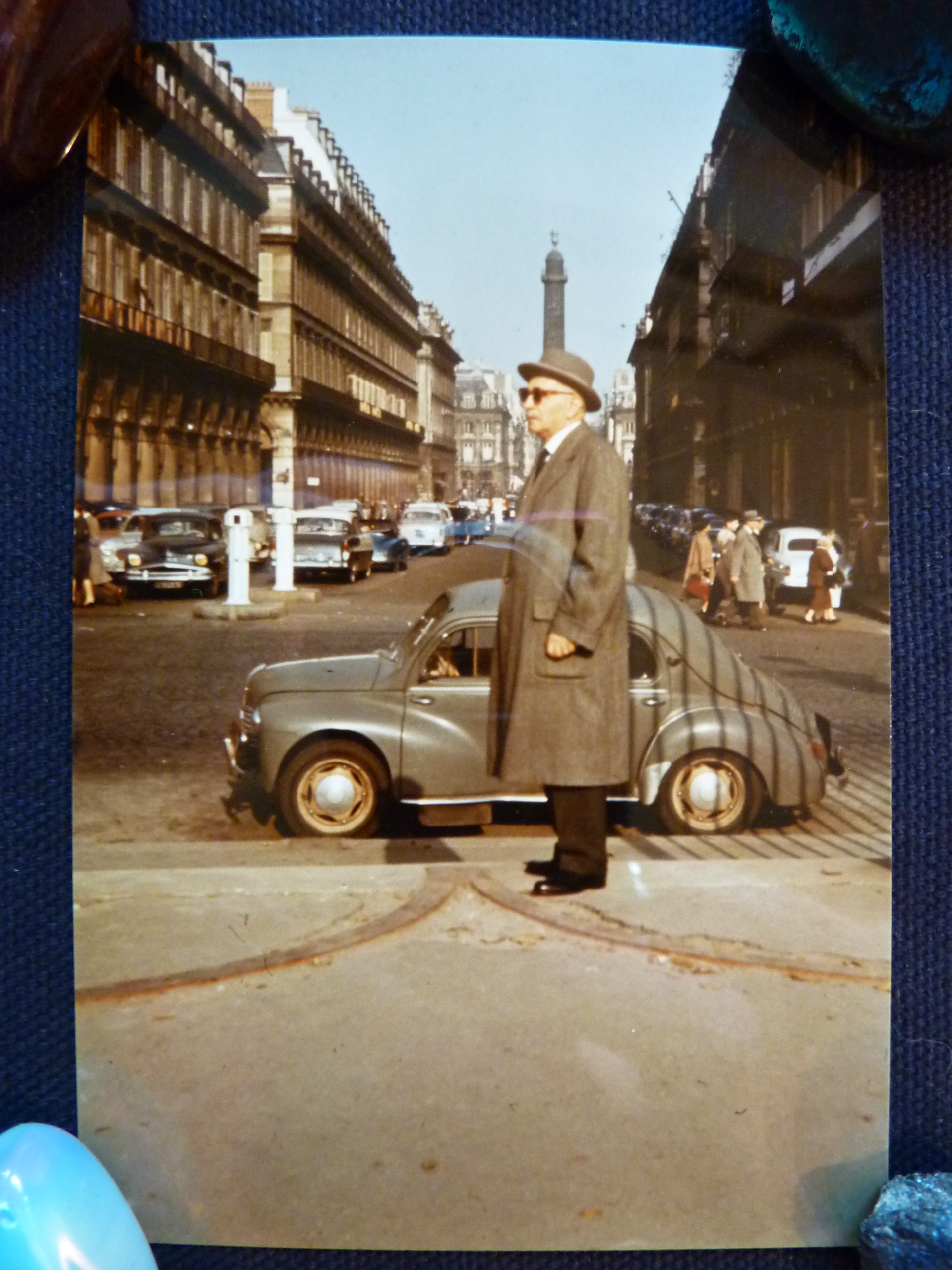

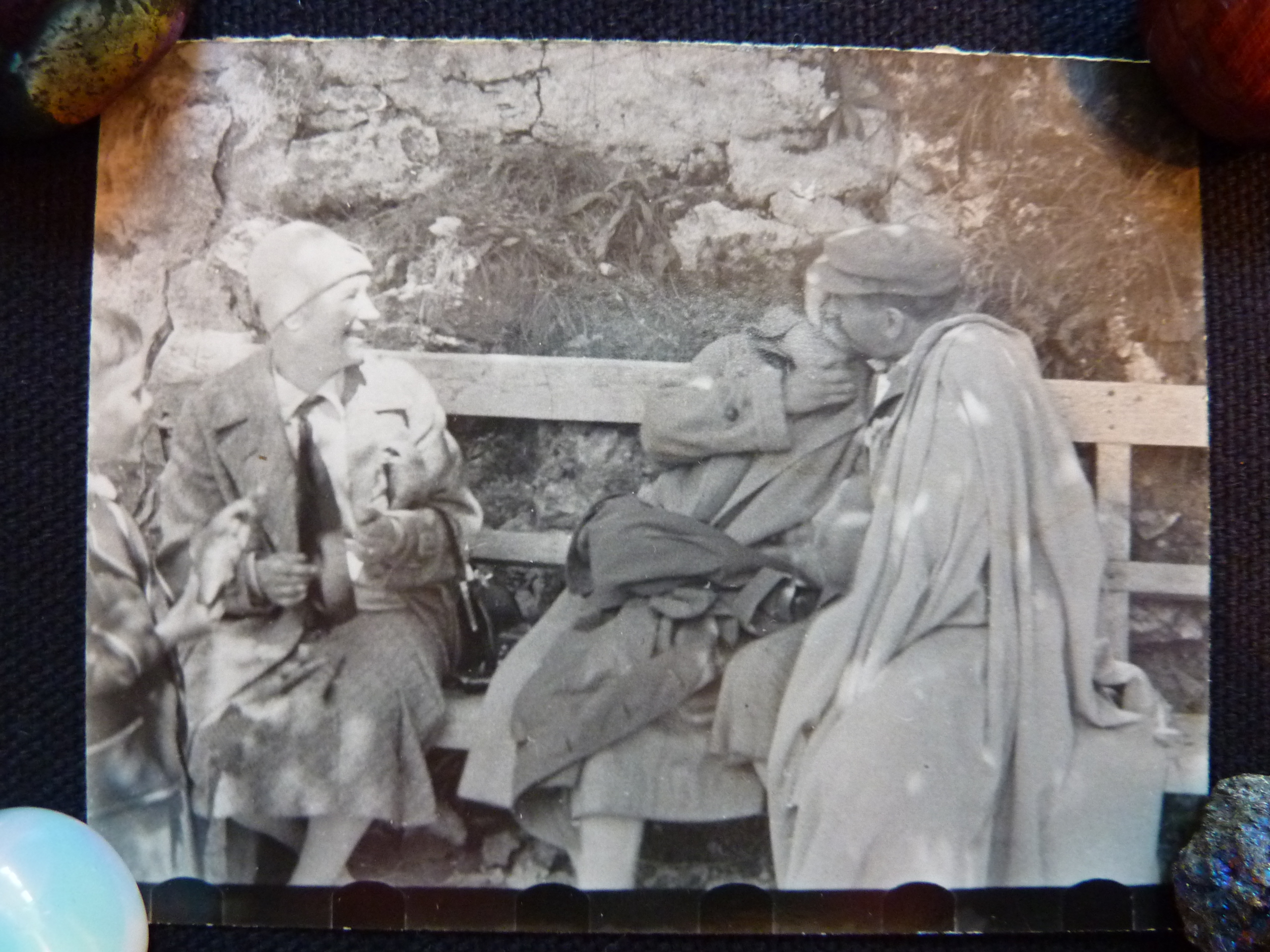
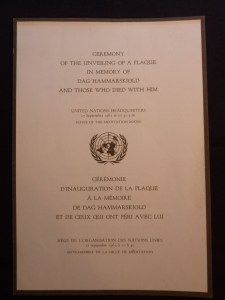
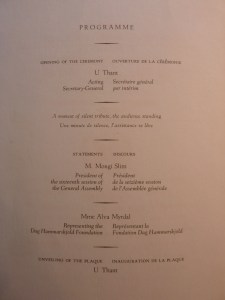

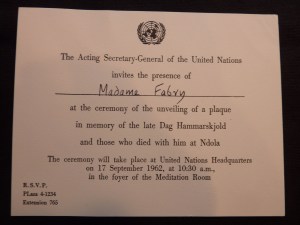

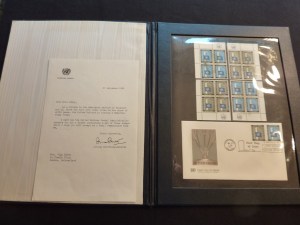

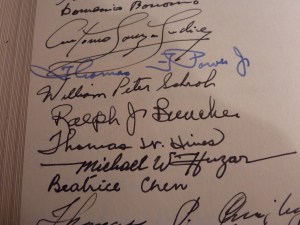

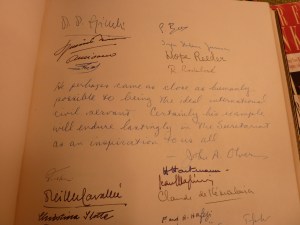
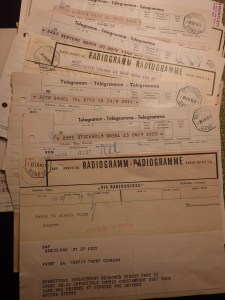
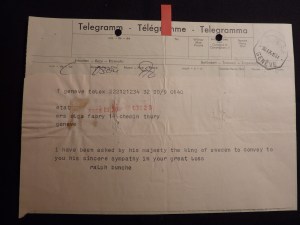
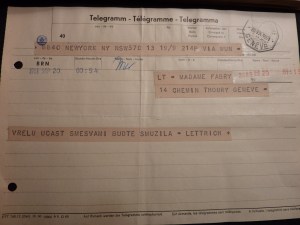

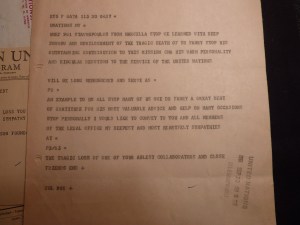
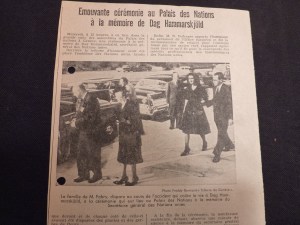


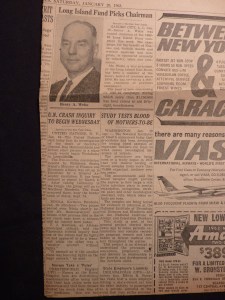


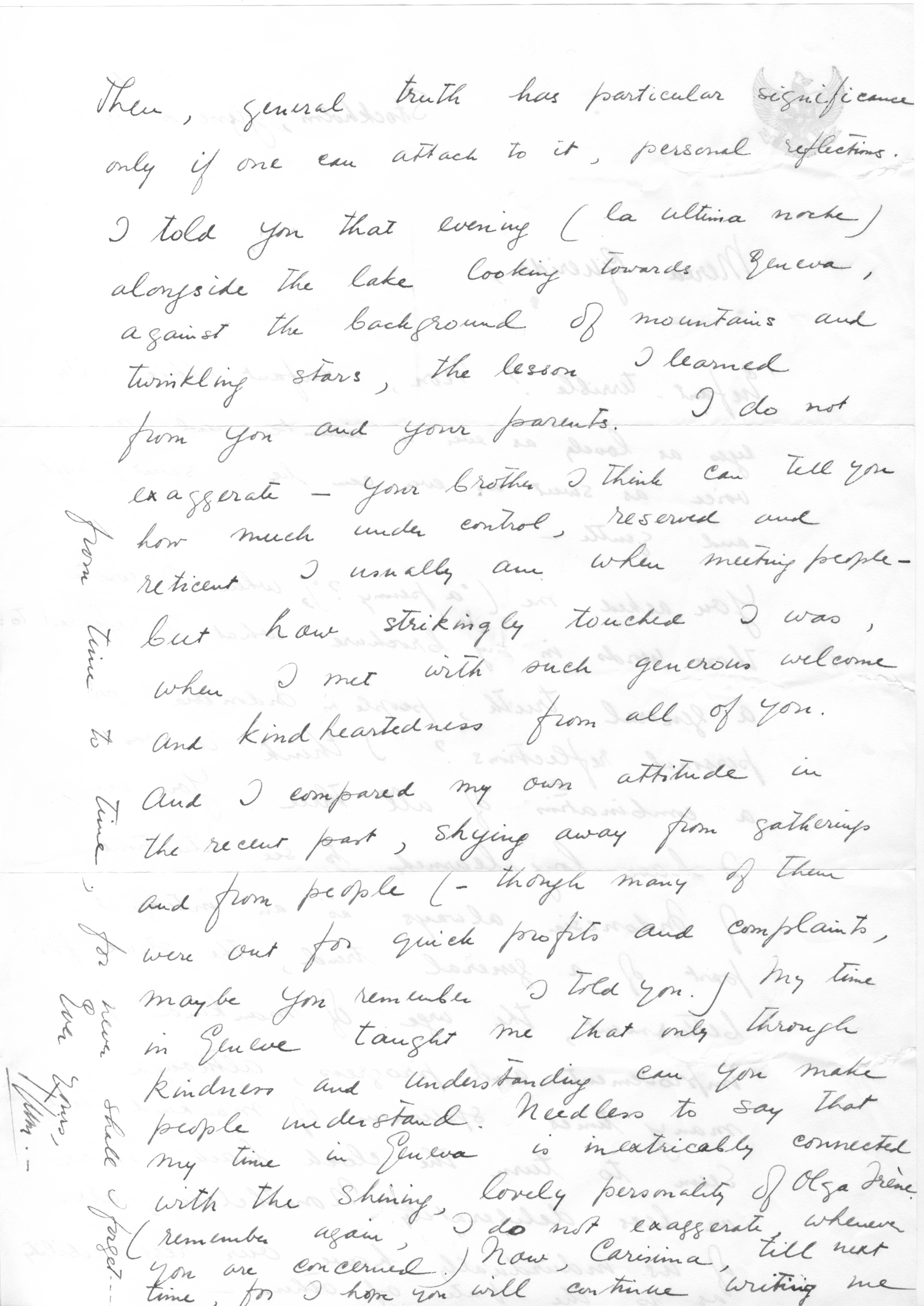

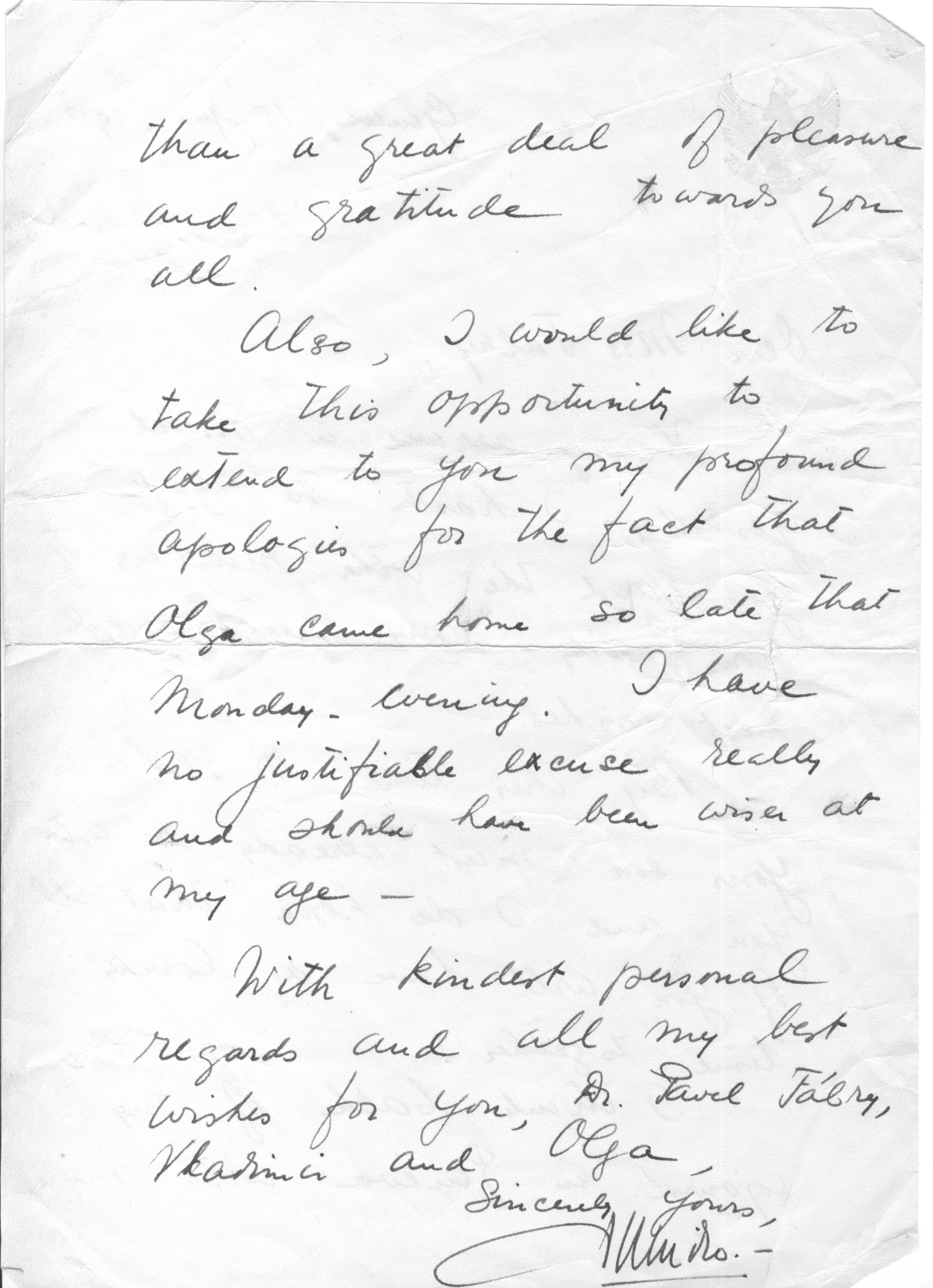


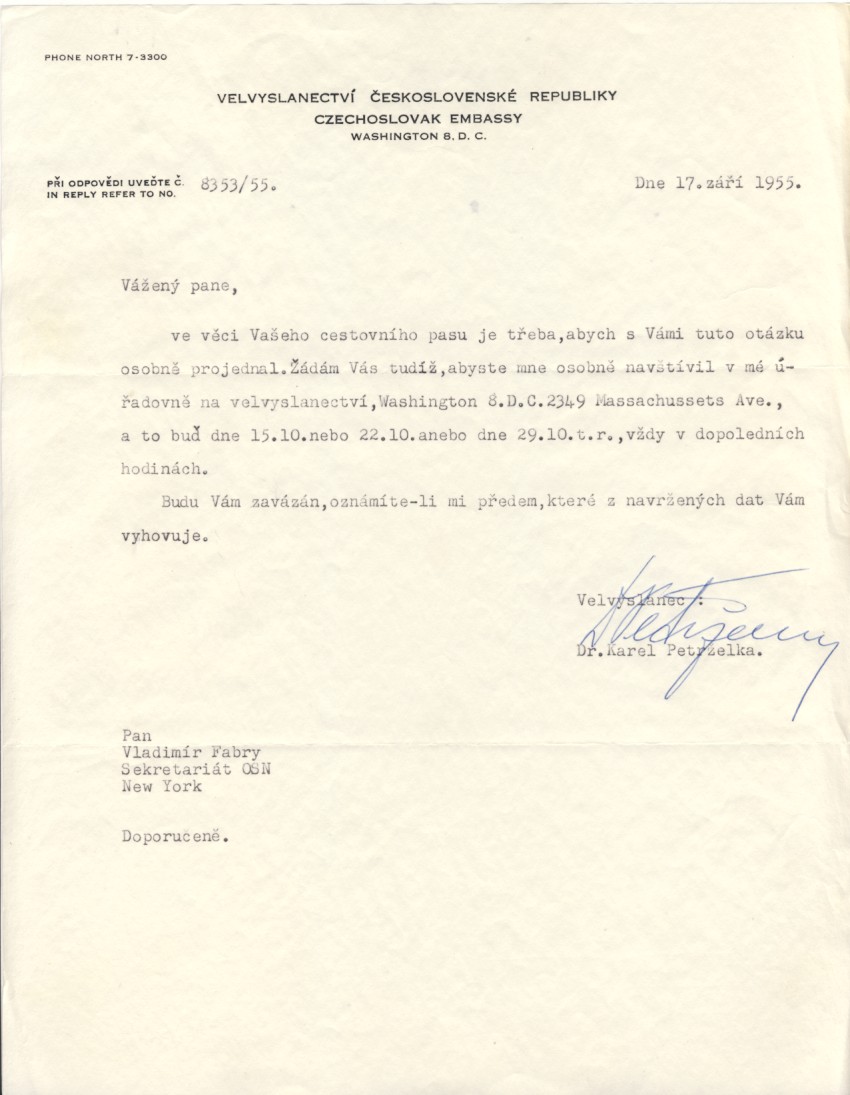

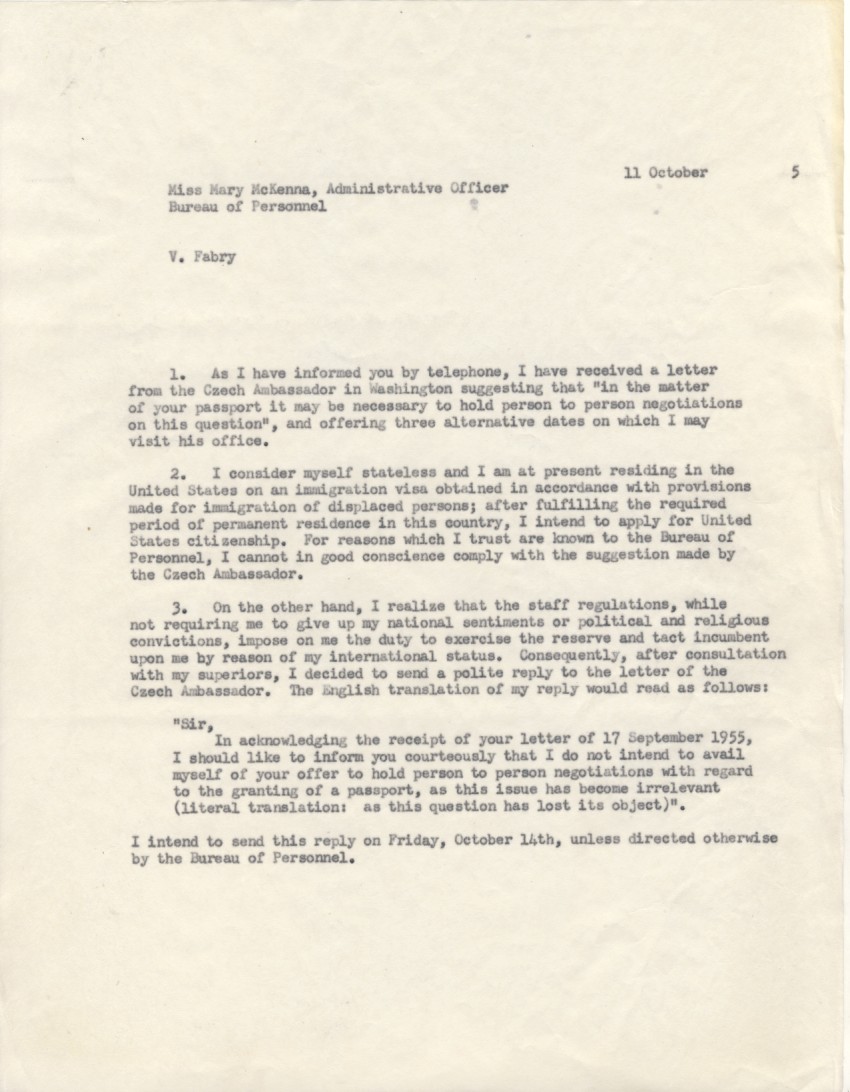


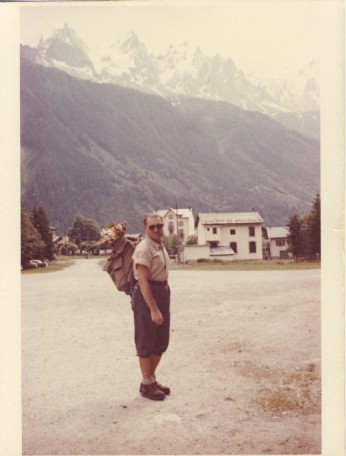

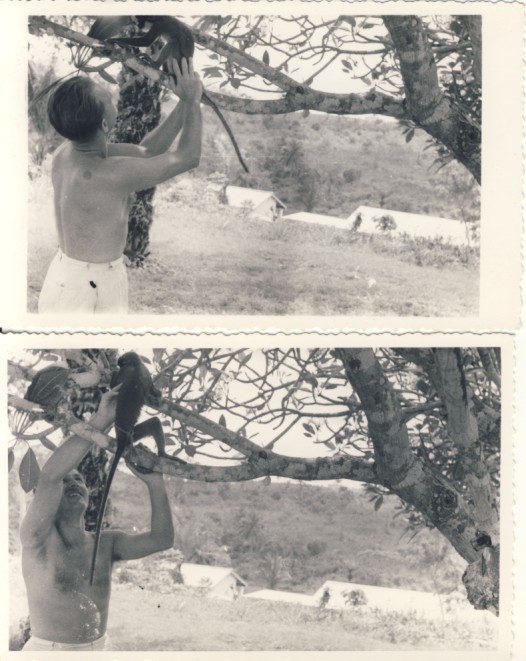


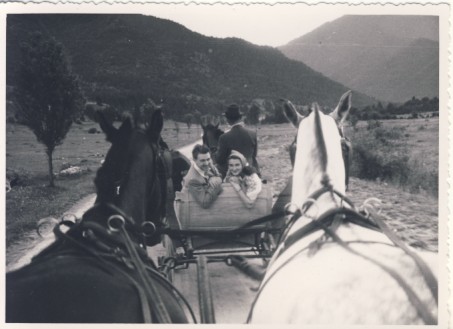


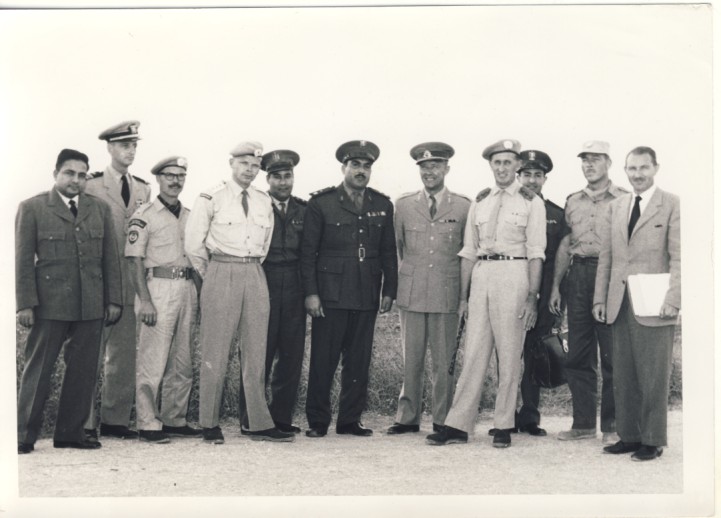

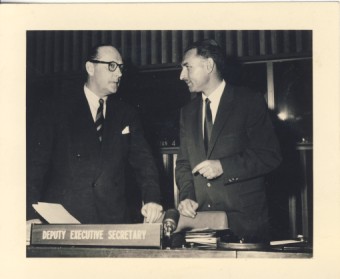
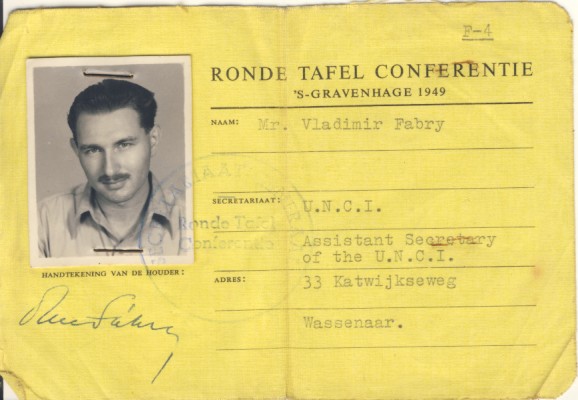
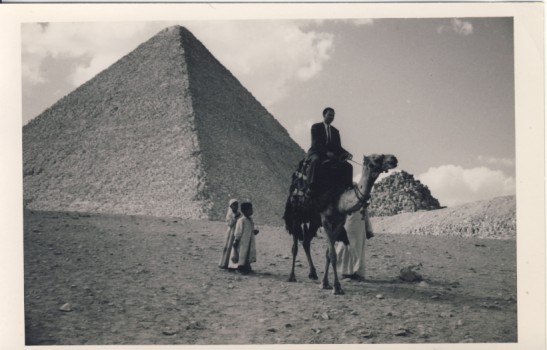


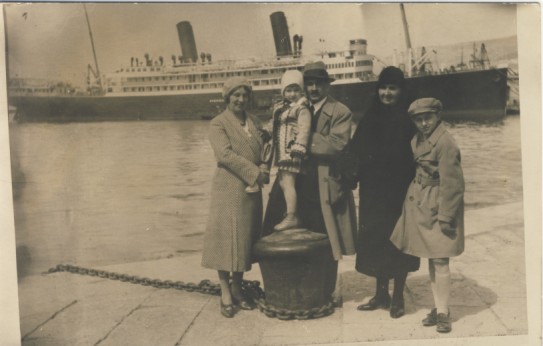
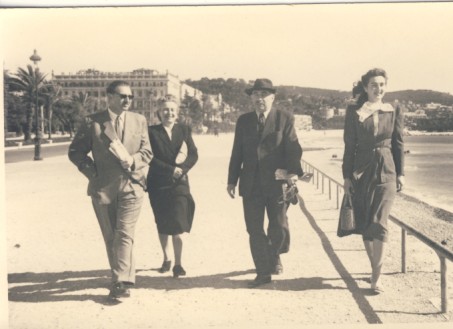


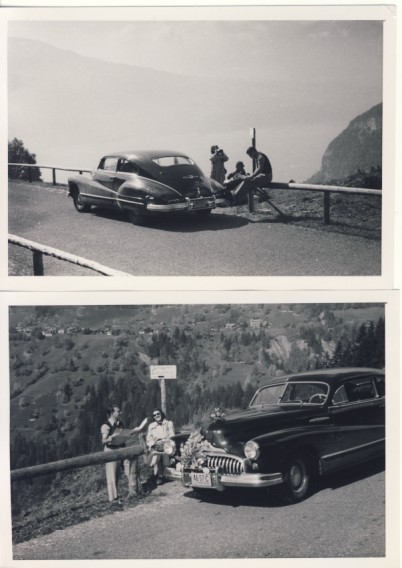

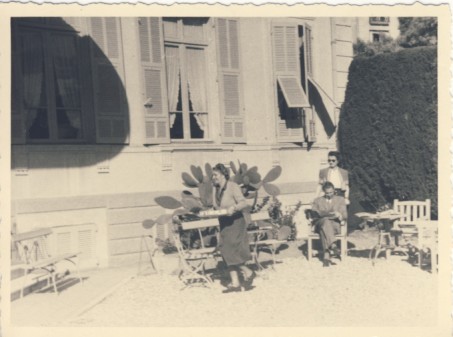

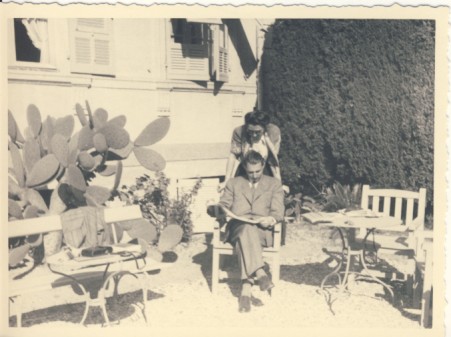

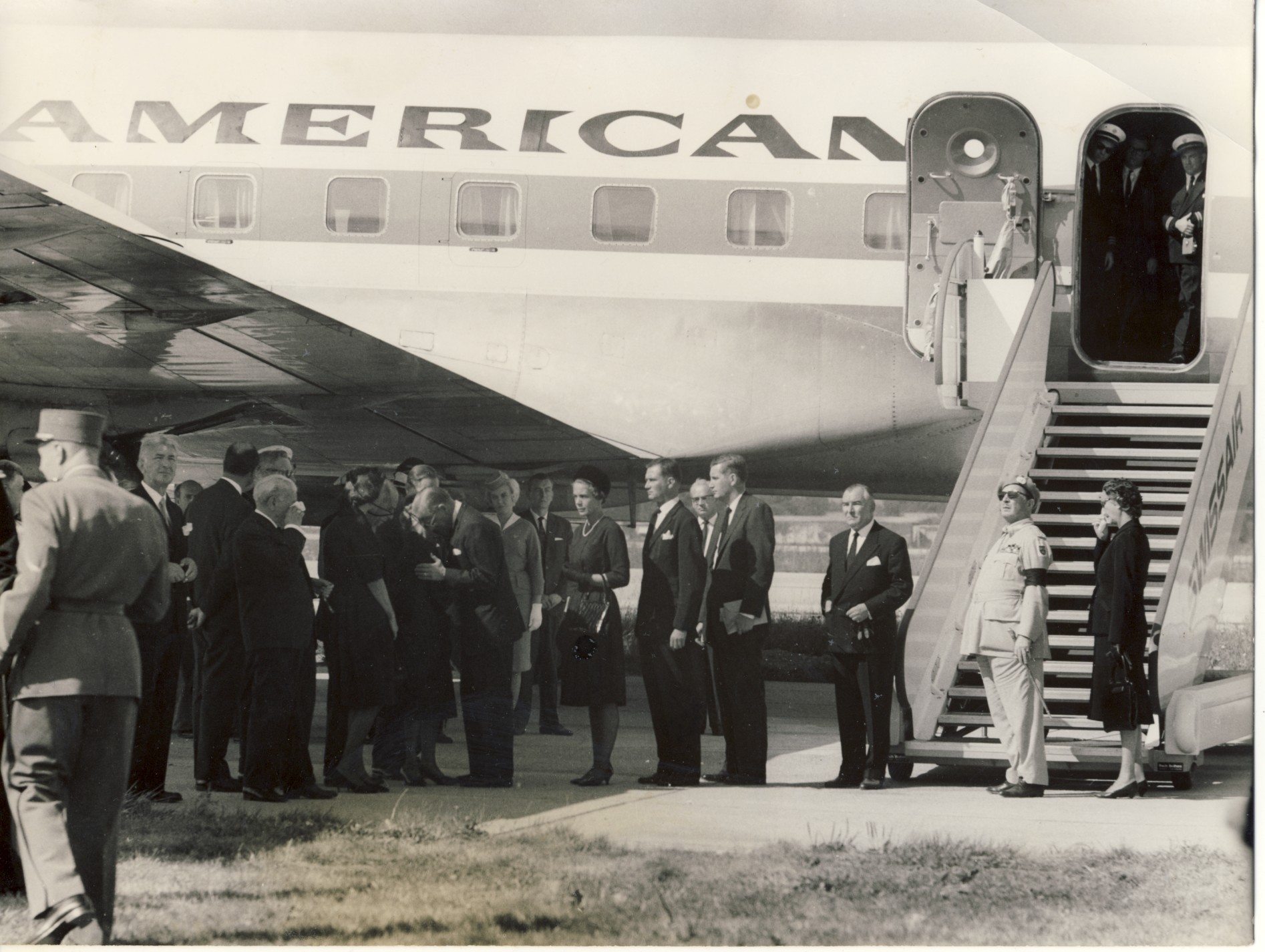
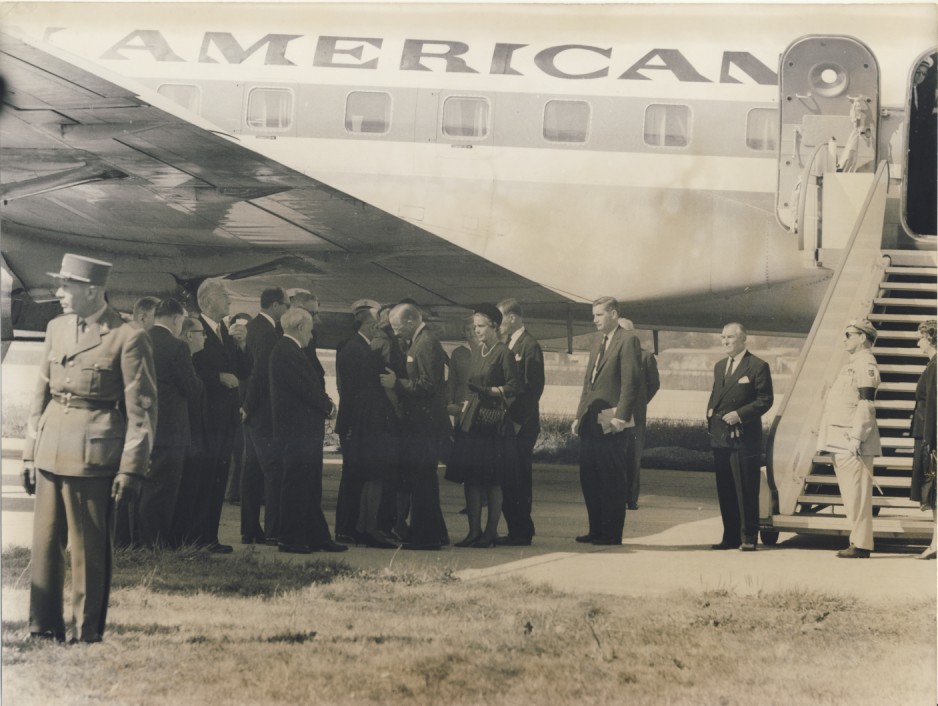

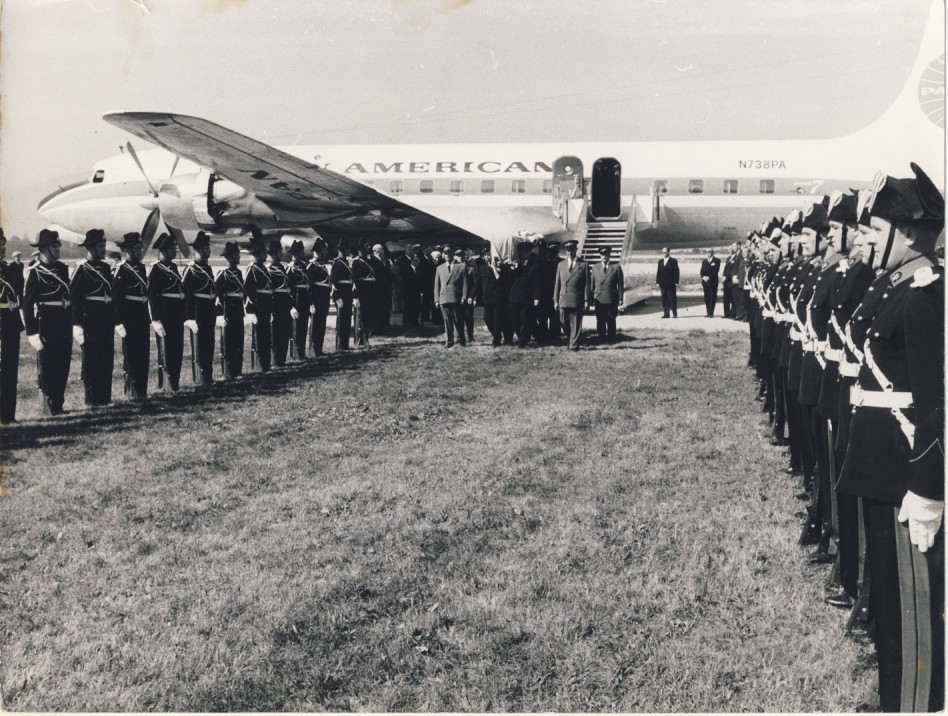

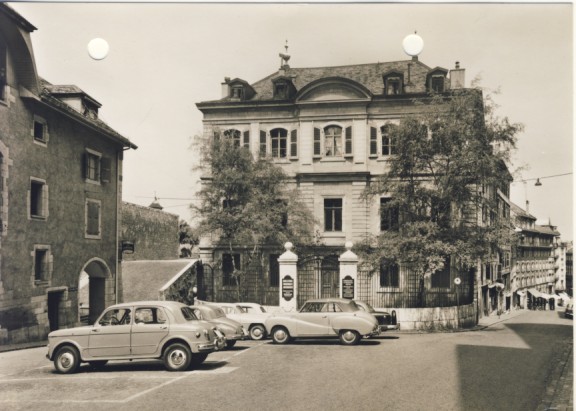
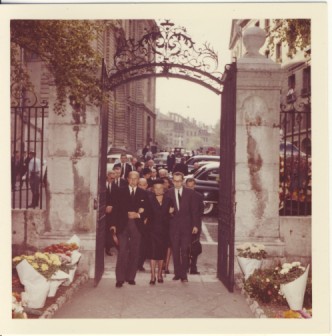
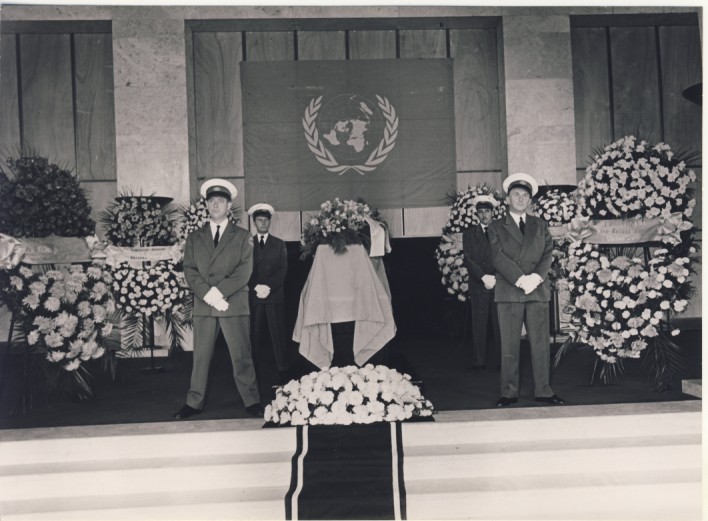
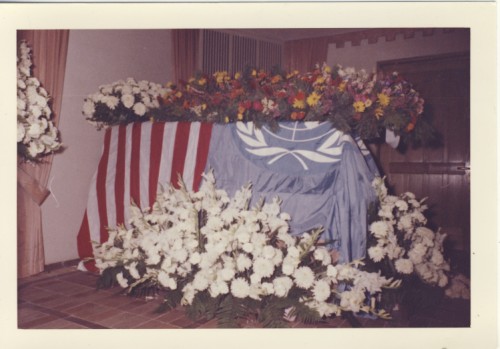
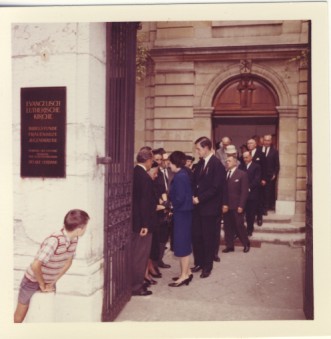

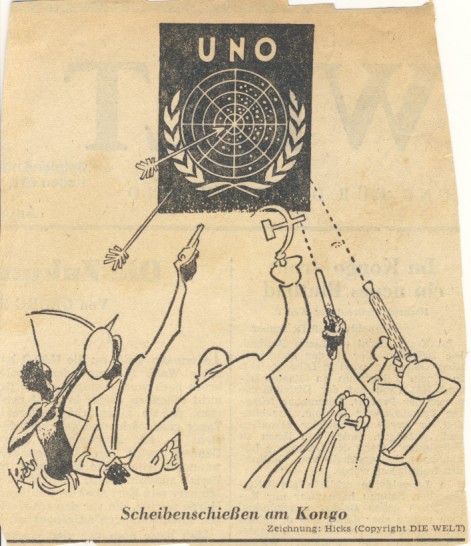

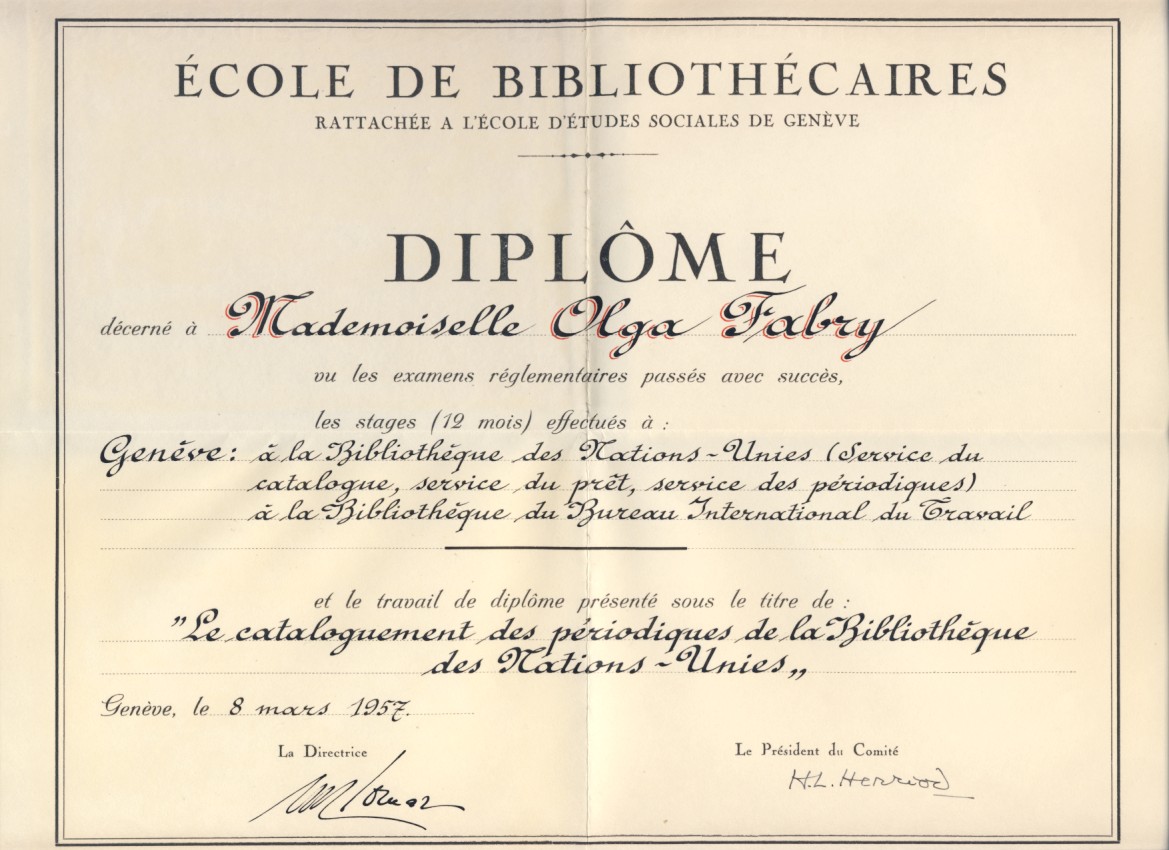

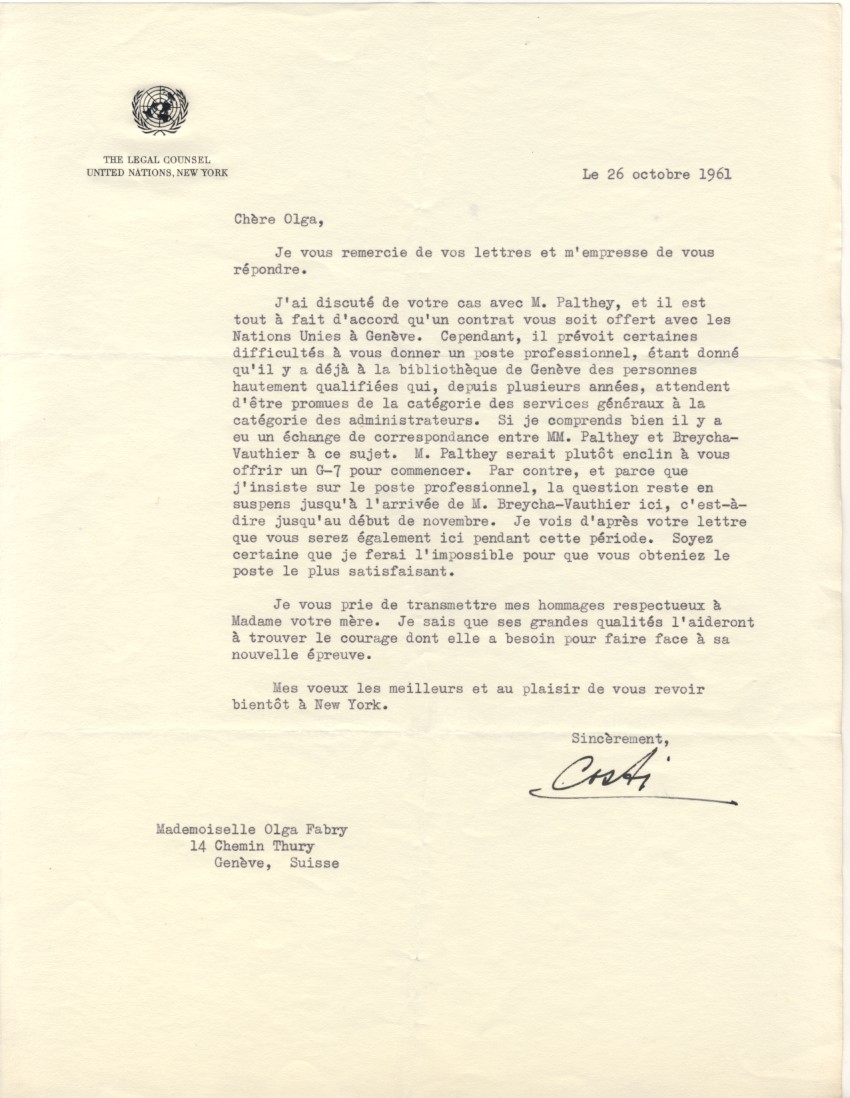
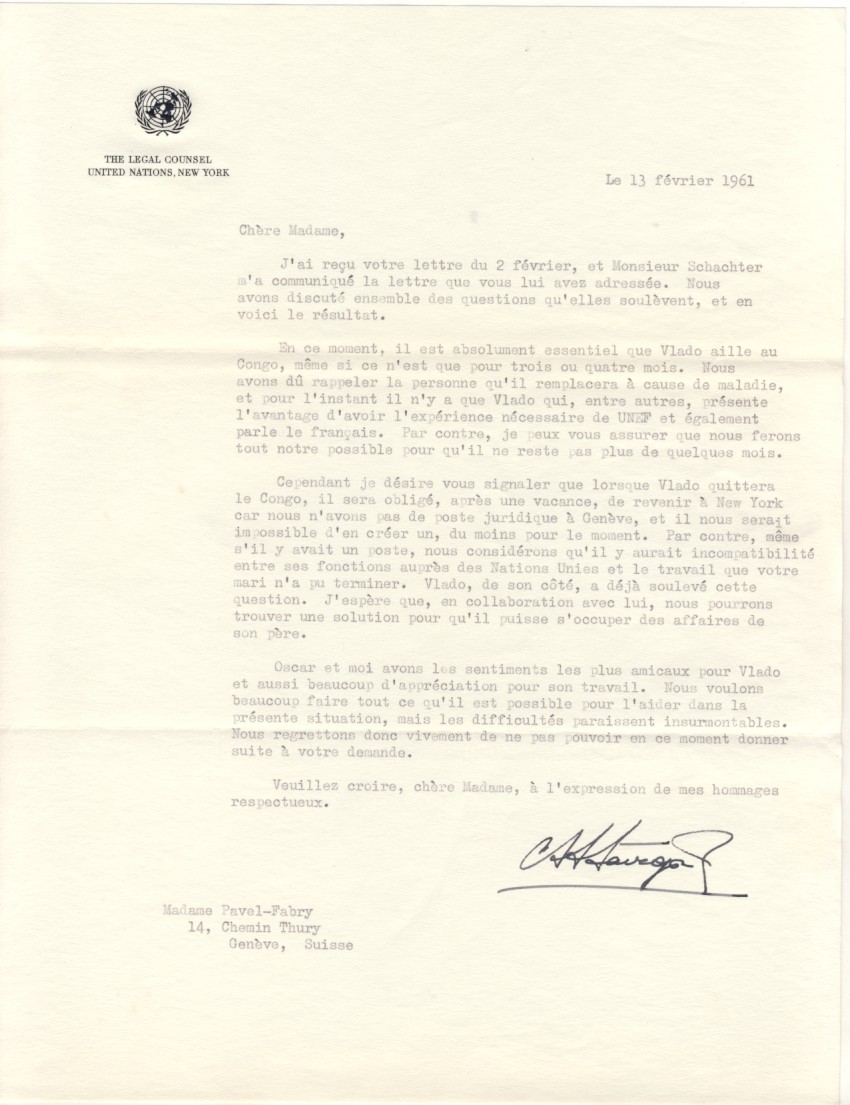
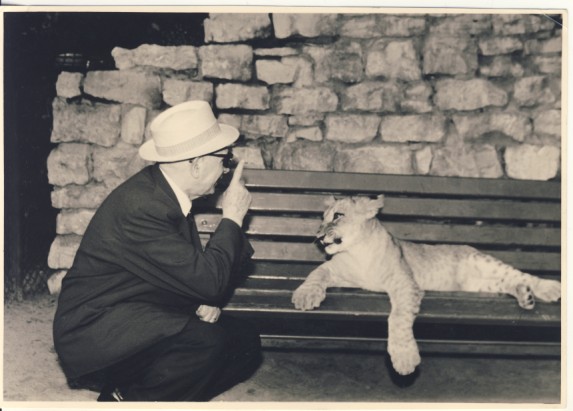
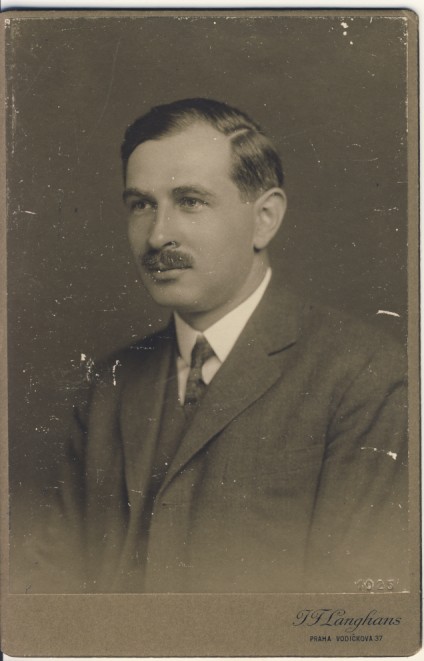

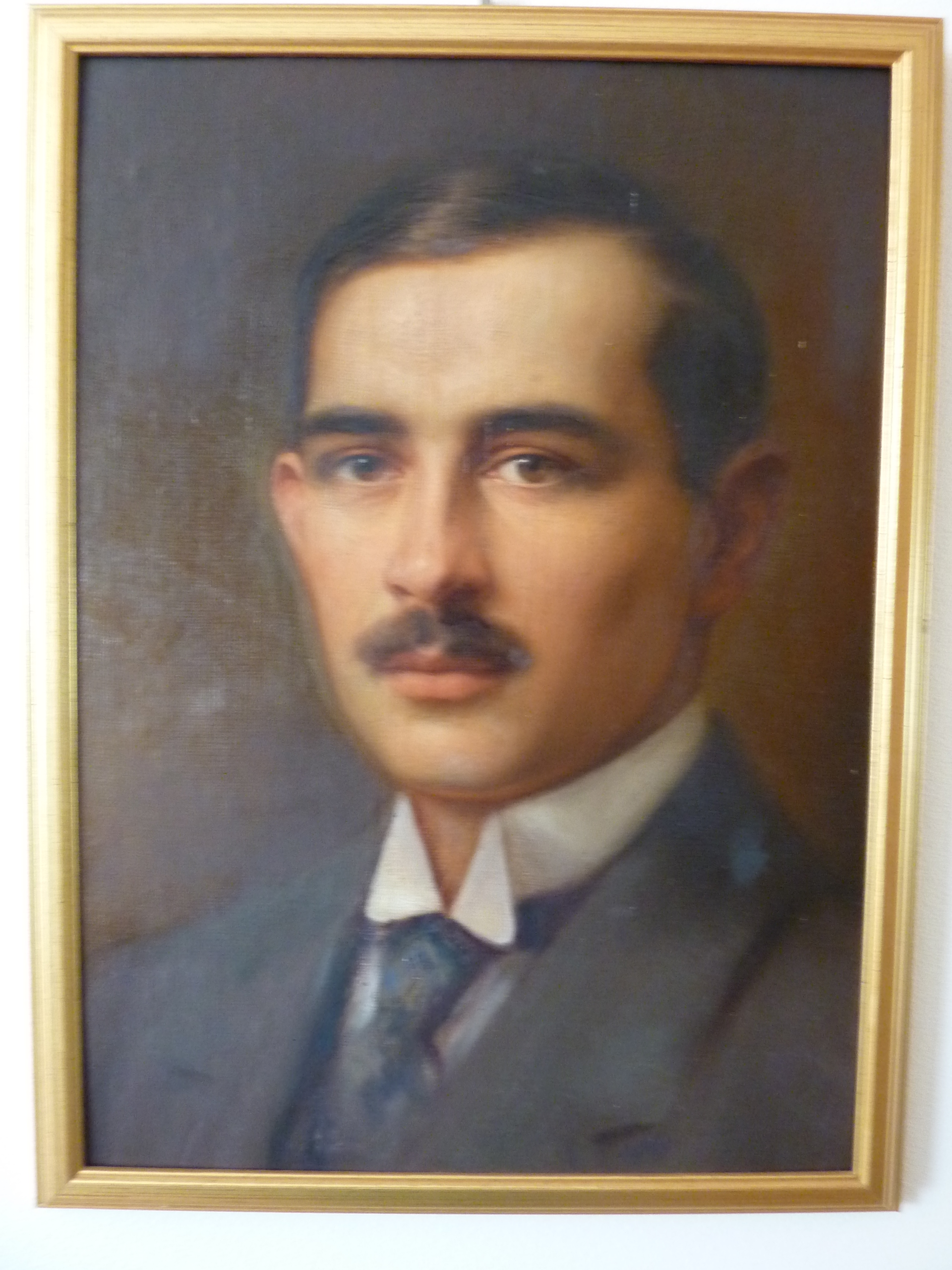

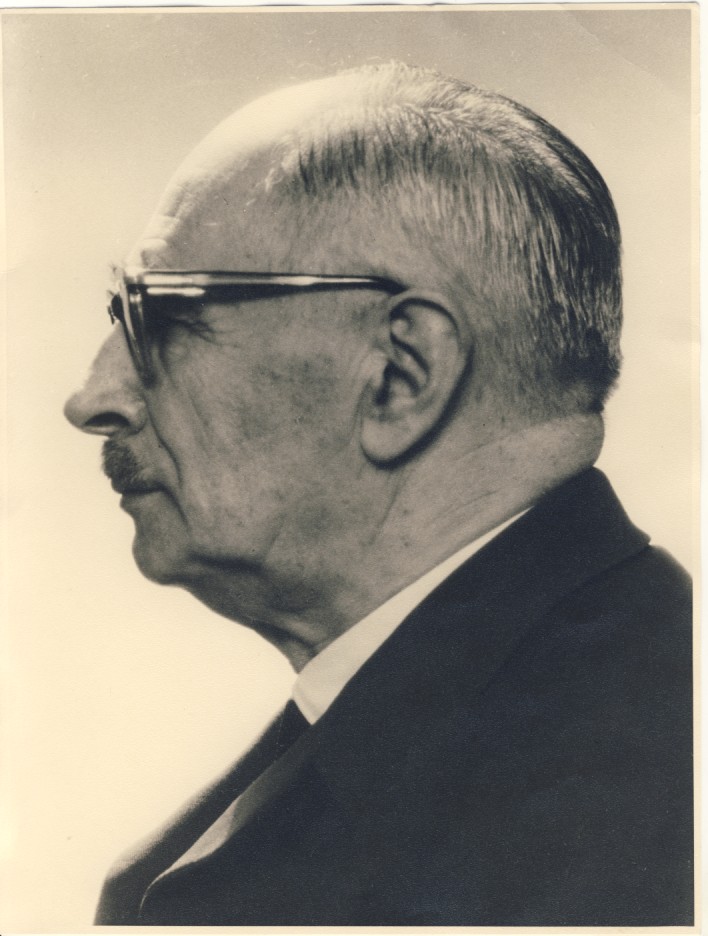




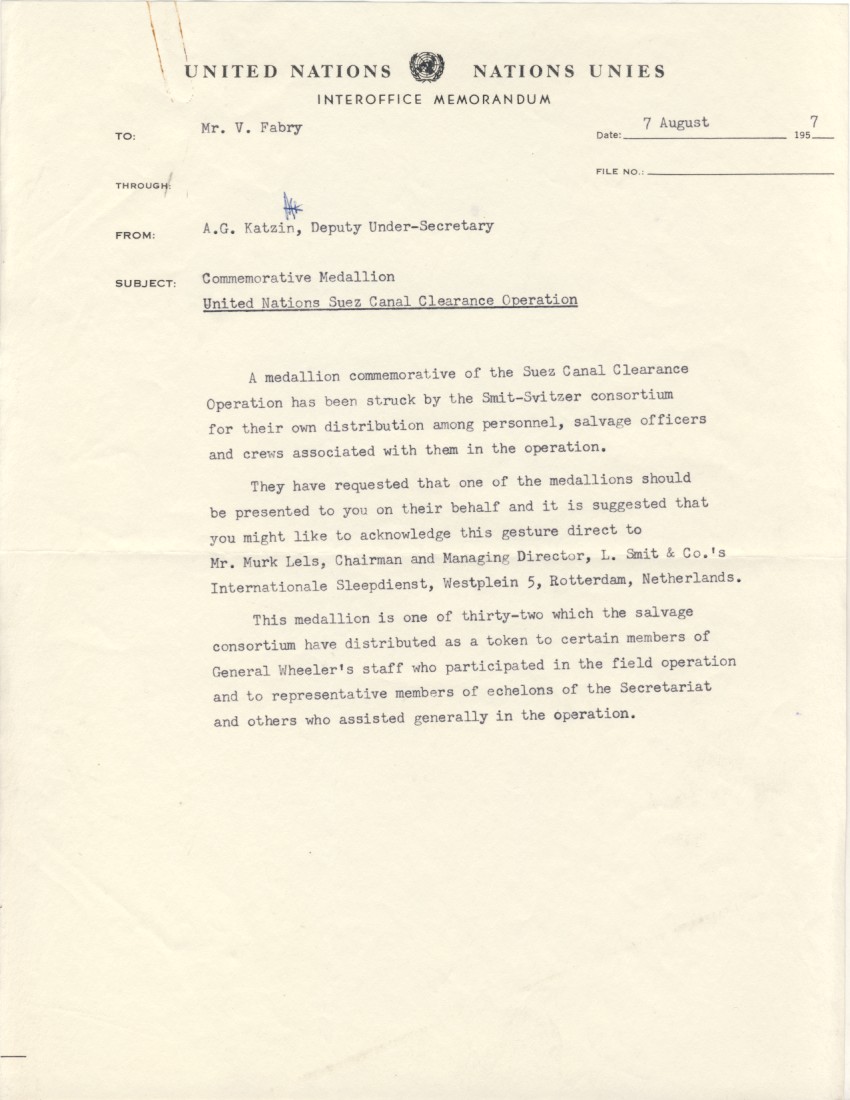

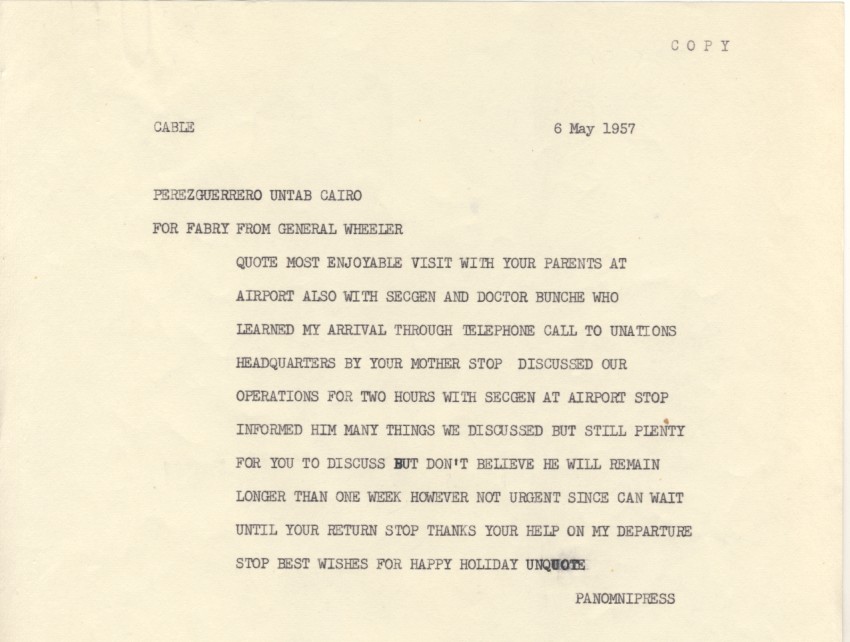
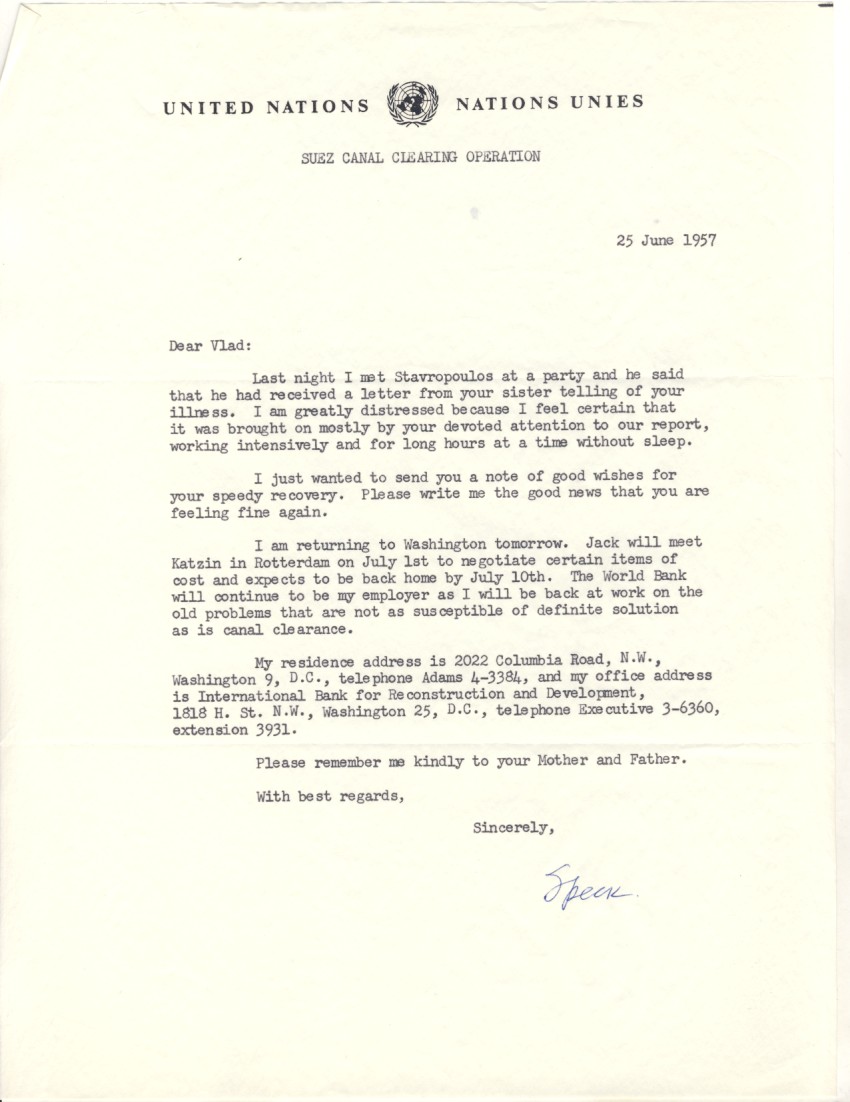
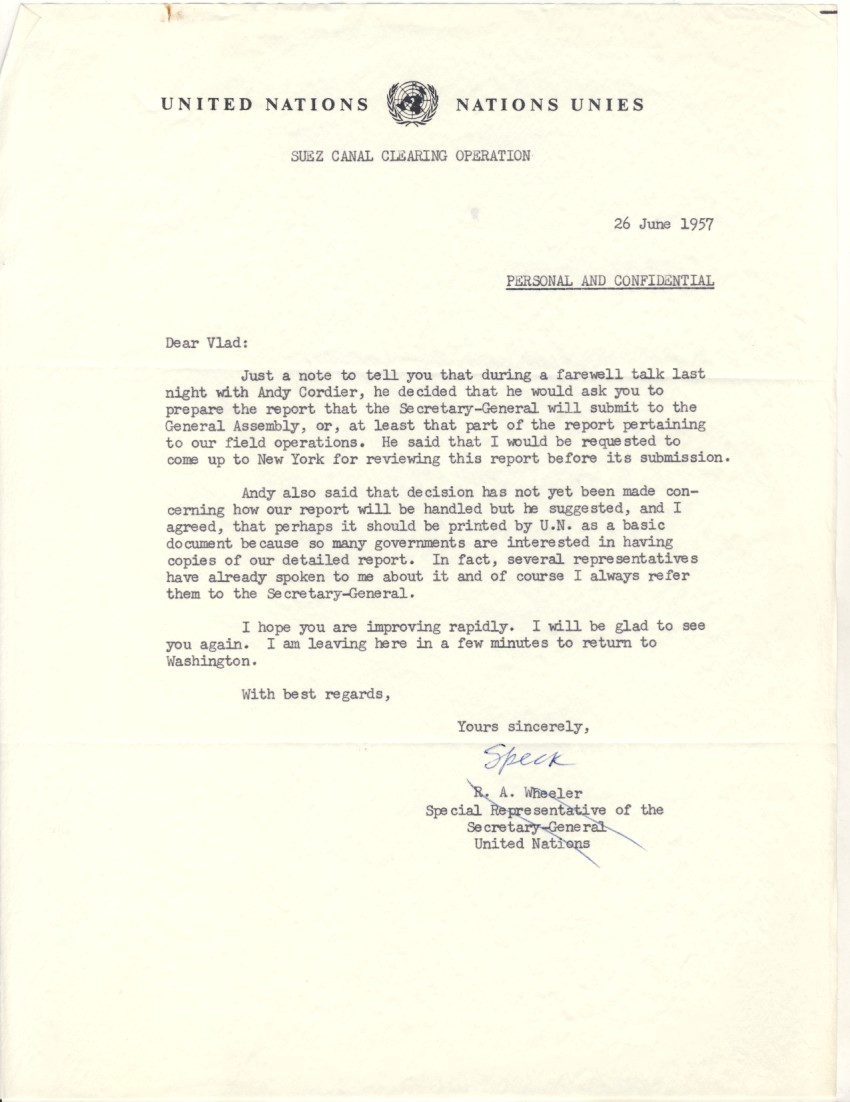
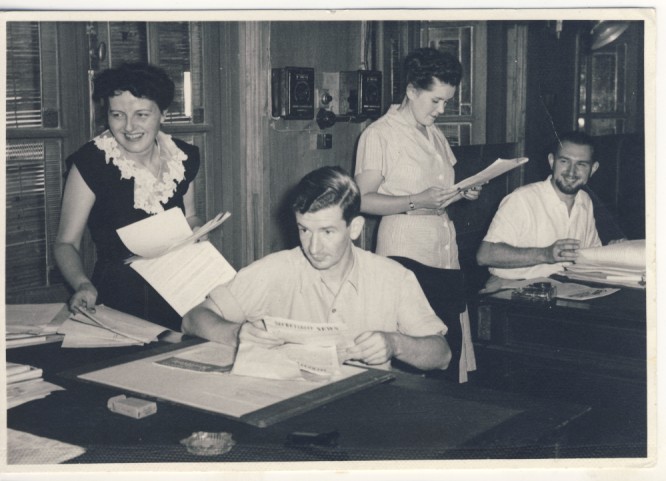
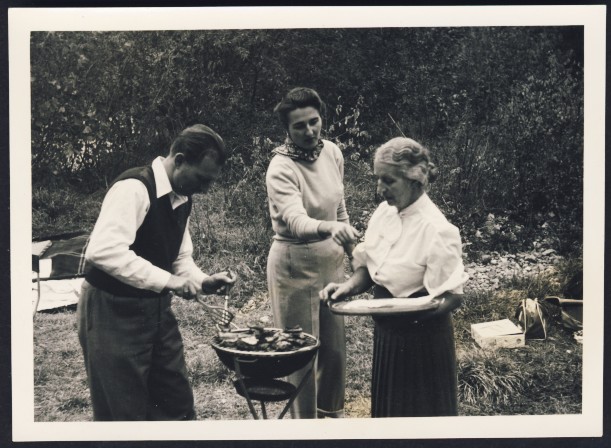
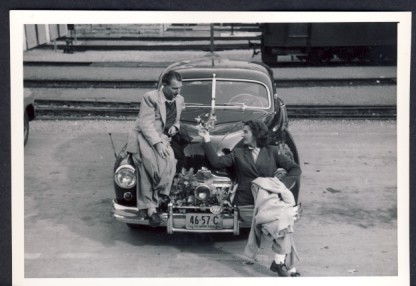
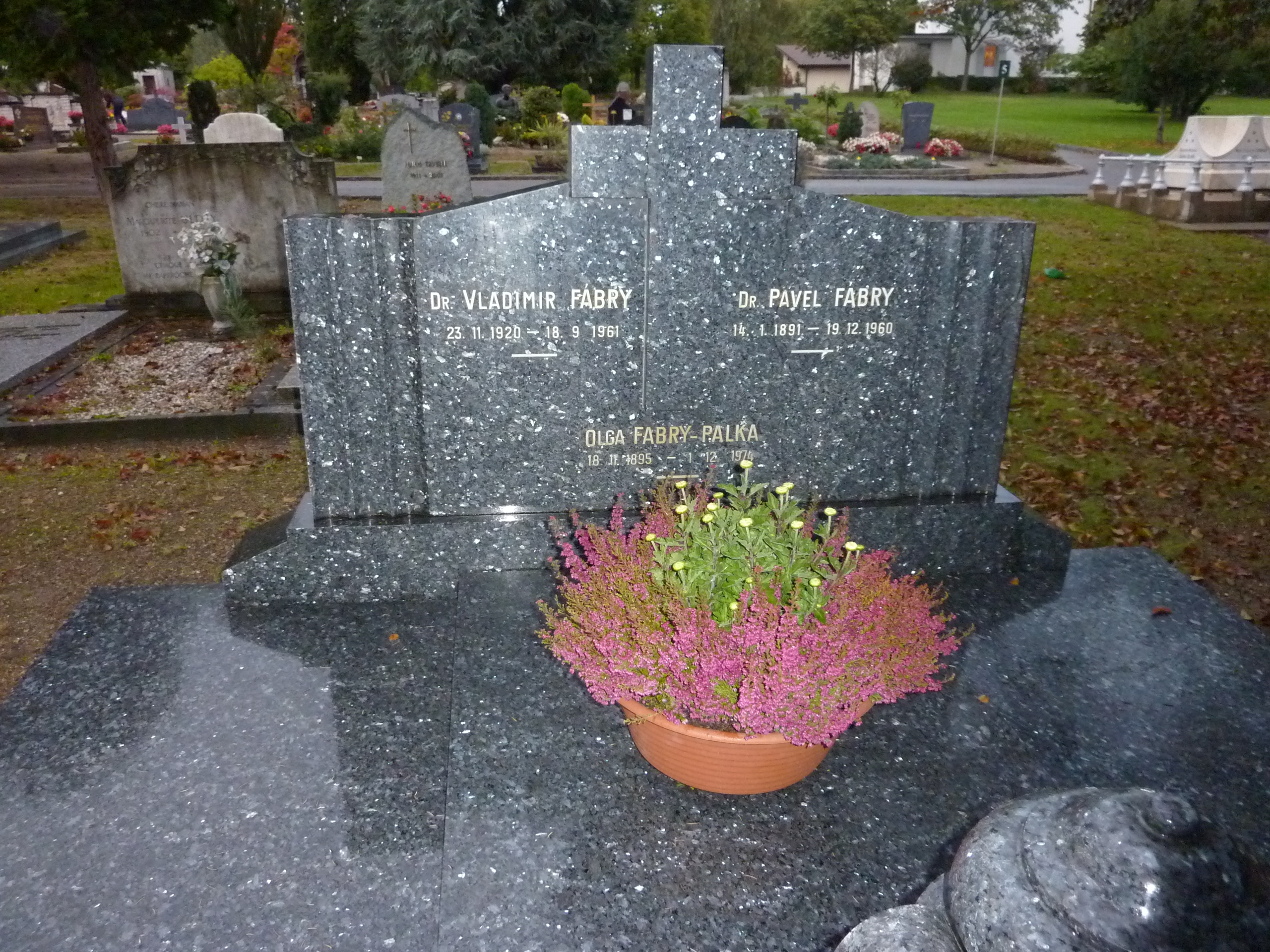


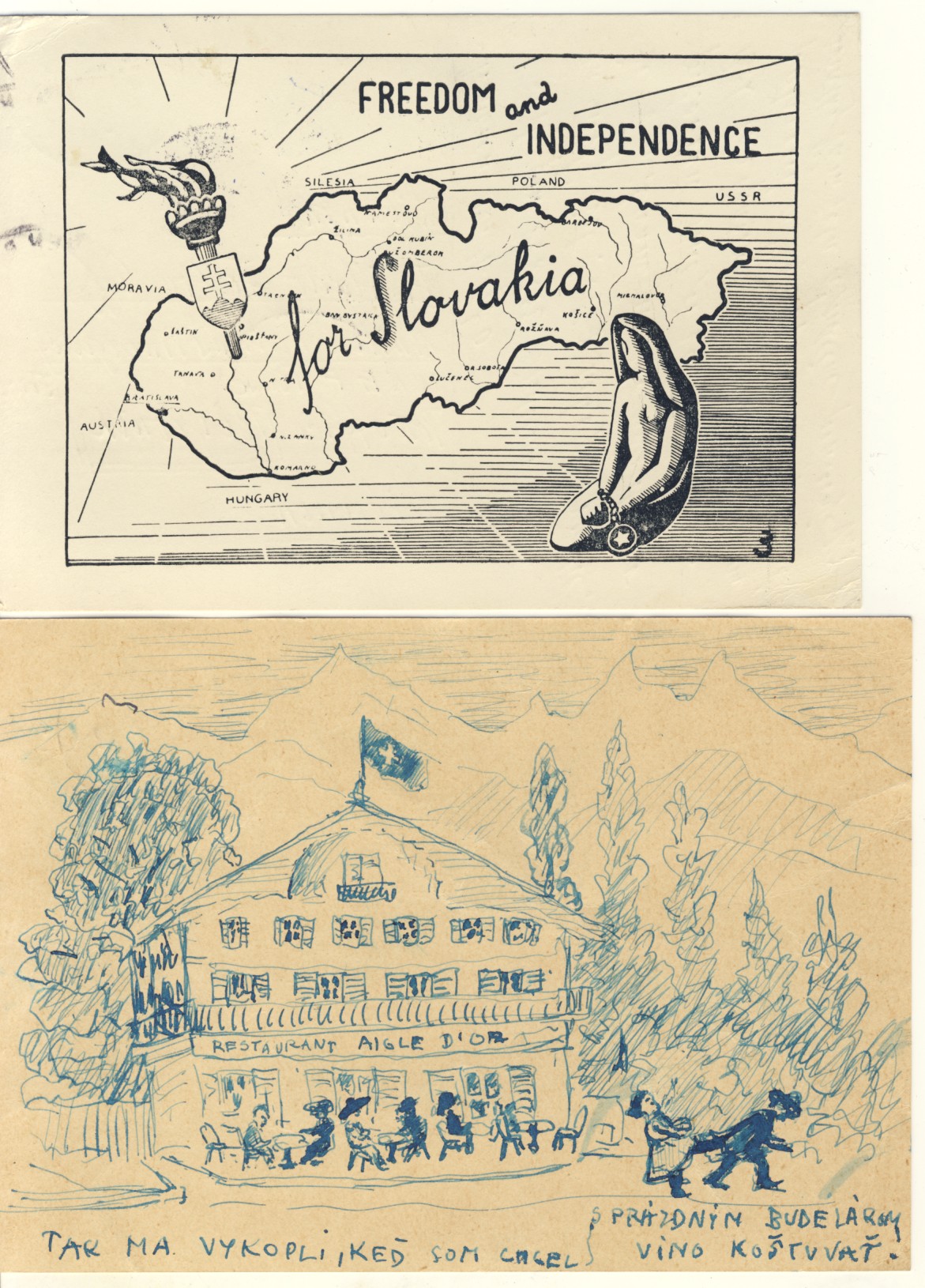



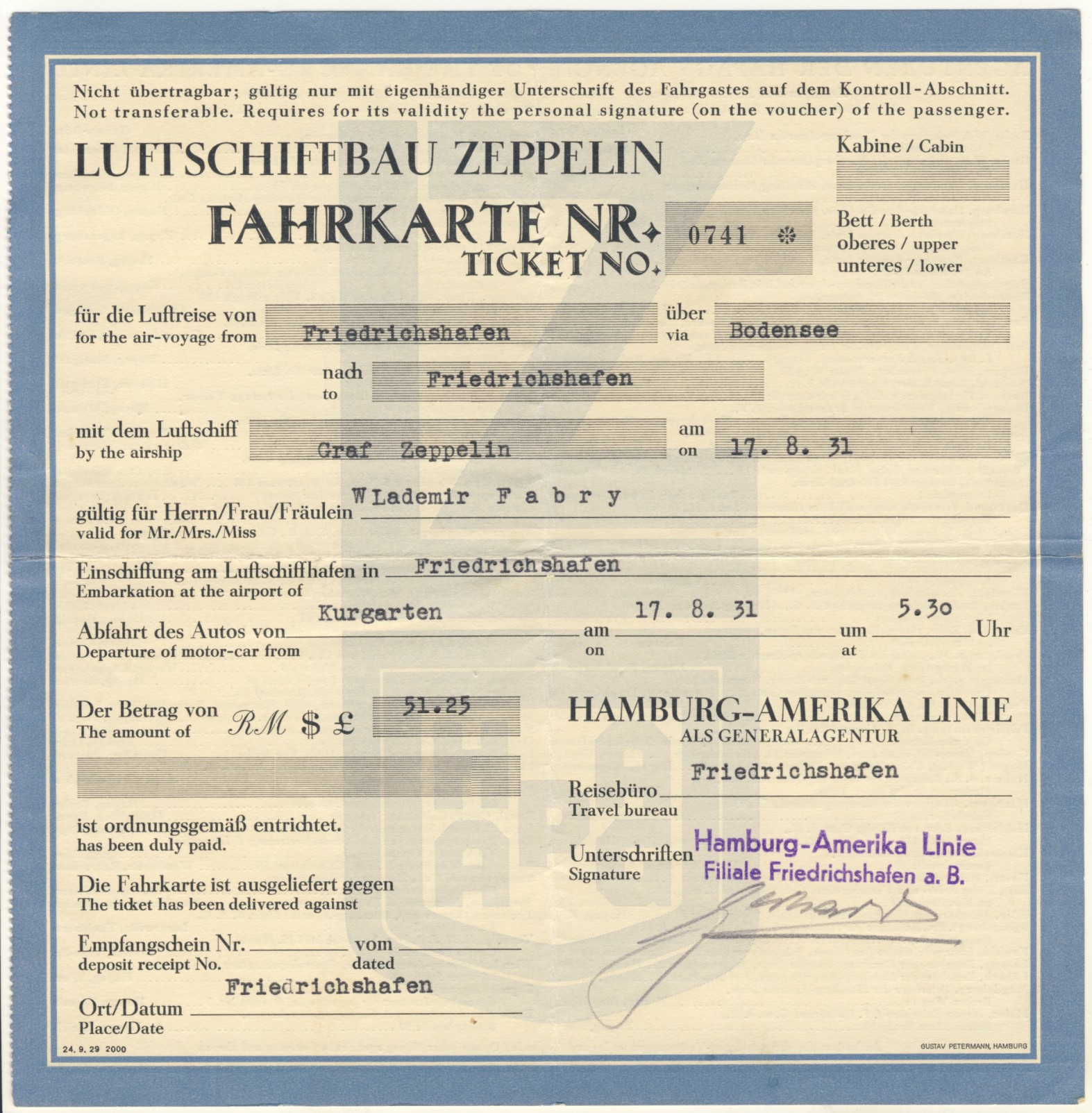


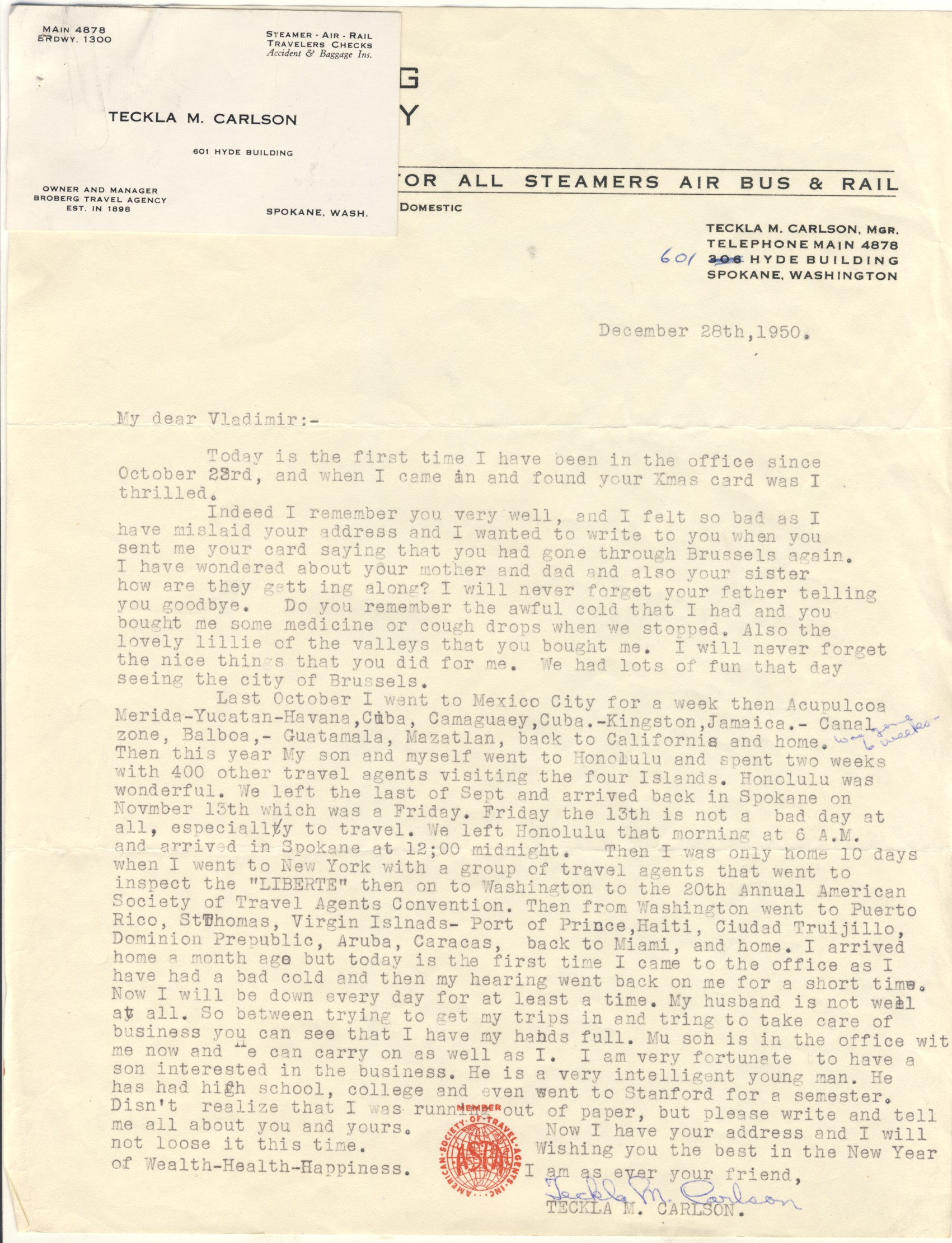
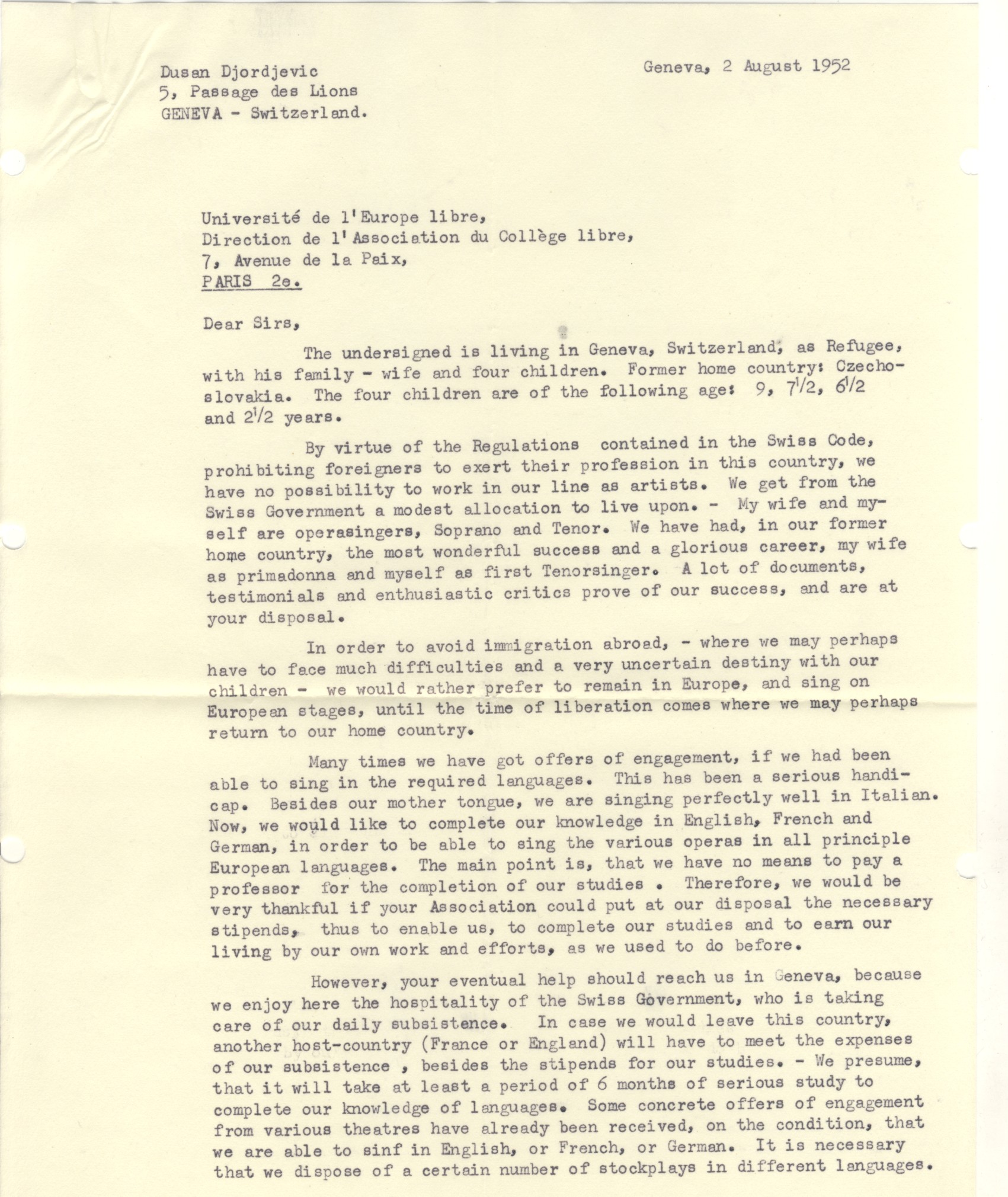
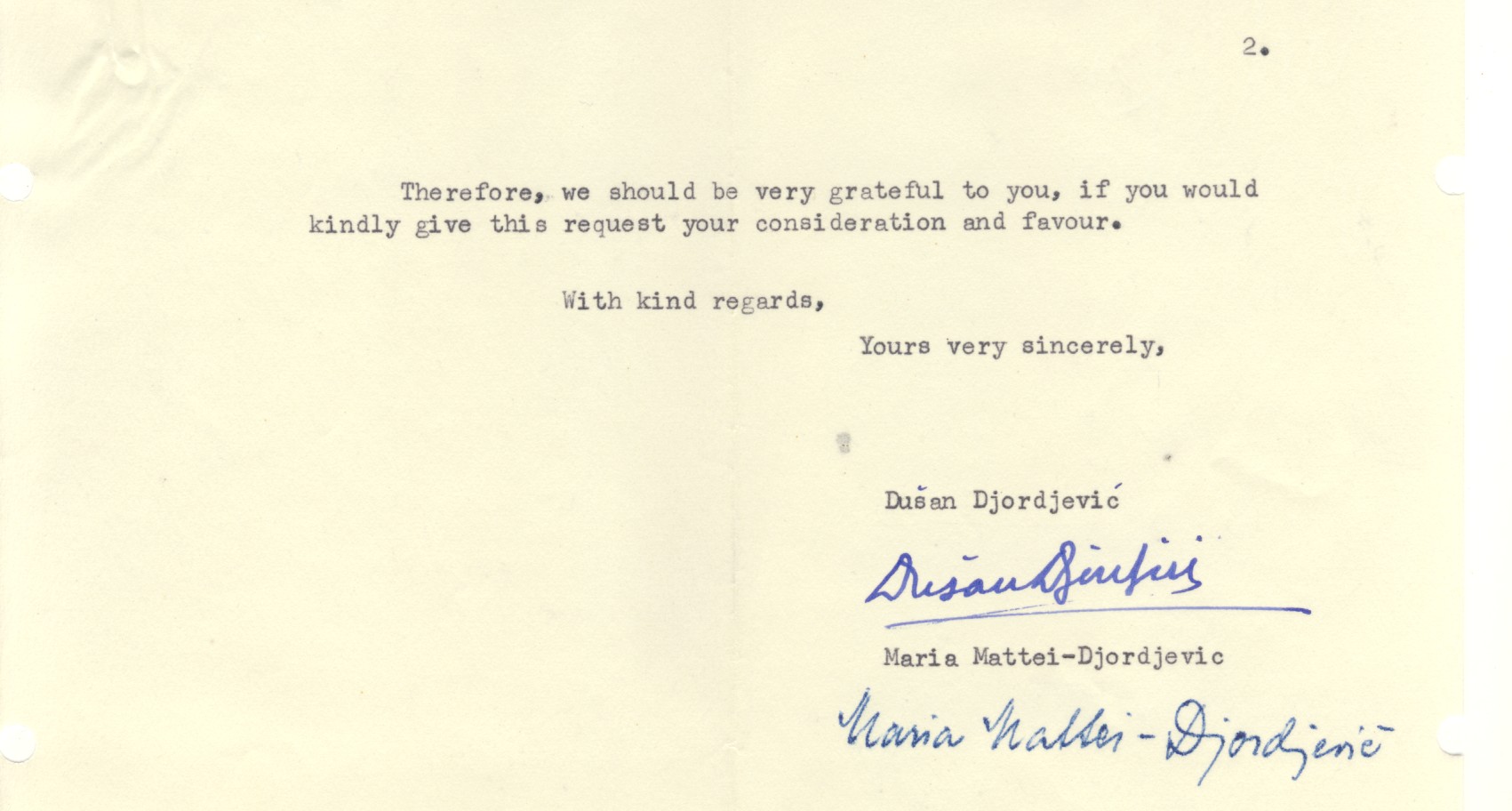
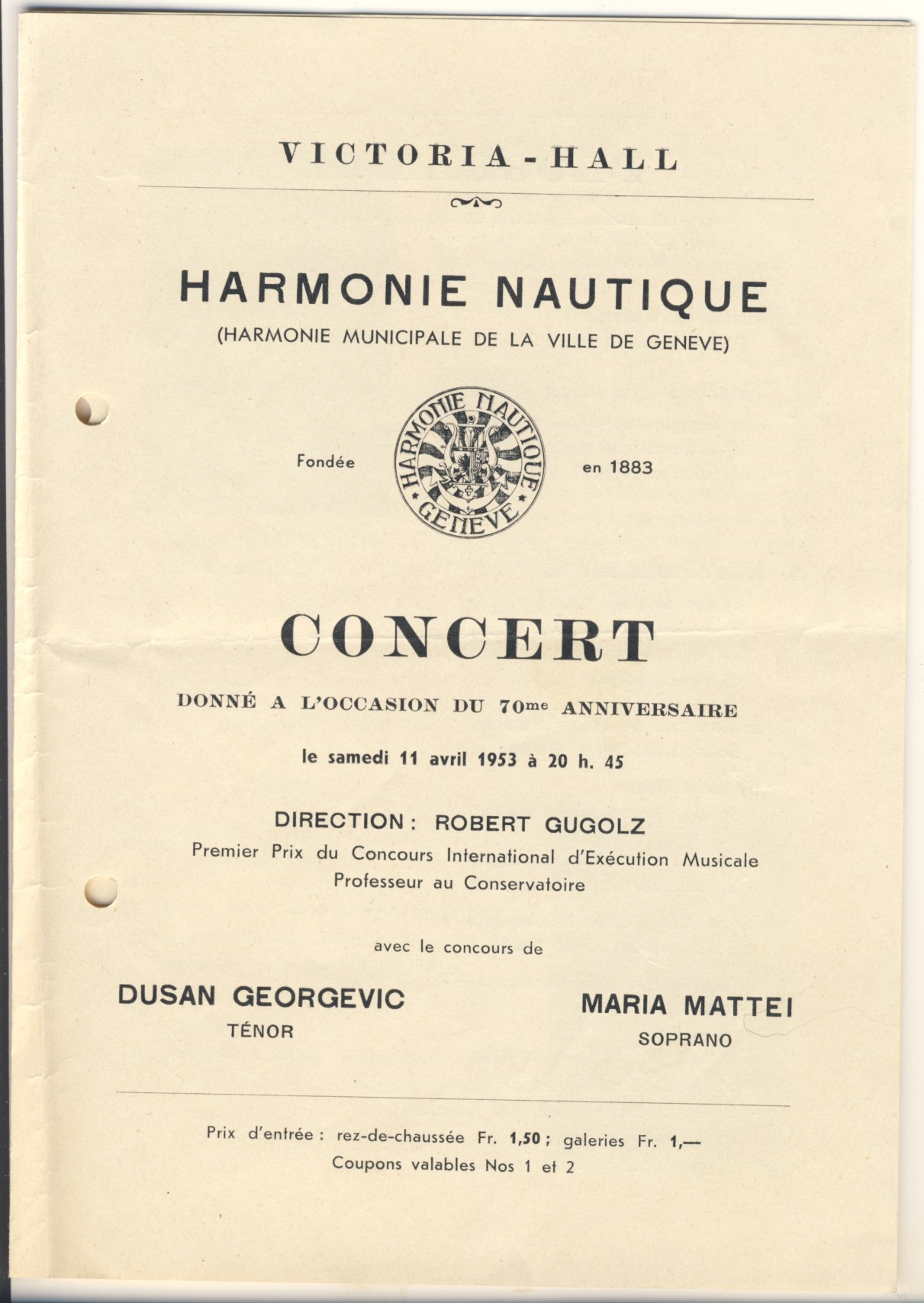


 Vlado
Vlado 