
Two BIG thumbs up for Mads and Goran, I loved this documentary! Coming to U.S. theaters in August, do not miss this!
Category Archives: Uncategorized
In Memory of Mary Liz
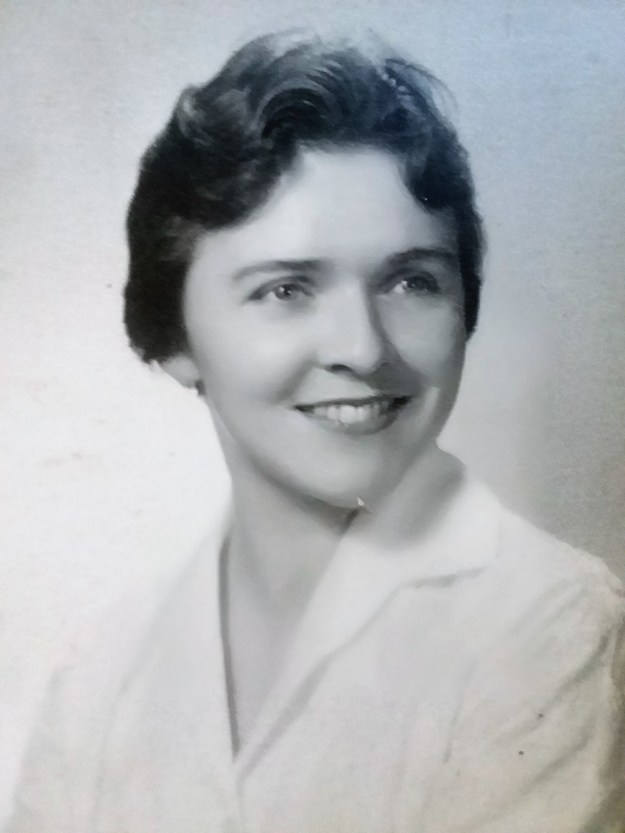
With love to Mary Liz Henry, for Valentine’s Day, here are two letters from her and Vlado from 1957. Warmest thanks to her daughter for writing to me, and sending this photo. She found my blog after a NYT crossword puzzle clue about Dag Hammarskjold inspired her to read more about the Secretary-General – the rest of the story is for her to tell one day, but I am grateful she helped me correct my mistake in identification of her mother, and to have connected because of these letters.
7 February 1957
Vlado
When you will receive this, I have no idea, but I wish you could have it in time for St. Valentine’s Day. Because even tho you know it now, I want to tell you again how much I love you. Of course, I want you to realize this every day – but especially on Valentine’s Day.
And Vlado, I don’t expect anything. All I hope for is your happiness and the chance to love you – & please let me. What comes back is not important to me. I am eternally grateful to Him for the mere fact of meeting you. It’s joy to know someone like you.
I say I want to please you because I know that your happiness does not lie in my power alone – I can only add to it, if possible. And you are the only human being whose happiness is of such concern to me.
Mary Liz
Don’t feel as tho you should answer this, please.
Ismailia
22/II/1957
My Dear One,
your letter did not quite make Valentine’s Day (which I eventually discovered to be 14/II) but whatever day it did arrive was proclaimed to be Valentine’s Day irrespective of any conventional date it may be feted by other people. Thank you, my darling, – I am not trying to answer the letter because that cannot be done – I am only trying to tell you that I do not recall ever having been so touched and made so mellow – and at the same time a bit ashamed – deep inside as I was when I read through your lines.
It made me very happy and at the same time a bit sad over my inadequacy to give as much in return as you offer to me. But I do love you – and you know it – as much as my queer warped nature permits me to, and I too am full of tender desire to protect you and make you happy and fill your life with excitement and joy. And I do miss you.
I scribbled a quick note to you on my arrival – it may have reached you just about Valentine’s day if it was not delayed on its way, although if I had realized the approach of that occasion I would have surely tried to add a line or two. There is very little that I can write about myself – the working hours here are 8 a.m. to 10 p.m. Monday through Sunday, and that leaves very little time for any private adventures. I miss my weekend exercise, but got into the habit of making a two hour walk, changing into trot and run as soon as I am out of the city, each night, and for lunch I take two hours off for a sunbath and quick dip into the Timsah Lake (it’s still rather cold and I nearly [ran] into a minefield the first time, but it’s getting warmer and I know my way around now). But every two or three days I spend on the road or “on the Canal”, I should say, making inspection trips, straightening out problems, and holding palavers with the salvors or with Egyptian authorities, or else giving a hand to the UNEF staff on legal problems. As soon as I catch up enough with my work to be able to extricate myself for a few days, I plan to visit the front lines in the north and south and have a look at St. Catherine’s Monastery, and maybe spend a couple of days at Luxor and Thebes. But that will have to wait for a while. In the meanwhile there is the fascination of learning a new trade which more than compensates the lack of free time and exercise and the occasional fleas and bedbugs. Although there was a time at the beginning when I felt rather asea (or acanal) trying to weigh the respective merits of doing a parbuckling job by using sheerlegs or by blowing up camels (which, by the way, does not refer to a zoologic digestion process but means pumping air into oversized barrels attached underwater to a wreck).
Love, Vlado
Thank you, Hynrich Wieschhoff!
With gratitude, “The Elusive Truth About the Death of Dag Hammarskjold”, written for PassBlue by the son of Heinrich A. Wieschhoff. I’m sharing it here in full so everyone will read this, and know how the relatives truly feel about the UN investigation.
“My clock radio clicked on. The morning news bulletin announced that United Nations Secretary-General Dag Hammarskjöld’s plane was missing.
It was Sept. 18, 1961. I was 16.
Over the next hours, my mother and sisters and I learned that Mr. Hammarskjöld, accompanied by Dad and 14 others, had flown from Leopoldville, in the Congo, to Northern Rhodesia (now Zambia); that the plane, a DC-6, had not landed at Ndola, its destination; that an unexplained 15 hours went by after the airliner passed over the Ndola airport and before its wreckage was found lying not far from the runway; that all on board save one were dead.
My father, Heinrich A. Wieschhoff, was one of Mr. Hammarskjöld’s political advisers. Their party was headed for talks with the head of the breakaway Congo province of Katanga in hopes of quieting the fighting that had broken out between UN peacekeeping troops and the largely mercenary-led forces backing Katanga’s secession. It was a dramatic moment in the history of this mineral-rich country — a year after it gained independence from Belgium and quickly became embroiled in a violent quagmire involving the interests of not only Belgium but also France, South Africa, the Soviet Union, Britain and the United States.
Days after the crash, we learned that the sole survivor had died. Now there was no one to shed light on what had occurred. My family’s experience was lived in one wrenching way or another by the families of the 15 other victims. The particulars were different; the pain was the same — and only worsened because no one could tell us why the plane had gone down.
From the outset, there were legitimate concerns about the possibility of foul play. Within months of the crash, three inquests were held in rapid succession. The report of a UN commission, relying to a large degree on groundwork done by the-then Rhodesian Federation, was inconclusive, as was a report by the federal civil aviation body. The report of a commission empaneled by the Federation arrived, by a curious turn of logic, at the convenient conclusion that the event was an accident.
At first we assumed the UN would be vigilant in looking for new clues and dogged in running them to ground, and for years that seemed to be the case. Dad’s UN associates fielded our questions about the results of the original investigations and new allegations of wrongdoing promptly and graciously.
Once those associates left the UN, however, I gradually began having doubts that anyone in a leadership position cared much, if at all. One exception was Jan Eliasson, the deputy secretary-general under Ban Ki-moon, who was seemingly alone in advocating a serious look at the death of his idol and fellow Swede, Mr. Hammarskjöld.
The UN’s public posture toward Mr. Hammarskjöld drips with veneration — naturally. Yet when it comes to actually unraveling the circumstances of his death, a certain callousness prevails, despite high-sounding pronouncements to the contrary. In my experience, concern about the other 15 victims is even lower.
One byproduct of this indifference has been a coming together of nearly all the families of the deceased. Partly as a result, I have sensed that the UN is paying more attention to their interests, at least in its public comments. Privately, I still encounter telltale signs that the organization views the search for answers as a housekeeping matter.
For instance, when a group of the relatives sent the UN Secretariat a copy of a letter thanking the UN members sponsoring a recent resolution bearing on the crash, the response was a form letter from the public inquiries team stating that “the matter you raise is one of domestic jurisdiction, and does not fall within the competence of the United Nations.”
In 2011, the inquiry hit a turning point. Susan Williams, who had no prior connection to the crash, published “Who Killed Hammarskjöld? The UN, the Cold War and White Supremacy in Africa.” A sobering probe of information that the three post-crash inquests did not have, or had but failed to consider properly, it presented the UN with a chance to dig deep.
Dr. Williams, a historian and senior research fellow at the University of London, did not identify a likely cause of the disaster, but she did present a number of startling claims, including that US intelligence services allegedly eavesdropped as an unidentified plane attacked Mr. Hammarskjöld’s during its landing approach.
The book sparked hope that the UN would finally give the crash its due. First, however, a group of private citizens established a pro bono commission of four jurists to evaluate her findings. In 2013, they determined that significant new evidence could justify reopening the UN’s original investigation.
The stage was set, at long last, to bring this unhappy affair to a definitive close. Unfortunately, instead of insisting that further exploration be unlinked from the agendas of individual member states, and Secretary-General Ban be given a free hand to deal with the crash as he saw fit, the office of the secretary-general solicited the views of certain members of the Security Council. Predictably, influential members signaled their lack of enthusiasm for a full-fledged re-opening of the investigation.
In other words, the UN ducked — in my view, avoiding discomfiting questions about the roles of Belgium, France, South Africa, the Soviet Union, Britain and the US in events related to the crash, and possibly about the UN’s own handling of its original investigation and subsequent new evidence as well.
What followed was five years (and counting) of a piecemeal, woefully ineffective process fashioned to give the impression of rigor. Through resolutions organized by Sweden, the General Assembly first relegated the crash to a “panel of experts” for yet another assessment of new information (2014), then to an “eminent person,” the former chief justice of Tanzania, Mohamed Chande Othman, for follow-up (2016).
The resolutions asked member states to search their archives for relevant material and to declassify sensitive records, namely intelligence and military files. But genuine cooperation from the key players has been slow and halting. Russia and the US, as of a recent date, failed to comply fully with the General Assembly’s resolutions, and South Africa and Britain appeared bent on frustrating the process altogether. To my knowledge, the UN has rarely generated information on its own, so that leaves Chief Justice Othman to rely heavily on private sources.
As far as I am aware, the Secretariat has not engaged at a high level with recalcitrant member states to get them to adhere to the General Assembly resolutions. It has done little to publicize the activities of the chief justice. It has been slow to fully declassify its own archives and still refuses to release some documents.
In their Dag Hammarskjöld Lectures, in Uppsala, Sweden (Mr. Hammarskjöld’s home base), Secretaries-General Ban and António Guterres each mentioned the search for the truth about the crash but at the tail end of their presentations, almost as an afterthought. Instead of taking a meaningful stand, they repeated the hollow refrain: the UN was doing all it could do to find answers and member states should comply with the call to declassify relevant records.
Equally revealingly is the fact that in 2017, Secretary-General Guterres’s office sought to end the Judge Othman probe. Thanks to Sweden’s insistence, the General Assembly renewed his appointment. Did the secretary-general tip his hand last year when, rather than appear in person before the General Assembly, he sent a subordinate to present Judge Othman’s interim report?
His findings were impressive, especially considering his meager support. For his current engagement of about 15 months, Judge Othman has only himself and an assistant, working part time and in different countries, on a budget so small that nearly a third will go toward translating his reports into the UN’s official languages.
The opportunity presented by Dr. Williams and the jurists’ commission still stands. And we may learn more from Judge Othman’s final report, due this summer. I worry, though, that unless that report or a new sense of purpose by the UN can pry the facts out of Britain, the US and other key states, what happened and why will once again fade unanswered into the past.”
“…the press rules the minds of men.”
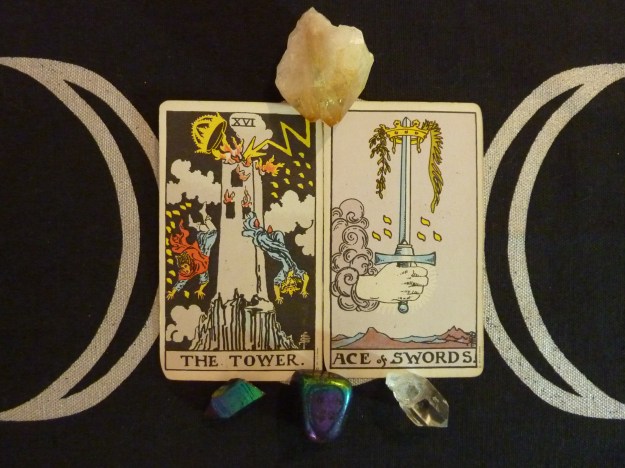
From “Rhodes: the race for Africa”, by Antony Thomas(pub. St. Martin’s Press, 1996), here is a quote from Cecil Rhodes’ ‘Confession of Faith’, written at age 23; he wrote this on the same day he joined the Freemasons, which he considered a pointless Order “with no object, with no aim.”:
“The idea gleaming and dancing before ones’s eyes like a will-of-the-wisp at the last frames itself into a plan. Why should we not form a secret society with but one object, the furtherance of the British Empire and the bringing of the whole uncivilized world under British rule, for the recovery of the United States, for making the Anglo-Saxon race but one Empire?’
[It] would be a society not openly acknowledged but which would have its members in every part of the British Empire…placed at our universities and our schools…in every Colonial legislature. The Society should attempt to have its members prepared at all times to vote or speak and advocate the closer union of England and the colonies, to crush all disloyalty and every movement for the severance of our Empire. The Society should inspire and even own portions of the press for the press rules the minds of men.
What a dream, but yet it is probable. It is possible.”
Cecil Rhodes was a horrible racist leader who begat many racists, like Hendrick Verwoerd and Donald Trump, and all these men understand the power of the press, and that when you own the press you own the minds of men.
From Rhodes Last Will and Testament, and final edition of his ‘confession’/manifesto, he makes it very clear that it doesn’t matter what country the white person comes from, but that white rule is the only rule:
“I have considered the existence of God and decided there is an even chance that He exists. If He does exist, he must be working to a Plan. Therefore, if I am to serve God, I must find out the Plan, and do my best to assist him in it’s execution.
How to discover the Plan? First, look for the race that God has chosen to be the Divine instrument of future evolution.
Unquestionably, that is the white race. Whites have clearly come out top…in the struggle for existence and achieved the highest standard of human perfection. Within the white race, English-speaking man, whether British, American, Australian or South African, has proved himself to be the most likely instrument of the Divine Plan to spread Justice, Liberty and Peace…over the widest possible area of the planet.
Therefore, I shall devote the rest of my life to God’s purpose, and help Him to make the world English.”
Fabry Family Home in Bratislava
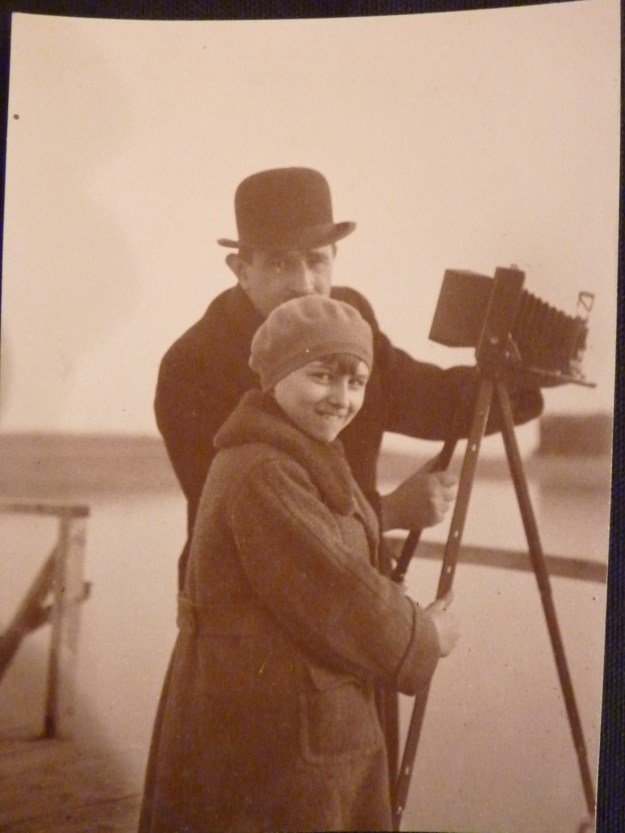
Our grandfather Pavel “Tata/Tatusko” Fabry, sharing his love of photography with his son, Vladimir “Vlado” Fabry; circa 1920s.

Baby Vlado held by unidentified person, with “Maminka”, our grandmother Olga Fabry-Palka. Vlado was born on 23 November 1920, in Liptovský svätý mikuláš, Czechoslovakia.

Baby Vlado – those ears!

Vlado having a nap.

Vlado’s only sibling, sister Olga “Olinka”, arrives home; she was born 5 October 1927, in Bratislava, Czechoslovakia. Their mother, Olga Fabry-Palka, on far right, dressed in black; brother Vlado is on the left, wearing knee socks and black buckled shoes. This photo, and the rest that follow, show the home our family built in Bratislava – it was seized by the Communists in the coup d’état of 1948, handed over as a gift to Russia, and has ever since been occupied as their embassy. You can see recent photos of our home by searching for “Russian Embassy Bratislava”.

Olinka and Vlado with a nanny.

Maminka, Vlado and Olinka playing in the garden.
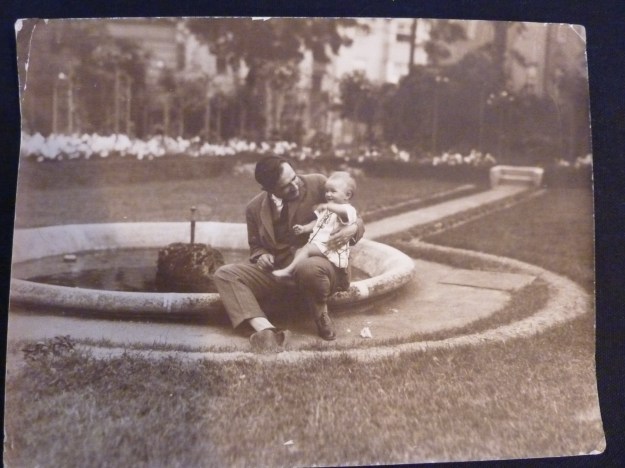
Olinka with Tatusko.
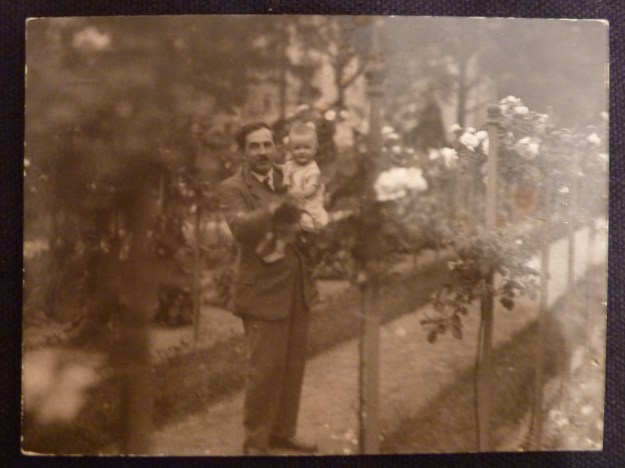
Admiring the long stemmed roses that Maminka planted.

This photo, and the two following, were taken around 1930.
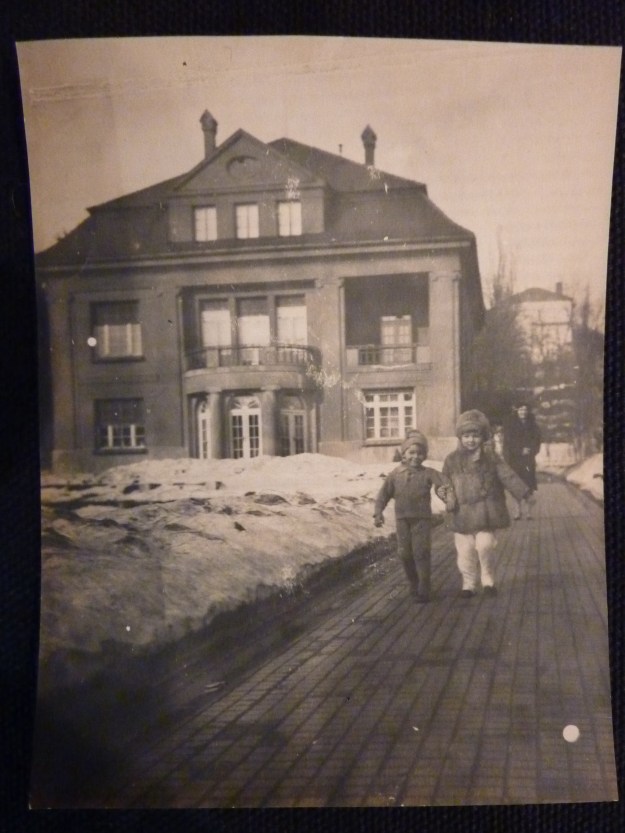
Olinka with a friend, Maminka in background.
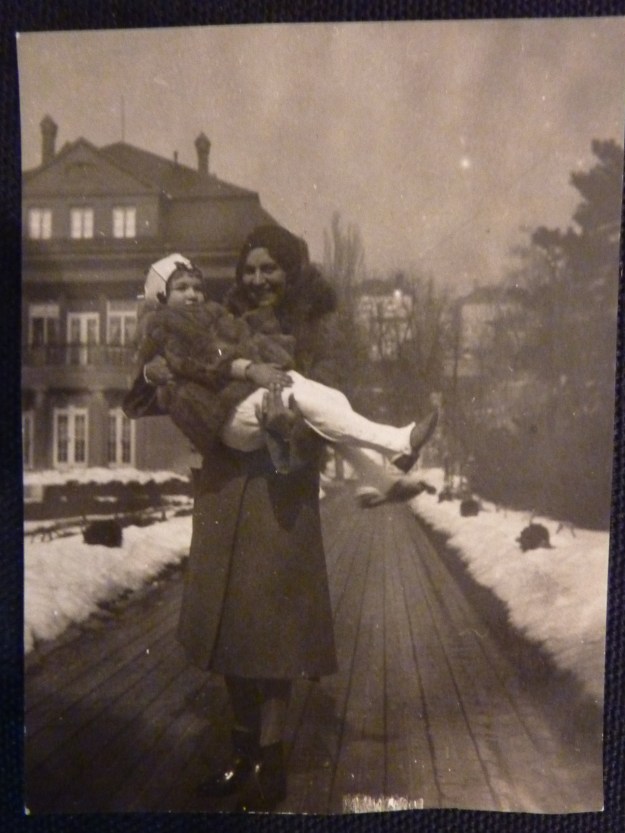
Mother and daughter, so happy!
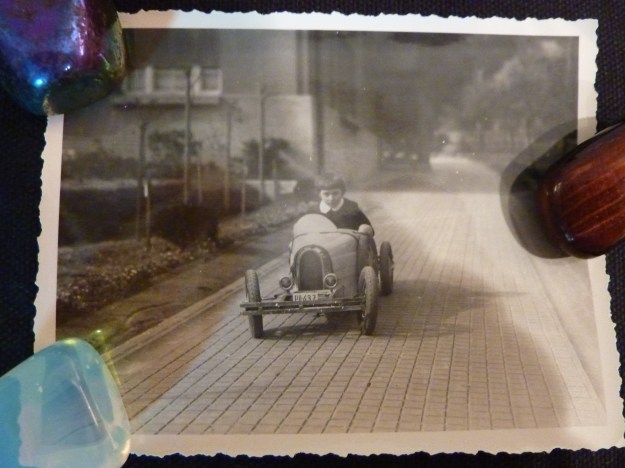
These two photos are undated, but it looks like Vlado got what he wanted for his birthday! I’m so glad that these photos were saved, but some of them have curled from improper storage. The American Library Association(ALA) website has advice here, for those of you wondering how to safely flatten your old photos.

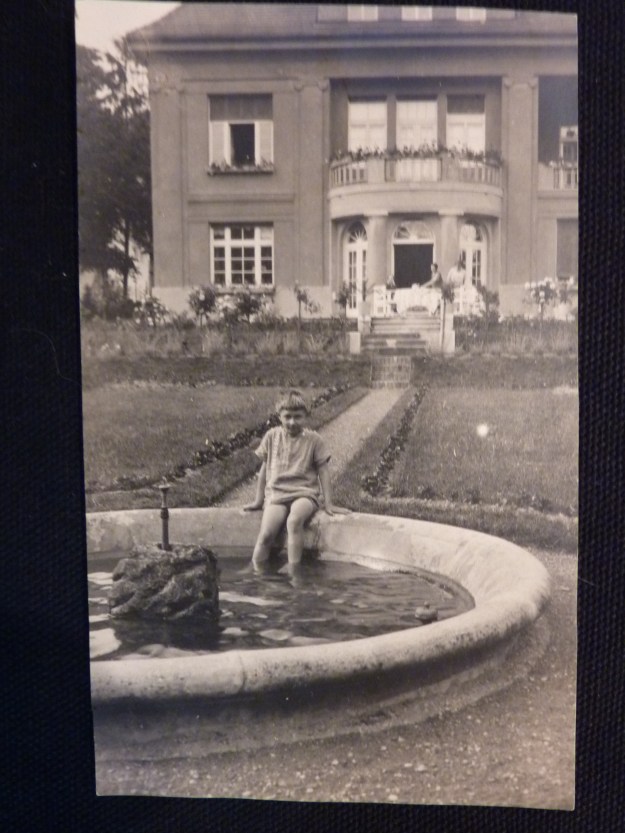


Bambi! This was Vlado and Olinka’s pet deer – Olinka told us the story about their deer, that it jumped the fence and crashed the neighbor’s wedding party, eating all the cake – and then the police were chasing it all over town!

Olinka and friend.

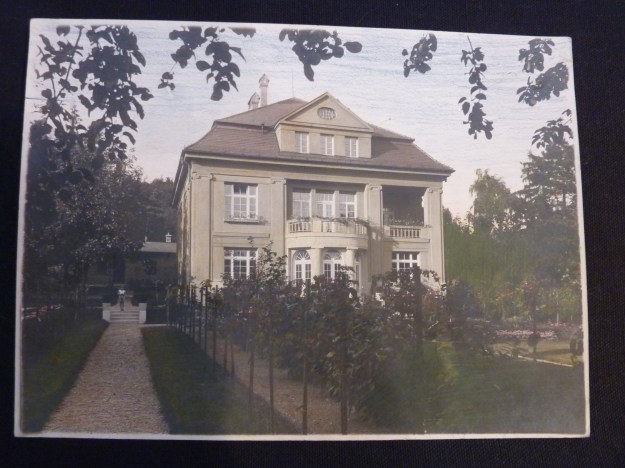
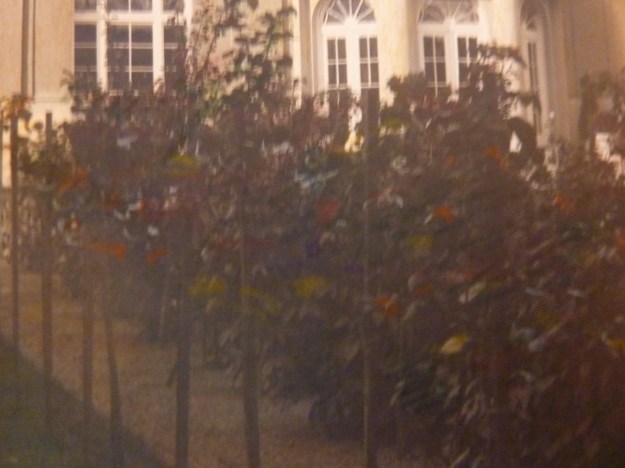
Pavel Fabry very likely colorized these photos with his set of Caran d’Ache pencils, some of which we are still using! Dated July 1927.
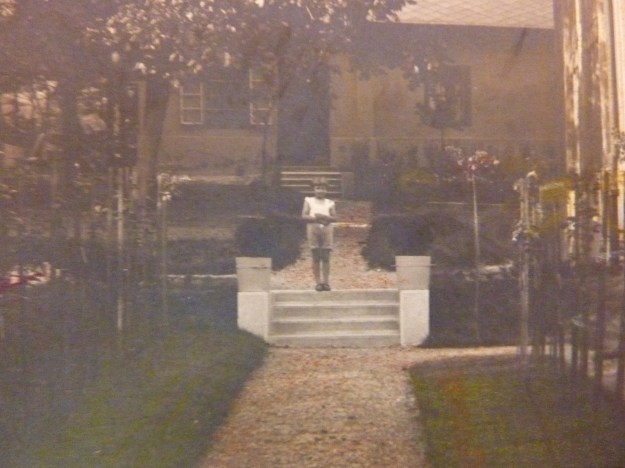
Vlado and his sister had pretty much the same haircut for a while, but this is Vlado on the stairs.

Marked on back “rodina Fabry v Bratislava” – Fabry family in Bratislava. I recognize Olga Fabry-Palka and her mother, but I am unable to identify the others at this time. The next few photos, showing guests visiting the house, are unmarked – help with identification is appreciated!

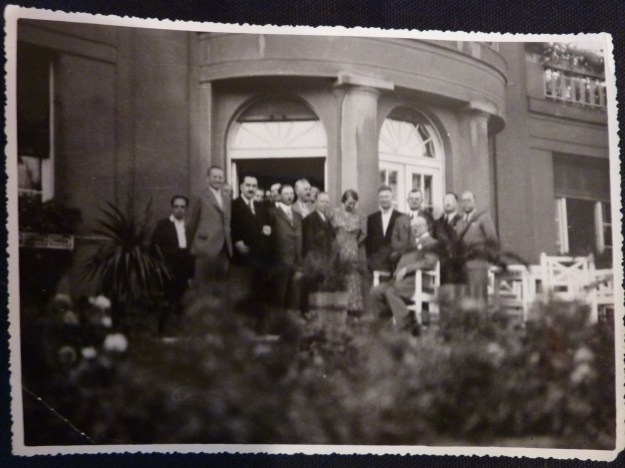
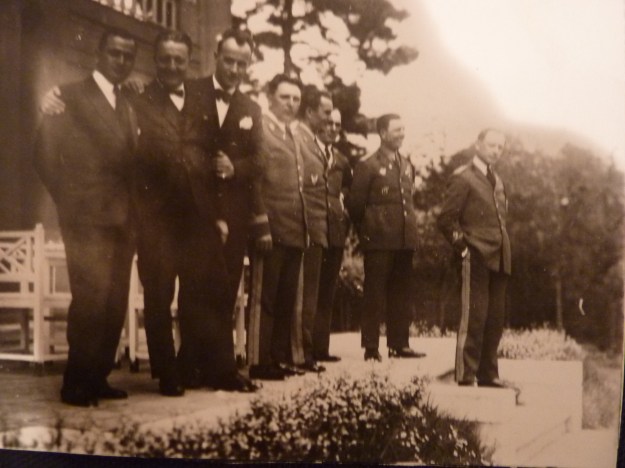

Here is one of Vlado, the hat and beard don’t disguise!
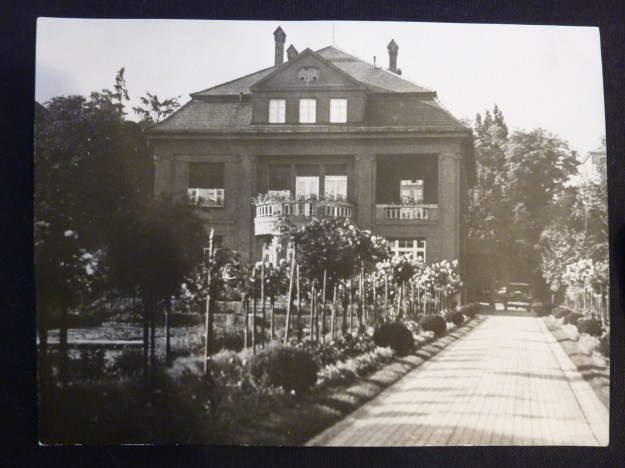
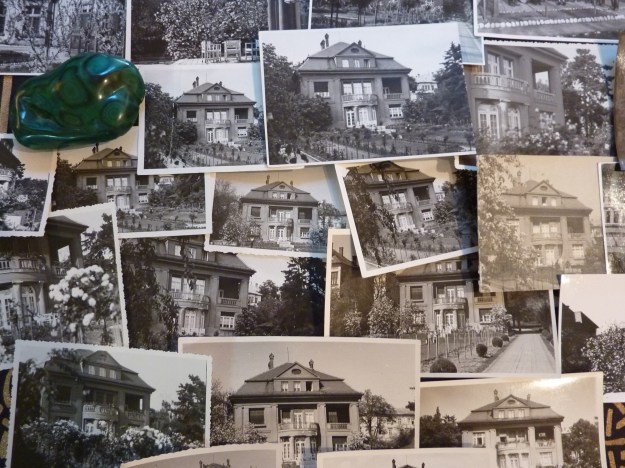


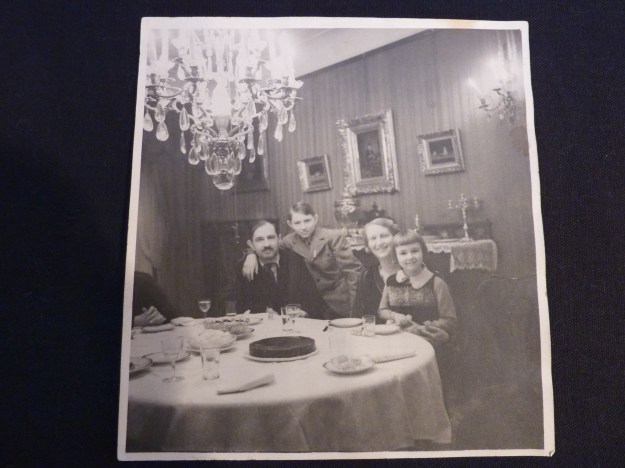
Pavel, Vlado, Olga, and Olinka, and a chocolate cake, in the dining room.
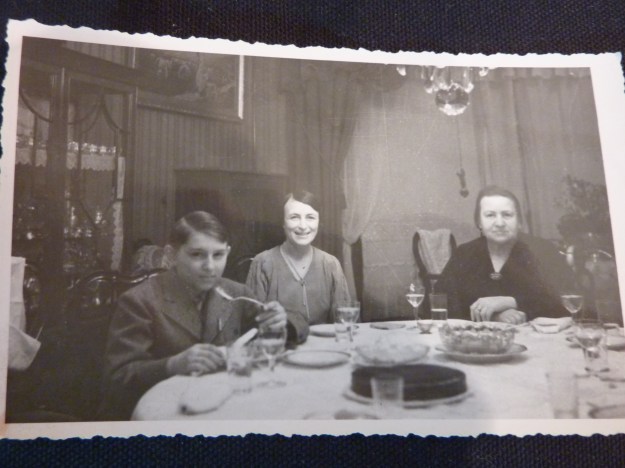
Vlado with unidentified guests, waiting for cake!
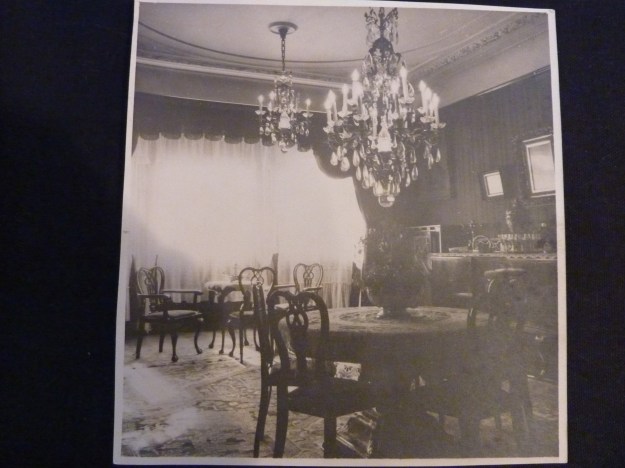


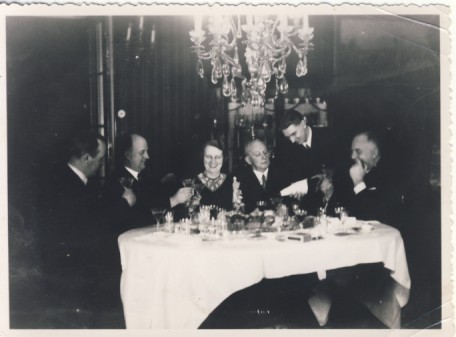

The family all together!
There are more photos, but first, here are important documents which tell the story of our family and home in Bratislava:
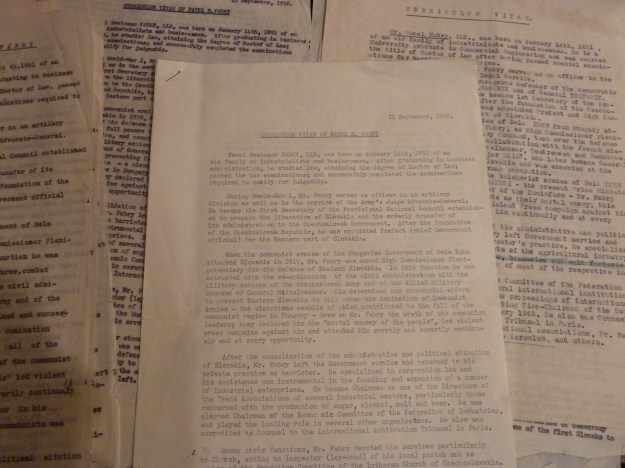
Drafts of Pavel Fabry’s Curriculum Vitae, 11 September 1952, printed here:
“Pavel Svetozar FABRY, LLD, was born on January 14th, 1891 of an old family of industrialists and businessmen. After graduating in business administration, he studied law, attaining the degree of Doctor of Law; passed the bar examinations; and successfully completed the examinations required to qualify for judgeship.
During World-War-I, Mr. Fabry served as officer in an artillery division as well as in the service of the Army’s Judge Advocate-General. He became the first Secretary of the Provisional National Council established to prepare the liberation of Slovakia and the orderly transfer of its administration to the Czechoslovak Government. After the foundation of the Czechoslovak Republic, he was appointed Prefect (chief Government official) for the Eastern part of Slovakia.
When the Communist armies of the Hungarian Government of Bela Kun attacked Slovakia in 1919, Mr. Fabry was named High Commissioner Plenipotentiary for the defense of Eastern Slovakia. In this function he was entrusted with the co-ordination of the civil administration with the military actions of the Czechoslovak Army and of the Allied Military Command of General Mittelhauser. His determined and successful effort to prevent Eastern Slovakia to fall under the domination of Communist Armies – the victorious results of which contributed to the fall of the Communist regime in Hungary – drew on Mr. Fabry the wrath of the Communist leaders; they declared him the “mortal enemy of the people”, led violent press campaigns against him and attacked him overtly and covertly continually and at every opportunity.
After the consolidation of the administrative and political situation of Slovakia, Mr. Fabry left the Government service and returned to his private practice as barrister. He specialized in corporation law and his assistance was instrumental in the founding and expansion of a number of industrial enterprises. He became Chairman or one of the Directors of Trade Associations of several industrial sectors, particularly those concerned with the production of sugar, alcohol, malt and beer. He was elected Chairman of the Economic Committee of the Federation of Industries, and played the leading role in several other organizations. He also was accredited as Counsel to the International Arbitration Tribunal in Paris.
Among civic functions, Mr. Fabry devoted his services particularly to Church, acting as Inspector (lay-head) of his local parish and as member of the Executive Committee of the Lutheran Church of Czechoslovakia. His appointment as delegate to the World Council of Churches’ meeting in Amsterdam in 1948 prompted his arrest by the Communist Government.
Although Mr. Fabry never stood for political office nor for any political party function, he was well known for his democratic and liberal convictions, and for the defense of these principles whenever his activities gave him the opportunity to do so. He earned himself a reputation in this respect which brought him the enmity of the adversaries of democracy from both the right and the left. He became one of the first Slovaks to be sent to a concentration camp following the establishment of a Pro-German fascist regime in 1939. His release could later be arranged and he was able to take active part in the underground resistance movement against the occupant; for this activity the German secret police (Gestapo) ordered his pursuit and execution in 1945, but he was able to escape the death sentence. In spite of his resistance record (or perhaps because of it), Mr. Fabry was among those arrested by the Russian Army, on the instigation of the Communist Party which could not forget his anti-Communist activities dating back all the way to 1919. Due to pressure of public opinion Mr. Fabry’s imprisonment at that time was very short; but when Communist seized power in Czechoslovakia in 1948, they did not miss the opportunity to settle accounts with him. He was removed from all his offices, his property was confiscated, he was imprisoned and subjected to a third degree cross-examination taking six months. No confessions of an admission which could have served as a basis for the formulation of an accusation could, however, be elicited from Mr. Fabry, and he managed to escape from the prison hospital where he was recovering from injuries inflicted during the examination. He succeeded to reach Switzerland in January 1949, where he has continued in his economic activities as member of the Board of Directors, and later President, of an enterprise for the development of new technologies in the field of bottling and food conservation. He was also active in assisting refugees and was appointed as member of the Czechoslovak National Council-in-exile.”
And this, from the September 25, 1961 Congressional Record: “Extension of Remarks of Hon. William W. Scranton of Pennsylvania in the House of Representatives”:
“Mr. SCRANTON. Mr. Speaker, in the tragic air crash in which the world lost the life of Dag Hammarskjold, we also suffered the loss of the life of Dr. Vladimir Fabry, the legal adviser to the United Nations operations in the Congo.
In the following statement by John C. Sciranka, a prominent American Slovak journalist, many of Dr. Fabry’s and his esteemed father’s attributes and good deeds are described. Dr. Fabry’s death is a great loss not only for all Slovaks, but for the whole free world.
Mr Sciranka’s statement follows:
Governor Fabry (Dr. Fabry’s father) was born in Turciansky sv. Martin, known as the cultural center of Slovakia. The Communists dropped the prefix svaty (saint) and call the city only Martin.
The late assistant to Secretary General Hammarskjold, Dr. Vladimir Fabry, inherited his legal talents from his father who studied law in the law school at Banska Stavnica, Budapest, and Berlin. The old Governor before the creation of Czechoslovakia fought for the rights of the Slovak nation during the Austro-Hungarian regime and was imprisoned on several occasions. His first experience as an agitator for Slovak independence proved costly during his student days when he was arrested for advocating freedom for his nation. Later the military officials arrested him on August 7, 1914, for advocating a higher institute of education for the Slovakian youth in Moravia. This act kept him away from the front and held him back as clerk of the Bratislava court.
He was well equipped to aid the founders of the first Republic of Czechoslovakia, which was created on American soil under the guidance and aid of the late President Woodrow Wilson. After the creation of the new republic he was made Governor (zupan) of the County of Saris, from which came the first Slovak pioneers to this city and county. Here he was confronted with the notorious Communist Bela Kun, who made desperate efforts to get control of Czechoslovakia. This successful career of elder Governor Fabry was followed by elevation as federal commissioner of the city of Kosice in eastern Slovakia.
But soon he resigned this post and opened a law office in Bratislava, with a branch office in Paris and Switzerland. The Governor’s experience at the international court gave a good start to his son Vladimir, who followed in the footsteps of his father. During World War II the elder Fabry was imprisoned by the Nazi regime and young Vladimir was an underground resistance fighter.
Dr. Vladimir Fabry, 40-year-old legal adviser to Secretary Dag Hammarskjold with the United Nations operation in Congo, who perished in the air tragedy, was born in Liptovsky Svaty Mikulas Slovakia. He received his doctor’s degree in law and political science from the Slovak University in Bratislava in 1942 and was admitted to the bar the following year. He was called to the United Nations Secretariat in 1946 by his famous countryman and statesman, Dr. Ivan Kerno, who died last winter in New York City after a successful career as international lawyer and diplomat and who served with the United Nations since its inception. Dr. Vladimir Fabry helped to organize postwar Czechoslovakia. His family left the country after the Communist putsch in February 1948. His sister Olga is also in the service of the United Nations in New York City [as a Librarian.-T]. His father, the former Governor, died during a visit to Berlin before his 70th birthday, which the family was planning to celebrate on January 14, 1961, in Geneva.
Before going to the Congo in February, Dr. Fabry had been for a year and a half the legal and political adviser with the United Nations Emergency Force in the Middle East. In 1948, he was appointed legal officer with the Security Council’s Good Offices Committee on the Indonesian question. He later helped prepare legal studies for a Jordan Valley development proposal. He also participated in the organization of the International Atomic Energy Agency. After serving with the staff that conducted the United Nations Togaland plebiscite in 1956, he was detailed to the Suez Canal clearance operation, winning a commendation for his service.
Dr. Vladimir Fabry became a U.S. citizen 2 years ago. He was proud of his Slovak heritage, considering the fact that his father served his clerkship with such famous Slovak statesmen as Paul Mudron, Andrew Halasa, Jan Vanovic, and Jan Rumann, who played important roles in modern Slovak history.
American Slovaks mourn his tragic death and they find consolation only in the fact that he worked with, and died for the preservation of world peace and democracy with such great a leader as the late Dag Hammarskjold.”
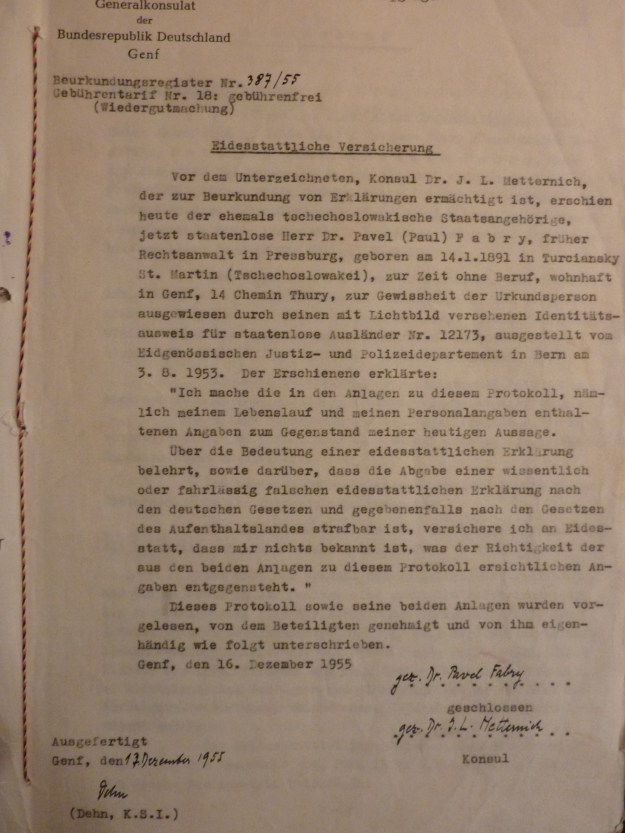
The C.V. of Pavel Fabry from 17 December 1955, which I translated a while back; the letterhead on this first page is from the Consulate General of the Federal Republic of Germany, Geneva.

This is the C.V. of our grandmother Olga Fabry, which I have not yet translated. The following statement was made on her behalf, from 30 November 1956:
“I, Samuel Bellus, of 339 East 58th Street, New York 22, New York, hereby state and depose as follows:
That this statement is being prepared by me at the request of Mrs. Olga Viera Fabry, nee Palka, who formerly resided in Bratislava, Czechoslovakia, but since 1948 has become a political refugee and at present resides at 14, Chemin Thury, Geneva, Switzerland;
That I have known personally the said Mrs. Olga Viera Fabry and other members of her family and have maintained a close association with them since the year 1938, and that I had opportunity to observe directly, or obtain first hand information on, the events hereinafter referred to, relating to the persecution which Mrs. Olga Viera Fabry and the members of her family had to suffer at the hands of exponents of the Nazi regime;
That in connection with repeated arrests of her husband, the said Mrs. Fabry has been during the years 1939 – 1944 on several occasions subject to interrogations, examinations and searches, which were carried out in a brutal and inhumane manner by members of the police and of the “Sicherheitsdienst” with the object of terrorizing and humiliating her;
That on a certain night on or about November 1940 Mrs. Fabry, together with other members of her family, was forcibly expelled and deported under police escort from her residence at 4 Haffner Street, Bratislava, where she was forced to leave behind all her personal belongings except one small suitcase with clothing;
That on or about January 1941 Mrs. Fabry was ordered to proceed to Bratislava and to wait in front of the entrance to her residence for further instructions, which latter order was repeated for several days in succession with the object of exposing Mrs. Fabry to the discomforts of standing long hours without protection from the intense cold weather and subjecting her to the shame of making a public show of her distress; and that during that time humiliating and derisive comments were made about her situation in public broadcasts;
That the constant fear, nervous tension and worry and the recurring shocks caused by the arrests and deportations to unknown destinations of her husband by exponents of the Nazi regime had seriously affected the health and well-being of Mrs. Fabry during the years 1939 – 1944, so that on several such occasions of increased strain she had to be placed under medical care to prevent a complete nervous breakdown; and
That the facts stated herein are true to the best of my knowledge and belief.”
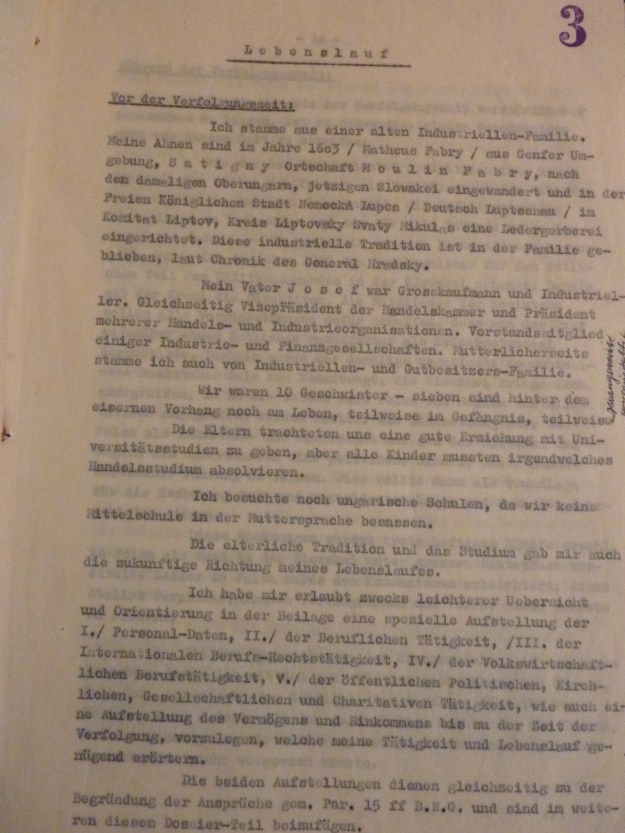
The first page of Pavel’s C.V., 1955.
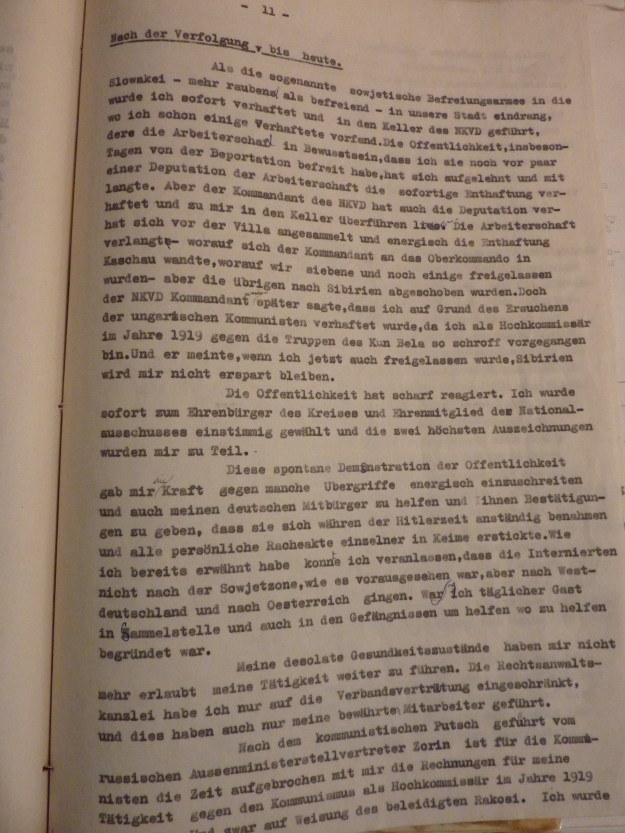
This is my translation of the last three pages of Pavel’s C.V., pages 11-13, with photos included to compare and help improve the translation:
“After the Persecution Today
“As the so-called Russian Liberation Army in Slovakia – consuming (raubend) more than liberating – invaded our city, I was immediately arrested and led into the basement of the NKVD, where I found quite a few others arrested. The public, especially the workers in awareness that I freed from deportation a few days before, chose to stand up and with the deputation of workers demanded the immediate release from liability. But the commander of the NKVD also had the deputation arrested and had me lead them into the cellar. The workers union had accumulated in front of the Villa and vigorously demanded the release from liability, whereupon the commander turned to the High command in Kosice, whereupon we were released – seven and a few, but the rest were to be deported to Siberia. The NKVD commander later said I was arrested on the basis of the request of the Hungarian Communists, because I, as High Commissioner in 1919, acted so harshly (so schroff) against the troops of Bela Kun. And he said that if I was released now, I would not be spared Siberia.
The public had reacted sharply. I immediately became an honorary citizen of the circle and an honorary member of the National Committee, elected unanimously, and I was given the two highest honors.
The spontaneous demonstrations of the public gave me the strength to forcefully intervene against many attacks, and also to help my fellow Germans and give confirmation that they behaved decently during the Hitler era, and to stifle all individual personal attacks of vengeance in the bud. As I have already mentioned, I was able to help the internees that they not go to the Soviet zone, as was planned, but were sent to West Germany and Austria. I was a daily visitor to collection centers and in prisons, to help where help was justified.”

“My parlous state of health has not allowed me to carry my work further. The law firm I have has only a limited representation of associates, and these are only my best performing workers.
After the Communist coup performed by Russian Deputy Foreign Minister [Valerian] Zorin for the Communists, the time is broken up with invoices to settle for my work against Communism as High Commissioner in 1919. And on the instructions of the insulted Mátyás Rákosi I was first of all relieved of all my functions and representatives, and subjected to all possible harassment, interrogations, etc. When I went to the delegation, as elected President of the Financial and Economic Committee of the General Assembly of the World Council of Churches, in Amsterdam, and was asked for my passport, I was arrested on the pretext of excessive imaginary charges. My whole fortune was taken, all accounts were confiscated and my Villa locked with furnishings, clothes, supplies, and everything, since it was the Consul-General of Russia; and on the same evening I was arrested as a “National Gift”, the nation was taken over, and in the night the Russians transferred the land register.
And so, my health still shattered by the persecution these Nazi monsters caused, they transferred me to the locked section of the hospital to make interrogations there. After seven months detention [In another document it says only 6 months, which I will include here, after this testimony.-T] the workers and employees of some companies succeeded to liberate me in the night on January 21-22, 1949, and led me to a kamion near the border. I had foreseen that the police would know about my escape during the night, and that’s why I escaped (uberschreitete ?) to the Hungarian border with Austria, and again by the Austrian border, since I was immediately searched with many dogs.
I managed with the help of my friends to leave the Soviet zone disguised, and made it to Switzerland where I anticipated my wife and daughter. [I have an audio recording of Olga Fabry, Pavel’s daughter, where she says that her father escaped from the prison hospital dressed as a nun, and made it across the Swiss border by train, hiding inside a beer barrel.-T]
The Swiss authorities immediately received me as a political refugee and assured me of asylum, and issued all the necessary travel documents.”
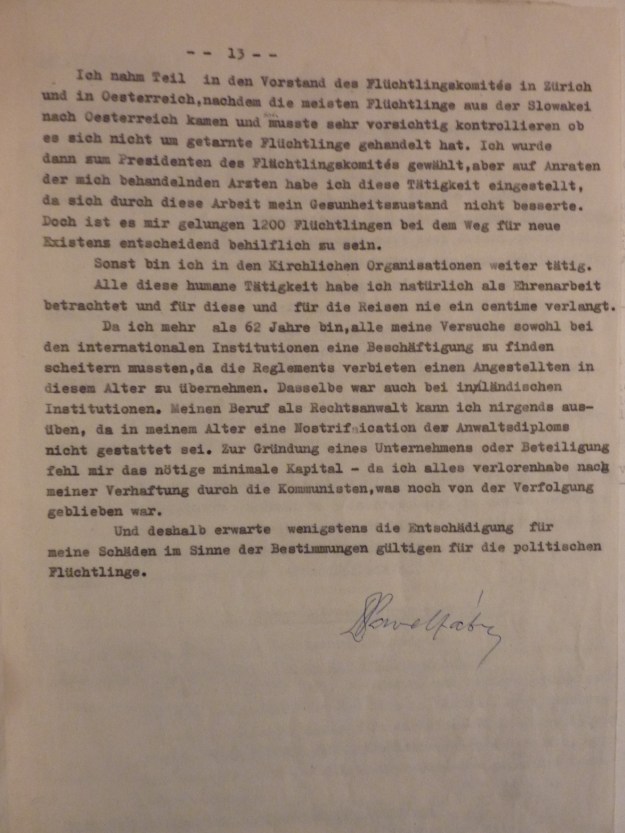
“To this day I am constantly witness to the most amiable concessions by the Swiss authorities.
In my description of illness, my activity in Switzerland is already cited.
Accustomed to the work of life, and since my health no longer permits regular employment, I have adopted the assistance of refugees. Since Geneva was the center of the most important refugee organizations, I was flooded with requests by the refugees of Western Europe.
I took part on the board of the Refugee Committee in Zurich and Austria, after most refugees came from Slovakia to Austria, and I had to check very carefully if there were any refugees that had been disguised. I was then elected as President of the Refugee Committee, but on the advice of the doctors treating me I had to adjust this activity, because through this work my health did not improve. Nevertheless, I succeeded in helping assist 1200 refugees in the decisive path of new existence.
Otherwise, I remain active in the Church organizations. All this human activity I naturally consider to be honorary work, and for this and for travel I never asked for a centime.
Since I am more than 62 years old, all my attempts to find international employment failed, because regulations prohibit taking on an employee at my age. It was the same case with domestic institutions.
My profession as a lawyer I can exercise nowhere, since at my age nostrification of law diplomas was not permitted. To start a business or involvement I lacked the necessary capital – since I have lost everything after my arrests by the Communists, what had remained from the persecution.
And so I expect at least the compensation for my damages in accordance with the provisions applicable to political refugees.”
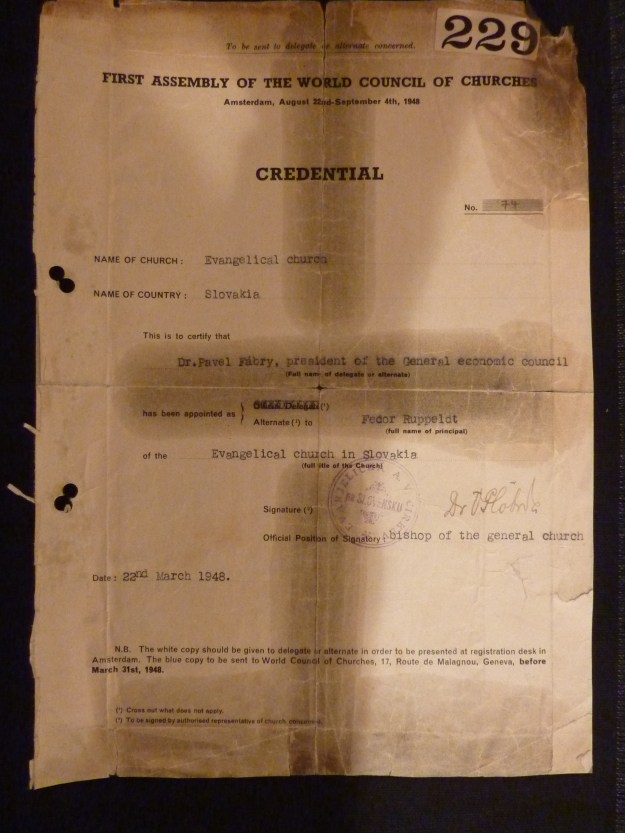
Credentials for Pavel Fabry to attend the First Assembly of the World Council of Churches in Amsterdam, as a representative of the Evangelical church in Slovakia, signed by the bishop of the general church, dated 22 March 1948.

This is a photocopy of a photostatic copy, a statement written by the General Secretary and the Assistant General Secretary of the World Council of Churches, Geneva, dated 25 March 1948:
“To whom it may concern: This is to certify that Dr. Pavel FABRY, Czechoslovakian, born 14.1.1891[14 January] at Turčiansky Sv Martin, has been appointed as participant in the First General Assembly of the World Council of Churches, to be held in Amsterdam, Holland, from August 22nd to September 4th 1948.
We shall appreciate any courtesy on the part of Dutch and other consular authorities shown to participants in order to facilitate their coming to Amsterdam.”
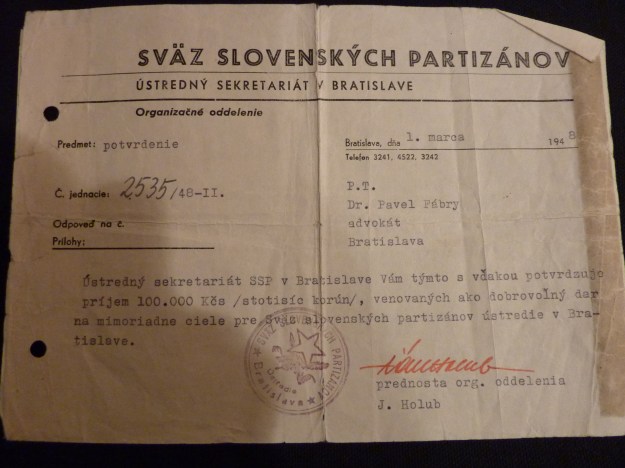
From what I am able to translate, these next two documents seem to be asking Pavel to ‘voluntarily’ give up a lot of money or else, dated 1 March and 1 April 1948:

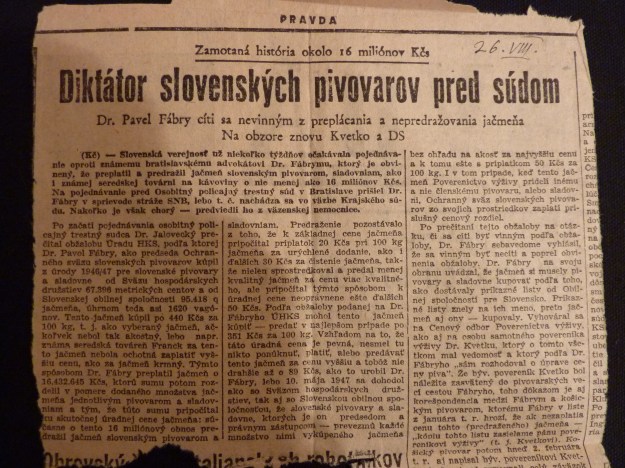
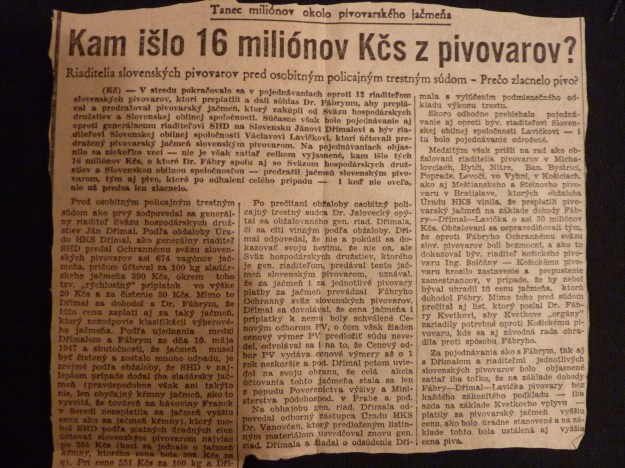
Attacks against Pavel Fabry were made in the communist newspaper PRAVDA, all clippings are from 1948, one is dated by hand 26th of August:



From 4 October 1948, this letter was written to Olinka, who was a student in 1947 at St. George’s School, Clarens, Switzerland:
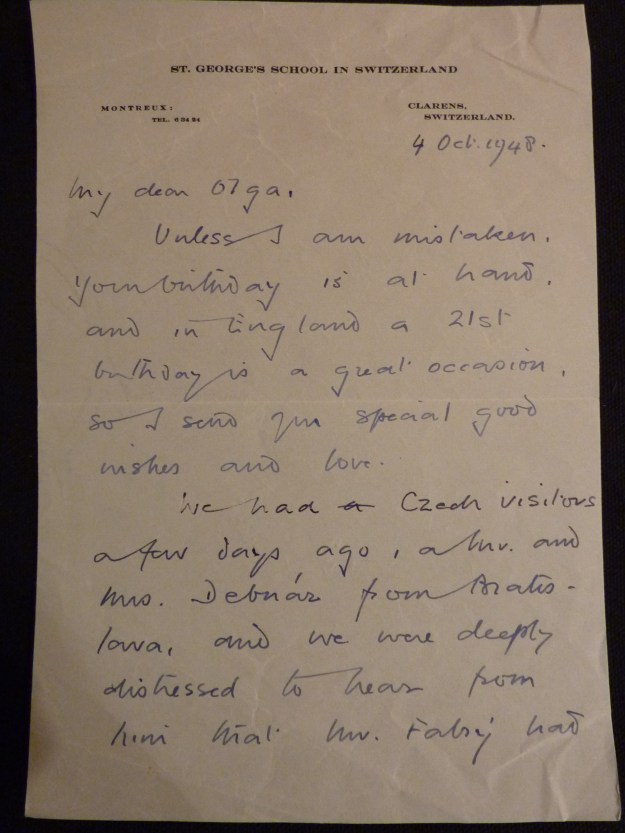

“[…]We had Czech visitors a few days ago, a Mr. and Mrs. Debnar [sp?] from Bratislava, and we were deeply distressed to hear from him that Mr. Fabry had been taken off to a camp. Very, very much sympathy to you all[…]”
This is a letter from Vlado to Constantin Stavropoulos, written while he was on assignment for the United Nations in Indonesia, dated 10 October 1948. Vlado was asking for help in getting another assignment, so he could be closer to his family who needed him. I am appreciating more and more the emotional strain Vlado was under while writing this. Trygve Lie was the Secretary-General of the United Nations at this time.
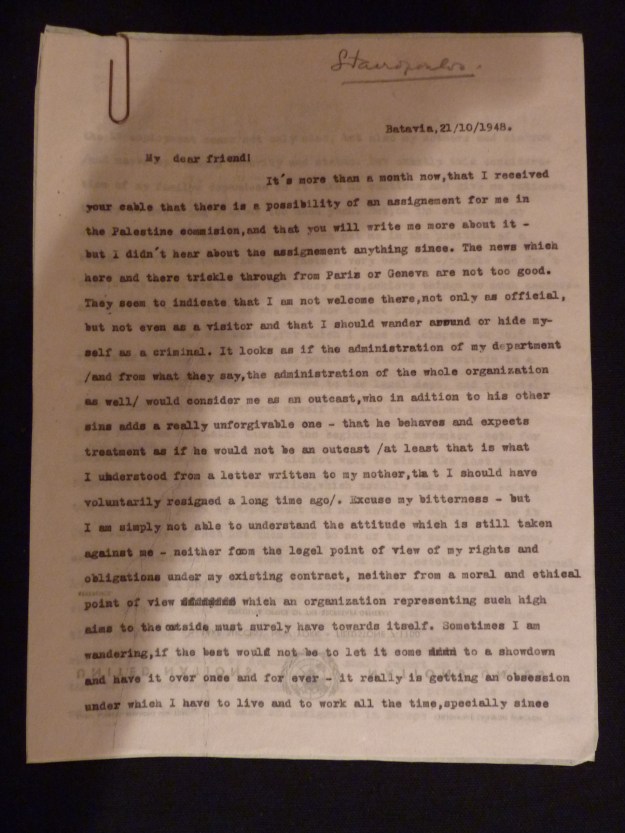
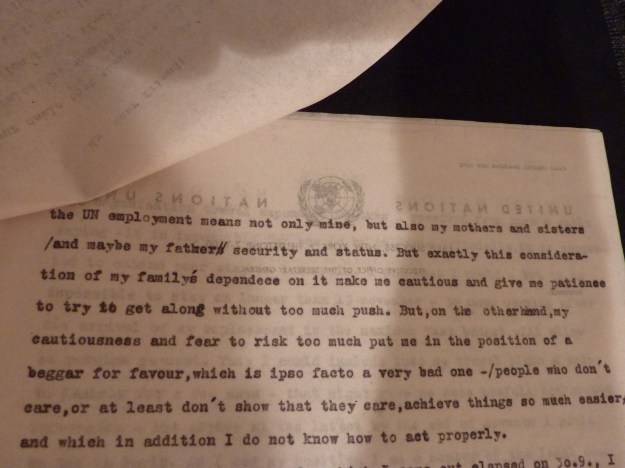
“It’s more than a month now, that I received your cable that there is a possibility of an assigment for me in the Palestine commision, and that you will write me more about it – but I didn’t hear about the assignment anything since. The news which here and there trickle through from Paris or Geneva are not too good. They seem to indicate that I am not welcome there, not only as official, but not even as a visitor and that I should wander around or hide myself as a criminal. It looks as if the administration of my department /and from what they say, the administration of the whole organization as well/ would consider me as an outcast, who in addition to his other sins adds a really unforgivable one – that he behaves and expects treatment as if he would not be an outcast /at least that is what I understood from a letter written to my mother, that I should have voluntarily resigned a long time ago/. Excuse my bitterness – but I am simply not able to understand the attitude which is still taken against me – neither from the legal point of view of my rights and obligations under my existing contract, neither from a moral and ethical point of view which an organization representing such high aims to the outside must surely have towards itself. Sometimes I am [wondering], if the best would not be to let it come to a showdown and have it over once and for ever – it really is getting and obsession under which I have to live and to work all the time, specially since the UN employment means not only mine, but also my mothers and sisters /and maybe my fathers/ security and status. But exactly this consideration of my family’s dependence on it make me cautious and give me patience to try to get along without too much push. But, on the other hand, my cautiousness and fear to risk too much put me in the position of a beggar for favour, which is ipso facto a very bad one -/people who don’t care, or at least don’t show that they care, achieve things so much easier/- and which in addition I do not know how to act properly.[…]”
Further evidence comes from Washington state, U.S.A., from the Spokane Daily Chronicle 19 September 1961, “Crash Victim Known in City”:
“Vladimir Fabry, killed in the plane crash that claimed the life of Dag Hammarskjold yesterday in Northern Rhodesia, visited Spokane three years ago.
Fabry, U.S. legal adviser to the United Nations in the Congo is a close friend of Teckla M Carlson, N1727 Atlantic, and he and his sister, Olga, also a UN employee, were her house guests in 1958.
A travel agent, Mrs. Carlson first met Fabry in 1949 at Geneva after he had succeeded in having his father released from a concentration camp. The Spokane woman said they have exchanged letters since that time.”

By Marc Dragul - Own work, CC BY-SA 3.0, Link
Vaclav Havel, 17 November 1989, honoring Jan Opletal and others who died in the Prague protests of 1939. This was the start of the Velvet Revolution, which ended on 29 December 1989 with Vaclav Havel elected as President of Czechoslovakia, the end of 41 years of Communist rule.
Before continuing with the next documents and photos from 1990 to 2002, here is a copy of a letter dated 14 April 1948, from Dr. Ivan Kerno, who was Assistant to the Secretary-General Trygve Lie at the United Nations, and head of the legal department, giving his commendation of Vlado’s work. Dr. Kerno was instrumental in Vlado getting his position at the U.N., and was a good friend to the family.

Dr. Kerno’s son, Ivan, who was also a lawyer, would later help Vlado’s sister Olga in 1990, as they were both seeking restitution, and needed someone to investigate the status of their houses in Prague and Bratislava. This fax from Prague is addressed to Mr. Krno, dated 20 November 1990, from lawyer Dr. Jaroslav Sodomka. Dr. Sodomka writes that the Fabry house was “taken in 1951-52[the dates are handwritten over an area that looks whited-out] and later donated to the USSR (1955)[the date and parentheses are also handwritten over a whited-out area].”
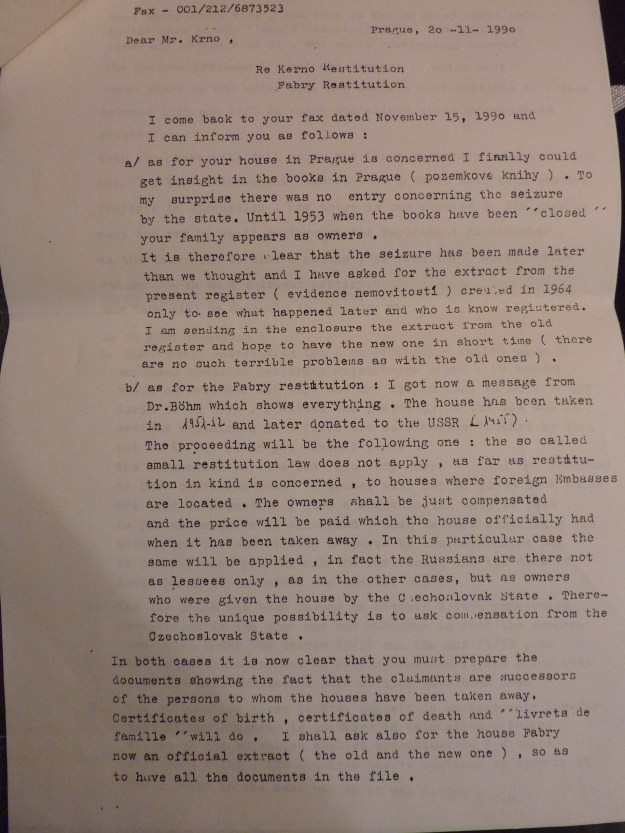

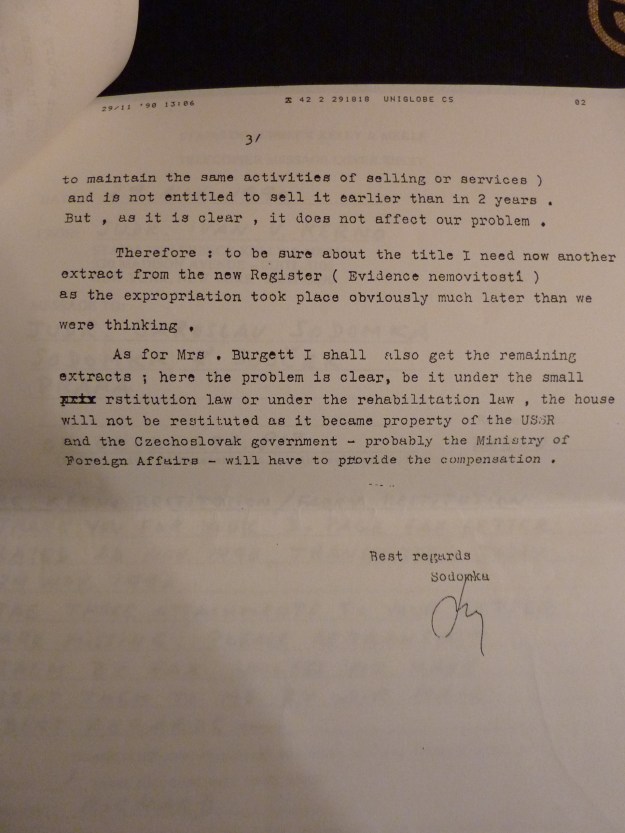
“[…]As for Mrs. Burgett I shall also get the remaining extracts; here the problem is clear, be it under the small restitution law or under the rehabilitation law, the house will not be restituted as it became property of the USSR and the Czechoslovak government – probably the Ministry of Foreign Affairs – will have to provide the compensation.”
In response to this fax, Ivan Kerno writes to Sodomka, 7 December 1990:
“[…]please do not take any action with the authorities in connection with her house. She wants a restitution of her house, namely, to receive possession of the house, and is not interested in receiving a monetary compensation.
I have read in the New York Times this morning that the Czechoslovakian government has announced that it will compensate persons who have been politically persecuted or jailed under the former regime. This is a clear indication that the present government considers the actions of the former Communist government to have been illegal. It is also a definite precedent for the restitution of family homes which were illegally taken by the previous government and handed over to a foreign government.[…]”
This map shows our property in Bratislava, outlined in red:
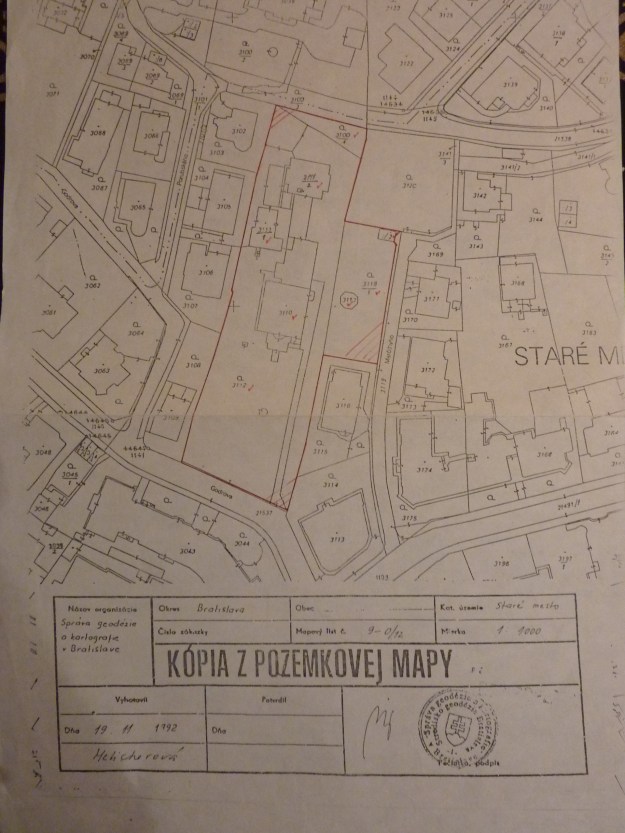
From 3 January 1991, Sodomka once again writes to confirm that the house was confiscated in 1951, and donated to USSR in 1955:
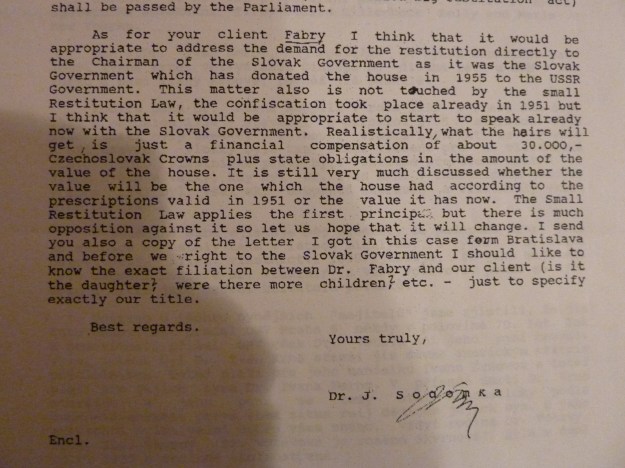
“[…]As for your client Fabry, I think that it would be appropriate to address the demand for the restitution directly to the Chairman of the Slovak Government as it was the Slovak Government which has donated the house in 1955 to the USSR Government. This matter also is not touched by the small Restitution Law, the confiscation took place already in 1951 but I think that it would be appropriate to start to speak already now with the Slovak Government.[…]”
Olga Fabry returned to Czechoslovakia with her husband in June 1992, for the first time since her exile, to see the house. This next letter is dated 27 April 1992, and is addressed to Consul General Mr. Vladimir Michajlovic Polakov, Russian Consulate General, Bratislava:

“Dear Sir,
I would like to request an appointment with you on June 17th or 18th 1992 whichever would be convenient.
I plan to be in Bratislava at that time and would like to discuss with you matters pertaining to the villa that my parents built, where I was born and grew up and which now houses your Consulate.
I would greatly appreciate it if you would be kind enough to let me know in writing when I can see you. Thank you.
Sincerely,
Olga Burgett nee Fabry”
This is an undated letter from the Russian embassy in Bratislava(our house), the postal cancellation is hard to decipher but appears to be from June 5 1992, and there is a written note to “HOLD Away or on Vacation”. This may have arrived while Olga and her husband were already in Czechoslovakia – finding this waiting back home in New York, I can only imagine how she must have felt! This contradicts what Lawyer Sodomka told her, but it confirms Pavel’s testimony: the house was taken in 1948.
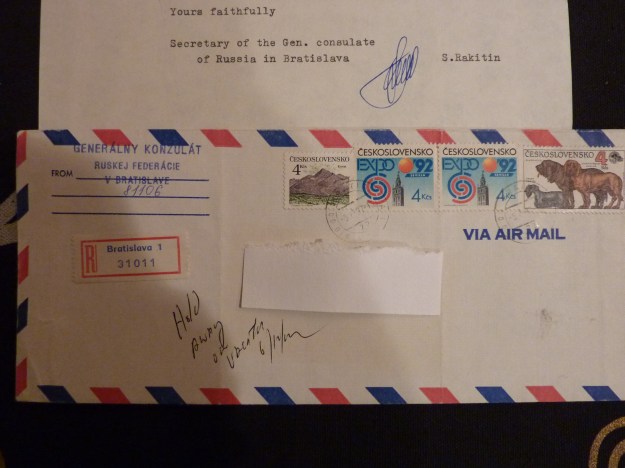
“Dear Mrs. Burgett,
With reference to your letter dated 27.04.1992 we inform you that at your request you have the opportunity to survey the villa while your stay in Bratislava. But we attract your attention to the fact that all the matters, pertaining to the right of property for the villa you should discuss with C.S.F.R. Foreign Office. Since 1948 the villa is the property of the Russian Federation and houses now Gen. cosulate[sic] of Russia.
Yours faithfully
Secretary of the Gen. consulate of Russia in Bratislava
S. Rakitin”

These photos were taken in June 1992, during Olga’s visit. The roses Maminka planted were still growing strong.


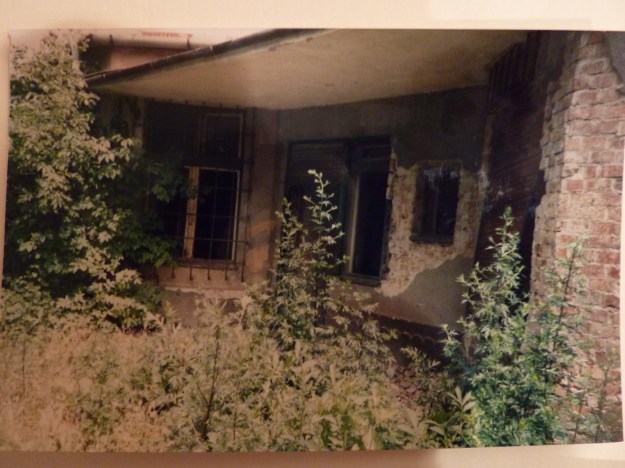

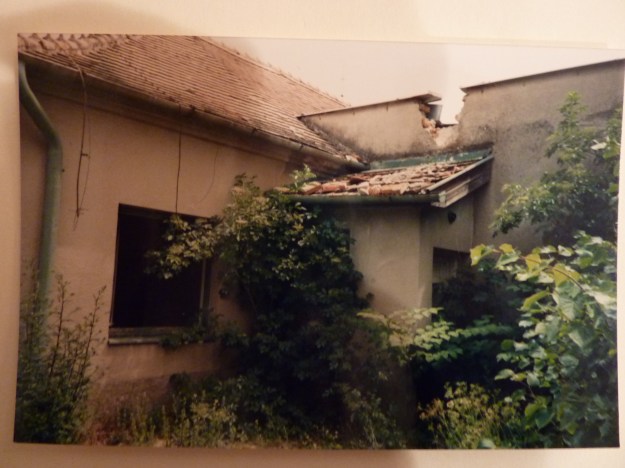
These two are undated, unmarked.

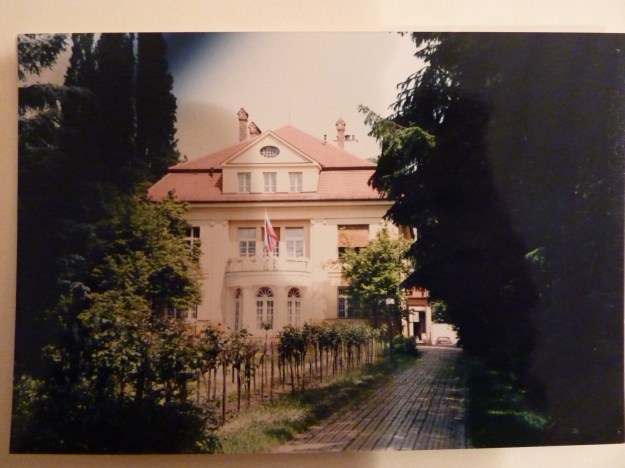
Lastly, the most recent photos I have, dated 25 July 2002, and the roses were still blooming.
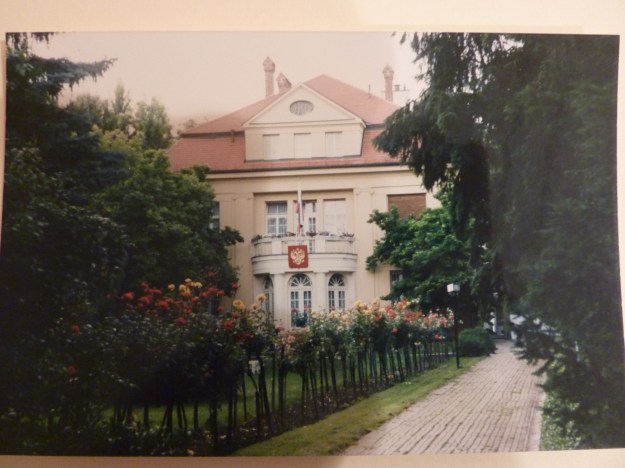

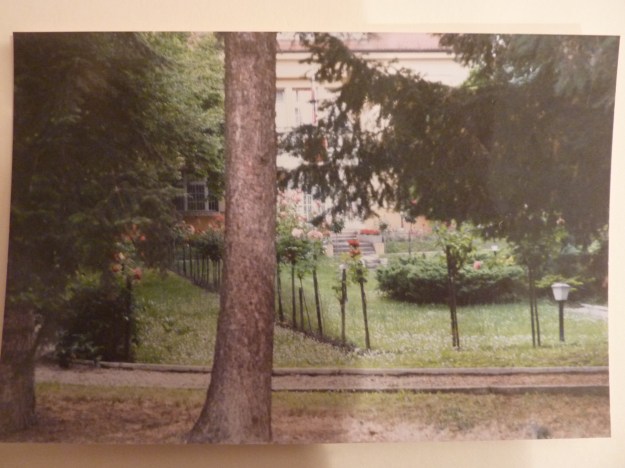
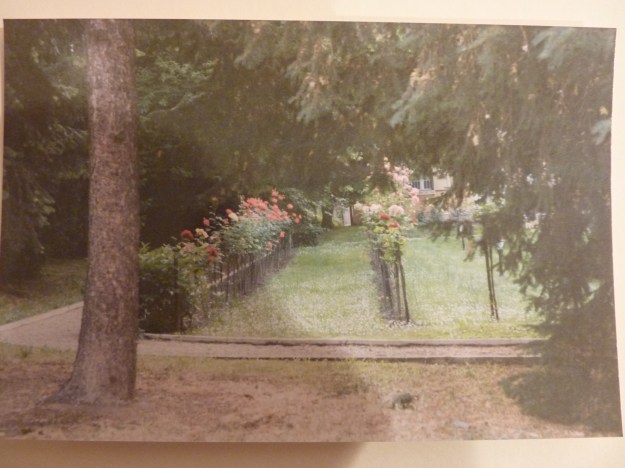
When you search for images of the “Russian Embassy Bratislava”, you see the roses have all been removed now, and there is a new tiered fountain, but if you can ignore the flag of Russia and the gilded emblem of the federation hanging off the balustrade, it still looks like our house!
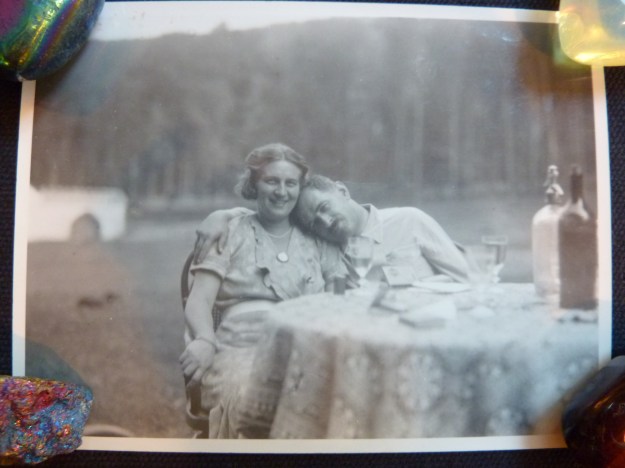
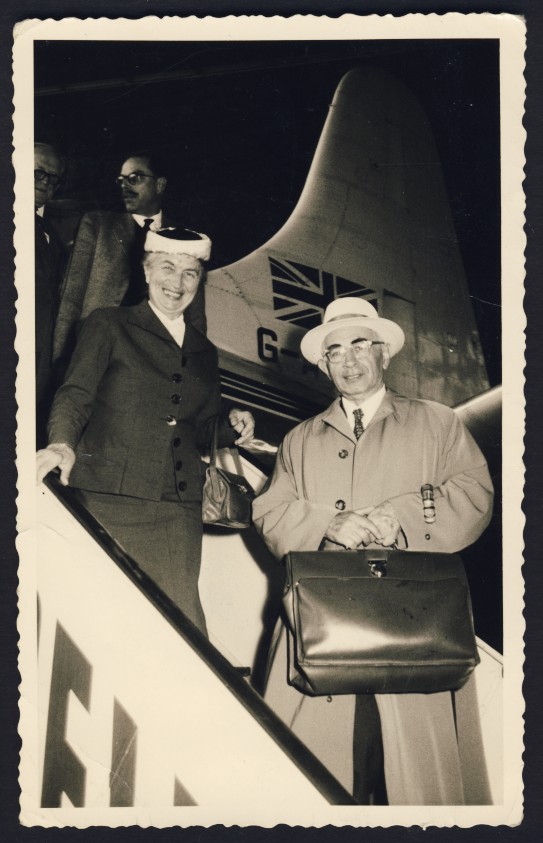
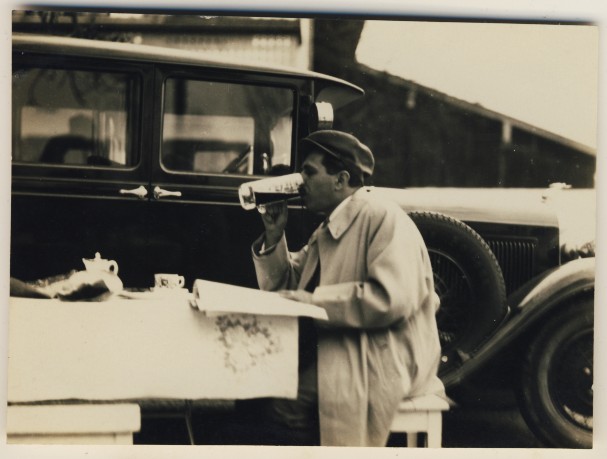
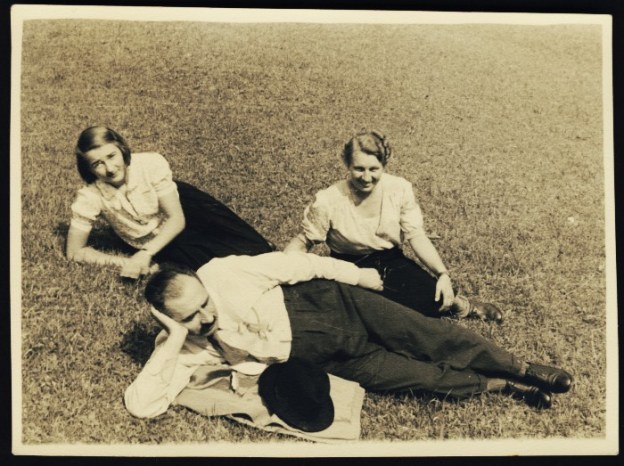
And now, because love is the reason I tell this story for my family, I leave you with my favorite photos of Pavel and Olga Fabry, who did so much good out of love!






Vote with your Heart!

“Power without love is reckless and abusive, and love without power is sentimental and anemic. Power at its best is love implementing the demands of justice, and justice at its best is power correcting everything that stands against love.” — Martin Luther King Jr.
The Bedrock

“Concerning men and their way to peace and concord–?” The truth is so simple that it is considered a pretentious banality. Yet it is continually being denied by our behavior. Every day furnishes new examples.
It is more important to be aware of the grounds for your own behavior than to understand the motives of another.
The other’s “face” is more important than your own. If, while pleading another’s cause, you are at the same time seeking something for yourself, you cannot hope to succeed.
You can only hope to find a lasting solution to a conflict if you have learned to see the other objectively, but, at the same time, to experience his difficulties subjectively.
The man who “likes people” disposes once and for all of the man who despises them.
All first-hand experience is valuable, and he who has given up looking for it will one day find–that he lacks what he needs: a closed mind is a weakness, and he who approaches persons or painting or poetry without the youthful ambition to learn a new language and so gain access to someone else’s perspective on life, let him beware.
A successful lie is doubly a lie, an error which has to be corrected is a heavier burden than truth: only an uncompromising “honesty” can reach the bedrock of decency which you should always expect to find, even under deep layers of evil.
Diplomatic “finesse” must never be another word for fear of being unpopular: that is to seek the appearance of influence at the cost of its reality.
Dag Hammarskjold, 1955, “Markings”
Transparency
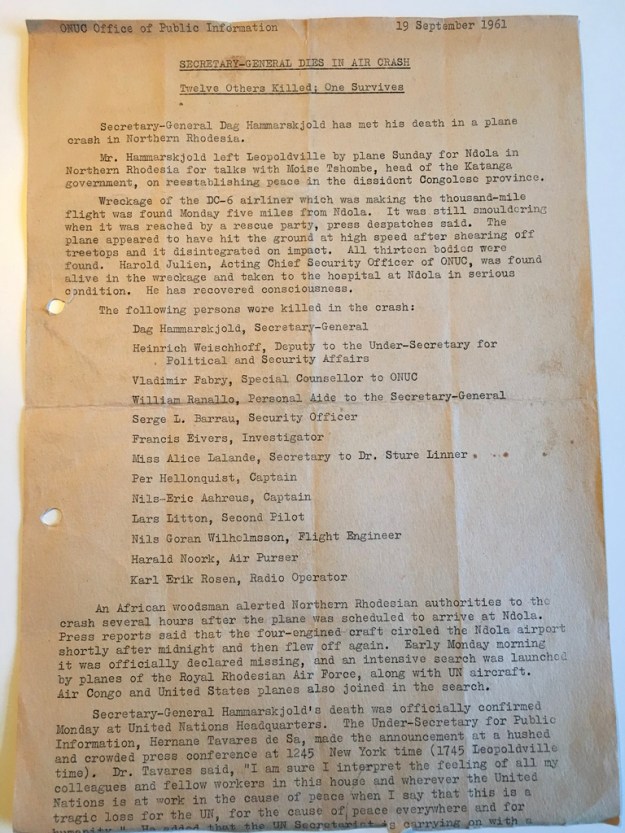
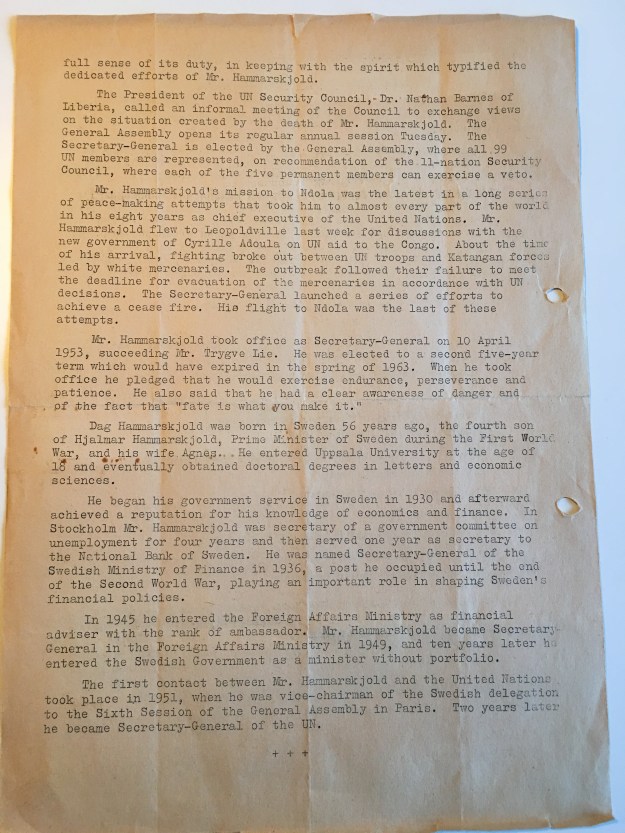
This UN document was sent to me recently from Gustav Wenneberg of Denmark, the son of Johan Wenneberg; Johan was a UN security officer stationed in Leopoldville at the time of the crash. I don’t believe this has anything new to add to the investigation, but it is interesting since it mentions only 14 people, when there were 16 people total on the plane; Swedish UN officers Hjelte and Persson were not included.
I am posting this also as a reminder, to anyone who believes they can assist the UN investigation with new information, to please contact Judge Othman’s office at dh.investigation@un.org, “first providing a brief outline summarising the new information”.
Truth
My sincere thanks and appreciation to Judge Othman for his hard work on the Hammarskjold investigation, and for his 25 October 2017 report. Once again, I want to reaffirm my complete support of the United Nations investigation, and I stand with Judge Othman with the strong conviction that there should be unconditional cooperation and transparency from anyone who has information about the death of our relatives. There are no good reasons to obstruct this official investigation, and I will continue to speak up for truth and justice for Vlado.
For those who have not read the October report, you can find it on the UNA Westminster “Hammarskjold Inquiry News Page”, click on “Eminent Person Report 2017”.
56 Years Ago Today
In memory of the 16 who died in Ndola, here is some of the collection from my mother-in-law, Olga Fabry, who carefully saved all the documents and mementos I share here. Vlado was only 40 years old when he died, a man who was very much loved by his family and friends, and my thoughts are with all the relatives around the world who remember their family on this day. The struggle against racism and white supremacy continues for us, let us not forget their example of courage to resist, and to fight for justice.
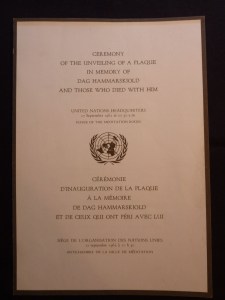
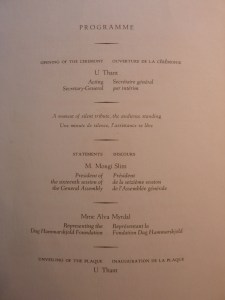
Program from the first wreath laying ceremony at UN Headquarters, one year after the crash, 17 September 1962:

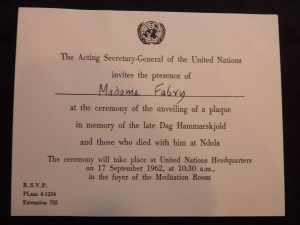
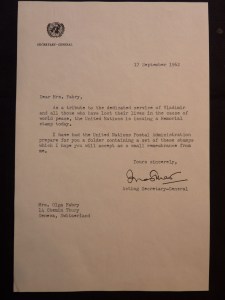
Invitation from Acting Secretary-General, U Thant, to Madame Fabry:
Letter and commemorative UN stamps from U Thant to Olga Fabry:

Signatures from UN staff were collected from all over the world to fill this two-volume set of books in memory of Vladimir Fabry:
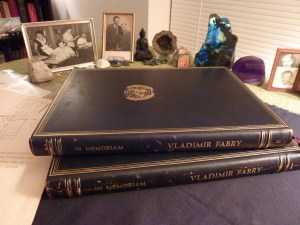
Signatures from UN Headquarters in New York include Ralph Bunche, and his wife Ruth:


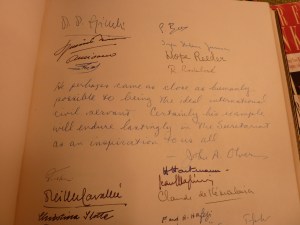
Signatures from Geneva Headquarters and a message from John A. Olver:
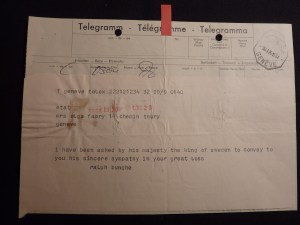
Telegrams from friends in every country:
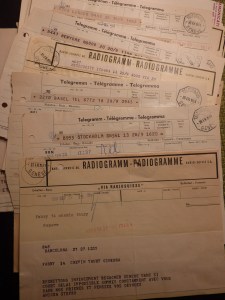
Among them, a message of sympathy from the King of Sweden relayed through Ralph Bunche:
And a cable from Jozef Lettrich:
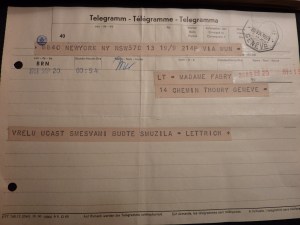
UN cables express the loss of a dear friend and highly valued colleague:


Newspaper clippings from 1961 and 1962, the first one with a photo of Olga Fabry and her mother at the funeral in Geneva, Switzerland:

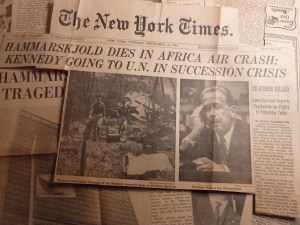


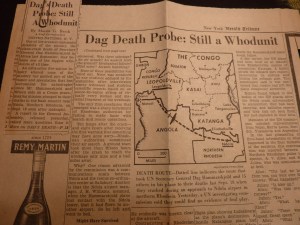
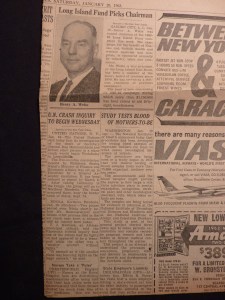
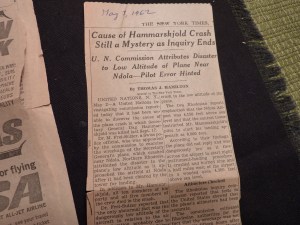
The investigation will coming up for review in the General Assembly, and for those who think we should give up and be quiet about it already after all these years, Dag Hammarskjold said it best: “Never, “for the sake of peace and quiet,” deny your own experience or convictions.”
Letter to Beirut
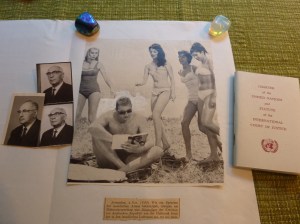
On November 4, 1959, while Vlado was working in Beirut as Legal and Political Adviser to the UNEF in the Middle East, there was a fight between four Egyptian and six Israeli jets at the border of the two countries. Here is a letter from Vlado’s father, Pavel, written the following day, which has a news clipping in German referencing this event. I can’t properly translate the Slovak, but it shows Pavel’s usual sense of humor, in the format of a mock newspaper front page – especially the magazine image he altered to look like Vlado, with his nose in a book at the beach, surrounded by women trying to get his attention, ha! He was so funny. I’ve included a couple photos of Pavel, showing what he looked like around this time.

Poem for Vlado

Looking through the family papers today, I found a poem by Olinka Fabry, written in tribute of her brother Vlado. I share it here with love to the both of them.
To Vlado
You died, as you lived –
not fearless, nor reckless,
but wisely bargaining
the single coin of life
for the one thing it is worth,
to bargain for
not for the siren song of gold
nor for the temptation of flesh
nor for the praise of men –
but to help life bloom and sing
and save it from withering away
For while we procrastinated
while we withdrew and barricaded ourselves in our insides
you stepped out –
with a pick and the rope, climbed to the top
into the streaming sunshine of bullets
and called to the man, behind the bush
to come out and talk over his grievance….
Now that it’s consummated,
we see it well, this hard won lesson:
not for the thrill
nor to subdue the mountain
but to steel the gaze
at the edge of the abyss
so when time comes
for the free man
he shall not flinch,
he shall not be found wanting.
Enter now in the hall of fame
of our small mountainfolk,
join the heroes standing around
the famous cliff – straight as candles –
you who wrote their courage in the sky
for all the world to see.
Of you I sing on this foreign shore
gentle as white wool of our lambs
hard as the granite of our cliffs.
You shall not walk again the mountain path
but your name shall be whispered
when the forest sings
Letter from the Congo, 15 September 1961
From the family of UN officer Peter J. Hazou, I am proud to share their contribution of photos and memories from 1961, and a letter from the former Leopoldville, now Kinshasa, that was written on this day, 55 years ago.
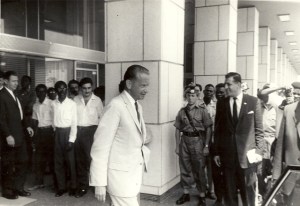
Dag Hammarskjold, center, in white suit, his bodyguard William Ranallo at far left, and Peter J. Hazou at right in dark suit with lapel pin.
From reverse of UN photo: “SECRETARY-GENERAL LEAVES FOR CONFERENCE WITH CONGO PREMIER. UN 72653 -United Nations, Leopoldville, September, 1961. Secretary-General Dag Hammarskjold leaves UN Headquarters in Leopoldville on his way to meet Congolese Premier, Cyrille Adoula. The Secretary-General was consulting with Premier Adoula on the Katanga dispute.”
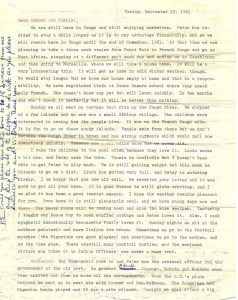
Friday, September 15, 1961
Dear Abboud and family,
We are still here in Congo and still enjoying ourselves. Peter has decided to stay a while longer as it is to our advantage financially, and so we will remain here in Congo until the end of November, 1961. At that time we are planning to take a three week cruise from Point Noir in French Congo and go up West Africa, stopping at a different port each day and ending up in Casablanca and then going to Marseille, where we will take a plane home. It will be a very interesting trip. It will get us home in cold Winter weather, though. We would stay longer but we have our house empty at home and that is a responsibility. We have registered Linda at Sacre Coeure school where they speak only French. She doesn’t know any yet but will learn quickly. In two months she won’t speak it perfectly but it will be better than nothing.
Sunday we all went on another boat ride up the Congo River. We stopped at a few islands and on one was a small African village. The children were interested in seeing how the people live. It was on the French Congo side. It is fun to go on these sandy islands. People swim from there but we don’t because the Congo River is brown and has strong currents which would pull one downstream quickly. Someone saw a crocodile once but we never did.
I take the children to the pool often because they love it. Linda swims a bit now, and Petey uses the tube. Tennis is available but I haven’t been able to get Peter to play much. He is still gaining weight but this week he intends to go on a diet. Linda has gotten very tall, and Petey is maturing nicely. I am happy that you are all well. We received your letter and it was good to get all your news. It is good Marcos is still globe-trotting, and I am glad it has been a good tourist season. I hope the weather remains pleasant for you. Over here it is still pleasantly cool, and we have rainy days now and then. The heavy rains will be coming soon and also the warm weather. Yesterday I taught our house boy to cook stuffed cabbage and Peter loved it. Also, I cook spaghetti occasionally because the family loves it. Sunday nights we sit at the outdoor gelateria and have Italian ice cream. Sometimes we go to the football matches (the Nigerians are good players) and sometimes we go to the movies, and so the time goes. There are still many cocktail parties, and the enclosed picture was taken at an Indian Officers’ one under a huge tent.
Wednesday [13 September 1961], Dag [Hammarskjold] came in and Peter was the protocol officer for the government at the airport. He greeted Adoula, Gizenga, Mobutu and Momboko[?-TB] when they arrived and then he made all the arrangements. When the S-G’s plane arrived he went up to meet him with Linner and Gen.[McKeown]. The Congolese and Nigerian bands played and it was a very nice welcome.

Tonight we will attend a big reception given by the Sec. General. This is a very crucial week here in the Congo. There is heavy fighting in Katanga, and at the huge UN army base. Last night the planes of UN personnel arrived from there as they were evacuated for safety. Don’t worry about us, though, as we are quite safe in Leopoldville as the fighting is far away. Peter is taking care of settling the refugees comfortably. If there is any big job Peter is asked to do it because they know it will get done properly. Because of this, Peter is working hard and practically running the big UN operation here but feels he doesn’t get the appreciation he deserves from headquarters, who do not realize he is working so hard because some of the other men are not capable of handling their jobs and so it falls on Peter. But it is a satisfaction to handle jobs well. He set up the whole Lovanium operation, which was tremendous and cost a million dollars. He used to have a private radio connection with it when it was locked in session, although he was one of the few people who had complete access to it. Too bad he didn’t take pictures there. We all hope the Katanga situation resolves itself quickly without civil war breaking out.
Well, Linda will start school Monday and we are glad about it. Tomorrow we will take a trip across the river to Brazzaville and look the town over. It is much smaller than Leopoldville. The past few days were warm and the hot season is starting to come in. It isn’t uncomfortable yet, though. I guess it is getting cooler in Bethlehem and the tourists are fewer. It is amazing to think that we will be having another great trip next Summer and will be with you again. I guess we can never complain about the United Nations! The children send kisses to each one of you and they are constantly drawing pictures which they say are for you. They are too bulky to send, though. Take good care of yourselves and keep in good spirits and health.
Love, Winnie
[At end of letter, Peter Hazou writes in pen:]
Dear Abboud,
I am sorry I have not been able to write more often since I have not been able to find the time. Thank you for your letters which arrive here via New York much quicker than in the past. As soon as we return to New York (about 17 December 1961) I shall resume a more regular correspondence. I am tired but healthy and I am sure the boat trip from the Congo to Marseille will do me a lot of good. My love to Mother, Victoria, Jamil and Mary and of course to yourself. I shall take a few days off and will write you a more detailed letter. The S-G will return to New York after tomorrow. The news from Katanga this evening is quite bad. I hope things improve. Love, Peter
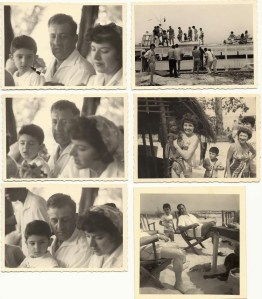
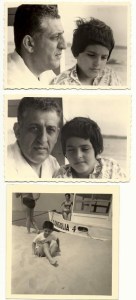
Boat rides on the Congo River, Peter Hazou and family, 1961
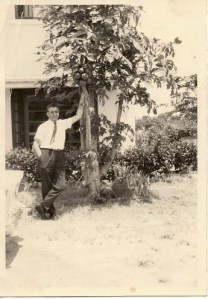
Peter Hazou, Congo, 1961

First page of Lovanium Operation report from Hazou, who did tremendous work to organize all the details for the Lovanium conference to happen, dated 23 August 1961, with photo and ONUC Lovanium pass. Hazou worked for the United Nations for over three decades, from 1947 until 1978.
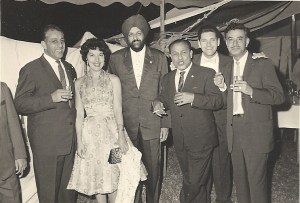
Peter and Winnie Hazou at left, with Sergeant Harold Julien second from right. This is likely the photo of the Indian Officer’s cocktail party mentioned in the letter, it is undated. The son of Winnie Hazou recalls: “She told me that she told Harry [Julien] at the reception how very lucky he was to be going on the mission to Katanga with the S-G”.

Hazou with unidentified person, possibly at same Indian Officer’s Party.
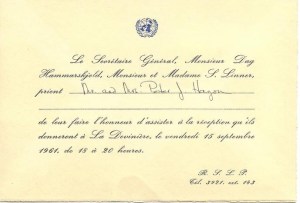
Invitation to the reception for Dag Hammarskjold, at La Deviniere, 15 September 1961
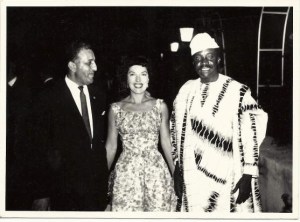
At reception for Hammarskjold, on the terrace at La Deviniere, Peter and Winnie with unidentified person.

La Deviniere terrace, Peter and Winnie Hazou, Joseph Kasa-Vubu, and S. Habib Ahmed

Here is the reverse of the last photo, which is dated in arabic 16 September 1961. Though she writes in the letter to Abboud that the reception for Hammarskjold was on the 15th, Winnie Hazou told her family later on that the reception was the night before the flight, the 16th, which also contradicts the date on the invitation, but the days leading up to the flight were intense with fighting, so it’s very possible that the date was moved at the last minute.

Prime Minister Cyrille Adoula, far left, with Peter Hazou on right, at Ndjili airport, Leopoldville, to transfer the 16 fallen to the Pan-Am plane.
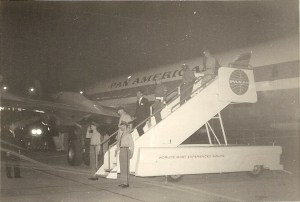
Leopoldville, Pan-Am transport of fallen
The son of Peter and Winnie was only four years old at the time of the crash, but he remembers how he heard the news about Hammarskjold. He was at a luncheon for wives of diplomats with his mother, when the news came that Hammarskjold’s plane was announced missing, and the luncheon ended abruptly. He knew that something was wrong when his father came home in the middle of the day, which was very unusual for him. And then he saw his parents crying together. When the bodies of the fallen arrived in Leopoldville, he was on the observation deck at Ndjili airport with his family, and still recalls the intense sadness and solemnity of the people around him.
It took many people to run the United Nations Operation in the Congo, and I am glad to pay tribute to the memory of a colleague of Vlado, who no doubt grieved his death as well.

Misleading Conduct? US and UK Intelligence Obstruct Justice of UN Investigation
From Julian Borger’s Guardian article, 24 August 2016, “Dag Hammarskjold: Ban Ki-moon seeks to appoint investigator for fatal crash”:
“[…]Ban [Ki-moon] noted that the UK had stuck to its position last year that it had no further documentation to show the UN investigation. He appended a letter sent in June by the British permanent representative to the UN, Matthew Rycroft, saying “our position remains the same and we are not able to release the materials in question without any redactions”.
Rycroft added “the total amount of information withheld is very small and most of the redactions only consist of a few words”.
The wording of the letter echoed a similar letter, turning down the UN request for more information, the UK sent in June 2015, which said that “no pertinent material” had been found in a “search across all relevant UK departments”.
In reply the UN legal counsel, Miguel de Serpa Soares, reminded Rycroft of the shared responsibility of the UN and its member states “to pursue the full truth” about Hammarskjold’s death, and asked him to confirm that the search of “all relevant UK departments” included security and intelligence agencies.
In reply, Rycroft simply quoted the former UK foreign secretary Philip Hammond telling parliament that the foreign office had “coordinated a search across all relevant UK departments”.
“I think the British response is extraordinary. It’s very brisk and curt and evasive,” said Susan Williams, a British historian at the School of Advanced Study, University of London, whose book Who Killed Hammarskjold: The UN, The Cold War and White Supremacy in Africa, revealed new evidence that helped persuade the UN to open a new investigation into the crash near Ndola, in what was then the British colony of Northern Rhodesia, now Zambia.
Part of that evidence was a report from a British intelligence officer, Neil Ritchie, who was in the area at the time of the crash and who was trying to organise a meeting between Hammarskjold and a rebel leader from neighbouring Congo, where the UN secretary general was trying to broker a truce.
“This was British territory and they had a man on the ground. It doesn’t make them responsible for the crash but it does indicate they knew a lot of what was going on,” Williams said, adding it was “highly unlikely” that Ritchie’s report which she found in an archive at Essex University, was the only British intelligence report coming the area at the time.”
On 28 August 2016, Dr Mandy Banton (Senior Research Fellow, Institute of Commonwealth Studies), Henning Melber (Senior adviser/director emeritus, The Dag Hammarskjold Foundation), and David Wardrop (Chairman, United Nations Association Westminster Branch) published letters together in the Guardian, “UK’s lack of transparency over plane crash that killed Dag Hammarskjold”. From Melber:
“The US and British responses to the efforts by the United Nations to further explore the circumstances of the plane crash at Ndola should be an embarrassment to all citizens in these countries (and elsewhere), who have an interest in seeking clarification of what happened. The reports so far already present sufficient evidence that there is more to it than what the official government responses are willing to admit.
This form of denial through non-compliance with legitimate demands for access to information is tantamount to obstruction and sabotages the sincere efforts to bring closure to one of the unsolved cases involving western states and their security operations. Such an arrogant attitude further dents the image of those who claim to be among civilized nations then and now.”
From 2 September 2016, here is an excerpt from Justice Richard Goldstone’s letter to the Guardian, “Hammarskjold case is not yet closed”:
“[…]it is highly likely that some member states of the UN, especially but not only the US, hold records or transcripts of cockpit transmissions in the minutes before the plane came down. If so, these may well put the cause of the crash, whatever it was, beyond doubt. But neither the US National Security Agency, which has gradually resiled from its admission to our commission that it held two relevant records, nor, as Dr Banton’s letter (29 August) suggests, the UK government, has so far responded with any vigour to the secretary-general’s plea for cooperation.”
From the 6 September 2016 New York Times, “Release the Records on Dag Hammarskjold’s Death”, written by The Rt. Hon. Sir Stephen Sedley:
“There was also evidence that the N.S.A. was monitoring the airwaves in the Ndola region, almost certainly from one of two American aircraft parked on the tarmac. Our inquiry therefore asked the agency for any relevant records it held of local radio traffic before the crash. The agency replied that it had three records “responsive” to our request but that two of those were classified top secret and would not be disclosed.
At its close, my commission recommended that the United Nations follow up this lead. The General Assembly appointed a three-person panel, which repeated our request to the N.S.A. This time, the agency replied that the two documents were not transcripts of radio messages as Southall had described and offered to let one of the panel members, the Australian aviation expert Kerryn Macaulay, see them. This she did, reporting that the documents contained nothing relevant to the cause of the crash.
This makes it difficult to understand how those two documents were initially described as “responsive” to a request explicitly for records of radio intercepts, or why they were classified top secret. It raises doubts about whether the documents shown to Ms. Macaulay were, in fact, the documents originally identified by the N.S.A. The recent denial that there is any record of United States Air Force planes’ being present at Ndola increases the impression of evasiveness.”
****
From the Ohio State Bar Association (OSBA) website, “What You Should Know About Obstruction of Justice”:
“Q: Does obstruction of justice always involve bribery or physical force?
A: No. One particularly murky category of obstruction is the use of “misleading conduct” toward another person for the purpose of obstructing justice. “Misleading conduct” may consist of deliberate lies or “material omissions” (leaving out facts which are crucial to a case). It may also include knowingly submitting or inviting a judge or jury to rely on false or misleading physical evidence, such as documents, maps, photographs or other objects. Any other “trick, scheme, or device with intent to mislead” may constitute a “misleading conduct” form of obstruction.”
Thank You, Mr. Ban Ki-moon
On March 30 2016, United Nations Secretary-General Ban Ki-moon was in Stockholm, Sweden for the annual Dag Hammarskjold lecture. With sincere thanks and appreciation for his strong leadership in the Hammarskjold investigation, I am posting his remarks here in full (link here). It is very touching to know that he thinks of Hammarskjold every day, and that he has done so for 60 years, since he was a young boy in Korea.
“I thank the Government and people of Sweden for a very warm welcome.
It is a singular honour to be in this magnificent and legendary City Hall … among this most distinguished audience … to deliver a lecture named for a towering hero of humanity.
Dag Hammarskjöld was Swede through and through, but he also belonged to the world.
I feel both privileged and humbled to be serving in the role he once filled so masterfully.
I also feel blessed to be serving the United Nations. During the Korean War, the United Nations was our lifeline. We survived on food from UNICEF. We were schooled with textbooks from UNESCO. We were protected by the troops of many nations serving under the UN’s blue flag.
Sweden was among the nations that responded to the call of the Security Council for Member States to support Korea in 1950.
More than 1,000 Swedish doctors and nurses served in the Swedish Red Cross Field Hospital, and treated 19,100 UN personnel and 2400 Koreans. I greatly appreciate this strong show of international solidarity.
Following the war, Sweden continued to help promote peace and prosperity on the Korean peninsula through its involvement in maintaining the armistice as a member of the Neutral Nations Supervisory Commission.
Every day, I think of Dag Hammarskjöld in the course of my duties as Secretary-General. But you may be surprised to know, I did so even as a boy.
Sixty years ago, I was a sixth grader in rural Korea. It was 1956, and people in Hungary were facing a violent suppression of their aspirations.
We wondered: What could we do? How could we best express support from our far-off corner of the world?
Then it came to us. We will write to Dag Hammarskjöld!
As the student chair, I read the letter to my entire school at an assembly.
“Dear Mr. Secretary-General,” we pleaded, “help the people of Hungary so they can have freedom and democracy.”
I did not know Dag Hammarskjöld. Yet, half a world away, more than half a century ago, I sensed both his power as a world leader, and his approachability as a servant of humankind.
He did not simply preach these qualities. He lived them with passion and compassion.
Hammarskjöld reached people’s hearts, because he strived to understand people’s minds – their hopes and dreams and fears and aspirations.
He did so through the arts – music and poetry, literature, sculpture and photography.
He did it through spirituality and quiet contemplation.
Above all, he pursued it through his lifelong mission — an active life devoted to “selfless service”.
In October 2006, in addressing the General Assembly of the United Nations upon my election as Secretary-General, I shared the story of a boy who had once sent a letter to Dag Hammarskjold. I expressed the wish that I would not receive such letters from children around the world.
Sadly, today, I do receive the appeals that I once sent as a schoolboy. It is I who must do what Hammarskjöld did: defend the values enshrined in the UN Charter; direct our dedicated staff; and steer the Member States towards our common goals.
The world is changing—dramatically, rapidly.
We are more connected than ever before. More people than ever live in cities.
New economic powers are rising. There are more than three times as many members of the United Nations as there were in Hammarskjöld’s day.
New threats have emerged—climate change above all.
And the human family has a new profile: more than half the earth’s people are under the age of 25.
Our shared challenge is to shape this new world for the better—to build a landscape of opportunity and peace, while conquering persistent injustices, from hatred to hunger.
Around the world, we are being tested in old ways that Hammarskjöld would have recognized — and in new ways for which his example can remain our guide.
Massive displacement – the most since the Second World War.
Terrorism.
Atrocious crimes that defy all norms of humanity.
At such times, the United Nations relies on its strongest supporters to step up, speak out and stay true.
Swedes have lived and breathed the United Nations for almost 70 years. In few countries is support for the United Nations so entwined with its own national identity.
More than 80,000 Swedes have served in UN peacekeeping missions. Most recently, Swedish troops have deployed to Mali, and I welcome your efforts to increase the number of Swedish police who take part in our operations.
Swedes continue to support UN efforts to prevent and resolve conflicts through mediation and other peaceful means, continuing the noble tradition of Folke Bernadotte, Gunnar Jarring, Olof Rydbeck and Olof Palme.
I especially welcome Sweden’s support for Security Council resolution 1325 on women, peace and security, and the network of women mediators. Sweden was the first country to appoint a female Permanent Representative to the United Nations — Ms. Agda Rössel, in 1958. Today, your feminist foreign policy is bringing new voices to the table.
At a time when humanitarian needs are escalating and the funding gap is widening, you remain the world’s leading donor on a per capita basis. Even with the increased spending needed to address the needs of refugees, you have admirably maintained your commitment to development aid.
Sweden has consistently upheld human rights and universal values, including as one of the largest donors to the United Nations Democracy Fund.
And your commitment to people is equalled by your care for the planet – from the 1972 Stockholm conference on the environment, to the work of people like Bert Bolin who served as the first chairman of the Intergovernmental Panel on Climate Change, to your commitment to be one of the world’s first fossil free countries. You are also helping to mobilize action to safeguard the health of our oceans – a pressing yet often neglected challenge.
I see Sweden’s contributions every day, from my encounters with young Swedish staff members in Haiti or South Sudan — to the outstanding commitment of the United Nations Deputy Secretary-General, Jan Eliasson, who I am privileged to have serving by my side.
I am also grateful for the efforts of Sweden’s Royal Family. King Carl XVI Gustaf is a champion of climate action; Queen Silvia is an advocate of children’s rights; and I am especially pleased that Crown Princess Victoria has just agreed to be one of our Sustainable Development Goal Advocates — and I welcome her enthusiastic engagement.
All of this leads me to one conclusion: Sweden is a superpower of solidarity, dialogue and cooperation.
In the process, you are showing that leadership in the United Nations and the European Union are mutually reinforcing – as you excel at one, you advance the other — and benefit from both.
The world needs Sweden’s global citizenship more than ever. Today I would like to highlight four areas where your contributions are crucial and where I would like for us to work together to be even more ambitious: first, addressing the refugee challenge; second, advancing a more sustainable world; third, enhancing peace and security; and fourth, ensuring the strongest possible United Nations.
Let me start with one of the leading trends of our time: human mobility.
Sweden — like many countries today — is facing the challenge of refugees and migration.
Sweden — like few countries today — is setting an example of generosity and values-led action. You have accepted more refugees per capita than any other country in Europe. You should be very proud of this.
I have just come from a visit through the Middle East. I met with refugees in Jordan and Lebanon.
At least one out of four people in Lebanon is a Syrian refugee.
I heard moving tales of horror, suffering and loss.
Dag Hammarskjöld famously said that the United Nations “was not created to take mankind to heaven, but to save humanity from hell.”
These refugees have fled hell. They need our help in a spirit of shared global responsibility.
I know there are tensions and difficulties with receiving great numbers of refugees. But I have been deeply moved by the many stories of Swedish hospitality and goodwill.
My message to Sweden is to keep striving for solidarity. Recognize the economic dynamism that migrants and refugees make possible. Take a stand against negative and nativist narratives. Lead the way to more understanding guided by the universal values set out in the UN Charter.
As Jan Eliasson has said, “Sweden is a part of the global community – but the world is also part of Sweden. An open and tolerant Sweden is a richer Sweden. Building strong and fair communities is a contribution to international peace and security.”
I completely agree. Making the most of the blessing of diversity is the winning strategy of the 21st century.
That leads me to the second area where we need Sweden’s leadership – building a sustainable world.
Around the continent, and around the world, I have urged leaders and citizens to avoid the siren songs of those who sow fear, hate and division.
This cannot be a world of “us and them” — it must be a world of “we the peoples”.
That is the spirit of the 2030 Agenda for Sustainable Development with its 17 Sustainable Development Goals, the SDGs. This is a 15-year blueprint to end global poverty approved by world leaders last September. It embodies a commitment to leave no one behind. In many respects, it is a global Declaration of Interdependence.
I know Sweden is very familiar with the SDGs and the principles underlying it. That is because you were at the forefront in shaping it and in bringing peace, development and human rights together under one umbrella.
Sweden also understood something else from the start — that while promises read well on paper, it takes political action to deliver on the ground. I want to commend Prime Minister Löfven for convening a high-level support group of world leaders to sustain the political momentum for implementation.
You have realized these goals are crucial for your own country’s progress — and, once again, the Prime Minister has led the way in mobilizing ministers to drive progress. You understand a sustainable world will be a safer, more prosperous and equitable world.
As Hammarskjöld said and as we all know, there will be no development without peace.
This is the third area where we can build on the Hammarskjöld legacy.
In Syria, the cessation of hostilities has now held, by and large, for more than a month. This has given us greater humanitarian access and opened up space for diplomacy. Talks are making progress and will resume in 10 days. These are being led by my Special Envoy, Staffan de Mistura, another distinguished peacemaker with strong Swedish roots.
We are also moving towards a cease-fire and peace talks in Yemen, where civilians have borne the brunt of Coalition aerial attacks and other violence.
From South Sudan to Mali and Afghanistan, we must resolve the conflicts that are causing so much displacement and destruction.
We must also do more to heed a long-known lesson: prevention saves lives and money.
We are now taking forward the recommendations of recent reviews of UN peace operations and peacebuilding that highlighted the need for greater emphasis on prevention.
Our Human Rights up Front initiative is a further effort to identify, and act on, the earliest signs of exclusion and other violations.
Earlier this month, we marked the 10th anniversary of the Human Rights Council – a major institutional reform that has fortified this key UN pillar. One of the architects of the Council was none other than Jan Eliasson, who served as President of the General Assembly session that brought it into being.
The terrorism and violent extremism we are seeing today is a direct assault on human rights. There can never be any justification for such acts. To tackle this challenge, we need to examine the underlying drivers. That means addressing discrimination, ensuring good governance, and providing access to education, social services and employment opportunities. In launching a plan of action to prevent violent extremism, we must also avoid responses that violate human rights and thereby feed the problem we are trying to solve.
Ending impunity for the most serious crimes of international concern is a crucial part of our work for peace. With the International Criminal Court, international and UN-assisted tribunals and courts, and other mechanisms, the world has entered an age of accountability. Prosecutions may still take a long time; not all perpetrators have been brought to trial; but the trend is unmistakable: more justice for societies and more support for the victims.
The conviction last week of Radovan Karadizc for genocide in Srebrenica, as well as for crimes against humanity and war crimes, was a further welcome step in this direction. Our goal is a reckoning for the crimes of the past — and a deterrent to the crimes of the future.
Across our agenda, the United Nations must lead by example, and that means ensuring we are fit for the 21st century. That is the fourth and final area where I believe we must continue to make greater progress.
As I said on my first day in office, we reform the United Nations because we believe in its future — and I will continue to act on that conviction until my last day in office.
I publicly issued my financial disclosure statement on day one, the first Secretary-General to do so. I have strengthened results-based management and linked senior appointments to performance. I have streamlined and harmonized UN contracts, and am very proud of the many glass ceilings that have been broken at the United Nations.
I have appointed more women to senior positions than at any time in UN history. We have been strengthened by the contributions of dynamic Swedish leaders such as Foreign Minister Margot Wallstrom, who served as my first Special Representative on Sexual Violence in Conflict, and Ann Marie Orler, the first woman to serve as “top cop” of the United Nations — leading more than 10,000 UN Police worldwide.
But I also know reform is never-ending. My team and I feel a strong sense of duty to work from within to transform the Organization – and to face our failings when we fall short.
There is nothing more outrageous — there is no greater violation of trust — than sexual exploitation and abuse by those who have been sent to a country to protect innocent people.
I am sickened and shamed that the unspeakable acts of a few have tainted the valiant work of many thousands, and caused some to see the UN’s blue helmet as a symbol of fear.
As I told the Security Council earlier this month, to all the victims and their families, I profoundly apologize.
Any abuse of power by peacekeepers betrays the very people they have been sent to protect. It also betrays the values of the United Nations.
Under my leadership, we are taking unprecedented action.
We are improving oversight so that troops with known histories of abuses will never be deployed.
We are strengthening investigations so that individuals or entire contingents that commit abuses will be sent home.
We are naming names and withholding payments. We are establishing a trust fund to better support victims.
Last year, I relieved one Special Representative of his command – and I have appointed a special coordinator to deepen our work to protect people and uphold the highest standards of professionalism.
My message to all UN peacekeeping leaders is clear: report allegations immediately, and act decisively.
Of course, the United Nations does not have criminal jurisdiction over troops, so my message to the countries that contribute forces is equally clear: Promptly investigate the allegations. Quickly punish the perpetrators. Hold your personnel accountable.
Zero tolerance must be the rule.
Sexual exploitation and abuse have no place – least of all in the United Nations which stands for the rights of women and children.
In all of our work, Dag Hammarskjöld remains a touchstone for courageous, principled action.
When I visited his gravesite in Uppsala on the 50th anniversary of his death, I laid a wreath in honour of his life and reflected on the timeless example of his service. It is in recognition of that devotion that the medal we give to the families of fallen peacekeepers is named in his honour.
Hammarskjöld was a private person who lived the most public of lives.
We know, for example, that he carried a UN Charter with him at all times.
We also know some of his innermost thoughts, as set out in “Markings”, his own personal code of conduct.
But there is one thing about Hammarksjöld that remains a mystery: the circumstances leading to his death — and the deaths of those who accompanied him.
We are doing everything to find out what happened.
Last year, a UN panel considered new information, including by interviewing eyewitnesses who had not been interviewed before in official inquiries. The Panel concluded that some of the new information was sufficient to warrant further consideration of whether aerial attack or other interference may have caused the crash.
I want to use this platform today to urge Member States with intelligence or other material in their archives to provide that information without delay. We must do everything to finally establish the facts and get to the bottom of this tragedy once and for all.
Dag Hammarskjold often met with United Nations staff. In 1958, the gathering began with a song that he had asked the UN choir to learn — one of his favorite Swedish folk tunes.
It inspired a poem that concludes by asking: “Will the day ever come when joy is great and sorrow is small?”
Hammarskjold reminded the staff that the United Nations is tasked to inch the world closer to such a day.
But then he added an even deeper personal observation. He noted that whenever we are carrying out a duty “well fulfilled and worth our while”, we can already see joy as great and sorrow as being small.
I see those twin messages rooted in the Swedish character: to both work for a better world and to find ultimate meaning and reward in doing so.
That is the Swedish mission, the Swedish purpose. In so many ways, you are more than a country, you are an example. You are a champion and a role model.
Together, let us continue to build a world of greater joy and lesser sorrow.
Together, let us strive to narrow the gap between the world as it is, and the world as we know it can be.
Tack så mycket. Thank you very much.”
Letters from Fraňo Tiso
Who was Fraňo Tiso? When I first posted the image of his postcard to Vlado here, back in March of 2013, I was frankly too horrified to consider that he could be any relation to Jozef Tiso, that there were probably lots of people with the last name of Tiso. But considering the political connections that Vlado and Pavel had, that Fraňo was the former Slovak Ambassador to the Soviet Union, and that I also have letters from Fraňo to Pavel concerning his communication with Franz Karmasin (letters from Karmasin posted here), this Fraňo was very likely the cousin of Jozef Tiso; he is mentioned briefly in James Mace Ward’s “Priest, Politician, Collaborator: Jozef Tiso and the Making of Fascist Slovakia” (published 2013, Cornell University Press); from chapter 7, “Sacred Convictions, 1939-44”, page 206:
“Although still pro-German, [Jozef] Tiso also wanted greater independence, a desire that led to a sharp foreign policy turn: détente with the Soviet Union. In addition to general issues of sovereignty, the economics of German domination increasingly troubled him. His idea of the state was for “national” property to come into Slovak hands. Instead, German-held shares in Slovakia’s industry exploded to over half in 1942. The Reich meanwhile consumed around three-quarters of Slovak exports, paying in devalued credits instead of hard cash. Seeking relief from such economic dependence and exploitation, Ďurčanský as foreign minister looked east. Diplomatic ties with the Communist state offered markets, an ally for revising the Vienna Award, and the prestige of Great Power recognition. Despite a lifetime of anti-bolshevism, Tiso supported the strategy. He later claimed to have welcomed the 1939 Hitler-Stalin Pact, expecting it to facilitate the solution of “European questions” on the basis of the ethnic principle. In his first presidential address, he proposed Slovakia as “a mediator…between…the Slavic and German worlds.” Soon, he was courting “extensive economic relations” with the Soviets not only by exchanging ambassadors (sending to Moscow his cousin Fraňo) but even by congratulating Stalin on the anniversary of the October Revolution.”
More about Fraňo and Jozef Tiso is mentioned in David S. Wyman’s book “The World Reacts to the Holocaust” (published 1996, Johns Hopkins University Press):
“The fate of the Jewish population had been given more attention in Slovakia than in the Czech lands, mainly because of the involvement and complicity of the clero-fascist Slovak regime, headed by the Catholic priest-president Dr. Jozef Tiso. The role played by the Catholic clergy in Slovakia during World War II conformed with the antireligious propaganda of the Communist Party.
The initial attempt to review the birth of the Slovak state was made by the pre-war minister of justice Ivan Dérer, in his Slovenský vývoj a ľudácká zrada, fakta, vzpomínky a úvahy (The Slovak state and the treachery of the L’udaks: Facts, memories, and thoughts). The first writer to set a novel against the backdrop of the years of Slovak independence was Dominik Tatarka in his Farská republika (The Parish republic). Tatarka depicted the misguided policy and the corrupt leadership that ultimately led to the wholesale deportation and destruction of the Jewish population. Other authors, such as Hela Volanská and Katerína Lazarová, portrayed the heroic stance of Jewish participants in the Slovak National Uprising. The History of Modern Slovakia, the first in-depth study to disclose the policy of the Nazi puppet regime and to describe at great length the persecution of Slovak Jewry, was published in New York in 1955 by Dr. Jozef Lettrich, a chairman of the Slovak National Council who had fled after the Communist coup. The role of the Hlinka Guard and the Jewish plight were analyzed by Imrich Staňek, himself a survivor, in the 1958 Zrada a pád: hlinkovští separatisté a tak zvaný Slovenský stát (Treachery and downfall: The Hlinka separatists and the so-called Slovak state), written from a strictly Marxist-Leninist viewpoint.
The capture of Adolf Eichmann in May 1960 by the Mossad and his subsequent trial in Jerusalem were widely covered in the national press and media. Eichmann, notorious for engineering the deportation of both Czech and Slovak Jewry, was of major interest to the local population. (He had commuted between Berlin and Prague, where he resided in the elegant, confiscated Rosenthal villa, in the Střešovice district.) The Czech and Slovak press sent special reporters to cover the proceedings of the trial. One of these reporters, the writer Ladislav Mňačko, later published a book portraying Eichmann’s satanic role in the Holocaust. The testimonies given at the trial by survivors appeared frequently in the press and in Věstník ŽNO, the weekly bulletin of the Jewish Religious Communities in Prague. Many of these related to the wholesale deportation of Slovak Jewry orchestrated by the [Jozef] Tiso regime. During one of the sessions of the trial Eichmann’s claim that “the Slovaks gave away their Jews as one spills sour beer,” from Life magazine’s interview with him, was quoted. Widely repeated in the international press, this assertion provoked reactions among leading Slovak figures in exile. The Munich-based Fraňo Tiso, in an effort to whitewash the Slovak wartime leadership, published an article in which he stressed the endeavors of the “moderate parish regime” to save Jews from deportation. In response, Edo Friš took up the topic in the article “In the Background was Heydrich,” published in the Bratislava weekly Kultúrny život. The controversy focused on the visit of SS Obergruppenführer Reinhard Heydrich to Bratislava on April 10, 1942. Friš challenged [Frano] Tiso’s claim that the reason for Heydrich’s visit was to pressure the Slovak government to continue implementing the Final Solution. Citing documents referred to in The Destruction of Slovak Jewry, published some months earlier, Friš stressed the initiative and involvement of the Slovak leaders in the mass deportation of Jews; the aim of Heydrich’s visit, Friš added, was to assist the Slovak government in formulating a fallacious reply to the Vatican’s March 14, 1942, protest against the deportation of Jews. This was the first discussion of this sensitive issue in more than a decade.”
Here is another perspective of Fraňo Tiso, from the article “Slovak Historians In Exile In North America, 1945-1992” (published 1996), written by M. Mark Stolarik, Chair of Slovak History and Culture, University of Ottawa, Canada:
“Finally, another émigré journalist briefly settled in the Dominion and produced a significant work of scholarship. He was Dr. Fraňo Tiso (1894-1974), the former Slovak Ambassador to the Soviet Union between 1939 and 1941. Tiso fled Slovakia in 1945 and settled in Canada in 1950. In spite of his advanced age, he studied at the University of Montreal and in 1956 earned a Ph.D. in history. He published a portion of his dissertation on “The Empire of Samo, 623-658” in 1960. In 1957 he moved to West Germany where he edited the newspaper Slobodné Slovensko until his death.”
Obviously, I am very unsettled that I have these letters, I don’t know what to make of them yet, but I am publishing them here because I want to know the truth about the Fabrys, even if it shatters my whole lovely narrative about them – this is about history and not fiction.
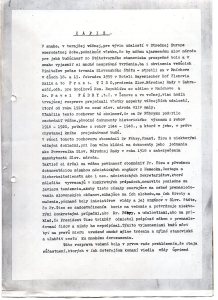
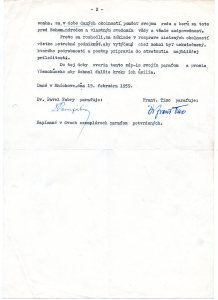
ZÁPIS
V snahe, v terajšej vážnej, pre vývin udalostí v Strednej Europe smerodatnej dobe, podniknúť všetko, čo by nášmu ujarmenému slov národu pre jeho budúcnosť zo štátotvorného stanoviska prospešné bolo a v snahe vyjasniť si mnohé nesprávné tvrdenia, ba i obvinenia vedúcich činiteľov počas trvania Slovenského štátu – stretli sa v Mníchove v dňoch 18. a 19. februára 1959 v Hoteli Bayerischer Hof členovia Exilu a to Frant. TISO, predseda Slov. Národnej Rady v Zahraničí, odb. pre Spolkovú Nem. Republiku so sídlom v Mníchove a Dr. Pavel FABRY, t.č. v Ženeve a vo voľnej, viac hodín trvajúcej rozprave prejednali všetky aspekty vážnejších udalostí, ktoré od roku 1918 na osud slov. národa vliv maly.
Uľahčila tento rozhovor tá okolnosť, že sa Dr Fabrymu podarilo zachrániť vážne, pôvodné dokumenty historického významu z rokov 1918 – 1920, poťažne z rokov 1944 – 1948., a ktoré v jeho, v práve chystanej knihe prejednávané budú.
V rámci tohoto rozhovoru oboznámil Dr Fábry, Frant. Tisu s niektorými vážnými dokladmi, pri čom váhu kládol na dokumenty jeho jednania ako Povereníka Slov. Národnej Rady v roku 1918 o zabezpečenia samobytosti Slov. národa.
Taktiež si držal za vážnu povinnosť oboznámiť Fr. Tisu s pôvodnou dokumentáciou zásahou nácistických orgánov z Nemecka, Gestapa a Sicherheitsdienstu ako i nem. nácistických Sekretariátov, ktoré náležite vyvracajú v konkretných prípadoch, menovite posledne sa javiacu tendenciu, akoby tieto zásahy smerujúce na osbné prenasledovania slovenských občanov, sihajúce na ích slobodu, na ích životy a mučenia, páchané boly iniciatívov vládz a jej orgánov v Slov. štáte, čo Fr. Tiso so zadosťučinením berie na vedomie a potvrdzuje niektorými konkretnými prípadmi, ako Dr. Fábry, a udalostiami, ako na príklad, že Prezident Tiso trikráť odmietol podpísať zákon o prenasledovaní židov a nikdy ho nepodpísal. Týmito vyjasneniami budú môcť byť na pravú mieru uvedené mnohé mýlne trdenia a mýlné stanoviská a uľahčiť cestu ku mnohému dorozumeniu.
Táto rozprava vedená bola v prvom rade prehlásením, že obaja súčastnení, ktorých v ích doterajšom konaní viedla vždy úprimná snaha, za v dobe daných okolností pomôcť svojmu rodu a berú za toto pred Bohom, národom a vlastným svedomím vždy a všade zodpovednosť.
Preto sa rozhodli, na základe v rozprave zistených okolností všetko potrebné podniknúť, aby vytýčený cieľ mohol byť uskutočnený, ktorého podrobností a postup pripravia do stretnutia najbližšej príležitosti.
Do tej doby overia tento záp-is svojím parafom a prosia Všemohúceho aby žehnal ďalšie kroky ích úsilia.
Dané v Mníchove, dňa 19. februára 1959.
Dr. Pavel Fabry parafuje:
Frant. Tiso parafuje:
Napísané v dvoch exemplároch parafom potvrdených.
————————————————————————————————–
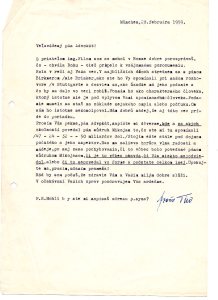
München, 28.februára 1959
Veľavážený pán Advokát!
S priateľom ing.Filom som sa mohol v Bonne dobre porozprávať, čo – chvála Bohu – tiež prispelo k vzájomnému porozumeniu.
Bola v reči aj Vaša vec. V najbližších dňoch stretnem sa s pánom Birknerom / nie Brinker, ako ste ho Vy spomínali pri našom rozhovore / v Stuttgarte a dozviem sa, aké úzadie má jeho podanie a čo by sa dalo vo veci robiť. Poznám ho ako charakterného človeka, ktorý istotne nie je pod vplyvom Vami spomínaného človeka. Podanie muselo sa stať na zaklade nejakéko omylu alebo podfuku. On sám ho istotne nekoncipoval. Mám dobrú nádej, že aj táto vec príde do poriadku.
Prosím Vás pekne, pán Advokát, napíšte mi dôverne, kde a za akých okolností povedal pán súdruh Mikojan to, čo ste mi tu spomínali /47 – 24 – 32 – – 50 miliardov dol. / Stojím ešte stále pod dojmom počutého a jeho aspektov. Raz ma zalieva horúca vlna radosti a nádeje, po nej zasa pochybovania, či to vôbec bolo povedané pánom súdruhom Mikojanom, či je to vôbec pravda, či Vás niekto nepodviedol, alebo či to nepovedal vo forme a podstate celkom inej. Upokojte ma, prosím, udaním prameňa!
Rád by som počuť, že zdravie Vám a Vašim milým dobre slúzi.
V očakávaní Vašich zpráv pozdravujem Vás srdečne.
P.S. Mohli by ste mi napísať adresu p. syna?
Frano Tiso
—————————————————————————————————-

—————————————————————————————————-

München, 29. júna 1959

Veľavážený pán Doktor Fábry!
Keďže prem mojim odchodom do Pariza nemohol som sa stretnúť s p. št. sekretárom Karmasinom, aby som s ním pohovoril v zmysle toho, na čom sa dohodli pán Filo a Birkner, napísal som mu list a vysvetlil, že nemôže byť ani v jeho záujme, aby povstal proces a aby sa rozprestierali pred nepritaeľskou verejnosťou veci, ktoré najradšej zabudnúť treba.
Odpoveďou napísal mi p. št. sekr. Karmasin toto:
“Die Beilage in Angelegenheit Dr. Fabry habe ich erhalten. Ich bin an Dr. Fabry weder positiv noch negativ interessiert, ich war es auch nie. Nun hat aber Dr. Fabry behauptet, dass er über meine Veranlassung von der Gestapo verhaftet wurde. Das ist eine glatte Unwahreit und ich kann nun keine Erklärung adgeben, dass ich ihn tatsächlich verhaften liess. Ich habe im ganzen Leben niemenden verhaften lassen, also auch Dr. Fabry nicht, ganz abgesehen davon, dass ich gar nicht die Möglichkeit hatte, jemanden verhaften zu lassen. Es müsste also erst Dr. Fabry seine Behauptung widerrufen, dass er über meine Veranlassung verhaftet wurde, denn ich kann Ihnen nicht zustimmen, wenn Sie schreiben, dass mit einer Zurückziehung niemand zu Schaden kommen kann. Ich z. B. Schon! Denn wenn ich meine Erklärung zurückziehe, heisst das, dass ich Weisungsbefugnis an die Gestapo hatte, was nie und nimmer stimmt, und ich komme in Teufels Küche.
Ich lege bestimmt keinen Wert darauf, in einen Prozess verwickkelt zu werden und aus diesem Grunde zusätzlich noch in die Öffentlichkeit gezerrt zu werden, aber mit einer einseitigen Zustimmung von mir ist es nicht getan.
Ich halte es für das zweckmässigste, wenn die beteiligten Herren sich zu einer Aussprache zusammenfinden würden, damit man gemeinsam Mittel und Wege suchen kann, um die Angelegenheit zu bereinigen.”
Z listu vidno, že aj Vy ste spravili chybu, keď ste p.Karmasinovi imputovali čin, ktorý on nespáchal. Ale aj to vysvitá z listu, že sa neuzatvára pred pokojným riešením veci. Hodno by bolo, uskutočniť jeho návrh.
V Bonne som Vás hľadal! Už ste boli odcestovaný. S týmto v súvislosti rád by som Vás usistiť, že nijako sa Vám nenatískam ani vo veci vypísania otáznych statí z “Grenzbote”; ale mohol som očakávať, že mi dáte alebo Vy, alebo priateľ Filo na vedomie, že to už nie aktuálne. Bol by som si moj opravdu drahý a takmer na hodiny rozpočítaný čas ináč zariadil. Takto som odmietol 15 prednášok.
Nie je to však nešťastím. Som Vám rád napomoci aj v budúcnosti, len prosím o dodržanie dohovoreného; či už priamo medzi nami, alebo cestou tretej osoby dohovoreneho.
Byt chvála Pánu Bohu už mám! Dobrí priatelia mi ho sprostredkovali, začo som im hlboko povďačný!
Prosiac, aby ste Milostivej panej Manželke odovzdali úctivý rukybozk, pozdravujem Vás srdečne.
Tiso
——————————————————————————————-
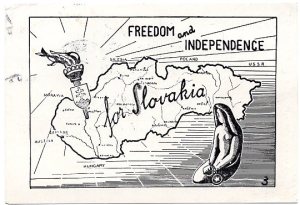
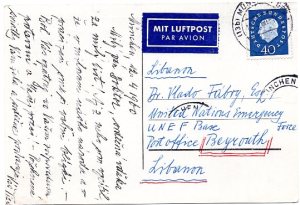
It begins with a book…
Last August, I took another look through the family collection of books about Czechoslovakia. What I found was a copy of “HISTORY OF MODERN SLOVAKIA” by Jozef Lettrich, which had, sadly, been overlooked in a damp corner of the house.
But in spite of mold damage, I put it in a mylar sleeve and kept it nearby, because the book mentioned Pavel Fabry (Vladimir Fabry’s father) as one of the first to be imprisoned in a concentration camp on March 30, 1939, in the state prison of Ilava.
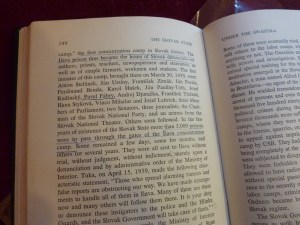
I recognized the book immediately, since I had seen at least a half dozen photostatic copies in my archive from page 144, underlined in the same places, which Pavel must have referred to in his case for reparations in Germany.
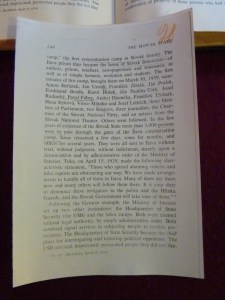
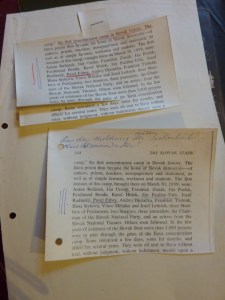
From Chapter Two, “Under the Swastika”, pages 143-144:
“When prisons were no longer adequate, the Slovak Government issued an order on March 24, 1939, “concerning the imprisonment of the enemies of the Slovak State.” […] This order authorized the Minister of Interior to “arrange for the jailing of persons whose past and present activities give reason to fear that they would continue to obstruct the building of the Slovak State.” The Minister of the Interior was further authorized to create “a camp for the detention of such persons in which prisoners would be compelled to perform physical labor.” Vojtech Tuka lost no time in transforming the old state prison in Ilava into a “security camp,” the first concentration camp in Slovak history. The Ilava prison thus became the home of Slovak democrats–of authors, priests, teachers, newspapermen and statesmen, as well as of simple farmers, workmen and students. The first inmates of this camp, brought there on March 30, 1939, were: Anton Štefánek, Ján Ursíny, František Zimák, Ján Pocisk, Ferdinand Benda, Karol Hušek, Ján Paulíny-Toth, Jozef Rudinský, Pavel Fábry, Andrej Djuračka, František Třešnák, Hana Styková, Vinco Mihalus and Jozef Lettrich, three Members of Parliament, two Senators, three journalists, the Chairman of the Slovak National Party, and an actress from the Slovak National Theater. Others soon followed. In the few years of existence of the Slovak State more than 3,000 persons were to pass through the gates of the Ilava concentration camp. Some remained a few days, some for months, and others for several years. They were all sent to Ilava without trial , without judgement, without indictment, merely upon a denunciation and by administrative order of the Ministry of Interior. Tuka, on April 15, 1939, made the following characteristic statement, “Those who spread alarming rumors and false reports are obstructing our way. We have made arrangements to handle all of them in Ilava. Many of them are there now and many others will follow them there. It is your duty to denounce these instigators to the police and the Hlinka Guards, and the Slovak Government will take care of them.”
I now have another copy of this book, in very good condition, signed and inscribed by Jozef Lettrich on the title page. It was only after this that I looked at the title page of the copy I found, and it was also inscribed.
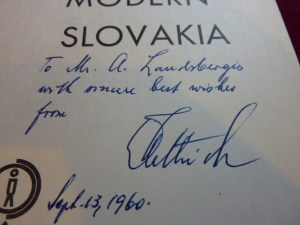
Title page from second copy.
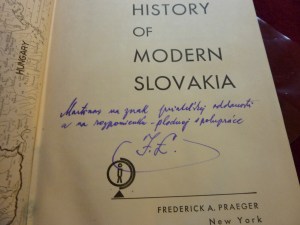
From the copy that belonged to Pavel Fabry.
When I finally started to read it, it dawned on me that this book was written by the same Jozef Lettrich that was in prison with Pavel, and that I had letters from Lettrich – Chairman of the Slovak National Council in Czechoslovakia, who was an exile living in the United States. So I went back to the boxes. I was amazed by how this one book began to illuminate what I had missed before: letters to and from Milan Hodza – Prime Minister of Czechoslovakia; Jan Pauliny-Toth – lawyer and politician; Peter Pridavok – Chairman of the Slovak National Council in London; Juraj Slavik – Czechoslovak Ambassador to the United States; General Lev Prchala; Emil Stodola, and Kornel Filo. Pavel Fabry was seeking reparations for many of these people and others in Berlin, as their lawyer, so I have some of their testimonies, in Slovak, German and French.
But then I found two letters from Franz Karmasin, one of them signed. Franz Karmasin was state secretary for the German Minority, under President of Slovakia and Catholic Priest Jozef Tiso: an anti-semite who collaborated with Hitler and was key in making the Slovak State the first Nazi ally in the Final Solution, deporting tens of thousands of Jewish people to their extermination – he was hanged after WWII; Karmasin was also senticed to death but escaped prosecution and was living in exile in Munich. From what I was able to translate, Karmasin seems to be arguing against something Pavel said about him – and he begins his first letter in praising Pavel on his son Vlado – The Hague and Nuremberg are also mentioned. There were no letters from Pavel to Karmasin. I’ve transcribed the letters here for others to translate.

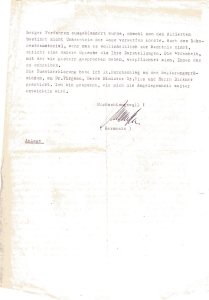
Dipl. Ing. Franz Karmasin
München 8
Trogerstaße 32
München, den 8-7. 1959
Herrn
Dr. Paul Fabry
14 Chemin Thury
Geneve
Sehr geehrter Herr Dr. Fabry!
Unsere gestrige Aussprache hat mich sehr stark an Aussprachen in der Heimat erinnert. Ich glaube, diese angenehme Atmosphäre gibt es nur jenseits der Karpaten. Ich bitte, es nicht als Anmassung zu betrachten, wenn ich Sie zu Ihrem prächtigen Sohn beglückwünsche. Er hat großen Eindruck auf mich gemacht und ich freue mich wirklich von ganzem Herzen, dass die slowakische Sache so einen hervorragenden Vertreter ihrer Interessen besitzt.
In der Kanzlei habe ich mir dann den sehr dicken Akt “Dr. Fabry” vorgenommen. Ich war froh, dass ich dies erst nachher getan habe, ich wäre sonst kaum zu der Besprechung gekommen. Ich habe sehr stark den Eindruck, dass Sie in der Darstellung und Beurteilung der Situation der Deutschen Volksgruppe in der Slowakei sich weniger von Tatsachen, als vielmehr von Gefühlen leiten liessen. Ich kann es verstehen, umsomehr, als die Grenzen zwischen Reichsdeutschen und Volksdeutschen von Aussen her nicht immer sichtbar waren und vor allem die Situation der Volksgruppe und der Volksgruppenführung nicht für eine öffentliche Diskussion geeignet war. Aber in Ihren Ausführungen sind Sie doch etwas hart, ich darf Ihnen das in aller fahrens mit Ihnen und Ihrem Herrn Sohn über diese Dinge diskutieren, jetzt ist nicht der geeignete Zeitpunkt dazu. Ich will Ihren nur zu bedenken geben, dass der deutsche evangelische Bischof Scherer, für dessen Ernennung ich mich übrigens sehr stark eingesetzt habe und fast alle evangelischen u. katholischen Pfarrer Mitglieder der Deutschen Partei waren und dass die Deutsche Partei bei den Nürnberger Verfahren ausgeklammert wurde, obwohl man den Aliierten bestimmt nicht Unkenntnis der Lage vorwerfen konnte. Auch das Dokumentenmaterial, wenn man es vollinhaltlich zur Kenntnis nimmt, spricht eine andere Sprache als Ihre Darstellungen. Die Offenheit, mit der wir gestern gesprochen haben, verpflichtet mich, Ihnen das zu schreiben.
Die Zusatzerklärung habe ich lt. Durchschlag an das Regierungspräsidium, an Dr. Virgano, Herrn Minister Dr. Tiso und Herrn Birkner geschickt. Ich bin gespannt, wie sich die Angelegenheit weiter entwickeln wird.
Hochachtungsvoll!
(Karmasin)

Copy
Dipl. Ing. Franz Karmasin
München 8
Trogerstaße 32
München, den. 8.7.1959
An das
Regierungspräsidium
Köln
Zeughausstr. 2-4
Sehr geehrte Herren!
Betr.: Dr. Paul Fabry
Ich habe die verschiedenen Schriftstücke im Falle Dr. Paul Fabry, soweit sie mir zur Verfügung stehen, nochmals durchgesehen und darf meine seinerzeitige Darstellung wie folgt ergänzen:
Ich habe dargelegt, dass die Behauptung, Dr. Fabry sei durch die Gestapo verhaften worden, falsch sei, da sich auf dem Gebiete der Slowakei keine Gestapo befunden hat. Dagegen hatten z.Zt. der Besetzung des slowakischen Staatsgebietes rechts der Waag während der Tschechenkrise durch deutsche Truppen Organe des Sicherheitsdienst Dienst gemacht. Ich glaube mich erinnern zu können – ohne es allerdings beschwören zu können -, dass durch die deutschen militärischen Kommandostellen Angehörige der Hlinkagarde (HG) und der Freiwilligen Schutzstaffel (FS) diesen Organen als Hilfskräfte zugeteilt wurden. Inwieweit sich diese im Zuge der revolutionären Ereignisse Übergriffe zuschulden kommen ließen, entzieht sich meiner Kenntnis, vor allem aber meiner und meiner Mitarbeiter Verantwortung. Sie unterstanden, falls sie sich in die Dienst der Deutschen Wehrmacht oder des SD begeben hatten, nicht mehr der Befehlsgewalt der Volksgruppe.
Zu dieser Ergänzung fühle ich mich verpflichtet einerseits, weil Aussenstehende die Unterschiede zwischen SD und Gestapo nicht ganz klar waren, andererseits weil mir im Interesse meiner ehemaligen Mitarbeiter selbst sehr viel an der Klärung dieser Angelegenheit liegt. Ich bitte, die Ergänzung in diesem sinne zur Kenntnis zu nehmen.
Hochachtungsvoll!
(Karmasin)
United for Justice
Today, my thoughts return to the status of the Hammarskjold investigation, and to all the relatives around the world who are waiting for the truth to unfold. Last week, on November 19, the United Nations General Assembly adopted by consensus the resolution which “urges all member states…to release any relevant records in their possession and to provide to the Secretary-General relevant information related to the death of Dag Hammarskjold.”
There were 74 co-sponsors to the resolution, including Zambia, Slovakia, the Czech Republic, Sweden, Haiti, South Africa, Ireland, Canada, Belgium, Germany, and France. Every nationality of those who died in 1961 has been represented, with one very notable exception: The United States. It is for this very reason I write today, I will not be silent in my support, because American citizens died for peace, and they and Vlado deserve the respect of their country.
In a statement made by Swedish Ambassador Olof Skoog, who introduced the resolution to the President of the UN General Assembly, he said “The pursuit of bringing clarity to the circumstances of the incident is particularly important to the families of all 16 victims – some of whom are present today – but also to the UN as an organization and it should remain so also for all of us as we try to come together to continue the work left unfinished by his premature death.”
It was a little more than a year ago that I was first contacted by one of the relatives, who has been instrumental in gathering us all over the world, and uniting us together to send group letters and emails to UN members in support of this investigation. Many have also written personally to UN members and heads of state to make our appeal, myself included, and I am thankful to those who were kind to respond. It gave me a lot of hope to receive a letter in reply from Swedish State Secretary for Foreign Affairs Annika Soder, dated November 20, 2014, the day after the new Swedish Government decided to take the initiative to table the resolution to support the Hammarskjold investigation.
What has not been fully appreciated by the public, and is not being reported in the news anywhere, is the quiet, behind-the-scenes efforts of all the relatives that have united for justice, and who have been paying close attention to the progress of the investigation. It’s not just my family and a handful of others that are speaking up – there are a total 105 relatives that are committed in standing together in support, so we cannot be dismissed as just a few conspiracy theorists. There are relatives to represent every person who died in the crash, with the only exception being Alice Lalande of Canada; though many people, not only the relatives, did all they could to find family that could speak up on her behalf.
I haven’t written much about the investigation recently, but I want to express today how extremely proud I am to belong to this group of dedicated and courageous people, and to be able to give them my support here, it is truly an honor.
“…the dreamt kingdom of peace…”
From the family archive, here is the program from the United Nations memorial service for Secretary-General Dag Hammarskjold, and the 15 others who died with him, on 17 September 1961, while on a peace mission to Ndola. As the anniversary nears, I send kind thoughts to all who have been touched by this event. Included in the memorial program, held on 28 September 1961, is an address by the late Secretary-General Dag Hammarskjold “on the occasion of the United Nations Day Concert, 24 October 1960” – it is one of Hammarskjold’s shorter speeches, but full of his warmth and optimism for humanity, so I have transcribed it here.
To further appreciate Hammarskjold’s sentiment towards music, to feel a little of what he felt when he listened to Beethoven, I have included the Christmas Day 1989 Berlin performance of Beethoven’s Ninth Symphony, conducted by Leonard Bernstein, in celebration of the fall of the Berlin Wall – it is perfection, one of the most beautiful and moving concerts of all time.
(click images to enlarge)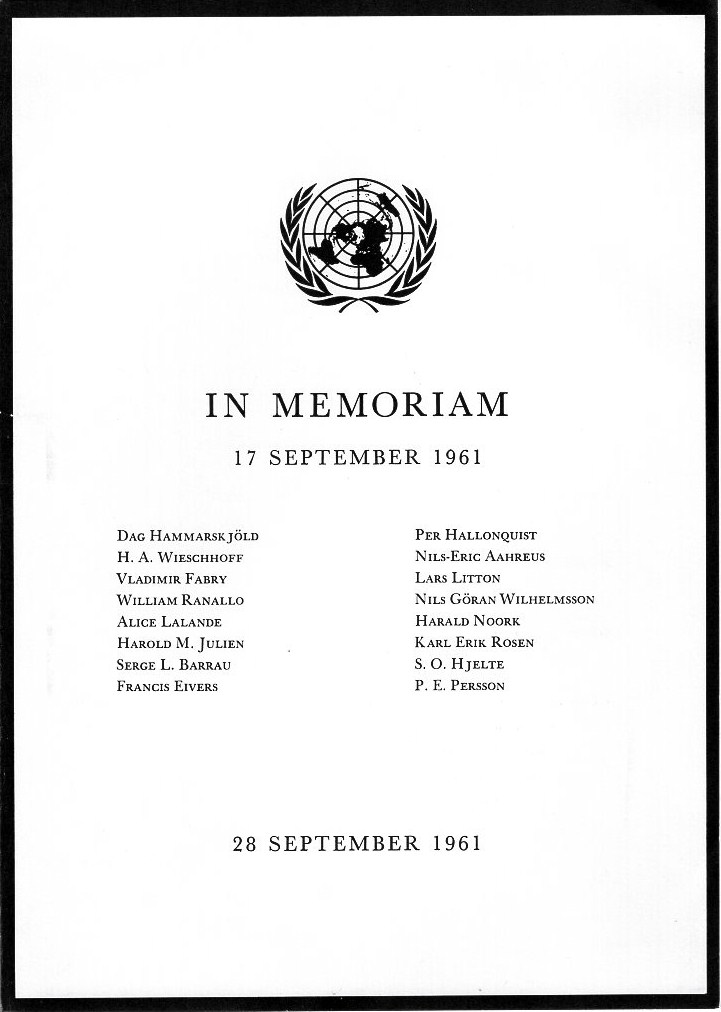
IN MEMORIAM, 17 SEPTEMBER 1961
Dag Hammarskjold
Per Hallonquist
H.A. Wieschhoff
Nils-Eric Aahreus
Vladimir Fabry
Lars Litton
William Ranallo
Nils Goran Wilhelmsson
Alice Lalande
Harald Noork
Harold M. Julien
Karl Erik Rosen
Serge L. Barrau
S.O. Hjelte
Francis Eivers
P.E. Persson
28 SEPTEMBER 1961

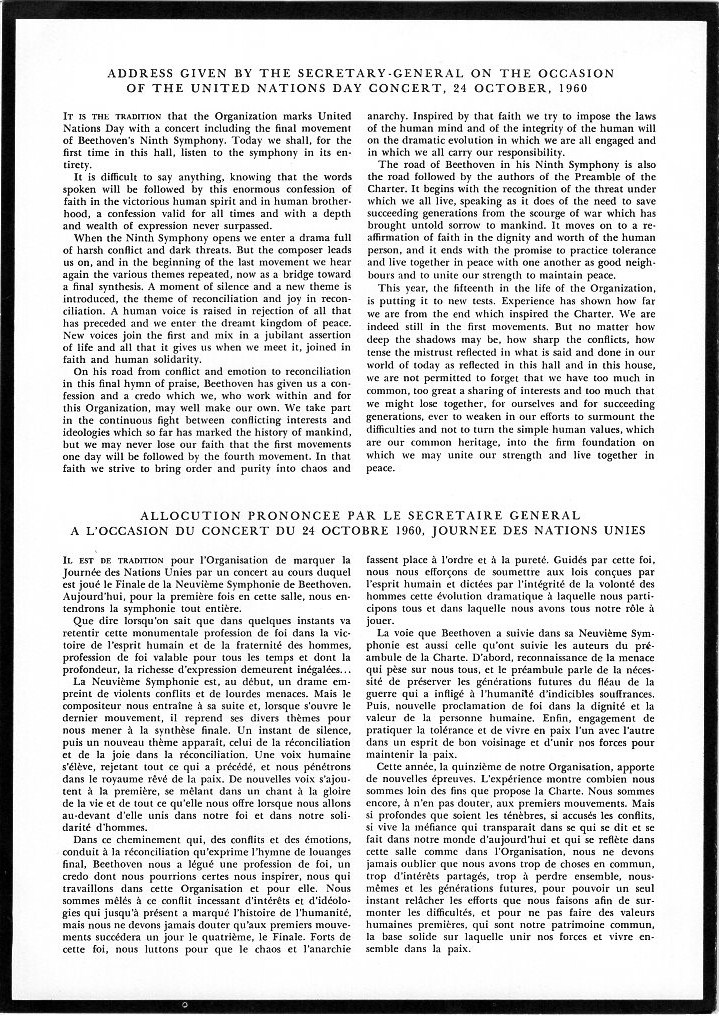
“ADDRESS GIVEN BY THE SECRETARY-GENERAL ON THE OCCASION OF THE UNITED NATIONS DAY CONCERT, 24 OCTOBER, 1960”
It is the tradition that the Organization marks United Nations Day with a concert including the final movement of Beethoven’s Ninth Symphony. Today we shall, for the first time in this hall, listen to the symphony in its entirety.
It is difficult to say anything, knowing that the words spoken will be followed by this enormous confession of faith in the victorious human spirit and in human brotherhood, a confession valid for all times and with a depth and wealth of expression never surpassed.
When the Ninth Symphony opens we enter a drama full of harsh conflict and dark threats. But the composer leads us on, and in the beginning of the last movement we hear again the various themes repeated, now as a bridge toward a final synthesis. A moment of silence and a new theme is introduced, the theme of reconciliation and joy in reconciliation. A human voice is raised in rejection of all that has preceded and we enter the dreamt kingdom of peace. New voices join the first and mix in a jubilant assertion of life and all that it gives us when we meet it, joined in faith and human solidarity.
On his road from conflict and emotion to reconciliation in this final hymn of praise, Beethoven has given us a confession and a credo which we, who work within and for this Organization, may well make our own. We take part in the continuous fight between conflicting interests and ideologies which so far has marked the history of mankind, but we may never lose our faith that the first movements one day will be followed by the fourth movement. In that faith we strive to bring order and purity into chaos and anarchy. Inspired by that faith we try to impose the laws of the human mind and of the integrity of the human will on the dramatic evolution in which we are all engaged and in which we all carry our responsibility.
The road of Beethoven in his Ninth Symphony is also the road followed by the authors of the Preamble and of the Charter. It begins with the recognition of the threat under which we all live, speaking as it does of the need to save succeeding generations from the scourge of war which has brought untold sorrow to mankind. It moves on to a reaffirmation of faith in the dignity and worth of the human person, and it ends with the promise to practice tolerance and live together in peace with one another as good neighbours and to unite our strength to maintain peace.
This year, the fifteenth in the life of the Organization, is putting it to new tests. Experience has shown how far we are from the end which inspired the Charter. We are indeed still in the first movements. But no matter how deep the shadows may be, how sharp the conflicts, how tense the mistrust reflected in this hall and in this house, we are not permitted to forget that we have too much in common, too great a sharing of interests and too much that we might lose together, for ourselves and for succeeding generations, ever to weaken in our efforts to surmount the difficulties and not to turn the simple human values, which are our common heritage, into the firm foundation on which we may unite our strength and live together in peace.
Les Vacances de Monsieur Fabry
Couldn’t wait to share the treasure I found this summer, film footage of Vlado with his family in Switzerland. It may not be the best home movie ever made, but it gives me a lot of happiness to see these charming people all come to life, and to see Vlado skiing.
To Dag With Love

View from above Ralph Bunche Park.
It was a beautiful week in New York City for my visit to the UN Archives. Every morning, I took the 7 to Grand Central Station, walked down 42nd Street, crossing 2nd Avenue – also known as Yitzak Rabin Way, and then on towards 1st Avenue, where the Headquarters of the United Nations rise up along the edge of the East River. I slowed my pace through Ralph Bunche Park, which is mostly concrete, but the small fenced-in area of plants and flowers attracted a couple of American Robins, who were busy hunting for breakfast. I spent my time between 42nd and 47th Avenue – the location of Dag Hammarskjold Plaza – walking past security guards outside the US Department of State and Foreign Missions, and the House of Uganda, feeling very much at the center of the universe with all the languages being spoken around me. I’m sure I was noticed with amusement by a few, I was the only lady with UN blue hair!

Dashing diplomats, at the entrance of the UN.
Taking a rest in Dag Hammarskjold Plaza.
The Gazebo
There was a farmer’s market my first day at DH Plaza.
Fun public art – the giant Hello Kitty Time After Time Capsule, designed by Japanese artist Sebastian Masuda.
After my morning walk, I made my way to the UN archives, where the staff were waiting to help me get started. The archives are open to everyone, it’s a free service, and I had a really positive experience there – I even met someone who worked with Vlado’s sister, Olga – who was a librarian at the Dag Hammarskjold Library – that made me very happy. Here was my desk the first day:

Of course, since it was my first visit to an archive, I requested too much, and had to narrow down and prioritize quickly what I wanted to look at after the first day. To me, it was all very interesting, but I would have needed to spend a month in there, 8 hours a day, just to see everything I requested, and I had only three days!
The hard work was a pleasure, but it gave me an appetite. Fortunately, there were plenty of great choices for lunch in the neighborhood. One day, I had a Maine lobster roll from a food truck across the street from UN Headquarters, and if I hadn’t been so eager to get back to the work, I would have tried out the Nigerian food truck on the next block, too.

Also had a nice lunch here – a “Dag Burger with Cheese” at Dag’s Patio Cafe in DH Plaza.
By the end of my visit, I came to appreciate that it is the personal letters of these people that interest me the most, and how lucky I am to have so much of Vlado’s correspondence. I went to the archives out of curiosity, with no expectations, but with hope that I would find something special, something that other eyes had missed.
And I was rewarded for my efforts – with a love letter written to Dag.
When I found it, I immediately thought of Susan Williams’ discovery in the Royal Library of Sweden in Stockholm, the intriguing newspaper clipping she found inside Dag’s wallet that said ‘and when Nefertiti murmurs, “Oh Moses, Moses, you stubborn, splendid, adorable fool,” the Bible seems a long way off.’
The writer is very forward in her intentions, and though it embarrasses me to admit it, I couldn’t help but see a bit of myself in her admiration for his character, her wish to do something good because of him. I can’t deny the romantic tone of my writing, that I fell in love with both Vlado and Dag in the course of my research, and that love for them gave me the courage to write some of the things I did, so I feel this letter was meant to be found by me. The last page, with her signature, will be transcribed, to protect her identity. From the same file, I’m also including transcriptions of a letter of introduction from the Ambassador to Spain Jose Felix de Lequerica, and a small note from the Secretary-General’s private secretary, Miss Aase Alm, which came before he received her letter.
From the United Nations Archives in New York, S-0846-0004-08, Operational Records of Secretary-General Dag Hammarskjold, 1953-1961.
“Mision permanente de Espana
en las Nacions UnidasNew York, September 14, 1959
Miss Aase Alm
Private Secretary to the
Secretary General of the
United Nations.
New York, N.Y.Dear Miss Alm:
I have received today a letter from His Eminence Cardinal Spellman, introducing Miss ——, from Houston, Texas, and asking me to receive her. During the course of the conversation Miss —— told me that she wishes to present her compliments to Mr. Hammarskjold and speak to him about a personal matter. I have called her attention about the difficulty of such an interview, as I personally cannot arrange for this meeting not knowing myself the nature of same.
But in the view of the interest shown by Cardinal Spellman, I am giving this letter of introduction to Miss —— in the event that during your conversation with her you may be able to find something of interest to the Secretary-General and, at the same time, comply with the wishes of Miss ——.
Thanking you in advance for your kind attention, I remain
Very truly yours,
Jose Felix de Lequerica
Ambassador
Permanent Representative of Spain
to the United Nations.”
On this note from Miss Alm, two big exclamation points in red pencil were added to hers–in red pencil at the top of the love letter is written “Oh!”:
“I asked Miss —— to write to you, as you were too busy at the moment to receive her; explained at the same time that an appointment would be difficult unless she could give you some information what it would be about. I think you would want to see this because of the introductions from Spellman and de Lequerica!”

Written on stationary from The Drake Hotel, Park Avenue at 56th Street, New York 22, N.Y.:
TELEPHONE: PLAZA 5-0600
[Ext. 421 written beneath]Personal
Dear Mr. Hammarskjold;
I chose to meet you through the Spanish Ambassador because I thought that Spain’s more or less neutral position would eliminate any political implications. Even though I did not relate my specific reason for desiring to see you, His Eminence Cardinal Spellman very graciously assisted me by sending a letter of recommendation to H.E. Jose Felix de Lequerica.
Since meeting you through conventional channels is highly improbable, I shall proceed with all frankness and sincerity to reveal my reason for wanting to see you.

These reasons are unknown to my friends, relatives, or even to my mother who has accompanied me to this city. People travel all over the world to see the many wonders and the beauty of nature, but God’s greatest creation is mankind, and a man of your goodness and wisdom is the most beautiful sight of all.
You know Dag, that although Cassanova was supposed to have been the greatest rogue lover of all time, none of his numerous lady loves ever followed him. Of course his base type of love can be compared to your love for humanity only in that yours is so much more superior on both counts.
How well you use your intellect and readily become a tool to God’s manipulations by carrying out your mission, the burden of your high office with dedication and inspiration.
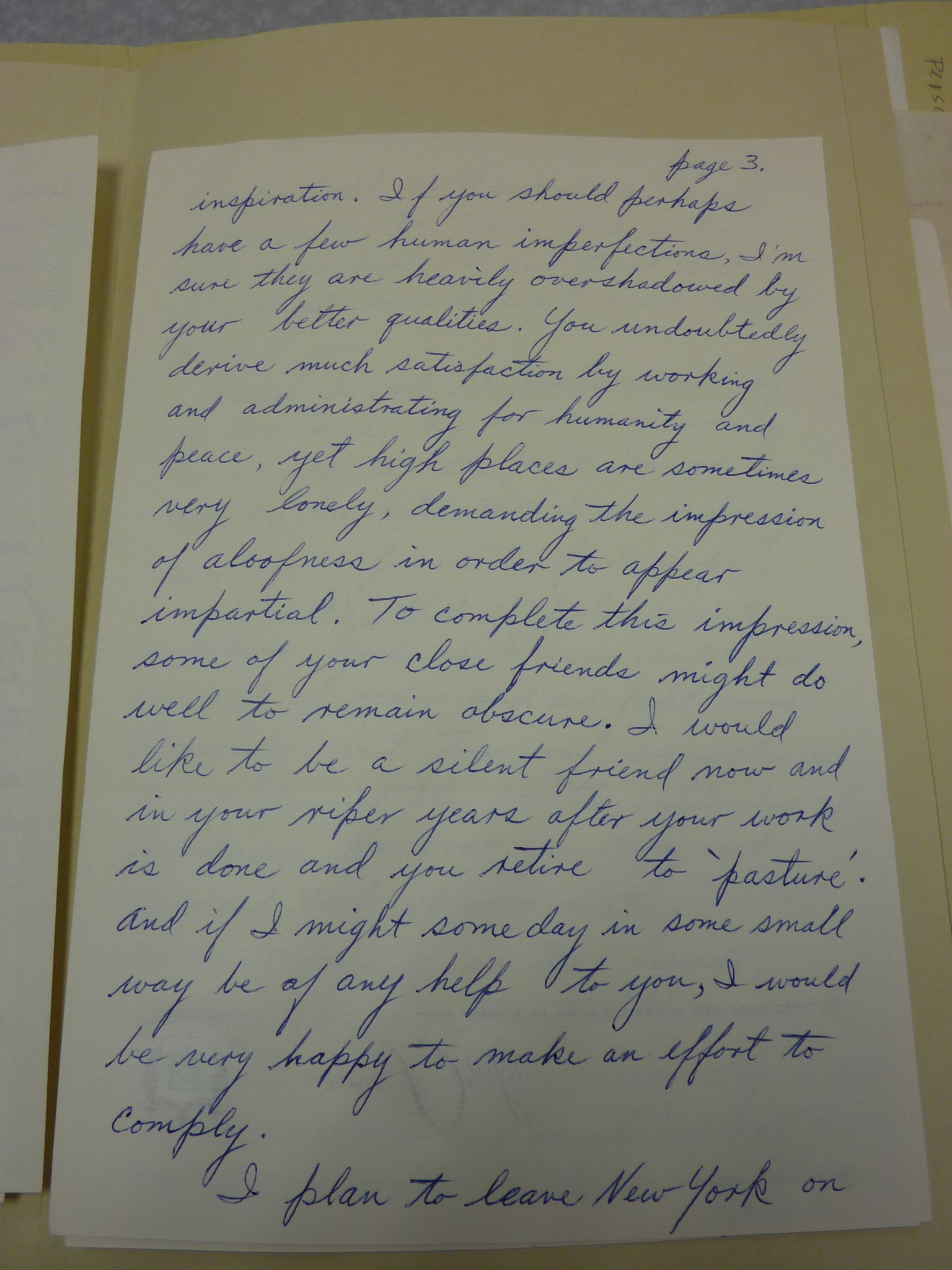
If you should perhaps have a few human imperfections, I’m sure they are heavily overshadowed by your better qualities. You undoubtedly derive much satisfaction by working and administrating for humanity and peace, yet high places are sometimes very lonely, demanding the impression of aloofness in order to appear impartial. To complete this impression, some of your close friends might do well to remain obscure. I would like to be a silent friend now and in your riper years after your work is done and you retire to ‘pasture’. And if I might someday in some small way be of any help to you, I would be very happy to make an effort to comply.
I plan to leave New York on Tuesday September 22nd and return to my home in Houston, Texas. I have been here since September 11th and trust that I will not have to wait much longer to meet you.
Please do not be embarrassed by my directness. My manner of writing is usually to the point as you can tell by a letter that I am enclosing here in reference to food surplus.
I realize that in polite society revelations such as I have made here are out of order and are kept more demurely, but time and circumstances do not permit this subtle cultivation of friendship. However, you may rest assured that at our meeting I shall conduct myself in the quiet, controlled dignity that becomes a respectable woman. Personally, I am much meeker and much more at loss for words.
With sincere esteem
Apartheid: “A Policy of Good Neighborliness”
Here are a few videos of Dr. Hendrick Verwoerd, who has been called the “Architect of apartheid” for the policies he put into practice during his time as Minister of Native Affairs and as Prime Minister of the Republic of South Africa.
Recently, in a speech to the Democratic Alliance’s Federal Congress, Allister Sparks listed Verwoerd as one of the “really smart politicians” he had met in his 64 years as journalist in South Africa – but he also included his friend and colleague Helen Zille – an anti-apartheid activist and journalist, who put her life in danger to expose the cover-up of Steve Biko‘s death, calling her “the smartest political tactician of all.” I think the assumption by those upset with his inclusion of Verwoerd, is that they think he admires him personally, when he only called him “smart”. Verwoerd was smart, in that he knew how to manipulate public opinion for personal gain and to turn human rights backwards – when Dag Hammarskjold met with Verwoerd in January of 1961, Brian Urquhart wrote in his biography of him “He had felt that he had been speaking to Verwoerd across a gulf of three hundred years”. But to better understand why people are upset to even hear his name, you must hear Verwoerd in his own words.
“Our policy is one, which is called by an Afrikanns word “Apartheid”. And I’m afraid that has been misunderstood so often. It could just as easily, and, perhaps, much better be described as a policy of good neighborliness. Accepting that there are differences between people, and that while these differences exist, and you have to acknowledge them, at the same time you can live together, aide one another, but that can best be done when you act as good neighbors always do.”
“The Republic is the only sure and stable friend that the western nations have in Africa. We are here to stay, and we are here to aide all others in whatever they may need and can get from us. We have, for a very long time, developed in South Africa a nation of our own – friendly, prosperous, progressive. We hope that the rest of Africa will become likewise.[…] Of course there has been sensational journalism and conditioned reporting, which created the impression that there would be great difficulties ahead of us. We have no doubt at all this will pass. Certain restrictive measures had to be taken recently, mainly to insure to protection of the masses – of all races who seek peace and order. Therefore, a stable government will continue in South Africa.[…] Here the solution is sought by openly retaining the white man’s guiding hand; which elsewhere is the hidden guarantee of industrial development, and even good administration.”
In 1966, Hendrick Verwoerd was assassinated, stabbed in the chest and neck while at his desk in Parliament, but it wasn’t the first attempt made on his life. Six years earlier, at the Johannesburg agricultural show, he was shot in the head twice. This video shows that earlier attempt.
*Update found here.
**Update 30 September 2024:
Here is a screenshot of the enca article as of 4 September 2024, it has been taken down! “The requested page could not be found.” 🙂
Periodic Reports of Vlado: 1953 and 1955
Time for a performance review! A couple of United Nations periodic reports for Vlado that I found, which give a little more detail into the work he was doing from the period of September 1951 to 15 June 1953, and from the period of June 1953 to April 1955. This first document quotes the Secretary of the Committee on Restrictive Business Practices: “His competence, accuracy and industry in the production of legal research was outstanding. He put in a backbreaking amount of overtime, and displayed good judgement, understanding and tact on all his assignments.”
Click image to enlarge.

This second document, dated 12-4-55, is what made me believe Vlado was one of the “lawyers deeply versed in international law”, mentioned in Roger Lipsey’s biography HAMMARSKJOLD: A LIFE (chap.10, para.4); who were working long hours through the night to add the provision to Article 98 “…and shall perform such other functions as are entrusted to him by these organs” – the provision gave Hammarskjold the entitlement to negotiate directly with Chinese officials in Peking, in January 1955, to release 17 American fliers that were being held for investigation.
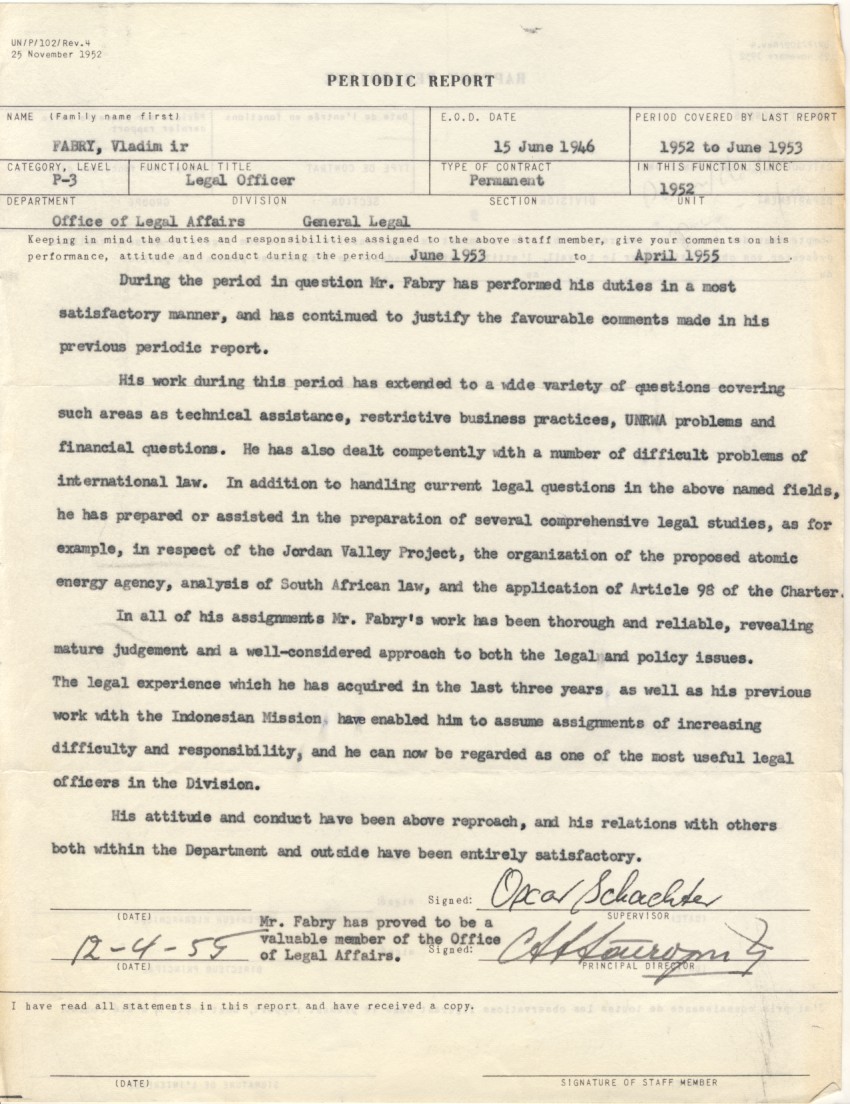
I had wondered why I had a copy of Article 98 (in a previous post) that was labelled “First Draft” with the initials “VF/sf”, when that Article was originally adopted on 25 June 1945. While the mention of Vlado’s “application of Article 98 of the Charter” in this document still doesn’t confirm if my belief is correct, it does seems to point in that direction – that he was involved in another important event in the history of the United Nations.
“During the period in question Mr. Fabry has performed his duties in a most satisfactory manner, and has continued to justify the favourable comments made in his previous periodic report.
His work during this period has extended to a wide variety of questions covering such areas as technical assistance, restrictive business practices, UNWRA problems and financial questions. He has also dealt competently with a number of difficult problems of international law. In addition to handling current legal questions in the above named fields, he has prepared or assisted in the preparation of several comprehensive legal studies, as for example, in respect of the Jordan Valley Project, the organization of the proposed atomic energy agency, analysis of South African law, and the application of Article 98 of the Charter.
In all of his assignments Mr. Fabry’s work has been thorough and reliable, revealing mature judgement and a well-considered approach to both the legal and policy issues. The legal experience which he has acquired in the last three years as well as his previous work with the Indonesian Mission have enabled him to assume assignments of increasing difficulty and responsibility, and he can now be regarded as one of the most useful legal officers in the Division.
His attitude and conduct have been above reproach, and his relations with others both within the Department and outside have been entirely satisfactory.
Mr. Fabry has proved to be a valuable member of the Office of Legal Affairs.
Signed: Oscar Schachter, Supervisor
Signed: C.A. Stavropoulos”
“His attitude and conduct have been above reproach” – who wouldn’t save reviews like this!
Vlado at work with the United Nations
A special thanks to Anna Bergman (Justice for Dag Hammarskjold on Facebook), who has been helping me identify the people in the photos of Vlado at work, which has been a challenge. Though many are still untitled, it’s made me realize just how much information I haven’t included, so I have added what I have to this collection of photos today. Click on images to enlarge.

Beginning with his mission to Indonesia (1948-1951), here is the bearded Vlado, grinning as he waits his turn for inoculations.

Here is the reverse of the photo, with a Slovak note written in Vlado’s script.
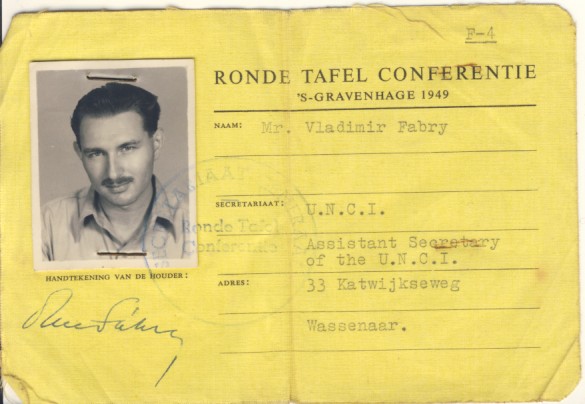
Vlado’s identification card for the 1949 Round Table Conference on Indonesia.
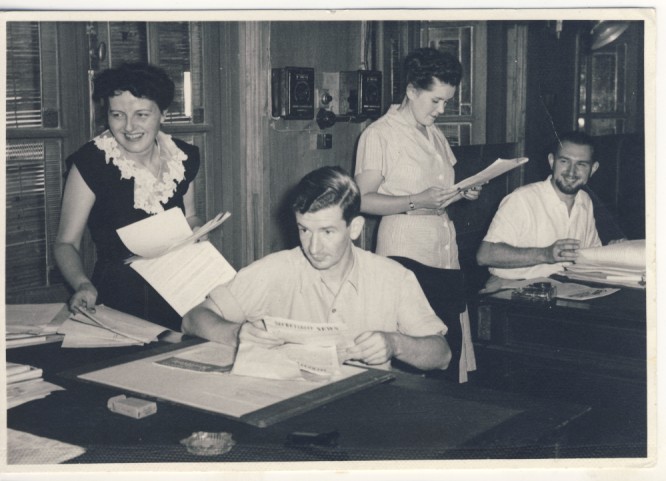
The only notes on this photo is “Fabry” and a photo copyright that says “Indonesia”.

The next set of photos are from his time in British Togoland (January-August 1956), as U.N. Observer – he was there to help when the people voted to join the Gold Coast. This is a titled U.N. photo from the personal collection, which says:
“PLEBISCITE FOR BRITISH TOGOLAND, British Togoland, April 1956.
Headed by the United Nations Plebiscite Commissioner, a team of U.N. observers is in British Togoland in preparation for the plebiscite to be held on May 9, in the Trust Territory.
Here, at work with hurricane lamps on the terrace of their quarters in Jasikan, Buem-Krachi district, are U.N. observers Vladimir FABRY [incorrectly identified as on the left.TB] and Jan Van WYCK, both of whom are U.N. staff members.”

Another titled U.N. photo, which says:
“PLEBISCITE FOR BRITISH TOGOLAND, British Togoland, April 1956.
Headed by the United Nations Plebiscite Commissioner, a team of U.N. observers is in British Togoland in preparation for the plebiscite to be held on May 9, in the Trust Territory. Here, led by an interpreter, U.N. observer Vladimir FABRY is crossing the Wawa river on his way from Papase to Manida with registration assistant N.S.K. JAWUZOH.”
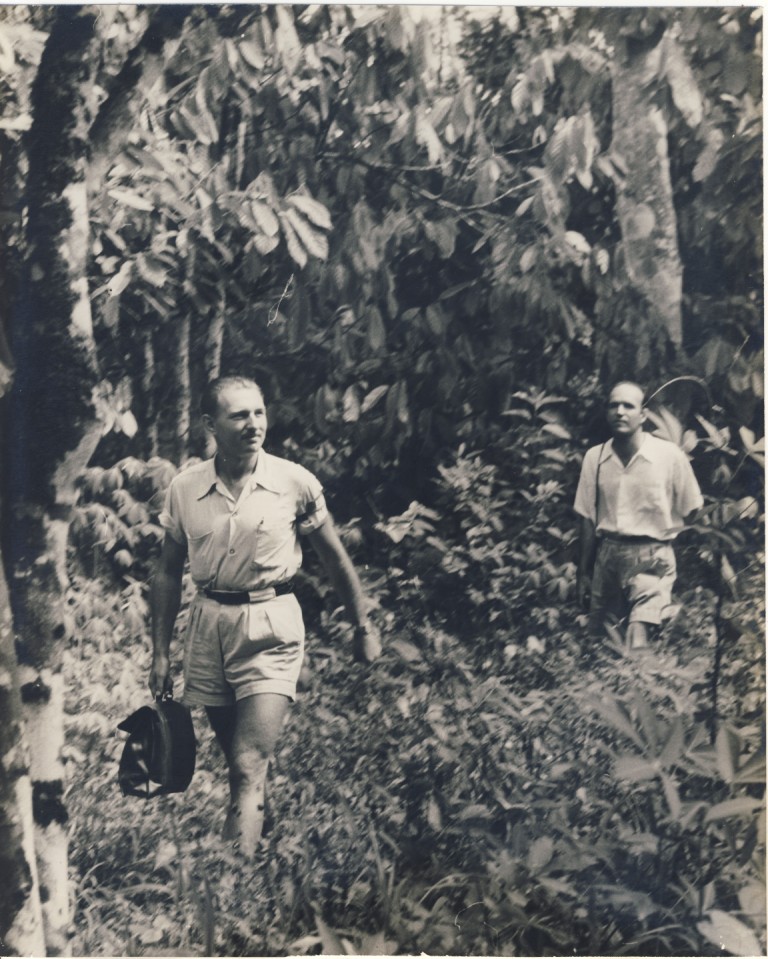
Titled U.N. photo, which says:
“PLEBISCITE IN BRITISH TOGOLAND, HO, British Togoland, May 1956.
The plebiscite held in British Togoland on 9 May resulted in a vote of 93,365 in favor of uniting the U.N. Trust Territory with the neighboring Gold Coast. 67,442 voters, including majorities in two southern districts, supported the alternative continuation under U.N. trusteeship pending final determination of the territory’s status.
Observer [incorrectly labled W. Fabry.TB] and U.K. Registrations Officer R. WEST-SKINN walking thru [sic] bush and cocoa plantations on their way to village of Dumevi (Akan district).”
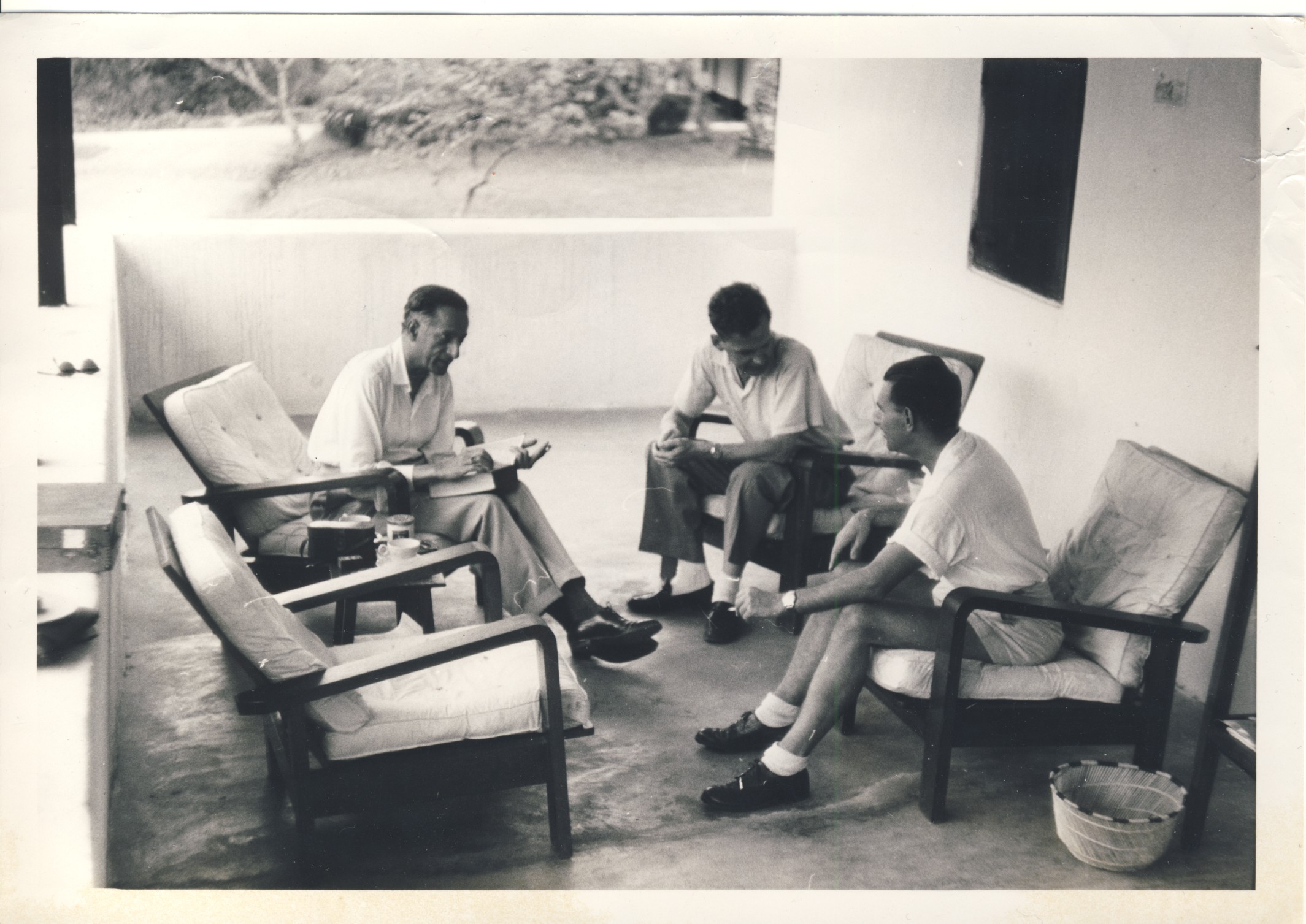
Vlado wrote a note on the back of this in Slovak, which says: “The terrace in Jasikan, with Van Wyck and Bokhari.” Bokhari is at left, Vlado is forward right, with a cigarette in his hand – he smoked about two packs a day, but I’m not judging, I love the horrid things, too – but not quite as much as he did.
Patras Bokhari was a very important person in the UN, who was also a fantastic speech writer. Here is a link to his first press conference as Under-Secretary of the United Nations – he calls himself “the poor man’s Hammarskjold”, but he tells a great story about their January 1955 trip to Peking to convince Chou En-lai to release American fliers held prisoner; who had been shot down and were being held for investigation for “violation of Chinese territorial air”. When those airmen were eventually released, it was because of the devoted diplomacy of Hammarskjold, no thanks to meddlers like John Foster Dulles – Hammarskjold said of him “the special characteristics of Mr. Dulles have made it extremely difficult for me to maintain even in the most modest way the contact which I need with Washington on the Peking issue.”

This is a titled U.N. photo, which says:
“PLEBISCITE FOR BRITISH TOGOLAND, British Togoland, April 1956.
Headed by the United Nations Plebiscite Commissioner, a team of U.N. observers is in British Togoland in preparation for the plebiscite to be held on May 9, in the Trust Territory.
This picture shows U.N. observer Vladimir FABRY making his way through a kapok forest neat Dumevi, in the Akan district.”

One last titled U.N. photo, which says:
“PLEBISCITE FOR BRITISH TOGOLAND, April 1956.
In preparation for the plebiscite to be held in this Trust Territory on May 9, registers of voters have been on display for a period to permit claims and objections. In the town of Ahamansu in the Jessikan district the British registration officer, Mr. R. WEST-SKINN, hears a man who allegedly could not establish residence in the township. Mr. West-Skinn’s assistant, Mr. LARTEY, stands behind him, and at the left is United Nations observer Vladimir FABRY.”
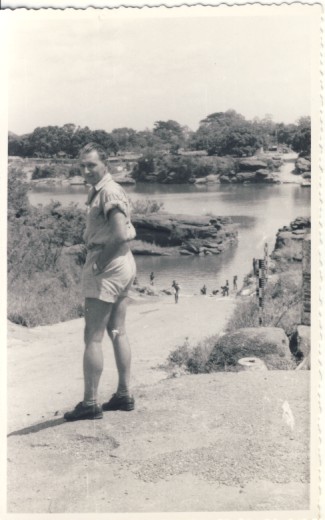
This photo is titled “Volta” – obviously, the Volta river.

Titled in Slovak “…Togoland…15/2 [1956]”.

Untitled, found in the British Togoland collection. Those are his “quarters” behind him.

When you have no running water, and only a limited supply of it every day, you take advantage of a good rain shower – what a happy guy! Titled “Jasikan”.

Untitled, a U.N. observer gathers people together outside the Togoland Congress Office for a photo.


Another from Jasikan, British Togoland, February 1, 1956. I’ve included the Slovak notes from the reverse of one, which suggests the photos have something to do with registration for the election.

Untitled, in the British Togoland collection. Could this be election day?

Untitled, Egypt.
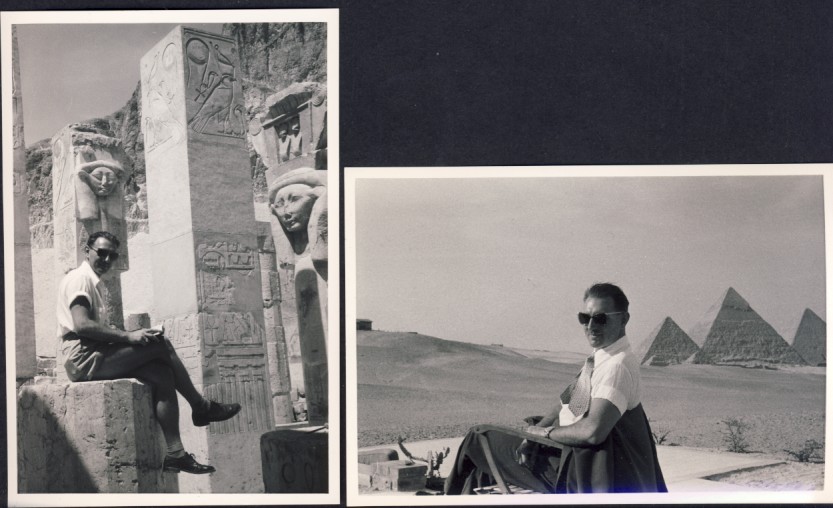
Untitled, Egypt.
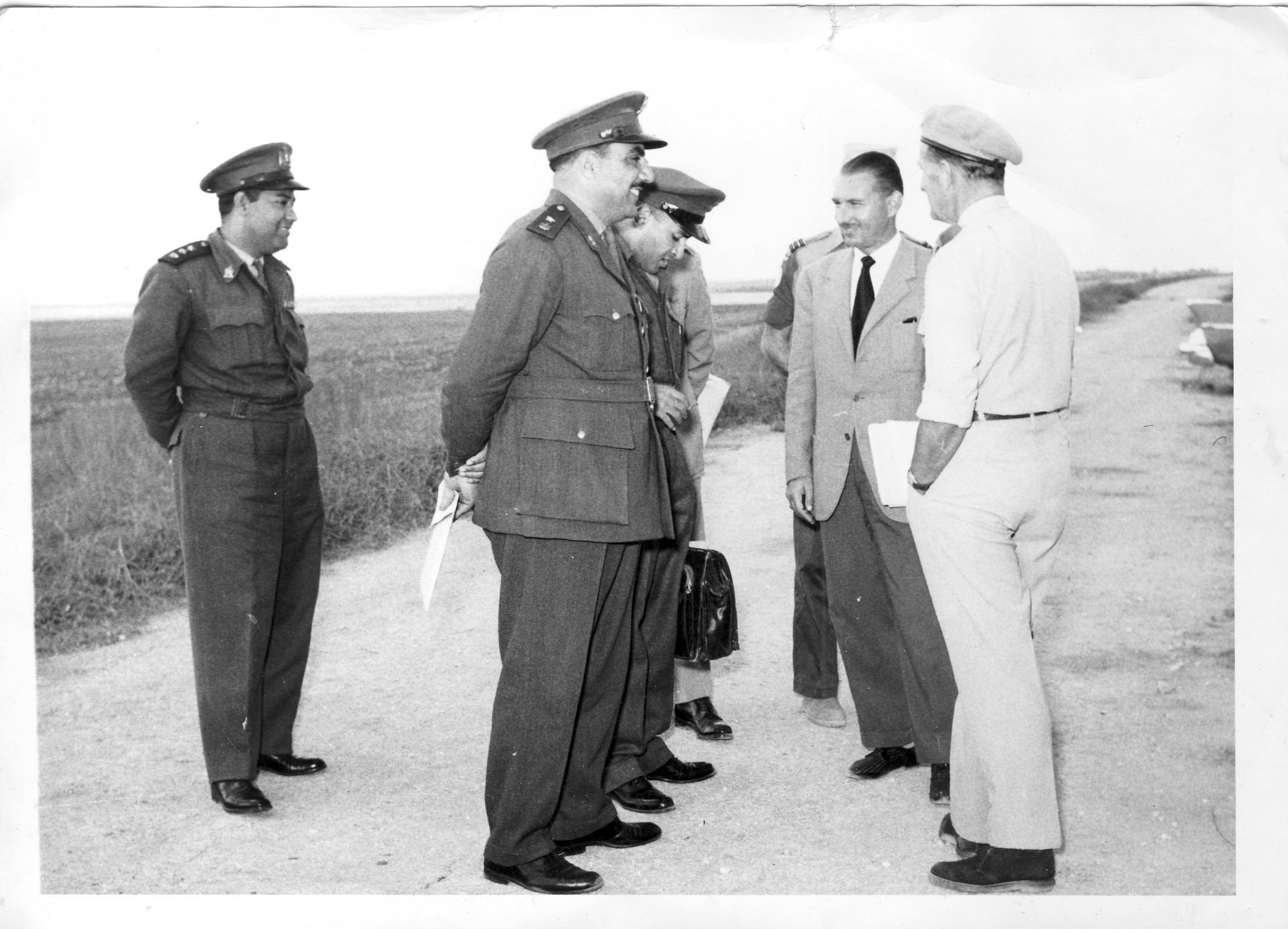
This photo – and the six others that follow it – are all untitled, but it’s a possibilty that this was one of the meetings between the UNEF and the UAR.
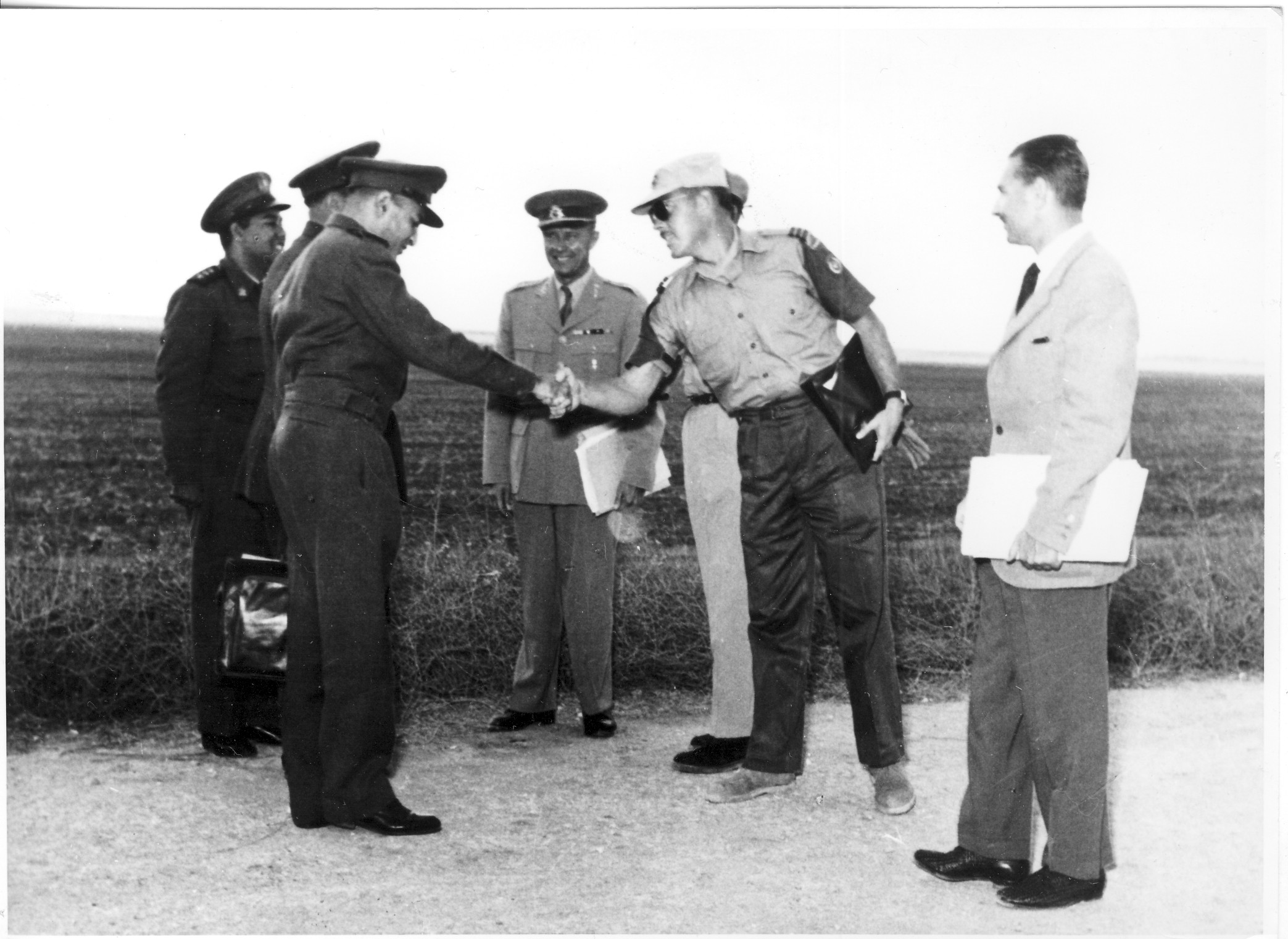
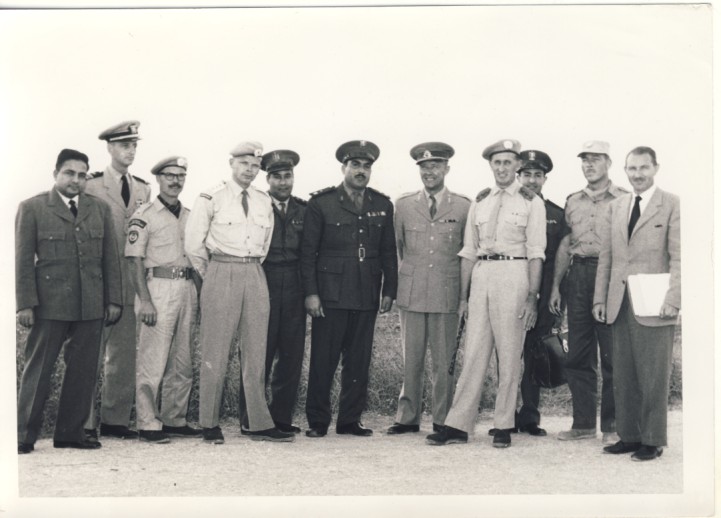


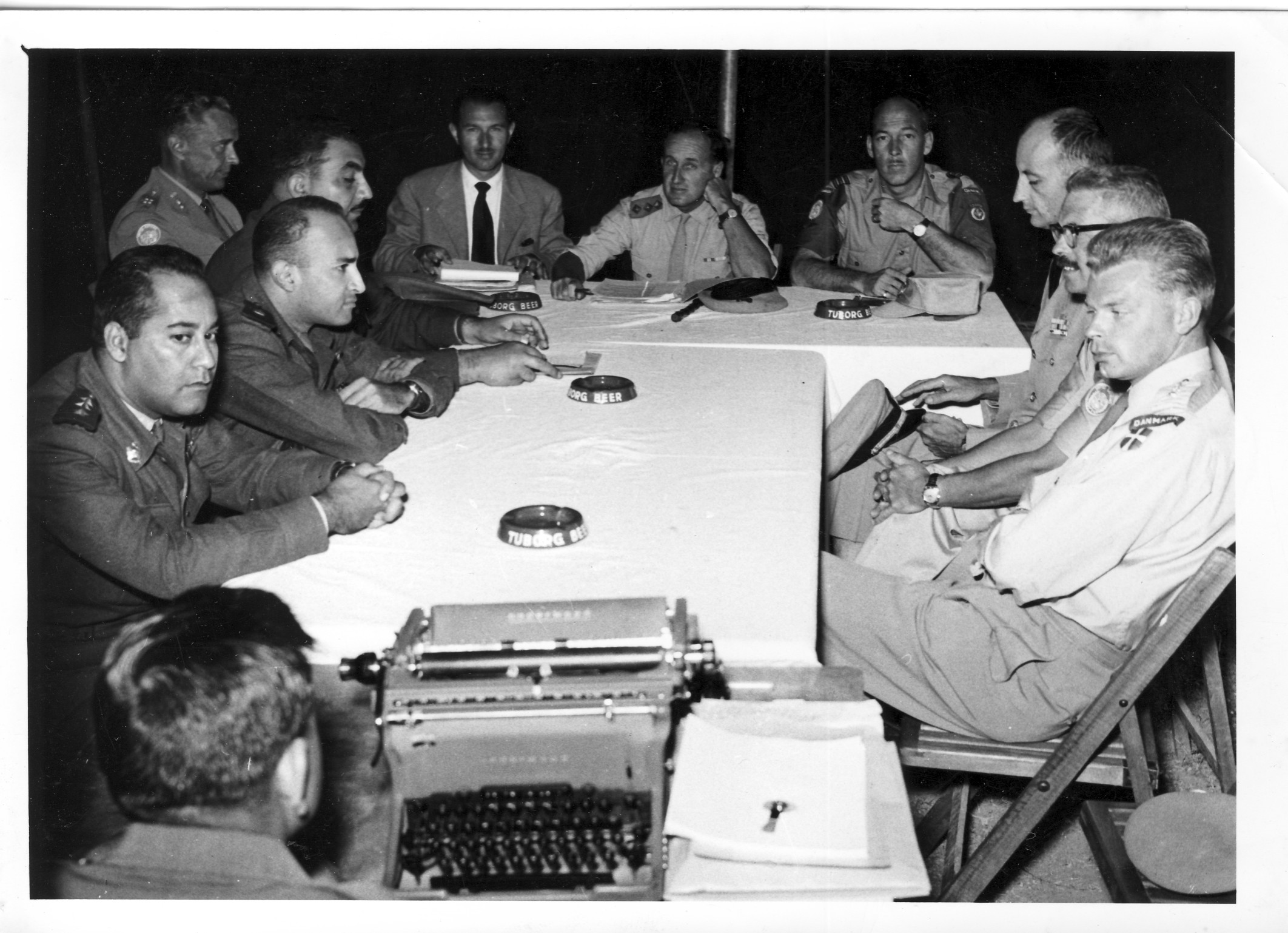

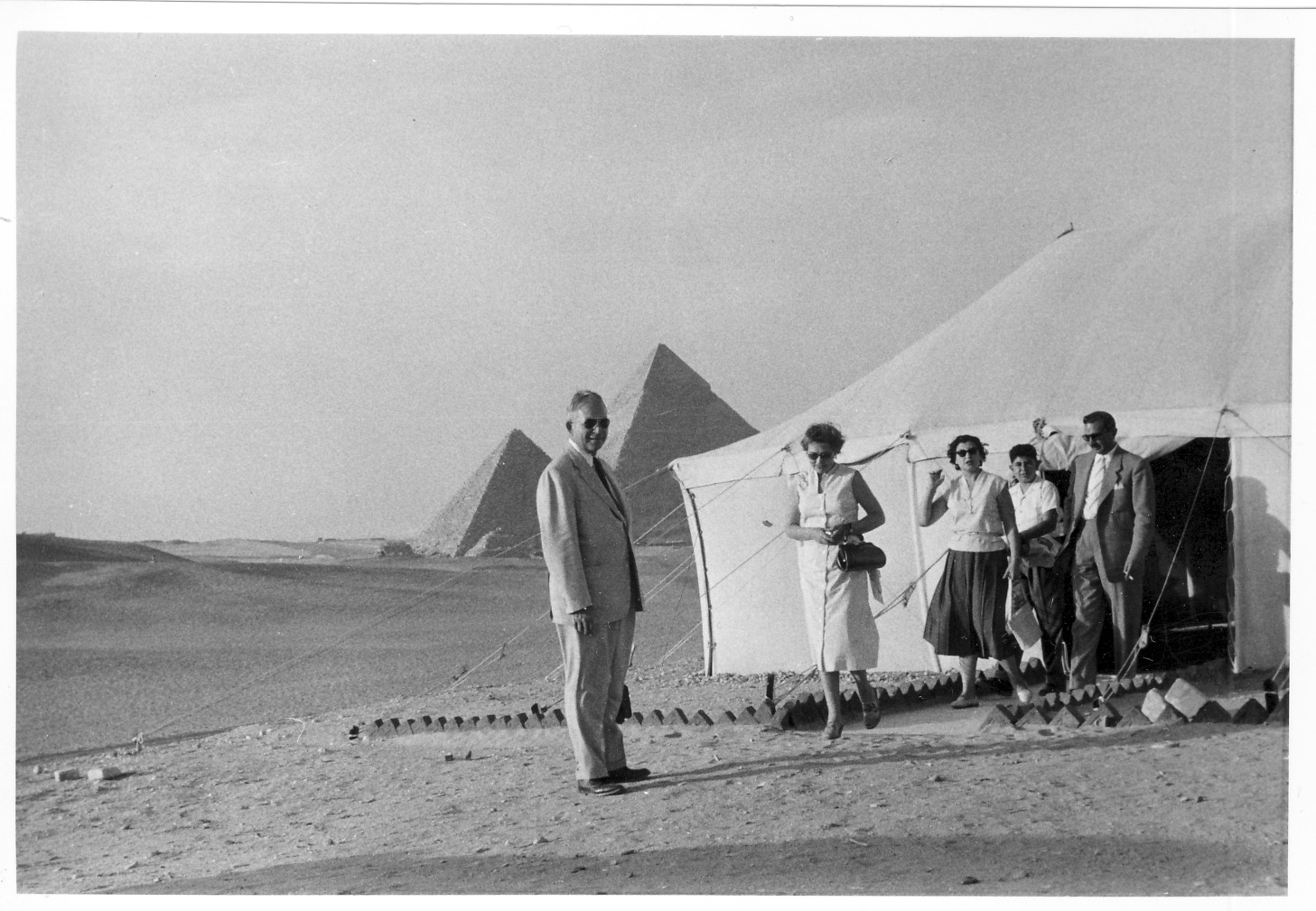
Untitled, Egypt. Vlado is exiting the tent, far right.
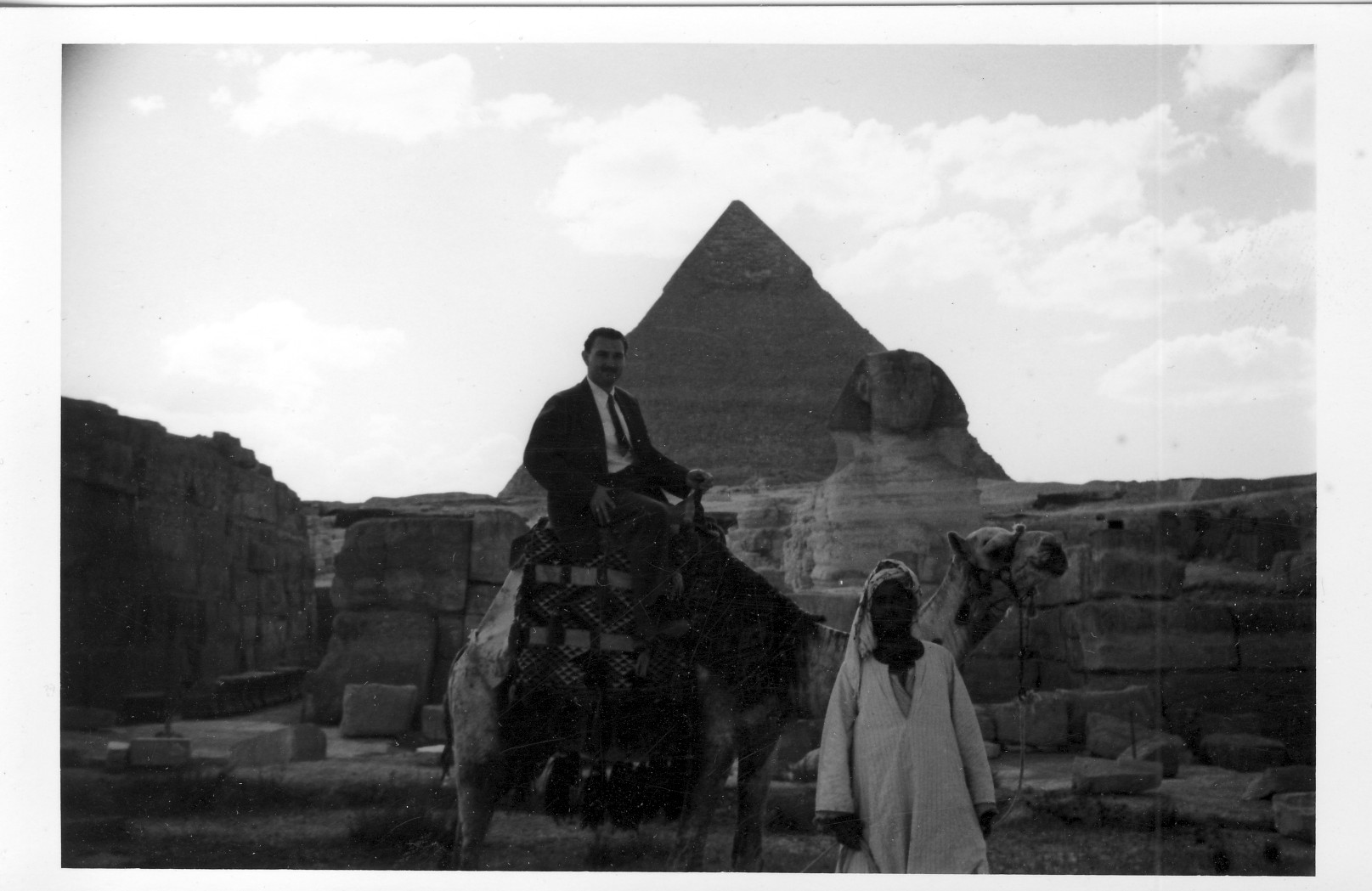
The two sphinxes – untitled.
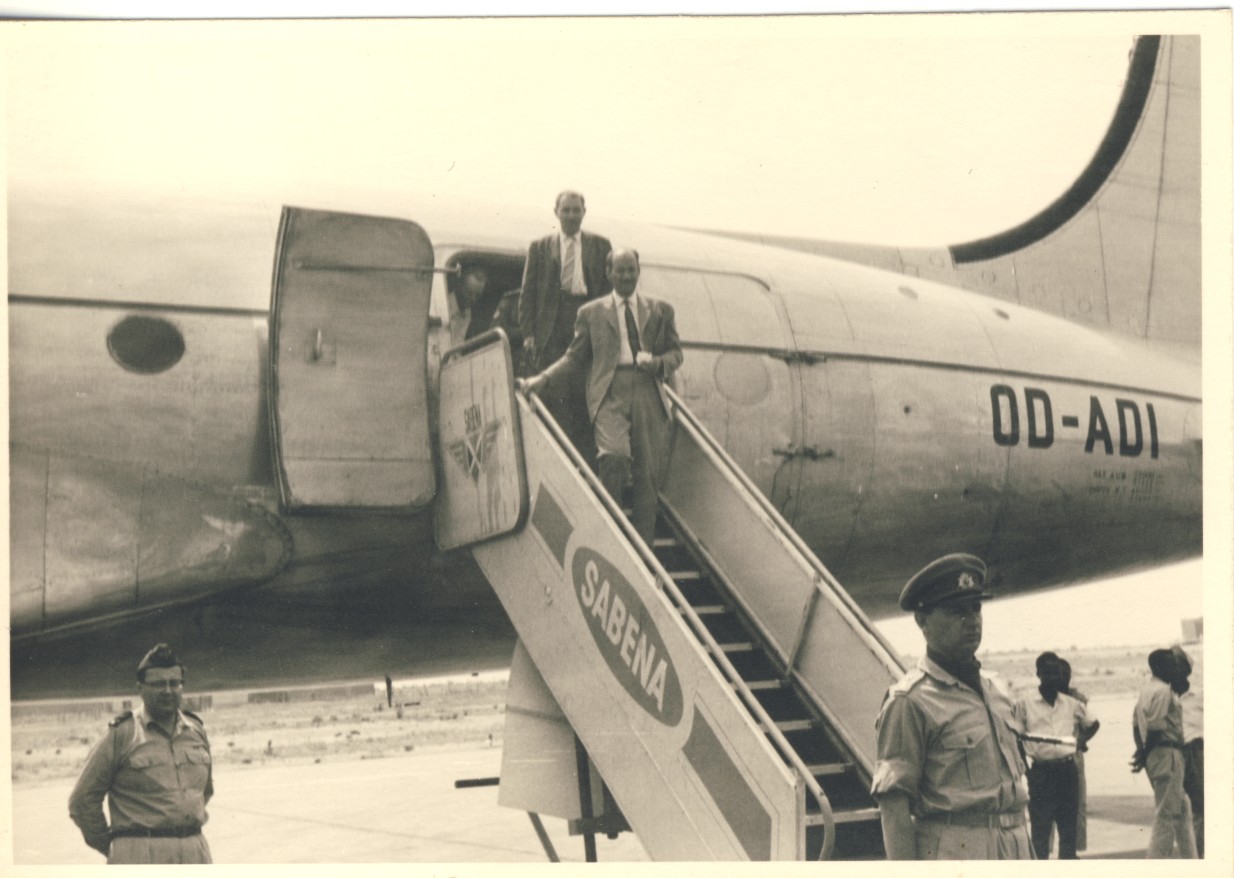
Really, there are no photos from Vlado’s time in the Congo but a few. Here is an untitled photo, possibly Congo, with him arriving on a Sabena plane.

This photo, and the following photo, were sent to Vlado’s sister Olinka by Sheila Dean Marshall in her condolence letter; which Sheila collected from the DAILY EXPRESS in London, and are stamped on the back with the copyright. This is one of the last photos taken of Hammarskjold and Vlado before they boarded the DC-6 on September 17, 1961, headed to Ndola on what would become their final peace mission. This was the first version of the photo I found.
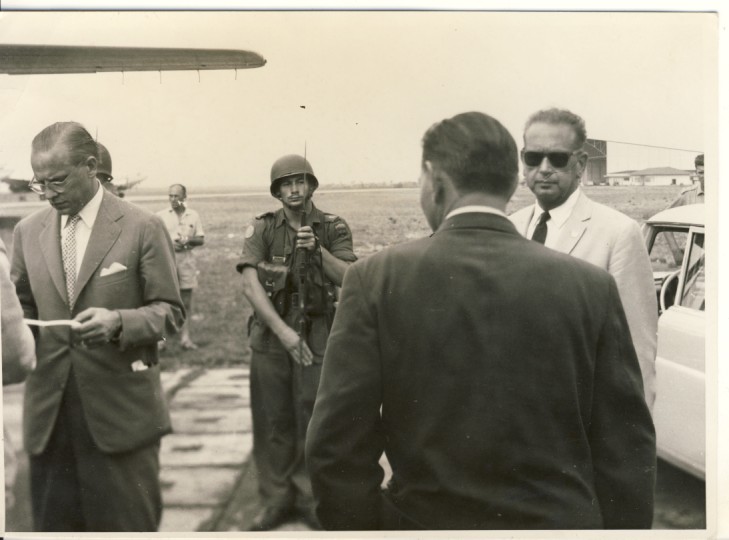
Here is the full expanded photo, which includes Sture Linner at left, reading. Found this much later. On the back, Sheila writes “Vlado before they took off in the aeroplane.”
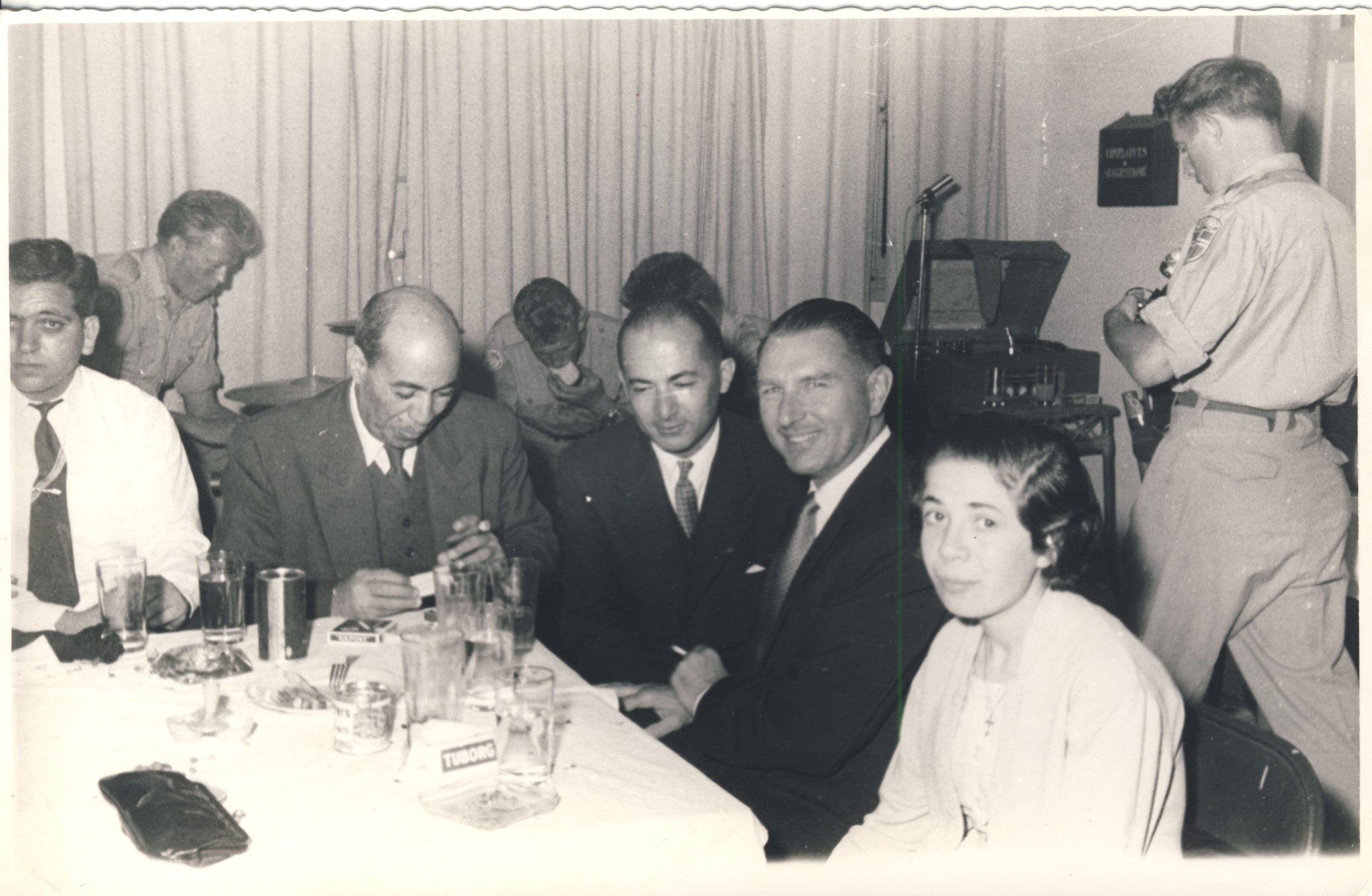
Untitled photo, possibly from his time with UNEF.

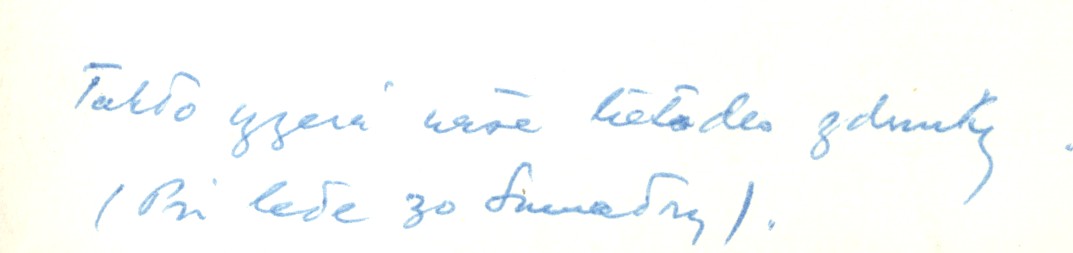
Photo of unknown flight – I’ve included the Slovak notes from the reverse. Help with Slovak translation is always appreciated.

This photo and the next are both untitled, taken at United Nations Headquarters in New York.
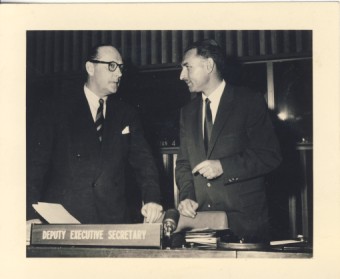

This last photo is untitled as well. I wonder why Vlado’s secretary is typing on top of a duvet? The old typewriters were so loud, maybe it muffled all the noise. I like the photo of Vlado at his desk – I have his copy of the Petit Larousse by my own desk.
“People need a symbol…”

Here is an excerpt from “Mission For Hammarskjold: The Congo Crisis” by Rajeshwar Dayal(Princeton University Press, 1976; p. 303-305), in which his wife Susheela Dayal shares her memories of Hammarskjold:
Quite early in my association with Hammarskjold, I sensed his interest in matters of the spirit, although it was not before the lapse of several years and episodes in which we were together involved that I began to get an inkling of the depth and nature of his involvement. Hammarskjold, with his sharp antennae, also became conscious of my commitment, as became evident from chance remarks that he made in the course of political and other conversations. In talking of politics, he would bring in spiritual formulations, emphasizing the need for absolute ‘integrity’ in action, a word to which he attached a deep esoteric meaning. He also spoke of ‘maturity’ of mind, implying a higher state of understanding. He would frequently refer to the bedrock of principle from which one could never allow oneself to be swept away, whatever the cost. And he would add that he need not say more as he knew that I understood the depth of his meaning. But Hammarskjold never consciously discussed spiritual matters with me; the closest he came to revealing his inner self was in conversations with my wife Susheela at the dinner table. She recalls their conversations in these words:
‘We are on the same wavelength,’ Dag Hammarskjold once said to us, many years ago in New York when he showed us that he knew we too were seeking the path to inwardness.
I remember one such time in the early fifties when, sitting next to him at a diplomatic dinner, the whole formality of the occasion slipped away from us as we were drawn into a conversation on Advaita, the philosophy of the Non-dual. Unknown to me, he was drawing on his own rare knowledge of the mediaeval mystics, for there is a passage in Meister Eckhart, singled out by Hammarskjold in Markings, that holds in it the essence of our conversation that night. ‘But how then am I to love God? You must love him as if he were a non-God, a non-spirit, a non-person, a non-substance: love him simply as the One, the pure and absolute unity in which there is no trace of Duality. And into this One we must let ourselves fall continually from being into non-being.’ Dag Hammarskjold adds, ‘God help us to do this.’
In 1958, when he came to Lebanon, Hammarskjold drove through the besieged, entombed city of Beirut. Coming to the hotel, he leapt out of the car in that characteristic, light and free movement, and hailed me, saying, ‘I bring you greetings from Lakshmi.’
I smiled, remembering the little statue of the goddess Tara that had been our present to him. She stood now in a niche in his New York office, her inturned glance flowing at one with her outward beauty. It was he who had renamed her Lakshmi, the goddess of auspiciousness and of wealth, the goddess of inner riches.
Even those who knew him slightly knew of his love of the beautiful, his love for literature, for painting. In a crowd, his eyes would travel beyond the people and come to rest on a small picture, such as the abstract painting we had, by Rudolf Ray. He would go up to it and stand before it silently, gravely. Turning to me he would say, ‘It has the quality of stone under water.’
Coming to visit us in the Congo, he brought with him a small round box made of moss-leafed stone. I remember his look as I thanked him for it. He replied, ‘I wanted to bring you something that had the feeling of stone under water.’
Yet I cannot recall a single personal thing that Dag ever said to me. I cannot remember a single familiar question he ever asked me. How were we in the Congo? Was I afraid? Was it difficult? No, he never asked. Meals were an extension of work schedules, though Dag would often cut across the immediate to place it clearly in its distant perspective–the point of the circle in terms of its circleness.
‘Are the hero and the saint identical?’ I asked him on one such occasion in the Congo, when our talk had moved from the day’s events in Kalina to the wider issues of a nation’s history. Dag answered that their likeness to each other lay in their view of themselves; that neither the hero nor the saint sees himself in terms of the world, but as instruments of the Principle (God) and are used by It. In order to fulfill their destiny, he said, ‘Some men become heroes, others saints, but both see themselves as instruments of the One. The hero and the saint perform their roles in relation to God alone.’
Yet, such was his shyness that it was not easy to say the very simple things to him. At the farewell luncheon that Dag gave for us when Rajeshwar had completed his mission to the Congo I took the opportunity of talking to him more closely, knowing that a long time might elapse before our next meeting. We talked of the inner direction of progress that a human being must make, away from the personal, which is the limited, to the impersonal, the limitless. The personal must not be rejected, but it must be contained in the impersonal, in the Whole, the One. That, Dag said, is one’s work in life.
Then, continuing to speak of the men and women serving under him at the United Nations, Dag said that his presence, his person, should not matter to them. It was the impersonal, the idea of the U.N. that was important, and it was into this that their idealism and their loyalty should be transcended. But, I replied, I had seen what his presence did to people; how it illuminated and inspired their spirit. It was not just the concept of a United Nations that they loved, it was him, the embodiment of that concept. I asked him, ‘Can you think of an abstract thing?’
He was quiet for a moment, and then he replied, ‘Of course not. People need a symbol, that is right.’ He added with grave honesty, ‘But if they must have one, then it should not be a person. Let them take the U.N. Building as their concrete symbol, not me!’
And speaking of that symbol, here it is in LEGO form – a Christmas gift from my dear husband!
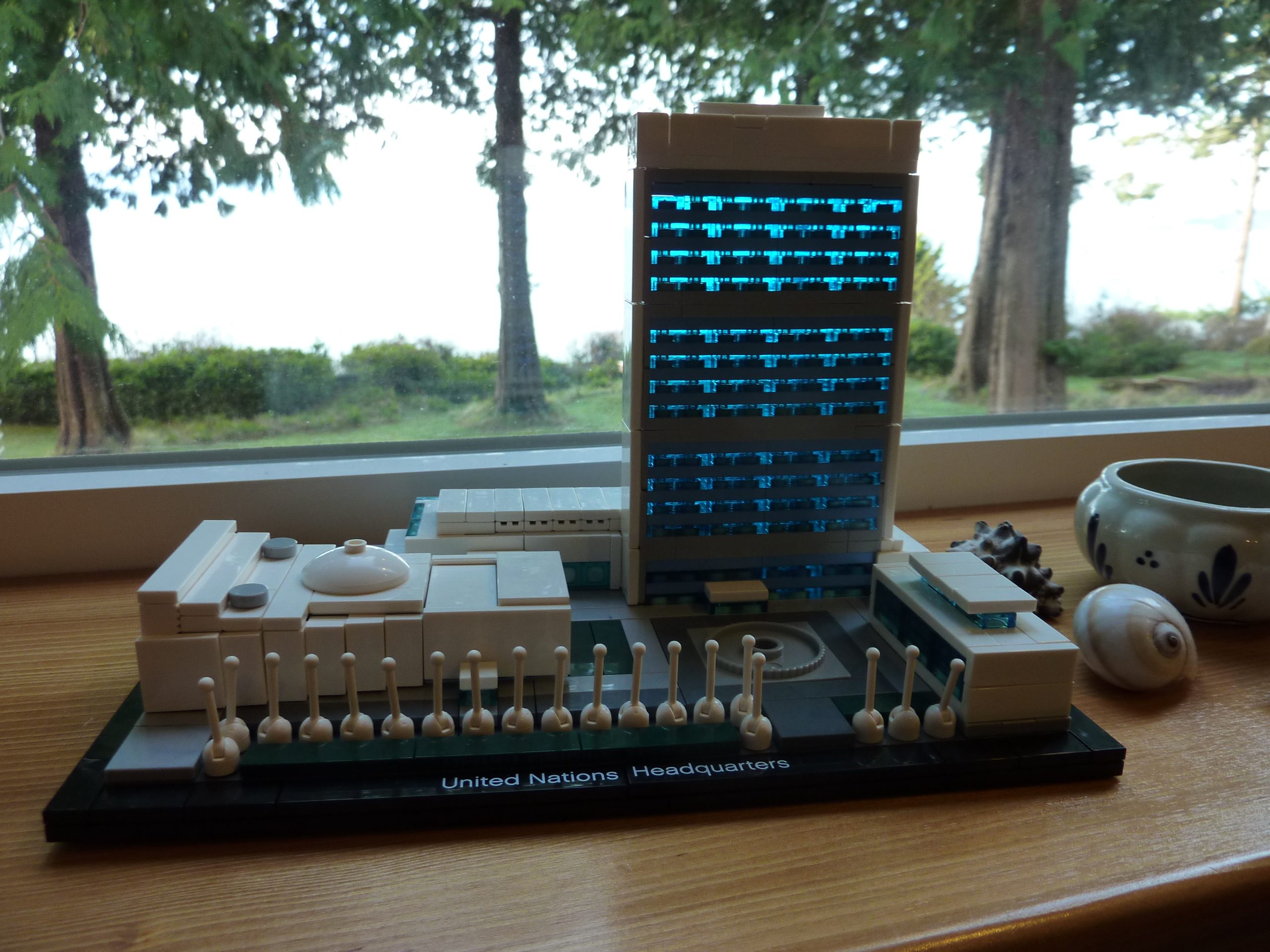
Help with Slovak Translation
“Sometimes the key arrives long before the lock. Sometimes a story falls in your lap.”
–Rebecca Solnit “The Faraway Nearby”

Though it is clear that I love the Fabry family very much, what might be difficult to believe is that I was not accepted by my mother-in-law, Olinka, and that I only met her once before she died. As much as I wanted to know her, there just wasn’t enough time, and I was very sad about that. So, you can understand how these papers have been a gift to me, to be able to get to know who Olinka was, to understand why she was difficult and the hell she had been through – I think of her with compassion and forgiveness.
Besides being a great cook(see photo above), one of the qualities I admire most about her was her skill at many languages – she was as gifted as her brother Vlado.
Here are a few pieces of ephemera from Olinka’s career:

It would have been easy for her to translate this document from the Prison de Saint Antione in Geneva(which is now the Palais de Justice), dated 1949, but it is not so easy for me. Who was in the prison? And why? Was it her father, Pavel? I am posting this here in hopes that Slovak readers will want to contribute a translation, if only to ease my curiosity. Please help!
(click image to enlarge)

Vlado and Don and Marty and the Czech Ambassador
It’s been a while since we’ve heard Vlado’s “voice”, so here are a few letters between him and his friends, Don and Marty Davies, from 1955. Their fondness for Vlado is obvious, but it was Marty who wrote these wonderful letters. We don’t get to learn exactly what happened to the Davies car, but there was an accident on the road to La Berarde; and Vlado was being a know-it-all about the altitude of Col d’Izoard with Don, which prompted a “scolding” from Marty. Vlado refers in one letter to a dispute with a Czech Ambassador in Washington about his passport renewal, and I have included scans of the documents in regards to that. Also included are the condolence letters from Don and Marty to Vlado’s mother and sister, from September 1961.
But first, a few photos of the Davies in Geneva – at the UN Palais and Parc de Eaux Vives – and one with Maminka.


21/II/1955
Dear Don and Marty,
you might remember the little Indian chappie called Radhakrishnan who was precis-writer for the GOC and UNCI (if you still remember what that stood for!) – he used his savings from various currency operations etc to make a trip to New York and was taken by Foster to see the Empire State Building. Asked for his impression, he said simply: “It reminds me of sex.” Poor Foster speculated for a while about the symbolic implications of that comment and finally asked point blank for an explanation – which was “but everything reminds me of sex.” Mutatis mutandis (and there’s quite a bit of mutatis, I hasten to add) I’m in the same predicament – everything seems to remind me of the Davieses. To start with – a year ago was the momentous date when I tried to introduce you to the noble sport of skiing and found a response enthusiastic beyond all my expectations; also, last weekend I spend at Mrs Cornwall’s Lodge in North Creek,- although this time both days were perfectly sunny and there was no need to have recourse to crossword-puzzles; going up I was caught speeding practically at the same spot as when we drove up to make our concerted attack on Mt. Marcy:- happily I was able to talk myself out of it; and so on ad infinitum. In other words, I miss you.
I started the New Year with a rather successful party, featuring the traditional roasted pig without the corresponding (also traditional) stinked-in apartment,- but things started going wrong thereafter. I tried to cold-shoulder an infected throat, hoping that the infection will get disgusted and leave if I don’t pay any attention to it, and ended up with a bad bronchitis which kept me at home for two weeks. It may have lasted longer but for the fact that at the end of two weeks came the weekend when I was assigned by the Appalachian Mountain Club to lead a 15-mile crosscountry excursion, my first leading assignment and so I decided to do my duty, fever or no fever. It turned out to be a blizzard day, and breaking tracks through two feet of new snow with a fifty pound rucksack on my back proved to be just the right medicine for my bug,- they took flight in absolute panick even before we finished the trip. I hope I discouraged them permanently from trying to return.
Your postcard from Garmisch had the foreseeable effect, it made me turn a proper green with envy and spoiled my working efficiency for the rest of the day while I was mulling over in my mind the more pleasant alternatives to my enforced location behind a steel grey desk in a steel grey room under a steel grey sky. Would also be interested to know how you made out in Vienna – bit of home territory for me, you know-, whether it was able to shower on you a sample of its old-time Gemuetlichkeit. Don’t take all your vacation time now – I am still hoping that I may get some assignment to Europe this year, and this time I would like to spend a bit more time with you than last year.
My office activities got somewhat expanded into related channels. I was elected representative on the staff committee, i.e. made a shop steward in our trade union,- I have the smallest unit in terms of number of staff but the only one who represents three Under-Secretaries; and I got stuck with the chairmanship of the UN Ski-Club..- Lonely Hearts Club would probably be really a better name, we have 97 girls and 14 men as members (not to speak of some married couples),-some of the girls quite charming little things [but] I still have a lot of troubles chasing after my bachelor-friends and trying them to induce to come as guests on our weekend excursions. I am probably getting to be known as a hopeless lecher, arriving every weekend to a ski-lodge with a carfull (up to six) of different girls. Good thing I have my visa in the bag, I would never have gotten through the investigation after this.
Remember me to your father, please,- you don’t know how wonderfully comforting it felt to know there are kind and thoughtfull people who not only are willing to help us, but will go out of there way in doing so and in taking the initiative themselves. In your words of the understatement of the year: Nice guy, really. God bless him.
With best wishes to you all-
Vlado
***********************************************************************
25 May 1955
Dearest Vlado —
Don’t you suppose you could take Mr. Hammarskjold aside and explain that a very important mission takes you to Europe practically immediately, it is a mission in the best interests of the UN, peace and the fellowship of mankind. You know, the usual sort of stuff. You will be happy to report to him personally of your findings and recommendations. This is by way of telling you our time is up, almost. Plans of this moment are for our departure the twenty-second of June for –guess?? Algiers. Don is going to be something called Public Affairs Officer, much better than visa-stamping, but Algiers is not Paris. Since the French insist the problem there is an internal one which does not concern the UN I fear we can’t expect to see you there. I’m so sad. Paris is heavenly even if it is gray and rainy all the time. It is a divine, divine city and I don’t want to leave.
My only hope of getting you over here before we leave is to tell you we’re making the grand tour south to Marseille, to make you so envious you can’t bear the thought of our doing the Route d’Ete via the Col d’Isere, Col du Galibier, Col Izoard so we can see Briancon and Barcelonnette and you’ll come over to drive south with us. Oh, I know, I know, this isn’t by any means the route to Marseille. We’re going to Vienne for dinner and theatre in the amphi—-. What else can you do in an amphitheatre except theatre? And then we do the mountains. Suddenly, unexpectedly inexplicably Don has taken a fancy to mountains. He like them. Does this sound reasonable to you? Me, neither. I’ve just wound up ten pages to the family which sort of explains the typing, I’m typed out but I’m hoping that with sufficient warning of what is in the wind you will take a plane this way. Not only has Don taken a fancy to mountains, he is also fancying sightseeing. This is not to be believed. He drags ME sightseeing. For an entire year I’ve been apologizing at the same time I’ve been insisting on seeing things. Don used to go wash the car while I did churches or chateaux. Now he has the bug and it has bitten him badly. Won’t you come? Can’t you come? Don’t you think your family would like to see you?
We had such a nice visit with your family one evening ages ages back. I was then going to write you immediately to tell you how well he looked and how full of beans and plans he seemed. Goodness he is such a cutey. We’ve both got pretty sweet fathers. I’d be willing to bet he is all hot and bothered about the possibilities in Czechoslovakia now that Austria has been released. My poor darling of a Pop, though, just when he was getting all set to come to Europe for a long holiday, had a stroke. The news cut my heart in shreds simply because I couldn’t visualize Daddy as a cripple. I didn’t count on the incredible spirit which moves the old boy. Nothing is impossible. At his age, with his heart he has stunned the doctors. Instead of spending the entire summer in California as they has thought necessary, they leave for home the middle of June with Pop back on his feet, navigating, weakly, true, but determined that this will not stop him. The subject of a trip to Europe has been brought up again….He belongs to a tougher breed than any of his children.
Italy was great fun. Another time I’ll forget the existence of Rome which is a dull and singularly unattractive city and just concentrate all travel in the north of Italy. Those wondrous hill towns, each more delightful than the next….The news of the move to Algiers was here on our return. Fine thing to come home to.
Love, m.a.
*******************************************************************
Hotel St. George
Alger
6 July 1955Dearest Vlado —
Don has had his scolding; it is now your turn. The two of you were acting like a couple of children. This has absolutely nothing to do with the incident on the road to La Berarde. It was an “accident” in the real sense of the word, unexpected, unavoidable, unpremeditated. Pfft, we forget about it.
But, Vlado, what earthly difference does the precise altitude of the Col d’Izoard make? What great importance does St. Andre’s location on or not on a lake make? There are times when exactitude is frightfully important and insistence upon upmost precision may mean the difference between life and death. But, when Don reads from a travel folder that the Col d’Izoard is blank number of meters high and you flatly contradict him, he can only think that you think he is a stupid oaf because you know the Col is at least blank plus X. I know your reaction because it is one I’ve had to discipline myself to overcome. Fourteen years of discipline because I don’t want to contradict Don and be rude or hurt his feelings. I’ve had to learn that if I disagree or know Don’s position is not right, I must find a way around answering him that will not be contradicting him. Often it means keeping my own counsel if the matter has no great significance; at other times the subject has to be tossed around indirectly until Don sees by himself. Flattery works much better than insult and contradiction often sounds like insult. Contradiction makes conversation impossible….I could watch Don hedging his ideas to protect himself from being pounced upon, hedging them in such a way as to be completely meaningless and thus making himself look exactly the way you made him feel……..Therefore the sullen clouds.
I know now why three squabbling children used to get on Mother’s nerves — yes it is, no it isn’t, it is too, it isn’t either, you’re crazy, I am not, you are too and on and on ad nauseum. And that’s the end of the scolding. Let’s forget it too.
I’ve been told no mountain-climbing here before October, so, unless you can be persuaded to postpone your next summer holiday until Fall, we probably wont see you again till we get home on leave….Thank you for Moustiers Ste. Marie and the very thoughtful call to Marseille. Without you we would have known neither.
Love, marty
****************************************************************
23.IX.1955
Dear Don and Marty,
time flies,- it just knocks my breath out when I stop to think that it is three months since I waved you good-bye at the Roches Blanches in Cassis,- it still seems like last week. I better start recapitulating what I did since to realize how much time I let go by before writing you.
I had a lovely week with mother, Olga and a friend of hers in the Dolomites – each early morning I popped off for a climb while the ladies were resting and picking wild-flowers, and by the time the clouds started gathering in the afternoon, I was back and off we went to the next place. I stopped for a few days of skiing in Cervinia,- went up the Breithorn /4200m/ on skis in shorts, and was roasting through my seventh skin with a tan which even now is still around. Was joined by some friends, fellow-climbers from the Appalachian Mountain Club, in Chamonix for a week’s climbing in the Aiguilles, interspersed with afternoon picknicks in the valley in which Olga and another girl joined up. And then the vacation was over with a blow and back through an empty Paris bereft of your presence and on to New York. Stops in Iceland and Gander, with temperatures near freezing and icy gales, a cold /non-pressurized/ plane, and the shock of landing in New York on the hottest day of the year, and being left standing in our warm clothing and weighted down by assorted luggage on the blazing hot concrete apron in the middle of the relentless afternoon sun. Struggling with heat and humidity through a rather erraticly[sic] unpleasant summer, to be relieved only by the blow and deluge of hurricanes. Apartment hunting /my South-African landlords decided not to have any babies for a while and gave up their “maternity ward” apartment, forcing me to look for a new one/ – but found a very nice place /apt.14-D, 2, Beekman Place, N.Y.22/ a stone’s throw from the office, high up, with unencumbered view over the East River, with the green of the UN garden right under me, bookcases lining not only the living-room and study, but also the bedroom up to the ceiling, and plenty of air,- and I managed to push the price down to 125 a month which is still within my means. A couple of weekends at the shore and one in the White Mountains, and then I took up rock-climbing again and am now hard on it, climbing every weekend. Am spending most of the evenings getting acquainted with the book supply,- see very few people.
Soon after my arrival in New York I was called by my former neighbour from Riverdale, who has taken over /together with three other associates/ the controlling interest in the Muldrow Aerial Survey Corp., a well-established company producing geological maps, surveys, etc. He offered me a job as the manager of their subsidiary company in Calgary /a Canadian corporation/, at a salary of $1.000 monthly, 2% of the sales /another $1.000 monthly/ and expense account including car, club memberships, etc. It was a very tempting offer – it would have meant considerably higher earnings /some 500 $ more monthly after taxes, taking into account that some of my present expenses e.g. car would have been borne by the company/, and a chance to get into private business a few stories about the ground-floor level. However, after a lot of thinking, I refused the offer. Immigration told me that as an employee of a Canadian corporation, I could not maintain my american residence for purposes of acquiring citizenship; the higher earnings seemed more than outbalanced by the lesser security of the job /I had my permanent contract here confirmed, and I have a promotion “in the works”/; the prospect of spending my working day in selling was rather dismal when compared with the pleasure and stimulation that my present job gives me; and last but not least, the prospect of exchanging my independent private life for one where I would have to keep up with the Joneses, backslap prospective customers and be a gregarious “regular” fellow seemed gloomy indeed. So I guess I shall remain an international civil servant for some time to come – offers like that are not falling from heaven each day.
To end this long egotistic tirade – I just had received a registered letter from the Czech Ambassador in Washington asking me to set a date at which it would be convenient to discuss with him personally the question of renewal of my passport /a similar letter was also sent to other emigrees in UN employ/. This is one of the occasions where I wish I was not an international civil servant bound by the rules of diplomatic curtesy[sic] towards an official of one of the Member-governments, so that I could answer the letter in a language appropriate to the occassion!
Before I close, there are two things I want to do. First, to apologize for my behaviour at the Route des Alpes,- I am sincerely sorry to have so stupidly spoiled such a nice trip, and my only and true excuse is that I did not realize what I was doing. My thanks to Marty for opening my eyes. Secondly, to inquire after the health of Mlle. Fregate and about the status of her doctor’s bills – did the insurance company pay up?- Because if not, my offer to cover them still stands, and I will feel much better with a slimmer bank account and a quieter conscience than the other way around. So please let me know.
All the best and lots of love – Vlado
*************************************************************
These four documents were paper-clipped together. Click to enlarge.
Here is the letter from Czech Ambassador Dr. Karel Petrzelka:
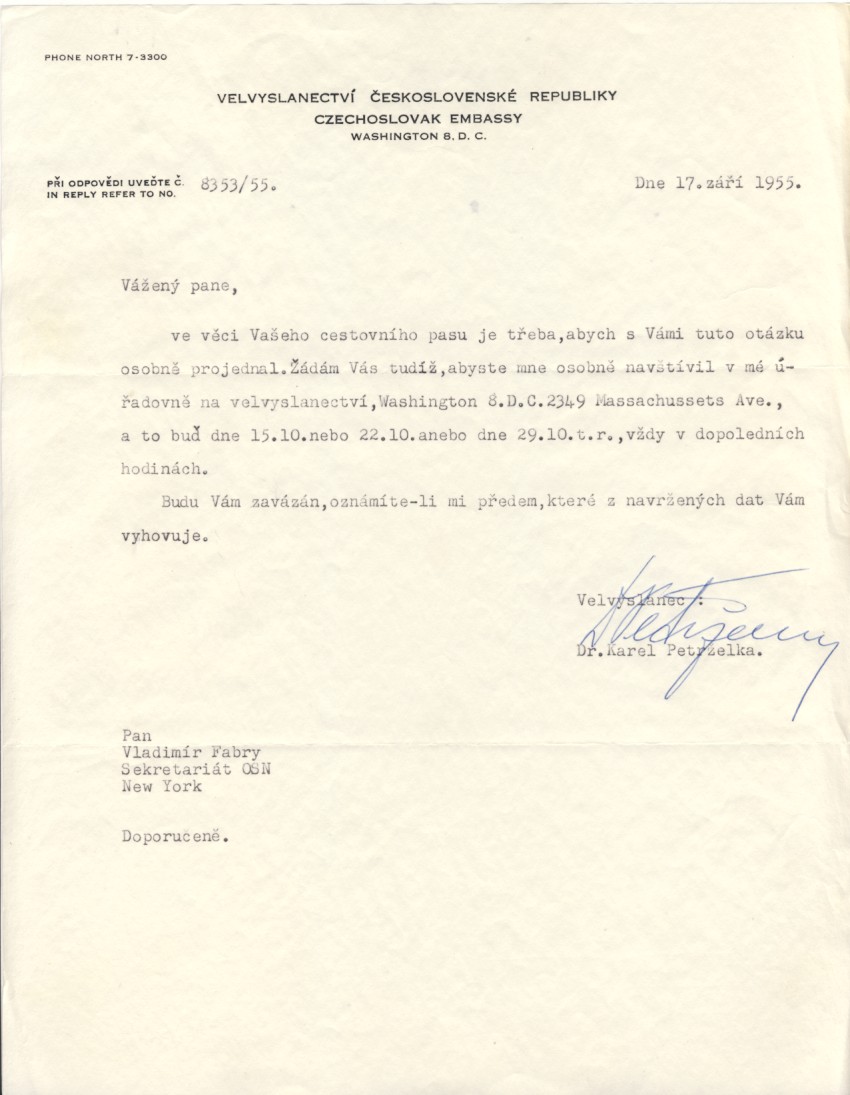
A copy of Vlado’s reply to the Ambassador:

Here is a letter to Administrative Officer of the UN Bureau of Personnel, Miss Mary McKenna, asking if there are any objections before he sends his reply.
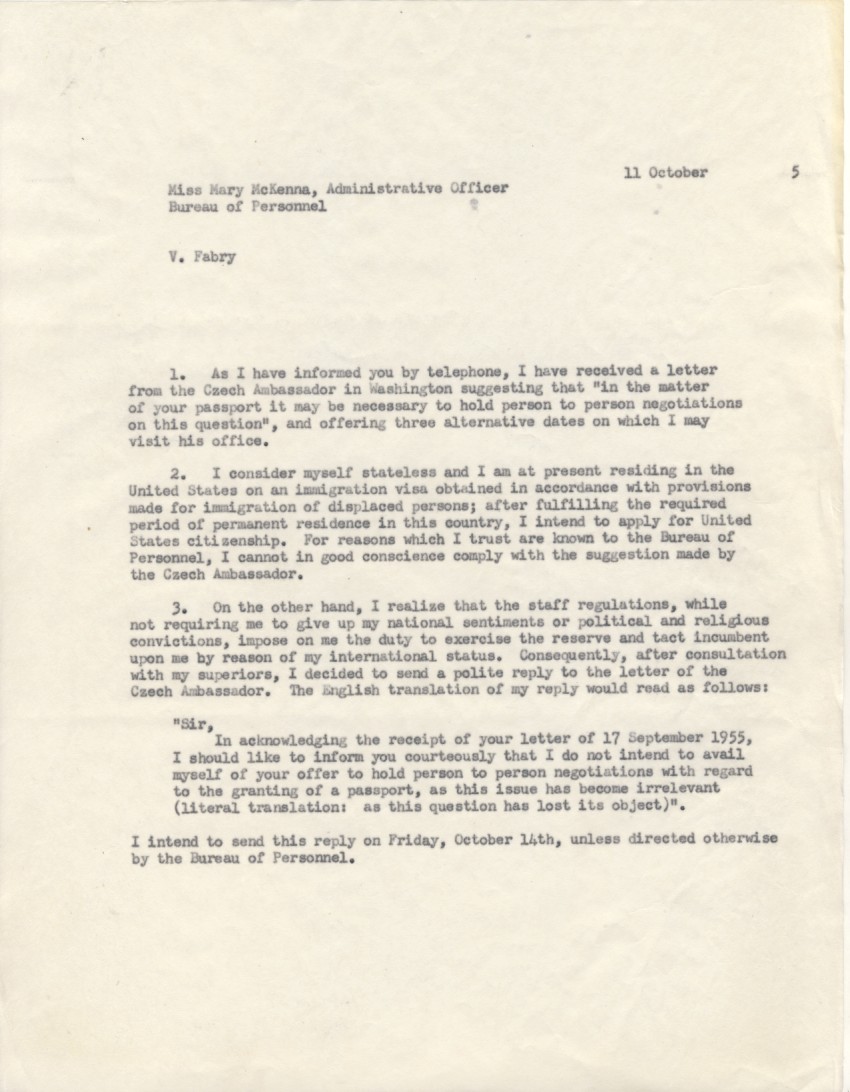
11 October
Miss Mary McKenna, Administrative Officer
Bureau of PersonnelV. Fabry
1. As I have informed you by telephone, I have received a letter from the Czech Ambassador in Washington suggesting that “in the matter of your passport it may be necessary to hold person to person negotiations on this question”, and offering three alternative dates on which I may visit his office.
2. I consider myself stateless and I am at present residing in the United States on an immigration visa obtained in accordance with provisions made for immigration of displaced persons; after fulfilling the required period of permanent residence in this country, I intend to apply for United States citizenship. For reasons which I trust are known to the Bureau of Personnel, I cannot in good conscience comply with the suggestion made by the Czech Ambassador.
3. On the other hand, I realize that the staff regulations, while not requiring me to give up my national sentiments or political and religious convictions, impose on me the duty to exercise the reserve and tact incumbent upon me by reason of my international status. Consequently, after consultation with my superiors, I decided to send a polite reply to the letter of the Czech Ambassador. The English translation of my reply would read as follows:
“Sir,
In acknowledging the receipt of your letter of 17 September 1955, I should like to inform you courteously that I do not intend to avail myself of your offer to hold person to person negotiations with regard to the granting of a passport, as this issue has become irrelevant(literal translation: as this question has lost its object)”.I intend to send this reply on Friday, October 14th, unless directed otherwise by the Bureau of Personnel.
And a message to Vlado from Mary McKenna: “The Office of Personnel has no objections to your letter to the Czech Ambassador but we do not, of course, accept the responsibility of approving it.”

*******************************************************************
And now, the letters of condolence from Marty and Don:
1908 Belmont Road, N.W.
Washington 9, D.C.
27 September 1961Nos tres cheres deux Olga,
This morning we laughed again at the mad escalade of Mt. Marcy in the company of Vlado. This evening at dinner we wept for the morning’s excruciating frivolity. Don returned from the office this evening to tell me that his worst suspicions had been confirmed; that the Fabry on the Hammarskjold plane was indeed Vlado.
How could it be, and, yet, how could it be otherwise, for so long as we have known dear Vlado he has been where the UN was having to handle difficult problems. The excitement, the intellectual challenge and the demand upon resources of courage both physical and moral — where else could Vlado be expected? Right there. And Don said this evening he felt that Vlado was merely a younger Hammarskjold, that everything which made Hammarskjold’s loss so irreparable could be repeated in Vlado’s case. Only Vlado, well, Vlado is a very dear and cherished person whom we were privileged to call a friend and whose family we have come to love as our own. Our sense of loss is that of a member of the family.
Our own desolation can be but very little in terms of your own. Vlado was so much more than son or brother; he was your guardian angel, bringing the family together as he did after it had been so painfully separated and then keeping it together with his enthusiasm, devotion and tender care.
Naturally, we are concerned for you both. Wont you let us have a word from you when you feel you can write. If it would suit your plans or your desires, we have heart and the room to take care of you here with us.
With all my devotion deeply saddened,
Marty
*******************************************************************
Sept. 27, 1961
Very dear friends,
It was not until today that I heard about the other members in Mr. Hammarskjold’s plane, and received confirmation of the identities. My first thought was for you. Where are you and what can we do to help?
I found late today that you both are in Geneva – or at least the telegram said “the family” is there.
We grieve for you and our hearts are with you in this difficult time. You must know, of course, that you have our affectionate sympathy.
Please let us know if we can be of assistance. If you plan to return to the United States perhaps we can be of some help in that way.
We would like to be with you now but since I am on post in Washington and will be assigned here for two more years, we cannot see you at least for a while if you are in Europe. But please let us know if there is anything we can do to ease your problems.
We both send our love. Bon courage.
Donald Davies
More Photos from the U.N. Plebiscite to British Togoland, 1956
Here are some more photos that Vlado took, while acting as Observer to the United Nations Plebiscite to British Togoland in 1956; which includes some of the fantastic architecture he saw there.
(For greater detail, please click on photos to enlarge)


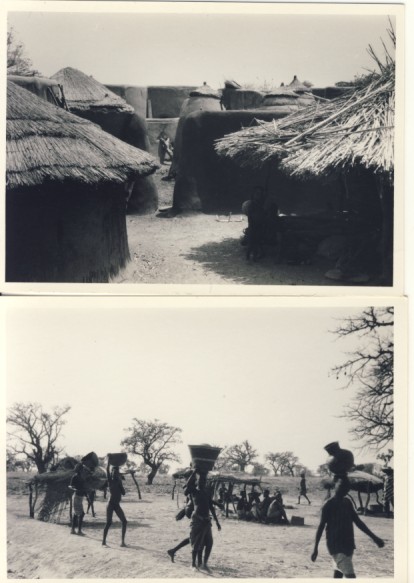
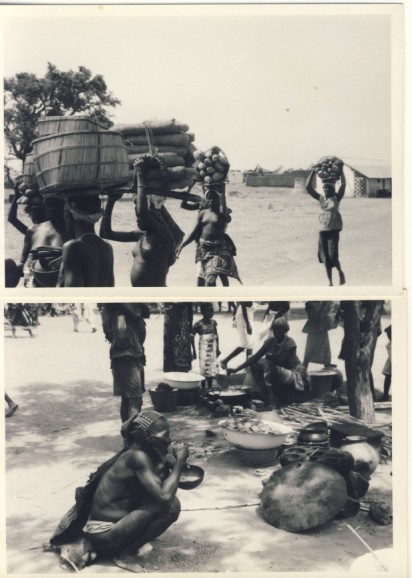
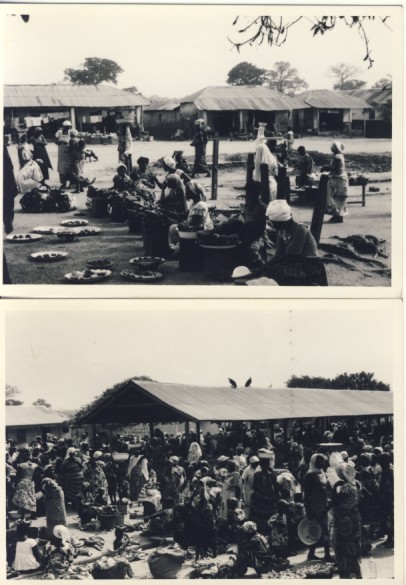
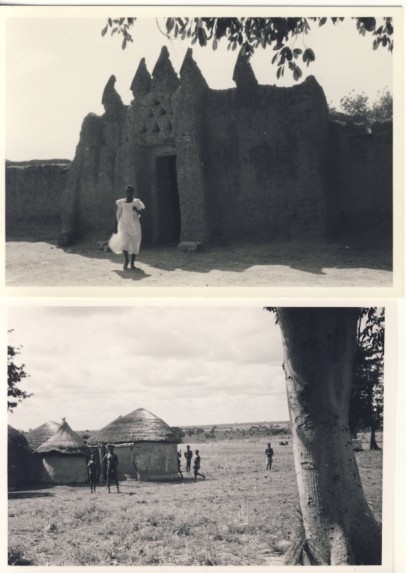
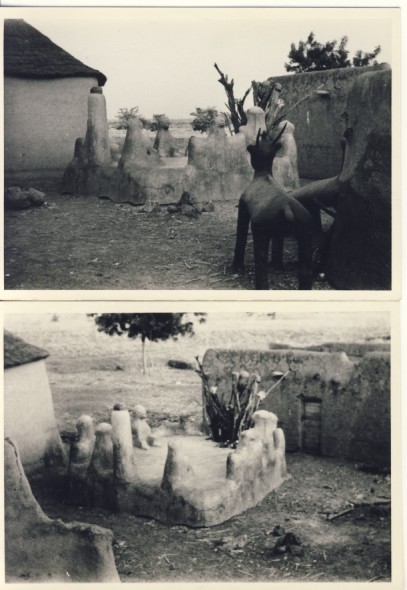




Like Father, Like Son
One thing I really admire about Pavel Fabry, is how affectionate he was in the letters he wrote to his family. Here is a little sketch of Pavel’s, with him in a hospital bed, a graph behind him that says in Slovak “Curve of Longing For Family”. The doctors are saying they have no cure for this “curve”, and Professor Fabry says he thinks a “Javaensis-Genevensis” tincture is what he needs. This was likely drawn during the late 40’s – early 50’s – when Vlado was working for Independence in Indonesia, Olinka and Maminka were refugees in Switzerland, and Pavel was in a hospital recovering from torture in a concentration camp, in the now former Czechoslovakia. Pavel’s sense of humor here shows he was living life on his terms, that he followed his convictions, and that he was willing to endure suffering for a just cause – a true romantic.

Then there are times when I am a little annoyed with him, like with this undated letter, sent to Vlado around the time he was working on the Suez Canal Clearance project in 1957, most likely before the project was finished. Pavel is telling him that he has to lose weight in two weeks, before their family vacation together (which would end with Vlado coming down with Hepatitis, and the weight loss that came with his illness). Then he says with all the tempting food of the Norwegians, Swedes, Canadians and Indians in the desert, that he would have to ride a horse at full gallop all day just to keep fit. He gives Vlado the advice to fall in love to lose weight, but not too happily, so he doesn’t fall apart at the end of it. Really, as if Vlado didn’t have enough to worry about, he has his father telling him he is too fat and needs to go on a diet! He is right though, that falling in love is great for weight loss, but he must have thought Vlado had some kind of superpowers to find a girl to fall in love with on the spot!
If Vlado was a romantic, it was because Pavel set quite an example for him. Romance was never far from Pavel’s mind, as can be seen in this little boudoir sketch (click to enlarge):
What is she whispering in his ear, I wonder?
Sometimes, thoughts of love and food were in competition, like in his surreal sketch of a fish woman:
Keeping to the subject of romance, in another post, we read the love letters of Vlado and Mary Liz, with the last letter written in September 1957. There are no more love letters written by Vlado after that, but I found a portion of a Mr. America magazine, from January 1958, with a cover banner that reads “USE YOUR SEX URGE FOR BUILDING A HANDSOME BODY”:
Who knows if Vlado was trying to control his “urge”, or what, but romance may have been distracting him from larger goals in his life. I think Pavel was not much different than Maminka, in that he wanted Vlado to find a nice girl to marry – but I also think he took vicarious pleasure in hearing about Vlado’s carefree romantic life as a bachelor.
Vlado left some heart-sick women in his wake, as is shown in this last letter from 1959, written by a woman who wasn’t over Vlado at all, and whose impending marriage brought to mind funerals and drowning. This letter is more a distress call than anything else, which makes it a very funny read!
March 4, 1959
Dear Vlado,
Now it looks as if I may be in NY at last, but for the most unexpected of reasons – on a honeymoon! Probably, April 12-25.
I’ve been so interested to notice in how many ways marriage is like death! First, probably the only reason so barbarous a rite as a wedding has lasted so long in our streamlined society is probably the same reason the funeral has – i.e. sociologists say that all the transactions involved in planning a funeral take the bereaved’s mind out of the depths & the same goes for the bride, bereaved of her freedom!
Marrying is also like drowning in that you suddenly relive your past – at least your past loves & all my former boyfriends have come parading their images across my minds eye – & I must say, Vlado, that as I go through my card file, choosing addresses to send announcements to, each card brings up a little doubt, but the most difficult card to process was yours! Isn’t that funny, because I had dated other boys a lot more than you & I was just as inflamed over them.
It’s just that when I think of me settling down to air force protocol (he’s in for 10 more years!) I think of your verve; & when I think of those forever churning conversation on the base about TDY’s, PFR’s, ER reports etc., I dream of the day you, Otto & I went to the woods and captured those flagstones in such a unique way!
When I ask my 3 F’s (friends, family, fiance) what they would think of my sort of going to NY to get my trousseau & choose my silver pattern & all, they retort “and get that Czech at the U.N. out of your system? You’d never come back.” I shall always wonder if I couldn’t have made you come crawling & writhing out of your shell (if there’d been time) like a tortoise does when the Indians tie him above the fire so he will squirm into the soup pot! But my fiance says I’d better marry him without travelling to NY, because regrets are better than despair….
This stationary is a memento from our bi-family conclave to plan the bash (it will be April 11 at the ——City Community Christian Church – I dare you to come & stand up when the preacher asks “If there be anyone who denies that they should be married…”). His family is from Texarkana, long time friends of my folks, but we conclaved on neutral ground – in Fayetteville!
I do hope some sort of wife won’t open this letter, although I’m sure she would be understanding; otherwise she couldn’t have married you! But just in case I wish there was something I could say which would make me sure you’d know who sent the letter, so I wouldn’t have to sign my name, but I have a strong suspicion that you’ve taken many a girl hiking in the rain, driven her to help her pack on Bank Street – & even many admirers have sent you wooden pigs & sustenance pills when you were in Africa! So I’ll just have to say,
so long,
———–
Letter From Pavel To Vlado, 28 May 1946
Here is a very special letter, written by Pavel Fabry to his son Vlado, when he learned that Vlado was leaving for the U.S. to join the United Nations Secretariat, in 1946. My sincere gratitude to the friends who translated this for me.
Zurich 28/V/946
Our Dear Vladinko,
It was one of the most beautiful moments of my life when I read your [one word cannot be deciphered] telegram. I don’t know if it was so constructed that even I could understand it – but I think it was God’s blessing that made it possible for me to understand it word for word.
I know that one of Maminka’s eyes was tearing with pleasure and the other with the worries of a mother (but I know she will carry even this sacrifice for you thankfully) – when I conveyed the telegram to her over the phone.
And throughout my trip in the heights of the airplane I was thinking of you – for in a few weeks you too will be flying…and not into the unknown.
The entire world is opening up for you in the real sense of the word. I have been in my room for only a few minutes and already am grabbing a pen, so that at least this way you can feel how warmly I hug you and bless your future journey.
Perhaps it is The Almighty’s way of rewarding you for having been such a good son to us, that so far you have followed the course of life that made us proud and that he wants to reward us for all the parental love and worries which we have always and at every step shown toward you, just as to our other child, Olicka!
Vladinko dearest! Cherish this gift – it being merely one link in the chain of your life, which was wrought by a lot of hard work.
And I beg you – while you are still at home, donate as much time as possible to your dearest Mother (who donated the biggest part of her life to you). She first of all deserves it in full measure.
Hopefully God will help to make it possible for her to visit you in your new lovely position – even with Olicka!
I pray that The Almighty bless your journey and keep you in good health and strength – for the honor and glory of your nation – and for our parental happiness.
With kisses for you from your Tatusko


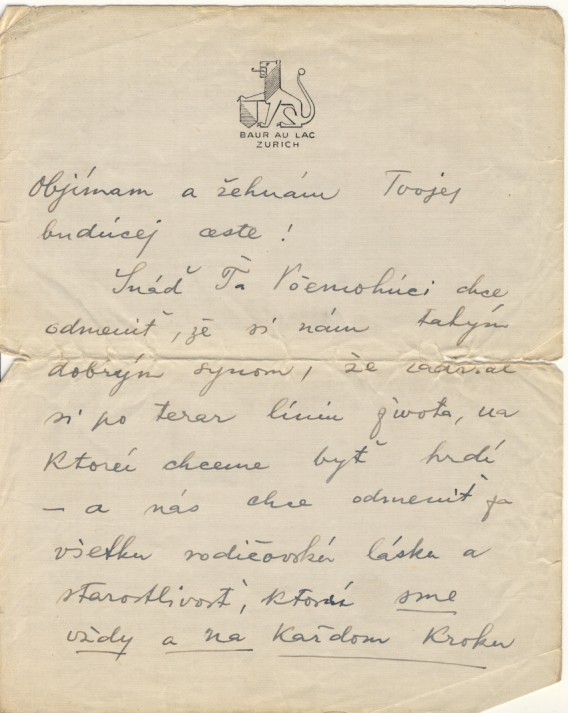

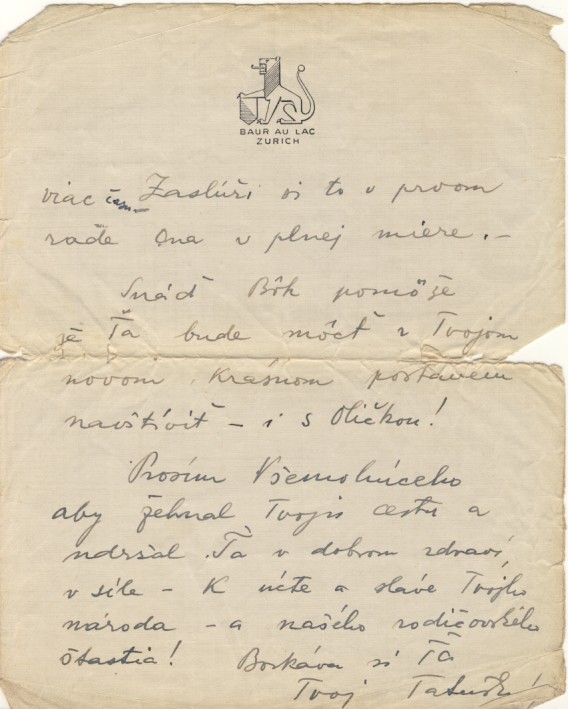
And here are three more documents pertaining to Vlado’s appointment with the United Nations: A confirmation letter from the Ministry of Foreign Affairs in Prague; an application for a non-immigrant visa from the American Embassy in Prague; and last, the letter of appointment from the United Nations, signed by Trygve Lie.
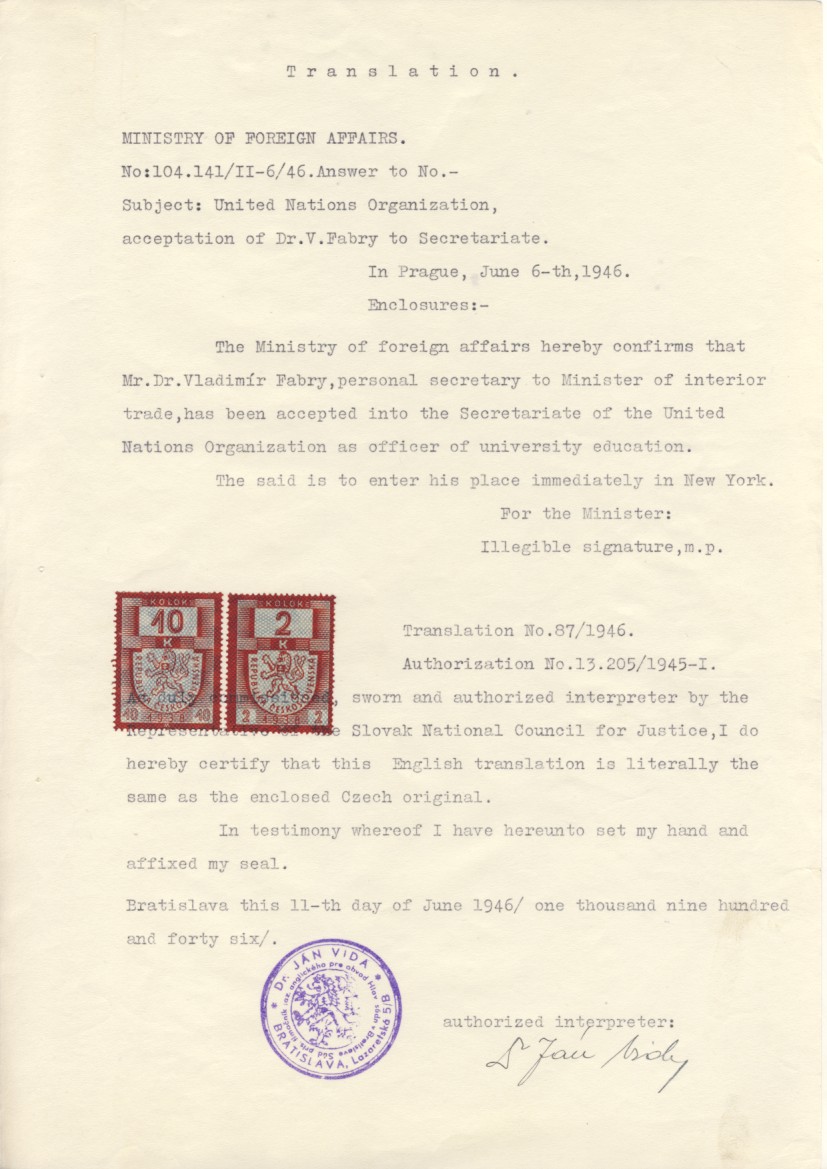
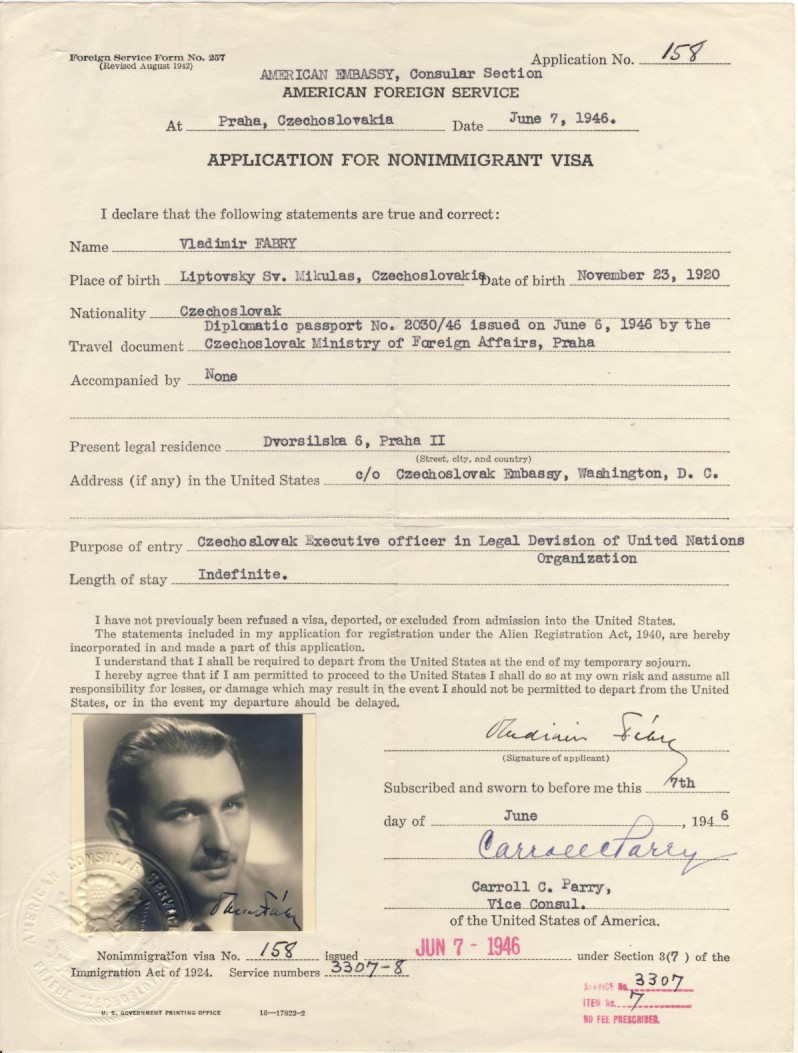

Don’t Bother Vlado…
…can’t you see he’s busy reading?
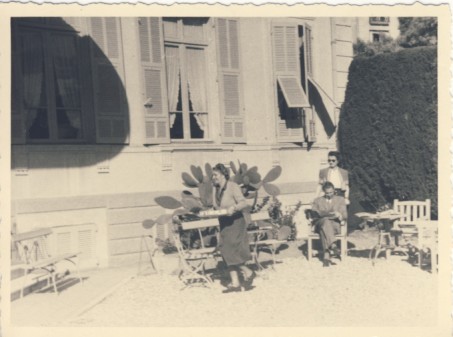

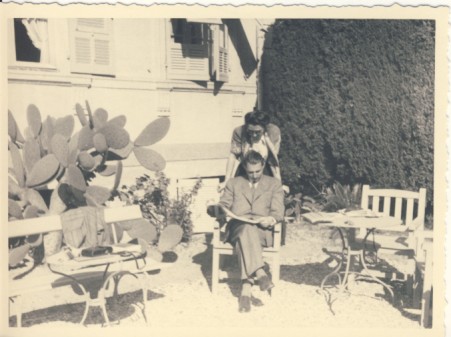

In Memory of Vlado: 28 September 1961
With deep respect for Dag Hammarskjold, and all those who died with him, here are the photos from Vladimir Fabry’s funeral in Geneva, 28 September 1961. I’ve also included a postcard photo of the Evangelical Lutheran Church in Geneva, the location of Vlado’s memorial service.
John A. Olver, who had been Chief Administrative Officer for the UNOC, and was asked to accompany his fallen friends on the the Pan-Am flight around the world (The first stop was Leopoldville, then Geneva, Malmo, Stockholm, Dublin, Montreal, and last, New York), gives his reflections of this day in his memoir “Under Fire With Dag Hammarskjold”; which is part of “Dag Hammarskjold Remembered: A Collection of Personal Memories”, edited by Mary-Lynn Hanley and Henning Melber:
“As morning light started to appear we arrived at the Mediterranean, and then flashed across that same sea I had crossed in the other direction so recently. By early morning the high mountains began to appear, and suddenly, or so it seemed, the great white tower of Mont Blanc speared upward below us. The view was unusually sharp and clear, and it occurred to me that Dag Hammarskjold, passionate mountain lover, would have enjoyed this moment. I glanced over at Knut [Hammarskjold].
“Yes,” he nodded, “Dag would have liked this.”
Now began the descent for Geneva, down the length of the long, blue lake with the tidy Swiss city waiting for us at the far end. The familiar bump of landing was felt again, and my watch confirmed that the leap from the heart of Africa to the heart of Europe had been accomplished with split-second timing: it was precisely eleven in the morning.
The plane was towed to a large hangar at one end of the airport, and we disembarked into a glorious Geneva day, to join the silent ranks of thousands of mourners. We were home again, yet somehow we felt lost and far away.
In the hangar, the authorities of the city and canton, long accustomed to important ceremonies yet personally affected by the loss of a world leader whom they had come to know well, had set up a small chapel where last respects could be paid to the Secretary-General and his companions. There was a catafalque upon which the Hammarskjold casket would rest, accompanied by a book in which mourners could inscribe their names. In a few minutes, the casket was in place, and a long procession, stretching far out along the side of the airfield, began to form and move slowly into the hangar and out again. We saw in the endless line the faces of family members, friends, and persons from all walks of life and from offices of the United Nations, and the many other international organizations, plus the diplomatic corps and representatives of the Swiss Government.”
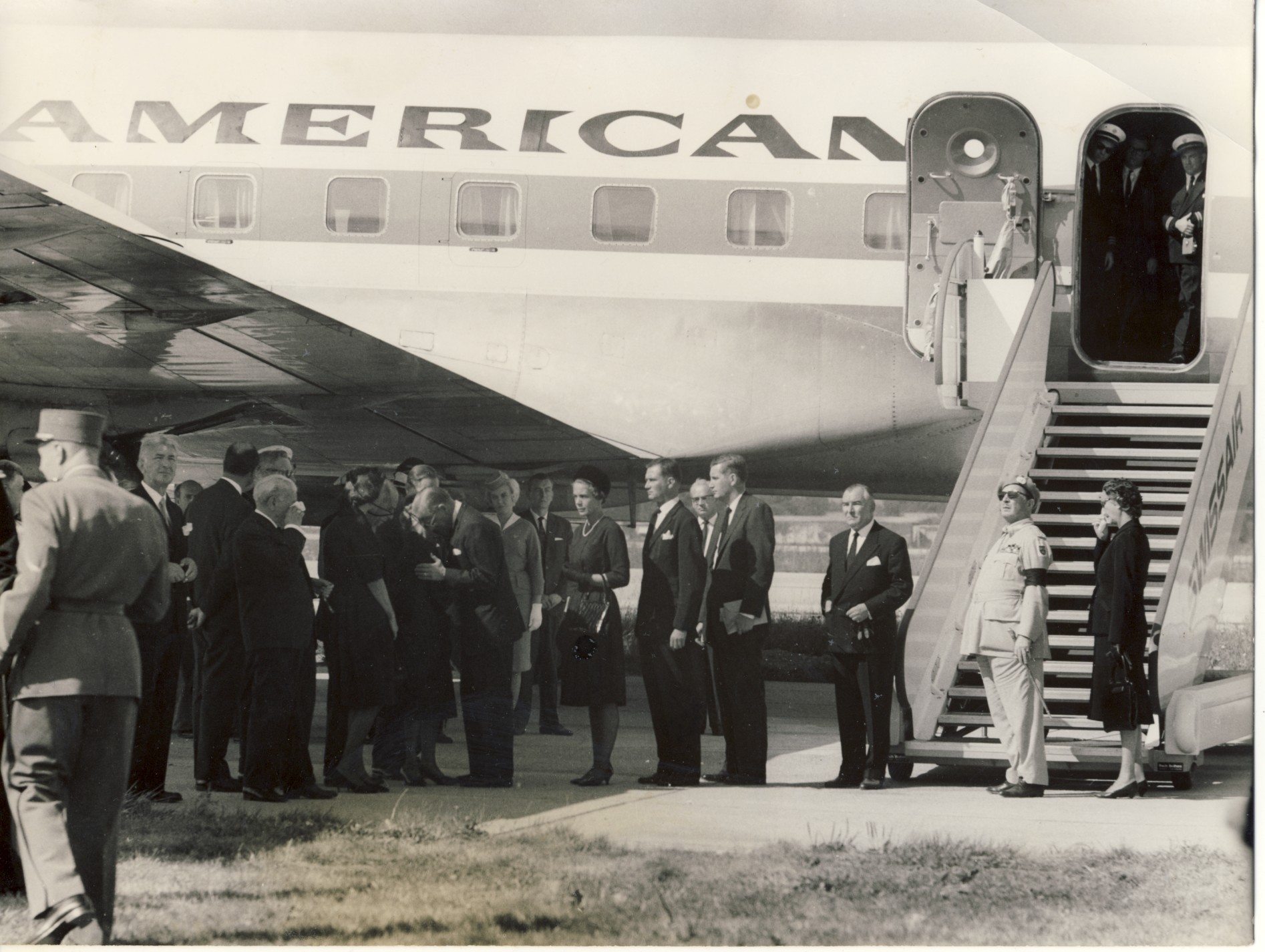
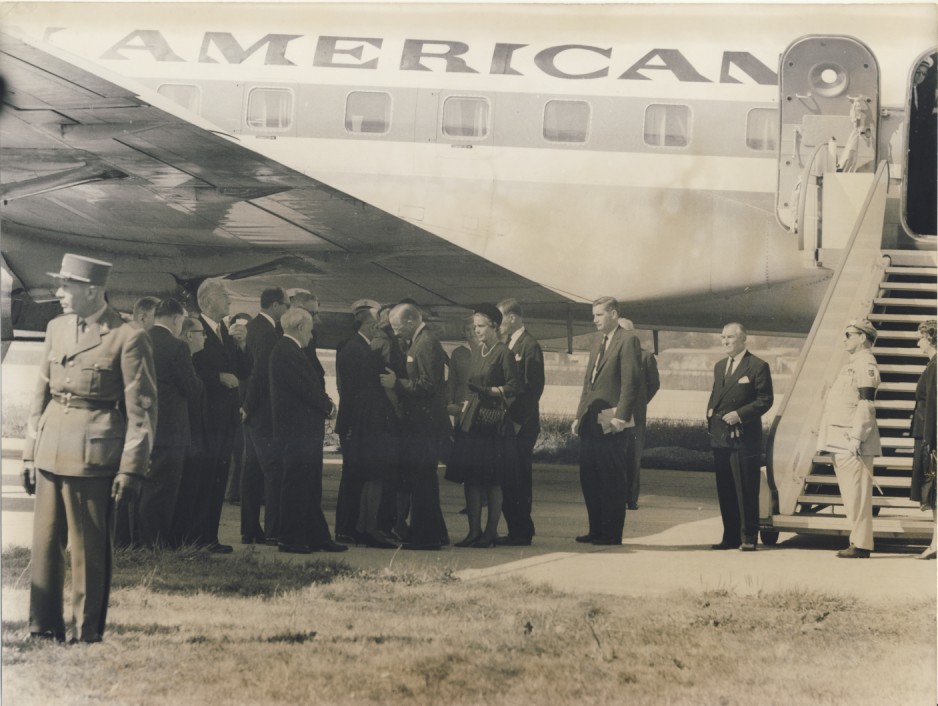

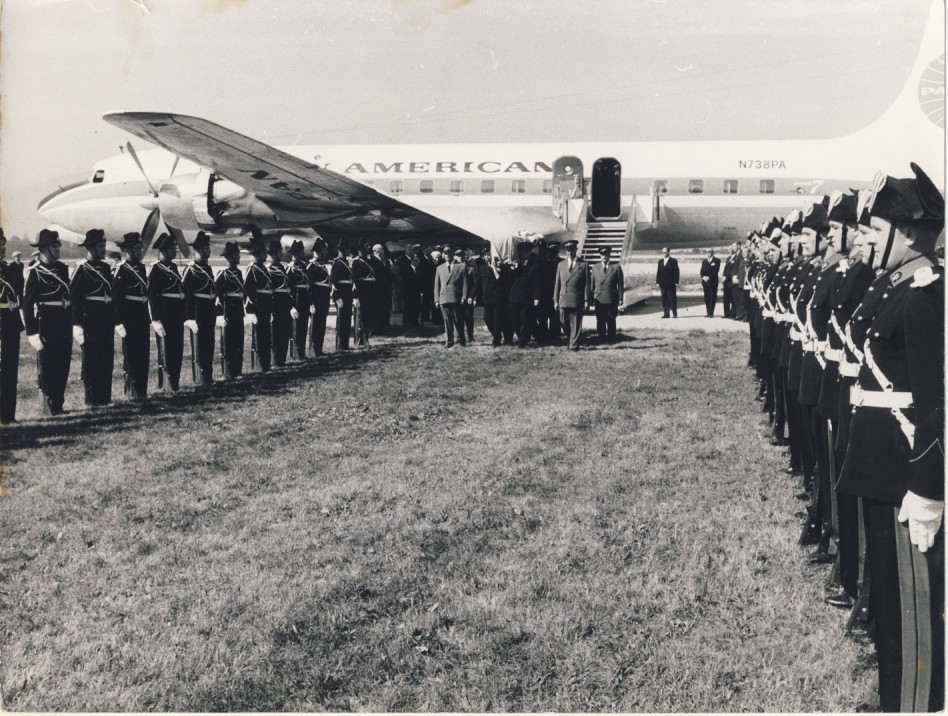

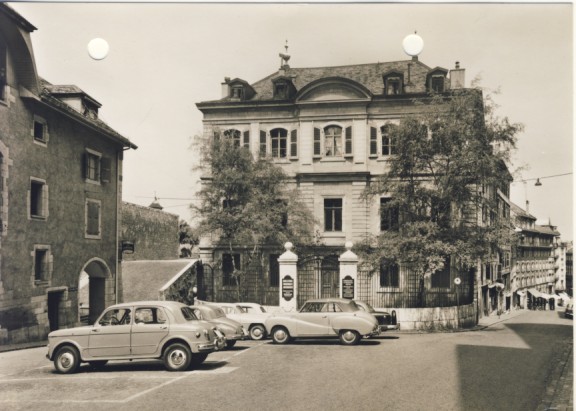
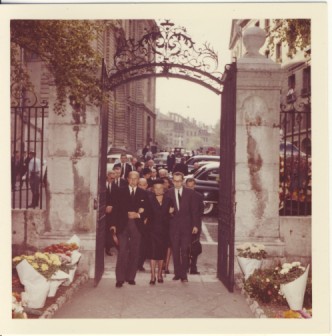
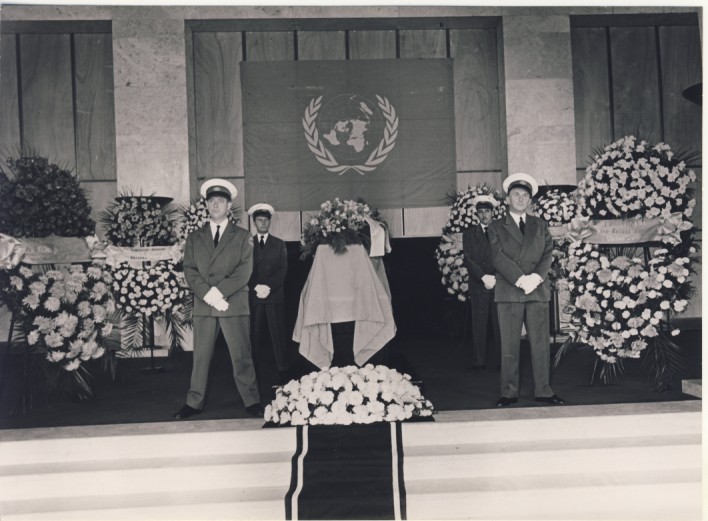
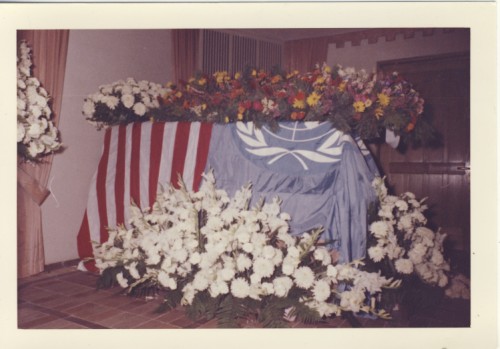
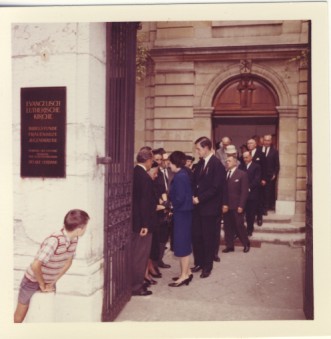

One of the most touching tokens of respect to the memory of Vlado, is a large, two-volume book set, embossed with the UN emblem, containing the collected signatures from every UN staff member around the world. Among the signatures of the European Office of the United Nations in Geneva, is this brief homage from John A. Olver:
“He perhaps came as close as humanly possible to being the ideal international civil servant. Certainly his example will endure lastingly in the Secretariat as an inspiration to us all.”
And from another Geneva staff member, whose signature I cannot decipher, there is this:
“I knew him to be a man of courage and of tenderness. It was a fine combination born of a fine mind and of an instinctive respect for his fellow man. When you see a young man growing in stature with the years and being consistently true to the things in which he believes, it leaves an impression that stays with you. Vladimir was just such a man. I shall remember him and be thankful in that memory.”
United Nations Charter Article 98
Here is what appears to be the first draft of Article 98 of the UN Charter, labelled with the initials “VF” for Vladimir Fabry. All the notations are in Vlado’s script. It was a little confusing to see “first draft”, because according to the UN Librarians (Thank you, Ask DAG!), Article 98 was adopted at the same time as the rest on 25 June 1945. Perhaps this was a first draft of a revision?
What makes Article 98 so significant, is that it gave Dag Hammarskjold the authority to go on his final peace mission to Ndola. Holding this document in my hands for the first time, recognizing its role in the destiny of Vlado and his colleagues, I recalled this quote from Hammarskjold:
“Destiny is something not to be desired and not to be avoided – a mystery not contrary to reason, for it implies that the world, and the course of human history, have meaning.”


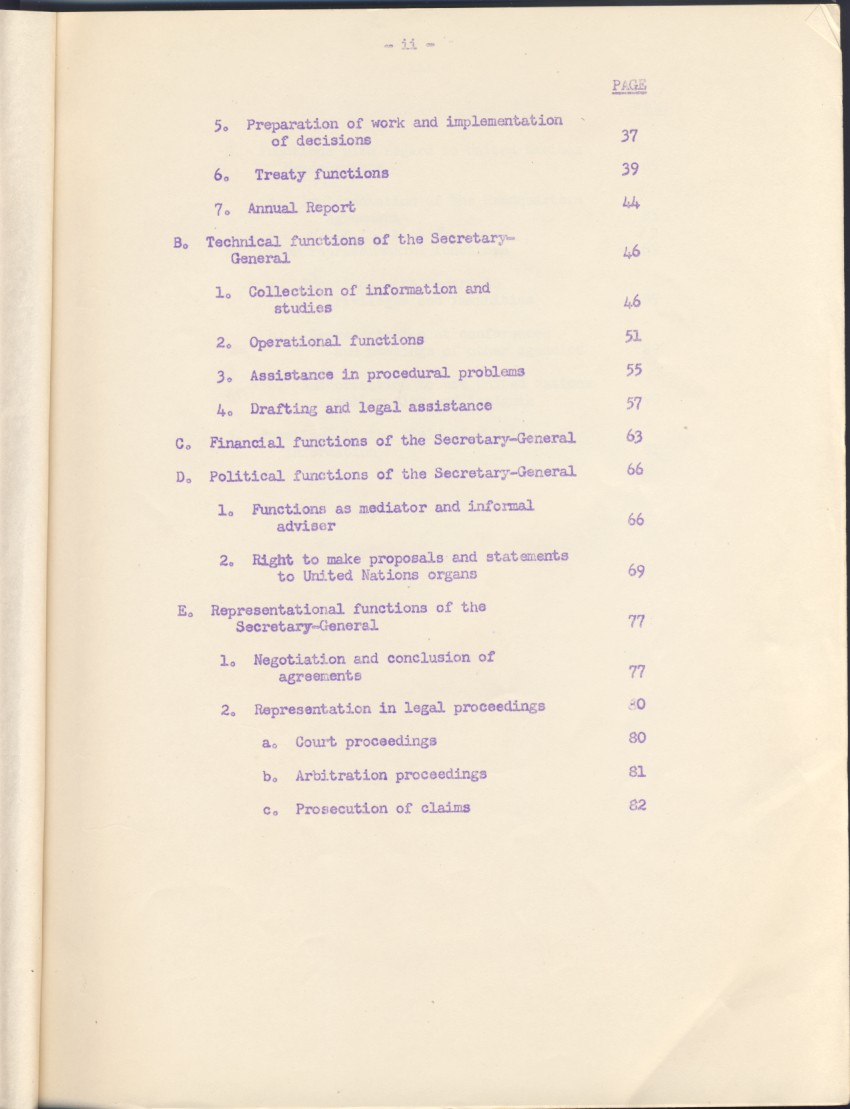
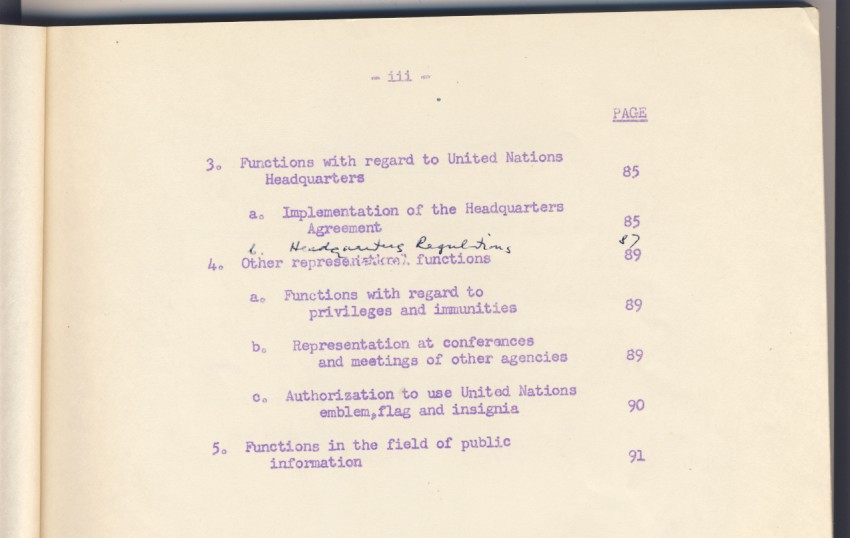
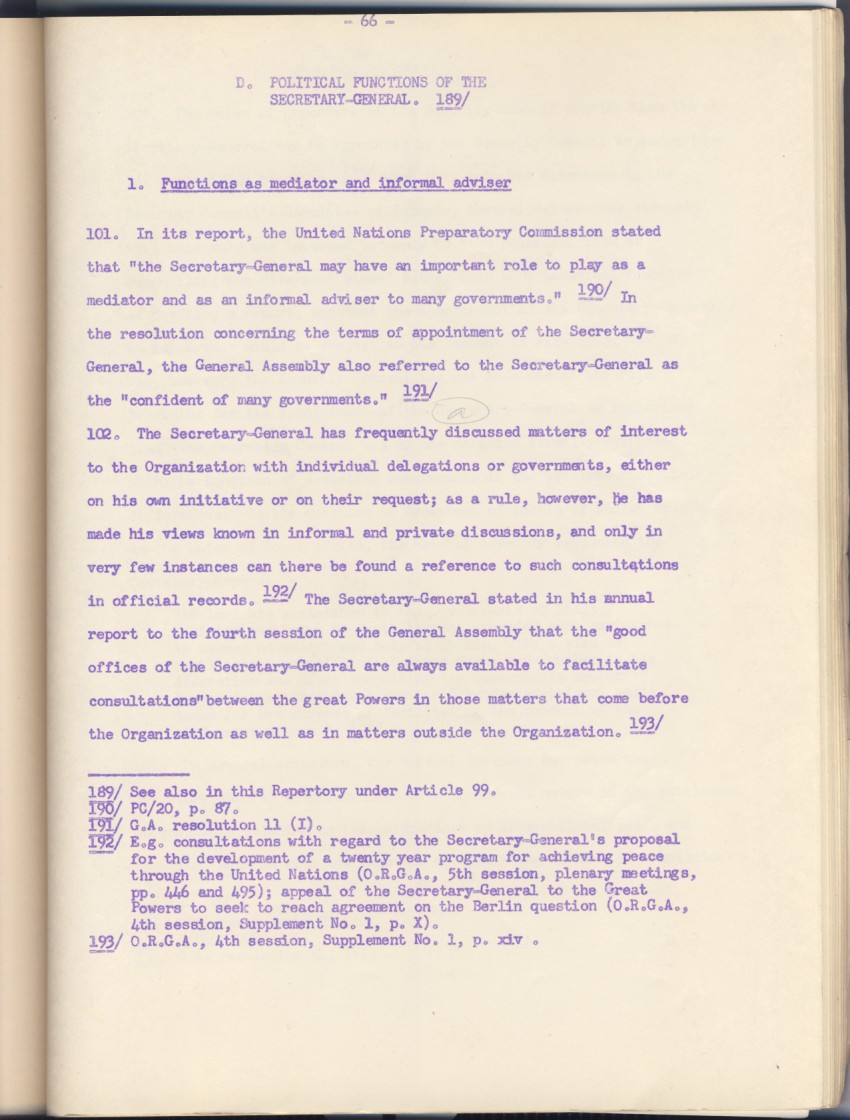
In regards to Article 98, here are a few excerpts from Dag Hammarskjold’s address to Oxford University, 30 May 1961, “The International Civil Servant in Law and in Fact”:
“To sum up, the Charter laid down these essential legal principles for an international civil service:
» It was to be an international body, recruited primarily for efficiency, competence and integrity, but on as wide a geographical basis as possible;
» It was to be headed by a Secretary-General who carried constitutionally the responsibility to the other principal organs for the Secretariat’s work;
» And finally, Article 98 entitled the General Assembly and the Security Council to entrust the Secretary-General with tasks going beyond the verba formalia of Article 97 – with its emphasis on the administrative function – thus opening the door to a measure of political responsibility which is distinct from the authority explicitly accorded to the Secretary-General under Article 99 but in keeping with the spirit of that Article.
This last-mentioned development concerning the Secretary-General, with its obvious consequences for the Secretariat as such, takes us beyond the concept of a non-political civil service into an area where the official, in the exercise of his functions, may be forced to take stands of a politically controversial nature.”
[…]
“In Article 98 it is, thus, provided not only that the Secretary-General “shall act in that capacity” in meetings of the organs, but that he “shall perform such other functions as are entrusted to him by these organs.” This latter provision was not in the Covenant of the League. It has substantial significance in the Charter, for it entitles the General Assembly and the Security Council to entrust the Secretary-General with tasks involving the execution of political decisions, even when this would bring him – and with him the Secretariat and its members – into the arena of possible political conflict. The organs are, of course, not required to delegate such tasks to the Secretary-General but it is clear that they may do so. Moreover, it may be said that in doing so the General Assembly and the Security Council are in no way in conflict with the spirit of the Charter – even if some might like to give the word “chief administrative officer” in Article 97 a normative and limitative significance – since the Charter itself gives to the Secretary-General an explicit political role.”
[…]
“A simple solution for the dilemmas thus posed for the Secretary-General might seem to be for him to refer the problem to the political organ for it to resolve the question. Under a national parliamentary regime, this would often be the obvious course of action for the executive to take. Indeed, this is what the Secretary-General must also do whenever it is feasible. But the serious problems arise precisely because it is so often not possible for the organs themselves to resolve the controversial issue faced by the Secretary-General. When brought down to specific cases involving a clash of interests and positions, the required majority in the Security Council or General Assembly may not be available for any particular solution. This will frequently be evident in advance of a meeting and the Member States will conclude that it would be futile for the organs to attempt to reach a decision and consequently that the problem has to be left to the Secretary-General to solve on one basis or another, on his own risk but with as faithful an interpretation of the instructions, rights and obligations of the Organization as possible in view of international law and the decisions already taken.
It might be said that in this situation the Secretary-General should refuse to implement the resolution, since implementation would offend one or another group of Member States and open him up to the charge that he had abandoned the political neutrality and impartiality essential to his office. The only way to avoid such criticism, it is said, is for the Secretary-General to refrain from execution of the original resolution until the organs have decided the issue by the required majority (and, in the case of the Security Council, with the unanimous concurrence of the permanent members) or, maybe, has found another way to pass responsibility over onto governments.
For the Secretary-General this course of action – or more precisely, non-action – may be tempting; it enables him to avoid criticism by refusing to act until other political organs resolve the dilemma. An easy refuge may thus appear to be available. But would such a refuge be compatible with the responsibility placed upon the Secretary-General by the Charter? Is he entitled to refuse to carry out the decision properly reached by the organs, on the ground that the specific implementation would be opposed to positions some Member States might wish to take, as indicated, perhaps, by an earlier minority vote? Of course the political organs may always instruct him to discontinue the implementation of a resolution, but when they do not so instruct him and the resolution remains in effect, is the Secretary-General legally and morally free to take no action, particularly in a matter considered to affect international peace and security? Should he, for example, have abandoned the operation in the Congo because almost any decision he made as to the composition of the Force or their role would have been contrary to the attitudes of some Members as reflected in debates, and maybe even in votes, although not in decisions.
The answers seem clear enough in law; the responsibilities of the Secretary-General under the Charter cannot be laid aside merely because the execution of decisions by him is likely to be politically controversial. The Secretary-General remains under the obligation to carry out the policies as adopted by the organs; the essential requirement is that he does this on the basis of his exclusively international responsibility and not in the interest of any particular State or groups of States.
This presents us with this crucial issue: is it possible for the Secretary-General to resolve controversial issues on a truly international basis without obtaining the formal decision of the organs? In my opinion and on the basis of my experience, the answer is in the affirmative; it is possible for the Secretary-General to carry out his tasks in controversial political situations with full regard to his exclusively international obligation under the Charter and without subservience to a particular national or ideological attitude. This is not to say that the Secretary-General is a kind of Delphic oracle who alone speaks for the international community. He has available for his task, varied means and resources.
Of primary importance in this respect are the principles and purposes of the Charter, which are the fundamental law accepted by and binding on all States.”
In the Garden of Eden

(click to enlarge)
It’s finally summer, so I’m taking a break to enjoy the flowers in the garden, and catch up on reading. For you, here is a favorite cartoon found among the Fabry papers, “Histoire de Pommes”, which makes me grin every time I see it. Hope you all have a good book to read!
From the Archive of Sir Roy Welensky, 1961
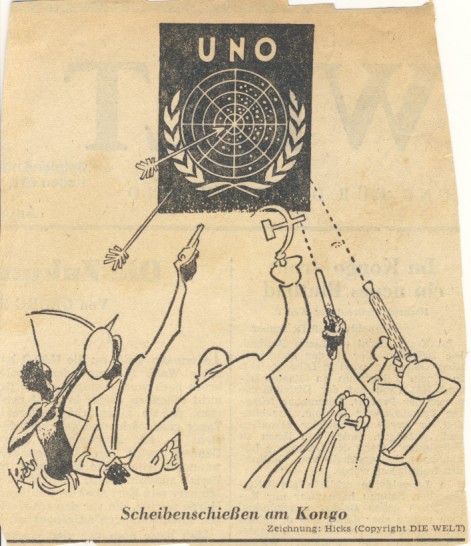
“Target shooting at the Congo” (DIE WELT clipping from Fabry archive)
Back in January, I posted one of three letters that were sent to me from the Archive of Sir Roy Welensky, the last Prime Minister of the Federation of Rhodesia and Nyasaland; written by High Commissioner of South Africa, H.L.T. Taswell, and marked “TOP SECRET”. Since they don’t appear to be available anywhere else, I decided to publish the other two letters here today, in full (emphasis mine).
12th October, 1961
TOP SECRET
SECRETARY FOR EXTERNAL AFFAIRS.
PRETORIAThe Federation and the Katanga
At Sir Roy’s request, I had an interview with him this morning.
He told me that there were certain things he would like to have brought to the notice of our Prime Minister. One of them was that he had had a talk about ten days ago with Tshombe. The interview took place at Sir Roy’s request and Tshombe was flown to the airport at Salisbury with two Katanga Ministers. They spoke for about five hours in secrecy.
While he did not always think too much of the black man as a statesman, Sir Roy said, he was greatly impressed with Tshombe’s ability and sincerity. Sir Roy told Tshombe he had arranged the meeting because he felt there were certain points he wished to stress and hoped he would take his advice.
Sir Roy told him that it was impossible for him to try to fight the whole Afro-Asian bloc on his own and that it was essential to avoid a further clash with the U.N. which could be disastrous particularly with Nehru, his greatest enemy, doing everything he could to crush the Katanga completely.
The Katanga was the first setback the Afro-Asian bloc had suffered in Africa and it was therefore essential that he, Tshombe, should do all he could to capitalize on it. He must play his cards extremely well. As a start, it was most desirable that he should have talks with Adoula and reach a Congo settlement. He suggested that he should insist that all outsiders, including the United Nations, be excluded from the talks. Furthermore, any agreement reached with Adoula should be on a phased basis. No irrevocable step should be taken and each successive phase of a settlement should only be put into operation when each previous step had been carried out in an entirely satisfactory manner. Sir Roy hoped too that Tshombe would move in the direction of a federation in which a certain degree of autonomy would be retained by the Katanga.
Tshombe accepted this advice with much gratitude and since his return it appears that he has been working in this direction.
In so far as the United Kingdom and the Katanga were concerned, Sir Roy said his tactics all along had been to keep the United Kingdom fully informed on how he viewed developments. He had given them advance warning all along of trouble and had forecast developments with accuracy.
The United Kingdom, however, had preferred to close their eyes to all this and to let the United Nations go ahead unchecked.
When the Indians moved into the Elisabethville Post Office last month and the fighting started, Sir Roy delivered an ultimatum to the United Kingdom. He said that regardless of what the Federation’s legal position might be he was going to aid Tshombe. The Federal Air Force was at the alert and unless the United Kingdom took steps at once to the check the United Nations he was ordering the RRAF into action.
“While Tshombe and I could not have taken on the world we could have cleared up that U.N. bunch in no time. And that, ‘he smiled’ would really have started something.”
This ultimatum infuriated the United Kingdom and Sir Roy’s public statement that the British were going back on assurances they had given regarding the Katanga so incensed Mr. Sandys that he said he would have no further dealings with Sir Roy.
Driven into a corner, however, and fearful of the consequences for themselves of any federal armed intervention, the United Kingdom brought pressure to bear on the United Nations and the United States for a cease fire.
Since then Sir Roy has been pressing a reluctant U.K. to take further action by supplying them with information on the U.N. violations of the ceasefire and their military build up. He has been asking the United Kingdom what justification there is for example for the bringing in of Canberra bombers and jet fighters when the Katanga has only one Fouga jet trainer. The United Kingdom are now finally reacting favourably to all this and their influence on the Americans and U.N. is discernible.
In this connection, he mentioned that a further U.N. attack on Tshombe was expected this past week-end but it had not materialized. The danger of such an attack, incidentally, was the motive behind the issue of Sir Roy’s statement last Saturday. The text was telegraphed to you.
We believe that O’Brien’s recall for consultation is imminent and that he is unlikely to return to the Congo.
While Tshombe and his regime are by no means out of the woods, Sir Roy believes that they now have a reasonable chance of survival.
Touching on the Indians, Sir Roy said that one of the main reasons for their use was that other troops, particularly the Tunisians, had shown themselves to be extremely faint hearted. When the action started in the Katanga, the Tunisians had refused to leave Leopoldville.
Sir Roy, however, does not underestimate Indian motives. Referring to the report of an agreement between Lumumba and [Rajeshwar] Dayal for the settlement of two million Indians in the Congo, he stated that he had heard that documentary proof of this was available but he had not yet been able to lay his hands on it.
Referring to the Indian military build-up, he said he hoped we fully appreciated the grave danger it presented to us as far as S.W.A. was concerned.
His security people had information that a further contingent of Indian troops had arrived at Dar-es Salaam on October 8th on an American transport ship. The name of the vessel was something like “Blatchford”.
Touching on the question of foreign mercenaries, Sir Roy mentioned that the Federation had taken a man by the name of Browne off one of the two Dove aircraft that came up from South Africa recently on their way to the Katanga.
Sir Roy said they have proof that Browne was working for both sides – the U.N. and the Katanga. This is the man Col. Zinn spoke to the Commandant-General about when he visited South Africa recently.
After the interview I asked Federal security what they knew against him specifically. They replied that the white Katanga security people had long suspected Browne of double dealings. Also, when he was taken prisoner of the U.N., along with other mercenaries, earlier this year he was released “almost in a matter of minutes” while the others were detained. As a personality too federal security have no time for him and do not trust him in the least. His British passport was impounded by the United Kingdom High Commissioner here and he has been declared a prohibited immigrant by the Federal Government. He may since have made his way into the Katanga.
On the subject of Dag Hammarskjoeld’s [sic] death, Sir Roy said that he was preparing to have an enquiry take place under the chairmanship of the Chief Justice of the Federation, Sweden and I.C.A.O. would be invited to attend and he hoped to obtain another judge from a neutral country such as Switzerland. He would insist that the enquiry be a public one as there were certain things he felt should come out in the open and not be hushed up.
Hammarskjoeld’s plane left Leopoldville in such secrecy that even the United Nations Commander there did not have details of the flight. The plane had sufficient petrol on board when it started out for 13 hours flight. When it was over Ndola it still had sufficient fuel for another 8 hours. The plane had taken a round about route to avoid Katanga. There were 7 guards on board and a large quantity of ammunition. The general impression gained was that all were greatly afraid of an attack by the Katanga jet. The plane circled Ndola but did not ask for permission to land. There is reason to believe that the pilot may even had made a mistake in the altitude of Ndola and confused it with that of a place with a similar name in Angola.
Hammarskjoeld’s bag of documents was intact and could not be opened as it had a special locking device. Various parties tried their best to gain control of the bag. It was finally handed to the U.N. Representative. The Swedish Minister in South Africa was one of those who made strong endeavours to secure it. The Minister, Sir Roy said, gave the impression here of being an unpleasant character who required watching.
Turning to the Federation’s own present position, Sir Roy seemed very heartened by the removal of McLeod as Colonial Secretary and by the increasing feeling among Conservatives that the British Government should go more slowly in its African policy and that the interests of the white man should be protected.
The situation in Northern Rhodesia was also improving. Kaunda was being more and more discredited and his campaign of violence had backfired on him considerably. The Northern Rhodesia Government was distributing posters showing the damage done to schools and this was having a telling effect on the the Chiefs. The United Federal Party was now actively backing Katilungu of the A.N.C. with funds and helping him in his campaign. He was following closely behind Kaunda on his tour through parts of Northern Rhodesia and meeting with considerable success.
Although Heinriche and the Campbell, Booker Carter group were also backing Katilungu Anglo-American’s position was not very clear. Rhodesia’s Selection Trust, it seemed, did not approve of the idea at all. They had backed Kaunda very strongly, Sir Roy added, and Kaunda was also McLeod’s choice as leader of Northern Rhodesia.
He remarked incidentally that neither Anglo-American nor RST contributed financially to the United Federal Party any longer. (In a recent report I commented that I had heard these companies had recently restored their support. The information was given to me by an opposition M.P.)
Sir Roy did not touch on Dr. Banda directly. He just nodded his head and smiled when I commented that Banda would find himself very isolated if Katilungu were to come to terms with the United Federal Party. Sir Roy just did not seem to worry what happened to Banda.
During my interview I referred to our desire to overfly Federal territory in order to map our border. Sir Roy’s reaction was “Of course you can. Go ahead”. At the request of the Secretary for External Affairs here I have, however, put the request in writing and hope to have a formal reply shortly.
On defence generally Sir Roy did not say anything special but he gave me to understand that he would like to see Mr. Caldicott visit South Africa shortly.
Sir Roy said that he thought our Minister’s statement at the U.N. was a very sound one indeed and that Afro Asian reaction showed that body up in its true light. I gave Sir Roy a full copy of the Minister’s statement.
While one has gained the impression all along here that the Federal Prime Minister has been Tshombe’s main champion, the additional information Sir Roy gave me today shows just what lengths he was prepared to go to help the Katanga. But for the great pressure he brought to bear on the United Kingdom I think Katanga would have collapsed by now – and the U.N. and the Indians would no doubt have had more time to devote to S.W.A.
We can be extremely thankful that our Federal buffer to the north has as capable and resolute a Prime Minister as Sir Roy. We can be glad too that he has as skilled and well informed a Secretary for External Affairs as Mr. F.N.N. Parry. Both, moreover, show an exceptional amount of goodwill towards our country.
H.L.T. Taswell
High Commissioner
——————————————————————————————————-
2nd December, 1961
TOP SECRET
SECRETARY FOR FOREIGN AFFAIRS
PRETORIAThe Federation and the Dangers Ahead.
“The wind of change speech which Macmillan made in Cape Town was originally to have been made by Butler but it was postponed because of Strijdom’s death.”
That is what Sir Roy told me in the strictest confidence when I had an interview with him this morning. He asked too that the information be passed only to the Prime Minister, our Minister of Foreign Affairs and yourself.
He revealed this piece of information while talking about the great dangers facing Southern Africa.
Sir Roy, as you know, has just recently returned from London and Lisbon. Salazar, he said, is a worried, disillusioned and perturbed man who finds it extremely difficult to understand why his friends have turned against him.
“I am not disillusioned by Britain’s attitude” Sir Roy went on “I have known the British too long. If they tell you one thing now you can be almost certain that they mean exactly the opposite.
“A few weeks before McLeod was switched to another cabinet post I was assured” Sir Roy continued “that no such change was contemplated. Now I am assured that Macmillan will fight the next election. That just about convinces me that he will shortly resign in favour of Butler.”
Macmillan, Sir Roy added, has aged about five years mentally since he last saw him and will accordingly not be able to hold the reins of government much longer.
The present British trend to get out of Africa as quickly as possible is nothing new, he continued, it has been part of a plan for several years. Men like Lennox-Boyd and Home who developed such close and sound personal relations with people in British territories in Africa have been deliberately pushed aside. The British Government do not want people in top positions who have given firm assurances abroad which it would now be embarrassing for them to withdraw. The British want their hands free.
It was at this stage of the conversation that Sir Roy mentioned the wind of change speech in Cape Town.
Shortly before this he had said that “we in this country are on our own. I fully realize that.” He added that there was a tremendous danger of Southern Africa being cut off altogether of arms. The United Kingdom, he said, were selling fighter aircraft to the Federation at top prices. America on the other hand was supplying Yugo Slavia [sic] with aircraft at a nominal price of $10,000 each. Russia was now giving Migs to African states free of charge in order to help them in their struggle for freedom.
In the face of all this he went on, he was disgusted to see that Denmark had just refused to supply any further arms to Portugal. He deplored Israel’s action in voting for sanctions against us and added “I hope your Prime Minister is bending every possible effort to produce an atomic bomb in South Africa.”
Sir Roy stated that during he recent visit to London he had accused the British Government of deliberately going against the white man in Africa and of letting the Federation down at every turn. He told them too that he knew from information he had received in London that they were trying to put obstacles in the way of supplying arms to South Africa and, in turn, to stop the Federation from obtaining anything from the South.
The British Government hotly denied all this.
At present, Sir Roy went on, he could draw all he wanted from Kenya and Aden. Those bases would, however, one day close down and the only British base left in Africa would be the Federation.
It is interesting to speculate at this point whether Sir Roy’s strong remarks in London could not have had some bearing on the favourable negotiations which our Commandant-General and our Secretary for Defence were able to conduct in London recently.
Turning to the Indians in the Katanga, Sir Roy said that he had someone sitting in Dar-es-Salaam and watching troop movements. It was quite clear that more Indians were going into the Katanga than were coming out. Apart from the question of build up of U.N. strength it seemed probable that many Indians were being moved into the Congo as settlers. He confirmed that Indians were making an economic survey and taking an intense interest in mines.
“There is a great deal on the military side which I would like our Minister of Defence to discuss with your people urgently” Sir Roy went on “and I hope he can get down to see you very shortly. I don’t think this matter should be delayed too long.”
Turning to the Federation’s internal affairs Sir Roy remarked that economically the situation was much better than it had been expected to be at this time. Politically too the position looked hopeful.
A month or two ago Sir Roy declared that provided agreement could be reached internally with the constituent territories there would be little need for a review of the Federal Constitution. The British Government would be presented with a fait accompli and have to accept it as such.
I asked Sir Roy what progress he was making in this direction. He replied that Banda had already indicated his willingness to meet him after Maudlin’s present visit was over.
In so far as Northern Rhodesia was concerned Kaunda had already had a talk with Roberts, the leader of the United Federal Party there. Sir Roy has little time for Kaunda personally, however, he has reason to believe that Kaunda was at one time in an asylum and is mentally unstable. He doubts if he has full control of UNIP.
Barotseland, Sir Roy feels, is very much on his side and adamantly opposed to falling under a black nationalist government in Northern Rhodesia. The Federal authorities have provided the territory with a legal adviser to keep it fully informed and advise it on tactics when talking to the British Government.
Expressing confidence that it would eventually be possible to reach an agreement Sir Roy concluded “we will have no Congo here and if Britain tries to force one on us we will defend ourselves at gunpoint.”
This interview was one I had asked for prior to going on leave. As I entered his room, however, Sir Roy remarked that he presumed I had come in response to his request. When I explained that I had not, he said “but I told my people I wanted to see you. How is it these things go wrong?”
Looking back on my talk with him, I would say that Sir Roy is much more worried about the current dangers to the Federation than he cared to admit.
If the Katanga collapses, the Federation will be on its own. If attacked from outside it is very doubtful how long the Federation will be able to hold out on its own. Every effort will no doubt be made to hold the line of rail Northern Rhodesia and the Copperbelt and Southern Rhodesia.
With internal unrest fomented by the UNIP in Northern Rhodesia and by the NDP in Southern Rhodesia, to say nothing of trouble from Banda and from the dissident white elements, the position could be extremely difficult. Our buffer in the North could easily disappear leaving the path open for an attack on South West Africa and ourselves.
I should accordingly not be surprised to find that Mr. Caldicott’s proposed visit to South Africa, is to learn what our attitude is likely to be in the event of an attack on the Federation.
The following is the latest information available on the make up of the Federation’s population—
Whites: S.R. 220,610/ N.R. 74,600/ Nys. 8,730/ Total 303,940
Asians: S.R. 6,990/ N.R. 7,740/ Nys. 10,580/ Total 25,310
Others: S.R. 10,540/ N.R. 1,910/ Nys. 1,500/ Total 13,950
Blacks: S.R. 2,920,000/ N.R. 2,410,000/ Nys. 2,880,000/ Total 8,210,000
———————————————————————–
Total: S.R. 3,158,140/ N.R. 2,494,250/ Nys. 2,900,810/ Total 8,553,200In assessing the problems which face the Federation one must not underestimate the drive, determination and dynamic personality of Sir Roy who stand head and shoulders about all other politicians in this country.
H.L.T. Taswell
High Commissioner
The Montreal Star, 19 September 1961
Here is another brief article about Alice Lalande, who died with Dag Hammarskjold, which was sent on to me by Susan Williams. Because there is so little information about the 15 others who died with the Secretary General, I would like to use this blog as a place to share their stories, too. I encourage people to please contact me, if you have news clippings or anything else you are willing to share about these brave people. I would be glad to honor them here.
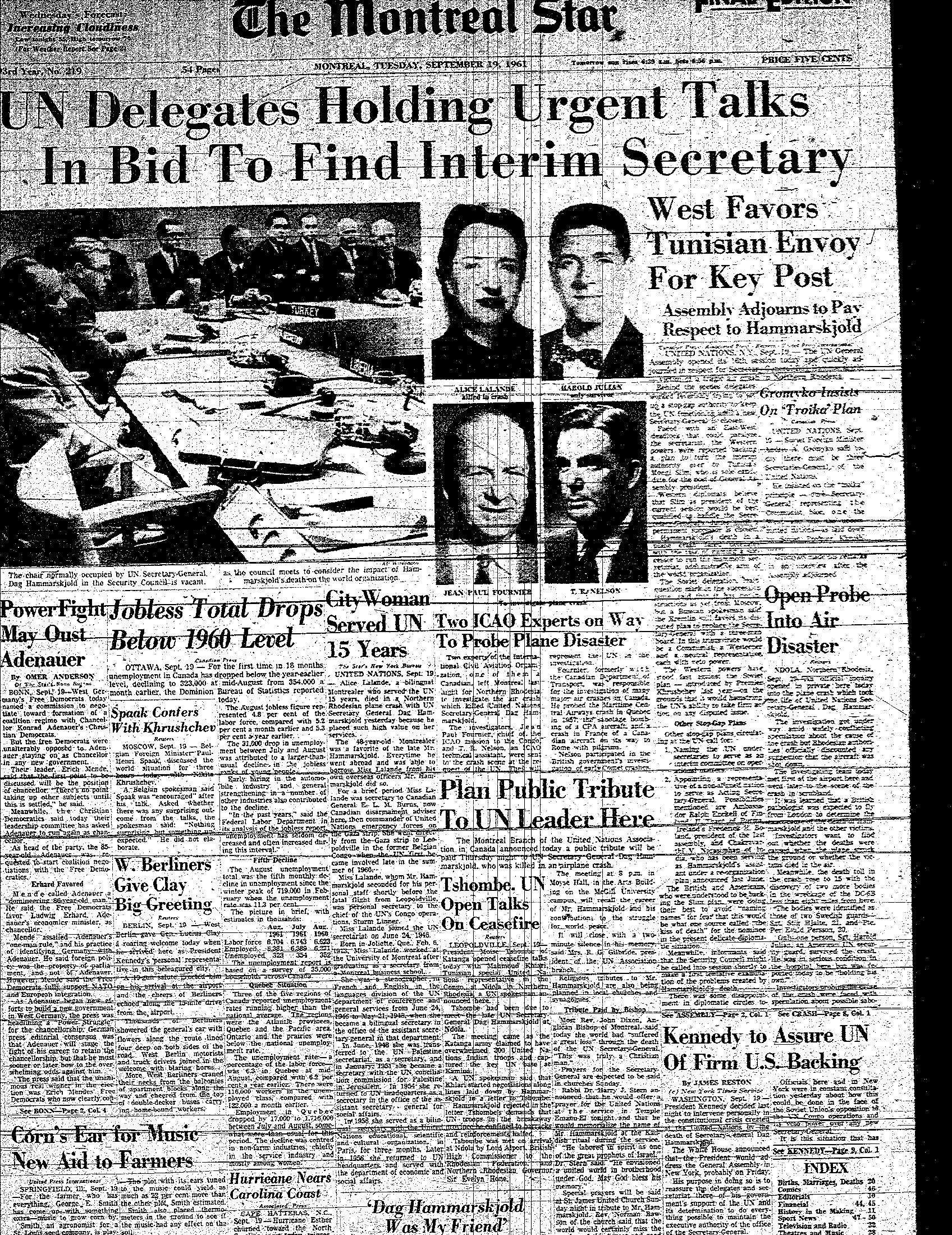
City Woman Served UN 15 Years
UNITED NATIONS, Sept. 19–
Alice Lalande, a bilingual Montrealer who served the UN for 15 years, died in a Northern Rhodesia plane crash with UN Secretary General Dag Hammarskjold yesterday because he placed such high value on her services.
The 48-year-old Montrealer was a favorite of the late Mr. Hammarskjold. Every time he went abroad and was able to borrow Miss Lalande from his own overseas officers Mr. Hammarskjold did so.
For a brief period Miss Lalande was secretary to Canadian General E. L. M. Burns, now Canadian disarmament adviser here, then commander of United Nations emergency forces on the Gaza strip. She went directly from the Gaza strip to Leopoldville in the former Belgian Congo when the UN first became involved late in the summer of 1960.
Miss Lalande, whom Mr. Hammarskjold seconded for his personal staff shortly before the fatal flight from Leopoldville, was personal secretary to the chief of the UN’s Congo operations, Sture Linner.
Miss Lalande joined the UN secretariat on June 24, 1946.
Born in Joliette, Que., Feb. 6, 1913, Miss Lalande worked at the University of Montreal after graduating as a secretary from a Montreal business school. She was a stenographer in French and English in the languages division of the UN department of conference and general services from June 24, 1946 to May 21, 1948, when she became a bilingual secretary in the office of the assistant secretary general in that department.
In June 1948 she was transferred to the UN Palestine secretariat as a secretary, and in January 1951 she became a secretary with the UN conciliation commission for Palestine in Jerusalem. In 1954 she returned to UN Headquarters as a secretary in the office of the assistant secretary general for social affairs.
In 1956 she served as a bilingual secretary with the United Nations educational, scientific and cultural organization, in Paris, for three months. Later in 1956 she returned to UN Headquarters and served with the department of economic and social affairs.
Letters of Olinka: October 1961
Desperate times call for desperate measures, and here is a letter of great desperation written by Vlado’s sister, Olga Fabry – who was still a stateless political refugee at the time of his death – asking Constantin Stavropoulos to help her obtain a professional position at the U. N. Library in Geneva. With both her father and her brother gone, she suddenly had to financially support her mother and herself, and that meant being bold and asking every important person she knew for help. This letter was translated from French:
Oct. 10, 1961
Cher Costi,
Allow me to thank you again for your presence at Vlado’s funeral and for your lovely speech to the church. Your presence was a great comfort to my mother so painfully struck by the cruel loss of her beloved son.
Maman has been admirable until now, but the much dreaded reaction unfortunately has already started to manifest itself. It’s a bit too much for her and for me, especially since Christmas, when Papa died, we had only Vladko for our support. Vladko was our support, notre soutient, our everything, in this world in which we are already deprived of homeland and family. Now we have also lost Vladko, so tragically, so brutally and it seems the ravine of misery and despair appears to engulf us slowly…. Mother is even more saddened and upset since she was always so opposed to his mission in Congo, especially so soon after the death of my father.
Even in New York in the Spring, you were out, I think, she asked M. Schachter could Vladko return as soon as possible. She has been very worried and unhappy ever since Vladko has been in Congo, as if she had a presentiment… She showed me now the copies of letters she wrote to you and Mr. Schachter when Vladko was sent to Congo; he knew nothing of these letter, but she had felt something, and she wanted to do everything for him to return… alas, he left his life there.
Now we have, in our present so heavy, such desperation to take care of our future.
After talks with the Head of Naturalization in Geneva, I obtained a promise of Swiss naturalization on the condition of having employment at the United Nations in Geneva.
I went to see the director of the Library of the United Nations in Geneva, Dr. Breycha Vauthier, who told me of a professional vacancy in the library. He told me he would like very much that I take this position, because I have already worked in the Library of the United Nations in Geneva, I know the languages and that New York always sends someone who is not proficient, who does not know the languages and of which one wants to get rid of.
As I have already worked temporarily on several occasion in the Library, I have already a good experience and thorough knowledge of the functioning of the U.N. Library in Geneva. I’ve even done my diploma work. In addition, my experience in the United States where I am “Head Librarian”, my development from below can only speak in favor of my professional competence. In New York I hold a professional position and my salary is equivalent to that of P II in the United Nations.
Mr. Breycha told me he would write to Mr. Palthey in New York to recommend me from the professional point of view; the professional positions, as you know perhaps, are decided in New York. Mr. Marx told me that he would write to New York to recommend me, so to speak from a point of view of moral obligation of the United Nations to my mother and to Vlado.
If difficulties arise, if there are problems to vanquish, it must be overcome. It must make an exception this time, even if the United Nations have never done it before. Vlado, as you said yourself in your speeches, has rendered outstanding service to the United Nations, and everyone knows how and how much he worked, all that he has so generously given: his brilliant intellect, his intelligence of the heart, his multiple talents, his devotion, and ultimately the sacrifice of his life so young, all to the United Nations.
My mother may have only a few years left to live and I would like to make her life easier as much as possible and make it impossible for her not to suffer any more injustice or human wickedness. She would like to see me continue in some way not so nobly traced by her son and I would like to work in the institution and for its ideals for which Vladko sacrificed his young life.
Decisions for professional positions are taken in New York. Dear Costi, I pray you especially to do EVERYTHING for me to get this professional position in the Library of the U. N. in Geneva, I ask you on behalf of my poor mother so painfully affected and on behalf of our beloved Vladko of which you were a friend. I beg you to continue your friendship with Vladko and also for my mother and me and not abandon us in our hours so difficult to endure.
My thanks go out to you with all my heart for all your help and I ask you to receive, from my mother and me, our best wishes and memories.
Olga Fabry
Here is Olga’s diploma from the Ecole de Bibliothécaires, signed 8 March 1957.

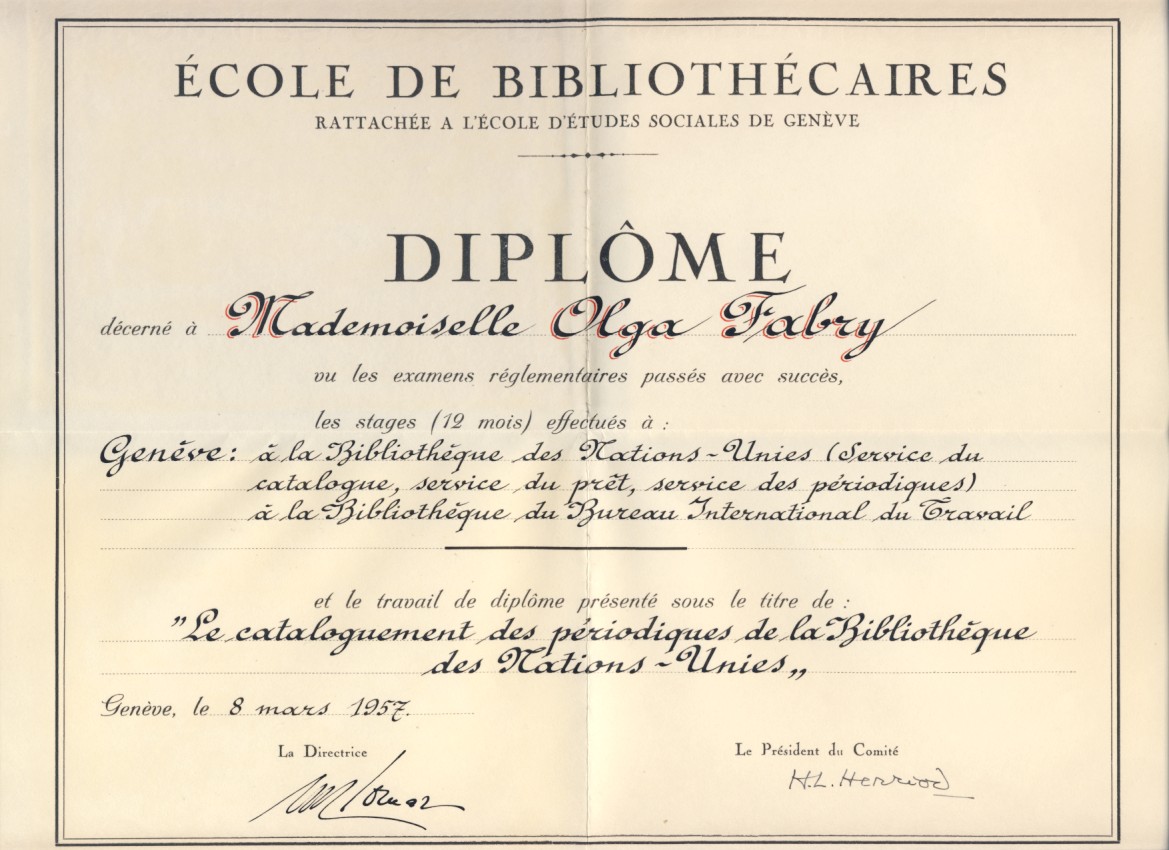
I have not found the letter that Olga sent to Sture Linner, Head of UN Civilian Operations in the Congo, but he found the time to respond her request – even asking Ralph Bunch for his assistance!

UNITED NATIONS ORGANIZATION IN THE CONGO
19 October 1961
Dear Miss Fabry,
You and your Mother have been in my thoughts very much indeed all this dreadful time. I was so sorry not to be able to find you again on the eve of my departure, but I trust there will sooner or later be an opportunity for me to pass through Geneva and I shall then certainly be very happy to look you up.
I do wish with all my heart that you and your Mother may find strength to endure all the strain from which you must be suffering. Already from our brief encounter, I am convinced that you have the fortitude of character that will carry through even this ordeal.
As to your request for me to help you to obtain an assignment as a Librarian with the UN in Geneva, I took it up with Ambassador Spinelli during our trip from Geneva to Stockholm after you had first mentioned to me your wishes in this respect. Mr. Spinelli promised to do everything he could to obtain some such post for you, and I got the impression that the prospects were quite bright. On receipt of your letter, I have cabled Dr. Bunche in New York, quoting what you say and also reporting on my conversation with Mr. Spinelli. I am sure you realize that a decision on this matter is beyond my competence, but I trust that with a double approach thus having been made, to Mr. Spinelli and to Headquarters in New York, the matter will be settled to your satisfaction.
Please give your Mother my warmest regards.
Sincerely,
Sture Linner
Here also is the response from Stavropoulos, which I did not translate, but he offers some of the same encouragement as Linner:
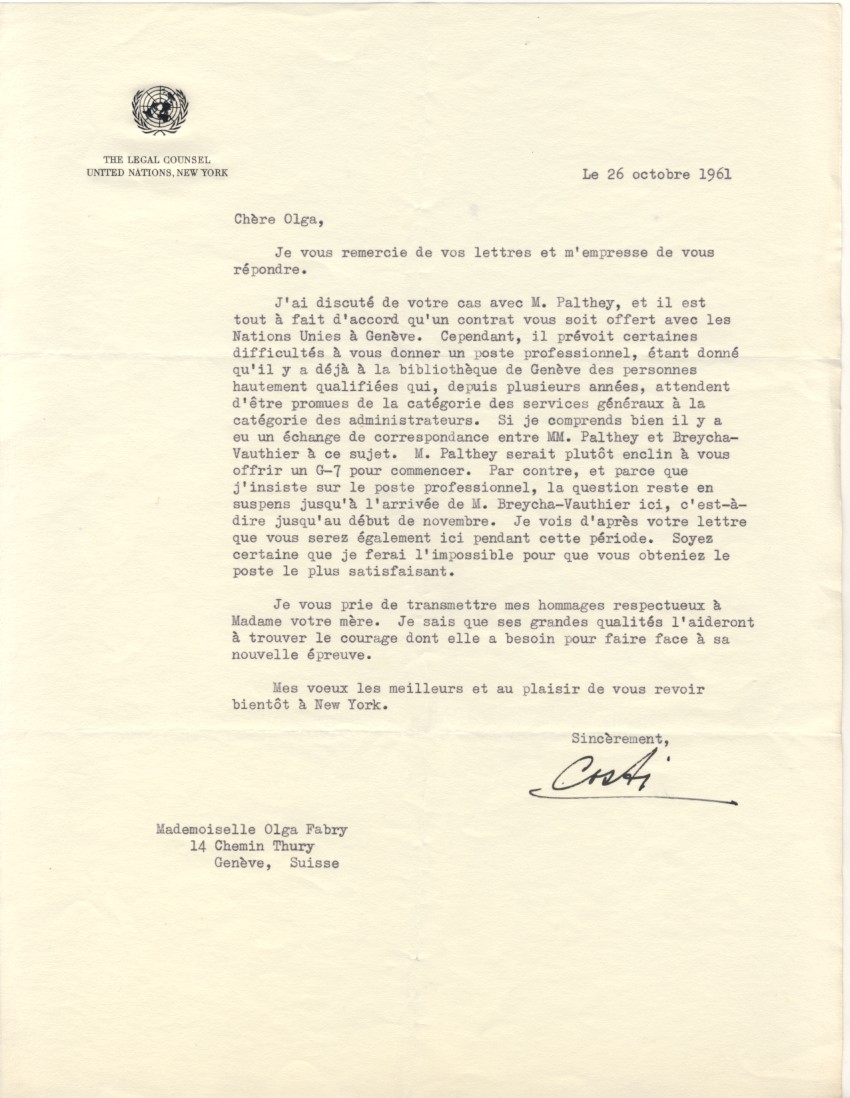
Because of Olga’s intelligence and determination to survive, she was able to find work and take care of herself and her mother, and would eventually spend many years as Librarian at the U.N. Foundation Library in New York, as a citizen of the United States.
Response to Maminka’s Request
In a previous post, “A Desperate Personal Demand For Help”, I posted correspondence written by Vlado’s mother to UN legal counselors Oscar Schachter and Constantin Stavropoulos, where she asks them to reconsider Vlado’s assignment to the Congo. Her need for Vlado was understandable – the stress of losing her husband suddenly, inheriting the legal cases he was unable to finish, and her own poor health, seemed too much to bear alone. What is also understandable, was Vlado’s need for adventure, and to be useful to the United Nations, and to the world. Even the death of his beloved father could not slow down his work, he was devoted to the peaceful goals of the Organization.
Here is the response to Madame Fabry’s letter from Constantin “Costi” Stavropoulos:
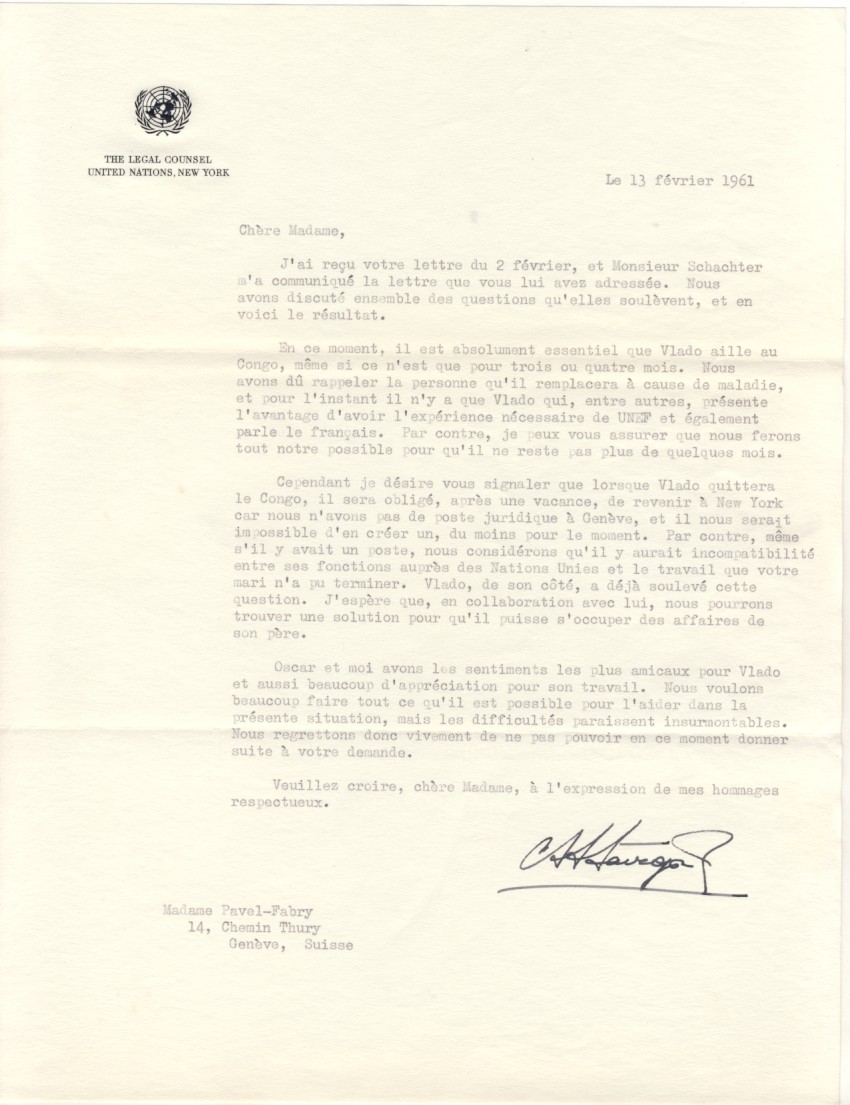
THE LEGAL COUNSEL
UNITED NATIONS, NEW YORK13 February 1961
Dear Madame,
I have received your letter of 2 February, and Mr. Schachter has communicated to me the letter you sent to him. We discussed all the questions that have been raised, and here are the results.
At the moment, it is absolutely essential that Vlado go to the Congo, even if it is only for three or four months. We had to recall the replacement person due to illness, and at the moment there is only Vlado who, among others, has the advantage of having the necessary experience of UNEF and also speaks French. Conversely, I can assure you that we will do everything possible so that he does not stay more than a few months.
However, I wish to point out that when Vlado leaves the Congo, he will be obliged, after a vacation, back in New York because we have no legal position in Geneva, and it would be impossible to create one, at least for the time being. Besides, even if there was a position, we consider that there would be incompatibility between his duties with the United Nations and the work that your husband could not finish. Vlado, for his part, has already raised this issue. I hope that, in collaboration with him, we can find a solution for him to deal with his father’s business.
Oscar and I have the friendliest of feelings for Vlado and also a lot of appreciation for his work. We want very much to do whatever we can to help in this situation, but the difficulties appear insurmountable. We deeply regret not being able to respond to your request at this time.
Please accept, dear Madame, the expression of our respectful regards.
Constantin Stavropoulos
Secretariat News, 29 September 1961
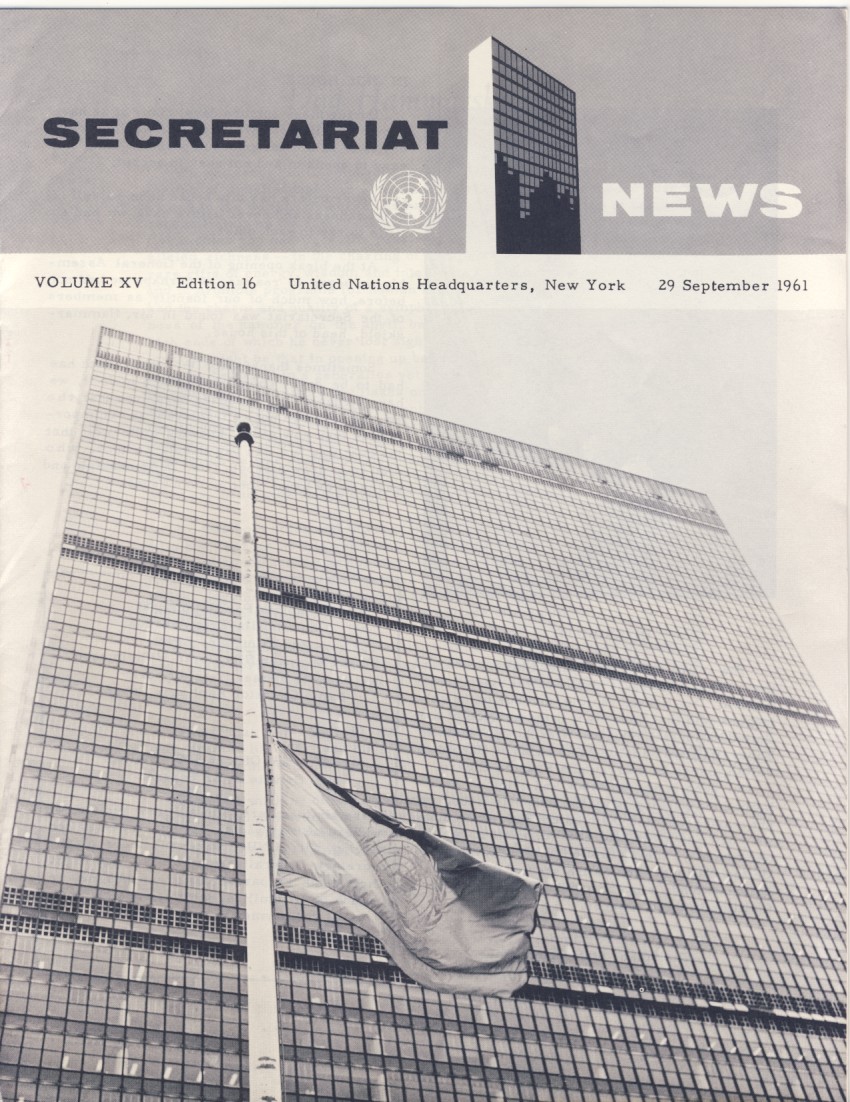

IN TRIBUTE
The entire staff of the United Nations mourns the sudden and tragic death of the Secretary-General, Dag Hammarskjold, and our other colleagues who lost their lives in the service of the United Nations: Heinrich A. Wieschhoff, Vladimir Fabry, William Ranallo, Alice Lalande, Harold M. Julien, Serge L. Barrau and Francis Eivers.
Our deep sense of shock and grief on hearing of their passing is all the deeper because we knew and respected them as colleagues; because we knew, admired and shared, each in his or her own way, their devotion to the ideals of the United Nations. The entire staff of the Organization extends sincere condolences to their families in their sadness.
R.V. Klein, Chairman, Staff Committee
IN THIS HOUSE
During these somber days, many of us have known a feeling of unreality. The world’s tragedy is to us a most grievous personal loss, not easy to speak of and not easy to accept.
Never before has this house been so full of quiet sadness and never before have we had so little to say to each other.
At the bleak opening of the General Assembly we began to realize, as perhaps we had not before, how much of our identity as members of the Secretariat was found in Mr. Hammarskjold, head of this house.
Sometimes thankful for the work which has had to be done, sometimes unable to do it, we have struggled to persuade ourselves that the routine jobs are not so irrelevant and unimportant as they now seem, knowing quite well that the best way we can pay tribute to those who died is to draw strength from their example and carry on as usual–better than usual.
——————————————————————————————–
Captain Per Hallonquist
Captain Nils-Eric Aarhreus
2nd Pilot Lars Litton
Flight Engineer Nils Goran Wilhelmsson
Air Purser Harald Noork
Radio Operator Karl Erik Rosen
and
Warrant Officer S.O. Hjelte
Private P.E. Persson
These six members of the air crew and the two soldiers of the Swedish 11th Infantry Battalion serving with the ONUC were members of the Secretary-General’s team on his last flight. Their death is part of our great loss and we include their families, their friends and their countrymen in our thoughts.

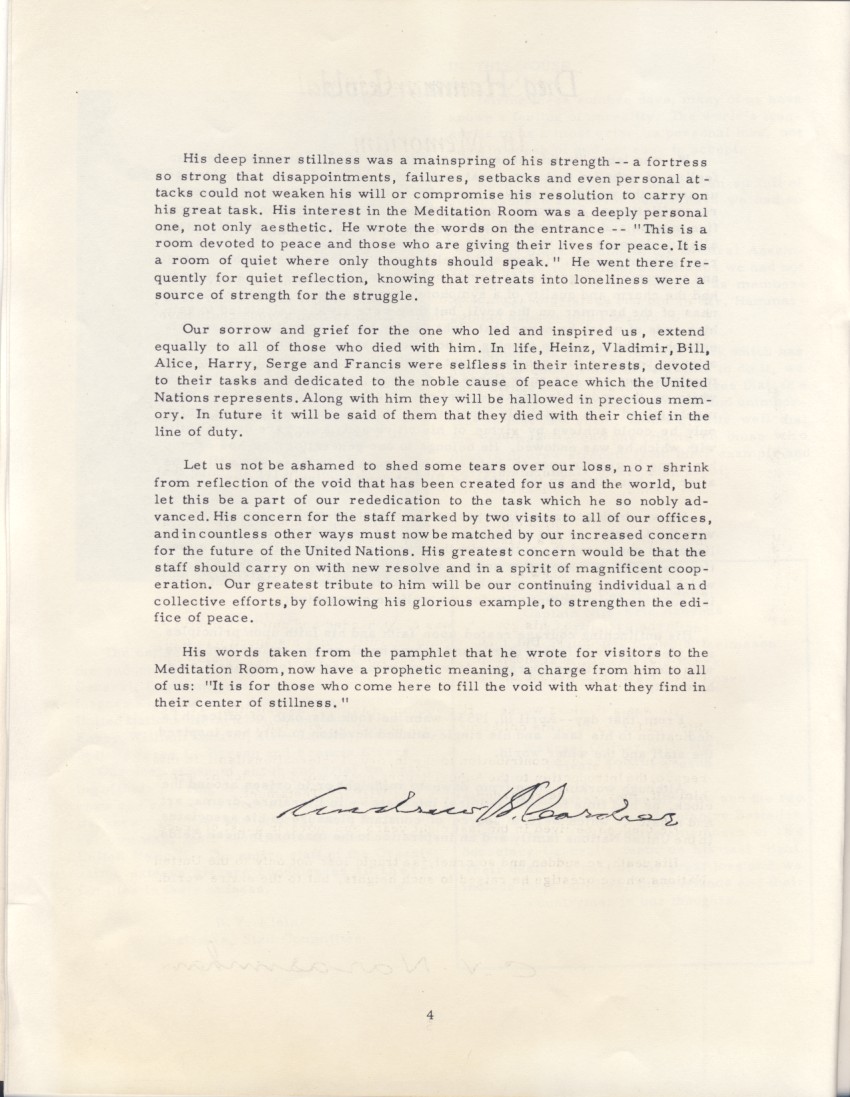
Dag Hammarskjold
We who labor “in this house” share with the whole of humanity the deep feeling of unbelief that our great and esteemed chief has been lost to us and to the world. He served humanity in the noble mission of peace and reconciliation as Secretary-General of the United Nations for eight years, five months and one week. His passing marks the close of an era of unparalleled richness — in the charting of new paths in diplomacy, in combining rare gifts of energy, wisdom and intelligence to bring crises under control and to promote programs for human betterment. Sometimes his methods had the charm and quality of a symphony; sometimes the decisive abruptness of the hammer on the anvil, but they were always calculated to gain high ends of which he never lost sight. If he had accomplished less, his epitaph might be that in opening up bold new vistas of international cooperation he belonged to a generation yet unborn. But his accomplishments are myriad–they are like snowflakes on a dotted landscape and the glistening white on the mountain peaks–countless small almost unnoticed achievements joined with decisively constructive results on great issues which only he could achieve by virtue of his office and of the rare natural gifts with which he was endowed. He belongs to our generation; he has carved his name in granite upon it; but he belongs equally to those who will come after us, benefiting by the lights he lit that can illumine their way.
He was both actor and interpreter; both history-maker and historian; with the Charter as his guide and resolutions as his directives, he mobilized and conducted the action with the scope and initiative that each situation required; his executive actions were an interpretation of the Charter which, together with his speeches and reports, gave the document a living quality of rich potentiality for the welfare of mankind.
His unflinching courage rested upon faith and his faith upon principles and ideals derived from a sturdy and valued heritage and an intellect alive with almost limitless appraisal of values with meaning for himself and humanity.
From that day–April 10, 1953–when he took his oath of office, his dedication to the task and his single-minded devotion to duty has inspired the staff and the wider world.
Although working often from dawn to midnight or in crises around the clock, he had time for wide cultural interests — in literature, drama, art and music — which were a source of constant pleasure to his associates in the United Nations family and an inspiration to the masters in these fields.
His deep inner stillness was a mainspring of his strength — a fortress so strong that disappointments, failures, setbacks and even personal attacks could not weaken his will or compromise his resolution to carry on his great task. His interest in the Meditation Room was a deeply personal one, not only aesthetic. He wrote the words on the entrance — “This is a room devoted to peace and those who are giving their lives for peace. It is a room of quiet where only thoughts should speak.” He went there frequently for quiet reflection, knowing that retreats into loneliness were a source of strength for the struggle.
Our sorrow and grief for the one who led and inspired us, extend equally to all those who died with him. In life, Heinz, Vladimir, Bill, Alice, Harry, Serge and Francis were selfless in their interests, devoted to their tasks and dedicated to the noble cause of peace which the United Nations represents. Along with him they will be hallowed in precious memory. In future it will be said of them that they died with their chief in the line of duty.
Let us not be ashamed to shed some tears over our loss, nor shrink from reflection of the void that has been created for us and the world, but let this be a part of our rededication to the task which he so nobly advanced. His concern for the staff marked by two visits to all of our offices, and in countless other ways must now be matched by our increased concern for the future of the United Nations. His greatest concern would be that the staff should carry on with new resolve and in a spirit of magnificent cooperation. Our greatest tribute to him will be our continuing individual and collective efforts, by following his glorious example, to strengthen the edifice of peace.
His words taken from the pamphlet that he wrote for visitors to the Meditation Room, now have a prophetic meaning, a charge from him to all of us: “It is for those who come here to fill the void with what they find in their center of stillness.”
— Andrew Cordier
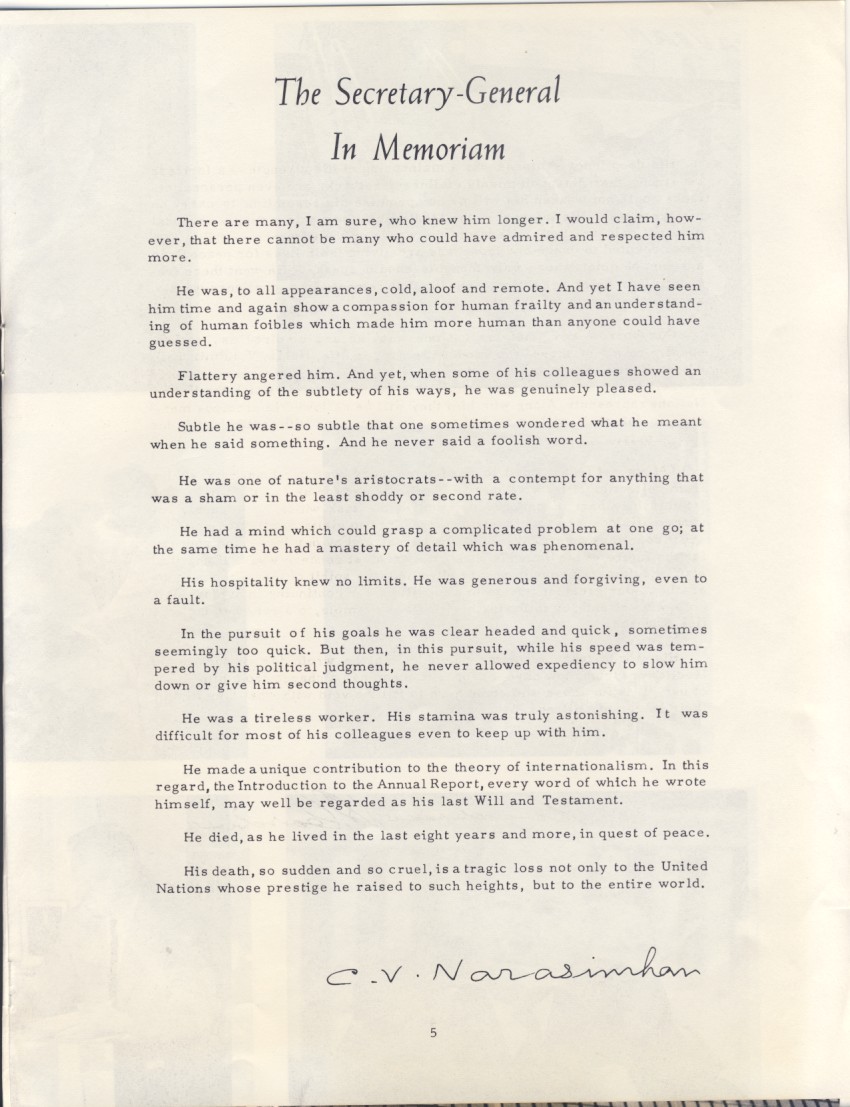
The Secretary-General
In Memoriam
There are many, I am sure, who knew him longer. I would claim, however, that there cannot be many who could have admired and respected him more.
He was, to all appearance, cold, aloof and remote. And yet I have seen him time and again show a compassion for human frailty and an understanding of human foibles which made him more human than anyone could have guessed.
Flattery angered him. And yet, when some of his colleagues showed an understanding of the subtlety of his ways, he was genuinely pleased.
Subtle he was–so subtle that one sometimes wondered what he meant when he said something. And he never said a foolish word.
He was one of nature’s aristocrats–with a contempt for anything that was a sham or in the least shoddy or second rate.
He had a mind which could grasp a complicated problem at one go; at the same time he had a mastery of detail which was phenomenal.
His hospitality knew no limits. He was generous and forgiving, even to a fault.
In the pursuit of his goals he was clear headed and quick, sometimes seemingly too quick. But then, in this pursuit, while his speed was tempered by his political judgement, he never allowed expediency to slow him down or give him second thoughts.
He was a tireless worker. His stamina was truly astonishing. It was difficult for most of his colleagues even to keep up with him.
He made a unique contribution to the theory of internationalism. In this regard, the Introduction to the Annual Report, every word of which he wrote himself, may well be regarded as his last Will and Testament.
He died, as he lived in the last eight years and more, in quest of peace.
His death, so sudden and so cruel, is a tragic loss not only to the United Nations whose prestige he raised to such heights, but to the entire world.
—C. V. Narasimhan
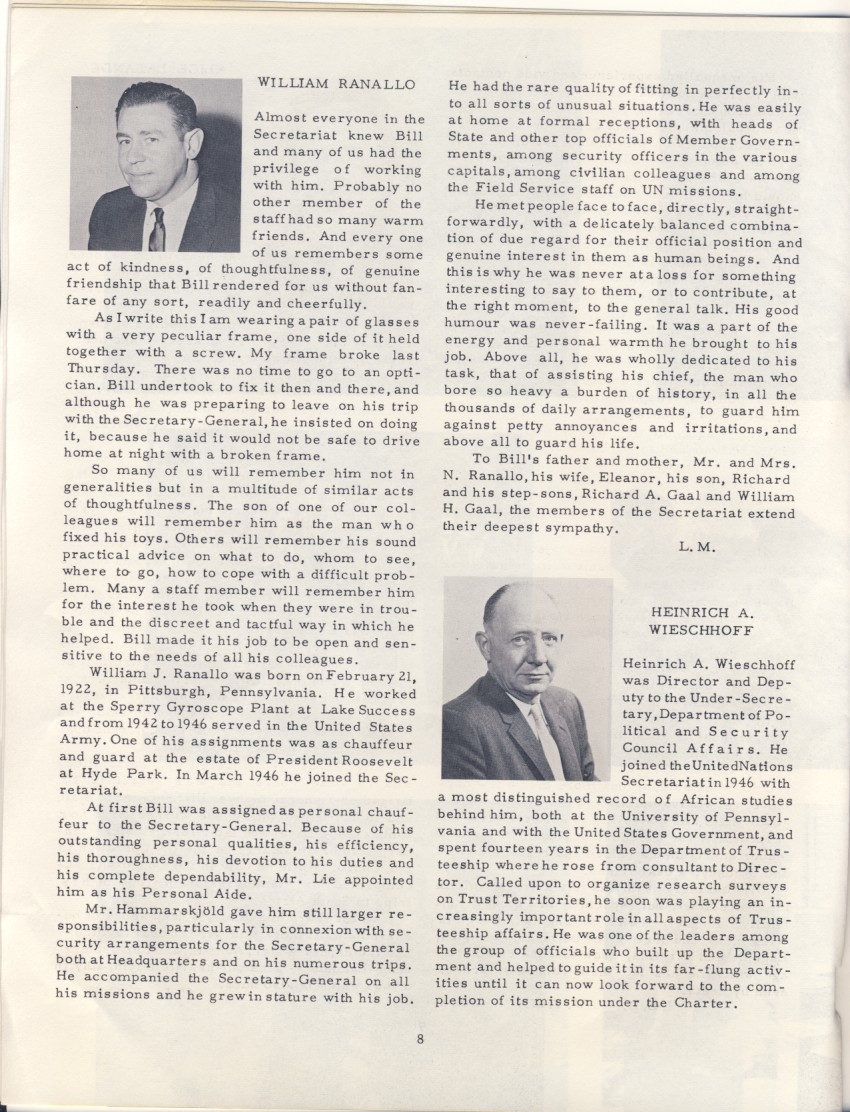
WILLIAM RANALLO
Almost everyone in the Secretariat knew Bill and many of us had the privilege of working with him. Probably no other member of the staff had so many warm friends. And every one of us remembers some act of kindness, of thoughtfulness, of genuine friendship that Bill rendered for us without fanfare of any sort, readily and cheerfully.
As I write this I am wearing a pair of glasses with a very peculiar frame, one side of it held together with a screw. My frame broke last Thursday. There was no time to go to an optician. Bill undertook to fix it then and there, and although he was preparing to leave on his trip with the Secretary-General, he insisted on doing it, because he said it would not be safe to drive home at night with a broken frame.
So many of us will remember him not in generalities but in a multitude of similar acts of thoughtfulness. The son of one of our colleagues will remember him as the man who fixed his toys. Others will remember his sound practical advice on what to do, whom to see, where to go, how to cope with a difficult problem. Many a staff member will remember him for the interest he took when they were in trouble and the discreet and tactful way in which he helped. Bill made it his job to be open and sensitive to the needs of all his colleagues.
William J. Ranallo was born on February 21, 1922, in Pittsburgh, Pennsylvania. He worked at the Sperry Gyroscope Plant at Lake Success and from 1942 to 1946 served in the United States Army. One of his assignments was as chauffeur and guard at the estate of President Roosevelt at Hyde Park. In March 1946 he joined the Secretariat.
At first Bill was assigned as personal chauffeur to the Secretary-General. Because of his outstanding personal qualities, his efficiency, his thoroughness, his devotion to his duties and his complete dependability, Mr. Lie appointed him as his Personal Aide.
Mr. Hammarskjold gave him still larger responsibilities, particularly in connexion with security arrangements for the Secretary-General both at Headquarters and on his numerous trips. He accompanied the Secretary-General on all his missions and he grew in stature with his job. He had a rare quality of fitting in perfectly into all sorts of unusual situations. He was easily at home at formal receptions, with heads of State and other top officials of Member Governments, among security officers in the various capitals, among civilian colleagues and among the Field Service staff on UN missions.
He met people face to face, directly, straight-forwardly, with a delicately balanced combination of due regard for their official position and genuine interest in them as human beings. And this is why he was never at a loss for something interesting to say to them, or to contribute, at the right moment, to the general talk. His good humour was never-failing. It was a part of the energy and personal warmth he brought to his job. Above all, he was wholly dedicated to his task, that of assisting his chief, the man who bore so heavy a burden of history, in all the thousands of daily arrangements, to guard him against petty annoyances and irritations, and above all to guard his life.
To Bill’s father and mother, Mr. and Mrs. N. Ranallo, his wife, Eleanor, his son, Richard and his step-sons, Richard A. Gaal and William H. Gaal, the members of the Secretariat extend their deepest sympathy.
HEINRICH A. WIESCHHOFF
Heinrich A. Wieschhoff was Director and Deputy to the Under-Secretary, Department of Political and Security Council Affairs. He joined the United Nations Secretariat in 1946 with a most distinguished record of African studies behind him, both at the University of Pennsylvania and with the United States Government, and spent fourteen years in the Department of Trusteeship where he rose from consultant to Director. Called upon to organize research surveys on Trust Territories, he soon was playing an increasingly important role in all aspects of Trusteeship affairs. He was one of the leaders among the group of officials who built up the Department and helped to guide it in its far-flung activities until it can now look forward to the completion of its mission under the Charter.
His unequaled experience and wide contacts with African political leaders led him to be called upon increasingly with regard to the political problems that would arise for the United Nations in connexion with the accession of many African colonies to independent Statehood. It was therefore natural that the Secretary-General should turn to him in connexion with African affairs as that continent, with its many problems, burst into the forefront of world politics. He accompanied Mr. Hammarskjold on most of his trip through Africa in the winter of 1960. Subsequently, he was appointed Director of the Department of Political and Security Council Affairs.
Mr. Wieschhoff became one of the Secretary-General’s most intimate political advisers on Africa, assisting in the formulation of Congo policies and other African questions in regard to which political responsibilities devolved upon the the Secretary-General.
Mr. Wieschhoff was wholly devoted to the United Nations and to the cause of peace. He had a brilliantly sharp and penetrating mind which he applied not only to the analysis of political processes, but also to creative political action in conformity with the purposes and principles of the Charter.
He was a scholar, a man subject to the discipline involved in the pursuit of truth in the way of the scholar. The scholar’s discipline is sometimes stern and this was typical of Wieschhoff. He was an exacting taskmaster, particularly towards himself. He was always on guard against any kind of falsity or pretense. This at times caused him to be falsely judged as cynical. Those who knew him well saw beneath the gruff exterior, the man of high principle and lofty ideals. Many of us who were fortunate enough to enjoy his personal friendship will never forget his charm and kindness.
He worked a regular seven-day and seven-evening week, seldom took more than a few days’ leave, yet always maintained his dynamism, his good spirits, and his ability to act creatively and purposefully for the cause of peace. He was a leader among men, a valued and respected chief, and to many, a dear friend.
His untimely death has left a tragic void in the Secretariat, but especially in a closely knit family. In their hour of anguish, Virginia Wieschhoff and their three children, Heinrich, Eugenia and Virginia, know that the rich heritage which he has left them cannot be erased even by death.

ALICE LALANDE
Throughout her many years with the United Nations, most of them spent in the field, Alice never allowed hard work, physical hardship, or personal danger disturb her serene conviction that the job at hand must be done: now and well.
To those who worked with her, she will remain a source of inspiration as the devoted, self-possessed and unobtrusively efficient colleague that she was. For her many friends, the memory of a delicate, understanding and warm human being lives on. Who could forget her quiet smile, her ready response to a witty remark, the gay sparkle in her eyes?
Alice traveled the world in service of the United Nations. As secretary to Count Folke Bernadotte, UN Mediator in Palestine, she was on the Island of Rhodes and the borders of Syria and Lebanon when the armistice agreements were signed in 1948. She worked in Palestine for General Riley, UNTSO Chief of Staff, and for his successor, General Vagn Bennike. At the first and second UN International Conferences on the Peaceful Uses of Atomic Energy in Geneva, Alice was secretary to Professor Whitman, the first Secretary-General, and to Dr. Eklund, the second. She also served with the Department of Economic and Social Affairs at Headquarters, at UNESCO in Paris, and as an Administrative Assistant with the Preparatory Commission and first General Conference of the International Atomic Energy Agency in Vienna.
Alice is also remembered with warm affection in Gaza where she was secretary to Brigadier-General Rikhye, UNEF Chief of Staff, and in the Congo where she worked first for Ambassador Dayal and later for Dr. Sture Linner, Officer-in-Charge of the UN Operation in the Congo. While on duty in the Congo she accompanied Mr. Hammarskjold on one of his trips to South Africa.
We all share her family’s deep sense of bereavement. To those who were so dear to Alice–her father, her sister, Annette, and her brother, Abbé Lalande — goes our heartfelt sympathy in a loss which is also ours.
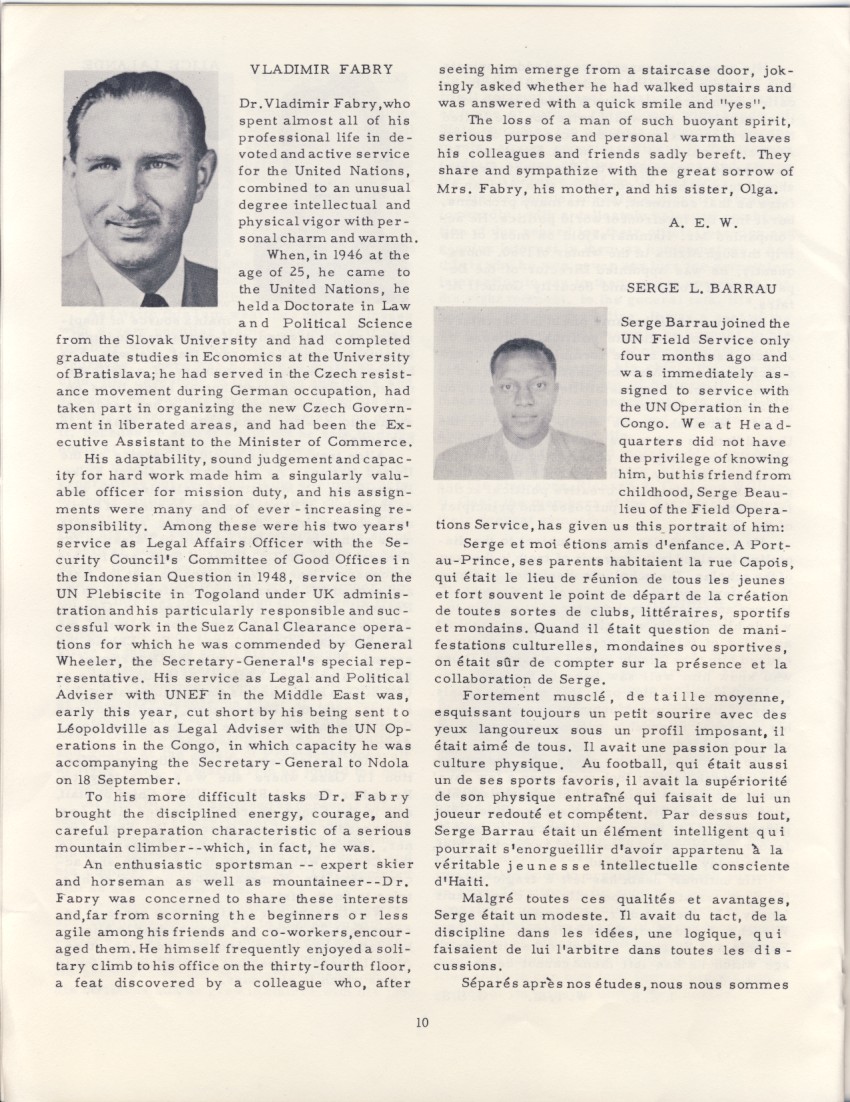
VLADIMIR FABRY
Dr. Vladimir Fabry, who spent almost all of his professional life in devoted and active service for the United Nations, combined to an unusual degree intellectual and physical vigor with personal charm and warmth.
When, in 1946 at the age of 25, he came to the United Nations, he held a Doctorate in Law and Political Science from the Slovak University and had completed graduate studies in Economics at the University of Bratislava; he had served in the Czech resistance movement during German occupation, had taken part in organizing the new Czech Government in liberated areas, and had been the Executive Assistant to the Minister of Commerce.
His adaptability, sound judgement and capacity for hard work made him a singularly valuable officer for mission duty, and his assignment were many and of ever-increasing responsibility. Among these were his two years’ service as Legal Affairs Officer with the Security Council’s Committee of Good Offices in the Indonesian Question in 1948, service on the UN Plebiscite in Togoland under UK administration and his particularly responsible and successful work in the Suez Canal Clearance operations for which he was commended by General Wheeler, the Secretary-General’s special representative. His service as Legal and Political Adviser with UNEF in the Middle East was, early this year, cut short by his being sent to Léopoldville as Legal Adviser with the UN Operations in the Congo, in which capacity he was accompanying the Secretary-General to Ndola on 18 September.
To his more difficult tasks Dr. Fabry brought the disciplined energy, courage, and careful preparation characteristic of a serious mountain climber–which, in fact, he was.
An enthusiastic sportsman — expert skier and horseman as well as mountaineer — Dr. Fabry was concerned to share these interests and, far from scorning the beginners or less agile among his friends and co-workers, encouraged them. He himself frequently enjoyed a solitary climb to his office on the thirty-fourth floor, a feat discovered by a colleague who, after seeing him emerge from a staircase door, jokingly asked whether he had walked upstairs and was answered with a quick smile and “yes”.
The loss of a man of such buoyant spirit, serious purpose and personal warmth leaves his colleagues and and friends sadly bereft. They share and sympathize with the great sorrow of Mrs. Fabry, his mother, and his sister, Olga.
SERGE L. BARRAU
Serge Barrau joined the UN Field Service only four months ago and was immediately assigned to service with the UN Operation in the Congo. We at Headquarters did not have the privilege of knowing him, but his friend from childhood, Serge Beaulieu of the Field Operations Service, has given us this portrait of him:
[Translated from French-T.B.]
Serge and I were childhood friends. In Port-au-Prince, his parents lived on the Rue Capois, which was the meeting place for all young people and very often the point of departure for the creation of all kinds of clubs, literary, sports and worldly. When it came to cultural events, sports or worldly, it was safe to rely of the presence and collaboration of Serge.
Strong-muscled, medium-sized, always a little smile drawn with languorous eyes under an imposing profile, he was loved by all. He had a passion for physical fitness. In football, which was also one of his favorite sports, he had the physical superiority which resulted in making him a feared and competent player. Above all, Serge Barrau was an intelligent element that could boast to have belonged to the true conscious intellectual youth of Haiti.
In spite of all these qualities and advantages, Serge was modest. He had tact, discipline in ideas, logic, which made him the arbiter in all discussions.
Separated after our studies, we met again in May this year on mission for the United Nations Organization, in Léopoldville. We had so much to say on that day. He told me about his activities in New York, his stay in the US Army where he performed his military service, his travels in Asia, particularly in Japan, where he received the baptism of fire, during a particularly dangerous drive, of moving crawling under machine gun fire, wherein the slightest imprudence can cost you your life; this training, he told me, this is my pass to the Congo. He was happy to be at the UN, to see me and to know Africa, the Africa of our ancestors.
It did not take long to prove his abilities in the UN Security Office where, newly arrived, he was assigned as assistant-investigator responsible for protecting the United Nations staff in trouble with the police.
Serge did not talk much, he did not trust himself to everyone, but he had an ideal, he wanted the initials of his name to be an example of courage and virtue to youth entire. That’s why I take pleasure in repeating his phrase which has become a reality.
S.B. – Serge Barrau – Servir bien
All his friends and colleagues express deep sympathy to Serge’s mother and father, Mr. and Mrs. Joseph Barrau, and to his brothers and sisters in their great loss.
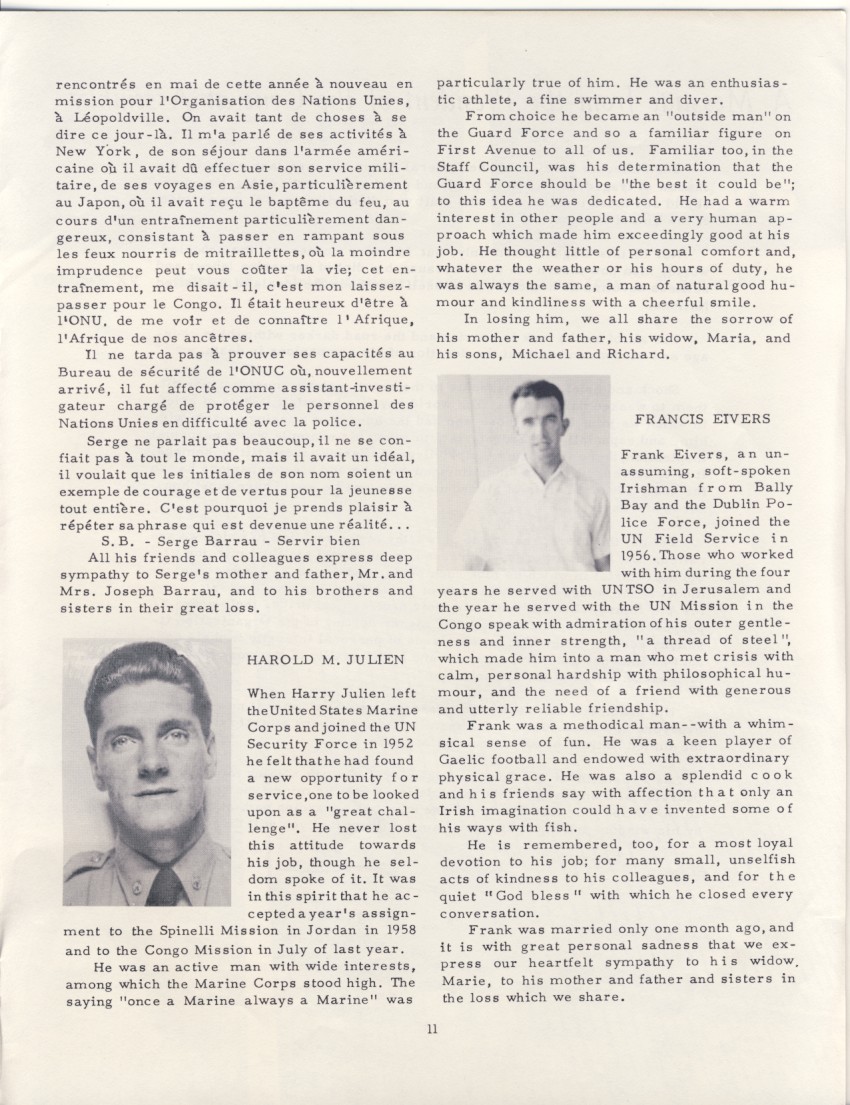
HAROLD M. JULIAN
When Harry Julien left the United States Marine Corps and joined the UN Security Force in 1952 he felt that he had found a new opportunity for service, one to be looked upon as a “great challenge”. He never lost this attitude towards his job, though he seldom spoke of it. It was in this spirit that he accepted a years’ assignment to the Spinelli Mission in Jordan in 1958 and to the Congo Mission in July of last year.
He was an active man with wide interests, among which the Marine Corps stood high. The saying “once a Marine always a Marine” was particularly true of him. He was an enthusiastic athlete, a fine swimmer and diver.
From choice he became an “outside man” on the Guard Force and so a familiar figure on First Avenue to all of us. Familiar too, in the Staff Council, was his determination that the Guard Force should be “the best it could be”; to this idea he was dedicated. He had a warm interest in other people and a very human approach which made him exceedingly good at his job. He thought little of personal comfort and, whatever the weather or his hours of duty, he was always the same, a man of natural good humour and kindliness with a cheerful smile.
In losing him, we all share the sorrow of his mother and father, his widow, Maria, and his sons, Michael and Richard.
FRANCIS EIVERS
Frank Eivers, an unassuming, soft-spoken Irishman from Bally Bay and the Dublin Police Force, joined the UN Field Service in 1956. Those who worked with him during the four years he served with UNTSO in Jerusalem and the year he served in the UN Mission in the Congo speak with admiration of his outer gentleness and inner strength, “a thread of steel”, which made him into a man who met crisis with calm, personal hardship with philosophical humour, and the need of a friend with generous and utterly reliable friendship.
Frank was a methodical man–with a whimsical sense of fun. He was a keen player of Gaelic football and endowed with extraordinary physical grace. He was also a splendid cook and his friends say with affection that only an Irish imagination could have invented some of his ways with fish.
He is remembered, too, for a most loyal devotion to his job; for many small, unselfish acts of kindness to his colleagues, and for the quiet “God bless” with which he closed every conversation.
Frank was married only one month ago, and it is with great personal sadness that we express our heartfelt sympathy to his widow, Marie, to his mother and father and sisters in the loss which we share.
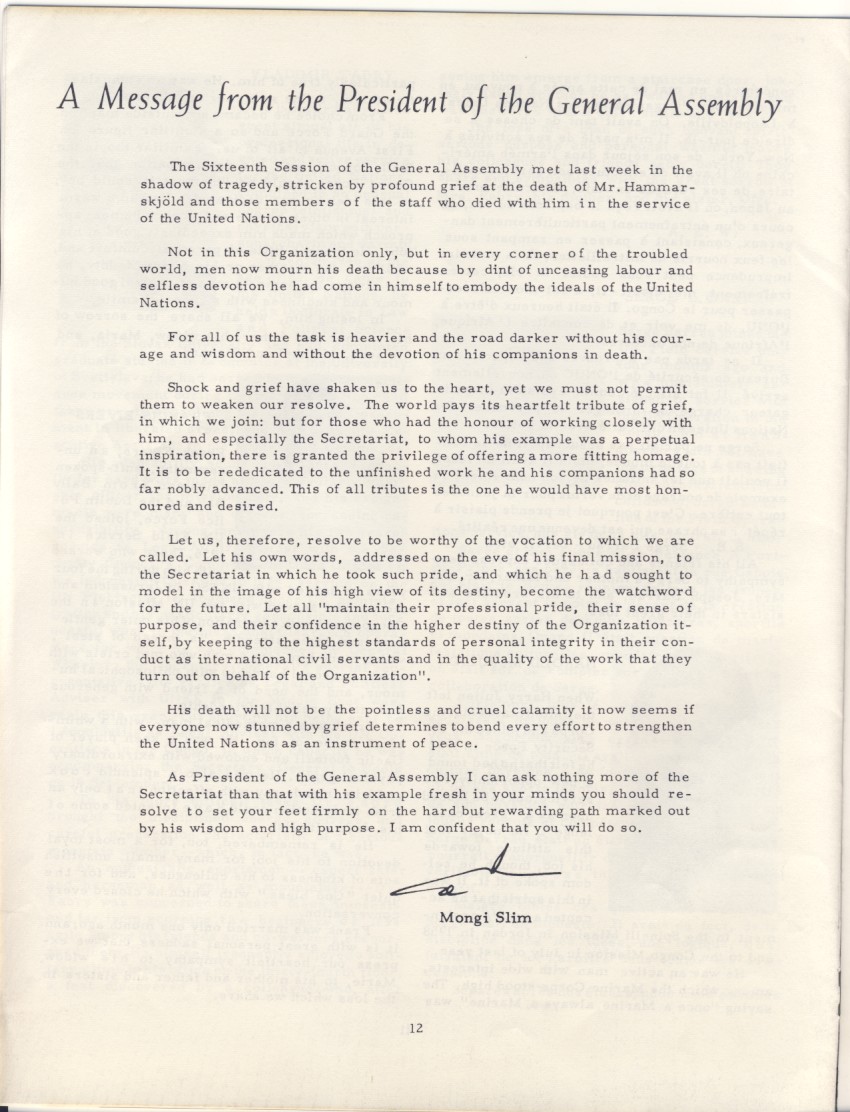
A MESSAGE FROM THE PRESIDENT OF THE GENERAL ASSEMBLY
The Sixteenth Session of the General Assembly met last week in the shadow of tragedy, stricken by profound grief at the death of Mr. Hammarskjold and those members of the staff who died with him in the service of the United Nations.
Not in this Organization only, but in every corner of the troubled world, men now mourn his death because by dint of unceasing labour and selfless devotion he had come in himself to embody the ideals of the United Nations.
For all of us the task is heavier and the road darker without his courage and wisdom and without the devotion of his companions in death.
Shock and grief have shaken us to the heart, yet we must not permit them to weaken our resolve. The world pays its heartfelt tribute of grief, in which we join: but for those who had the honour of working closely with him, and especially the Secretariat, to whom his example was a perpetual inspiration, there is granted the privilege of offering a more fitting homage. It is to be rededicated to the unfinished work he and his companions had so far nobly advanced. This of all tributes is the one he would have most honouored and desired.
Let us, therefore, resolve to be worthy of the vocation to which we are called. Let his own words, addressed on the eve of his final mission, to the Secretariat in which he took such pride, and which he had sought to model in the image of his high view of its destiny, become the watchword for the future. Let all “maintain their professional pride, their sense of purpose, and their confidence in the higher destiny of the Organization itself, by keeping to the highest standards of personal integrity in their conduct as international civil servants and in the quality of the work that they turn out on behalf of the Organization”.
His death will not be the pointless and cruel calamity it now seems if everyone now stunned by grief determines to bend every effort to strengthen the United Nations as an instrument of peace.
As President of the General Assembly I can ask nothing more of the Secretariat than that with his example fresh in your minds you should resolve to set your feet firmly on the hard but rewarding path marked out by his wisdom and high purpose. I am confident that you will do so.
—Mongi Slim
“Biographical Sketches of the Secretariat Personnel Who Died in Air Crash”
Here is a 19 September 1961 article from the New York Times, paying tribute to Heinrich A. Weischhoff, Vladimir Fabry, William J. Ranallo, and Alice Lalande – but no mention of the other passengers who perished. The full article is transcribed below.
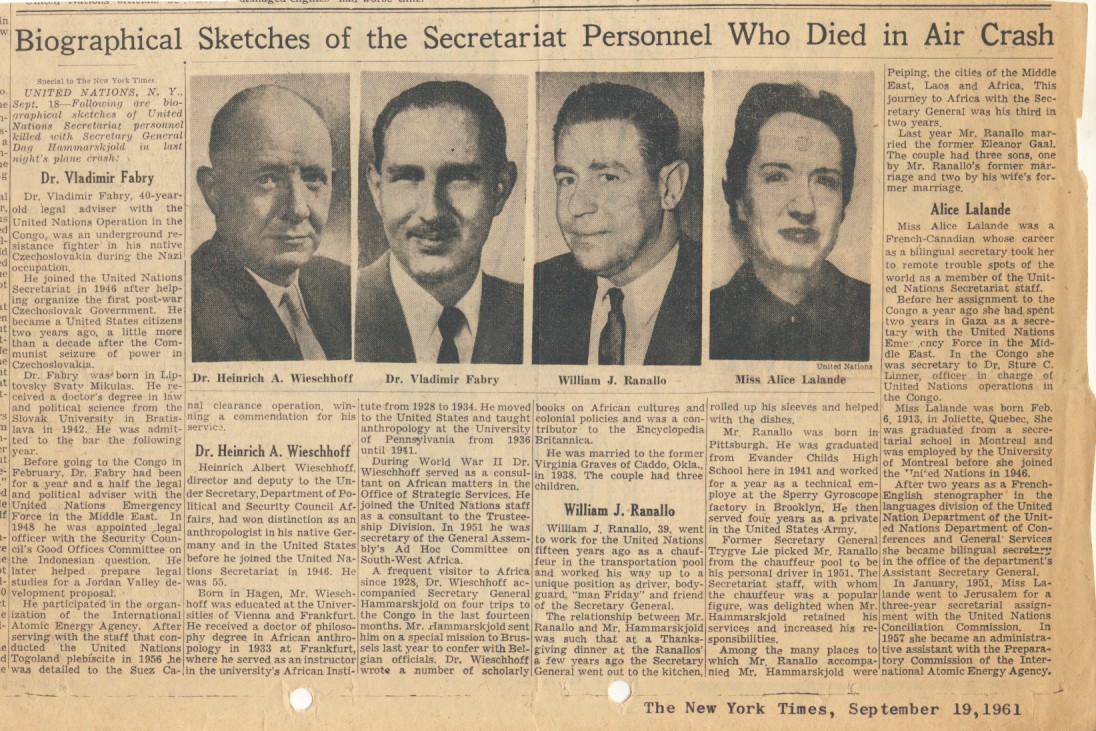
United Nations, N.Y., Sept. 18–Following are biographical sketches of United Nations Secretariat personnel killed with Secretary General Dag Hammarskjold in last night’s plane crash:
Dr. Vladimir Fabry
Dr. Vladimir Fabry, 40-year-old legal adviser with the United Nations Operation in the Congo, was an underground resistance fighter in his native Czechoslovakia during the Nazi occupation.
He joined the United Nations Secretariat in 1946 after helping organize the first post-war Czechoslovak Government. He became a United States citizen two years ago, a little more than a decade after the Communist seizure of power in Czechoslovakia.
Dr. Fabry was born in Liptovsky Svaty Mikulas. He received a doctor’s degree in law and political science from the Slovak University in Bratislava in 1942. He was admitted to the bar the following year.
Before going to the Congo in February, Dr. Fabry had been for a year and a half the legal and political adviser with the United Nations Emergency Force in the Middle East. In 1948 he was appointed legal officer with the Security Council’s Good Offices Committee on the Indonesian question. He later helped prepare legal studies for a Jordan Valley developing proposal.
He participated in the organization of the International Atomic Energy Agency. After serving with the staff that conducted the United Nations Togoland plebiscite in 1956 he was detailed to the Suez Canal clearance operation, winning a commendation for his service.
Dr. Heinrich A. Wieschhoff
Heinrich Albert Wieschhoff, director and deputy to the Under Secretary, Department of Political and Security Council Affairs, had won distinction as an anthropologist in his native Germany and in the United States before he joined the United Nations Secretariat in 1946. He was 55.
Born in Hagen, Mr. Wieschhoff was educated at the University of Vienna and Frankfurt. He received a doctor of philosophy degree in African anthropology in 1933 at Frankfurt, where he served as an instructor in the university’s African Institute from 1928 to 1934. He moved to the United States and taught anthropology at the University of Pennsylvania from 1936 until 1941.
During World War II Dr. Wieschhoff served as a consultant on African matters in the Office of Strategic Services. He joined the United Nations staff as a consultant to the Trusteeship Division. In 1951 he was secretary of the General Assembly’s Ad Hoc Committee on South-West Africa.
A frequent visitor to Africa since 1928, Dr. Wieschhoff accompanied Secretary General Hammarskjold on four trips to the Congo in the last fourteen months. Mr. Hammarskjold sent him on a special mission to Brussels last year to confer with Belgian officials. Dr. Wieschhoff wrote a number of scholarly books on African cultures and colonial policies and was a contributor to the Encyclopedia Britannica.
He was married to the former Virginia Graves of Caddo, Okla., in 1938. The couple had three children.
William J. Ranallo
William J. Ranallo, 39, went to work for the United Nations fifteen years ago as a chauffeur in the transportation pool and worked his way up to a unique position as driver, bodyguard, “man Friday” and friend of the Secretary General.
The relationship between Mr. Ranallo and Mr. Hammarskjold was such that at a Thanksgiving dinner at the Ranallo’s a few years ago the Secretary General went out to the kitchen, rolled up his sleeves and helped with the dishes.
Mr. Ranallo was born in Pittsburgh. He was graduated from Evander Childs High School here in 1941 and worked for a year as a technical employee at the Sperry Gyroscope factory in Brooklyn. He then served four years as a private in the United States Army.
Former Secretary General Trygve Lie picked Mr. Ranallo from the chauffeur pool to be his personal driver in 1951. The Secretariat staff, with whom the chauffeur was a popular figure, was delighted when Mr. Hammarskjold retained his services and increased his responsibilities.
Among the many places to which Mr. Ranallo accompanied Mr. Hammarskjold were Peiping, the cities of the Middle East, Laos and Africa. This journey to Africa with the Secretary General was his third in two years.
Last year Mr. Ranallo married the former Eleanor Gaal. The couple had three sons, one by Mr. Ranallo’s former marriage and two by his wife’s former marriage.
Alice Lalande
Miss Alice Lalande was a French-Canadian whose career as a bilingual secretary took her to remote trouble spots of the world as a member of the United Nations Secretariat staff.
Before her assignment to the Congo a year ago she had spent two years in Gaza as a secretary with the United Nations Emergency Force in the Middle East. In the Congo she was secretary to Dr. Sture C. Linner, officer in charge of United Nations operations in the Congo.
Miss Lalande was born Feb. 6, 1913, in Joliette, Quebec. She was graduated from a secretarial school in Montreal and was employed by the University of Montreal before she joined the United Nations in 1946.
After two years as a French-English stenographer in the languages division of the United Nations Department of Conferences and General Services she became bilingual secretary in the office of the department’s Assistant Secretary General.
In January, 1951, Miss Lalande went to Jerusalem for a three-year secretarial assignment with the United Nations Conciliation Commission. In 1957 she became an administrative assistant with the Preparatory Commission of the International Atomic Energy Agency.
From the Desk of Sumitro Djojohadikusumo
A couple of items from the brilliant economist and Indonesian Minister of Finance, Sumitro Djojohadikusumo (also spelled Soemitro Djojohadikoesoemo), who Vlado worked with during his time in Indonesia, 1947 to 1951.
(Click images to enlarge)
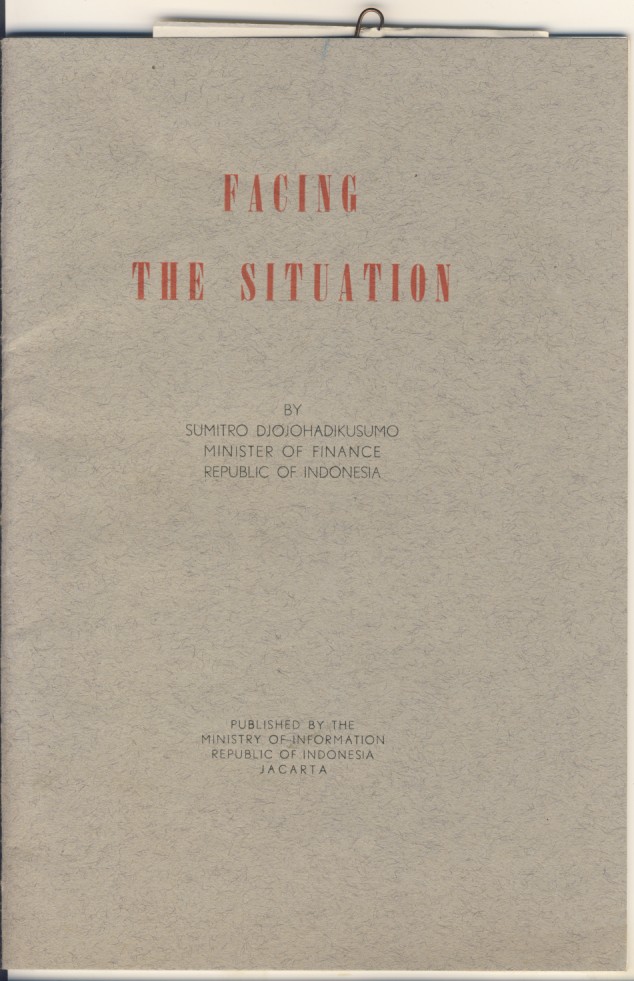
Here’s a copy of “Facing the Situation”, in which Sumitro lays out the economic challenges of post-war Indonesia, with a note to Vlado attached.
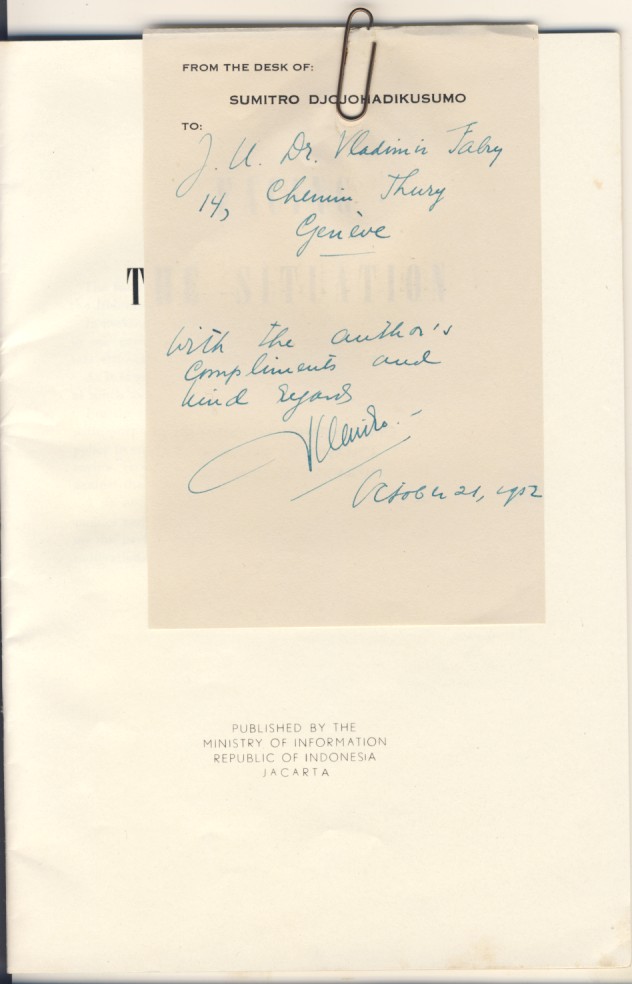

Also, one of the graphs in the book, showing Indonesian exports like pinang nuts, copra, quinine and sugar.
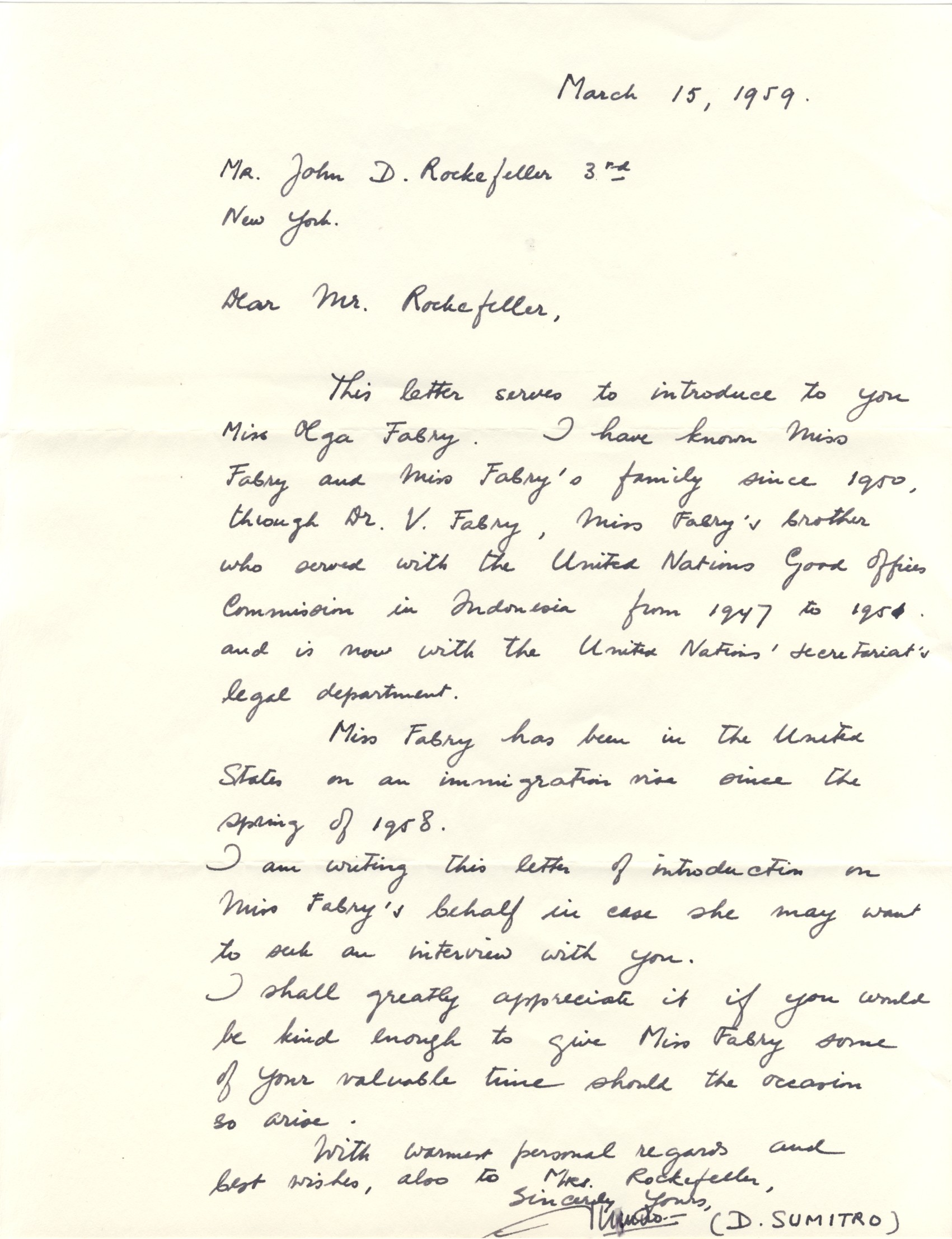
It was very nice of Sumitro to write a letter of introduction for Vlado’s sister to Mr. John D. Rockefeller III, but it looks like it wasn’t needed. An amusing find!
Young Vlado in Photos
The Fabrys came from such a different world than mine, and maybe that is why I can so appreciate the big complicated story of their life, and why I want to devote myself to study and translating to make sense of it. When I get frustrated about not having enough time to research, I take comfort in reading about other biographers, like Antony Thomas, who took over a decade to write his brilliant book “Rhodes: The Race for Africa” – but I will talk more about that book later.
Here is a collection of young Vlado photos that leave a great impression of his grand life in Czechoslovakia. The photos are undated, but they are circa 20’s and 30’s, since Vlado was born in 1920. (Click on images to enlarge)


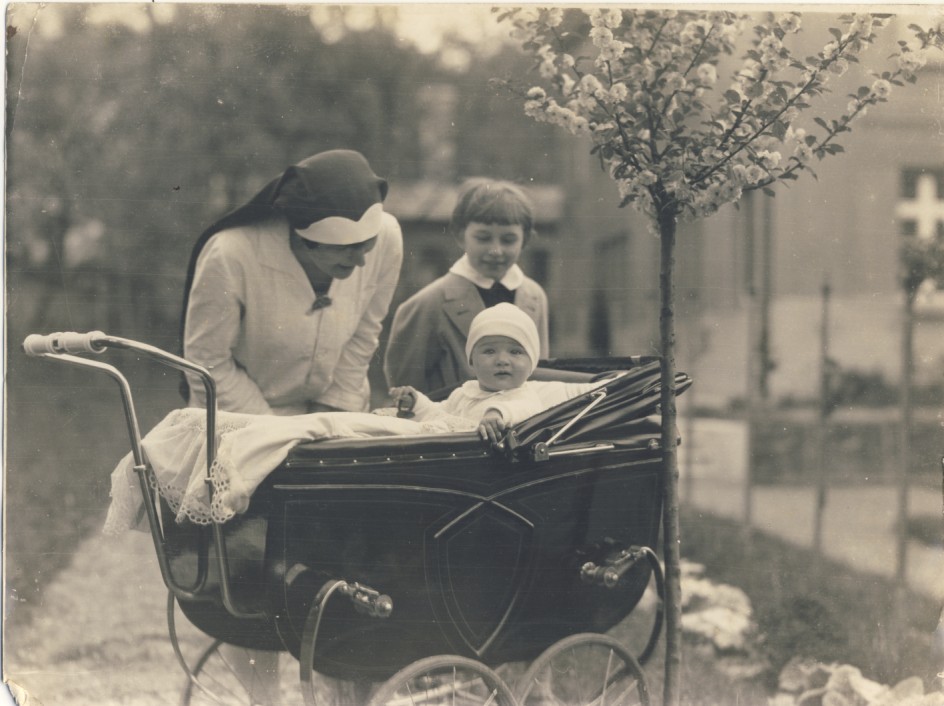
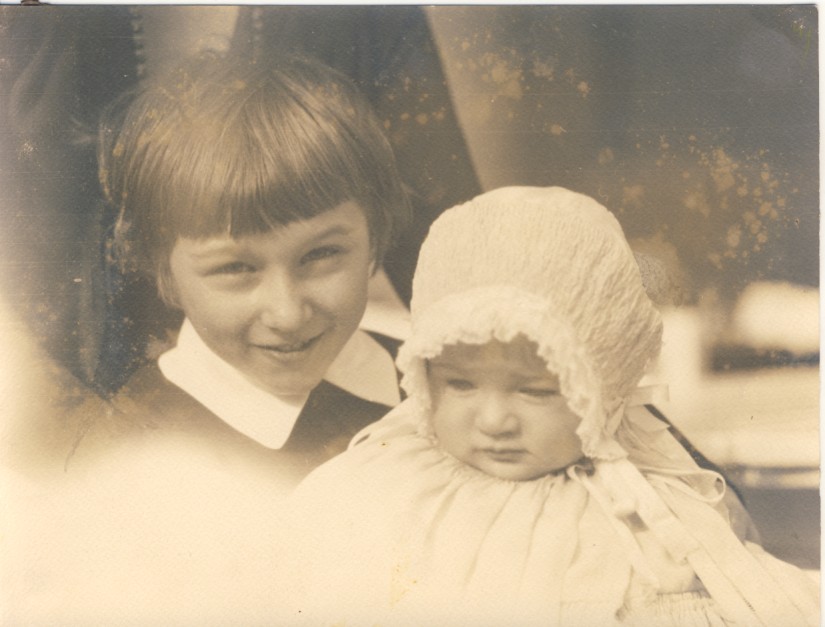
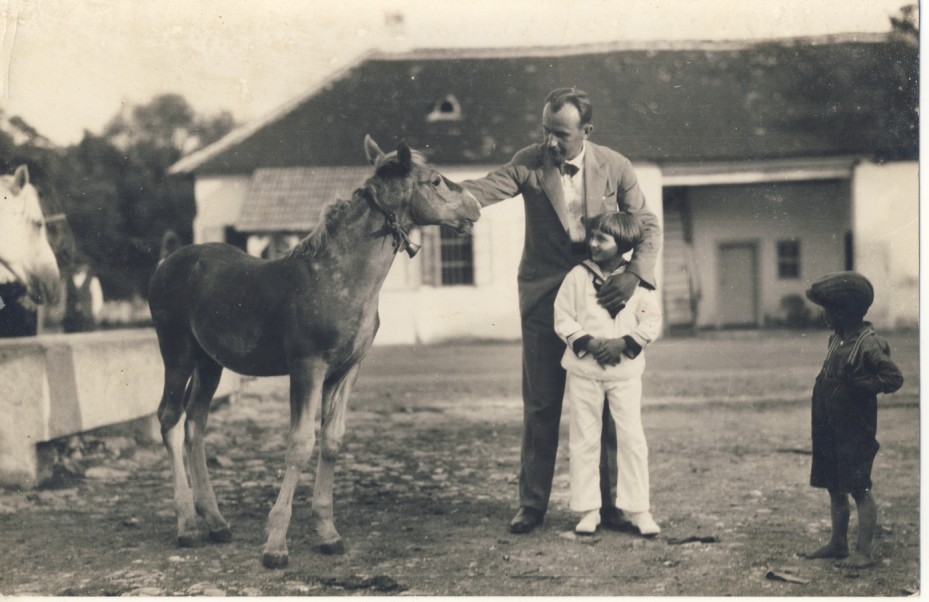

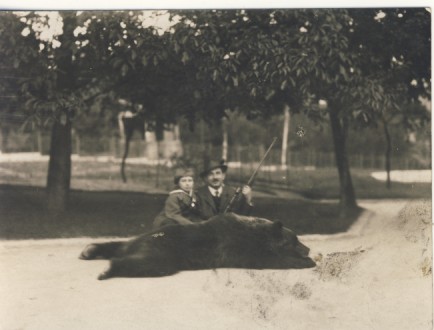

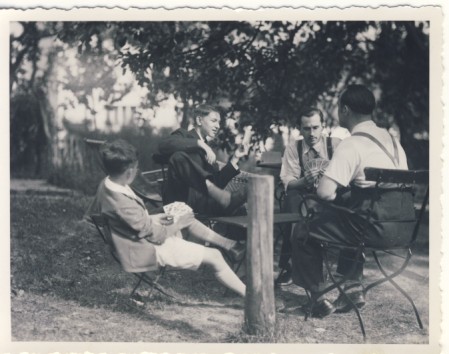

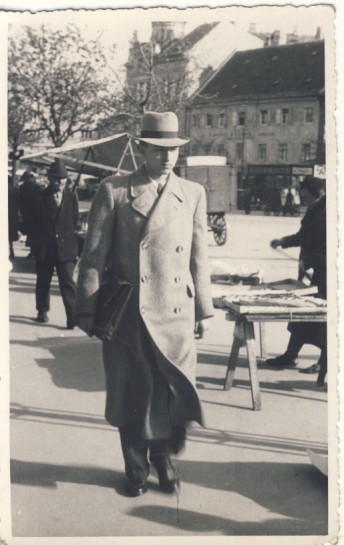
A Day in the City
For my friends, a few photos from a recent day in Seattle with my son. Here’s our iconic Space Needle with some native wildflowers in bloom.

Lovely views from the top of the Needle of Elliot Bay and downtown. Only an hour before this there was a tempest. We had taken the Monorail to Westlake Center, with the plan to walk through the Pike Place Market and down to Ivar’s on the waterfront for lunch (they make the best fish and chips), but the clouds were dark and moving fast so we stayed put and ended up having a really wonderful lunch, with a view, at The Athenian Inn. The oysters were delicious!
Here are some photos from the Pacific Science Center exhibit “SPY: The Secret World of Espionage”, which was the main attraction for myself and my son. This photo is of a cipher machine, for sending and decoding secret messages, like the one that was taken from the Albertina crash site in Ndola.
Here is the identification card of Allen Dulles, who was C.I.A. Director from 1953 until November 29, 1961.
Marlene Dietrich sings for the OSS!
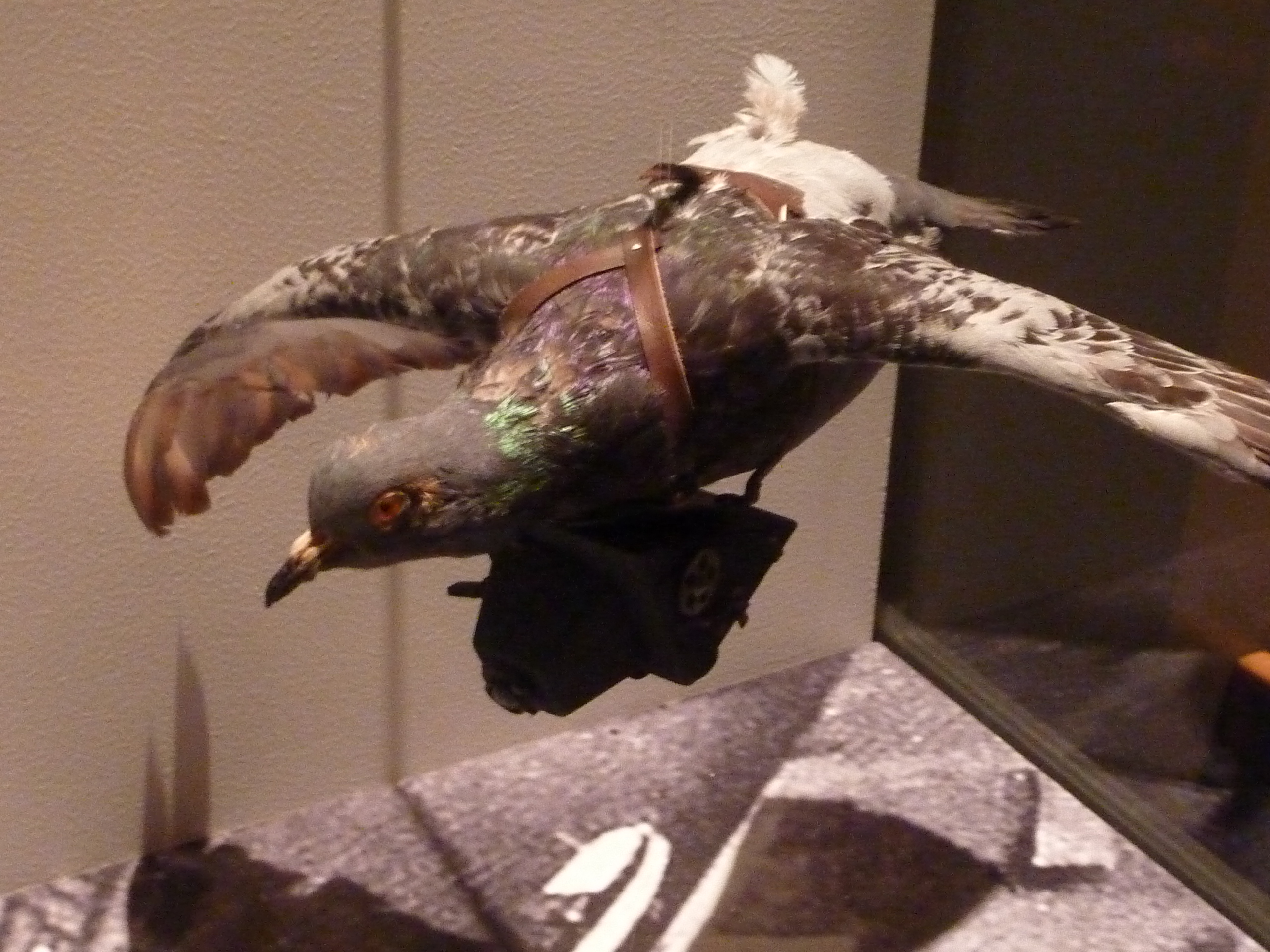
The original Drone – spy pigeons! The camera and harness is just unbelievable.

There was so much to see at this exhibit, but the best part was getting up close to the pickaxe that was used to killed Leon Trostky – it must be seen in person to be appreciated. That is not Trotsky’s skull, by the way.

Vlado and Mary Liz, 1957: Part 3
What a year 1957 was for Vlado – from late January until the end of May, he worked night and day on the Suez Canal Clearance Operation, and then he was stricken with Hepatitis; which he had contracted in Egypt, and it took months to recover from that. In all this, there was the consolation of letters from Mary Liz, who remained optimistic in spite of the challenges that kept them apart. Her letters end in September, sometime before Vlado returned to New York, at the end of his convalescence in Switzerland.
It was also a challenging year health-wise for Vlado’s sister, who had suffered a brain concussion – and for their father, who had serious heart troubles. Fortunately, for the ailing Fabry members there was Maminka, who nursed and cared for them all. It was a rare thing for all four of them to be together for an extended period of time, and I imagine she must been happy to give them all her attention.
7 July 1957
Congratulations!!!
and thank you for letting me know how you are. It’s such a relief to picture you sitting up and starting to enjoy life again. Yet every time I remember what you’ve been through I literally shudder. But you sure are made of stern stuff Vlado, that steak & 4 eggs for breakfast routine of yours must have helped too.
I hope you’re convalescing well. It seems as though with this illness the convalescent period can be trying since you feel like you’re “raring to go” whereas you’re actually not completely healed. And especially with Vlado who is so enthusiastic.
Karol read me parts of your letter to him – his came before mine & he knew how anxious I was – and you’re already thinking of the U.N. I know you have to but “take it slow”.
Now about my Trans-Atlantic phone call. I realized that you would be upset when you heard about it. But as I mentioned in my subsequent letter to your sister, I was sure they would not tell you until there wasn’t any chance of it aggravating your condition. As it happened, I had just heard from Karol that you were sick with some liver ailment but he didn’t know how serious it was. And when I tried to find out from Miss Cerna whether you were in the hospital and what your condition was, (it’s either good, fair or critical over here) all she said was that you were sick for a couple of weeks, that you would be for a while yet, and didn’t say whether you were in the hospital. So I hope you understand why I couldn’t tolerate it & had to call. It is fortunate that your sister speaks English – otherwise I’d have been completely frustrated (incidentally I’ve been promoted to French IV, but I was in no mood to try speaking that). It must have been difficult for her since she didn’t know who in the world I was. Actually, I knew I probably wouldn’t speak with you, if only due to the lateness of the hour. I just wanted to know how sick you were.
It’s wonderful though, to be able to speak with someone on the the other side of an ocean. Sometimes I think we can do anything if we try hard enough. I mean the scientists can.
But since you seem to be getting along alright I can wait until September to speak with you. I’m dying to see you again (have I said that before?) but realize that, after the attack you had, you need two months at least to rest up. Anyway, you’re in good hands so there’s no need to worry.
Love,
Mary Liz
P.S. My father keeps asking me how you’re coming along.
P.P.S. My letters end abruptly but that’s me. I’m trying to improve on it.
Geneve, 9.VII.1957.
Dear General,
Please forgive me for the delay in answering your letters, but it was only this morning that I got the permission to get up a bit,- and besides, even if I had been allowed to write earlier, I would have hardly been able to. For three weeks my fever never dropped under 104 – it was apparently all my fault, my body fighting against the illness instead of letting itself go – and even now I am still quite shaky. But I was really glad that I managed to finish the report before the virus started its dirty work – the first symptoms showed up on my last day in Holland – and I must have had a presentiment of the things to come that made me so eager to do the job before embarking on a vacation. Luckily the incubation period for the infection is 6-12 weeks, and that gave me ample time to clear the decks.
I am very grateful for your letters which cheered me up a lot, and I want to thank you sincerely for your kind words as well as for the thoughtfulness and effort of writing to me so often. I admit frankly that up to now I am still in a stage where I cannot bring myself to think with too much interest of any future work projects, but I am sure that I shall return to them with eagerness as soon as I recover. I will have a hard time to live up to the flattering words that you used about me in your letter to Mr. Stavropoulos.
Central Europe has the most marvelous summer-weather it had since decades – up to now I was in no position to appreciate it one way or another, but as I am recuperating interest in my surroundings I begin to realize what perfect mountain-climbing conditions I would have had if I had not let myself so stupidly be involved into an illness. For this season I will of course have to forget about mountain climbing and restrict myself – at best – to tame little walks along comfortable paths in some health resort.
My sister has unfortunately still not quite recovered from her accident, she still suffers occasional loss of balance and of memory, and so her wedding plans were again postponed until later. I am a bit sorry for mother with her two patients – she wouldn’t hear about my going to a hospital and insisted on nursing me all along – but she seems to take it well and claims that at least she was able to have a real long visit of mine this way. She remembers you and talks of you very often, you seem to have made quite a lightning contest and left a deep impression during the few minutes she was able to enjoy your company. My father also asks to convey his regards.
Thank you again for everything, and “au revoir”. Please give my best to Mr. Connors.
Respectfully yours
Vlado
Geneve, 10. VII. 1957.
Dear Oscar,
The doctor allowed me since yesterday to get up for a couple of hours each afternoon, and I am taking the opportunity to write to you and to thank you for your interest and for the very kind words you wrote to me and to Olga. I am feeling much better now, my temperatures are near normal (although for three weeks they never dropped under 104) and I am starting to feel interested in my surroundings again. But I still feel very shaky and tired, and spend most of the time asleep – after all, the kind and quantities of food that I am allowed to take in could hardly provide enough energy for a sparrow to keep alive. I don’t think I have even been so limp and listless before – I have literally to force myself to get out of bed, although normally I can’t stand it to be bedridden. But I hope that this sorry state of affairs will improve now that I am over the hump.
The weather during the past three weeks was about the best that Europe had in many a decade – hot but dry, with unblemished blue skies and radiant sunshine. Not that it made any difference to me at the time, but now that I am beginning to take more interest in life I feel a little pang of regret thinking of the perfect climbing conditions that I could have enjoyed if I did not let myself get stupidly involved into my illness. Well, it doesn’t look that I would be fit during the rest of this year to do any more than a few tame walks along the promenade of some health resort, so it seem to matter how the rest of the summer will shape up. I am glad though that I managed to finish my work on the UNSCO report before I got knocked out of circulation – I must have had some sort of a presentiment about it which made me rush the job. At this point I should also apologize for any trouble that I may have caused to you and Costi by my letter to Gen. Wheeler complaining about Sullivan’s position. I was already feeling unwell at the time and rather sorry for myself, and Sullivan had been a very sore chapter in the life of UNSCO, so I just blew up. Thanks for the reassuring words.
My doctor still refuses to commit himself in any way as to the time it will take until I am fit to travel back to New York and to resume my duties. I shall let you know about it as soon as I am told myself.
I hope you manage to enjoy some nice holiday with Molly and your daughters this year, and that you will have a pleasant summer. Please give my best regards to them.
With my best wishes,
sincerely yours,
Vlado
Geneve, 20. VII. 1957.
My Dear One,
thanks for your two letters (30.VI and 7.VII) and for all your love and thoughtfulness that showed and shone through them – it made me feel like packing up and flying to you right away. But on second thought I rejected the idea again – I don’t think I could bear it to have you around in the grumpy, messy and lazy state of mind in which I am now, it wouldn’t be fair in any case. I do look a bit less Oriental now (except for my eyes) but otherways[sic] I still seem to be in a sort of physical and mental doldrums. No wonder, with the amount and kind of food that I am allowed to eat even a kolibri-bird would have troubles keeping alive[Vlado means the family Colibri of Hummingbirds.-TB] (seems providential that I had gotten so fat in Egypt and could burn away the stored-up mass like a camel its hump), but even the few crumbs that I swallow seem to have troubles getting through my stomach and knock me out for a couple of hours after each meal. I would have never believed it if anybody had told me that there will be a time when I shall voluntarily (sic!) betake myself to bed and actually enjoy staying there. I don’t remember ever having been so limp and listless before, just as shaky and ready to drop as an aspen leaf in October. Somehow it doesn’t even bother me just to float along – at first I fought the doctor trying to get him to let me get up and out, but by the time he allowed me to do so I lost interest and the energy to make use of my new freedom, and now I have literally to force myself out of bed. It took me four days before I gathered enough determination to write this letter. Not much to be congratulated upon!
Apart from giving you my latest medical bulletin, there is hardly anything else that I could write. My mental activities are limited to reading news magazines and extra-lightweight literature a la Forester, Chesterton, and Hemingway, with occasional Huxley or Anouilh thrown in, not to speak of Francoise Sagan and a ghastly Nevil Shute. I certainly don’t let the international situation worry me, far from it; although they[sic] are a few things to worry me nearer-by – my sister is still in a very bad shape from her accident and my father had three attacks during last month – and all this has of course further ramifications that will have to be thought out and decided upon soon, for my sis regarding her planned marriage and for father whether to let him continue working, but all this is still too complicated for me to bother right now. My apartment situation in NY is in a mess too, I may have to call on your help for storing awhile the things I have there if I decide to give it up – it would be a three-cornered project with Karol supplying the key and packing, Harry my car for driving and you the expert and dependable management and, if you can, a bit of an attic or closet space. I shall send you an emergency signal with instructions if it comes so far – although, on second thought, I remember now that you are off to Cape Cod, so it shall have to be somebody else. Anyhow, I don’t think it will really be necessary. By the way, how long are you going to be on the Cape – better let me know your address so I can drop you a line there in case I come back before you.
You can see my muddled and wobbly mental state from the way this letter reads – but between the lines I hope you can see the real message which is lots of love.
Vlado
P.S. Father sends his best, and decided to brighten up the envelope a bit to make up for the poor letter. Thanks to your Dad for his interest.
Here is just one example of Pavel’s cheery envelopes:

29 July 1957
Well I finally got off to the Cape – arrived here at Chatham 8:00 Saturday morning after an all-night train trip. This has convinced me I should learn to drive – but definitely. It really wasn’t so bad – had a fascinating conversation on electroencephalography with a doctor we met. While I was at the hospital I saw it practiced on a Puerto Rican woman – but she was so scared of everything that the result wasn’t too enlightening -. Still it does prove a lot.
Chatham is a quiet little town and we’ve seen all there is to see so far. Yesterday we bicycled around and today we had some fun with a motor boat. However the water was sort of rough and we had quite a time leaving a certain island that we had stopped at. Especially since there were lots of rocks that you could be dashed against.
On Wednesday we plan to go to Provincetown.
It was was so good to get your letter. It came just before I left and quite unexpectedly since I know you’re feeling so lousy. Still I had wished I’d hear from you.
What I meant by “Congratulations” was that I was so glad your fever had gone down and that the worst was over. Even tho maybe it’s not so apt an expression, I couldn’t think of anything better at the moment. But it’s quite natural that you should feel so weak and it’s just as well that you float along sometimes.
I’m so sorry to hear about your sister & your father – Karol had told me about Olga’s accident when he told me about you; but at that time he thought she was getting along all right. And she sounds so sweet in her letters. -It never rains but it pours I guess.
Your father’s envelope was just the cutest thing. Hope he’s feeling better and tell him thanks for his greeting.
However, no letter of yours needs brightening. And if you knew what it means to me just to read that you do care, you wouldn’t think so either.
As far as your apartment – even tho I won’t be back till sometime August 17th, you could get in touch with H.S. (my father, that is) since the space is there for any of your things. He’d be only too happy to do something.
Really don’t know where I’ll be for a couple of weeks – probably be moving around. But from 10 August to 17th I’ll be in the Berkshires – address is: Chanterwood, Lee, Massachusetts. It’s supposed to be mid-way between Tanglewood and Jacob’s Pillow Dance Festival. Only don’t tell me your coming back till you’re actually getting on the plane (a post card would do). And please don’t feel you have to write otherwise, because I understand.
All my love,
Mary Liz
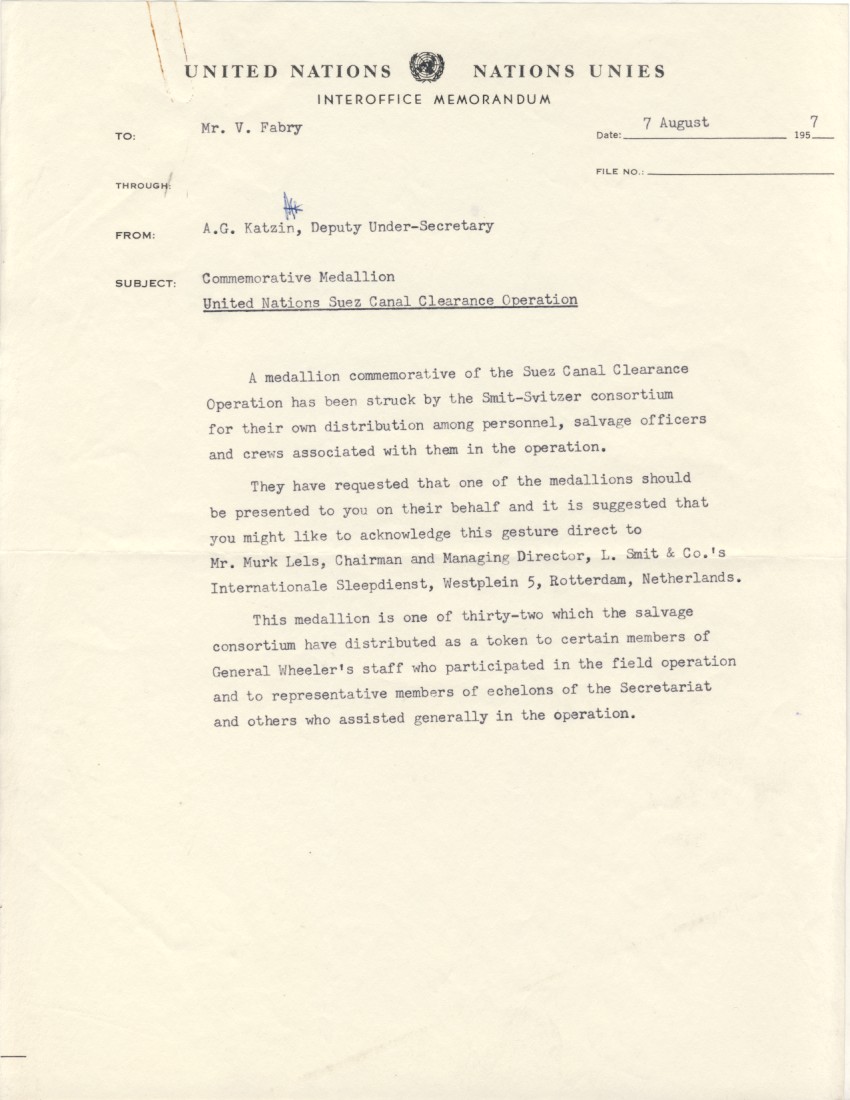
7 August 1957
TO: Mr. V. Fabry
FROM: A.G. Katzin, Deputy Under-Secretary
SUBJECT: Commemorative Medallion
United Nations Suez Canal Clearance OperationA medallion commemorative of the Suez Canal Clearance Operation has been struck by the Smit-Svitzer consortium for their own distribution among personnel, salvage officers and crews associated with them in the operation.
They have requested that one of the medallions should be presented to you on their behalf and it is suggested that you might like to acknowledge this gesture direct to Mr. Murk Lels, Chairman and Managing Director, L. Smit & Co.’s International Sleepdienst, Westplein 5, Rotterdam, Netherlands.
This medallion is one of thirty-two which the salvage consortium have distributed as a token to certain members of General Wheeler’s staff who participated in the field operation and to representative members of echelons of the Secretariat and others who assisted generally in the operation.

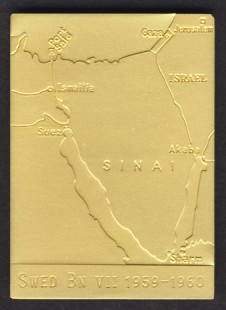
Geneve, 23.VIII.1957.
My Dear One,
I hoped to be with you by now – but it still isn’t quite that far yet. I am going to be released from sick-leave status by the end of the month, though, unless some new trouble shows by then. Seems I really managed to make a mess of myself. Then they want me to take a convalescing cure for two or three weeks – which I wouldn’t mind too much as I shall be allowed to go on walks and to spend the time in the mountains (or rather, unfortunately, under them). I’m still weak, listless and irritable, but I’m sure that will pass when I’m able to live more normally. I can eat a bit more now – an absolute starvation diet by my usual standards but quite an improvement – although I still get cramps whenever I exceed the slightest bit the norm in amount or kind, and nothing will do but the most carefully supervised home cooking. And that is supposed to last for another three months – how cheerful!
My future dietary problems caused me also to change my mind about my apartment. I don’t know whether you heard, but my landlord had some troubles with the house owners (who want to make a cooperative and force old tenants out) about subletting the place, and as a result my sub-sub-tenant, David Sisson, had to move out in May a few weeks earlier than his agreed date (which was to coincide with my planned return). The situation was apparently smoothed out, but the threat that the sub-tenant may have to leave the apartment at short notice persisted, and so I wrote to my landlord that I did not consider further bound by my lease as of May. There was some correspondence in which he asked me to remove my belongings and I claimed difficulties. But after learning that I shall have to rely on home cooking because my diet will still be too restricted to allow me relying on restaurants I decided that I may be best off keeping the place (where I can go home for lunch) even if it will be only for a short time. Two days ago I wrote to Mr. Crandall that if he did not yet find another tenant, I am willing to keep the apartment. At the same time I wrote to him that if he has rented the apartment and still insists on moving my stuff out, he should get in touch with you. I hope it won’t be necessary but if it comes to the worst, would you be kind enough to see to it that my things are properly packed and put away – maybe Harry LeBien could help you taking the stuff away, and of course if you can keep it for a while in some attic it would save the need to crate the loose items that do not fit into the two empty suitcases I have there. There are two packed suitcases, a rucksack and a lot of loose stuff in the two closets (bedroom and hall) that I used; if I remember well, I left there also some small bags, some packed and some empty. You will, I hope, recognize my radio, embroideries and dishes and glassware – if not, a commission consisting of you, Karol, David Sisson and Mr. Crandall should be able to decide on the ownership of each item found in the bedroom, living room and kitchen. My books were on the lower shelf on the right of the bed. The biggest problem will be the kitchenware which I left out so that David can use it, but where some items belong also to Mr. C.. I hope you don’t mind this nuisance but it is a great comfort to me to know that somebody will take good care of my interests if it comes to it, and I know I can rely on you!!!
Au revoir soon – and all my love –
Vlado
8 September 1957
I sure was disappointed when I read that it would be later still. But it’s much wiser and, of course, only fair since you didn’t have any vacation. You must be having a wonderful time; wish I was there.
Thanks for the pictures. You certainly have made good progress. Being able to sit up for your meals really means a lot, doesn’t it. What really hit me in the other picture (besides your horizontal position) though was the look on your face and the way your hand lay so limply. Don’t ever do that again! – get sick, I mean.
And the beard is interesting. I guess it was hard to shave in bed. But wasn’t it uncomfortable during those hot days?
I look kinda different too – got my hair cut. But since I haven’t a decent picture you’ll have to use your imagination. Hope you like it too, because I do – lots.
So far I’ve heard nothing from Mr. Crandall. I’m glad you recognize my dependability. My mother told me it would come in handy. I just like doing things for people like you, though. So don’t worry about it being a possible nuisance.
Hope to see you real soon, darling. I love you –
Mary Liz
Vlado and Mary Liz, 1957: Part 2
When reading biographies, I’m always disappointed when letters are quoted in part and not printed in full, because I’m interested in even the mundane details of a life. Vlado’s life was anything but mundane in 1957, and his letters tell a great story – Mary Liz was just one part of it. I’ve also included here correspondence from General R. A. Wheeler (a.k.a. “Speck”), Oscar Schachter, Vlado’s sister Olga (Olinka – who we learn has had a head injury that postpones a wedding to man she later decides not to marry); and Don Sullivan, who sent a poorly phrased letter that pushed an exhausted Vlado too far, showing that even someone as intelligent and respected as Vlado had his bouts of insecurity. And though I have not included the letters of Vlado’s Maminka and Tatulo, they make an appearance here in their own charming way.
—————————————————————————————————
9 May 1957
Dear Vlado,
Thank you for your letter of 29 April. We had been wondering why we had not heard from you for so long a time, but I am glad to learn at long last that you had a particularly enjoyable assignment and that you found General Wheeler and the rest of the group so congenial. You may recall my discounting the story which you got about possible difficulties in working with the General. I am glad that your relations turned out to be as I anticipated. Stavropoulos told me that you had requested about five weeks’ leave and I am certainly agreeable to your taking it. I am terribly sorry to learn of Olga’s accident but I hope that by this time she has entirely recovered. We had heard somewhat indirectly about the forthcoming wedding but we were not quite sure of the date. I hope you found your parents well and in good spirits. Please give all of the family our warm regards. We look forward to seeing you on June 20th.
Sincerely,
Oscar
Oscar Schachter
Dr. Vladimir Fabry
14 Chemin Thury
Geneva
—————————————————————————————————-
UNITED NATIONS SUEZ CANAL CLEARANCE GROUP
ISMAILIA
15 April 1957
Dear Mr. Fabry:
Mr. and Mrs. Connors and I cordially invite you to buffet supper at our residence at 6:00 p.m. Sunday, 21 April.
As we near the end of our Mission here, we wish to express our sincerest appreciation for your loyal and efficient assistance throughout our strenuous task. It will be a great pleasure for us if you are able to come to our farewell party.
Will you kindly let Miss Picard know if you can come.
With best wishes,
Yours sincerely,
R. A. Wheeler
Special Representative of the
Secretary-General
United NationsMr. Vladimir Fabry,
UNSCO
Ismailia.
——————————————————————————————————
16 April 1957
Vlado darling –
Just wanted to wish you a Happy Easter! And tell you that a package is on its way to you. However, I had it planned so that you would get it on the 20th and now I see in your last letter that you’ll be leaving Egypt on just that date. Honestly, I could scream! Aside from that, I think it’s wonderful that you[‘re] leaving – finally.
– Have a good vacation –
Love
Mary Liz
—————————————————————————————————-
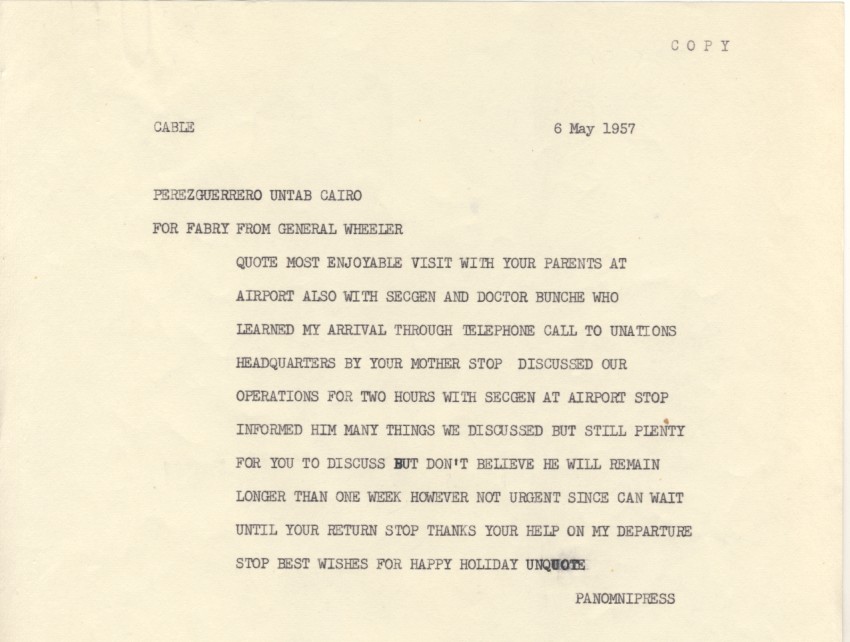
CABLE
6 MAY 1957
PEREZGUERRERO UNTAB CAIRO
FOR FABRY FROM GENERAL WHEELER
QUOTE MOST ENJOYABLE VISIT WITH YOUR PARENTS AT AIRPORT ALSO WITH SECGEN AND DOCTOR BUNCHE WHO LEARNED MY ARRIVAL THROUGH TELEPHONE CALL TO UNATIONS HEADQUARTERS BY YOUR MOTHER STOP DISCUSSED OUR OPERATIONS FOR TWO HOURS WITH SECGEN AT AIRPORT STOP INFORMED HIM MANY THINGS WE DISCUSSED BUT STILL PLENTY FOR YOU TO DISCUSS BUT DON’T BELIEVE HE WILL REMAIN LONGER THAN ONE WEEK HOWEVER NOT URGENT SINCE CAN WAIT UNTIL YOUR RETURN STOP THANKS YOUR HELP ON MY DEPARTURE STOP BEST WISHES FOR HAPPY HOLIDAY UNQUOTE
PANOMNIPRESS
——————————————————————————————————
6 May 1957
Dear General,
I hope you had a good trip, arrived safely and found everything just as you expected. Your poor little left-over here is quite busy and rather sad; Egypt and life in general without you just isn’t quite the same.
Nothing in particular happened since your departure except that two packages arrived with some workshop instruments. Basil just came from Ismaïlia; everybody there remembers you and of course they all miss UNSCO and you in particular. I reviewed and revised the Syllabus and it is being typed now. If we can finish typing it before the pouch closes, you will find it enclosed, if not it will have to wait until the next pouch. Yesterday and today I worked on Chapter XV – Administration and Finance and tonight I plan to tackle the concluding chapter. I will send you a copy of both separately with Friday’s pouch to complete your set of the provisional draft of the report.
I am enclosing the clippings of two articles from local papers which I think might be of interest to you. I spoke this morning with Aly Khalil and he will send to you an English summary of any interesting articles that appeared in the Egyptian press at the occasion of your departure. I am also enclosing the apportionment of cost of hire of salvage vessels to the individual wrecks, but unless you cable me and instruct me so, I shall not append this information to the report. Whoever wants to take the trouble can prepare a table for himself from the operational chart of work done on the wrecks. Your two albums received from Col Younes were given to the Information Centre for pouching whenever their weight permits.
I think that’s about all, except for my best wishes for a very pleasant vacation.
Yours respectfully,
Vlado
P.S. I sent a little thank you note and a few flowers to Mrs. Idriss also in the name of all the others who were invited on Friday afternoon; I am mentioning this only so that you are not surprised if you hear about it.
—————————————————————————————————–
10 May 1957
Dear General,
Please find enclosed two copies of the revised draft of the Syllabus, as well as two copies of the first draft of Chapters XV XVI of the report. The only gap in the report now is the description of the “extraordinary feats” of our salvage crews in Chapter XVI, paragraph 5, which as you may remember, Jack Connors undertook to provide; I might try my hand on it when preparing the final draft. If you have any comments to make on what I said in these two chapters, please cable me.
I worked quite hard since you left and spent all my days and evenings in the office. But my work is progressing very slowly and I am still only about halfway through the report. There are so many things that give rise to second thoughts or flash danger signals when re-read, that making a second draft is nearly like writing the report anew. I am also trying to work out the language so that it would require minimum changes when the draft is finalized at Headquarters. I expect and hope to be able to send you the complete revised draft by next Friday’s pouch. As agreed, I will send a copy to you directly to Washington; three copies to you at Headquarters in a sealed envelope to be held until your arrival; and one copy to be held at the UN for Mr. Connors.
Thank you for your kind cable from Paris. I also got a letter from my mother who of course is enthusiastic about you but felt very sorry for you that you were deprived of your nap during the Geneva stopover.
You have probably read about the Secretary-General’s visit to the Middle East. I have asked Shastri to bring to the Secretary-General’s attention my presence here and my availability to report to him on UNSCO if he so wished, and also obtained the necessary visa so as to be ready to travel to Beirut or Jerusalem at a moment’s notice. But there was no reaction to my message so far and I assume that he has probably too many other things on his mind right now. In any event, by your meeting with him in Geneva the need for an immediate oral report has, I believe, been largely obviated.
I hope you don’t mind my bombarding you with papers during your vacation. After all, you don’t have to read them.
Respectfully yours,
Vlado
—————————————————————————————————-
14 May 1957
Vlado darling,
You’re probably thinking that I’m very silly for bringing this up, but I can’t help thinking it’s important — polio vaccination. Everyone here is getting vaccinated (that is, everyone under 40) so I think if you can, you should. The germs have to go somewhere & they’re going to be a lot more virile too. Of course you’re healthy and never catch anything but since everyone else is doing it…..(that’s what the doctors say).
It’s going to be so good to see you again Vlado — I can hardly believe it’s only a few more weeks. We’ve got so much lost time to make up.
Wish I had time for more but I’m on my way to work now and have to dash.
Take it easy on those Swiss mountains.
Love from Mary Liz
——————————————————————————————————
COPY (CABLE)
16 May 1957
DRACO 253 FOR FABRY FROM WHEELER
GRATEFUL YOUR LETTER TEN MAY STOP EVEN BACK HOME WITH ALL ITS PLEASURES I STILL FIND MY PRIORITY INTEREST IS YOUR WORK IN CAIRO STOP YOUR DRAFTS ARE MOST EXCELLENT AND YOUR PROGRESS PHENOMENAL STOP WILL BE PLEASED TO RECEIVE COMPLETE REVISED DRAFT STOP SECGEN HAS APPROVED MY LEAVE TILL JUNE FIRST WHEN I WILL RETURN NEWYORK STOP HOPE VERY MUCH YOU CAN SOON BEGIN YOUR LEAVE WHICH YOU HAVE SO WELL EARNED BEST WISHES
KATZIN NEWYORK
—————————————————————————————————–
23 May 1957
Dear Mr. Fabry:
Since I have returned to New York I have been doing some of the completion work required here in the Suez Canal Office. Unfortunately, the question has arisen here by others on the date you were supposed to depart from Cairo. My only reply was that according to the best of my knowledge you were due to depart from Cairo approximately 10 May or the latest 12 May and had planned to spend just a couple of days visiting Luxor. I was advised today that on 20 May you were still in Cairo and were planning to leave there on 22 May. This was quite a surprise to me, but my only reply can be that any arrangements about your delay must be due to a special arrangement with General Wheeler in connection with the report. However, you know that it is rather difficult for us to visualize what type situation developed which required your stay in Cairo as late as 22 May.
In a letter received today by Mr. Frerker it was noted that you planned to arrive Monday or Tuesday in Rotterdam. Therefore I am writing this letter to you via the Information Officer in order that it may reach you on Monday. I have been instructed to inform you that you are to finish your work within two days in Rotterdam and mail all papers in your possession to me here at Headquarters. As a result we will assume you are on annual leave beginning Wednesday, 29 May. Furthermore, relative to your extended stay in Cairo from 10 or 12 May to 22 May, I think, for per diem purposes, you should submit a report on your requirements for your continued stay in Cairo. Pending the receipt of this report I have no alternative but to consider your stay in Cairo from 12 May to 22 May as on personal annual leave.
I am sorry to have to write you this type of letter, but when we discussed this matter in Cairo I told you at that time that the officials at Headquarters take a rather serious view of mission personnel staying in the area beyond the agreed departure time, unless there is adequate and full justification.
Regards.
Don Sullivan
——————————————————————————————————
26 May 1957
Vlado darling,
You’re post-card arrived on Friday as a big surprise. Here I was thinking you were enjoying yourself in Europe when all the time you were slaving away in Egypt. I would have written if I knew you were still there but I figured that, since you were on vacation and with your family etc., you wouldn’t miss not getting a letter from me. Thank you for that particular card, too.
Also I feel that anything I may write seems so trite, especially compared with what you would tell me. I mean, there you are making history and really tidying up this world of ours and here I am telling you about the latest movie I’ve seen. Which reminds me that Karol took me out a while ago and we saw the “Bachelor Party” – very good, people were so real. But before we left each other (to go home) he asked me to try & arrange something with Helse – just the three of us. And I did – about 3 weeks ago we went out & had a very good time. First to the Beekman Towers for a drink, then to Gay Vienna, & we had dessert at the Cafe Geiger. It’s fun playing cupid.
Actually, the last movie I saw was “The Mountain” and thought it good from the climbing point of view and the photography but the main character was a little too good to be true. I just couldn’t believe it was Spencer Tracy either.
But I do other things besides go to the movies, I assure you. Just finished Greene’s “The Quiet American” & was very amused, although I realize he must have been feeling sort of bitter when he wrote it. Yet I can’t help feeling that he does like us after all. (Maybe I say that because I’m just like a lot of Americans who can’t see why they should have any enemies.) But there was one part I liked & that reminded me of someone I know. He is describing the girl he’s in love with (she is Vietnamese) & how “…she is wonderfully ignorant. If you were speaking of General Thế [leader of Vietnamese forces] in a conversation, she’d interrupt to ask who he was.”
It had a happy ending, which was nice. Some people say he’s pessimistic – I don’t know as all I ever read by him was some short stories and the “End of the Affair.” I must read The Heart of the Matter, tho.
Hope you come home early in July since I’ll be going away the 29th to Cape Cod but not with the family (they were so vague about when they would go, I went ahead & made plans with a girlfriend). We’ve got to go hiking together!
I’ve been waiting to wear your skirt till you return but I’ve shown it to all my friends & they all agree that it’s just beautiful. I don’t know who actually purchased it and whether you mentioned whom it was for but you may tell the person who bought it that I appreciate and enjoy it so much. Thank you again, you’re a prince.
All my love,
Mary Liz
Remember what you said before you left about keeping to myself. You know, I am (in the way I think you meant) but not just because you said so, but because I want to.
——————————————————————————————————
V. Fabry.
Rotterdam, 6 June 1957
Dear General,
I trust you have received my letter from Athens and I hope you were able to decipher it. It took me nearly a week to shake off my flu – I would probably not have had the patience to stay in bed that long, but my mother was with me and I had to obey higher authority. She also convinced me that it would not make sense to fly off to Rotterdam on a Friday and we spent three wonderful days in Rhodos, basking in the sun and enjoying the sea and sights. As it turned out, there was no need for me to have a guilty conscience about delaying the Salvor’s operational report: it is still in preparation, and only today was I able to see the draft of its third section. I was pleased to note that our information is more accurate in many respects that that available to Salvors, and the comparison of our draft reports was decidedly not a one-sided affair. I am writing to you under separate cover on the results of my inquiries here.
I had a very disagreeable surprise upon my arrival here: a letter from Mr. Sullivan informing me “that it is rather difficult to visualize what type situation developed which required your stay in Cairo as last as 22 May” and that he has no alternative “but to consider your stay in Cairo from 12 to 22 May as on personal annual leave”. Mr. S. instructed me to finish my work in Rotterdam within two days and to mail all papers in my possession to him. He told me that officials at HQ take “a serious view” of mission personnel extending their stay without adequate justification; the whole tenor of the letter clearly indicates that I am very much in the dog-house.
I feel quite certain that Mr. S’s letter was not written on your instructions. In any case, I can’t believe that you would have such a low opinion of my honesty and loyalty to my duties to have authorized a letter questioning my integrity and placing a black mark on my record. I have swallowed quietly and without complaint many an undeserved slight and insult caused to me, and I always tried to assuage the feelings of other mission personnel when they were incensed by Mr. Sullivan’s tactlessness or arbitrary manners. But this time I was too deeply hurt to let things pass without comment. It is not for me to say whether I managed to do an useful job, but I certainly worked hard and long hours up to exhaustion. Since you left Cairo, there was only one evening when I quit my desk before 2 a.m.; I did not even take the time to have a look at the museum or a haircut. I have of course no witness for the solitary evenings spent in the office, but Mr. Perez-Guerrero dropped in occasionally and can testify that I was never idle and quite worn out by the time I left Egypt. Excuse my getting so emotional about it, but I resent very much Mr. S’s implication – and his placing it on the record – that I was goldbricking and trying to swindle the UN out of per-diem or leave. Maybe he cannot visualize how anyone can work hard when his superior’s back is turned, but I happen to be one of those queer characters who take a pride in completing their jobs for the sake [of] achievement and who feel unhappy as long as something is left undone.
I still consider myself bound by your instructions to send all my communications concerning the report in a sealed envelope addressed to you, and I am therefore disregarding Mr. Sullivan’s directive to send my papers to him. On the other hand, I cannot but obey his injunction not to spend more than two days in Rotterdam; I am therefore regretfully sending on some of the Appendices in an uncompleted form, not having had the time to prepare a clean copy or (as in the case of Appendix O) to select and annotate the relevant material. I assume it will have to be done in New York.
It was a wonderful mission, and having met you and worked for you was one of the nicest things that ever happened to me. I am glad and proud to have been assigned to UNSCO and will always look back with pleasure at the time spent on this assignment (even though my sincere efforts will apparently end up with a blot on my record). I only hope that my work was not quite useless and that you found my services to be of some advantage. I am looking forward to see you and Mr. Connors at Headquarters by the end of this month.
Respectfully yours,
Vlado
—————————————————————————————————-
11 June 1957
Dear Vladimir,
Thank you for your letter of 6 May from Cairo, of 27 May from Athens and of 6 June and 7 June from Rotterdam. There is no need for me to tell you again how very much I appreciate the fine work that you have done in completing our report. It is a most excellent job that I am very proud to sign. I am sure that its thoroughness, accuracy and completeness will impress the Secretary-General.
I am informed here that a short report is desired from us by 15 June. We have, therefore, decided to submit under date of 13 June the syllabus that you prepared and which we are forwarding as you wrote it except for the following changes in paragraph 2, Survey of Obstructions:
“44” obstructions changed to “43”.
“five” to a dumping ground changed to “six”.
Last sentence changed to read, “Thus, the total number of wrecks which were removed by the United Nations Clearance Operation was 30, although two additional wrecks which had been worked by the Anglo-French salvage fleet were re-worked by the United Nations forces, one of which was re-floated”.
I will, therefore, write a letter to the Secretary-General saying that our report on field operations of UNSCO will be completed and submitted to him before the end of the month; that enclosed is copy of the index of its contents and also copy of the list of appendices; that the report, exclusive of the appendices, will contain about 200 typewritten pages; that there is herewith also submitted a syllabus of our report which, it is suggested, could serve as the desired brief report on our field operations.
I don’t know how this letter and our syllabus will be handled by the Secretary-General. Colonel Katzin mentioned that he will be writing a few pages for his report to the S.G., but I don’t know whether it will be a separate one or will become a part of ours.
Our complete report will be forwarded to the S.G. about 20 June. We want to submit it as soon as we can complete our careful review and can finish assembling the appendices. Colonel Katzin is going to Rotterdam late in June and, of course, would like to have our report before he departs.
Regarding your letter of 6 June in which you referred to a letter from Sullivan, I knew nothing about it until I received your letter. Needless to say, I am very unhappy about any possibility of your receiving any black mark against your record by having done your duty in accordance with my instructions, and I assure you that I have taken the precaution of informing all those involved that you were working under my orders.
I had a talk with Oscar Schachter, and I am sure he understands the situation. He asked me my views about extension of your leave until 5 July, and I replied that it had my full approval as you have completed the report most satisfactorily in every respect.
I suggest that, if there are any administrative problems in your case, they can await your return for discussion. Naturally, I would be available for any reference that is needed, but I am sure that there is nothing serious for you to worry about.
I propose to return to Washington and my old job at the World Bank at the end of June. If necessary for me to return to New York thereafter, I will look forward with great pleasure to reunion with you.
With my warmest good wishes
Most sincerely,
R. A. Wheeler
—————————————————————————————————-
12 June
Dear Vladimir:
Copy for you.
Have a happy vacation.As ever,
SpeckSUEZ CANAL CLEARANCE OPERATION
12 June 1957
Dear Mr. Stavropoulos,
Now that Mr. V. Fabry has completed his assignment with the Suez Canal Clearance Operation, I wish to thank you most sincerely for making his services available to us. In writing the report of our field operations, he has performed a valuable and important service to our Mission, for which I shall always feel grateful to him.
I wish to commend him highly for his intense application to our work and for his quick grasp of the technical side. He showed unusual ability in clearly and accurately preparing reports of complicated technical operations.
I admire Mr. Fabry not only for his high intelligence and professional competence but also for his fine personal character, honesty and integrity.
With best wishes,
Most sincerely,
R. A. Wheeler
Special Representative of the
Secretary-General
United NationsThe Legal Counsel
United Nations
New York
—————————————————————————————————-
12 June 1957
Vlado darling,
This is just a note. Because I think you might misinterpret a silence. But all I want to do now is wait until I see you. You do understand.
All my love
Mary Liz
P.S. Your package did not arrive yet. But thank you anyway for remembering.
—————————————————————————————————-
14 Chemin Thury
Geneve20 June 1957
Dear Mr. Schachter,
As it will take some time before Vladimir can write himself, I thought I better give you the bad news: Vlado came from Holland all drawn out and only a shade of himself, complaining of indigestion. He thought that perhaps the intestinal ‘flu which he caught upon leaving Egypt was coming back. But his fever was getting worse and worse, hovering around 104, with peaks up to 105, and finally last Saturday his doctor conceded that it looks like an infectious hepatitis. You just cannot imagine in what state the rest of the family was…We were all very worried about Vladko, especially the high fever, and until the diagnosis could be stated, we were all in a panic. The doctor said that his body fought the outbreak of the disease very strongly, and it was not until yesterday that it could be proved that Vladko has in fact jaundice of the tough virus type, contracted sometimes between 6-12 weeks ago. It is too early to say yet how long it would take to cure him, but it is usually the matter of 2-3 months. The doctor also said that the ‘flu he had when leaving Cairo was apparently part of it. I am very sorry for Vladko, he was so much looking forward to spent his leave with us, and now he is suffering in bed. My poor parents had just too much this year, first my accident, and now this bad illness and all the worry and anxiety it brings with it. Well, let’s hope that there will be no further complications and that about 2-3 months he will be feeling well again.
I was, and all the family was sorry to hear that you are not coming this year to Geneva. It would have been lovely to see you again. How is Molly? And how are the young ladies? I hope all goes well for you.
Please excuse this letter, which is rather shaky. I am still not quite well, it seems that my head is still not in a right place, and now it will be 3 months since the accident happened.
Kindest regards from my parents and Vladimir, all our best wishes for you, Molly and the young ladies.
Affectionately yours,
Olga
—————————————————————————————————–
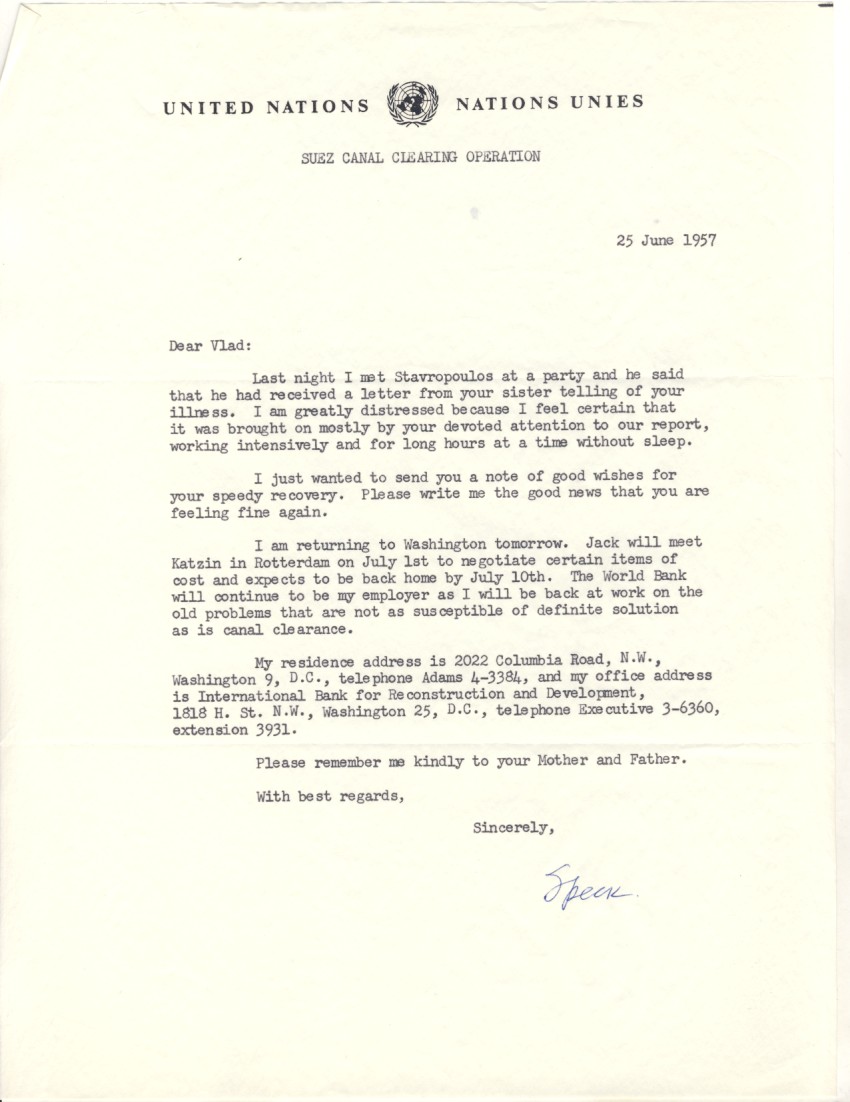
25 June 1957
Dear Vlad:
Last night I met Stavropoulos at a party and he said that he had received a letter from your sister telling of your illness. I am greatly distressed because I feel certain that it was brought on mostly by your devoted attention to our report, working intensively and for long hours at a time without sleep.
I just wanted to send you a note of good wishes for your speedy recovery. Please write me the good news that you are feeling fine again.
I am returning to Washington tomorrow. Jack will meet Katzin in Rotterdam on July 1st to negotiate certain items of cost and expects to be back home by July 10th. The World Bank will continue to be my employer as I will be back at work on the old problems that are not as susceptible of definite solution as is canal clearance.
My residence address is 2022 Columbia Road, N.W., Washington 9, D.C., telephone Executive 3-6360, extension 3931.
Please remember me kindly to your Mother and Father.
With best regards,
Sincerely,
Speck
—————————————————————————————————-
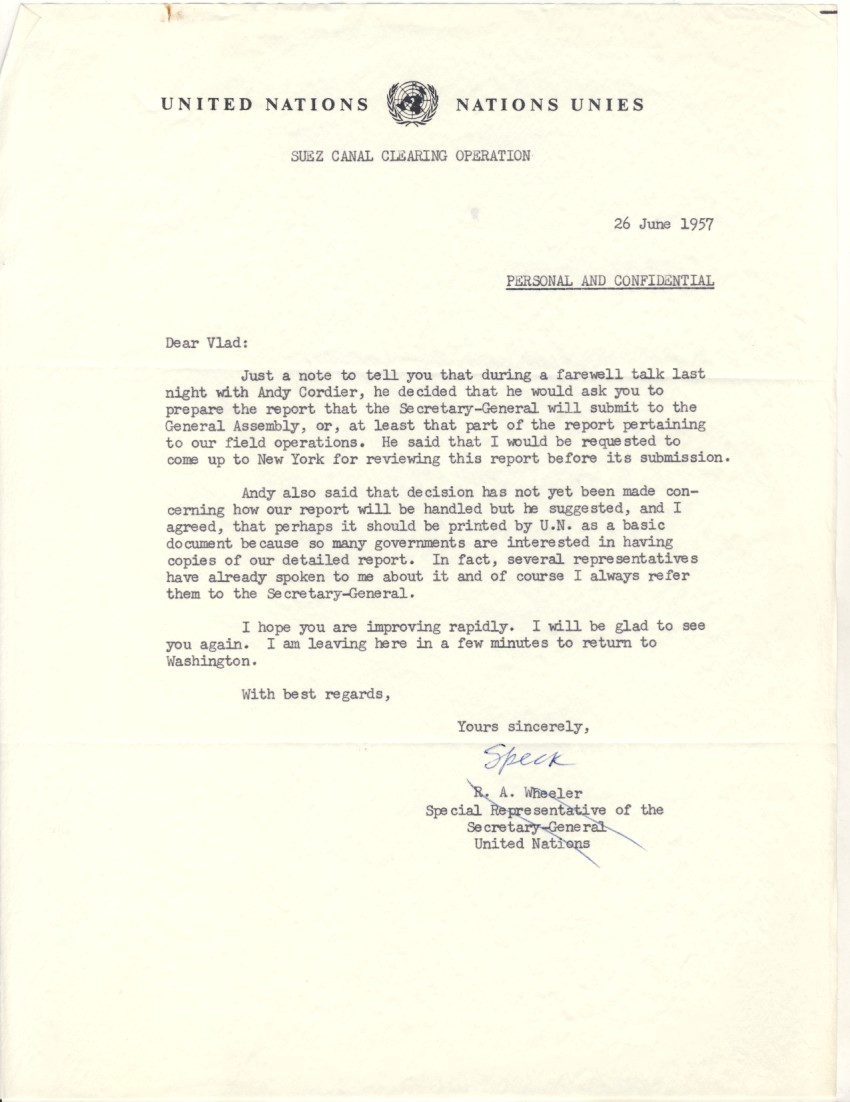
SUEZ CANAL CLEARING OPERATION
26 June 1957
PERSONAL AND CONFIDENTIAL
Dear Vlad:
Just a note to tell you that during a farewell talk last night with Andy Cordier, he decided that he would ask you to prepare the report that the Secretary-General will submit to the General Assembly, or, at least that part of the report pertaining to our field operations. He said that I would be requested to come up to New York for reviewing this report before its submission.
Andy also said that decision has not yet been made concerning how our report will be handled but he suggested, and I agreed, that perhaps it should be printed by U.N. as a basic document because so many governments are interested in having copies of our detailed report. In fact, several representatives have already spoken to me about it and of course I always refer them to the Secretary-General.
I hope you are improving rapidly. I will be glad to see you again. I am leaving here in a few minutes to return to Washington.
With best regards,
Yours sincerely,
Speck
R. A. Wheeler
Special Representative of the
Secretary-General
Untied Nations
——————————————————————————————————
26 June 1957
Dear Olga,
I was greatly distressed to receive your letter of 20 June telling of Vlado’s illness. I can only tell you how much we hope that he will speedily recover and that he will have the vacation to which he has been looking forward and which he has so well deserved. His work in Suez has received the highest possible praise from General Wheeler who, in addition, has told me of the great respect and warm affection which he has for Vlado. Vlado has undoubtedly been too modest to tell you of this, but I am sure your parents will be happy to hear of the high regard in which he is held by those who have worked with him.
We are sorry to hear that you too had not yet gotten over the effects of your accident, but I hope that by the time this letter reaches you you will be completely well. Perhaps you will be able to come with Vlado when he returns to New York.
Molly joins me in sending our love and best wishes to all of you. Please let me hear from you as to how Vlado is getting on.
Sincerely,
Oscar
Oscar Schachter
—————————————————————————————————-
30 June 1957
Darling –
Although I couldn’t believe it when Karol told me, it’s really no wonder after the super-human feat you accomplished. I only hope you haven’t suffered too much. I know it has been awful for you and not only physically. But Vlado, the only way you’re going to lick this thing is with Rest & Diet. And complete rest – you must force yourself not to think of international affairs for now. And you can force yourself if you really want to.
A friend of mine, who is a doctor, came down with it last spring and had to stop seeing her patients for a length of time. It was hell – she has a real vocation, she feels – but she did it. And now she’s cured.
You’re so healthy anyway that you should recover easily & quickly. Don’t forget I took care of people with Hepatitis, so I know what I’m talking about.
You know I miss you terribly, especially now it is hard. But I have beautiful memories. Like the night we went to the concert at the U.N. You kept looking at me from time to time and I was torn between listening to the music and wanting to look back at you – which I did. It’s so good to have the records of the music – that is your Overture to Egmont, & my Beethoven #7 & Scherzo from Midsummer Night’s Dream. I wonder why we love music – is it just because of the collection of harmonious sounds or does music contain something intangible. To continue through with my remembrance – Afterwards we went for a drink to Bemelman’s Cafe & talked about how stupid conformity was. And I knew right then that I more than liked you.
I’ll never have to ask myself why I love you Vlado.
You said that night that you felt comfortable with me. I hope this is always true because even though we haven’t had time to talk about everything, I think we feel the same about a lot of things.
It’s time for bed now so I’ll say good-night and please be good to yourself, darling.
Mary Liz.
Medal of Saint Bernard
From the estate of Vladimir Fabry, here are a few items of interest. First, the “Notice of Death” from Ndola, Northern Rhodesia:
(click images to enlarge)

The same notice would have been sent to the families of the other crash victims, who should be remembered here for their sacrifice:
H. A. Wieschoff
William Ranallo
Alice Lalande
Harold M. Julien
Serge L. Barrau
Francis Eivers
Per Hallonquist
Nils-Eric Aahreus
Lars Litton
Nils Goran Wilhelmsson
Harald Noork
Karl Erik Rosen
S.O. Hjelte
P.E. Persson
The post mortem of Vlado says his body was badly burned, and that he was identified by a monogrammed signet ring, so it was surprising to find this letter, and to learn I was in possession of at least one artifact from the crash:
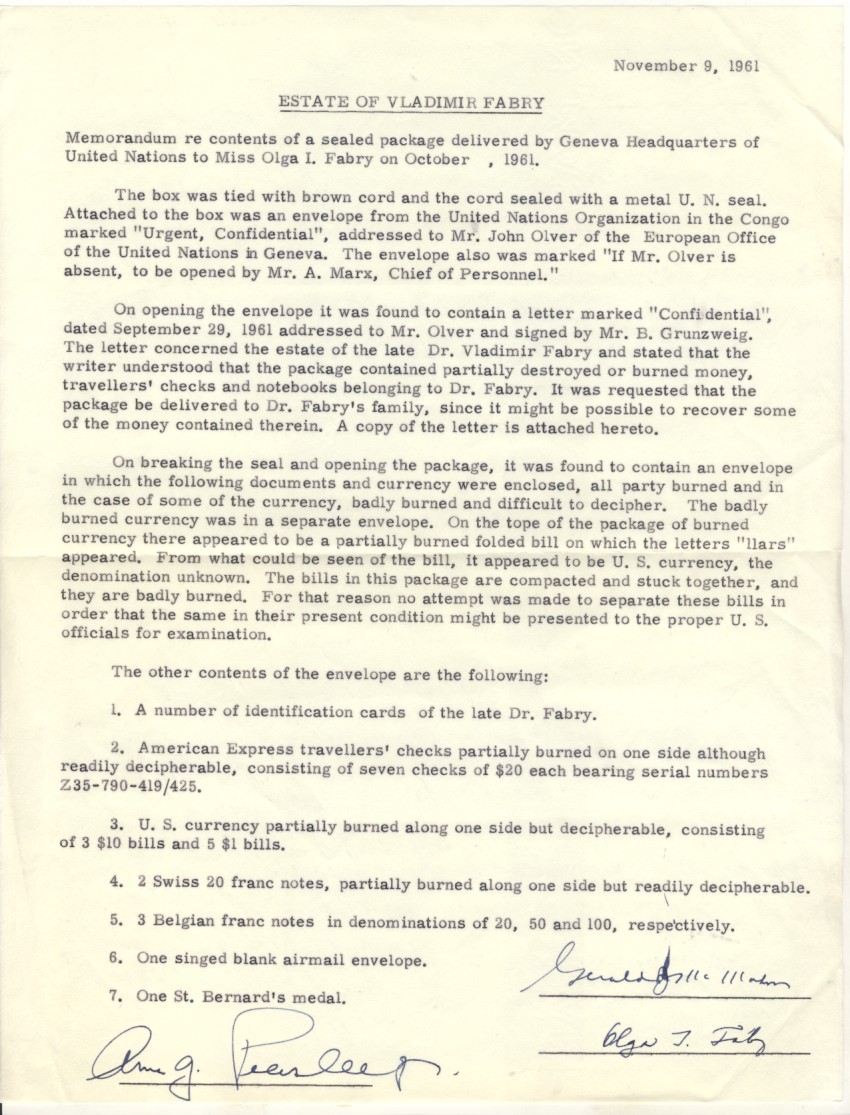
November 9, 1961
ESTATE OF VLADIMIR FABRYMemorandum re contents of a sealed package delivered by Geneva Headquarters of United Nations to Miss Olga I. Fabry on October , 1961.
The box was tied with brown cord and the cord sealed with a metal U.N. seal. Attached to the box was an envelope from the United Nations Organization in the Congo marked “Urgent, Confidential”, addressed to Mr. John Olver of the the European office of the United Nations in Geneva. The envelope was marked “If Mr. Olver is absent, to be opened by Mr. A. Marx, Chief of Personnel.”
On opening the envelope it was found to contain a letter marked “Confidential”, dated September 29, 1961 addressed to Mr. Olver and signed by Mr. B. Grunzweig. The letter concerned the estate of the late Dr. Vladimir Fabry and stated that the writer understood that the package contained partially destroyed or burned money, travellers’ checks and notebooks belonging to Dr. Fabry. It was requested that the package be delivered to Dr. Fabry’s family, since it might be possible to recover some of the money contained therein. A copy of the letter is attached hereto.
On breaking the seal and opening the package, it was found to contain an envelope in which the following documents and currency were enclosed, all party burned and in the case of some of the currency, badly burned and difficult to decipher. The badly burned currency was in a separate envelope. On the top of the package of burned currency there appeared to be a partially burned folded bill on which the letters “llars” appeared. From what could be seen of the bill, it appeared to be U.S. currency, the denomination unknown. The bills in this package are compacted and stuck together, and they are badly burned. For that reason no attempt was made to separate these bills in order that the same in their present condition might be presented to the proper U.S. officials for examination.
The other contents of the envelope are the following:
1. A number of identification cards of the late Dr. Fabry.
2. American Express travellers’ checks partially burned on one side although readily decipherable, consisting of seven checks of $20 each bearing serial numbers Z35-790-419/425.
3. U.S. currency partially burned along one side but decipherable, consisting of 3 $10 bills and 5 $1 bills.
4. 2 Swiss 20 franc notes, partially burned along one side but readily decipherable.
5. 3 Belgian franc notes in denominations of 20, 50 and 100, respectively.
6. One singed blank airmail envelope.
7. One St. Bernard’s medal.
Though I have looked, I have found no sign of the burned notebooks. Here is all that remains from the crash, from the last moments of Vlado’s life, one St. Bernard’s medal, which I now carry as my own good luck charm:


Letter from High Commissioner of South Africa, H.L.T. Taswell, 29 September 1961
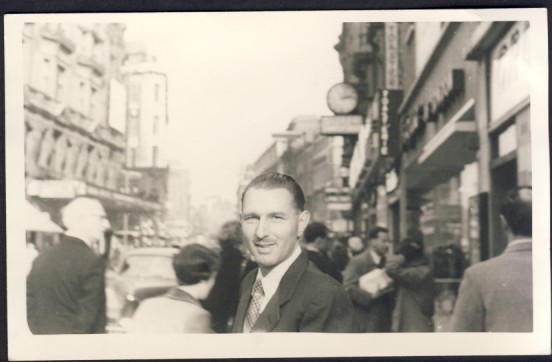
Having spent so much time thinking about the life of Vlado Fabry, it has been impossible not to care about the way he died, and to want to know the truth about what happened. I’ve been reading every book and article I can find on the subject, but, for me, just reading the 1962 reports of the UN and Rhodesian Commissions investigation of the crash has been very revealing, especially in regards to Fouga Magisters which, I am convinced, shot down the Secretary General’s plane and caused it to crash on the night of 17/18 September, 1961. There were many Africans who saw one or two smaller planes following the DC-6 SE-BDY, but when they were interviewed by the Rhodesian and UN Commissions, they were treated like ignorant children and their testimonies were dismissed as fantasy. I learned a lot more about their treatment in Goran Bjorkdahl and Jacob Phiri’s excellent 2013 article for INTERNATIONAL PEACEKEEPING, Eyewitnesses: The Hammarskjold Plane Crash. From the article, here is one particularly awful comment from UN consultant Hugo Blandiori:
‘Thus, when it is taken into consideration that some of the African witnesses had lack of knowledge in air-plane identification, were of limited learning and might have been motivated by personal or political reasons, it becomes difficult in assessing the truth of their statements…As a consequence, I am of the opinion that the testimony of the African witnesses to the effect that they saw one or two small crafts flying along with SE-BDY just prior to its crash, has to be accepted with a grain of salt’.
I have provided here a few excerpts from both the Rhodesian and United Nations Commission, in order for you to appreciate the context of the following letter, which was written by former High Commissioner of South Africa, H.L.T.Taswell, on 29 September 1961, and was found in the archive of former Prime Minister of the British territory of the Central African Federation Sir Roy Welensky. A scan of the letter was sent to me by an anonymous source. I’m not positive if this particular letter is still considered “TOP SECRET”, but it won’t be anymore. It belongs in the public domain.
“At the outset we would say no reason was suggested, and we cannot think of one, why anyone who might have been able to attack this aircraft from the air should ever have wanted to attack it as it carried Mr. Hammarskjold on the mission he was then undertaking.”
(Federation of Rhodesia and Nyasaland, Report of the Commission on the Accident Involving Aircraft SE-BDY, chaired by Sir John Clayden, Chief Justice of the Federation, presented to the Federal Assembly, Salisbury, Federation of Rhodesia and Nyasaland; February 1962; Annex III, p.20, par.10)
“On landing at Leopoldville [the morning of 17 September 1961], [Flight Engineer] Wilhelmson had reported that SE-BDY had been fired on at the takeoff from Elisabethville. A thorough inspection of the aircraft was accordingly carried out under the supervision of Chief Mechanic Tryggvason of Transair. In the course of the inspection it was found that number 2 engine (inboard port) had been struck by a bullet, which had penetrated the engine cowling and hit the exhaust pipe. The exhaust pipe was replaced and the plane refueled to a total of ten tons.”
(…)
“The Commission further notes that no flight plan for the SE-BDY was transmitted to Salisbury. The Commission has taken into consideration the conditions existing in the Congo at the time and in particular the danger of an attack from the “Fouga Magister” which explains this departure from the rules governing commercial aviation. Indeed, the system of aeronautical communications cannot ensure the secrecy of messages”
(…)
“It is also relevant to observe that, because of the danger of an attack from the “Fouga Magister”, most of the flights in the Congo at the time were undertaken at night”
(…)
“The possibility of other aircraft being in the area of Ndola at the time of the crash was examined. Since the “Fouga Magister” of the Katangese Armed Forces had been operating against the United Nations in Katanga, the possibility of its reaching Ndola was examined by the Rhodesian Board of Investigation and the Rhodesian Commission of Inquiry. It was established that it could not have made the flight from its normal base in Kolwezi to Ndola and returned to Kolwezi since the distance is greater than its operational range. It was also stated by its captain and others that the “Fouga” was on the ground at Kolwezi the night of 17/18 September and could not have operated that night. This evidence is not entirely conclusive since the captain admitted before the Rhodesian Commission of Inquiry that on at least one occasion the “Fouga” had taken off from an unpaved track. While this track was said to be at an even greater distance from Ndola, nothing would appear to preclude the use of a track within range of Ndola. Nevertheless, there is no evidence that the “Fouga” was in the vicinity of Ndola on the night of the crash.”
(…)
“The Commission has, however, been informed that no radar watch was maintained in the Ndola area during the evening and night of 17 September 1961 and, therefore, the possibility of an “unknown aircraft” cannot be entirely excluded.”
(…)
“Certain witnesses testified that they saw or heard a second, or even third, plane. In particular, some of these testified that they saw a second smaller aircraft flying close to SE-BDY after it had passed over the airport or immediately before the crash and that the smaller aircraft was beaming lights on the larger. The Commission visited with some of these witnesses the spots from which their observations had been made and endeavored to obtain an understanding of their testimony. The Commission considers that several of these witnesses were sincere in their accounts of what they believed they saw.
The Commission is also of the opinion, however, that those witnesses may have misinterpreted their observations and reported some incidents which may not in fact have occurred in the way or at the time that they believed when they testified before the Commission.”
(United Nations General Assembly, Report of the Commission of the Investigation into the Conditions and Circumstances Resulting in the Tragic Death of Mr. Hammarskjold and the Members of the Party Accompanying Him, chaired by Rishikesh Shaha (UN A/5069); 24 April 1962; par. 69, 82, 89, 135, 136)
“TOP SECRET”
Salisbury S.R.
29th September, 1961Dear Mr. Jooste,
As you will know, I had correspondence, during your absence, with our Minister regarding a suggestion made by Mr. Harper, Leader of the Opposition in Southern Rhodesia, that we assist in the establishment of an English language paper in this territory. The Minister’s reply is dated 5th September, 1961.
I have since had a further talk with Mr. Harper and explained the position to him. He will be visiting South Africa one of these days to have a discussion with Minister de Klerk on our Immigration laws. I will write to you again in due course on this matter.
Another approach for the establishment of an English language paper in Southern Rhodesia has since been made to me. It comes from quite a different quarter – namely from Mr. John Gaunt, Independent Member for Lusaka West, Northern Rhodesia, in the Federal Assembly. Particulars of Mr. Gaunt, taken from page 940-92 of the Who’s Who of Southern Africa 1961 are attached.
Mr. Gaunt is a colourful, outspoken and irrepressible politician who has a considerable following in this country. I would be inclined to describe him as the Arthur Marlow of the Federation. He is a fighter, a strong protagonist of the maintenance of white civilisation, yet not a supporter of our Government’s policy in its entirety. At the same time he is not an open or malicious critic of ours but a good friend.
A summary of what Mr. Gaunt had to say during the interview is attached.
Very briefly, his suggestion is that we make about £300,000 available through commercial interests in South Africa for the establishment of an English language paper here. This would be in opposition to the Argus press which is dedicated to the appeasement of “black nationalism” and aims at inducing whites to hand over control to a black majority as quickly as possible.
If £300,000 seems a great deal of money it should, he says, be borne in mind that it is barely the cost of a medium size commercial aircraft.
Mr. Gaunt does not feel that the proposed paper could dedicate itself to applying our racial policy in this country. The position here has already changed too much for that. But what it could do is ensure that the present constitution is rigorously adhered to. The Governments in Southern Rhodesia and the Federation should not be allowed to use the present constitution just as a temporary measure and as a means of sliding towards a still more liberal constitution.
Mr. Gaunt also feels that this paper would be able to further South Africa’s interests greatly by concentrating on favourable positive information. Such a paper if air mailed to South Africa each day could also serve a valuable purpose in our country and would assist the Government.
Mr. Gaunt would like to be made editor-in-chief so that he could give the correct slant to reports. He does not want to be responsible in any way for the financial side.
To me this idea of an independent paper has great appeal. Any opposition here is completely frustrated through having no paper. The Argus group is so powerful, moreover, that it could go far to breaking even the most established politician who does not follow its particular line – and I do not exclude Sir Roy Welensky.
Nearly two years ago Anglo-American and NST[? abbreviation unclear] withdrew their financial support of the United Federal Party. It looked then as if they were going to support Todd who was given a tremendous boost by the press because of his liberal line. Now the U.F.P. are following the liberal line themselves, Todd is in the background, Anglo-American and NST[?]have, I hear, restored their financial support of the U.F.P. and the Argus press are supporting the party. That the United Federal Party have been forced to toe the line by Argus press is no secret to us in South Africa.
The future say of the white man in the Government of this country does not look rosy. Banda has control in Nyasaland, Kaunda may, through British action, still attain a similar position in Northern Rhodesia. Southern Rhodesia’s new constitution could be merely the first step towards giving greater say to the black man here. The Federal constitution when revised must follow the pattern of the constitutions of the three constituent territories. That means infinitely greater say for the black man in the Federal Assembly. Such say will have to be very considerable indeed if Banda is to be induced to stay in the Federation.
Sir Roy and the United Kingdom are already at loggerheads over the talks on the Federal constitution. Sir Roy wanted them now. The United Kingdom wants postponement, no doubt with the object of further appeasement in Northern Rhodesia and conditioning of white feeling to a black majority government.
There is strong and bitter feeling in this country against the United Kingdom. Given an independent press it could be fanned to a point where the United Kingdom could be seriously embarrassed, and where Southern Rhodesia could still be saved, where it could break from the Federation and become independent. There are many influential men here would gladly grasp a weapon like an independent paper.
There are many seeds of discontent. This week we heard rumours of a serious division in the Federal Cabinet. The Deputy Governor of the Bank of Rhodesia and Nyasaland, told me only a few days ago too that the financial picture here is far from rosy. The “expected” recovery after the Southern Rhodesia referendum has not materialized. The number of people who voted “yes” at that referendum and now feel they were duped and should have voted “no” is increasing. Properly exploited this discontent could have a marked influence when Southern Rhodesia goes to the polls in about a year’s time.
If the United Federal Party and the Argus press continue unchecked, it is merely a matter of time before our buffer zone north melts away. With an independent paper we could stave that day off and could even preserve the Southern Rhodesia[border? word obscured]with its 215,000 whites(2,630,000 blacks).
As Mr. Gaunt points out it is surely to our interest to have the main struggle for survival take place in Southern Rhodesia rather in South Africa.
A Canadian group is now negotiating for the purchase of African Newspapers here. One can imagine the kind of vitriol the Canadians would be capable of using against us.
The “Citizen”, Mr. Gaunt says, could be bought by us for a song. An immediate start could be made with a paper. Improvements could follow.
The Argus will try to kill any independent paper and financial losses must be expected. But would they not be worthwhile? We are fighting for our lives. They are fighting for a black majority government, for cheap labour and greater profits.
H.L.T. Taswell
High Commissioner
This letter perfectly illustrates how propaganda works, and it’s a history lesson on racism, and the lengths men will go to defend their right to it. Even though the Fouga Magister is a small fighter jet, the sentence about an independent paper being less expensive to purchase to defend their racial policy than “a medium size commercial aircraft” gave me a chill, because this written only 11 days after the crash. No wonder they hated Hammarskjold so much – what was the fragrance of life to the African was the stench of death to white rule.
“A Desperate Personal Demand For Help”

In 1961, even in the midst of the Congo Crisis, Vlado was doing all he could to help his family. Conor Cruise O’Brien’s observations of Vlado, in his book To Katanga and Back – that he did nothing but work and hardly slept – were fairly accurate for the time he knew him, because it seems that he was spending every spare moment attending to the unfinished legal cases of his father, Pavel Fabry, who died December 19, 1960.
From February 2, 1961, here is a letter to United Nations legal counselor Oscar Schachter from Vlado’s Maminka:
Dear Mr. Schachter,
I am sorry to take your valuable time and to disturb you with this letter. It is only the serious situation and the emergency in which I find myself after the death of my beloved husband that urge me to write this letter.
As you may know my husband was working for some years as an international lawyer with the German Government on war reparation. My husband devoted not only his effort, time, money, but finally his life to this cause. Unfortunately it was not permitted to him to finish his affairs as he died so very suddenly in the middle of his unfinished task. Vladko who was always a remarkable son is now sacrifying[sic] all his free time besides his work and his vacations to work until late at night on his father’s affairs. There are many difficulties, many hard problems to be solved, which will need patience, time, travelling and possibilities of good communications.
All these are problems which I cannot face alone, and the only person to solve them and to continue the unfinished work of my husband is my son. If we had to take a lawyer, we would have to do it in many countries of Europe and my husband has indebted himself already too much to afford so many lawyers. It is therefore only my son who is the only person to help me out in this.
My health has been weakened by the sudden loss of my husband. When I learned about the transfer of my son to Congo, it was another shock for my heart illness. I am unfortunately unable to cope alone with the situation I have mentioned as much as I don’t like to ask something, I am driven to it by this emergency. It is furthermore a situation which presents itself during our life, such as accident, illness, death and its consequences, etc. I would like to ask you to help me, Mr. Schachter. You have always been very nice to us all, a real good and understable[sic] friend and I would like to ask you not to let me down now, when I most need it.
I wonder whether it would be possible to arrange a transfer for my son to Europe – Geneva or elsewhere – so that he could easier communicate and work to finish my husband’s most urgent cases. I have never asked you anything before and I would never have, but as you can see it is a very serious situation and I am in an emergency.
It is very difficult for me to write this letter and I am doing so on my own, without my son’s knowledge. Would you please consider it as such, a desperate personal demand for help.
Many thanks for everything you will do for me to help me out. Kindest regards to Molly and to you.
As ever yours,
Olga Fabry Palka
Vlado’s mother also wrote Constantin Stavropoulos for help. Here is a personal telegram she sent to him, dated February 11, 1961:
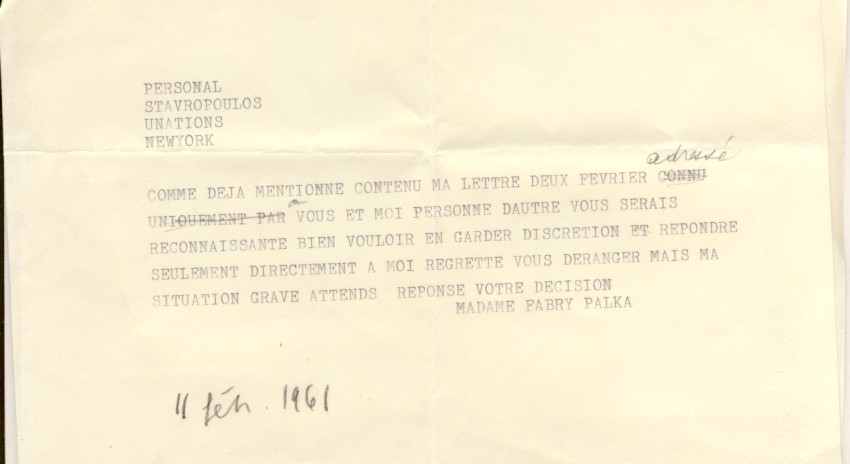
(click scan to enlarge)
Letters From Vlado: 1953
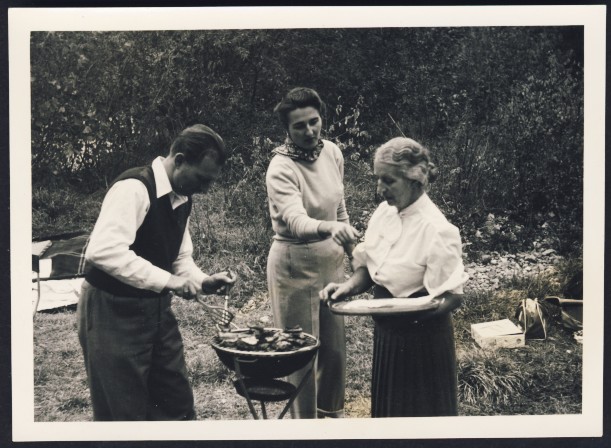
Vlado on a pic-nick with his mother and sister
To give balance to the glowing eulogies of Vlado, I offer two charming letters that he wrote from 1953.
The first is written from New York, 3 March:
Guapa mia,
I think it’s something like two months since I wrote you a decent full letter, and you would have the undeniable right to be quite angry if I hadn’t warned you about my extremely bad writing habits. Even so, please divide your anger equitably between me and my office, for we are both solidarly and undivisibly[sic] guilty for the long delay in my letter-writing. My Committee met from January 5 to February 22, and it was more of a mad-house than ever. I enjoyed the work very much, and so I did probably more than would have really be required of me, with the end result of spending and average of 70 hours a week in my office. Add to this the time one has to spend on various official parties and other quasi-mandatory occasions, the time for dressing, eating, household chores and – unfortunately – a bit of time that one unavoidably spends sleeping, and there remains just enough left to do the minimum of reading to keep in touch with financial events and other news that one cannot afford to miss. Apart from the lack of time, my mind was too preoccupied and too tired out to write a decent letter anyhow. You are not the only one who had to bear up with me during these last two months – my own parents didn’t hear much from me either, and I had to refuse nearly all private social engagements and pleasures. At one point I got so tired, after having worked until 3 or 4 in the morning for several days in a row, that I bumped with my face right against the steel edge of my car’s roof – and then was so preoccupied that I did not notice that I had hurt myself until the blood covered my left eye and I suddenly realized that something is wrong with my driving. But don’t worry, my beauty – sic! – is not affected – at the emergency ward of a hospital where I stopped I was given a thorough stitching, and they did such a nice job that there is practically no scar left.
The last two weekends I was catching up a bit on my body’s craving for exercise – I had worked all weekends since Christmas and so had not been out on the fresh air except for the 10 or 20 meters from the door to the car – and went skiing. Of course, to go skiing here is not so easy as in Geneva – Stowe, which is the nearest place with good trails and good snow, is 600 km away, so one has to spend most of Friday night and Sunday night driving. There are no wide open slopes either, just trails through woods where one has swing it around like in a slalom. The trails are of course of varying steepness and difficulty, from easy softly sloping ones for beginners to steep twisters, and towards the evening when they get iced up from the hundreds of skiers who hurtle through them. some of these trails can be a real challenge even for experts. Both weekends I had a carful of friends with me, to save on transportation expenses, and last weekend we rented an entire floor of a house, complete with a large living room with a big fireplace, and with kitchen, and the girls cooked our breakfast and dinner so that we did not spend too much money.
To correct the impression that all of my life was only work I must add that I also managed to go to two balls, one Latin American affair given by the Brazilian government and the Pan-American Union, with two orchestras flown in from Rio, and an excellent gay atmosphere, and one extremely fashionable “high class” American ball, which was much more stuffy but very interesting because it was “the” exclusive ball of society. Last week I resumed accepting dinner invitations – which I had to refuse while the Committee was meeting because I would have never found the time to go, and yesterday I gave myself a little bachelor-dinner party for fourteen guests. It was a bit of a problem to fit in everything in my small apartment, and I didn’t start shopping and preparing for the party until five in the afternoon because I was tied up in the office, so that when my first guests came I was still out getting ice and they had to wait for a few minutes before I came back and let them into the apartment. I couldn’t of course give them anything as fancy as your little Chinamen-eggs, but while they were having drinks and in-between keeping up conversation I managed to prepare some hors-d’oeuvres salad with tongue, ham and salmon, and while they were eating that I cooked my lobster-dish, something like a langouste cardinal, which I had learned how to do while visiting some friends near Boston last year, and then we all swarmed over the fondue pot and everybody dunked into it right in the kitchen-cupboard and was delighted at the extravagant delicacy. So you see, it’s much easier to satisfy guests here, you don’t have to go into so much trouble and formality. Around two in the morning I called for volunteers for dishwashing, and in less than half-hour all the hundreds of dishes, glasses and silverware – which I had rented for the occasion – were stacked away and I could compliment my guests out and go to bed.
Well, I think that’s about all the news for now. I am looking forward to a bit more varied life now, want to see some plays and do more skiing – and in reverting to the nice things I will be thinking more of you.
Love,
Vlado
This second letter was written from Geneva, 26 December:
My dear one,
You must excuse my rather disorganized(and probably hardly legible)first letter – I wrote it between appointments in an effort to give you news of me as soon as possible. But this purpose was thwarted when I discovered that in addition to the airfield strike, also postal employees were on strike in France, so that sending the letter from Paris would have simply meant its getting lost in the piles of amassing mail which was being left uncollected. Really, France managed to get itself in a mess again – no president, no air traffic, no mail – and everything so expensive that I didn’t dare to buy anything. The theaters also were rather disappointing – a general air of decadence and negativity pervades the selection of plays, their direction and production, and to some extent also the performances of the players. If I didn’t have business to take care of, I would have probably left disgustedly the first night – as it was, I left disgustedly the third night.
The trains for Geneva were sold out, so I left through Basel and Lausanne, leaving Father behind for another day. In Lausanne, I had a big surprise – my mother walked suddenly through the carriage looking for a place to sit – she was at a wedding there, and neither of us knew that the other will be using the same train.
I had a very nice Christmas Eve, just the four of us, mother prepared a big Slovak Christmas dinner, and it was all very sentimental and mellow, each of us had shining eyes and tears ready at the slightest provocation. We all went together to church, and I even joined then in Confession and Partaking of the Cene, which I had not done for quite a few years. Yesterday I made another concession – visiting relatives and friends – but I managed to be carried away by the spirit enough to enjoy all of it. On Christmas Eve, we had phone calls from all over Europe, – Madrid, Stockholm, Munich, Zurich – friends wishing us Merry Christmas and welcoming me here, – it was all very sweet and comforting to know that there are still friends around who will go into so much trouble to make us feel good. I was also surprised at the number of people who sent us gifts and cards, many of whom I could hardly recall.
There is practically no snow anywhere, and skiing prospects look very gloomy. All the major roads across the Alps are still open – something nobody can ever recall having happened at Christmas. Even if there should be snow now, it would not have enough base to permit mountain-crossings, and so I will have to postpone skiing until at least the second week of January. In the meanwhile, I shall probably leave for the Cote d’Azur next Monday or Tuesday, and stay there for a week or so. I shall let you know what next.
I haven’t thanked you yet properly for your Christmas wishes (or rather, for Mona Lisa’s) – I had not seen the card when I was phoning you from the air-terminal, having eyes only for your picture, and there was no more room on my letter from Paris. How is dear ML, does she behave (and do you)???
I thought of you at Christmas time, and I shall be thinking of you when the New Year arrives (and quite often in-between, before and thereafter). I am wishing to you and to your mother all the very best for the coming year, and as a special little wish for myself I add that of being with you very, very often.
Love,
Vlado
Curriculum Vitae of Dr. Pavel Fabry, December 17, 1955, Geneva

(Pavel Fabry is front and center – click on photo to enlarge)
To understand the character of Vlado Fabry, it’s important to know the character of his father – Dr. Pavel Fabry, who was imprisoned and tortured by Nazis and Communists for his opposition. When Pavel escaped from the Czechoslovak prison hospital, with the help of his friends, they dressed him as a nun and hid him inside a beer barrel on a train headed to Switzerland. In Geneva, Simone Baridon (a close friend of my mother-in-law) was with Olga Fabry the day Pavel arrived, and she remembers her bravery that day, when Olga said “Daddy is crossing the border now.”
This is the C.V. of Dr. Pavel Fabry that was written in English, and the following document was written in German – this was my first attempt at translating German, so it’s a little awkward, but the story of Pavel is still very compelling.
Pavel Svetozar FABRY, LLD, was born on January 14th, 1891 of an old family of industrialists and businessmen. After graduating in business administration, he studied law, attaining the degree of Doctor of Law; passed the bar examinations; and successfully completed the examinations required to qualify for judgeship.
During World-War-I, Mr. Fabry served as officer in an artillery division as well as in the service of the Army’s Judge Advocate-General. He became the first Secretary of the Provisional National Council established to prepare the liberation of Slovakia and the orderly transfer of its administration to the Czechoslovak Government. After the foundation of the Czechoslovak Republic, he was appointed Prefect (chief Government official) for the Eastern part of Slovakia.
When the Communist armies of the Hungarian Government of Bela Kun attacked Slovakia in 1919, Mr. Fabry was named High Commissioner Plenipotentiary for the defense of Eastern Slovakia. In this function he was entrusted with the co-ordination of the civil administration with the military actions of the Czechoslovak Army and of the Allied Military Command of General Mittelhauser. His determined and successful effort to prevent Eastern Slovakia to fall under the domination of Communist Armies – the victorious results of which contributed to the fall of the Communist regime in Hungary – drew on Mr. Fabry the wrath of the Communist leaders; they declared him the “mortal enemy of the people”, led violent press campaigns against him and attacked him overtly and covertly continually and at every opportunity.
After the consolidation of the administrative and political situation of Slovakia, Mr. Fabry left the Government service and returned to his private practice as barrister. He specialized in corporation law and his assistance was instrumental in the founding and expansion of a number of industrial enterprises. He became Chairman or one of the Directors of Trade Associations of several industrial sectors, particularly those concerned with the production of sugar, alcohol, malt and beer. He was elected Chairman of the Economic Committee of the Federation of Industries, and played the leading role in several other organizations. He also was accredited as Counsel to the International Arbitration Tribunal in Paris.
Among civic functions, Mr. Fabry devoted his services particularly to Church, acting as Inspector (lay-head) of his local parish and as member of the Executive Committee of the Lutheran Church of Czechoslovakia. His appointment as delegate to the World Council of Churches’ meeting in Amsterdam in 1948 prompted his arrest by the Communist Government.
Although Mr. Fabry never stood for political office nor for any political party function, he was well known for his democratic and liberal convictions, and for the defense of these principles whenever his activities gave him the opportunity to do so. He earned himself a reputation in this respect which brought him the enmity of the adversaries of democracy from both the right and the left. He became one of the first Slovaks to be sent to a concentration camp following the establishment of a Pro-German fascist regime in 1939. His release could later be arranged and he was able to take active part in the underground resistance movement against the occupant; for this activity the German secret police (Gestapo) ordered his pursuit and execution in 1945, but he was able to escape the death sentence. In spite of his resistance record (or perhaps because of it), Mr. Fabry was among those arrested by the Russian ARmy, on the instigation of the Communist Party which could not forget his anti-Communist activities dating back all the way to 1919. Due to pressure of public opinion Mr. Fabry’s imprisonment at that time was very short; but when Communist seized power in Czechoslovakia in 1948, they did not miss the opportunity to settle accounts with him. He was removed from all his offices, his property was confiscated, he was imprisoned and subjected to a third degree cross-examination taking six months. No confessions of an admission which could have served as a basis for the formulation of an accusation could, however, be elicited from Mr. Fabry, and he managed to escape from the prison hospital where he was recovering from injuries inflicted during the examination. He succeeded to reach Switzerland in January 1949, where he has continued in his economic activities as member of the Board of Directors, and later President, of an enterprise for the development of new technologies in the field of bottling and food conservation. He was also active in assisting refugees and was appointed as member of the Czechoslovak National Council-in-exile.
The following C.V. is addressed to the “Consulate General of the Federal Republic of Germany, Geneva”:
Curriculum Vitae (Lebenslauf)
Before the Persecution
I come from an old industrial family. My ancestors in 1603 – Matheus Fabry – from the Geneva area, Satigny Place Moulin Fabry, after the then Upper Hungary present Slovakia immigrated and in the free royal town of Nemecka Lupca – German Luptschau – in the county Liptov, Circle Liptovsky Svaty Mikulas established a tannery. This industrial tradition has remained in the family, according to the chronicles of General Hradsky.
My father Josef was a prosperous merchant and industrialist. Also Vice-President of the Chamber of Commerce and president of several trade and finance companies. Board member of some industry and financial companies. Maternally I am also descended of Industrial and Estate-owning family.
We were 10 siblings – seven are behind the Iron Curtain still alive, some of them in prison, some of them forcefully resettled.
The parents sought to give us a good education with University studies, but all children had to complete some studies in trade.
I attended Hungarian schools, because we did not have a middle school in their mother tongue.
My parents tradition and my studies gave me the future direction of my C.V.
I have allowed for easier overview and orientation in the supplements a special list of 1. Personal Data, 2. Vocational activities, 3. the International profession – Law practice, 4. The national economy – Professional activity, 5. Of the public, political, religious, social and charitable activities, as well as a line up of assets and income up to the time of the persecution, submitted, which discuss my work and resume enough.
[I don’t include the list in this post.-T]During the time of Persecution
In order to make aspects of the persecution more understandable, it is necessary to strip some events even before this time:
As evident from the personal data, I had at the end of WWI, as a military lawyer for the military commander in Budapest, opportunity to observe the infiltration of communism and drew all my future consequences therefrom.
As can also be seen from the personnel records, I was appointed as High Commissioner Plenipotentiary for the military command of eastern Slovakia. At that time, the Kremlin gave directives to the members of the Comintern, to create all the conditions you can imagine out of the Ruhr against an eastern power, as potential factor for war. Therefore, the then Hungarian Communist leader Bela Kun was commissioned to warlike attack of Slovakia, since at the same time Poland was to be attacked by Moscow military, the objective was, from Poland as an Industry and Agricultural country, and from Slovakia and Hungary as Agricultural states, to form a political unity under Communist leadership. This should then be as the basis for conquest of East and Central Germany, and then the Ruhr territories served.
These efforts have been, in spite of fierce fighting in Poland and Slovakia, thwarted under great bloodshed. Unfortunately at Yalta was Communism facilitated, by Stalin’s perfidy, clumsy (plumpen) breach of contract, and betrayal to conquer these areas.
In negotiating the boundaries demarcating the then Bratislava, I had a sharp conflict with Bela Kun. The then Secretary of the way, was none other than the present ruler of Hungary, Mathius (Matyas) Rakosi, who could not forget me and my actions against the Communist terror gangs. Since that time, I was attacked during the entire years until WWII, at every opportunity, both in newspapers and at public rallies of the Communist Party. The communist leader Vietor asserts in his “Faklya in 1952” [Not included here.-T] that the failure of the plans of the Communist International was partly due to my vigorous defense activities. The statement that my work was supported by the Communists after the seizure of power in 1948, settled bitterly with my arrest, as will be further mentioned. The second point I would list is represented by the German-friendly setting:
As can be seen from the personnel data, the Slovak Intelligentsia before WWII was eager to visit the great German culture as close neighbors, and study them in the country of origin. Therefore, each family was trying to get their children educated in the German Universities, as well as other German institutions. So I spent the semester of 1910/11 at the University of Berlin. Of course, religion played a significant role with cultural trends, since a third of Slovaks were Augsberg Confession Protestant and wanted nothing more than to visit the land of Luther and his faith.
The great and unique education of that time has influenced my whole future life, and has quite clearly had an impact in my subsequent work in business and public. So I led as President of Industry Associations that all protocols and negotiations were bilingual, though barely 20% of all industrialists in Slovakia were of German language and nationality. The leading representatives of German diplomacy and economy were in my home, and were frequent preferred guests on my extensive hunting grounds.
It is therefore understandable, that the persecution under the Nazi Regime of Germany has hit me doubly hard. I will mention only in passing that I spent many years on my annual holiday in Germany, specifically in Reichenhall, in the Kurhaus Hotel Axelmannstein of the Seethaler family. However, I also observed at that time the undemocratic developement of the Nazis in Munich at Reichenhall, and practiced my objective critique so that I was advised to disappear from Reichenhall. I then had to follow with the establishment of the Slovak state by Hitler, immediately carried out by the exponents of the Nazi Organization.
After these explanatory notes I will venture to list my persecution during the Nazi Regime chronologically:
Even though I with the then Prime Minister Dr. Tiso and his staff maintained very friendly relations in the then state of Slovak autonomy, I was, after the creation (on Hitler’s orders) of the so-called Independent Slovak State, on command (einschreitung ?) of Nazi Franz Karmasin‘s leadership, arrested and taken by the Hlinka Guard (Slovak SS) — locked military barracks (Kasernen eingesperrt). There I was subjected to torture and abuse of the second degree. When this became public knowledge, it upset the leadership of the Slovak State, and after several days I was released.
But a week later, in late March, I was re-arrested again on the orders of Nazi Leadership (Karmasin), and transferred to the prison fortress Illava, to be held prisoner there under menschenwurdigsten (?) circumstances. I was put in the basement of this prison fortress, where the primitive central heating had long been out of operation. Days and nights, we had to spend in indescribable cold, with nothing to protect us but a few ragged horse blankets. In preparation for these inhumanities, specially chosen prisoners, I also among them, were tortured in the infamous “Koks-oder Schreckenskeller” (Coke – Kokshaufen – or Horror Cellar). They threw us in the Kokshaufen (?), covered us with a rug, so you do not see the wounds, and I, along with the Editor-in-Chief of the Newspaper Union Korman, were beaten throughout the night in the most barbarous ways. During this ordeal, my stomach and liver were so much affected that there later became ulcers on the lining of my stomach. On my way to Illava prison the transport had to be stopped, because I was vomiting blood. In spite of terrible pain, the provisional prison doctor denied me his help, with the remark that he would not because of my fall out with authorities. During the visits, however, my fellow prisoners reported of my fate, and it was an energetic intervention. There was an inspection and a physician, Dr. Pikova, took me into the prison hospital. My condition deteriorated, however, living in a dangerous manner, and I had alarmingly high blood pressure and a low temperature of 31-32 degrees celcius.
At last, I was transferred to the surgical ward of the hospital in Bratislava by Professors Carsky and Razus, and taken into treatment. In surgery they did not consider my weakened condition. For weeks I hovered between life and death. Of course, it did not look favorable that during the whole time I was heavily guarded by police inside the hospital, and had not the slightest possibility of speaking with anyone other than the doctors. After many long weeks I was finally allowed to transfer to my Villa again, of course, only under intense surveillance, day and night, in the hall of the Villa, and apart from my wife and my children no one was allowed to come in contact with me.
I had scarcely gained some new strength, when the newly appointed German Ambassador [Manfried Freiherr von] Killinger demanded the immediate surrender of my Villa and the entire facility. Killinger was already notorious when he came to Slovakia, and his crimes were well known. I refused him the provision, never concealing my general convictions, even then, though I was a sick man.
The following day an order was issued by the Nazi leadership to have me expelled from Bratislava in the night, and confiscate the Villa with everything. My one daughter was not even allowed to take her school books. I was expelled to a village in Wagtal with security guards, and I menschenunwudigsten (?) this treatment, I was almost always delivered by drunken guardsmen. After a few months, I was taken to another location, which was repeated several times, because many people had taken note of my unimaginably cruel treatment, and protested every time.
I had lodged an appeal against the expulsion, whereupon Killinger promptly dismissed the appeal and made my deportation into a life sentence. The carrying out was taken on by Presidialchef des Prasidiums (?) Dr. Koso, whereupon I was removed from the bar association and could not practice my profession. At the same time they also pointed out my son from Bratislava, stripping him of the right to University studies (weiterzustudieren). My law firm was confiscated. Together with the decision number 171/1940 a fine of 2 Million Crowns was imposed on me, and my cars and private plane were confiscated to deprive me of any possible movement or escape.
The then representative of the NSDAP (Nazi Party), Harold Steinacker, directed a criminal complaint against me for alleged criticism of Nazi leadership, and attempted to bring an action in the District Court of Trencin.
The President of the District Court, however, Dr. Sebak, was my devoted friend, because I had helped him during the war and supported him, so that he achieved the presidency of the District Court. With great skill, he was therefore able to thwart the arrest on the grounds of my parlous state of health, and to sabotage the sentencing, until my re-arrest and committal to a military prison.
At the outbreak of the uprising in Slovakia, I was together with Councillor Orsag and Colonel Black and was arrested by the Gestapo, brought to a military prison and charged again with accusations. The sustained maltreatment and prison stays, however, had deteriorated my health so that, in spite of the refusal of the prison commander Minari, the doctor summoned me in hospital medical care, also for the reason that the prison was repeatedly bombed.
When the prisoners demanded that they grant us protection in a bomb-proof cellar during the attacks, the commander said the prison had no bomb shelter; but he was willing to build one, when the prisoners would give him money. Since I was the only wealthy one among them, he demanded that sum from me, which my family had to hand over to him. The plans for the shelter had made another political prisoner, who was an architect. The construction, however, was never carried out, and some of the prisoners had to pay with their lives in the next bombing. The commander has simply embezzled the money.
From the hospital, I managed to regain freedom with the help of doctors, and put myself in the care of a private sanatorium in Smokovec in the Tatras, and after that to Mikulas.
At that time, the front was already in Dukla and the evacuation of businesses was ordered in Slovakia. The Slovak government met with the German army leaders on agreement what categories and what quantities of industrial equipment and supplies, as well as food stuffs, must be evacuated, and what proportion of the population must be left for livelihood opportunities.
There were sharp measures arranged against anyone that would violate these proposals (proporzen). Unfortunately, agreed commanders behaved “intrinsically Faust” and took everything that was available. Even the most minimal stocks of sugar, which were reserved for the population, should be “saved” for Switzerland, generally considered, however, to be a “rescue fund” created for known and unknown Nazi-Grossen (Nazi-Greats).
The sugar industry was outraged, and the chief of central supply, Dr. Vondruska, was himself powerless against these groups. With the sugar industry representatives, he intervened even with me, as a long-time lawyer of the sugar industry. There was no other way out, other than by rapid distribution to the consumers, to save this situation. The workers – the railway workers – all day and night helped with zeal, and also to cover that the allotment price of 106 Million measures had been taken.
Also with other inventories, which were reserved for the security of the population, there were similar practices.
I emphasize that only a portion of the distribution determined inventory was saved, the majority was evacuated by unconstitutional agreement – where it happened, no one knows but the participants.
Finally, in the middle of February, they wanted to evacuate the whole population of Liptov Mikulas district, including older people and those who were suspect, i.e. once we were already arrested and released we were to be deported immediately.
I was asked to intervene as delegate for the highest of ecclesiastical dignitaries, because 20 degree (gradige) cold prevailed, and there were large snow drifts, and also the district and the city had been shut down for 3 months from any traffic, without light, because the Front had been here in the country for weeks.
The commander Schuhmacher was inclined to postpone the evacuation, but demanded that in order for the soldiers to buy different things, necessary funds should be provided. But that very night. I had obtained the postponement with considerable financial sacrifice – and for my person, also. After the Front had changed in the following days, the population was rescued. However, I had all the proscribed people brought to safety at once.
For this, defending the Convention and actively deporting the shifted district humanely, I was arrested by the Gestapo in Ruzomberok and sentences to death, and also my son in absentia.
After that night, the Front had to retreat, and I was freed by the underground movement just hours before the execution, and hidden in an abandoned bunker. After reconquest the next day, the whole town was searched for me by several departments. Finally, they emptied out my apartment [His law office, I am sure, since there are other documents giving details of that seizure.-T] of all the things which, up till then, I was able to save in Bratislava, they loaded up seven trucks with it and drove away, not without first breaking open my safe, where I kept money for the guidance of industries and large estates in the amount of 2 1/2 Million Crowns. A directory contains all the stolen values, according to the insert more than 5 Million – officially confirmed. Insert submitted. [Not included here.-T]
At the end of hostilities, in the awareness that these persecutions and abuse to me was not the German people, but a power-hungry clique had done this, I have done everything to love my fellow Germans in Slovakia, to mitigate those innocent who were often subjected to reprisals. The Slovak people would never have handed over his fellow Germans to be expelled, but the higher command out of Potsdam and the pressure of the so-called Russian Liberators could not be avoided. Nevertheless, I managed that the major part of the reported families from Slovakia, from the Paprad camp, not be sent into the Soviet zone, as was already prepared, but were transferred to the Western zones and also to Austria.
In this manner, I managed to at least partially reimburse you for those times in Germany and Berlin University, in which I received the scientific foundations I have always considered to be invaluable.After the Persecution Today
As the so-called Russian Liberation Army in Slovakia – consuming (raubend) more than liberating – invaded our city, I was immediately arrested and led into the basement of the NKVD, where I found quite a few others arrested. The public, especially the workers in awareness that I freed from deportation a few days before, chose to stand up and with the deputation of workers demanded the immediate release from liability. But the commander of the NKVD also had the deputation arrested and had me lead them into the cellar. The workers union had accumulated in front of the Villa and vigorously demanded the release from liability, whereupon the commander turned to the High command in Kosice, whereupon we were released – seven and a few, but the rest were to be deported to Siberia. The NKVD commander later said I was arrested on the basis of the request of the Hungarian Communists, because I, as High Commissioner in 1919, acted so harshly (so schroff) against the troops of Bela Kun. And he said that if I was released now, I would not be spared Siberia.
The public had reacted sharply. I immediately became an honorary citizen of the circle and an honorary member of the National Committee, elected unanimously, and I was given the two highest honors.
The spontaneous demonstrations of the public gave me the strength to forcefully intervene against many attacks, and also to help my fellow Germans and give confirmation that they behaved decently during the Hitler era, and to stifle all individual personal attacks of vengeance in the bud. As I have already mentioned, I was able to help the internees that they not go to the Soviet zone, as was planned, but were sent to West Germany and Austria. I was a daily visitor to collection centers and in prisons, to help where help was justified.
My parlous state of health has not allowed me to carry my work further. The law firm I have has only a limited representation of associates, and these are only my best performing workers.
After the Communist coup performed by Russian Deputy Foreign Minister [Valerian] Zorin for the Communists, the time is broken up with invoices to settle for my work against Communism as High Commissioner in 1919. And on the instructions of the insulted Rakosi I was first of all relieved of all my functions and representatives, and subjected to all possible harassment, interrogations, etc. When I went to the delegation, as elected President of the Financial and Economic Committee of the General Assembly of the World Council of Churches, in Amsterdam, and was asked for my passport, I was arrested on the pretext of excessive imaginary charges. My whole fortune was taken, all accounts were confiscated and my Villa locked with furnishings, clothes, supplies, and everything, since it was the Consul-General of Russia; and on the same evening I was arrested as a “National Gift”, the nation was taken over, and in the night the Russians transferred the land register.
And so, my health still shattered by the persecution these Nazi monsters caused, they transferred me to the locked section of the hospital to make interrogations there. After seven months detention [In another document it says only 6 months, which I will include here, after this testimony.-T] the workers and employees of some companies succeeded to liberate me in the night on January 21-22, 1949, and led me to a kamion near the border. I had foreseen that the police would know about my escape during the night, and that’s why I escaped (uberschreitete ?) to the Hungarian border with Austria, and again by the Austrian border, since I was immediately searched with many dogs.
I managed with the help of my friends to leave the Soviet zone disguised, and made it to Switzerland where I anticipated my wife and daughter. [I have an audio recording of Olga Fabry, Pavel’s daughter, where she says that her father escaped from the prison hospital dressed as a nun, and made it across the Swiss border by train, hiding inside a beer barrel.-T]
The Swiss authorities immediately received me as a political refugee and assured me of asylum, and issued all the necessary travel documents.
To this day I am constantly witness to the most amiable concessions by the Swiss authorities.
In my description of illness, my activity in Switzerland is already cited.
Accustomed to the work of life, and since my health no longer permits regular employment, I have adopted the assistance of refugees. Since Geneva was the center of the most important refugee organizations, I was flooded with requests by the refugees of Western Europe.
I took part on the board of the Refugee Committee in Zurich and Austria, after most refugees came from Slovakia to Austria, and I had to check very carefully if there were any refugees that had been disguised. I was then elected as President of the Refugee Committee, but on the advice of the doctors treating me I had to adjust this activity, because through this work my health did not improve. Nevertheless, I succeeded in helping assist 1200 refugees in the decisive path of new existence.
Otherwise, I remain active in the Church organizations. All this human activity I naturally consider to be honorary work, and for this and for travel I never asked for a centime.
Since I am more than 62 years old, all my attempts to find international employment failed, because regulations prohibit taking on an employee at my age. It was the same case with domestic institutions.
My profession as a lawyer I can exercise nowhere, since at my age nostrification of law diplomas was not permitted. To start a business or involvement I lacked the necessary capital – since I have lost everything after my arrests by the Communists, what had remained from the persecution.
And so I expect at least the compensation for my damages in accordance with the provisions applicable to political refugees.
Letter of Appointment to the UN, 1946
I am just beginning to learn about the first UN Secretary-General, Trygve Lie, who resigned from his office on November 10, 1952, after seven years of service.
On April 7, 1953, Trygve Lie stepped down and Swedish diplomat Dag Hammarskjold was elected UN Secretary-General. The transcript of the General Assembly that day is most interesting, if only to see how different the view of Soviets are from the rest of the assembly in their response to the resignation of Mr. Lie.
In 1950, the UN General Assembly voted to extend Lie’s term for another 3 years, but the Soviet Union refused to recognize Lie as Secretary-General because of his support of the UN intervention in Korea in 1950 (The Soviets didn’t get along with Hammarskjold either, and wanted to have “troika” at the UN, rather than just the one Secretary-General, because they believed Hammarskjold was a puppet of the US).
Trygve Lie also lost his support from the United States, after Senator Joseph McCarthy accused him of appointing staff “disloyal” to the US. Perhaps McCarthy didn’t like that Lie once gave Leon Trotsky permission to settle in Norway after he was exiled from the Soviet Union. In any case, Joe McCarthy was insane, and he was the one disloyal to the US – he didn’t care who he destroyed for his own political gain.
And on that note, here is a scan of Vladimir Fabry’s appointment to the UN in 1946, signed by Trygve Lie.
(click photo to enlarge)
Patrice Lumumba Independence Day Speech, June 30, 1960
On June 30, 1960, Patrice Lumumba, the first democratically elected Prime Minister of the Republic of the Congo, gave this speech. I feel everyone should know it.
Translation from the Friends of the Congo website:
Men and women of the Congo,
Victorious fighters for independence, today victorious, I greet you in the name of the Congolese Government. All of you, my friends, who have fought tirelessly at our sides, I ask you to make this June 30, 1960, an illustrious date that you will keep indelibly engraved in your hearts, a date of significance of which you will teach your children, so that they will make known to their sons and to their grandchildren the glorious history of our fight for liberty.
For this independence of the Congo, even as it is celebrated today with Belgium, a friendly country with whom we deal as equal to equal, no Congolese worthy of the name will ever be able to forget that it was by fighting that it has been won [applause], a day-to-day fight, an ardent and idealistic fight, a fight in which we were spared neither privation nor suffering, and for which we gave our strength and our blood.
We are proud of this struggle, of tears, of fire, and of blood, to the depths of our being, for it was a noble and just struggle, and indispensable to put an end to the humiliating slavery which was imposed upon us by force.
This was our fate for eighty years of a colonial regime; our wounds are too fresh and too painful still for us to drive them from our memory. We have known harassing work, exacted in exchange for salaries which did not permit us to eat enough to drive away hunger, or to clothe ourselves, or to house ourselves decently, or to raise our children as creatures dear to us.
We have known ironies, insults, blows that we endured morning, noon, and evening, because we are Negroes. Who will forget that to a black one said “tu”, certainly not as to a friend, but because the more honorable “vous” was reserved for whites alone?
We have seen our lands seized in the name of allegedly legal laws which in fact recognized only that might is right.
We have seen that the law was not the same for a white and for a black, accomodating for the first, cruel and inhumane to the other.
We have witnessed atrocious sufferings of those condemned for their political opinions or religious beliefs; exiled in their own country, their fate truly worse than death itself.
We have seen that in the towns their were magnificent houses for the whites and crumbling shanties for the blacks, that a black was not admitted in the motion picture houses, in the restaurants, in the stores of the Europeans; that a black traveled in the holds, at the feet of the whites in their luxury cabins.
Who will ever forget the massacres where so many of our brothers persihed, the cells into which those who refused to submit to a regime of oppression and exploitation were thrown [applause]?
All that, my brothers, we have endured.
But we, whom the vote of your elected representatives have given the right to direct our dear country, we who have suffered in our body and in our heart from colonial oppression, we tell you very loud, all that is henceforth ended.
The republic of the Congo has been proclaimed, and our country is now in the hands of its own children.
Together, my brothers, my sisters, we are going to begin a new struggle, a sublime struggle, which will lead our country to peace, prosperity, and greatness.
Together, we are going to establish social justice and make sure everyone has just renumeration for his labor [applause].
We are going to show the world what the black man can do when he works in freedom, and we are going to make of the Congo the center of the sun’s radiance for all of Africa.
We are going to keep watch over the lands of our country so that they truly profit her children. We are going to restore ancient laws and make new ones which will be just and noble.
We are going to put an end to suppression of free thought and see to it that all our citizens enjoy to the full the fundamental liberties foreseen in the Declaration of the Rights of Man [applause].
We are going to do away with all discrimination of every variety and assure for each and all the position to which human dignity, work, and dedication entitles him.
We are going to rule not by the peace of guns and bayonets but by a peace of the heart and the will [applause].
And for all that, dear fellow countrymen, be sure that we will count not only on our enormous strength and immense riches but on the assistance of numerous foreign countries whose collaboration we will accept if it is offered freely and with no attempt to impose on us an alien culture of no matter what nature [applause].
In this domain, Belgium, at last accepting the flow of history, has not tried to oppose our independence and is ready to give us their aid and their friendship, and a treaty has just been signed between our two countries, equal and independent. On our side, while we stay vigilant, we shall respect our obligations, given freely.
Thus, in the interior and the exterior, the new Congo, our dear Republic that my government will create, will be a rich, free, and prosperous country. But so that we will reach this aim without delay, I ask all of you, legislators and citizens, to help me with all your strength.
I ask all of you to forget your tribal quarrels. They exhaust us. They risk making us despised abroad.
I ask the parliamentary minority to help my Government through a constructive opposition and to limit themselves strictly to legal and democratic channels.
I ask all of you not to shrink before any sacrifice in order to achieve the success of our huge undertaking.
In conclusion, I ask you unconditionally to respect the life and the property of your fellow citizens and of foreigners living in our country. If the conduct of these foreigners leaves something to be desired, our justice will be prompt in expelling them from the territory of the Republic; if, on the contrary, their conduct is good, they must be left in peace, for they also are working for our country’s prosperity.
The Congo’s independence marks a decisive step towards the liberation of the entire African continent [applause].
Sire, Excellencies, Mesdames, Messieurs, my dear fellow countrymen, my brothers of race, my brothers of struggle– this is what I wanted to tell you in the name of the Government on this magnificent day of our complete independence.
Our government, strong, national, popular, will be the health of our country.
I call on all Congolese citizens, men women and children, to set themselves resolutely to the task of creating a prosperous national economy which will assure our economic independence.
Glory to the fighters for national liberation!
Long live independence and African unity!
Long live the independent and sovereign Congo!
UNOC Leopoldville, Republic of Congo, 1961

(Vlado the mountain climber – click photo to enlarge)
After the death of Vlado Fabry on September 18, 1961, there were many letters of condolence sent to Mrs. Fabry, Vlado’s mother, from around the world. One such letter I found recently, written on UNOC stationary, is from the Italian United Nations legal expert Giorgio Pagnanelli, posted from the UNOC in Leopoldville, Republic of Congo, October 10, 1961. Only a month later, on November 11 or 12, 1961, 13 Italian airmen, members of the UNOC working to maintain peace, were brutally murdered by Congolese troops; Giorgio Pagnanelli was asked to make a report on the 13 murdered men for U.N. Security Council.
Dear Mrs. Fabry,
Please do accept my apologies for the delay in answering your letter.
Vlado’s death has left such a vacuum which will be very difficult to fill. I still cannot adapt myself to the tragic reality and sometimes I refuse to accept it. Dr. [Sture] Linner told me of your brief encounter in Geneva. I trust that Vlado’s belongings and papers have already reached you.
I am enclosing herewith a few things which were very dear to Vlado – a poster, showing his beloved mountains [Tatras] – which I gave to him and he had in his office – I enclose also an edelweiss – Vlado brought it back from his short visit in Switzerland: he kept it in a little vase in front of your picture (a color photograph taken in the mountains). [The edelweiss was still in the envelope!-T]
I am also sending newspapers and other publications.
Dear Mrs. Fabry, it is very true , indeed, that nothing could console the soul of a loving mother in a lost (sic) of her son; words or expressions of sympathy are within [indecipherable word] limits but sorrow goes hither and beyond these terms – I wish to say, however, that whenever I am tired, disappointed or frustrated in a job where we are expected to accomplish [indecipherable word], I remember Vlado, his courage, his strength, his belief in right things, his devotion to the U.N., then I feel that I should try to be like him – this feeling is shared by many here in the ONUC. As the New York Times pointed out, he was “a one man brain trust”. Since his arrival he organized, analyzed, solved every political, legal, administrative problem. People here used to say: “All right, we do not know the answer, let us ask Dr. Fabry”. He found it.
Vlado spoke very often of his “Mamuska” and his sister Olga. Once I told him that his mother would not have liked to see him working 19 hours a day; he simply answered: “Yes, I know, but she would understand”. On Sundays he used to take some exercise – He ran for one or two hours around the golf [?] court then arrived at the office saying that he had taken a little walk….
Dear Mrs. Fabry, Unfortunately I do not have a picture of Vlado. Once he showed me one with his beloved parents (a color photo where he is seated on the armchair with his father) – if you have an extra picture of Vlado, I’d like very much to have it.
Please do not hesitate to write me for anything you might desire.
Affectionately,
Giorgio PagnanelliLeg. Officer UNOC
Le Royal
Room 650
Leopoldville, Congo
The following is an excert from the NYT article “U.N. BRACES FOR ITS CONGO TASK”, by Henry Tanner, dated September 24, 1961:
Dr. Sture C. Linner, the head of the United Nations mission … lost his private secretary and, in Dr. Vladimir Fabri[sic] he lost what he had once called his “one-man brain trust”. Dr. Fabri officially the legal councilor, had in fact been the mission’s thinker who analyzed events and suggested decision.
Dr. Sture Linner was also on the plane headed to Leopoldville, but Hammarskjold told him that he was needed in Kinshasa; so he stayed behind, and escaped the tragic fate of the others.
I would like to add one more excerpt from the September 29, 1961 edition of SECRETARIAT NEWS, from the U.N. Headquarters in New York; which includes the obituaries of William Ranallo, Heinrich A. Wieschhoff, Alice Lalande, Serge L. Barrau, Harold M. Julien, Francis Eivers, as well as Vlado, who is remembered here:
To his more difficult tasks Dr. Fabry brought the disciplined energy, courage, and careful preparation characteristic of a serious mountain climber–which, in fact, he was.
An enthusiastic sportsman–expert skier and horseman as well as mountaineer–Dr. Fabry was concerned to share these interests and, far from scorning the beginners or less agile among his friends and co-workers, encouraged them. He himself frequently enjoyed a solitary climb to his office on the thirty-fourth floor, a feat discovered by a colleague who, after seeing him emerge from a staircase door, jokingly asked whether he had walked upstairs, and was answered with a quick smile and “yes”.
 Vlado
Vlado 