You don’t have to be psychic to see the future of America, you only need to study the history of Czechoslovakia to see that the same fascist playbook is being employed by the Republican party. The spirit of the Fabry family and their friends in exile have been helping me all these years, preparing me for the rise of fascism and giving me courage to share their stories of resistance here, as an education and warning to all. It is more important than ever that we speak the truth boldly and with heartfelt conviction, because it is the communication of truth that dictators fear the most. We need to support independent newspapers and journalists who are risking everything to report the truth.
The next document comes from the Director of Verbandsdruckerei A.G. (Association Printing Company), Bern, Switzerland, dated 26 February 1958, a declaration on behalf of Dr. Pavel Fabry – “a good patriot and friend of Switzerland”.
Declaration
I have known Dr. Pavel Fabry from Bratislava, Slovakia, since 1946, when he came to me through the mediation of WIFAG (Winkler, Fallert & Co. AG Bern) to buy our rotary press, which we were about to replace. The purchase was urgent because he wanted to use this machine in Slovakia, as the already advanced communist power had also spread to the printing works. This was done with the aim of preventing the democratic parties (Democratic and Social Democratic Parties) from printing election propaganda for the upcoming elections. For this reason, Dr. Fabry wanted a machine so that he could continue the election propaganda with printed matter in a close circle with his democratic party friends.
The purchase came about partly through our cooperation and because we knew the machine would serve anti-communist purposes. The machine was also exported, and it was thanks to this circumstance that the elections against communism in Slovakia were so successful, as I was told. The price totaled 80,000 Swiss francs, which Dr. Fabry paid in cash from his own resources. During the negotiations, I got to know Dr. Fabry as a good patriot and friend of Switzerland.
“Rudolf Frastacky – chief representative of the Union of Small Farmers’ Mutual Savings Banks and one of the significant figures in the Agrarian Movement from the end of the thirties and first half of the forties, was one of the personalities from Slovak economic and political life, who spent the rest of his life in exile, because of the changed political conditions after February 1948.”
[…]
“His position in companies representing Slovak sugar abroad enabled him to make regular business trips abroad, especially to Switzerland. As one of the representatives of the civil wing of the anti-fascist struggle during the Second World War, he used his legal trips abroad to establish courier contacts with foreign resistance elements. Together with Jaromir Kopecky, a member of the Czechoslovak legation to the League of Nations in Geneva, he built on Swiss soil one of the most intensive and widest links between the leadership of the domestic resistance on one side and the Czechoslovak government in exile in London on the other.”
The undersigned Rudolf Frastacky, elected Vice President of the the Slovak National Council and the National Government, and President of the Official Slovak-Swiss Society, currently exiled in Toronto, where he is President of the Council of Free Slovakia in Canada, willingly declares:
I have known Dr. Pavel Fabry through his public activities since my younger years. His self-sacrificing contribution to the consolidation of the situation after World War 1, especially in the eastern part of Slovakia, was widely recognized, and this fact is also highlighted in books from this era. The Slovak encyclopedia (page 37) also commends this activity.
In particular, in the suppression of the Hungarian-Communist invasion under the leadership of Bela Kun and the notorious Rakosi, Dr. Fabry rendered great service as plenipotentiary commissioner of the government at the Eastern High Command of Slovakia, and since that time he has been considered an eminent enemy of communism.
After leaving government service, he devoted himself to his legal career, particularly representing industry, especially the agricultural sector. As Vice-President of the Foreign Affairs Committee of the Industrial Federation, he endeavored to comply with the wishes of the Swiss delegation in the trade agreements, particularly with regard to quotas for industrial agricultural products.
For the industry under his leadership as President of the association, he always imported the machinery, refrigeration systems, boilers, etc., from Switzerland.
When I founded the Slovak-Swiss Society, my ambition was to win Dr. Pavel Fabry’s cooperation, not only for the reasons mentioned above regarding his economic activities, but mainly because it was generally known that he was actually of Swiss descent, as his ancestors immigrated to what was then Upper Hungary – now Slovakia – and they themselves, as well as their descendants, played a considerable role in economic life, as well as spiritual and ecclesiastical life.
Dr. Fabry naturally took on this role with enthusiasm and self-sacrifice and was spontaneously elected as active vice president of this society – again for the reasons stated above. He hosted the society free of charge in his own premises in Tolstojgasse [Tolstoy Lane, Vienna, Austria], and the society’s written agenda was maintained by him or one of his employees. He contributed large sums (tens of thousands) to the budget. During visits by prominent Swiss personalities from the economic and scientific world, he made his house and his property available to the guests in Slovakia in order to fully achieve the goals of their trips, as these personalities always acknowledged with gratitude.
He placed particular emphasis on economic relations and supported them with all his might. I will give one example among others. When a shortage of malt arose in Switzerland in 1946/47, he ensured that the Slovak breweries provided large quantities of malt and malted barley from their own reserves in order to supplement the quotas for Switzerland.
Even if I cannot cite all his deeds, which he carried out in the context of his above-mentioned activity, I can declare with a clear conscience that Switzerland can be proud of this loyalty to the homeland of his ancestors.
Thanks to Miroslav Kamenik for translating this letter from Milan Fabry to his godparents Pavel and Olga/Maminka Fabry, and for research assistance, narrowing down the date of this letter to “8-12/1948.” Milan is giving explicit instructions to Maminka to help “Sveto” escape Czechoslovakia, using the same route as General Frantisek Moravec – famous for his role in the assassination of Nazi architect Reinhard Heydrich in Prague. Another new discovery, with Miroslav’s help, is that “Sveto” is another name for Pavel – likely a code name!
Dear Godmother!
After a quarter of a week in bed – I had some kind of angina, which I treated with cibazol so badly that I ended up feeling sick from it – I return to my letter from Friday, to which I have not received an answer to today.
1/ On Sunday or Monday, a gentleman will arrive from Frankfurt to Switzerland, whom you will surely know at least from his story and by name. He is General Mirko Vesel. I will briefly describe his background, if you do not know him. He comes from the Vesel family in Zvolen. His father was a lawyer and chairman of the board of directors of the former Slovak National Bank /before Pauliny/. My mother used to stay with them, when she was still single, while she worked in the aforementioned bank in Zvolen. General Vesel is the one who, as a lieutenant colonel under the Slovak State, prepared the uprising and led it. Then he flew to London. From there he returned and for Czechoslovakia held the position of Chief of the General Staff of Artillery at the Ministry of National Defense in Prague. He has now been retired and fled here to Germany about four months ago. He is a 100 percent man, both in terms of his past and character, but also in terms of his performance and courage. A soldier-general in his place, who has his own organization and his own people. He has several urgent matters in Switzerland, but he promised me with certainty that he would get in touch with you to discuss the matter of the Sveto with you. I had to at least briefly describe to him what was going on and roughly make a deal with him. The matter would look something like this: The general’s agent would visit a trustworthy and close person to Sveto in Bratislava /I was thinking of Mária Vorlová – if you have someone better and more discreet, tell the general/. The agent would give this person a password from you /e.g. Sveto is referred to by Viera… or something else/ and ask that this intermediary person agree with Sveto when he would like to and could go /early evening/. Mária would give Sveto’s message to the agent, who would call Sveto at the appointed hour, put him in a car and drive him to a certain place near Morava (MK: river Morava). Near Morava, you have to walk about 150m on our side. There will be a person with a boat ready to take both of them to the other side. On the Austrian side, it is necessary to walk 1.5 km to a village and from there, by taxi with a fake kenkarta (MK: ID card), which the agent will have ready, he will get to Linz via Vienna. From Linz, it would then be very easy to go to the US zone in Germany and to Frankfurt, where he could wait with us until the necessary documents for Switzerland are processed. It would be necessary to instruct the godfather (MK: he talks about Sveto, but not sure about “krstný” as godfather of Milan) to take a passport with him, perhaps even an invalid one, or an old one from the former Czechoslovakia. The financial cost of the trip is 30,000 CZK to be paid in Bratislava to the agent for the maintenance of the organization, which otherwise has no funds, and 25,000 CZK to be paid to the ferryman across Moravia on the Austrian side.
2/ I do not consider the possibility that I described to you in Friday’s letter to be so certain – but still a good one. This would involve our Czechoslovak organization being affiliated with an American intelligence organization. The liaison between these organizations and the head of the Czechoslovakbranch is made by MP Dr. Michal Zibrín, a former Bratislava lawyer. This organization does not want to give a description of the route for reasons of its own security and revealing the route. They only guarantee that it is a route through Austria /Vienna/ to Linz and from there a transfer to Frankfurt. They further guarantee that they will take Sveto along the best route, which they reserve only for eminent persons. The following have so far traveled this route: General of the Intelligence Service Moravec and Zibrín’s wife with their children. This is a journey of about three hours on foot. They demand that a password be given to Sveto and that USD150 be paid in advance. The company is trustworthy and as far as payment is concerned, they agree that the money (one hundred and fifty dollars) should be deposited by Wednesday with Rudek in Switzerland, or Dr. Pal Glaser – also Rudek’s address with the indication that it is for Dr. Zibrin. By Friday morning (ten o’clock) there must be a telegram in Frankfurt to my address with the following text: I agree stop money deposited stop signature. Their people are leaving for Slovakia from Frankfurt on Friday and by then I would have to show them such a telegram.
Godmother, I did everything I could, it’s up to you to decide. It’s certainly hard to make a decision in such cases. You probably don’t have anyone there to consult with either, and I can understand how hard it must be for you to stifle everything inside yourself, unable to talk, when even the closest person is so far away. For my part, I advise you once again to seek out Rudek, who knows both people well, and to make a decision with him. However, I consider it my duty to warn you that if nothing is done, you can’t count on something coming by itself – you need to act. And decide – no matter how difficult it is.
Yesterday I received a package or voucher from you. Thank you very much for it, you don’t even know how good something better sometimes feels. Otherwise, life goes on as usual – we have enough work, if only there was as much bread! But we can’t complain because we still have a beautiful life as refugees.
Hand kisses Your Milan
P.S. I gave to general the phone number to Genéve 2-91-92. Please wait for his call.
With great respect to Army General Lev Prchala and to our grandfather Dr. Pavel Fabry – Czechoslovakian heroes, defenders of democratic freedom, symbols of resistance against nazis and fascists! These are the last letters between them, from 1960, with related documents included. Translations will be added later. Pavel died of a heart attack in Berlin on 19 December 1960, he was 69. Vlado took over the remaining legal work from his father, somehow finding time for it while also working for the UN in the Congo. Vlado’s letter to the General is sent from Hotel Le Royal, Leopoldville (now Kinshasa), 12 March 1961. It brings tears to my eyes how much love they had for their friends, the personal sacrifices they were willing to make for each other – my cup runs over in their memory.
Thanks to Miroslav Kamenik for transcribing and translating all the handwritten letters here!
17.5.60
Vážený pane doktore, drahý příteli,
byl bych Vám nesmírně vděčen, kdybyste mi alespoň několika slovy naznačil jak stojí záležitosti Vašich Londýnských klientů, resp. klientek, které mě svými dotazy stále bombardují.Také bych rád věděl, zda máte v úmyslu se se mnou v Německu viděti, poněvadž čas utíká a můj odlet do Mnichova se blíží. Počítám, že přiletím pravděpodobně 2 nebo 3 června a že se v Mnichově zdržím až týden. Pak bych Vám byl k dispozici a vše závisí z Vašich plánů, kdy a kde byste mě potřeboval.
Těším se na Vaši laskavou odpověď a jsem s ruky políbením milostivé paní a se srdečnými pozdravy
Váš oddaný
Prchala
Dear Doctor, my friend,
I would be extremely grateful if you could give me at least a few words about the state of cases of your London clients, who are constantly bombarding me with their inquiries. I would also like to know whether you intend to see me in Germany, as time is running out and my departure for Munich is approaching. I expect to arrive probably on the 2nd or 3rd of June and to stay in Munich for up to a week. Then I would be at your disposal, and it all depends on your plans, when and where you would need me.
I look forward to your kind reply and I am with a kiss on the hand of your wife and with warm regards
Faithfully your
Prchala
20.5.60
Velevážený pane doktore, drahý příteli,
dnes jsem obdržel letecký lístek London – Mnichov – London od Česko – Sud. Něm federálního výboru pro let dne 2. června 1960.
Poletím tedy ve čtvrtek dne 2. června do Mnichova a zdržím se tam asi týden. Zároveň jsem byl uvědoměn, že čestné pozvánky budou rozposlány v příštích dnech. Doufám, že pozvánku pro sebe a Vaši milostivou obdržíte co nejdříve.
A nyní mám k Vám, vzázcný příteli, jednu velikou prosbu. Abych zde měl pevný důkaz pro nutnost své jízdy do Německa, zašlete mně, prosím, telegram, v němž mě vyzýváte k schůzce v Německu. Dejž Bůh, aby taková schůzka se stala doopravdy možnou.
S ruky políbením velevážené milostivé paní a se srdečnými pozdravy jsem Váš oddaný,
Prchala
Dear Doctor, my friend,
today I received a London – Munich – London ticket from the Czech – SudetenGerman Federal Committee for the flight on June 2, 1960.
I will fly to Munich on Thursday, June 2, and will stay there for about a week. At the same time, I was informed that the honorary invitations will be sent out in the coming days. I hope that you will receive the invitation for yourself and your ladyship as soon as possible.
And now I have one great request for you, dear friend. So that I may have solid proof of the necessity of my journey to Germany, please send me a telegram in which you invite me to a meeting in Germany. God grant that such a meeting may actually become possible.
I am with a kiss on the hand of your wife and with warm regards
Faithfully your
Prchala
28.5.60
Velevážený pane doktore, drahý příteli,
dovolte, abych Vám srdečně poděkoval za telegram, který jsem právě obdržel. Telegrafoval jsem ihned do Mnichova, aby Vám zaslali čestnou pozvánku, o kterou jsem žádal již před několika týdny. Vysvětluji si tuto chybu jedině tím, že Ing. Simon je zavalen prací a pevně doufám, že tento faux pas okamžitě napraví.
Těším se velice na setkání s Vámi a Vaší milostivou paní, které uctivě líbám ruku.
Srdečně Vás zdraví
Váš oddaný
Prchala
P.S. Tatsachenbericht jsem odevzdal pí. S a pí. M. V Mnichově bydlím v hotelu „Esplanade“ naproti hl. nádraží.
Dear Doctor, my friend,
let me to thank you most cordially for the telegram I have just received. I immediately telegraphed to Munich to have the honorary invitation sent to you, which I had requested several weeks ago. I can only explain this mistake by saying that Ing. Simon is overwhelmed with work and I firmly hope that he will rectify this faux pas immediately.
I am very much looking forward to meeting you and your honorable wife, whose hand I respectfully kiss.
Yours sincerely
Prchala
P.S. I handed over the Tatsachenbericht to Mrs. S and Mrs. M. In Munich I live in the hotel “Esplanade” opposite the main station.
9.6.60, München, Hotel Esplanade
Velevážený pane doktore, drahý příteli,
srdečně děkuji za zavolání z Kolína a ze Ženevy. Zítra odjíždím k sestře do Rieneck bei Gemünden / M a tam budu čekat na další Váš rozkaz. Dovolíte-li, pak navrhuji, abychom jeli přímo do Bonnu kde příští týden zasedá Bundestag a ušetřili si zastávku ve Frankfurtu. Souhlasíte-li s tímto mým návrhem, pak očekávám v Rienecku Váš telegr. vzkaz.
Milostivé paní ruku líbám,
Vás, drahý příteli, srdečně zdravím.
Váš oddaný
Prchala
Dear Doctor, my friend,
thank you very much for your call from Cologne and Geneva. Tomorrow I am leaving for my sister in Rieneck bei Gemünden / M and there I will await your further orders. If you allow me, I suggest that we go directly to Bonn where the Bundestag is in session next week and save ourselves a stopover in Frankfurt. If you agree with this proposal of mine, I am expecting your telegram in Rieneck.
Kind kisses to your honorable wife’s hand,
I greet you warmly, my dear friend.
Yours faithfully
Prchala
17.6.60
Velevážený pane doktore, drahý příteli,
srdečné díky za Vaše telegramy z Berlna, z Kolína a z Frankfurtu a též za Váš ctěný dopis „expres“. Mám silné podezření, že jste můj dopis z Mnichova adresovaný Vám do Ženevy neobdržel a že zde vzniklo nedorozumění, jež z Vašeho telegramu z Frankfurtu vysvitá.
Domluvili jsme se sice telefonicky za mého pobytu v Mnichově, že se sejdeme ve Frankfurtu, ale pak jsem Vám poslal dopis, v němž navrhuji schůzku přímo v Bonnu, a to během tohoto týdne. Zapomněl jsem bohužel, že v tomto týdnu jsou 2 svátky, a to 16 a 17 a 18 je sobota a v Bonnu se neúřaduje.
Prosím Vás proto za prominutí a dovoluji si Vám navrhnouti, abychom se sešli v pondělí dne 20. t.m. večer v Bonnu v Bergischer Hof a nebo 21. t.m. ráno tamtéž.
Zaslal jsem Vám dnes telegr. zprávu a návrh a prosím o Vaše laskavé tel. rozhodnutí. Chci z Rienecku odjeti v poledne dne 20. t.m. Doufám, že bonnský parlament bude příští týden zasedat a těším se na shledání s Vámi.
Milostivé uctivě ruku líbá
Vás srdečně zdraví
Váš oddaný
Prchala
Dear Doctor, my friend,
Heartfelt thanks for your telegrams from Berlin, Cologne and Frankfurt and also for your esteemed “express” letter. I strongly suspect that you did not receive my letter from Munich addressed to you in Geneva and that there was a misunderstanding here, which will become clear from your telegram from Frankfurt.
We agreed by telephone during my stay in Munich that we would meet in Frankfurt, but then I sent you a letter in which I propose a meeting directly in Bonn, during this week. Unfortunately, I forgot that there are 2 holidays this week, namely the 16th and 17th and the 18th are Saturdays and there are no offices in Bonn.
Therefore, I beg your pardon and allow me to suggest that we meet on Monday, the 20th, in the evening in Bonn at the Bergischer Hof or on the 21st, in the morning there.
I sent you a telegram today. report and proposal and I ask for your kind decision. I want to leave Rieneck at noon on the 20th. I hope that the Bonn parliament will be in session next week and I look forward to seeing you.
Kind kisses to your honorable wife’s hand,
I greet you warmly, my dear friend.
Yours faithfully
Prchala
3.7.60 (Rieneck)
Velevážený pane doktore, drahý příteli,
sedím stále v Rienecku a čekám na Vaše zavolání. Mám zde již dlouhou chvíli a rád bych se již zas vrátil do Londýna, kde mě žena netrpělivě očekává. Píše mi zoufalé dopisy, poněvadž je nemocná a potřebuje důkladné lékařské vyšetření a léčení, které je v Londýně dosti drahé, když se tomu podrobujete u privátního lékaře a ne na health service, které je zdlouhavé a dosti povrchní. Chudinka nechápe, že zde nelze věci uspíšit více než to děláme a že je třeba míti velikou trpělivost. Doufám, že jste v Kolíně dobře pořídil a že i s našimi záležitostmi se dostaneme o krok dále a to dříve než pánové půjdou opět na svou dovolenou. Očekávám toužebně Vaši laskavou odpověď a jsem s ruky políbením milostivé paní, mému strážnému anděli, a se srdečnými pozdravy Vám, velevážený,
Váš oddaný
Prchala
Dear Doctor, my friend,
I am still sitting in Rieneck and waiting for your call. I have been here for a long time and I would like to return to London, where my wife is impatiently waiting for me. She writes me desperate letters because she is ill and needs a thorough medical examination and treatment, which is quite expensive in London if you undergo it with a private doctor and not with the health service, which is lengthy and rather superficial. My poor wife does not understand that things cannot be rushed here any more than we do and that great patience is needed. I hope that you have made good arrangements in Cologne and that we will also get a step further with our affairs before the gentlemen go on their vacation again. I eagerly await your kind answer, kind kisses to your honorable wife’s hand, my guardian angel,
I greet you warmly, my dear friend.
Yours faithfully
Prchala
8.7.60
Velevážený pane doktore, drahý příteli,
srdečný dík za Váš ctěný list z Baselu z 6. t.m. s přílohami. Včera jsem Vám odeslal dopis do Ženevy s odůvodněním, proč z Rienecku musím začátkem příštího týdne vypadnout (?) a navrhl jsem schůzku v Bonnu 11 nebo 12 t.m. večer. Domnívám se, že když 12 vyjedu, mohu 13 vyřídit svou věc u min. Seebohma a 14 je již beztak konec týdne, takže schůzka 13 večer s Vámi by byla podle mého skromného názoru nejvhodnějším dnem. Račte mi, prosím, ještě telegr. potvrdit, zda Vám 13 večer vyhovuje a já se podle toho zařídím. Milostivé paní uctivě ruku líbá,
Vás, drahý příteli, srdečně zdraví
Váš oddaný
Prchala
Dear Doctor, my friend,
heartfelt thanks for your esteemed letter from Basel of the 6th with attachments. Yesterday I sent you a letter to Geneva with the justification why I have to leave Rieneck at the beginning of next week (?) and I proposed a meeting in Bonn on the 11th or 12th in the evening. I believe that if I leave on the 12th, I can take care of my business with Minister Seebohm on the 13th and the 14th is already the end of the week anyway, so a meeting with you on the 13th evening would be, in my humble opinion, the most suitable day. Please confirm by telegram whether the 13th evening suits you and I will make arrangements accordingly.
Kind kisses to your honorable wife’s hand,
I greet you warmly, my dear friend.
Yours faithfully
Prchala
2.8.60
Velevážený pane doktore, drahý příteli,
potvrzuji s díky Váš ctěný dopis z 23.7.60 a sice teprve dnes, poněvadž jsem čekal, že se Kolín ozve. Bohužel se tak dosud nestalo. Mezitím jsem obdržel dopis od p. ministra Seebohma, jenž mi sděluje, že i jemu bylo A Amtem potvrzeno, že stanovisko AA bylo příznivé a odesláno Regierungspräsidentovi v Kolíně. Po obdržení této odpovědi A-amt spojil se ministr S. S panem Dr. Mirgelerem a žádal jej, aby moje věc byla uspíšena. M. mu to slíbil, ale podotkl, že Kolín se mne ještě jednou dotáže a požádá potvrzení, cituji: „der Staatenhorigkeit, die früher als 1956 vorhanden sein müsste, aber danach mit einer boldigen Entscheidung gerechnet werden könne“. Teď ale už tomu vůbec nerozumím. Vždyť v mé žádosti o rentu podle § 1 BEG výslovně stojí, kdo jsem a co jsem a také to že jsem od roku 1939 staatenlos.
Zlé je, že se jedná byrokratům v Kolíně o nový (???) mé záležitosti a proto Vás snažně prosím, abyste v Kolíně znovu intervenoval, třeba jen telefonicky. Podotýkám, že i na tento dotaz z Kolína dosud čekám. Jakmile se dozvíte, v čem dělo?, pak mi, prosím, ihned napište. Také Vás velmi prosím o sdělení, jak jste dopadl v Berlíně. Já osobně bych Vás s touto žádostí neobtěžoval, ale mí londýnští přátelé mě stále bombardují svými dotazy a moje žena stojí před úplným duševním zhroucením.
Milostivé paní ruku líbá, Vás srdečně zdraví
Váš oddaný
Prchala
Dear Doctor, my friend,
I confirm with thanks your esteemed letter of 23.7.60, replying today, because I was expecting Cologne to respond. Unfortunately, this has not happened yet. In the meantime, I have received a letter from Mr. Minister Seebohm, who informs me that he too was confirmed by the A-Amt that the AA’s opinion was favorable and sent to the Regierungspräsident in Cologne. After receiving this reply from the A-Amt, Minister S. contacted Dr. Mirgeler and asked him to expedite my case. M. promised him this, but pointed out that Cologne would ask me again and ask for confirmation, I quote: “der Staatenhorigkeit, die früher als 1956 vorhanden sein müsste, aber danach mit einer boldigen Entscheidung gerechnet werden könne”. But now I don’t understand it at all. After all, my application for a pension according to § 1 BEG explicitly states who I am and what I am and also that I have been stateless since 1939.
The bad thing is that this is a new (???) of my affairs for the bureaucrats in Cologne and therefore I strongly ask you to intervene again in Cologne, even if only by phone. I would like to point out that I am still waiting for this inquiry from Cologne. As soon as you find out what happened, please write to me immediately. I also ask you to tell me how you ended up in Berlin. I personally would not bother you with this request, but my London friends are constantly bombarding me with their questions and my wife is on the verge of a complete mental breakdown.
Kind kisses to your honorable wife’s hand,
I greet you warmly, my dear friend.
Yours faithfully
Prchala
26.8.60
Velevážený pane doktore, drahý příteli,
přijměte, prosím, můj srdečný dík za Váš dopis z 24.8.60 s přílohami. Upřímně lituji jménem svým jakož i jménem všech Vašich londýnských klientů, že Vám způsobujeme tolik starostí a škodíme Vašemu zdraví.
Dej Bože, abyste se co nejdříve zbavil těchto starostí o návrat a měl konečně trochu času pro léčení svého tak cenného zdraví.
Dr.Höniger obdržel přípis Regierungspräsidenta teprve 8.8.60 a ihned mi jej zaslal. Zařídil jsem okamžitě vše potřebné a včera dne 25.8. jsem již poslal Hönigerovi potvrzení Home Office, že jsem byl Flüchtling (ode) dne 1.10.53 ve smyslu Ženevské konvence z roku 51 a že moje residence je ve Velké Británii. Byl jsem také na zdejším německém velvyslanectví kvůli lékařské prohlídce. Ale tam mi bylo řečeno, že Köln musí znovu o ní požádat a to jsem také sdělil Hönigerovi s prosbou, aby Köln o tom ihned vyrozuměl. Vrátil jsem mu také přípis Regierungspräsidenta, který měl číslo: 14.II.-6-673-674 28.8.60. Napíšu mu ihned, aby Vám tento přípis poslal do Ženevy.
Přílohy pro paní Locherovou a paní Malíkovou jim co nejdříve odevzdám a s Dr. Paulínym si smluvím schůzku.
Ještě jednou Vám, drahý příteli, srdečně děkuji a vyprošuji si ruky políbení Vaší vzácné manželce.
Se srdečným pozdavem
jsem Váš oddaný
Prchala
Dear Doctor, my friend
please accept my heartfelt thanks for your letter of 24.8.60 with the enclosures. I sincerely regret, on my own behalf and on behalf of all your London clients, that we are causing you so much trouble and harming your health.
May God grant that you may be rid of these worries about returning as soon as possible and finally have some time to treat your precious health.
Dr. Höniger received the Regierungspräsident’s letter only on 8.8.60 and sent it to me immediately. I immediately arranged everything necessary and yesterday, 25.8. I already sent Höniger a confirmation from the Home Office that I was a Flüchtling (from) on 1.10.53 within the meaning of the Geneva Convention of 51 and that my residence is in Great Britain. I also went to the German embassy here for a medical examination. But I was told there that Cologne had to apply for it again and I also told Höniger about this, asking that Cologne understand this immediately. I also returned to him the letter from the Regierungspräsident, which had the number: 14.II.-6-673-674 28.8.60. I will write to him immediately to send this letter to you in Geneva.
I will hand over the enclosures for Mrs. Locherová and Mrs. Malíková to them as soon as possible and I will arrange a meeting with Dr. Paulíny.
Once again, my dear friend, I thank you heartily and with a hand kiss to your honorable wife
Yours faithfully
Prchala
16.9.60
Velevážený pane doktore, drahý příteli,
mám za to, že jste již opět v Ženevě a doufám, že Vás svým dopisem neobtěžuji. Doufám také, že jste si po tak namáhavé práci alespoň trochu odpočinul a že zdravotně se cítíte nyní lépe.
O obsahu Vašeho telegramu a dopisu nás již podrobně informoval přítel Dr. A a nezbývá než Vás obdivovat a Vám za Vaši obětavou práci mnohokráte děkovat. Zdá se, že to teď již dlouho trvat nebude a že vbrzku dojednáte věci definitivně.
Mě osobně velmi znepokojuje mlčení Kolína. Nedostal jsem dosud ani „Erklärung“, který jsem měl podepsat, ani povolání k lékařské prohlídce. Höniger sice slíbil, že po své dovolené, která končila 6.9., zajede do Kolína a o mé věci osobně pohovoří s Reg. Presidentem, ale dosud jsem bez zprávy jak z Kolína tak od Hönigera. A proto Vás prosím, abyste Vy se na to ještě jednou podíval, a to proto, poněvad6 Vám věří a vím, že bez Vaší intervence se nic nevyřídí.
Milostivé paní uctivě ruku líbám, Vás, drahý příteli, srdečně zdravím
a jsem Váš oddaný
Prchala
Dear Doctor, my friend,
I believe you are back in Geneva and I hope I am not bothering you with my letter. I also hope that you have at least rested a little after such strenuous work and that you are now feeling better in health.
We have already been informed in detail about the content of your telegram and letter by our friend Dr. A and there is nothing left but to admire you and thank you many times for your dedicated work. It seems that it will not be long now and that you will soon arrange things definitively.
I am personally very concerned about the silence of Cologne. I have not yet received either the “Erklalung” that I was supposed to sign or the summons for a medical examination. Honiger promised that after his vacation, which ended on September 6, he would go to Cologne and personally discuss my case with the Prime Minister, but I have still not heard from either Cologne or Honiger. And that’s why I’m asking you to take another look at it, because I trust you and I know that nothing will be resolved without your intervention.
Kind kisses to your honorable wife’s hand,
I greet you warmly, my dear friend.
Yours faithfully
Prchala
22.3.61
Vysoce vážená milostivá paní,
promiňte, když na Váš milý dopis ze 7. t.m. odpovídám teprve dnes, ale byl jsem v Německu a vrátil jsem se teprve koncem minulého týdne. Byl jsem v Bonnu, ve Stuttgartu a Mnichově a všude mě doprovázely vzpomínky na milovaného přítele Dr. Fábryho, jenž padl ve službě pro své blízké. Jen jeho genialitě a krajní obětavosti máme co děkovat, že byly dosažena výsledky, o nichž se nikomu z nás, jeho klientů, ani nesnilo. Ale co pak znamenají všechny poklady tohoto světa, které vždy možno nahradit, oproti ztrátě milovaného manžela, otce a přítele?
Stále ještě se nemohu smířit s jeho odchodem a mrzí mne, že jsem mu nemohl osobně poděkovat za jeho vzácnoua opravdu přátelskou službu, kterou prokázal mi a mé rodině.
V sobotu dne 20. t.m. obdržel jsem dopis od pana Dr. Vladimíra z Conga. Upřímně ho lituji a doufám, že se vrátí zdráv a co nejdříve z tohoto afrického pekla. Potvrzuje mi to, co mi před týdnem vyřídila telefonicky Vaše milostivá slečna dcera a paní Tágová, od níž jsem dostal dopis po svém příjezdu z Německa. Doufám, že koncem května budu opět v Bonnu a pak si dovolím zaslat Vám, milostivá, zbytek svého dluhu z druhé částky náhrady, která, jak předpokládám, bude do té doby už určitě v mé bance v Bonnu.
V červnu pak chci opět na léčení do Bad Kissingen. Žena tam chce také, ale teprve v srpnu, poněvadž někdo z nás zde musí zůstat. Takový je předpisCzech Trust Fundu, v jehož domě chceme bydlet i nadále. Do Ženevy se podívám až budu míti britský pas, což bude někdy na podzim.
Srdečně Vás, milostivá paní, oba zdravíme, já uctivě ruku líbám a jsem
Váš oddaný
Prchala
Dear Madam,
I apologize for only replying to your kind letter of the 7th, but I was in Germany and only returned at the end of last week. I was in Bonn, Stuttgart and Munich and everywhere I was accompanied by memories of my beloved friend Dr. Fábry, who fell in the service of his loved ones. It is only to his genius and extreme dedication that we have something to thank for that results were achieved that none of us, his clients, could even dream of. But what are all the treasures of this world, which can always be replaced, compared to the loss of a beloved husband, father and friend?
I still cannot come to terms with his passing and I regret that I was not able to thank him personally for his precious and truly friendly service that he rendered to me and my family.
On Saturday, the 20th, I received a letter from Dr. Vladimír from Congo. I sincerely feel sorry for him and hope that he will return safely and as soon as possible from this African hell. I am confirmed by what your gracious daughter and Mrs. Tágová told me by telephone a week ago, from whom I received a letter after my arrival from Germany. I hope that I will be in Bonn again at the end of May and then I will take the liberty of sending you, my lady, the rest of my debt from the second amount of compensation, which, as I assume, will certainly be in my bank in Bonn by then.
In June I want to go to Bad Kissingen again for treatment. My wife also wants to go there, but not until August, because one of us has to stay here. This is the regulation of the Czech Trust Fund, in whose house we want to continue living. I will travel to Geneva when I have a British passport, which will be sometime in the autumn.
We both warmly greet you, dear Madam, I respectfully kiss your hand and I am
Yours faithfully
Prchala
From Gen. Lev Prchala to Vladimir Fabry, 22 March 1961:
22.3.61
Dear Doctor,
Thank you very much for your esteemed letter of 12.3.61, which I received only on the 20th of this month, just after sending my letter to Mrs. Tagova. She sent me the letter on 7.3.61, while I was in Germany, and asked me only for a short statement that I agreed with the expert’s estimate of 6,425DM. I sent this to her immediately after my return, i.e. on the 20th of this month, with my notarized signature. She did not ask for a power of attorney from me, because she hopes that it will be possible to do without a “Vergleich”. I also promised her a special reward for the work connected with this case, which I will pay her as soon as I am back in Germany at the end of May.
I hope that you will also return soon from this African hell and that we will see each other either here in London or in Germany. Just in case, I would ask you to kindly tell me how much I still owe you, so that I can transfer the money to your gracious mother from my account in Bonn, where I will be during the Whitsun holidays. By then, another order from Berlin will probably be there and I will be given the opportunity to pay my debt.
Excuse me if I do not ask you how you are doing in Congo, because I can imagine what you are going through there.
I wish you much success and good health and send you my warmest regards
Yours faithfully
Prchala
From Prchala to Madam Olga Fabry-Palka, 23 February 1961:
Bonn, Hotel Krone. 23.2.61
Dear Madam,
I am in Bonn. I could be happy, but the memories of my dear friend, Dr. Fabry, do not leave me and sadness returns to my heart.
Thank you very much for your telegram, which I received in London before my departure. Without your kind permission, I took the liberty of sending to your address a small sum as a contribution to the monument to a dear and esteemed friend. I hope you will forgive me and with a hand kiss I am
Here is a unique letter from Dr. Samuel Bellus to Vlado’s sister Olga (Olinka) – he calls her ‘Olichka’ – sent 13 December 1960. At this time, Radio Free Europe became a European-based organization, it had been headquartered in New York.
13. December 1960
Dear Olichka,
Thank you very much for your letter. Don’t be angry that I didn’t get back to you sooner, but I really had a lot of work to do. A very turbulent time has passed us by. Ralph will surely tell you later.
Rudko and Fedor [Hodza] were here and we remembered you. Do you already know exactly when you will come here? Write me an appointment soon so I can relax. I would like to point out that I won’t be able to take even the shortest vacation, because I really can’t move away from Munich.
I will remember you at Christmas and I hope you remember me. Have a good time, Olichka.
Yours
Samuel
Envelopes found from Free Europe Committee, Two Park Avenue, New York 16, NY, sent to Dr. Pavel Fabry, in Geneva, Switzerland. Radio Free Europe was created through the efforts of the National Committee for a Free Europe, later known as Free Europe Committee, formed in New York by Allen Dulles who was head of the CIA. Until 1971, RFE was secretly funded by the CIA.
“Looking back at the FEC as a shelter for prominent émigrés who used its resources and facilities to fight communism from abroad, the Committee can be considered a very unique organization with a specific role in the Cold War history. The number of people involved, the expenses incurred, and the efforts to get the FEC into the U.S. public awareness all serve as evidence of this. The émigrés relied on their “American friends” in the early Cold War years, believing in the possibility of defeating communism in Europe. However, after the failed Hungarian uprising in the fall 1956 that was violently suppressed by Soviet tanks, the mood among East-European exile communities dramatically changed. The émigrés realized that the West would not intervene directly in favor of an opposition group in a country within the Soviet sphere of influence. As a result, their expectations, along with the Free Europe Committee’s importance, gradually diminished.
Nevertheless, the legacy of the organization, sometimes called the “unofficial Department of U.S. propaganda” is not entirely forgotten. More than two decades after the fall of the Iron Curtain, Radio Free Europe still broadcasts in twenty-one countries, and Captive Nations Week—marked every year in July—serves as a reminder of the suffering of many nations still living in undemocratic conditions.”
The next document was first shared here on 30 April 2013, exactly 12 years ago today. From Dr. Samuel Bellus, a sworn statement on behalf of Mrs. OIga Viera Fabry-Palka (Vlado’s mother), 30 September 1956:
I, Samuel Bellus, of 339 East 58th Street, New York 22, New York, hereby state and depose as follows:
That this statement is being prepared by me at the request of Mrs. Olga Viera Fabry, nee Palka, who formerly resided in Bratislava, Czechoslovakia, but since 1948 has become a political refugee and at present resides at 14, Chemin Thury, Geneva, Switzerland;
That I have known personally the said Mrs. Olga Viera Fabry and other members of her family and have maintained a close association with them since the year 1938, and that I had opportunity to observe directly, or obtain first hand information on, the events hereinafter referred to, relating to the persecution which Mrs. Olga Viera Fabry and the members of her family had to suffer at the hands of exponents of the Nazi regime;
That in connection with repeated arrests of her husband, the said Mrs. Fabry has been during the years 1939 – 1944 on several occasions subject to interrogations, examinations and searches, which were carried out in a brutal and inhumane manner by members of the police and of the “Sicherheitsdienst” [SD -TB] with the object of terrorizing and humiliating her;
That on a certain night on or about November 1940 Mrs. Fabry, together with other members of her family, was forcibly expelled and deported under police escort from her residence at 4 Haffner Street, Bratislava, where she was forced to leave behind all her personal belongings except one small suitcase with clothing;
That on or about January 1941 Mrs. Fabry was ordered to proceed to Bratislava and to wait in front of the entrance to her residence for further instructions, which latter order was repeated for several days in succession with the object of exposing Mrs. Fabry to the discomforts of standing long hours without protection from the intense cold weather and subjecting her to the shame of making a public show of her distress; and that during that time humiliating and derisive comments were made about her situation in public broadcasts;
That the constant fear, nervous tension and worry and the recurring shocks caused by the arrests and deportations to unknown destinations of her husband by exponents of the Nazi regime had seriously affected the health and well-being of Mrs. Fabry during the years 1939 – 1944, so that on several such occasions of increased strain she had to be placed under medical care to prevent a complete nervous breakdown; and
That the facts stated herein are true to the best of my knowledge and belief.
Here are two wonderful letters from Vlado to his “Mamka”. The first one was sent just after a new government was formed in former Leopoldville headed by Prime Minister Cyrille Adoula. Vlado was trying to quit smoking at the most intense time in the Congo Crisis, too! I admire his resolve at self-mastery, but he deserved that cigarette.
3.8.61
Dear Mom,
Finally, after a lot of procrastination and negotiations I formed a government and I can say with a clear conscience that it would not have happened without me. Not only did I have to flatter them and draw up the entire government program for them, but I also had to draw up the protocol on the conspiracy and the establishment of the government in the end.
After the meeting of the parliament, when everything was safely approved, I lit a cigarette for the first time in 11 days! At first, it was very difficult for me to deny myself, but now I’ve given up enough and I don’t really want to smoke, I just suck on menthol cigarettes all the time.
[Sture] Linner, the American and English ambassador, was waiting for me in the office with champagne when I came down from the parliament with the news that we have a government. Thank God I’ve managed to avoid all the journalists so far, I’m keeping my fingers crossed that it continues.
Now I have to start working on plans to get the United Nations and especially the army out of there as soon as possible without making a mess. As soon as its on the way (and if nothing happens by then) I’ll start thinking about leaving.
I will try to write to Frau Tag and [Kornel] Filo before the end of the week, but until now I have had neither the time nor the mind to do so.
Kisses
Vlado
Thanks to Miroslav Kamenik for his help translating this letter!
21.8.61
Drahá Mamka,
dúfám že si dobre dostala list čo som Ti dal poslať cez Rím a že si teraz uspokojená. Hja (MK – povzdech ve smyslu zlehčení až rezignace), musím doháňať čo sa mi pokazilo kým som bol v Europe, keď mi ?pripustili ?Laov(MK – Laos je možný, toho roku Čína a Laos navázali diplomatické styky), Číňanov a iných zloduchov do Stanleyville – teraz mám šarapatu (MK – mrzutost) s ich zlym vlivom. No dúfám že po minulom týždni veci pojdu lepšie – len Katanga eště zostáva tvrdý oriešok.
Poslední list od Teba je datovaný 13 augusta, poslaný 14 augusta – išel tyždeň. Držím sa eště ?úzdy ako nefajčiar.
Bozky
Vlado
→ Dear Mom,
I hope you received the letter I sent you via Rome and that you are now satisfied (at ease?). Hya (MK – „hja“, sigh in the sense of belittling and resignation), I have to catch up with what went wrong while I was in Europe, when they ?allowed ?Laos(MK – Laos is possible, that year China and Laos established diplomatic relations), Chinese and other bad guys to Stanleyville – now I have a quarrel (MK – annoyance) with their bad influence. But I hope that after last week things will go better – only Katanga remains a tough nut to crack.
The last letter from you is dated August 13, sent August 14 – a week has passed. I am still holding on to the ?bridle like a non-smoker.
Happy birthday to Czechoslovak politician and Army General Lev Prchala, born on 23 March 1892! He sent this handwritten letter and his Curriculum Vitae to Pavel Fabry in 1956 from London, where he was living in exile. I have included the typewritten response from Pavel confirming that he will represent General Prchala for “Compensation for Persecution”.
*Update 14 May 2025: This post has been moved to the top of the page, the previous post was deleted. My sincere appreciation to Miroslav Kamenik, who kindly sent me his translation of Gen. Prchala’s letter and C.V., which I have transcribed here – thank you!
“11 Oct 1956 Dear Doctor, First of all, let me kindly thank you for your warm greetings forwarded to me by our friend Dr. Pauliny-Toth. He also stated you were ready to take care about my case by West-German offices. As you know, it is about a compensation for losses suffered in my property, service pension [MK – soldier], health of myself and my wife and possible some kind of pension. Attached is my CV as well, let me kindly ask you about the estimated costs related with my case. My personal circumstances are not such that I could send you the usual fee and advance payment for expenses. Of course, I am ready to cover your fee and all costs when the result of my case will be positive [MK – i.e. from future profit]. Awaiting your kind reply, Yours faithfully, Prchala”
“C.V.
*23 March 1892 [born] in Polska Ostrava, Frydek area, Silesia [MK – Empire of Austria-Hungary]
Roman Catholic, married with Lucie Seebode *9 August 1901 Kuokkala Finland, resident in St. Petersburg (Russia), evangelical
Children – son Ladislav Vladimir *5 Feb 1920 in Batarejnaja, Siberia (Russia), now resident in Buenos Aires, Argentina; daughter Lucie Marie *29 July 1921, died 9 Oct 1936 in Kosice [MK – Slovakia today]
Education – Gymnazium [MK – classic high school] with exam; 4 semesters of Law in Vienna; Military school in Paris 1921-23
April 1914 – activated in Inf. Regiment 13 in Krakow [MK – Cracovia, Poland today], sergeant.
August 1914 till June 1916 in the field/ eastern front of WWI
Since June 1916 in Russian captivity, in rank of lieutenant
June 1917 till August 1920 in Czechoslovak legion in Russia (or Siberia), then returned to newly established Czechoslovakia in rank of Colonel, as the commander of the III. Czechoslovak division in Russia [MK – in charge of retreating battles, towards to Vladivostok]
Autumn 1923 till autumn 1925 commander of the 1st mountain brigade in Ruzomberok [MK – Slovakia today], since autumn 1924 in rank of Brigade General
1925 till 1931 Commander of the XII. Inf. Division in Uzhorad [MK – or Uzhhorod, in Ruthenia/Subcarpathian Ukraine/Russia in Czechoslovak times, now part of Ukraine], since 1927 in rank of Division General
Autumn 1931 till autumn 1933 Deputy Chief of Staff in Prague
Nov 1933 till 1938 Army Commander in Kosice [MK – Provincial/Land’s military commander in Slovakia +Ruthenia], since January 1935 in rank of Army General [MK – highest rank]
September 1938 Commander of IV. Army in Brno in time of Munich [MK – expected attack from 3rd Reich, Prchala in the area of most expected fights]
Since 5 October 1938 till till 19 January 1939 Commander of Army in Slovakia
19 Jan 1939 appointed minister of the II. Czechoslovak Republic for Subcarpathia [MK – 1 of 3 ministers of this part of CZ]
16 March 1939, after 15th when Czechoslovakia had been occupied by Germans, Lev Prchala turns back to Prague to newly established so-called Protektorat Bohmen und Mahren and has been forced into retirement. It is prohibited to leave the Protektorat, possible only with special approval by German Military office.
25 May 1939 fled secretly to Poland, with wife and son, where he organized the Czechoslovak Legion for the fight against Hitler.
17 September 1939 arrested by Soviets in eatern Galicia [MK – most probably Zalishchyky in todays Ukraine, history was not very kind in/to this area…], then released and passed to Romania.
27 October 1939 till June 1940 in France, in June fled to England – since 26 June 1940 in UK, living in London [MK – next words not fully legible, probably meaning “stateless, on state support”, this corresponds with the date of Prchala’s naturalization officially done by UK in 1961]
Army general had to escape from Protektorat in May 1939 in order to avoid capture/avoid death by execution, because he was the only General of Czechoslovak army strongly against the capitulation to Hitler, well known to the people of Czech lands, and Gestapo as well. Many personal damages and harm are connected to the escape. He left all his belongings which he had acquired and saved in 20 years, and was exposed to persecution and harassment by the Czechoslovak capitulators like Dr. Benes and his followers, even in friendly foreign countries. The result is not only material but also in the matter of the failing health, including his wife. She had to pass two operations and suffers nervous disease [MK-?], he suffers from angina pectoris.
Material losses: Four room flat + kitchen + office equipment: furniture, carpets, clothes, silver, porcelain, glass incl. Crystal glass, piano, paintings, books, 6 Persian carpets – 150,000Kc [MK – Czechoslovak Crowns in 1938 prices] and 40,000Kc in shares and cash.
Losses due to the forced retirement between May 1939 and May 1945 about 600,000Kc [MK – other potential losses unknown, not legible]
Here are more letters from General Lev Prchala to Dr. Pavel Fabry (Vlado’s father) from 1958. I have also included duplicates of letters from Pavel. Thank you to Miroslav Kamenik for translating many of the letters here!
From Lev Prchala, 29.3.58
Vážený pane doktore, drahý příteli,
již dlouho jsem Vám nepsal. Byl jsem dosti vážně churav a ještě dnes nejsem ve své kůži. Trpím rheumatickými bolestmi svalstva a rychlým úbytkem váhy. Není vyloučeno, že je to ve spojení se zdejším podnebím, je však také možné, že jde současně o neuralgii způsobenou celkovým stavem mých nervů. Nebylo by divu, povážím-li co jsem za svého života musel unésti. Právě nejnověji mému zdravotnímu stavu a nervovému systému neprospěl dopis Regierungspräsidenta z Köllnu, jehož opis přikládám.
Byl bych Vám velmi povděčen, kdybyste mi laskavě co nejdříve oznámil svůj názor a poradil, co dále dělat. Doufám, vážený pane doktore, že jste alespoň Vy zdráv v lepším švýcarském klimatu a jsem se srdečným pozdravem
Váš oddaný
Prchala
→
Dear Doctor, dear friend,
I have not written to you for a long time. I have been quite seriously ill and am still not myself today (in my senses?). I suffer from rheumatic muscle pains and rapid weight loss. It is not impossible that this is connected with the local climate, but it is also possible that it is at the same time neuralgia caused by the general condition of my nerves. It would not be surprising, considering what I have had to endure in my lifetime. Most recently, my health and nervous system have not benefited from the letter from the Regierungspräsident of Köln (Cologne, Germany), a copy of which I enclose.
I should be very grateful if you would kindly let me know your opinion as soon as possible and advise me what to do next. I hope, dear Doctor, that you at least are well in the better climate of Switzerland, and I am with cordial regards
Your devoted
Prchala
[Translation: Miroslav Kamenik / 17.4.2025]
From Pavel Fábry, 5.mája 1958 (5 May)
Typewritten in Slovak language
Vysokovážený pán Generál,
Vzácný Priateľu!
S netrpezlivosťou očakávate moje oznámené riadky. Chápem velmi dobře situáciu. Ale ako z priloženého záznamu napamäť vidíte, nelením, ale na každom mieste a kroku sa starám, aby sa otázka riešila. Tým referentom je nie kuzávidieniu. Na jednej strane státisíc žiadostí a na druhej strane denne dostávajú úpravy a úpravy, ako prísne vposudzovaní pokračovať. Žialbohu sú medzi nimi aj rôzne elementy, ktoré sa cítia v minulosti dotčení, keď sa oprenasledovaní nácistmi jedná. Ťažko o tom písať.
Tendencia, aby sa pokračovalo nie na odškodnění z politických dôvodov, ale z dovodu národnosti má svoje úspornépozadie, lebo tam sú odškodnenia veľmi nízke.
Preto musíme držať líniu politického dovodu. Nuž veď politický minister bol pre politické smýšlania prenásledovaný. Veď Bundestagsabgerdneter Wenzel Jaksch v jeho objemnej knihe /520 strán/ Vás viackráť spomína a posledná spomienka je na Vašu politickú činnost a úlohu na Východe Republiky.
Velmi by bylo záhodné, aby sme sa sišli. Viem, že sú to veľké náklady – ale myslím že do Paríža by to nebol veľký výdavok. Prípadne v Bonne / dačím by som aj ja preddávkove prispel/ a prebrali by sme to v rámci mojho memoranda – v ktorom Ste medzi šiestimi – a prehovorili s Prezidentom Wiedergutmachungs Kommission des Bundestages a samým poslancom Jakschom. Prosím Vás mne v tomto smere podať Váš náhľad a dobu, kedy by sme sa mohli stretnúť. Nemajtežiadne pochybnosti že odškodnenie dostanete.
Pri tejto príležitosti by som chcel aj žiadost Rückerstattungu podať – mám ju pripravenú, len chcem niektoré otázky prehovoriť.
Očekávajúc Vaše vzácné zprávy a pokyny zdravím Vás čo najsrdečnejšie do skorého videnia
Váš (not signed Fábry)
→
Highly Exalted General,
Dear Friend!
You eagerly await my announced lines. I understand the situation very well. But as you can see from the enclosed memoir, I am not lying, but at every place and step I am making sure that the issue is addressed. Those clerks are not to be envied. On the one hand, hundreds of thousands of applications and on the other hand, they receive daily adjustments and modifications as to how strictly to proceed in the assessment. Unfortunately, there are various elements among them who feel aggrieved by the Nazi persecution in the past. Hard to write about it.
The tendency to continue not on reparations on political grounds but on grounds of nationality has its economical background, for there the reparations are very low.
Therefore, we must hold the line on political grounds. Well, after all, a political Minister has been persecuted for his political views. After all, Bundestagsabgeordneter (MK – member of Parliament) Wenzel Jaksch mentions you several times in his voluminous book /520 pages/ and the last memory is of your political activity and role in the East of the Republic.
It would be very convenient for us to get together. I know it’s a big expense – but I don’t think it would be a big expense to go to Paris. Possibly in Bonn / I would also make a contribution in advance / and we would discuss it within the framework of my memorandum – in which you are one of the six – and talk to the President of the Wiedergutmachungs Kommission of the Bundestags and to the Member Jaksch himself. I would ask you to give me your insight in this regard and a time when we could meet. Have no doubt that you will receive compensation.
I would also like to take this opportunity to make a request to the Rückerstattung – I have it ready, but I just want to ask a few questions.
In anticipation of your kind messages and instructions I greet you most cordially until I see you soon
Yours (not signed Fábry)
[Translation: Miroslav Kamenik / 17.4.2025]
From Lev Prchala, 14.V.1958
66, St. George’s Drive, London SW1
Vysoce vážený pane doktore, drahý příteli!
Srdečný dík za Váš dopis ze dne 5.V. t.r. (MK – 5. května tohoto roku). Plně s Vámi souhlasím, že se musíme držet politických důvodů v mé záležitosti. Souhlasím také s Vámi, že je nutné, abychom se sešli. Domnívám se, že nejlepší místo pro nai schůzku by byl Bonn. Byl jsem totiž pozván do Stuttgartu na Sudetskoněmecký sjezd a mám již volnou letenku do Stuttgartu. Jedná se nyní o to, kdy bonnský parlament bude zasedat, abychom tam našli Jaksche a Frenzla – zda to bude v posledním týdnu květnovém anebo v prvním týdnu v červnu. Snažil jsem se to již vypátrat, ale ani na telegram, ani na telefon nedostalo se mi odpovědi. Proto navrhuji: až se to dozvím ve Stuttgartu, zaslal bych Vám okamžitě o tom telegrafickou zprávu, v níž bych také navrhl den naší schůzky v Bonnu. Můj telegram můžete očekávat dne 23.V. t.r. – Vás bych pak, Vážený pane doktore prosil, abyste mi telegraficky sdělil, zda s mým návrhem souhlasíte.
Dnes se uvidím s Dr. Paulinym a budu jej informovat o Vašem dopisu.
Očekávaje Vaši laskavou odpověď ještě do Londýna,
jsem se srdečným pozdravem
Váš oddaný
Prchala
→
Highly respected doctor, dear friend!
Sincere thanks for your letter of 5.V. this year (MK – 5 May this year). I fully agree with you that we must stick to political considerations in my matter. I also agree with you that it is imperative that we meet. I believe that the best place to meet would be Bonn. I have been invited to Stuttgart for the Sudeten German Congress and I already have a free ticket to Stuttgart. The question now is when the Bonn parliament will meet so that we can find Jaksch and Frenzel there – whether it will be in the last week of May or the first week of June. I have already tried to find out, but neither the telegram nor the telephone has been answered. I therefore suggest that when I hear about this in Stuttgart, I should send you a telegraphic message immediately, in which I would also suggest a date for our meeting in Bonn. You can expect my telegram on the 23rd of May – I would then ask you, Dear Doctor, to tell me by telegraph whether you agree with my proposal.
I shall see Dr. Pauliny today and inform him of your letter.
Expecting your kind reply still to London,
I am your devoted
Prchala
[Translation: Miroslav Kamenik / 17.4.2025]
From Lev Prchala, 19.6.1958
t.č. Rieneck 235 bei Gemünden am Main
Vysoce vážený pane doktore, drahý příteli,
přijměte, prosím, ještě jednou můj srdečný dík za Vaši obětavou a přátelskou pomoc. Můj krátký pobyt v Bonnuve společnosti Vaší milostivé paní choti a Vaší mně zůstane ještě dlouho milou vzpomínkou na vzácné lidi a krásné Slovensko. V příloze dovoluji si zaslati 6 mnou podepsaných formulářů a jsem s ruky políbením a se srdečným pozdravem
Váš
Prchala
PS: 27. t.m. budu již zpět v Londýně, 2 Cleve Rd., NW6
→
(at that time) Rieneck 235 bei Gemünden am Main (Germany)
Dear Doctor, dear friend,
please accept once again my heartfelt thanks for your dedicated and friendly help. My short stay in Bonn in the company of your gracious wife and your [daughter – TB] will remain for a long time a pleasant memory of the precious people and beautiful Slovakia. Enclosed I take the liberty of sending you 6 forms signed by me and with my hand kisses and warm regards
Yours
Prchala
PS: I shall be back in London, 2 Cleve Rd., NW6 on the 27th of this month.
[Translation: Miroslav Kamenik / 17.4.2025]
no date – Karlspreis / Sudetendeutscher Tag Stuttgart, 25.5.1958???
(Reichsbahn-Hotel & Bahnhof-Turmhotel Stuttgart, Hans Loeble)
Vysoce vážený pane doktore, drahý příteli,
vracím Vám tímto mnou podepsanou kopii (zázrkami?). Lituji, že jste nebyl přítomen na dnešní evropské oslavě, která se mimo každé očekávání skvěle vydařila. Mluvil jsem s poslancem Frenzelem a smluvil s ním schůzku na 10.6.1958 v Bonnském parlamentě. Jakše jsem nestihl, poněvadž odjel na pohřeb svého bratra, který prý náhle zemřel. Těším se na shledanou s Vámi v Bonnu a to dne 10.6.1958. Budu bydlet v hotelu Krone (?) naproti hlavnímu nádraží.
Milostivé paní ruku líbám, Vás srdečně zdraví Váš oddaný
Prchala
PS: Přeji Vám i Vaší milostivé paní chotišťastnou cestu.
→
Highly respected doctor, dear friend,
I hereby return to you a copy signed by me (by miracles?). I regret that you were not present at today’s European celebration, which, beyond all expectations, was a great success. I have spoken to MEP Frenzel and arranged a meeting with him on 10 June 1958 in the Bonn Parliament. I was unable to meet Jakš because he had gone to attend the funeral of his brother, who is said to have died suddenly. I look forward to seeing you in Bonn on 10.6.1958. I will be staying at the Hotel Krone (?) opposite the main station.
I kiss your gracious lady’s hand and send you my heartfelt greetings from your devoted
Prchala
PS: I wish you and your gracious lady a happy journey
[Translation: Miroslav Kamenik / 17.4.2025]
From Lev Prchala, 2.7.1958
Vážený pane doktore, drahý příteli,
srdečný dík za Váš ctěný dopis z 28.6.1958, jakož i za přílohu, kterou Vám přiloženě vracím. Děkuji také za lístek z Gemünden, který mi zaslala Vaše milostivá paní choť do Rienecku. Nyní jsem opět v tom zaplakaném Londýně a marně vzpomínám na krásné chvíle, které jsem v Bonnu prožil va Vaší a Vaší milostivé paní společnosti. Dejž Bože, aby páni v Kölnu moji žádost příznivě posoudili. Pak bych měl po starostech a letěl bych rovnou do Ženevy, abych Vám, vážený pane doktore, osobně poděkoval a milostivé paní složil svou poklonu. V Německu jsem obdržel také dopis od svého přítele Dr. Hönigera, bývalého majora justiční služby v Košicích, v němž mi sděluje, že chce s Vámi navázat spojení a dát své služby k Vaší disposici. Je to velmi čestný chlap, sportovec, který po Mnichově vydržel v armádě až do posledního okamžiku a nechal se pak pensionovat. Rozhodně nepatřil k těm Němcům, kteří v neštěstí ??? opouštěli potápějící se loď.
Milostivé paní ruku líbá, Vás srdečně zdraví, Váš oddaný
Prchala
→
Dear Doctor, dear friend,
my heartfelt thanks for your esteemed letter of 28.6.1958, as well as for the enclosure which I am returning to you. Thank you also for the note from Gemünden, which your kind wife sent me in Rieneck. I am now back in that weepy London and I am vainly recalling the beautiful moments I spent in Bonn in your and your gracious wife’s company. God grant that the gentlemen in Cologne may consider my application favourably. Then my worries would be over, and I would fly straight to Geneva to thank you personally and to pay my respects to your ladyship. In Germany I also received a letter from my friend Dr. Höniger, a former major in the judicial service in Košice, in which he tells me that he wishes to make contact with you and place his services at your disposal. He is a very honest man, a sportsman, who after Munich lasted in the army until the last moment and then retired. He certainly wasn’t one of those Germans who abandoned a sinking ship in a disaster.
I kiss the hand of the gracious lady, I greet you warmly, your devoted
Prchala
[Translation: Miroslav Kamenik / 17.4.2025]
From Lev Prchala, 22.VIII.1958
2, Cleve Rd. London NW6
Vážený pane doktore, drahý příteli!
Srdečný dík za lístek z Bonnu a za Váš ctěný dopis ze dne 17. t.m. ze Ženevy. Je mi opravdu líto, že došlo k nedorozumění ohledně mého zastoupení. Došlo k tomu tak, že po Vašem odjezdu ze Stuttgartu mne navštívil Dr. Höniger, jejž jsem požádal o svědectví ve věci mého pronásledování z politických důvodů. Dr. Höniger byl totiž majorem justiční služby v Košcích a může býti důležitým svědkem v mé věci.
Bohužel Dr. Höniger, který je nyní sám advokátem v Západním Německu (bydlí v blízkosti Stuttgartu), učinil více – ve saze mně prospět. Než jsem od něho žádal. Ukázal jsem mu při osobním setkání odpověď kolínského presidenta a tu Dr. Höniger – ač jsem jej výslovně upozornil, že Vy jste mým právním zástupcem a požádal, aby se s Vámi přími dorozuměl – napsal přímo Regierungspresidentovi dopis z 12.6.1958 o prodloužení lhůty. Při tom – patrně, aby svou intervenci blíže odůvodnil, užil – jak z opisu vidno – rčení, že jsem jej „pověřil péčí o mé zájmy“.
Není pochyby, že tak učinil v nejlepším úmyslu v obavě, aby nebyla promeškána lhůta. Bylo by mně velmi líto, kdybyste se z toho důvodu rozhněval na mne nebo na Dr. Hönigera. Sám Vás prosím, abyste mi laskavě prominul, jestliže jsem snad věc „zbabral“, ale současně, abyste se na Dr. Hönigera nezlobil, že Vám hned nenapsal, jak bylo jeho povinností a oč jsem jej také požádal. Na druhé straně by však bylo opravdu škoda, nepoužít jeho služeb a rozsáhlých styků, které mi nabídl ochotně ze staré známosti. Ostatně si vzpomínám, že po návratu do Londýna jsem se Vám zmínil o Dr. Hönigerovi v dopise, který jsem Vám hned napsal. Nyní napíši Dr. Hönigerovi do Winnenden znovu, aby neopomenul přímo s Vámi se dorozumět o meritu věci. Byl bych opravdu šťasten, kdybyste se dohodli o spolupráci a společném postupu.
Dr. Locherovi jsem vyřídil Vaše vzkazy. Byl však v posledních týdnech opět churav srdeční chorobou, vzniklou z loňského úrazu. Slíbil však, že Vám napíše přímo, jakmile zdravotní stav mu dovolí.
Ještě jednou Vám děkuji za Vaši neúnavnou péči a obětavou činnost za nás všechny a jsem s rukypolíbením milostivé paní
Váš oddaný
Prchala
→
Dear Doctor, dear friend!
My sincere thanks for the note from Bonn and for your esteemed letter of the 17th of this month from Geneva. I am really sorry that there has been a misunderstanding about my representation. It happened that after your departure from Stuttgart I was visited by Dr. Höniger, whom I asked to give evidence on the matter of my persecution for political reasons. Dr. Höniger was a major in the judicial service in Košice and can be an important witness in my case.
Unfortunately, Dr. Höniger, who is now himself a lawyer in West Germany (he lives near Stuttgart), has done more – in an effort to benefit me. than I had asked of him. I showed him in a personal meeting the reply of the President of Cologne, and here Dr. Höniger – although I had expressly informed him that you were my attorney and asked him to communicate with you directly – wrote a letter dated 12.6.1958 directly to the Regierungspresident for an extension of time. In doing so, apparently in order to further justify his intervention, he used – as can be seen from the description – the phrase that I had ‘entrusted him to look after my interests’.
There is no doubt that he did so with the best of intentions, fearing that the deadline would be missed. I should be very sorry if you were angry with me or Dr. Höniger for that reason. I would ask you to forgive me if I have perhaps “botched” the matter, but at the same time not to be angry with Dr. Höniger for not writing to you immediately, as was his duty and as I had asked him to do. On the other hand, however, it would be a real pity not to use his services and the extensive contacts which he has offered me willingly out of old acquaintance. Incidentally, I remember that on my return to London I mentioned Dr. Höniger to you in a letter which I wrote to you at once. I shall now write to Dr. Höniger in Winnenden again, so that he may not fail to communicate directly with you on the merits of the matter. I would be very happy if you could agree on cooperation and joint action.
I have conveyed your messages to Dr. Locher. However, he has been sick again in recent weeks with a heart condition arising from an accident last year. But he has promised to write to you directly as soon as his health permits.
I thank you again for your untiring care and dedication on behalf of us all, and I am hand in hand with the gracious lady
Your devoted
Prchala
[Translation: Miroslav Kamenik / 17.4.2025]
From Lev Prchala, 21.X.1958
Velevážený pane doktore, drahý příteli,
srdečně děkuji za Váš ctěný dopis z 20.X.1958, jakož i letecký lístek, který přiloženě vracím. Velmi lituji, že nemohu vyhovět Vašemu přání a přiletět do Paříže. Jsem opravdu churav a kromě toho zabraňují tomu i jiné překážky. Promiňte!
Milostivé paní uctivě ruku líbá, Vás srdečně zdraví Váš oddaný
Prchala
→
Dear Doctor, dear friend,
I thank you very much for your esteemed letter of 20.X.1958, as well as the air ticket (MK – air ticket), which I enclose. I regret very much that I am unable to comply with your wish and come to Paris. I am really sick and there are other obstacles preventing it. Excuse me!
Gracious ladies respectful hand kisses, I greet you cordially
Your devoted
Prchala
[Translation: Miroslav Kamenik / 17.4.2025]
From Lev Prchala, 16.XI.1958 (viditelná změna v rukopisu, těžko čitelný / hard to read handwriting)
L.Prchala
2, Cleve Rd.
London NW6
Vážený pane doktore a drahý příteli,
srdečně Vám, drahý příteli, děkuji za Váš dopis z 13. t.m., jakož i za přiložený šek na Ł100 (GBP), 20 dollarů a 50 swiss francs v bankovkách.
Nevím, čím jsem si tuto Vaši laskavost zasloužil a jak za ni poděkovat. I když tyto peníze považujete za zálohu na eventuální rentu (?) a doplatky, nemohu přece než prozatím upřímně děkovat a obdivovat Vaši důvěru k mé osobě a Vaše dobré opravdu křesťanské srdce.
Snad Bůh se nade mnou smiluje a dopřeje mi, abych se Vám mohl odvděčiti za Vaši laskavost a za Vaši namáhavou a obětavou práci, kterou si dáváte s mou záležitostí. Jsem přesvědčen, že bude korunována úspěchem.
Věřte, že bych se rád byl dostavil do Paříže, ale zaprvé selhalo moje zdraví a zadruhé že to moje sociální závislost na Czech Refugee Trust Fund a na maličké penzi, kterou týdně pobírám, které téměř neumožňují každé moje cestování. Penzi (Ł 2-7-0) bych musel před odjezdem na čas mé nepřítomnosti z V.Br. Vypovědět a Cz.R.T.F., v jehož domě bydlíme, musel by k cestě dáti svůj souhlas. To je moje situace, jež je kromě toho tím komplikovanější, poněvadž mám ženu, která na těchto soc. podporách je závislá stejně jako já. (?) pomoc by byla renta z Německa, která by nám poskytla možnost slušnější existence a trochu větší svobody.
Co se týče doplnění mé žádosti o náhradu za ztracený majetek jsem Vám rád k dispozici, prozatím bohužel jen zde v Anglii. Jsem šťasten, že spojenými silami se nám podařilo zmařit intriky sl. J. (Jenček?). Správně jsme odhadli již v Bonnu, kdo se za (?) touto ….ou skrývá a čas potvrdil náš posudek. Je to lekce pro p. presidenta v Kolíně, ale bohužel i pro Vás, jemuž za dobrotu a šlechetnost se odplatilo strašným nevděkem.
Doufám, že jste se přes tuto nemilou a bolestivou příhodu již šťastně přenesl a že Vaše zdraví tím příliš neutrpělo.
Modlím se za Vás a za Vaši vzácnou pani manželku, za Vaše zdraví a štěstí a jsem
Váš oddaný
Prchala
PS: Žena děkuje a upřímně za Váš milý pozdrav a posílá srdečné pozdravy Vaší choti a Vám, drahý pane doktore a příteli.
→
Dear Doctor and dear friend,
I thank you most heartily for your letter of the 13th instant, and for the enclosed cheque for £100 (GBP), 20 dollars and 50 swiss francs in notes.
I do not know what I have done to deserve this kindness and how to thank you for it. Even if you consider this money as a deposit for the eventual annuity (?) and supplementary payments, I cannot but for the present sincerely thank and admire your confidence in my person and your good truly Christian heart.
May God have mercy on me and grant that I may repay you for your kindness and for the laborious and devoted work you are putting into my cause. I am confident that it will be crowned with success.
Believe me, I would have liked to have come to Paris, but firstly my health has failed and secondly it is my social dependence on the Czech Refugee Trust Fund and the tiny pension I receive weekly that make any travel almost impossible. The pension (£2-7-0) would have to be paid to me before I could leave for the time of my absence from Great Britain. I would have to give notice and Cz.R.T.F., in whose house we live, would have to give his consent to the journey. This is my situation, which is all the more complicated because I have a wife who is as dependent on these social benefits as I am. (?) Help would be an annuity from Germany, which would give us the possibility of a moredecent existence and a little more freedom.
I am happy to be of service to you regarding the completion of my application for compensation for lost property, unfortunately for the time being only here in England. I am happy that by joining forces we have been able to thwart Ms. J. (?) intrigues. We correctly guessed back in Bonn who was behind … (not legible) and time has confirmed our assessment. It is a lesson for Mr. President in Cologne, but unfortunately also for you, whose kindness and generosity have been repaid with terrible ingratitude.
I hope that you have got over this unpleasant and painful episode happily, and that your health has not suffered much.
I pray for you and for your precious wife, for your health and happiness and am
your devoted
Prchala
PS: My wife thanks and sincerely for your kind greetings and sends her heartfelt regards to your wife and to you, dear doctor and friend.
Real photo postcard from Dr. Ivan Krno, 22 Feb. 1935, sent from Wengen, Switzerland, to “Mr. and Mrs. Dr. Pavel Fabry, advokat, Bratislava, Hafnerova, Czechoslovakia”. Ivan Krno stands at center, with his wife and three sons. Translation of letter from Dr. Ivan Krno in New York to Dr. Pavel Fabry in Geneva, certified in Geneva on 12 May 1958. Ivan lived in exile from 1948 until his death in 1961.
“New York, 7 May 1958
Dear Friend,
In accordance with your request, I confirm that you have always financially helped my mother, Mrs. Emilia Krno nee Fajnor, when communications between her and me was interrupted. You supported her until her death. Due to my severe nervous illness from which I suffered as a result of Nazi persecution, I only learned of her death a few weeks after her funeral.
You took care of her as a loyal friend and as godfather to my sons.
Vlado with his “Maminka” Olga Fabry, Geneva, circa 1948, after she had fled Czechoslovakia.Letter from World’s YWCA Associate General Secretary Jacq van Stoetwegen, confirming the testimony of Olga Fabry.
“To Whom It May Concern
This is to certify that Mrs. Olga Fabry, of Bratislava, Haffnerweg 4, who is at present a refugee in Geneva, was formerly President of the Y.W.C.A. in Bratislava, Slovakia. Before and during the war, she carried faithfully and efficiently this important office in the Y.W.C.A. in Czechoslovakia. During the German occupation and Nazi domination, she was threatened and was sent away from Bratislava. In spite of protests made by Mrs. Fabry and others, no educational activities were permitted in the Y.W.C.A after the occupation, and although certain other services continued for a short time, the buildings were then confiscated, and the Association dissolved by the Nazis.”
Nicolae Ceaușescu, leader of the Romanian Communist Party since 19 March 1965, gave his final speech in Bucharest on 21 December 1989. He and his wife Elena were sentenced to death and killed by firing squad on Christmas Day 1989. Romania was the last hard-line dictatorship to fall in the Warsaw Pact, after the resignation of Czechoslovakia’s President Gustáv Husák.
Florian Rat, Ceaușescu’s bodyguard, is the nervous looking man on the right in this screenshot. This video is part one of the speech with English subtitles, below is part two.
The above video shows the full speech on the 21st (no English subtitles), and the protests on the 22nd[starting 23:07], ending with the Ceaușescus fleeing Bucharest by helicopter[35:40].
This video is age-restricted because it shows the trial and bloody execution of Nicolae and Elena Ceaușescu, but when it happened it was seen on Romanian television and around the world. It is important that this history is preserved so we never forget!
Finally, this incredible ABC news report from Ted Koppel, “Death of a Dictator”, aired on 2 April 1990, shows rare film footage of the Romanian revolution.
The British Pathe video above is incorrectly dated – the communist coup d’etat of Czechoslovakia happened on 25 February 1948, and this resignation speech from Slavik was likely from late February, early March, 1948. Vladimir “Vlado” Klementis was a member of the Czechoslovak Communist Party, and he became Foreign Minister on 14 March 1948 – taking over the position of Jan Masaryk (son of the first President of Czechoslovakia), who was murdered 4 days earlier on 10 March 1948, defenestrated in Prague, in the old tradition.
From NYT, 5 March 1948, “Czech Envoy to U.S. Who Resigned Is Berated Over Phone by Minister; Klementis, Deputy Foreign Chief of New Regime, Says He Is ‘Finished’ With Slavik — Third Diplomat Quits Post Over Coup”:
“WASHINGTON, March 4 — Dr. Juraj Slavik, who has resigned as Czechoslovak Ambassador to the United States rather than serve “a police state,” was denounced over the telephone by Vladimir Klementis, Czechoslovak Deputy Foreign Minister and a member of the Communist party, as soon as word of his resignation had reached Prague.[…]”
The assassination of Alexei Navalny is meant to strike fear and terror in our hearts, to silence us and crush our spirit. But we are not just flesh and blood, we are more than our bodies, we are spirit, and our spirit cannot be crushed. They killed Navalny but they cannot kill his spirit! My heart is with Yulia, I stand with her in resistance to those that murdered her husband, that took away the father of her children.
Vlado hugs his father Pavel good-bye, Prague 1946
The following photo is of Vlado, which was taken by an unknown photographer at the crash site in Ndola; it was included in the film “Cold Case Hammarskjold”, and I captured this photo off my television set. This photo, and others in the film, have since disappeared. The Rhodesian autopsy report confirms this is Vlado. He is not as badly burned as the others, I recognized him immediately. It is the very last photo of him that I know of, there may still be other photos that exist of Vlado and the others who died with him. This is not how I will remember him! Like Navalny, he fought back against violent mercenaries and powerful men that wanted him dead, and he paid the price. He is my hero! He died on his own terms, brave and courageous, motivated by love and not fear!
“There is no sun without shadow, and it is essential to know the night.” – Albert Camus, The Myth of Sisyphus
Archival assistance and emotional support from Farfel. Swissair ticket stubs from 29 December 1960 to 10 February 1961; Vlado’s father, Pavel, died of a heart attack in Berlin 19 December 1960. Sabena ticket stub appears to be from 1956, date is unclear. St. Bernard medal retrieved from the Albertina crash site, Ndola, 17-18 September 1961.KLM postcard addressed to Vlado, care of the United Nations, New York, N.Y., “The Flying Dutchman”, Douglas DC-6B.KLM postcard reverse, 29 December 1957: “Dear Vlady, Happy New Year to you and all the best wishes for you from an old friend. I think I won’t see you somewhere in N. York, I am getting married and my new home will be in Curacao…” Farfel picks his favorite postcard from Vlado, sent from former Leopoldville, Democratic Republic of the Congo, now Kinshasa.Reverse of postcard from Vlado, 12 August 1961, to his mother, “Maminka”, Madame Olga Fabry. A better look at the real photo postcard from Vlado, purchased from the “Stanley-Hotel, Avenue Moulaert”.Vlado’s signet ring, retrieved from the Albertina crash site, Ndola, 17-18 September 1961.
“The struggle itself towards the heights is enough to fill a man’s heart. One must imagine Sisyphus happy.” – Albert Camus, The Myth of Sisyphus
I posted this Google review at the start of the war, but came back to edit it recently. I am sharing screenshots from my phone, which is signed into my Google account, because I realized I am the only one that can see it, other than everyone at the Russian Embassy in Bratislava – they tried to hide it, but I fixed that!
*Edit 1 Nov. 2022: I am including photos of business cards of Russian diplomats that my mother-in-law met while visiting her home in Bratislava in 1992, which she so kindly saved for me to find! The one card that is in Cyrillic I translated this morning, and guess who it is? Sergey Ivanovich Rakitin!!
Many thanks to Madame Rime, and to Maurin Picard for this interview and supporting the Hammarskjold investigation, and to David Glaser for promoting this blog and the life of Vlado Fabry – merci beaucoup to all who have contributed to this site!
Interview with Monique Rime Cégel
3 May 2020
Switzerland
Summary
– Monique Cégel, 83, was Vladimir Fabry’s secretary in Leopoldville in 1961
– She worked at the Hotel Le Royal between December 1960 and January 1962
– She knew Alice Lalande and Harold Julien very well
– She was working extra hours on 17 September 1961
– She typed Dag Hammarskjöld’s last message to Paul Henri Spaak, requesting Belgium to stop « van Riessenghem »
– She remembers there were serious doubts about UN communications being intercepted
– Vladimir Fabry did most of the research regarding Katanga mercenaries during the summer of 1961
– She remembers Dag Hammarskjöld’s collaborators tried to deter him from flying unescorted
– She does not think Sture Linnér was intended to fly along, as he had to stay in Leopoldville to liaise and work proper transmissions
– She flew to Ndola with Mahmoud Khiary on 19 September 1961 to type the ceasefire agreement with Moise Tshombe
– She saw the crash site right above her plane window prior to landing and was horrified
– She recalls smoldering debris and the « long line » of burnt forest
– She found a very hostile atmosphere in Northern Rhodesia
– She met a very disdainful Lord Alport
– She was not allowed to join Mahmoud Khiary at the hospital to visit Harold Julien
* * *
I was Vladimir Fabry’s secretary, at the Hotel Le Royal, Leopoldville (Congo).
I worked there for the UN mission in Congo from December 1960 to January 1962, as secretary detached from the Atomic Agency (IAEA) in Vienna.
I kept working for the UN in Geneva until 1976, mostly through freelancing contracts. Then my husband and I moved to the city of Bulle.
I met my husband in 1961 in Congo!
He was a representative for major Swiss companies of the time, including Schindler and Vega, and was selling chemical products to the university of Lovanium.
I became a Swiss citizen, after getting married with him.
I was French (and I still am), and was born in Paris.
* Sunday 17 September 1961
At the Hotel Le Royal, we had an office adjacent to the one occupied by Sture Linnér.
On the day Dag Hammarskjöld took off from Leopoldville, that Sunday, I was not supposed to work.
But, as Fabry’s secretary, and since he only worked with me, they sent some military staff in a Jeep to pick me up and bring me back to Le Royal.
They found me sitting at a cafe terrace, since I believe they always kept an eye on us for safety.
I went back to my office and worked all afternoon, until the plane departed.
* Vladimir Fabry
That day, when I arrived at my office, Vladimir Fabry immediately requested to dictate some telegrams. I spent the whole afternoon doing that: typing messages, then bringing them to the « Chiffre » for them to be coded accordingly with the recipient’s identity.
By the time I was finished, they were getting ready to leave for the airport.
Before leaving, Vladimir Fabry was so thrilled.
Happy as a kid who was just offered a new toy.
Albeit a very reserved character, he was practically jumping on his feet.
He came into my office and said excitingly:
« Monique, I am leaving with the Secretary-General! I am trusting you with my car keys! »
He had to be very happy, for he would never have done such a thing otherwise.
His car was an official UN vehicle.
He told me I could use all the time during his absence.
God knows Leopoldville is a very large town, with great distances between the various locations.
I used the car until, of course, I handed it back to the UN, since Fabry never returned.
I remember seeing their cars leaving Le Royal in convoy.
I went through these events with an innocent mind as I could only partially grasp what was going.
I would mostly type messages dictated by Fabry, messages that were generally meant for New York.
The last message I typed from them was dictated by M. Hammarskjöld himself. The recipient was Paul-Henri Spaak.
(nota: the Belgian Foreign Minister)
But I cannot remember its content (nota: requesting Belgian assistance to put an end to the criminal deeds of a mercenary pilot named « van Riessenghem »).
I was so intimidated that I must have skipped two or three words he dictated.
I had never met Hammarskjöld and I was so young then (nota : she was 24).
I saw Dag Hammarskjöld every day between 13 and 17 September 1961, since he occupied Sture Linnér’s office.
* Can you recall Hammarskjöld’s state of mind?
I remember he was not very agreeable. He seemed really sad, not at all in a communicative mood. « You do this, this has to be done ». We were in the midst of a serious crisis with Katanga, obviously.
* Were there long sleepless nights at Le Royal?
I did not spend those ones with them, but I had a similar experience during the previous months. When you are assigned to someone high ranking, you did not count your days and your nights. With all the crises we went through, there were many sleepless nights at Le Royal.
* Harold Julien
I knew Harold Julien very well, as he was the Chief Security Officer in Leopoldville. Being M. Fabry’s secretary, I was granted the use of a car.
This in turn created some serious trouble, because we were taken hostage with a Swiss colleague of mine by Mobutu’s troops for 24 hours. The time was around end January or early February 1961.
They had spotted my car, I believe, due to the UN flags on it, and surrounded our house with two small armoured cars. There were rumors that the UN was bent on disarming the Congolese National Army. And we had been poorly inspired to move in a house across the street from Mobutu’s barracks along the river – a magnificent location, it was indeed.
Then the witchhunt began against all UN staff.
This is the only time in my life I was really scared.
I called the French embassy asking for their help, as I was a French citizen. Their answer was very … kind: « you work for the UN, hence you are no longer considered as a French citizen for us. There is nothing we can do for you ».
Since my colleague was Swiss, she called the Swiss embassy and they immediately answered. « Yes of course, we will come and rescue you ».
They arranged for a motorized convoy of Swiss people, with friends and colleagues of my future husband, led by the Red Cross delegate M. Olivet, who was killed another day.
(nota: Georges Olivet, 34, was killed in an ambulance on 12 December 1961, amidst heavy fighting in Elisabethville, Katanga)
They parlayed with Mobutu’s soldiers, who pretty quickly removed their blockade and let us go free.
* Saturday 16 September, Lord Lansdowne meets Dag Hammarskjöld. Did you get word of a stormy exchange?
No, I do not remember that gentleman.
I did not hear anything, although I was there that day and was working in the nearby room. If there had been loud voices, a shouting match,
I would have heard something.
But it does not mean it did not take place, as my memory could be failing me.
There were indeed many high ranking visitors in Sture Linnér’s office, and I did not always necessarily get a look at them.
* Did Dag Hammarskjöld’s collaborators try to deter him from flying unescorted?
That is true, since I remember I heard about it.
They did try to deter him.
There were rumors that they were « waiting » for him in Katanga. There were Tshombe’s two Fougas.
(nota: in September 1961, the UN still believed two remaining Fouga were operational, as there was actually only one left, « 93 », the other one bing grounded awaiting spare parts)
When we heard about the crash, we immediately thought: « Tshombe’s Fougas did it ».
Personnally, I just could not imagine such a thing: who would want to shoot down the UN Secretary General?
I really thought this was just an accident, at least until after I left Congo early 1962.
If I had known … I was so scared in the air. I could never have boarded a plane.
But since I had no clue of what happened, I departed very easily when told to, without any further stress.
* Was Sture Linnér supposed to join the mission and fly along with Dag Hammarskjöld, as he later commented?
I was not at Ndjili airport but I would be surprised if he was intending to fly with them. It was logical for him to stay in Leo and liaise. That would be surprising if true.
Alice Lalande, she had to be part of the travelling party, since she was in charge of sensitive equipments, these Enigma machines. Besides, the Secretary-General needed an assistant like her. In her daily job, Alice was handing over paperwork to all the secretaries. She was a perfectly bilingual Canadian.
* Did Dag Hammarskjöld know that UN communications were intercepted?
I do not know, but it was a serious question for everyone in Leopoldville.
I had worked for weeks with Vladimir Fabry on the issue of the « frightfuls », these mercenaries.
I made dozens of photocopies from these documents that had been somehow collected and that had to do with these mercenaries. Vladimir Fabry worked a great deal on this issue. We did an extensive research on these documents. I am sorry that I did not have enough political awareness, to show an interest in the content of these documents.
* Monday 18 September 1961
Personnally, I did not get word of the crash when I arrived at the office on the next day. The other secretaries were doing a funny face, which was a bit intriguing. I made it late to the office due my long working hours on Sunday. I thought there was a dreadful atmosphere, but nobody told me anything. They did not dare tell me what had happened, probably because I was working so closely with M. Fabry. I only found out the same evening when I came home and my future husband told me: « did you hear what happened to Hammarskjöld ? »
* The crash site
When Mahmoud Khiary took off for Ndola, I came along.
(nota: on Tuesday 19 September 1961, in order to negotiate a ceasefire with Moïse Tshombé, as it was theoretically the case for Dag Hammarskjöld two days earlier)
I boarded the plane with him. If I had known the crash was foul play, I would never have come along with Khiary. This was so sudden, that I did not have the time to bring any equipment, not even a typing machine, as Alice Lalande had done.
We departed for Ndola. Prior to landing, while flying low over the forest, we managed to see the crash site from up close
(nota: the whole area was forested back then)
This memory will stay with me forever.
We spotted the wreckage, these scattered debris of an aircraft, what was left of it. This long line of burnt forest. It was terrible. I am still emotional about it, as I speak. I happened to realize the people I knew so well were only charred remains by now.
Alice Lalande, to begin with, who was basically my boss.
The security officers, such as Harold Julien.
I remember Alice’s dress with the flowery design. It sent cold shivers down my spine when I realized the plane had crashed and burnt that way. I though My God, she must have burnt so quickly. It was terrifying.
* Ndola, 19 September 1961
When we arrived in Ndola, there was this man, Lord Alport, welcoming us – so to say – at the airport. He was very cold. An extremely disagreeable character, very full of himself and every inch a British aristocrat. Still he invited our delegation for lunch in his home. I was just a secretary sitting at the end of the table with the security officers, but I found him disdainful towards us .
(nota : Khiary was not particularly welcome, since Tshombe had notified Linnér he agreed to negotiate a ceasefire with anyone but Khiary, whom he deemed responsible for launching Operation Morthor on 13 September 1961 – which is at least partially true)
Our mission was not very welcome.
Then we headed for the actual ceasefire negotiations with Moïse Tshombe, but I did not directly take part in the negotiations. The British mission there lent me a typing machine, whose keyboards had none of the French accents, which made my task very dfficult. I did however type all the ceasefire documents.
We stayed two or three days in Ndola.
Mahmoud Khiary and the delegation visited Harold Julien in the hospital. I was not allowed to join them.
1961 was a terrible year in my life. Annus horribilis, as the Queen Mother would say.
There was my being taken hostage, then Hammarskjöld’s crash, then the murder of 13 Italian air crew.
(nota: massacred by the crowd who mistook them with Belgian paratroopers in Kindu on 11 or 12 November 1961)
One of them was 25 and a very good friend of mine.
He had been at my wedding two weeks before, on 28 October 1961, along with Sture Linnér’s wife, whom I called Madame Linnér, of course, and also Jacques Poujoulat.
This day of September 1961, this Sunday the 17th. In my old age, I still cannot fathom what unfolded that day. It is still with me. It will stay with me until my last breath.
My name is Tara Burgett, I am an independent researcher and archivist, and the author of this blog dedicated to Vladimir “Vlado” Fabry. My husband, Victor, is the nephew of Vlado, the only child of Vlado’s sister, Olinka. When Olinka passed away in 2009, we discovered a trove of papers and photos stuffed in old suitcases in the house in New York; recognizing their importance, we packed them up and brought them to Washington state, and since then I have made it my mission to share the family story with the world.
Vlado and sister Olinka with his Buick and Bambi hood ornamentVlado and Olinka in Switzerland
“Sheila considered her time in New York to be some of the happiest days of her life. She roomed with her dearest friend, a gorgeous Czechoslovakian socialite named Desa Pavlu. The two of them must have left a trail of broken hearts throughout Manhattan. Sheila had a proposal of marriage from a young man named Arthur Gilkey. She declined, and shortly thereafter, he perished while ascending K2. Sheila was also courted by a chap named Vladimir “Vlado” Fabry. Vlado died with Dag Hammerskjold[sic] in The Congo[sic]. It seems that Vlado may have been connected with the CIA. Sheila said she could never see herself marrying Vlado because of his “very round bottom”.”
The more time I spent reading and translating the letters and documents, the more I realized how important it was that I speak up for Vlado and his family. The Fabry family were the targets of intentional and malicious slander, in revenge for their fierce resistance to both Nazi and communist invasions of Czechoslovakia, and sharing their archive has been my way of setting the record straight.
Vlado and his mother Olga Fabry – Maminka – Geneva, 17 April 1948
Vlado studied Law and Political Science at Comenius University in Bratislava, following in the footsteps of his father, Pavel Fabry, who was also a lawyer. Before joining the United Nations Legal Department in 1946, Vlado served as Personal Secretary to the Minister of Commerce in Prague. Vlado and his father were both very romantic and unconventional characters, who loved music, poetry, travel, and all kinds of adventure; they were not afraid to stand up for their beliefs, even in the face of danger and threats of death.
Vlado hugging his father good-bye at Prague airport, June 1946Vlado and Pavel in Switzerland
After the communist coup d’etat in 1948, the whole family were forced to flee Czechoslovakia, and lived as political refugees in Switzerland. Vlado was often on the move, working for the UN in many countries, including New Zealand, Indonesia, Ghana, Egypt, and Congo, but he would stay with his parents in Geneva whenever he was on leave, at 14 Chemin Thury.
Vlado and Maminka in SwitzerlandVlado with his parents, Geneva, Switzerland, 14 Chemin ThuryBreakfast in Geneva, 14 Chemin ThuryVlado at work, Geneva, Switzerland, 14 Chemin Thury
Vlado was loved by many of his colleagues at the UN, for his kindness and hospitality, and for his enthusiasm for skiing, mountain climbing, as well as his intellect and charm.
Vlado in Geneva
I could say more about his personality, but I feel the letters Vlado left behind, and the letters of his friends and family who knew him, say it best. He was an example of courage that anyone who knew him tried to follow, and is an inspiration to me, personally.
Condolence letter from Mary Sheila Dean MarshallLast photo of Vlado and Dag Hammarskjold, from Daily Express, included in letter from Mary Sheila Dean MarshallCondolence letter from Cynthia KnuthCondolence letter from Zeno F. MarcellaCondolence letter from John A. OlverCondolence letter from Bernard T. TwightCondolence letter from Marty and Don DaviesFriends of Vlado, in Geneva, Marty and Don DaviesCondolence letter from Constantin A. StavropoulosCondolence letter from “Dody”Condolence letter from Lucy T. Briggs, daughter of Ambassador Ellis O. Briggs, who served in the Foreign Service – she is the friend that gave Vlado “Bambi” – which you can see Vlado attaching to the hood ornament of his Buick, in the header photo of this blog.Condolence letter from Monique Cegel (now Madame Rime), Vlado’s personal secretary in former Leopoldville, now Kinshasa, room 632 Le RoyalTribute to Vlado from Elspeth Young
My husband Victor is the nephew of Vlado Fabry, the only child of Vlado’s sister Olinka. When Olinka passed away in 2009, we discovered a trove of papers and photos stuffed in old suitcases in the house in New York; we packed them up and brought them to Washington state, and since then I have made it my mission to share the family story with the world. The photo above shows one of these suitcases, which was originally owned by Ivan S. Kerno – Slovak lawyer and family friend, who was Assistant to Secretary-General Trygve Lie and was head of the United Nations Legal Department. We have many letters from Ivan Kerno, but here is one from Garden City, Long Island, New York, from 1946, the year Vlado joined the Legal Department of the United Nations; addressed to Vlado’s father, Pavel Fabry, in Bratislava, Czechoslovakia, to our family home that is still illegally occupied by the Russian Federation, since the coup d’etat of 1948.
Here are two letters in Slovak from Vlado in New York, written in July and August of 1946, shortly after his arrival in the States. At this time, the United Nations Headquarters were located in Lake Success, NY, in the Sperry Gyroscope Company factory. The first letter, written to his sister Olinka in Lausanne, Switzerland, is on onion skin paper and is not getting any younger; it is hard to decipher because Vlado wrote on both sides of the paper, but, for those determined to know what he was up to and wrote, it is not impossible to translate! Ďakujem for the help!
Vlado at Rockefeller Center Rooftop, NYC, 18 July 1946
In June 1946, Vlado Fabry left his position as Personal Secretary to the Minister of the Interior in Prague, to join the Secretariat of the United Nations in New York. He packed his bags, said farewell to his friends and family, and said good bye forever to Czechoslovakia. The following photos are from Prague, showing Vlado at an undated political gathering, and his departure in June at the airport on a Swissair flight to Zurich.
Young Olinka Fabry, in front of the Savoy-Carlton in Bratislava, with President Edvard Benes and his wife, and Dr. Ivan Derer. This photo is undated, likely taken after the election of Benes on 18 December 1935.
For the past 6 days, I have been translating the 1956 testimony of Grandma Fabry from German to English, which was not easy since I am not fluent in German. The urgency of war has pushed me to act quickly. I want everyone in Slovakia to know what our Grandmother went through when the Russian communist leaders stole our family home in Bratislava in the coup of 1948. She resisted with all her might against both Nazis and communist oppressors for years, she did not give in.
My husband Victor and I have already donated the family home in Bratislava as a national gift to the people of Slovakia, and I have demanded no more accommodation for Putin and his mafia, but I will repeat myself for the third time. I am calling on the President of Slovakia, Zuzana Caputova, and Slovak Prime Minister, Edvard Heger, to expel all diplomats from the Russian embassy immediately! Take heed of Grandma Fabry’s story, the cruelty she endured, do not delay to stop Putin! Stand united with Ukraine and fight back!!
Affidavit of Olga Fabry nee Palka from Bratislava, Slovakia, currently political refugee in Geneva, 14 Chemin Thury in Switzerland.
Curriculum Vitae I. Before the Persecution
I come from an old industrial family, I was born in Liptovsky Svaty Mikulas, Slovakia on November 18, 1895, so I am 62 years old. All of my ancestors made a major contribution to the economic development of Slovakia, at that time still within the framework of the Austrian monarchy. My Grandfather, Peter Palka, was one of the founders of financial development in Slovakia, organizing the first savings banks and laying the foundations of the largest pre-war Slovak bank. My father, Viktor Palka, continued this tradition and his life’s work includes the development of the Slovak paper industry. My ancestors played an important role in public and church life, and my father’s bequests for charitable purposes were also noteworthy. I was the only child in this family, and therefore my parents tried to place the greatest value on my upbringing.
After completing secondary school, I was sent to one of the best higher institute for girls of the then Austro-Hungarian monarchy in Vienna, in the Graben, for further academic training, and I completed these studies in Vienna. My parents tradition and this first class education gave me the future direction for my C.V.
In 1919, I met the then High Commissioner of Slovakia, Dr. Pavel Fabry, and got married. There are two children from this marriage. The son, Dr. Jur. Vladimir, currently Legal Advisor to the Secretary-General of the United Nations, and the daughter, Olga, currently a librarian at the United Nations in Geneva.
Following the tradition and education described above, I devoted myself to social activities with deep understanding and zeal. In particular, concern for working girls, who had to work outside of their parent’s home, has become my life goal. The World Organization of the Young Women’s Christian Association, the Y.W.C.A., was my example. With the help and advice of this organization, I co-founded the Slovak Y.W.C.A. First I served on the select committee and later as President. Or course, this was an honorary position without salary and without any income. I kept this position until I was expelled from Bratislava by the Nazi rulers. Under my presidency, several dormitories and catering kitchens were built, where the working girls, regardless of faith or nationality, were given accommodation and board or boarding for a very small fee, which did not even cover the management. Several hundred girls were carefully looked after every day. In addition to this activity, I was a board member of several social institutions. My own financial resources at that time allowed me to support these institutions financially. In fulfilling my family duties and the above mentioned social work, I was hit by the surprise attack on Slovakia by the Hitler regime.
II. During the Persecution
My husband, who in his public activities was one of the most zealous advocates of the democratic creed, was of course a thorn in the side of the dictatorial rulers and, as was well known, he was the first Slovak to be arrested by the Nazi regime and, with some interruptions – due to serious illness and damage to health – was held for almost two years in concentration camps, deportations, confinement under police guard, etc. As a faithful wife, I had to bear these persecutions with double concern. With the changing arrests he was always dragged out of sleep at night, and I had to run around for days – even weeks – just to find out which prison or concentration camp he is in, or where he was deported again.
My mental anguish was indescribable and I was repeatedly subjected to hours long interrogations, often at night. The frequent house searches were always intentionally carried out at night. Until my health reserves were available to me, I endured all this nerve-wracking bullying with courage and self-sacrifice – but these constant debilitating shocks meant that I often suffered nervous breakdowns after inhumane interrogations and examinations, and only the self-sacrificing care of the board of the University clinic, of Prof. Dr. Derer and his colleagues, was able to prevent the worst. After the severe attacks I suffered, I had to stay in bed for days – even weeks – and endure the regime’s repeated harassment. In this state, exhausted by mental suffering, I was then struck by the direct personal persecution of the Nazi rulers.
As I stated in the first part of my C.V., I was President of the Y.W.C.A. Institutions that provided housing and board for the working girls. These houses and kitchens were modernly furnished for both accommodation and catering for a capacity of more than a thousand girls a day, and the Nazi rulers wanted to get hold of them for their Nazi “educational center”. As President, I resisted with all my might – supported by the public and the hundreds of working girls who enjoyed the benefits of our institutions – to make these social houses available to the devastating anti-social activity of Nazis. I was, for this reason, subjected to several harsh investigations in the Ministry of the Interior, and even at the institutions night searches were carried out, to unearth any material against the institution, but without any success. I stayed strong.
The accounts were then blocked under impossible charges, whereupon I, together with my husband, provided the necessary financial resources, and the girls also helped with the collection. Naturally I have the resentment of those in power, not just on my husband, but directly concentrated on me. I was threatened with stricter measures, but true to my commitments I made with the working girls, I did not back down. That is why those in power were just waiting for a suitable opportunity to carry out their threats against me.
The Nazi envoy Killinger in Bratislava instructed the government to immediately “rent” our villa on Haffnerova in Bratislava for his personal use. My husband, who was previously transferred from the concentration camp to the clinic just to be cared for at home, but under constant police surveillance (the policemen were in the hall of the villa day and night), let the government know that he will never, under any conditions, rent our villa to Ambassador Killinger – whose deeds he knew well. The police and the Gestapo broke into the villa that same evening.
First they searched the house for hours and, upon presentation of an expulsion order, formally kicked us out of the villa under inhumane conditions. We were only allowed to take one dress and one pair of underwear with us, and when my daughter, who was 11 years old at the time, was crying and demanding her school books and school work, she was pushed away and shouted down. At midnight, in the pouring rain, we were led to the train station like criminals, and my husband and son were taken away to the confinement location with additional police escort and again guarded with police.
I suffered a severe nervous breakdown and was taken to relatives with my daughter. The villa was sealed, but every night a Gestapo detachment came in to inspect the villa – whereby some items of value always disappeared. When I recovered from the nervous breakdown, I was immediately expelled from the city and confined in a village near Piestany, then on to Martin and again to Mikulas, under constant police surveillance. The public was so outraged by this action, that the envoy Killinger did not immediately “rent” the villa. But those in power had achieved their goal regarding the Y.W.C.A. Under the pretext that I was expelled and cannot exercise the office of President, a provisional management was set up with the aim of liquifying the institution. When the institution was liquified as such, the buildings, kitchens, etc., were simply confiscated as unclaimed property, and assigned to the Nazis reformatory with all the valuable furnishings.
However, the persecution measures against me continued to be physical. I was suddenly ordered back to Bratislava from the place of confinement with the instruction to wait in front of the door of the villa, until I received further instructions. I waited there under the supervision of a Gestapo policeman in the bitter cold from morning to night. Tired from the night’s journey, I could not even stand on my feet in my weakened condition, and when our gardener offered me a chair from the garden shed, he was shouted down by the Gestapo police officers. I was ordered back the next day to the front door of the villa, but received no instruction until evening. This was repeated for some days. In the severe December cold, my feet became frostbitten and I contracted muscle and vein inflammation, so that the doctors stepped in energetically and I had to be transferred into medical care.
Then a Gestapo officer appeared and told me that if I rented the villa immediately, I will be given all the things from the villa, except for the furniture, and I can return to Bratislava. But I had to stand by my husband’s decision. I was threatened with more severe “measures” besides confinement. The outrage against the envoy [Killinger] was so great on the part of the population, that he was transferred to Yugoslavia[Romania – T.B.], because his “Femegerichte”[?] were found out in Bratislava. After his departure I was informed that I can return to Bratislava, however, my husband continued to be confined with our son.
How cynically they wanted to increase my mental and physical suffering, I have to mention that the Minister of the Interior, when he left me standing for days in front of the villa, gave a radio speech in which he made the most humiliating spot about me personally, saying, among other things:
“If you want to see a little repeat of the wailing of the Jews at the Wailing Wall of Jerusalem, go to the front of the Fabry villa on Haffnerova, there you will see a woman, one of the most stubborn opponents of the National Socialist Order, leaning against the wall of the villa, crying, lamenting.”
Yes, they even directed mobs in front of the villa who laughed at me!
Of course I did not cry, although the cold during the hours brought tears to my eyes. I could not look forward to returning to the villa.
The repeated arrests of my husband, his inhumane persecution, plus my persecution, the constant humiliation, seizure of assets, the political trials against my husband, fines of Millions, etc., and this with all humiliating accompanying circumstances, my nerves and my whole state of health were so badly damaged by the public scorn, that I was ordered by specialists to the sanatorium in the Tatra mountains. After long weeks there was a temporary improvement.
But the cup of torment was not yet fully exhausted, when I heard the news that my husband was sentenced to death for providing assistance to the people to be deported, and for thwarting the deportation of the residents of the district. In the radio broadcasts, our whole family was subjected to the basest abuse, and finally I had to escape from the threat of arrest and danger to my life, on the coldest night of March 1944, to a remote forest village, spending hours wading in snowdrifts between two moving fronts. It is only thanks to the compassionate care of the villagers that I stayed alive. Perhaps the later news that my husband was freed by the resistance movement during the changing battles for the town of Mikulas, and taken to a safe hiding place, gave me back my life back. I had to learn quite apathetically with the same news that the Gestapo, after the death sentence, confiscated all of our mobile assets onto several trucks and were taken away. All valuables deposited in the bank safes and precious jewelry collected from generations. After the front had been moved, I was again transferred to the sanatorium in the Tatras for weeks of care.
III. After the Persecution
Both our home in Mikulas, as well as the villa, were badly damaged by bombardments and plundered by the retreating troops. The reaction of the four hard years had changed my state of health more and more intensively. I went to Switzerland to be with my daughter who was studying in Lausanne at the time, but already in Zurich I had to be taken care of by Prof. Dr. Frey.
After returning[to Bratislava], I had to watch as the Bolshevik tendency is gaining ground in seven-league boots. The fight against the danger was hopeless because of the incomprehensible attitude of the West. The violent coup organized by [Valerian] Zorin succeeded and the Iron Curtain rolled down. I managed to make another trip for the Y.W.C.A. Headquarters meeting in Geneva, where I met my son. The events in Czechoslovakia had persuaded me not to return, all the more so since my health had deteriorated so much that I had to be taken care of by Prof. Dr. Saloz in Geneva. After weeks, the care had to be extended again, for which the Swiss authorities offered me a helping hand.
So then I got the news that my husband was thrown back into prison by the communist rulers. As we were later told, at the request of the then Secretary-General of the Hungarian Communist Party, the notorious [Matyas] Rakosi. It was revenge for my husband’s actions in 1919, when he fought against communism as High Commissioner, when the Bolshevik detachments broke into Slovakia. After 7 difficult months in prison, my husband managed to escape from the communist prison, in January 1949, and to get to Switzerland. Since then we live in Switzerland.
Since I entered Switzerland with only a small suitcase, and my husband fled in only a dress [Pavel Fabry disguised himself in a nun’s dress to escape. T.B], and everything from our home was confiscated, we have remained completely penniless, and relied only on the help of our son.
Reading old letters from 1961, I learned Vlado’s personal request at his death was for his eyes to be donated, and for his ashes to be scattered over Mont Blanc. He was not able to donate his eyes, but it makes me happy knowing he is high up in the mountains he loved so much. Rest in peace, dear Vlado.
60 years ago today, Vlado, and everyone on board the Albertina with him, were shot out of the sky, hunted down and murdered by white supremacist mercenaries. There were so many people that wanted them dead. Our family demands that all stonewalling nations connected to this crash, the CIA, the NSA, all spy agencies, groups and organizations, including the United Nations, open up their archives and declassify all records NOW. The only way to break the chains of racism, handed down from our ancestors, is to hold our past to the light and examine it without reservations, so we can learn from our mistakes and not keep repeating them, this is true wisdom and maturity!
No more accommodating dictators – stop letting Putin and Lukashenko get away with torture, kidnapping, murder! No more! Do the right thing, Slovakia – think of Vaclav Havel, and of all the Czech and Slovak heroes that fought for your freedom! Stand up for Alexei Navalny and Roman Protasevich, for the people of Belarus and Russia, for the hundreds of political prisoners who have risked their lives, for you and for me! Let love and integrity be your motivation, not fear!
The following documents and photos are from November 1918 to December 1920, they are in Hungarian and I am not able to translate them – I will return later to transcribe some of these. I hope to give a clearer picture of why Pavel Fabry, and his family, were the target of retaliation and revenge by Hungary and Russia, and why Russia still occupies our home in Bratislava – the house belongs to the city of Bratislava now, my husband and I donated it!
Marked on reverse: “Luhačovice August 1918″. Pavel Fabry sits front and center, Olga Fabry is second woman on the right; the two men standing far left and far right appear to be our relatives, Igor and Miloš Makovický, but I have not identified the others, yet.Unidentified Slovak ladies, with our grandmother Olga Fabry-Palka far right, circa 1918.Tomáš Garrigue Masaryk, 1st President of Czechoslovakia, 1918-1935. Photo plate from “Zlata Knihá Slovenska: 1918-1928” (“Golden Book of Slovakia”)Our copy of “Golden Book of Slovakia”; published 1929.From “Golden Book of Slovakia”, Dr. Pavel Fabry.Document from 15 November 1918.Budapest, 16 November 1918.Letter from Budapest, 17 November 1918.Reverse of letter from Budapest, 17 November 1918; with cancellation stamps, December 6 and 7, 1918.Prague, December 10, 1918Letter from Zilina, 24 December 1918.Letter from Prague, 28 December 1918.Political flyer from Presov, 8 July 1919.This photo is marked in pen on reverse “Saris, Tatuskova, slavnost 11 jan. 1920”. Pavel Fabry(Tatuskova) at center, speaking to the crowd; “slavnost” is Slovak for ‘celebration’.Presov, 8 June 1920.
Letter from Russian Consulate, Bratislava, to my mother-in-law Olga Fabry-Burgett; June 1992.Letter from the Secretary of the Gen. consulate S. Rakitin, admitting that our home was taken in 1948; which corroborates the personal testimony of Pavel Fabry.
“After the Communist coup [February 1948] performed by Russian Deputy Foreign Minister [Valerian] Zorin for the Communists, the time is broken up with invoices to settle for my work against Communism as High Commissioner in 1919. And on the instructions of the insulted Mátyás Rákosi I was first of all relieved of all my functions and representatives, and subjected to all possible harassment, interrogations, etc. When I went to the delegation, as elected President of the Financial and Economic Committee of the General Assembly of the World Council of Churches, in Amsterdam, and was asked for my passport, I was arrested on the pretext of excessive imaginary charges. My whole fortune was taken, all accounts were confiscated and my Villa locked with furnishings, clothes, supplies, and everything, since it was the Consul-General of Russia; and on the same evening I was arrested as a “National Gift”, the nation was taken over, and in the night the Russians transferred the land register.”
My mother-in-law Olinka spent her whole life fighting to get the family home back from the Russians, but I will not be following in her footsteps – I want peace and to be happy! It is the sincere wish of myself and my family, that the Fabry home be donated to the city of Bratislava, as a gift to the people of Slovakia; to be of good use and service for the community, and that the garden be enjoyed by all people, as a memorial to our beloved ancestors.
The time has come for Russia to find a new home in Bratislava for their Consulate, obtained by legal means and not by brute force.
“You do not become a “dissident” just because you decide one day to take up this most unusual career. You are thrown into it by your personal sense of responsibility, combined with a complex set of external circumstances. You are cast out of the existing structures and placed in a position of conflict with them. It begins as an attempt to do your work well, and ends with being branded an enemy of society.” – Vaclav Havel; excerpt from “Power of the Powerless”
Grandpa Pavel Fabry made a lot of powerful enemies when he was a Governor in Czechoslovakia, he was not afraid to stand up to stark raving mad lunatics in power, and to make himself the target of Nazis and Communists. He also made many friends because he was a man of integrity, he loved and fought for his country, and he cared about the health and well-being of all Czechoslovakians. In his memory, I send my heartfelt appreciation to Washington state Governor Jay Inslee, for his strong and compassionate leadership – thank you!
There is a story connected to Pavel’s escape from the prison hospital in January 1949 I have not written about here, but it comes from his daughter Olinka Fabry; which was recorded by Olinka’s son, Victor(my husband), December 2008, several months before she passed away.
Many years before 1949, she does not recall what year exactly, her father Pavel was out driving in his car, when he saw a young girl lying hurt on the side of the road. He did not know who she was or what was wrong with her, but he picked her up and drove her to his own doctor. He told the doctor to give her anything she needed and he would pay for it. By some twist of fate, the father of this girl was the jailer in charge of the keys of the prison hospital, and he did not forget Pavel and his kindness – he helped him escape, in the words of Olinka, in a “uniform of a nun with an enormous hat”.
To refresh the memory, short excerpts from Pavel Fabry’s Curriculum Vitae, 11 September 1952:
[…]
During World-War-I, Mr. Fabry served as officer in an artillery division as well as in the service of the Army’s Judge Advocate-General. He became the first Secretary of the Provisional National Council established to prepare the liberation of Slovakia and the orderly transfer of its administration to the Czechoslovak Government. After the foundation of the Czechoslovak Republic, he was appointed Prefect (chief Government official) for the Eastern part of Slovakia.
When the Communist armies of the Hungarian Government of Bela Kun attacked Slovakia in 1919, Mr. Fabry was named High Commissioner Plenipotentiary for the defense of Eastern Slovakia. In this function he was entrusted with the co-ordination of the civil administration with the military actions of the Czechoslovak Army and of the Allied Military Command of General Mittelhauser. His determined and successful effort to prevent Eastern Slovakia to fall under the domination of Communist Armies – the victorious results of which contributed to the fall of the Communist regime in Hungary – drew on Mr. Fabry the wrath of the Communist leaders; they declared him the “mortal enemy of the people”, led violent press campaigns against him and attacked him overtly and covertly continually and at every opportunity.
[…]
Among civic functions, Mr. Fabry devoted his services particularly to Church, acting as Inspector (lay-head) of his local parish and as member of the Executive Committee of the Lutheran Church of Czechoslovakia. His appointment as delegate to the World Council of Churches’ meeting in Amsterdam in 1948 prompted his arrest by the Communist Government.
Although Mr. Fabry never stood for political office nor for any political party function, he was well known for his democratic and liberal convictions, and for the defense of these principles whenever his activities gave him the opportunity to do so. He earned himself a reputation in this respect which brought him the enmity of the adversaries of democracy from both the right and the left. He became one of the first Slovaks to be sent to a concentration camp following the establishment of a Pro-German fascist regime in 1939. His release could later be arranged and he was able to take active part in the underground resistance movement against the occupant; for this activity the German secret police (Gestapo) ordered his pursuit and execution in 1945, but he was able to escape the death sentence. In spite of his resistance record (or perhaps because of it), Mr. Fabry was among those arrested by the Russian Army, on the instigation of the Communist Party which could not forget his anti-Communist activities dating back all the way to 1919. Due to pressure of public opinion Mr. Fabry’s imprisonment at that time was very short; but when Communist seized power in Czechoslovakia in 1948, they did not miss the opportunity to settle accounts with him. He was removed from all his offices, his property was confiscated, he was imprisoned and subjected to a third degree cross-examination taking six months. No confessions of an admission which could have served as a basis for the formulation of an accusation could, however, be elicited from Mr. Fabry, and he managed to escape from the prison hospital where he was recovering from injuries inflicted during the examination. He succeeded to reach Switzerland in January 1949, where he has continued in his economic activities as member of the Board of Directors, and later President, of an enterprise for the development of new technologies in the field of bottling and food conservation. He was also active in assisting refugees and was appointed as member of the Czechoslovak National Council-in-exile.
From Pavel Fabry’s CV from 1955, translated from German:
“My parlous state of health has not allowed me to carry my work further. The law firm I have has only a limited representation of associates, and these are only my best performing workers.
After the Communist coup performed by Russian Deputy Foreign Minister [Valerian] Zorin for the Communists, the time is broken up with invoices to settle for my work against Communism as High Commissioner in 1919. And on the instructions of the insulted Mátyás Rákosi I was first of all relieved of all my functions and representatives, and subjected to all possible harassment, interrogations, etc. When I went to the delegation, as elected President of the Financial and Economic Committee of the General Assembly of the World Council of Churches, in Amsterdam, and was asked for my passport, I was arrested on the pretext of excessive imaginary charges. My whole fortune was taken, all accounts were confiscated and my Villa locked with furnishings, clothes, supplies, and everything, since it was the Consul-General of Russia; and on the same evening I was arrested as a “National Gift”, the nation was taken over, and in the night the Russians transferred the land register.
And so, my health still shattered by the persecution these Nazi monsters caused, they transferred me to the locked section of the hospital to make interrogations there. After seven months detention the workers and employees of some companies succeeded to liberate me in the night on January 21-22, 1949, and led me to a kamion near the border. I had foreseen that the police would know about my escape during the night, and that’s why I escaped (uberschreitete ?) to the Hungarian border with Austria, and again by the Austrian border, since I was immediately searched with many dogs.
I managed with the help of my friends to leave the Soviet zone disguised, and made it to Switzerland where I anticipated my wife and daughter.
The Swiss authorities immediately received me as a political refugee and assured me of asylum, and issued all the necessary travel documents.”
When I think about the lives of my relatives, and spend time holding their personal belongings in my hands, there is a feeling of love so real that expands my heart, that reminds me I am connected to everyone and everything. It is like they are speaking in my ear, encouraging me to learn from their lives, to have a positive attitude in times of trouble, to greet the world with love and not with fear. Love is an energy that is open to the new and the unknown, that wants to know and to understand and heal what is broken, that believes in the best in others, and to love courageously is the greatest goal.
I have attempted in the past to translate the following document in German from Pavel Fabry, but it deserves a better translation, and I am posting it here for those fluent in German to help me.
The mention of Valerian Zorin in this testimony is the one thing that has always stood out for me. Valerian Zorin was the Soviet ambassador to Czechoslovakia from 1945-47, and in 1948 he helped organize the Coup d’état in Czechoslovkia; he was Deputy Minister of Foreign Affairs of the Soviet Union from 1947-1955 and 1956-1965, and also the permanent Soviet representative for the United Nations Security Council from 1952-53 and from 1956-1965. Valerian was not a friend to Pavel and Vlado or any Fabry, and because of his high rank he likely gave the order for the seizure of our home in Bratislava in 1948, making it their Russian embassy; and for ordering the arrest, detention, and torture of Pavel Fabry, on false charges, while he was on his way to Amsterdam to a meeting with the World Council of Churches. I am not sure how it felt for Vlado to work at the UN with Valerian – someone who hurt his family and friends – but good and evil has always existed, in high and low places, we have to work with our enemies and stay focused only on what is in our power to change.
Our grandfather Pavel “Tata/Tatusko” Fabry, sharing his love of photography with his son, Vladimir “Vlado” Fabry; circa 1920s.
Baby Vlado held by unidentified person, with “Maminka”, our grandmother Olga Fabry-Palka. Vlado was born on 23 November 1920, in Liptovský svätý mikuláš, Czechoslovakia.
Baby Vlado – those ears!
Vlado having a nap.
Vlado’s only sibling, sister Olga “Olinka”, arrives home; she was born 5 October 1927, in Bratislava, Czechoslovakia. Their mother, Olga Fabry-Palka, on far right, dressed in black; brother Vlado is on the left, wearing knee socks and black buckled shoes. This photo, and the rest that follow, show the home our family built in Bratislava – it was seized by the Communists in the coup d’état of 1948, handed over as a gift to Russia, and has ever since been occupied as their embassy. You can see recent photos of our home by searching for “Russian Embassy Bratislava”.
Olinka and Vlado with a nanny.
Maminka, Vlado and Olinka playing in the garden.
Olinka with Tatusko.
Admiring the long stemmed roses that Maminka planted.
This photo, and the two following, were taken around 1930.
Olinka with a friend, Maminka in background.
Mother and daughter, so happy!
These two photos are undated, but it looks like Vlado got what he wanted for his birthday! I’m so glad that these photos were saved, but some of them have curled from improper storage. The American Library Association(ALA) website has advice here, for those of you wondering how to safely flatten your old photos.
Bambi! This was Vlado and Olinka’s pet deer – Olinka told us the story about their deer, that it jumped the fence and crashed the neighbor’s wedding party, eating all the cake – and then the police were chasing it all over town!
Olinka and friend.
Pavel Fabry very likely colorized these photos with his set of Caran d’Ache pencils, some of which we are still using! Dated July 1927.
Vlado and his sister had pretty much the same haircut for a while, but this is Vlado on the stairs.
Marked on back “rodina Fabry v Bratislava” – Fabry family in Bratislava. I recognize Olga Fabry-Palka and her mother, but I am unable to identify the others at this time. The next few photos, showing guests visiting the house, are unmarked – help with identification is appreciated!
Here is one of Vlado, the hat and beard don’t disguise!
Pavel, Vlado, Olga, and Olinka, and a chocolate cake, in the dining room.
Vlado with unidentified guests, waiting for cake!
The family all together!
There are more photos, but first, here are important documents which tell the story of our family and home in Bratislava:
Drafts of Pavel Fabry’s Curriculum Vitae, 11 September 1952, printed here:
“Pavel Svetozar FABRY, LLD, was born on January 14th, 1891 of an old family of industrialists and businessmen. After graduating in business administration, he studied law, attaining the degree of Doctor of Law; passed the bar examinations; and successfully completed the examinations required to qualify for judgeship.
During World-War-I, Mr. Fabry served as officer in an artillery division as well as in the service of the Army’s Judge Advocate-General. He became the first Secretary of the Provisional National Council established to prepare the liberation of Slovakia and the orderly transfer of its administration to the Czechoslovak Government. After the foundation of the Czechoslovak Republic, he was appointed Prefect (chief Government official) for the Eastern part of Slovakia.
When the Communist armies of the Hungarian Government of Bela Kun attacked Slovakia in 1919, Mr. Fabry was named High Commissioner Plenipotentiary for the defense of Eastern Slovakia. In this function he was entrusted with the co-ordination of the civil administration with the military actions of the Czechoslovak Army and of the Allied Military Command of General Mittelhauser. His determined and successful effort to prevent Eastern Slovakia to fall under the domination of Communist Armies – the victorious results of which contributed to the fall of the Communist regime in Hungary – drew on Mr. Fabry the wrath of the Communist leaders; they declared him the “mortal enemy of the people”, led violent press campaigns against him and attacked him overtly and covertly continually and at every opportunity.
After the consolidation of the administrative and political situation of Slovakia, Mr. Fabry left the Government service and returned to his private practice as barrister. He specialized in corporation law and his assistance was instrumental in the founding and expansion of a number of industrial enterprises. He became Chairman or one of the Directors of Trade Associations of several industrial sectors, particularly those concerned with the production of sugar, alcohol, malt and beer. He was elected Chairman of the Economic Committee of the Federation of Industries, and played the leading role in several other organizations. He also was accredited as Counsel to the International Arbitration Tribunal in Paris.
Among civic functions, Mr. Fabry devoted his services particularly to Church, acting as Inspector (lay-head) of his local parish and as member of the Executive Committee of the Lutheran Church of Czechoslovakia. His appointment as delegate to the World Council of Churches’ meeting in Amsterdam in 1948 prompted his arrest by the Communist Government.
Although Mr. Fabry never stood for political office nor for any political party function, he was well known for his democratic and liberal convictions, and for the defense of these principles whenever his activities gave him the opportunity to do so. He earned himself a reputation in this respect which brought him the enmity of the adversaries of democracy from both the right and the left. He became one of the first Slovaks to be sent to a concentration camp following the establishment of a Pro-German fascist regime in 1939. His release could later be arranged and he was able to take active part in the underground resistance movement against the occupant; for this activity the German secret police (Gestapo) ordered his pursuit and execution in 1945, but he was able to escape the death sentence. In spite of his resistance record (or perhaps because of it), Mr. Fabry was among those arrested by the Russian Army, on the instigation of the Communist Party which could not forget his anti-Communist activities dating back all the way to 1919. Due to pressure of public opinion Mr. Fabry’s imprisonment at that time was very short; but when Communist seized power in Czechoslovakia in 1948, they did not miss the opportunity to settle accounts with him. He was removed from all his offices, his property was confiscated, he was imprisoned and subjected to a third degree cross-examination taking six months. No confessions of an admission which could have served as a basis for the formulation of an accusation could, however, be elicited from Mr. Fabry, and he managed to escape from the prison hospital where he was recovering from injuries inflicted during the examination. He succeeded to reach Switzerland in January 1949, where he has continued in his economic activities as member of the Board of Directors, and later President, of an enterprise for the development of new technologies in the field of bottling and food conservation. He was also active in assisting refugees and was appointed as member of the Czechoslovak National Council-in-exile.”
And this, from the September 25, 1961 Congressional Record: “Extension of Remarks of Hon. William W. Scranton of Pennsylvania in the House of Representatives”:
“Mr. SCRANTON. Mr. Speaker, in the tragic air crash in which the world lost the life of Dag Hammarskjold, we also suffered the loss of the life of Dr. Vladimir Fabry, the legal adviser to the United Nations operations in the Congo.
In the following statement by John C. Sciranka, a prominent American Slovak journalist, many of Dr. Fabry’s and his esteemed father’s attributes and good deeds are described. Dr. Fabry’s death is a great loss not only for all Slovaks, but for the whole free world.
Mr Sciranka’s statement follows:
Governor Fabry (Dr. Fabry’s father) was born in Turciansky sv. Martin, known as the cultural center of Slovakia. The Communists dropped the prefix svaty (saint) and call the city only Martin.
The late assistant to Secretary General Hammarskjold, Dr. Vladimir Fabry, inherited his legal talents from his father who studied law in the law school at Banska Stavnica, Budapest, and Berlin. The old Governor before the creation of Czechoslovakia fought for the rights of the Slovak nation during the Austro-Hungarian regime and was imprisoned on several occasions. His first experience as an agitator for Slovak independence proved costly during his student days when he was arrested for advocating freedom for his nation. Later the military officials arrested him on August 7, 1914, for advocating a higher institute of education for the Slovakian youth in Moravia. This act kept him away from the front and held him back as clerk of the Bratislava court.
He was well equipped to aid the founders of the first Republic of Czechoslovakia, which was created on American soil under the guidance and aid of the late President Woodrow Wilson. After the creation of the new republic he was made Governor (zupan) of the County of Saris, from which came the first Slovak pioneers to this city and county. Here he was confronted with the notorious Communist Bela Kun, who made desperate efforts to get control of Czechoslovakia. This successful career of elder Governor Fabry was followed by elevation as federal commissioner of the city of Kosice in eastern Slovakia.
But soon he resigned this post and opened a law office in Bratislava, with a branch office in Paris and Switzerland. The Governor’s experience at the international court gave a good start to his son Vladimir, who followed in the footsteps of his father. During World War II the elder Fabry was imprisoned by the Nazi regime and young Vladimir was an underground resistance fighter.
Dr. Vladimir Fabry, 40-year-old legal adviser to Secretary Dag Hammarskjold with the United Nations operation in Congo, who perished in the air tragedy, was born in Liptovsky Svaty Mikulas Slovakia. He received his doctor’s degree in law and political science from the Slovak University in Bratislava in 1942 and was admitted to the bar the following year. He was called to the United Nations Secretariat in 1946 by his famous countryman and statesman, Dr. Ivan Kerno, who died last winter in New York City after a successful career as international lawyer and diplomat and who served with the United Nations since its inception. Dr. Vladimir Fabry helped to organize postwar Czechoslovakia. His family left the country after the Communist putsch in February 1948. His sister Olga is also in the service of the United Nations in New York City [as a Librarian.-T]. His father, the former Governor, died during a visit to Berlin before his 70th birthday, which the family was planning to celebrate on January 14, 1961, in Geneva.
Before going to the Congo in February, Dr. Fabry had been for a year and a half the legal and political adviser with the United Nations Emergency Force in the Middle East. In 1948, he was appointed legal officer with the Security Council’s Good Offices Committee on the Indonesian question. He later helped prepare legal studies for a Jordan Valley development proposal. He also participated in the organization of the International Atomic Energy Agency. After serving with the staff that conducted the United Nations Togaland plebiscite in 1956, he was detailed to the Suez Canal clearance operation, winning a commendation for his service.
Dr. Vladimir Fabry became a U.S. citizen 2 years ago. He was proud of his Slovak heritage, considering the fact that his father served his clerkship with such famous Slovak statesmen as Paul Mudron, Andrew Halasa, Jan Vanovic, and Jan Rumann, who played important roles in modern Slovak history.
American Slovaks mourn his tragic death and they find consolation only in the fact that he worked with, and died for the preservation of world peace and democracy with such great a leader as the late Dag Hammarskjold.”
The C.V. of Pavel Fabry from 17 December 1955, which I translated a while back; the letterhead on this first page is from the Consulate General of the Federal Republic of Germany, Geneva.
This is the C.V. of our grandmother Olga Fabry, which I have not yet translated. The following statement was made on her behalf, from 30 November 1956:
“I, Samuel Bellus, of 339 East 58th Street, New York 22, New York, hereby state and depose as follows:
That this statement is being prepared by me at the request of Mrs. Olga Viera Fabry, nee Palka, who formerly resided in Bratislava, Czechoslovakia, but since 1948 has become a political refugee and at present resides at 14, Chemin Thury, Geneva, Switzerland;
That I have known personally the said Mrs. Olga Viera Fabry and other members of her family and have maintained a close association with them since the year 1938, and that I had opportunity to observe directly, or obtain first hand information on, the events hereinafter referred to, relating to the persecution which Mrs. Olga Viera Fabry and the members of her family had to suffer at the hands of exponents of the Nazi regime;
That in connection with repeated arrests of her husband, the said Mrs. Fabry has been during the years 1939 – 1944 on several occasions subject to interrogations, examinations and searches, which were carried out in a brutal and inhumane manner by members of the police and of the “Sicherheitsdienst” with the object of terrorizing and humiliating her;
That on a certain night on or about November 1940 Mrs. Fabry, together with other members of her family, was forcibly expelled and deported under police escort from her residence at 4 Haffner Street, Bratislava, where she was forced to leave behind all her personal belongings except one small suitcase with clothing;
That on or about January 1941 Mrs. Fabry was ordered to proceed to Bratislava and to wait in front of the entrance to her residence for further instructions, which latter order was repeated for several days in succession with the object of exposing Mrs. Fabry to the discomforts of standing long hours without protection from the intense cold weather and subjecting her to the shame of making a public show of her distress; and that during that time humiliating and derisive comments were made about her situation in public broadcasts;
That the constant fear, nervous tension and worry and the recurring shocks caused by the arrests and deportations to unknown destinations of her husband by exponents of the Nazi regime had seriously affected the health and well-being of Mrs. Fabry during the years 1939 – 1944, so that on several such occasions of increased strain she had to be placed under medical care to prevent a complete nervous breakdown; and
That the facts stated herein are true to the best of my knowledge and belief.”
The first page of Pavel’s C.V., 1955.
This is my translation of the last three pages of Pavel’s C.V., pages 11-13, with photos included to compare and help improve the translation:
“After the Persecution Today
“As the so-called Russian Liberation Army in Slovakia – consuming (raubend) more than liberating – invaded our city, I was immediately arrested and led into the basement of the NKVD, where I found quite a few others arrested. The public, especially the workers in awareness that I freed from deportation a few days before, chose to stand up and with the deputation of workers demanded the immediate release from liability. But the commander of the NKVD also had the deputation arrested and had me lead them into the cellar. The workers union had accumulated in front of the Villa and vigorously demanded the release from liability, whereupon the commander turned to the High command in Kosice, whereupon we were released – seven and a few, but the rest were to be deported to Siberia. The NKVD commander later said I was arrested on the basis of the request of the Hungarian Communists, because I, as High Commissioner in 1919, acted so harshly (so schroff) against the troops of Bela Kun. And he said that if I was released now, I would not be spared Siberia.
The public had reacted sharply. I immediately became an honorary citizen of the circle and an honorary member of the National Committee, elected unanimously, and I was given the two highest honors.
The spontaneous demonstrations of the public gave me the strength to forcefully intervene against many attacks, and also to help my fellow Germans and give confirmation that they behaved decently during the Hitler era, and to stifle all individual personal attacks of vengeance in the bud. As I have already mentioned, I was able to help the internees that they not go to the Soviet zone, as was planned, but were sent to West Germany and Austria. I was a daily visitor to collection centers and in prisons, to help where help was justified.”
“My parlous state of health has not allowed me to carry my work further. The law firm I have has only a limited representation of associates, and these are only my best performing workers.
After the Communist coup performed by Russian Deputy Foreign Minister [Valerian] Zorin for the Communists, the time is broken up with invoices to settle for my work against Communism as High Commissioner in 1919. And on the instructions of the insulted Mátyás Rákosi I was first of all relieved of all my functions and representatives, and subjected to all possible harassment, interrogations, etc. When I went to the delegation, as elected President of the Financial and Economic Committee of the General Assembly of the World Council of Churches, in Amsterdam, and was asked for my passport, I was arrested on the pretext of excessive imaginary charges. My whole fortune was taken, all accounts were confiscated and my Villa locked with furnishings, clothes, supplies, and everything, since it was the Consul-General of Russia; and on the same evening I was arrested as a “National Gift”, the nation was taken over, and in the night the Russians transferred the land register.
And so, my health still shattered by the persecution these Nazi monsters caused, they transferred me to the locked section of the hospital to make interrogations there. After seven months detention [In another document it says only 6 months, which I will include here, after this testimony.-T] the workers and employees of some companies succeeded to liberate me in the night on January 21-22, 1949, and led me to a kamion near the border. I had foreseen that the police would know about my escape during the night, and that’s why I escaped (uberschreitete ?) to the Hungarian border with Austria, and again by the Austrian border, since I was immediately searched with many dogs.
I managed with the help of my friends to leave the Soviet zone disguised, and made it to Switzerland where I anticipated my wife and daughter. [I have an audio recording of Olga Fabry, Pavel’s daughter, where she says that her father escaped from the prison hospital dressed as a nun, and made it across the Swiss border by train, hiding inside a beer barrel.-T]
The Swiss authorities immediately received me as a political refugee and assured me of asylum, and issued all the necessary travel documents.”
“To this day I am constantly witness to the most amiable concessions by the Swiss authorities.
In my description of illness, my activity in Switzerland is already cited.
Accustomed to the work of life, and since my health no longer permits regular employment, I have adopted the assistance of refugees. Since Geneva was the center of the most important refugee organizations, I was flooded with requests by the refugees of Western Europe.
I took part on the board of the Refugee Committee in Zurich and Austria, after most refugees came from Slovakia to Austria, and I had to check very carefully if there were any refugees that had been disguised. I was then elected as President of the Refugee Committee, but on the advice of the doctors treating me I had to adjust this activity, because through this work my health did not improve. Nevertheless, I succeeded in helping assist 1200 refugees in the decisive path of new existence.
Otherwise, I remain active in the Church organizations. All this human activity I naturally consider to be honorary work, and for this and for travel I never asked for a centime.
Since I am more than 62 years old, all my attempts to find international employment failed, because regulations prohibit taking on an employee at my age. It was the same case with domestic institutions.
My profession as a lawyer I can exercise nowhere, since at my age nostrification of law diplomas was not permitted. To start a business or involvement I lacked the necessary capital – since I have lost everything after my arrests by the Communists, what had remained from the persecution.
And so I expect at least the compensation for my damages in accordance with the provisions applicable to political refugees.”
Credentials for Pavel Fabry to attend the First Assembly of the World Council of Churches in Amsterdam, as a representative of the Evangelical church in Slovakia, signed by the bishop of the general church, dated 22 March 1948.
This is a photocopy of a photostatic copy, a statement written by the General Secretary and the Assistant General Secretary of the World Council of Churches, Geneva, dated 25 March 1948:
“To whom it may concern: This is to certify that Dr. Pavel FABRY, Czechoslovakian, born 14.1.1891[14 January] at Turčiansky Sv Martin, has been appointed as participant in the First General Assembly of the World Council of Churches, to be held in Amsterdam, Holland, from August 22nd to September 4th 1948.
We shall appreciate any courtesy on the part of Dutch and other consular authorities shown to participants in order to facilitate their coming to Amsterdam.”
From what I am able to translate, these next two documents seem to be asking Pavel to ‘voluntarily’ give up a lot of money or else, dated 1 March and 1 April 1948:
Attacks against Pavel Fabry were made in the communist newspaper PRAVDA, all clippings are from 1948, one is dated by hand 26th of August:
From 4 October 1948, this letter was written to Olinka, who was a student in 1947 at St. George’s School, Clarens, Switzerland:
“[…]We had Czech visitors a few days ago, a Mr. and Mrs. Debnar [sp?] from Bratislava, and we were deeply distressed to hear from him that Mr. Fabry had been taken off to a camp. Very, very much sympathy to you all[…]”
This is a letter from Vlado to Constantin Stavropoulos, written while he was on assignment for the United Nations in Indonesia, dated 10 October 1948. Vlado was asking for help in getting another assignment, so he could be closer to his family who needed him. I am appreciating more and more the emotional strain Vlado was under while writing this. Trygve Lie was the Secretary-General of the United Nations at this time.
“It’s more than a month now, that I received your cable that there is a possibility of an assigment for me in the Palestine commision, and that you will write me more about it – but I didn’t hear about the assignment anything since. The news which here and there trickle through from Paris or Geneva are not too good. They seem to indicate that I am not welcome there, not only as official, but not even as a visitor and that I should wander around or hide myself as a criminal. It looks as if the administration of my department /and from what they say, the administration of the whole organization as well/ would consider me as an outcast, who in addition to his other sins adds a really unforgivable one – that he behaves and expects treatment as if he would not be an outcast /at least that is what I understood from a letter written to my mother, that I should have voluntarily resigned a long time ago/. Excuse my bitterness – but I am simply not able to understand the attitude which is still taken against me – neither from the legal point of view of my rights and obligations under my existing contract, neither from a moral and ethical point of view which an organization representing such high aims to the outside must surely have towards itself. Sometimes I am [wondering], if the best would not be to let it come to a showdown and have it over once and for ever – it really is getting and obsession under which I have to live and to work all the time, specially since the UN employment means not only mine, but also my mothers and sisters /and maybe my fathers/ security and status. But exactly this consideration of my family’s dependence on it make me cautious and give me patience to try to get along without too much push. But, on the other hand, my cautiousness and fear to risk too much put me in the position of a beggar for favour, which is ipso facto a very bad one -/people who don’t care, or at least don’t show that they care, achieve things so much easier/- and which in addition I do not know how to act properly.[…]”
Further evidence comes from Washington state, U.S.A., from the Spokane Daily Chronicle 19 September 1961, “Crash Victim Known in City”:
“Vladimir Fabry, killed in the plane crash that claimed the life of Dag Hammarskjold yesterday in Northern Rhodesia, visited Spokane three years ago.
Fabry, U.S. legal adviser to the United Nations in the Congo is a close friend of Teckla M Carlson, N1727 Atlantic, and he and his sister, Olga, also a UN employee, were her house guests in 1958.
A travel agent, Mrs. Carlson first met Fabry in 1949 at Geneva after he had succeeded in having his father released from a concentration camp. The Spokane woman said they have exchanged letters since that time.”
Vaclav Havel, 17 November 1989, honoring Jan Opletal and others who died in the Prague protests of 1939. This was the start of the Velvet Revolution, which ended on 29 December 1989 with Vaclav Havel elected as President of Czechoslovakia, the end of 41 years of Communist rule.
Before continuing with the next documents and photos from 1990 to 2002, here is a copy of a letter dated 14 April 1948, from Dr. Ivan Kerno, who was Assistant to the Secretary-General Trygve Lie at the United Nations, and head of the legal department, giving his commendation of Vlado’s work. Dr. Kerno was instrumental in Vlado getting his position at the U.N., and was a good friend to the family.
Dr. Kerno’s son, Ivan, who was also a lawyer, would later help Vlado’s sister Olga in 1990, as they were both seeking restitution, and needed someone to investigate the status of their houses in Prague and Bratislava. This fax from Prague is addressed to Mr. Krno, dated 20 November 1990, from lawyer Dr. Jaroslav Sodomka. Dr. Sodomka writes that the Fabry house was “taken in 1951-52[the dates are handwritten over an area that looks whited-out] and later donated to the USSR (1955)[the date and parentheses are also handwritten over a whited-out area].”
“[…]As for Mrs. Burgett I shall also get the remaining extracts; here the problem is clear, be it under the small restitution law or under the rehabilitation law, the house will not be restituted as it became property of the USSR and the Czechoslovak government – probably the Ministry of Foreign Affairs – will have to provide the compensation.”
In response to this fax, Ivan Kerno writes to Sodomka, 7 December 1990:
“[…]please do not take any action with the authorities in connection with her house. She wants a restitution of her house, namely, to receive possession of the house, and is not interested in receiving a monetary compensation.
I have read in the New York Times this morning that the Czechoslovakian government has announced that it will compensate persons who have been politically persecuted or jailed under the former regime. This is a clear indication that the present government considers the actions of the former Communist government to have been illegal. It is also a definite precedent for the restitution of family homes which were illegally taken by the previous government and handed over to a foreign government.[…]”
This map shows our property in Bratislava, outlined in red:
From 3 January 1991, Sodomka once again writes to confirm that the house was confiscated in 1951, and donated to USSR in 1955:
“[…]As for your client Fabry, I think that it would be appropriate to address the demand for the restitution directly to the Chairman of the Slovak Government as it was the Slovak Government which has donated the house in 1955 to the USSR Government. This matter also is not touched by the small Restitution Law, the confiscation took place already in 1951 but I think that it would be appropriate to start to speak already now with the Slovak Government.[…]”
Olga Fabry returned to Czechoslovakia with her husband in June 1992, for the first time since her exile, to see the house. This next letter is dated 27 April 1992, and is addressed to Consul General Mr. Vladimir Michajlovic Polakov, Russian Consulate General, Bratislava:
“Dear Sir,
I would like to request an appointment with you on June 17th or 18th 1992 whichever would be convenient.
I plan to be in Bratislava at that time and would like to discuss with you matters pertaining to the villa that my parents built, where I was born and grew up and which now houses your Consulate.
I would greatly appreciate it if you would be kind enough to let me know in writing when I can see you. Thank you.
Sincerely,
Olga Burgett nee Fabry”
This is an undated letter from the Russian embassy in Bratislava(our house), the postal cancellation is hard to decipher but appears to be from June 5 1992, and there is a written note to “HOLD Away or on Vacation”. This may have arrived while Olga and her husband were already in Czechoslovakia – finding this waiting back home in New York, I can only imagine how she must have felt! This contradicts what Lawyer Sodomka told her, but it confirms Pavel’s testimony: the house was taken in 1948.
“Dear Mrs. Burgett,
With reference to your letter dated 27.04.1992 we inform you that at your request you have the opportunity to survey the villa while your stay in Bratislava. But we attract your attention to the fact that all the matters, pertaining to the right of property for the villa you should discuss with C.S.F.R. Foreign Office. Since 1948 the villa is the property of the Russian Federation and houses now Gen. cosulate[sic] of Russia.
Yours faithfully
Secretary of the Gen. consulate of Russia in Bratislava
S. Rakitin”
These photos were taken in June 1992, during Olga’s visit. The roses Maminka planted were still growing strong.
These two are undated, unmarked.
Lastly, the most recent photos I have, dated 25 July 2002, and the roses were still blooming.
When you search for images of the “Russian Embassy Bratislava”, you see the roses have all been removed now, and there is a new tiered fountain, but if you can ignore the flag of Russia and the gilded emblem of the federation hanging off the balustrade, it still looks like our house!
And now, because love is the reason I tell this story for my family, I leave you with my favorite photos of Pavel and Olga Fabry, who did so much good out of love!
On November 4, 1959, while Vlado was working in Beirut as Legal and Political Adviser to the UNEF in the Middle East, there was a fight between four Egyptian and six Israeli jets at the border of the two countries. Here is a letter from Vlado’s father, Pavel, written the following day, which has a news clipping in German referencing this event. I can’t properly translate the Slovak, but it shows Pavel’s usual sense of humor, in the format of a mock newspaper front page – especially the magazine image he altered to look like Vlado, with his nose in a book at the beach, surrounded by women trying to get his attention, ha! He was so funny. I’ve included a couple photos of Pavel, showing what he looked like around this time.
Who was Fraňo Tiso? When I first posted the image of his postcard to Vlado here, back in March of 2013, I was frankly too horrified to consider that he could be any relation to Jozef Tiso, that there were probably lots of people with the last name of Tiso. But considering the political connections that Vlado and Pavel had, that Fraňo was the former Slovak Ambassador to the Soviet Union, and that I also have letters from Fraňo to Pavel concerning his communication with Franz Karmasin (letters from Karmasin posted here), this Fraňo was very likely the cousin of Jozef Tiso; he is mentioned briefly in James Mace Ward’s “Priest, Politician, Collaborator: Jozef Tiso and the Making of Fascist Slovakia” (published 2013, Cornell University Press); from chapter 7, “Sacred Convictions, 1939-44”, page 206:
“Although still pro-German, [Jozef] Tiso also wanted greater independence, a desire that led to a sharp foreign policy turn: détente with the Soviet Union. In addition to general issues of sovereignty, the economics of German domination increasingly troubled him. His idea of the state was for “national” property to come into Slovak hands. Instead, German-held shares in Slovakia’s industry exploded to over half in 1942. The Reich meanwhile consumed around three-quarters of Slovak exports, paying in devalued credits instead of hard cash. Seeking relief from such economic dependence and exploitation, Ďurčanský as foreign minister looked east. Diplomatic ties with the Communist state offered markets, an ally for revising the Vienna Award, and the prestige of Great Power recognition. Despite a lifetime of anti-bolshevism, Tiso supported the strategy. He later claimed to have welcomed the 1939 Hitler-Stalin Pact, expecting it to facilitate the solution of “European questions” on the basis of the ethnic principle. In his first presidential address, he proposed Slovakia as “a mediator…between…the Slavic and German worlds.” Soon, he was courting “extensive economic relations” with the Soviets not only by exchanging ambassadors (sending to Moscow his cousin Fraňo) but even by congratulating Stalin on the anniversary of the October Revolution.”
“The fate of the Jewish population had been given more attention in Slovakia than in the Czech lands, mainly because of the involvement and complicity of the clero-fascist Slovak regime, headed by the Catholic priest-president Dr. Jozef Tiso. The role played by the Catholic clergy in Slovakia during World War II conformed with the antireligious propaganda of the Communist Party.
The initial attempt to review the birth of the Slovak state was made by the pre-war minister of justice Ivan Dérer, in his Slovenský vývoj a ľudácká zrada, fakta, vzpomínky a úvahy (The Slovak state and the treachery of the L’udaks: Facts, memories, and thoughts). The first writer to set a novel against the backdrop of the years of Slovak independence was Dominik Tatarka in his Farská republika (The Parish republic). Tatarka depicted the misguided policy and the corrupt leadership that ultimately led to the wholesale deportation and destruction of the Jewish population. Other authors, such as Hela Volanská and Katerína Lazarová, portrayed the heroic stance of Jewish participants in the Slovak National Uprising. The History of Modern Slovakia, the first in-depth study to disclose the policy of the Nazi puppet regime and to describe at great length the persecution of Slovak Jewry, was published in New York in 1955 by Dr. Jozef Lettrich, a chairman of the Slovak National Council who had fled after the Communist coup. The role of the Hlinka Guard and the Jewish plight were analyzed by Imrich Staňek, himself a survivor, in the 1958 Zrada a pád: hlinkovští separatisté a tak zvaný Slovenský stát (Treachery and downfall: The Hlinka separatists and the so-called Slovak state), written from a strictly Marxist-Leninist viewpoint.
The capture of Adolf Eichmann in May 1960 by the Mossad and his subsequent trial in Jerusalem were widely covered in the national press and media. Eichmann, notorious for engineering the deportation of both Czech and Slovak Jewry, was of major interest to the local population. (He had commuted between Berlin and Prague, where he resided in the elegant, confiscated Rosenthal villa, in the Střešovice district.) The Czech and Slovak press sent special reporters to cover the proceedings of the trial. One of these reporters, the writer Ladislav Mňačko, later published a book portraying Eichmann’s satanic role in the Holocaust. The testimonies given at the trial by survivors appeared frequently in the press and in Věstník ŽNO, the weekly bulletin of the Jewish Religious Communities in Prague. Many of these related to the wholesale deportation of Slovak Jewry orchestrated by the [Jozef] Tiso regime. During one of the sessions of the trial Eichmann’s claim that “the Slovaks gave away their Jews as one spills sour beer,” from Life magazine’s interview with him, was quoted. Widely repeated in the international press, this assertion provoked reactions among leading Slovak figures in exile. The Munich-based Fraňo Tiso, in an effort to whitewash the Slovak wartime leadership, published an article in which he stressed the endeavors of the “moderate parish regime” to save Jews from deportation. In response, Edo Friš took up the topic in the article “In the Background was Heydrich,” published in the Bratislava weekly Kultúrny život. The controversy focused on the visit of SS Obergruppenführer Reinhard Heydrich to Bratislava on April 10, 1942. Friš challenged [Frano] Tiso’s claim that the reason for Heydrich’s visit was to pressure the Slovak government to continue implementing the Final Solution. Citing documents referred to in The Destruction of Slovak Jewry, published some months earlier, Friš stressed the initiative and involvement of the Slovak leaders in the mass deportation of Jews; the aim of Heydrich’s visit, Friš added, was to assist the Slovak government in formulating a fallacious reply to the Vatican’s March 14, 1942, protest against the deportation of Jews. This was the first discussion of this sensitive issue in more than a decade.”
Here is another perspective of Fraňo Tiso, from the article “Slovak Historians In Exile In North America, 1945-1992” (published 1996), written by M. Mark Stolarik, Chair of Slovak History and Culture, University of Ottawa, Canada:
“Finally, another émigré journalist briefly settled in the Dominion and produced a significant work of scholarship. He was Dr. Fraňo Tiso (1894-1974), the former Slovak Ambassador to the Soviet Union between 1939 and 1941. Tiso fled Slovakia in 1945 and settled in Canada in 1950. In spite of his advanced age, he studied at the University of Montreal and in 1956 earned a Ph.D. in history. He published a portion of his dissertation on “The Empire of Samo, 623-658” in 1960. In 1957 he moved to West Germany where he edited the newspaper Slobodné Slovensko until his death.”
Obviously, I am very unsettled that I have these letters, I don’t know what to make of them yet, but I am publishing them here because I want to know the truth about the Fabrys, even if it shatters my whole lovely narrative about them – this is about history and not fiction.
ZÁPIS
V snahe, v terajšej vážnej, pre vývin udalostí v Strednej Europe smerodatnej dobe, podniknúť všetko, čo by nášmu ujarmenému slov národu pre jeho budúcnosť zo štátotvorného stanoviska prospešné bolo a v snahe vyjasniť si mnohé nesprávné tvrdenia, ba i obvinenia vedúcich činiteľov počas trvania Slovenského štátu – stretli sa v Mníchove v dňoch 18. a 19. februára 1959 v Hoteli Bayerischer Hof členovia Exilu a to Frant. TISO, predseda Slov. Národnej Rady v Zahraničí, odb. pre Spolkovú Nem. Republiku so sídlom v Mníchove a Dr. Pavel FABRY, t.č. v Ženeve a vo voľnej, viac hodín trvajúcej rozprave prejednali všetky aspekty vážnejších udalostí, ktoré od roku 1918 na osud slov. národa vliv maly.
Uľahčila tento rozhovor tá okolnosť, že sa Dr Fabrymu podarilo zachrániť vážne, pôvodné dokumenty historického významu z rokov 1918 – 1920, poťažne z rokov 1944 – 1948., a ktoré v jeho, v práve chystanej knihe prejednávané budú.
V rámci tohoto rozhovoru oboznámil Dr Fábry, Frant. Tisu s niektorými vážnými dokladmi, pri čom váhu kládol na dokumenty jeho jednania ako Povereníka Slov. Národnej Rady v roku 1918 o zabezpečenia samobytosti Slov. národa.
Taktiež si držal za vážnu povinnosť oboznámiť Fr. Tisu s pôvodnou dokumentáciou zásahou nácistických orgánov z Nemecka, Gestapa a Sicherheitsdienstu ako i nem. nácistických Sekretariátov, ktoré náležite vyvracajú v konkretných prípadoch, menovite posledne sa javiacu tendenciu, akoby tieto zásahy smerujúce na osbné prenasledovania slovenských občanov, sihajúce na ích slobodu, na ích životy a mučenia, páchané boly iniciatívov vládz a jej orgánov v Slov. štáte, čo Fr. Tiso so zadosťučinením berie na vedomie a potvrdzuje niektorými konkretnými prípadmi, ako Dr. Fábry, a udalostiami, ako na príklad, že Prezident Tiso trikráť odmietol podpísať zákon o prenasledovaní židov a nikdy ho nepodpísal. Týmito vyjasneniami budú môcť byť na pravú mieru uvedené mnohé mýlne trdenia a mýlné stanoviská a uľahčiť cestu ku mnohému dorozumeniu.
Táto rozprava vedená bola v prvom rade prehlásením, že obaja súčastnení, ktorých v ích doterajšom konaní viedla vždy úprimná snaha, za v dobe daných okolností pomôcť svojmu rodu a berú za toto pred Bohom, národom a vlastným svedomím vždy a všade zodpovednosť.
Preto sa rozhodli, na základe v rozprave zistených okolností všetko potrebné podniknúť, aby vytýčený cieľ mohol byť uskutočnený, ktorého podrobností a postup pripravia do stretnutia najbližšej príležitosti.
Do tej doby overia tento záp-is svojím parafom a prosia Všemohúceho aby žehnal ďalšie kroky ích úsilia.
Dané v Mníchove, dňa 19. februára 1959.
Dr. Pavel Fabry parafuje:
Frant. Tiso parafuje:
Napísané v dvoch exemplároch parafom potvrdených.
————————————————————————————————–
München, 28.februára 1959
Veľavážený pán Advokát!
S priateľom ing.Filom som sa mohol v Bonne dobre porozprávať, čo – chvála Bohu – tiež prispelo k vzájomnému porozumeniu.
Bola v reči aj Vaša vec. V najbližších dňoch stretnem sa s pánom Birknerom / nie Brinker, ako ste ho Vy spomínali pri našom rozhovore / v Stuttgarte a dozviem sa, aké úzadie má jeho podanie a čo by sa dalo vo veci robiť. Poznám ho ako charakterného človeka, ktorý istotne nie je pod vplyvom Vami spomínaného človeka. Podanie muselo sa stať na zaklade nejakéko omylu alebo podfuku. On sám ho istotne nekoncipoval. Mám dobrú nádej, že aj táto vec príde do poriadku.
Prosím Vás pekne, pán Advokát, napíšte mi dôverne, kde a za akých okolností povedal pán súdruh Mikojan to, čo ste mi tu spomínali /47 – 24 – 32 – – 50 miliardov dol. / Stojím ešte stále pod dojmom počutého a jeho aspektov. Raz ma zalieva horúca vlna radosti a nádeje, po nej zasa pochybovania, či to vôbec bolo povedané pánom súdruhom Mikojanom, či je to vôbec pravda, či Vás niekto nepodviedol, alebo či to nepovedal vo forme a podstate celkom inej. Upokojte ma, prosím, udaním prameňa!
Rád by som počuť, že zdravie Vám a Vašim milým dobre slúzi.
V očakávaní Vašich zpráv pozdravujem Vás srdečne.
Keďže prem mojim odchodom do Pariza nemohol som sa stretnúť s p. št. sekretárom Karmasinom, aby som s ním pohovoril v zmysle toho, na čom sa dohodli pán Filo a Birkner, napísal som mu list a vysvetlil, že nemôže byť ani v jeho záujme, aby povstal proces a aby sa rozprestierali pred nepritaeľskou verejnosťou veci, ktoré najradšej zabudnúť treba.
Odpoveďou napísal mi p. št. sekr. Karmasin toto:
“Die Beilage in Angelegenheit Dr. Fabry habe ich erhalten. Ich bin an Dr. Fabry weder positiv noch negativ interessiert, ich war es auch nie. Nun hat aber Dr. Fabry behauptet, dass er über meine Veranlassung von der Gestapo verhaftet wurde. Das ist eine glatte Unwahreit und ich kann nun keine Erklärung adgeben, dass ich ihn tatsächlich verhaften liess. Ich habe im ganzen Leben niemenden verhaften lassen, also auch Dr. Fabry nicht, ganz abgesehen davon, dass ich gar nicht die Möglichkeit hatte, jemanden verhaften zu lassen. Es müsste also erst Dr. Fabry seine Behauptung widerrufen, dass er über meine Veranlassung verhaftet wurde, denn ich kann Ihnen nicht zustimmen, wenn Sie schreiben, dass mit einer Zurückziehung niemand zu Schaden kommen kann. Ich z. B. Schon! Denn wenn ich meine Erklärung zurückziehe, heisst das, dass ich Weisungsbefugnis an die Gestapo hatte, was nie und nimmer stimmt, und ich komme in Teufels Küche.
Ich lege bestimmt keinen Wert darauf, in einen Prozess verwickkelt zu werden und aus diesem Grunde zusätzlich noch in die Öffentlichkeit gezerrt zu werden, aber mit einer einseitigen Zustimmung von mir ist es nicht getan.
Ich halte es für das zweckmässigste, wenn die beteiligten Herren sich zu einer Aussprache zusammenfinden würden, damit man gemeinsam Mittel und Wege suchen kann, um die Angelegenheit zu bereinigen.”
Z listu vidno, že aj Vy ste spravili chybu, keď ste p.Karmasinovi imputovali čin, ktorý on nespáchal. Ale aj to vysvitá z listu, že sa neuzatvára pred pokojným riešením veci. Hodno by bolo, uskutočniť jeho návrh.
V Bonne som Vás hľadal! Už ste boli odcestovaný. S týmto v súvislosti rád by som Vás usistiť, že nijako sa Vám nenatískam ani vo veci vypísania otáznych statí z “Grenzbote”; ale mohol som očakávať, že mi dáte alebo Vy, alebo priateľ Filo na vedomie, že to už nie aktuálne. Bol by som si moj opravdu drahý a takmer na hodiny rozpočítaný čas ináč zariadil. Takto som odmietol 15 prednášok.
Nie je to však nešťastím. Som Vám rád napomoci aj v budúcnosti, len prosím o dodržanie dohovoreného; či už priamo medzi nami, alebo cestou tretej osoby dohovoreneho.
Byt chvála Pánu Bohu už mám! Dobrí priatelia mi ho sprostredkovali, začo som im hlboko povďačný!
Prosiac, aby ste Milostivej panej Manželke odovzdali úctivý rukybozk, pozdravujem Vás srdečne.
Last August, I took another look through the family collection of books about Czechoslovakia. What I found was a copy of “HISTORY OF MODERN SLOVAKIA” by Jozef Lettrich, which had, sadly, been overlooked in a damp corner of the house.
But in spite of mold damage, I put it in a mylar sleeve and kept it nearby, because the book mentioned Pavel Fabry (Vladimir Fabry’s father) as one of the first to be imprisoned in a concentration camp on March 30, 1939, in the state prison of Ilava.
I recognized the book immediately, since I had seen at least a half dozen photostatic copies in my archive from page 144, underlined in the same places, which Pavel must have referred to in his case for reparations in Germany.
From Chapter Two, “Under the Swastika”, pages 143-144:
“When prisons were no longer adequate, the Slovak Government issued an order on March 24, 1939, “concerning the imprisonment of the enemies of the Slovak State.” […] This order authorized the Minister of Interior to “arrange for the jailing of persons whose past and present activities give reason to fear that they would continue to obstruct the building of the Slovak State.” The Minister of the Interior was further authorized to create “a camp for the detention of such persons in which prisoners would be compelled to perform physical labor.” Vojtech Tuka lost no time in transforming the old state prison in Ilava into a “security camp,” the first concentration camp in Slovak history. The Ilava prison thus became the home of Slovak democrats–of authors, priests, teachers, newspapermen and statesmen, as well as of simple farmers, workmen and students. The first inmates of this camp, brought there on March 30, 1939, were: Anton Štefánek, Ján Ursíny, František Zimák, Ján Pocisk, Ferdinand Benda, Karol Hušek, Ján Paulíny-Toth, Jozef Rudinský, Pavel Fábry, Andrej Djuračka, František Třešnák, Hana Styková, Vinco Mihalus and Jozef Lettrich, three Members of Parliament, two Senators, three journalists, the Chairman of the Slovak National Party, and an actress from the Slovak National Theater. Others soon followed. In the few years of existence of the Slovak State more than 3,000 persons were to pass through the gates of the Ilava concentration camp. Some remained a few days, some for months, and others for several years. They were all sent to Ilava without trial , without judgement, without indictment, merely upon a denunciation and by administrative order of the Ministry of Interior. Tuka, on April 15, 1939, made the following characteristic statement, “Those who spread alarming rumors and false reports are obstructing our way. We have made arrangements to handle all of them in Ilava. Many of them are there now and many others will follow them there. It is your duty to denounce these instigators to the police and the Hlinka Guards, and the Slovak Government will take care of them.”
I now have another copy of this book, in very good condition, signed and inscribed by Jozef Lettrich on the title page. It was only after this that I looked at the title page of the copy I found, and it was also inscribed.
Title page from second copy.
From the copy that belonged to Pavel Fabry.
When I finally started to read it, it dawned on me that this book was written by the same Jozef Lettrich that was in prison with Pavel, and that I had letters from Lettrich – Chairman of the Slovak National Council in Czechoslovakia, who was an exile living in the United States. So I went back to the boxes. I was amazed by how this one book began to illuminate what I had missed before: letters to and from Milan Hodza – Prime Minister of Czechoslovakia; Jan Pauliny-Toth – lawyer and politician; Peter Pridavok – Chairman of the Slovak National Council in London; Juraj Slavik – Czechoslovak Ambassador to the United States; General Lev Prchala; Emil Stodola, and Kornel Filo. Pavel Fabry was seeking reparations for many of these people and others in Berlin, as their lawyer, so I have some of their testimonies, in Slovak, German and French.
But then I found two letters from Franz Karmasin, one of them signed. Franz Karmasin was state secretary for the German Minority, under President of Slovakia and Catholic Priest Jozef Tiso: an anti-semite who collaborated with Hitler and was key in making the Slovak State the first Nazi ally in the Final Solution, deporting tens of thousands of Jewish people to their extermination – he was hanged after WWII; Karmasin was also senticed to death but escaped prosecution and was living in exile in Munich. From what I was able to translate, Karmasin seems to be arguing against something Pavel said about him – and he begins his first letter in praising Pavel on his son Vlado – The Hague and Nuremberg are also mentioned. There were no letters from Pavel to Karmasin. I’ve transcribed the letters here for others to translate.
Dipl. Ing. Franz Karmasin
München 8
Trogerstaße 32
München, den 8-7. 1959
Herrn
Dr. Paul Fabry
14 Chemin Thury
Geneve
Sehr geehrter Herr Dr. Fabry!
Unsere gestrige Aussprache hat mich sehr stark an Aussprachen in der Heimat erinnert. Ich glaube, diese angenehme Atmosphäre gibt es nur jenseits der Karpaten. Ich bitte, es nicht als Anmassung zu betrachten, wenn ich Sie zu Ihrem prächtigen Sohn beglückwünsche. Er hat großen Eindruck auf mich gemacht und ich freue mich wirklich von ganzem Herzen, dass die slowakische Sache so einen hervorragenden Vertreter ihrer Interessen besitzt.
In der Kanzlei habe ich mir dann den sehr dicken Akt “Dr. Fabry” vorgenommen. Ich war froh, dass ich dies erst nachher getan habe, ich wäre sonst kaum zu der Besprechung gekommen. Ich habe sehr stark den Eindruck, dass Sie in der Darstellung und Beurteilung der Situation der Deutschen Volksgruppe in der Slowakei sich weniger von Tatsachen, als vielmehr von Gefühlen leiten liessen. Ich kann es verstehen, umsomehr, als die Grenzen zwischen Reichsdeutschen und Volksdeutschen von Aussen her nicht immer sichtbar waren und vor allem die Situation der Volksgruppe und der Volksgruppenführung nicht für eine öffentliche Diskussion geeignet war. Aber in Ihren Ausführungen sind Sie doch etwas hart, ich darf Ihnen das in aller fahrens mit Ihnen und Ihrem Herrn Sohn über diese Dinge diskutieren, jetzt ist nicht der geeignete Zeitpunkt dazu. Ich will Ihren nur zu bedenken geben, dass der deutsche evangelische Bischof Scherer, für dessen Ernennung ich mich übrigens sehr stark eingesetzt habe und fast alle evangelischen u. katholischen Pfarrer Mitglieder der Deutschen Partei waren und dass die Deutsche Partei bei den Nürnberger Verfahren ausgeklammert wurde, obwohl man den Aliierten bestimmt nicht Unkenntnis der Lage vorwerfen konnte. Auch das Dokumentenmaterial, wenn man es vollinhaltlich zur Kenntnis nimmt, spricht eine andere Sprache als Ihre Darstellungen. Die Offenheit, mit der wir gestern gesprochen haben, verpflichtet mich, Ihnen das zu schreiben.
Die Zusatzerklärung habe ich lt. Durchschlag an das Regierungspräsidium, an Dr. Virgano, Herrn Minister Dr. Tiso und Herrn Birkner geschickt. Ich bin gespannt, wie sich die Angelegenheit weiter entwickeln wird.
Hochachtungsvoll!
(Karmasin)
Copy
Dipl. Ing. Franz Karmasin
München 8
Trogerstaße 32
München, den. 8.7.1959
An das
Regierungspräsidium
Köln
Zeughausstr. 2-4
Sehr geehrte Herren!
Betr.: Dr. Paul Fabry
Ich habe die verschiedenen Schriftstücke im Falle Dr. Paul Fabry, soweit sie mir zur Verfügung stehen, nochmals durchgesehen und darf meine seinerzeitige Darstellung wie folgt ergänzen:
Ich habe dargelegt, dass die Behauptung, Dr. Fabry sei durch die Gestapo verhaften worden, falsch sei, da sich auf dem Gebiete der Slowakei keine Gestapo befunden hat. Dagegen hatten z.Zt. der Besetzung des slowakischen Staatsgebietes rechts der Waag während der Tschechenkrise durch deutsche Truppen Organe des Sicherheitsdienst Dienst gemacht. Ich glaube mich erinnern zu können – ohne es allerdings beschwören zu können -, dass durch die deutschen militärischen Kommandostellen Angehörige der Hlinkagarde (HG) und der Freiwilligen Schutzstaffel (FS) diesen Organen als Hilfskräfte zugeteilt wurden. Inwieweit sich diese im Zuge der revolutionären Ereignisse Übergriffe zuschulden kommen ließen, entzieht sich meiner Kenntnis, vor allem aber meiner und meiner Mitarbeiter Verantwortung. Sie unterstanden, falls sie sich in die Dienst der Deutschen Wehrmacht oder des SD begeben hatten, nicht mehr der Befehlsgewalt der Volksgruppe.
Zu dieser Ergänzung fühle ich mich verpflichtet einerseits, weil Aussenstehende die Unterschiede zwischen SD und Gestapo nicht ganz klar waren, andererseits weil mir im Interesse meiner ehemaligen Mitarbeiter selbst sehr viel an der Klärung dieser Angelegenheit liegt. Ich bitte, die Ergänzung in diesem sinne zur Kenntnis zu nehmen.
Dag Hammarskjold with Danny Kaye, Marion Anderson and Ezio Pinza
First United Nations Staff Day, 8 September 1953, UN photo
Vlado’s invitation, from the personal collection
If anyone deserved a special day of recognition, it was the UN staff of 1953, who had been slandered by the U.S. federal grand jury on 2 December 1952, saying that there was “infiltration into the U.N. of an overwhelmingly large group of disloyal U.S. citizens”. Secretary-General Trygve Lie gave the FBI carte blanche of New York Headquarters “for the convenience” – and this was after he gave his resignation, on 10 November 1952; which he gave under pressure of McCarthyism, and the Soviet Union’s refusal (for years) to recognize him as Secretary-General because of his involvement in Korea. Hammarskjold was sworn in on 10 April 1953, and he did all he could to defend and support his UN staff, and managed to get the FBI removed from UN Headquarters by November 1953.
With appreciation to the author, here are excerpts from chapter 3 of Brian Urquhart’s biography of Hammarskjold:
“On January 9 [1953], President Truman, by Executive Order 10422, introduced a procedure by which the U.S. government would provide the Secretary-General with information on U.S. candidates for employment and would empower the U.S. Civil Service Commission to investigate the loyalty of Americans already employed by the UN. In the same month, the Eisenhower administration’s new representative to the UN, Henry Cabot Lodge, Jr., as one of his first official acts asked the Federal Bureau of Investigation (FBI) to investigate all members of the U.S. mission to the UN as well as U.S. members of the Secretariat itself. For the latter purpose Lie permitted the FBI to operate in the UN Building, for the convenience, as he explained it, of the large number of Secretariat officials who would have to be interrogated and fingerprinted. To the Secretariat, the presence of the FBI in the “extraterritorial” Headquarters Building symbolized yet another capitulation to the witch-hunters.”
[…]
“Another problem inherited from Lie was the presence of the FBI in the UN Building. The extent of that agency’s activities was revealed on June 20 during an incident in the public gallery of the Security Council, when an American agent in plain clothes attempted to take a demonstrator away from the UN guards. Hammarskjold demanded a full investigation of this incident and protested vigorously to the U.S. mission. He had also learned of the case of a senior official who had been given a detailed questionnaire on his relations with various people and his views on Communism. The fact that the official had felt obliged to reply raised in Hammarskjold’s mind a serious question of principle. Did a government have the right to question a respected official of the UN with a long and good record of service on the basis solely of suspicion and rumor? Surely the proper course was for the government concerned to tell the Secretary-General of its suspicions, leaving it to him alone to decide what action, if any, should be taken and what questions should be put to the official concerned. He therefore instructed the members of the Secretariat that until he could get the FBI off the premises their reaction to inquiries about their colleagues could in no circumstances go beyond the duty of everyone to help the law. A member of the Secretariat must make it clear that there were questions that, as an international civil servant, he had no right to answer and these included questions relating to his UN work and to the activities of the UN itself, as well as the political or religious views or past relationships of himself or of his colleagues. This meant, in fact, that only nonpolitical criminal activities were a legitimate subject for investigation by the FBI. In November 1953, making use of the opportunity provided by a remark to the McCarran Subcommittee by FBI Director J. Edgar Hoover that the extraterritorial status of international organizations in the United States made it impossible for the FBI to operate on their premises, Hammarskjold asked for the immediate removal of the FBI from UN Headquarters.”
But there was still the matter of the American staff members that had been dismissed or terminated by Trygve Lie because they plead the Fifth Amendment when investigated. Hammarskjold wasn’t able to make everyone happy with his decisions, but I feel he was trying to avoid giving the McCarthy crowd any kind of foothold for future harassment.
“During the summer a U.S. federal grand jury, the International Organizations Employees Loyalty Board, and two U.S. Senate Subcommittees continued to investigate present and former American Secretariat members. On August 21 the Administration Tribunal, the Secretariat’s highest court of appeal, rendered judgments in twenty-one cases of American staff members who had appealed against their dismissal or termination by Lie for having invoked the Fifth Amendment during investigations by the U.S. authorities. The Tribunal found in favor of eleven of the applicants, awarding compensation to seven of them and ordering the reinstatement of four. Hammarskjold declined to reinstate the four on the grounds that it was “inadvisable from the points of view which it is my duty to take into consideration,” whereupon they too were awarded compensation. His decision simultaneously dismayed a large part of the UN staff, who believed that their colleagues should have been reinstated, and enraged the anti-UN faction in the United States led by Senators Joseph McCarthy and William E. Jenner, who saw it as a recommendation for the payment of some $189,000 in compensation to traitors. The attitude of the senators was later reflected in the U.S. opposition in the General Assembly to Hammarskjold’s request for an appropriation to pay the compensation awards.”
For further context, you can read the speeches Hammarskjold gave to the staff in New York and Geneva in May of 1953 on the Dag Hammarskjold Library website.
From 1949 to 1951, Vlado was working for the United Nations in Indonesia, during the time of independence from the Dutch. Due to the complications of being a political exile from Czechoslovakia, Vlado had only a temporary passport – until October 1952, when he finally received his UN Laissez-Passer. Here is one alternative ID, a ‘Tourist Introduction Card’ from the Government of India: Sumitro Djojohadikusumo (not to be confused with General Sumitro)was the only Indonesian with a doctorate in economics after independence in 1949, and had been Deputy Head of the Indonesian delegation to the UN Security Council, so he and Vlado were colleagues. While going through the 1951 box of papers again, I found two letters – one for Vlado’s sister and one for his mother, with Indonesian letterhead, handwritten and signed by Sumitro. It shouldn’t surprise me that Sumitro came to be friends with Vlado and his family, and that their example of kindness moved him to open his heart to others, but I had no idea how fond he was of Vlado’s sister!
Stockholm, June 15, 1951
Merea Guerida,
Enfant-terrible? Non, – enfant cherie with eyes as lovely as ever to remember and a voice as sweet as ever can be: sweet, soft and gentle –
You asked me (“a penny?”), when I wrote those words in my brochure what I referred to: a general truth, people in Indonesia or personal reflections? I think it was a combination of all three. You see, I have long learned to see situations of Indonesia always as an integral part of a general trend, the strive for betterment, the urge of mankind for improvement and progress, although many times specimens of mankind itself seem to turn the clock back more or less deliberately. Nonetheless, all of us individually have our responsibility as to the fate of others —
Then, general truth has particular significance only if one can attach to it, personal reflections. I told you that evening (la ultima noche) alongside the lake looking towards Geneva, against the background of mountains and twinkling stars, the lesson I learned from you and your parents. I do not exaggerate – your brother I think can tell you how much under control, reserved and reticent I usually am when meeting people – but how strikingly touched I was, when I met with such generous welcome and kindheartedness from all of you. And I compared my own attitude in the recent past, shying away from gatherings and from people (- though many of them were out for quick profits and complaints, maybe you remember I told you.) My time in Geneve taught me that only through kindness and understanding can you make people understand. Needless to say that my time in Geneva is inextricably connected with the shining, lovely personality of Olga Irene. (remember again, I do not exaggerate, wherever you are concerned.) Now, Carisima[sp?], till next time, for I hope you will continue writing me from time to time, for never shall I forget….
Ever Yours,
Sumitro
Here is the letter he wrote to Mrs. Fabry, with an apology regarding Vlado’s sister:
Dear Mrs Fabry,
Having arrived in Stockholm yesterday I hasten to send you and the other members of your family, my greetings and best wishes. By this time Dr Vladimir, your son must already be with you and I do hope that all of you will have a lovely time together. I think back of my sojourn in Geneva with more than a great deal of pleasure and gratitude towards you all.
Also, I would like to take this opportunity to extend to you my profound apologies for the fact that Olga came home so late that Monday-evening. I have no justifiable excuse really and should have been wiser at my age — With kindest personal regards and all my best wishes for you, Dr Pavel Fabry, Vladimir and Olga,
Sincerely yours,
Sumitro
I wonder if Sumitro got a scolding at the door from Maminka? He didn’t sound very sorry about coming home late in his letter to Olga!
“Sometimes the key arrives long before the lock. Sometimes a story falls in your lap.”
–Rebecca Solnit “The Faraway Nearby”
Though it is clear that I love the Fabry family very much, what might be difficult to believe is that I was not accepted by my mother-in-law, Olinka, and that I only met her once before she died. As much as I wanted to know her, there just wasn’t enough time, and I was very sad about that. So, you can understand how these papers have been a gift to me, to be able to get to know who Olinka was, to understand why she was difficult and the hell she had been through – I think of her with compassion and forgiveness.
Besides being a great cook(see photo above), one of the qualities I admire most about her was her skill at many languages – she was as gifted as her brother Vlado.
Here are a few pieces of ephemera from Olinka’s career:
It would have been easy for her to translate this document from the Prison de Saint Antione in Geneva(which is now the Palais de Justice), dated 1949, but it is not so easy for me. Who was in the prison? And why? Was it her father, Pavel? I am posting this here in hopes that Slovak readers will want to contribute a translation, if only to ease my curiosity. Please help!
(click image to enlarge)
One thing I really admire about Pavel Fabry, is how affectionate he was in the letters he wrote to his family. Here is a little sketch of Pavel’s, with him in a hospital bed, a graph behind him that says in Slovak “Curve of Longing For Family”. The doctors are saying they have no cure for this “curve”, and Professor Fabry says he thinks a “Javaensis-Genevensis” tincture is what he needs. This was likely drawn during the late 40’s – early 50’s – when Vlado was working for Independence in Indonesia, Olinka and Maminka were refugees in Switzerland, and Pavel was in a hospital recovering from torture in a concentration camp, in the now former Czechoslovakia. Pavel’s sense of humor here shows he was living life on his terms, that he followed his convictions, and that he was willing to endure suffering for a just cause – a true romantic.
Then there are times when I am a little annoyed with him, like with this undated letter, sent to Vlado around the time he was working on the Suez Canal Clearance project in 1957, most likely before the project was finished. Pavel is telling him that he has to lose weight in two weeks, before their family vacation together (which would end with Vlado coming down with Hepatitis, and the weight loss that came with his illness). Then he says with all the tempting food of the Norwegians, Swedes, Canadians and Indians in the desert, that he would have to ride a horse at full gallop all day just to keep fit. He gives Vlado the advice to fall in love to lose weight, but not too happily, so he doesn’t fall apart at the end of it. Really, as if Vlado didn’t have enough to worry about, he has his father telling him he is too fat and needs to go on a diet! He is right though, that falling in love is great for weight loss, but he must have thought Vlado had some kind of superpowers to find a girl to fall in love with on the spot!
If Vlado was a romantic, it was because Pavel set quite an example for him. Romance was never far from Pavel’s mind, as can be seen in this little boudoir sketch (click to enlarge): What is she whispering in his ear, I wonder?
Sometimes, thoughts of love and food were in competition, like in his surreal sketch of a fish woman:
Keeping to the subject of romance, in another post, we read the love letters of Vlado and Mary Liz, with the last letter written in September 1957. There are no more love letters written by Vlado after that, but I found a portion of a Mr. America magazine, from January 1958, with a cover banner that reads “USE YOUR SEX URGE FOR BUILDING A HANDSOME BODY”:
Who knows if Vlado was trying to control his “urge”, or what, but romance may have been distracting him from larger goals in his life. I think Pavel was not much different than Maminka, in that he wanted Vlado to find a nice girl to marry – but I also think he took vicarious pleasure in hearing about Vlado’s carefree romantic life as a bachelor.
Vlado left some heart-sick women in his wake, as is shown in this last letter from 1959, written by a woman who wasn’t over Vlado at all, and whose impending marriage brought to mind funerals and drowning. This letter is more a distress call than anything else, which makes it a very funny read!
March 4, 1959
Dear Vlado,
Now it looks as if I may be in NY at last, but for the most unexpected of reasons – on a honeymoon! Probably, April 12-25.
I’ve been so interested to notice in how many ways marriage is like death! First, probably the only reason so barbarous a rite as a wedding has lasted so long in our streamlined society is probably the same reason the funeral has – i.e. sociologists say that all the transactions involved in planning a funeral take the bereaved’s mind out of the depths & the same goes for the bride, bereaved of her freedom!
Marrying is also like drowning in that you suddenly relive your past – at least your past loves & all my former boyfriends have come parading their images across my minds eye – & I must say, Vlado, that as I go through my card file, choosing addresses to send announcements to, each card brings up a little doubt, but the most difficult card to process was yours! Isn’t that funny, because I had dated other boys a lot more than you & I was just as inflamed over them.
It’s just that when I think of me settling down to air force protocol (he’s in for 10 more years!) I think of your verve; & when I think of those forever churning conversation on the base about TDY’s, PFR’s, ER reports etc., I dream of the day you, Otto & I went to the woods and captured those flagstones in such a unique way!
When I ask my 3 F’s (friends, family, fiance) what they would think of my sort of going to NY to get my trousseau & choose my silver pattern & all, they retort “and get that Czech at the U.N. out of your system? You’d never come back.” I shall always wonder if I couldn’t have made you come crawling & writhing out of your shell (if there’d been time) like a tortoise does when the Indians tie him above the fire so he will squirm into the soup pot! But my fiance says I’d better marry him without travelling to NY, because regrets are better than despair….
This stationary is a memento from our bi-family conclave to plan the bash (it will be April 11 at the ——City Community Christian Church – I dare you to come & stand up when the preacher asks “If there be anyone who denies that they should be married…”). His family is from Texarkana, long time friends of my folks, but we conclaved on neutral ground – in Fayetteville!
I do hope some sort of wife won’t open this letter, although I’m sure she would be understanding; otherwise she couldn’t have married you! But just in case I wish there was something I could say which would make me sure you’d know who sent the letter, so I wouldn’t have to sign my name, but I have a strong suspicion that you’ve taken many a girl hiking in the rain, driven her to help her pack on Bank Street – & even many admirers have sent you wooden pigs & sustenance pills when you were in Africa! So I’ll just have to say,
Here is a very special letter, written by Pavel Fabry to his son Vlado, when he learned that Vlado was leaving for the U.S. to join the United Nations Secretariat, in 1946. My sincere gratitude to the friends who translated this for me.
Zurich 28/V/946
Our Dear Vladinko,
It was one of the most beautiful moments of my life when I read your [one word cannot be deciphered] telegram. I don’t know if it was so constructed that even I could understand it – but I think it was God’s blessing that made it possible for me to understand it word for word.
I know that one of Maminka’s eyes was tearing with pleasure and the other with the worries of a mother (but I know she will carry even this sacrifice for you thankfully) – when I conveyed the telegram to her over the phone.
And throughout my trip in the heights of the airplane I was thinking of you – for in a few weeks you too will be flying…and not into the unknown.
The entire world is opening up for you in the real sense of the word. I have been in my room for only a few minutes and already am grabbing a pen, so that at least this way you can feel how warmly I hug you and bless your future journey.
Perhaps it is The Almighty’s way of rewarding you for having been such a good son to us, that so far you have followed the course of life that made us proud and that he wants to reward us for all the parental love and worries which we have always and at every step shown toward you, just as to our other child, Olicka!
Vladinko dearest! Cherish this gift – it being merely one link in the chain of your life, which was wrought by a lot of hard work.
And I beg you – while you are still at home, donate as much time as possible to your dearest Mother (who donated the biggest part of her life to you). She first of all deserves it in full measure.
Hopefully God will help to make it possible for her to visit you in your new lovely position – even with Olicka!
I pray that The Almighty bless your journey and keep you in good health and strength – for the honor and glory of your nation – and for our parental happiness.
With kisses for you from your Tatusko
And here are three more documents pertaining to Vlado’s appointment with the United Nations: A confirmation letter from the Ministry of Foreign Affairs in Prague; an application for a non-immigrant visa from the American Embassy in Prague; and last, the letter of appointment from the United Nations, signed by Trygve Lie.
Here is a 19 September 1961 article from the New York Times, paying tribute to Heinrich A. Weischhoff, Vladimir Fabry, William J. Ranallo, and Alice Lalande – but no mention of the other passengers who perished. The full article is transcribed below.
United Nations, N.Y., Sept. 18–Following are biographical sketches of United Nations Secretariat personnel killed with Secretary General Dag Hammarskjold in last night’s plane crash:
Dr. Vladimir Fabry
Dr. Vladimir Fabry, 40-year-old legal adviser with the United Nations Operation in the Congo, was an underground resistance fighter in his native Czechoslovakia during the Nazi occupation.
He joined the United Nations Secretariat in 1946 after helping organize the first post-war Czechoslovak Government. He became a United States citizen two years ago, a little more than a decade after the Communist seizure of power in Czechoslovakia.
Dr. Fabry was born in Liptovsky Svaty Mikulas. He received a doctor’s degree in law and political science from the Slovak University in Bratislava in 1942. He was admitted to the bar the following year.
Before going to the Congo in February, Dr. Fabry had been for a year and a half the legal and political adviser with the United Nations Emergency Force in the Middle East. In 1948 he was appointed legal officer with the Security Council’s Good Offices Committee on the Indonesian question. He later helped prepare legal studies for a Jordan Valley developing proposal.
He participated in the organization of the International Atomic Energy Agency. After serving with the staff that conducted the United Nations Togoland plebiscite in 1956 he was detailed to the Suez Canal clearance operation, winning a commendation for his service.
Dr. Heinrich A. Wieschhoff
Heinrich Albert Wieschhoff, director and deputy to the Under Secretary, Department of Political and Security Council Affairs, had won distinction as an anthropologist in his native Germany and in the United States before he joined the United Nations Secretariat in 1946. He was 55.
Born in Hagen, Mr. Wieschhoff was educated at the University of Vienna and Frankfurt. He received a doctor of philosophy degree in African anthropology in 1933 at Frankfurt, where he served as an instructor in the university’s African Institute from 1928 to 1934. He moved to the United States and taught anthropology at the University of Pennsylvania from 1936 until 1941.
During World War II Dr. Wieschhoff served as a consultant on African matters in the Office of Strategic Services. He joined the United Nations staff as a consultant to the Trusteeship Division. In 1951 he was secretary of the General Assembly’s Ad Hoc Committee on South-West Africa.
A frequent visitor to Africa since 1928, Dr. Wieschhoff accompanied Secretary General Hammarskjold on four trips to the Congo in the last fourteen months. Mr. Hammarskjold sent him on a special mission to Brussels last year to confer with Belgian officials. Dr. Wieschhoff wrote a number of scholarly books on African cultures and colonial policies and was a contributor to the Encyclopedia Britannica.
He was married to the former Virginia Graves of Caddo, Okla., in 1938. The couple had three children.
William J. Ranallo
William J. Ranallo, 39, went to work for the United Nations fifteen years ago as a chauffeur in the transportation pool and worked his way up to a unique position as driver, bodyguard, “man Friday” and friend of the Secretary General.
The relationship between Mr. Ranallo and Mr. Hammarskjold was such that at a Thanksgiving dinner at the Ranallo’s a few years ago the Secretary General went out to the kitchen, rolled up his sleeves and helped with the dishes.
Mr. Ranallo was born in Pittsburgh. He was graduated from Evander Childs High School here in 1941 and worked for a year as a technical employee at the Sperry Gyroscope factory in Brooklyn. He then served four years as a private in the United States Army.
Former Secretary General Trygve Lie picked Mr. Ranallo from the chauffeur pool to be his personal driver in 1951. The Secretariat staff, with whom the chauffeur was a popular figure, was delighted when Mr. Hammarskjold retained his services and increased his responsibilities.
Among the many places to which Mr. Ranallo accompanied Mr. Hammarskjold were Peiping, the cities of the Middle East, Laos and Africa. This journey to Africa with the Secretary General was his third in two years.
Last year Mr. Ranallo married the former Eleanor Gaal. The couple had three sons, one by Mr. Ranallo’s former marriage and two by his wife’s former marriage.
Alice Lalande
Miss Alice Lalande was a French-Canadian whose career as a bilingual secretary took her to remote trouble spots of the world as a member of the United Nations Secretariat staff.
Before her assignment to the Congo a year ago she had spent two years in Gaza as a secretary with the United Nations Emergency Force in the Middle East. In the Congo she was secretary to Dr. Sture C. Linner, officer in charge of United Nations operations in the Congo.
Miss Lalande was born Feb. 6, 1913, in Joliette, Quebec. She was graduated from a secretarial school in Montreal and was employed by the University of Montreal before she joined the United Nations in 1946.
After two years as a French-English stenographer in the languages division of the United Nations Department of Conferences and General Services she became bilingual secretary in the office of the department’s Assistant Secretary General.
In January, 1951, Miss Lalande went to Jerusalem for a three-year secretarial assignment with the United Nations Conciliation Commission. In 1957 she became an administrative assistant with the Preparatory Commission of the International Atomic Energy Agency.
Here are just a few photos of Vlado’s “Tatusko”, Pavel Fabry, and some more of his charming illustrations. He didn’t seem to lose his enjoyment for living, or his sense of humor, even after all he had been through in Czechoslovakia. I have re-posted the C.V. of Pavel at the end of this, for those of you unfamiliar with this heroic human. I recommend you click on the drawings to enlarge – they are hilarious.
Pavel Svetozar FABRY, LLD, was born on January 14th, 1891 of an old family of industrialists and businessmen. After graduating in business administration, he studied law, attaining the degree of Doctor of Law; passed the bar examinations; and successfully completed the examinations required to qualify for judgeship.
During World-War-I, Mr. Fabry served as officer in an artillery division as well as in the service of the Army’s Judge Advocate-General. He became the first Secretary of the Provisional National Council established to prepare the liberation of Slovakia and the orderly transfer of its administration to the Czechoslovak Government. After the foundation of the Czechoslovak Republic, he was appointed Prefect (chief Government official) for the Eastern part of Slovakia.
When the Communist armies of the Hungarian Government of Bela Kun attacked Slovakia in 1919, Mr. Fabry was named High Commissioner Plenipotentiary for the defense of Eastern Slovakia. In this function he was entrusted with the co-ordination of the civil administration with the military actions of the Czechoslovak Army and of the Allied Military Command of General Mittelhauser. His determined and successful effort to prevent Eastern Slovakia to fall under the domination of Communist Armies – the victorious results of which contributed to the fall of the Communist regime in Hungary – drew on Mr. Fabry the wrath of the Communist leaders; they declared him the “mortal enemy of the people”, led violent press campaigns against him and attacked him overtly and covertly continually and at every opportunity.
After the consolidation of the administrative and political situation of Slovakia, Mr. Fabry left the Government service and returned to his private practice as barrister. He specialized in corporation law and his assistance was instrumental in the founding and expansion of a number of industrial enterprises. He became Chairman or one of the Directors of Trade Associations of several industrial sectors, particularly those concerned with the production of sugar, alcohol, malt and beer. He was elected Chairman of the Economic Committee of the Federation of Industries, and played the leading role in several other organizations. He also was accredited as Counsel to the International Arbitration Tribunal in Paris.
Among civic functions, Mr. Fabry devoted his services particularly to Church, acting as Inspector (lay-head) of his local parish and as member of the Executive Committee of the Lutheran Church of Czechoslovakia. His appointment as delegate to the World Council of Churches’ meeting in Amsterdam in 1948 prompted his arrest by the Communist Government.
Although Mr. Fabry never stood for political office nor for any political party function, he was well known for his democratic and liberal convictions, and for the defense of these principles whenever his activities gave him the opportunity to do so. He earned himself a reputation in this respect which brought him the enmity of the adversaries of democracy from both the right and the left. He became one of the first Slovaks to be sent to a concentration camp following the establishment of a Pro-German fascist regime in 1939. His release could later be arranged and he was able to take active part in the underground resistance movement against the occupant; for this activity the German secret police (Gestapo) ordered his pursuit and execution in 1945, but he was able to escape the death sentence. In spite of his resistance record (or perhaps because of it), Mr. Fabry was among those arrested by the Russian Army, on the instigation of the Communist Party which could not forget his anti-Communist activities dating back all the way to 1919. Due to pressure of public opinion Mr. Fabry’s imprisonment at that time was very short; but when Communist seized power in Czechoslovakia in 1948, they did not miss the opportunity to settle accounts with him. He was removed from all his offices, his property was confiscated, he was imprisoned and subjected to a third degree cross-examination taking six months. No confessions of an admission which could have served as a basis for the formulation of an accusation could, however, be elicited from Mr. Fabry, and he managed to escape from the prison hospital where he was recovering from injuries inflicted during the examination. He succeeded to reach Switzerland in January 1949, where he has continued in his economic activities as member of the Board of Directors, and later President, of an enterprise for the development of new technologies in the field of bottling and food conservation. He was also active in assisting refugees and was appointed as member of the Czechoslovak National Council-in-exile.
The Fabrys came from such a different world than mine, and maybe that is why I can so appreciate the big complicated story of their life, and why I want to devote myself to study and translating to make sense of it. When I get frustrated about not having enough time to research, I take comfort in reading about other biographers, like Antony Thomas, who took over a decade to write his brilliant book “Rhodes: The Race for Africa” – but I will talk more about that book later.
Here is a collection of young Vlado photos that leave a great impression of his grand life in Czechoslovakia. The photos are undated, but they are circa 20’s and 30’s, since Vlado was born in 1920. (Click on images to enlarge)
Vlado, a.k.a. “King Throstle Beard”, at work in Indonesia
Before I begin with the letters of 1952, there is one letter from January of 1951 that needs to be included here first – from Madeline – who met Vlado when he spent 3 weeks in New Zealand in 1950, and she was a big fan of his beard. She writes to him again, one last time in January of 1952. Also included in the romantic cast of 1952 are “Sweet Little Darling”, a.k.a “The Little One”, and “Guapa mia carinosa”, a.k.a. “My sweet tenderheart”. There is also one letter to Boka, Vlado’s Secretary at the UN. I almost need a chart to keep track of their names! Vlado must have had a hard time getting to know a girl, never being in one place very long, and he must have felt lonely.
New Zealand Government Tourist Bureau
The Hermitage Mount Cook, New Zealand
January 1951
Dearest King Throstle Beard,
It was the nicest Christmas surprise receiving your letter and the pictures. The pictures, I think, are very good, and I’ve just now been having a peep at them. I received your letter on Christmas Eve, so you can see how good Santa is to some of his favourites. I really was beginning to think that brilliant young diplomat ex. room 17 P/B had forgotten all about poor little insignificant Madeline Long, frequenter of room 17, but not of the bath. because King Thros. does like a little privacy/ Though Madeline found it very hard to leave room 17, and King Thros. helped her not one little bit. I don’t know that I can do much about that job of Inspector-General of the New Zealand Tourist Trade, but you could be a little old hermit at the Hermitage, and I could clean out your cave, and steal you a bone when you get hungry. You don’t like the sound of that? You should have been here Xmas Eve. We looked under all the tables and beds for a man with a beard, but nary a whisker could be found.
Everything has been very gay, and the weather just perfect. Last night the most beautiful moon was looking so lonely, with no one to sit under her, and I did think that Vladimir Fabry might have popped in for just a half hour or so, but then he probably would have found it rather hard to get away, because there is a transport strike on just now, and he would not have caught that 1.p.m. bus to Queenstown. My, I wish that strike had happened a couple of months ago. I do feel unhappy for you having to spend Christmas in that Mad house that you call it. Seems so far removed from anything of that nature here, except of course, when everybody goes a little mad with gaiety especially Madeline Long. Know her? I don’t think you should. I’ve been playing lots of tennis lately and doing a good deal of climbing, but somehow or other, somewhere along the way something happens to my wind, and I look a great sad sack. I’m going away to stay in one of the huts for a couple of nights soon, feel that it would be just grand to be way up in the mountains on these balmy nights. Could you ask Vladimir if he would like to join me? Or maybe he’s just too busy telling all those madhouse inhabitants how to get out of one sticky bit into another. It’s so hot today I could sit here with just nothing on and be quite happy, or maybe a blade of grass to keep the locals happy. I thought I had better use my speedy typewriter, because you probably would find it rather difficult to read the things I write down. I was going to send you a cable and wish you a very happy New Year, but when I looked up the little book of words and saw the exorbitant charges, I quickly shut it again, and thought I had best settle for a letter. When a girl is saving her all to travel and see something of this wide wicked world before she is too old and senile to care anymore, that’s when she begins to think that money is money, and a little more is better that a little less. Afternoon tea is on and as we have a regular circus in the office every day now for that little event, I can’t concentrate on what I’m saying to Vladimir, and that would never do. I do hope you find a wee moment to write me again, and tell me what is happening to your present and your future. I too have thought of you so, often, but I never dreamt you would be doing so of me. And even if we should never see each other again that you should write and let me have your feelings is something very precious to always have with me.
Much Love,
Madeline
Great Neck 4/1/1952
Milá Boka,
Above all, thank you for your two letters,- really, I would have never dreamed to hope that you would write me so much, the ratio used to be normally 3 to 1 in my favour,- but I do appreciate it, and I was very pleased and happy. I hope that by now you have recovered from the strains of family-life and that no permanent damage was inflicted on you. My mother wrote me that she liked you very, very much / which does not surprise me/, and the next line was that she wishes me for the new year a fine bride /and a grandchild/ and that she hopes that I will make the best possible choice. I wonder how much the second line was a reflection of the sentiments expressed in the first! I was very glad to hear your voice on Christmas, it was a very nice present, but it made me a little bit sad to think how perfect it would have been to be for the Holidays in Geneva, and having around me EVERYBODY I like. I was a bit scared of Christmas first, in Indonesia I was all the time looking forward to this one when I would be back from the “exile” and in surroundings where I could really feel in a holiday mood. Then I suffered the invasion of Milan and his friends during Thanksgiving,/it was really awful/, and looked with great apprehension at the arrival of Ivan. But he is the real opposite of his brother as far as consideration for others is concerned. We got quite friendly together always consulted each other on our moves and tried to respect each others wishes, and as a whole had a good time. I liked his friends, and of course their age and interests were more in line with mine than in Milan’s case. So it was quite nice. For Christmas Eve I had your father and Tana, Tana Makovická, Milan Ondruš and Karol, – we made up the Christmas tree together, had a Slovak dinner, gave each other presents, and has Slovak music from the records, as well as something less than music from our throats /meaning that we were singing/. Also a nice roaring fire and the scent of pine – and smoke all over the house. Also for New Year’s Eve I was with Tana, we had dinner with Milan O. at your place, and then went together to a terribly stuffy party where we saw the New Year come to the accompanying of Bible- reading, and kept singing “Drink of my eyes and you will not need any wine” – and there was no wine. So we decided that to welcome the New Year with a glass of milk could bring its wrath, postponed its arrival officially for one hour, left the party at 12.40 and dived for the next bar, where we properly wetted our thirsty throats with champagne, and drank our homage to it in this more appropriate liquid. After that we went to a party of Tana’s Airlines-friends, and had a good time,- finishing in New York, and with a hamburger and coffee at Prexy’s /the radio was admonishing us the whole evening that “death has no holidays, and if you have to have one for the road, make it coffee”, so I obeyed/. We became quite good friends with Tana, and I like her quite a bit now. Well, to come back to your letters and to answer your questions therein:- the green light refers to The One an Only One /what did he do in London, by the way, and why did he not come to expect the New Year in your company/, green of course being the “go ahead” sign, and “no turns allowed while the light is green” is a common traffic sign on boulevards, which I adapted to your case as meaning that you cannot enter any Lovers Lanes on the side while you still drive full speed on the main road of your desires, with The One giving you the “go ahead” sign, but only as far as he is concerned and not for turning towards others. A bit complicated as I wrote now, but I guess you will understand now what I meant. I gave a present to Shine, but not Virginia, – and I received nothing from either. Also I gave my present for the grab-bag at the Office party. As far as the župan [trans.: bathrobe or dressing gown.-TB] is concerned – I have my own intelligence service, but not Olga. I am glad you liked it, I hope my mother bought what I wanted. How did you get on with my papa – I hope he didn’t throw any tantrums while you were there, he gets so easily excited. Why did they not take you out on a car trip to the mountains – is Uncle Bucko ill, or what? As far as my job is concerned, the following developments took place: 1./ I saw Szeming-Sze, and the Geneva job is definitely out of the question. 2./ Marshall Williams told me that they intend to fill the Trusteeship post by internal promotion,- but nothing has been decide so far. 3./ They do have a post in Narcotics, – in Rey’s Section, they considered me and asked for my file just before Christmas. As far as I learned form Lande, I would be satisfactory except that Rey would like to have somebody English-born, as all of his Section are non-Englishmen and he has difficulties in drafting reports, etc. He told me, however, that if they would not find anybody else, or if I had enough push, my chances would be good. 4./ I saw Martinez-Cabanas and Barbosa, the Personnel Officer of TAA on several occasions. They have now two posts in my grade – and area officer for Bolivia /where I can hardly qualify because of lack of Spanish/, and one for Eastern Europe and the Near East. I would be very keen on the second job, it would be ideal from many points of view, and I think I could make a success out of it. But apparently they want to have somebody from the area, and are now in touch with the Yugoslav Government to get them a candidate. I could not speak with M-C about the job / I learned about it from Barbosa only the day before his departure/, and B. was rather reluctant about the whole thing. I had the impression, however, that it would not be impossible to get the job if M-C would agree, and if Hausner /who is Barbosa’s Superior/ would state that job-less staff members have to be given priority consideration before outsiders are recruited. I will ask Olga to take it up with M-C, and perhaps you could find a way of getting Hausner interested – unless, of course, you think that I should not overdo it and push myself too hard for this particular job. I aslo received and assurance that there may be further jobs in their new budget, but it is not expected that they would be approved before February,- so I would have to remain on my present post until March at least. Well, I think that’s all – I heard nothing more about Human Rights – did you? And please, do continue to be a sweet girl and keep me posted on what is happening at your end of the world!
All the very best in the New Year and lots of love,
Vlado
Suva, Fiji
15th Jan 52
Good Morning King T.
I was entirely delighted and surprised to receive your card, but as you see from the above it had to leave the Hermitage and come across to Fiji. I have been going the usual round of living here since May last year, and loving it. Such an entirely different life – much more romantic than that dull unimaginative New Zealand. It had its moments of course, when the King Throstlebeards of this world decided to hop around the mountains for a few days. Just imagine you living in great big New York! I think it a good thing that you have left that horrid Indonesia, because from what I have heard and gathered from running my little eyes over newspapers from time to time there seems to be a lot of stray bullets and even worse things popping round over there. It would be just terrible to think of bullets sneaking around that nice beard. (You are still wearing it I presume.) Have been extremely lucky here with accommodation – in common with the rest of the world today there seems to be a perpetual moan over the housing situation.. However, your friend Mad Long has got herself all set up in one of the prettiest little houses around. It has been built about two years only, and is nice and clean and modern and – everything. Living with another girl of course, and we have a Fijian girl to do all chores. I have often thought about you and wondered what you are doing, so you can just imagine how nice it was to receive your card. As you have probably guessed I am working with Tasman Empire Airways, and using their writing paper and time for my letter writing. The office is undergoing extensive renovations, and by this time next week I shall be sitting in one of the most swept up business places in Suva. In fact, we’re trying to persuade our Manager to put us into sarong type of frocks with hibiscus flowers tucked in odd places on our persons, just to have a tropical effect you know. You can just imagine how this conservative British atmosphere would react. I guess you have much more interesting and necessary things to do than read letters from me to you. Many thanks again for remembering me at Christmas, and lots of nice things to you for the New Year. I am enclosing a small picture of me taken at the back of the house looking ever so tropical.
Mad Long
Great Neck
10/3/52
My dear Little One,
It’s ages since I wrote you last / you see, I admit it freely/, but I have not forgotten you nor stopped to feel towards you the sweet, soft and warm longing that I had ever since we parted last summer. It’s just that I didn’t feel like writing, or that I had a lotsfull of other things to do, or that I was much too tired to write, or some other thing happened. And also, I did not get so much to hear from you to be coaxed into a real effort of writing – to wit, I received only one picture-postcard the last two months. I believe that you will be probably back from your skiing holiday by now,- and I hope that you managed to have lots of fun without getting any parts of your anatomy into a loose-flapping state. Also, that you got some sun after all. Also that you do not think any more of skiing as something difficult, but that you ski by now as easily as you think /or rather that you came to that blissful stage of skiing where it is enough to think of a movement,- and lo and behold, your skis and body do it all by themselves!/ I sincerely hope that I may have a chance to see you perform before this years snow melts completely away, although I still have no concrete clues as to whether and when that may be. I did quite a bit of skiing this year myself, practically every weekend since New Year. That also partially accounts for my backlog in correspondence – and sleep. The winter was rather mild around NY, so I had always to drive at least 700 miles each weekend to get to and from the snow – and that’s nearly as much as from Holland to Switzerland. I didn’t get any chance so far to get away for longer than from Friday 6 p.m. to Monday 9 a.m., and consequently had to spend practically every Friday and Sunday night, or at least the greater part of it, behind the steering wheel. My former skiing partner from the Tatras is now in New York also, so we usually went together, and it was a bit like old times again. Unfortunately, he does not drive, and anyhow, he usually slept the whole journey through. Occasionally we took along some company, but usually I had only Little Carrot Nibbler /remember the little fellow?/ and memories of you to keep me company. I tried also to keep up my horseback riding, and occasionally manage to squeeze in an hour or so before going to the office. But mostly I am just too tired and sleepy to get up at six, and besides it is not such a pleasure to ride now on soft ground and in the usually cold and wet and dark mornings. So I seldom ride more than two days each week. Helenka’s Slovak cooking and my sedentary life ganged up on me, and I have gained 15 lb. since I came back. I’m a real fatty again. It is true that after each weekend’s exertions I manage to lose three or four pounds, but that only increases my appetite, and before Tuesday is over, the weight is back again, usually with interest. I guess I better become reconciled with the idea of a nice potbelly. My social life continues very active. I had invitations to some of the plushiest events of the Mardi-Gras season, and the moths didn’t get much chance to get into my tails and dinner-jacket this year. I am getting quite cynical about those things which worries me a bit,- the other evening I caught myself calculating the real-estate and property value of each girl with whom I went to dance and felt quite ashamed. But I made a few friends among the Wall-Streeters, and I am now following closely the Big Board, share-value analyses and earning-prospects, and hope to use the stray bits of information which I am getting from here and there to improve a bit my financial situation by putting my savings to work for me on the Market. With nearly half of my salary going to Geneva, and life in New York being expensive as it is, I sorely need some additional source of income. If only one would have more time for those things – but the UN is such an old fashioned type of Organization which demands its employees to work for the money it pays them, so I have to steal the time from where I can, mostly sleep and correspondence and reading. Besides, I started to learn Spanish, and that takes some of my time too. I still do not know what my future assignment in the UN will be – ce n’est que le provisoire qui dure seems to be a very true saying, and my temporary assignment to the Legal Department still continues. But I already have my eyes cast on something – the post of legal adviser to the Technical Assistance Administration, it’s a new, important outfit, where I might have chances to advance, an interesting and central job, and a chance to learn a lot. The post is still in doubt, the Legal Department doesn’t want to give up its prerogatives and let another outfit create a legal post, but I think that it will be set up eventually, and then I will have to go really to work to beat the competition which probably will start for the post. But at least I know now what I want. Well, I think I wrote you about all what there is new about me. Still two questions to answer from your 1/1 letter: I spent Christmas in my house, having invited a dozen homeless Slovaks and made a real Slovak Christmas Dinner, with Slovak songs, traditional dances under the Christmas Tree, gifts, and so on. I enjoyed it a lot. For New Year I had four invitations into private homes, and I took them in turn,- the stuffiest first, and the gayest at the end. And what did you do?
The letter ends here, with the last page missing. We learn soon enough why Vlado is learning Spanish. But first, the most amusing letter of 1952 is the last letter from “The Little One”:
The Hague
17th April 1952.
My dear Vlado,
Here at long last is a letter from me. I am so sorry that it took so long, but lately I have been very busy. The reason for this is, now please hold tight to your chair or whatever you are sitting on, that I am going to be married. It is all rather quick and I would have written before had I known it myself, but as my husband to be has to be back in Indonesia in the beginning of May we decided to get married before he is going. I have no idea what you will think of this, but as you suggested in another letter that I had better look out for a husband, I don’t think you will mind too much. I am awfully sorry in a way, as it will be ages before I will see you and there will be no more holidays with you, but one can’t have ones cake and eat it too. I sent you an announcement of my marriage in the hope that you can read enough Dutch to make sense out of it. But before you got it I wanted to write to you myself. I hope you will wish me luck as I am sure that I will be very happy. I’ll write to you at a later date and a bit longer, if you want me to, but at the moment I have not got much time. I hope that you will write to me.
Love,
“The Little One”
Room 3478 NY, 20.11. 1952.
My sweet tenderheart,
I am going to write to you in English – it will be good for your practice, and besides I am too tired and involved in other thinking to make out anything comprehensible in Spanish. It’s nearly eleven at night, but I am still in my office waiting for my secretary to finish typing some drafts which I have to correct and get out to the night-shift for documentation. I am retroactively paying for my vacation, and have to make up the lost time. My trip here was pleasantly eventful,- while waiting in London for my plane-connections I had the chance to see the Lord Mayors Show, a big medieval pageant with all the trimmings of tradition, glitter, costume and showmanship that the English can still so well produce /the Spaniards also, I don’t doubt that, but I never had the opportunity to see and compare/. Then, after a very rugged flight with icing conditions up to 8000 feet and 250km/h headwinds above, our plane was forced to change course and land in Iceland for refueling. After persuading the authorities that I was not carrying mouth-and-hoof-disease, and an assorted waiving with Laissez-Passer and other documents, I was permitted to leave the international airport, hopped in a taxi, and went exploring the countryside. I could not see much in the darkness, but still managed to get some good views of one of the geysers in the car’s headlights, and get an impression of the force of the waterfalls from their thunderous ramblings, their spray and the darkness of the abyss in which the river disappeared./I sent you a picture of them how they look in day-time, hope you had received it./ New York greeted me with sunshine and a summery breeze so warm that I felt silly even in my light coat. I can’t imagine Geneva in snow. Most of my time I spent apartment hunting, a rather difficult predicament in view of my expensive tastes and thinning bank-account. I finally had to make a compromise /slanted quite heavily in favour of the bank-account/ and settled yesterday for a place on 37 East 83rd Street in Manhattan /which, incidentally, is my new address if you should care to write me/. It’s what they call here a three-and-half room apartment, consisting of a small bedroom, a fairly large living room, a kitchen in a wall closet, and entrance hall in which, if one is thin, it is even possible to turn around, and a good-sized bathroom with a three-way shower compartment nearly as big as the bedroom. That part is the only luxurious one, and I am looking forward to some pleasurable loafing in combined water streams coming from above, below, and the three sides. The address is a good one /which is very important here/, but in spite of the fact that the apartment is on the top floor I don’t have any penthouse-like view, because the houses all around me are even higher. I also don’t have any terrace nor fireplace,- but then, I am paying some 150 $ a month less than in any of the places which had such frills, and that is also something. So as a whole I hope I did not make a mistake, and shall be able to stay there for a few months until I get tired of it. By the way, I did not have time to write all this to my family /nor will I presumably have time to do so in the near future/, so if you should Olga please relay to her the information. I am moving in this weekend. I am thinking back with little tinges of sorrow of my wonderful Geneva days – and I am experiencing something I never felt before, a feeling of loneliness and emptiness. I got so accustomed to look forward to your company in the evenings and over weekends, that somehow my subconscious came to expect it as a rightful due and not as a godsend which does not belong to the undeserving, and feels cheated and unhappy now that it does not have it. On the other hand I lost the interest in my other friends that I had here, and as a matter of fact I did not look up any of them so far. There is a vague feeling of longing and of missing in me, and the work I have is a not so unwelcome escape from it. Well, I see that I wrote more than I ever have to anybody except my family and that I am letting myself be carried away by my feelings even here in the atmosphere of stark reality and competitive fight for survival. What an “unamerican activity”! If somebody should read this I might get involved into an investigation as a “bad security risk” or one who “puts loyalty to a particular person or persons above that to the Cause”. I better stop putting things on paper. But you might by now know, even without my writing it, what goes on in my heart. Hasta la vista, guapa mia cariñosa – and I hope I can make it soon.
Love,
Vlado
New York 25.12.1952.
Guapa mia cariñosa,
It’s Christmas day and I am remembering those with whom I would have liked to be on these Holy Days. I wrote to my family yesterday, and today it is first and foremost to you that I am sending my greetings, my best wishes, and my love. I am in a slightly melancholic mood thinking of you all and regretting of not being able to be with you. And this year in particular I could have had around me all those I like, as you were at our home for Christmas dinner. However, I should not grumble, as my friends took care to make my own holidays as nice as they can be for a lonely bachelor. As a matter of fact, I had two Christmas celebrations: last weekend I was invited to a family which celebrated earlier because one of its members is expecting a baby just about now, and yesterday I had dinner under the Christmas tree with my Slovak /and some Czech/ friends, and then a party which lasted until 8 a.m. Today I had the traditional x-mas lunch of choucroute-soup with spare ribs and sausages, and another party is coming up tonight. So I could not exactly claim to be deserted, although it still does not help me from feeling lonely – nothing can replace the presence of those one loves and misses. I received your letter yesterday morning. From its feel I could guess that it contains a gift, so I did not open it until evening, when we were discovering our gifts under the tree. But then of course I was subject to all sorts of jealous questions, especially from Karol Krcmery and had great difficulty to hide away your letter. The handkerchief joined your menu guide in a place of honour on my dresser, it will be used only on exceptional occasions deserving such high esteem. I hope that my letter arrived in time and that the needle of the barometer did not move during the transport. If it did, put it back in the place where you know best it belongs. By the way, you know now what L K means, don’t you? With best wishes for the New Year, and a special wish for both of us: that we can spend a lot of it together!
Lovingly,
Vlado
When I read this last letter for the first time, I was really frustrated, because the initials “LK” are engraved on a few things, and I still don’t know what that means! After 1952, there is not much romance to be found, until 1957, when Vlado meets Mary Liz. Those letters will be posted next, in a series.
Respect for the word is the first commandment in the discipline by which a man can be educated to maturity — intellectual, emotional, and moral.
Respect for the word — to employ it with scrupulous care and in incorruptible heartfelt love of truth — is essential if there is to be any growth in a society or in the human race.
To misuse the word is to show contempt for man. It undermines the bridges and poisons the wells. It causes Man to regress down the long path of his evolution.
“But I say unto you, that every idle word that men speak…”
~ Dag Hammarskjold “Markings”
This Christmas, I bought myself a copy of Conor Cruise O’Brien’s TO KATANGA AND BACK, and the first thing I did was look for Vladimir Fabry in the index. This is what I found on pages 70-71:
Another important figure on the 6th floor at this time was Vladimir Fabry, an American citizen of Croat origin and ONUC’s legal adviser (‘Special Councelor’). Fabry was a thin-faced young man with a frequent but unamused smile and a stoop brought on by unremitting work. Even in an organization where all the key people worked excessively hard (surrounded, for no apparent reason, by large numbers of non-key officials who seemed to do no work at all) Fabry’s industry stood out. He slept little, he read nothing for pleasure, he had no vices or other hobbies, he simply worked – fourteen to eighteen hours a day. Dealing with paper he was accurate, penetrating and happy; with people he seemed on edge, as if he found them distressingly large and imprecise; and this was especially true of his relations with M Poujoulat. At this time, on first meeting Fabry, I was taken aback, mistaking his uneasy, abstracted air for personal hostility. Later, I came to respect his clarity of mind and to appreciate, and even admire, his lonely integrity. ‘I am an anti-social person’, he told me once, with melancholy pride. It was not true, but what was social in him – his fierce drive to bring some tidiness and predictability into the activities of man – took the impersonal form of a shy, jealous, exclusive loyalty to the abstract and developing idea of the United Nations. It is not unfitting that he should have met his death as he did, on the flight towards Ndola, working for Hammarskjold.
While I agree with a few things he said about Vlado, so much of this is just O’Brien’s opinion, and he doesn’t bother to fact check. Vlado is not “of Croat origin”, he was born in Liptovský Svätý Mikuláš, in the former Czechoslovakia. There is no doubt Vlado was working hard and sleeping little when O’Brien met him – considering the pressure of the situation in the Congo, Vlado was compelled to sacrifice his social life for a greater cause – but O’Brien really didn’t know Vlado as well as he thought he did.
Here are two photos of Vlado at work:
Here he is in Egypt, taking in the sights:
Here are two letters of condolence from September 1961, from friends who knew and loved Vlado:
52 Champs Elysees
Paris
My Dear Friends,
Although it may seem selfish, I think the best way I can express my condolence and my sympathy to you is to tell you what Vlado meant to me.
I won’t tell you how much admiration or respect or affection I felt for him. I will tell you only that I think I can honestly say I considered him my best friend – and I was proud of knowing him: and I can say that all the more validly because I knew his faults as well as his virtues. I am very well acquainted with loneliness – but the thought of losing Vlado makes me feel even lonelier.
Please believe that just as I share your grief and sorrow at losing him, so also, since you can be very proud of him, I feel privileged to be able to share, even a little bit, your pride.
With very deep sorrow,
Peter Kenton
United Nations
New York, NY
Dear Olga,
I want to offer you my help in any way I can give it.
He was loved by so many people; he was kind and honest and strong, very strong.
He told me that memories are good to have. He lived with high standards and he died for them. He worked tirelessly in Gaza and the Congo. No tribute will be adequate to his merits.
I write this from his office here, where he spent many evenings alone. He said he liked thick walls and solitude, music and ideas. Of course he was also, at times, very gay, full of the joy of living.
Please accept my silent condolence to you and your mother.
Cynthia Knuth
And from the UNEF weekly, THE SAND DUNE, September 22, 1961, here is a tribute to Vlado from friends who understood his devotion to the UN:
With the sudden death in Congo of Vladimir Fabry UN has lost a distinguished and devoted son. Until his recently acquired US citizenship he had no country but UN to which he gave that same fierce loyalty with which he had served his own land. He was a sagacious lawyer, a skillful negotiator and a indefatigable worker for whom time did not exist. There were many Fabrys. The scholar and man of affairs who in his twenties had managed a huge industrial combine. The fighter whose activities sent him to exile. The mountaineer, skier, gourmet and music lover who was fluent in nine or ten languages and had knowledge of as many countries. He was an epitome of European culture.
We in the UNEF will remember Vlad not only for the work he did here but for his personal quirks. His hatred of the sea which did not prevent daily voyages on an air mattress. His pull ups on door lintels to tone the Mountaineer’s arm muscles and controlled skidding on sand to remind him of skiing. His undisguised joy in good food, good wine and good conversation, all of which he delighted to provide. No matter how busy, he could always find time to advise and aid anybody, no matter how humble, who had any problem. He was unassuming, courteous, exquisitely polite and we will never forget him.
(Pavel Fabry is front and center – click on photo to enlarge)
To understand the character of Vlado Fabry, it’s important to know the character of his father – Dr. Pavel Fabry, who was imprisoned and tortured by Nazis and Communists for his opposition. When Pavel escaped from the Czechoslovak prison hospital, with the help of his friends, they dressed him as a nun and hid him inside a beer barrel on a train headed to Switzerland. In Geneva, Simone Baridon (a close friend of my mother-in-law) was with Olga Fabry the day Pavel arrived, and she remembers her bravery that day, when Olga said “Daddy is crossing the border now.”
This is the C.V. of Dr. Pavel Fabry that was written in English, and the following document was written in German – this was my first attempt at translating German, so it’s a little awkward, but the story of Pavel is still very compelling.
Pavel Svetozar FABRY, LLD, was born on January 14th, 1891 of an old family of industrialists and businessmen. After graduating in business administration, he studied law, attaining the degree of Doctor of Law; passed the bar examinations; and successfully completed the examinations required to qualify for judgeship.
During World-War-I, Mr. Fabry served as officer in an artillery division as well as in the service of the Army’s Judge Advocate-General. He became the first Secretary of the Provisional National Council established to prepare the liberation of Slovakia and the orderly transfer of its administration to the Czechoslovak Government. After the foundation of the Czechoslovak Republic, he was appointed Prefect (chief Government official) for the Eastern part of Slovakia.
When the Communist armies of the Hungarian Government of Bela Kun attacked Slovakia in 1919, Mr. Fabry was named High Commissioner Plenipotentiary for the defense of Eastern Slovakia. In this function he was entrusted with the co-ordination of the civil administration with the military actions of the Czechoslovak Army and of the Allied Military Command of General Mittelhauser. His determined and successful effort to prevent Eastern Slovakia to fall under the domination of Communist Armies – the victorious results of which contributed to the fall of the Communist regime in Hungary – drew on Mr. Fabry the wrath of the Communist leaders; they declared him the “mortal enemy of the people”, led violent press campaigns against him and attacked him overtly and covertly continually and at every opportunity.
After the consolidation of the administrative and political situation of Slovakia, Mr. Fabry left the Government service and returned to his private practice as barrister. He specialized in corporation law and his assistance was instrumental in the founding and expansion of a number of industrial enterprises. He became Chairman or one of the Directors of Trade Associations of several industrial sectors, particularly those concerned with the production of sugar, alcohol, malt and beer. He was elected Chairman of the Economic Committee of the Federation of Industries, and played the leading role in several other organizations. He also was accredited as Counsel to the International Arbitration Tribunal in Paris.
Among civic functions, Mr. Fabry devoted his services particularly to Church, acting as Inspector (lay-head) of his local parish and as member of the Executive Committee of the Lutheran Church of Czechoslovakia. His appointment as delegate to the World Council of Churches’ meeting in Amsterdam in 1948 prompted his arrest by the Communist Government.
Although Mr. Fabry never stood for political office nor for any political party function, he was well known for his democratic and liberal convictions, and for the defense of these principles whenever his activities gave him the opportunity to do so. He earned himself a reputation in this respect which brought him the enmity of the adversaries of democracy from both the right and the left. He became one of the first Slovaks to be sent to a concentration camp following the establishment of a Pro-German fascist regime in 1939. His release could later be arranged and he was able to take active part in the underground resistance movement against the occupant; for this activity the German secret police (Gestapo) ordered his pursuit and execution in 1945, but he was able to escape the death sentence. In spite of his resistance record (or perhaps because of it), Mr. Fabry was among those arrested by the Russian ARmy, on the instigation of the Communist Party which could not forget his anti-Communist activities dating back all the way to 1919. Due to pressure of public opinion Mr. Fabry’s imprisonment at that time was very short; but when Communist seized power in Czechoslovakia in 1948, they did not miss the opportunity to settle accounts with him. He was removed from all his offices, his property was confiscated, he was imprisoned and subjected to a third degree cross-examination taking six months. No confessions of an admission which could have served as a basis for the formulation of an accusation could, however, be elicited from Mr. Fabry, and he managed to escape from the prison hospital where he was recovering from injuries inflicted during the examination. He succeeded to reach Switzerland in January 1949, where he has continued in his economic activities as member of the Board of Directors, and later President, of an enterprise for the development of new technologies in the field of bottling and food conservation. He was also active in assisting refugees and was appointed as member of the Czechoslovak National Council-in-exile.
The following C.V. is addressed to the “Consulate General of the Federal Republic of Germany, Geneva”:
Curriculum Vitae (Lebenslauf)
Before the Persecution
I come from an old industrial family. My ancestors in 1603 – Matheus Fabry – from the Geneva area, Satigny Place Moulin Fabry, after the then Upper Hungary present Slovakia immigrated and in the free royal town of Nemecka Lupca – German Luptschau – in the county Liptov, Circle Liptovsky Svaty Mikulas established a tannery. This industrial tradition has remained in the family, according to the chronicles of General Hradsky.
My father Josef was a prosperous merchant and industrialist. Also Vice-President of the Chamber of Commerce and president of several trade and finance companies. Board member of some industry and financial companies. Maternally I am also descended of Industrial and Estate-owning family.
We were 10 siblings – seven are behind the Iron Curtain still alive, some of them in prison, some of them forcefully resettled.
The parents sought to give us a good education with University studies, but all children had to complete some studies in trade.
I attended Hungarian schools, because we did not have a middle school in their mother tongue.
My parents tradition and my studies gave me the future direction of my C.V.
I have allowed for easier overview and orientation in the supplements a special list of 1. Personal Data, 2. Vocational activities, 3. the International profession – Law practice, 4. The national economy – Professional activity, 5. Of the public, political, religious, social and charitable activities, as well as a line up of assets and income up to the time of the persecution, submitted, which discuss my work and resume enough.
[I don’t include the list in this post.-T]
During the time of Persecution
In order to make aspects of the persecution more understandable, it is necessary to strip some events even before this time:
As evident from the personal data, I had at the end of WWI, as a military lawyer for the military commander in Budapest, opportunity to observe the infiltration of communism and drew all my future consequences therefrom.
As can also be seen from the personnel records, I was appointed as High Commissioner Plenipotentiary for the military command of eastern Slovakia. At that time, the Kremlin gave directives to the members of the Comintern, to create all the conditions you can imagine out of the Ruhr against an eastern power, as potential factor for war. Therefore, the then Hungarian Communist leader Bela Kun was commissioned to warlike attack of Slovakia, since at the same time Poland was to be attacked by Moscow military, the objective was, from Poland as an Industry and Agricultural country, and from Slovakia and Hungary as Agricultural states, to form a political unity under Communist leadership. This should then be as the basis for conquest of East and Central Germany, and then the Ruhr territories served.
These efforts have been, in spite of fierce fighting in Poland and Slovakia, thwarted under great bloodshed. Unfortunately at Yalta was Communism facilitated, by Stalin’s perfidy, clumsy (plumpen) breach of contract, and betrayal to conquer these areas.
In negotiating the boundaries demarcating the then Bratislava, I had a sharp conflict with Bela Kun. The then Secretary of the way, was none other than the present ruler of Hungary, Mathius (Matyas) Rakosi, who could not forget me and my actions against the Communist terror gangs. Since that time, I was attacked during the entire years until WWII, at every opportunity, both in newspapers and at public rallies of the Communist Party. The communist leader Vietor asserts in his “Faklya in 1952” [Not included here.-T] that the failure of the plans of the Communist International was partly due to my vigorous defense activities. The statement that my work was supported by the Communists after the seizure of power in 1948, settled bitterly with my arrest, as will be further mentioned. The second point I would list is represented by the German-friendly setting:
As can be seen from the personnel data, the Slovak Intelligentsia before WWII was eager to visit the great German culture as close neighbors, and study them in the country of origin. Therefore, each family was trying to get their children educated in the German Universities, as well as other German institutions. So I spent the semester of 1910/11 at the University of Berlin. Of course, religion played a significant role with cultural trends, since a third of Slovaks were Augsberg Confession Protestant and wanted nothing more than to visit the land of Luther and his faith.
The great and unique education of that time has influenced my whole future life, and has quite clearly had an impact in my subsequent work in business and public. So I led as President of Industry Associations that all protocols and negotiations were bilingual, though barely 20% of all industrialists in Slovakia were of German language and nationality. The leading representatives of German diplomacy and economy were in my home, and were frequent preferred guests on my extensive hunting grounds.
It is therefore understandable, that the persecution under the Nazi Regime of Germany has hit me doubly hard. I will mention only in passing that I spent many years on my annual holiday in Germany, specifically in Reichenhall, in the Kurhaus Hotel Axelmannstein of the Seethaler family. However, I also observed at that time the undemocratic developement of the Nazis in Munich at Reichenhall, and practiced my objective critique so that I was advised to disappear from Reichenhall. I then had to follow with the establishment of the Slovak state by Hitler, immediately carried out by the exponents of the Nazi Organization.
After these explanatory notes I will venture to list my persecution during the Nazi Regime chronologically:
Even though I with the then Prime Minister Dr. Tiso and his staff maintained very friendly relations in the then state of Slovak autonomy, I was, after the creation (on Hitler’s orders) of the so-called Independent Slovak State, on command (einschreitung ?) of Nazi Franz Karmasin‘s leadership, arrested and taken by the Hlinka Guard (Slovak SS) — locked military barracks (Kasernen eingesperrt). There I was subjected to torture and abuse of the second degree. When this became public knowledge, it upset the leadership of the Slovak State, and after several days I was released.
But a week later, in late March, I was re-arrested again on the orders of Nazi Leadership (Karmasin), and transferred to the prison fortress Illava, to be held prisoner there under menschenwurdigsten (?) circumstances. I was put in the basement of this prison fortress, where the primitive central heating had long been out of operation. Days and nights, we had to spend in indescribable cold, with nothing to protect us but a few ragged horse blankets. In preparation for these inhumanities, specially chosen prisoners, I also among them, were tortured in the infamous “Koks-oder Schreckenskeller” (Coke – Kokshaufen – or Horror Cellar). They threw us in the Kokshaufen (?), covered us with a rug, so you do not see the wounds, and I, along with the Editor-in-Chief of the Newspaper Union Korman, were beaten throughout the night in the most barbarous ways. During this ordeal, my stomach and liver were so much affected that there later became ulcers on the lining of my stomach. On my way to Illava prison the transport had to be stopped, because I was vomiting blood. In spite of terrible pain, the provisional prison doctor denied me his help, with the remark that he would not because of my fall out with authorities. During the visits, however, my fellow prisoners reported of my fate, and it was an energetic intervention. There was an inspection and a physician, Dr. Pikova, took me into the prison hospital. My condition deteriorated, however, living in a dangerous manner, and I had alarmingly high blood pressure and a low temperature of 31-32 degrees celcius.
At last, I was transferred to the surgical ward of the hospital in Bratislava by Professors Carsky and Razus, and taken into treatment. In surgery they did not consider my weakened condition. For weeks I hovered between life and death. Of course, it did not look favorable that during the whole time I was heavily guarded by police inside the hospital, and had not the slightest possibility of speaking with anyone other than the doctors. After many long weeks I was finally allowed to transfer to my Villa again, of course, only under intense surveillance, day and night, in the hall of the Villa, and apart from my wife and my children no one was allowed to come in contact with me.
I had scarcely gained some new strength, when the newly appointed German Ambassador [Manfried Freiherr von] Killinger demanded the immediate surrender of my Villa and the entire facility. Killinger was already notorious when he came to Slovakia, and his crimes were well known. I refused him the provision, never concealing my general convictions, even then, though I was a sick man.
The following day an order was issued by the Nazi leadership to have me expelled from Bratislava in the night, and confiscate the Villa with everything. My one daughter was not even allowed to take her school books. I was expelled to a village in Wagtal with security guards, and I menschenunwudigsten (?) this treatment, I was almost always delivered by drunken guardsmen. After a few months, I was taken to another location, which was repeated several times, because many people had taken note of my unimaginably cruel treatment, and protested every time.
I had lodged an appeal against the expulsion, whereupon Killinger promptly dismissed the appeal and made my deportation into a life sentence. The carrying out was taken on by Presidialchef des Prasidiums (?) Dr. Koso, whereupon I was removed from the bar association and could not practice my profession. At the same time they also pointed out my son from Bratislava, stripping him of the right to University studies (weiterzustudieren). My law firm was confiscated. Together with the decision number 171/1940 a fine of 2 Million Crowns was imposed on me, and my cars and private plane were confiscated to deprive me of any possible movement or escape.
The then representative of the NSDAP (Nazi Party), Harold Steinacker, directed a criminal complaint against me for alleged criticism of Nazi leadership, and attempted to bring an action in the District Court of Trencin.
The President of the District Court, however, Dr. Sebak, was my devoted friend, because I had helped him during the war and supported him, so that he achieved the presidency of the District Court. With great skill, he was therefore able to thwart the arrest on the grounds of my parlous state of health, and to sabotage the sentencing, until my re-arrest and committal to a military prison.
At the outbreak of the uprising in Slovakia, I was together with Councillor Orsag and Colonel Black and was arrested by the Gestapo, brought to a military prison and charged again with accusations. The sustained maltreatment and prison stays, however, had deteriorated my health so that, in spite of the refusal of the prison commander Minari, the doctor summoned me in hospital medical care, also for the reason that the prison was repeatedly bombed.
When the prisoners demanded that they grant us protection in a bomb-proof cellar during the attacks, the commander said the prison had no bomb shelter; but he was willing to build one, when the prisoners would give him money. Since I was the only wealthy one among them, he demanded that sum from me, which my family had to hand over to him. The plans for the shelter had made another political prisoner, who was an architect. The construction, however, was never carried out, and some of the prisoners had to pay with their lives in the next bombing. The commander has simply embezzled the money.
From the hospital, I managed to regain freedom with the help of doctors, and put myself in the care of a private sanatorium in Smokovec in the Tatras, and after that to Mikulas.
At that time, the front was already in Dukla and the evacuation of businesses was ordered in Slovakia. The Slovak government met with the German army leaders on agreement what categories and what quantities of industrial equipment and supplies, as well as food stuffs, must be evacuated, and what proportion of the population must be left for livelihood opportunities.
There were sharp measures arranged against anyone that would violate these proposals (proporzen). Unfortunately, agreed commanders behaved “intrinsically Faust” and took everything that was available. Even the most minimal stocks of sugar, which were reserved for the population, should be “saved” for Switzerland, generally considered, however, to be a “rescue fund” created for known and unknown Nazi-Grossen (Nazi-Greats).
The sugar industry was outraged, and the chief of central supply, Dr. Vondruska, was himself powerless against these groups. With the sugar industry representatives, he intervened even with me, as a long-time lawyer of the sugar industry. There was no other way out, other than by rapid distribution to the consumers, to save this situation. The workers – the railway workers – all day and night helped with zeal, and also to cover that the allotment price of 106 Million measures had been taken.
Also with other inventories, which were reserved for the security of the population, there were similar practices.
I emphasize that only a portion of the distribution determined inventory was saved, the majority was evacuated by unconstitutional agreement – where it happened, no one knows but the participants.
Finally, in the middle of February, they wanted to evacuate the whole population of Liptov Mikulas district, including older people and those who were suspect, i.e. once we were already arrested and released we were to be deported immediately.
I was asked to intervene as delegate for the highest of ecclesiastical dignitaries, because 20 degree (gradige) cold prevailed, and there were large snow drifts, and also the district and the city had been shut down for 3 months from any traffic, without light, because the Front had been here in the country for weeks.
The commander Schuhmacher was inclined to postpone the evacuation, but demanded that in order for the soldiers to buy different things, necessary funds should be provided. But that very night. I had obtained the postponement with considerable financial sacrifice – and for my person, also. After the Front had changed in the following days, the population was rescued. However, I had all the proscribed people brought to safety at once.
For this, defending the Convention and actively deporting the shifted district humanely, I was arrested by the Gestapo in Ruzomberok and sentences to death, and also my son in absentia.
After that night, the Front had to retreat, and I was freed by the underground movement just hours before the execution, and hidden in an abandoned bunker. After reconquest the next day, the whole town was searched for me by several departments. Finally, they emptied out my apartment [His law office, I am sure, since there are other documents giving details of that seizure.-T] of all the things which, up till then, I was able to save in Bratislava, they loaded up seven trucks with it and drove away, not without first breaking open my safe, where I kept money for the guidance of industries and large estates in the amount of 2 1/2 Million Crowns. A directory contains all the stolen values, according to the insert more than 5 Million – officially confirmed. Insert submitted. [Not included here.-T]
At the end of hostilities, in the awareness that these persecutions and abuse to me was not the German people, but a power-hungry clique had done this, I have done everything to love my fellow Germans in Slovakia, to mitigate those innocent who were often subjected to reprisals. The Slovak people would never have handed over his fellow Germans to be expelled, but the higher command out of Potsdam and the pressure of the so-called Russian Liberators could not be avoided. Nevertheless, I managed that the major part of the reported families from Slovakia, from the Paprad camp, not be sent into the Soviet zone, as was already prepared, but were transferred to the Western zones and also to Austria.
In this manner, I managed to at least partially reimburse you for those times in Germany and Berlin University, in which I received the scientific foundations I have always considered to be invaluable.
After the Persecution Today
As the so-called Russian Liberation Army in Slovakia – consuming (raubend) more than liberating – invaded our city, I was immediately arrested and led into the basement of the NKVD, where I found quite a few others arrested. The public, especially the workers in awareness that I freed from deportation a few days before, chose to stand up and with the deputation of workers demanded the immediate release from liability. But the commander of the NKVD also had the deputation arrested and had me lead them into the cellar. The workers union had accumulated in front of the Villa and vigorously demanded the release from liability, whereupon the commander turned to the High command in Kosice, whereupon we were released – seven and a few, but the rest were to be deported to Siberia. The NKVD commander later said I was arrested on the basis of the request of the Hungarian Communists, because I, as High Commissioner in 1919, acted so harshly (so schroff) against the troops of Bela Kun. And he said that if I was released now, I would not be spared Siberia.
The public had reacted sharply. I immediately became an honorary citizen of the circle and an honorary member of the National Committee, elected unanimously, and I was given the two highest honors.
The spontaneous demonstrations of the public gave me the strength to forcefully intervene against many attacks, and also to help my fellow Germans and give confirmation that they behaved decently during the Hitler era, and to stifle all individual personal attacks of vengeance in the bud. As I have already mentioned, I was able to help the internees that they not go to the Soviet zone, as was planned, but were sent to West Germany and Austria. I was a daily visitor to collection centers and in prisons, to help where help was justified.
My parlous state of health has not allowed me to carry my work further. The law firm I have has only a limited representation of associates, and these are only my best performing workers.
After the Communist coup performed by Russian Deputy Foreign Minister [Valerian] Zorin for the Communists, the time is broken up with invoices to settle for my work against Communism as High Commissioner in 1919. And on the instructions of the insulted Rakosi I was first of all relieved of all my functions and representatives, and subjected to all possible harassment, interrogations, etc. When I went to the delegation, as elected President of the Financial and Economic Committee of the General Assembly of the World Council of Churches, in Amsterdam, and was asked for my passport, I was arrested on the pretext of excessive imaginary charges. My whole fortune was taken, all accounts were confiscated and my Villa locked with furnishings, clothes, supplies, and everything, since it was the Consul-General of Russia; and on the same evening I was arrested as a “National Gift”, the nation was taken over, and in the night the Russians transferred the land register.
And so, my health still shattered by the persecution these Nazi monsters caused, they transferred me to the locked section of the hospital to make interrogations there. After seven months detention [In another document it says only 6 months, which I will include here, after this testimony.-T] the workers and employees of some companies succeeded to liberate me in the night on January 21-22, 1949, and led me to a kamion near the border. I had foreseen that the police would know about my escape during the night, and that’s why I escaped (uberschreitete ?) to the Hungarian border with Austria, and again by the Austrian border, since I was immediately searched with many dogs.
I managed with the help of my friends to leave the Soviet zone disguised, and made it to Switzerland where I anticipated my wife and daughter. [I have an audio recording of Olga Fabry, Pavel’s daughter, where she says that her father escaped from the prison hospital dressed as a nun, and made it across the Swiss border by train, hiding inside a beer barrel.-T]
The Swiss authorities immediately received me as a political refugee and assured me of asylum, and issued all the necessary travel documents.
To this day I am constantly witness to the most amiable concessions by the Swiss authorities.
In my description of illness, my activity in Switzerland is already cited.
Accustomed to the work of life, and since my health no longer permits regular employment, I have adopted the assistance of refugees. Since Geneva was the center of the most important refugee organizations, I was flooded with requests by the refugees of Western Europe.
I took part on the board of the Refugee Committee in Zurich and Austria, after most refugees came from Slovakia to Austria, and I had to check very carefully if there were any refugees that had been disguised. I was then elected as President of the Refugee Committee, but on the advice of the doctors treating me I had to adjust this activity, because through this work my health did not improve. Nevertheless, I succeeded in helping assist 1200 refugees in the decisive path of new existence.
Otherwise, I remain active in the Church organizations. All this human activity I naturally consider to be honorary work, and for this and for travel I never asked for a centime.
Since I am more than 62 years old, all my attempts to find international employment failed, because regulations prohibit taking on an employee at my age. It was the same case with domestic institutions.
My profession as a lawyer I can exercise nowhere, since at my age nostrification of law diplomas was not permitted. To start a business or involvement I lacked the necessary capital – since I have lost everything after my arrests by the Communists, what had remained from the persecution.
And so I expect at least the compensation for my damages in accordance with the provisions applicable to political refugees.
With the help of the 1951 UN Convention and Protocol Relating to the Status of Refugees (UNHCR), Vlado Fabry was eventually able to become a United States Citizen on August 31, 1959, but not without troubles along the way. For one thing, it took a while before he had work at the UN in New York that kept him in the US for the required consecutive time period – he was called all over the world. But there was also trouble from the new Czechoslovak Government, who invalidated Vlado’s passport and asked the Secretary General to dismiss Vlado from the UN.
This undated Annex was found with the naturalization papers:
Annex A
To application to file petition for naturalization
Page 2, question No. 6
I am not aware of ever having committed any crime or offense, in the United States or in any other country, except for minor traffic law violations. However, in October 1940, after having organized a mass walk-out of Slovak protestant students from a Nazi-sponsored organization called the Academic Hlinka Guard, I was arrested and without formal charge, trial or hearings of any kind condemned to deportation. On 27 January 1945, I was sentenced to death by the “Sicherheitsdienst”(Gestapo) for obstructing the German war effort and participation in the Slovak liberation movement against German occupation forces. After the Communist Party seized power in Czechoslovakia, I was charged with “anti-state activities” for having expressed anti-Communist opinions and advocating freedom of private enterprise while employed as an official of the Czechoslovak Ministry of Commerce in 1945-6. As far as I know no formal trial was held on these charges, as I refused to return to Czechoslovakia when my passport was withdrawn and the Secretary-General did not deem it fit to comply with the request of the Czechoslovak Government for my dismissal from the United Nations service.
Vlado had to return to the US from his mission in Indonesia with an invalid passport, and he gives his account in this document dated August 22, 1951, addressed to Miss Alice Ehrenfeld:
Admission to the United States.
On your request, I herewith submit to you the information which you may need to deal with the question of my admission to the United States.
I was born on 23 November 1920 as a citizen of Czechoslovakia. I have been a member of the staff of the United Nations Secretariat since 15 June 1946, serving under an indeterminate (permanent) contract.
I entered the United States for the first time on 15 June 1946 and was admitted under Section 3, paragraph 7, of the Immigration Act for the duration of my status as an International Organizations Alien. In April 1948 I left the United States on an official mission, re-entered the country on 6 January 1949 and left again on 15 February 1949 to serve with the United Nations Commission for Indonesia. After completion of my duties there, I was instructed to return to Headquarters for service with the Legal Department of the Secretariat in New York.
As a consequence of my political convictions and activities, I became a displaced person after the communist coup d’état in Czechoslovakia in February 1948. The Czechoslovak Government has ceased to recognize the validity of my passport (No. Dipl. 2030/46).
I drew the attention of the competent officer in the Department to this fact when I was leaving on my mission assignment, and I received the assurance that there would be no difficulty regarding my re-admission to the United States. This assurance had been given, I understand, after consultation with the State Department.
I also explained my case to the United States Vice Consul in Djakarta, Indonesia, who was issuing my United States visa. He advised me that it was sufficient if I held my invalid passport as an identity paper, and that no difficulty would result from the fact that my visa was not stamped in a valid passport.
Upon arrival at Idlewild Airport, New York, on 20 August 1951 (7:30 A.M.), I was told by the immigration officer on duty that I could not enter the United States. I was then requested to sign an agreement according to which I was released on parole. My passport and the Alien Registration Form on which the United States visa was stamped were taken away from me with the remark that my office should undertake further steps to regularize my status and affect the release of my documents.
Here are some images of Vlado’s United Nations Laissez-Passer (UNLP), issued to him on October 6, 1952, and signed by the first UN Secretary General Trygve Lie:
By 1954, Vlado had long been stateless, with no place to call home. He writes to Marshall Williams, Administrative Officer, Bureau of Personnel at the UN, on May 18, 1954:
Request for permission to change visa status
1. I was notified by the United States Consulate-General in Zurich that a number on the DP immigration quota became available for me and that I should present myself at the consulate in Zurich before 27 May.
2. I should be grateful to receive permission to sign a waiver of United Nations privileges and immunities, which I understand to be a condition for the granting of a permanent residence visa. I trust that such permission will not be denied as it is essential for me, for the reasons indicated below, to acquire the right to establish a home somewhere. In view of the shortness of time given to me for appearance before the consular authorities, I should appreciate it if my request could be considered as urgent.
3. I should also like to apply for the permission to change my visa status without losing entitlement to tax reimbursement. The Report on Personnel Policy adopted by the Fifth Committee during the last session of the General Assembly states that the Secretary-General should be able to grant such permission in “exceptional and compelling circumstances”. In accordance with a statement made by the Chairman of the Advisory Committee on this subject, this provision relates to “certain officials of the Secretariat who had lost their nationality through no fault of their own and who might quite legitimately seek to acquire another”. I sincerely believe that these conditions are present in my case.
4. I have lost my nationality and I am unable to return to my country of origin because of substantiated fear of persecution on account of my political opinions and activities undertaken prior to my joining the United Nations. In the years 1945-1946, I was an active member of the Slovak Democratic Party which at that time was lawfully permitted and recognized as an instrument of the political will of the majority of the Slovak people; I also held the position of Assistant (Chef de Cabinet) to the Minister of Commerce. In accordance with my beliefs and official directives, I worked to the best of my ability on fostering the resumption of normal conditions under which trade could prosper, and on preventing the suppression by force of the right to enjoy private property and freedom of enterprise; such activity, lawful and constituting part of my official duties at the time it was undertaken, is considered criminal by the regime which since has come to power in my country. I was therefore compelled to become an expatriate, or else to make myself the object of grievous persecution. My fear of persecution is substantiated by the facts that members of my family and several of my friends had been arrested and interrogated regarding my activities; and that persons who held positions similar to mine, and did not escape abroad, were sentenced to long prison terms or maltreated to death.
5. Having thus without fault of my own lost my nationality, I consider myself legitimately entitled to seek to acquire the right to establish a permanent residence, a home, in another country. For although it is true that I have the right to stay in a country as long as I remain there in the United Nations service, I must provide for the possibility, which I hope shall not occur, that I might lose my present employment (and in any case, I shall need some place where I can reside after I reach the age limit). Moreover, being stateless and without the right to permanent residence anywhere, I am subject to many restrictions and deprivations.
6. I therefore firmly believe that I have compelling reasons for obtaining a visa status authorizing my permanent residence in the United States, and I hope that I shall be granted the permission to change my visa status without losing entitlement to tax reimbursement. I feel that it would be unjust if, having lost my nationality, I should be penalized for this misfortune by being made subject to financial burdens which I can ill afford.
Here is Vlado’s passport, renewed and signed by Dag Hammarskjold:
And finally, the sought after United States Certificate of Naturalization:
Elspeth Young had the pleasure of teaching English to Vlado Fabry in Bratislava, and here she offers her finest memories of him in tribute:
“A Tribute from an English Friend”
When I first knew Vlado, he was nine years old. At that time I was living in Bratislava and his mother was glad to keep up her English with me and so Vlado too began English. I soon found he was very gifted and quick to learn; he took a keen interest and it was a pleasure to help him.
His parents were able to give him every advantage, but taught him how to use money wisely and to be independent and self-reliant. I believe this early training in independence more than once saved his life. About the age of ten, I remember him telling me, that he had his own allowance for clothing and kept his own accounts, but he was generous and thoughtful for others. This I believe was greatly due to his mother’s influence. Sometimes during his school holidays he would go from village to village in his own country collecting Folk Songs and at the age of fifteen had written a ballad himself of more than fifty verses.
He was devoted to his parents and sister (who is equally gifted) and had a happy life. He began flying with his father at an early age and had already travelled a good deal. After the tragedy of the War, when they lost every-thing and came though many dangers, his parents finally arrived in Geneva. Then Vlado was their mainstay. On account of his knowledge of languages and his great gifts, he held responsible posts and travelled widely for the United Nations. He took a great interest in any foreign country he visited and with his gift of languages and courtesy, he made friends everywhere. Whenever he came through London, if he had the time, he would phone me to meet him somewhere and tell me the family news. He never forgot his friends.
His passing is felt by all his friends, especially those who have known him for so many years and followed his career with such interest.
(Signed) Elspeth Young
Here is one of the many letters from Elspeth to the family, sent from London on December 16, 1956:
(click images to enlarge)
Many of the postcards in the Fabry collection are of typical images from Switzerland, but there are a few that stand out in contrast.
(click images to enlarge)
“Freedom and Independence for Slovakia” was sent from Munich on April 12, 1960, and signed by someone named “Tiso”, but not Jozef Tiso.
The second card, drawn by Dr. Pavel Fabry and written in Slovak, was sent from Aigle, in the Swiss canton of Vaud (a place I am very fond of) on May 1, 1949. I tried to translate this, but was not successful – something about being kicked out of place (a woman appears to be kicking the backside of a man in the drawing, too).
I recognized this image immediately – Lenin’s Tomb and the Kremlin:
The postcard is written in German and dated January 1, 1949, with stamps and cancels from both Denmark and Czechoslovakia – what makes this one even more interesting is that the card is from the Soviet Union, written in Cyrillic.
I couldn’t believe my eyes when I found this – a postcard of the Graf Zeppelin sent from the Graf Zeppelin.
In an entirely different box of papers I found the original ticket for the Zeppelin ride, dated August 17, 1931, with the name “Wladimir Fabry”.
Lucky for him it wasn’t a ticket on the Hindenburg.
1948 was a very difficult year for the Fabry family, which was the time of the Communist coup d’état in Czechoslovakia. Vlado was far away from Bratislava, working in former Dutch Batavia, now Jakarta, for the United Nations Committee of Good Offices on the Indonesian Question, but his concern for his family stayed close. Vlado was devoted to the ideals of the United Nations, and making the world more peaceful, but he was torn by a greater devotion to his family. His position with the UN made many things possible for himself and his family, who were all political refugees, stateless, and fearful of being deported at any time, so it was not so easy for Vlado to ask for a post nearer his family, without sounding like he cared more about his family than his work. From a letter dated October 21, 1948, frustrated in Indonesia, Vlado writes to a member of the UN asking to be assigned to Palestine:
“Well, that would be all very nice as a position in a showdown if I would be alone and could make it without having to worry what would happen to my family if something goes wrong. As things are, I have rather to be concerned about everything, and address myself to you for help. With the indication not to appear in Paris for some time I have to rely on you and Boka, and hope that this year you will have more luck than last. I really can not work too much longer in this atmosphere of uncertainty in which I am now, without letting down either my work or my nerves, and I have to have my family sheltered somewhere, preferably in Europe, and be reasonably near to it for some time – 3 or 4 months – to give them the initial support they need. An assignment to Palestine as your assistant – which in my opinion should be for [Ivan] Kerno extremely simple, as all he has to do is to recall Kingstone and assign me instead – would be for me wonderful – it would keep me near my folks, would give me the opportunity to get a working acquaintance with the people who would decide on my transfer to trusteeship – I just learned that there were two resignations in Wishoff’s section lately – and would give me the immense advantage to work with somebody I like and esteem, and to be near to a friend again. So I pin my hopes on it.”
Vlado would remain in Jakarta until May 1951, as Assistant Secretary and adviser to Principal Secretary of United Nations Commission for Indonesia, but he wasn’t entirely “stuck” there – he managed to get away to Europe (most likely, to see his family) around the end of October/beginning of November 1948, with plans to visit Hong Kong and South China on his way there. Here is a letter from H.J. Timperely, sent from the Hotel des Indes and dated October 29, 1948, to His Excellency Dr. T.V. Soong in China, introducing Dr. Vladimir Fabry, and giving Timperely’s insights on the situation in Indonesia:
On March 14, 1950, referencing mutual friend and colleague Sarvepalli Radhakrishnan, Vlado wrote to His Excellency Mr. Raghavan, Ambassador to the Republic of India in Prague, asking if he would be interested in buying a set of crystal tableware to cover his sister’s school tuition:
After I posted yesterday, I learned that Lucy T. Briggs was the daughter of Ellis O. Briggs; an Ambassador for 37 years to many countries, including Czechoslovakia; and sister to Everett Briggs. Lucy became the third member of her family to join the career Foreign Service in August 1957, and her brother, Everett, joined the year before. Vlado most likely knew Ellis Briggs, and that’s why Lucy sent him chocolates and the stuffed Bambi before she’d even met him. From the other letters I found from Lucy, the relationship doesn’t appear to be anything but friendly. I suppose when your work takes you all over the world, it’s good to have friends in many places.
Here is a letter from the UN in Indonesia, asking Vlado to meet with Miss Wiendriati Ernestina Soehadi, who was working at the Indonesian Delegation to the United Nations(click images to read):
This letter comes from a place closer to my home, from Spokane, Washington, written by owner and manager of Broberg Travel Agency Teckla M. Carlson:
And here is a letter from Vlado to Teckla, dated December 19, 1951, describing his experience of arriving at the Tibetan border the very day the Chinese Communists came to take it:
Dear Mrs. Carlson,
It was so sweet of you to remember me when you went again to Europe, and to send me a letter from your trip. I hope you had a lovely time, and brought back with you many pleasant memories. I regret only that I did not know of your trip, I would have liked to give you the address of my parents and sister in Geneva and suggest that you use my car while you were in Switzerland,- you can see so much more while travelling independently on the road. Please let me know next time!
I left the Indonesian mission in May – I was quite glad to leave the country after having spent three and a half years there. I should not be ungrateful really, it was a very valuable experience, and I had many thrilling moments and adventures, but three and a half years is a long time to spend without friends, accustomed amenities, and access to culture and professional education sources. To make it worse, the tropical climate disagreed with my constitution, I had a number of annoying local diseases, and came back 56 lb lighter than I departed. On the way back, I visited Indochina, Macao, Thailand and Burma, and spent some time in India. I made a trek to the Himalayas from Darjeeling, and luck had it that I arrived at the Tibetan frontier post on the day when the Chinese Communist officers arrived to take it over following the surrender of Tibet to the new Chinese rulers. I had planned to sneak at least for a short look-around into the Land of Monasteries, but the sight of the Red Stars rather damped my enthusiasm, and I limited myself to cross symbolically with one foot – and even that I did rather cowardly at a place screened from the sight of the frontier guards by a big rock.
In Europe, accompanied by my family, I toured by car Skandinavia beyond the Polar Circle, the Low Countries, and France and Italy. I arrived in New York late in August, and returned to my regular duties in the UN Legal Department. My home and office addresses are on top of this letter. There is not too much to be written about my life here – after the excitements of my mission assignments and of my travels it is a mere routine. I rented a house in the suburbs, recaptured my cook-housekeeper from the people to whom I had “sublet” her during my absence, renewed my relationships with former acquaintances, and in general live the well ordered life of the Suburban Commuter. When you pass through New York next time, please stop and see for yourself.
I am wishing you a Merry Christmas and all the best in the New Year, and hope to see you or at least hear of you soon.
Sincerely yours,
Vladimir Fabry
Vladimir Fabry, killed in the plane crash that claimed the life of Dag Hammarskjold yesterday in Northern Rhodesia, visited Spokane three years ago.
Fabry, U.S. legal adviser to the United Nations in the Congo is a close friend of Teckla M Carlson, N1727 Atlantic, and he and his sister, Olga, also a UN employee, were her house guests in 1958.
A travel agent, Mrs. Carlson first met Fabry in 1949 at Geneva after he had succeeded in having his father released from a concentration camp. The Spokane woman said they have exchanged letters since that time.
When I first began to sort through the family papers, I found a little stuffed “Bambi”, with a necklace around it’s neck, and a bright green four-leaf clover with a tiny red ladybug hanging from the chain. Then I found the photo of Vlado securing Bambi to the hood ornament of his Buick, which I use as my header on this blog. The Fabry family called themselves “the four-leaf clover”, because they knew they were lucky; and in the books of Olga Fabry, I found hundreds of four-leaf clovers, falling out of the pages. This totally charmed me, because I love to collect four-leaf clovers, too. I’ve been wearing the necklace ever since I found it, and I keep Bambi on my desk.
This is a photo of Dr. Pavel Fabry with Bambi:
This is a letter to Lucy T. Briggs, who gave Bambi to Vlado – I don’t know who she is yet, but she gave him the gift before she’d even met him (click image to read):
I found these other pictures of Bambi being displayed with the photo, right after I took almost the same photo.
Here is letter from two Slovak Opera singers – Dusan Djordjevic and Maria Mattei-Djordjevic – refugees living in Geneva with four young children, seeking financial assistance to learn English and French and German for work. The letter was written in August of 1952, and the concert program, from Victoria Hall in Geneva, is from April 1953. Looks like they got the help they needed!
(click image to enlarge)
Here’s a photo of Victoria Hall in Geneva, Switzerland:
Text of the telegram sent to the President of UNO.
10th January, 1946
The Slovak National Council, 8, Wilton Crescent, London, S.W.1., solemnly protests against the so-called Czechoslovak Delegation pretending to represent the Slovak nation at the United Nations General Assembly.
Czechoslovakia ceased to exist on March 14, 1939, when the elected representatives of the Slovak people declared Slovakia’s independence. The newly created structure, also called Czechoslovakia, the representatives of which will try to pretend representing the Slovak people, does neither territorially nor constitutionally, correspond with the defunct Czechoslovak Republic. Moreover, it has been set up against the will of the Slovak people. Contrarywise to all pledges given by the Allies to the nations of the world, the Slovak people are not permitted to [choose] the State and the form of government under which they desire to live. We claim freedom for our people and independence for our country. We demand a free, unfettered and internationally controlled plebiscite to ascertain whether the Slovak people are in favor of Czechoslovakia or whether they wish to retain their nationhood regained after one thousand years of subjugation in 1939. Slovakia cannot be represented at this Conference by a clique of usurpers, foisted on our people by foreign powers. Any commitments entered into by Mr. Benes’ emissaries in the name of the Slovak people are not binding. The Slovak people will never give up the struggle for their freedom and independence of which they have been deprived in the name of freedom for all nations.
At this opportunity we also protest against the extradition for trial to Mr. Benes‘ impostor Government of the President and members of the Government of the Republic of Slovakia by the Allied military authorities in Austria. The main “crime” of these people, according to Mr. Benes, is that they stood for the freedom and independence of Slovakia. If they or any other Slovaks are guilty of real war crimes they should be tried by independent Slovak Courts or by an impartial international Tribunal, not by a mob calling itself “People’s Court”.
Unless justice is done to the Slovak nation, living in the very heart of Europe, as well as to other nations of Central Europe, there is little hope that either the UNITED NATIONS or any other international organization will succeed in solving the problems of the European Continent in a just and lasting manner and in creating real peace.
Peter Pridavok, Chairman
Karol Vycnodil, Secretary
I don’t know who Samuel Bellus is yet, but here is his statement on behalf of Mrs. Olga Fabry – Vlado’s mother:
I, Samuel Bellus, of 339 East 58th Street, New York 22, New York, hereby state and depose as follows:
That this statement is being prepared by me at the request of Mrs. Olga Viera Fabry, nee Palka, who formerly resided in Bratislava, Czechoslovakia, but since 1948 has become a political refugee and at present resides at 14, Chemin Thury, Geneva, Switzerland;
That I have known personally the said Mrs. Olga Viera Fabry and other members of her family and have maintained a close association with them since the year 1938, and that I had opportunity to observe directly, or obtain first hand information on, the events hereinafter referred to, relating to the persecution which Mrs. Olga Viera Fabry and the members of her family had to suffer at the hands of exponents of the Nazi regime;
That in connection with repeated arrests of her husband, the said Mrs. Fabry has been during the years 1939 – 1944 on several occasions subject to interrogations, examinations and searches, which were carried out in a brutal and inhumane manner by members of the police and of the “Sicherheitsdienst” with the object of terrorizing and humiliating her;
That on a certain night on or about November 1940 Mrs. Fabry, together with other members of her family, was forcibly expelled and deported under police escort from her residence at 4 Haffner Street, Bratislava, where she was forced to leave behind all her personal belongings except one small suitcase with clothing;
That on or about January 1941 Mrs. Fabry was ordered to proceed to Bratislava and to wait in front of the entrance to her residence for further instructions, which latter order was repeated for several days in succession with the object of exposing Mrs. Fabry to the discomforts of standing long hours without protection from the intense cold weather and subjecting her to the shame of making a public show of her distress; and that during that time humiliating and derisive comments were made about her situation in public broadcasts;
That the constant fear, nervous tension and worry and the recurring shocks caused by the arrests and deportations to unknown destinations of her husband by exponents of the Nazi regime had seriously affected the health and well-being of Mrs. Fabry during the years 1939 – 1944, so that on several such occasions of increased strain she had to be placed under medical care to prevent a complete nervous breakdown; and
That the facts stated herein are true to the best of my knowledge and belief.
Dr. Fedor Hodza made this statement at the service for Dr. Vladimir Fabry at the Lutheran Church, Geneva, Switzerland, on Thursday, September 28, 1961:
The Slovak family, dispersed all over the wide world, bows in painful grief over the mortal remains of one of her distinguished sons. Once again a Slovak life has been extinguished, a noble life – already successful and which still promised so much – the life of your friend and mine, Mr. Vladimir Fabry.
It is a difficult and sad task for me to bid him farewell. Difficult, because I would not like to say more than his modesty would bear without dismay. Sad, because I had a great affection for him.
Yet his modesty and our sorrow must give place to the truth. And the truth is that the tragic death of Vladko Fabry is a cruel and woeful loss, not only for his mother and sister, not only for his relations, not only for his friends. It is a loss for his larger, national family as well as for that high humanitarian ideal which he served with such devotion.
Though today we are sorrowfully thinking of his untimely end and grieved as we are, we should not forget his life which should be a consolation to his loved ones and an example to us.
As a young and inexperienced lawyer he worked his way up in a relatively short time to a position of responsibility in an institution of such importance as the United Nations. He advanced with success amid older and more experienced colleagues from all parts of the world. He won confidence for his firm character, esteem for his good work, affection for his pleasant disposition. Within a short time he was entrusted with difficult, responsible and often dangerous tasks. The evidence of his personal success are the missions which he carried out in critical times, in widely differing regions of the globe, in India, in Indonesia, in the Near East, and finally in the unfortunate Congo.
It can be said that there was hardly a situation in the international development of the last ten years where Vladko was not present as a worker, defender and soldier in the service of peace among nations. Whenever and wherever this uncertain peace which is our lot was threatened, we saw him among those who were sent to pacify, to counsel, to persuade and help to preserve it.
By his talent and education, by work and experience so grimly won, by his conviction and energy, Vladko rose above the circle of narrower interests and lower aims and engaged himself fully in the service of higher good and loftier ideal.
It is not easy to be an officer of the highest international institution if it does not live – because it cannot – according to the letter and still less according to the spirit of its charter; when the peace which it is called to preserve is not a just peace – and there is no other; when freedom and independence of nations – which is the basis of its existence and the main purpose of its mission – are denied to those who already know the art of government and given to those who have still to learn.
But Vladko Fabry was not just an officer of an institution created to help humanity to live in peace and harmony. Personally, in his conscience, he considered himself to be a servant of probably the highest and most precious accomplishment of Western civilization, which prescribes that laws have to respect the good of all and that they have to be administered without regard to personal, class and even national interests.
The convinced patriot that he was, Vladko joined the ranks of the pioneers of constructive internationalism. He was aware that by helping to secure and protect the precarious independence of the new nations he was working at the same time for his own homeland, hoping that freedom and justice would return again to his beloved Slovakia.
He also participated directly in the great experiment of international life, and experiment which was designed to complement by deed the traditional debates and resolutions of the United Nations which too often remain unheeded. One such deed was the intervention of international armed forces in the Congo. It seems that the world is not yet ripe for actions of this kind. Vladko was among those who gave their lives on the altar of a new era in the life of humanity, and era full of promise but hardly yet born.
Let it please our Lord that his sacrifice was not in vain. Dead martyrs often achieve more for the ideals they believed in than living prophets.
So this is how we see Vladko Fabry, as man, worker, fighter. Such was his short but fruitful life.
How could we forget his love of nature and especially of mountains which seemed to attract him irresistibly? Was not his love an expression of that idealism which inspired all his endeavors? Were not the mountains to him a kind of challenge to accomplish a difficult and dangerous task, in solitude, in silence, without spectators and their acclaim? For him the mountains were not just a place of repose or sport. They were a kind of spiritual necessity. Up there he felt at home, there he was happy. Perhaps they reminded him of his native land Liptov, and Turiec and of our High Tatras.
As he was demanding in his work so he was modest in his private life. He disliked luxury and ostentation. His searching mind was forever disclosing new vistas, enlarging his horizons, acquiring new knowledge and experience. He learned because he wanted to know, he thought because he was aiming for excellence.
His gentle manners and good heart won him many friends in all parts of the world and today, on this last journey, he is accompanied by the affection and gratitude of so many.
In this last moment of farewell we remember also his late, eminent father who by the force of his personality marked the national life of Slovakia and contributed to her political and economic growth. We bow with profound respect before the grief so courageously borne by his loving mother and sister. If words are unable to soothe their pain perhaps the knowledge that Vladko lived a beautiful, rich and useful life will give them a measure of consolation until merciful time heals the deep wound.
Dear Vladko, it is time to say good bye. We remember you such as you were and hold you in our thoughts: A loving son, an affectionate brother, a devoted friend, a faithful child of your country, who dedicated his life to the service of humanity.
Since I’m not finished translating a document in German, I will give you a document written in English, from the Monday, September 25, 1961 Congressional Record: “Extension of Remarks of Hon. William W. Scranton of Pennsylvania in the House of Representatives”
Mr. SCRANTON. Mr. Speaker, in the tragic air crash in which the world lost the life of Dag Hammarskjold, we also suffered the loss of the life of Dr. Vladimir Fabry, the legal adviser to the United Nations operations in the Congo.
In the following statement by John C. Sciranka, a prominent American Slovak journalist, many of Dr. Fabry’s and his esteemed father’s attributes and good deeds are described. Dr. Fabry’s death is a great loss not only for all Slovaks, but for the whole free world.
Mr Sciranka’s statement follows:
Governor Fabry (Dr. Fabry’s father) was born in Turciansky sv. Martin, known as the cultural center of Slovakia. The Communists dropped the prefix svaty (saint) and call the city only Martin.
The late assistant to Secretary General Hammarskjold, Dr. Vladimir Fabry, inherited his legal talents from his father who studied law in the law school at Banska Stavnica, Budapest, and Berlin. The old Governor before the creation of Czechoslovakia fought for the rights of the Slovak nation during the Austro-Hungarian regime and was imprisoned on several occasions. His first experience as an agitator for Slovak independence proved costly during his student days when he was arrested for advocating freedom for his nation. Later the military officials arrested him on August 7, 1914, for advocating a higher institute of education for the Slovakian youth in Moravia. This act kept him away from the front and held him back as clerk of the Bratislava court.
He was well equipped to aid the founders of the first Republic of Czechoslovakia, which was created on American soil under the guidance and aid of the late President Woodrow Wilson. After the creation of the new republic he was made Governor (zupan) of the County of Saris, from which came the first Slovak pioneers to this city and county. Here he was confronted with the notorious Communist Bela Kun, who made desperate efforts to get control of Czechoslovakia. This successful career of elder Governor Fabry was followed by elevation as federal commissioner of the city of Kosice in eastern Slovakia.
But soon he resigned this post and opened a law office in Bratislava, with a branch office in Paris and Switzerland. The Governor’s experience at the international court gave a good start to his son Vladimir, who followed in the footsteps of his father. During World War II the elder Fabry was imprisoned by the Nazi regime and young Vladimir was an underground resistance fighter.
Dr. Vladimir Fabry, 40-year-old legal adviser to Secretary Dag Hammarskjold with the United Nations operation in Congo, who perished in the air tragedy, was born in Liptovsky Svaty Mikulas Slovakia. He received his doctor’s degree in law and political science from the Slovak University in Bratislava in 1942 and was admitted to the bar the following year. He was called to the United Nations Secretariat in 1946 by his famous countryman and statesman, Dr. Ivan Kerno, who died last winter in New York City after a successful career as international lawyer and diplomat and who served with the United Nations since its inception. Dr. Vladimir Fabry helped to organize postwar Czechoslovakia. His family left the country after the Communist putsch in February 1948. His sister Olga is also in the service of the United Nations in New York City [as a Librarian.-T]. His father, the former Governor, died during a visit to Berlin before his 70th birthday, which the family was planning to celebrate on January 14, 1961, in Geneva.
Before going to the Congo in February, Dr. Fabry had been for a year and a half the legal and political adviser with the United Nations Emergency Force in the Middle East. In 1948, he was appointed legal officer with the Security Council’s Good Offices Committee on the Indonesian question. He later helped prepare legal studies for a Jordan Valley development proposal. He also participated in the organization of the International Atomic Energy Agency. After serving with the staff that conducted the United Nations Togaland plebiscite in 1956, he was detailed to the Suez Canal clearance operation, winning a commendation for his service.
Dr. Vladimir Fabry became a U.S. citizen 2 years ago. He was proud of his Slovak heritage, considering the fact that his father served his clerkship with such famous Slovak statesmen as Paul Mudron, Andrew Halasa, Jan Vanovic, and Jan Rumann, who played important roles in modern Slovak history.
American Slovaks mourn his tragic death and they find consolation only in the fact that he worked with, and died for the preservation of world peace and democracy with such great a leader as the late Dag Hammarskjold.
When my Slovak mother-in-law passed away, she left behind a trove of family documents dating back before the creation of Czechoslovakia in 1918. This blog is where I piece together the clues of her family – the Fabry family: Vlado, her only brother – member of the United Nations from 1946 until 1961, when he died in a plane crash on a peace mission with U.N. Secretary General Dag Hammarskjold; Pavel, her father – a lawyer, politician, and son of wealthy industrialists, and one of the first to be imprisoned and tortured in the concentration camp llava, in Czechoslovakia; Olga, her mother – daughter of land-owning aristocrats, who watched as her home was seized from her, and eventually turned into the Russian Consulate, in Bratislava, where it remains today still. My mother-in-law, whose name is also Olga, never gave up trying to get back her home – she even put it in the will, she was adamant that it be returned to the family.
All of them were prolific letter writers. I am in the process of making order of nearly 25 archival boxes, translating the most intriguing documents as I go. Google Translate isn’t perfect, but I am using it to help make sense of the letters in German, French, and Slovak – not much written in English, but I am hoping to learn these languages better in time.
So far in my research, I am learning about Bela Kun, Franz Karmazin, the Comintern, Lenin Boys, Count Mihaly Karolyi, the Hlinka Gaurd, and Jozef Tiso. Czechoslovakia had both Nazis and Communists invading them, just one horror after another.
“Sheila considered her time in New York to be some of the happiest days of her life. She roomed with her dearest friend, a gorgeous Czechoslovakian socialite named Desa Pavlu. The two of them must have left a trail of broken hearts throughout Manhattan. Sheila had a proposal of marriage from a young man named Arthur Gilkey . She declined, and shortly thereafter, he perished while ascending K2. Sheila was also courted by a chap named Vladimir “Vlado” Fabry. Vlado died with Dag Hammerskjold[sic] in The Congo[sic]. It seems that Vlado may have been connected with the CIA. Sheila said she could never see herself marrying Vlado because he had a “very round bottom.”
I was only a little annoyed that someone was using the words of one dead person to slag off another dead person, because it was just too funny to read about Vlado’s “very round bottom” on the internet. I would like to point out to Mr. Marshall, though, that his statement that “Vlado may have been connected with the CIA” is, as yet, an opinion; but Mr. Marshall’s father – Sheila’s husband – was a CIA operative from 1952-1967, and that’s a fact. But now that he’s got me wondering, I’ll be checking that out, too.
In a letter, sent from Vlado in New York to his father in Geneva, December 20, 1954, he says about Sheila:
“I decided I must look Sheila over a bit better. She seems to fit not only my bill but also that of maman; gaiety, naturalness, nine years younger than me, etc, — and at the same time poise, intelligence, dependability and brains; she is of mixed culture too, — part Argentinian, part English, part US. So I shall investigate. But nothing more, don’t worry!”
I’m going to try and avoid making untrue statements here. I’ll be writing things down as I make my discoveries, which means I’ll be learning as I go – and there is much to learn. And because I appreciate the discovery of Chris Marshall, and his mother, I want to share the letter of condolence I found that Sheila wrote to my mother-in-law, and to Mrs. Fabry, after Vlado’s death (Mr. Pavel Fabry, Vlado’s father, had died only a year before this tragic event, so I can only imagine the grief of the two women); dated October 26th, 1961, and sent c/o N.I.S.E.R., University College, Ibadan, Nigeria:
My Dear Olga and Mrs Fabry,
Ever since I heard the awful news I have been meaning to write to you, but what with getting Mike’s [Sheila’s husband] three children off to boarding school, packing up the house, leaving London on Oct. 1st and then straightening our stomachs out here, this is the first day that I feel like myself again. Your letter, Olga, arrived yesterday and I was very glad to have it but of course most upset at your obvious and quite natural distress.
All the time I was packing and sewing on name tapes and travelling down I had one thought at the back of my mind:–what can I say to the Fabrys? How can anything help? But there are things to be said and I’m sure that what I have to say will have been said by Vlado’s other friends but they bear repeating this once and even more times.
The first thing is that you of all people should have been spared this tragedy and Vlado was a man that the world and his friends needed. However, I have long ago found out and I’m sure you did before me, that it is useless to question Fate or God’s judgement or what you will call it. Admitting this, we are left only one consolation, that of remembering the pleasure that we derived from sharing part of Vlado’s life. He had great personality and made an impression on many lives. In his short life he managed to accomplish far more that many do in twice the time.
The second thing that immediately comes to mind is his great generosity of spirit. Surely, remembering this, and how sad it would make him to see you so desolate, you must for his sake continue, as much as you can, to show the Fabry spirit. How difficult this will be for you! For Olga it is not so much of a challenge as for Mrs. Fabry. Time helps the young and the young must help the older ones. And I am sure, knowing Olga, that she will have the courage, perhaps not quite yet, to pick up the pieces and build up again the remnants of a very fine family. We all need people like the Fabrys.
The third thing is that none of us who knew Vlado will forget him. He leaves behind him a memory of a warm hearted, generous and very good friend. His zest for life and its challenges was amazing and a source of great inspiration to us. He was a man very much driven by a sense of destiny and how well he fulfilled his role. His capacity was enormous and he never fell short of what was expected of him, although he often expressed disatisfaction at not having been able to do more.
My parents were most distressed at the bad news and have asked me to pass on their deepest sympathy to you both.
The enclosed are letters [I have not located these letters yet.-T] I received from time to time from Vlado. At the last minute I saved them from the consignment that we have sent down here. The photographs you asked for were packed before that but I shall get them out together with others I might have when our belongings arrive in about 3 weeks.
The news photograph [have not located this photo yet.-T] I was able to get by calling up the Daily Express just before I left. They were reluctant to let me have it as it is not only the last one of Vlado but also of Hammerskjold. They said it was for your own personal use. I asked if they had any other in which Vlado might have appeared but they said not.
Thank you for your good wishes – I’ll write about my affairs later.
Lots of love to you both and all prayers for your wellbeing.
From Sheila

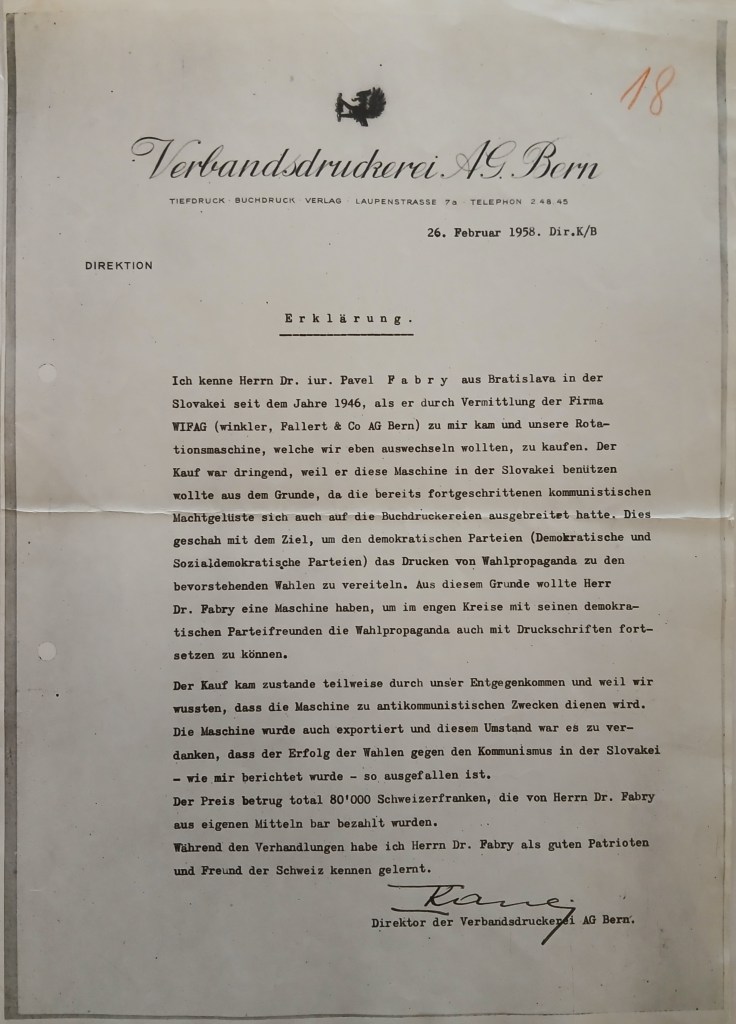
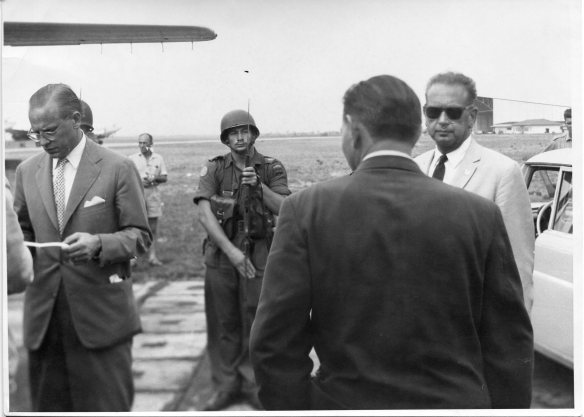


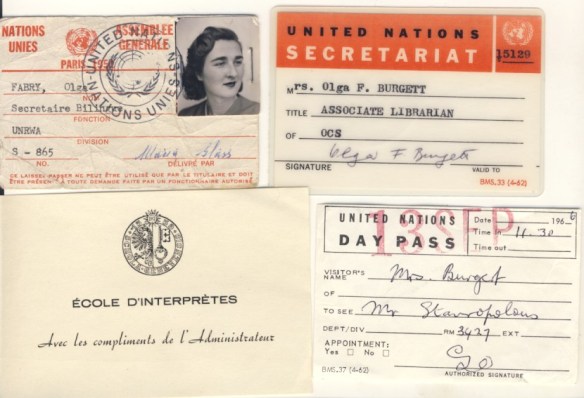

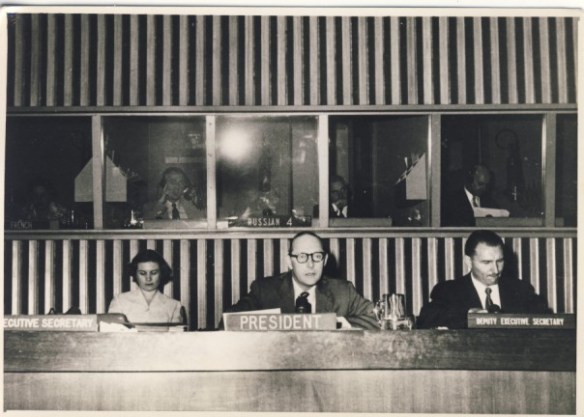
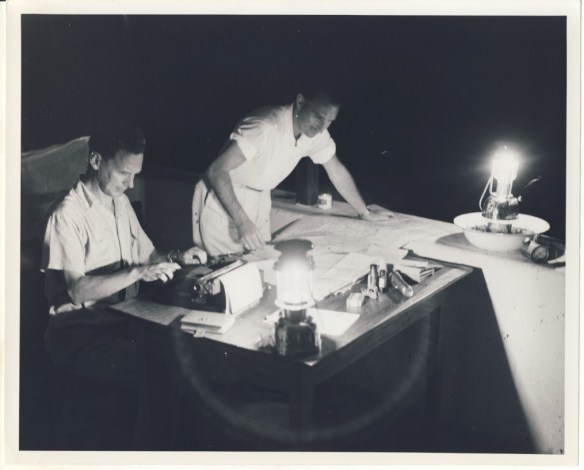
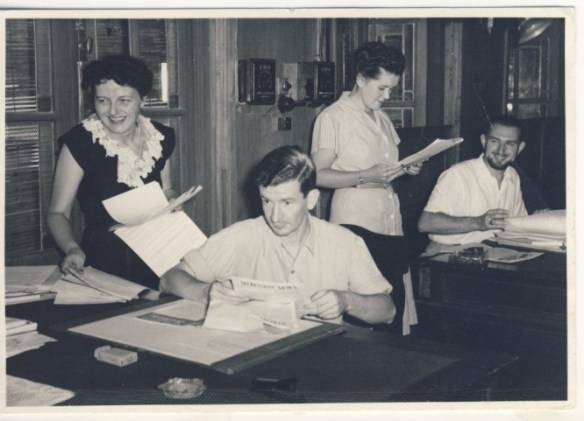
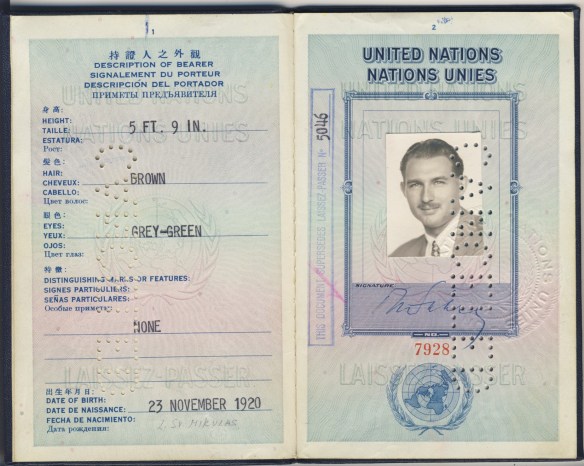


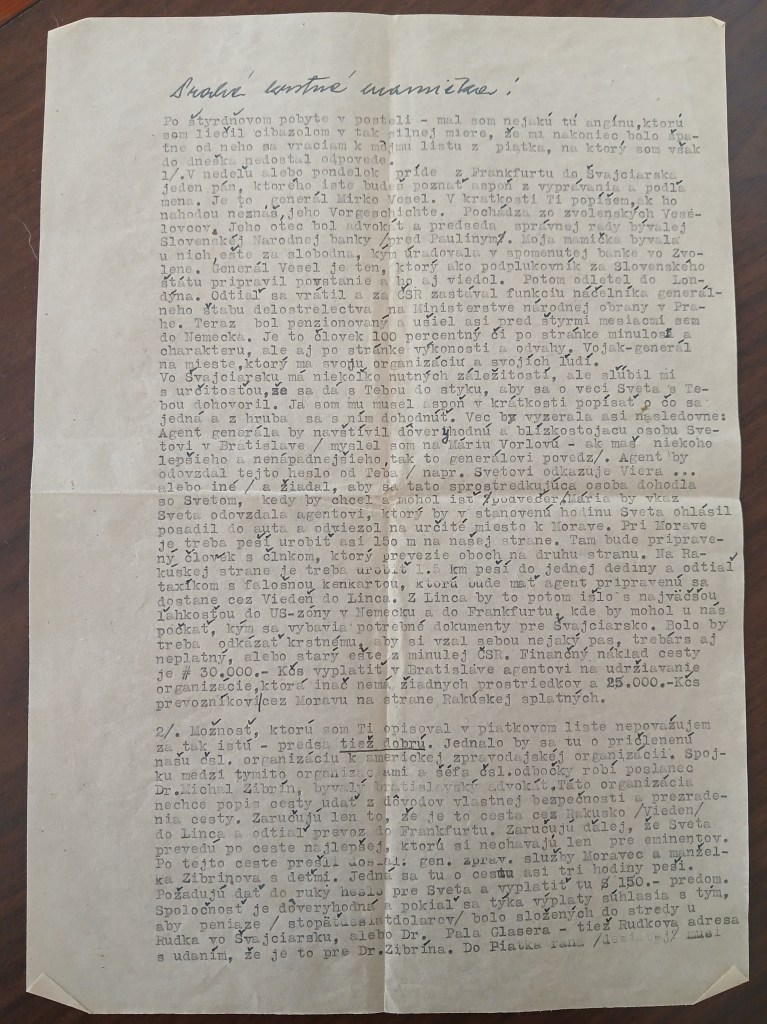
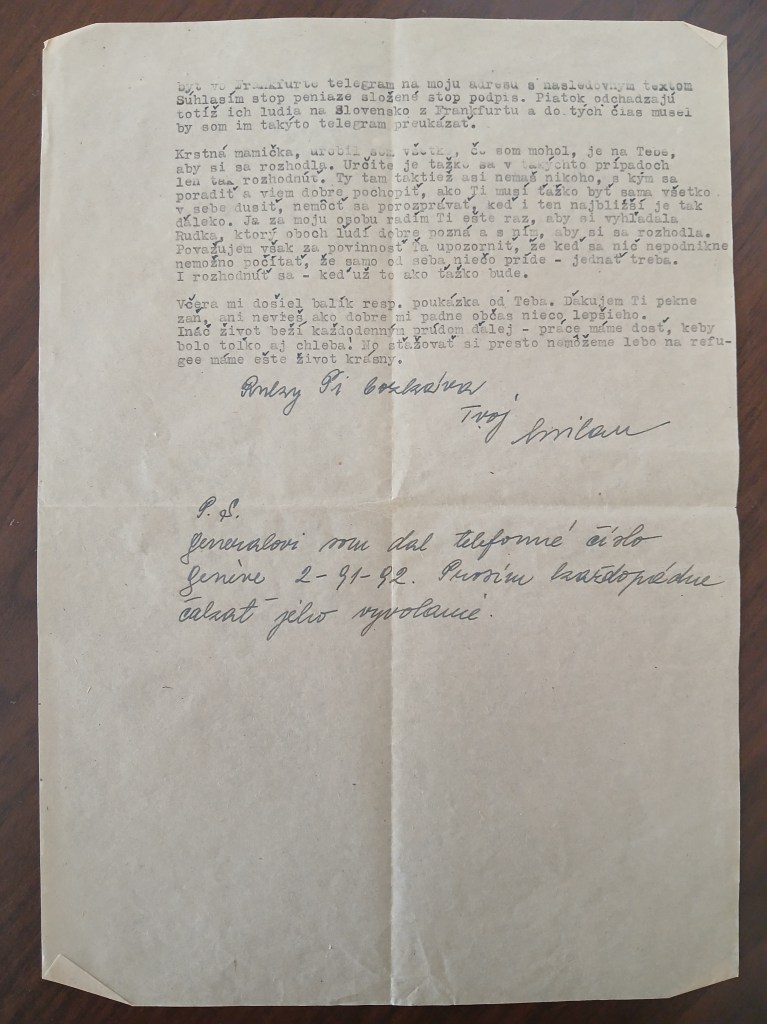


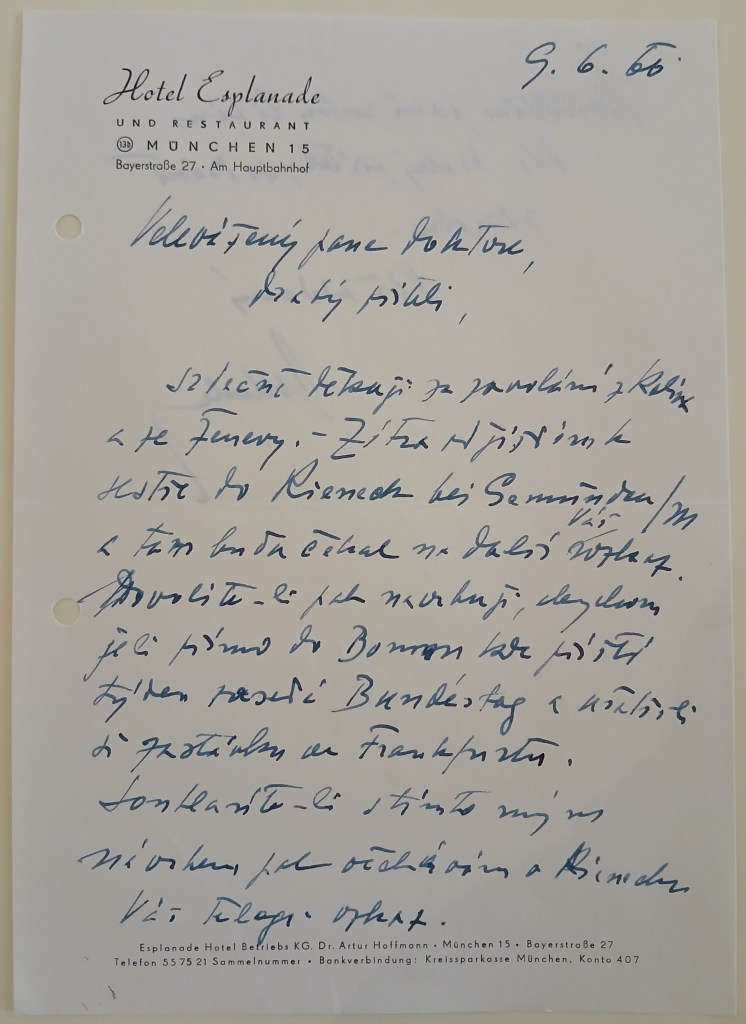
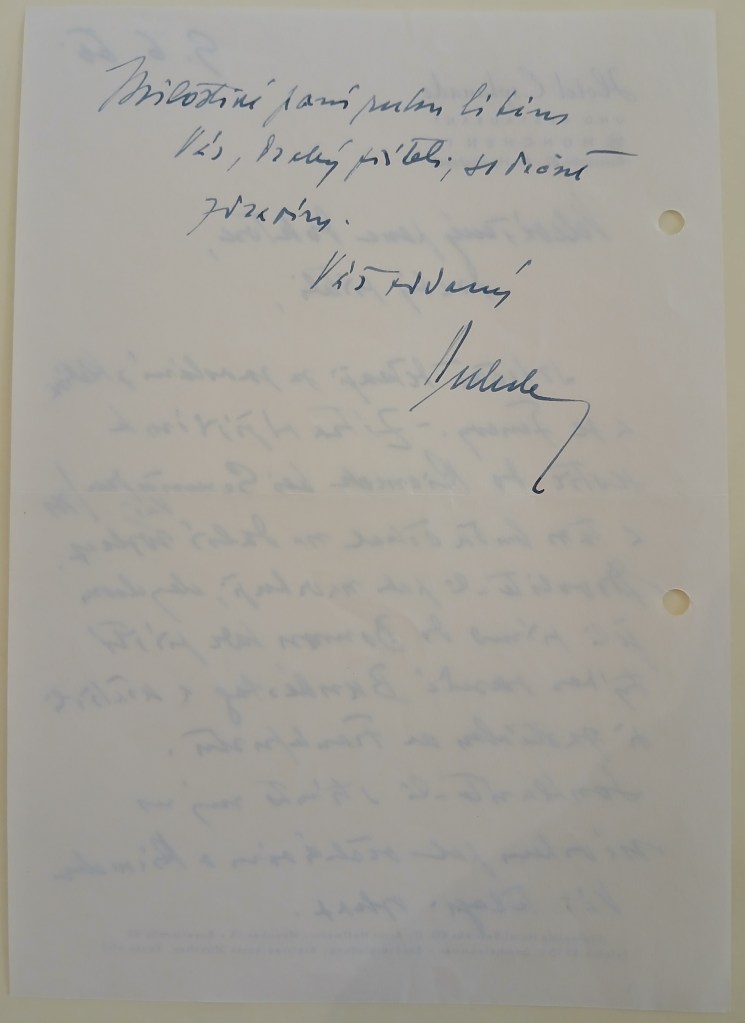

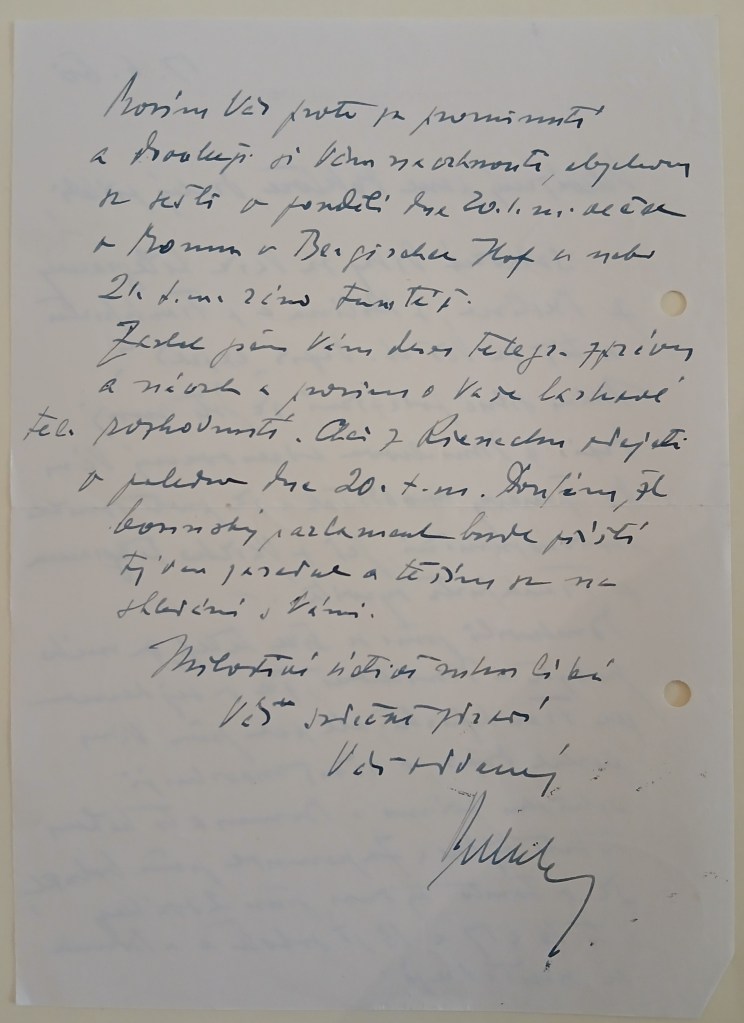
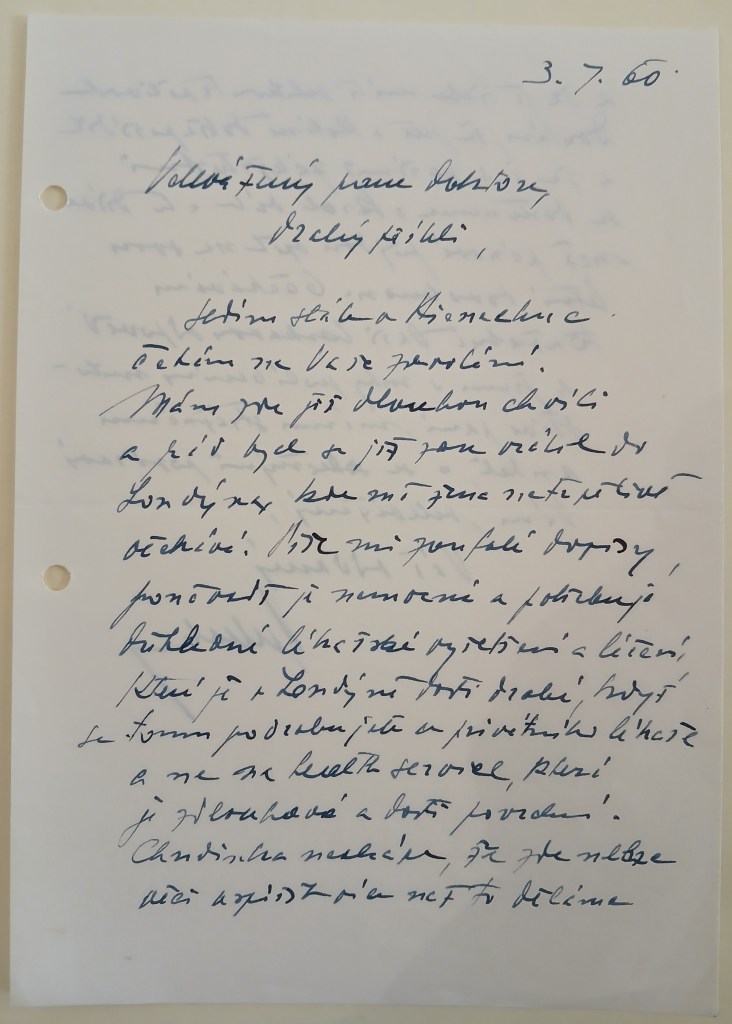

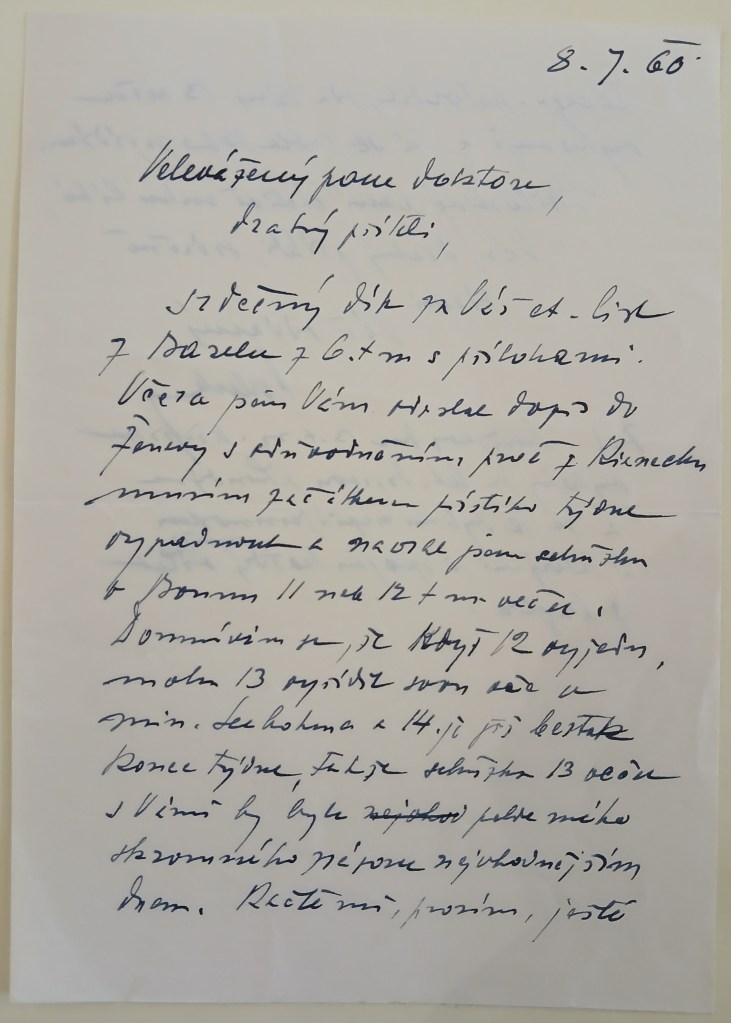


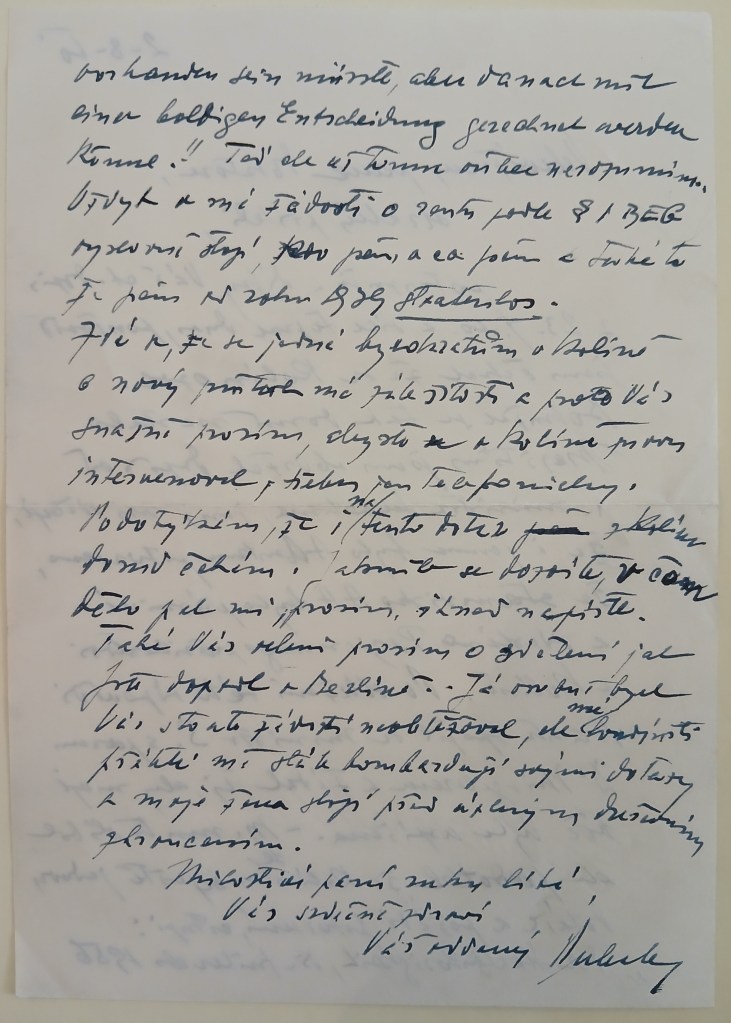

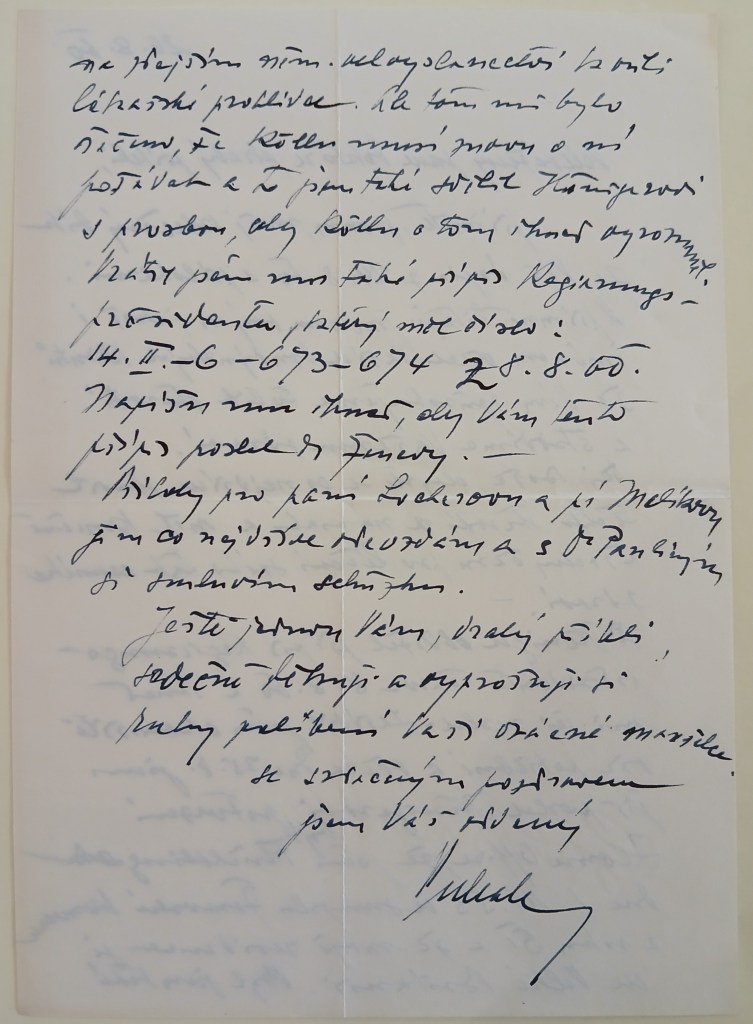


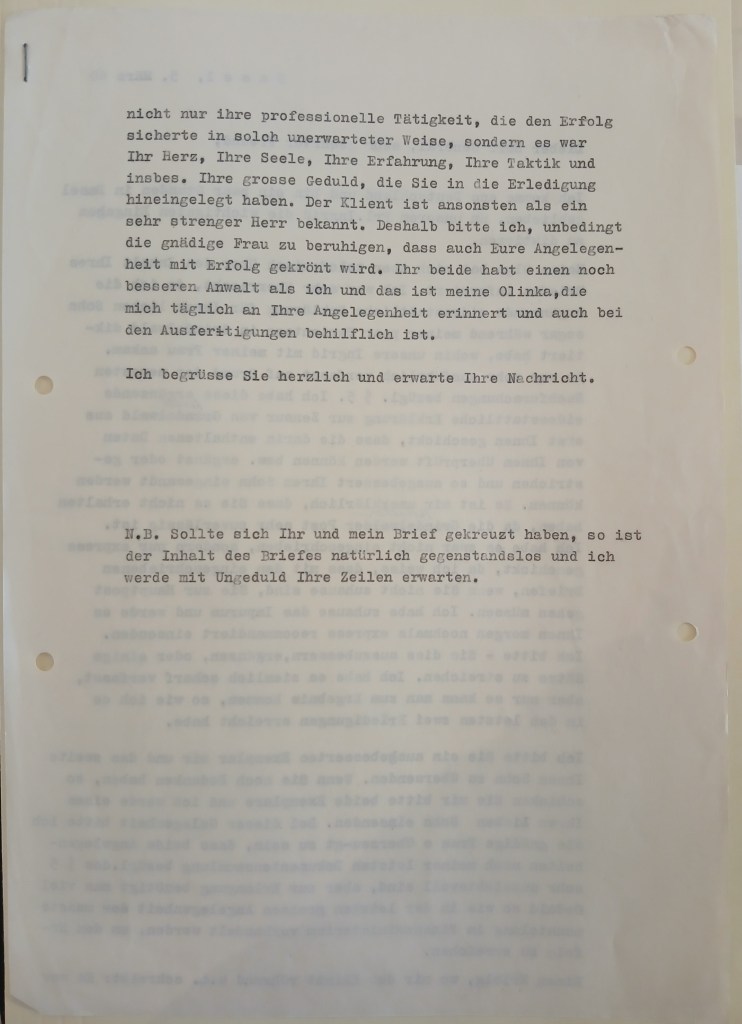

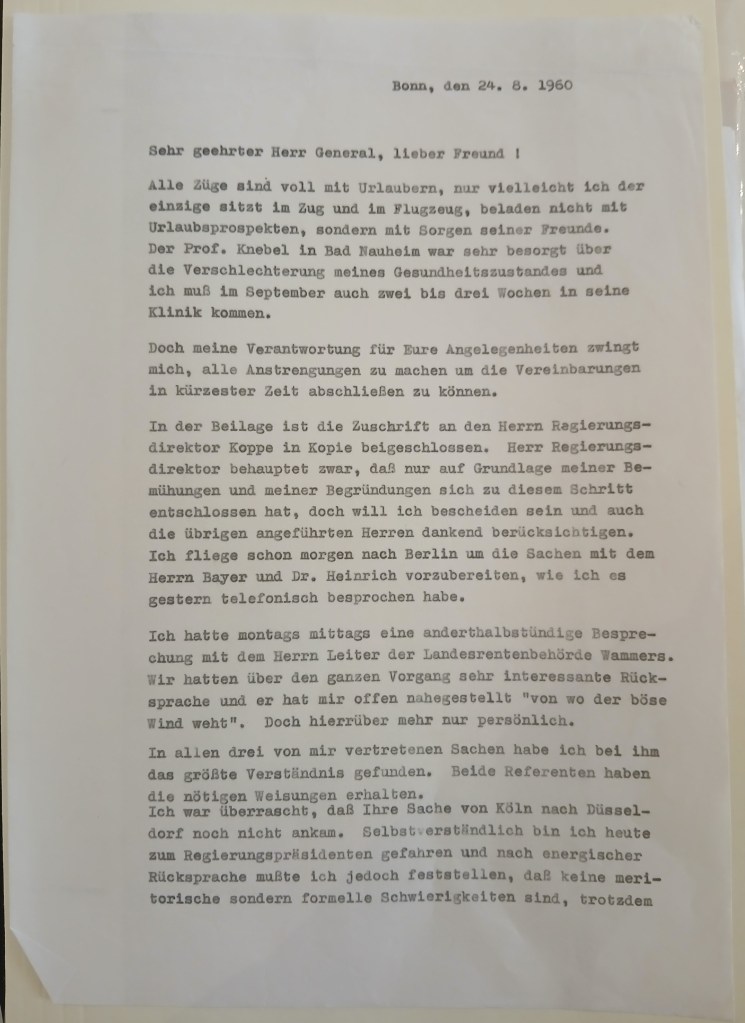


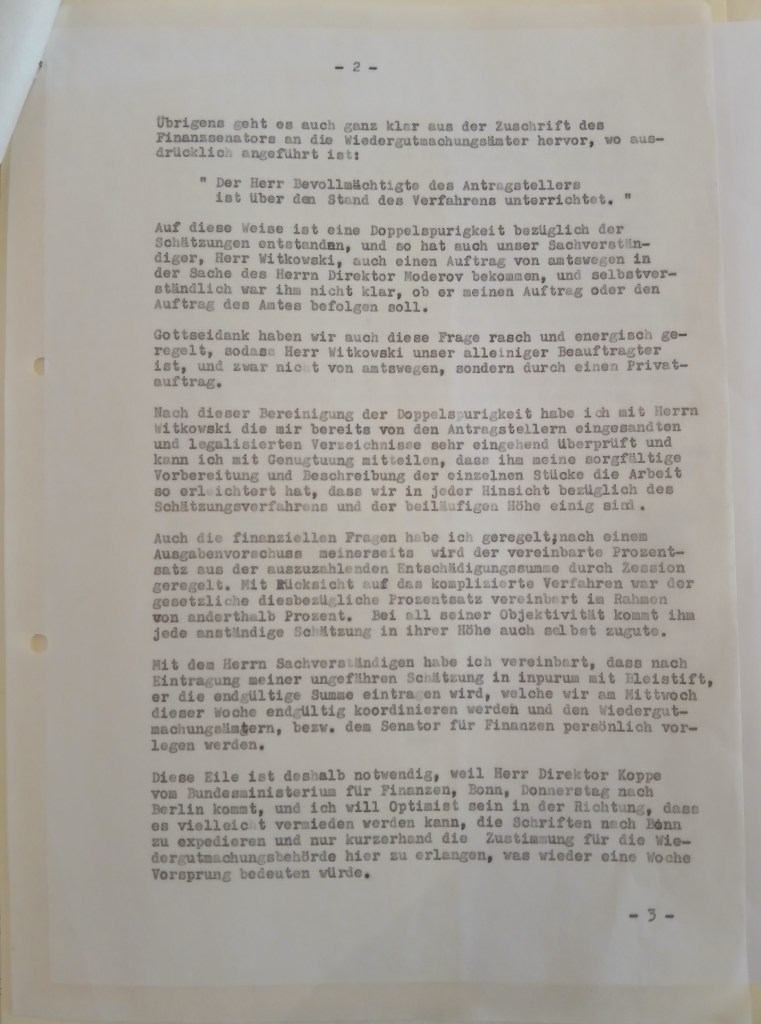
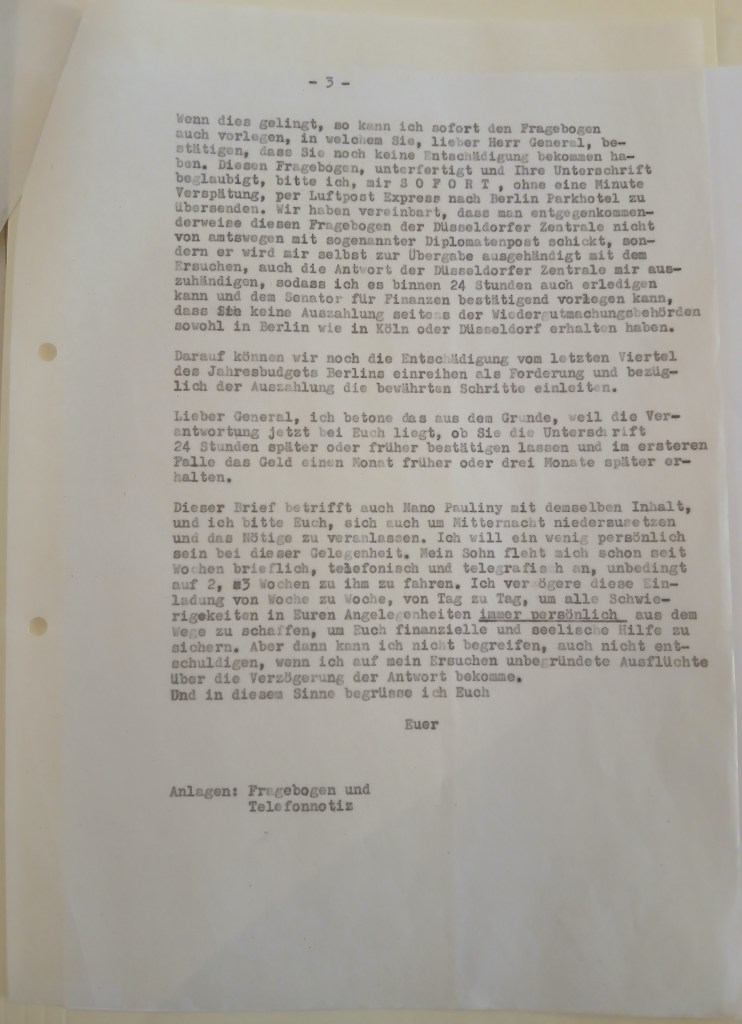
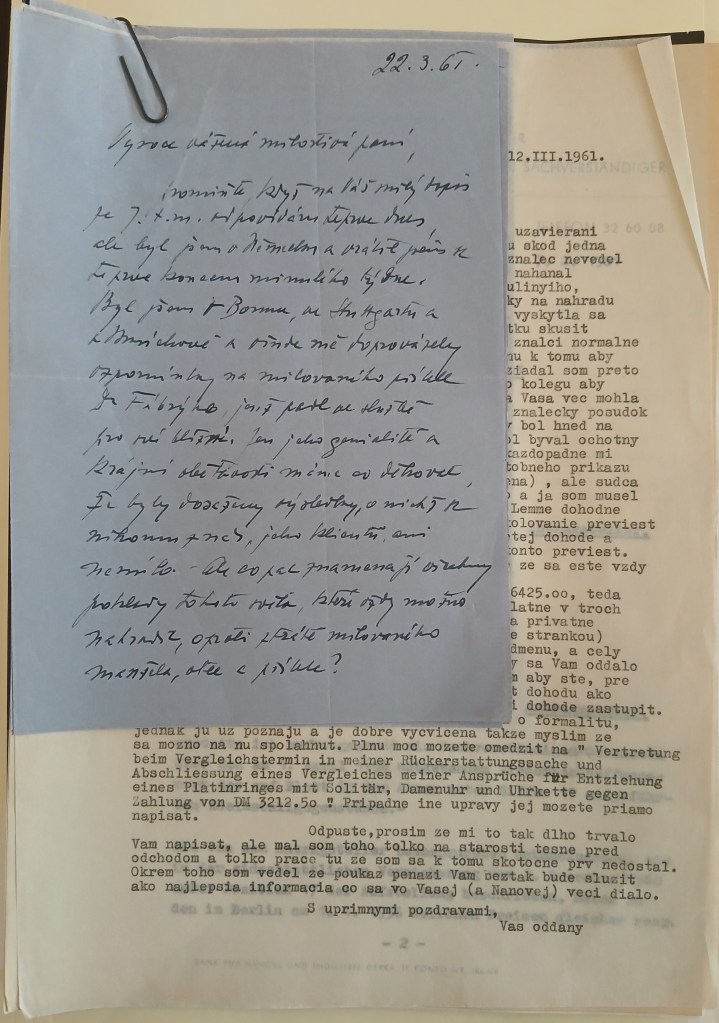
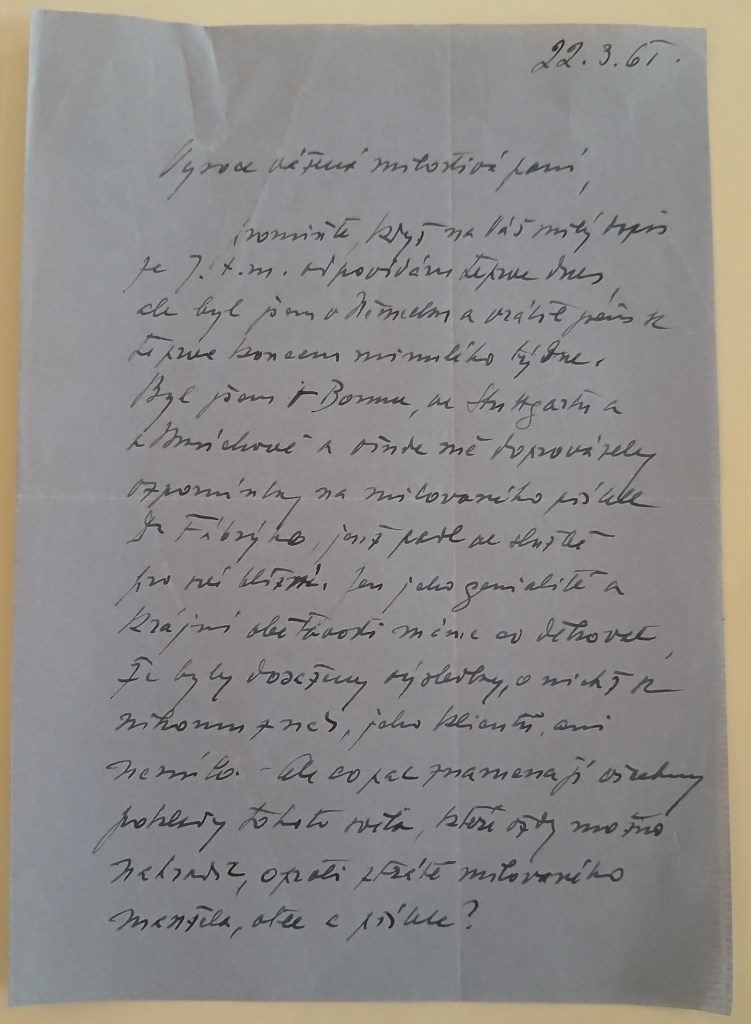


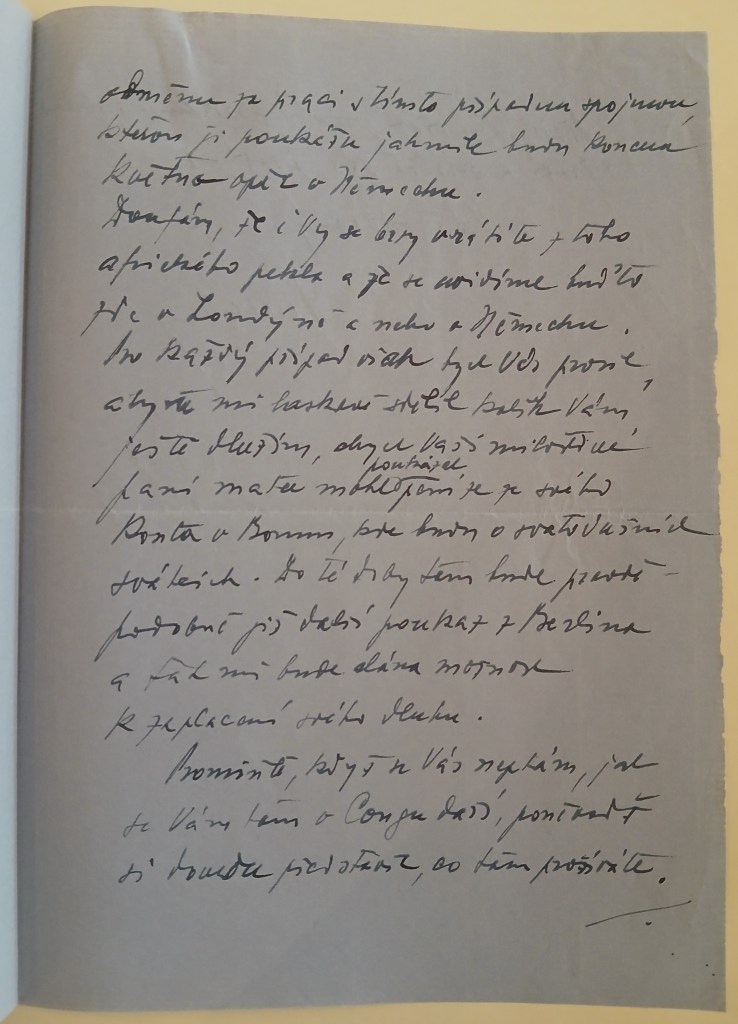

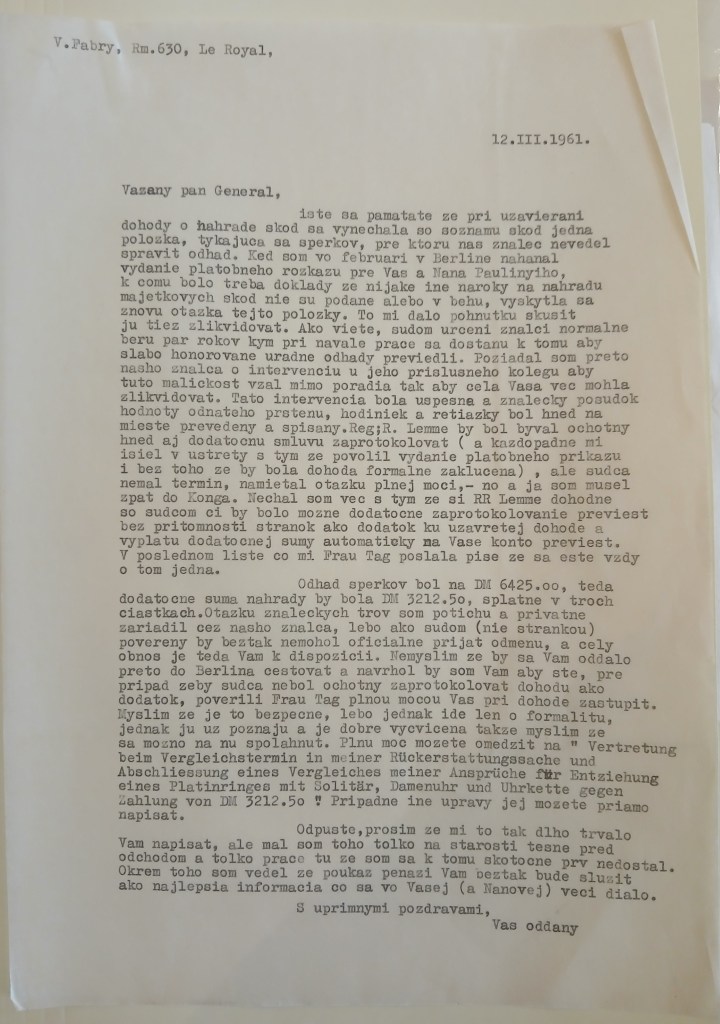
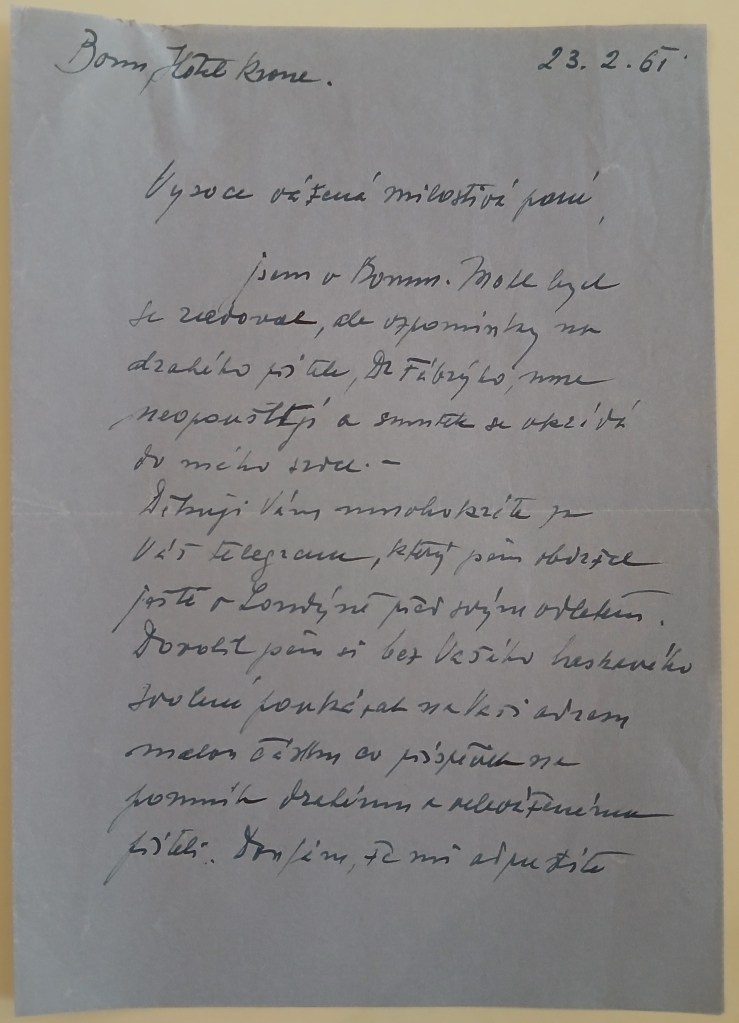


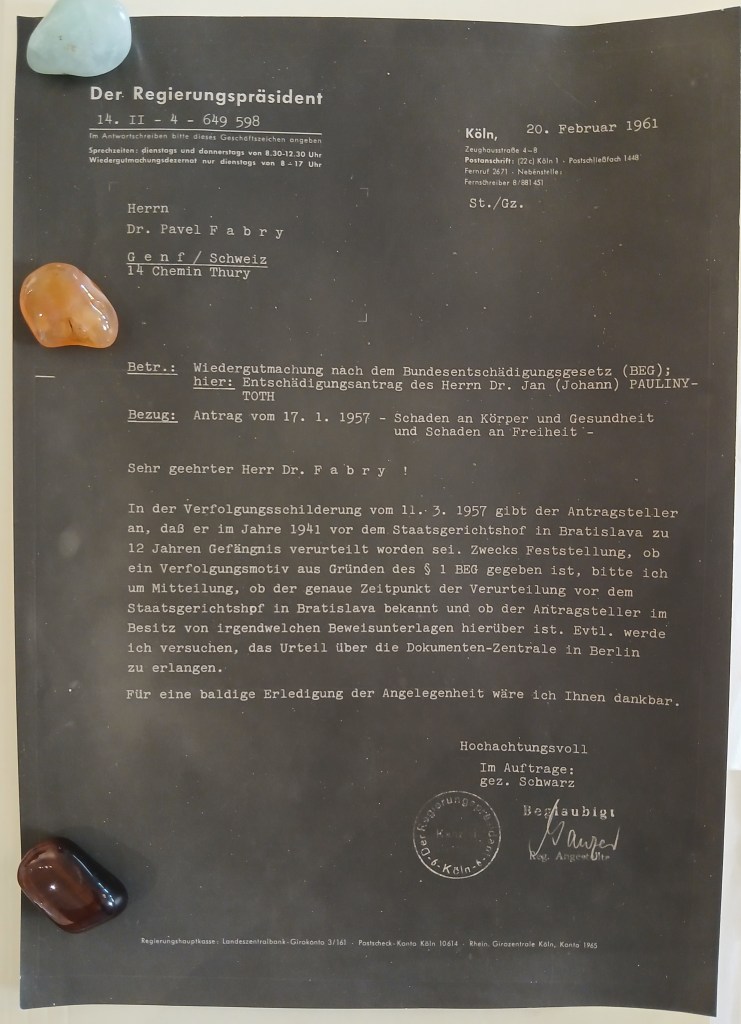

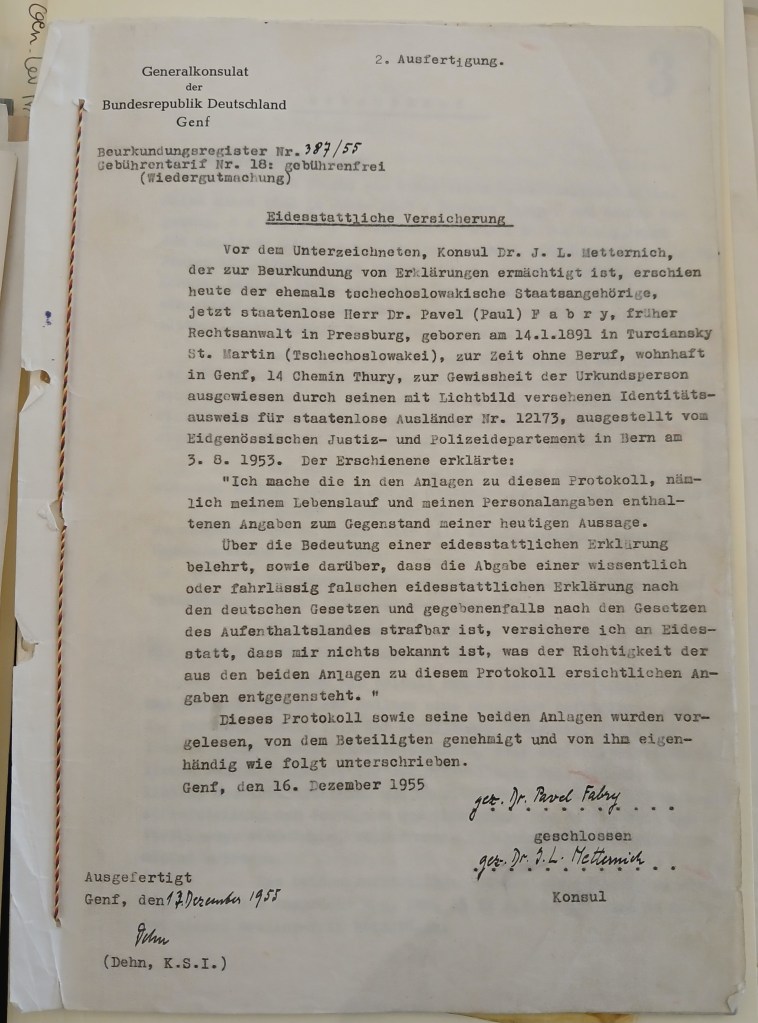
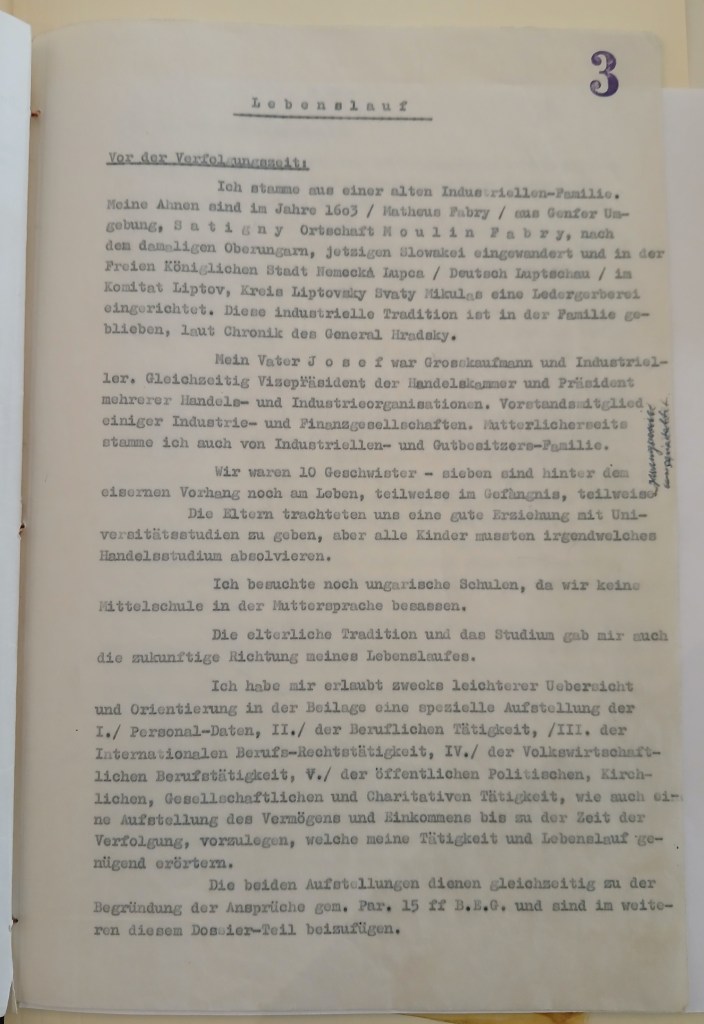

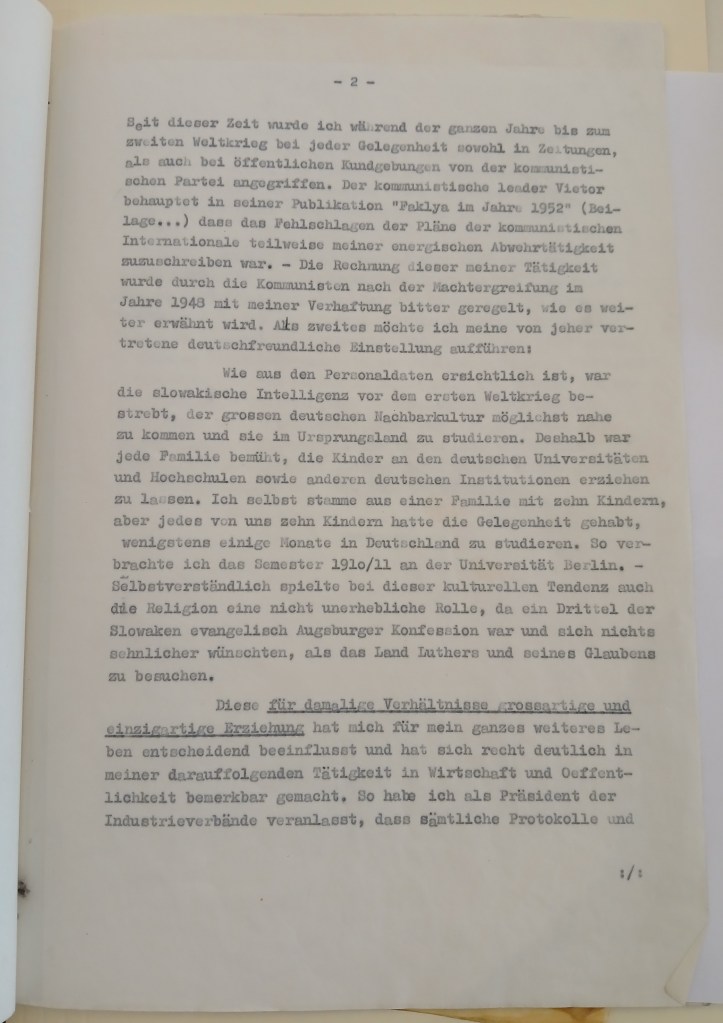

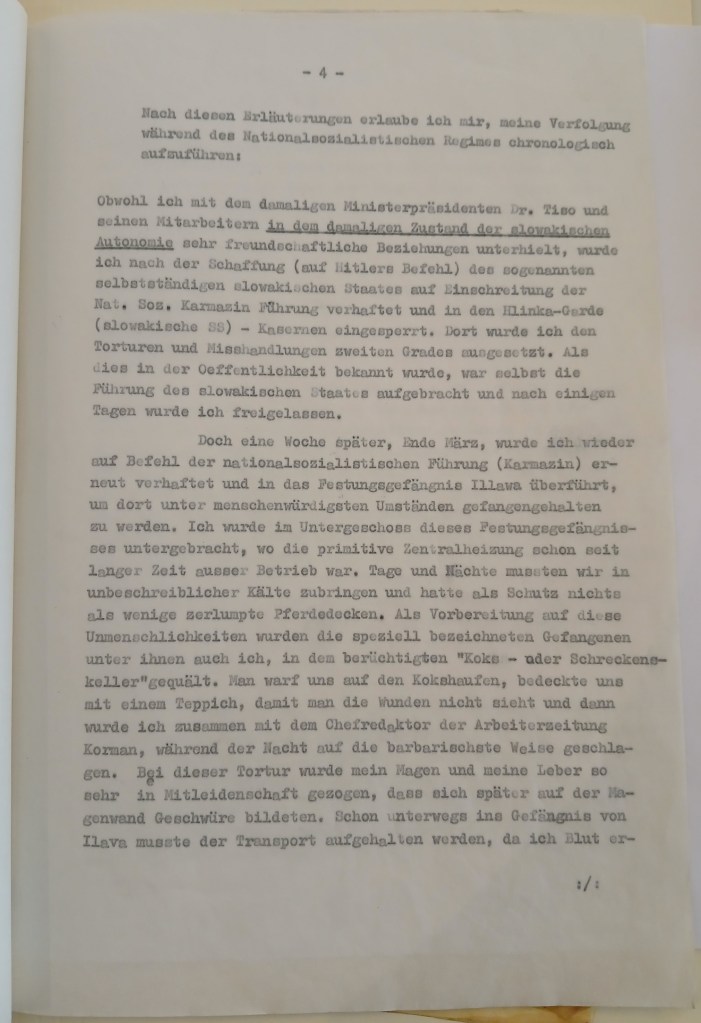
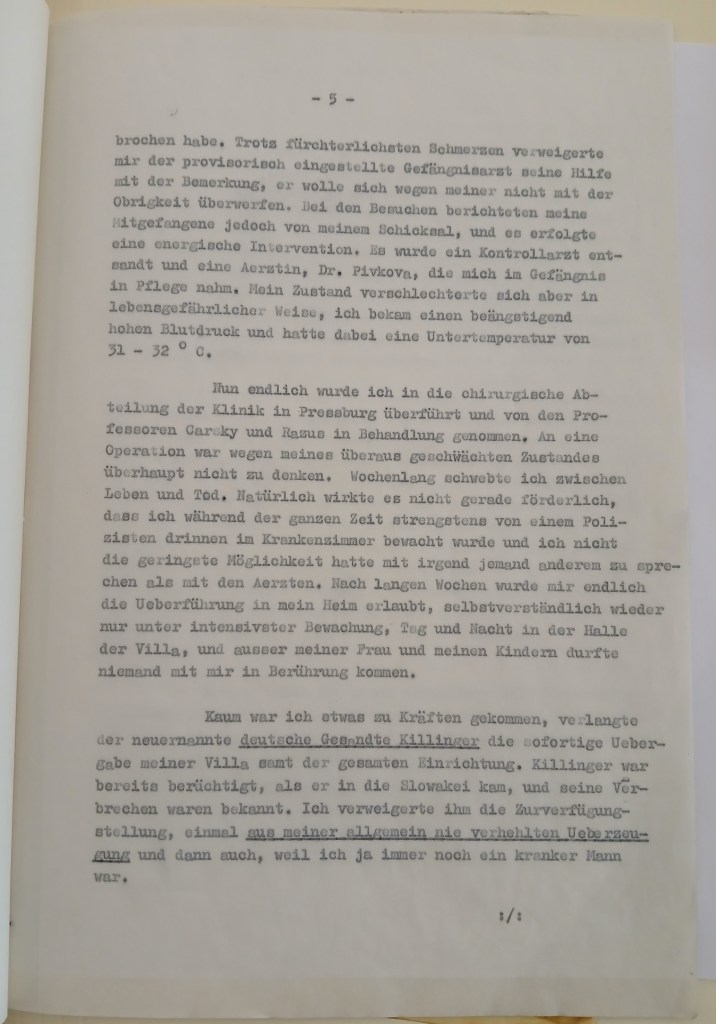

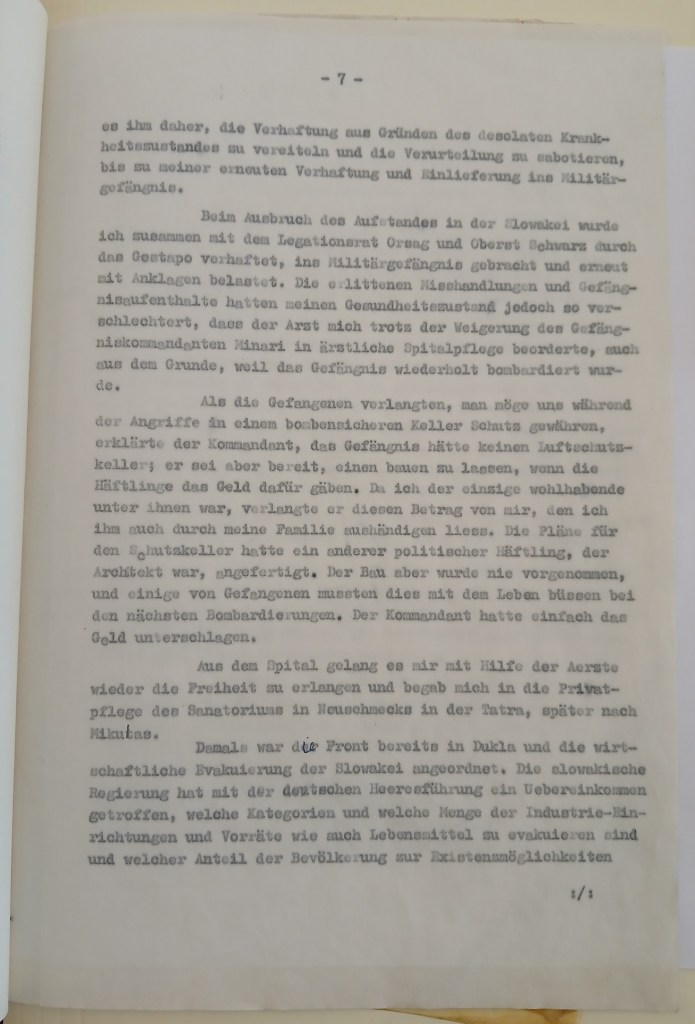




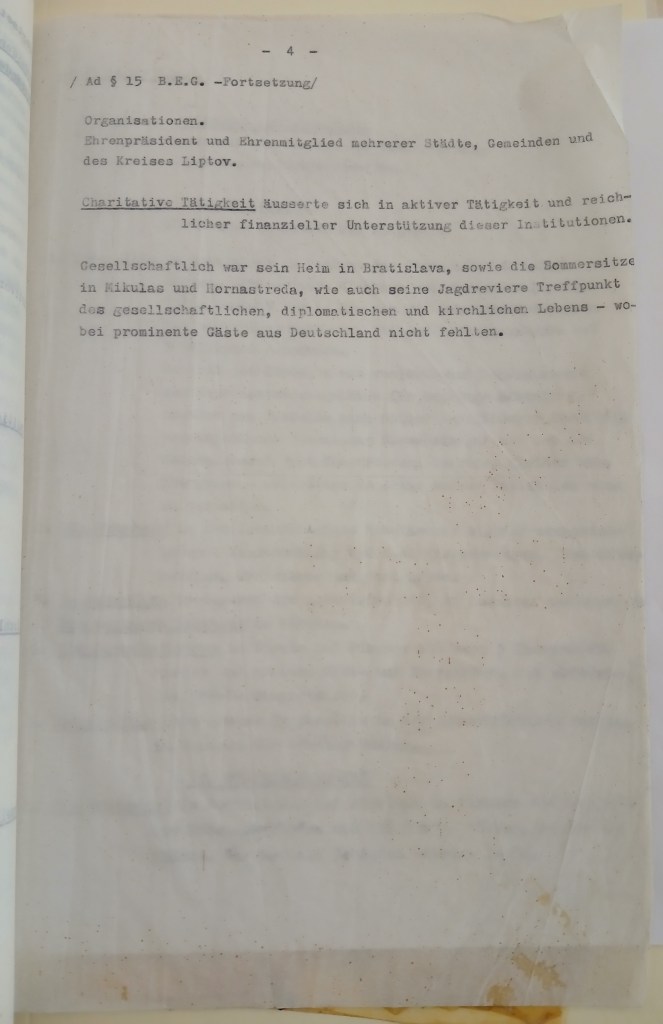
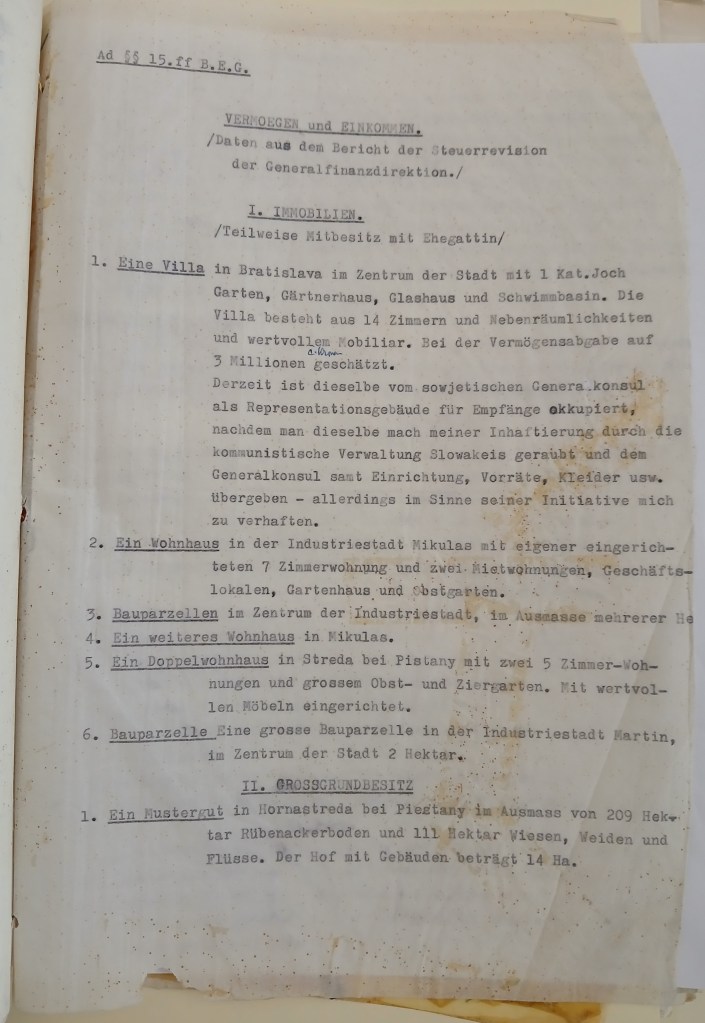
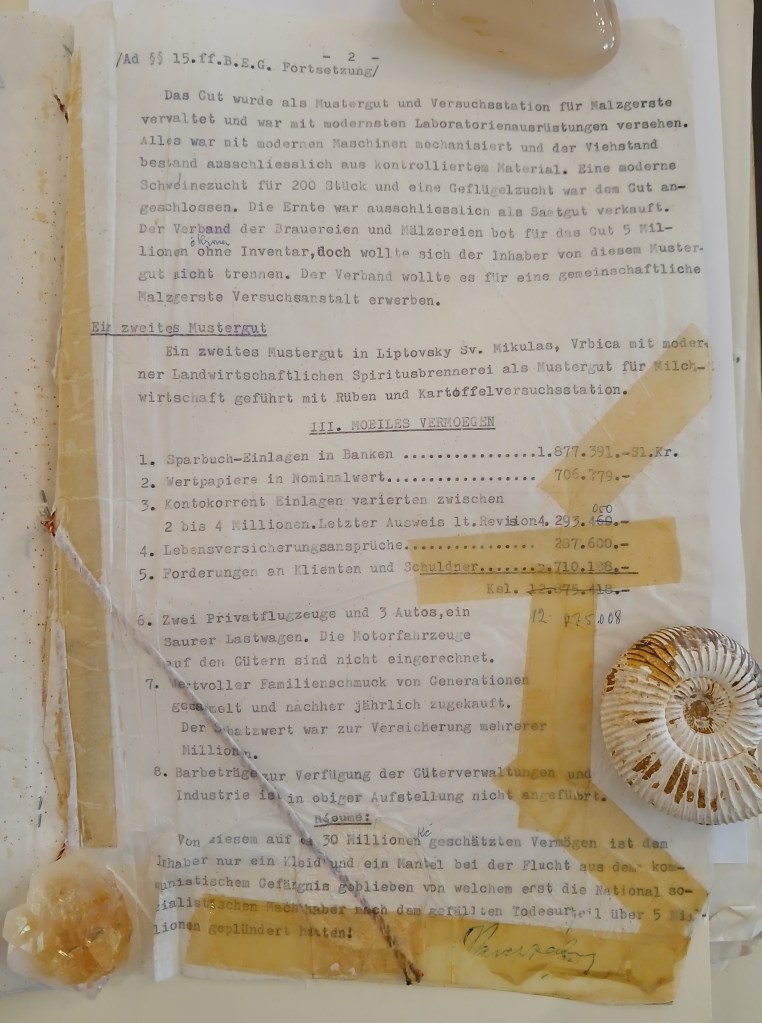


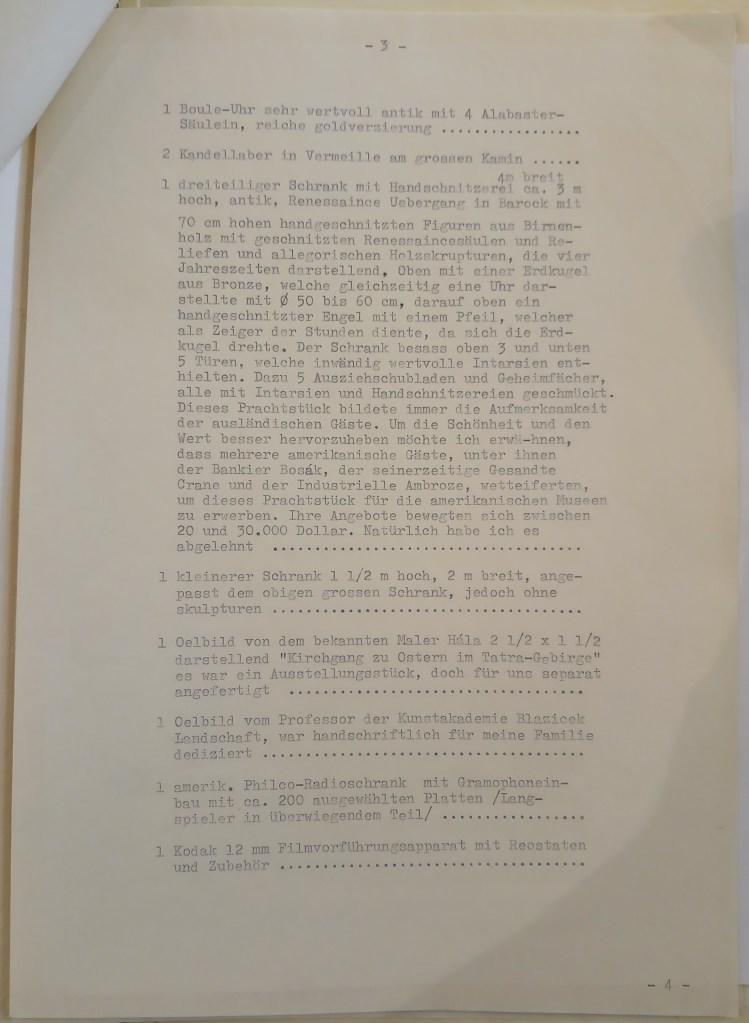






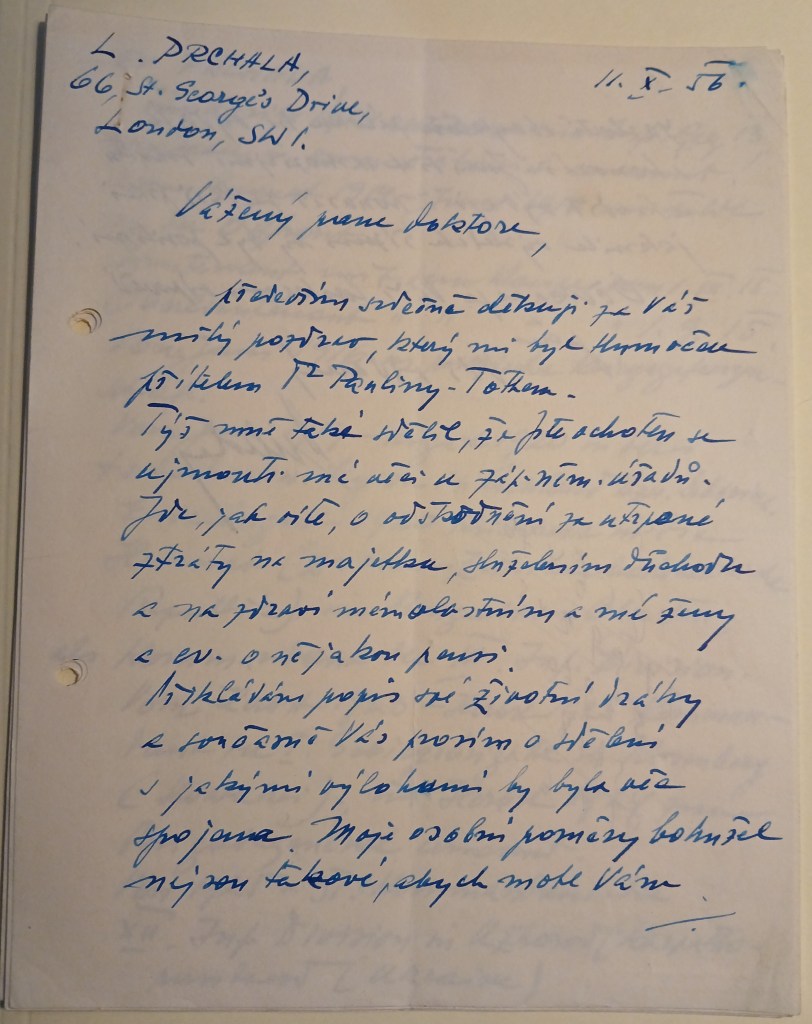


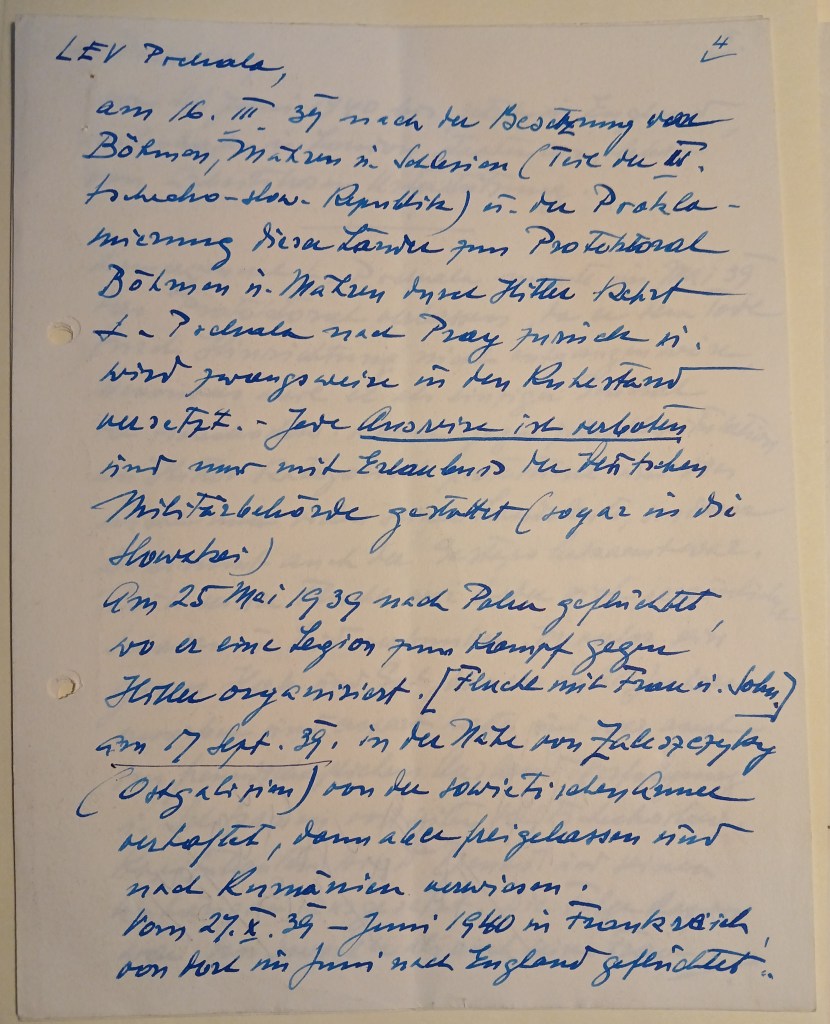
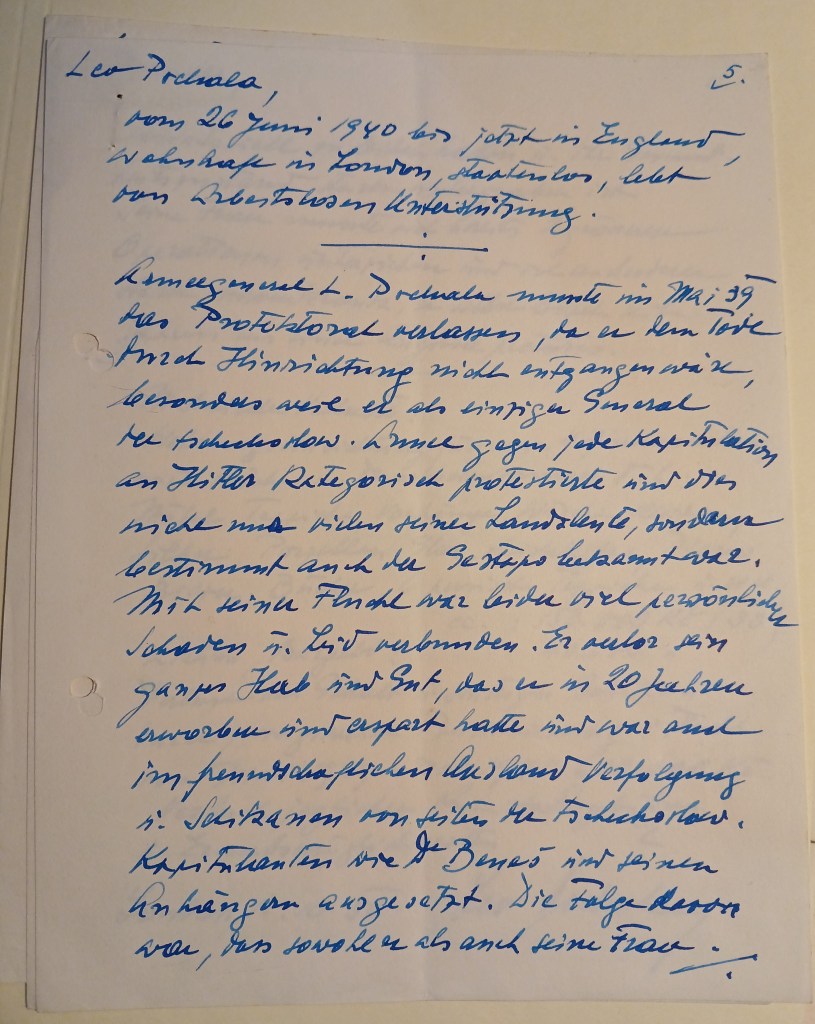

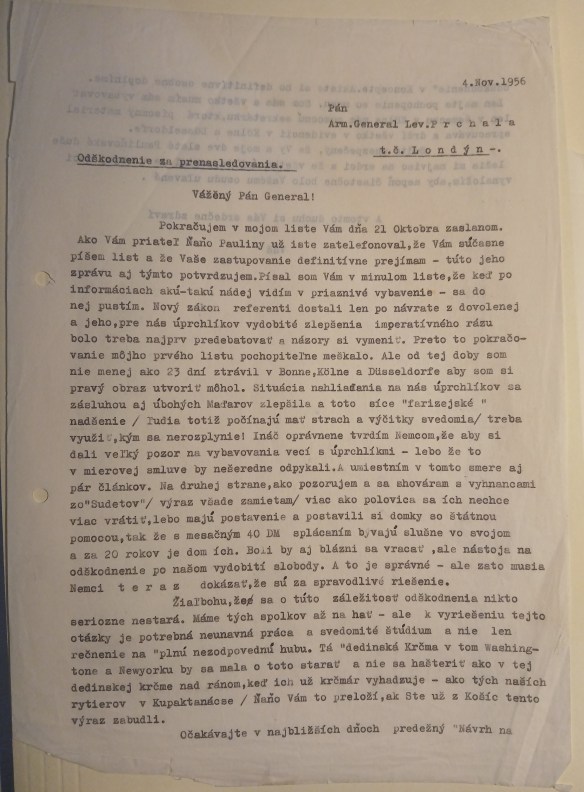
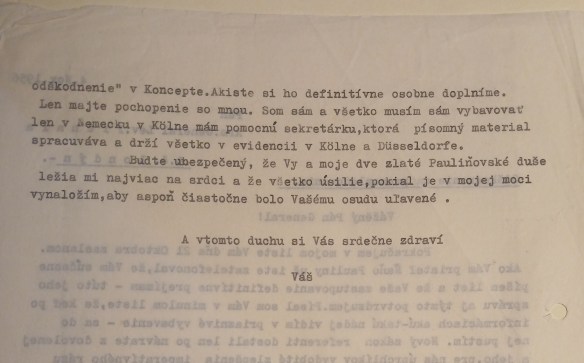


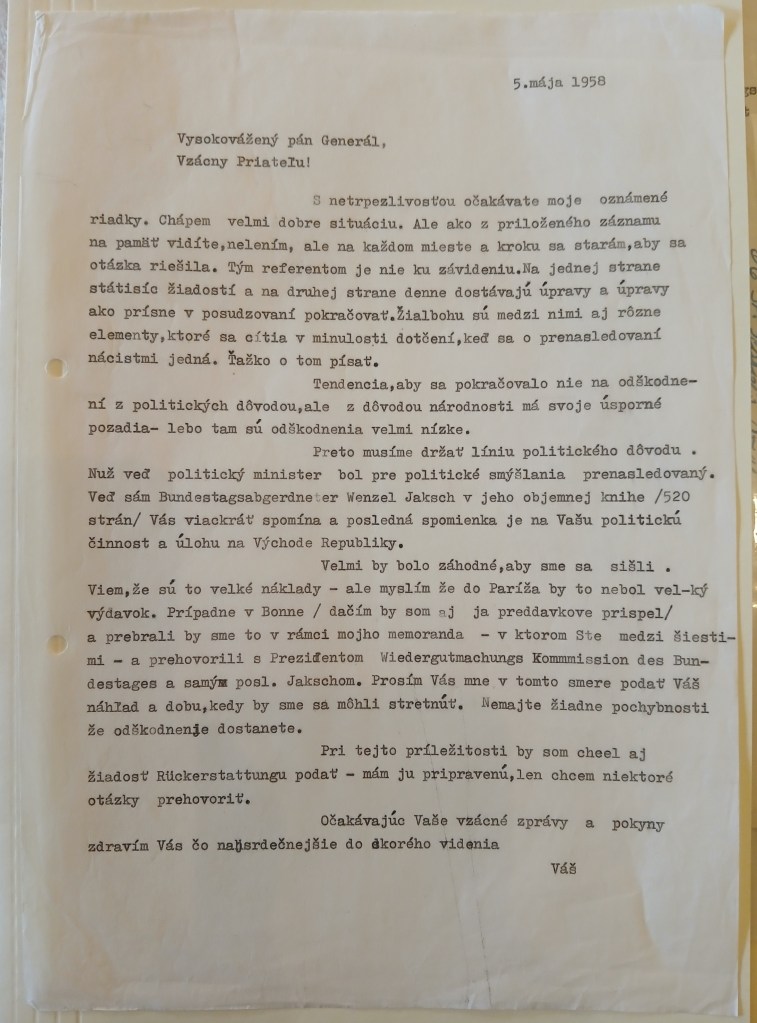
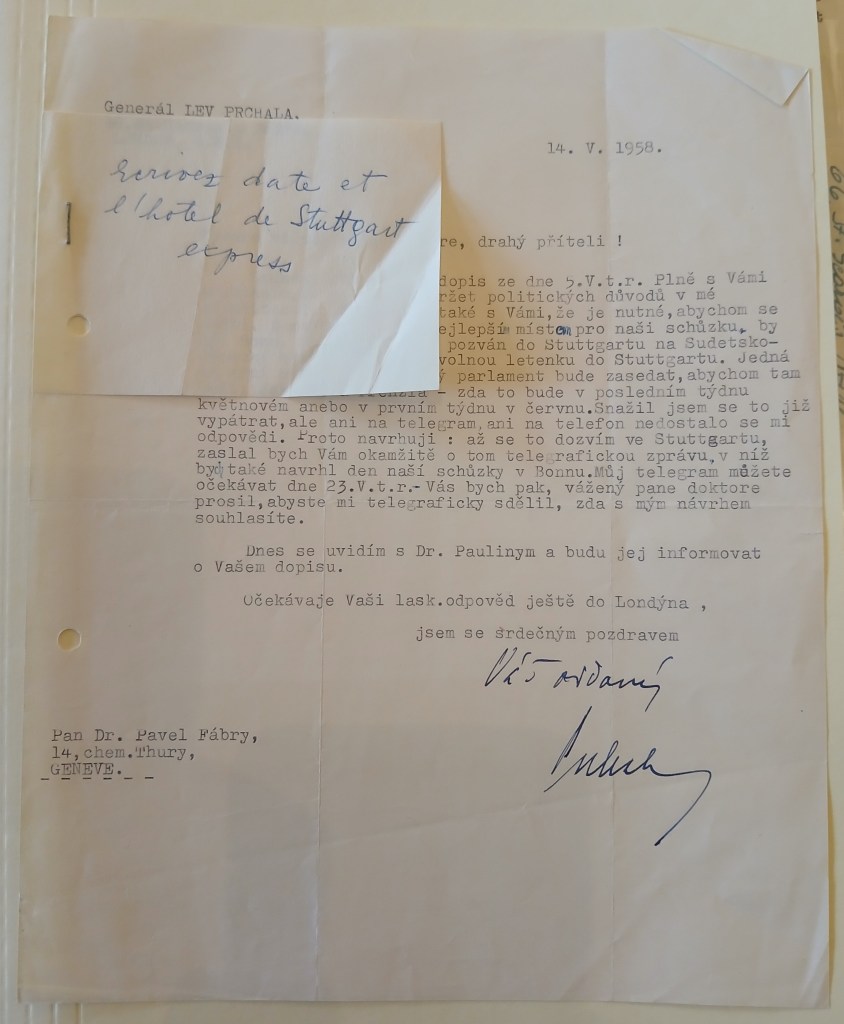
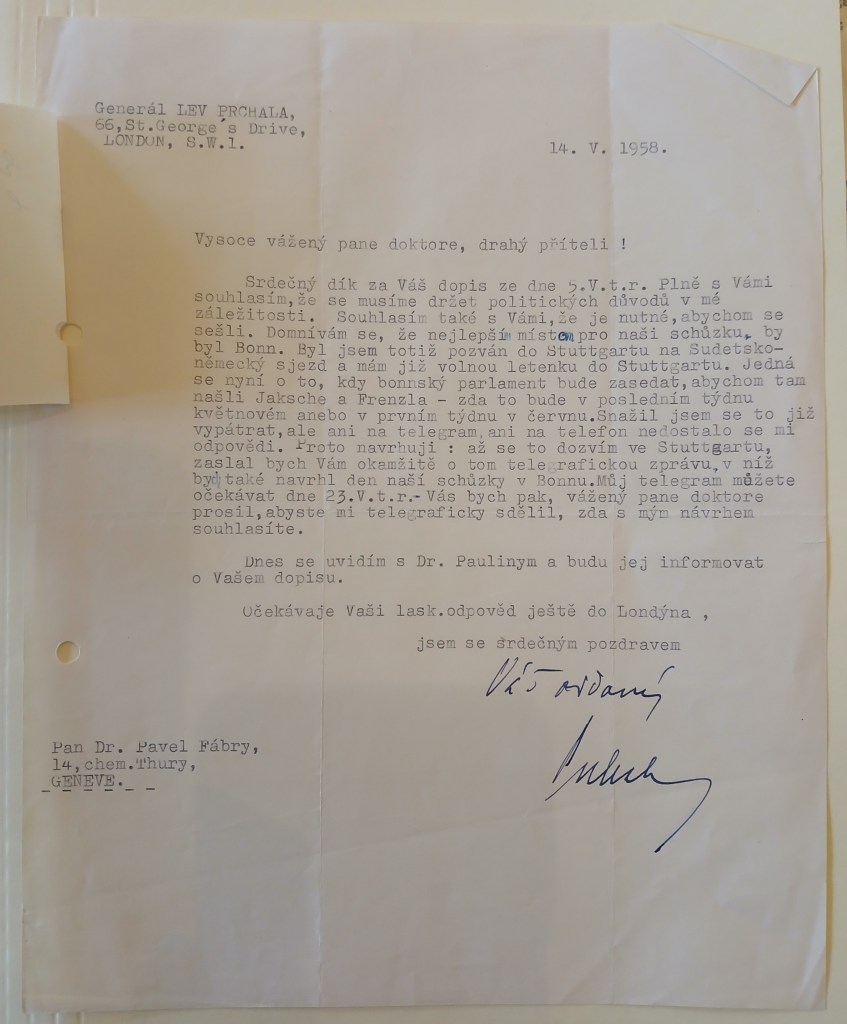


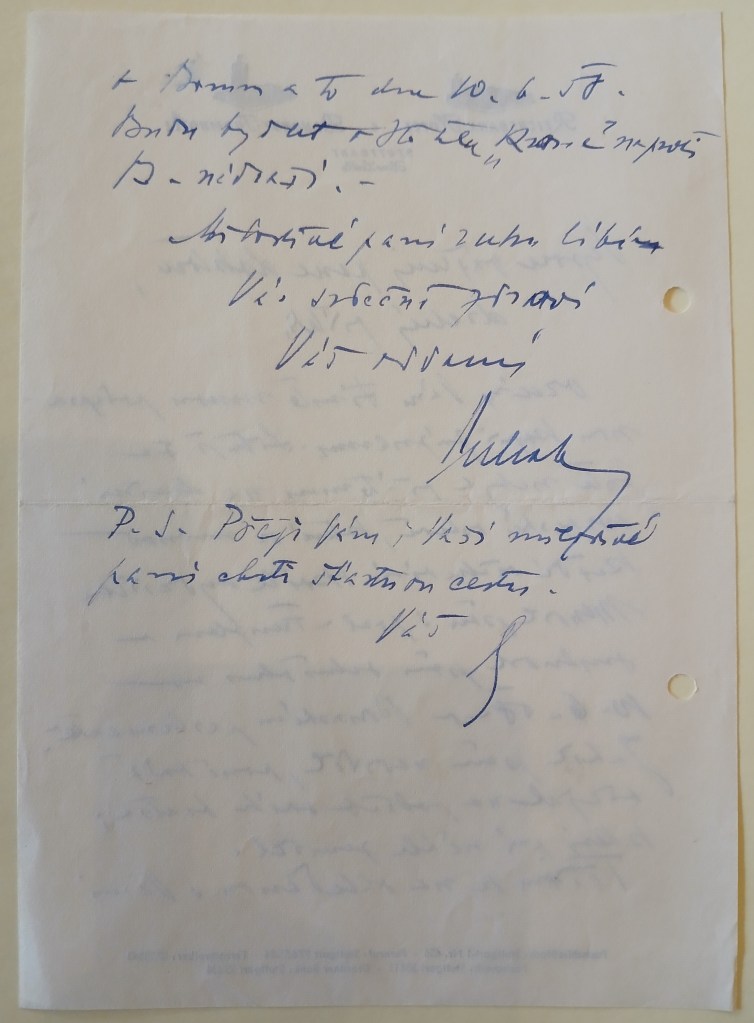
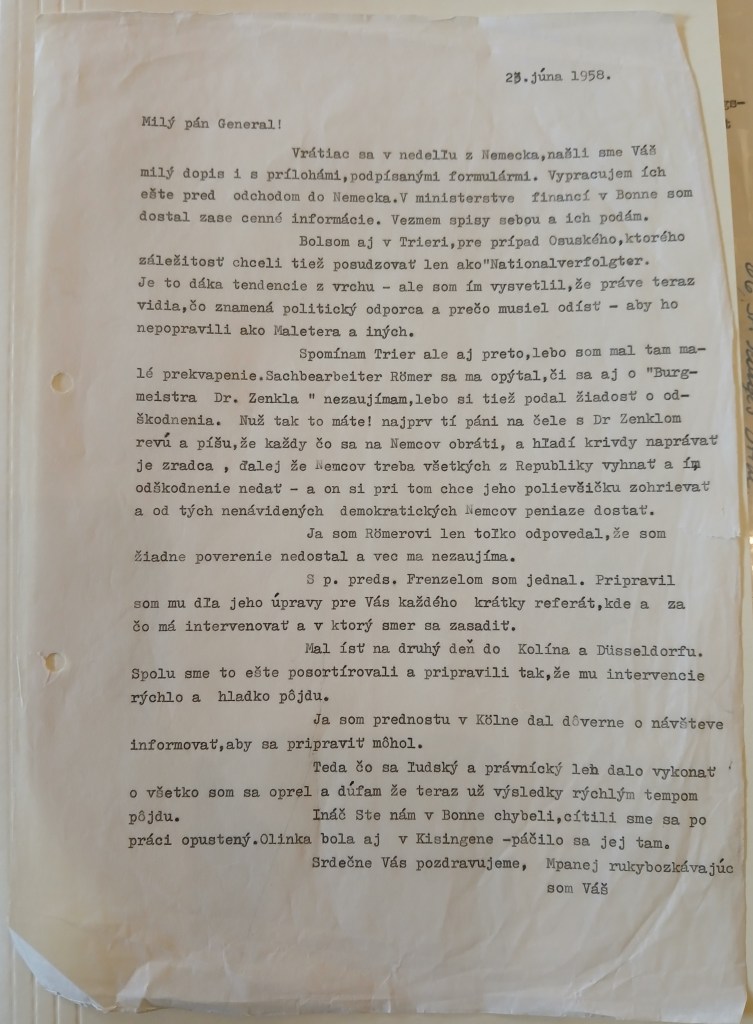


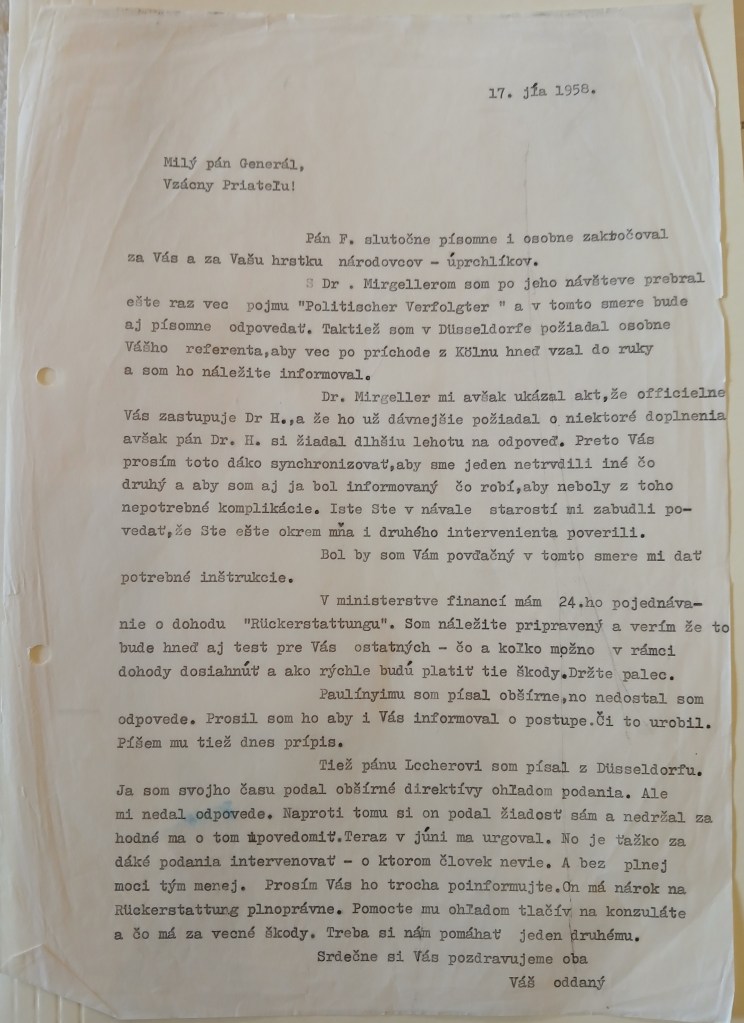


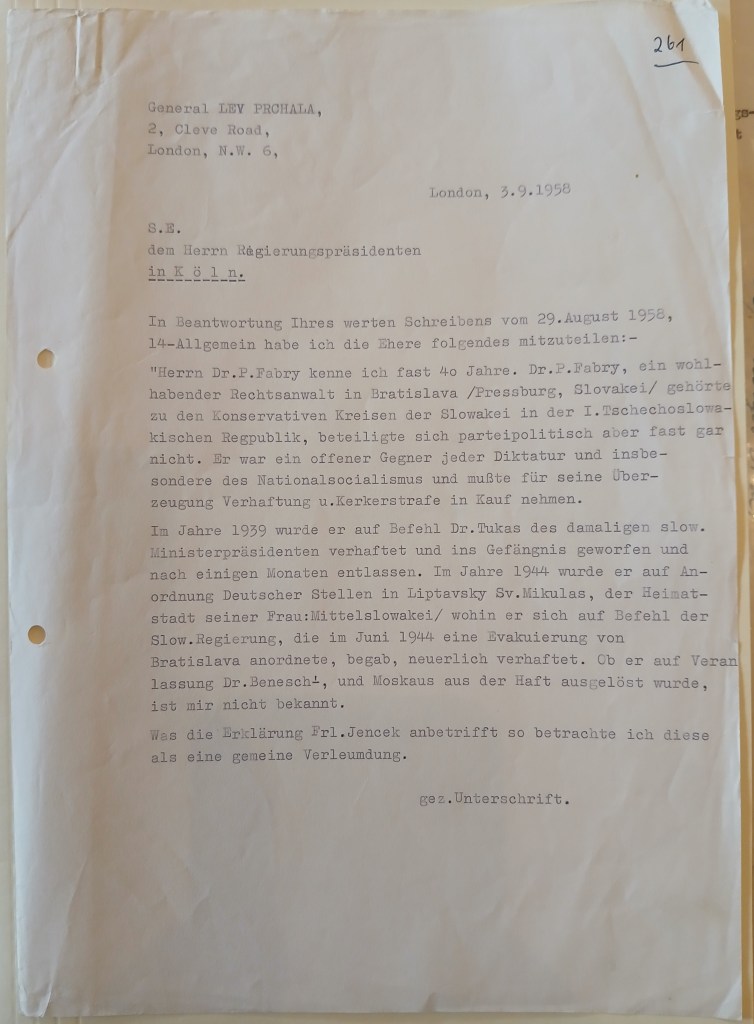


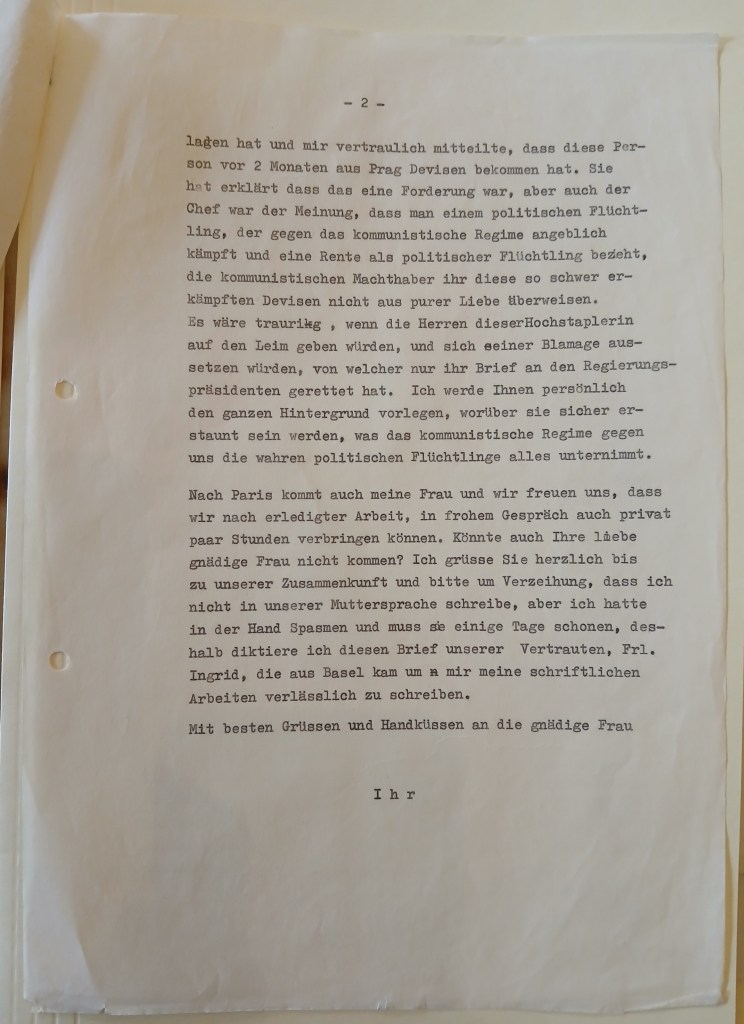


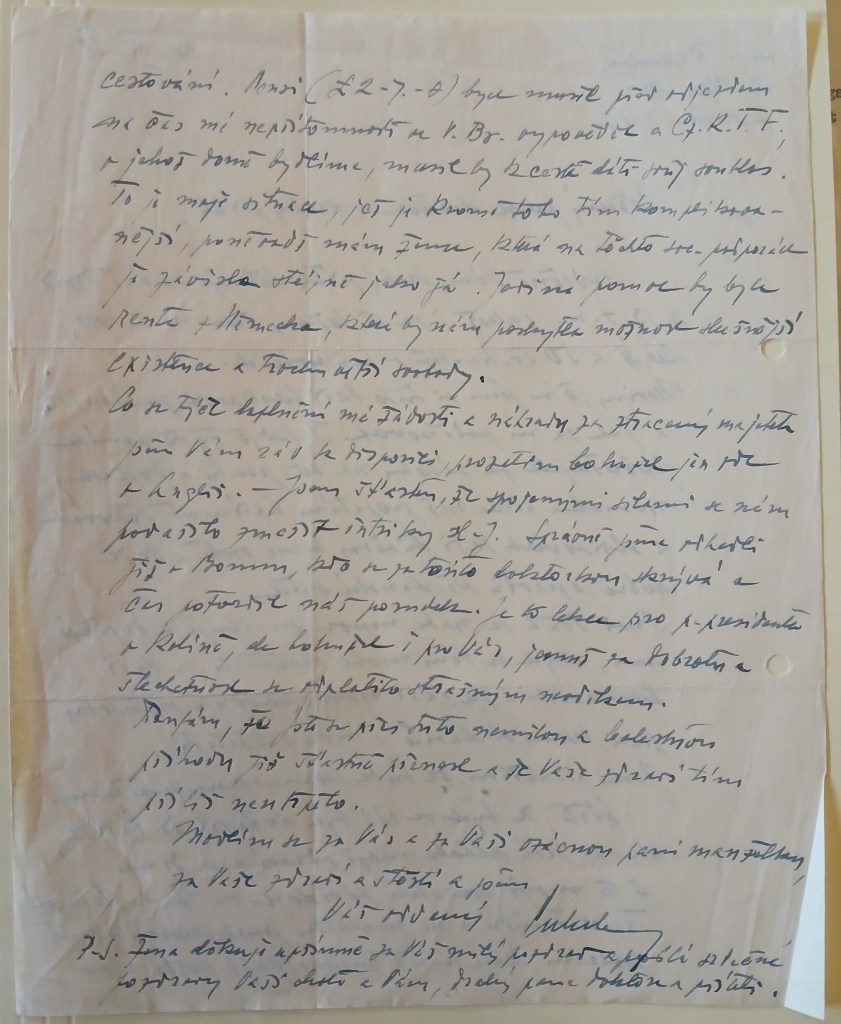
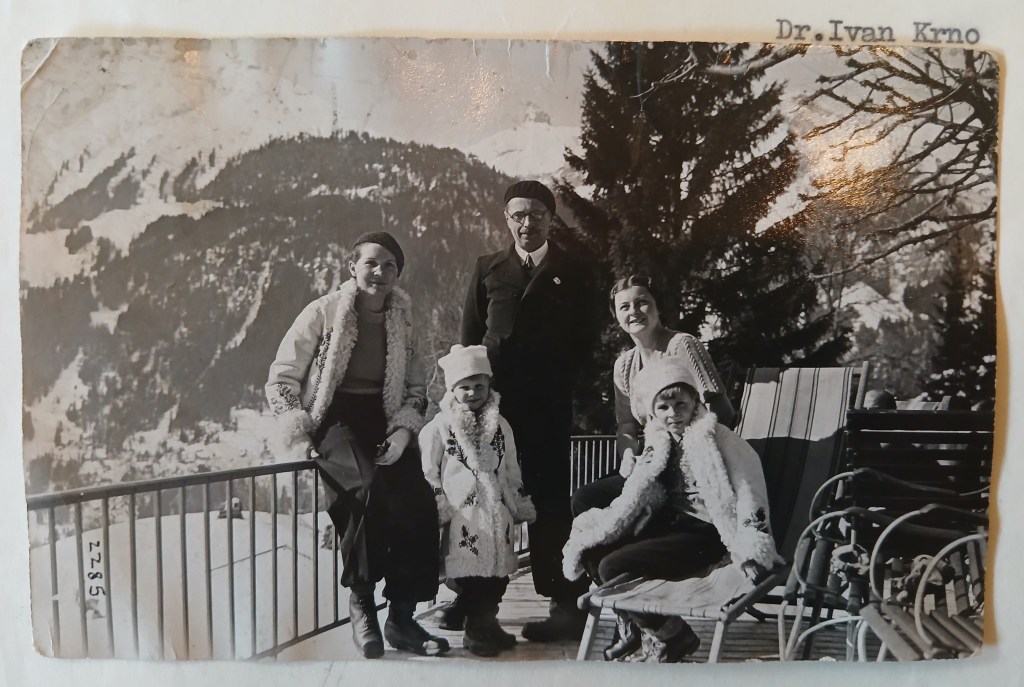
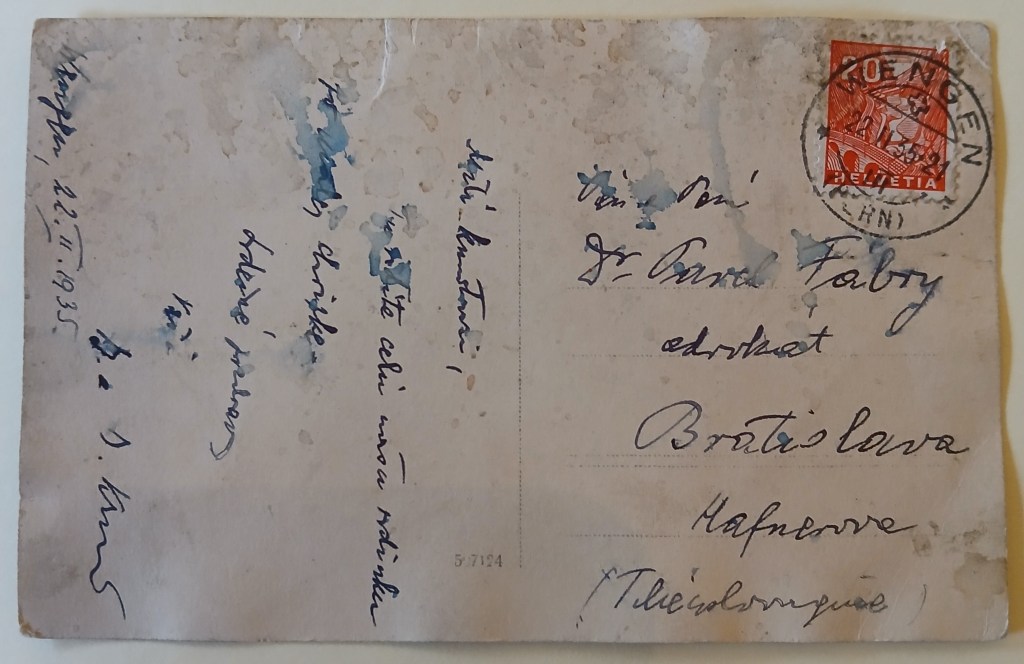
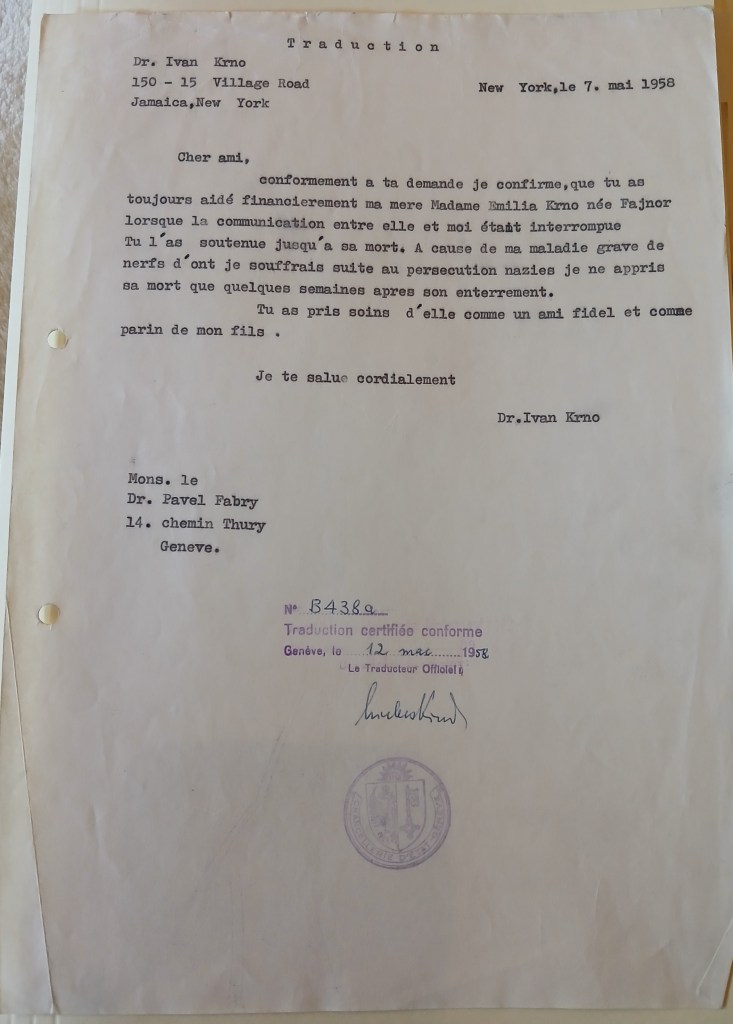
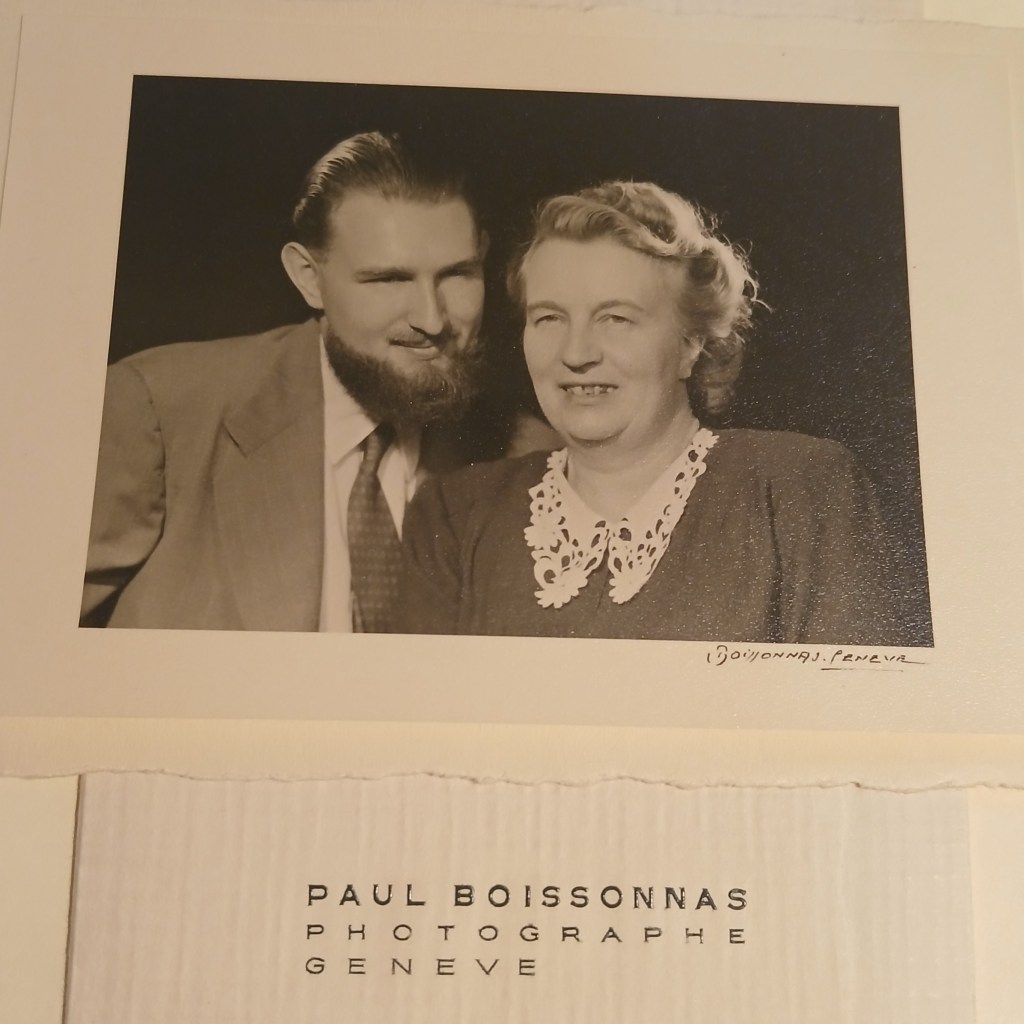
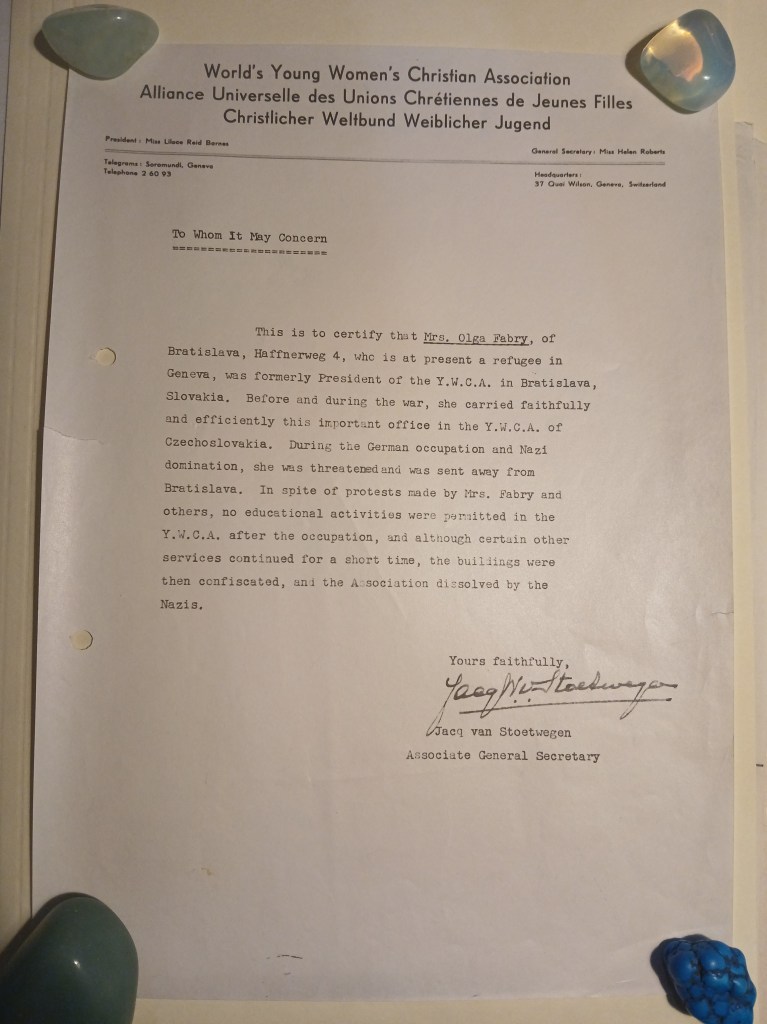
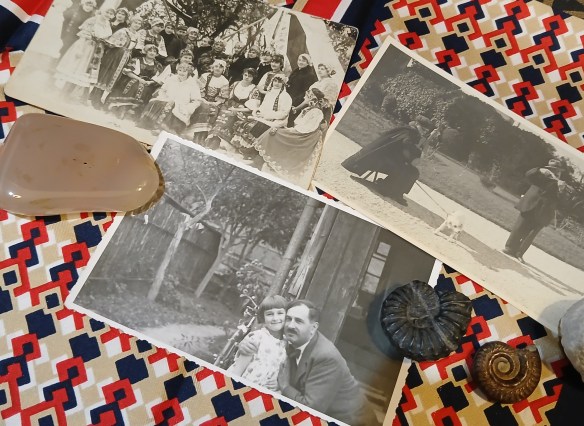


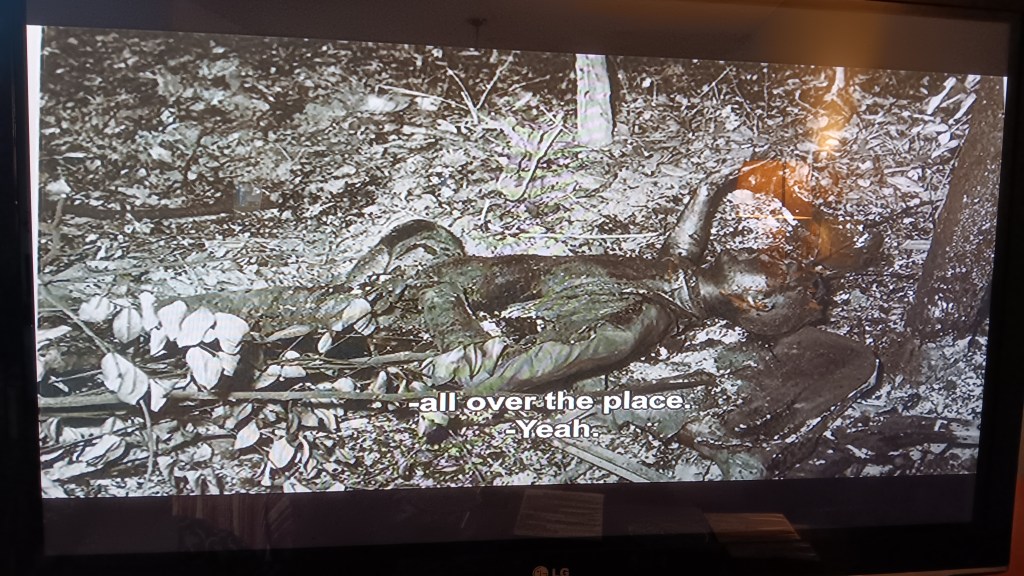


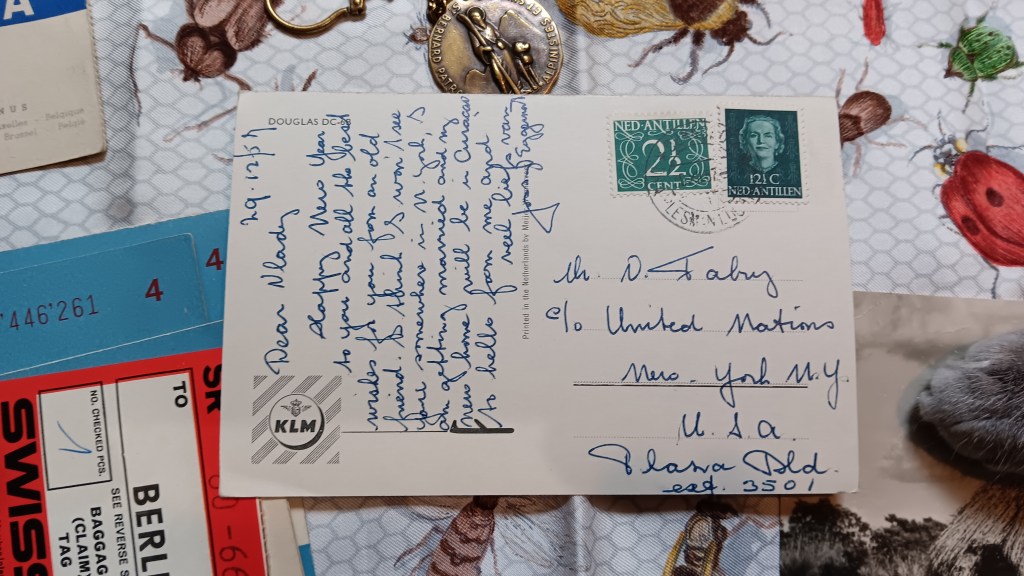

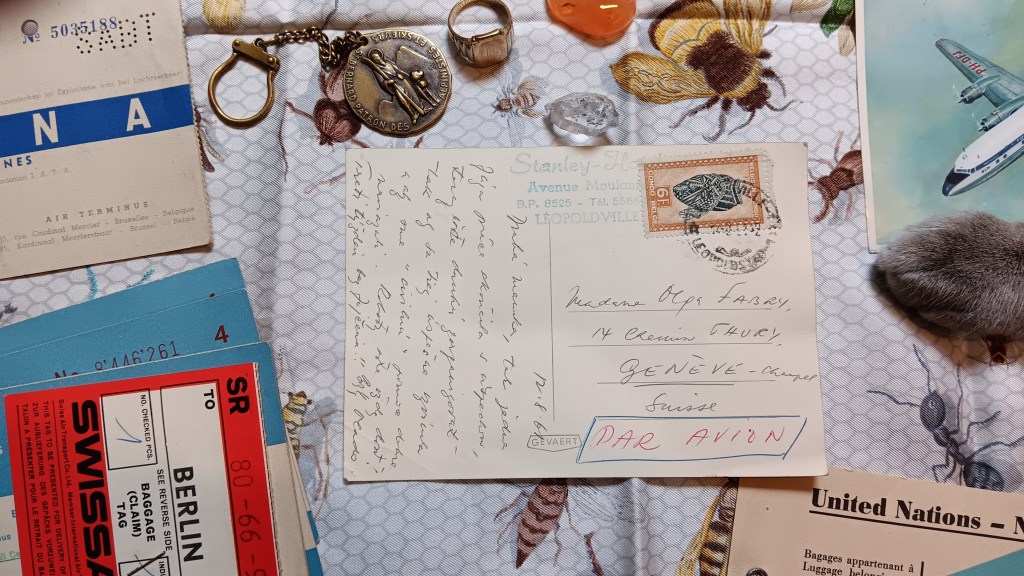



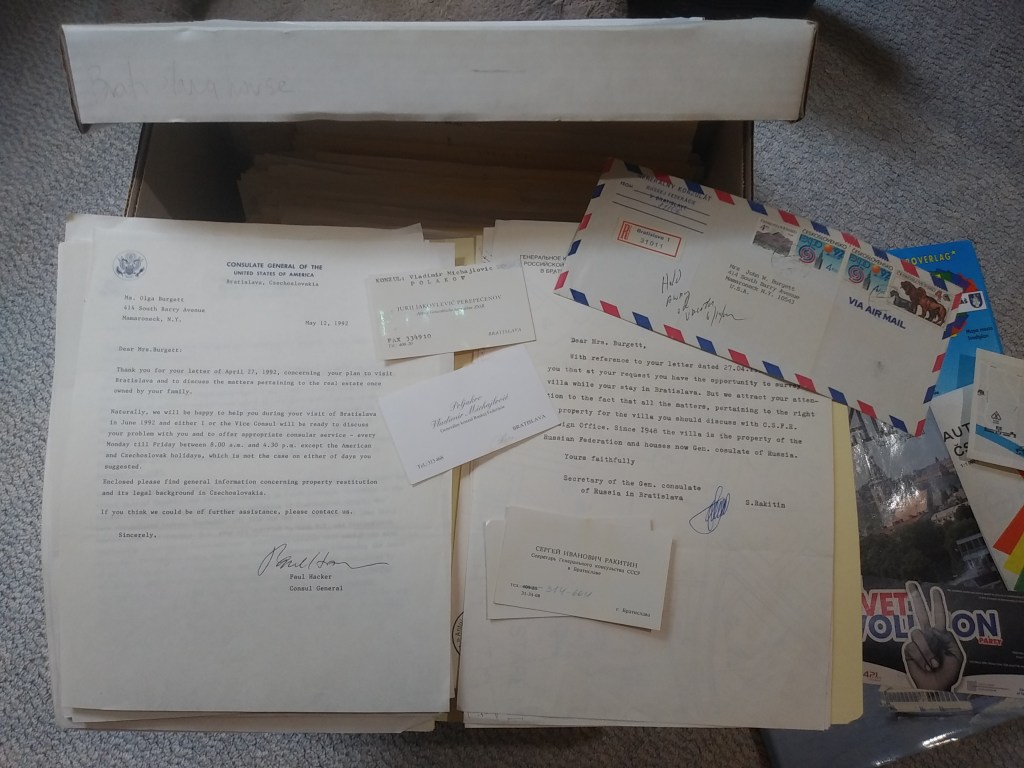


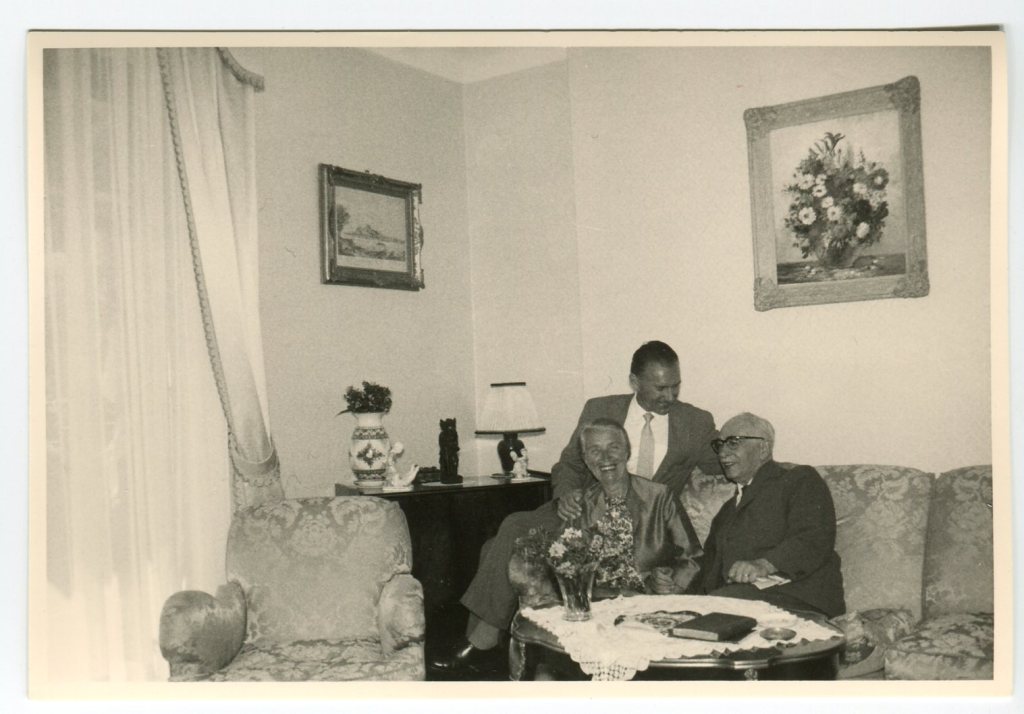
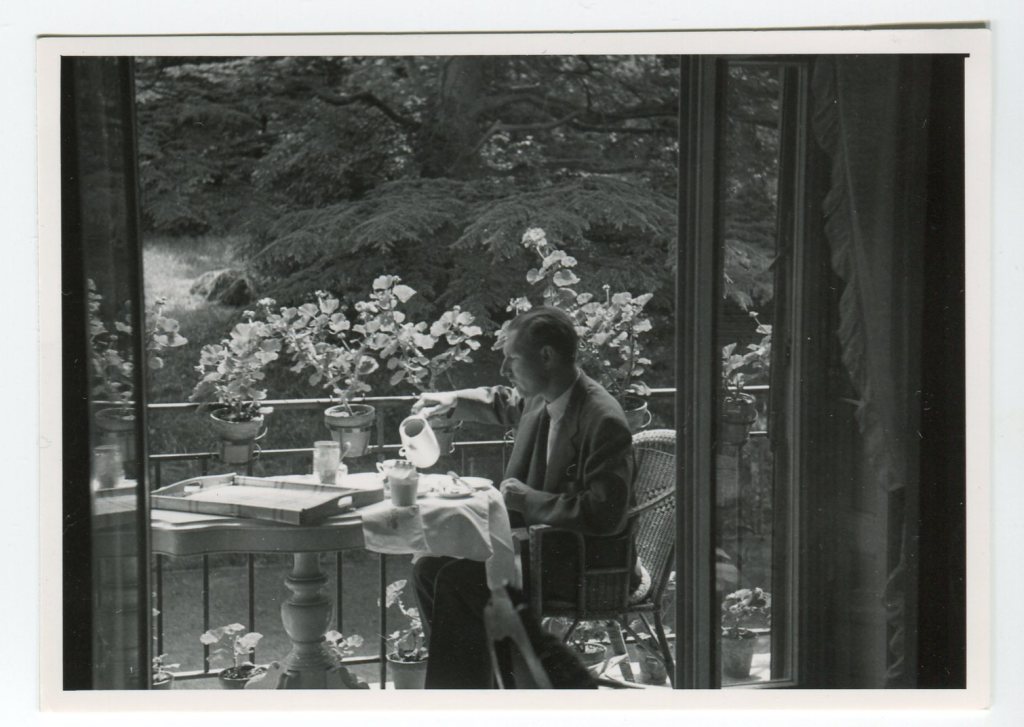
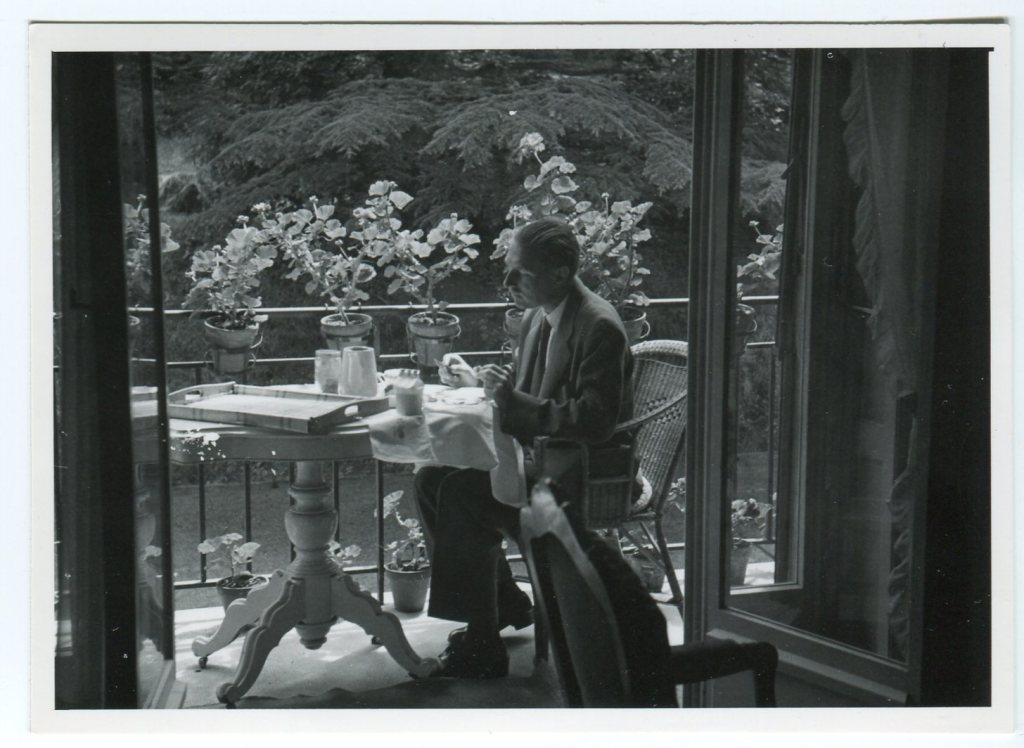


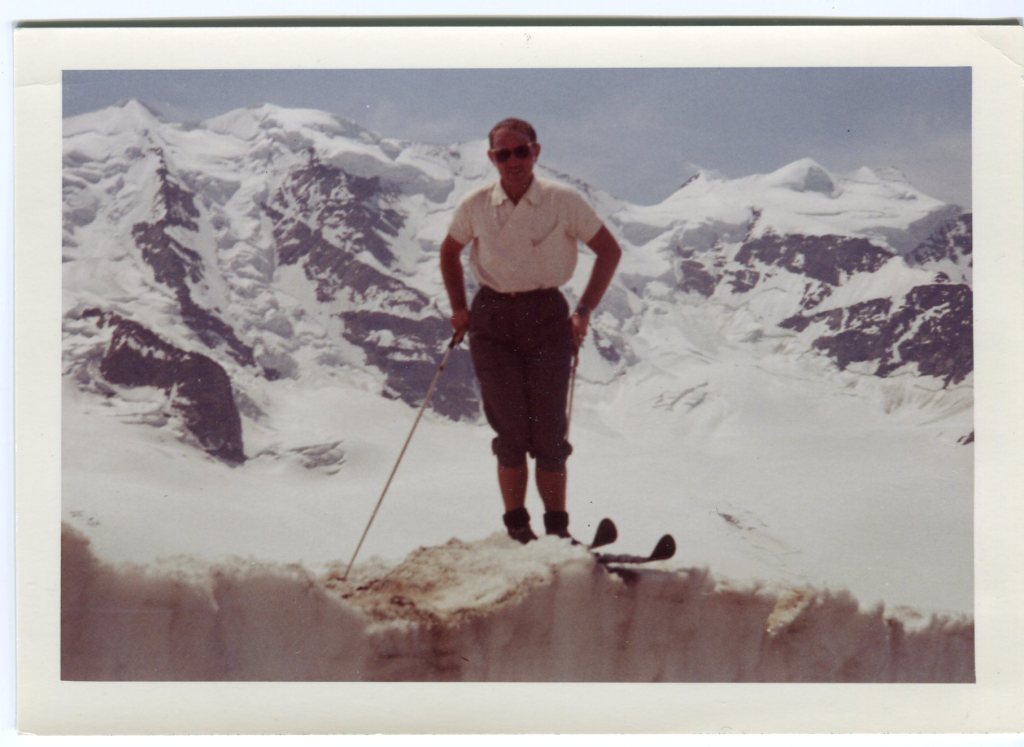
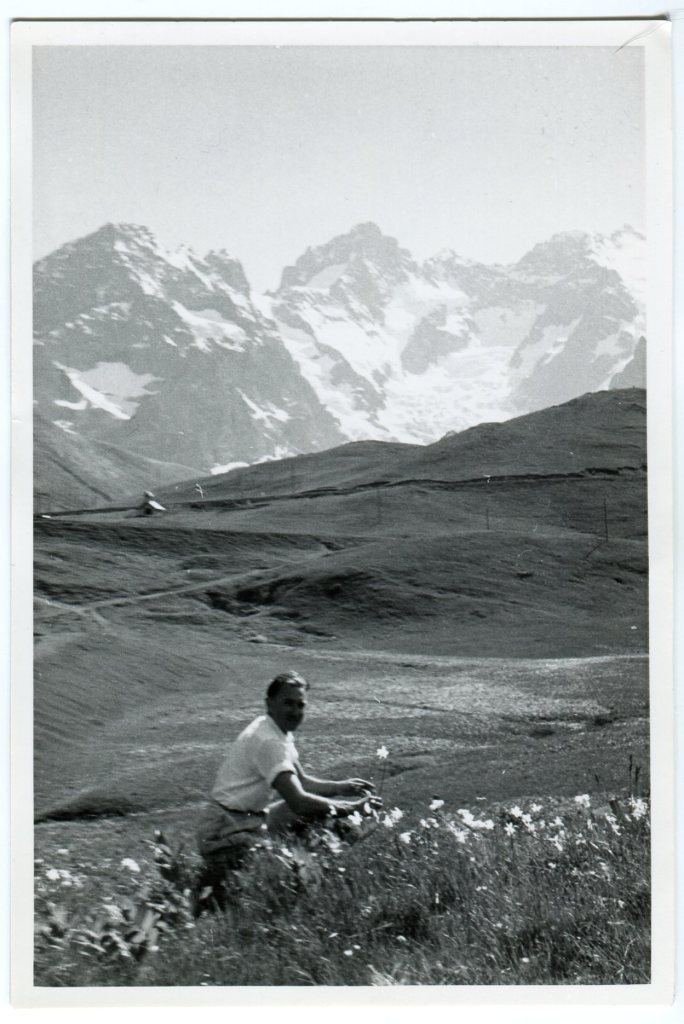






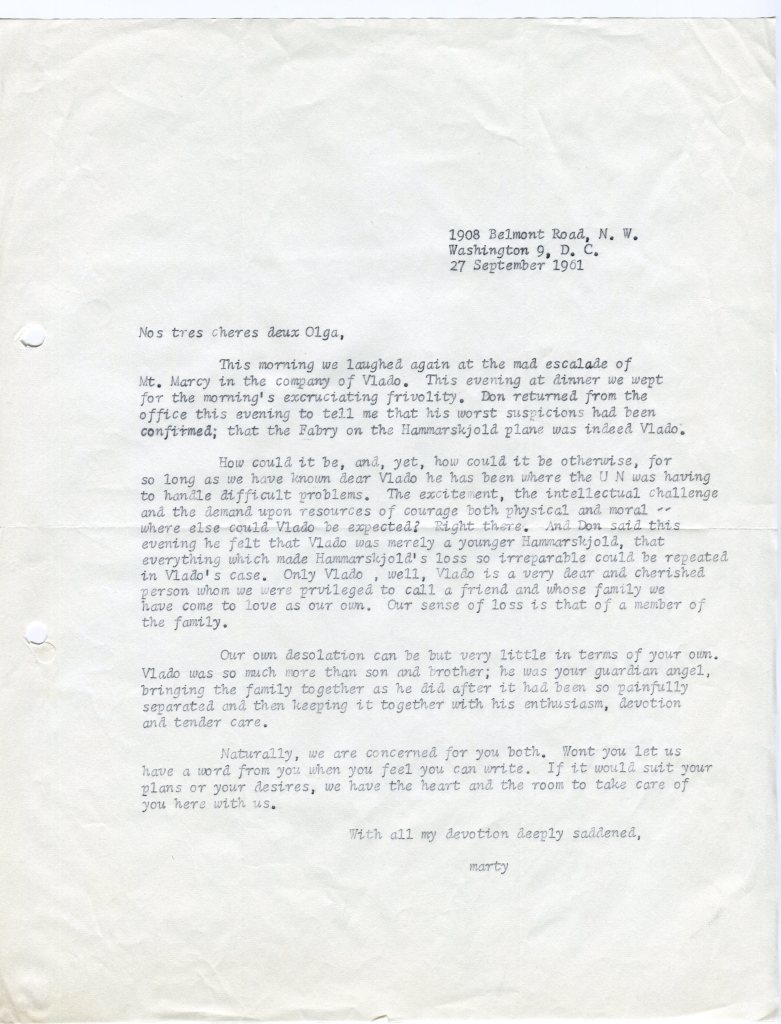

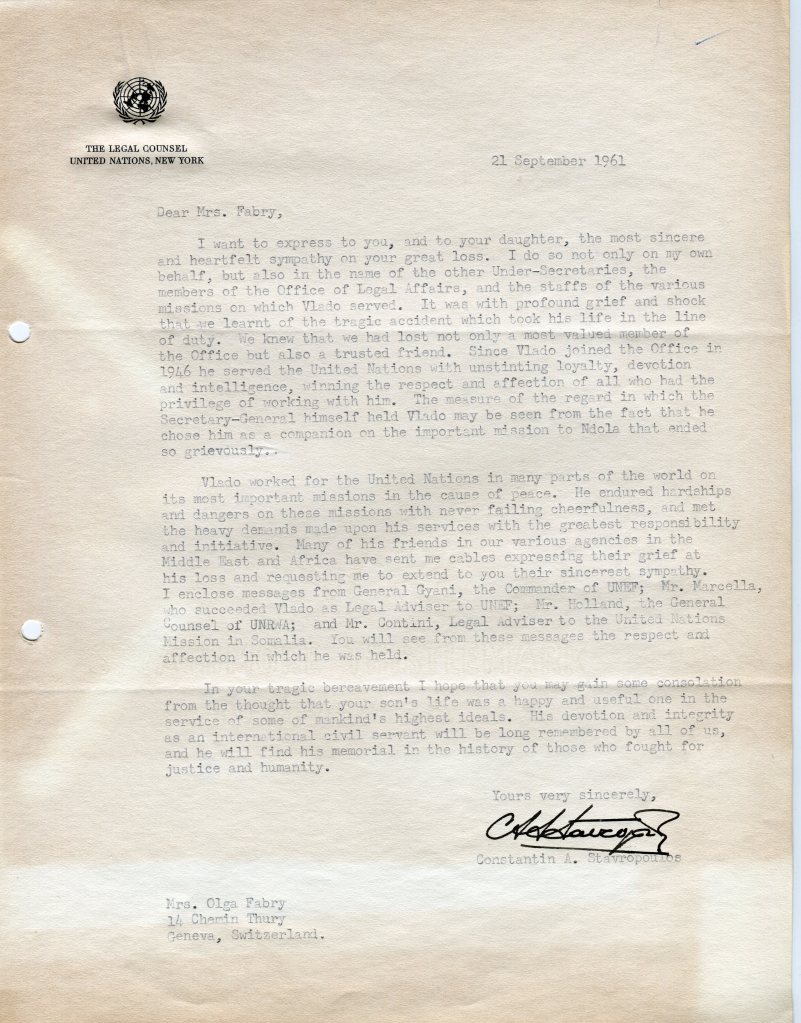


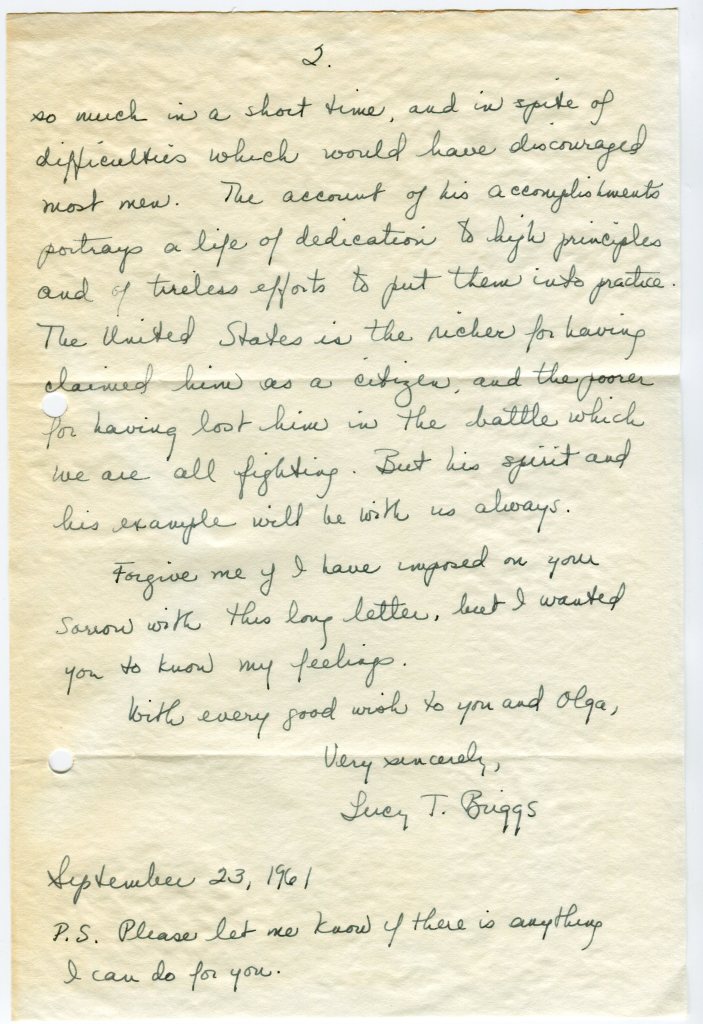


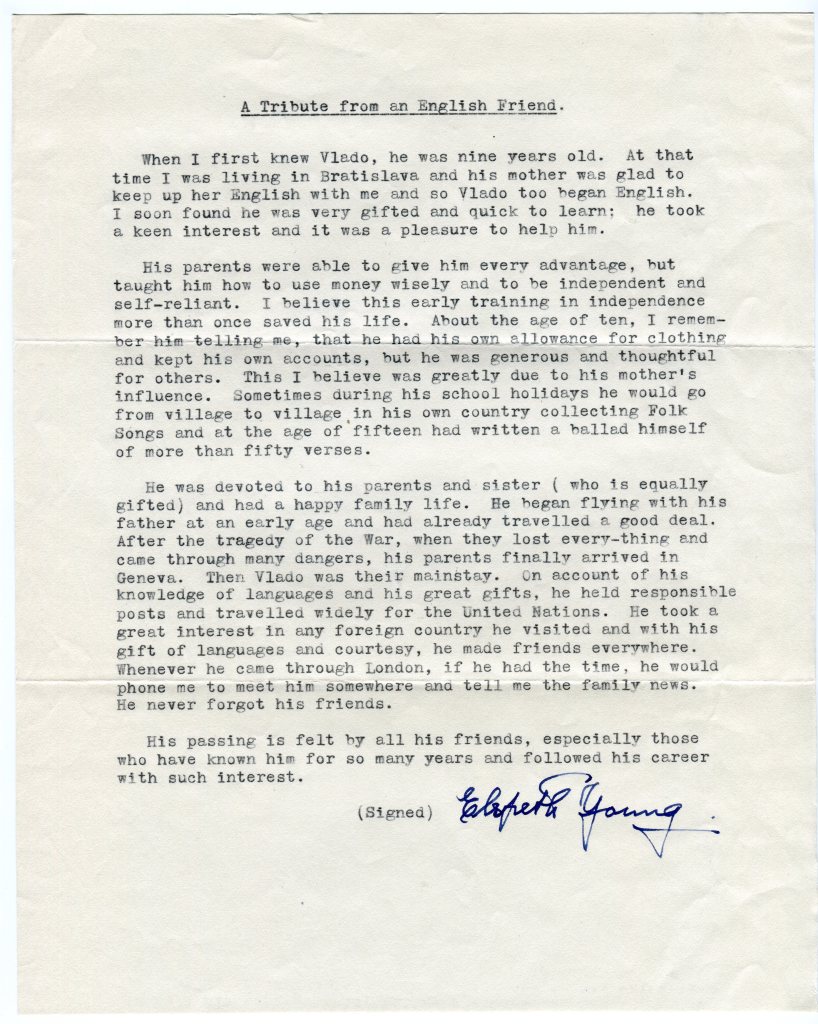

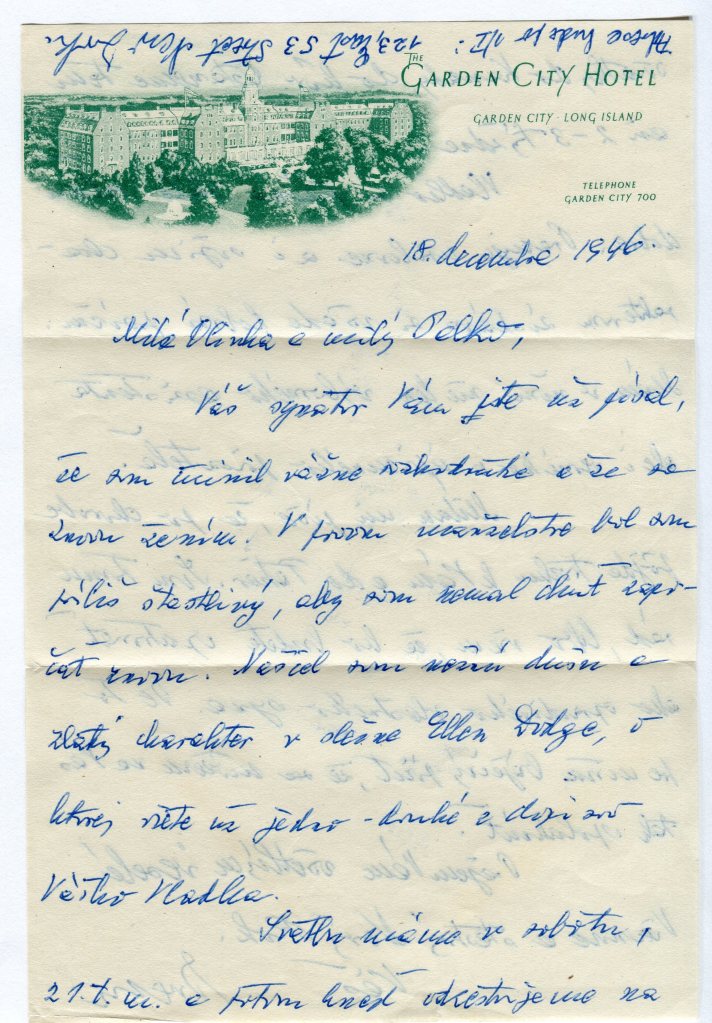
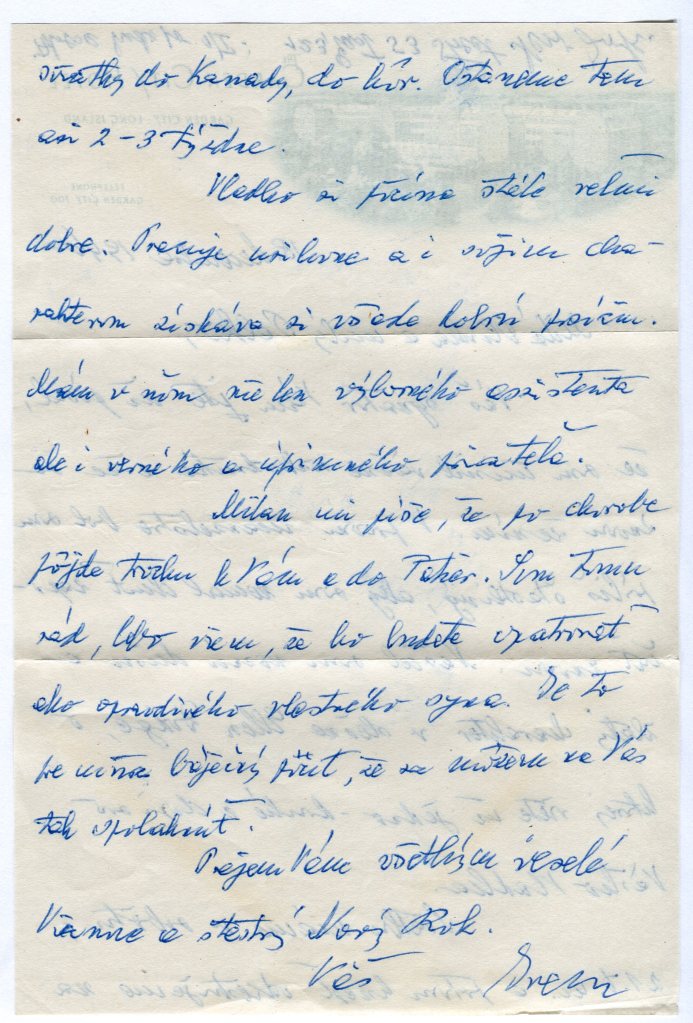

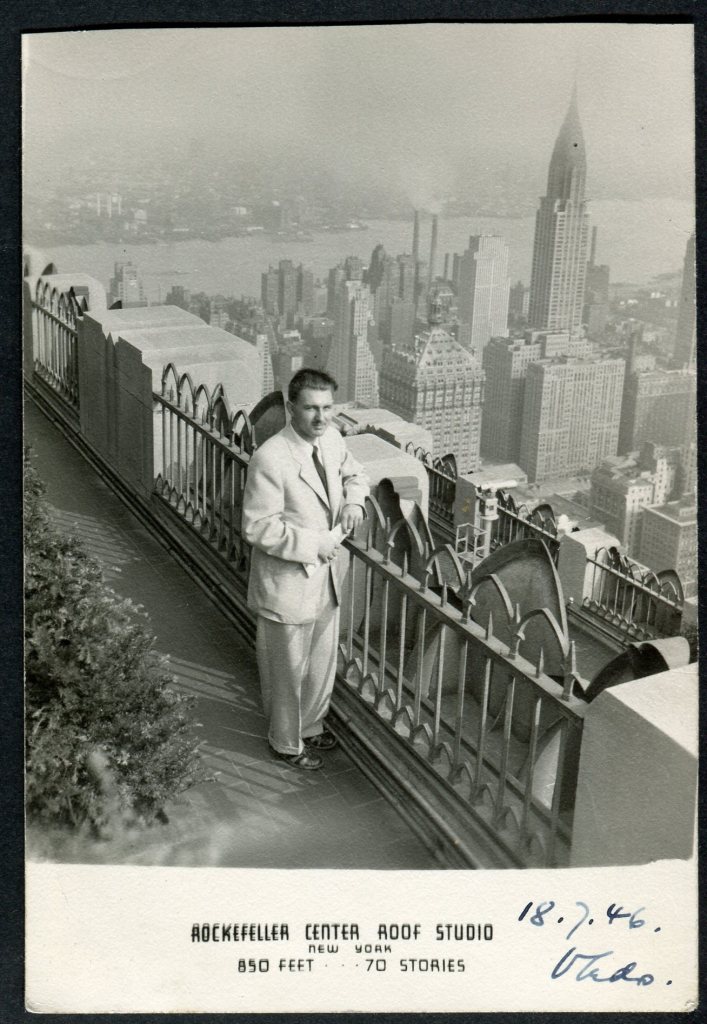
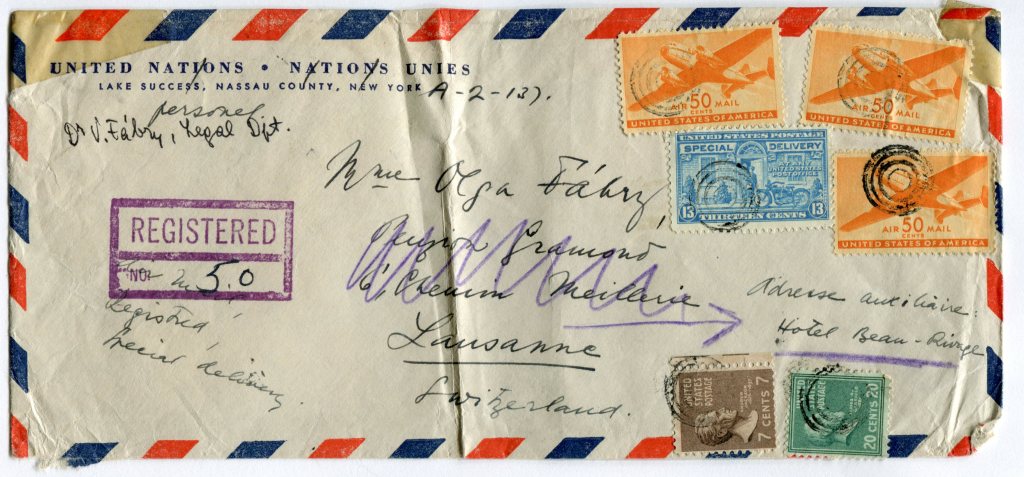
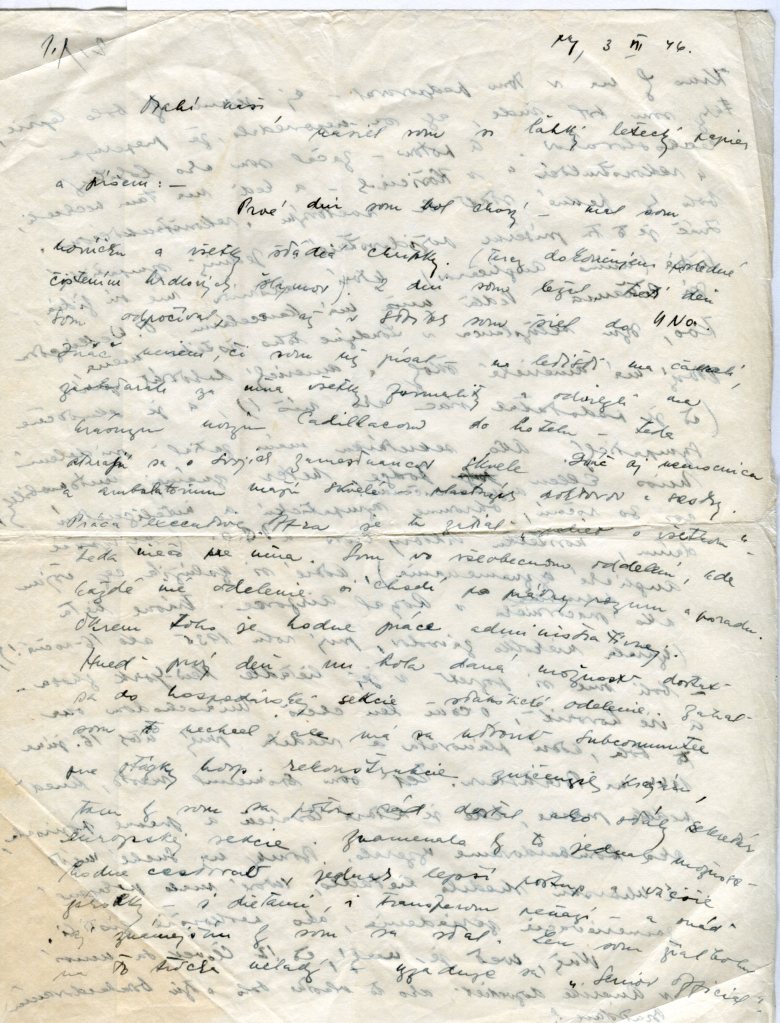
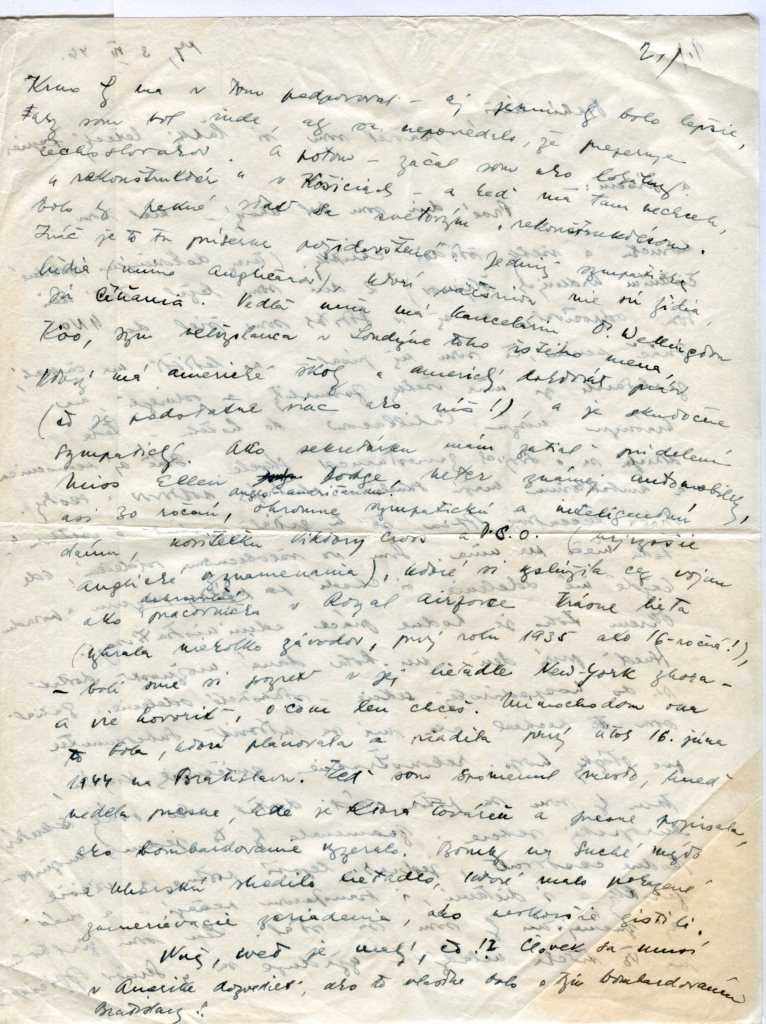






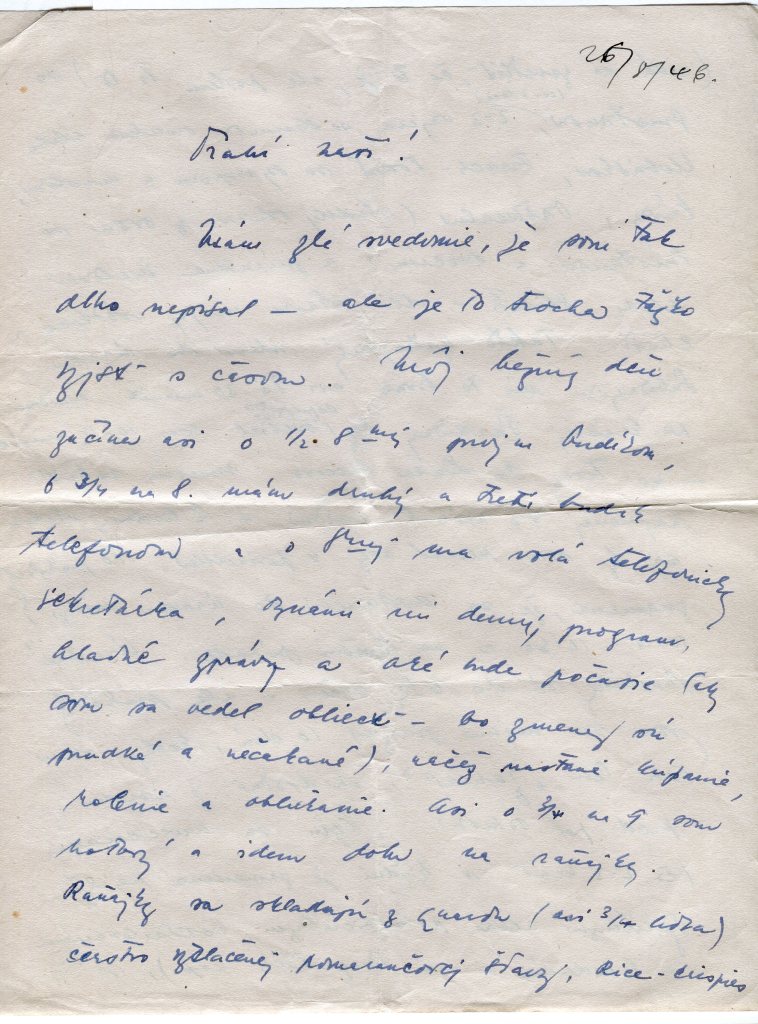
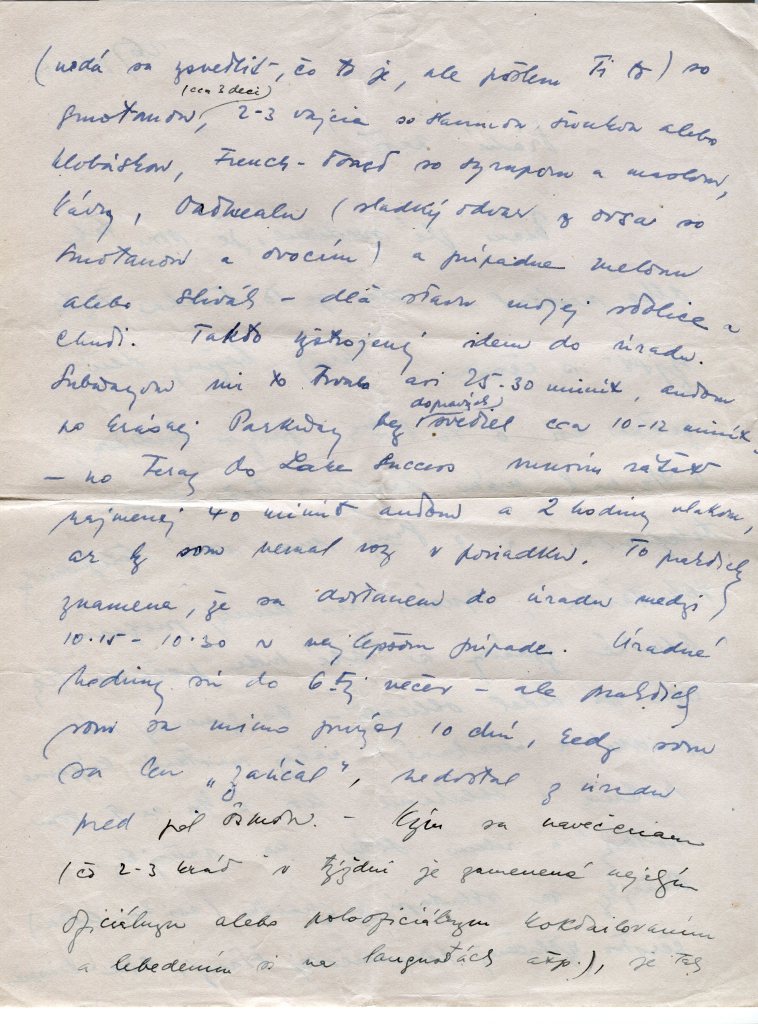


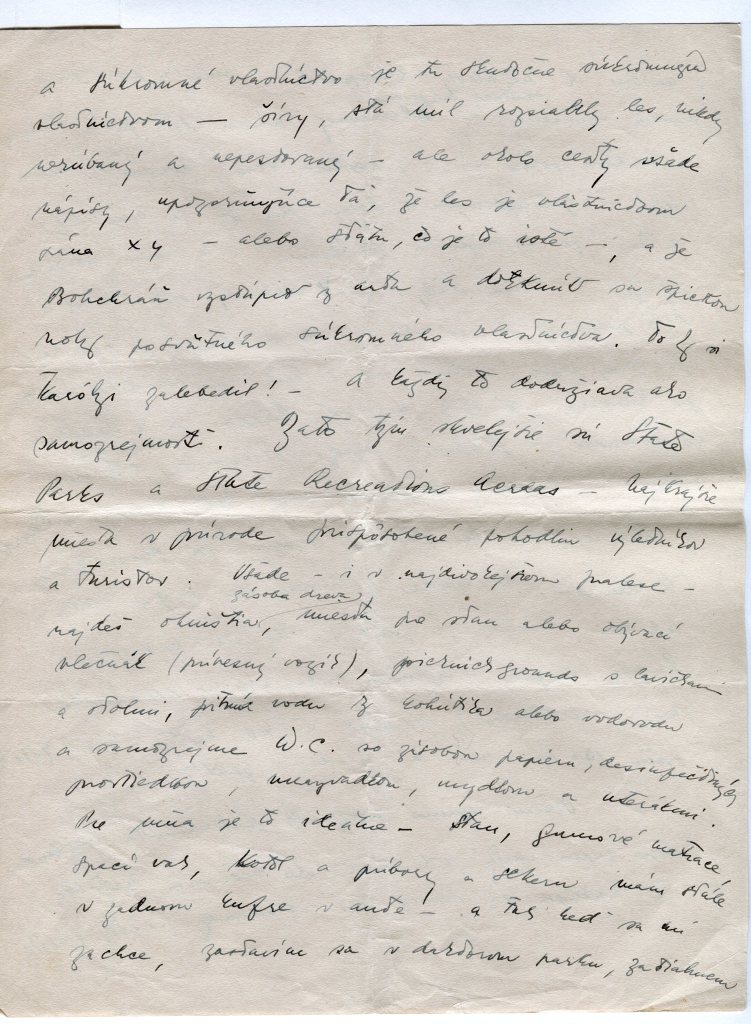
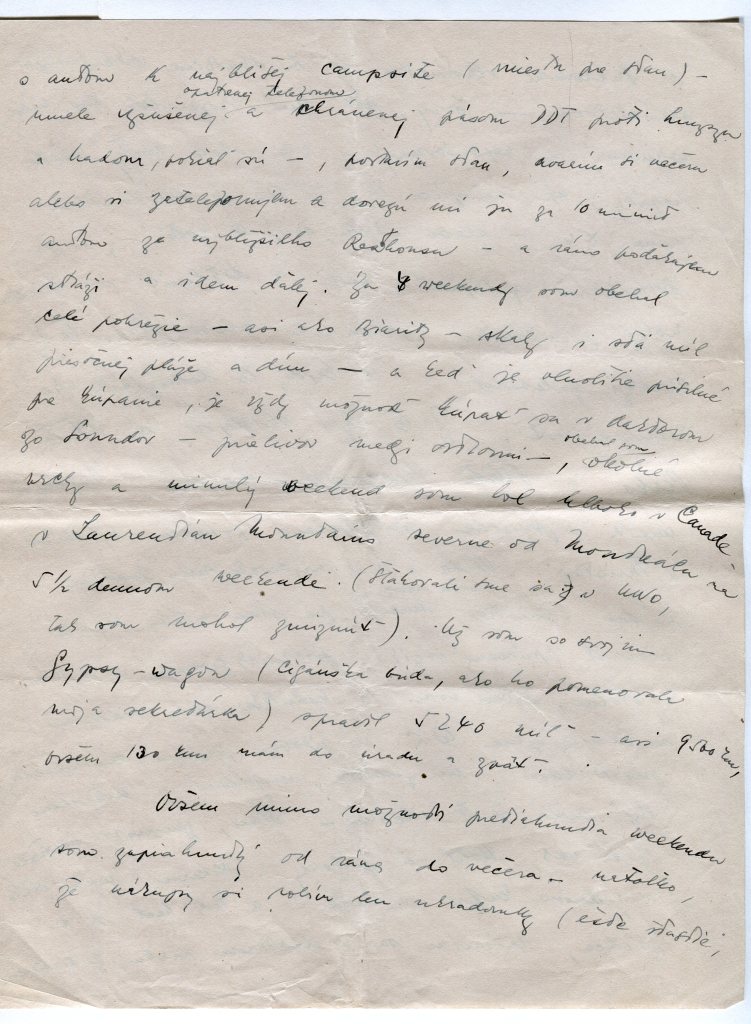

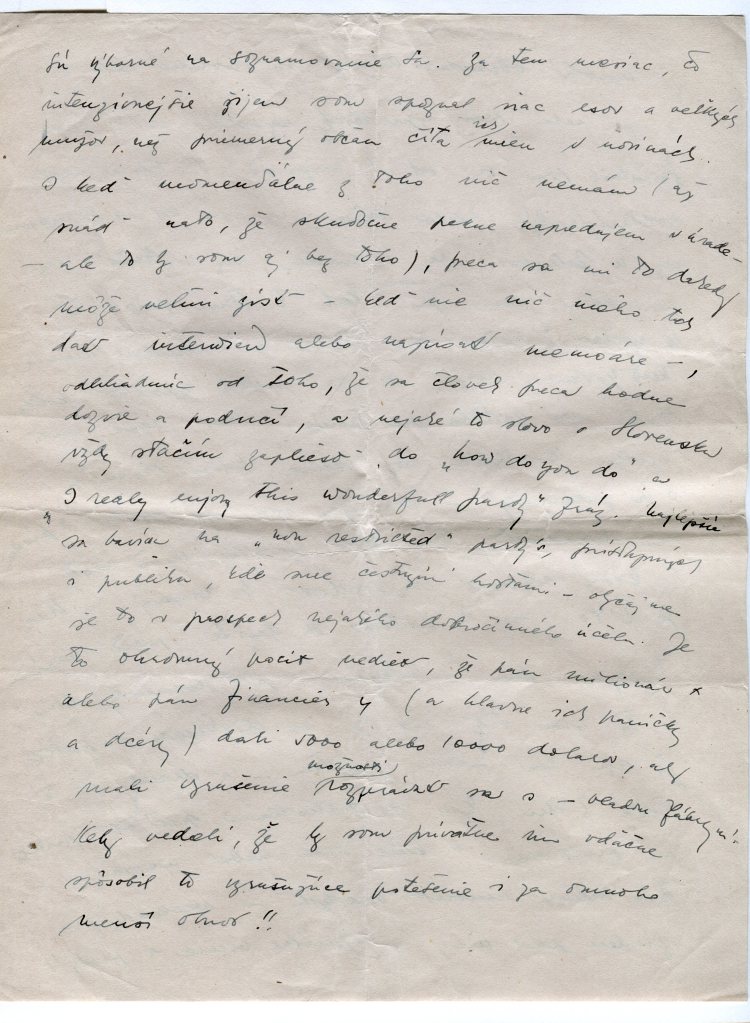
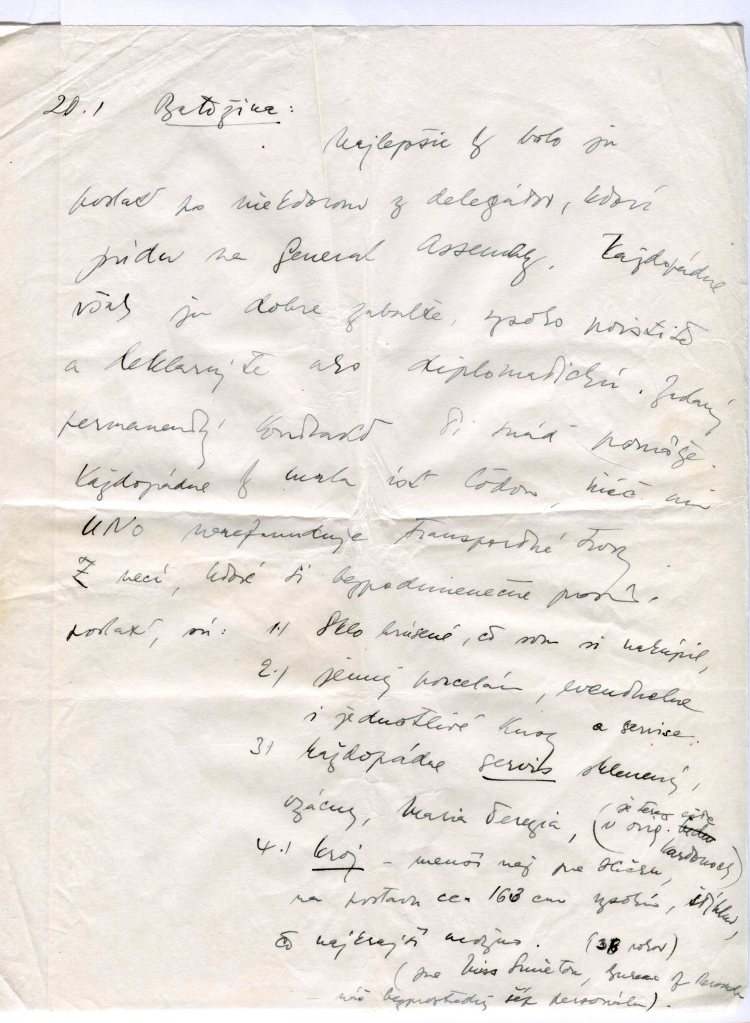
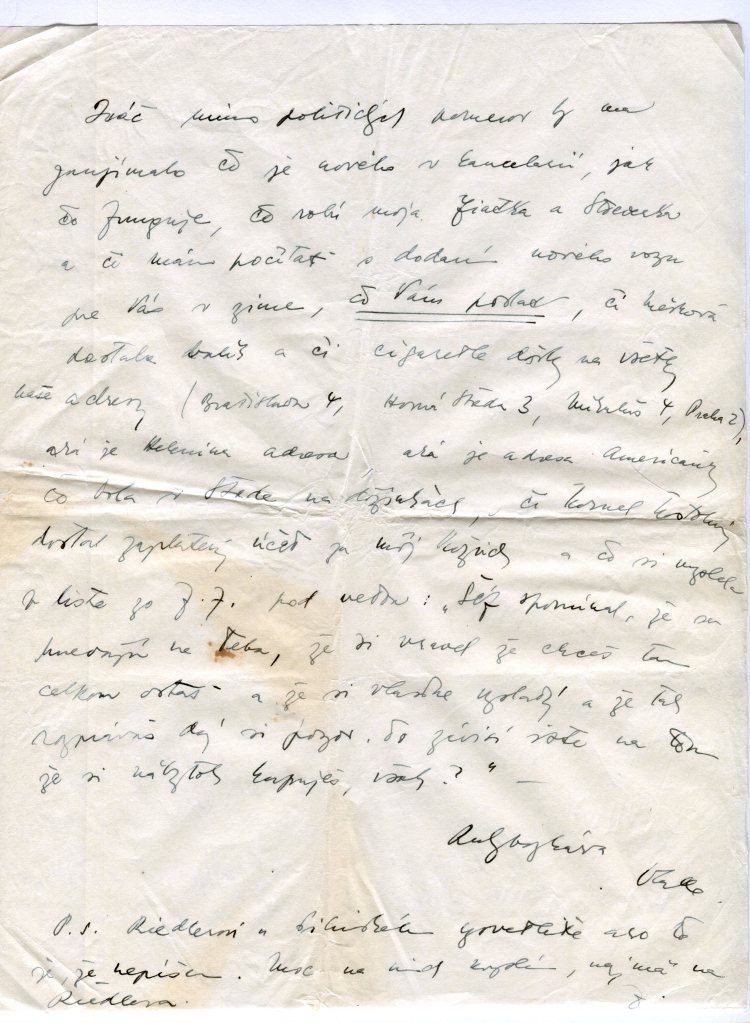

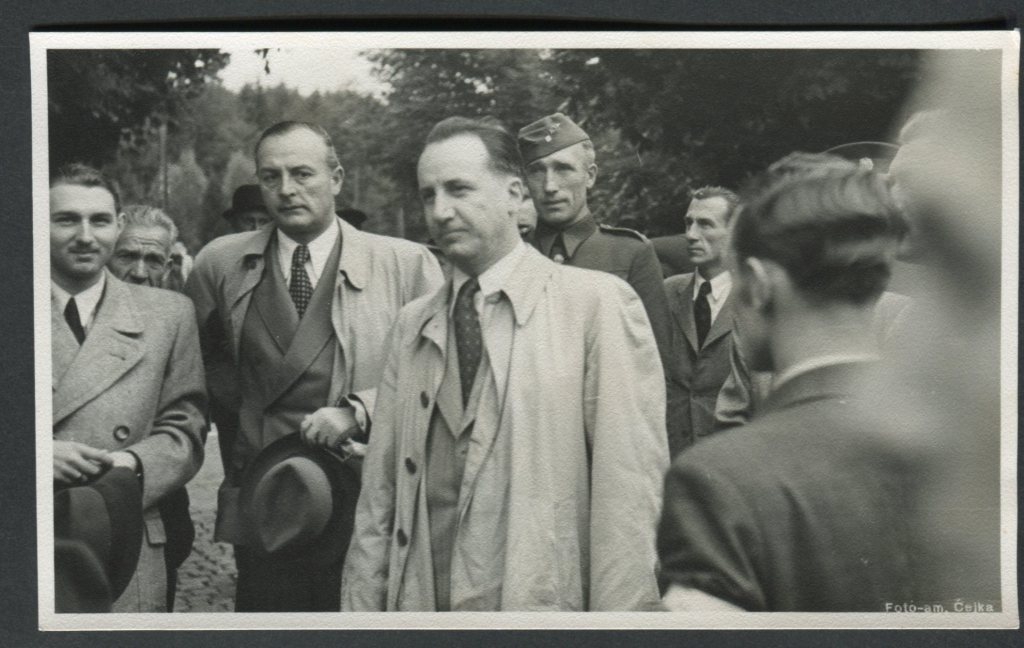

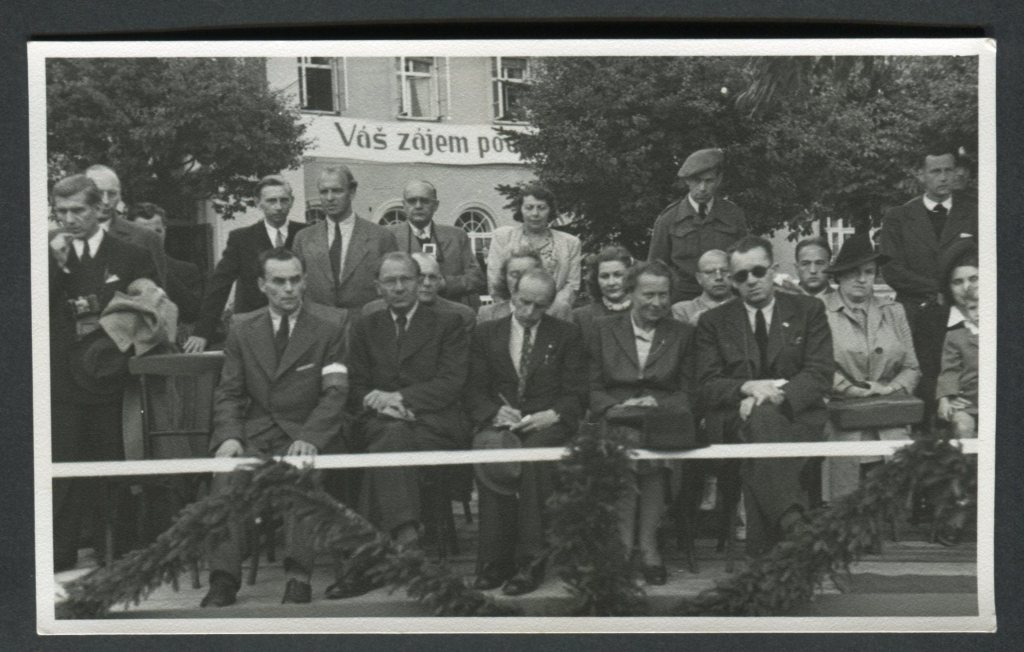


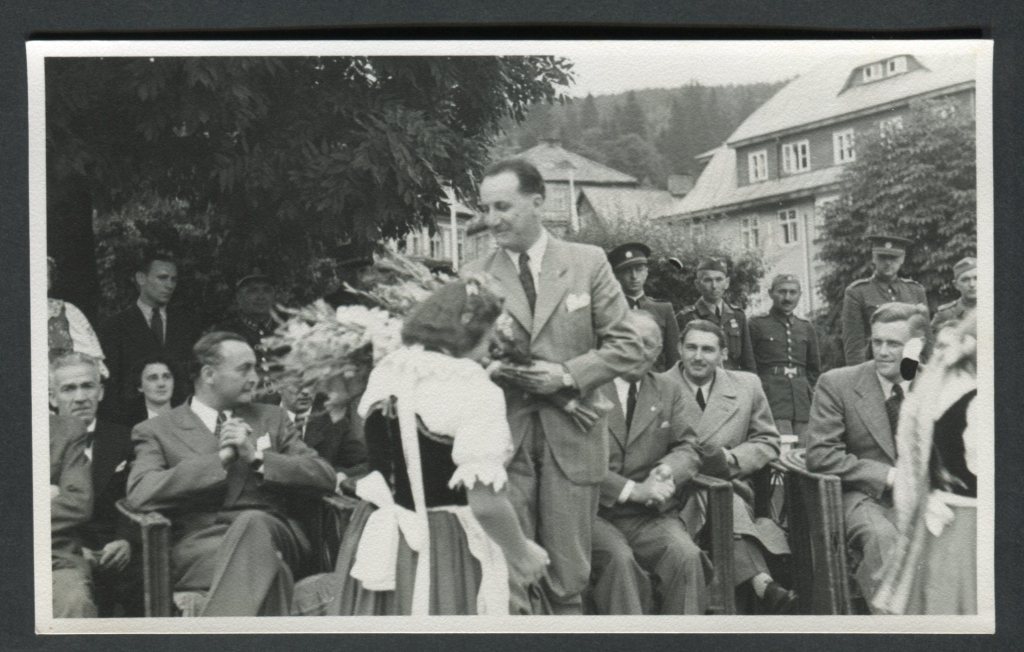
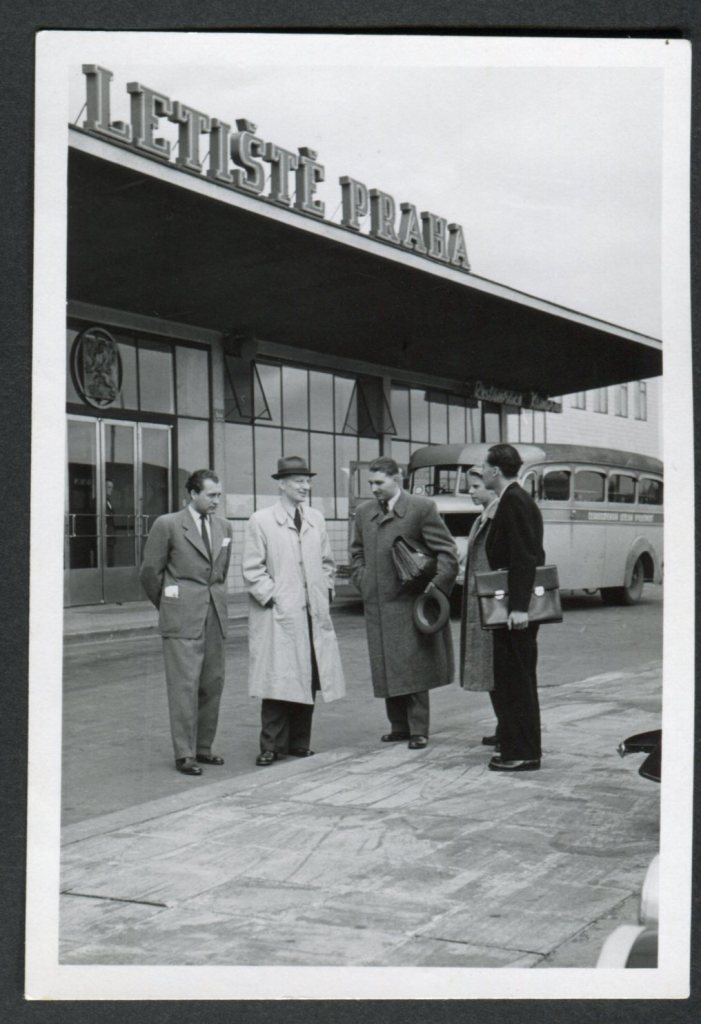
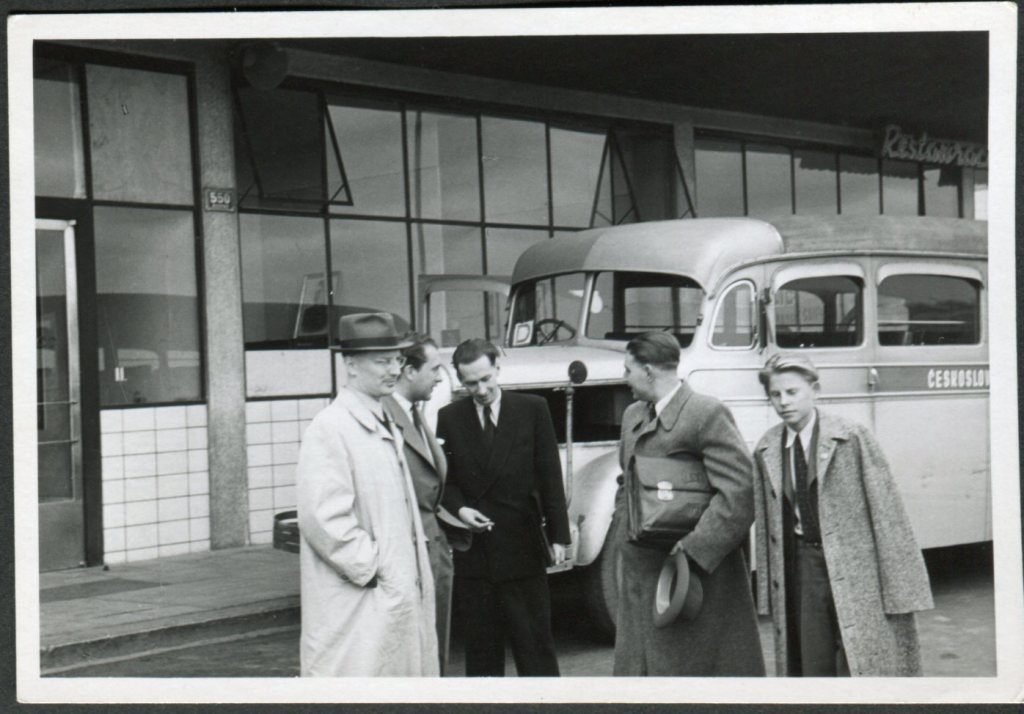
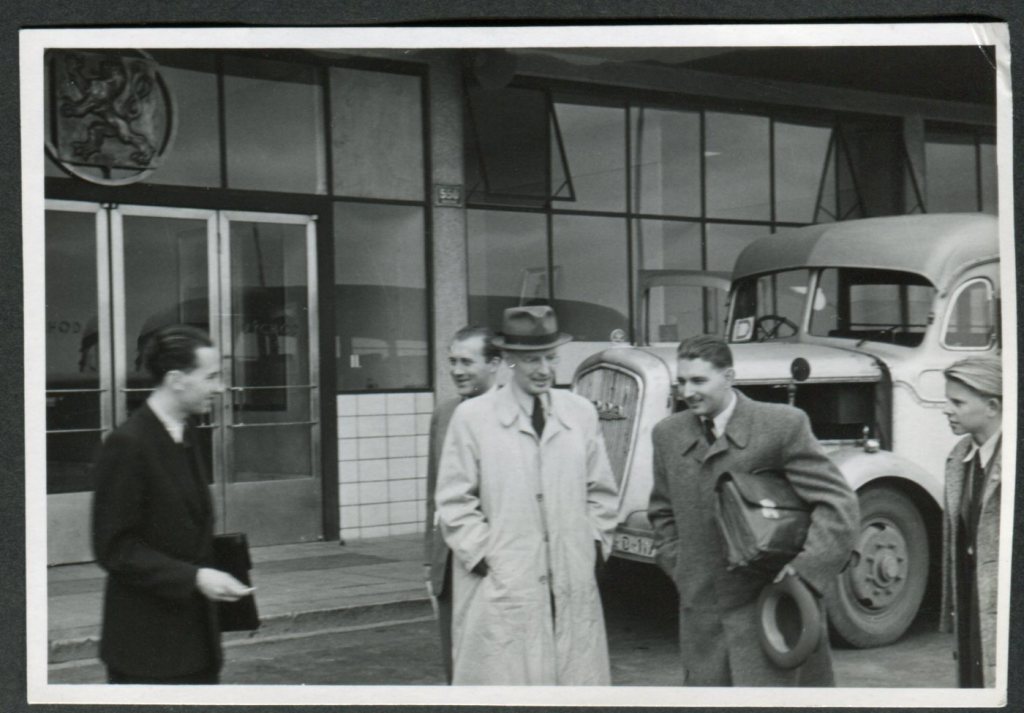
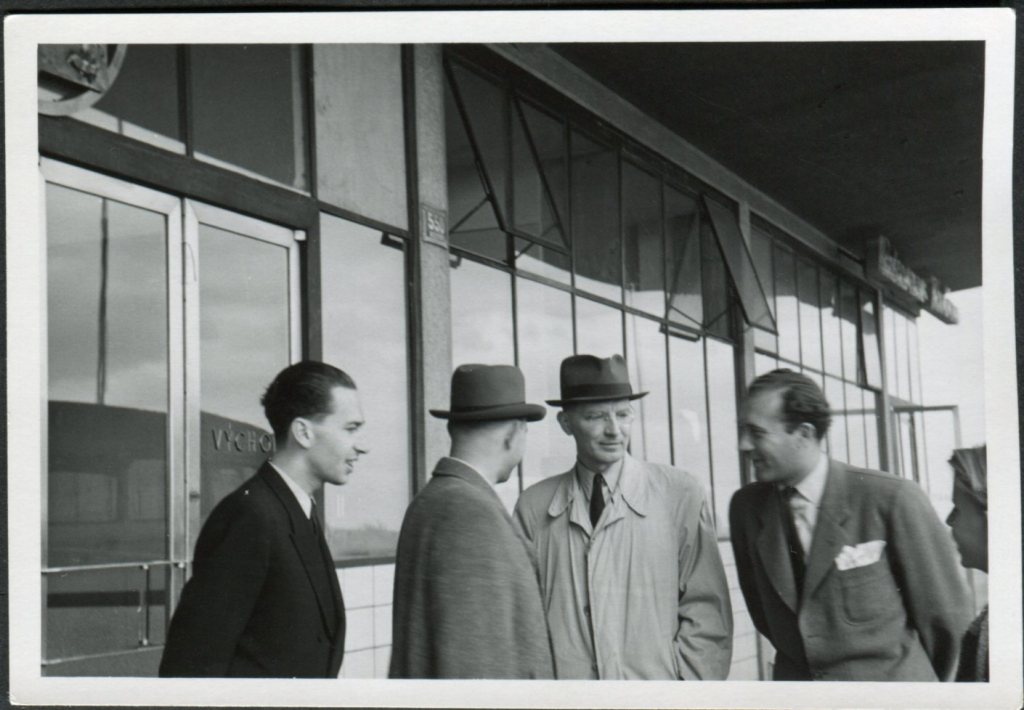
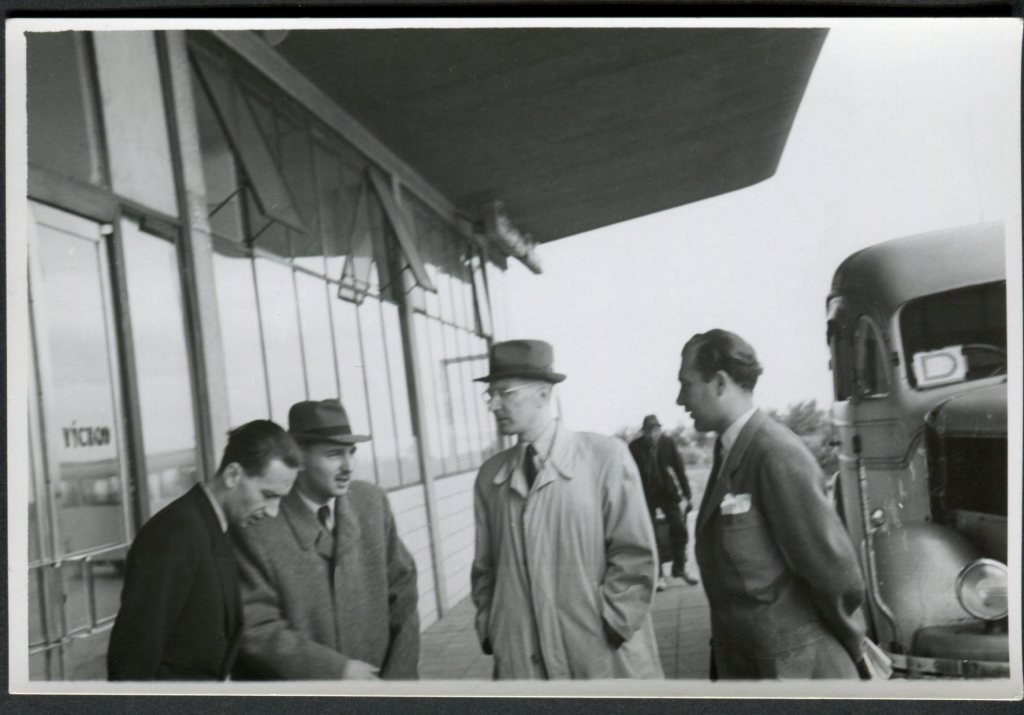
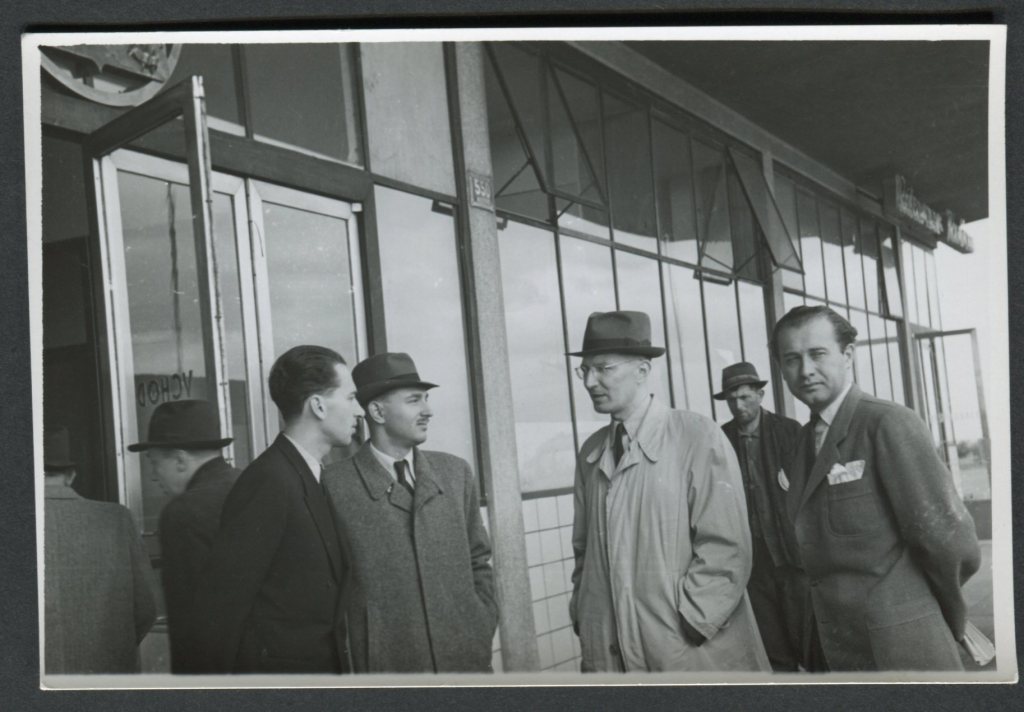


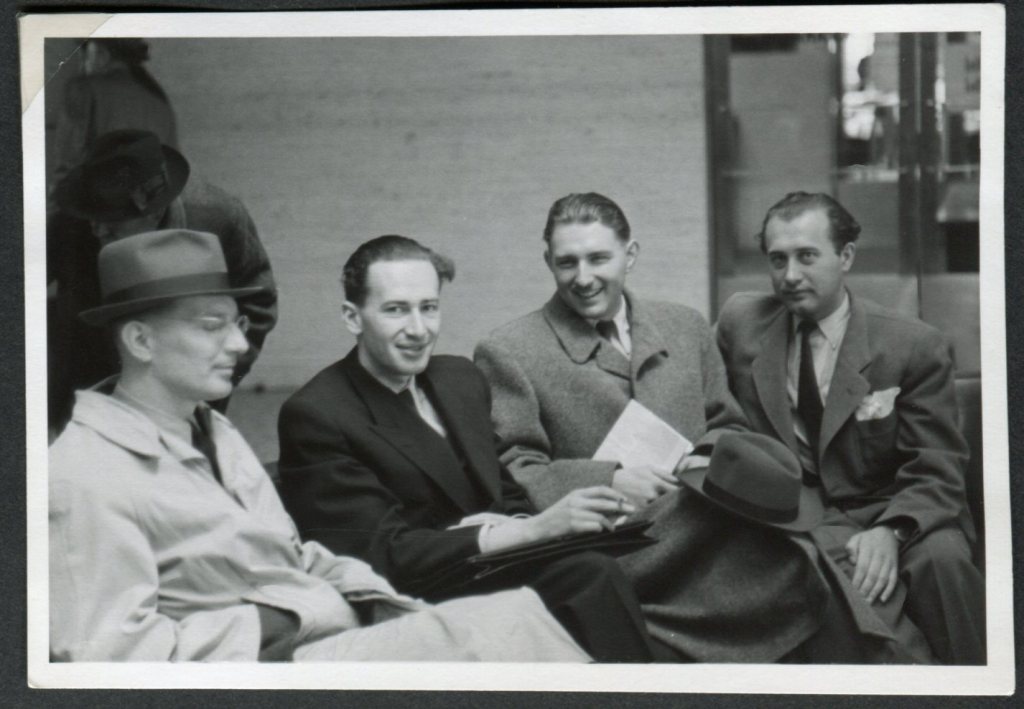
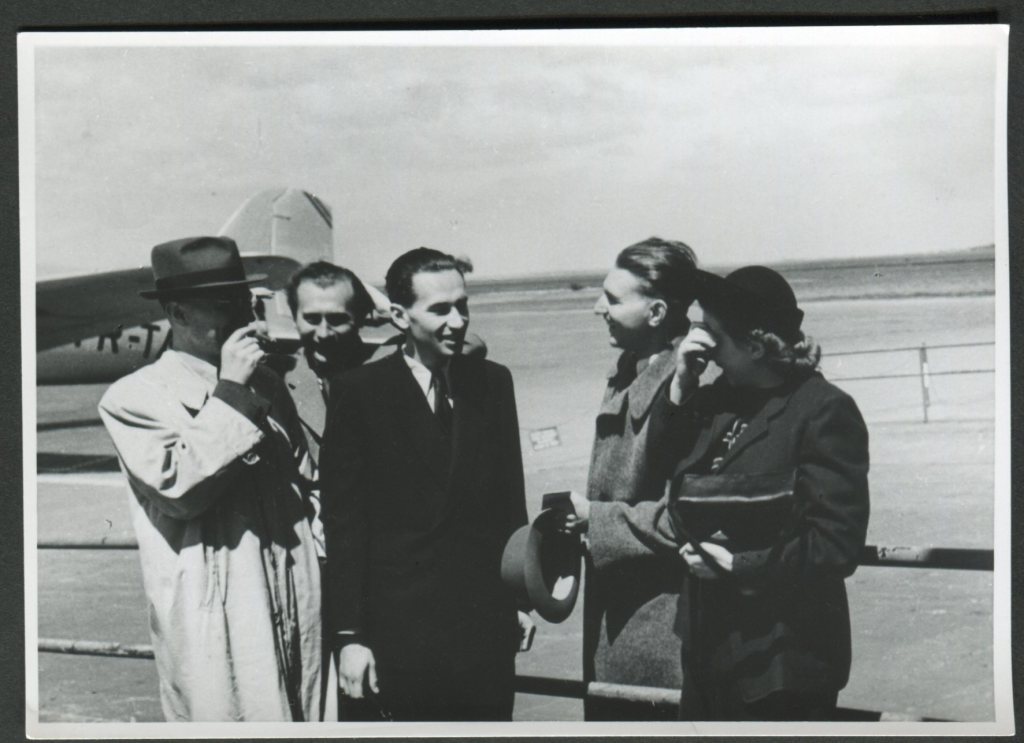
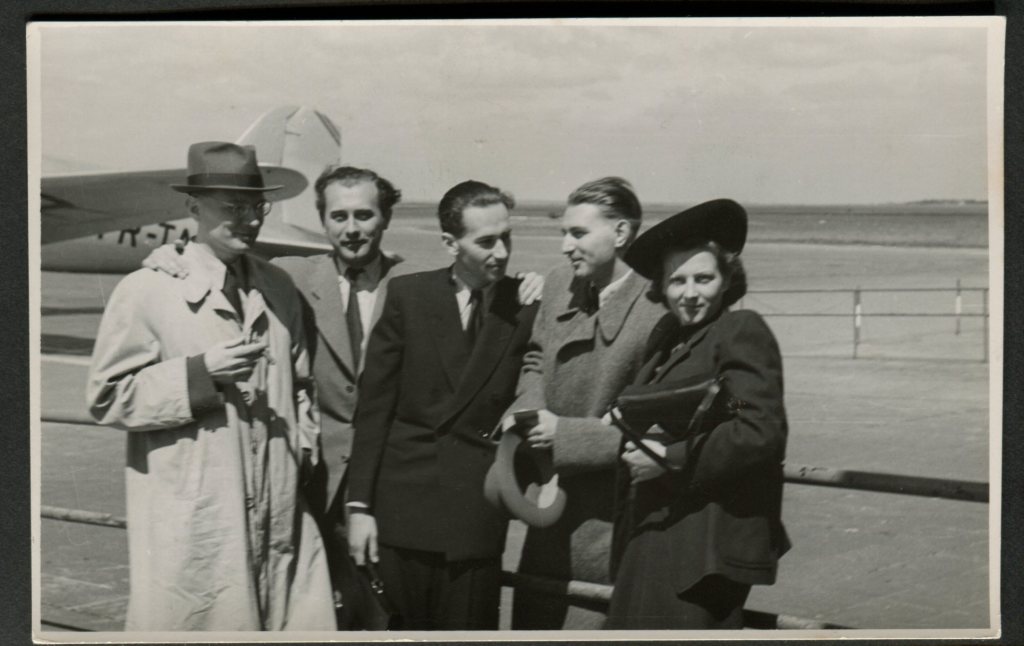
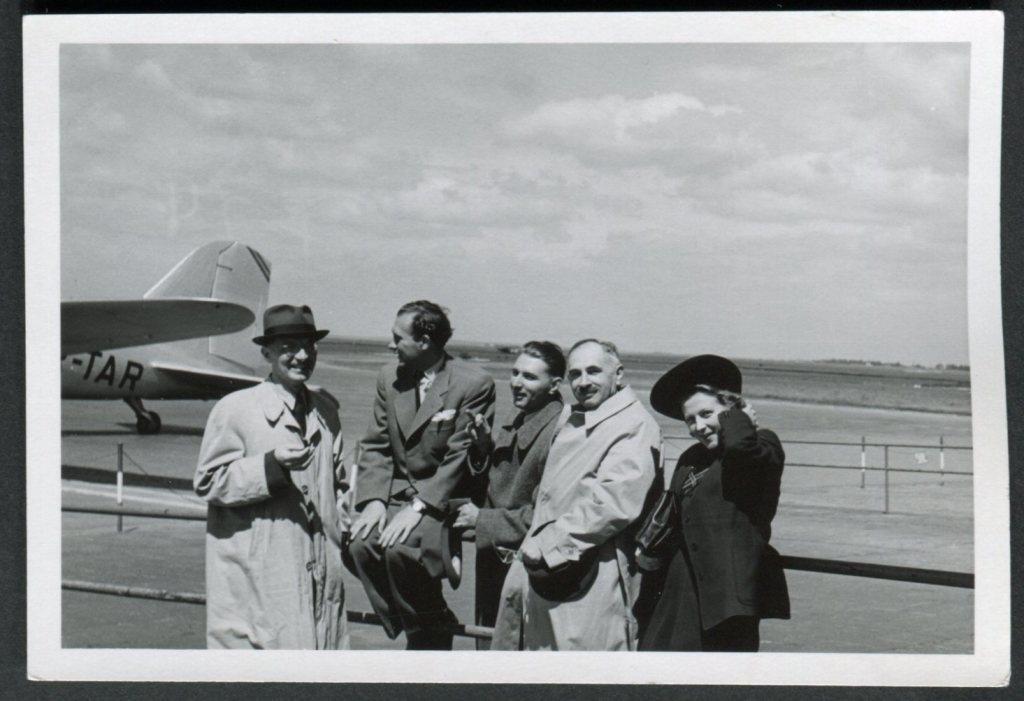
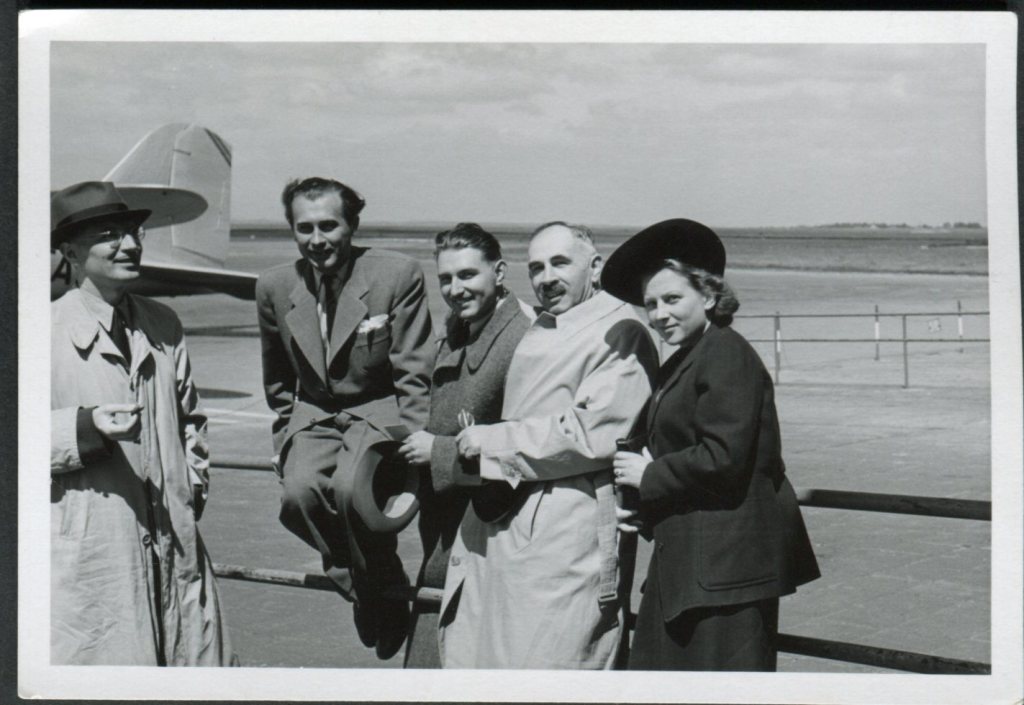
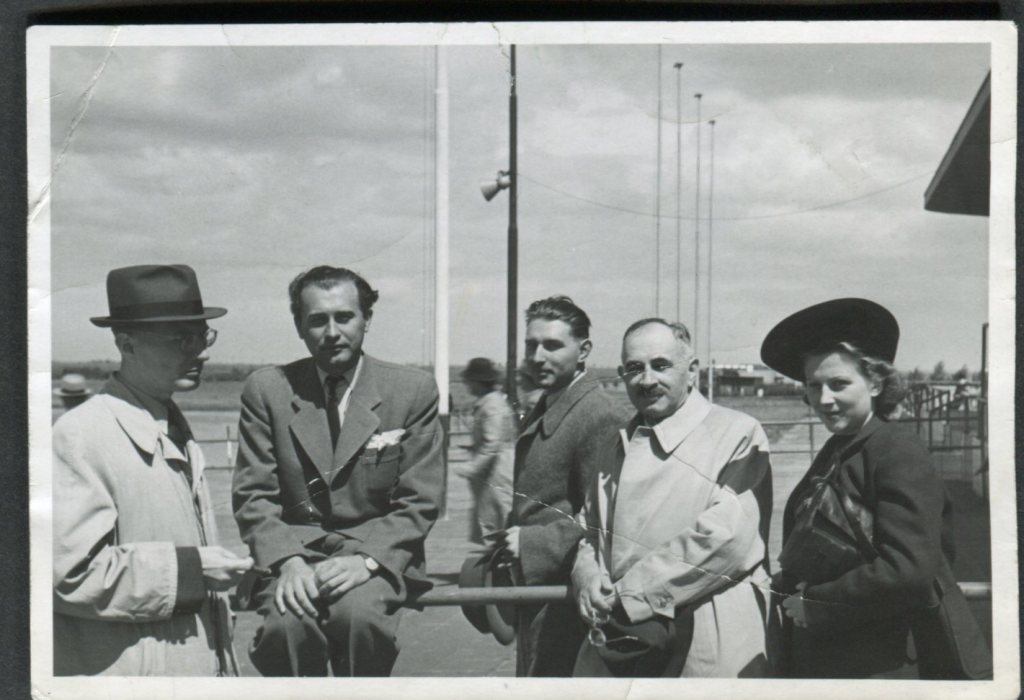



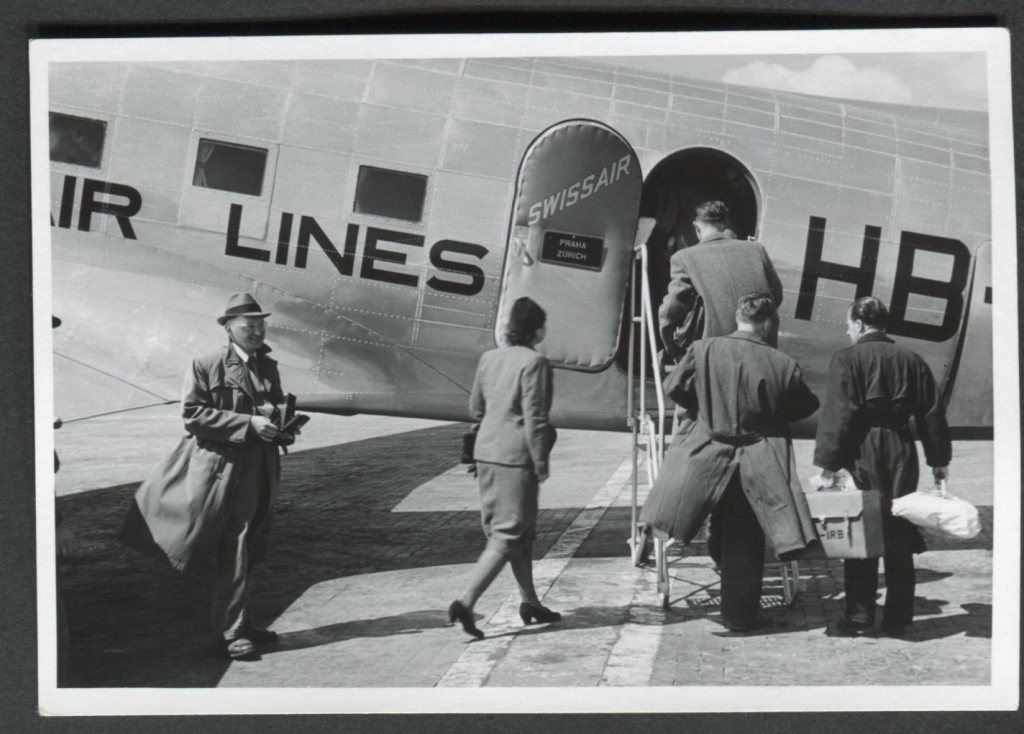


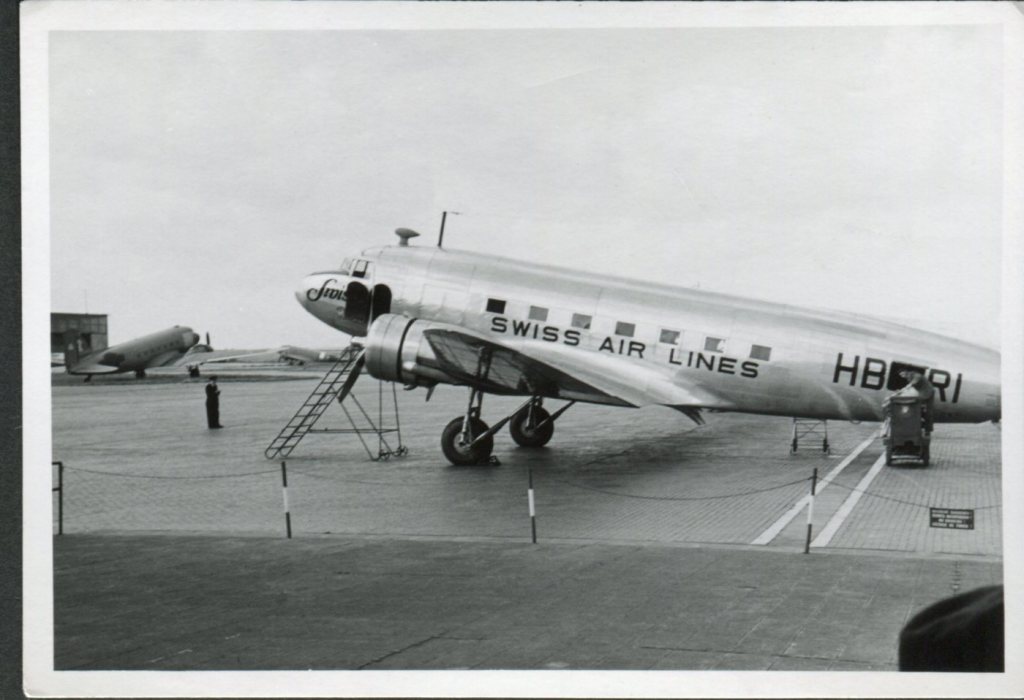
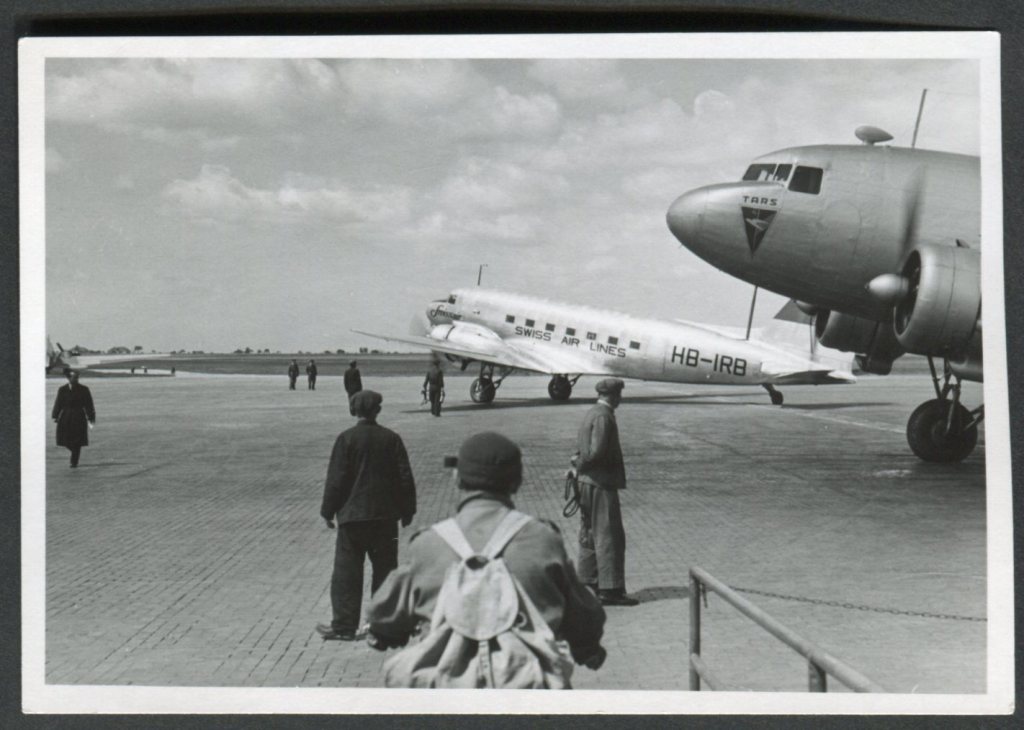
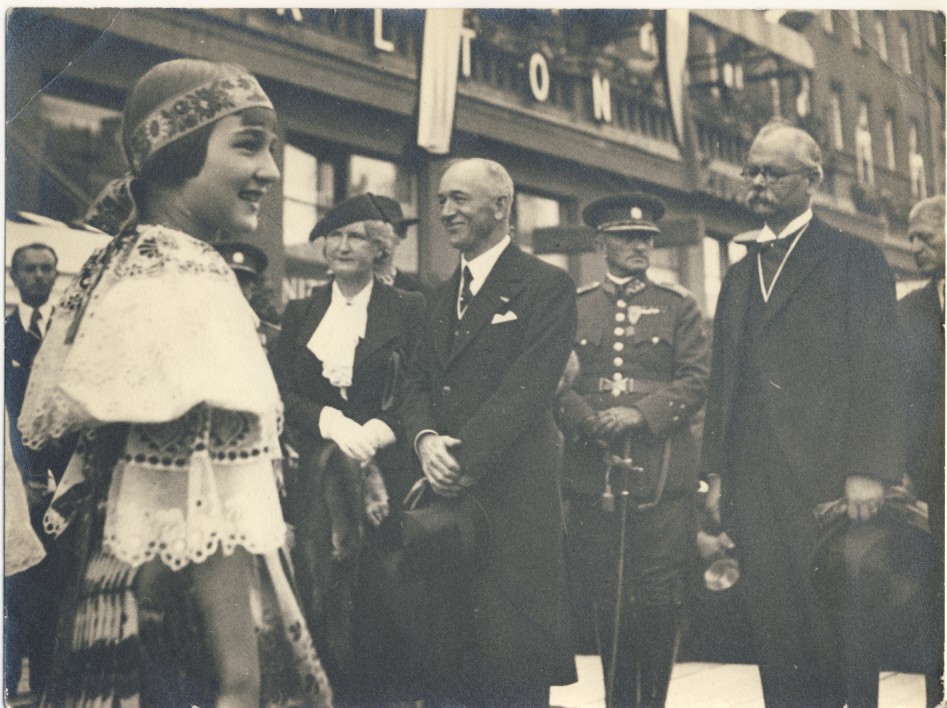
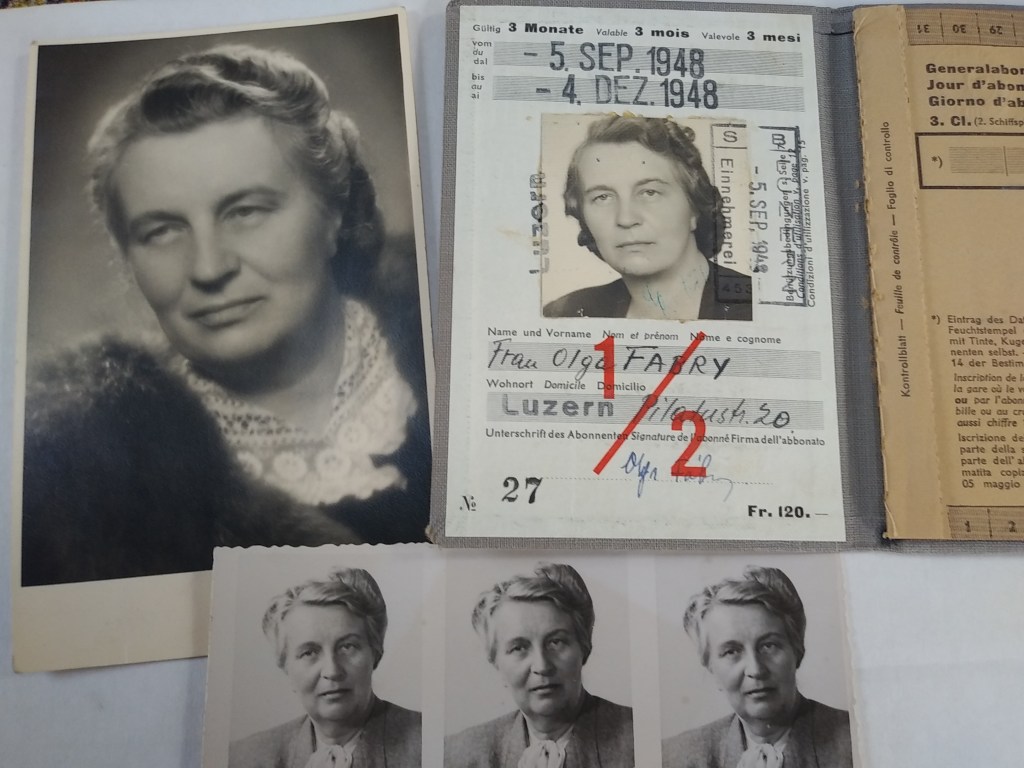

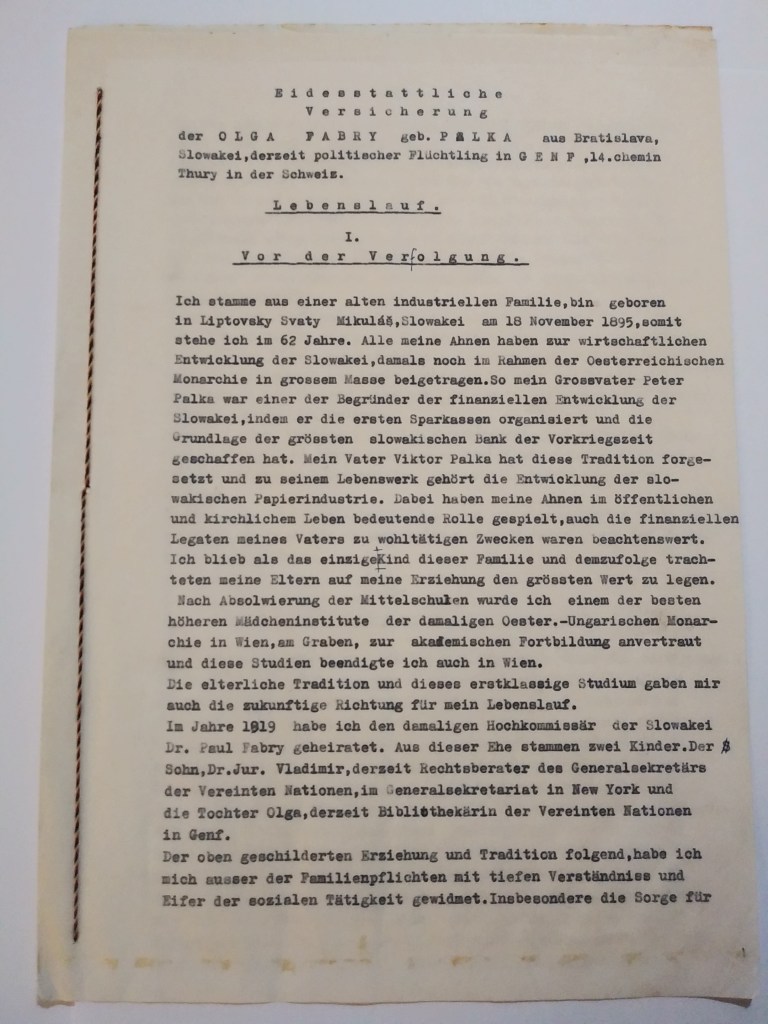


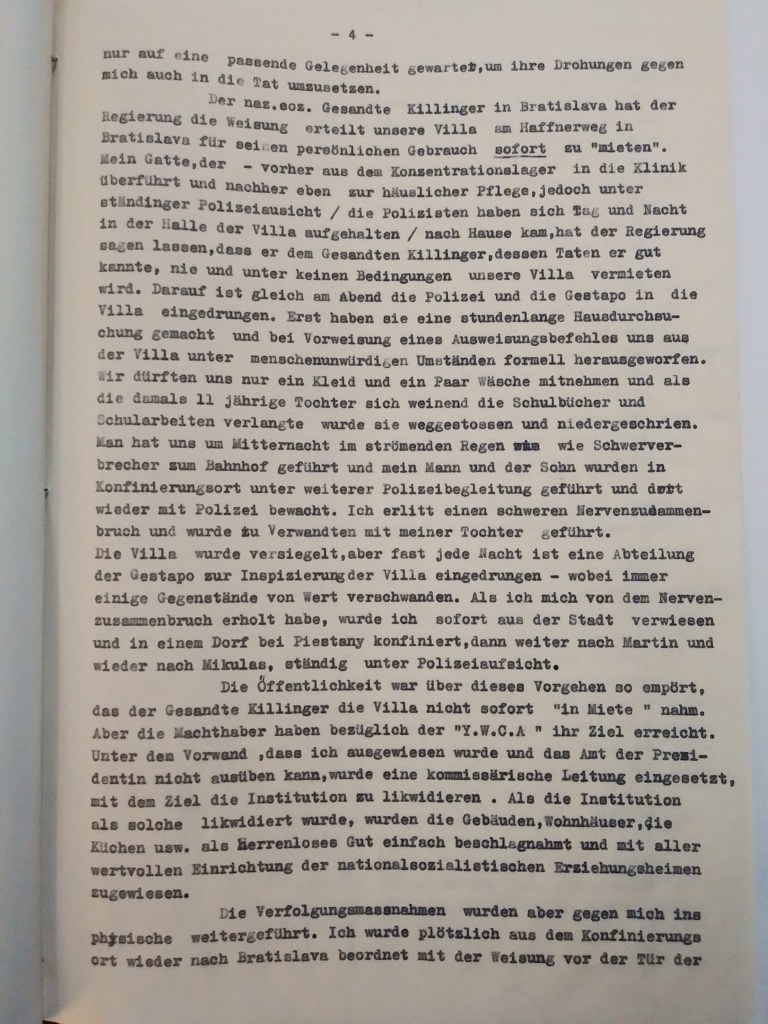


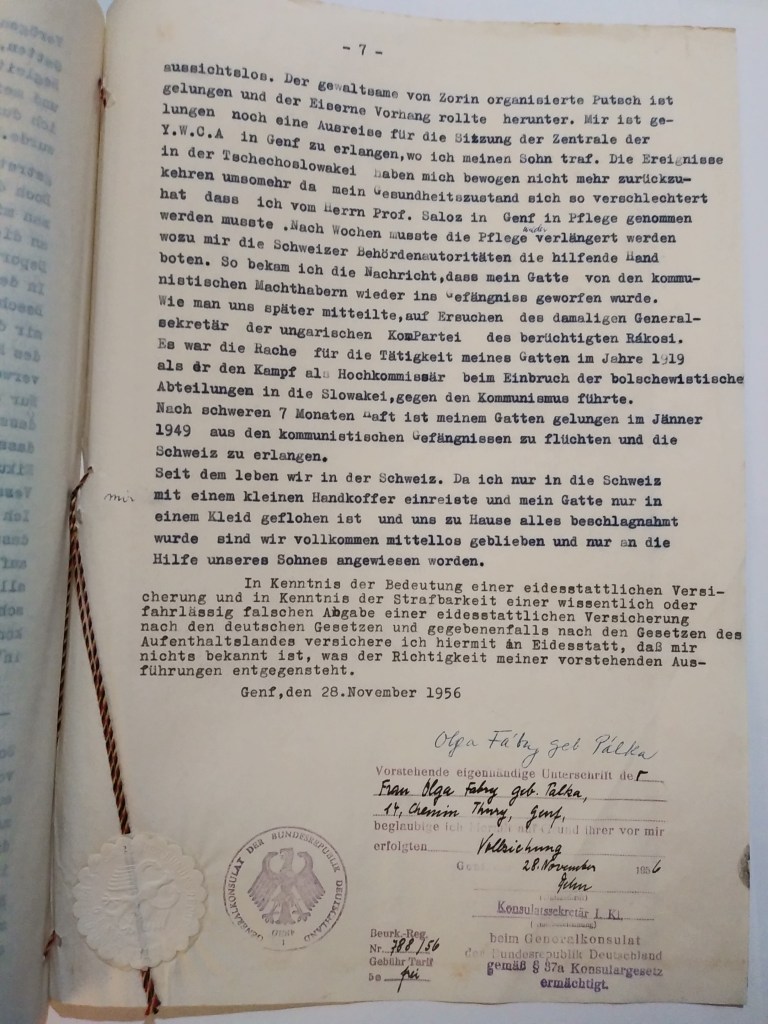
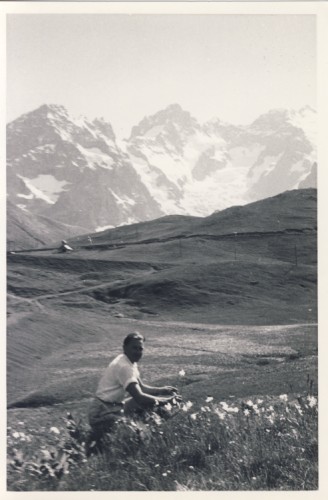

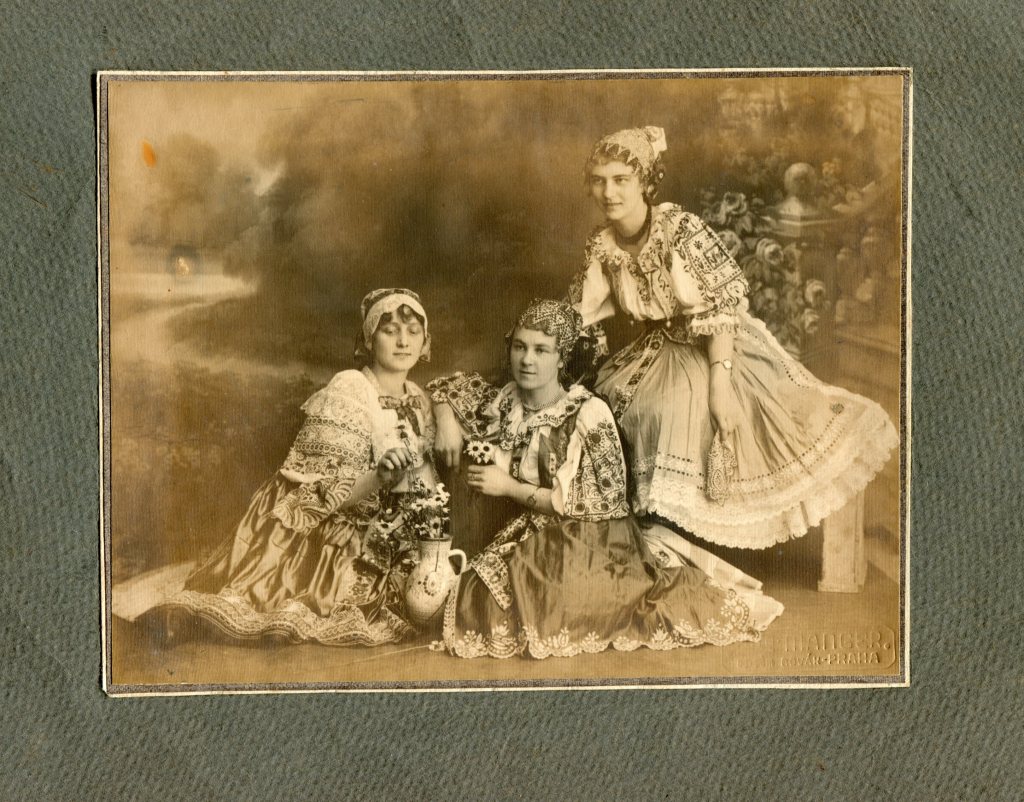
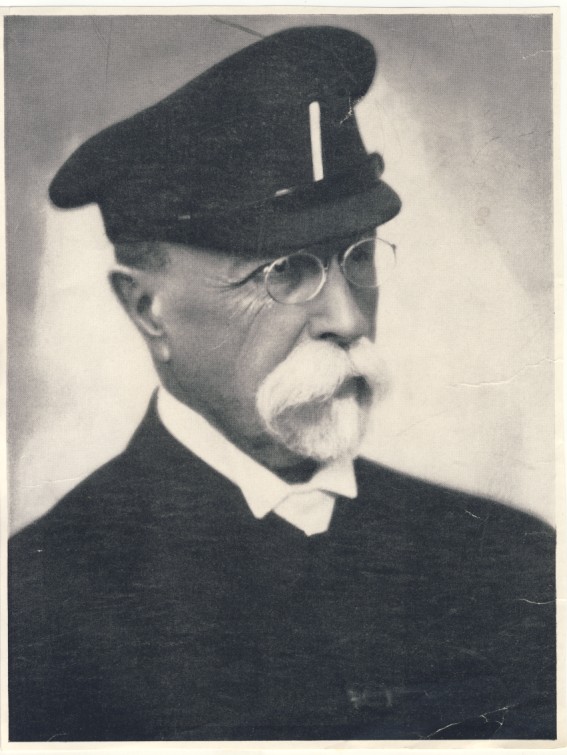
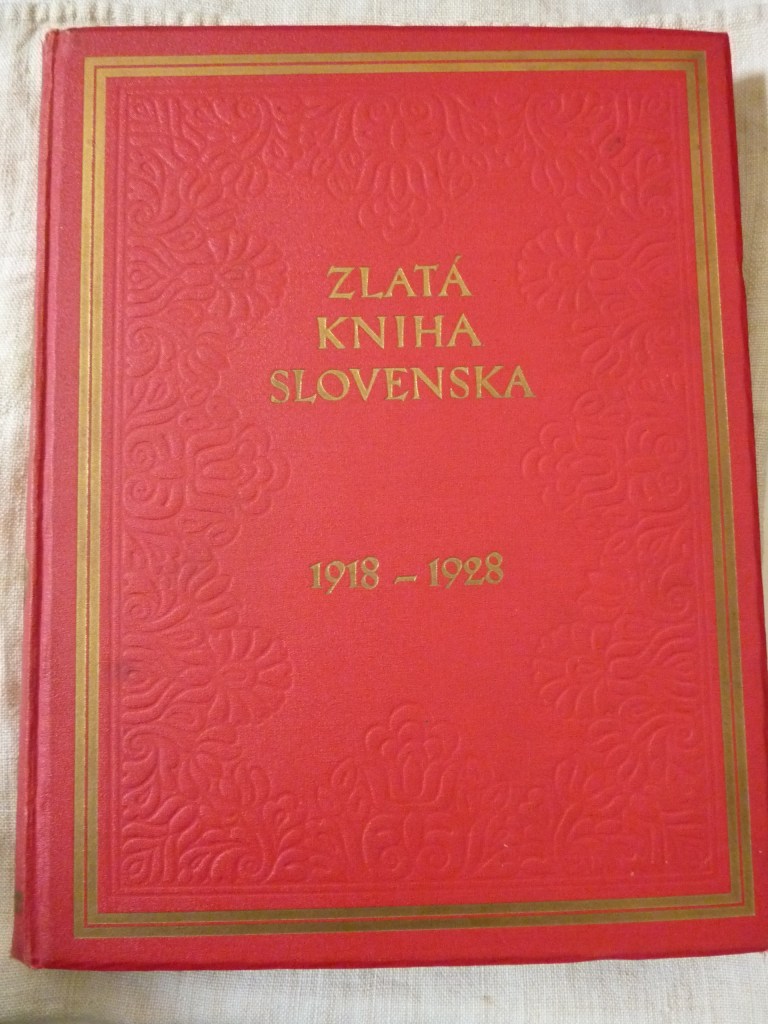


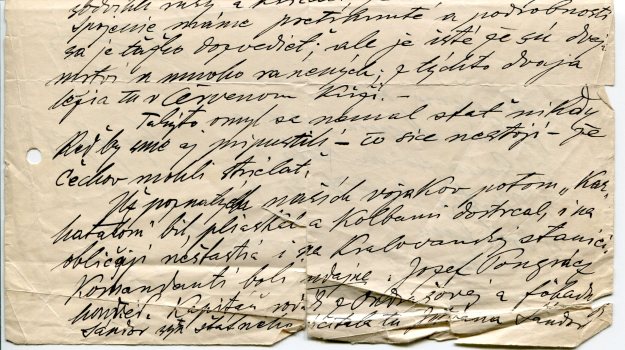


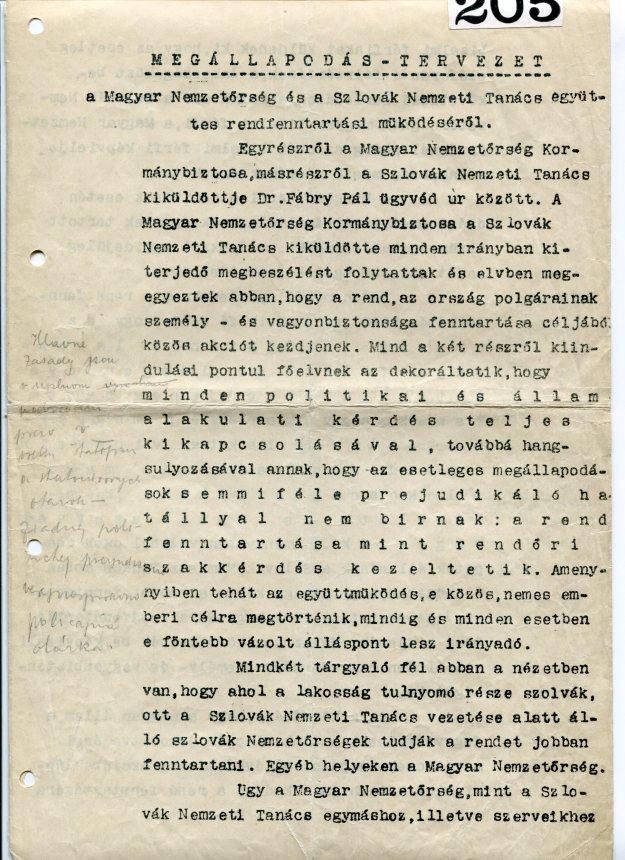
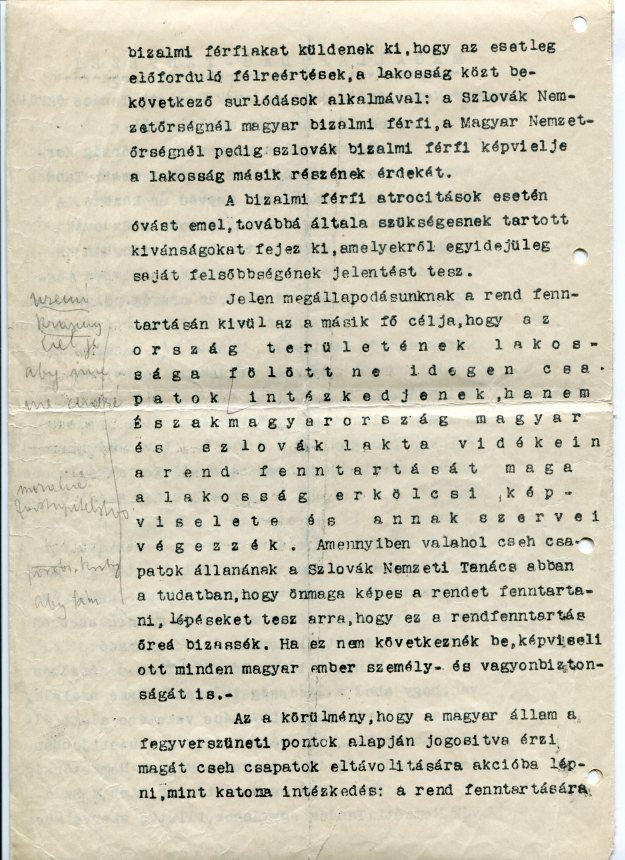
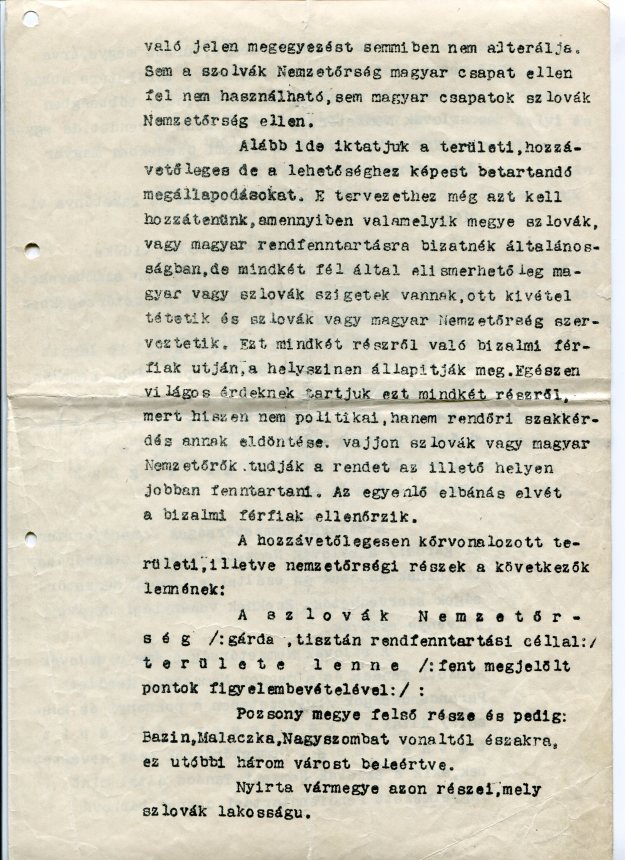
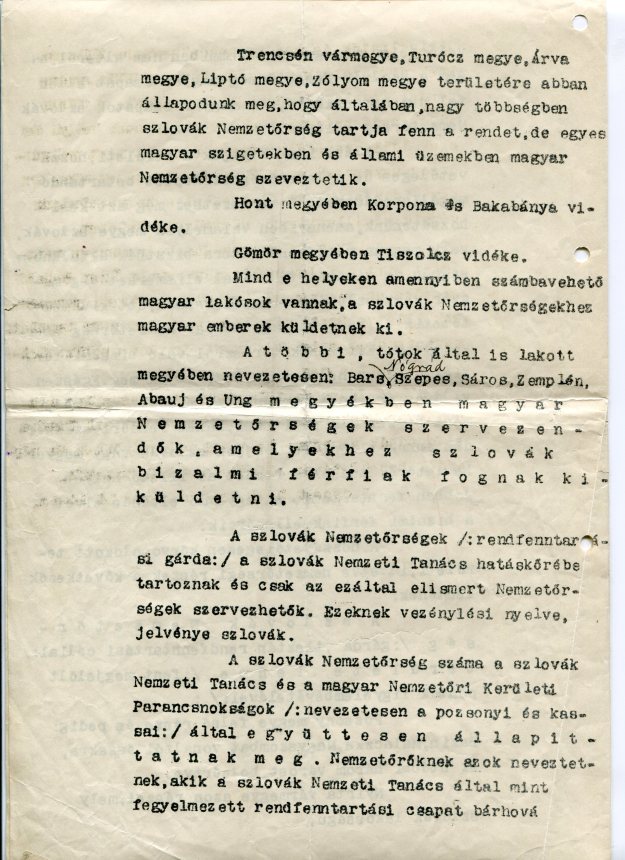


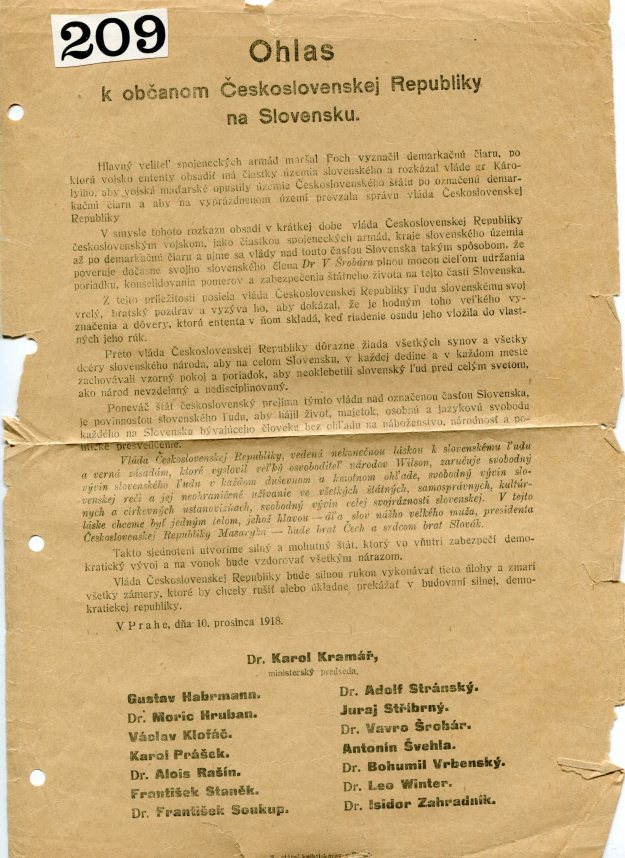
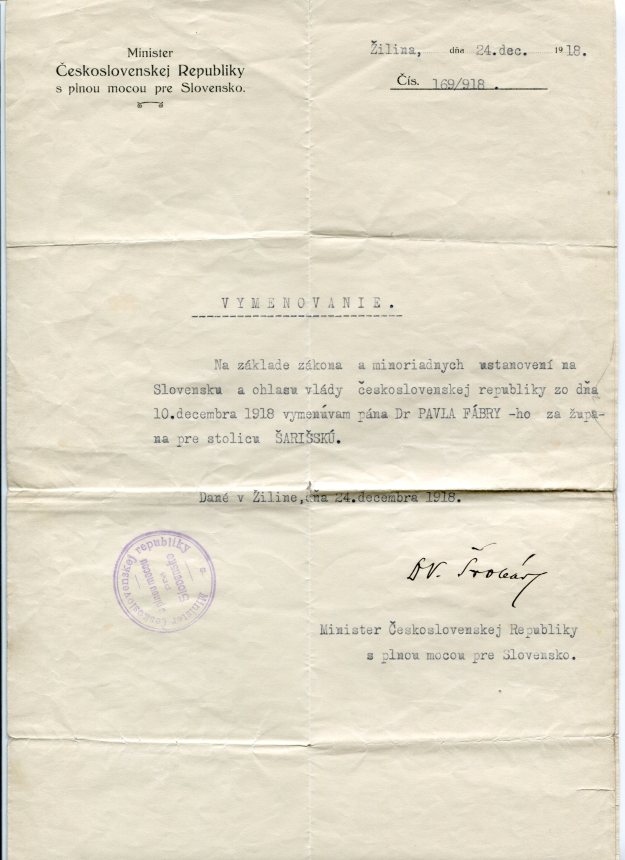
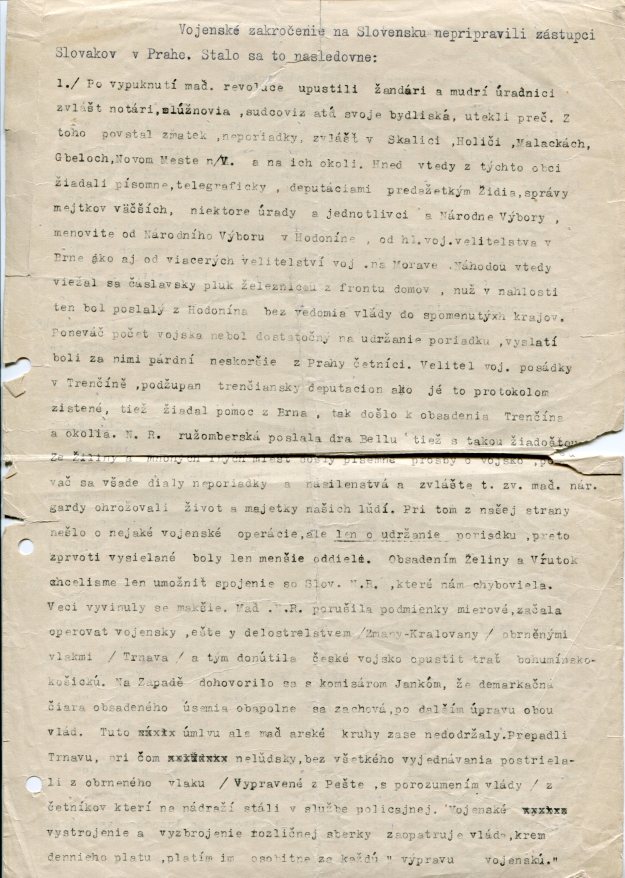
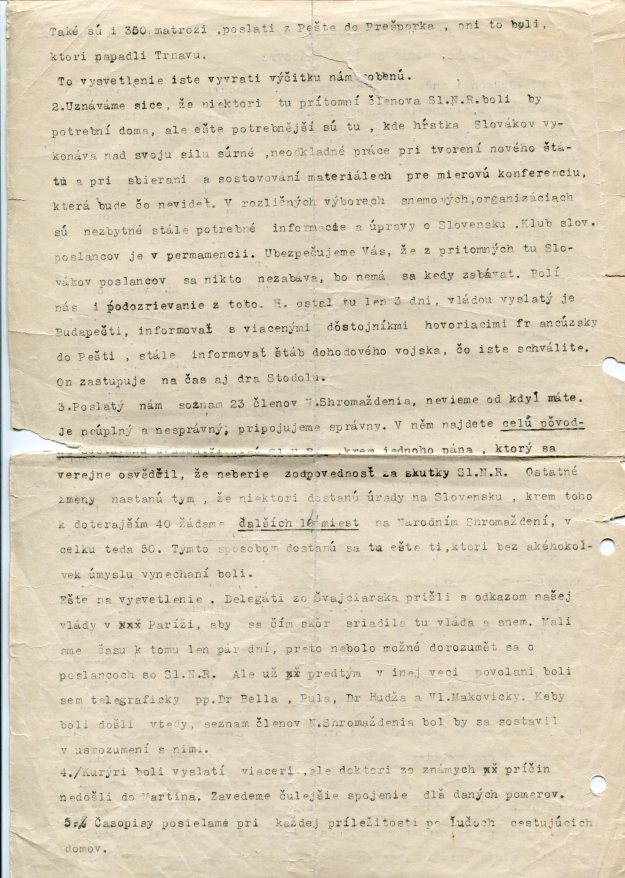

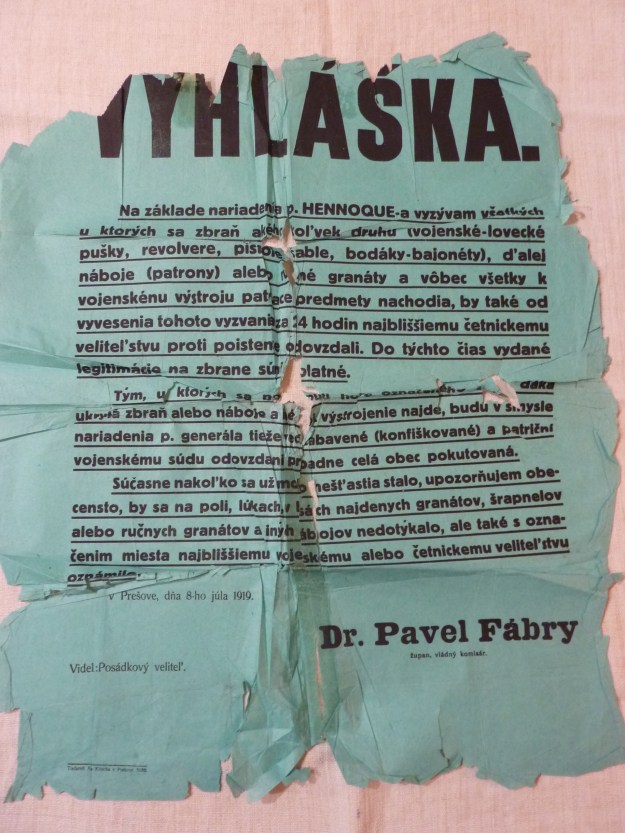
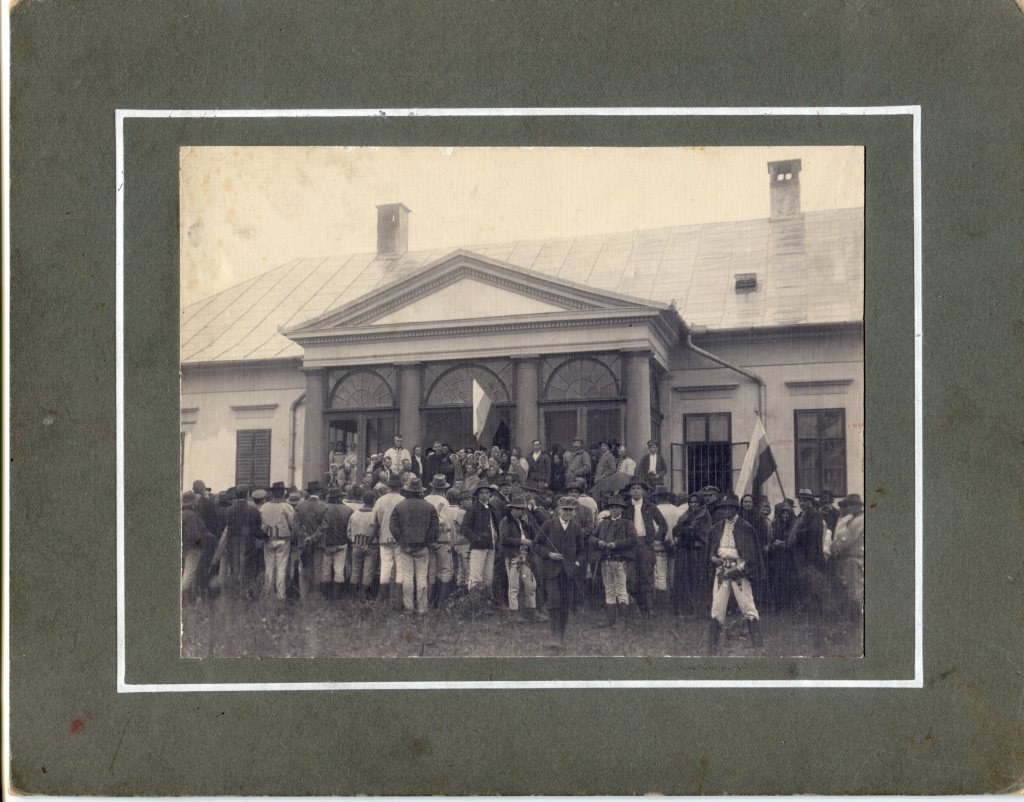

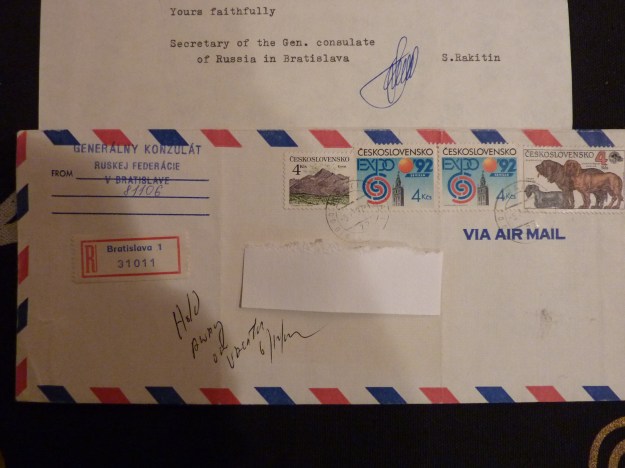
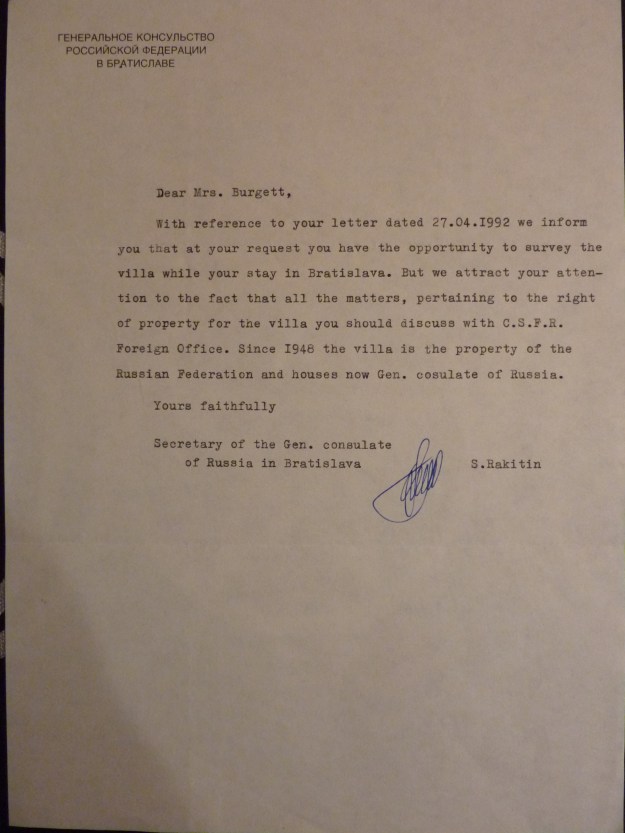


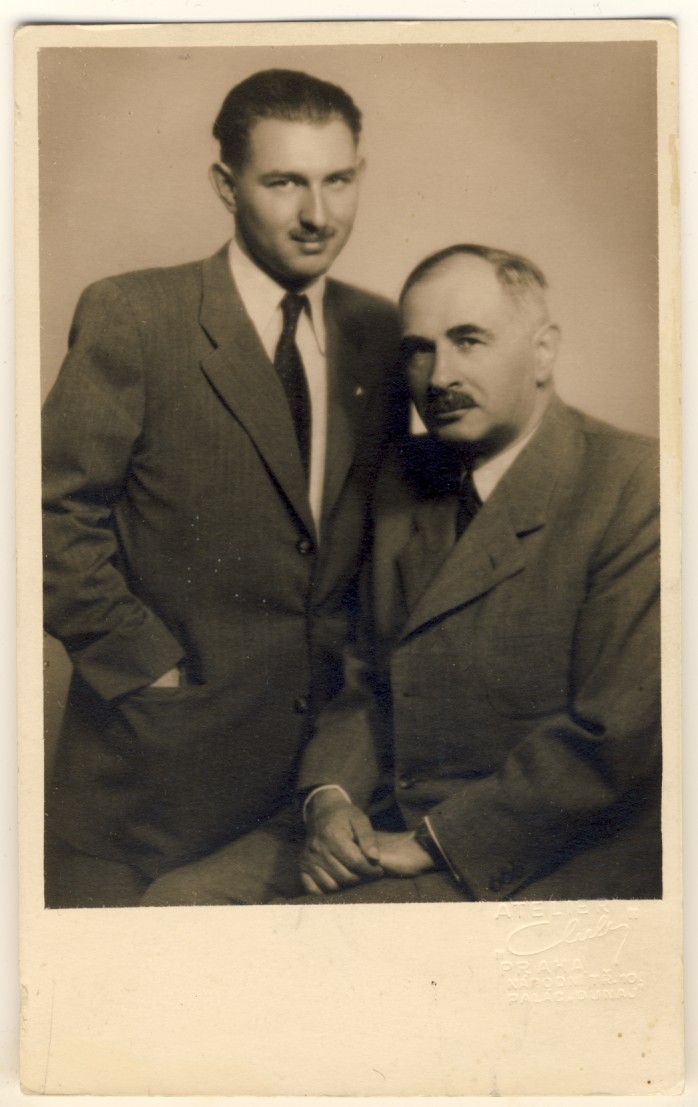


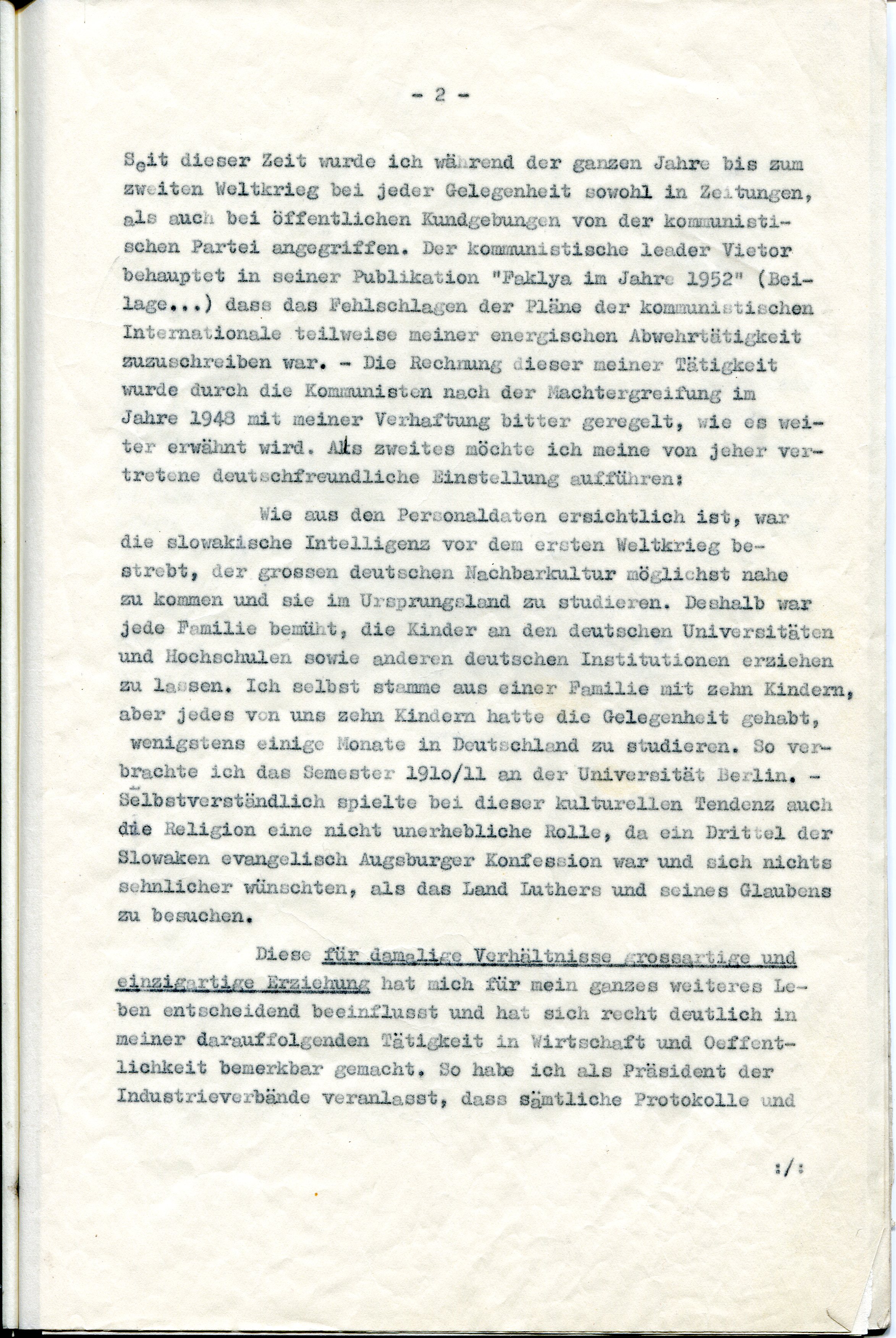
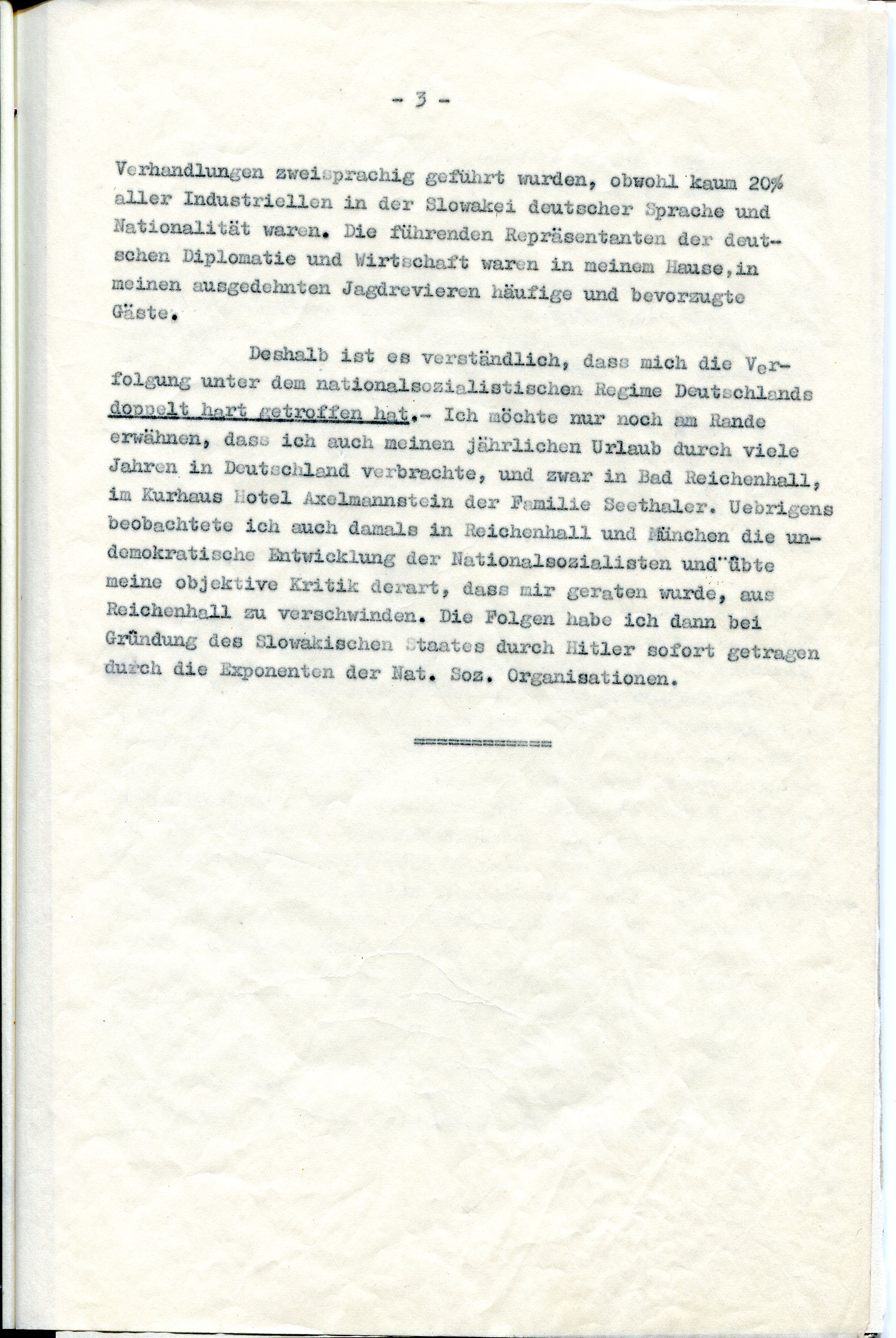


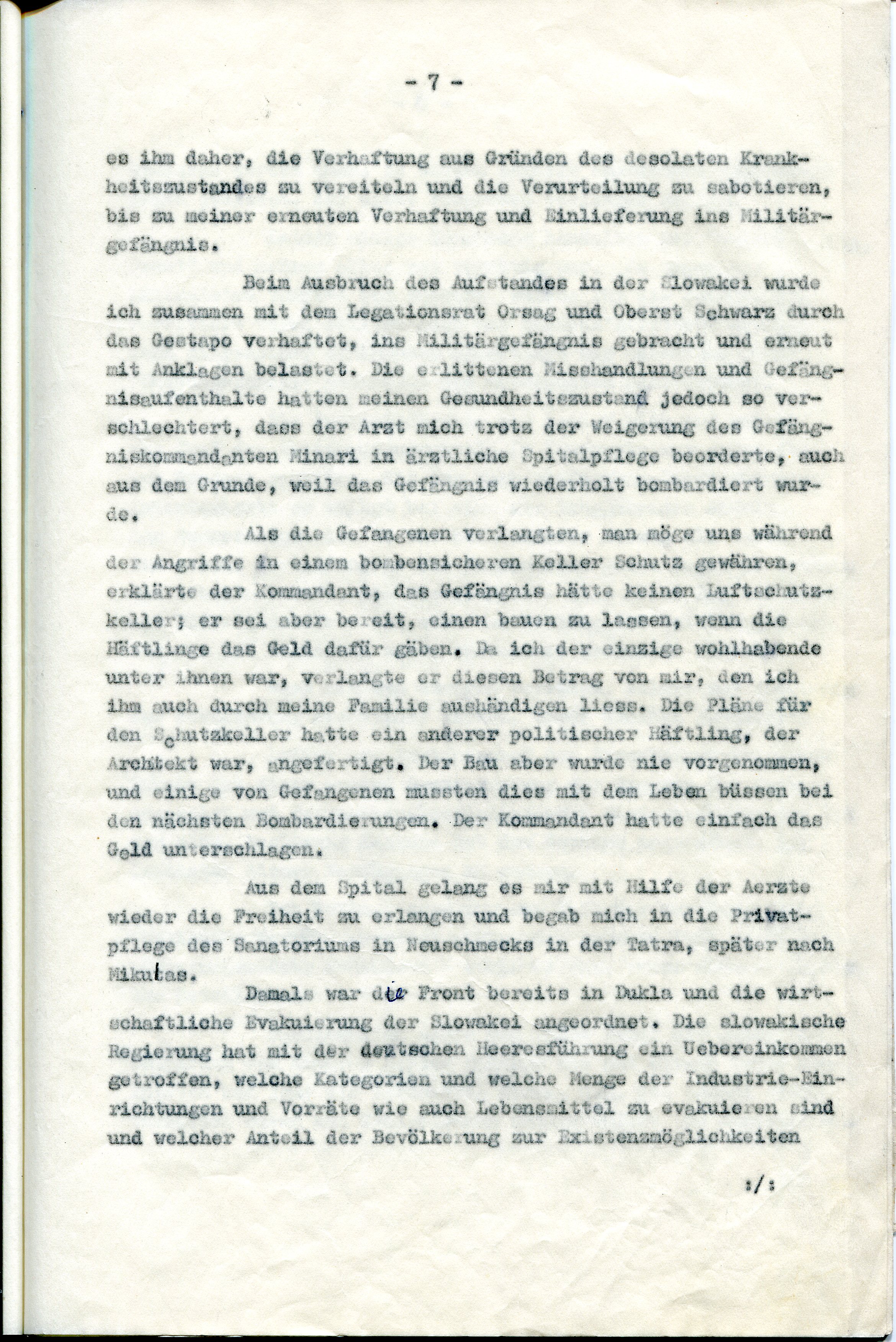
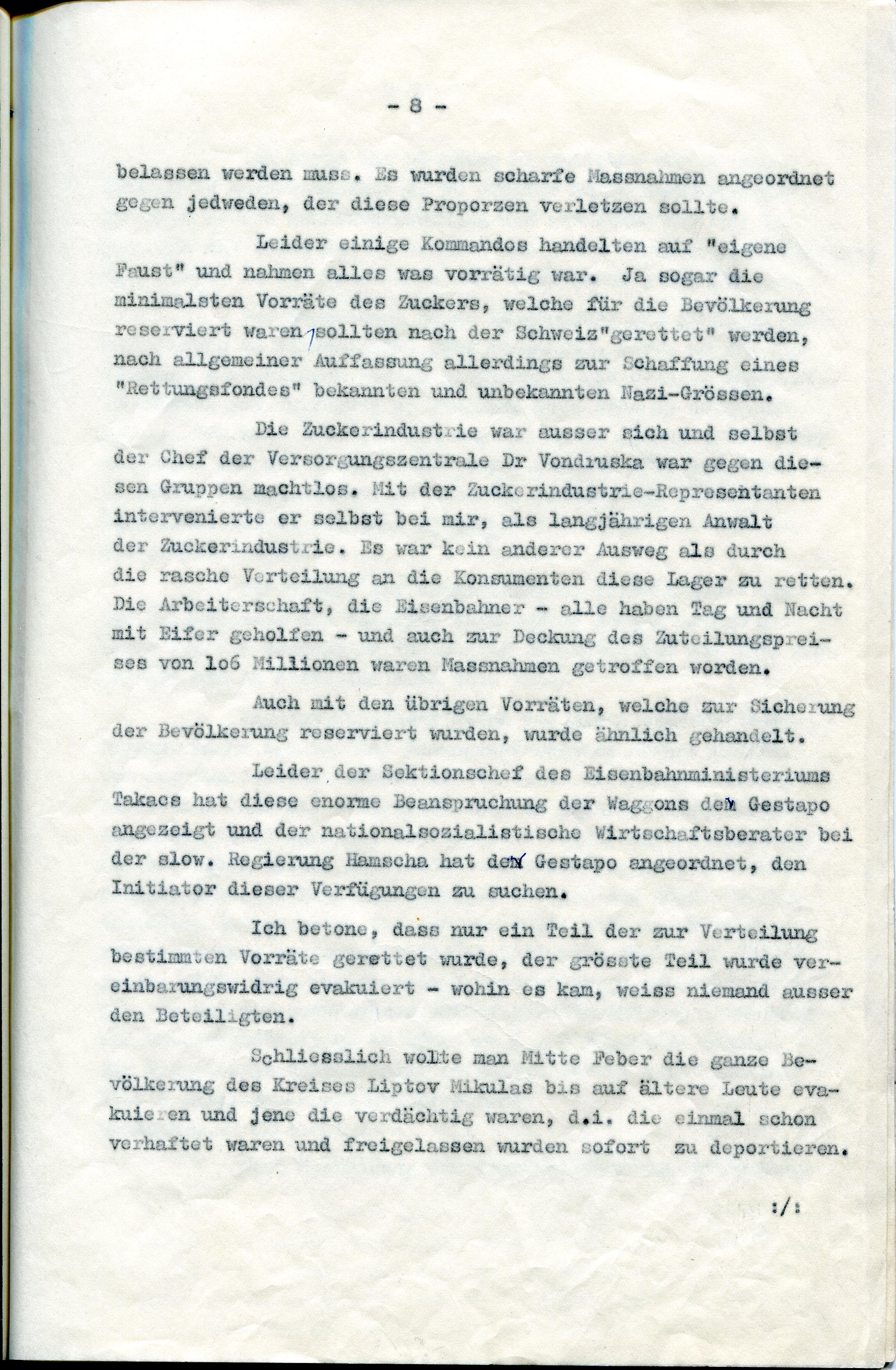
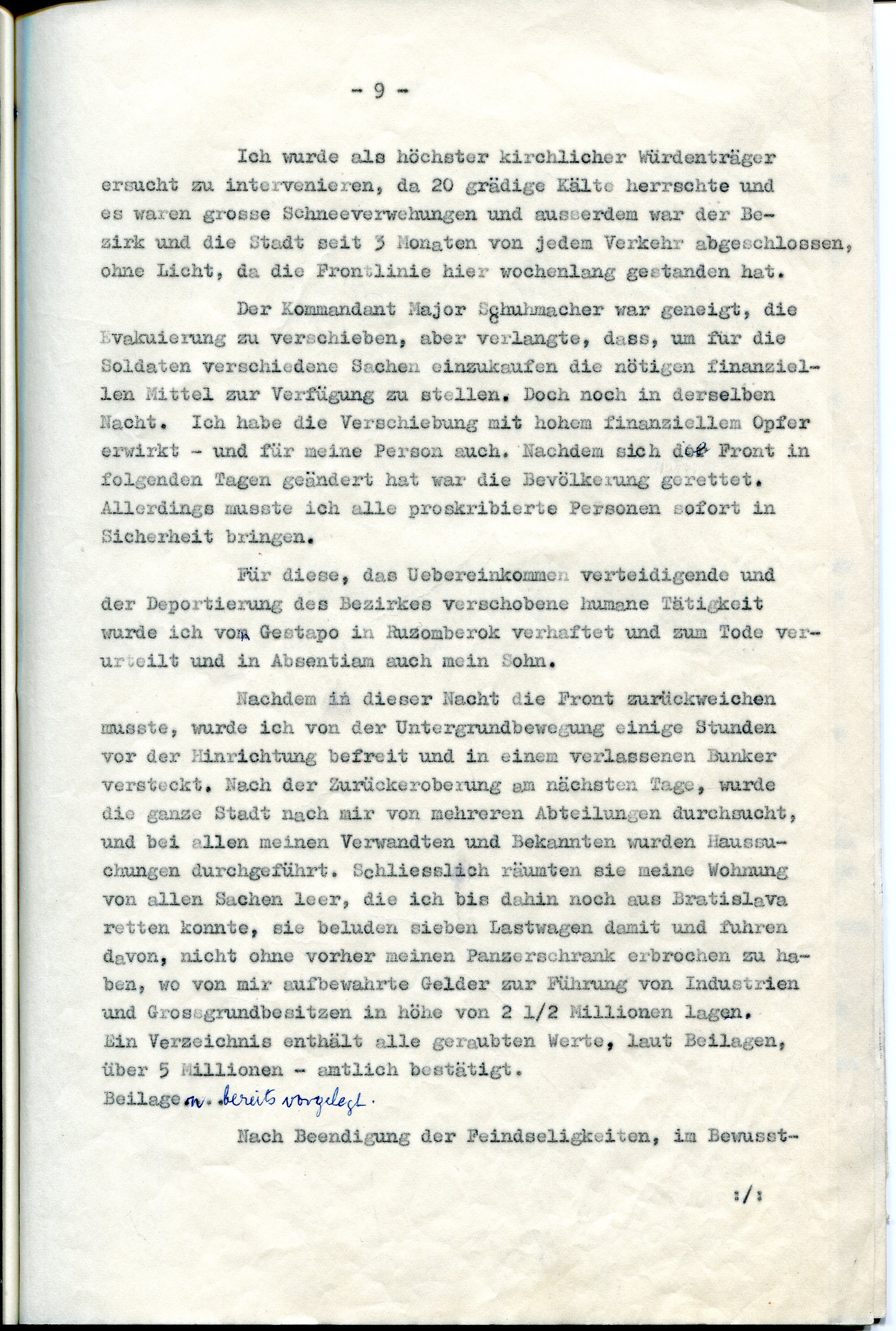
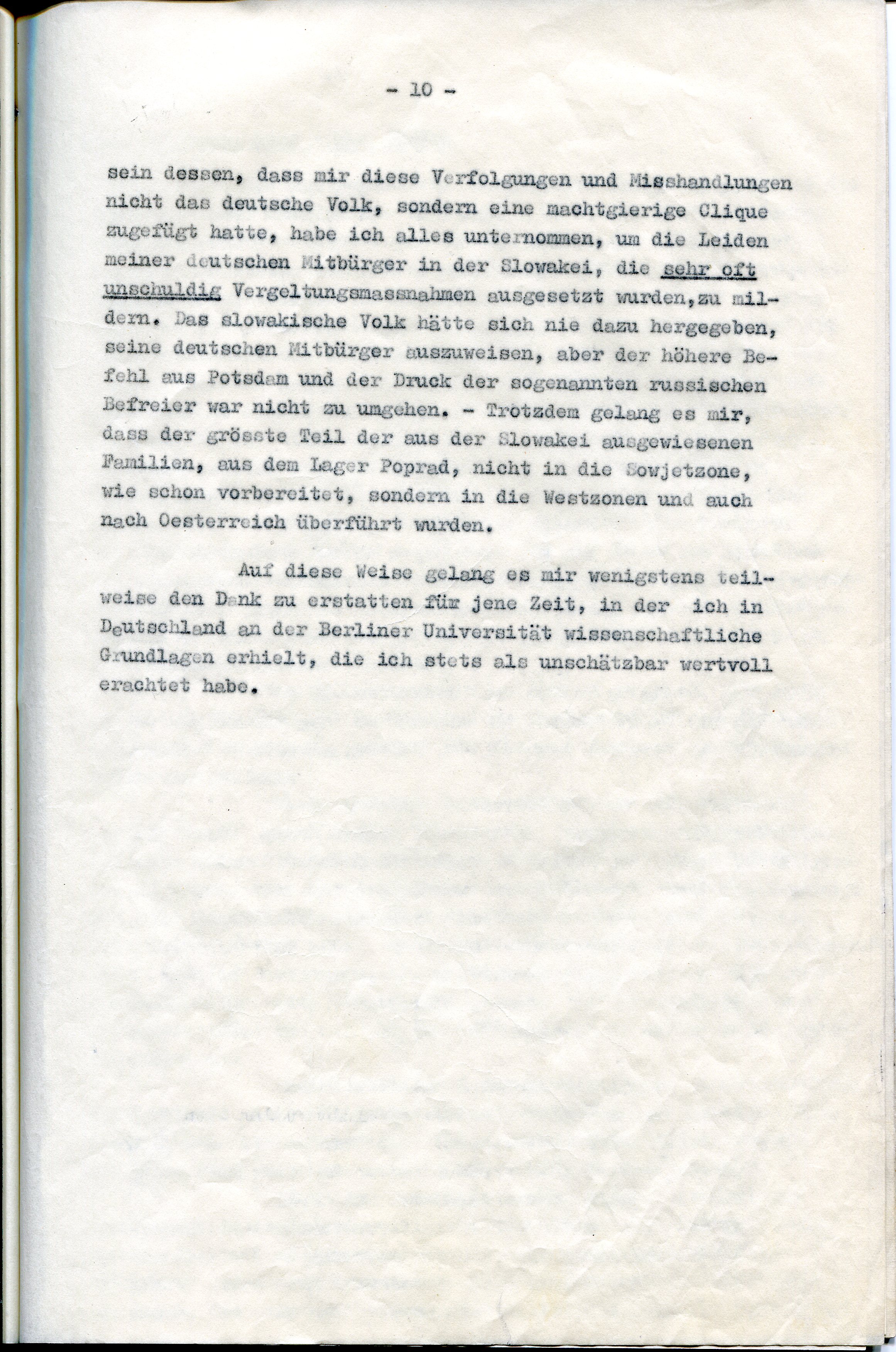


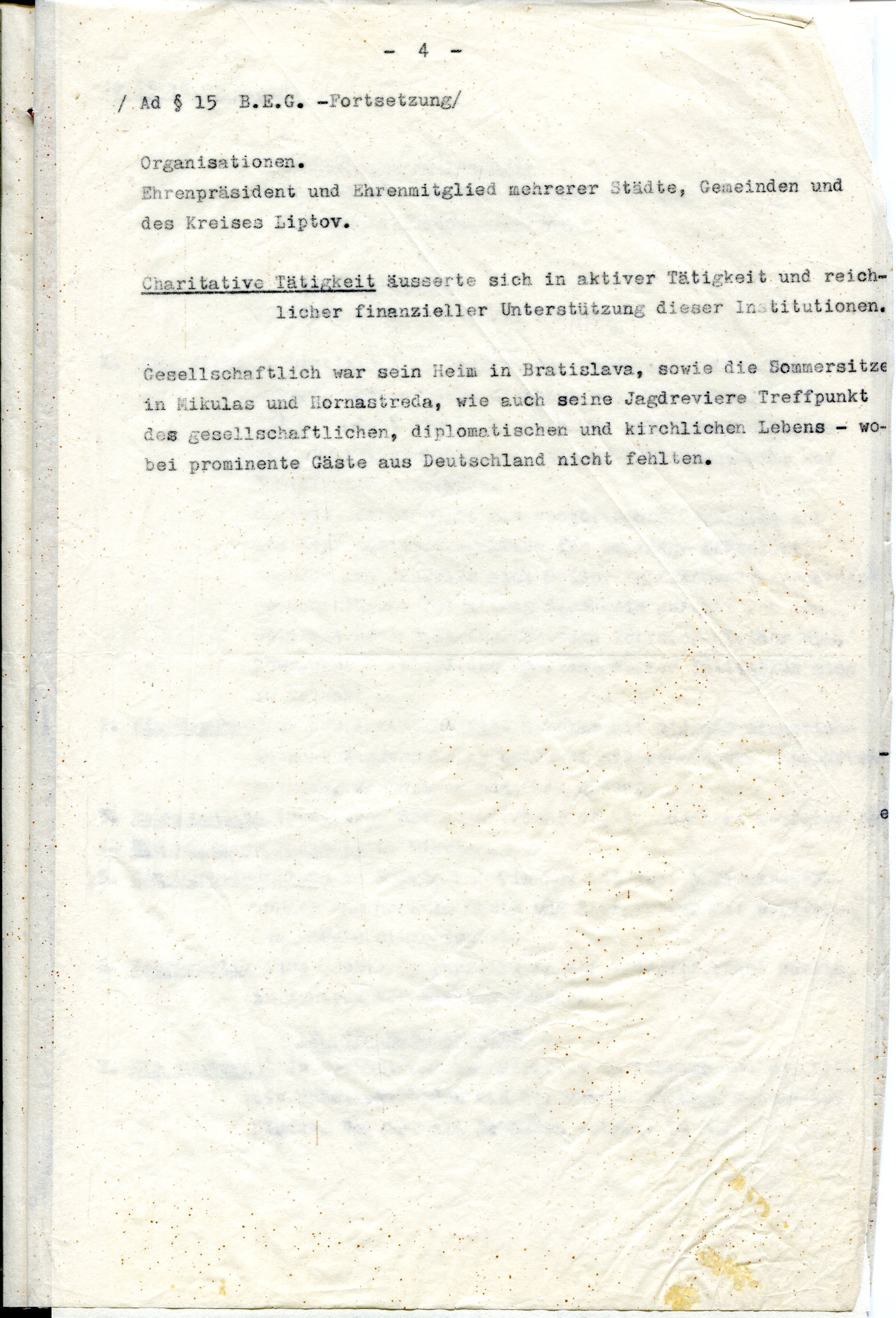

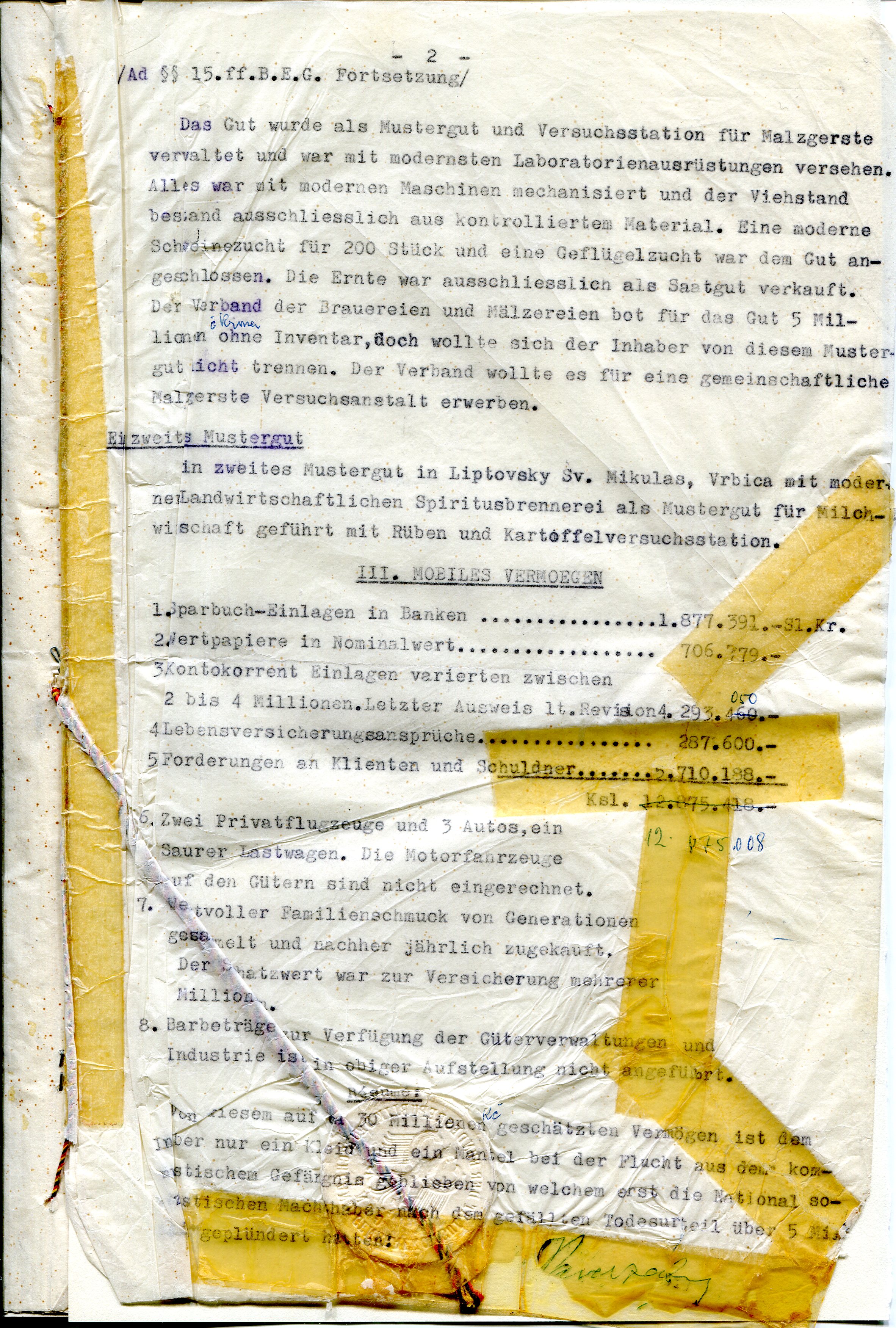


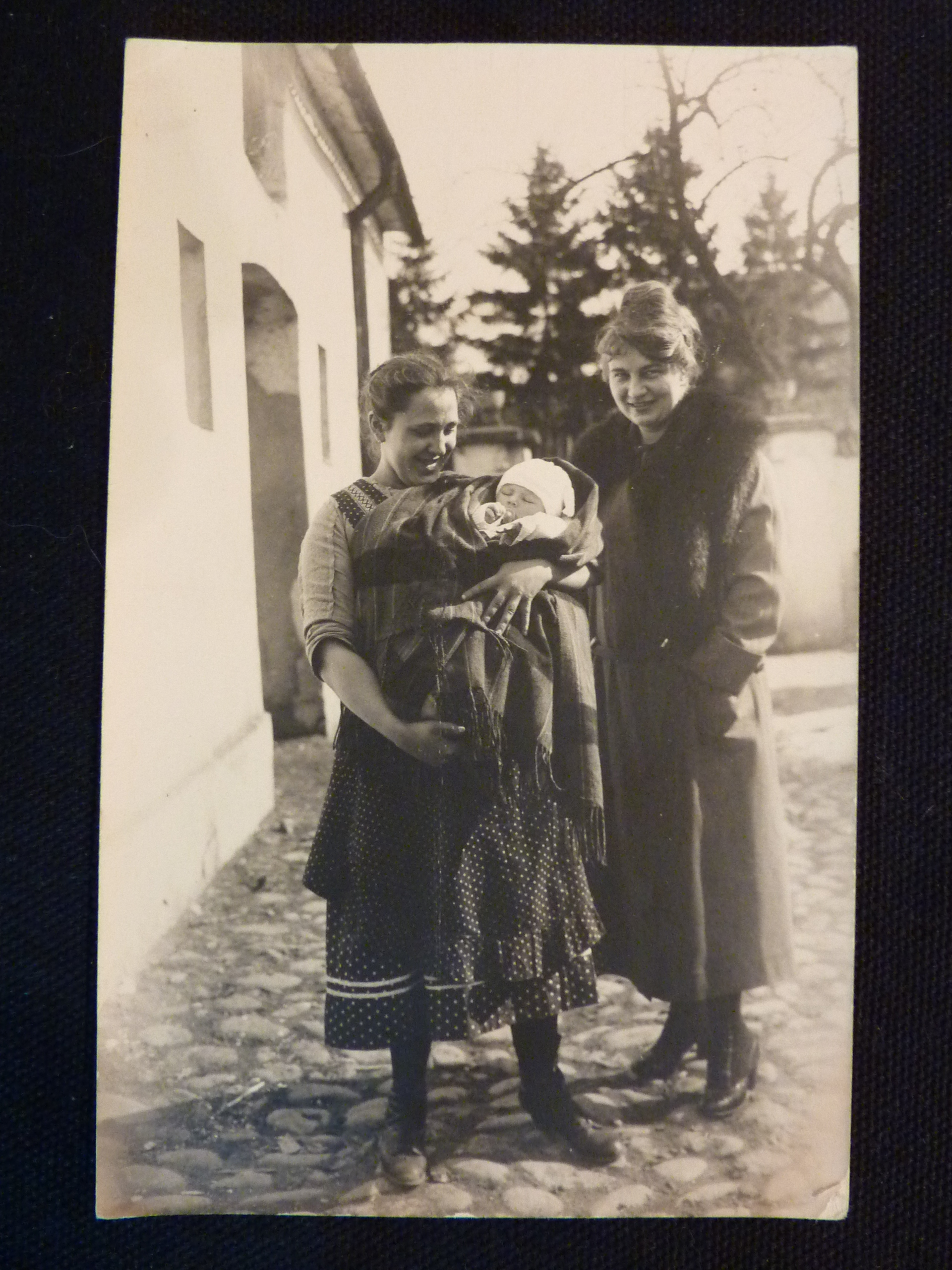
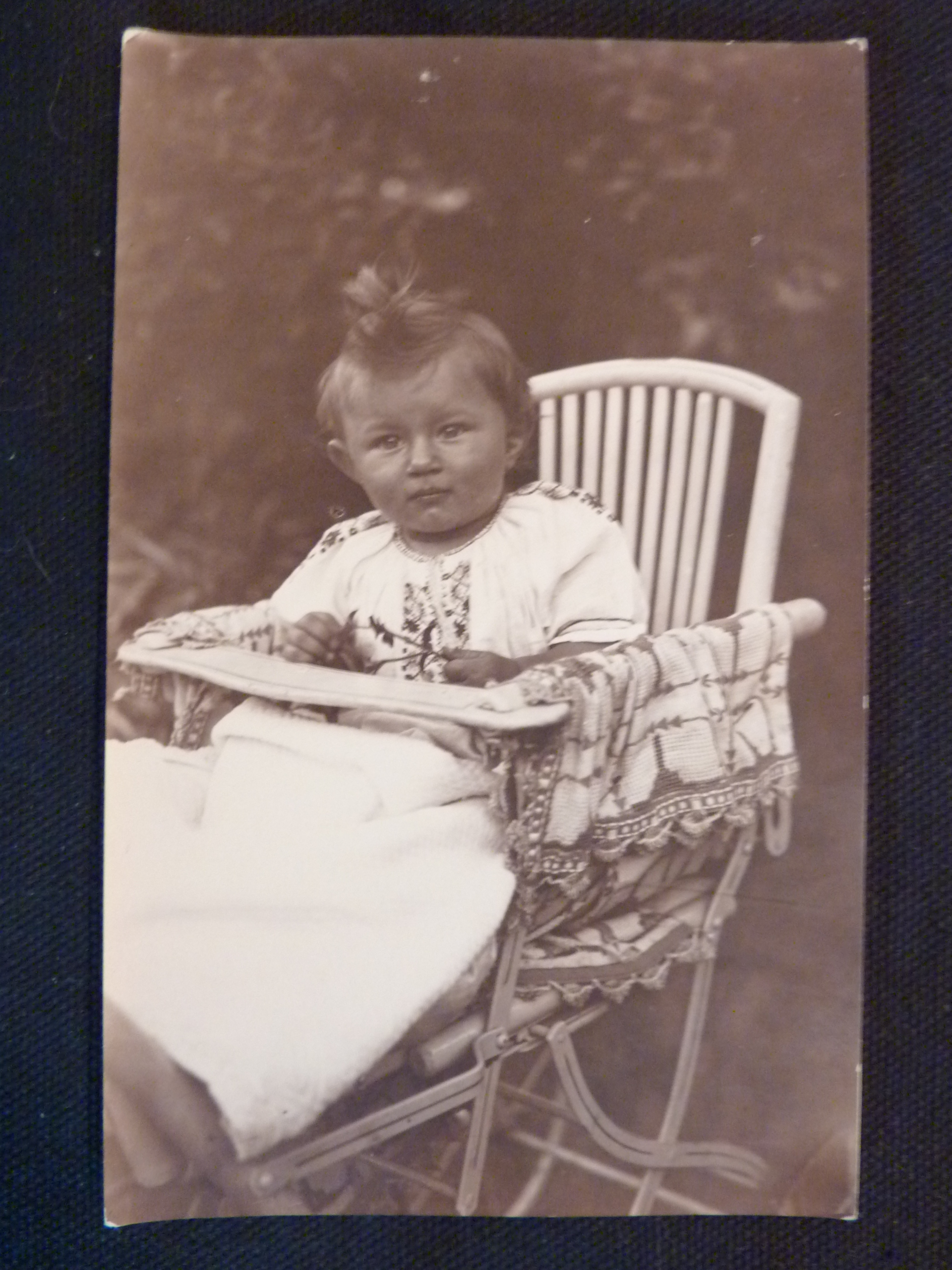

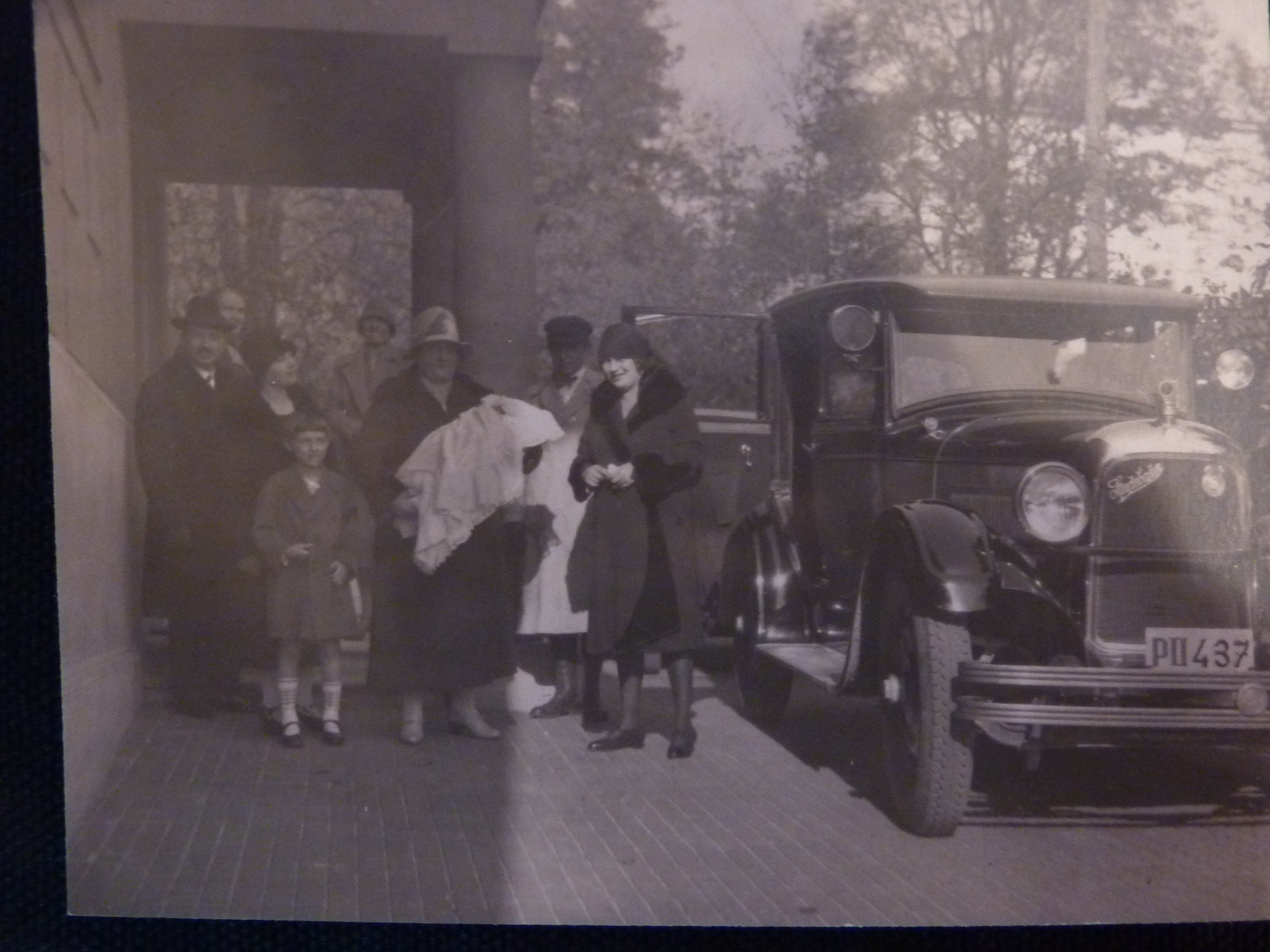
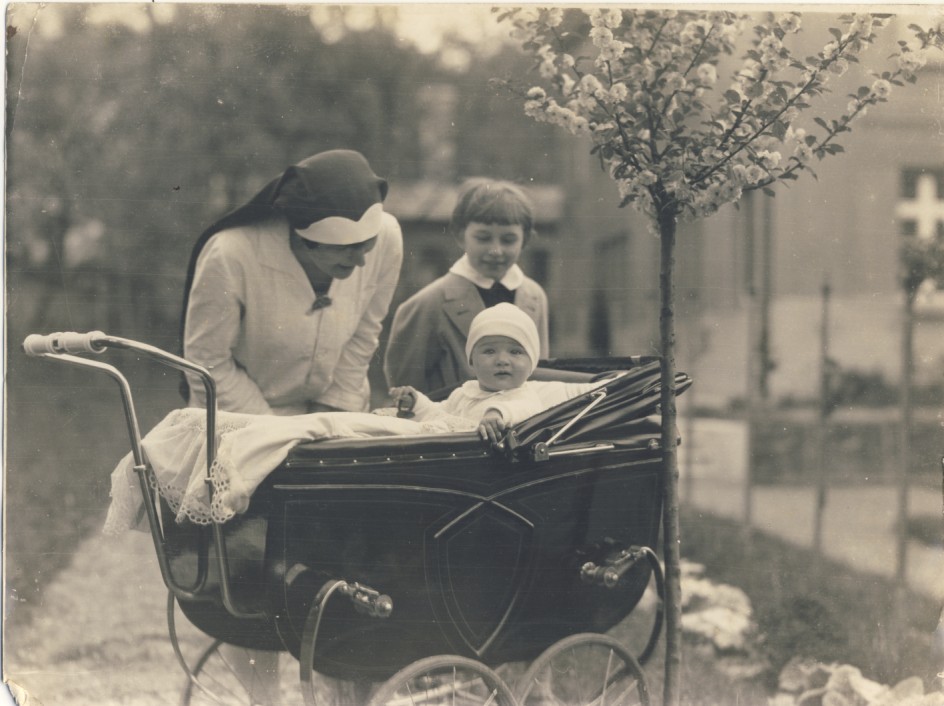


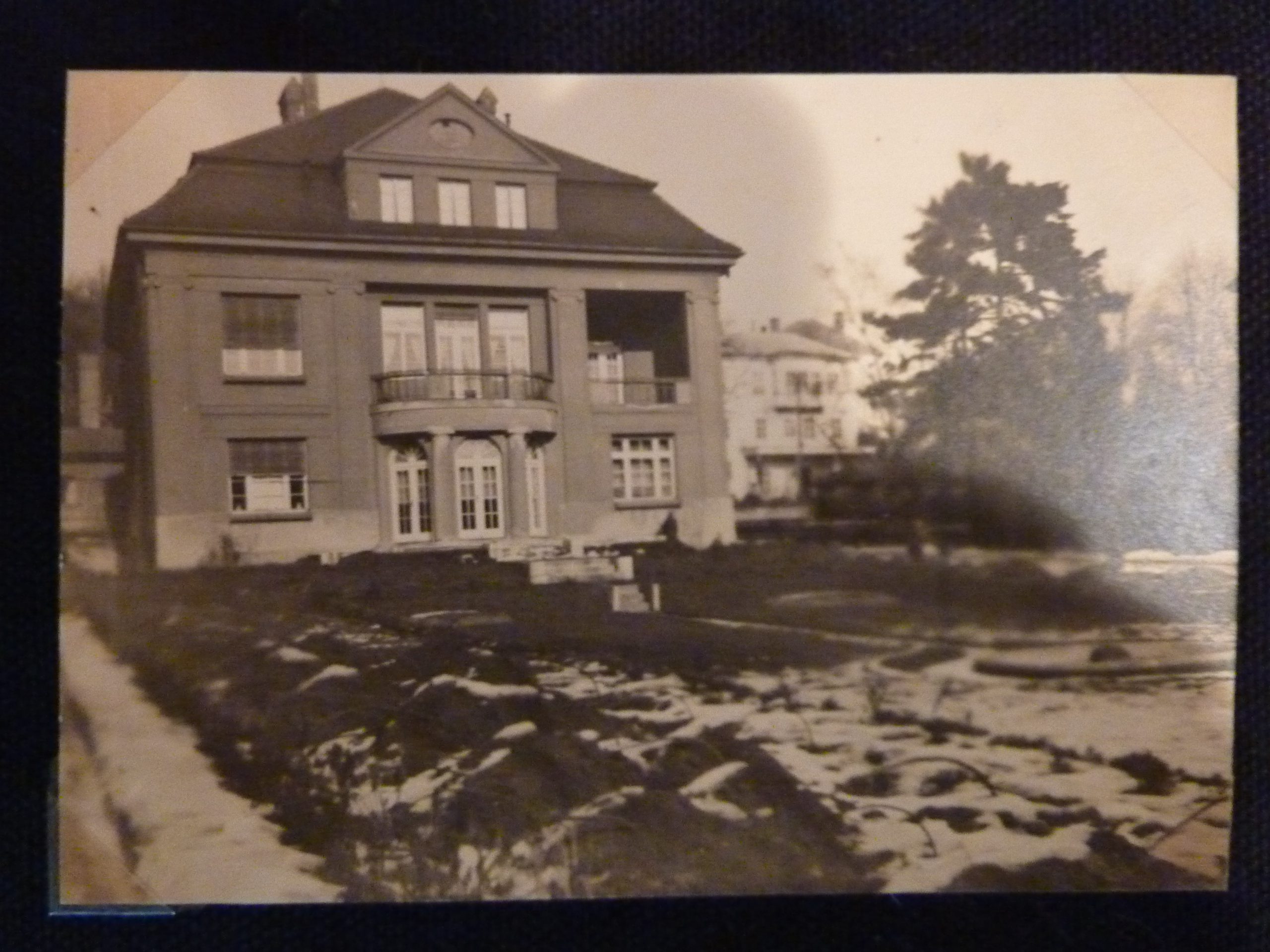
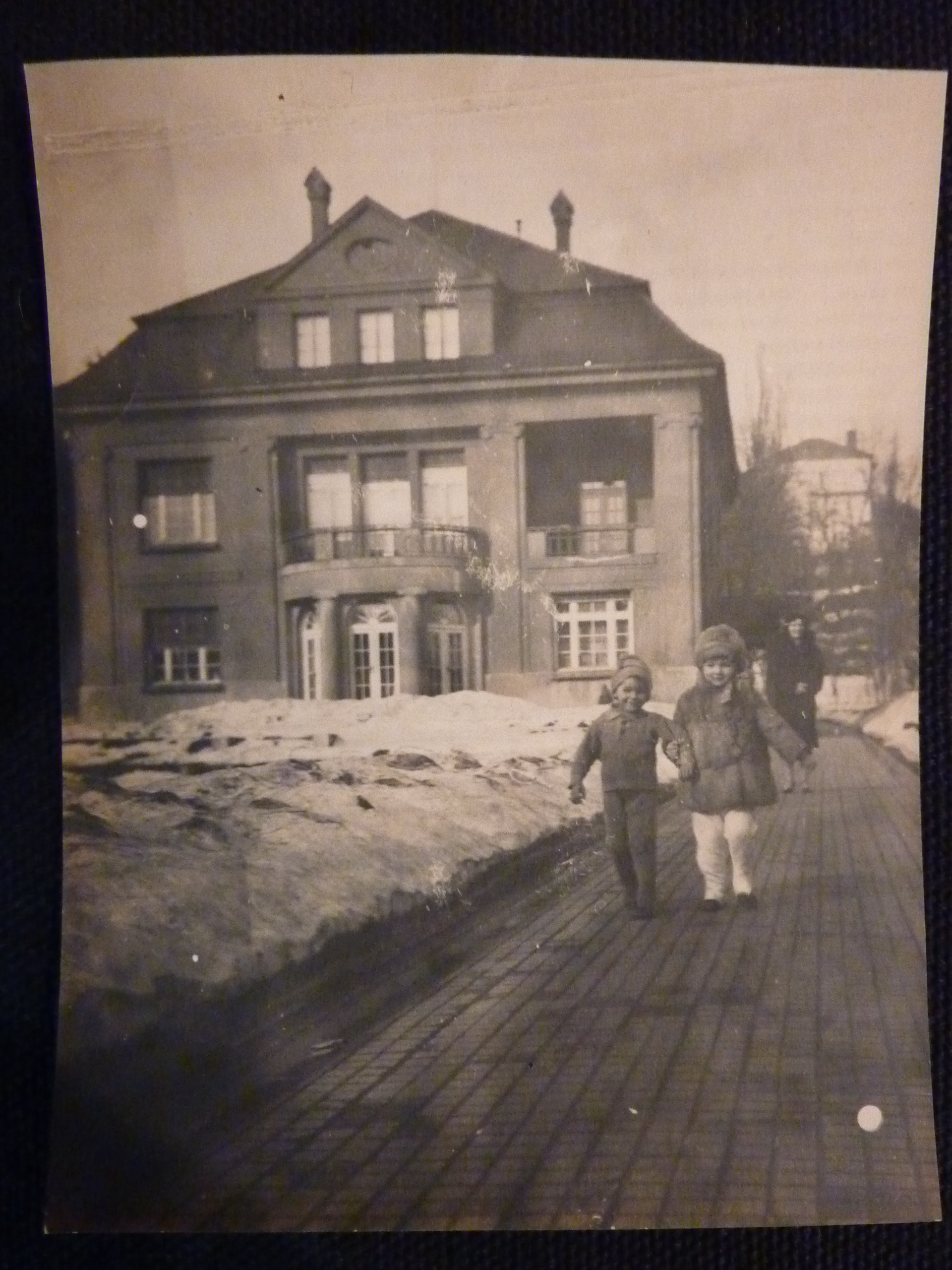

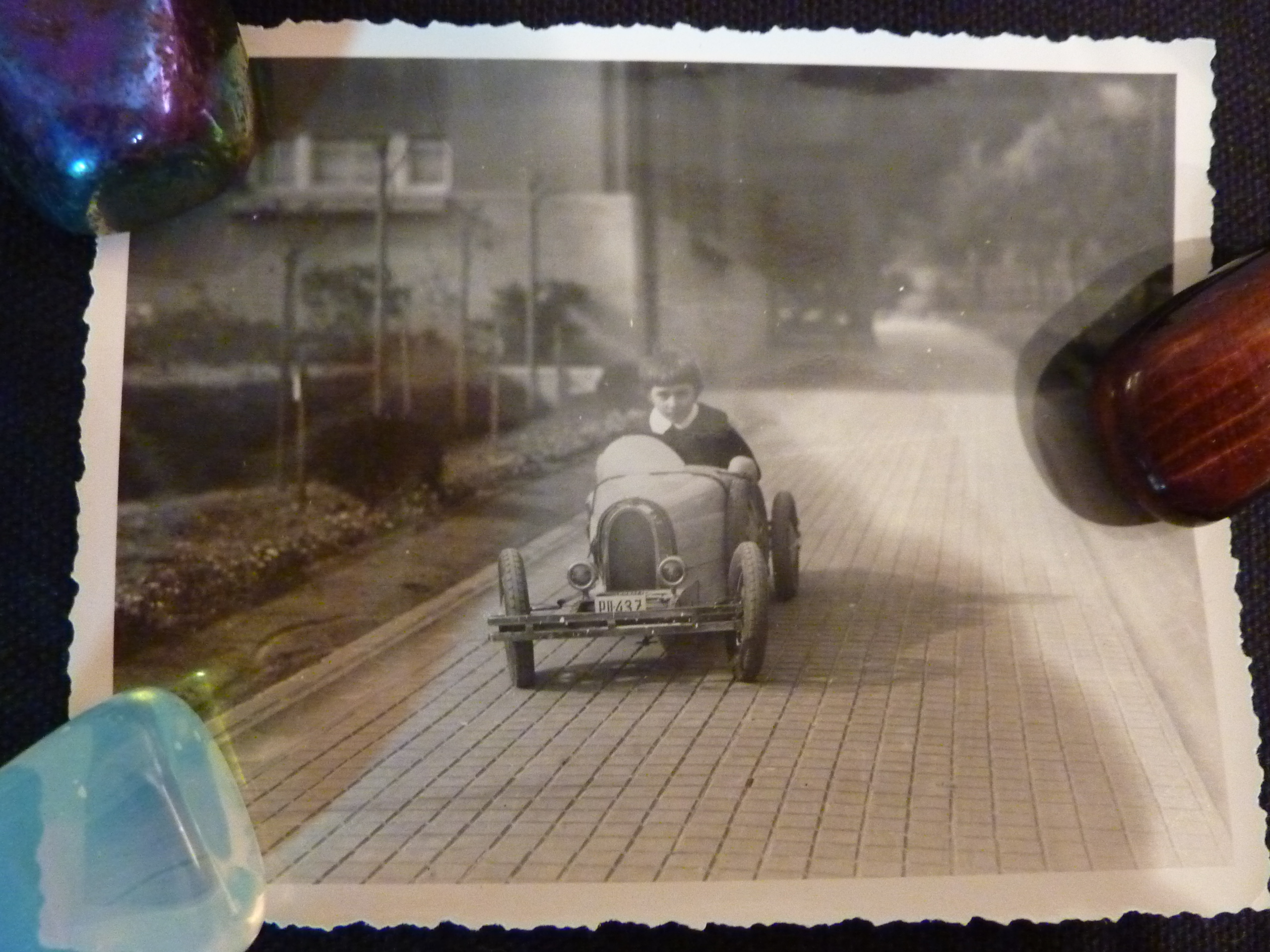


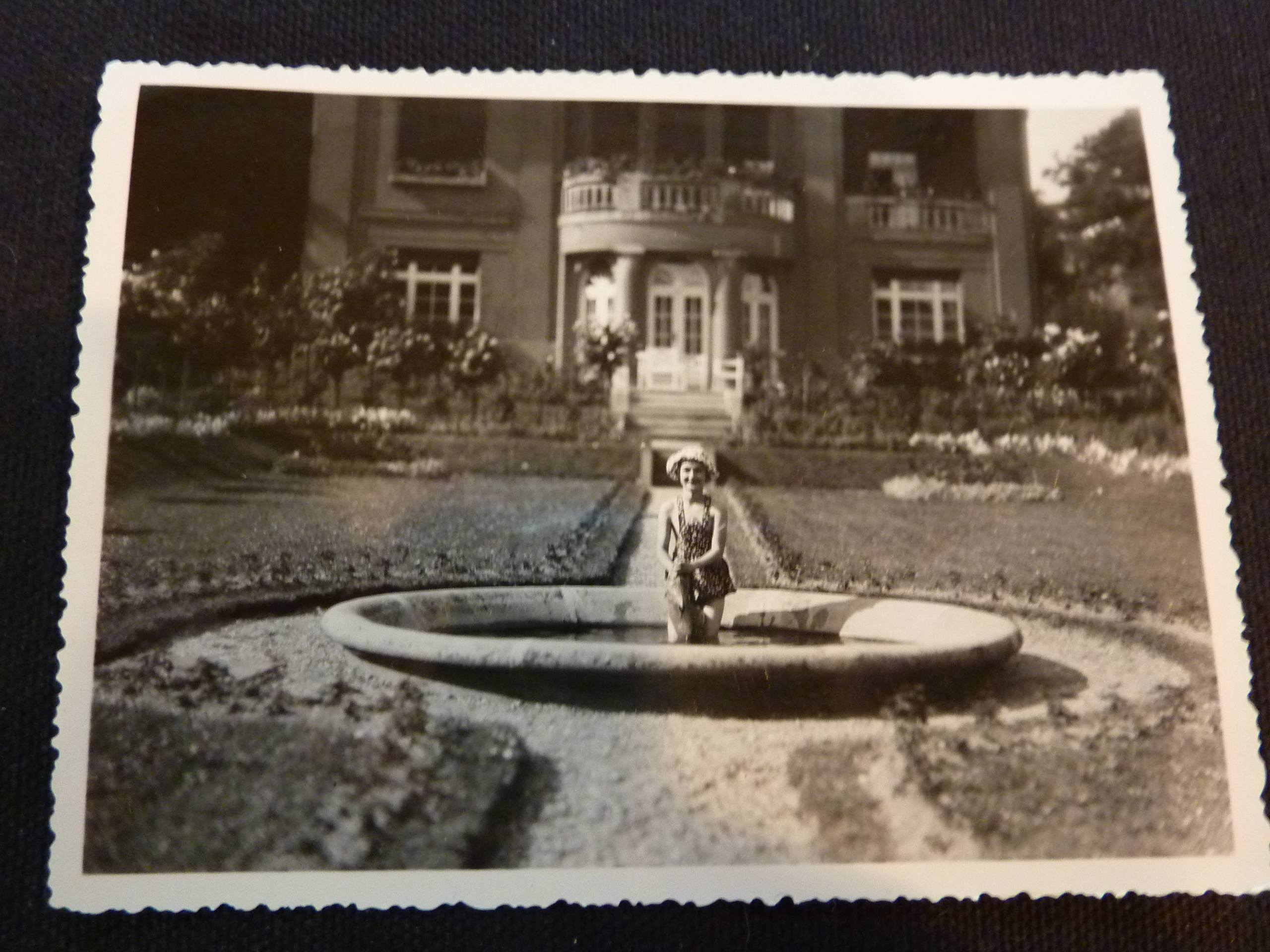

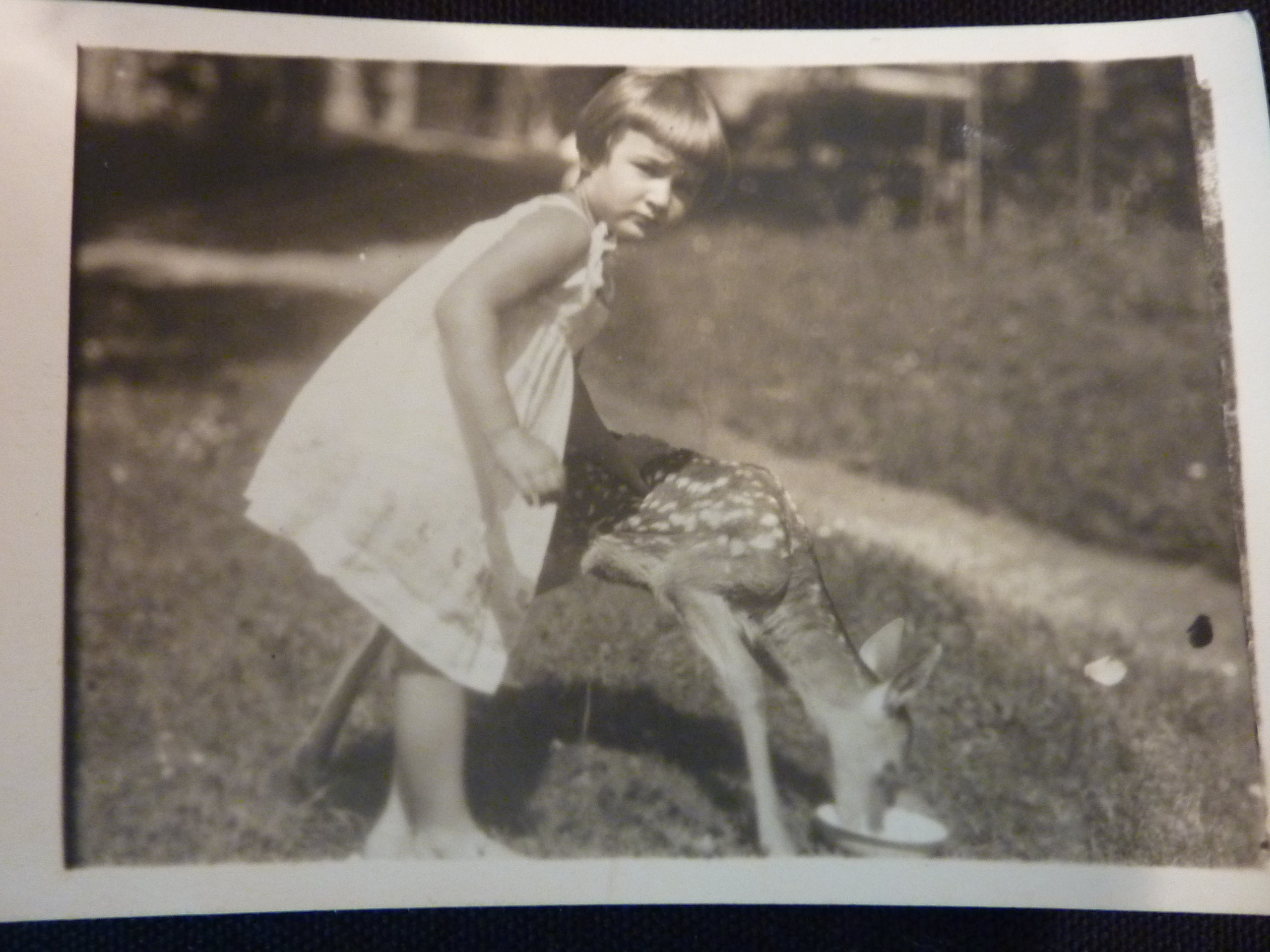



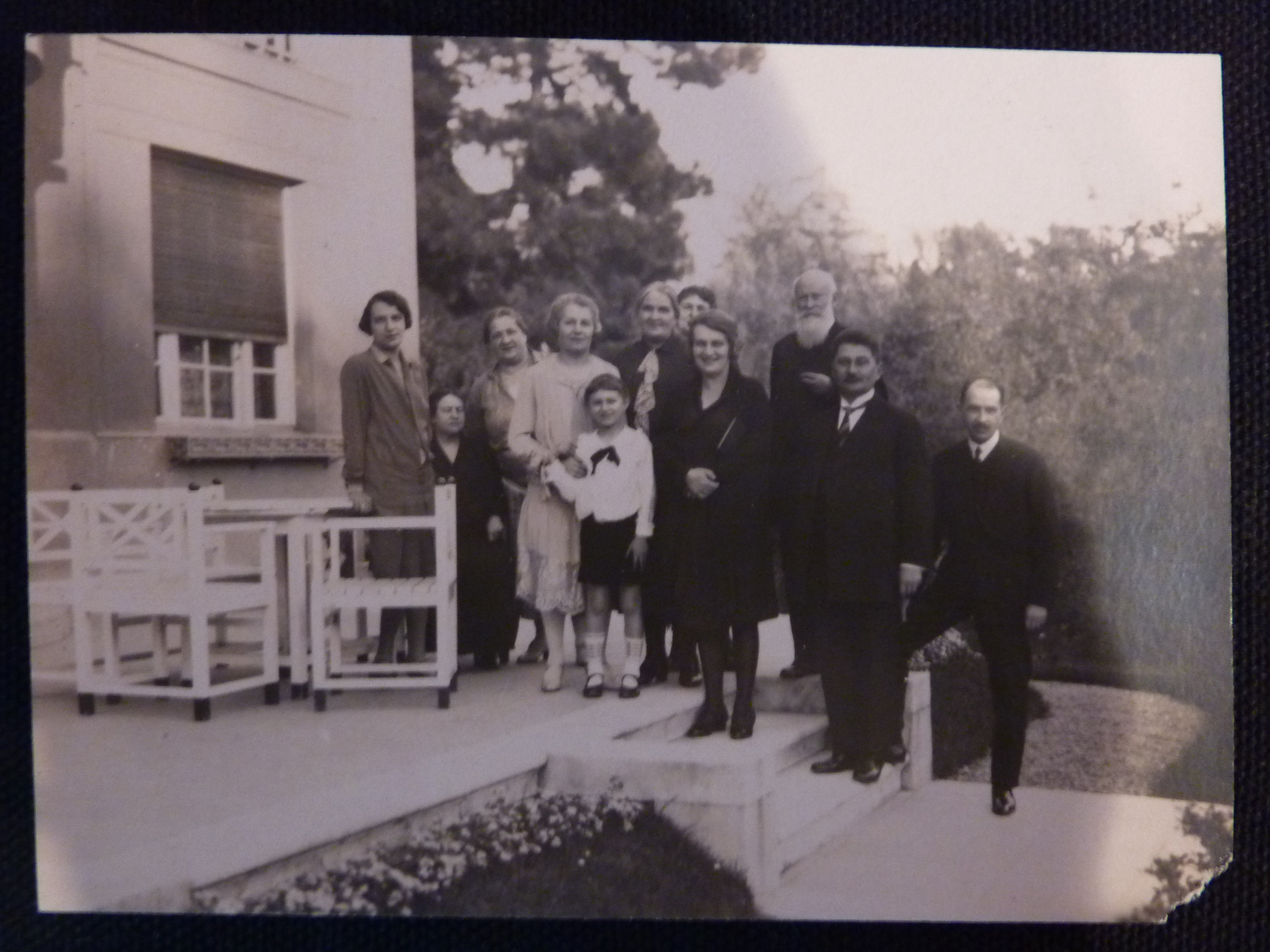

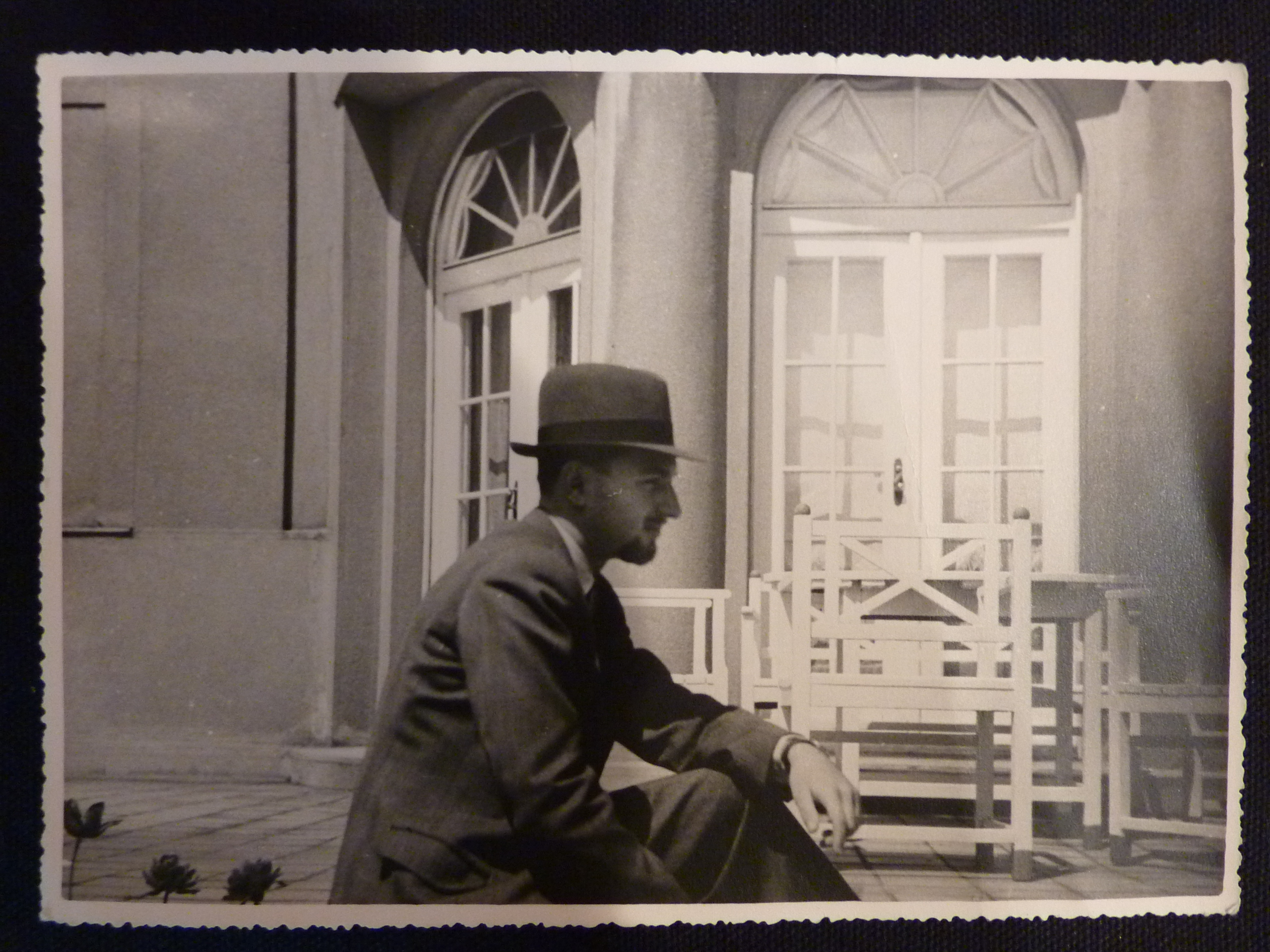

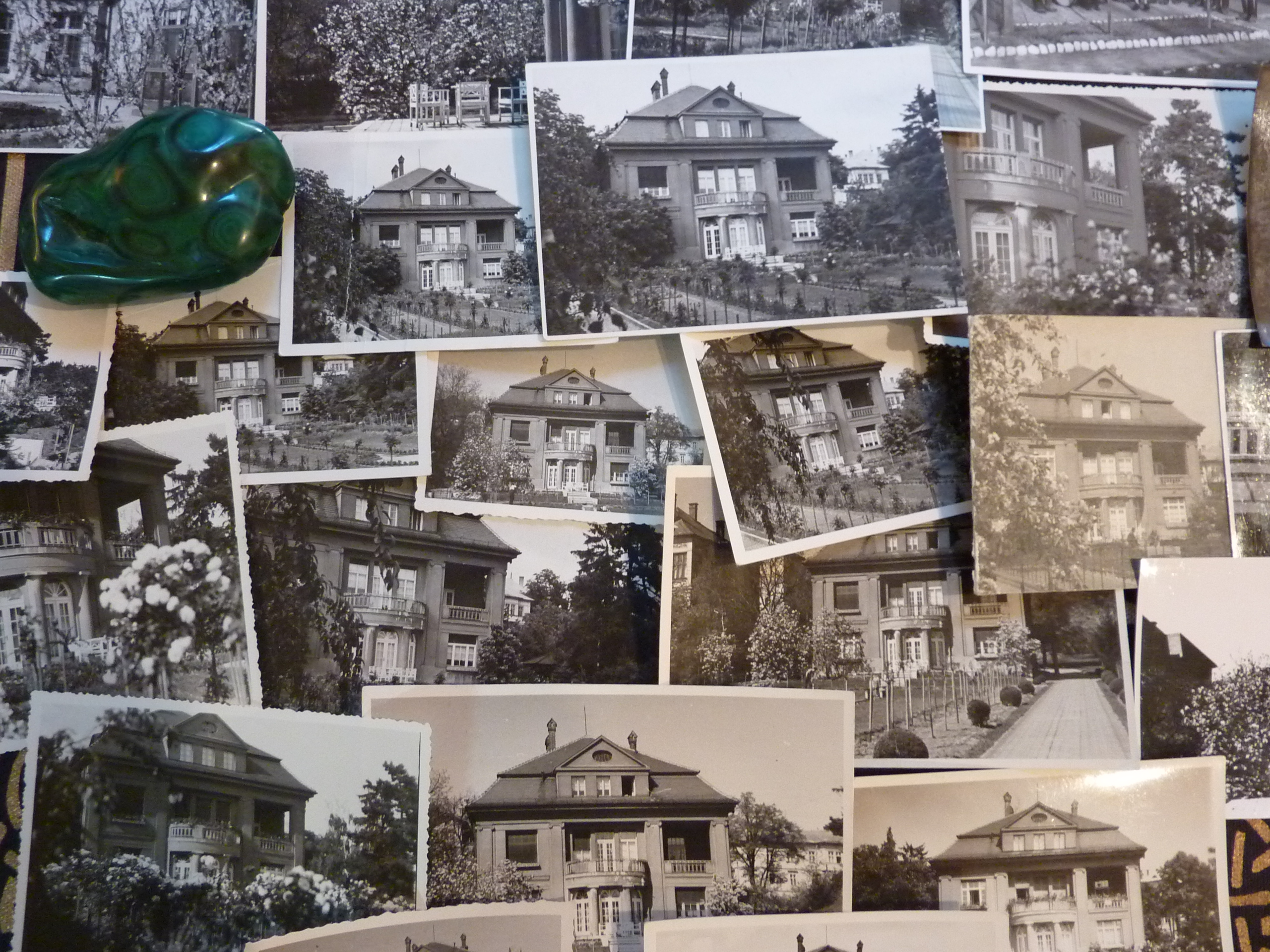


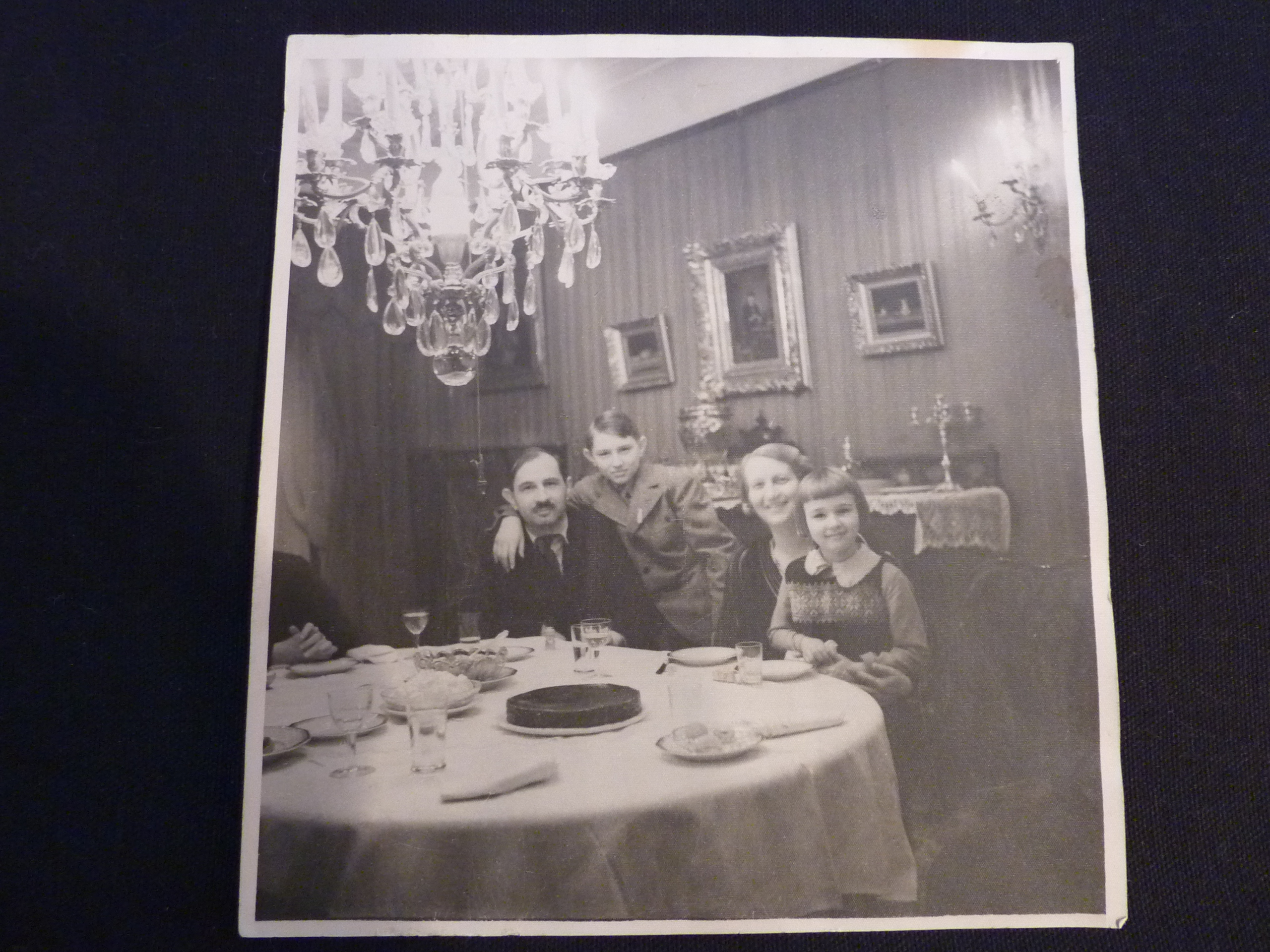


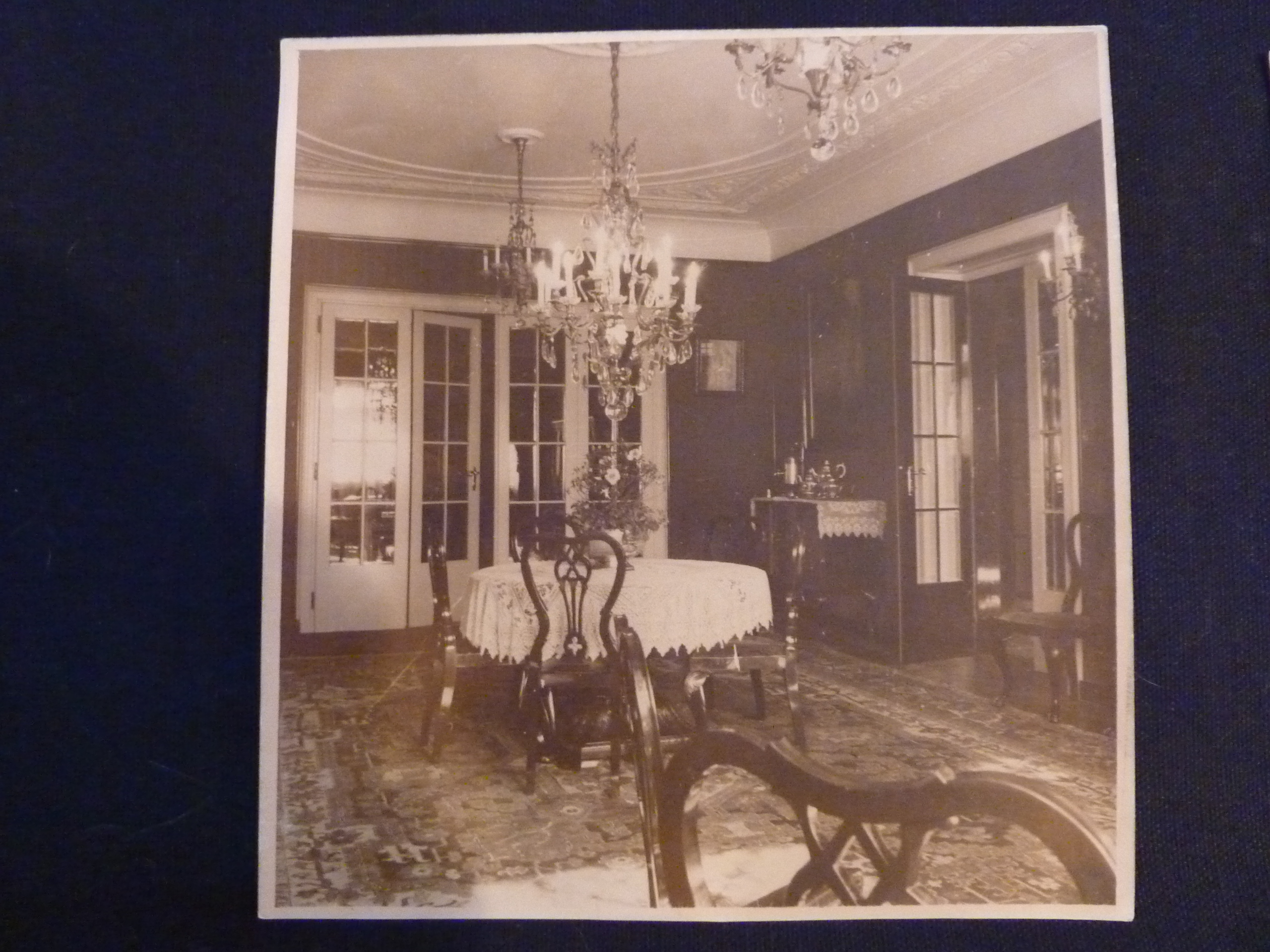


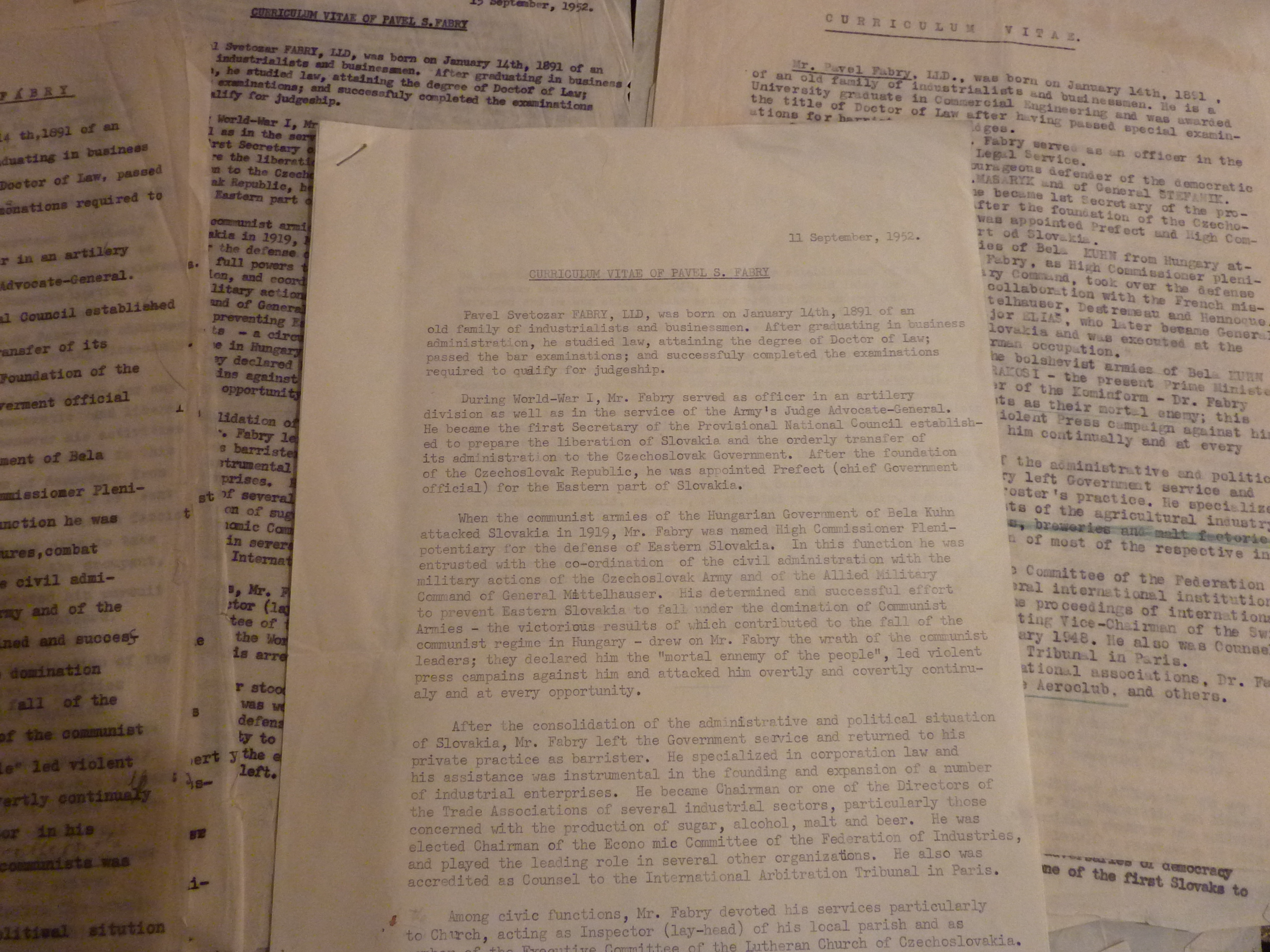
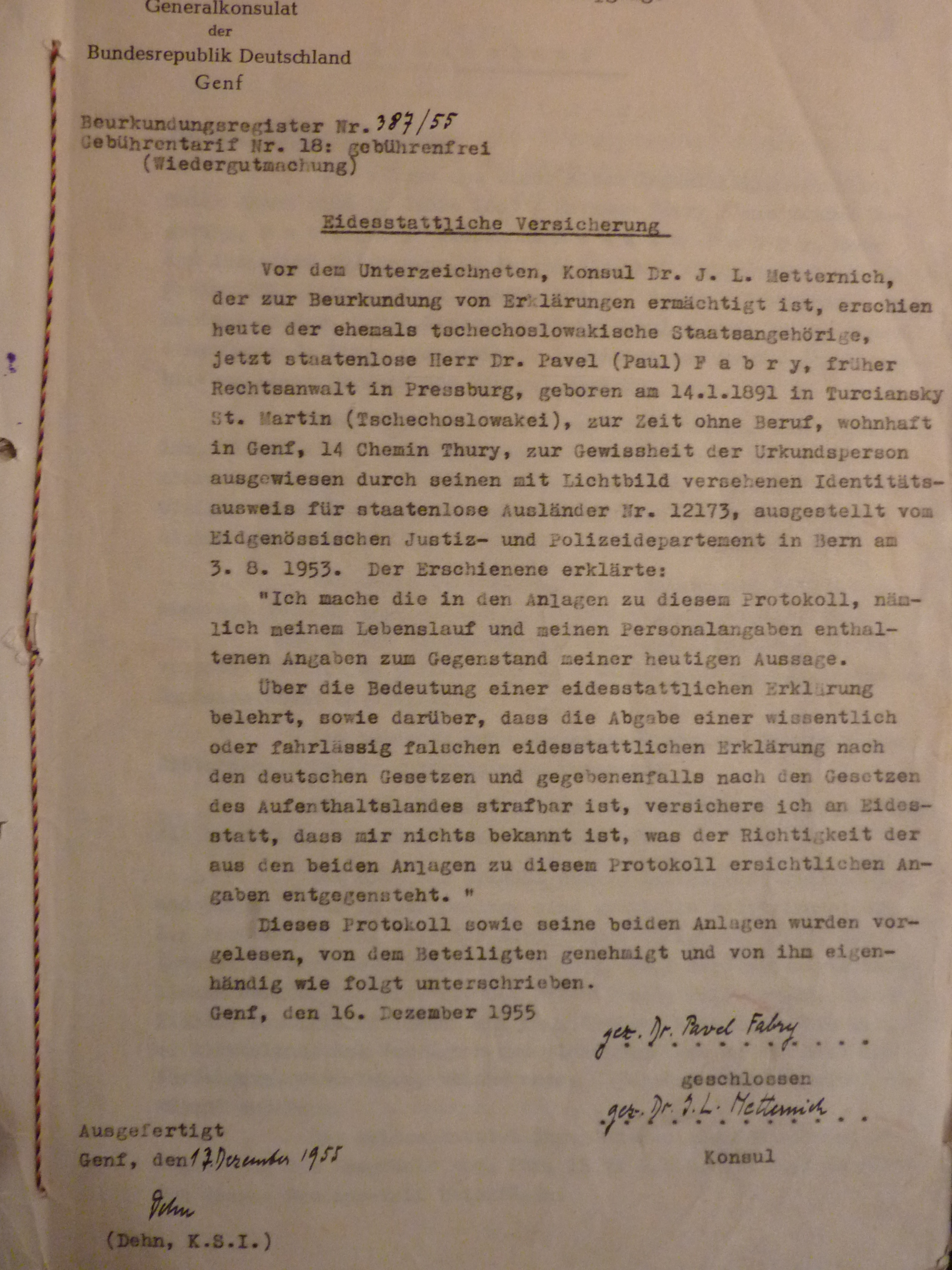
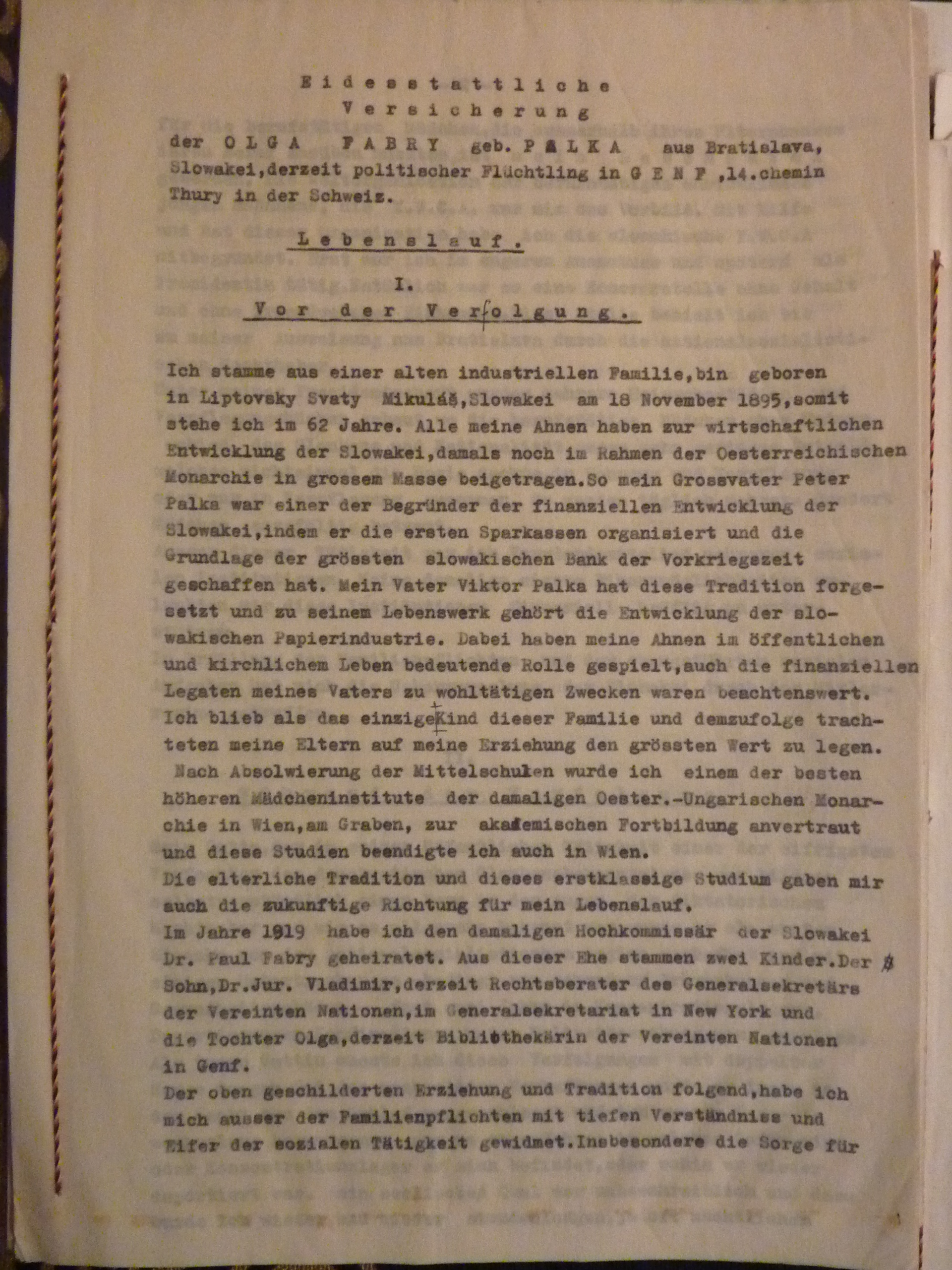
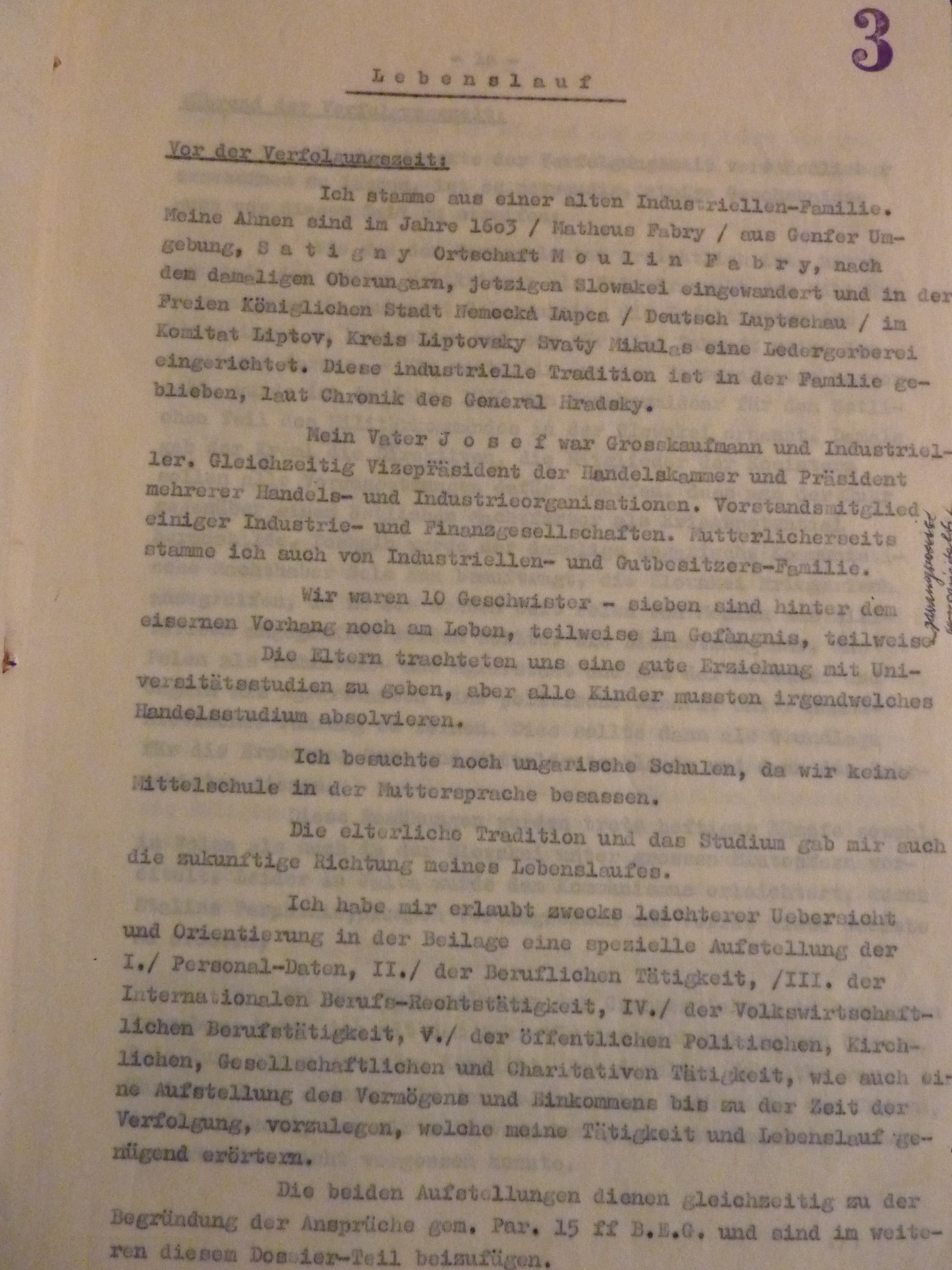
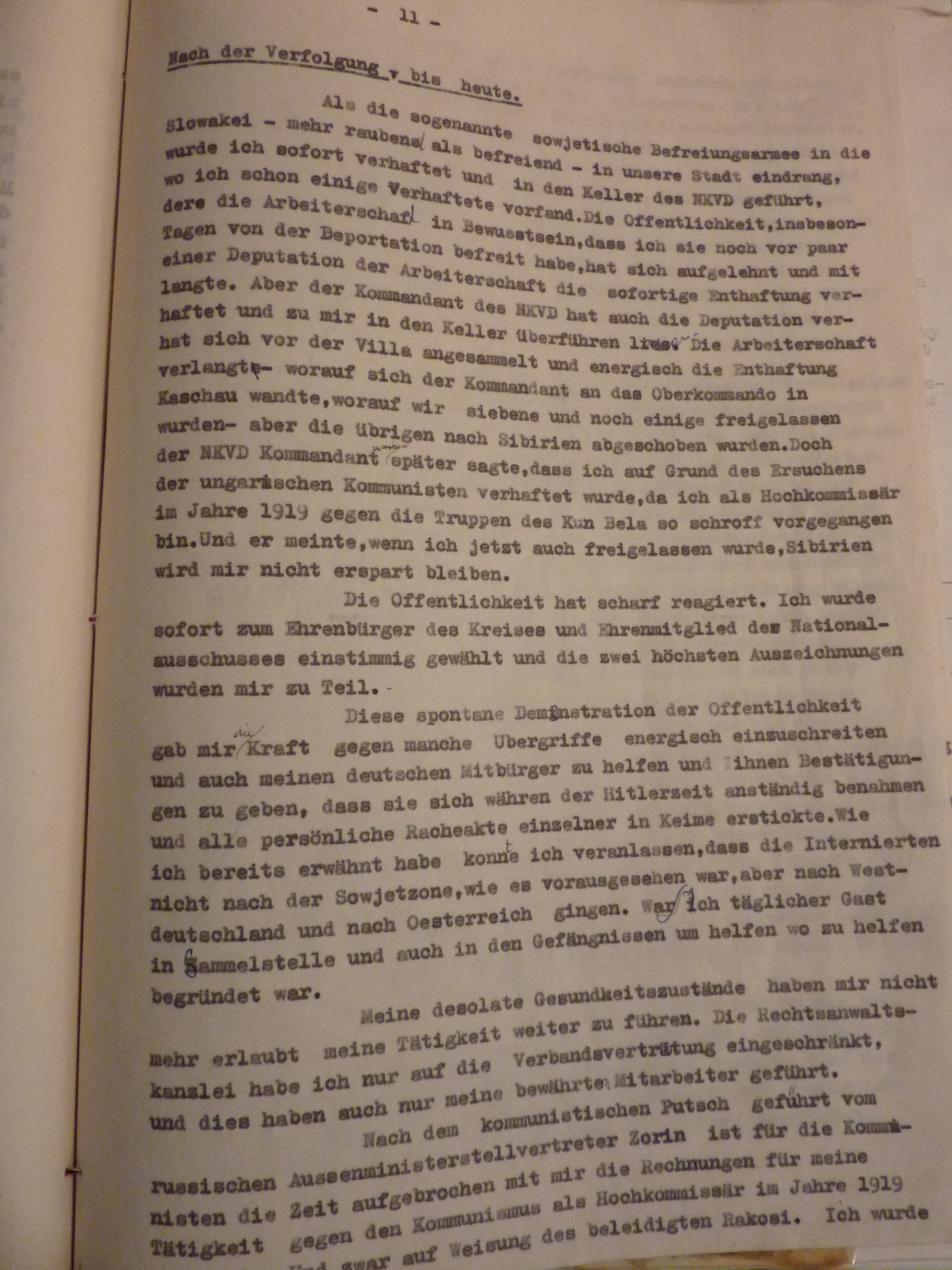

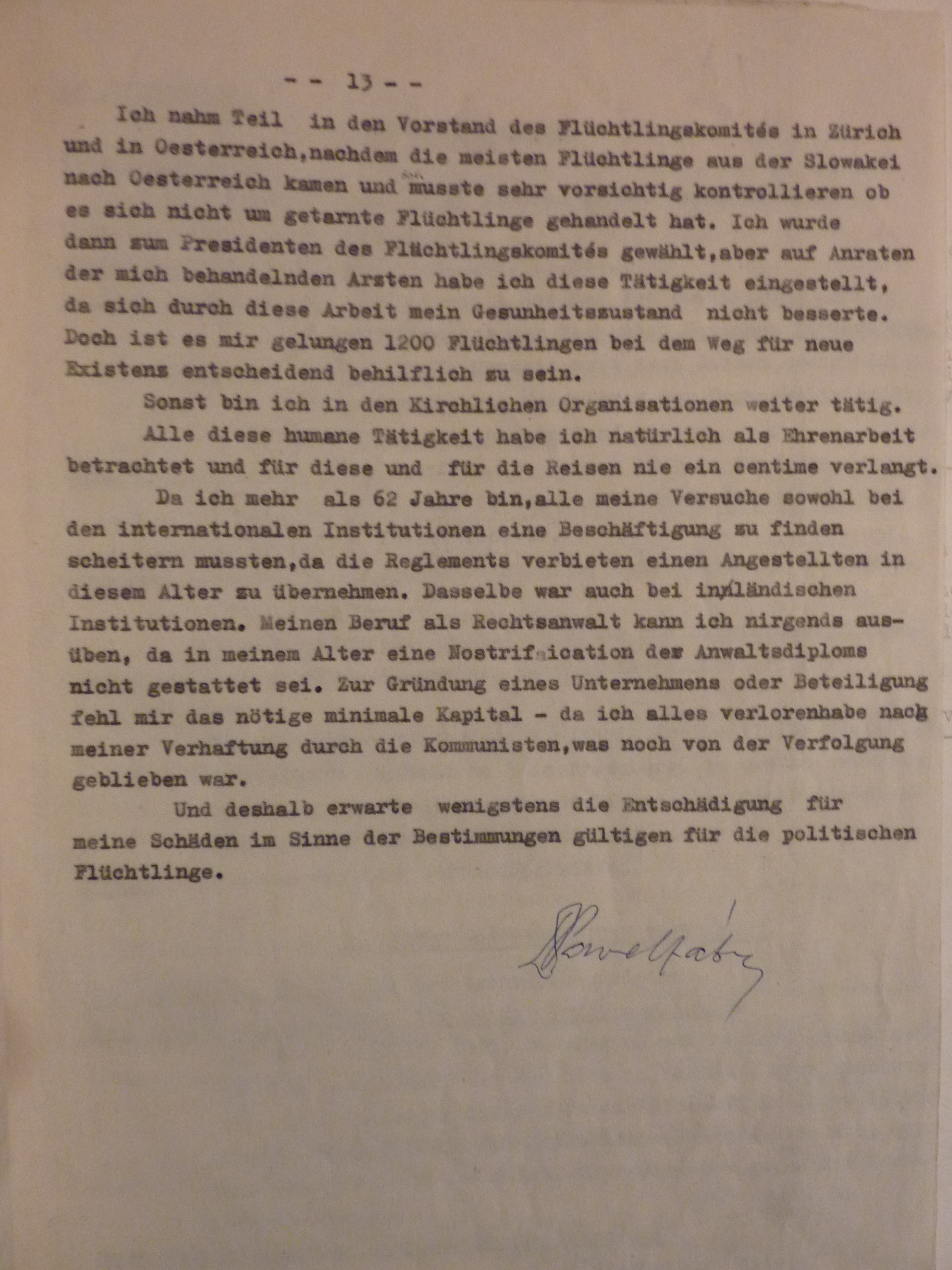

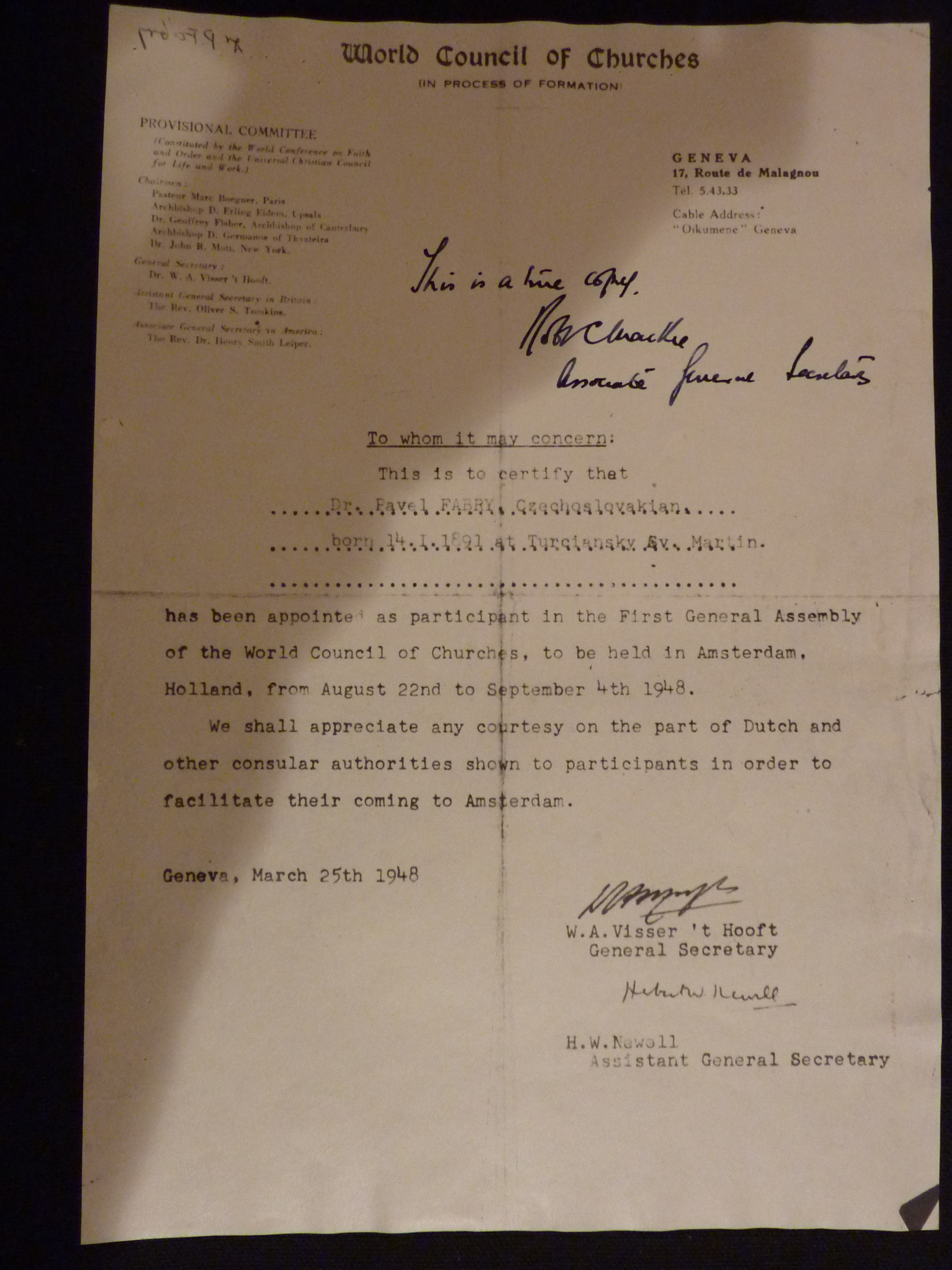
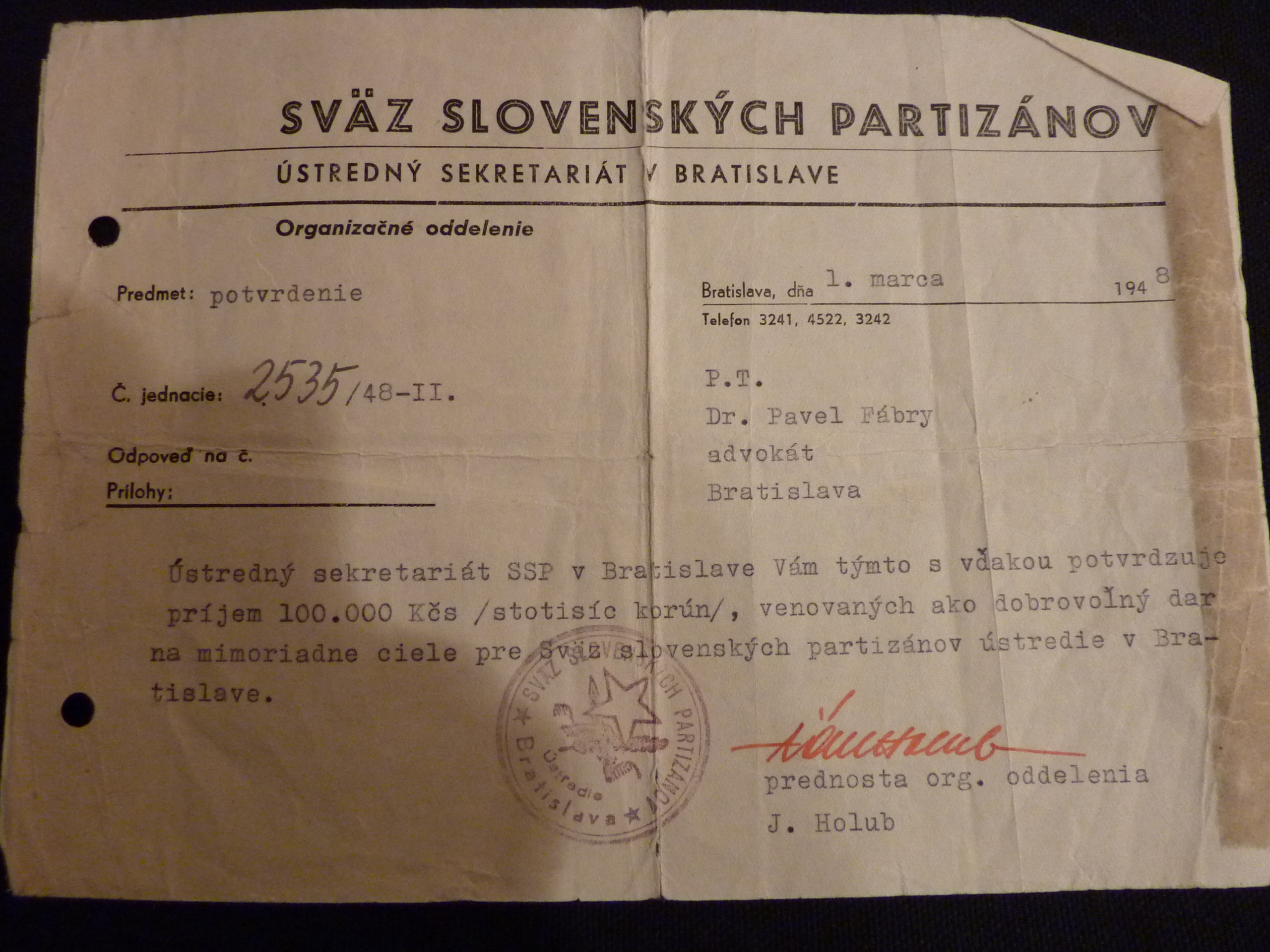
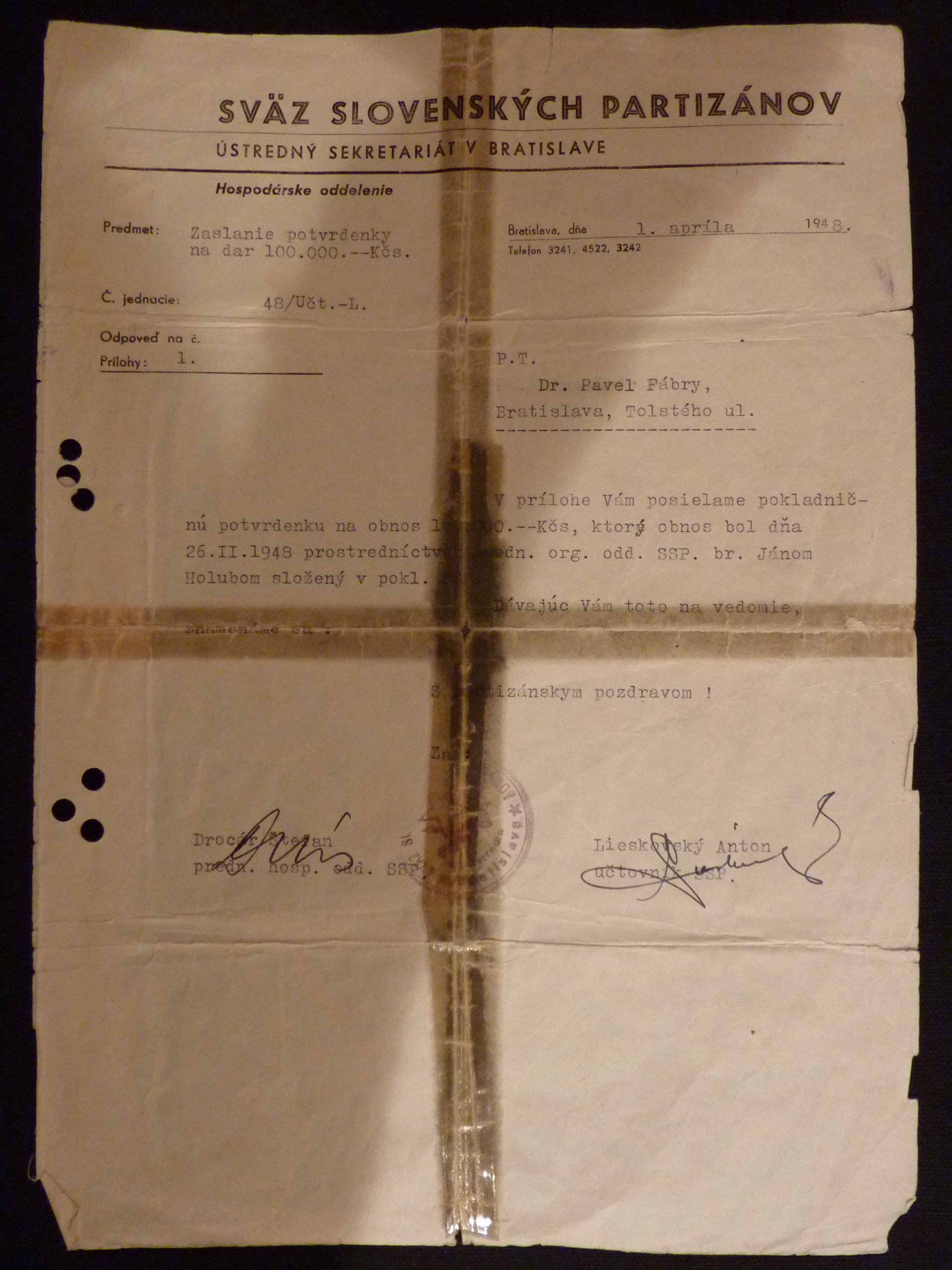
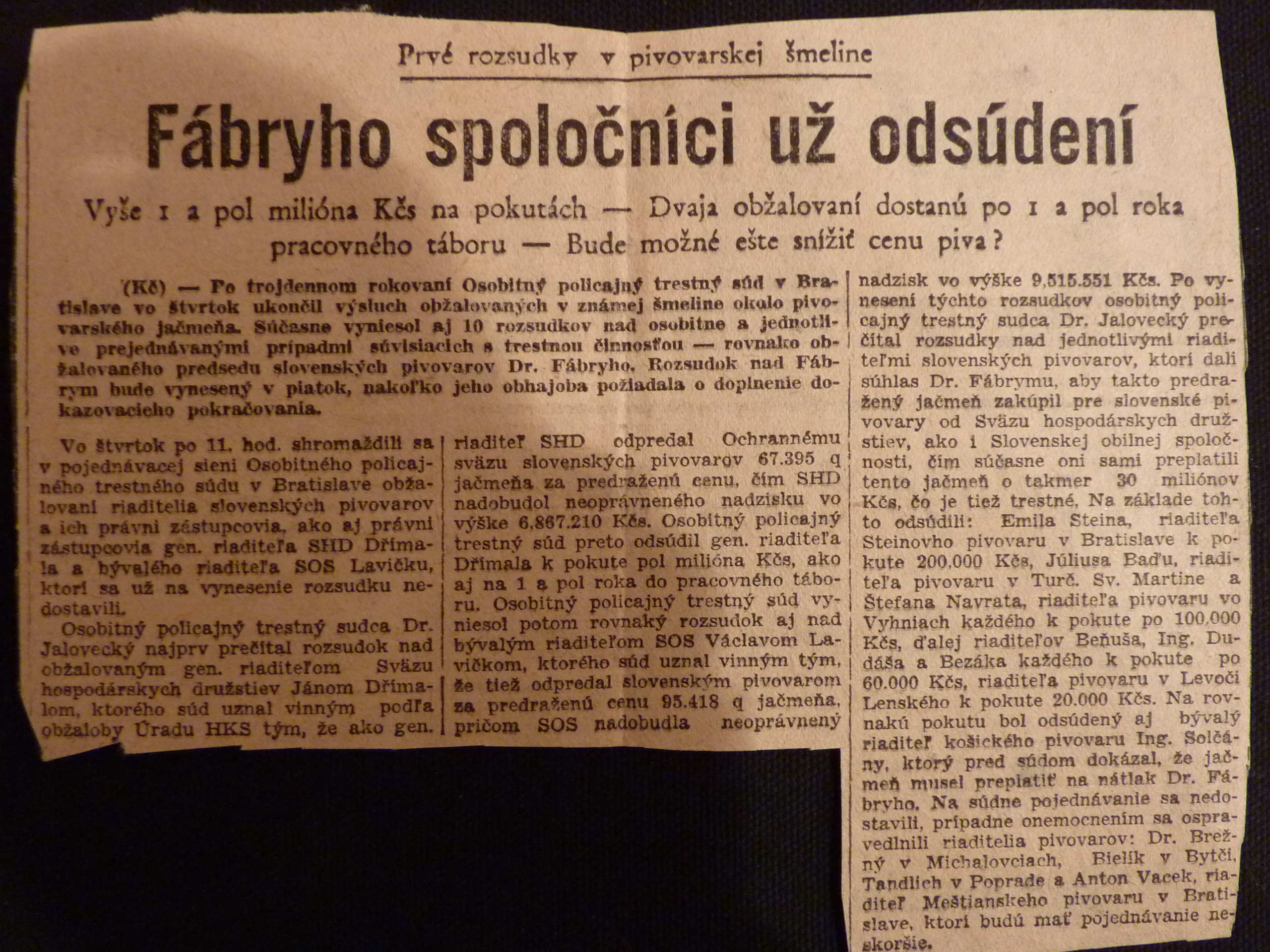
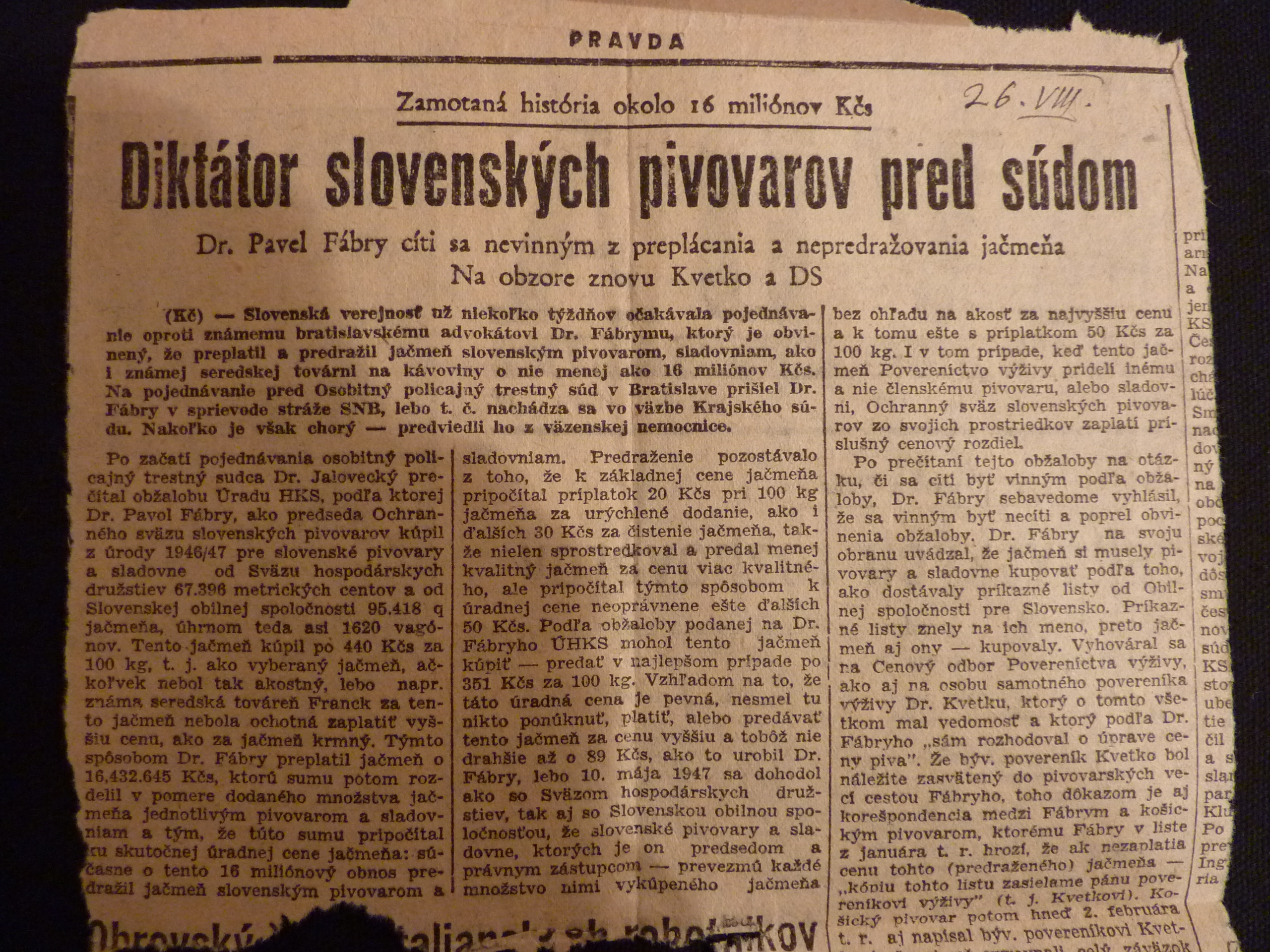


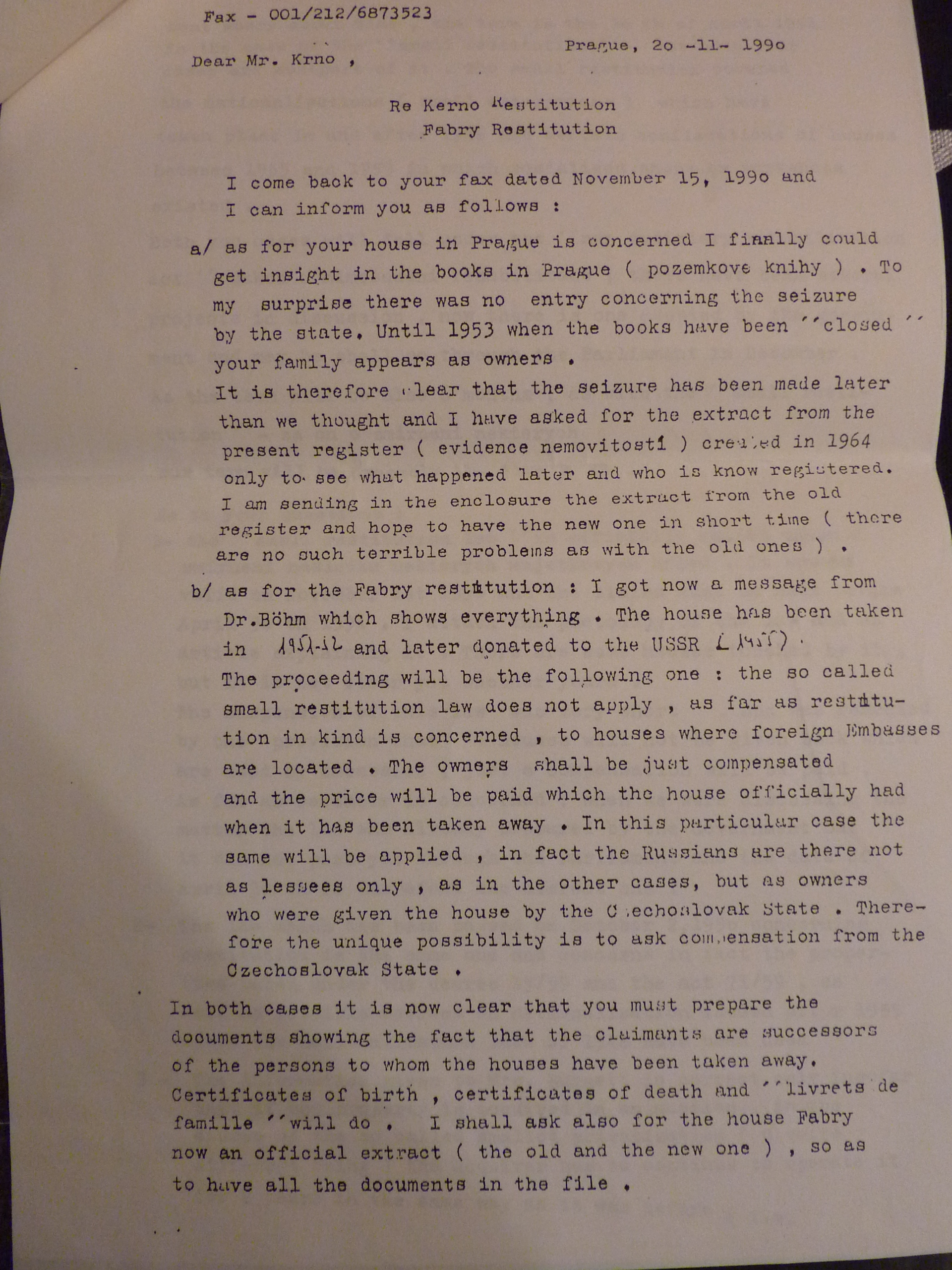

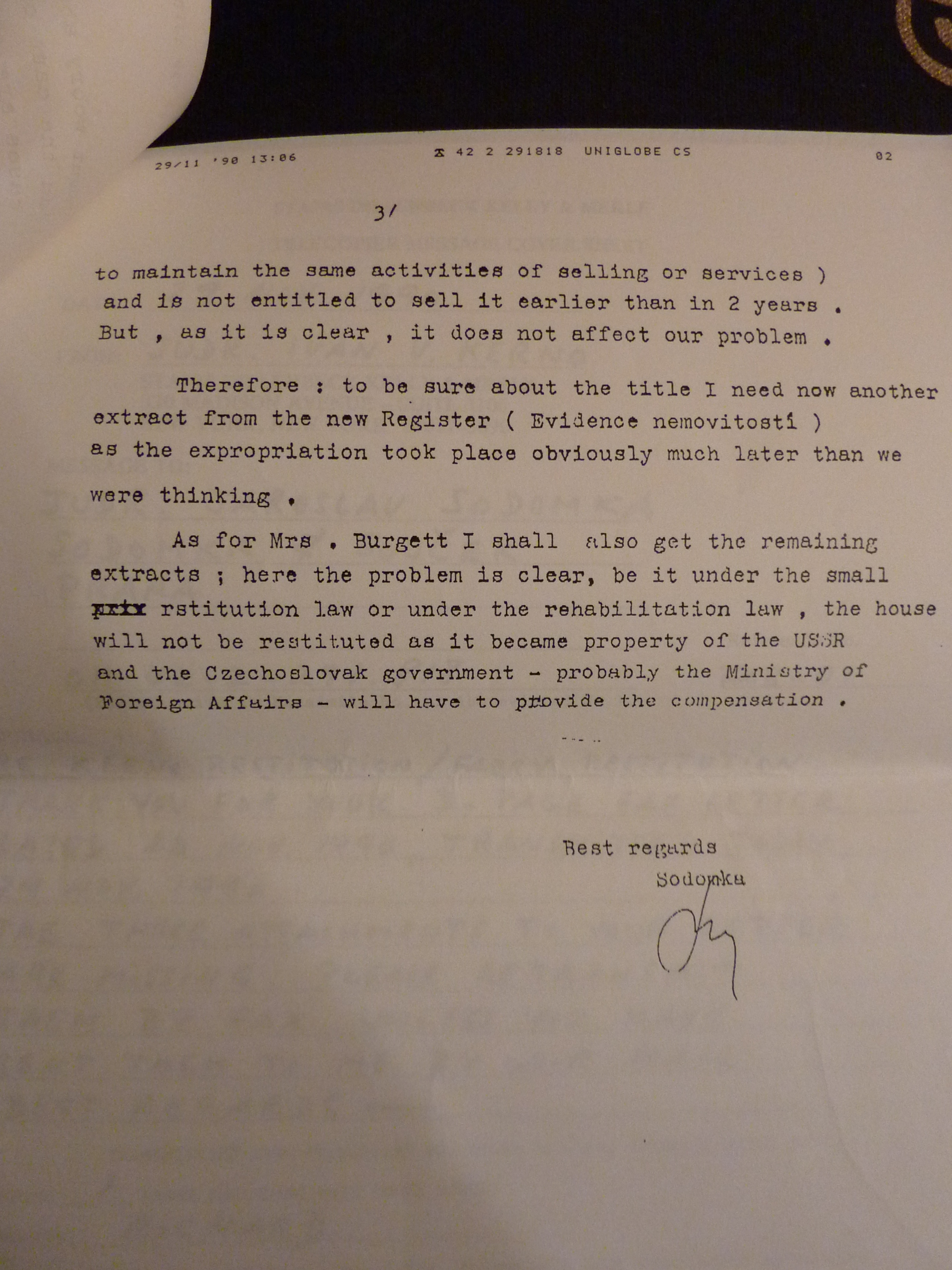


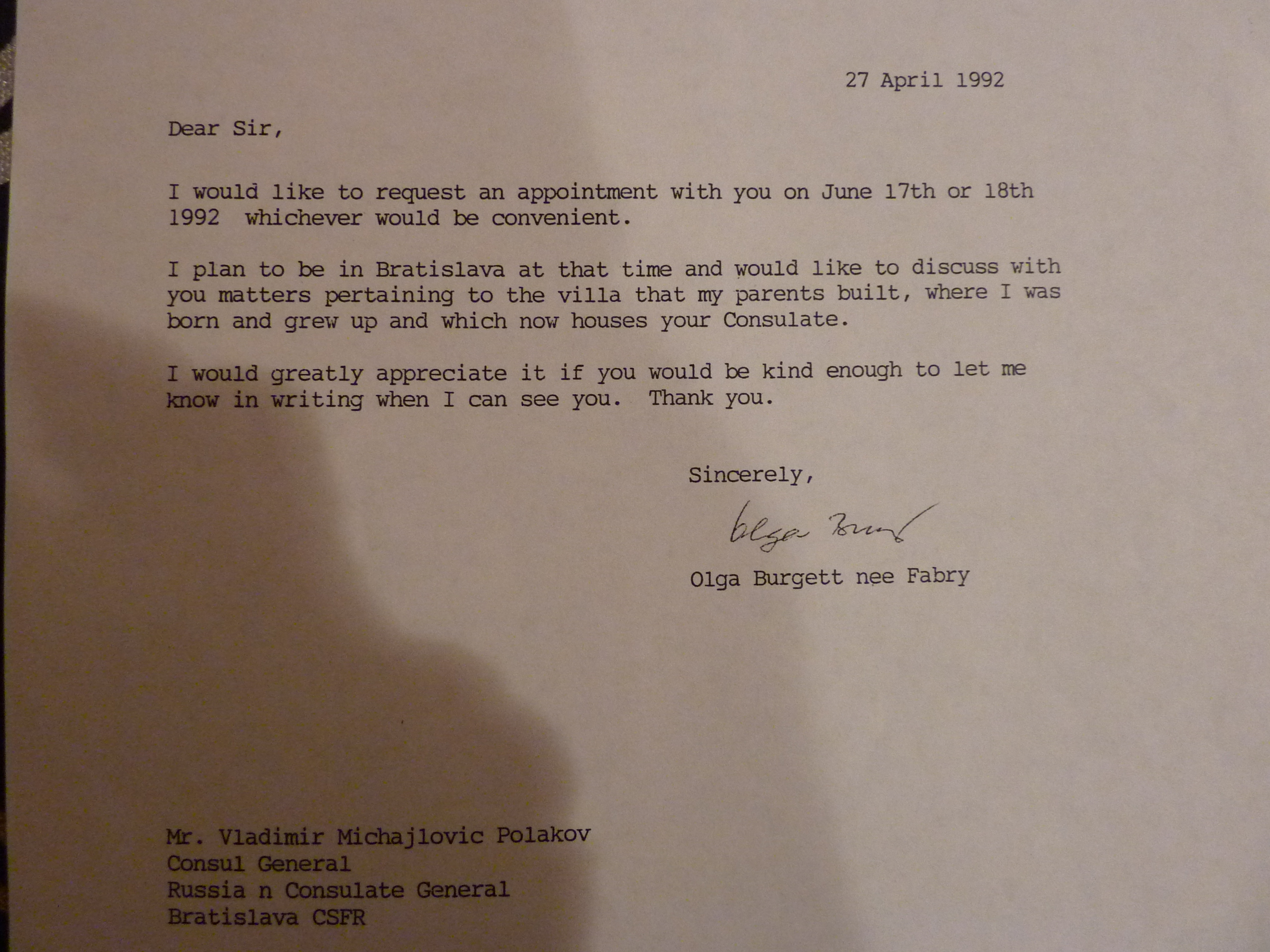
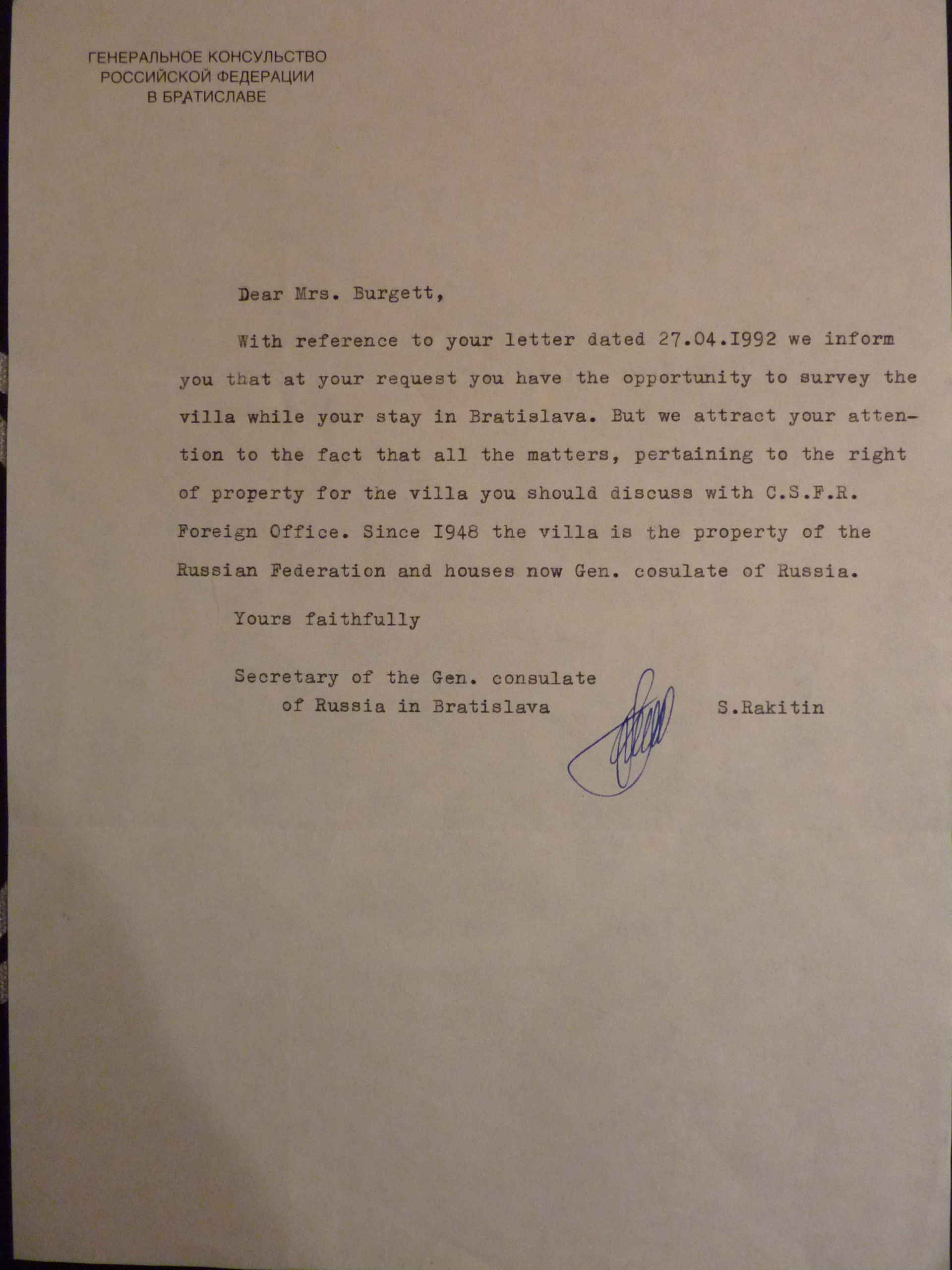
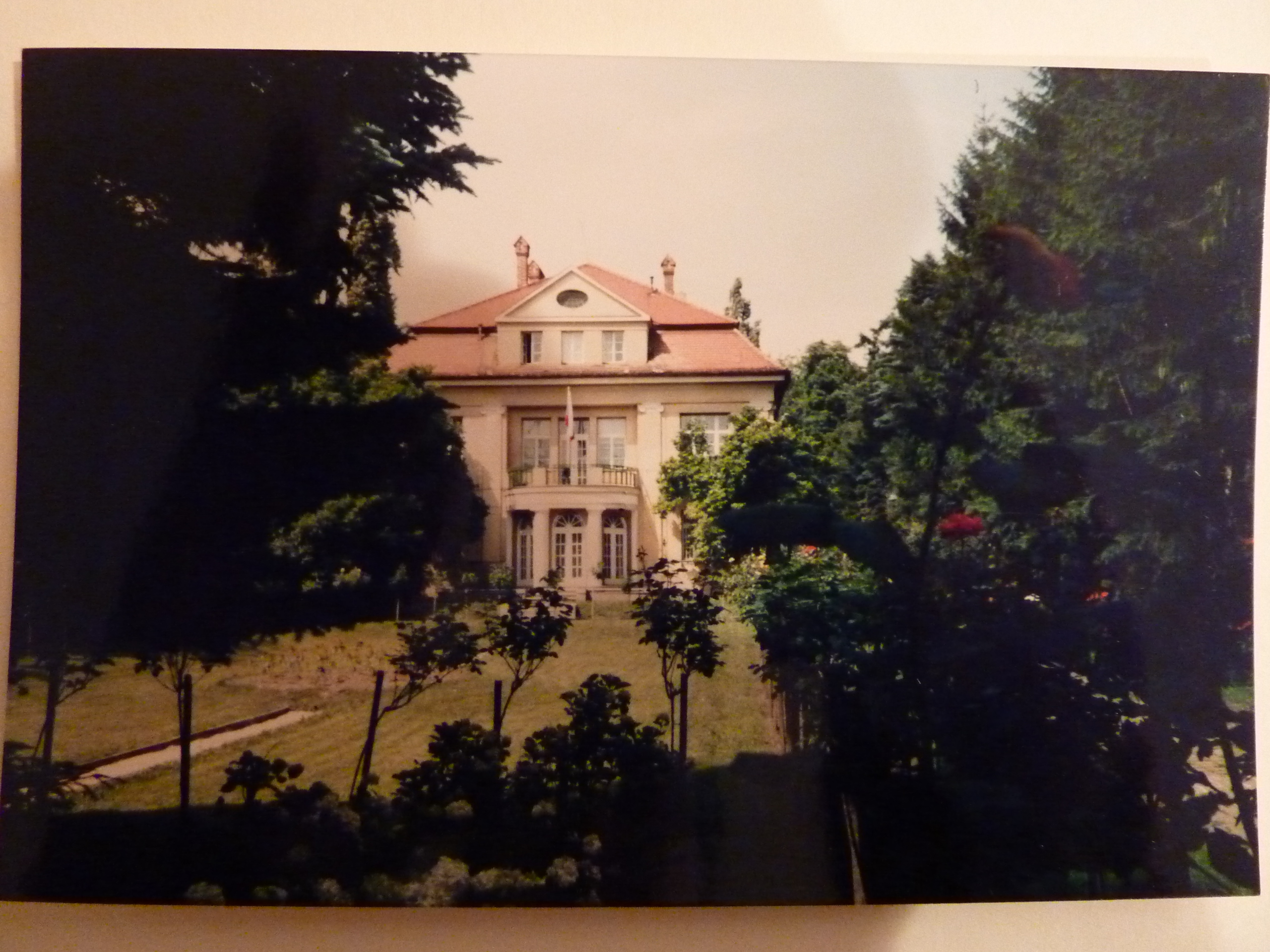
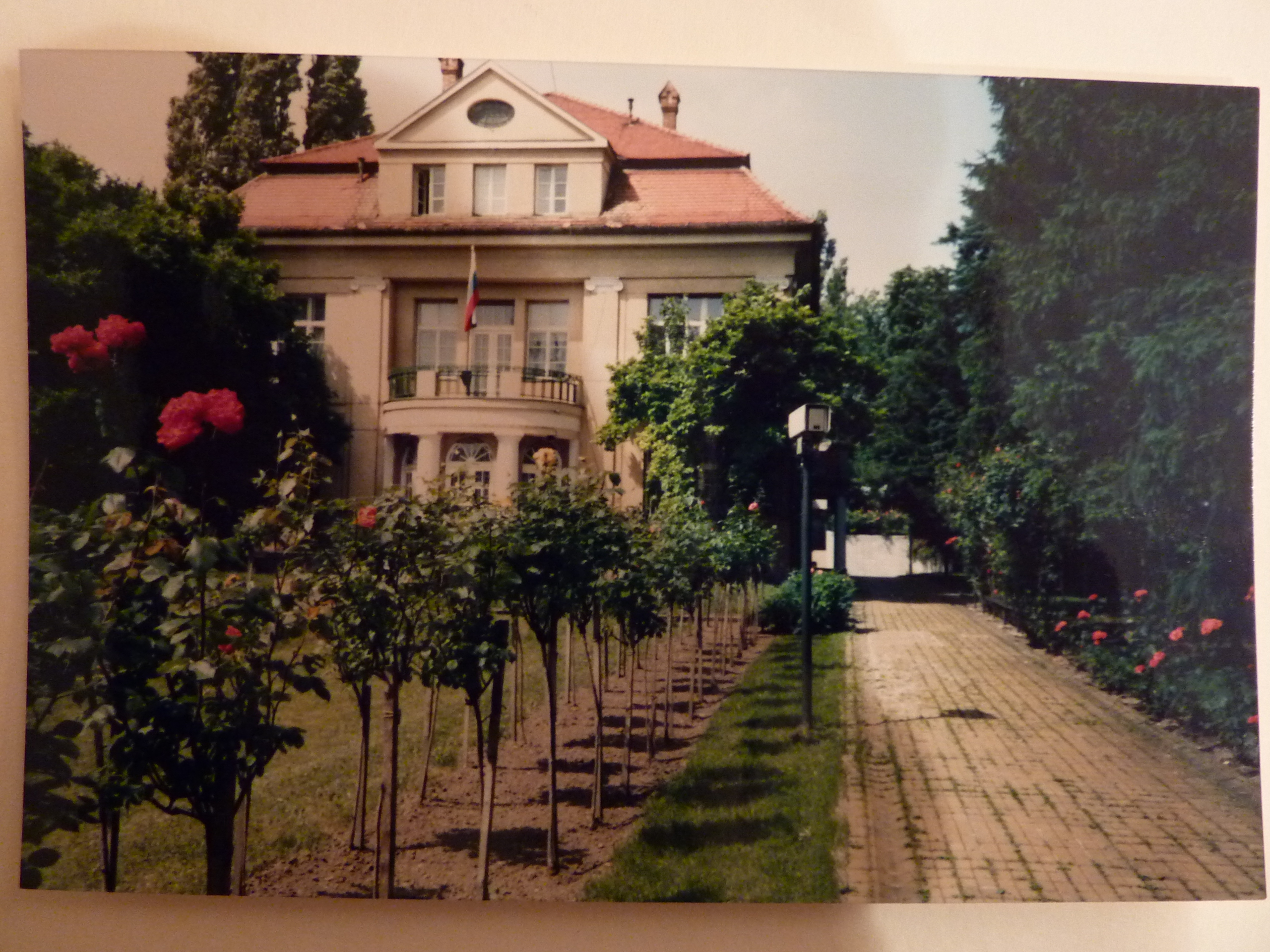


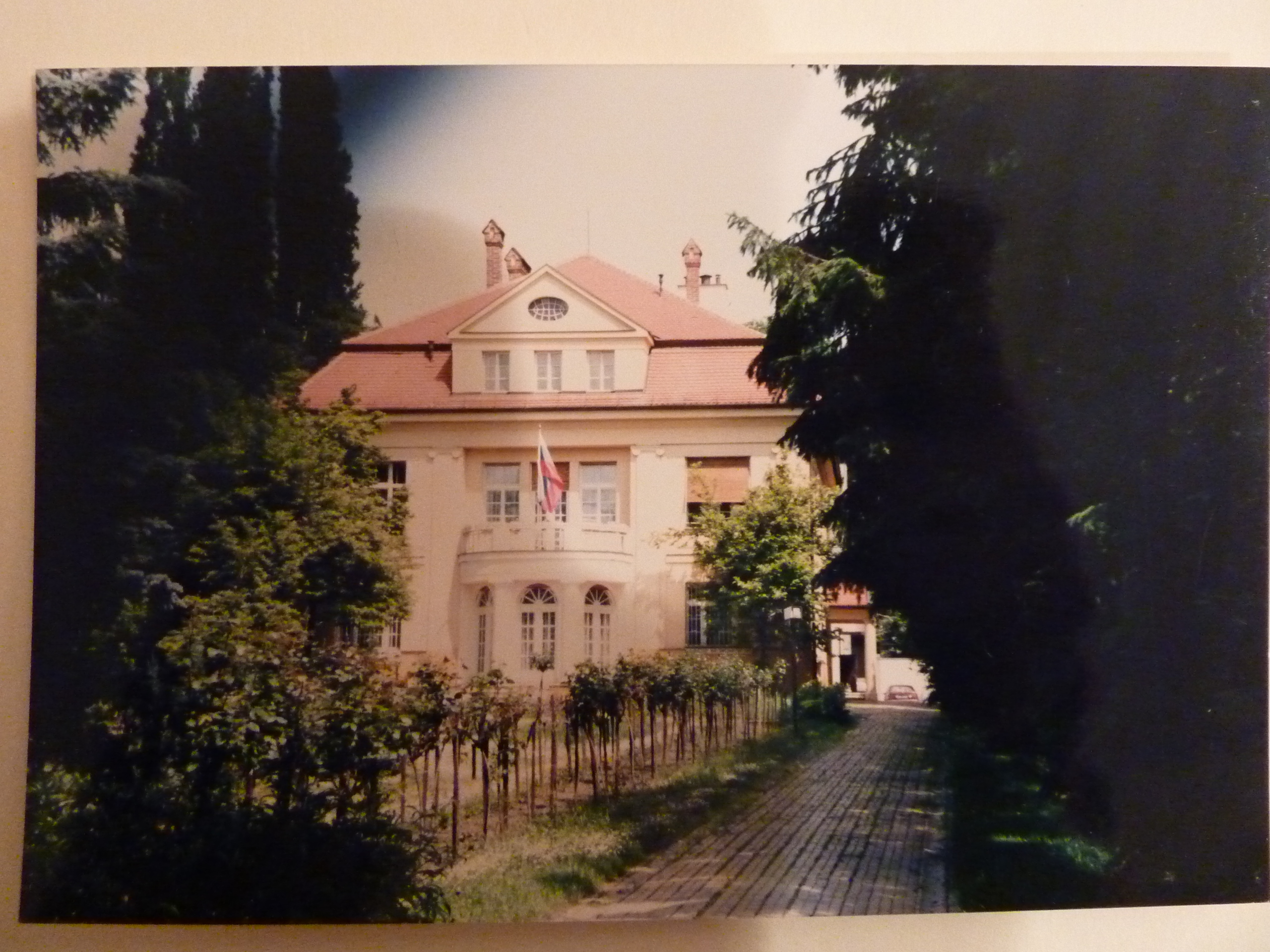



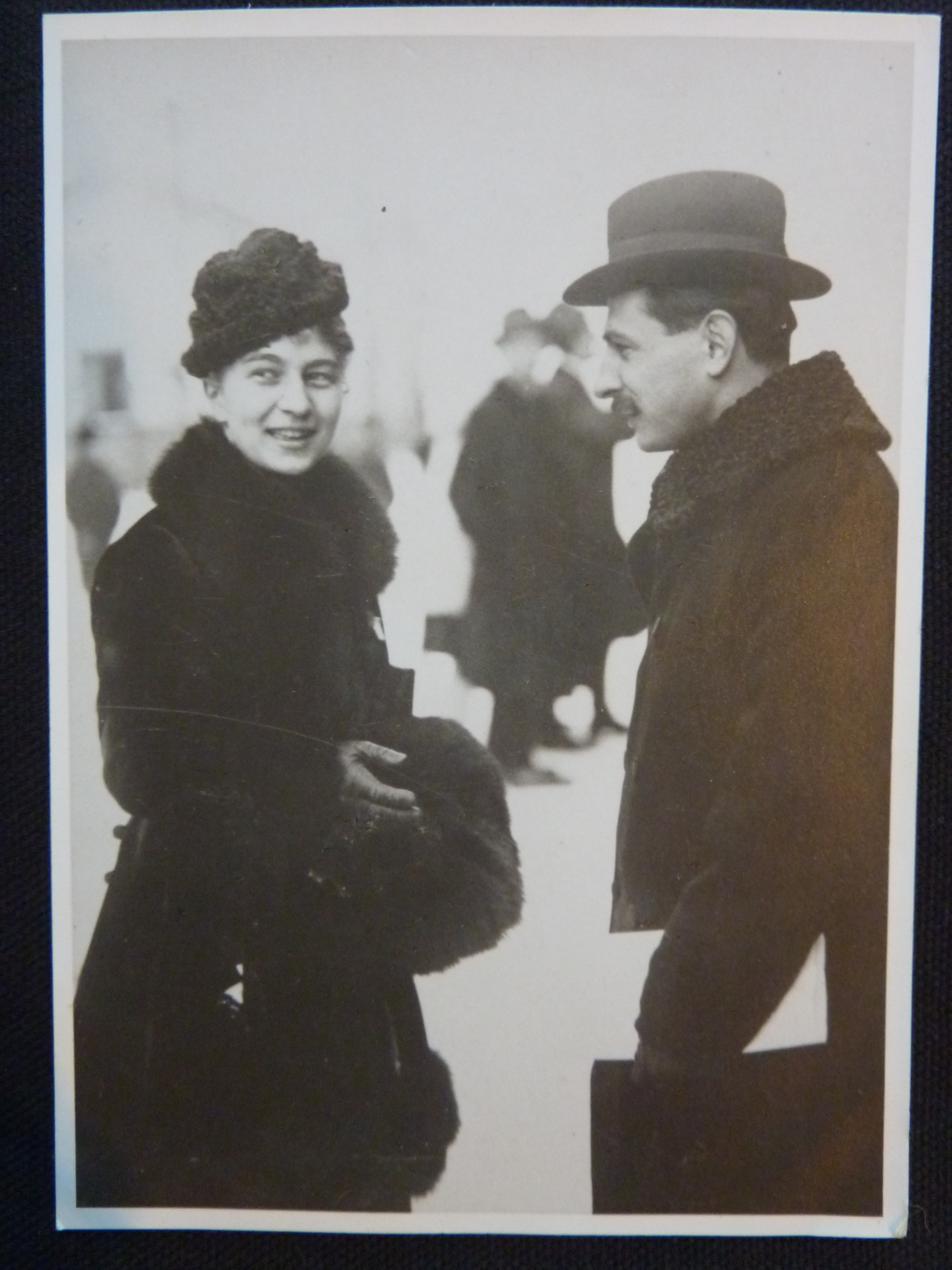
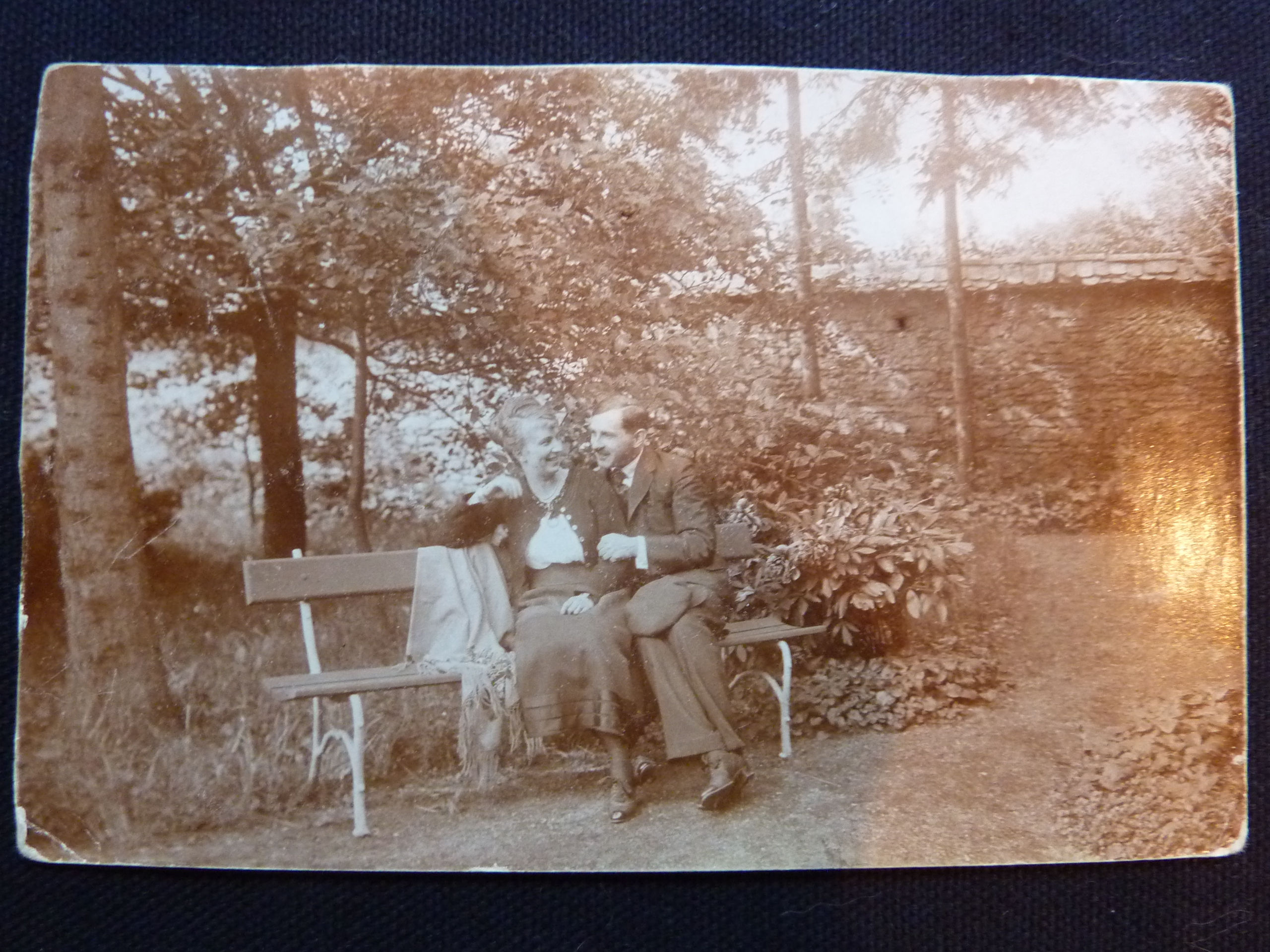
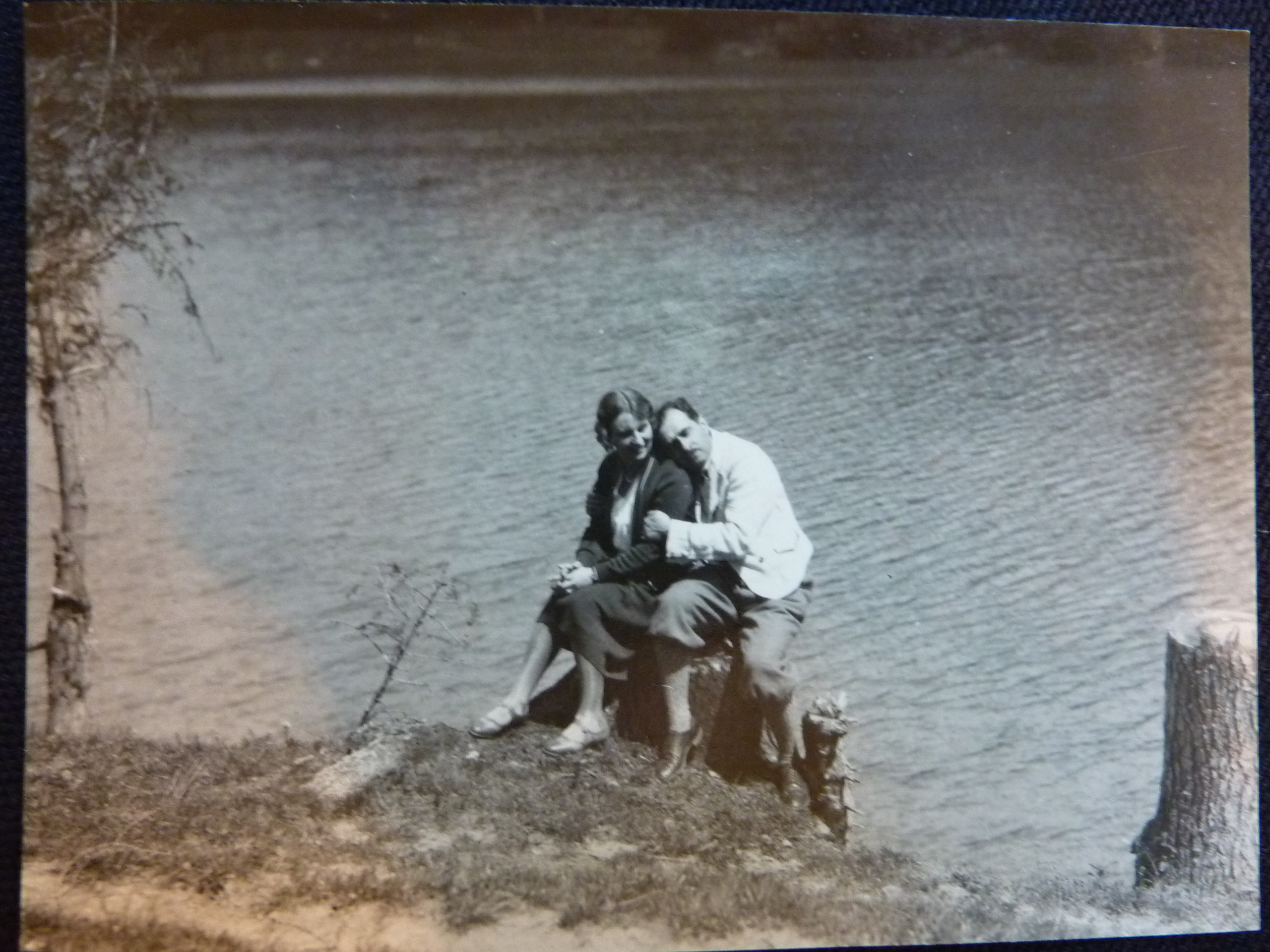


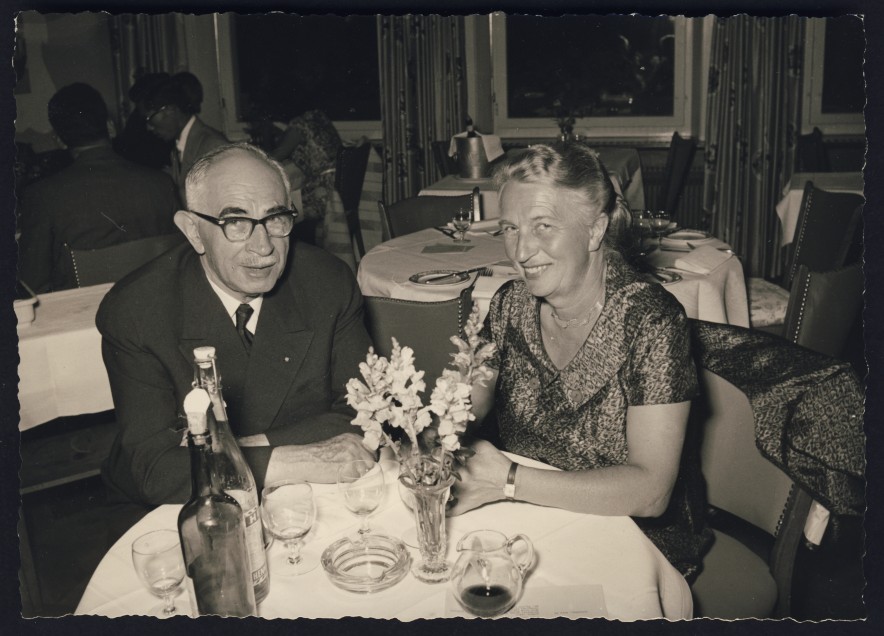

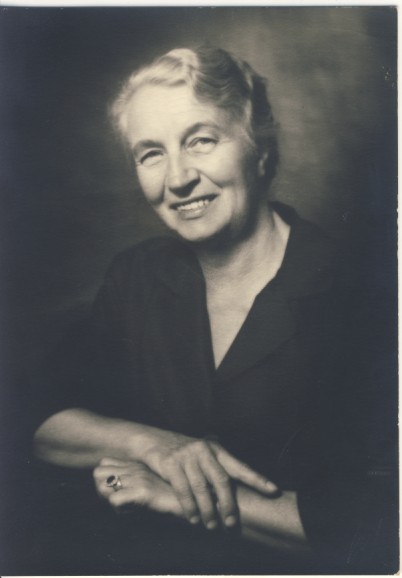
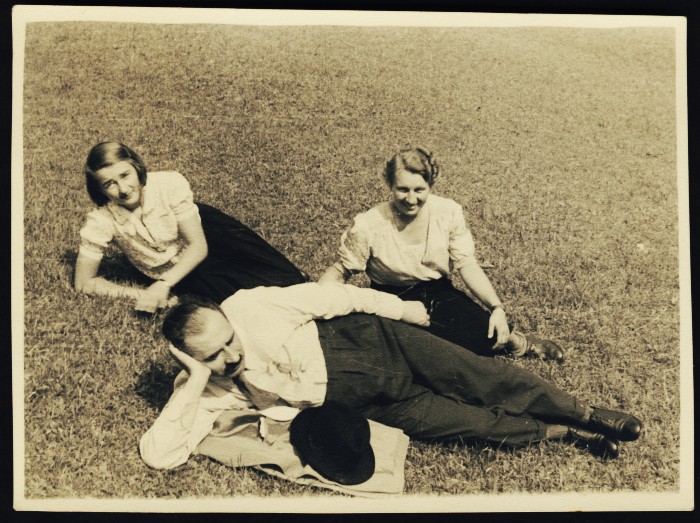
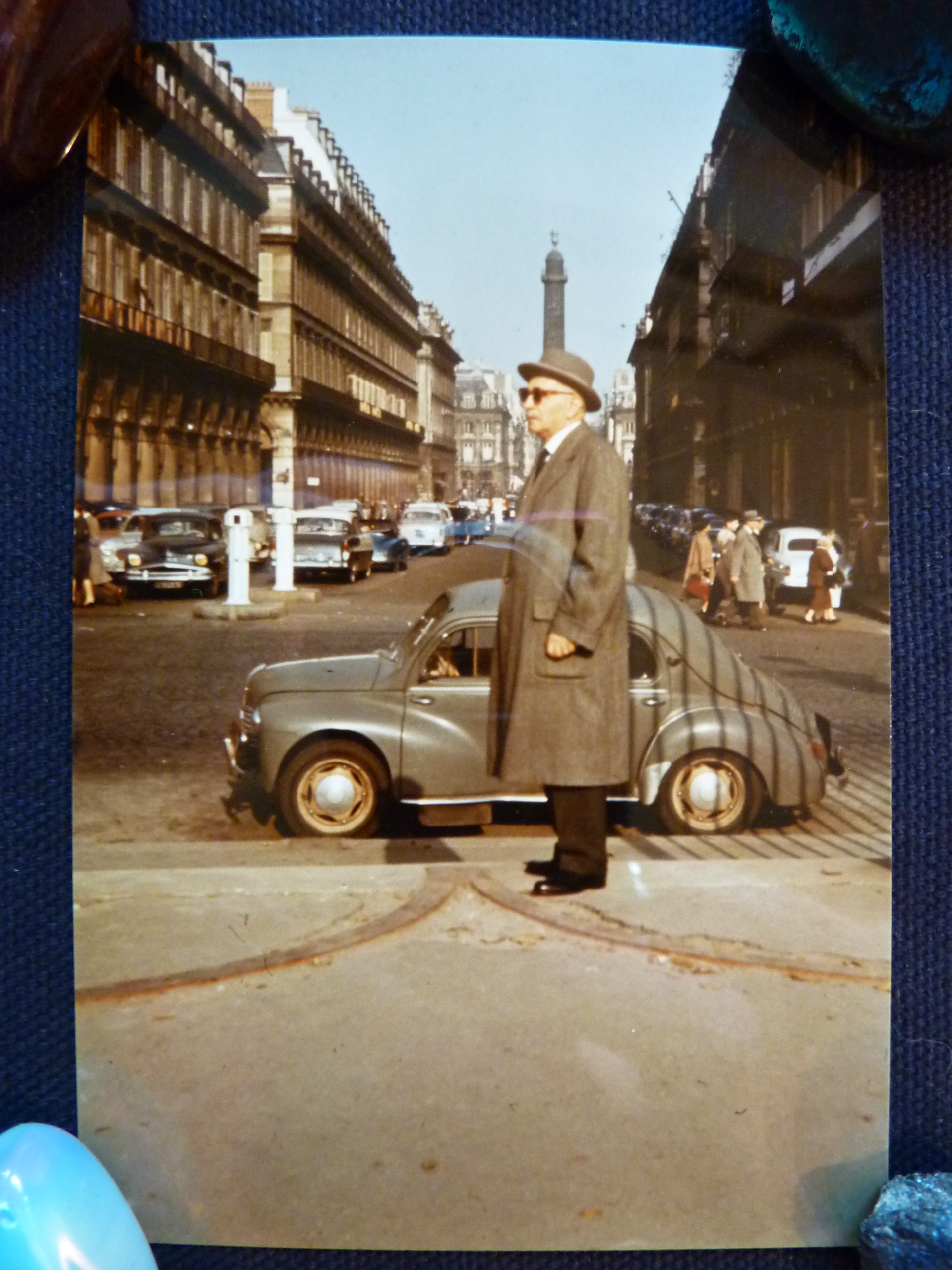

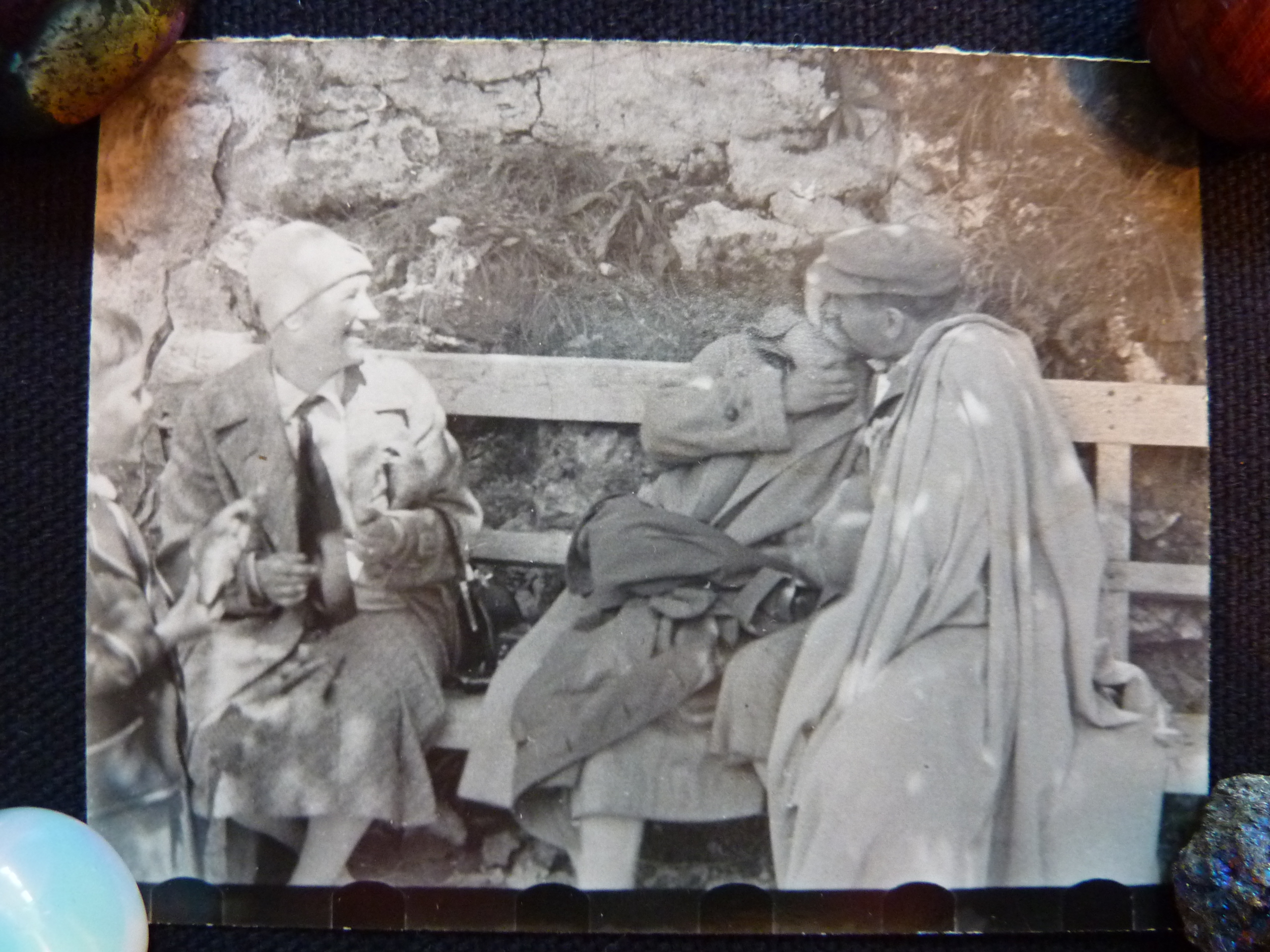
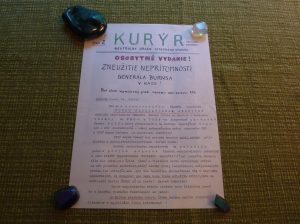
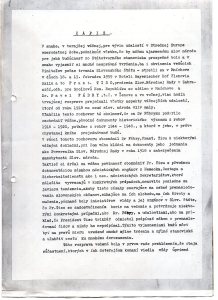

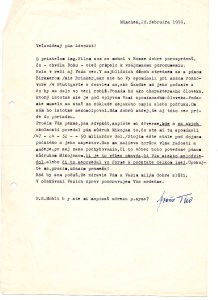


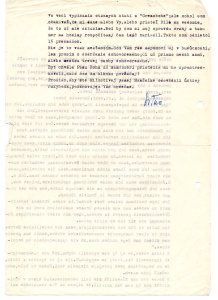



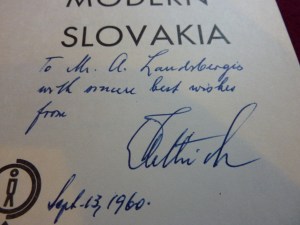


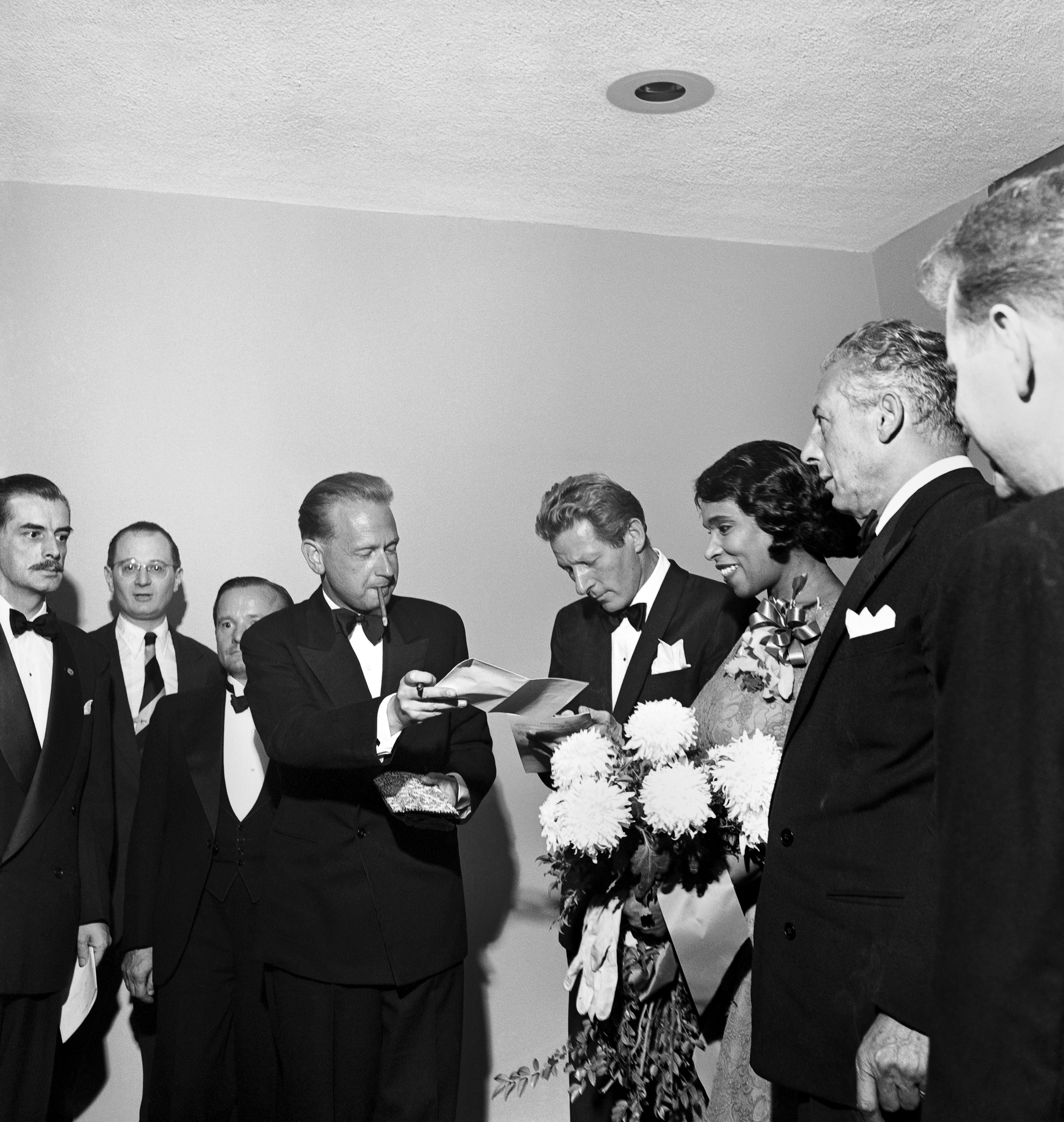
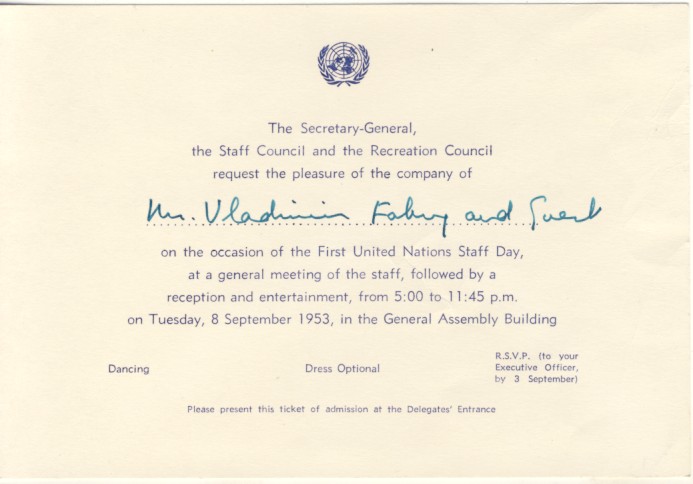


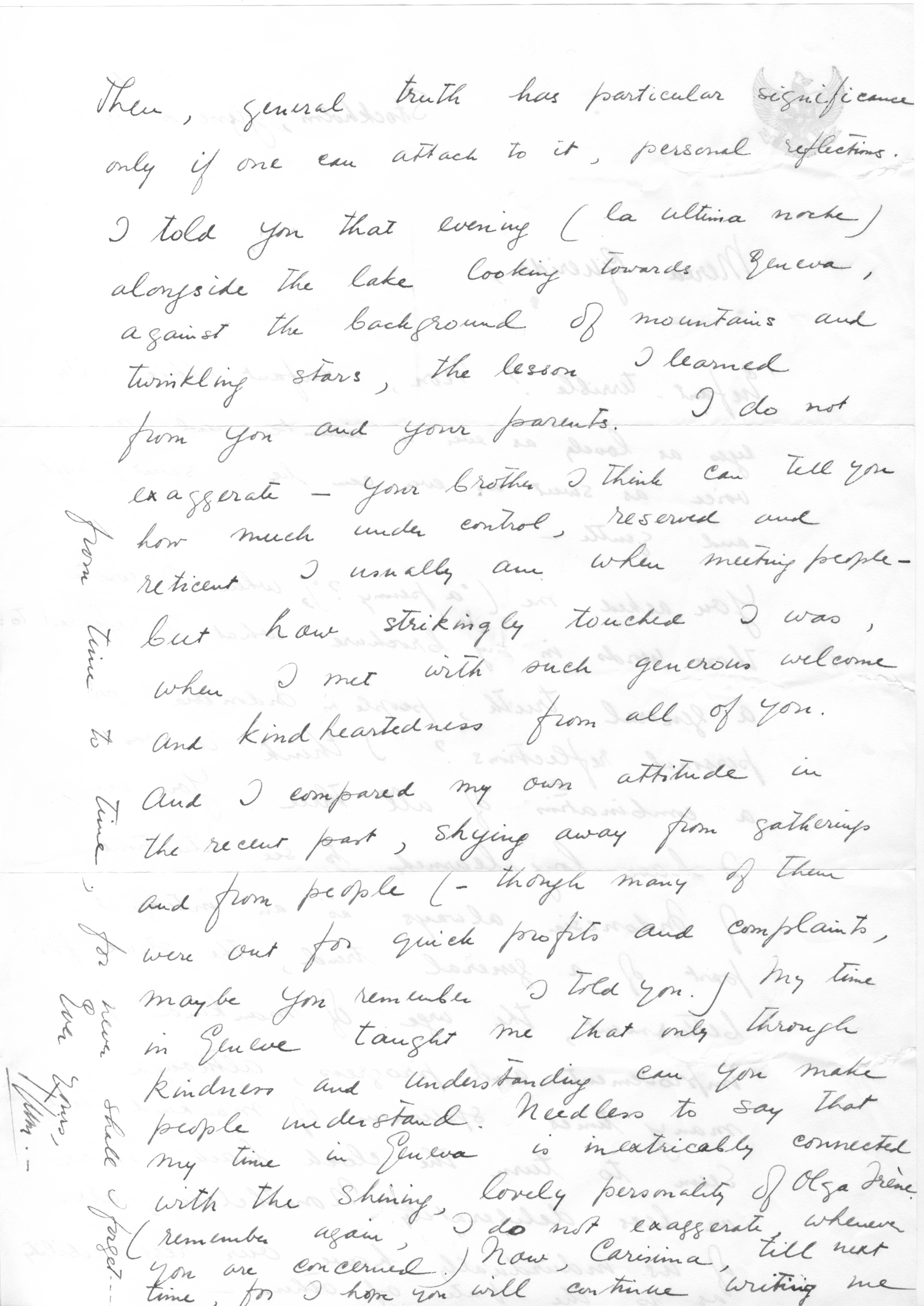

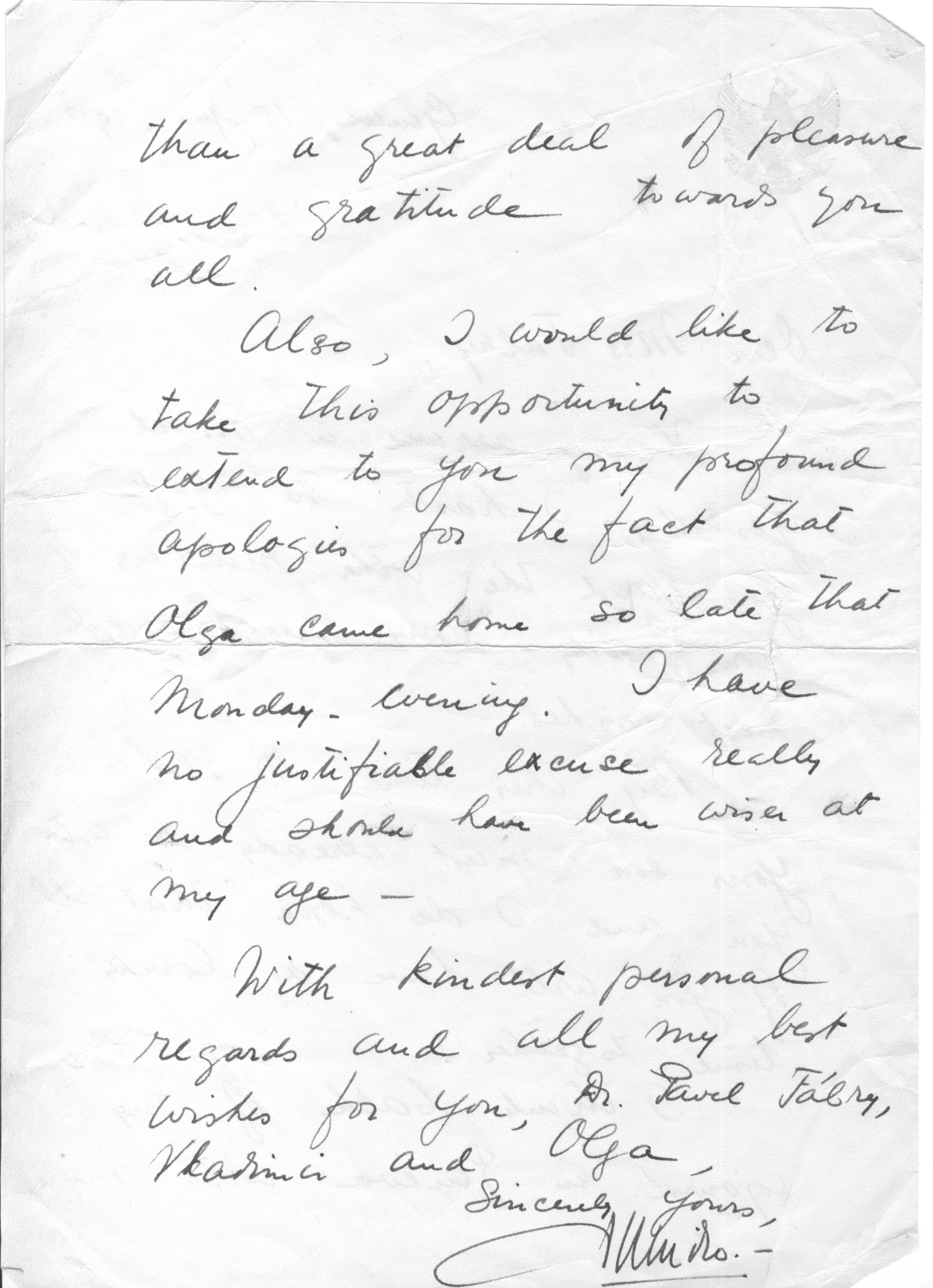


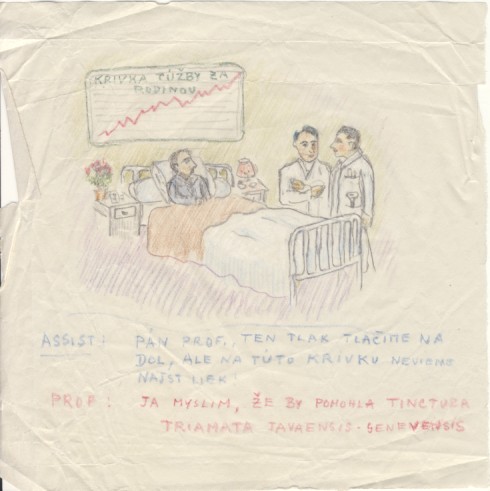



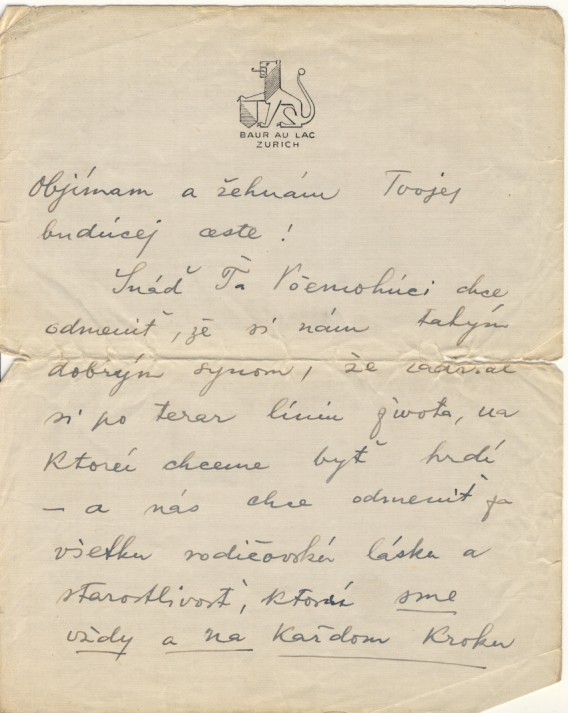

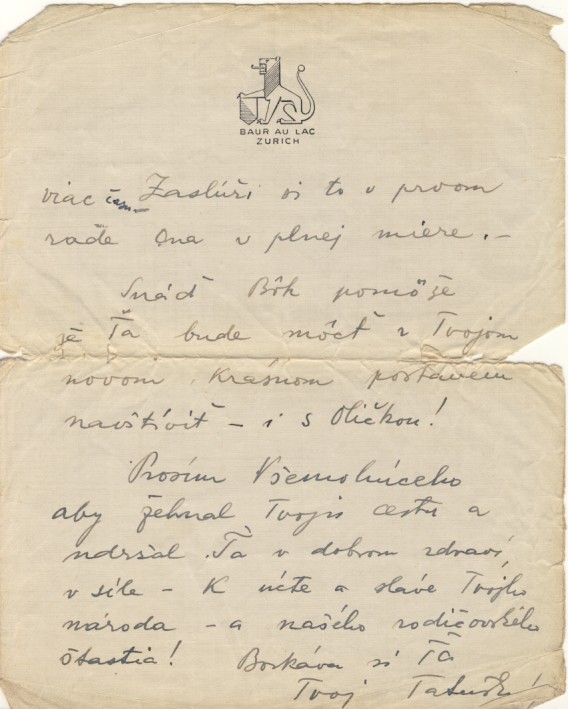
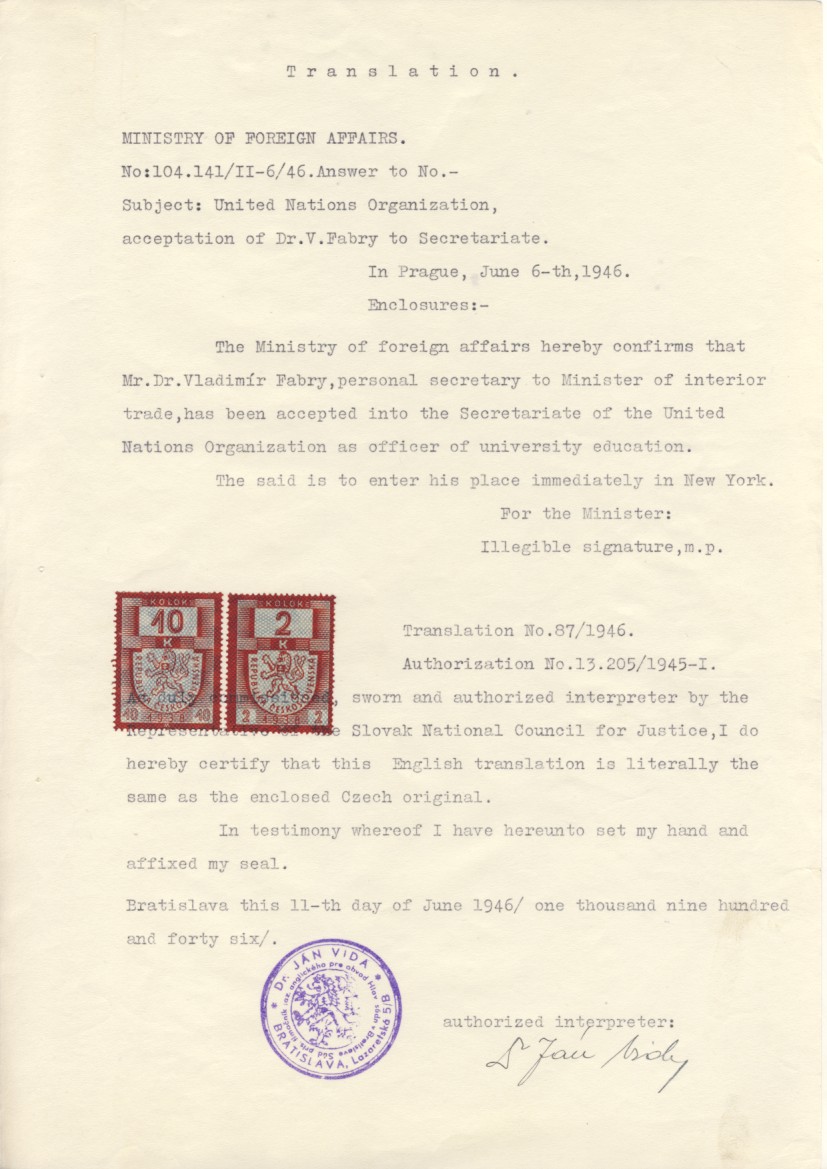
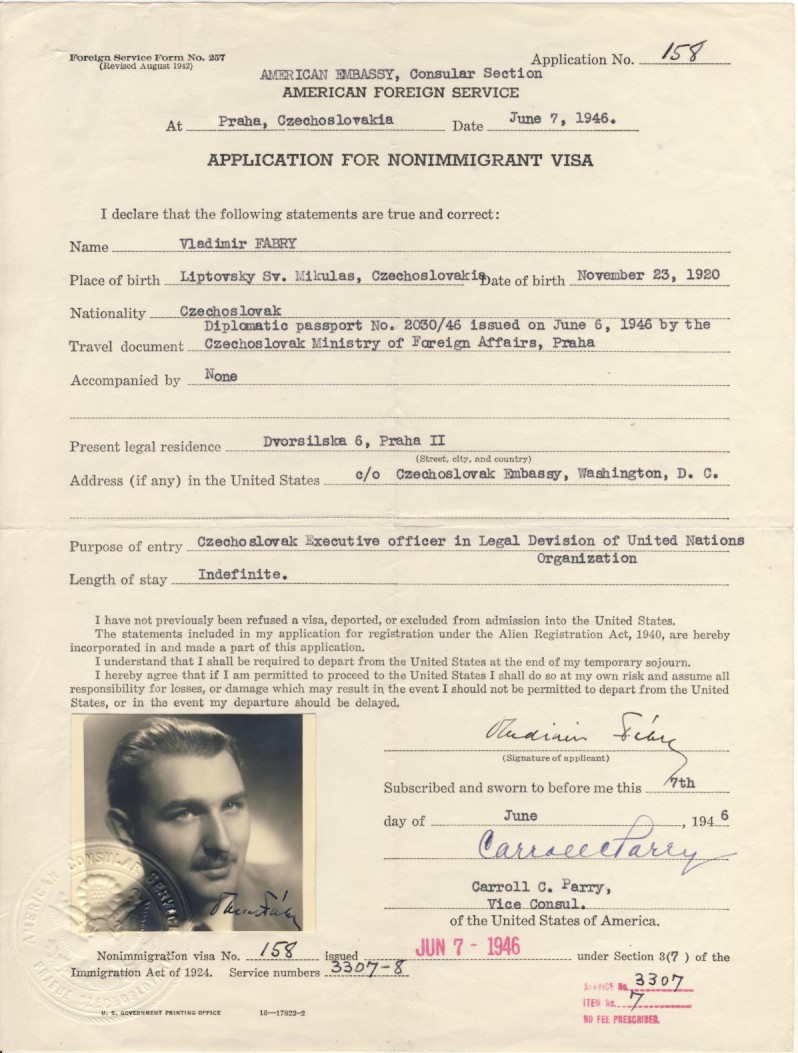

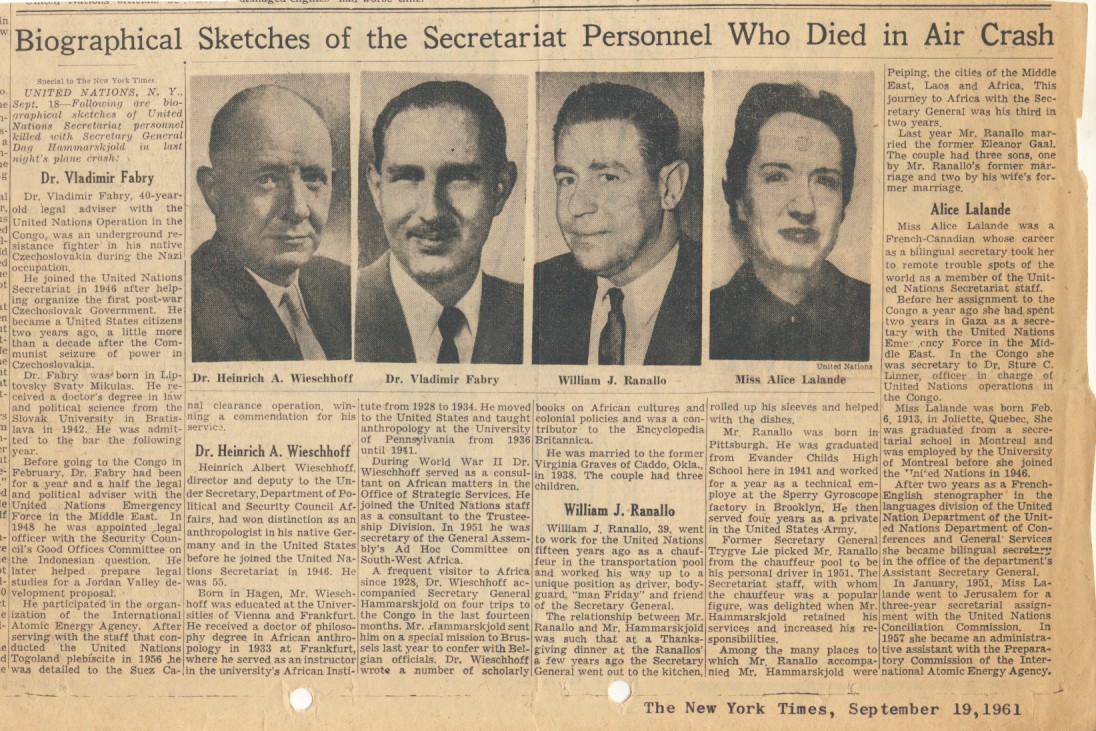
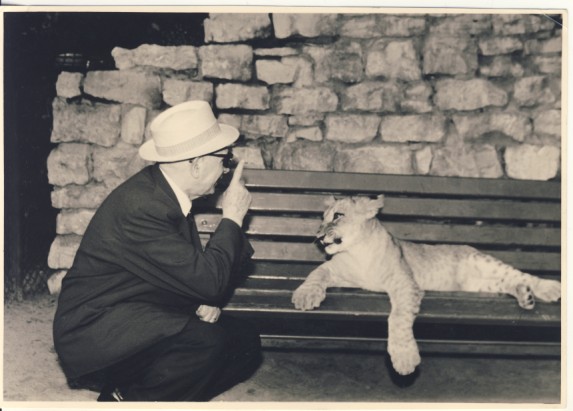
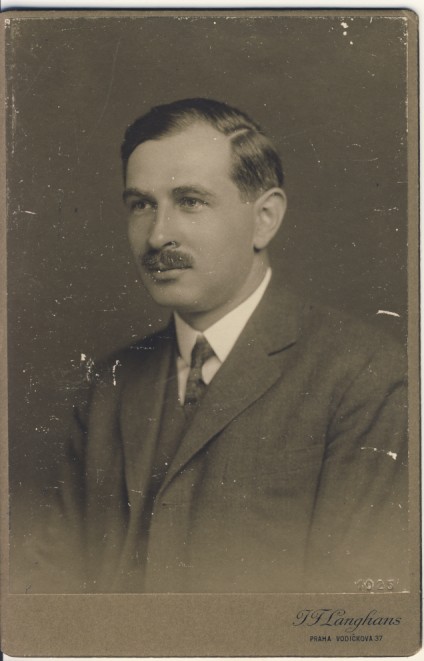

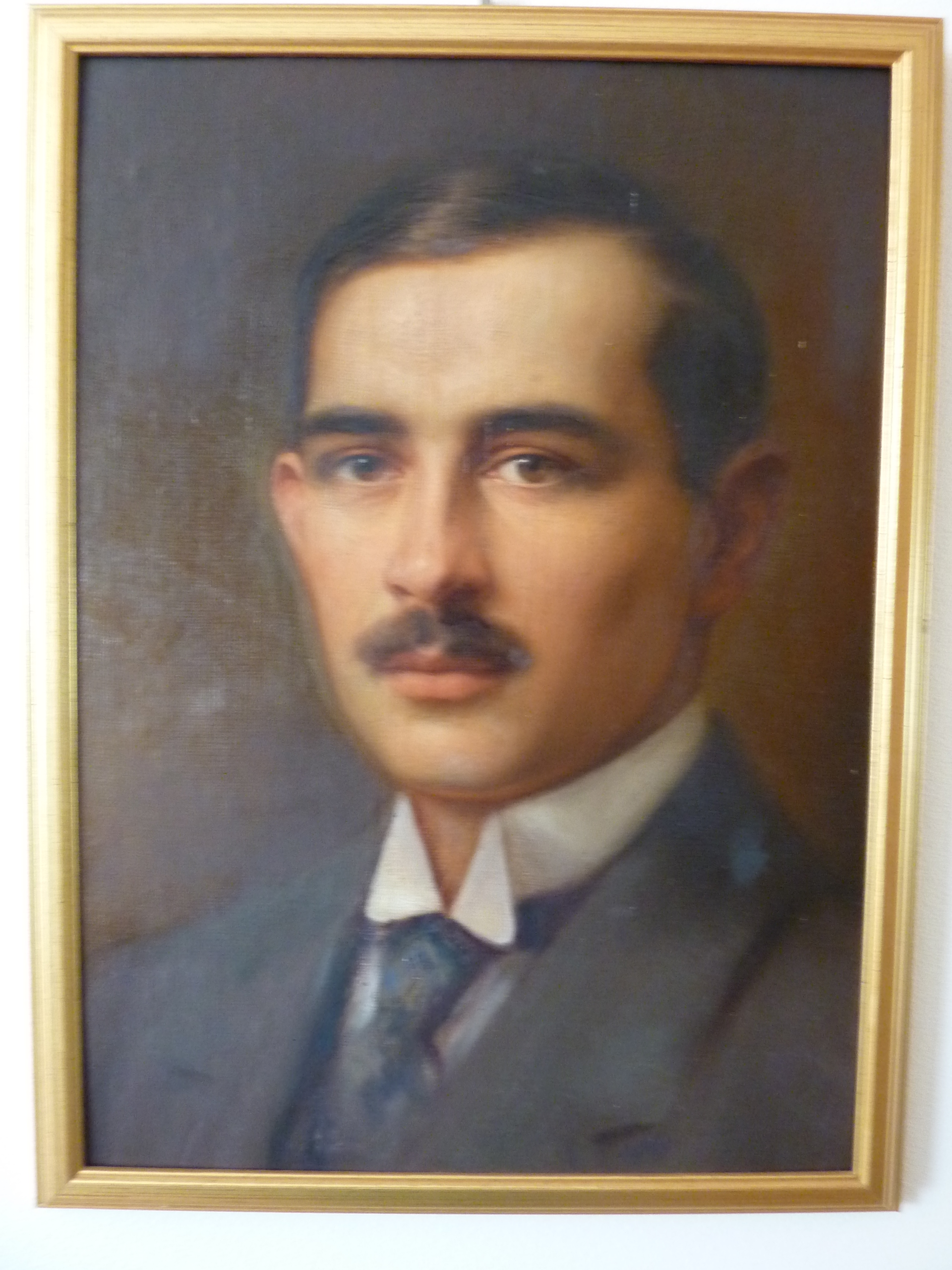

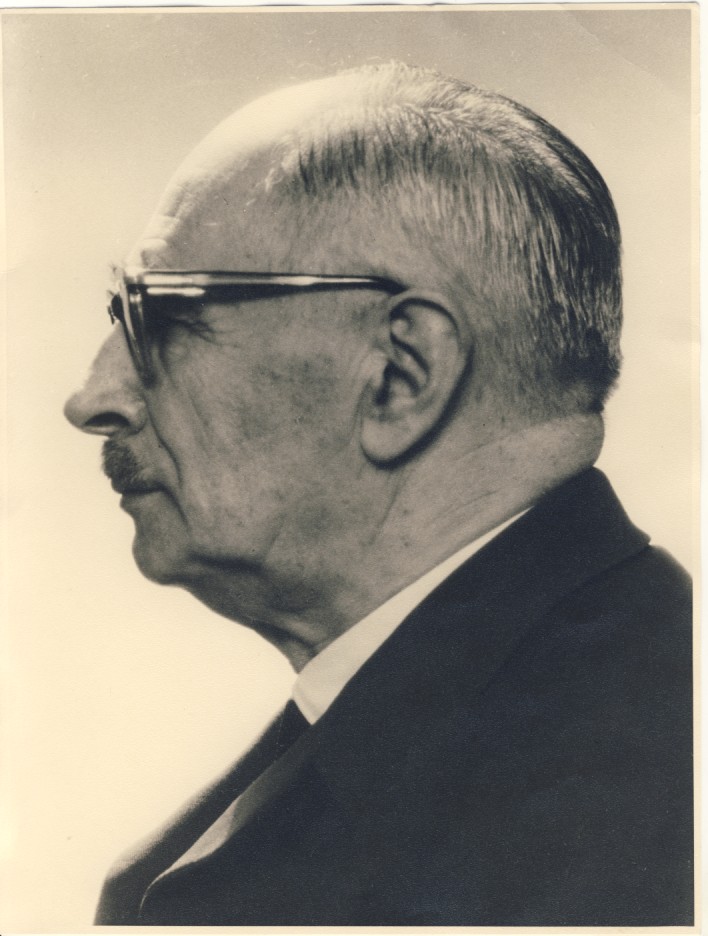




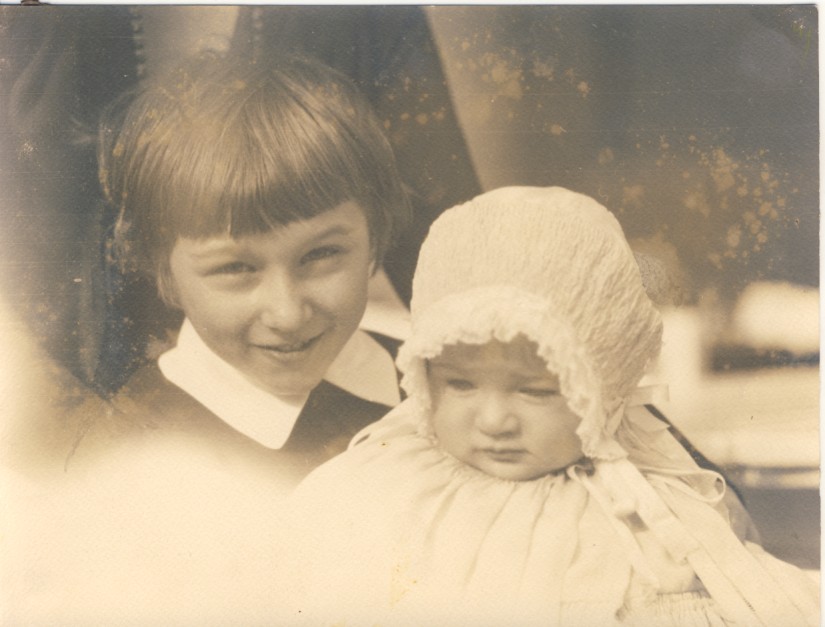
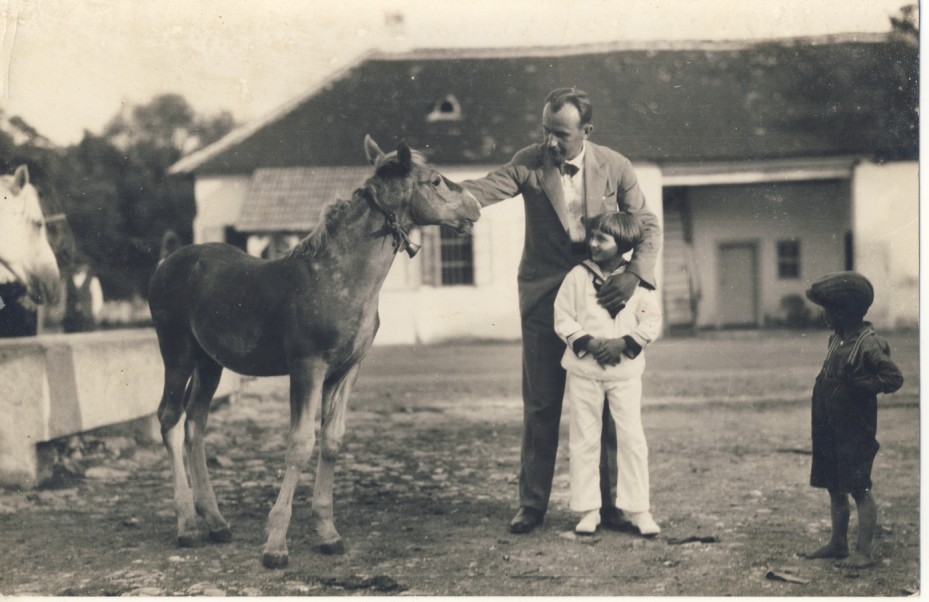


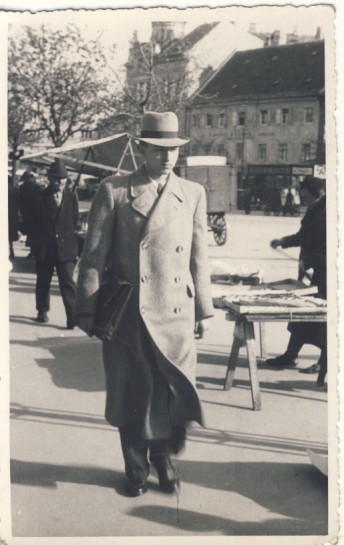
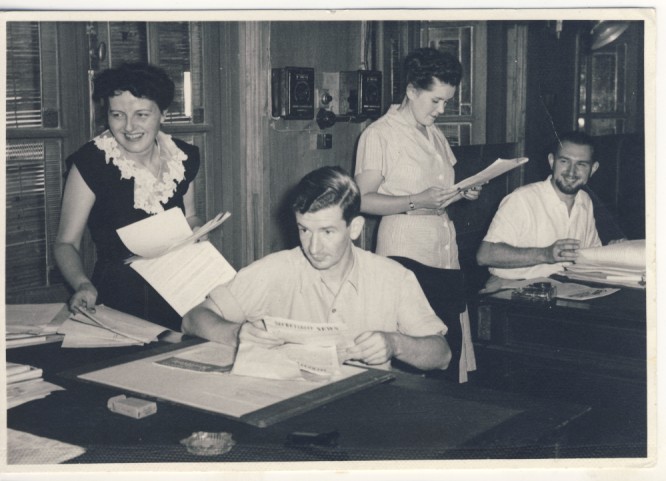
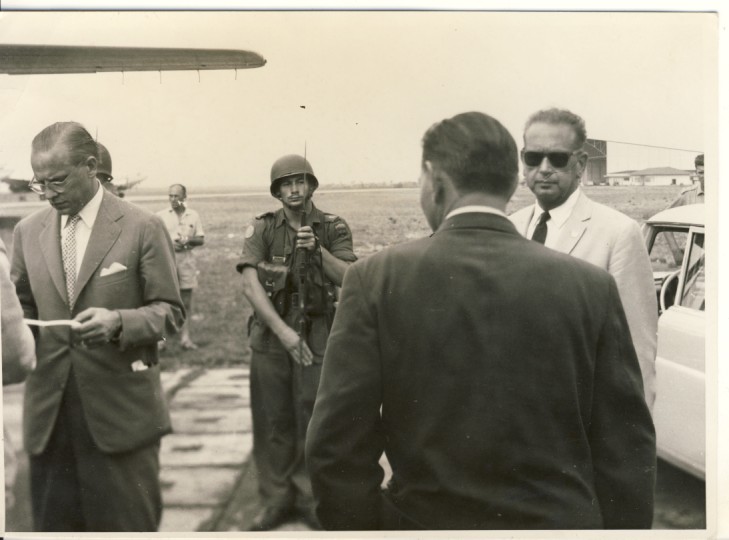

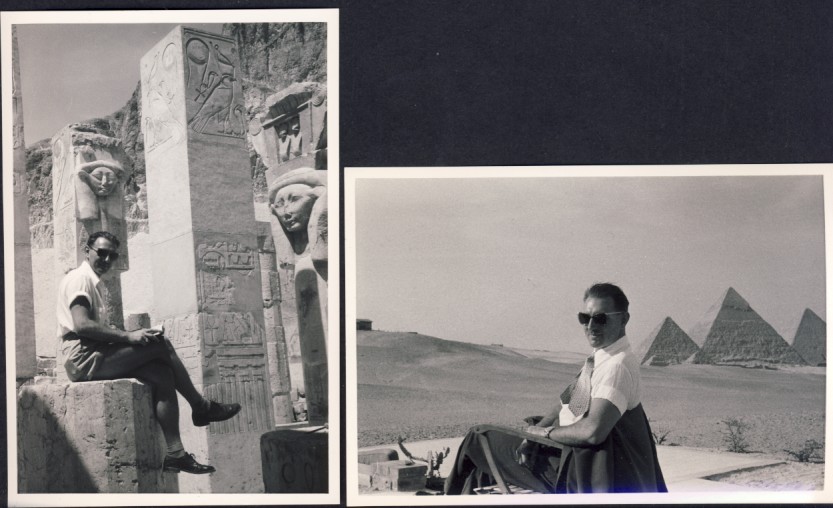

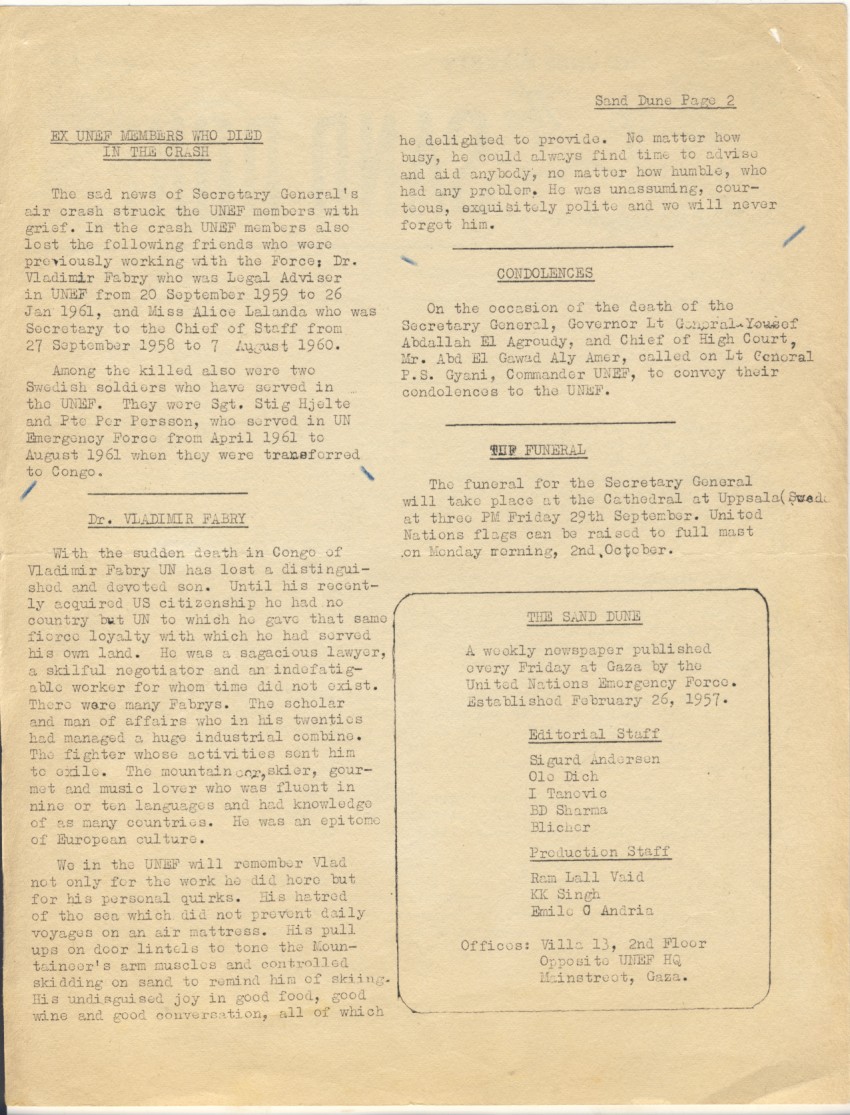


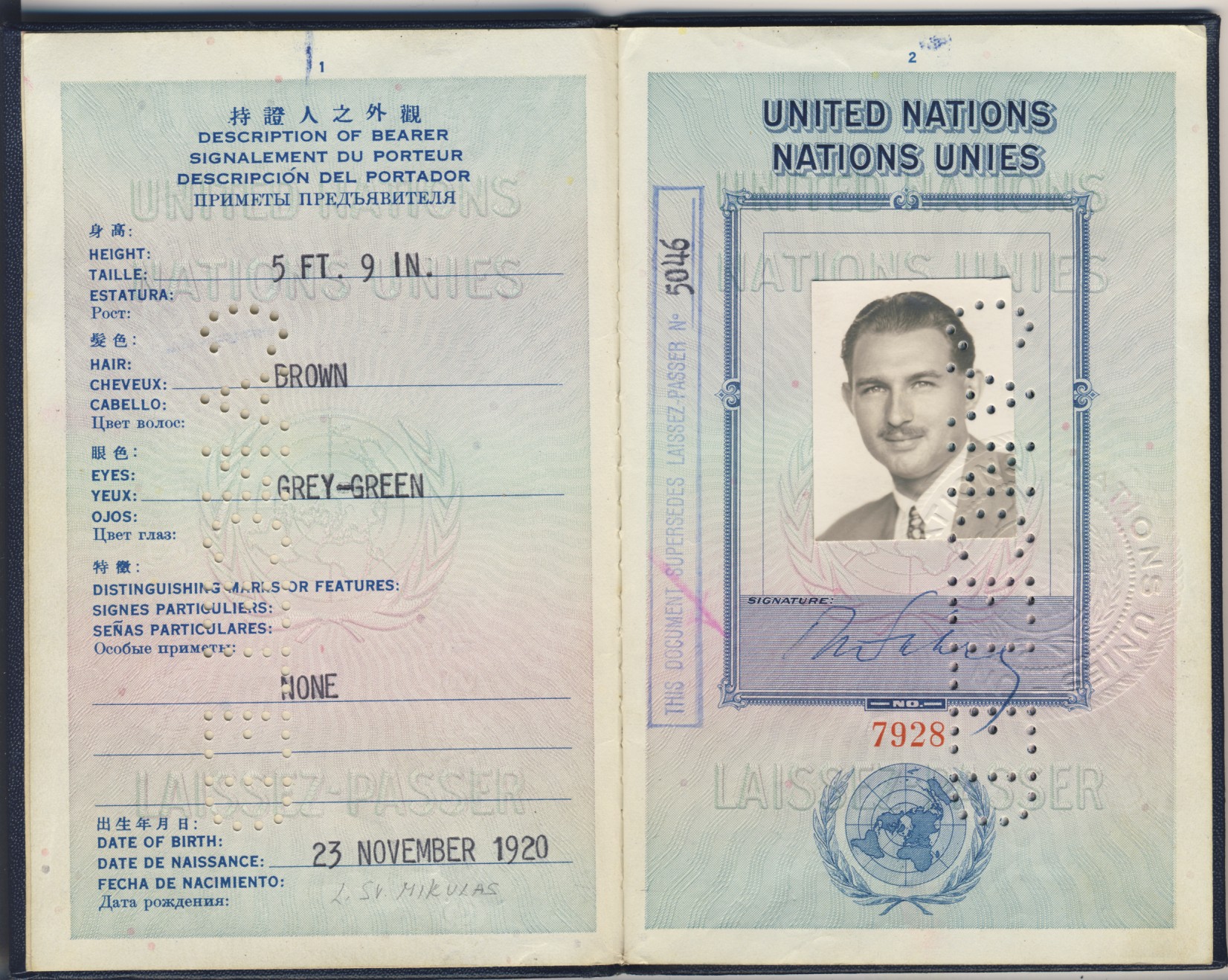

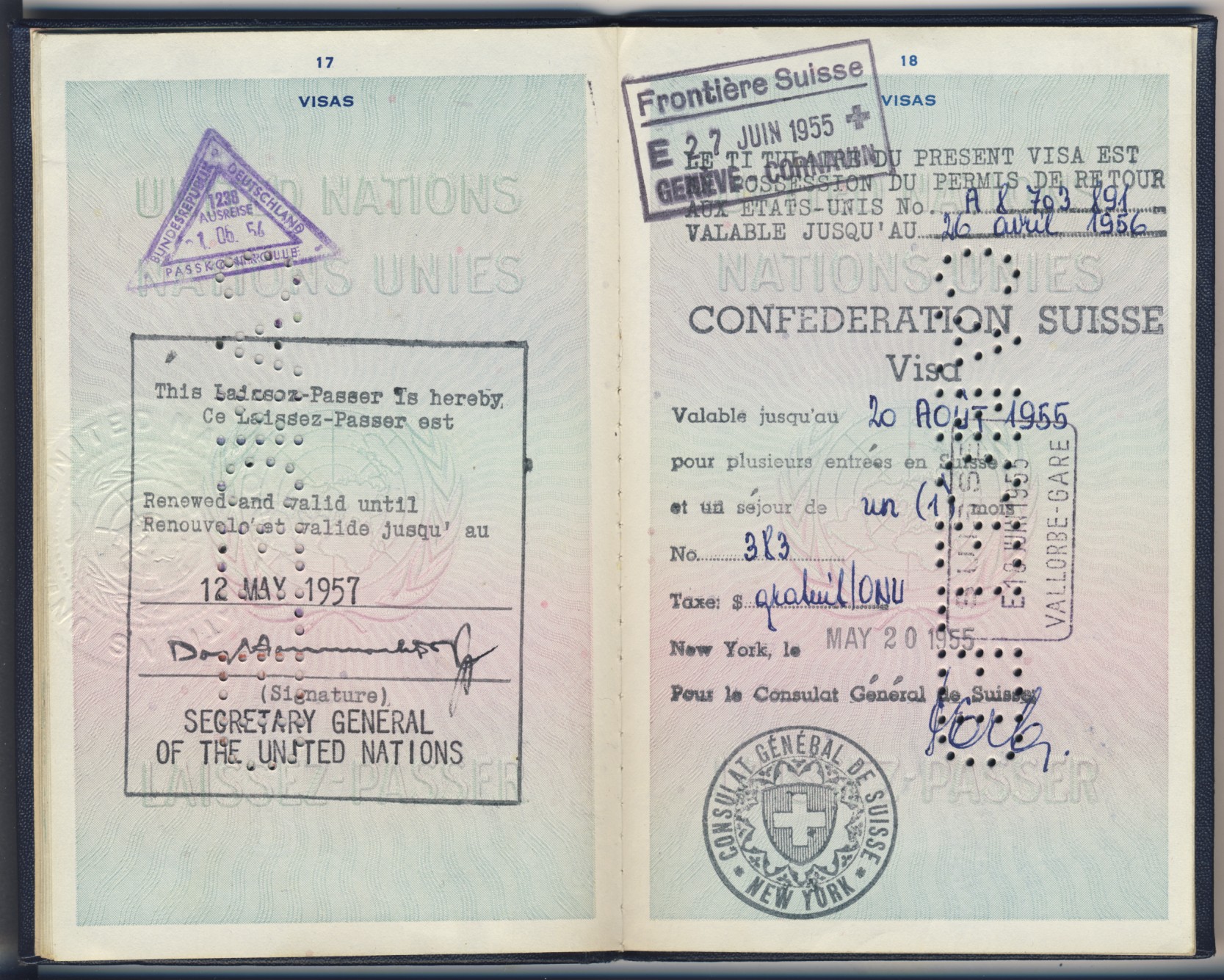
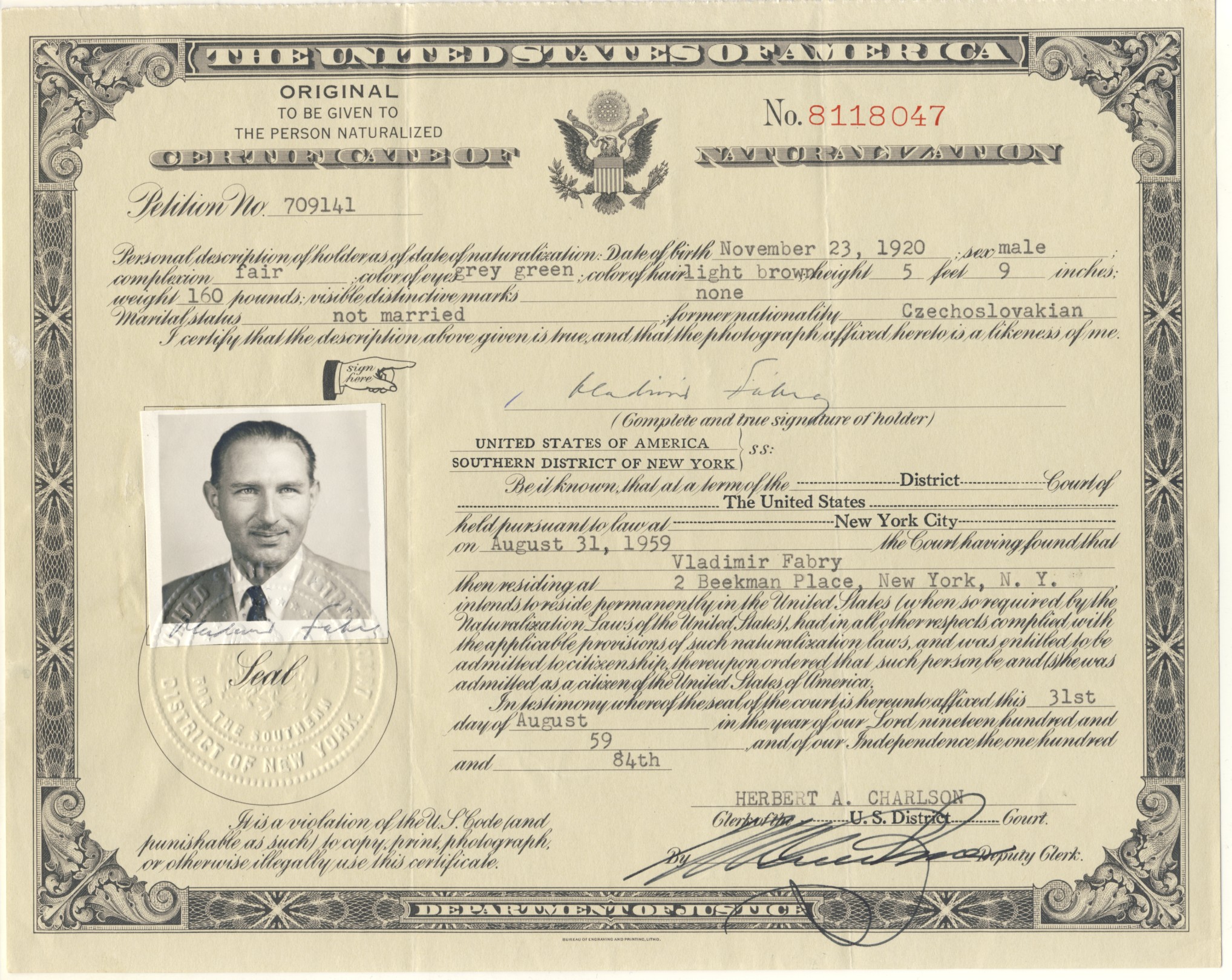


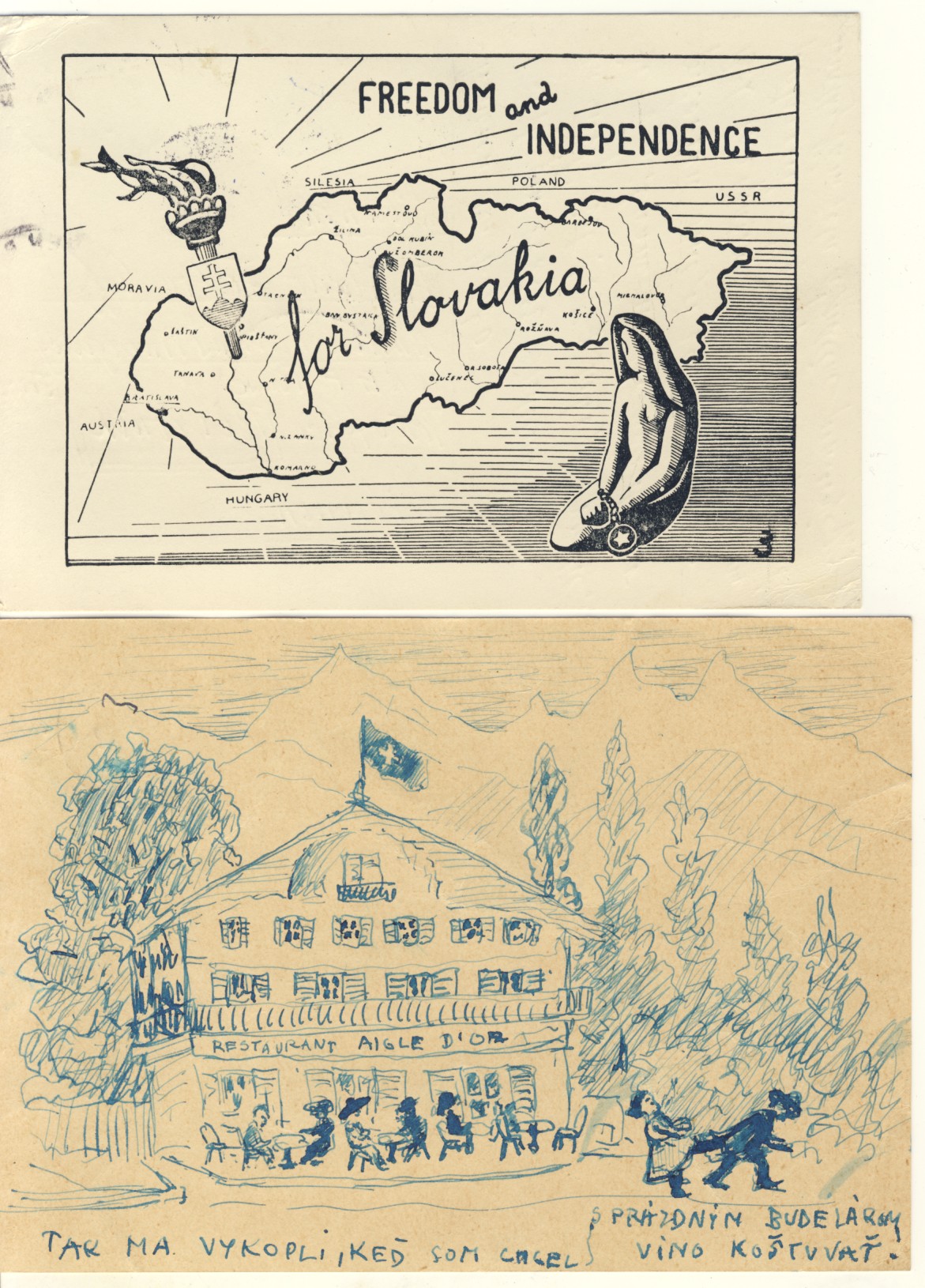


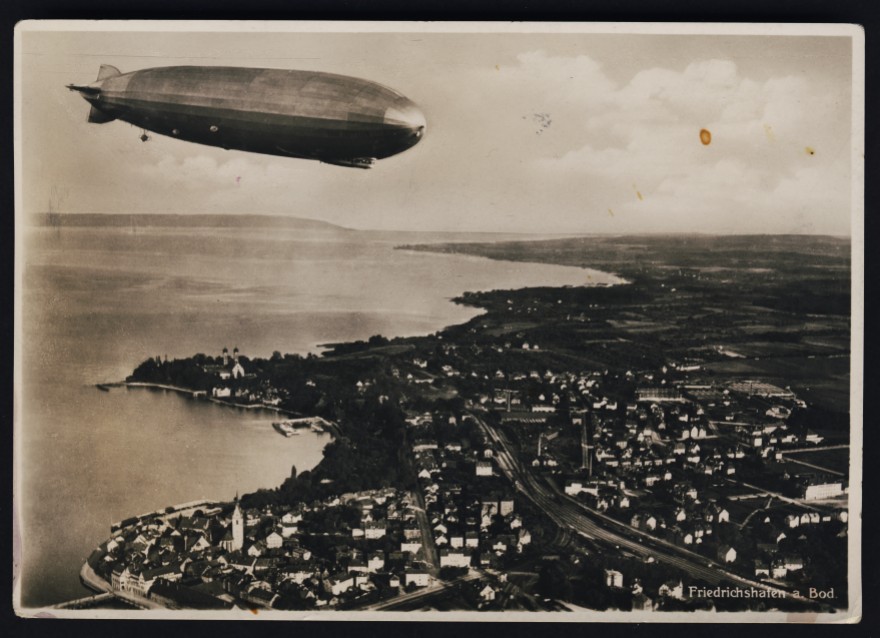

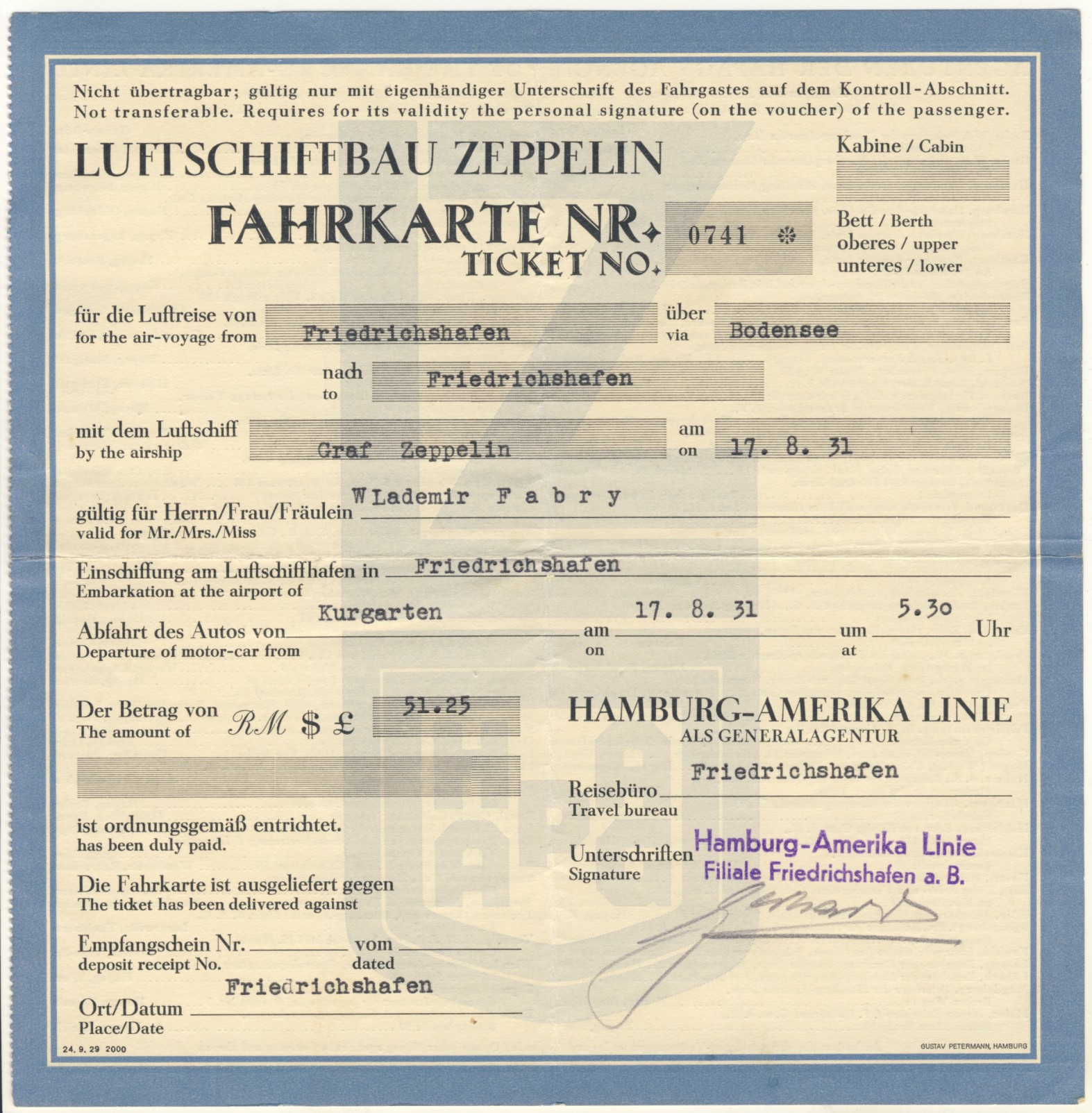


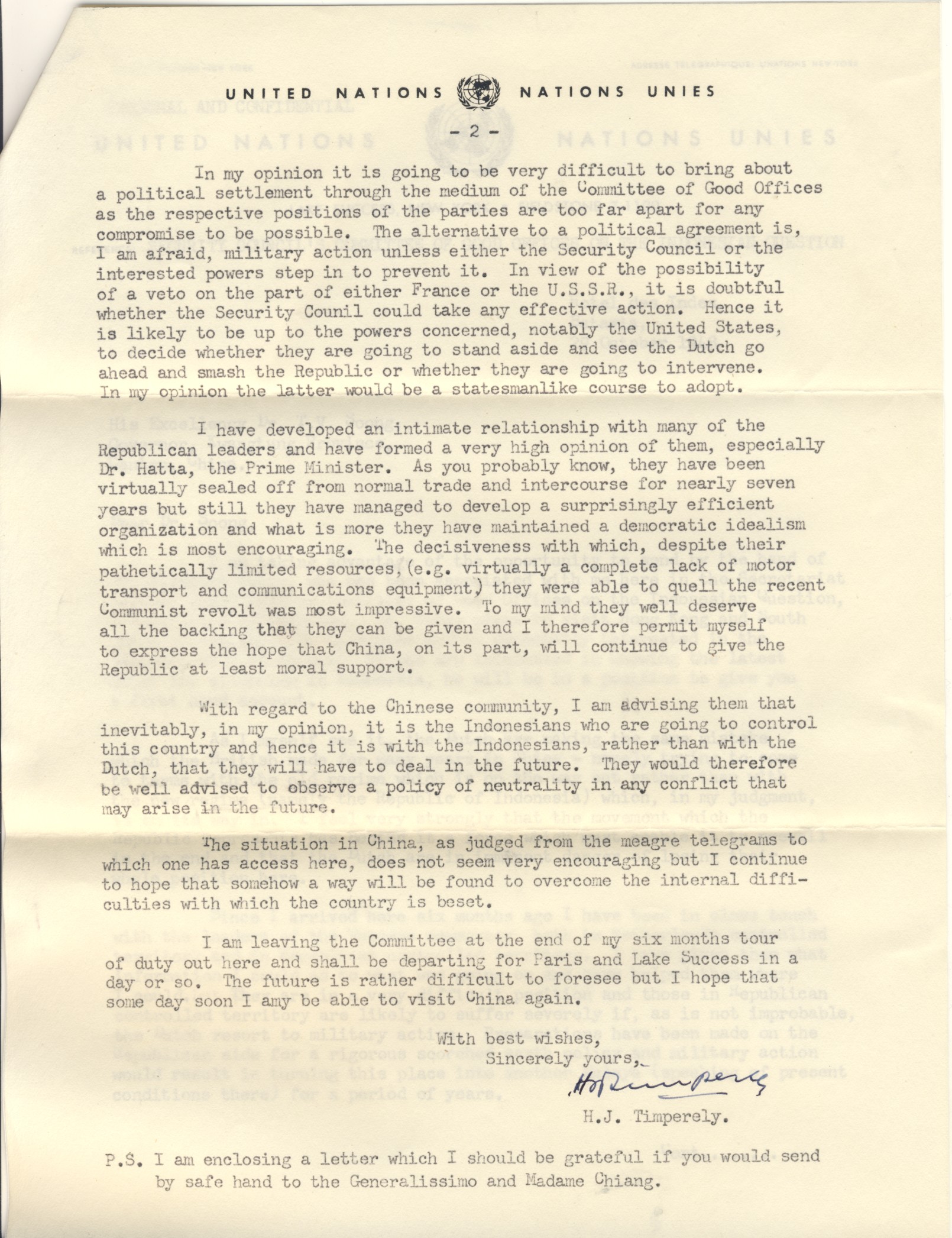
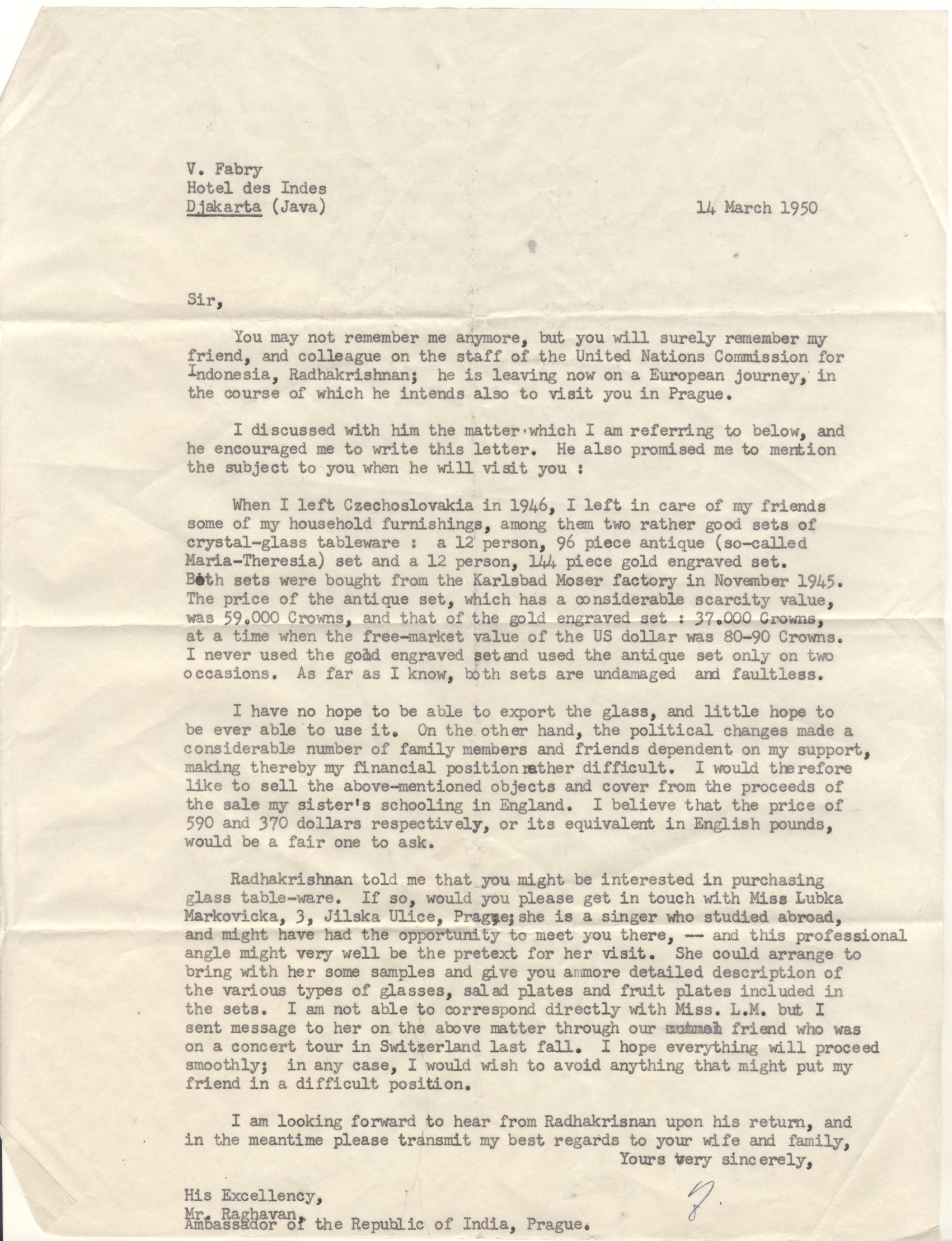

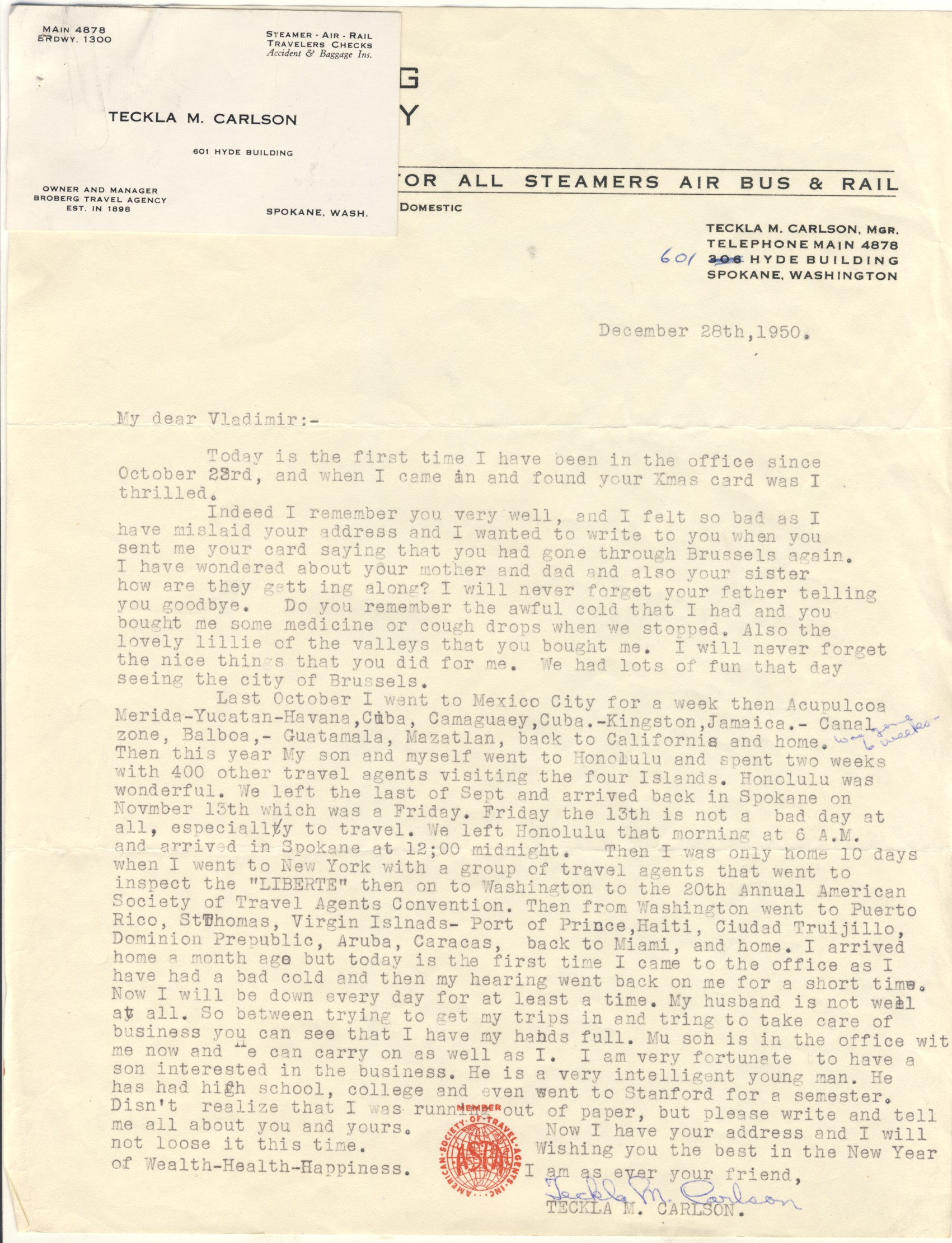

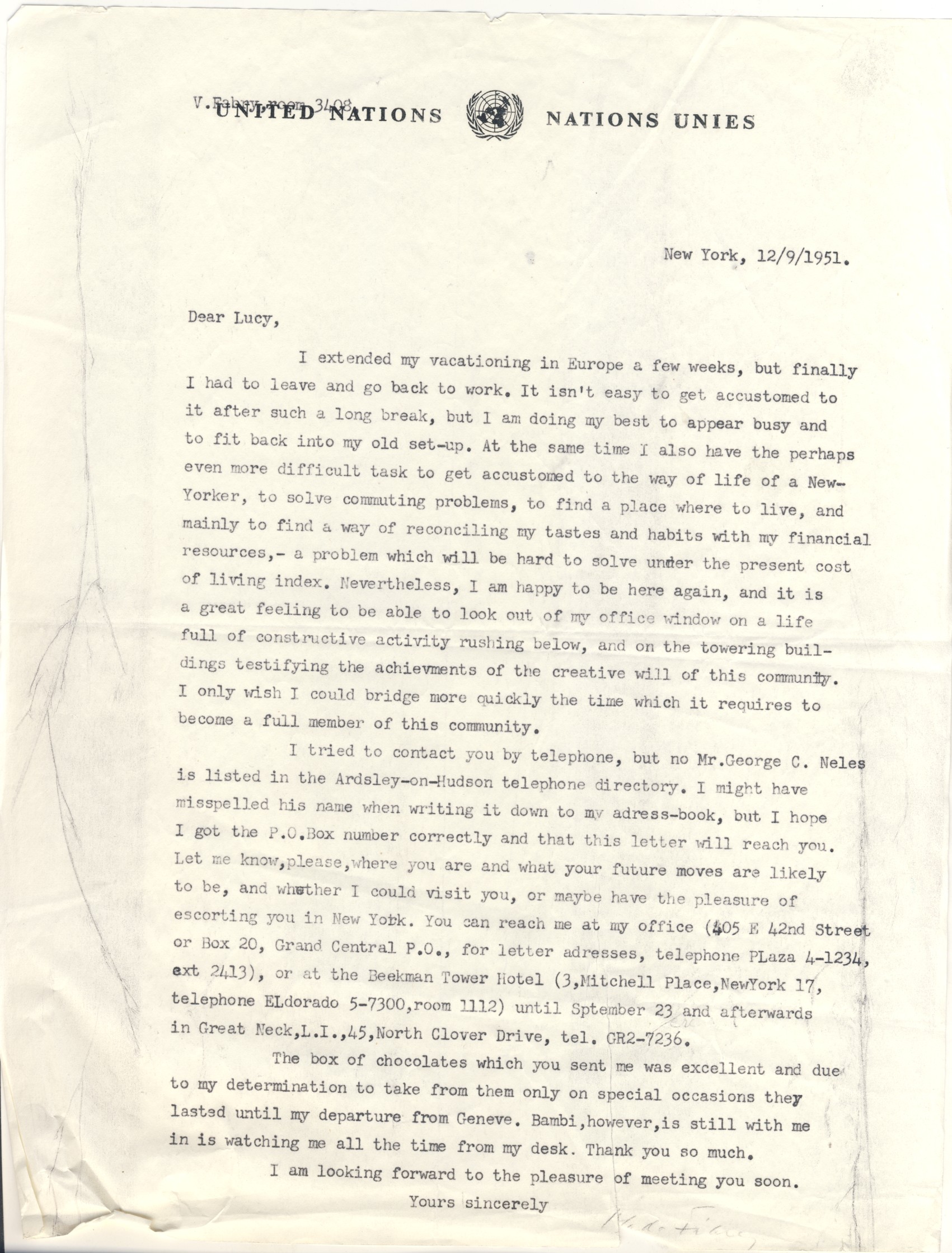
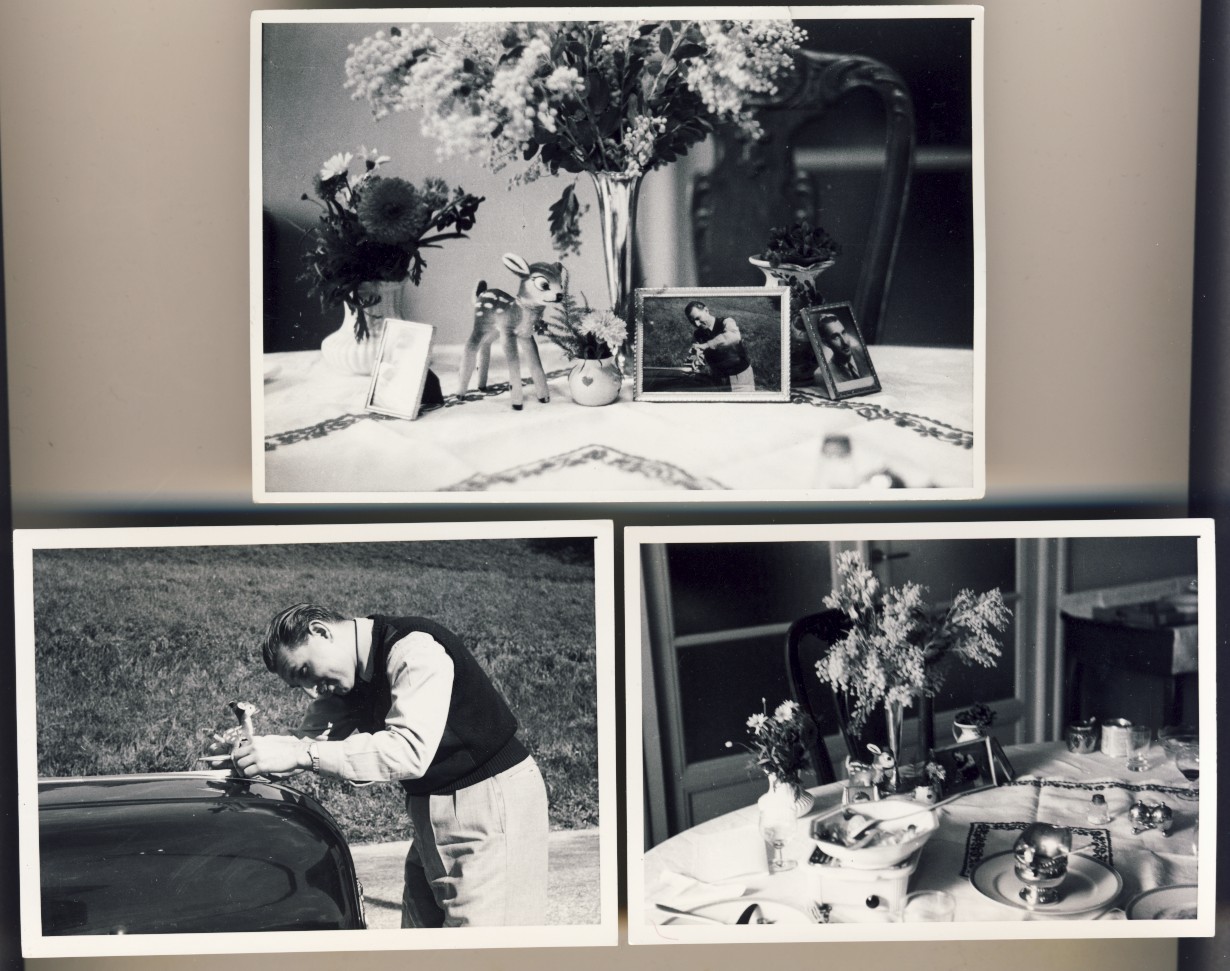
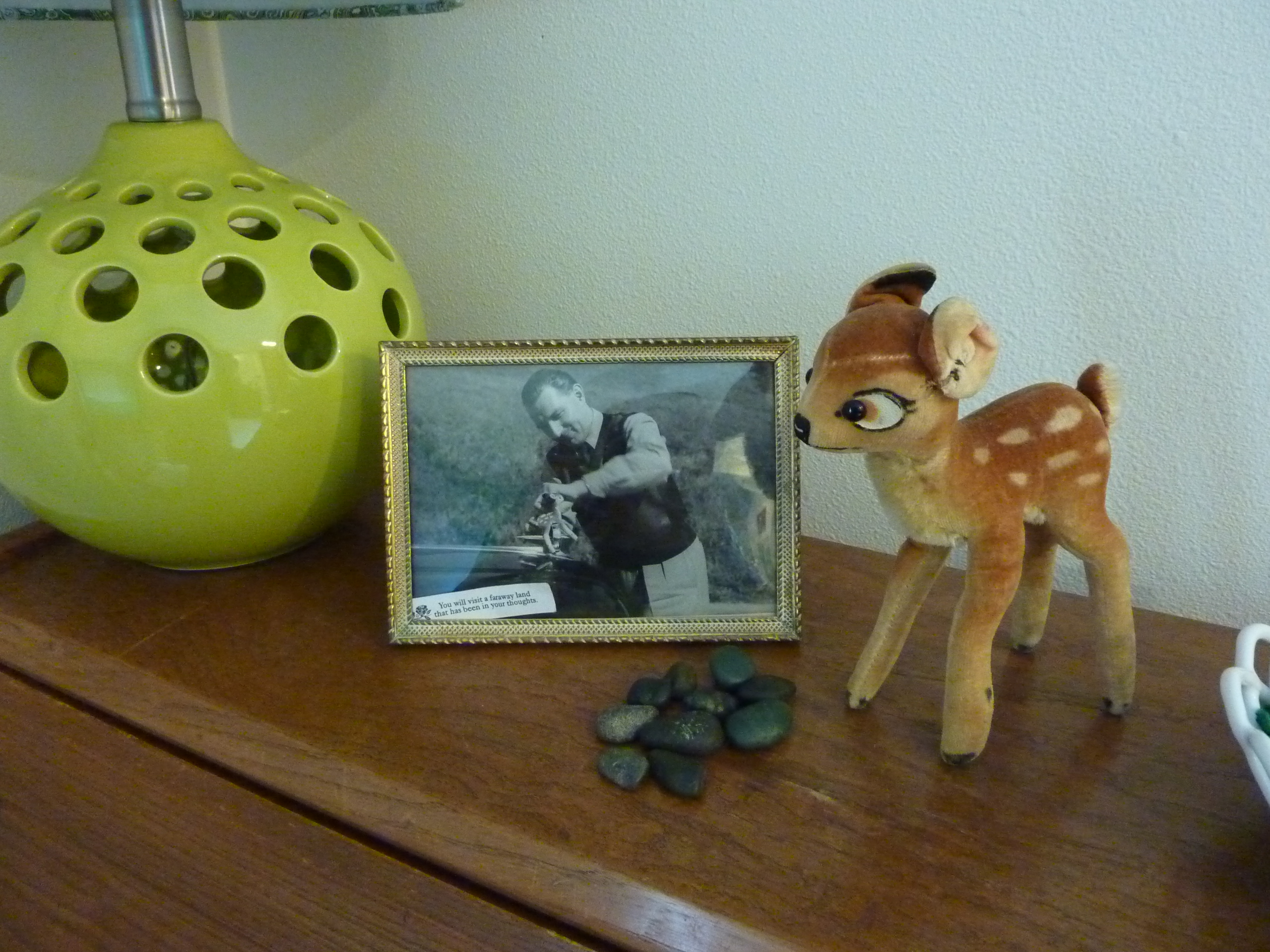
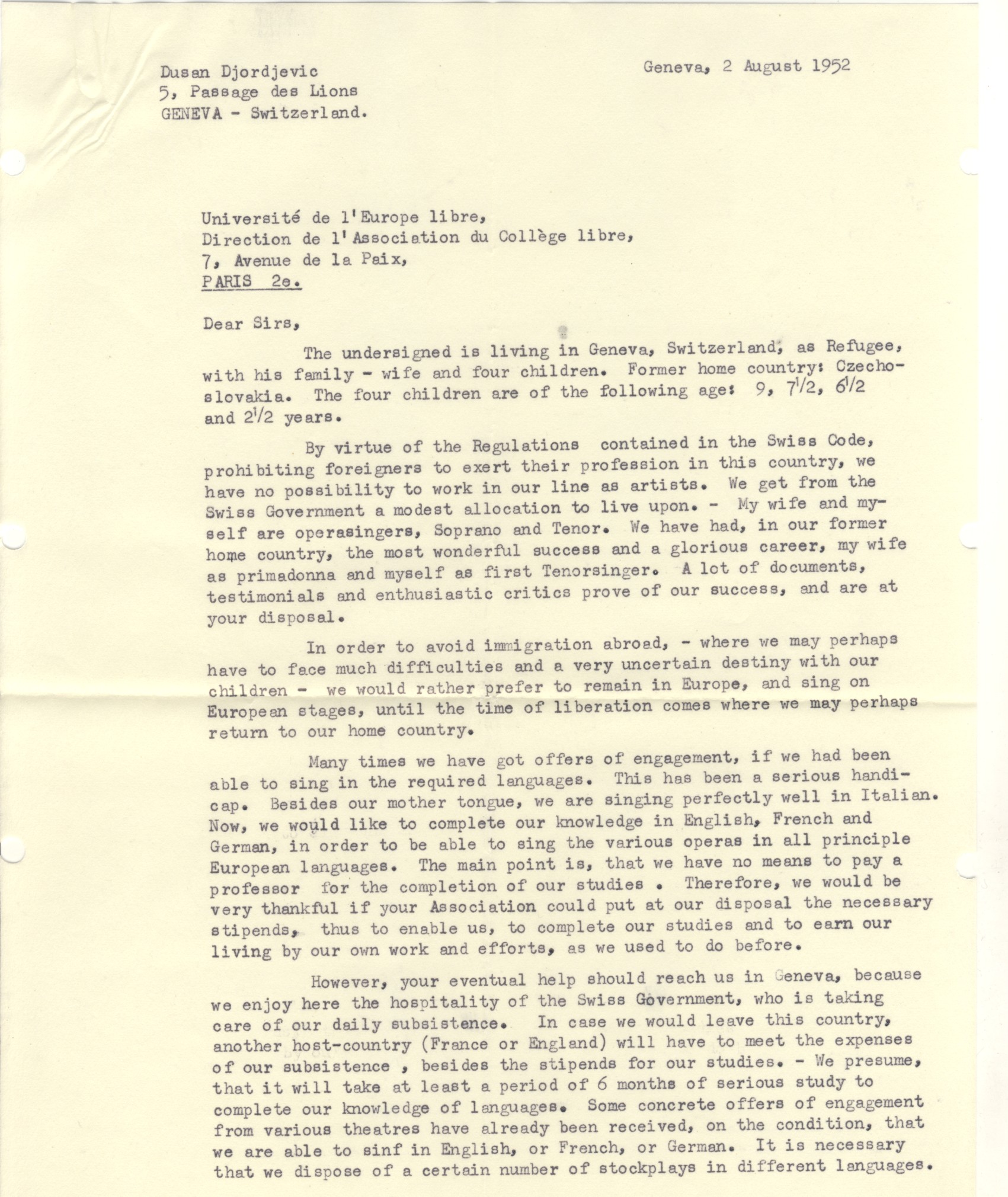
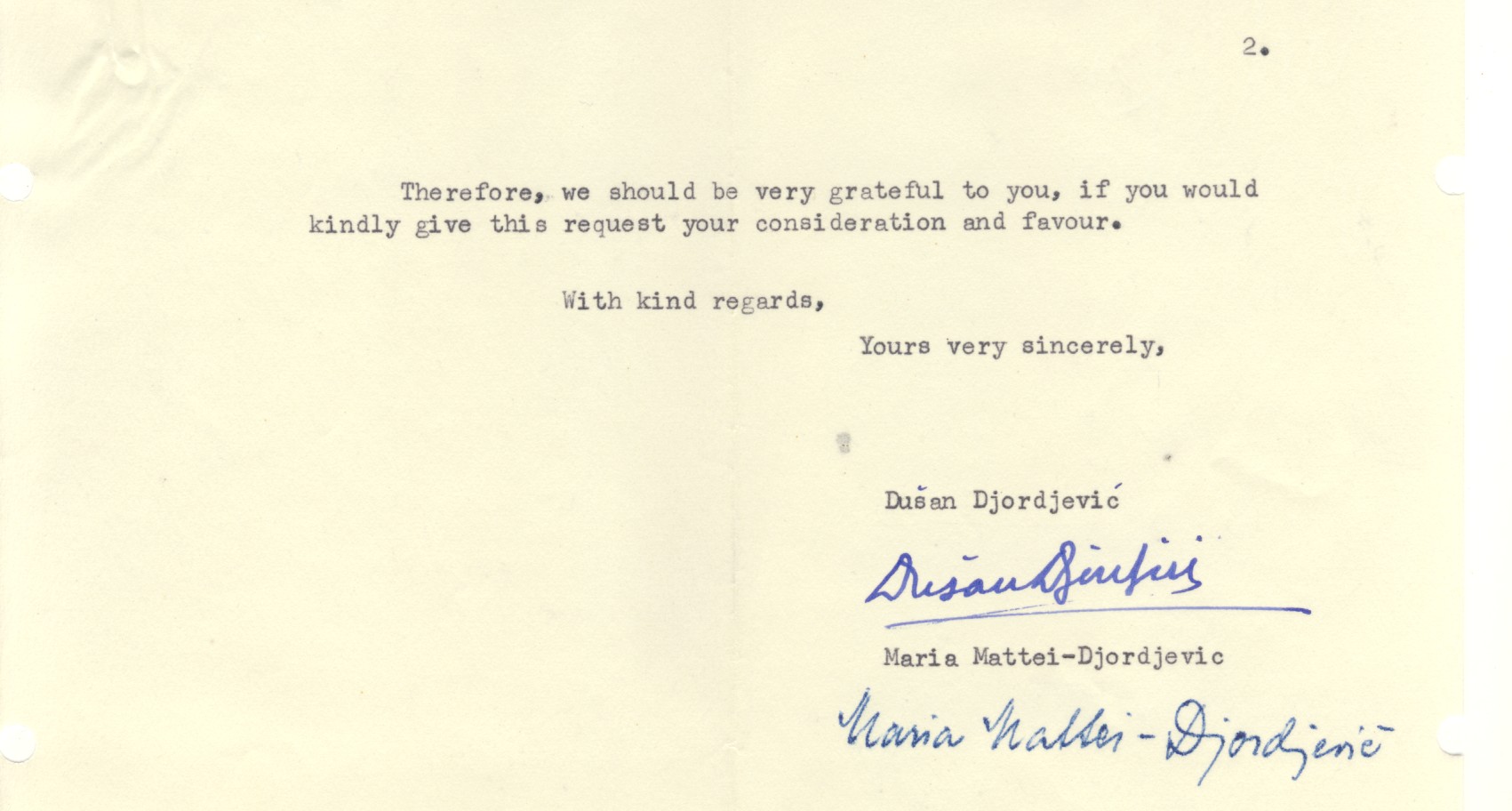
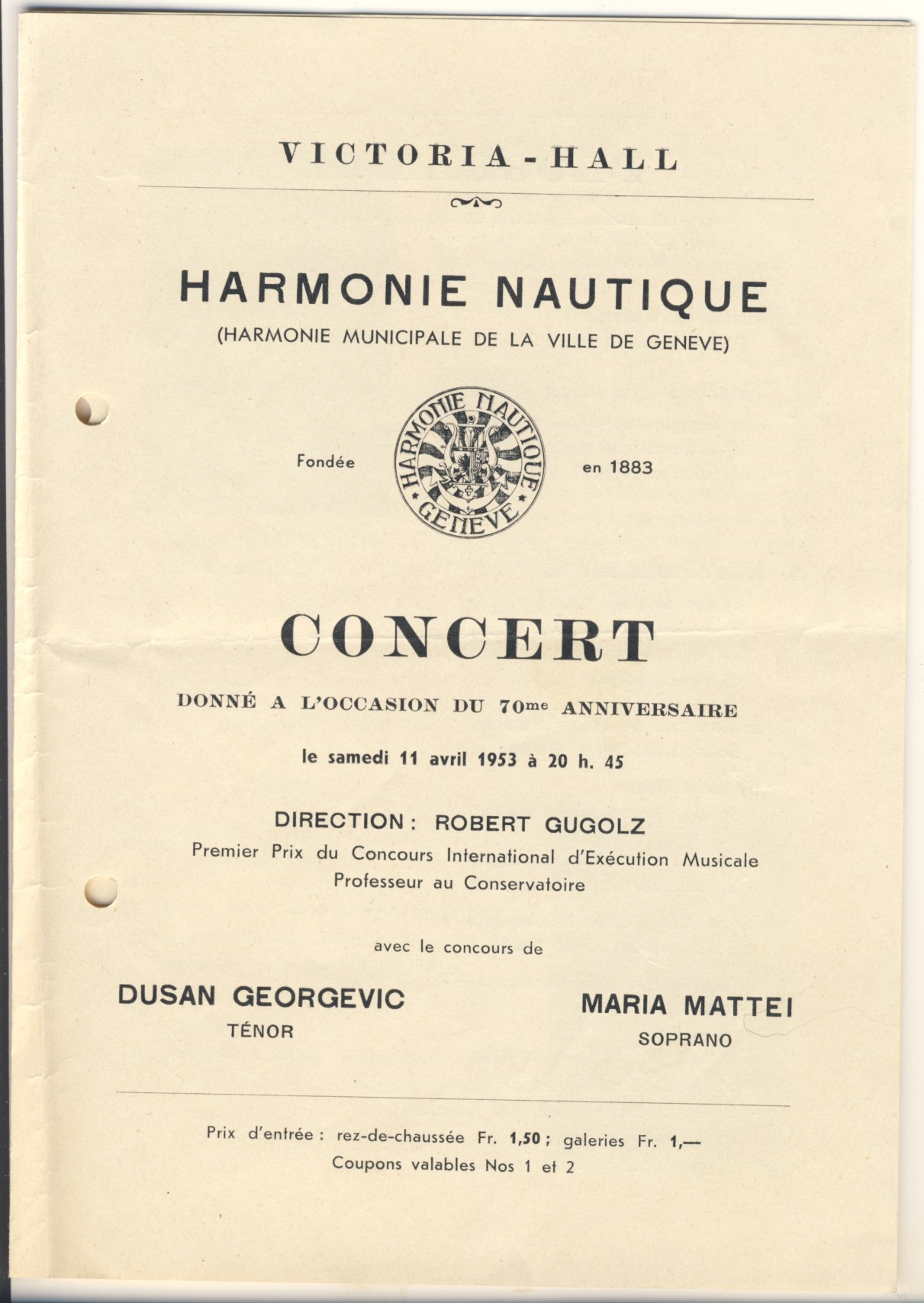


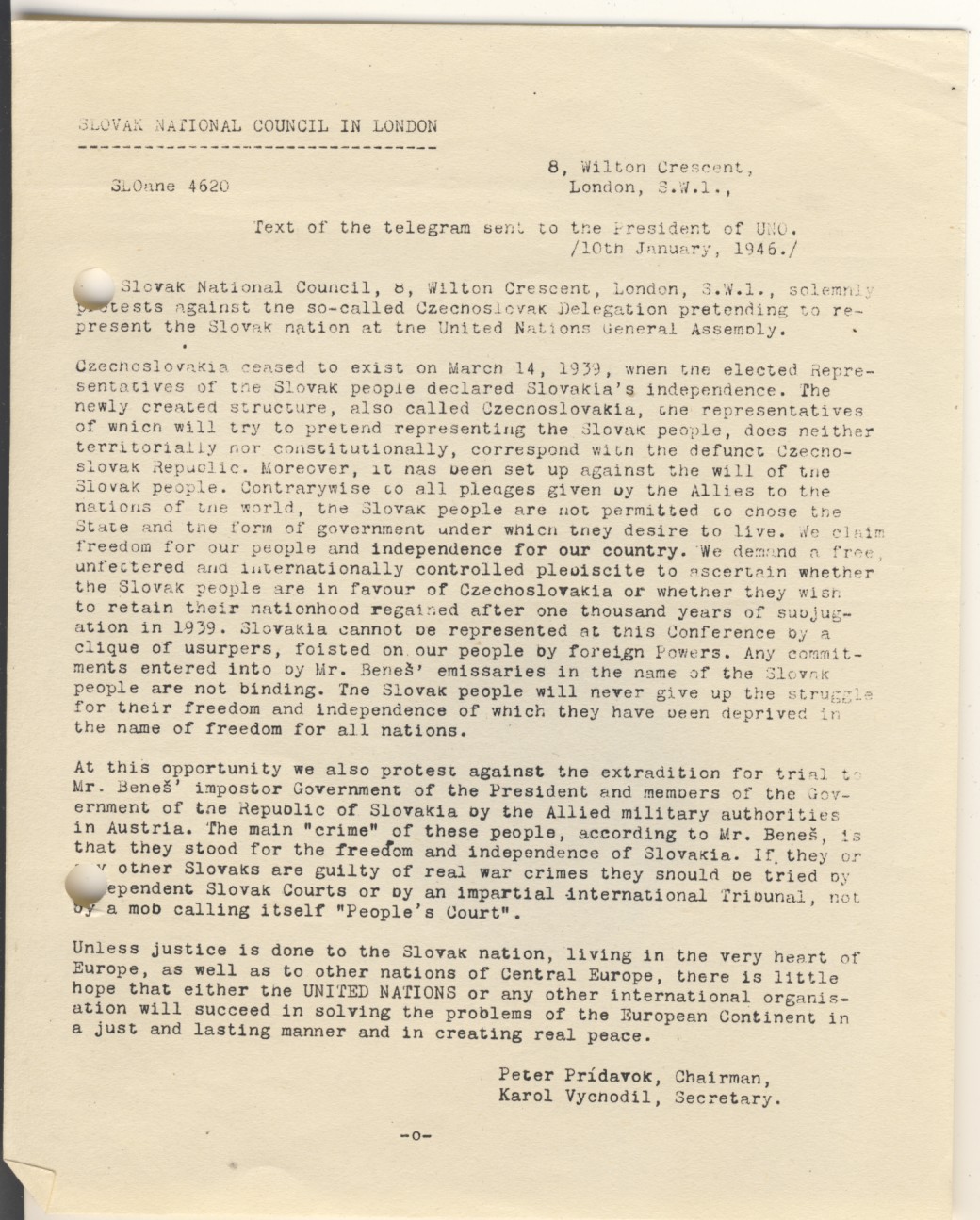
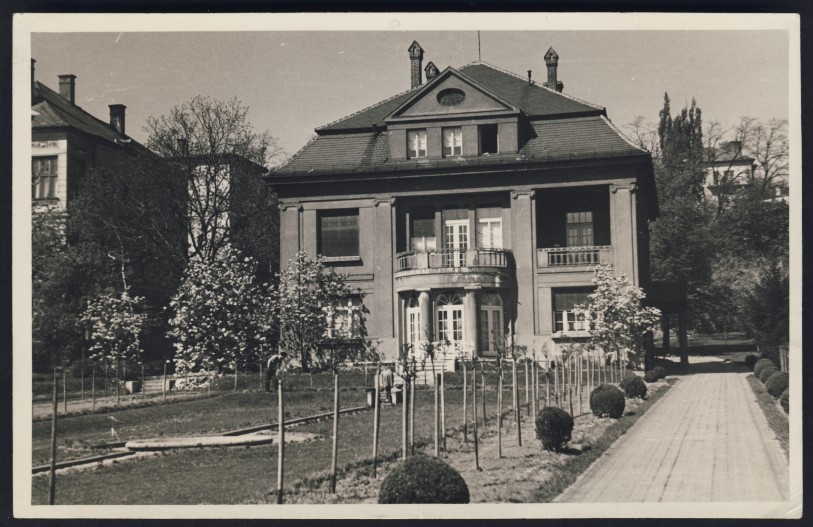
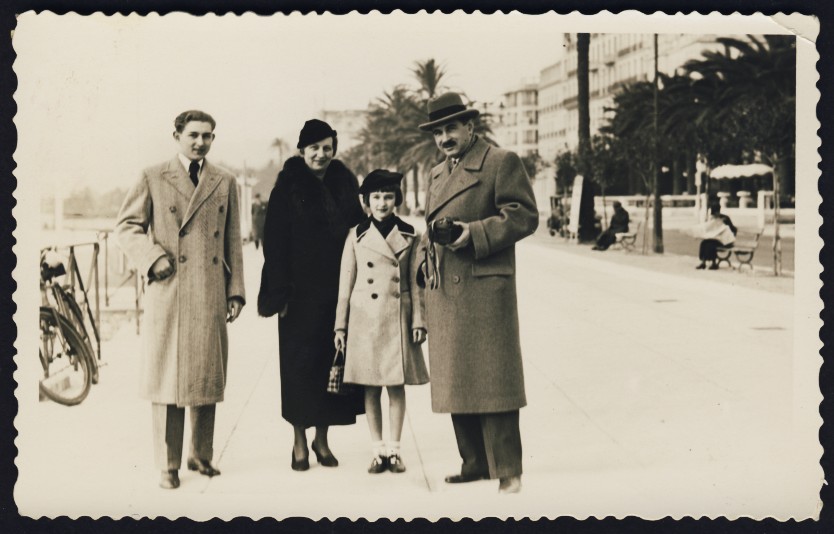
 Vlado
Vlado 